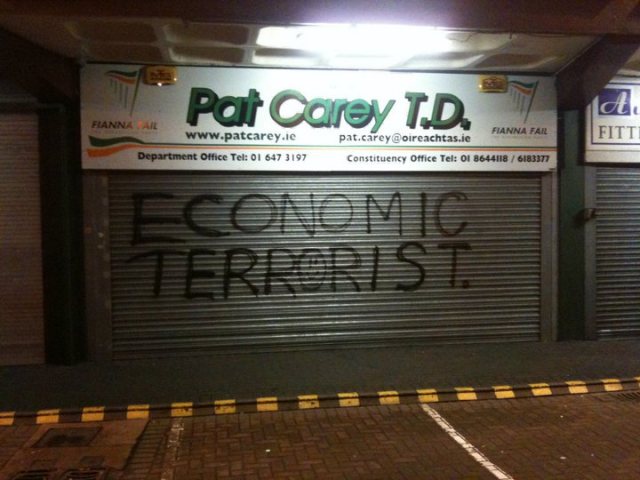
Rise Like Lions! is great new blog which is following events in Ireland closely, in terms of the response of the people to the government/IMF austerity plans.
Posted in Uncategorized on November 26, 2010| Leave a Comment »
Rise Like Lions! is great new blog which is following events in Ireland closely, in terms of the response of the people to the government/IMF austerity plans.

Posted in Football Articles, Miscellaneous, Social History, Uncategorized, tagged Bohemians, Bohs, dublin, football, League of Ireland on November 25, 2010| Leave a Comment »
In an article way back in April, when the IMF was still a bogey man the government used to terrify the unions, I wrote a quick piece on an auction taking place at the famous Whyte’s on Molesworth Street. On sale at that auction was a 1929/ ’30 Free State League winners medal- won that year by Bohemian FC.
So, when I heard the below picture was on sale at an auction in Dalymount with all proceeds went to Bohemian FC, my ears pricked up. What better way to satisfy three of my favourite things; Bohemians, history and photography than by buying this. I may have paid a little more than I thought I planned to for it but I myself think it was worth every penny.
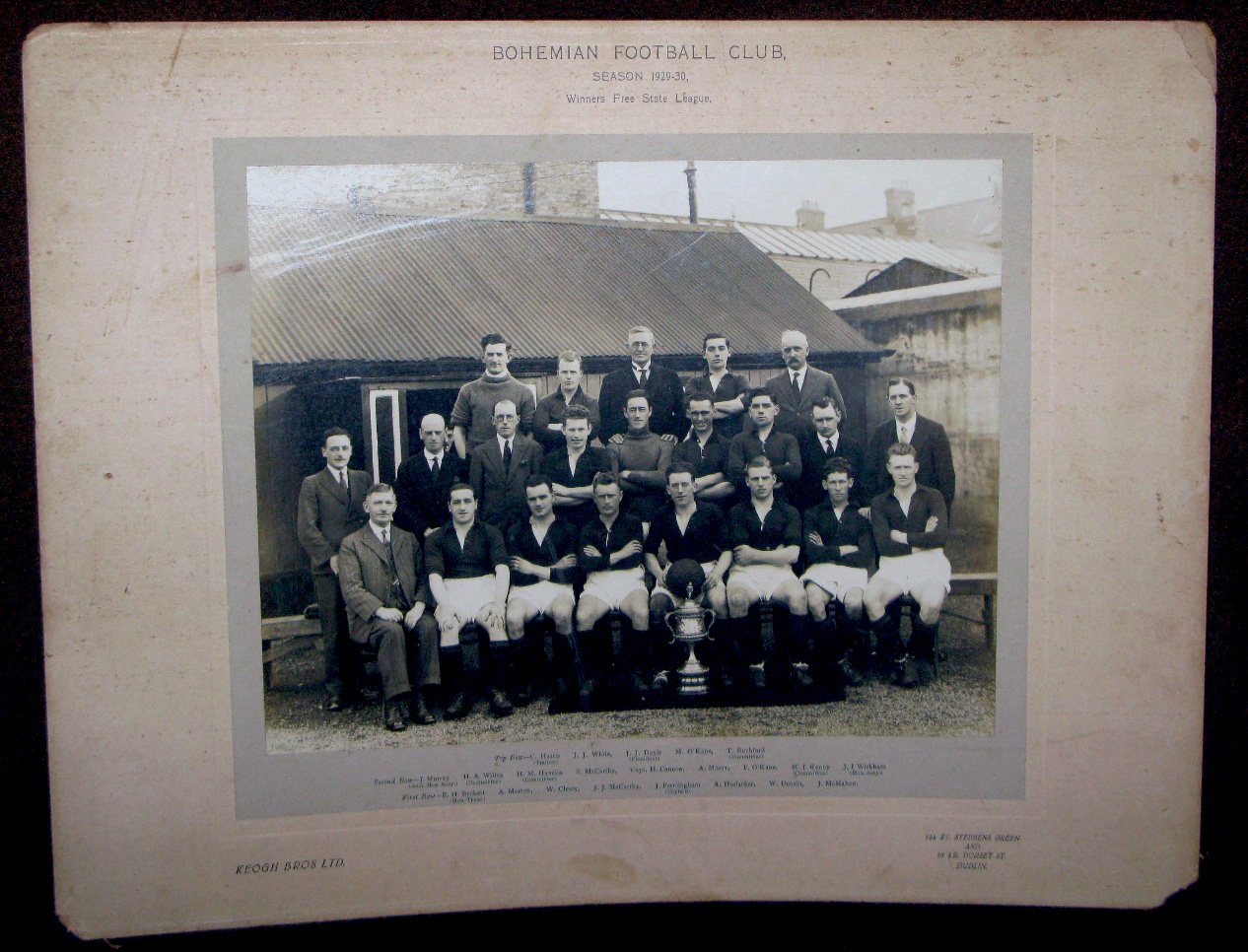
Words cannot describe how chuffed I am to have this in my possession (click for larger image)
You may not be able to buy a clubs history, but you can hold onto a little bit of it, and thats what I feel like now. I don’t really feel like I own this picture, indeed, when Bohemians iron out this little blip it our history like I’m sure we will, I’ll most likely donate this picture to the club. Or maybe that’s just my optimism, hoping that the torrid time we’re going through is just a blip. But what else do we have to hold onto?
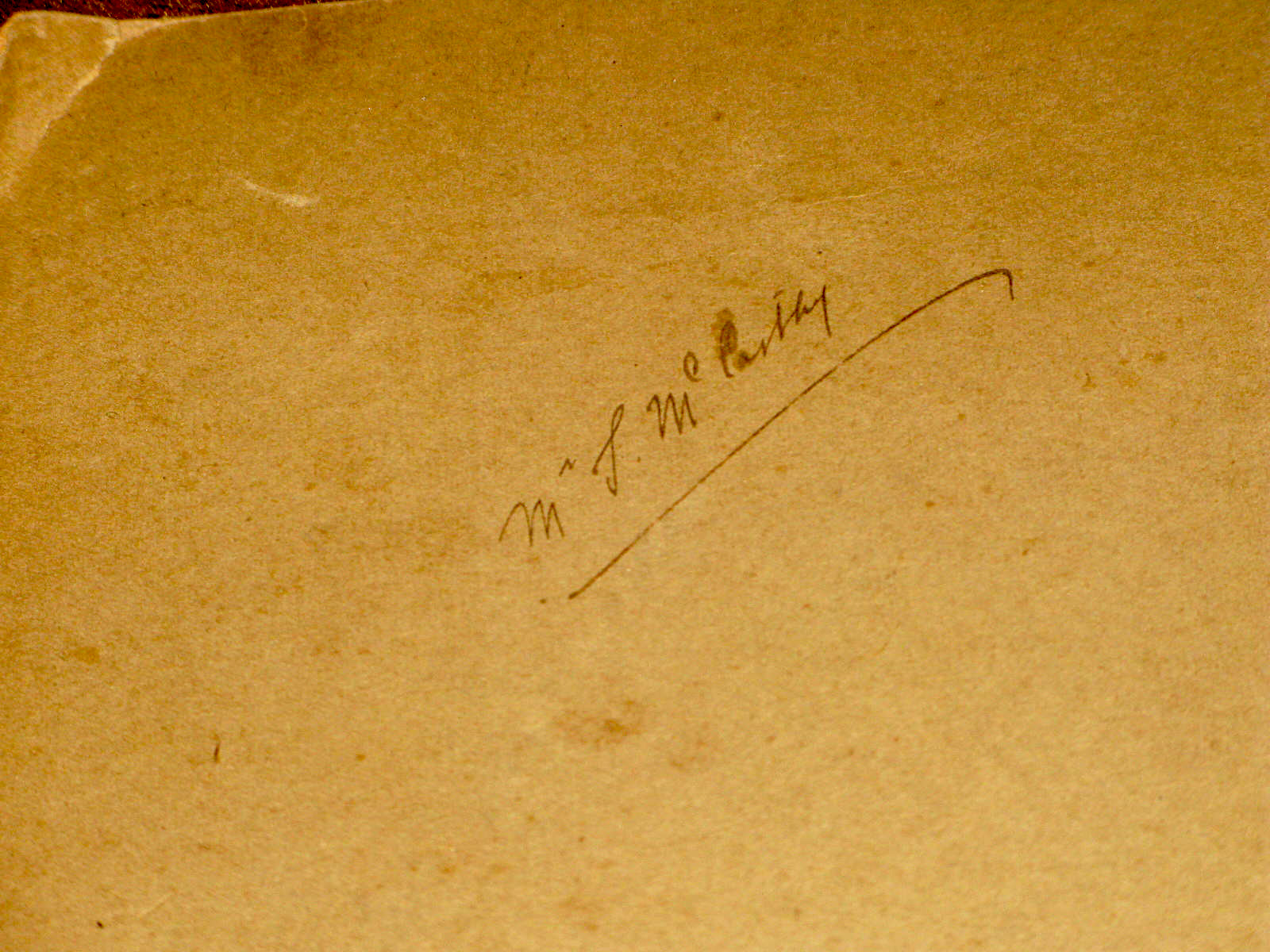
Autograph of J. McCarthy (fourth from left in main picture)
I’ll be getting it framed and mounted in the near future. When I get that done, I’ll check back in here, and give you some history behind a great era in Bohemians history, not unlike the one just passed. A bit of trivia before I go; the shed- like structure in the background are the old dressing rooms. Because of the corrugated iron on the roof, the structure got the nickname “The Hut,” now the name of the pre-game drinking hole in Phibsborough favoured by many a Bohs fan.

Posted in Dublin History on November 25, 2010| 12 Comments »
Yesterday, I wrote a piece on the assassination of Kevin O’Higgins and briefly discussed the theory on whether we should commemorate historical events regardless of whether we have strong positive or negative feelings on the individual or individuals involved.
Today, I plan to do a little research on the O’Higgins’ three killers:
1. Archie Doyle (? – 1980)
2. Bill Gannon (? – September 12, 1965)
3. Tim Coughlan (1906 – 28 January 1928)
1. Archie Doyle, described as ‘one of the more shadowy figures in the IRA’[1] , is believed to have fought in the War of Independence and on the anti-treaty side of the Irish Civil War.. He was interned afterwards and was then involved in the assassination of O’Higgins in 1927. Doyle took an active part in the IRA’s 1940s campaign including the September 1942 attack on the RUC barracks in Crossmaglen, County Armagh and the July 1943 robbery of a van outside the Willa Tobacco Factory on the South Circular Road, Dublin. [2]
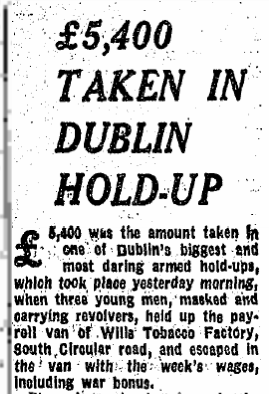
The Irish Times, Friday, July 2, 1943.
Proinsias Mac Aonghusa in a Sunday Press article has described Doyle leading a double life between an unobtrusive private existence in the Dublin suburb of Rathgar in which he worked initially for the Board of Works and later for Woolworths where he was buildings manager travelling the country, and active service in the IRA during which he was ‘generally thought to be responsible for all or nearly all assassinations’ according to former IRA Chief of Staff[3]. Doyle died in St. Jame’s Hospital in 1980.
2. Bill Gannon is also believed to have fought in the War of Independence and on the anti-treaty side of the Irish Civil War. He joined the refounded Communist Party of Ireland in the early 1930s and was one of the defenders of Connolly House in the March 1933 attack [4].
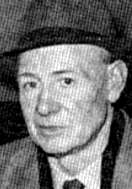
Bill Gannon, founder-member of the CPI, 1933, recruiting officer of volunteers for Spain, 1936–38 (From CPI Website)
During the Spanish Civil War, he along with Frank Ryan and Peadar O’Donnell helped to organise Irish Volunteers to travel to Spain to fight on the Republican side. He died in September 1965 and was buried in Mt. Jerome cemetery with military honours. His coffin was draped with a red flag and the Irish tricolour.
3.Tim Coughlan , the second eldest in a family of nine, lived with his parents at 24, Ring Street, Inchicore. Coughlan played a role in both the Tan War and the Civil War. Interned for much of the latter, he re-immersed himself in republican activities upon his release. He was killed in very mysterious circumstances in January 1928. That day Coughlan and another IRA volunteer were on Dublin’s Dartry Road, opposite ‘Woodpark Lodge’, the home of Sean Harling – a former IRA comrade-in-arms turned government informer. It is accepted by most and Coughlan and co. were there on a fact-finding mission. At around 6:55pm, Harling returned home from work and he noticed two men watching him from the other side of the road. A gun fight broke out in which Coughlan was fatally wounded. Harling claimed he killed him in self-defence.
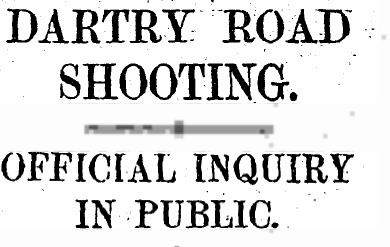
The Irish Times, Thursday, February 16, 1928
However, there are lots of unanswered questions surrounding the night which prompted the IRA to claim at the time that Coughlin was in fact ambushed and in effect extrajudicially executed. This version is especially supported by the autopsy carried out by Dr. Wilfred Lane which “amongst other anomalies, discovered that the IRA man died as a result of being shot in the back of his head”. Also, the doctor found a cigarette butt in his mouth, which again indicated he had been caught unaware and killed, and tenants on Dartry Road testified that there had been unusual police activity that evening and that they heard more shots than mentioned in Harling’s account.
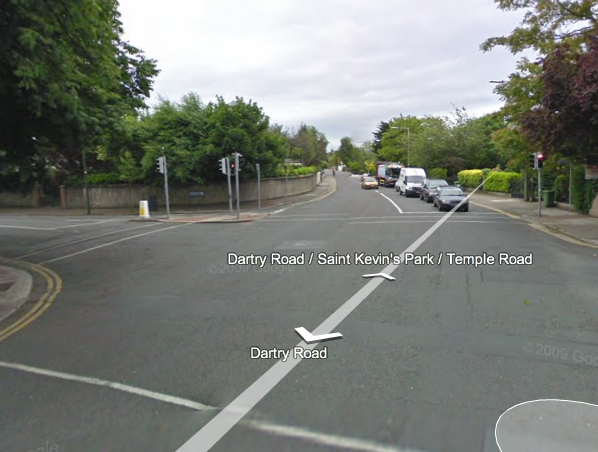
I could not find Woodpark Lodge but this, the corner of St. Kevin's Park and Dartry Road, is where Harling first saw Coughlin and the other IRA volunteer.
Harling, fearing for his life, was relocated to the United States. Though blocked for a time, he returned to Ireland several years later and was given a job in the Revenue Commissioners. He lived on New Grange Road, Cabra unil his death in 1977. (The above was based on articles by Aengus O Snodaigh and Gabriel Doherty)
==
Footnotes:
[1] The Irish Times, Monday, October 7, 1985, p. 9
[2] Saoirse, Issue 65. September 1992.
[3] The Irish Times, Monday, October 7, 1985, p. 9
[4] Uinseann MacEoin, The IRA in the twilight years:
1923-1948 (Dublin, 1997), p. 136
[5] Brian Hanley, The Storming of Connolly House, History Ireland Volume 7 (2), Summer 1999, p5-7

Posted in Events on November 24, 2010| 2 Comments »
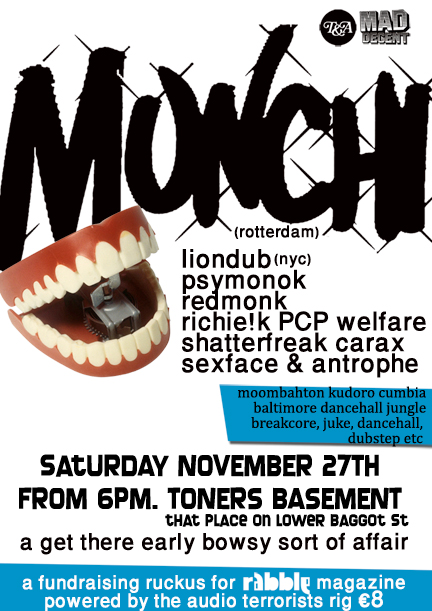
There’s been murmurs, there’s been whispers in the dark and there’s been fallow moments. But fuck it, we’re heading straight deep into a winter of deep discontent. And we want to get this magazine moving. So, what better way to do it than with a party. The bass and genre fucking blogosphere has been going ga-ga with production prodigy Munchi, some like Generation Bass have gone so far as to call him “the next Diplo.”
Why not drop down after the ICTU march?
Full Line up:
MUNCHI (ROTTERDAM)
LIONDUB (NEW YORK)
PSYMONOK
PCP
REDMONK
RICHIE K
WELFARE
SHATTERFREAK
CARAX
ANTROPHE
SEXFACE
Saturday, November 27. | Toners, Baggot St. | €8. | All dayer, kicks off @ 6pm. | More info here.

Posted in Dublin History, Social History, tagged booterstown, cross avenue, kevin o'higgins on November 24, 2010| 24 Comments »
O’Higgins, who was once called the ‘Irish Mussolini’, is one of the most notorious Free State figures and has been a figure of hate of republicans for generations. Between 1922 and 1923, he personally ordered the execution of seventy-seven republican prisoners including Rory O’Connor (who had been best man at O’Higgins’ wedding), Liam Mellows and Erskine Childers. A unapologetic social traditionalist, he famously remarked that was part of a generation of ‘the most conservative-minded revolutionaries that ever put through a successful revolution’. [1]
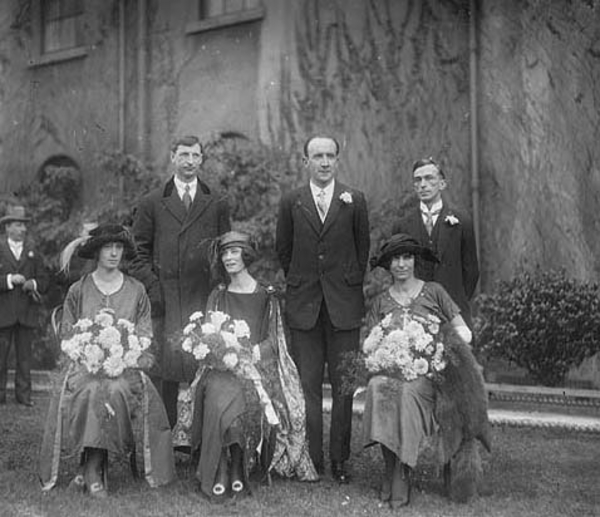
back row l-r: Eamon de Valera, O’Higgins and Rory O’Connor at O’Higgins’ wedding, 1921.
He was killed just before midday on Sunday, 10 July 1927 as he walked from his home Dunamase House on Cross Avenue to the Church of the Assumption on Booterstown Avenue. As he approached the junction of Booterstown and Cross Avenue, a man stepped out of a parked motor car and fired at point-blank range.
O’Higgins staggered, turned and began to run, followed by the man firing. O’Higgins collapsed on the other side of the road and two men came from the rear of the car and fired down at O’Higgins as he lay on the ground. The men then leaped into the car and drove off.[2]
The three anti-Treaty IRA men who killed him – Archie Doyle, Bill Gannon and Tim Coughlan – apparently saw him by chance. Gannon later recalled:
‘seeing him … we were just taken over and incensed with hatered. You can have no idea what it was like, with the memory of the executions, and the sight of him just walking along on his own. We started shooting from the car, then getting out of the car we continued to shoot. We all shot at him, he didn’t have a chance’.[3]
The motor car in which they used was believed to have been stolen from a Captain McDonnell on the night before. After the shooting, the car was later found abandoned at Richmond Avenue in close by Milltown. [4]
A weekly mass goer, O’Higgins was usually accompanied by his wife or by P. J. Hogan the Minister for Agriculture and his closest friend. This week however he was escorted by Detective O’Grady. When the two men were ‘between their house and Booterstown avenue’, O’Higgins sent the detective back to collect something that he had forgotten. It was later believed that the Garda escort was in fact sent to Blackrock to buy cigarettes [5]
O’Higgins was found lying by a ‘lamppost outside the gates of the house Sans Souci, which directly faces up Cross Avenue’ [6] by locals on their way to mass who heard the shots. Apparently local resident Eoin MacNeill was one of the first people to reach the dying O’Higgins. He was moved to his house and miraculously lingered on for another five hours. (Tens of thousands attended his funeral. You can see footage of it here.)
The Boards.ie user GusherING believes that there used to be a ‘little cross’ to mark the spot in which he was shot ‘near the entrance to Sans Souci’. A local history site confirms that there a ‘small cross inscribed on the present footpath’ that identified the location.
The question that now has to be asked is whether ‘historians’ like ourselves should be pushing to replace the cross that marked the spot of O’Higgins assassination. I think we should be. No matter your political views or opinions on individuals, historical moments in our city’s life should be properly identified.
===
[1] Joseph Lee, Ireland 1912-1985: politics and society (Cambridge, 1989), p. 105
[2] J. Bowyer Bell, The secret army: the IRA (New Jersey, 1997), p. 61
[3] Richard English, The Armed Struggle (London, 2003), p. 45
[4] The Irish Times, Monday, July 11, 1927, p. 7
[5] The Irish Times, Monday, June 11, 2007
[6] The Irish Times, Monday, July 11, 1927, p. 7

Posted in Football Articles, Uncategorized, tagged football, Ireland, irish football, italia '90, usa '94 on November 22, 2010| 8 Comments »
Italia ’90 came just too early for me, and while I still have recollections of it, most of them more than likely made up as they are far too glorious for any six year old to have experienced. So, USA ’94 was more within my grasp and while I wasn’t a football loving child (oh how my ways have changed,) it was hard not to get caught up in the fever pitch that surrounded a national event like Ireland playing in the World Cup. Streets empty during games and lined with Olé Óle Olé chanting, pint swilling headcases after them. Audacious thieves made a fortune ram- raiding shops during the games, safe in the knowlege their local Gardaí were most likely huddled around a portable tv in the station, blissfully unawares to the happenings in the outside world. The glory of Italia ’90 was impossible to recreate but the reactions to beating Italy and drawing with Norway were the same. Pure unadulterated lunacy.

Soccerball World Cup mascot, 1994
The football sure as hell wasn’t beautiful. The mind truly boggles to think that Ireland beat Italy with a team consisting of five defenders, two defensive midfielders and a man by the name of Tommy Coyne up front. But we did win, Ray Houghton netting in the eleventh minute before eloping on a mad run, tumbling like a toddler and emitting screams that put Marco Tardelli to shame.
Celebrations were short lived as Jack Charlton sent out the same side against Mexico and they were duly spanked 2-1. And still, we somehow managed to qualify for the second round by playing out a dull encounter against Norway that ended 0-0. Exciting stuff, the four teams in the group finishing on four points, Ireland scraping through only due to their win against Italy. Three games, two goals scored and two conceeded. You really do look back at these things with rose tinted glasses as reading that statistic shows it was about as far from total football as our Monday night kickabouts. But these were different times, Roy Keane was still a young man, we had squad members like Alan Kernaghan, Alan McLoughlin and John Sheridan and Gary Kelly was still a player with “great potential for the future.” We were tonked 2-0 in the next round and the dream was over.
Why am I harping on about all this you may be (or more than likely aren’t) wondering. Well, digging in the attic last week I came across a collection of cards Kellogs had produced for the occasion. You got free stuff in your cereal those days, generally useless plastic toys or reflectors for the spokes of your bike, but they came up trumps with these. I’m missing Bonner, Babb, Coyne, Eddie McGoldrick (remember him?!) and John Aldridge; Terry Phelan has lost his head. Anyone out there with swapsies?
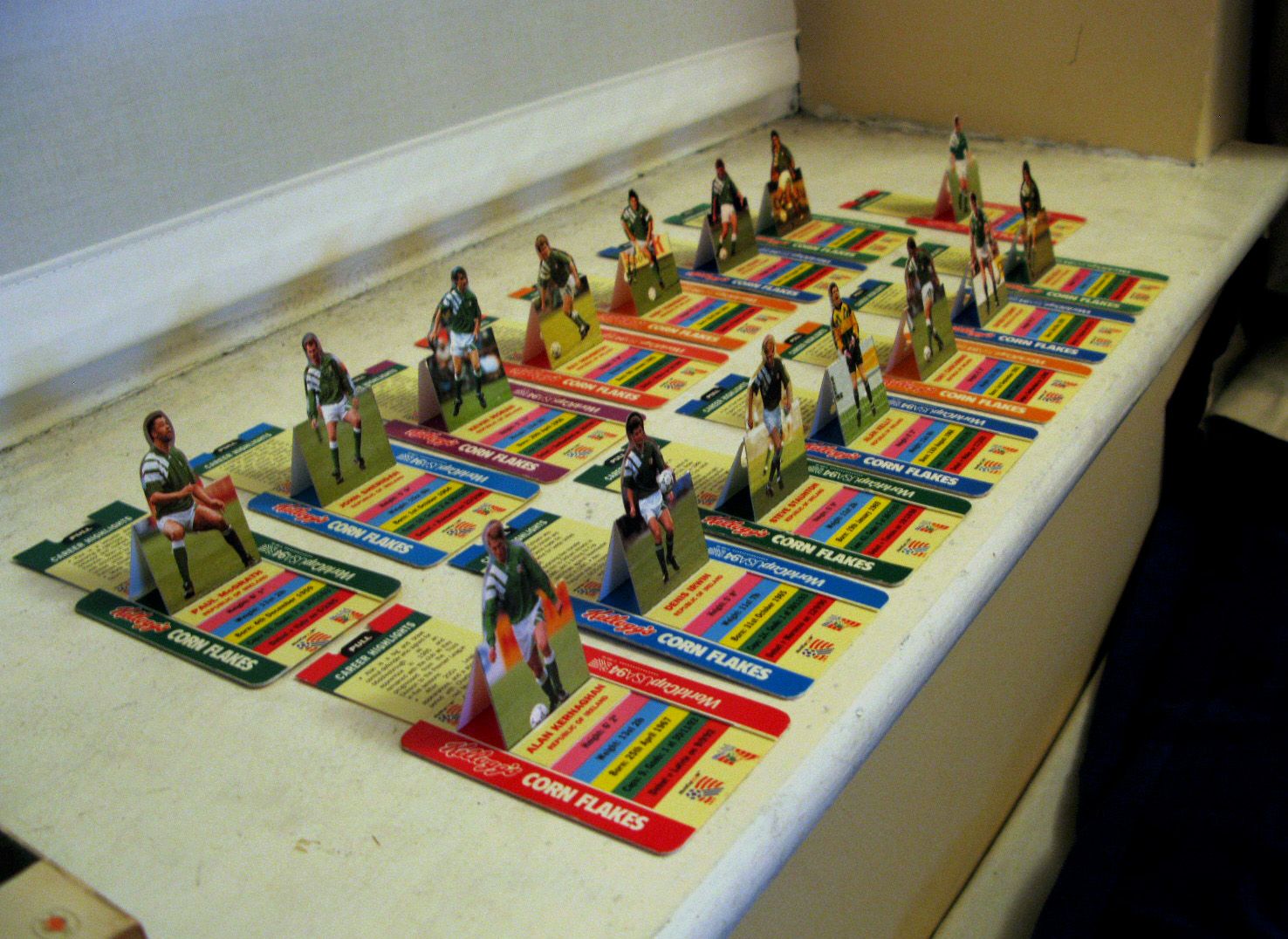
The Kellogs freebies from USA '94, six shy of the full squad!
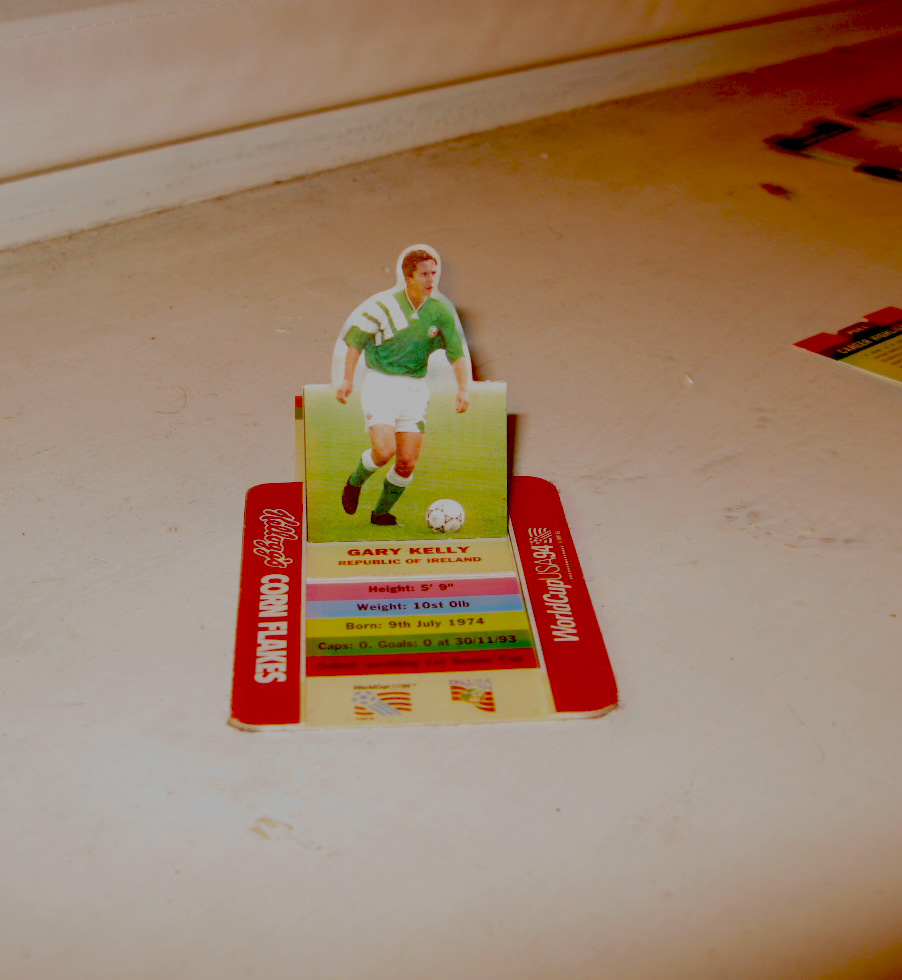
Gary Kelly; His profile says he has "great potential" and he hadn't won the first of his 51 caps yet
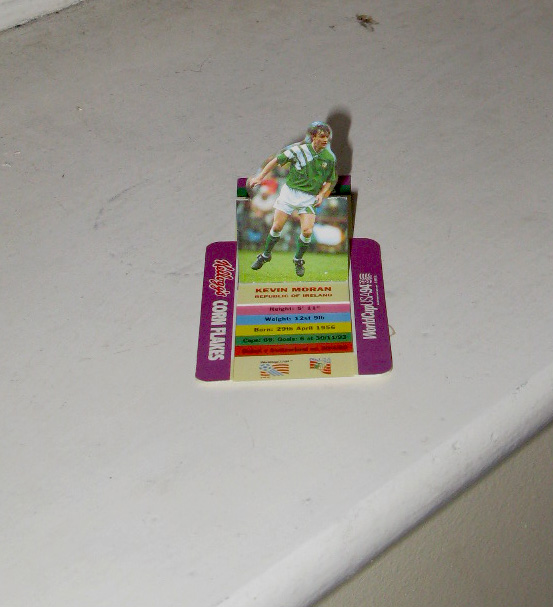
Ex- Bohs, and the only person in the world to have an All Ireland GAA medal for football and a FA Cup winners medal, Kevin Moran
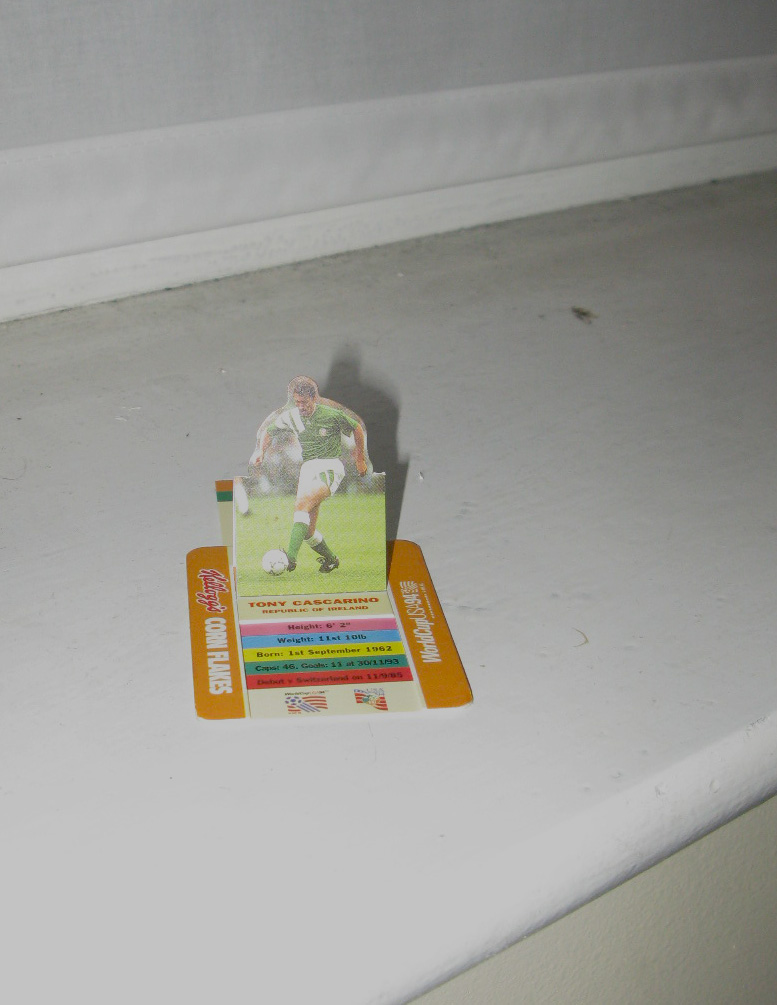
The man who played 88 times for Ireland and scored 19 goals despite not having a drop of Irish blood in him- Tony Cascarino
Anyone who can provide the missing cards mentioned above, please get in touch- I’d love to get a picture of the full squad… Comment on here or e-mail me at ci_murray@hotmail.com …

Posted in Miscellaneous, Music, tagged Jazz in Dublin on November 22, 2010| 2 Comments »
I’ve always been fascinated by the crusade against jazz music in 1920’s and 1930’s Ireland. A piece in the past on aspects of the hidden history of soccer in the capital touched on a GAA convention in 1930 which called for the banning of “jazz dancing”.
The title of this post comes from an Irish Times report from October 12, 1927. In it, Signor Pietro Mascagni was asked for his opinion on jazz music. “I am for sound in music and against noise” he noted.
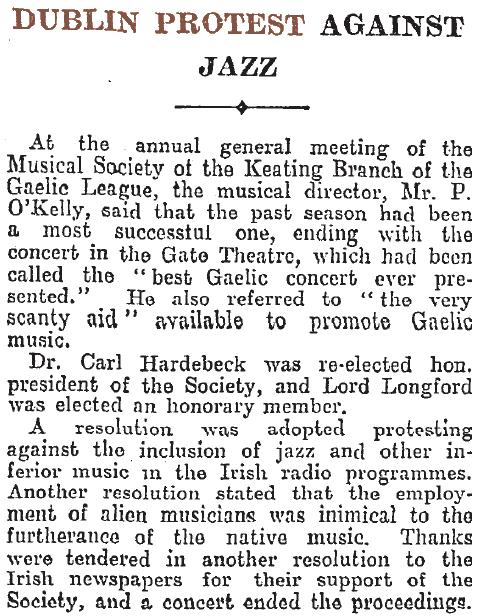
This 1938 piece from The Irish Times is among my favourite finds to date however, coming from June 20. The crusade against jazz was very much alive and well in the capital. Other “inferior music” was also condemned. Mad times.
Still, not everyone in Dublin was scared away. Here’s a 1930 ad for a Dublin music shop advertising stocking “the latest jazz tune” among other things.
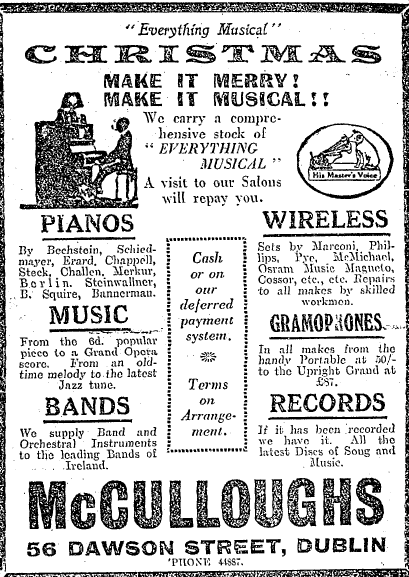
Give me some time, and I’ll try knock out a piece down the line on jazz in the capital. There’s a fascinating little subculture alright!

Posted in Miscellaneous, Pub Crawls, Social History, Uncategorized, tagged Dublin Pubs, guinness, pubcrawl on November 22, 2010| Leave a Comment »
Unless you’re a newcomer to CHTM, you’ll know that on one Sunday a month the three of us, in the company of a small group of friends head out on a pub crawl, with pubs selected by one member of our troop but not revealed until we’re standing outside the door.
So, Halloween evening, and it was pubcrawl time again. This week, the pubs were selected by JFlood, the only person outside of the CHTM trio to have ventured to pick a route so far. The starting point was Charlemont Luas stop, not far from Ranelagh, so we had a fair idea what side of the city we were headed for. Four thirty was the alotted meet up, and we didn’t have far to go to the first stop, The Barge on Charlemont Street.
I’ve been told that on a warm Summers day, there’s nowhere like the place, getting your pint from the bar and then heading out to sit by the canal and enjoy it. No such luck today, four thirty, Halloween afternoon, dark and dreary Dublin. Not inside The Barge though, a large airy bar split into three levels, the ground floor, a mezzanine area and the second story. A beautiful place to look at inside, and spotless throughout; I was quite taken with the place on first impressions. What I wasn’t mad about was that most of the trade was taken up by a Sunday lunch crowd. Now this isn’t an offence in itself, but I’m not crazy on the idea of having a few scoops somewhere in the knowledge that there’s a family tucking into dinner beside me. The food looked and smelled great, but it was the Guinness we were here for. We took up position in an excellent little snug hidden upstairs with a couch and two arm-chairs squeezed into it and hit the bar to be welcomed by the news that the barman would drop down our pints; a nice touch. The pint, at €4.40 went down well- they obviously take pride in their presentation, as unlike a lot of places that do food, the glasses were spotless and the pint looked perfect. I quite liked this place, it was nice to be tucked away from the hustle and bustle, with the barman down to us after a few minutes asking if we wanted another. But, we were only staying for one so had to make our apologies.

The Barge Bar by Bill in DC, from Flickr
As expected, JFlood led us yet again away from our comfort zone of the city centre. His previous pubcrawls had taken us around The Liberties (my favourite pubcrawl yet by far) and Rathmines so it didn’t suprise me when we headed up Ranelagh Road.
The next pub was one I don’t think half of our group had ever set eyes on before, never mind set foot in. Hidden away on Mount Pleasant, behind the new school on Ranelagh Road and with rows of neighbouring on either side, The Hill is reminiscent, situation wise at least, of Gravediggers in Glasnevin- hidden away in residential area. But as often the case, a hidden pub can be a hidden gem and such is the case for The Hill. A smashing looking bar inside and out, this place looks like its been here since time began; they’ve maintained the Victorian stylings down through the years, and is the kind of pub that feels like its been passed down through generations. A quick look in the Irish Times archive shows it was last on auction in 1999 so that dispels that notion.
We got a few inquisitive looks as we entered, a definite sign of a locals bar, but thats to be expected as the bar lies off the beaten track. The barman again offered to bring the pints down and we sat ourselves in a raised seating area up the back, under the telly. And whilst Liverpool were on, and there were a few regulars watching, the volume wasn’t pumped up as it would normally be and we had no problem talking over it. Not too far away from Rover’s heartland of Miltown here so myself and DFallon exchanged a few nods at the expense of the regulars nattering about their lifting of the LOI trophy on Friday night. It did suprise me when one of them let a roar out of him when Liverpool scored with a few minutes to go- in Rovers absence from Miltown, he had obviously adopted an English club… Again though, a beautiful pub.

The Hill, Ranelagh. Pic by Hellplex, from Flickr
Obviously extended into one of the houses next door, the pub seems a lot larger inside than it does out. The pints arrived, and at €4.15 certainly weren’t to be sniffed at; the pint of the night for me. Conversation flowed in this place, and where we normally end up ranting about Michael Collins towards the end of our monthly pubcrawl, he was a target of out venom in our second pub here, (well, more the Neil Jordan film about him. A car bomb? In Dublin Castle? Now there’s historical revisionism.) Nice warm bar, interesting surroundings, great pint and a spotless jacks led this to be pub (as well as pint) of the night for me.
So back into the cold and dark and onwards to our next stop, Russell’s in Ranelagh village. Another eatery this, but as the evening was getting their wasn’t too many around. An odd place this, for while in was clean and tastefully decorated, it just lacked a certain something- there wasn’t much on the walls to distinguish what kind of a crowd it draws; normally you have a few pictures, snaps of locals or whatever. Russell’s? Nothing that we could see. According to one of the lads, its a big rugby pub, but you wouldn’t know it apart from the ads on the front doors. The pint came in at €4.40 and wasn’t too bad, less care for the presentation here though as two of the four pints were over-filled, while not a mortal sin, its something I know the Guinness quality control team frown upon.

Russells of Ranelagh from YPYounge.ie
Where the first two pubs oozed character, both I would say due mainly to their locations (The Barge right next to a lock and The Hill looking like it was just dropped into a row of houses by accident, I just couldn’t take to this place- it felt more restaurant or bisto than bar, and I don’t think any of us felt too comfortable here. Upstairs looked great, and the smoking area is out on a balcony which is a nice touch but we didn’t fancy the cold so we stayed inside, again up under a telly at the back of the bar.
So onwards to Smyths, just down the road, but not before a quick stop in the Ranelagh chipper and bags of chips all round here. Suprising to see the McDonalds on the corner closed; you’d think they at least would weather the recession- apparently not. Anyway, into Smyths, quite a nice spot, most of the tables inside occupied, and the ones that weren’t had glasses on them, suggesting a busy evening. With the football just over, I’d presume it was that. Up at the bar I ran into an ex- workmate of mine, a retired civil servant and she swears by this place; I trust her judgement.
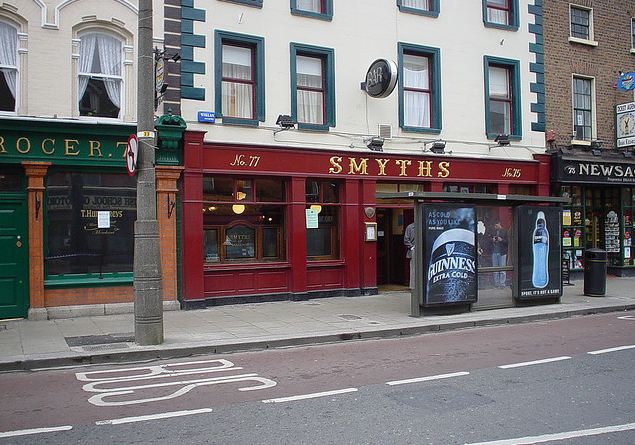
Smyths of Ranelagh
As I said, there was a decent crowd in here, so we made our way out to the smoking area. Wood panelled, well heated with a flatscreen showing La Liga, we were all happy here. There are Trinity residences around the corner and what we presume were some of the residents, most of whom embraced the halloween spirit and were wearing fancy dress, took up most of the area, but we found a nice little corner right under a heater. The pint, at €4.45 was the business, well presented, a decent head and tasted great; or my belly may just have been happy from the bag of chips ten minutes earlier. One of the lads definitely got costume of the night approval from CHTM anyways as Super Mario walked past, moustache specially grown for the occasion. Legend. We stayed for a couple here, comfortable as we were, and Smyth’s is definitely a spot I’d have no qualms about coming back to.
I’ll be honest and say this is where it starts to get hazy. JFlood had the next spot picked, McSorley’s, only a few doors down. Chris, my old workmate had told me to head up there either way, recommending it as a great spot. And it was a great spot, though not necessarily my kind of spot. The barman was dead-on, dressed in the garb of the local secondary school, we knocked a bit of craic out of the American football on the telly that nobody seemed to be watching except him.
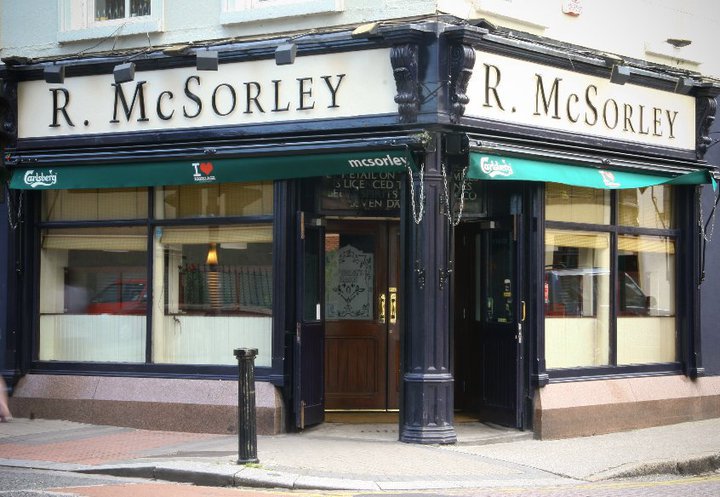
McSorleys, Ranelagh. from their Facebook
As I said, a nice place, candle lit tables lined the walls, and several of them were occupied. Where Smyth’s seemed to be a youger crowd, McSorley’s came across as more of a thirty- something spot. They do food, and I’d say the place gets busy on a Friday and Saturday night (its a late bar and so stays open until two o’clock at weekends) but tonight was just a steady stream of custom so we nabbed ourselves a high table close to the bar. Pints were €4.45 and there were no complaints.
We did visit one more pub, Birchall’s but I’d be doing it an injustice to try and review it as I simply can’t remember a thing about the place other than that the pints were somewhere around the €4.40 mark and were fine. And I’m sorry, thats all I remember, not from the drink, honestly. Myself and DFallon were sober enough to make our way back to the Luas stop, somehow befriend the drunkest woman in the world (by befriend, I mean she came up and started talking to us before lying down on the platform.) So there you are, six pubs, five that I remember. Standout of the night though had to be The Hill. But for it’s Rovers associations, it’d be perfect.

Posted in Music, Social History, tagged berlin, D.C. Nien, jaroc, New Versions, Resistors, Rocky De Valera, sacre bleu, square meal, the atrix, The Teen Commandments, U2, zebra on November 22, 2010| 10 Comments »
(I’ve already written quite extensively on Dublin’s late 1970s/early 1980s Punk & New Wave scene. See The Sense of Ireland (1980), Dave Fanning & The Sportman’s Inn, Classic Dublin Punk/New Wave Singles (The search continues…), Dublin Punk & New Wave Venues (1976-84), The Blades; Revelations (Of 45s) & The Blades Are Sharp, The Atrix, The Spies, & D.C. Nien.)
Just For Kicks was a pivotal 12 track, black vinyl LP compilation, released by Kick records in December 1979, showcasing the very best of unsigned, new wave Dublin bands. U2songs have a considerable bit of information on the compilation here.
Kick Records, based out of 24 Upr. Fitzwilliam Street, was run by former UCDSU president Charlie McNally. He passed away in 2020.
It is a highly rare and coveted collectors item due to its limited pressing, the inclusion of U2 and for the fact that The Edge played bass on the Teen Commandments’ track “Something’s Better than Nothing”. Thus becoming the earliest recorded collaboration by a member of U2 with another act.
The executive producer was Charlie McNally, the recording engineer was Johnny Byrne, the record was ‘assisted by’ Paul Thomas and Master Production was by Windmill Studios. The cover was designed by Martin Devane, the record was pressed by Carlton Productions and printed by Massey Bros. Ltd. Dave Fanning (RTÉ Radio 2) supplied the sleeve notes.
This is the first time any of the songs below have been uploaded online. Enjoy.
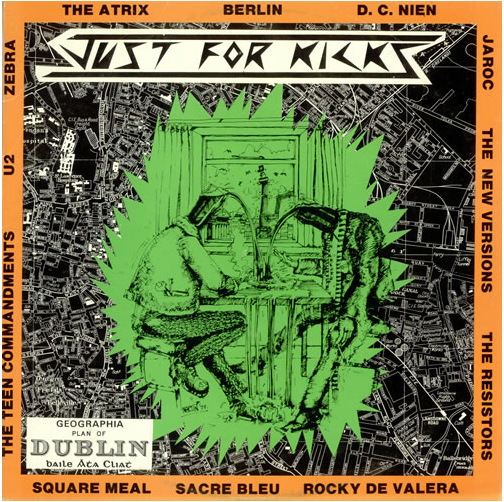
The creative front cover of the LP. In the background, a street map of Dublin. The centre picture shows two figures with pints of Guinness for heads spilling drink on a table. Outside the window, Nelson
Side One:
1. U2 – Stories for Boys (U2, Copyright control)
2. Berlin – Stop Stop (Devon, Kick/Foxrock Music)
3. D.C. Nien – Reptile (D.C. Nien, Kick/Foxrock Music)
4. Rocky De Valera & the Gravediggers – Lady Loves to Rock’n’Roll (Rocky, Kick/Foxrock Music)
(Unfortunately this song was scratched on my copy. If anyone could go to the trouble of uploading this song, I’d be extremely grateful)
5. The Resistors – Service With a Smile (McStay, Break Publishing)
6. Sacre Bleu – Mademoiselle Goodnight (AK/Doyle, Raglan Music)
Side Two:
1. The Atrix – Treasure on the Wasteland (The Atrix, Endofearth Songs)
2. New Versions – Tango of Nerves (Byrne/Kiang, Kick/Foxrock Music)
3. Teen Commandments – Something’s Better Than Nothing (Byrne, Kick/Foxrock Music)
4. Zebra – Silent Partners (Deana McCormack, Manuscript)
5. Jaroc – Midnight Charmer (Morgan/McFarlane, Kick/Foxrock Music)
6. Square Meal – Love Attack (Baily/Belton, Darkfox Music)

Posted in Politics on November 22, 2010| Leave a Comment »

God, what a day just passed us. The image above sums this recession up nicely. Nothing sweet about it though.
Still, Vincent For Taoiseach is surely being printed onto t-shirts all over the island. I spent most of yesterday doing some research on the 1918 election, I couldn’t help but think of a classic Sinn Féin poster from that election…..
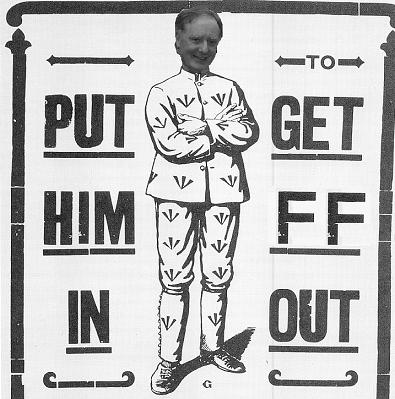
For anyone who missed it, here was why last night Vincent Browne was the voice of the angry public on TV3. Well done Vincent. Still essential viewing.

Posted in Miscellaneous on November 21, 2010| 3 Comments »
As mentioned in a post earlier on, I did an excellent Bloody Sunday focused walking tour of Croke Park today with John Campbell from the Croke Park Museum.
Below, I’ve uploaded a few snaps of an almost completely empty Croke Park. Beautiful.
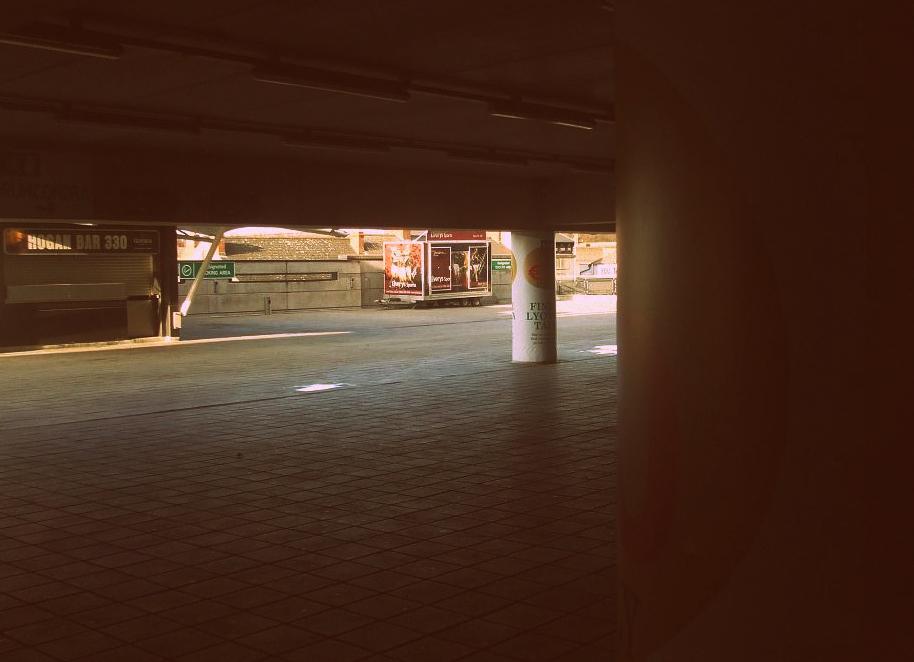
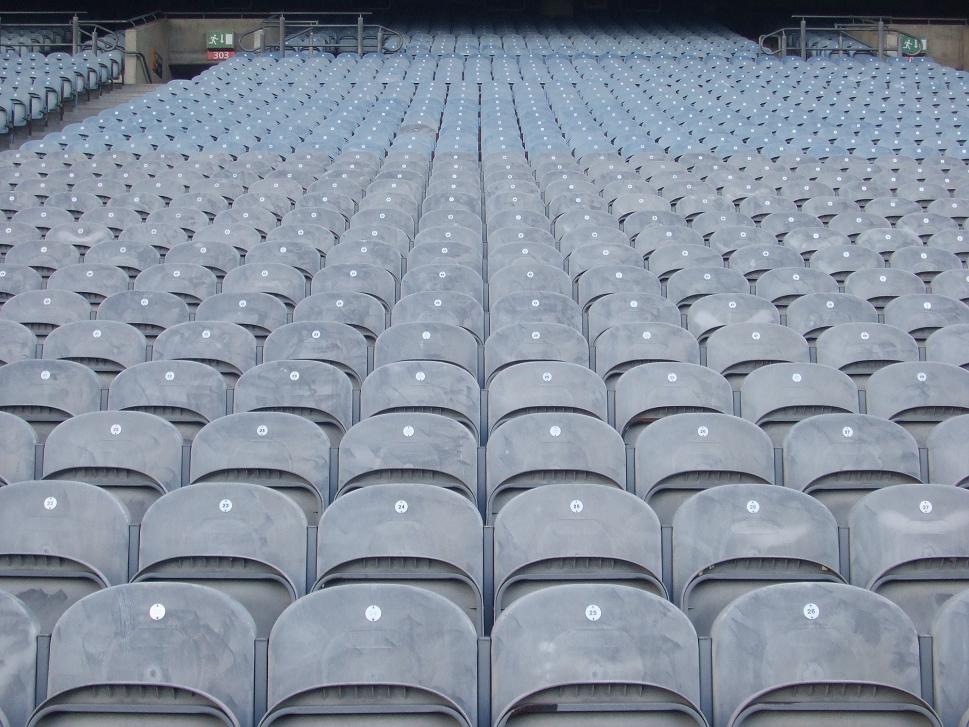
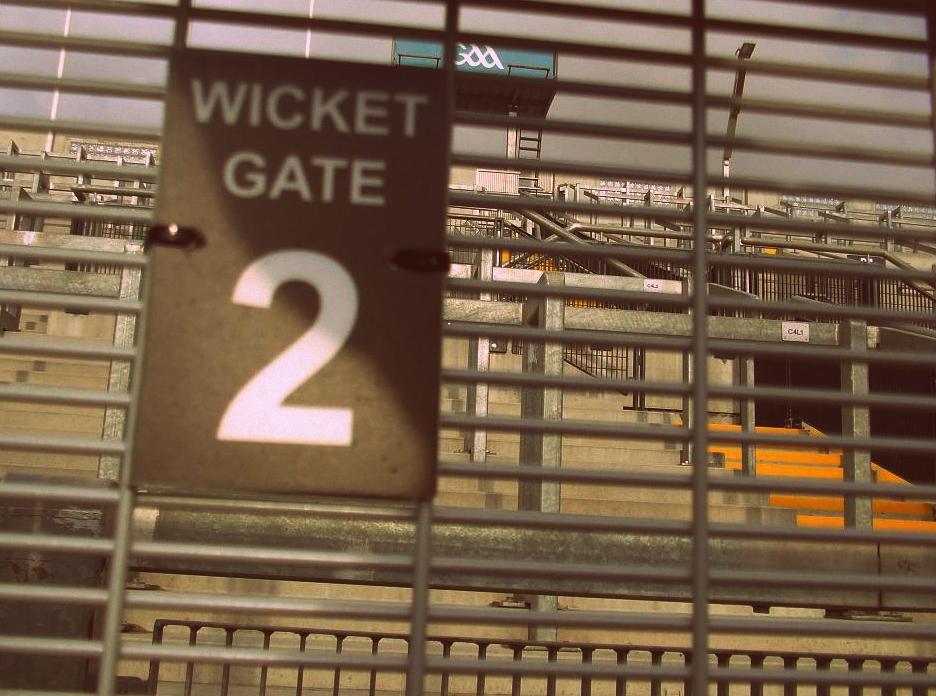
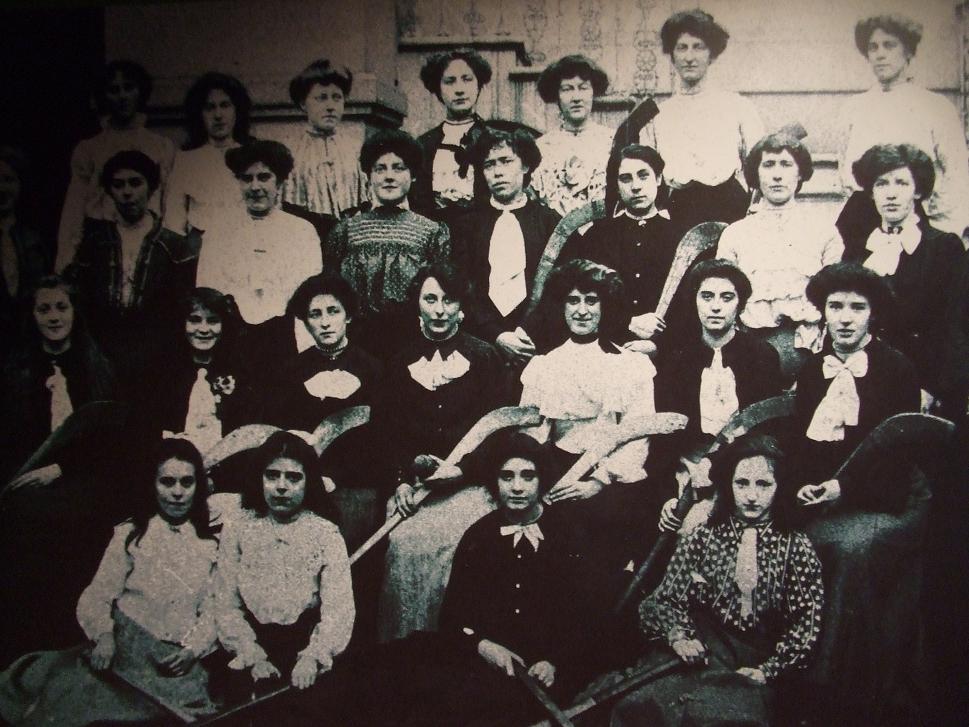
(Any info on this excellent image? donal.ofalluin.2009@nuim.ie)
(more…)

Posted in Dublin History on November 21, 2010| 41 Comments »

The Dublin team of the day.
An anniversary that might pass you by….
It is very unusual for the anniversary of Bloody Sunday to fall on a Sunday. Sunday, November 21 was one of the most intense and horrific days of the Irish War of Independence.
Michael Hogan, Thomas Hogan, Jane Boyle, Joseph Traynor, Jeremiah O’Leary, Thomas Ryan, James Burke, Daniel Carroll, William Robinson, James Matthews, Michael Feery, John William Scott, James Teehan and Jeremiah O’Dowd were all gunned down at Croke Park in Dublin, while Dick McKee, Peadar Clancy and Conor Clune were killed at Dublin Castle. While Clune was not a member of the Volunteers, McKee and Clancy were leading members of IRA GHQ, and Ernie O’ Malley noted in his article Bloody Sunday how the organisation had developed owing to their leadership and influence.
“The four Dublin city battalions had a very intimate knowledge of the metropolis, its lanes, by-lanes, alleys and back yards, its enemy barracks and the habits of its opponents”
Of those killed in Croke Park, three were children. 10,14 and 11 years old.
Trade union leader William O’ Brien noted in Forth The Banners Go that intelligence efforts against republicans, trade unionists and the like intensified after Bloody Sunday. Following a raid on Liberty Hall, where copies of the Black and Tans internal The Weekly Summary were found, O’ Brien noted that those arrested at Liberty Hall were taken to Dublin Castle. “We were brought into the very room that had been occupied by McKee, Clancy and Clune and where they were killed the previous Sunday. The marks on the walls (…) were still there.”
The day had of course begun with the attacks by ‘The Squad’ of Michael Collins upon the intelligence services which attempted to combat republicans in the city. It was a calculated effort to remove the ‘Cairo Gang’ from the scene, a series of early morning raids for the most part in a small area of south Dublin.
The Irish Times of November 22 ran the below ‘Official Report’ into events at Croke Park.
“It is believed that a number of gunmen came to Dublin today under the guise of a wish to attend a Gaelic football match between Dublin and Tipperary, but that their real motive was to take part in a series of murderous outrages which took place in Dublin this morning. In this belief it was decided to make investigations at the match itself, and for this purpose a mixed party of military, R.I.C and Auxiliary Police were detailed”
Interestingly, Winston Churchill would tell a Cabinet meeting that no reprisals had taken place for the attacks upon the British intelligence machine in Dublin on the morning of Bloody Sunday. Those at Croke Park would no doubt disagree.
Today is a very important Dublin anniversary. Let us hope that in 2020, the day is marked with a game between Dublin and Tipperary perhaps. Great praise is due to John Campbell at the Croke Park Museum for marking the day so fittingly today with two walking tours of the stadium.


 | Niall Lombard on Following in the footsteps of… |
 | Dee Keegan on Another unusual Dublin plaque,… |
 | M Bradshaw on 4. Johnson’s Court |
 | M Beatty on 4. Johnson’s Court |
 | Xxxxx honer on A divided Rathmines |

 Click on the book for more.
 Click on the book for more.
 Donal
Donal Ciarán
 Sam
Sam Come Here To Me!