Feeds:
Posts
Comments

Archive for March, 2013

While much has been written and said about the infamous 1995 clash between Ireland and England that ended in a riot, the November 1990 fixture between the sides also saw some physical confrontations, although these happened away from the stadium. A one-all draw, I’ve always loved this footage which shows the moment Ireland equalised.

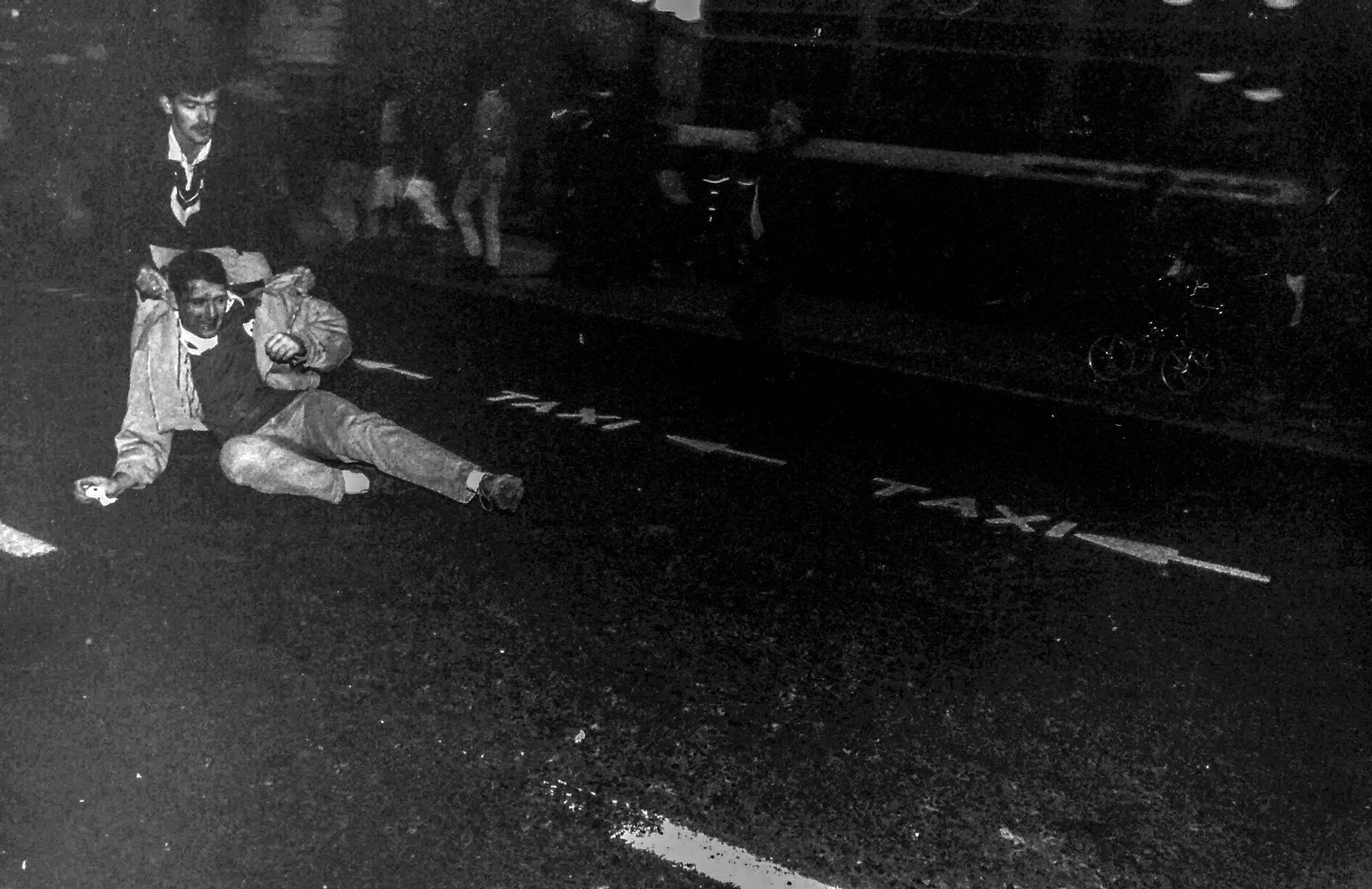
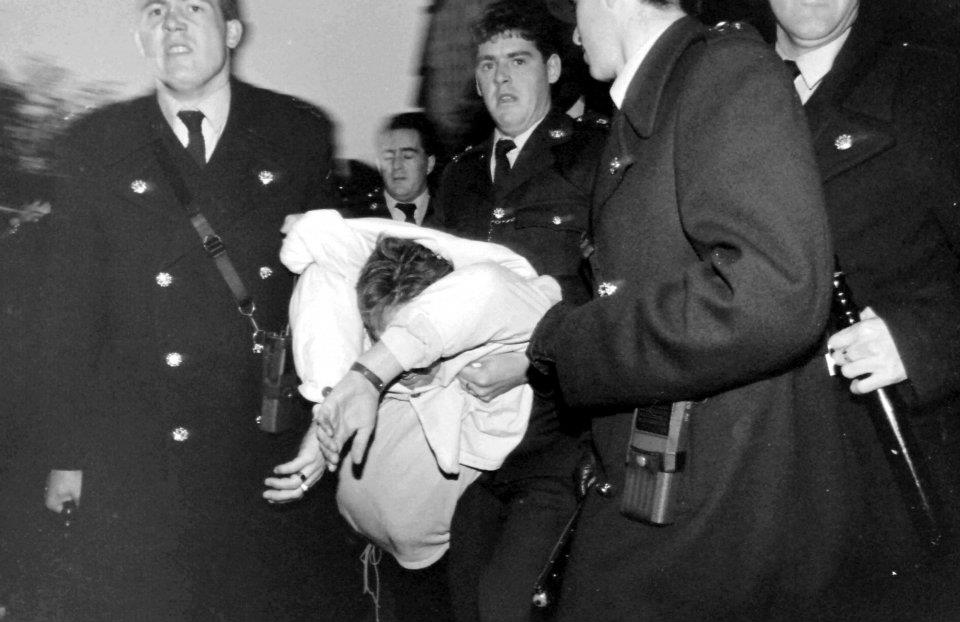
The confrontation between rival supporters happened primarily on O’Connell Street, in the hours after the football match. A demonstration in solidarity with republican prisoner Dessie Ellis was underway there, and more than 100 people were arrested following clashes.

Photographer Wally Cassidy was on O’Connell Street, and snapped some of the scenes. We’ve posted some of Wally’s work here before, and his Facebook page is well worth ‘liking’, with plenty of great black and white shots of Dublin in the early 1990s.

Image: Wally Cassidy

Image: Wally Cassidy

Wally Cassidy

Image: Wally Cassidy


(more…)

Read Full Post »

Over the last month, a further two stories from Come Here To Me! have been aired on RTE’s The History Show. These stories have tied-in with content on the programme, or have been aired to coincide with historic anniversaries.

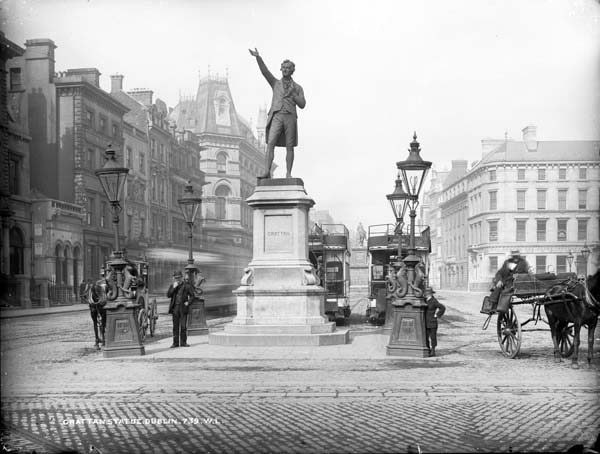
The first story was aired on 24 February and dealt with the controversy surrounding Dublin Corporation’s original decision to place a statue of Prince Albert, and not Henry Grattan, at College Green in the 1860s. Grattan took his spot and is still there today. Prince Albert’s statue sits hidden in the grounds of Leinster House beside the Natural History Museum. The story, read by David Herlihy, can be played here.

Henry Grattan statue. nd.

Henry Grattan statue. nd.

On 24 March, the story of John McGrath (Ireland’s only prisoner of Dachau concentration camp) was read on the progamme. This week marked the 80th Anniversary of establishment of Dachau Concentration Camp. McGrath, a World War One veteran and manager of the Theatre Royal cinema on Hawkins Street, fought against the Nazis and was imprisoned in four different German camps. Never fully recovering from the physical and psychological trauma of his imprisonment, McGrath passed away in Dublin in November 1946.   The story, read by Dave Sherry, can be played here.

John McGrath. The Irish Times, 29 Nov 1946.

John McGrath. The Irish Times, 29 Nov 1946.


Read Full Post »

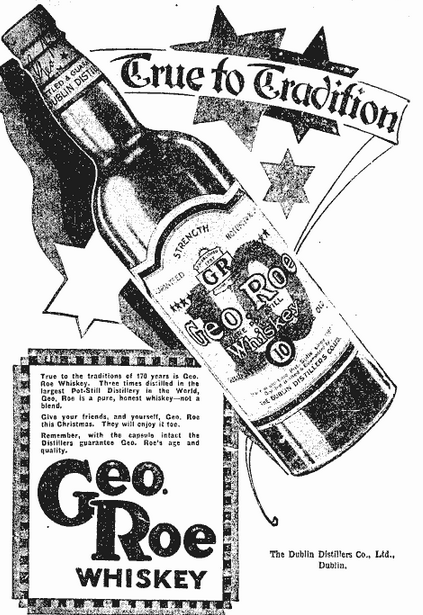
A 1929 advertisement for Roe's whiskey.

A 1929 advertisement for Roe’s whiskey.

While most Dubliners are unfamiliar with their name and trade today, the Roe family have contributed significantly to the city of Dublin. They not alone funded the restoration of the magnificent Christchurch Cathedral, but their now-defunct distillery on Thomas Street was home to the largest smock windmill in Europe.

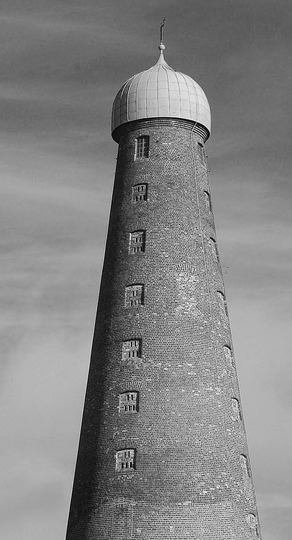
Saint Patrick watches over us from Thomas Street, though many may never have noticed him, resting on top of Saint Patrick’s Tower. The Irish Times noted in 1929 that this was then “the largest Pot Still Distillers in the world”, and Saint Patrick rests on top of a windmill that formed a part of that premises.

windmill

Writing in 1965, John McCaffery noted that “from the street the figure (of Saint Patrick) looks comparatively insignificant, but it is actually 4 feet in height. The tower itself is 135 feet high and the width of the base is 70 feet.”

Saint Patrick looking over Dubliners.

Saint Patrick looking over Dubliners.

The Roe family, who owned the distillery, are hugely important in the history of the city. Their contribution to Dublin was the major restoration of Christchurch in the late nineteenth century. It should be remembered that Guinness, located just across the street from the Roe’s at Saint James’ Gate, had funded the restoration works at Saint Patrick’s Cathedral. In 1871 George Roe offered to fund the restoration of Christchurch and the construction of a new synod hall, with leading architect George Edmund Street employed for the task. The sheer scale of this project is evident from Archiseek, where it is noted:

The Cathedral as it exists today is mainly Victorian due to the extensive restorations and renovations carried out by the English architect George Edmund Street in the 1870s. This cost over £230,000 and like the renovations at nearby St Patrick’s Cathedral was funded by a drink manufacturer – Dublin Whiskey Distiller Henry Roe who like Benjamin Guinness generously donated the entire cost.

(more…)

Read Full Post »

The Dublin Maccabi Assoication has been uploading some fantastic photos onto their new Facebook page.

Founded as the Carlisle Cricket Club in 1908, they changed their name to the Carlisle Athletic Union before becoming the Dublin Maccabi Association in 1942.

In 1954 they opened a new state of the art sportsground at Kimmage Road West, Dublin 12. At the time it was said that the ground was “only equalled around Dublin by Croke Park, Lansdowne Road, Belfield and College Park.

The ground was in use until 1998. Declining membership of Dublin’s Jewish community was cited as the main reason for the decision to sell.

In March 1960, the first amateur performance in Ireland of “The Diary of Anne Frank” was held at the Club. In April 1963, over a thousand people packed the hall at the sports ground for a service to commemorate the Warsaw Ghetto uprising. The Chief Rabbi of Ireland, Dr. Isaac Cohen, spoke of their heroic sacrifice but warned:

the sacrifices of the thousands who died did not suffice. Today, 20 years afterwards, we must continue our vigilance against the constant menace and threat to the peace and tranquility of mankind

Here are some pictures from the association’s Facebook page:

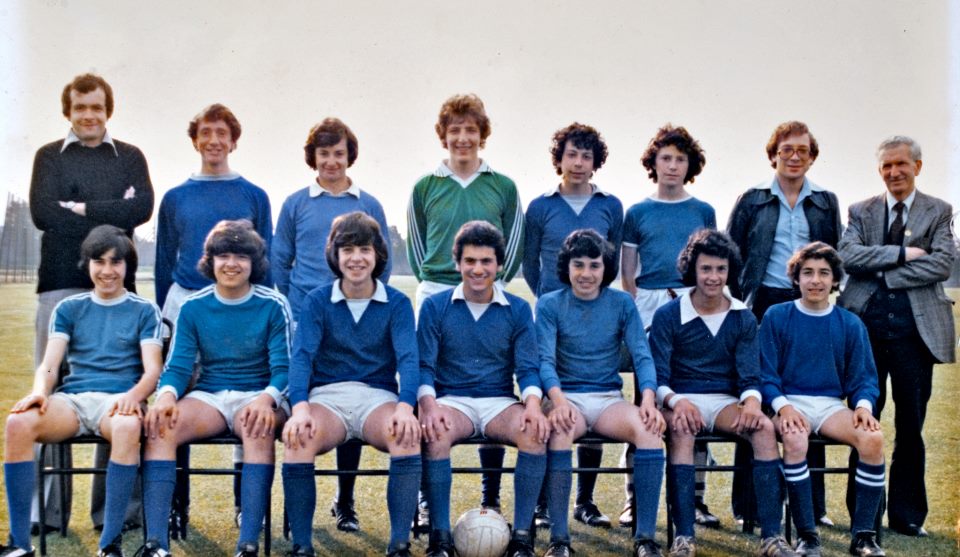
Dublin Maccabi Soccer Team, 1977

Dublin Maccabi Soccer Team, 1977

xxx

Dublin Maccabi Soccer Team, 1960

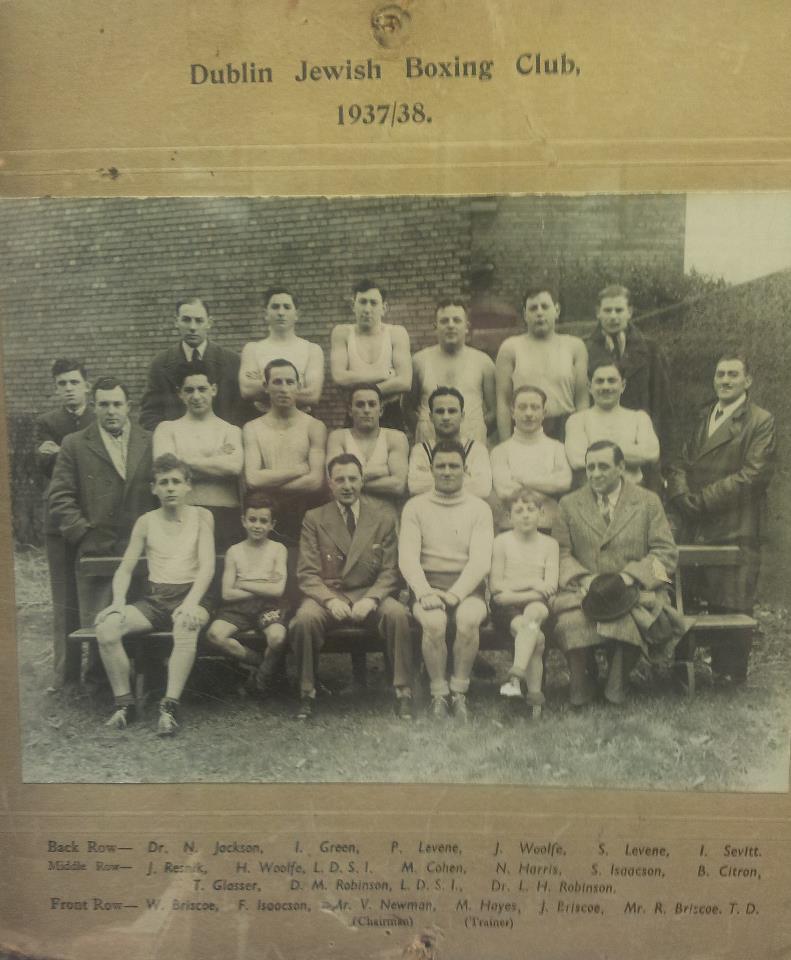
Dublin Jewish Boxing Club, 1937/38.

Dublin Jewish Boxing Club, 1937/38.

Read Full Post »

In recent weeks we have posted a number of articles on the 1913 Lockout to the site, looking at things like the cartoons of the Sunday Independent, the visit of leading trade unionist Bill Haywood and the funeral of Big Jim many years on from the event. We intend to continue posting brief articles like these as a small contribution to the centenary year, but it’s also our hope to promote events which examine the Lockout and its place in Dublin history.

This upcoming play by Ann Matthews is something I will certainly be attending. Matthews has written two excellent studies on the history of women in the republican movement, and this is her first play. Both Renegades (a study of women in the republican movement up to the end of the Civil War) and Dissidents (which looked at women who were hostile to the new state) were important books in my view, putting women into their rightful place in the narrative of the Irish revolutionary period and Irish republicanism.

This play will be performed in the New Theatre, in Connolly Books. I have to confess, I only made my first visit to the theatre last week, thanks to the freak weather conditions which called off the Shelbourne and Saint Patrick’s Athletic clash, leaving us with a few hours to fill. As a friend perfectly put it, football is theatre of a different kind.

Lockout

Read Full Post »

Recently, I stumbled across a news report from June 1963. The News and Carton Cinema on Grafton Street were showing Elizabeth Is Queen, and during one screening a number of youths “jumped up on stage, sprayed the screen and then part of the audience with fire extinguishers threw a bottle of ink at the screen, slashed it, and ran out of a side exit and escaped.”

This attack on the screening of a Royal film in Dublin was by no means the first attack of its kind in the history of the city. Indeed, in the 1920s and 30s such political attacks were rather common. Some films were not shown at all here, with a belief existing that they could lead to scenes of protest. As noted in Cinema and Ireland, when the American-produced Indian Raj film The Lives of a Bengal Lancer (1935) was first screened here:

Rupert Brooke’s provocative poem ‘England, My England’ was removed, while ‘Land of Hope and Glory’ was substituted for ‘God Save the Queen’. Indeed, it was also deemed wise not to screen the George V celebration film, Royal Cavalcade (1935)

The primary reason republicans choose to attack particular films and cinemas in the 1920s and 1930s was a belief that in showing films which glorified war, or the British Royals, there were pushing an imperialist agenda. This was all part of a wider campaign of course, occurring at the same time when the republican movement was waging street protests against Remembrance Sunday and other such events. As Brian Hanley has written:

Beginning in 1925, when the Masterpiece cinema in Dublin was blown up for showing ‘imperialist’ films, British Legion premises, scout halls and monuments to English monarchs were all targeted. IRA units were also instructed to make off with any Union flags that were prominently displayed in their areas.

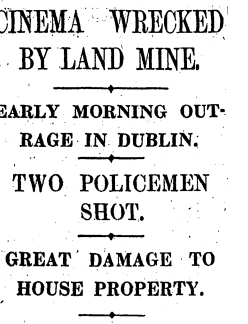
News coverage of 1925 bombing of Masterpiece Cinema (Irish Times)

News coverage of 1925 bombing of Masterpiece Cinema (Irish Times)

The 1925 bombing of the Masterpiece cinema grabbed national headlines, with The Irish Times of 21 November 1925 reporting that:

At seven o’clock yesterday morning three men exploded a powerful landmine in the wide entrance to the Masterpiece cinema in Talbot Street, Dublin. The explosion blew out a large portion of the front of the building, and wrecked the glass in nearly a score of houses in the street.

Soon after this incident, it was reported that two plain clothes police officers were fired upon in the area. This story played out for a long time afterwards in the courts and the national media, with the Corporation paying out considerable compensation to the damaged cinema and other businesses in the area. The Masterpiece cinema had previously been called upon by armed men, who had seized seven of its eight copies of the film The Battle of Ypres. Below we see some footage from the original 1925 version of the film.

(more…)

Read Full Post »

Old Dublin advertisements have always appealed to me, giving a taste of life in the city at any given time, and also showing how advertising has changed through the ages. These ads have all been taken from The Lepracaun: Cartoon Monthly, and were printed in 1908 editions of the publication. The Bohemian in Phibsboro is still open for business, but the rest have sadly passed into history themselves.

One of the first ads that grabbed my attention was for Tylers Football Boots, showing The Beautiful Game:

Tylers Football Boots

Tylers Football Boots

This advertisement is interesting, for the Lemass hat company on Capel Street. John Timothy Lemass was the father of Sean Lemass and Noel Lemass, who we have profiled on the blog before. While Sean would go on to become Taoiseach, his brother was a victim of the brutal Civil War, with his body dumped in the Dublin mountains following the end of hostilities.

Lemass of Capel Street

Lemass of Capel Street

A rather odd advertisement advertising a cure for gout, lumbago and other such paniful and nasty conditions comes from ‘Ozonia’, who were based on Westland Row:

ad3

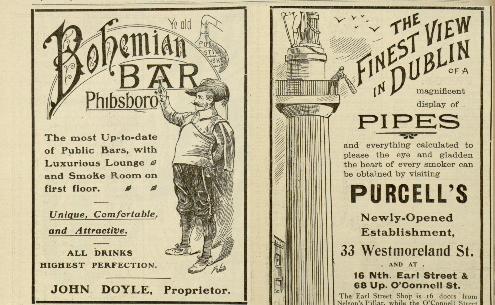
These advertisements initially caught my eye with Nelson’s Pillar, but then I noticed the name of the bar in the other advertisement. The Bohemian Bar in Phibsoro is still going strong, popular with locals and supporters of Bohemians.

'The Bohemian Bar'

‘The Bohemian Bar’

(more…)

Read Full Post »

The Notorious Boo Boys, the independent fan group of Bohemian F.C., are organising a very special fundraiser tomorrow night.

Facebook event here.

NBB Poster. Design - Kev Squires

NBB Poster. Design – Kev Squires

Headlining is the one and only Liam Dollard, the ‘Godfather of Dublin House Music’. Liam has been rocking raves and clubs for over 20 years.

Liam with raised hands at The Shamen gig , UCD Rag Ball in March 1991 - Photo Paul O'Sullivan. via Where Were You?

Liam with raised hands at The Shamen gig , UCD Rag Ball in March 1991 – Photo Paul O’Sullivan. via Where Were You?

His first serious gig in Dublin was a warehouse party near Thomas Street on a Friday night in the Summer of 1990. That night the infamous SIDES club was empty with Dublin’s small party faithful going up to check out was going on at the Thomas St. all-nighter. The following week Liam was asked to become SIDES Friday night resident, a role he played for the next four years.

Check out this amazing live mix from 1993.

In 1994 he released alongside Vintin a remix of Mad Sound Disease’s ‘Moonboon’ which became a Dublin House classic.

Liam followed with residencies in the Ormond Multi-Media Centre, Temple of Sound, PoD and the Kitchen. In the late 1990s, his last major residency was downstairs in The Temple Theatre. In March 1999, he teamed up with Billy Scurry and played San Francisco, Los Angelas and Hawaii all in the same week. Liam subsequently went into semi-retirement but these days comes out every now and again to rock out special gigs.

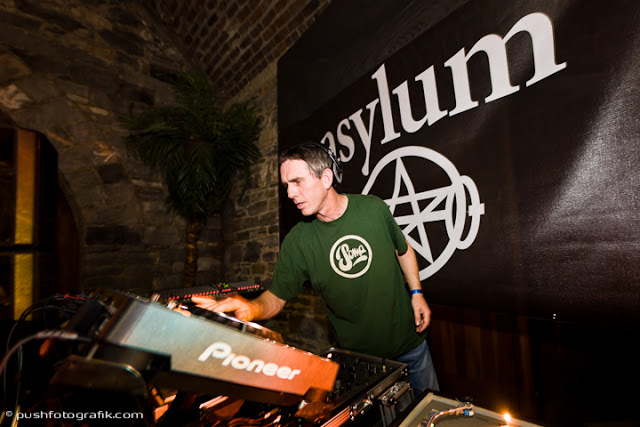
Liam Dollard in action. Picture - bushphotografik.com

Liam Dollard in action. Picture – bushphotografik.com

Heavy support comes from…

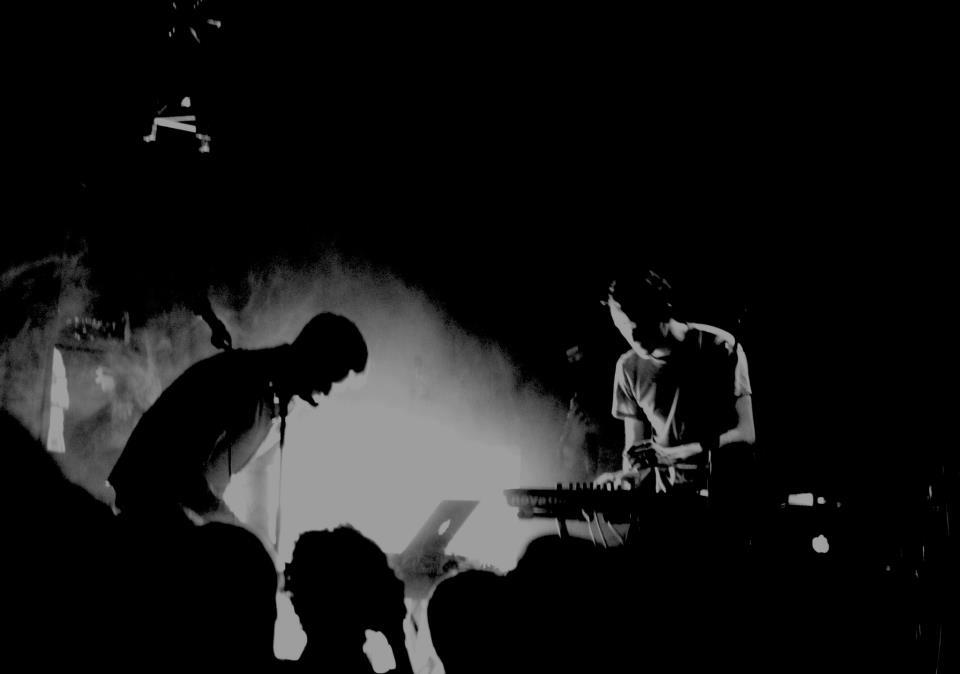
White Collar Boy who with a monthly residence at Pygmalion and recent support slots with Com Truise, Factory Floor, Creep, Not Squares, Keep Shelly, Soul Clap have taken the scene by storm. Described by leading Irish music critic Nialler9 as making songs that “emphasise hypnotic atmospheric arrangements and wistful lyrics with a persistent but gentle rhythm”, the duo released their debut 12″ ‘Kinsale’ in May 2012 to widespread acclaim.

White Collar Boy

White Collar Boy

  (more…)

Read Full Post »

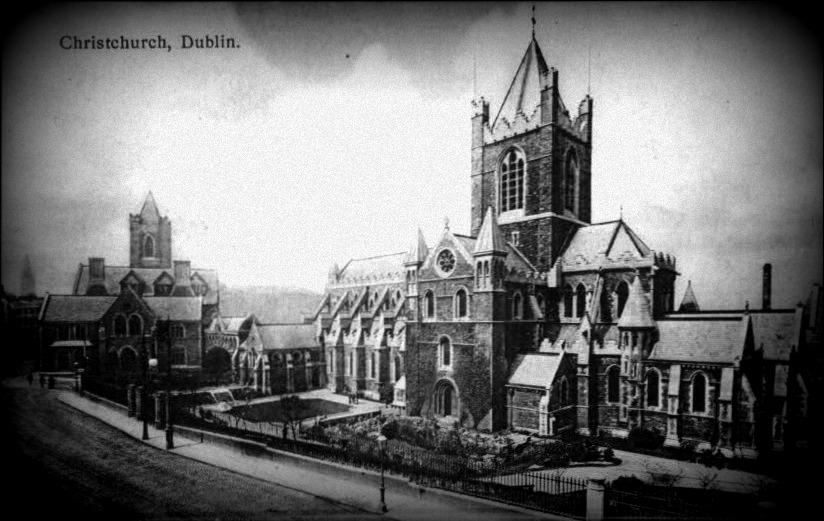
An historic postcard of the magnificent Christchurch Cathedral.

An historic postcard of the magnificent Christchurch Cathedral.

‘Hell’ was a rather infamous part of Dublin in the eighteenth century,renowned for its drinking culture and taverns, as well as a strange wooden statue of the devil. I first came across ‘Hell’ in the pages of the classic Me Jewel And Darlin’ Dublin, in which it was noted by Éamonn Mac Thomáis that:

‘Hell’ was the site just beyond Christ Church Yard near St. Michael’s Hill. It was a small area of taverns and bed-and-breakfast establishments in the Monto style. Robert Burns, the poet, wrote a few verses about Dublin’s Hell.

He also claimed that the reputation of the area was so bad that “The Provost of Trinity College Dublin told the students on more than one ocasion that ‘Dublin’s Hell’ was out-of-bounds and that he would expel anyone found there at night-time.”

Frank Hopkins writes of the area in his Hidden Dublin, noting that:

In order to gain entry to the old For Courts, one had literally to go through ‘Hell’. Christchurch was at one time surrounded by a warren of narrow lanes and alleyways.One of these passages to the west of the cathedral known as Hell is said to have taken its name from an underground cellar known by the same name. A large wooden statue of the devil adorned the arched entrance to the alley.

Robert Burns alludes to this corner of Dublin in his story of “Death and Doctor Hornbook,” when he wrote –

“But this that I am gaun to tell,
Which lately on a night befell,
Is just as true as the deil’s in hell,
Or Dublin city.”

Scotland's national poet, Robert Burns.

Scotland’s national poet, Robert Burns.

I recently stumbled across a very interesting account of the area, completely by accident, which was featured in the Dublin Penny Journal dated October 27, 1832. This account was later used by J.T Gilbert in his classic history of Dublin, published first in 1861, which was a groundbreaking study of the city. The 1832 article seems to have been written by someone reflecting back on a former Dublin, and the writer notes about ‘Hell’ that:

This was certainly a very profane and unseemly soubriquet, to give to a place that adjoined a cathedral whose name was Christ Church; and my young mind, when I first entered there, was struck with its unseemliness. Yes; and more especially, when over the arched entrance there was pointed out to me the very image of the devil, carved in oak, and not unlike one of those hideous black figures that are still in Thomas-street, hung over Tobacconists’ doors. This locale of hell, and this representation of his satanic majesty, were famous in those days even beyond the walls of Dublin; I remember well, on returning to my native town after my first visit to Dublin, being asked by all my playfellows, had I been in hell, and had I seen the devil.

He later writes that “As hell has not now any local habitation in our city, neither has the devil – but I can assure you, reader, that there are relics preserved of this very statue to this day; some of it was made into much esteemed snuff-boxes – and I am told there is one antiquarian in our city, who possesses the head and horns, and who prizes the relic as the most valuable in his museum.”

The account can be read in full here, on the brilliant Library Ireland website.

Read Full Post »

Big Bill Haywood, American trade unionist.

Big Bill Haywood, American trade unionist.

Big Bill Haywood is a hugely important trade unionist in American history. A founding member of the radical Industrial Workers of the World (IWW), Haywood believed in building ‘one big union’ which could represent American workers across all industries, and could ultimately change the very nature of society. A controversial figure who advocated very radical tactics, when he died half of his ashes were buried in the Kremlin wall, while an urn containing the other half of his ashes were sent to Chicago.

Haywood visited Dublin during the 1913 Lockout, and documented this visit in his autobiography Bill Haywood’s Book: The Autobiography of Big Bill Haywood. It’s an interesting read. He talks not only about his time in Dublin, but also sharing a platform in Britain with Jim Larkin, describing him as a “big bony man with a shock of iron grey hair and marked features such as are appreciated by the sculptor or cartoonist.” When in Dublin, Haywood addressed a demonstration at Liberty Hall, and even inspected the Irish Citizen Army in the company of James Connolly.

The below is the personal account of Big Bill Haywood of the Dublin Lockout of 1913:

——–

I had been I Paris not more than a week when I got a telegram from the Daily Herald in London asking me to come and speak on behalf of Jim Larkin, who was then in Mountjoy Prison. I went to see the officials of the Confederation of Labour and told them I was going to England on behalf of Jim Larkin and the Dublin Transport Workers’ strike, and that I would like a testimonial from France to the Dublin strikers- something that the strikers could use. They gave me a check for a thousand francs, a large contribution considering the condition of the workers in France at that time.

When I arrived in London a meeting was arranged at Albert Hall. Larkin was released in prison in time to speak at what proved to be a wonderful meeting. Twenty-five or thirty thousand people, more than could get in the hall, had gathered. Some students attempted to disrupt the meeting but the stewards or ushers were well organised and ejected the noisy bunch in quick order. A son of George Lansbury came over the railing of the first balcony and dropped into a struggling group which was fighting to get into the aisle.
(more…)

Read Full Post »

In March of last year, we covered the epic 1983 tale of Stein Opticians on Harcourt Road who fought bitterly to save their beautiful shop from the developer’s bulldozer.

Recently Amelia, an award-winning photographer who still runs the family optician business today from 4 Camden Market, Grantham Street, sent me along a number of old press cuttings.

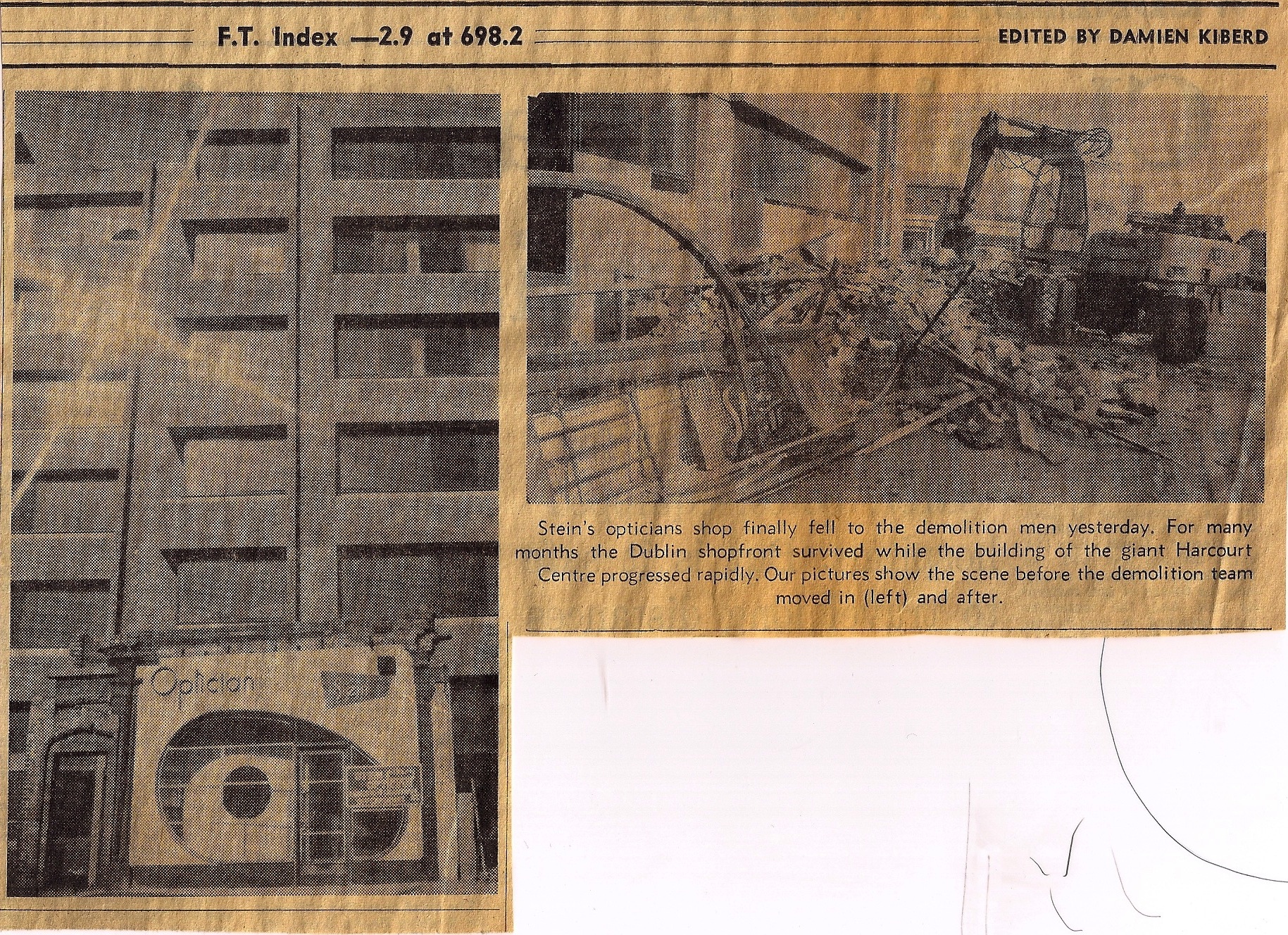
Here’s a before and after picture:

The Irish Press, 12 October 1983

The Irish Press, 12 October 1983

An article from the Evening Herald on the controversial move:

Evening Herald, 30 May 1983

Evening Herald, 30 May 1983

A fantastic image showing how the shop remained intact after everything else around it was demolished:

In Dublin, 13 May 1983

In Dublin, 13 May 1983

Finally, a rare original architect’s drawing of the new shop that that they agreed to move to:

GranthamSt

Grantham St premises design

Read Full Post »

Nothing excites the media like rag (Raise and Give) week. Be it rural students making a show of themselves in a Galway Supermacs, or heavy drinking in the capital, you can always count on annual student rag weeks making their way into the newspapers for all the wrong reasons. Some colleges, including NUI Maynooth, have altered the name of rag week in the past in an attempt to change the connotations around it. Often, the debauchery/drinking/occasional violence is spoken of in terms of ‘Celtic Tiger Cubs’, or a new generation who know no better.

There is nothing new about rag week ‘carry on’ however. In 1933, the behaviour of Trinity College students at their annual rag day was enough to lead to condemnation in the pages of the Garda in-house magazine Garda Review, and national media attention.

Irish Press, 13 June 1933

Irish Press, 13 June 1933

On 12 June 1933, there were clashes in Dublin which began when Trinity students attempted to steal the cap of a Garda. The Irish Press wrote that:

Some of the more boisterous members of the motley-attired processionists who marched through Dawson Street and Grafton Street came into conflict with the Gardaí following upon an attempt to seize a Garda’s cap. The incident took place near the top of Grafton Street, and when the Garda held on to his cap some of the students still persisted in their efforts to secure a grip of it.

Back at Trinity, it was reported that Gardaí were pelted with rotten eggs and tomatoes, and that two students required stitches after a baton charge. “Caps were pulled down over the Gardaí’s faces, and in some instances were knocked off. Eventually the Gardaí drew their batons to clear the thoroughfare…”

The students retreated back into their campus, but their attempts at robbing a Garda hat were only a minor prank, with newspapers noting that afterwards they “divided themselves into groups, mounted tramcars, pulled the trolleys from the wires, and so temporarily held up the city’s service.” One newpaper reported that “fireworks were laid by the students on the tram-rails, they exploded when trams moved over them.”

The Irish Times reported that a sizable gang of students went to the Shelbourne Hotel in search of fun, but on finding its doors locked to them instead made their way in through a window. Fifty or so students entered the hotel, before leaving as they had entered! In another instance, it was reported that a stolen tram sign was flung into the grounds of the home of the Trinity Provost by a student fleeing from Gardaí.

Back on campus, it was reported that students acted out several scenes in various costumes as part of their charity event, and that “they presented scenes representing a mock wedding, Gandhi and a goat, Spanish visitors at the senate and Mussolini on a donkey. Several were dressed to represent Herr Hitler’s followers.” They later “made a call to the Mansion House”, where they were addressed by Lord Mayor Alfie Byrne.
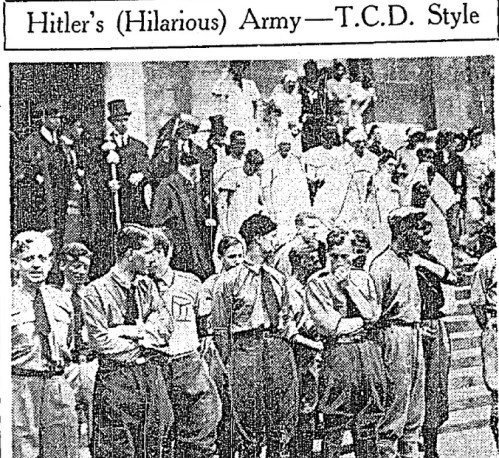
Young Trinity students dressed like followers of Hitler (Irish Independent)

Young Trinity students dressed like followers of Hitler (Irish Independent)

This wasn’t the first time Trinity students had dressed in controversial contemporary outfits for their rag activities. The year previously, as Andrew Moore has noted in his book Francis de Groot: Irish Fascist, Australian Legend, one Trinity student had dressed like the infamous de Groot, and “riding a donkey, dressed in a commissionaire’s uniform and wearing a hotel porter’s cap, cut a red tape across a path on the way to the college’s medical school.” Francis de Groot was a Dubliner by birth, who famously upstaged the 1932 opening of the Sydney Harbour Bridge by taking it upon himself to do the honours, much to the shock of the Australian public!

The Gardaí were unimpressed by media coverage of the event, and their official publication slammed the media who they believed had made light of the events. The Garda Review noted that “Next time students from that college turn out to parade in the streets in accordance with an ancient custom let them not abuse what is merely a privilege and not a right, but show a proper and decent respect for authority.” The magazine condemned the youths as “hooligans”, and noted that they lacked “moral and physical courage”.

1933 was not the only year when RAG day spilled out of the Trinity campus onto the streets of the capital, but it was certainly one of the more dramatic years. It’s certainly not every day you see Hitler and Gandhi attacking a Dublin tram.

Read Full Post »
Older Posts »