During lockdown, I researched and wrote a long article on the history of gay-friendly pubs and venues in Dublin over a fifty-year period – from the early Irish Free State in 1923 to the emergence of the first proto-gay rights group in 1973. I’m delighted that this work has now been published as a chapter in The Irish Pub: Invention and Re-Invention, the first book-length academic study of the Irish pub. Credit to editors Moonyoung and Perry for sticking with an ambitious project and getting it across the line.
Front cover
My chapter examines the history, importance and legacy of public houses where gay men socialised – primarily Davy Byrnes, the Dawson Lounge, the Bailey, Bartley Dunne’s and Rice’s – in the Grafton Street and St Stephen’s Green area of the south city centre. It also looks at some of the hotel bars, restaurants, late-night cafés, private clubs and basement shebeens that served as meeting points for a small social scene that was criminalised and underground. I’m thrilled that the chapter was given a generous layout, with 29 pages featuring 19 full-colour historical images and advertisements.
Sample two pages from the chapter, part of a press package that has been sent out.
It has its origins in a 2013 CHTM! blog article on Bartley Dunne’s and Rice’s which became one of the website’s most-read articles. It proved that there was a keen audience for this kind of social history.
Why did I take an interest? First, the topic hadn’t been examined in detail before – a strong motivation in itself. Most histories of gay life in Dublin focus on political organising and activism from the early 1970s onwards. A hugely important era but I wanted to uncover the community’s social life before the first campaign groups, early discos, the Hirschfeld Centre (est. 1979), and The George pub (est. 1985). Second, I was drawn to the underground nature of the pre-liberation scene – the coded language, discreet signals, and a community socialising hidden in plain sight. Third, I felt strongly that this was an important part of the city’s wider social fabric, and that gay/LGBT+ history should not be treated as separate from Dublin’s history as a whole.
I was fortunate to interview several older gay men with memories of their social lives in the late 1950s and 1960s. They spoke about the fear of blackmail and arrest, but equally about camaraderie, a lively social calendar, and building lifelong friendships and partnerships. For instance, one couple, whom I interviewed in their Portobello home, met in Bartley Dunne’s in 1966 in their mid-twenties and have been together ever since. Harold Clarke, who passed away in 2022 a year after our interview, met his partner in 1956 and remained with him until his death in 2014.
Ads for Bartley Dunne’s from a talk I gave as part of the Ireland Sexualities in History conference (2022)
The project opened all sorts of avenues to the history of Dublin’s bustling nightlife scene, which will be of interest to Dubliners of all persuasions. I spoke to Wladek Gaj, whose remarkable mother, Margaret Gaj, ran Mrs Gaj’s café on Lower Baggot Street from 1963 to 1980; to Arthur Gilligan Jr, whose father owned the Dawson Lounge from 1951 to 1969; to Eddie Hernon, who worked in the Bailey’s fish restaurant in the early 1960s; to Tara Higgins and her father Reg Woods Jr, whose family operated the Manhattan all-night café from 1951; and to Stephen Corcoran, a former barman at the Wicklow Hotel who later established his own gay bar in Paris.
I encourage you to buy the book or request it at your local library. Onto the next project now!
This is an attempt to document all bars attached to social and private clubs in Dublin – those run by sports clubs, community groups, trade unions, private members’ clubs, residents’ associations, and cultural organisations. Officially referred to as Registered Clubs, these venues do not appear in any centrally held register issued by Revenue. This is a work in progress. If you have any corrections or additions, please email me at matchgrams(at)gmail.com.
Cian Duffy has done a great service for historians, researchers, and genealogists by compiling a map of all licensed premises in Dublin dating back to 1902. His map currently includes over 1,000 operating public bars, 534 pubs that closed before 2010, and 139 that closed after 2010. He is on a mission to visit every open licensed premises on the map – with about 40 to go – and you can follow his progress on his blog.
In late 2023, while home sick with Covid, I began compiling a list of all social clubs, sports clubs, and private members’ clubs with bars on their premises. These fall outside the scope of Cian’s research. Friends have continued to send me tips and updates, so I’ve decided to publish this evolving list as a work in progress.
As these are private members’ clubs with licensed bars, it’s generally required that all members and guests sign in at the door – though practices vary by venue. This list may be useful for those seeking unique venues for birthdays, retirements, or other gatherings.
2. Non-Sports Many of these are associated with jobs, professions and industry. There are a lot of public service sectors represented, including:
Gardaí – The Dublin Metropolitan Garda Recreation Club at Westmanstown Sports & Conference Centre, Westmanstown, D15. There are also separate bars for Garda officers and other ranks (nicknamed “Wet Canteen”) at Garda Headquarters in Phoenix Park. The Garda Club on Harrington Street closed back in 2014.
Dublin Bus/Bus Éireann workers – The Coldcut Club, Clondalkin, D22.
An Post – The Postal Club, Old Bawn, Tallaght, D24.
Teachers – The Teachers Club, Parnell Square, D1. Ran by The Irish National Teachers’ Organisation (INTO)
Prison Officers – Millmount House, Drumcondra, D9. Ran by the Prison Officers Association.
RTÉ – RTÉ Sports & Social Club in Donnybrook, D4 (closed?)
Defence Forces -Three bars in Cathal Brugha Barracks, Rathmines and one (?) in McKee Barracks, Cabra.
There are also the various bars on different university and college campuses.
Although they don’t retain a connection today, Sportslink in Santry was originally formed by staff from Telecom Éireann in 1993. The Transport Sports & Social Club in Crumlin was established by members of the ITGWU in 1974. In Inchicore, the Inchicore Sports and Social Club (formerly CIE Social Club) and Inchicore United Workman’s Club both had connections to local railway workers. The Glue Pot venue was originally the social club for workers from the now-closed Clondalkin Paper Mills.
Transport Sports & Social Club, Crumlin
Solicitors have a bar in the Law Society of Ireland, Blackhall Place, D7 while Barristers have the “The Sheds” bar at The Bar Council of Ireland, Distillery Building, Church Street, D7.
Irish culture You also have a number of venues associated with the Irish language and music including Club Chonradh na Gaeilge (closed for renovation) on Harcourt Street, Áras Chrónáin in Clondalkin and Cultúrlann na hÉireann in Monkstown. Note that Comhaltas Ceoltóirí Éireann’s Clasaċ venue on the Alfie Byrne Road near Clontarf has a theatre licence.
Some of the most atypical premises would include The Hells Angels MC clubhouse in Mulhuddart. The Italian community’s Club Italiano in the Dublin Mountains The Dún Laoghaire Club (Elbana) Freemason’s Hall bar, Molesworth Street
Billiards room in the Dún Laoghaire Club (Elbana).
3. Closed The final list contains a list of closed venues, including interesting spots such as the British Legion, the Revenue Social Club, the Irish Times Staff Club, the RAF Association Club, and bars associated with different political parties and groups.
In February 2015, I published an article listing the remaining 12 or so ‘early house’ pubs in Dublin city centre along with some brief historical background about why these bars have special licenses allowing them to open at 7am. I wrote an updated article in January 2019 which listed the 11 still remaining and questioned the future of some of them.
In the last four years, there have been several significant changes and the number has reduced to six (four if you’re being strict). There were 44 early houses pubs in Dublin in 1962 and no pubs have been granted an ‘early morning exemption licence’ since then. I imagine changes in people’s socialising habits post Covid, the cost of living crisis and pub staff shortage issues have played a big impact in the last few years. Although new proposed legislation to allow Irish nightclubs to open until 6am may give Dublin early house pubs a new lease of life!
These are the changes that occurred since early 2019:
– M Hughes, Chancery Street has closed. – The Chancery Inn, Inns Quay has closed. – The Fisherman’s Bar in Howth (attached to The Waterside pub) has closed. – The Metro, Parnell Street closed and was reopened under new owners as Mema’s. It is no longer an early house. – Delaney’s, North King Street was refurbished and no longer opens early. It is now 12.30pm Friday/Saturday, 2pm Sunday and 3pm Monday to Thursday. – Madigan’s, Connolly Station now opens at 10.30am Monday to Friday not 8.30am.
As you can see below, Slattery’s and The Boar’s Head changed their times as well but I have included both as they still open partially before the usual legal opening of 10.30am. The Boar’s Head just scrapes in with their new opening hours of 10am.
So as far as I can assert, these are the six remaining ‘early house’ pubs in Dublin city as of late 2023. Four of which only open at 7am for most of the week.
Northside:
1. Molloy’s, Talbot Street (Mon-Sat 7am)
2. Slattery’s, Capel Street (7am Monday; Tues-Sat 9am). Changed from Mon 8.30am; Tues-Sat 9.30am
3. The Boar’s Head, Capel Street (Mon-Sat, 10am) Changed from Mon-Fri 8am; Sat 11am.
Southside:
4. The Galway Hooker, Heuston Station (Mon-Sat, 7am)
5. The Pádraig Pearse, Pearse Street (Mon-Fri 7am; Sat 10am)
(This is the fourth part of a series of in-depth articles on the lives of Republicans who died in Dublin in the 1930s to 1950s period, author Sam McGrath has previously examined the fatal shooting of IRA member Peter McCarthy on Lower Clanbrassil Street in 1937, the killing of another young IRA Volunteer Jackie Griffith near Merrion Square in 1943and the accidental shooting of Republican Patrick Murray in 1950.)
Introduction On 11 May 1939, 22-year-old Christopher (Christy) Bird was accidentally shot during an IRA training class in a house in The Liberties, Dublin. He died two days later of his wounds in hospital. His funeral in Mount Jerome Cemetery was attended by thousands of people but today there is no headstone or marker at his final resting place. A fellow IRA member was arrested and charged with manslaughter but was acquitted in court.
The death occurred in the background of the IRA’s bombing campaign in England which was launched in January 1939 and conceived by Seamus O’Donovan (IRA Director of Munitions/Chemicals in 1922-23), Sean Russell (IRA Chief of Staff) and Joseph McGarrity (Clan na Gael). The 12-month period saw the banning of the Bodenstown Wolfe Tone commemoration in June 1939, the death of five civilians in an IRA bomb in Coventry in August 1939, the outbreak of the Second World War in September 1939, the IRA’s raid for arms and ammunition on the Magazine Fort in the Phoenix Park, Dublin in December 1939 and the arrest and hanging of IRA members Peter Barnes and James McCormick in Birmingham in February 1940.
Family Background Christopher Bird was born on 25 July 1916 in Dublin just a few months after the Easter Rising. His father Bernard Bird (b. 15 July 1877) grew up at 22 Eccles Street, off Dorset Street, Dublin 7, with his parents Bernard Bird Sr, a porter, and Mary Anne (née Montgomery). His mother Christina Bird (née White) (b. 19 December 1875) spent her early years across the river at 25 Old Kilmainham, Dublin 8 with parents James White, a labourer, and Mary (née Gallagher). Bernard and Christina married on 08 July 1900 in St James’s Church on the corner of James’s Street and Echlin Street. At the time Bernard was employed as a butcher and lived at 61 Arbour Hill, Dublin 7, while Christina, of 29 Old Kilmainham, Dublin 8, worked as a ‘book folder’.
Marriage certificate for Christopher’s parents Bernard and Christina, 08 July 1900
The author has been unsuccessful in locating the family in the 1901 Census. Christina gave birth to at least 10 children between 1903 and 1919, four of whom died under the age of three.
1. Patrick Joseph was born on 27 March 1903 at 57 Capel St, Dublin 1. He died of tuberculosis five months later on 05 September 1903 at 22 Usher’s Quay, Dublin 8. 2. Mary Christina was born on 4 March 1904 at 6 Sarsfield Quay, Dublin 7. 3. Michael Patrick was born on 16 March 1906 at 42 Watling St, Dublin 8. He died of pertussis (whooping cough) a year later on 01 May 1907 at 29 Old Kilmainham. 4. Elizabeth was born on 10 Feb 1908 at 6 Kearn’s Place, Dublin 8. 5. James was born on 16 December 1909 at 48 Watling Street, Dublin 8. He died of bronchitis two years later on 06 February 1912 at the same address.
The 1911 Census shows Bernard (35), a labourer on the railway, living in a three-roomed tenement at 48.1 Watling Street with his wife Christina (34) and their three children Mary C (7), Elizabeth (3) and James (1). The census records show that Christina had given birth to a total of seven children but four had died so information/birth certificates for two other deceased children are as of yet unaccounted for.
Christina gave birth to more children:
6. Matthew was born on 27 January 1912 at 48 Watling Street, Dublin 8 7. William was born on 02 June 1913 at 43 Watling St, Dublin 8. He died of “debility from birth” ten weeks later on 04 August 1913 at the same address.
By 1914, the Bird family had moved to 19 Usher’s Island on the River Liffey quays near Bridgefoot Street in Dublin 8 where the last of the three children were born:
8. Kathleen was born on 15 July 1914 and died of pneumonia, aged 3, on 11 February 1918 at home 9. Christopher was born on 25 July 1916 at home
Birth cert for Christopher Bird
10. Anthony was born on 19 Feb 1919 at home
Map of Usher’s Island in circa 1897-1913. OSI Historial Map.
It is unclear if the Bird family played any involvement in the politics of the 1919-23 period but their home was raided by the Welsh Regiment of the British army on 03 December 1920 in an attempt to arrest William Kelly who lived in the same building. Bernard, the father of the then four-year-old Christopher, was marked as being present and his surname was misspelt as “Bind” in the raid report.
WO 35/75/142, The National Archives (UK) via Find My Past
In the late 1930s, the Bird family comprised of parents and five surviving children Mary, Elizabeth, Matthew, Christopher and Anthony. Two of them had settled down by this stage. The eldest daughter Mary Bird married John Gilmartin on 28 September 1929 at St Audoen’s Church, High Street, Dublin 8. The eldest son Matthew Bird married Mary Brophy on 09 April 1939 at Aughrim Street Church, Stoneybatter, Dublin 7 just a month before his brother’s death.
There is little known about Christopher’s early life, schooling or any influences that helped shape his decision to join the IRA. The only personal detail available (so far) is that he was employed as a labourer in the Dublin Whiskey Distillery (DWD), Thomas Street.
Dublin IRA(1938-39) The IRA in the capital was described as a “depleted” unit in early 1938 by J Bower Bell in the Secret Army (pg 177). It is apparent that the Dublin Brigade was reorganised and designated the Dublin Battalion in this period and comprised four companies that mirrored the former brigade structure. This is corroborated by new recruit Tom Doran in 1939 who was “allocated to No. 2 Company, formerly the Second Battalion, whose stomping ground was Dorset Street, East Wall, Fairview [and] Artane” according to Uinseann MacEoin in The IRA in the Twilight Years (pg 499). Further evidence is a reference to a hall in Ballsbridge used by “3rd Battalion members … later No. 3 Company” until Spring 1940 in Twilight Years (pg 413).
The Dublin Battalion IRA officers in 1939 were Mairtin O Cadhain (O/C)(d. 1970), Myles Heffernan (Adjutant and/or Intelligence) (d. 1967), Jim Colton (Quartermaster) (d. 1959) and Christy Quearney (Training Officer) (d. 1984) according to Quearney and others in The IRA in the Twilight Years. However, while it was in reality a battalion in size, the IRA in the capital did still describe itself as the Dublin Brigade in some correspondence including newspaper memorial notices following the death of Bird. I believe Bird was a recent recruit to No. 4 Company which was based in the Southwest of the city.
Shooting (11 May 1939) On the evening of Thursday 11 May 1939, Christopher Bird left his family home at 19 Usher’s Island at about 6.30pm. He spoke on the street to a friend and neighbour Arthur O’Hara, of 33 Watkins Street, for about 20 minutes and then headed off on foot southside in the direction of Donore Avenue off Cork Street. A distance of approximately 1.5km, this walk takes about 20 minutes and suggests that Bird arrived at his destination, Darley Terrace, at about 7.10pm.
What transpired over the next 1 hour and 20 minutes has never fully been explained publicly but we can attempt to put together a timeline of events from the newspaper accounts and inquest. The next official incident was a phone call made for an ambulance at 8.34pm from Dwyer’s garage at 73 Cork Street by Seamus Dowling (17) of 22 Darley Terrace.
The ambulance’s driver, Fireman William Carroll of Rathmines Fire Station, was met on Donore Avenue by Dowling and directed to Darley Terrace. They entered the house and found Christopher Bird lying on the couch in the front room. He had been shot in the stomach with a .45 bullet from a Colt revolver. The lack of blood-stained sheets or blood on the furniture led to an early assumption in the press that the shooting had occurred elsewhere and Bird was moved to the house from a different location. Fireman William Carroll later gave evidence that he asked Dowling what had happened and was told: “It does not matter, get him away to hospital quick. He has a wound in the stomach”.
Darley Terrace, the black door is no. 22 where Christy Bird was found mortally wounded. Google Street View – 2014.
Bird was accompanied by Dowling on the five-minute drive in the ambulance to the Meath Hospital on Heytsbury Street, Dublin 8. Bird received immediate medical attention and the single bullet was extracted at about 11pm by surgeons Dr Charles E Tait and Dr Henry Stokes. Fireman William Carroll said that Dowling supplied Bird’s name but refused to give his address as he feared, in his words, that the ambulance men would tell Bird’s mother of the incident before he had the opportunity to do so. When he was told that the address was only for record purposes, Dowling gave a false address for Bird of 5 Old Bridge, Kilmainham. Dowling left the hospital at 9pm and was not seen by his family for several days.
Death (13 May 1939) Christopher Bird was in a very weak condition and “suffering from great pain and grave shock” according to evidence later given by Dr Stokes. The bullet had entered his right side, passed through his stomach and lodged in the skin on the left side of the groin. His intestines and bladder had been torn by the bullet. Although conscious, he did not make any statement to the police. He held on for two days but succumbed to his wounds on Saturday 13 May 1939 at about 6.30pm.
Death certificate for Christopher Bird (1939)
Although he was described as 21, his birth certificate shows that he was born on 25 July 1916 and so was actually 22 years (and 9 months) at the time of his death. He was described as a “well-built young man” of “about 5 feet in height” and weighing nine stone (57kg) in the Irish Press (17 May 1939). His father Bernard told the Evening Herald that his son was a “reserved type of boy” who was “always home about 11 o’clock”. As far as he was concerned, Christopher was “not a member of any political organisation”.
Following the news of his death, it was reported in the Irish Press (16 May 1939) “that a large number of sympathisers had assembled in the vicinity of the hospital” including “many members of republican organisations”. As relatives were only allowed to see the body, six uniformed Gardaí and several plain-clothed detectives had to turn away hundreds of people. On the same day, the State pathologist John McGrath carried out a post-mortem examination on the body with Dr Charles Tait.
On 15 May 1939, a death notice was put in the national newspapers by the IRA that paid tribute to “Volunteer Christopher Bird, Dublin Brigade, IRA” who had “died as a result of wounds accidentally received in the service of the Irish Republic”.
The Evening Herald, 15 May 1939
A second death notice included the Irish sentence “Leabha gheal imeasc na bhFinghini go bhfagha a anam uasal” which I’ve been told translates as “May his soul obtain a wonderful resting place among the Fenians”.
The Irish Independent, 15 June 1939
The Garda investigation into the shooting was headed by District Inspector O’Sullivan and Superintendent Peter Ennis who worked under the overall direction of Chief Superintendent John McGloin. Although the local area was searched thoroughly and local residents questioned by police, the revolver was never found.
Arrest of Seamus Darling (15 May 1939) On 15 May 1939, Seamus Dowling returned home to his parents who had not seen their son since the evening of the shooting four days previous. Mr William Dowling asked him “What was all the trouble out” to which his son replied, “It was only an accident, I will say nothing more about it”. Mr Dowling told his son that the Guards were looking for him and he replied “If they want me, they can come and get me”. Mr Dowling informed the police that his son had returned home. Seamus Dowling was arrested at home by Station Sergeant Joseph Reidy of Newmarket Garda Station who charged him with manslaughter, possession of a .45 revolver with intent to endanger life and without a firearms certificate. Bird was taken into custody in the Bridewell Garda Station by Superintendent Peter Ennis and remanded for a week in the Dublin District Court.
After speaking to his solicitor Con Lehane, Dowling issued the following statement which he refused to sign: “Christopher Bird was accidentally wounded while engaged in his duties as a soldier of the Irish Republic. I engaged an ambulance to get him to hospital. That is the lot. I don’t wish to state anything further”.
The Wolfe Tone Weekly, 17 June 1939. Note the use of “Dublin Battalion”.
Funeral (17 May 1939) The remains of Christopher Bird were removed on the evening of 16 May from the Meath Hospital to the Franciscan Church, Merchant’s Quay. The coffin was draped with a tricolour flag and accompanied by a guard of honour who walked beside the hearse. They were followed by 1,000-1,500 men marching in military formation. Hundreds of members of the public lined the streets as the cortege travelled through New Bride Street, Kevin Street, Dean Street, Francis Street and Bridgefoot Street to the quays.
The Wolfe Tone Weekly, 20 June 1939
Following the funeral mass at 10:30am, the cortege set off from Franciscan Church for Mount Jerome Cemetery in Harold’s Cross, Dublin 6. Christopher Bird was buried in grave A47-620. Wreaths were laid by Cumann na mBan, Clann na nGaedheal (Girl Scouts), Cumann na gCailini and other organisations. The chief mourners were Mr and Mrs Bernard Bird (parents); Matthew and Anthony (brothers); Elizabeth (sister); Mrs Mary Gilmartin and John Kilmartin (sister and brother-in-law) and Mr and Mrs J Brophy (relations).
Christopher was presumably a member of the Workers Union of Ireland as the trade union was represented by three officials – Sean Nugent, Sean Keating and R James. T Knowles attended on behalf of the Bottling Staff of the DWD where Bird was employed.
Several senior republican figures paid their respects including Patrick E Sweeney, George Plunkett, Con Lehane and Joseph Clarke. Noted female republican activists – Madame Maud Gonne MacBride, Mrs Caitlín Brugha, Miss Brugha, Miss Eileen Tubbert and Mrs Nora Rogers – also attended the funeral.
The Wolfe Tone Weekly, 17 June 1939
Press photographers were approached by young men at the cemetery and warned not to take any pictures. This explains the lack of images published in the newspapers. Prayers at the graveside were received by Reverend Father Matthew Haran OFM (Franciscans). At the graveside, a bugler sounded “The Last Post” and the graveside oration was delivered by Mairtin O Cadhain.
O Cadhain, who held the position of Dublin Battalion IRA O/C from mid-1938 to June 1939, told the large crowd:
“the bravery with which Christopher Brid approached death would be an inspiration to his living comrades to carry on the work for which he gave his life. The Dublin Brigade, his parents, the Irish Republican Army and the people of Ireland could be proud of him. The cause that called for such bravery and devotion must be a holy cause, a just cause, as otherwise, men like Christopher Bird would not show such fortitude in the face of death.” The Examiner, 18 May 1939
Inquest (16 May1939) An inquest into the shooting was presided over by Dr DA McErlean on 16 May 1939. The post-mortem confirmed that death was due to “toxaemia and shock following a wound inflicted by a bullet which pierced the abdomen, going in a downward direction from right to left”. The inquest was adjourned pending the result of the manslaughter case.
Dublin District Court (late May-June 1939) Donough O’Donovan (Chief State Solicitor’s Office) opened the case on 23 May 1939 in front of District Justice Matthew Hannan. Seamus Dowling (17) was described as a factory worker employed by Messrs Spratt’s (dog food manufacturers). Bird’s parents said that they had never met Seamus Dowling before and had never seen their son with any firearms. O’Donivan went over the basic information and formalities regarding the case. It was accepted that the wound was not self-inflicted due to the direction of the bullet and the lack of scorching or powder on Bird’s clothes. On 10 June 1939, District Judge Hannan sent Dowling for trial to the Circuit Criminal Court. Dowling, who was not professionally represented, declined to make a statement or apply for bail.
Circuit Criminal Court (July 1939) Seamus Dowling pled not guilty on 07 July 1939 telling the court that “Although I pleaded not guilty, I do not intend to call evidence. I am here, not because the police believe I am guilty, but because I would not divulge the names of my comrades. I did not shoot Christopher Bird”.
The state’s case was represented by Martin Maguire Senior Counsel (SC) and Walter Molony who admitted there was nothing to justify a charge of deliberate killing. After an absence of ten minutes, the jury at the Circuit Criminal Court acquitted Dowling on 08 July 1939 of the manslaughter and firearms charges. He was a free man. Judge Cahir Davitt summed up “before the jury could convict, they must be satisfied that Dowling had killed Bird and that the shooting, which all the evidence tended to show was accidental, had been the result of a high degree of negligence in Dowling’s handling of a firearm”. He continued that “if he just believed that the incident had some connection with the organisation known as the Irish Republican Army, they would consider that more than two people were concerned, not in the particular incident, but in the whole surrounding circumstances”
The Wolfe Tone Weekly, 12 July 1939
Memorials and grave There were memorial notices put in the newspapers on the first anniversary of the death by his comrades and his “brokenhearted” family.
The Sunday Independent, 12 May 1939
The Evening Herald, 13 May 1940
Christopher’s parents buried another child less than two years later. Elizabeth Lily Bird (32), a shirtmaker, died on 12 August 1941 of pulmonary tuberculosis and heart failure. Her mother Christina was at the family home at 19 Usher’s Lane when she died. Christina passed away, aged 63, at home on 28 January 1944. She would have buried at least five children in her life and perhaps as many as seven.
Her widower Bernard followed on 19 April 1949 aged 73 in St Kevin’s Hospital. All four family members are buried in the same plot which I was informed via email by the helpful Mount Jerome staff “lies two graves to the right of Kavanagh / O’Brien family headstone” which can be seen on the left-hand side of the photograph below. As it currently stands, there is no headstone or memorial to mark the grave of Christy Bird. It is unclear if there was one previously.
Mount Jerome Cemetery. Credit – Sam McGrath (2023)
Legacy Christopher Bird has received little attention in Irish Republican history books or articles that were published in the decades following his death. J Bower Bell in The Secret Army (1970) wrote briefly and concisely that Seamus Dowling “was acquitted of the accidental shooting of Christopher Bird during a training class”. Noted Dublin historian Eamon Mac Thomais, who joined the IRA in about 1950, wrote in The Irish People (07 June 1980) that Christy Bird died “while training in the Dublin Mountains”. Mac Thomais was clearly mixing up his stories as there is no suggestion he was shot anywhere but Darley Terrace. An unknown writer in The Irish People (20 December 1986) described how Bird had been “accidentally shot to death during preparations for the S Campaign in England”. While the period is correct, I have seen nothing to corporate that Bird was going on active service in Britain. Conor Foley in Legion of the Rearguard (1992) refers to Seamus Dowling who “accidentally shot dead another volunteer during an arms training class” but does not name Bird.
The publication of Uinseann MacEoin’s The IRA in the Twilight Years 1923-1948 in 1997 revealed some important new information about the incident. Uinseann MacEoin, then known as Vincent McGuone, was active with the IRA in Dublin in the 1939 period and was interned in the Curragh for most of 1940-1943. In a piece in the book by Sean O’Neill, he reveals that Seamus Dowling was the “Training Officer of No. 4 Company” and suggests that it was another IRA member named Jack Campbell who fired the fatal shot that evening. However, it was Seamus Dowling who “awaited” the “police and ambulance men, taking the rap on a manslaughter charge”. This would chime in with Dowling’s assistance that “I did not shoot Christopher Bird”. Dowling was described as a “cheerful fellow with hair prematurely grey” by Sean O’Neill.
A footnote states that “the writer” (Uinseann MacEoin) “was present and remained” at the scene of the shooting. (I believe it is MacEoin and not O’Neill as MacEoin uses the term “this writer” about 50 times across the book.) This would suggest that there were at least four people at the arms training class – Seamus Dowling (training officer), Christopher Bird, Jack Campbell and Uinseann MacEoin. However, it should be noted that none of the contemporary newspaper articles made any reference or hints to there being any other people present. If Sean O’Neill did remain behind at the scene, this was also not mentioned by any witnesses or the ambulance men at the inquest. If Jack Campbell did handle the revolver which went off, there was nothing to suggest that the judiciary and authorities were aware of this or tried to find anybody else with the shooting. The judge in the case was quite clear in his view that Bird’s death was caused by the “high degree of negligence in Dowling’s handling of a firearm” and never referred to a third party named or otherwise.
Postscript: Dowling brothers Seamus Dowling’s younger brother Liam Dowling (19) was arrested on 31 March 1940 with 22 other IRA recruits while drilling in St Anne’s Park, Raheny. On 15 April 1940 in Collins Barracks, he was sentenced by the Special Criminal Court to 18 months imprisonment on charges of engaging in unlawful military exercises and being a member of an illegal organisation. The commanding officer Mick Dunne, of 66 Carleton Road, Marino, received a two-year sentence. Following the Nazi invasion of the Soviet Union in June 1941, about half a dozen IRA internees signed them out of the Curragh to join the British army to fight against Germany. Amongst this number were Liam Dowling, Jim Kerr of Enniscorthy, County Wexford, Kevin Neville of Cork City and International Brigade veteran Paddy Smith of Dublin. What became of Liam Dowling, I’d love to know.
Seamus Dowling, who had been acquitted of the manslaughter of Christy Bird, remained active with the IRA. He was arrested on 13 June 1940 in a house in Oberstown, Skreen, Tara, County Meath in possession of arms, maps and other documents. On 10 August 1940, he was sentenced to two years imprisonment by the Special Criminal Court for the unlawful possession of a .45 Webley revolver, 13 rounds of ammunition and for refusing to give an account of his movements. Seamus Dowling was found not guilty of having the revolver with intent to endanger life or cause serious injury to properly.
A third Dowling brother, Sean Dowling, was arrested with 27 other IRA men at a meeting in Crumlin Brickworks on 02 May 1941. The police were clearly acting on specific information and the raid was later described as “a set up” by one of the arrestees Sean O’Neill in The IRA in Twilight Years. Giving his address as Derry Road, Crumlin, Sean Dowling was sentenced to one-year imprisonment in the Special Criminal Court for refusing to account for his movements and being a member of an illegal organisation. More senior men Paddy Brown and Tony Ruane (a Civil War veteran from Bohola, County Mayo) were sentenced to 2 years and 18 months imprisonment respectively.
Contact If anyone has any further information on the life, death or funeral of Christy Bird, please email me at matchgrams(at)gmail.com. It would be great to track down a photograph or mass card. I would love to speak to any of the descendants of Chrity’s surviving siblings (Matthew, Anthony and Mary/May Gilmartin) and the Dowling family. Or indeed anyone who has any further information on the events or characters mentioned.
Lastly, I don’t think there’s any connection with the Christy Bird antique shop on South Richmond Street in Portobello, Dublin. Their website says that their Christy Bird was born in 1892 in Trim, County Meath, moved to Dublin in 1908, may have had some involvement in 1916-21 and died in 1975.
References The Examiner, the Evening Herald, the Irish Independent, the Irish Press, The Irish Times, the Sunday Independent, The Wolfe Tone Weekly from 12 May 1939 to 13 May 1940
Bowyer Bell, J. The Secret Army: A History of the IRA, 1916-1970 (London, 1972) Foley, Conor. Legion of the rearguard: the IRA and the modern Irish state (London, 1992) MacEoin, Uinseann. The IRA in the twilight years, 1923 – 1948 (Dublin, 1997)
(Author Sam McGrath has previously examined the fatal shooting of IRA member Peter McCarthy on Lower Clanbrassil Street in 1937 and the killing of another young republican Jackie Griffith near Merrion Square in 1943)
Introduction
On 24 May 1950, 17-year-old Patrick Murray was accidentally shot dead in the backyard of the headquarters of the Republican Prisoners’ Release Association in Dublin. At his funeral in Glasnevin Cemetery, the teenager’s coffin was “draped with a tricolour” and was “accompanied by a guard of honour of the deceased’s former comrades”. His recently restored headstone describes him as “Vol. Padraíg Murray” attached to the Dublin IRA.
However, his name is not included any republican roll of honour, including a list of 1936-1963 deaths published by Sinn Féin in 1966 or The Last Post (1972 edition). There is also no mention of his death in any of the major studies of the IRA in the period (J Bower Bell, Donnacha Ó Beacháin etc.), any of the books which cover the Border Campaign era (Barry Flynn, Matt Treacy etc.) or any of the memoirs from Dublin IRA men who were active in the early 1950s (Mick Ryan, Éamonn Boyce etc.).
Background Patrick Mary Lorenzo Murray, also known as Pádraig Murray, was born in Dublin in 1933. His father, John Murray, a 37-year-old carpenter, had died on 18 September 1932 in the Richmond Hospital of “bronchiectasis pneumococcal meningitis” according to his death certificate. His address at the time was 54 Walsh Road, Drumcondra, Dublin 9.
By the 1940s, the Murray family was living at 51 St Joseph’s Place in the Dorset Street area of the North Inner City. Patrick lived with his mother Mary, two brothers Sean and Philip and two sisters Maura/Máire and Ellen [tbc]. St Joseph’s Place comprises of seven parallel rows of redbrick terraced cottages (one or two bedrooms) within a U-shaped perimeter avenue. They are accessible via Nelson Street, Blessington Street and Upper Dorset Street (beside the Findlater public house). Built by the Dublin Artisan’s Dwellings Company in the 1890s for renting to working-class tradesmen, they were bought out by Dublin Corporation in the 1920s.
A view of St Joseph’s Place in 1962. Credit – William Stevens
In April 1946, Belfast man James McCorry (or McCurry) (25) was sentenced to six months imprisonment for firearms offences in the Special Criminal Court. He gave his Dublin address as 51 St Joseph’s Place, which indicates that the Murray home was a safe house for Belfast IRA men who were involved in IRA reorganising work in the capital. A Mrs J McCurry was listed as a sister of Patrick Murray in a 1950 report on his funeral which suggests that James McCurry later married Patrick Murray’s sister. A 13-year-old Patrick Murray would have been undoubtedly affected by the republcian activities of his future brother-in-law and may have helped shape his own politics.
The Weekly Irish Times 27 April 1946
Republican Prisoners’ Release Association, 9 North Frederick Street
The Republican Prisoners’ Release Association (RPRA) was established in October 1945 by long-standing IRA veterans including Maurice Twomey, Jim Killeen and Simon Donnelly (who had been inactive since the Civil War). At the time, there were 80 republicans in jail in Belfast, 40 in England and 30 in the 26 Counties. Other figures associated with the group included Peadar Cowan, Sean MacBride and Con Lehane. The organisation had 29 branches across the island by early 1948 as reported in the Dublin Evening Mail (30 January 1948).
Newspaper ad showing RPRA’s head office address. The Irish Press, 25 May 1946
The organisation had offices at 9 North Frederick Street from at least 1946 which it shared with other groups (sharing an overlapping membership and support base) including the Easter Commemoration Committee (1946), the Harry White Defence Fund (1946) and the National Commemoration Committee (1949). By mid-1950, there were only a very small number of IRA prisoners left in Belfast jails (including Liam Burke and Jimmy Steele) which left the release and welfare organisations largely defunct.
IRA activity The death of Patrick Murray in 1950 occurred in a decade-long gap of major IRA activity between the end of the Northern Campaign (1942 – 1946) and the start of The Border Campaign (1956 – 1962). Due to state harassment, arrests, emigration and internal infighting, the Republican movement was at one of its lowest ebbs. According to Bowyer Bell in The Secret Army (pg 296), the Dublin IRA was the “strongest” unit in the country in 1950 but only had 40 members, divided into two companies which could seldom parade more than a dozen men each. (The IRA did re-organise in late 1950 and grow under the direction of Tony Magan but this did not start until after Murray’s death.)
Although the Dublin IRA was small in the late 1940s and early 1950s period, there was still a turnover of membership of young men from overwhelmingly working-class backgrounds. They included Tom Mitchell (later MP etc), of Inverness Road in Fairview who joined the IRA in 1949, Éamonn Mac Thomáis, of Goldenbridge in Inchciore, who joined in c. 1950; Eamonn Boyce, of Galtymore Road in Drimnagh, who joined in 1952, Peter Pringle, of Woodfield Cottages in Inchicore, who also joined in 1952, and Mick Ryan, of East Wall, who joined in 1954.
Who was in charge of the Dublin IRA when Patrick Murray was active in its orbit in early 1950? J Bowyer Bell (pg 286) states that Sean Sheehy replaced William McGuinness when the latter was promoted to Chief of Staff in 1947. Gearóid Ó Broin presumably took the place of Sheehy as Ó Broin was described as “O/C of the Dublin unit of the IRA in the early 1950s” in Éamon Boyce’s Insider (pg 11). He was replaced by Éamonn Mac Thomáis who held the position from 1952 to mid-1956, according to Insider. So it’s likely that Sean Sheehy or Gearóid Ó Broin were head of the IRA’s Dublin in summer 1950.
In mid-1950, Patrick Murray was 17 and a half and worked as a carpenter’s apprentice. His best friend and close neighbour was Eamonn Deegan who lived at 2 Brennan’s Cottages, rere of 114 Upper Dorset Street, which was about five five-minute walk (400m) from Murray’s home. The pair both lived less than a five-minute walk from 9 North Frederick Street, which was an important social hub and meeting point for republicans in the city.
What events did Patrick Murray possibly attend in the year or so before his death? He might have been one of the 500 revellers at a céilidh in the Mansion House on 11 February 1949 organised by the Republican Prisoners’ Release Association. The two most important republican commemorations in the year were to mark the anniversary of Easter Rising (April) and Wolfe Tone in Bodenstown (June). The National Commemoration Committee’s 1916 Easter Commemoration took place on 17 April 1949. A procession with a colour party and pipe bands marched from St Stephen’s Green to Glasnevin Cemetery headed by the “Dublin Battalion IRA” followed by contingents from Cumann na mBan, Clan na Gaedheal (Republican Girl Guides), Na Fianna Éireann, Sinn Féin, the National Graves Association and Cumann na Poblachta. A wreath was laid on the republican plot by J Dunne (Chairman, NCC) and a decade of the rosary was recited in Irish by Michael O’Neill. A statement from the IRA was read by Cristóir O’Neill (Christy O’Neill) and the main oration was given by Sean McGrath who told the crowd: “The Army and the physical force movement … appeal to all young men and women to come again into the ranks and carry on the fight begun in 1916 which carried on in 1919 and 1922 and bring it to fruition”. (The Irish Press, 18 April 1949).
The NCC were also the organisers of the Wolfe Tone commemoration at Bodenstown Cemetery, Sallins, County Kildare on 19 June 1949. Wreaths were laid by Micheál Mac Conbuidhe (Michael Conway) (Secretary, NCC) and Margaret Buckley (Sinn Féin). Thousands listened to the main oration by Cristóir O’Neill (Christy O’Neill) who appealed to the crowd: “I appeal to all the young men who are willing to fight for their country’s freedom and their own salvation to come into the IRA … take your stand with the men who have never ceased to resist the invader … there are some people … unsuited to a military organisation by reason of sex, age or temperament. Sinn Féin, the Republican civil organisation, caters for these”.
A meeting was held afterwards, addressed by Emmett McGinn (Clann na nGaedhel, Philadelphia) with J Dunne (Chairman, NCC) acting as chief steward.
Just six weeks before Patrick Murray’s death, the NCC’s 1916 Easter Commemoration parade on 09 April 1950 at Glasnevin Cemetery was addressed outside the gates by Tomas Óg MacCurtain (1915-1994) who was a member of the IRA Army Council. Murray may have been part of the 1,000-strong crowd who were told by MacCurtain that the IRA “stood for the aims and objects for which those who had died in arms had stood. It was not their duty to pay attention to politicians who thought that paragraphs in American or French Press would free Ireland. The struggle would be a struggle in Ireland by Irishmen with guns in their hands”. (The Irish Press, 10 April 1950).
Anthony McGann [Magan] (1910-1981), IRA Chief of Staff from 1948 to 1957, read a statement issued by IRA General Headquarters (GHQ) which reminded the crowd that: “It is for the ordinary people to Ireland to ensure that those who are pledged to freedom by force of arms are not misled by the politicians who are bankrupt of everything except promises” (The Belfast Newsletter, 10 April 1950).
Evening of shooting On the evening of 24 May 1950, Patrick Murray and Eamonn Deegan had a few drinks in a local pub before going to 9 North Frederick Street at about 10pm. In subsequent testimony and statements, it transpired that the pair were in the toilet in the yard in the rear of the building examining a .38 automatic pistol. Deegan later said that he believed the safety catch was on when he pulled the trigger of the weapon. At about 10.25pm, witnesses heard the gun go off and Murray was accidentally shot at close range. It was reported by the Irish Press (25 May 1950) that there were “three other young men with Murray at the time of the shooting” but no further information about the identities of the men – besides Deegan – was subsequently revealed.
Deegan admitted in a later statement that he lifted Murray from the yard into the hall and then dumped the gun in a nearby laneway. He claimed that he returned to try to help his friend but saw an ambulance outside and left the scene in a frenzied state. Miss Nancy Berry, of 151 Mount Pleasant Buildings in Ranelagh, ran an Irish dance class in one of the back rooms of the building which was in progress at the time of the shooting. Her students heard a loud bang and came out of the room to investigate. Maureen McNamara, of 8 Annamoe Terrace in Cabra, saw:
“…. a man [Murray] coming from the toilet in the yard. He came into her view, but stepped out of view again. She then saw him coming towards her again and she noticed him falling. Later she saw another man [Eamonn] coming from the same direction … this second man knelt down beside the man on the ground and then dragged [him] … towards the house.” – The Evening Herald, 22 June 1950
The class’s piano player Thomas Dullaghan, of 13 McKee Barracks, found Murray “lying on his back” and “groaning” in the hallway. He asked Murray what had happened but received no reply. Dullaghan telephoned for an ambulance and the Garda at Fitzgibbon Street. He also picked up one of Murray’s shoes which had fallen off.
The Irish Press reported that Murray was “shot through the back under the left shoulder” and the body was found “lying face down in a pool of blood in the hallway leading from the yard to the hall door”. Patrick Murray was taken to the Mater Hospital in a Dublin Fire Brigade ambulance and was pronounced dead on arrival at 10.40pm by Dr Joseph Greenan.
The building at 9 North Frederick Street was searched by a large number of police under the command of Chief Superintendent Jim O’Neill and they interviewed numerous people who were in the premises or attending the Irish dance lesson. During the search of the building, they found an empty cartridge case in the garden area.
Exterior of 9 North Frederick Street. The Irish Press, 25 May 1950
At about 2.30am in the morning, Station Sergeant Timothy Hurley of Fitzgibbon Street Police Station stated that Eamonn Deegan walked into the station and placed a pistol on the counter. (This suggests that he retrieved the firearm which he said he had dumped in a laneway or that he possibly never got rid of the gun in the first place.) Hurley described the scene:
“There was an unnatural flush on his face. He was restless and turned his head from side to side. He then turned to face me and I took up the pistol. The safety catch was off and I pulled back the ejector but there was no bullet in the breech. I emptied the magazine and found three live bullets in it. When I removed the last bullet the elector got caught in the platform of the magazine and I handed the gun to [Deegan] who took out the magazine”.
Deegan was charged with unlawful possession of a .38 automatic pistol and five rounds of .38 ammunition with intent to endanger life and possession of the firearm without a licence. After being cautioned, he gave a verbal statement which a Garda put in writing but Deegan did not sign it. Inspector R Kingston said that he took possession of a bloodstained jacket and trousers worn by Deegan. The police searched the body of Patrick Murray in the accident ward of the Mater Hospital and found three live rounds of ammunition in the hip pocket of his trousers.
Deegan was represented by solicitor Captain Peadar Cowan who said that the young man was “very badly shocked” by the “regrettable accident” and there was no request for bail. (Peadar Cowan had taken the pro-Treaty side in the Civil War but while studying to become a solicitor, joined the left-wing republican group Saor Éire (1931) and was associated with the Republican Congress movement (1934). He was active with the left-wing republican party Clann na Poblachta from its foundation 1946 until he was expelled in 1948. It has been reported that Cowan tried to mobilise a new armed group in early 1950 to “take Northern Ireland by force, but he failed to win popular support and the plan came to nothing”.)
Funeral
The Irish Press, 26 May 1950
The newspaper death notice stated that Murray was “accidentally shot dead”. His funeral mass took place at St Joseph’s Catholic Church, Berkeley Road on Saturday 27 May 1950. The Evening Herald reported a “large attendance” at the funeral in Glasnevin Cemetery including chief mourners Mrs Mary Murray (mother), Sean and Philip (brothers), Maura/Máire (sister), Mrs J McCorry (sister) and Mrs S Murray (sister in law). A Mrs M Hickey and Miss M Hickey were also in attendance. Patrick Murray was buried at grave EJ 248.5 in the St Patrick’s Section, Glasnevin Cemetery.
The Dublin Evening Mail was the only newspaper which reported on the obvious republican trappings of the funeral. They said that Murray’s coffin was “draped with a tricolour” and was “accompanied by a guard of honour of the deceased’s former comrades”. There was also a large procession of the public, Na Fianna Éireann and “Girl Guides” [Clann na nGael Republican Girl Scouts]. The same newspaper suggested that a “dance was being held on the premises” but they probably are referring to the Irish dance class which was taking place on the evening. However, it is true that the building also hosted social events and céilidhs.
Dublin Evening Mail, 27 May 1950. Note house number is given as 65 but should be 51
Inquest
The inquest, held on 01 June 1950, was opened and adjourned by Dr DA MacErlean, Dublin City Coroner. Philip Murray, brother of the deceased, identified the body. Dr John McGrath, State Pathologist, said the post-mortem revealed that the bullet entered Murray’s back and was fired at close range. The bullet hit his left lung and penetrated the heart resulting in death due to shock and haemorrhage. The bullet was removed and handed it over to the police. Mr Walter Carroll, Chief State Solicitor’s Office, asked for an adjournment due to the fact that Deegan was being held in custody.
Death Cert for Patrick Murray, 1950. “BID” – “Brought In Dead”
Conviction
On 26 June 1950 at the Dublin District Court, solicitor Peadar Cowan agreed that “there was evidence that the deceased died as a result of a bullet wound fired from an automatic pistol” in Deegan’s possession but there was “no evidence in the case to substantiate culpable negligence, or criminality or recklessness” on Deegan’s part.
At some stage over the next six months, Eamonn changed his representation from Peadar Cowan to The O’Rahilly of the solicitors’ firm of Con Lehane. Richard ‘Mac’ O’Rahilly was a son of The O’Rahilly who was killed in action in 1916. He was a founder member of the Clann na Poblachta, became its treasurer and stood twice unsuccessfully in elections for the party in 1951 and 1952. Con Lehane was also associated with Clann na Poblachta and was a leading Dublin IRA member in the 1930s.
Evidence was given in the Central Criminal Court in December 1950 that Deegan had been convicted in February 1946 of two cases of larceny and housebreaking and sentenced to two years in St. Conleth’s Reformatory School in Daingean, County Offaly. Upon release, he had worked for two years as a moulder’s apprentice but had been unemployed since Christmas 1949.
Deegan changed his plea to guilty and the State said they would enter a ‘nolle prosequi’ “on the charge of having the pistol and ammunition with intent to endanger life or cause serious injury to property”. Justice Dixon said he “found it a difficult case to deal with because conduct of this kind should be punished and people had to be deterred from behaving in this reckless and careless manner.” In the hope that he might do Deegan more good than sending him to prison, Judge Dixon imposed a suspended sentence of twelve months imprisonment on the manslaughter charge and two months for the illegal possession of the pistol and ammunition. Deegan entered into a bond on personal bail of £50 of good behaviour for two years and was discharged from the court.
Legacyand postscript
Presumably to avoid giving the Republican movement any publicity, the police and the state’s legal team in court seemed to downplay any political connections to the shooting and the two young men involved. One of the few references comes buried in an article in the Irish Independent (23 June 1950) when Mrs Margaret Coughlan, of 9 North Frederick Street, told the Dublin District Court at Deegan’s first trial that she knew both men and said that they attended meetings of the National Commemoration Committee together. Coughlan said they “were on friendly terms … and were always together”. Patrick Coughlan, husband of Margaret, agreed that the two youths “were very pally”.
In a short piece titled “Boy Who Shot Best Friend” in the Irish Independent (01 Dec 1950), Mr Justice Dixon was quoted as saying that the “tragic” case was a result of “the accused’s best friend … play-acting or fooling … with a loaded pistol”. While this is generally a truthful description, the language used stresses an angle of two silly young boys acting foolishly with a gun. The incident could have equally been framed by others as two young Republicans examining a weapon when it went off accidentally.
The facts remain Patrick Muray was killed while handling firearms in the premises of the Republican Prisoners’ Release Association, which had close associations with the wider republican movement. The evidence available suggests this was likely not an official arms training class of any sort, as the two young men had been in the pub together earlier, and a toilet would have been an inadequate and small space for such potentially dangerous activity.
Regarding the political dimensions to the shooting, it is crucial that the Dublin Evening Press reported that the coffin at the funeral was draped with a tricolour and that there was a “guard of honour” of his “former comrades”. The same piece described that units of Na Fianna Éireann and “Girl Guides” [Clann na nGael Republican Girl Scouts] were present at the burial. This was clearly the funeral of a young active republican. Although it should also be noted that there were no reports of an oration, the Last Post being sounded or any volleys being fired into the air over the grave. While there were reports of a large attendance, it is unclear which Republican leaders (if any) attended the funeral.
One important bit of evidence to verify Patick Murray’s IRA connections is that his family were very comfortable in calling him a “Volunteer” on his headstone and a member of the Dublin IRA. The fresh-looking gravestone was probably erected following the death of Patrick’s sister Máire in 2011. It would be very interesting to see any photographs of the former headstone from the time of Patrick’s death in 1950.
Headstone of Patrick Murray. Credit – Sam McGrath (2022)
The only missing ‘link’ is the absence of memorial notices in any of the newspapers in the years after his death from his family or former comrades. He is also not listed in any republican rolls of honour as “accidentally shot while training” (or something similar) like in the case of IRA Volunteer Christy Bird who died in Dublin in May 1939. A friend was able to check the June 1950 issue of The United Irishman newspaper and there is no mention of Patrick Murray. As he died in late May 1950, you would imagine that the June 1950 issue would be the edition where there would have been a memorial notice or funeral report. The United Irishman was the only Irish republican newspaper published in the 1950 period.
Another bit of corroboration that the two young men were associated with the IRA was the fact that Éamonn Degan was legally represented by Captain Peadar Cowan and later The O’Rahilly (Richard ‘Mac’ O’Rahilly) of the Con Lehane solicitors’ firm. As previously mentioned, Cowan and Lehane had strong IRA associations in the 1930s and 1940s. Both men, as well as the O’Rahilly, were active with Clann na Poblachta.
Eamonn Deegan continued his connections with the IRA and it is important to note that he was listed as one of the 64 “active” members of the Dublin Brigade IRA in attendance at the September 1951 unveiling of the Sean Russell statue in Fairview Park. This certainly proves Deegan’s IRA status and gives a lot of credibility to any claim that Murray was an IRA member or, at the very least, a close associate. In March 1953, Eamonn Deegan was found not guilty of charges of firearms possession. His brother, John, took responsibility for a cache of arms found in his workshop which was next door to the family cottage. The haul included a .300 American service rifle, a .32 revolver, an automatic pistol, 37 rounds of ammunition, five Mills hand grenades, two pistol holsters, one ammunition pouch, gunpowder, gelignite, detonators and fuses. John Deegan gave evidence that he did not know that the material was in the workshop and when they were found by the police, “thought that this brother might have had something to do with them and accepted responsibility in order to protect him” as reported by the Irish Press (29 April 1953). He was sentenced to nine months’ imprisonment.
The building at 9 North Frederick Street continued to be an important address for the Republican Movement in Dublin. In the 1950s, it was the address for the Sean Russell Memorial Committee (that erected the Fairview statue), the Jackie Griffith Cumann of Sinn Féin (1955) and republican prisoner relief organisations after the Omagh Barracks Raid in 1954. The building was host to the Na Fianna Éireann ardfheis in May 1955. John O’Neill (The Treason Felony blog) has checked the report in the June 1955 issue of The United Irishman but there was no mention or acknowledgement of the fifth anniversary of Patrick Murray’s death.
Patrick Murray was the first Irish republican in Dublin who was killed in action, or while handling arms, since Jackie Griffith in 1943. The next individuals were Liam Walsh (Saor Éire) in October 1970 in a premature explosion; Peter Graham (Saor Éire) shot dead in an internal dispute in October 1971 and Jack McCabe (Provisional IRA) in a premature explosion in December 1971. The coroner ruled it as an accident but some believe that Paddy McLogan’s death in July 1964 was suspicious. He was found shot dead in his garden in Blanchardstown with a Walther 9mm pistol and a spent cartridge beside his body.
If you have any further information on Patrick Murray or any of other people, organisations or events mentioned in this piece, please email me at matchgrams@gmail.com.
References: Belfast Newsletter, Dublin Evening Mail, The Evening Herald, the Irish Press, the Irish Independent, The Irish Times
Boyce, Eamonn. The Insider: The Belfast Prison Diaries of Eamonn Boyce, 1956–1962, ed. Anna Bryson (Dublin, 2007) Bowyer Bell, J. The Secret Army: A History of the IRA, 1916-1970. (London, 1972) Flynn, Barry. Soldiers of folly (Cork, 2009) Foley, Conor. Legion of the rearguard: the IRA and the modern Irish state (London, 1992) Hanley Brian. Millar Scott, The lost revolution: the story of the official IRA and the Worker’s Party (Dublin, 2009) Kelly Stephen. Fianna Fáil, partition and Northern Ireland, 1926-1971 (Dublin, 2014) MacEoin, Uinseann. The IRA in the twilight years, 1923 – 1948 (Dublin, 1997) Nic Dháibhéid, Caoimhe. Seán MacBride: A Republican Life 1904–1946 (Liverpool, 2011) O’Neill, John. Belfast Battalion: A History of the Belfast I.R.A., 1922-1969. (Wexford, 2018)
Introduction This new map plots out the locations of almost 350 gun murders in Dublin (and neighbouring counties) relating to organised crime, anti-social elements, paramilitary feuds, robberies and raids over the last 50+ years. It was compiled independently by Sam McGrath of the Come Here To Me! blog.
It began during the quiet months of the first lockdown when I set out on a project to establish how many ‘gangland’ murders have occurred in Dublin since the 1970s. No such figure was available online and I was interested in providing figures that could be compared to other cities like Glasgow, Manchester and London.
I am not interested in conjecture or trying to work out identities or motives. Descriptions of fatal shootings are short and pertinent. I also avoided the highly charged language used by tabloid newspapers. I mean no disrespect to any of the families affected by any of the fatal shootings and hope they do not feel unsettled that their loved one has been included on the map.
Information was gathered from the online archives of The Evening Herald, the Irish Independent, The Irish Press, The Irish Times and The Sunday Tribune as well relevant books by journalists Stephen Breen, Gene Kerrigan, Mick McCaffrey, Paul McWilliams, John Mooney, Paul Reynolds and Padraig Yeates.
The term ‘gangland’ murder can be problematic. I wanted to include all ‘criminal on criminal’ murders (the vast majority) but also innocent victims caught up in the crossfire and specific individuals who were killed in planned ‘hits’ but where the motive was unclear. I also included gun murders arising in conflicts between republican paramilitaries and criminal gangs; intra-republican paramilitary feuds and armed robberies. I am essentially interested in collating data about (nearly) all gun murders in Dublin that were not connected to family or relationship fallouts (husband shoots wife, brother kills father etc.)
Background I’ve always had a particular interest in crime, gangs and the shadowy underworld of our capital city. I’ve previously researched and published articles on a criminal street gang called the ‘Sons of Dawn‘ and a more serious outfit of armed robbers led by Claude Gunner who were both tracked down and arrested by the IRA in the early 1920s. I wrote a biography piece on Charlie Henchico, an infamous street criminal and hustler, who from the early 1940s until his death in 1968, was involved in an absurdly long list of shootings, stabbings, hatchet-attacks, house robberies, larceny, pimping and various other illegal enterprises. I’ve also dipped into the emergence of the city’s modern drugs culture in the 1960s and 1970s and the experience of Dublin during the conflict in the North of Ireland (1969-1994). I wrote two long articles on killings related to criminality/’gangland’ in the 1970s/1980s and 1990-94.
All of these subject interests, which often overlap, coalesce with the emergence of what today we call ‘gangland’. Petty young criminals in the 1960s began as prolific shoplifters and pickpockets. Many were arrested and sent to brutal industrial and reformatory schools. They emerged as hardened outlaws who turned to house burglary before escalating to armed robberies of banks, post offices and jewellery shops. It was open season for a period in the 1970s and 1980s but improved security and increased police resources resulted in a drop in armed robberies. Many gangs began to sell cannabis, and other drugs, on the side which proved to be safer work and more profitable. In 1979/80, heroin flooded Western Europe following the fall of the Shah in Iran and the Soviet invasion of Afghanistan. The Dunne family became the first major importers of the drug into working-class communities in Dublin. The colossal dividends of drug dealing led to a proliferation of gangs, guns, paranoia and turf rivalry. There were cases of criminal gangs in Dublin using firearms to injure and maim rivals in the 1960s and 1970s but they were rare. The first cases, that I could find, of criminals shooting dead fellow criminals, was in 1978 and 1979 but consumption of drink and/or drugs and personal jealousy were often the key motives. The first clear premeditated murder by a criminal gang occurred in 1980 and in 1982/83 there were three cases of rival drug dealers killing each other in Dublin.
I think for many people, certainly my generation, the history of modern gangland carnage begins with the shooting dead of crime boss Martin Cahill (‘The General’) by the Provisional IRA in 1994 and the murder of journalist Veronica Guerin by criminals two years later. However, this research shows that there were at least 15 premeditated gangland murders and another seven killings linked to criminality that occurred in the years leading up to 1994. Drug gangs began to import large quantities of ecstasy in the early 1990s to cater for the demands of the growing rave and club scene while prevalent cocaine consumption became synonymous with the Celtic Tiger era of the mid to late 1990s. Increased demand for drugs by the middle classes generated intense competition between gangs over turf which inevitably generated violent feuds and attacks. This period also significantly coincided with the winding down of the PIRA’s armed campaign which, in some people’s minds, resulted in criminal gangs having a ‘free rein’ to operate in many working-class communities in the city. It is also worth noting that the last mass anti-drugs community campaign (COCAD) in Dublin became inactive by around 2002.
The early 2000s saw the vicious Crumlin-Drimnagh feud in Dublin which led to the deaths of about 16 people. Gun violence and feuds grew throughout the decade. The Hutch-Kinahan conflict, which has resulted in the deaths of 18-19 people since 2015, has made world headlines. This has coincided with a growing public appetite for fictional accounts of our local underworld with television series (Love/Hate 2010-14 and Kin 2021), films (Cardboard Gangsters 2017 and Michael Inside 2018) and a whole series of fiction and nonfiction books.
Methodology and sources I collated the incidents by using key search terms in the newspaper archives – “shot dead”, “fatal shooting”, “gun” + “inquest” etc. Most major newspapers also compiled a list of all murders that took place in the year which was published in December or January. This was a very useful tool.
Trying to divide the murders into different areas of motive was an important but difficult task. I created two principal lists – premeditated and non-premeditated.
Within List One (dark red), I separated the murders into five different categories which I came up with myself:
Motive 1) Criminals, or individuals with links to organised crime, being killed by other criminals in a) shootings in or near their home, a pub or on the street or b) abduction cases where people were killed and their bodies dumped in secluded locations.
Motive 2) Individuals killed by criminal gangs a) in cases of mistaken identity b) for being witnesses or c) because they were physically with the intended target at the time. In other words, the perpetrators did not have plans to kill these specific people when they set out that day but they did plan to kill somebody else.
Motive 3) Criminals, or suspected criminals, killed by republican paramilitaries.
Motive 4) Republican paramilitaries killed by suspected criminals.
Motive 5) Individuals, who had no known involvement in serious crime, killed by criminal gangs, or others, where there are personal/paranoia/revenge motives or where the motive is unknown but it has all the hallmarks of a ‘gangland hit’.
(Note: I have included a handful of incidents where individuals, not regarded as being involved in criminality, were shot dead in revenge for rape, child molesting or manslaughter in Motive 1 instead of Motive 5.)
List two (brown) comprises of murders that were linked to gangland/serious criminality but were not planned in advance e.g. gang fights, one on one stabbing incidents, drug deals gone wrong, individuals shot by anti-social youths etc. They are divided into two categories:
Motive 6) Criminals or anti-social youths killed by other criminals or other antisocial youths during gang fights, one on one fights, unpremeditated incidents or similar
Motive 7) Individuals, not connected to criminality, killed by criminals or antisocial youths
I also created three additional lists:
List three (green)- individuals (nearly all criminals) who were shot by themselves or by associates by accident.
List four (dark blue) – individuals shot dead in the course of raids and robberies including security guards, garda officers and criminals themselves.
List five (black)– individuals killed during the ‘Troubles’. A mixture of republican paramilitaries killed in feuds; republican paramilitaries killed by security personnel; garda, prison officers and informers killed by republican paramilitaries. I did not include those killed in bomb attacks.
Numbers and breakdown The research reveals that there have been 285 fatal shootings (up to 12 April 2022) – linked to criminality – where there has been premeditation to some degree. 279 were plotted on the map as the bodies of six victims have not been found – see Appendix 1.
239 of these murders took place in Dublin. I also included all ‘gangland’ murders that occurred in bordering counties Kildare (8), Meath (15) and Wicklow (11) because their active criminal gangs often include people originally from Dublin or have links (or rivalries) with Dublin criminals. I also included six murders in other counties when the murder victims were Dublin criminals.
I have not included any of the criminal feuds that have resulted in deaths in Cork, Dundalk, Drogheda, Limerick and Sligo, or mentioned any of the Irish criminals who have been killed in the Netherlands, Portugal or Spain.
For the chronological list, after some deliberation, I decided to use the date that a person was shot and wounded and not a later date when they died in hospital. I also used the date that someone went missing, or was last seen, as opposed to when their remains were found. I think this more accurately helps to understand the timeline of criminal feuds and where that person’s death fits into the bigger picture.
Findings Many ‘household’ names of career criminals will be recognised by readers such as Martin Cahill (‘The General’) (1994), Seamus ‘Shavo’ Hogan (2002), Martin ‘Marlo’ Hyland (2006), Eamon ‘The Don’ Dunne (2010) and the Kinahan lieutenant David Byrne (2016). Many will also recall the names of innocent victims such as journalist Veronica Guerin (1996), plumber Anthony Campbell (2006), garage employee Eddie Ward (2007) and cousins Mark Noonan and Glen Murphy (2010).
Flashback to 2003
The youngest victims were Gerard Morgan (15) in 1982, Melanie McCarthy-McNamara (16) in 2012 and Patrick ‘Whacker’ Lawlor (17) in 1999. The oldest were Noel ‘Duck Egg’ Kirwan (62) in 2016, Edward Nugent (64) in 2015, Joan Casey (65) in 2004 and Eamon Kelly (65) in 2012. The average age of the 285 victims was 33 years old.
The project covers the major criminal feuds of the last 20 years in the country’s capital city:
The INLA vs West Dublin criminal gang feud (1999-2008?) – c. six deaths
Crumlin-Drimnagh feud (2002-12?) – c. 16-18 deaths
Westies gang fall out: Coates/Sugg faction vs. Glennon brothers faction (2003-05?) – c. four deaths
Sheriff St. gang fall out: Christy Griffin vs anti-Christy Griffin faction (2006-10) – c. six deaths
M50 gang fall out: Corbally brothers faction vs. O’Driscoll faction (2009-10) c. four deaths
Dublin RIRA (Alan Ryan) vs. Coolock gang (‘Mr Big’) (2010-16) – c. eight deaths
Hutch vs Kinahan (2015-present) – c. 18 deaths
Coolock feud (2019-present) – c. five deaths
According to my research, 10 women were shot dead by those with links to criminality. Six were innocent witnesses or were killed in cases of mistaken identity – Catherine Brennan (1995), Joan Casey (2004), Melanie McCarthy-McNamara (2012), Anna Varslavane (2015) and Antoinette Corball (2017). Donna Cleary was killed when young criminals shot at her home in 2006. Four women were specifically targeted. Journalist Veronica Guerin in 1996, sex worker Sinead Kelly in 1998, Baiba Saulite in 2006 (who was in the middle of a bitter domestic dispute with her former partner and criminal Hassan Hassan over the custody of their two children), and Marioara Rostas who was brutally raped and shot dead in 2008 by a gangland hitman.
A total of 18 individuals were killed while socialising in pubs (see Appendix 2). Five of these pubs have since been demolished, one is permanently empty, one is a Chinese restaurant, four are still operating under the same name while another seven are open but have changed their name. A further six people were killed while smoking or drinking outside pubs or while leaving in the car park.
There were a total of 15 cases of ‘double murders’ when two individuals were murdered in the same incident. (See Appendix 3) Two fathers and sons were killed in separate incidents – Eddie McCabe (1995) & Eddie McCabe Jr. (2006) as well as Noel Kirwan (2016) & Kane McCormack (2017). There are ten cases of two brothers being killed in separate incidents and several uncle/nephew and cousin/cousin murder victims.
The project includes ten individuals born outside of the island:
Tony Lee – 1979 – China
Michael Tsin – 1979 – China
Qui Hong Xiang – 2002 – China
Baiba Saulite – 2006 – Latvia
Marioara Rostas – 2008 – Romania
Charles Sinapayen – 2009 – France
Zilvinas Varnauskas – 2012 – Lithuania
Gintaras Želvys – 2013 – Lithuania
Anna Varslavane – 2015 – Latvia
Hamid Sanambar – 2019 – Iran
Also two men who had family ties to Belgium (Yohan ‘Yohi’ Verhoeven 2006) and Libya-Pakistan (Adil Essalhi 2011).
Geography Looking at the map, it is stark but no surprise to see the vast majority of pins on the Northside and in West Dublin. Working-class areas with high levels of deprivation and decades-long issues with crime, drugs, unemployment and education levels.
It is striking that there are no pins anywhere within about 5km of the coast from the south city centre all the way down to Bray. This means that there have been no ‘gangland’ murders in 40+ years in south-east middle-class areas (which would be expected) but also working-class areas which comprise all, or parts, of Ringsend, Irishtown, Dún Laoghaire, Shankill, Monkstown, Ballybrack, Cabinteely, Loughlinstown, Sallynoggin, Ballinteer, Ballyboden, Ballyogan and Sandyford.
There is no doubt that criminal gangs operate in these areas but it is possible that they are less prone to feuds and violence with rivals. Some of it is down to pure luck as there have been shooting incidents in Ballybrack (2007 and 2017); Monkstown Farm (2019); Ringsend (2003); Loughlinstown (2007); Sallynoggin (2014); Ballyogan (2019) and Sandyford (2001).
Snapshot of South East Dublin
Conclusion and contact
This project and research will be of interest to historians, researchers and journalists with an interest in criminality, sociology, violence, drugs, homicide levels and social history. These figures should allow others to compare the number of ‘gangland’ murders in Dublin (1.2m) with cities of relatively similar size like Manchester (2.7m) and Glasgow (1.7m). For example, research suggests that during the ten year period between 1999 and 2009, 112 people in Greater Manchester were shot dead. This project has compiled the list of 117 individuals who were killed in gun violence in the same period in Dublin and 131 people if you include neighbouring counties like Meath and Wicklow.
This is a personal project without any financial backing. As you can imagine, it took hundreds of hours of research. I also plan to update it semi-regularly with new incidents. Any few coins would be greatly appreciated! Links: Paypal (matchgrams(at)gmail.com) or Revolut (http://revolut.me/sammcgrath77).
A project of this size is likely to contain some inaccurate details. I apologise in advance and will rectify any genuine mistakes. It is by no means exhaustive and all conclusions are my own. I also would be interested in knowing of any fatalities that I might have missed. If you have any comments or information, please reach me at matchgrams(at)gmail.com.
02 Feb 2000 – Stephen Finnegan (19), of Willie Nolan Road, Baldoyle, was last seen alive on his date. His car, a silver 1986 Honda Civic, was found reversed into the entrance of a house in Ceanchor Road, Howth on 06 Feb. His mother said in a 2011 interview that Stephen had found a haul of drugs in late December 1999. She claims that he was badly beaten by the criminal who owned them and was bombarded with threatening phone calls including that he would be shot. Stephen’s mother believed the criminal thought her son was going to inform the police about the drugs. The mother “believes that he was followed to Howth and shot close to where his car was located and his body then dumped into the Irish Sea from nearby cliffs”. [Motive 5?]
16 Dec 2004: Patrick Lawlor (23), of Buttercup Terrace, Darndale, went missing from his home on this date. His car was found the following day near Dublin Airport. Police suspect that he was killed by a drug gang who he worked for as a courier. Despite extensive digs in the Swords and Balgriffin areas, his body has never been found. [Motive 1]
23 July 2008: Alan Napper (39), of Seacliff Road, Baldoyle, and David ‘Babyface’ Lindsay (38), of Seacliff Drive, Baldoyle were last seen alive on this date in Clane, Co. Kildare. Both had been charged with the possession of substantial amounts of drugs in separate incidents in the 1990s. It is believed that they were killed in a house on the Drumdreenagh Road, Rathfriland, Co. Down, where bloodstains matching Lindsay were later found. Their bodies have never been recovered. Motive 1.
14 April 2015: William Maughan (34), originally from Killinarden, Tallaght, and Anna Varslavane (21), originally from Latvia, were last seen alive on this date. The pair lived together in Gormanstown, Co Meath but were planning to move back to Tallaght at the time of their disappearance. Gardaí believe they were abducted and killed by a criminal gang operating in Meath and Louth as they feared the pair were going to provide information to the Gardaí about the shooting dead of Benny Whitehouse in Balbriggan the year previously. Their bodies have never been found. [Motive 5 – innocent]
Appendix 2 – Pub killings Pubs (Inside)
Jackie Kelly – 17 Sep. 1980 – Grace’s pub, corner of Townsend St. and Shaw St., Pearse St., D2 – Destroyed by fire 1983.
John Reddin – 01 April 1996 – The Blue Lion pub, 103 Parnell St., North Inner City, D1 – Korean restaurant today
Tony ‘Chester’ Beatty – 30 Nov. 1997 – The Wild Heather pub, 60 Mary St, North Inner City, D1 – Closed 1990s.
Eamon O’Reilly – 11 Jan. 1998 – The Tower Inn pub, St. Helena’s Rd, Finglas, D11 – Closed 2000s
Raymond Salinger – 28 Jan. 2003 – Farrell’s pub, 35 New St., Clanbrassil St., D8 – Open today (Kavanagh’s)
Declan Griffin – 05 April 2003 – Horse and Jockey pub, Emmet Rd., Inchicore, D8 – Closed
Thomas Canavan – 04 Aug 2003 – Cleary’s pub, 53 Sarsfield Rd., Inchicore, D8 – Open (same name)
Bernard Verb Sugg – 17 Aug 2003 – Brookwood Inn pub, Blackcourt Road, Blanchardstown, D15 – Open today (Leonard’s)
Paul Warren – 25 Feb 2004 – Gray’s pub, Newmarket Square, Coombe, Liberties, D8 – Closed and demolished
Jimmy Curran – 03 April 2005 – The Green Lizard pub, Francis St., The Liberties, South Inner City, D8 – Open today (Drop Dead Twice)
Anthony Russell – 18 April 2008 – Ardlea Inn pub, 11 Maryfield Ave., Artane, D5 – Open today (same name)
Paul ‘Farmer’ Martin – 23 Aug 2008 – Jolly Toper pub, 33 Church St., Finglas, D11 – Open today (Village Inn)
John ‘Champagne’ Carroll – 18 Feb 2009 – Grumpy Jack’s pub, 25 The Coombe, D8 – Open today (Spitalfields)
Eamon Dunne – 23 April 2010 – Fassaugh House pub, 2A Fassaugh Ave., Cabra, D7 – Closed and to be demolished
Darren Coggan – 25 June 2011 – Black Horse Inn pub, 233 Tyrconnell Rd., Inchicore, D8 – Closed 2010s
Alan McNally – 02 Feb 2012 – Cappagh Nua pub, 58 Barry Rd., Finglas, D11 – Open today (Abbey Tavern)
Paul Cullen – 03 April 2013 – Cabra House pub, 62-66 Fassaugh Ave., Cabra, D7 – Closed
Michael Barr – 25 April 2016 – Sunset House pub, 1 Summerhill Parade, Ballybough, D3 – Off license today
Pubs (outside)
PJ Judge (‘The Psycho’) – 08 Dec 1996 – sitting in car outside Royal Oak pub, Finglas Road, Finglas, D11
Tommy Byrne – 13 April 2000 – drinking outside O’Neill’s pub, 16 Summerhill Parade, Ballybough, D1
Ronald Draper – 14 June 2003 – bouncer outside Charlie P’s pub, Eden Quay, North Inner City, D1
David Thomas – 09 Oct 2009 – smoking outside Drake Inn pub, 60 Main St., Finglas, D11
Peter Butterly – 06 March 2013 – standing outside Huntsman Inn pub, Gormanston, Co. Meath
Darren Kearns 2015 – 05 Feb 2015 – car park of Cumiskey’s pub, Blackhorse Ave., D7
Jackie Griffith, a 21-year-old IRA member, was shot dead in July 1943 while cycling near the corner of Lower Mount Street and Merrion Square in Dublin city centre. Although only a young man, he had been active in the IRA for a number of years and had been linked to a series of armed robberies and shooting incidents. Griffith was ‘on the run’ after escaping from Mountjoy Jail eight months previously. He was killed by Special Branch detectives who fired at him with a Thompson submachine through the window of their moving car. The authorities claimed that Griffith shot at them first but the Republican movement always maintained that he was cut down in a clear ‘shoot to kill’ policy. He was the first IRA member killed on the streets of Dublin since Peter McCarthy in 1937 which was the focus of a previous piece.
The United Irishman
John Laurence Griffith’s parents Benjamin Griffith and Mary Leonard were from contrasting backgrounds. Benjamin was Protestant and grew up in rural Waterford in comfortable surroundings as the son of a Royal Irish Constabulary (RIC) Constable. Mary Leonard was Catholic, the daughter of a fisherman, and lived in the Dublin working-class village of Ringsend.
Griffith family Jackie’s father Benjamin Griffith was born on 06 Oct. 1888 at Marble Lane, Waterford City to Cork natives John Griffith of Skibbereen and Grace Ann Griffith (née Swanton) of Knockroe, Ballydehob, who had married on 25 November 1875 and set up home in Waterford by the 1880s.
In 1901, the Griffith family were living in the coastal village of Annestown near Tramore, County Waterford. John Griffith was the local RIC sergeant and the family (parents and seven children) lived in the RIC Barracks. There seems to have been a strong Church of Ireland identity to the village as it had both a Protestant church and a Protestant meeting hall but noticeably no public house.
John Griffith died of pleurisy on 22 November 1901 aged 57 leaving his widow Grace Ann with seven children ranging in ages from six to 16. Existing on her RIC widow’s pension, she was living in 1911 in a cottage at 64 Poleberry Street, Waterford City with two sons and a boarder. It is unclear where Jackie’s father Benjamin Griffith, aged about 22, was living at the time and I have been unable to find him in the Irish or British Census. His siblings were dotted around the county – Margaret, a domestic nurse and servant in Stillorgan, Dublin; Jane, a Draper Assistant, in Abbeyleix, County Laois and Emily Grace who went to live with an older brother in Killybodagh, County Armagh.
Leonard family Jackie’s mother Mary Leonard was born on 27 Aug. 1899 at 18 Thorncastle Street, Ringsend, Dublin to James Leonard and Mary Leonard (née Cocoran). The pair had married seven years previously in St. Mary’s Church (Star of the Sea) in Sandymount. James, a fisherman, listed his home address as 2 Cambridge Road, Ringsend while Mary was from 55 Tritonville Road, Sandymount.
In 1901, the Leonard family were living at 407 Cambridge Road, Ringsend in a house that was divided up for three families. James’ occupation was listed as a sailor. (The street numbering seems inconsistent as six children born to James and Mary were registered at 14 Cambridge Road between 1900 and 1911). In 1911, the family (Mary, her parents and five siblings) were still living on Cambridge Road in a tenement house shared by four families.
By 1914, the Leonard family had established themselves at 13 Pigeon House Road. A scenic stretch of bungalows directly facing the River Liffey and Dublin Port.
Pigeon House Road in the 1980s. Credit – Dave Clark
Benjamin Griffith worked as a painter and lived at 70 Great Brunswick Street (Pearse Street) in 1921 according to his marriage certificate. This was ‘only’ across the bridge from Ringsend and perhaps is a clue to how he met the acquaintance of Mary Leonard. The pair married in St Patrick’s Church, Ringsend on 31 May 1921 in the midst of the War of Independence. Jackie Griffith’s early years The couple’s first child John Laurence Griffith – known by his friends and comrades as Jackie – was born in Dublin on 14 November 1921 in Holles Street Hospital, Dublin. His father’s address was 9 Annesley Place [North Strand] according to Jackie’s birth certificate. The family moved to Hulme, Manchester when Jackie was young. Harry White noted in his memoir that he spoke with an English accent but this has been disputed. The Irish People (12 July 1980) suggests he moved to England in his late teens.
An article in Saoirse newspaper (no. 181, May 2002) states that Griffith joined Sinn Féin in Manchester aged 17 in 1938. It is assumed that he joined the IRA soon afterwards. In January 1939, the IRA launched its bombing campaign in England. Harry White (pg 78) stated that Jackie Griffith was appointed Operations Officer (or Officer Commanding) of the Manchester IRA following the arrest of Joe Collins (alias Conor McNessa) in May 1939. This suggests that Griffith was a capable and respected IRA officer or that Manchester had very few members who could fill the role or it was perhaps a combination of the two situations.
The Second World War broke out in September 1939 and Saoirse (no. 181, May 2002) states that Griffith was deported to Ireland in the same month.
On his return to Ireland, Griffith was transferred to the IRA’s Dublin Brigade. In the 1919-1923 period, the IRA unit in Ringsend was organised as D Company, 3 Battalion, Dublin Brigade. By the late 1930s, the IRA was still divided up into battalions and companies but with a much smaller membership. Griffith lived with his grandparents in their home at 13 Pigeon House Road and secured employment in the nearby Irish Glass Bottle factory where he became an active trade unionist.
Arrest (Feb 1942) On 25 Feb 1942, Jackie Griffith was arrested by Special Branch detectives in the process of collecting revolvers from Private John Regan, a National Army soldier. The pair were seen walking down Benburb Street, Stoneybatter and were followed to Oxmantown Lane, a cul de sac, where the police swooped. Detective Sergeant Michael Gill stated that Griffith attempted to fire a Colt automatic revolver several times but his gun did not go off. (The police claimed that the safety catch was on but the gun was loaded with six live rounds, one being in the breech.) Griffith attempted to make a break for it but halted when two shots were fired over his head. After being taken into custody, he was found with an additional three revolvers which had just been passed to him by Private John Regan. When the police raided Griffith’s grandparents home in Ringsend, they retrieved a significant arms cache of 28 revolvers; 211 rounds of Thompson sub-machine gun ammunition; 24 rounds of .45 ammunition and 20 rounds of assorted ammunition.
At the Special Criminal Court trial held in Collins Barracks on 13 March 1942, Griffith refused to recognise the court and a plea of not guilty was entered on his behalf. He was found guilty of attempting to shoot with intent to main; the possession of the revolvers; receiving three revolvers knowing them to be stolen; membership of an illegal organisation and possession of incriminating documents. Griffith was sentenced to ten years of penal servitude.
Dublin Evening Press, 13 March 1942
The court heard that Private John Regan enjoyed a “very good record” during his 18 years in the army. He pleaded guilty to the larceny of nine revolvers during January and February 1942 from the “Surrendered Arms Store” at Islandbridge Barracks where he was stationed. He was sentenced to five years imprisonment with the court regretting that a heavier sentence could not be imposed. Regan was represented by Sean MacBride (former IRA Chief of Staff) on behalf of Messrs Con Lehane and Hogan.
It was noted by Seamus Ó Mongáin in an interview with Uinseann MacEoin (ref Military Archives, UMCE-T-A-02-15) that Griffith had a brother in the Medical Corps, National Army but it’s unclear whether this played any part in developing contacts within that force.
Escape (Nov 1942) Jackie Griffith shared a cell in Mountjoy Prison with Frank Kerrigan (Cork) and Jim Smyth (Meath) as well as Brendan Behan. The latter had been arrested in April 1942 after firing shots at policemen on the Finglas Road following an Easter Rising commemoration.
In the early morning of 02 Nov 1942, six members of the IRA escaped from Mountjoy Prison. There are conflicting accounts but it would appear that the team prised loose one of the cell windows in the exercise room, scaled down to the yard in a ‘rope’ made of bedsheets or other material and then climbed onto a sentry post on top of the high boundary wall, slid across and dropped down to the outside.
The six men who escaped were:
1. Jackie Griffith 2. Frank Kerrigan of 15 Cahilville, Old Youghal Road, Cork City 3. Jim Smyth of Oldcastle, County Meath 4. Pete Martin of Dublin 5. Mick Lucey of 34 Blarney Street, Cork 6. Mort Lucey of 34 Blarney Street, Cork
On the run Following a period of laying low in Dublin, Jackie Griffith left the city on St Stephen’s Day, 26 December 1942. The Irish People (12 July 1980) recalled that Griffith set off on his bicycle across the Dublin Mountains to County Carlow where he began his task of re-organising the IRA across Leinster. He worked closely alongside Charlie Kerins (Chief of Staff) and Danny Conroy from Donnybrook. Conroy had been active during the Tan War with Na Fianna Éireann according to interviewee Tom Doran in ‘IRA in the Twilight Years’ (pg 510).
Harry White (pg 138) states that Liam Burke (a leading Belfast IRA man based in Dublin) sent Griffith to Mooncoin, County Kilkenny where he initially came under the suspicion of the local IRA unit for his English accent and was briefly held as a spy. An article in Saoirse (no. 181, May 2002) recalled a close shave after Jackie Griffith and Frank Kerrigan had visited legendary IRA commander Tom Maguire in Cross, County Mayo. On their way back to County Galway they were accosted by the Special Branch but they succeeded in abandoning their bicycles and avoiding capture.
Dublin (Summer 1943) Returning to Dublin, Griffith was linked to a number of IRA operations while on the run in the summer of 1943.
Just after midnight on 01 June 1943, George Hill (21) of 6 North Richmond Street, Dublin 1, was shot and wounded in the left thigh while walking along Cardiff Lane off Sir John Rogerson’s Quay. No motive was forthcoming and it’s unclear whether he was even the intended target. Following Griffith’s death, the authorities claimed that he was wanted for questioning in connection with this shooting.
Griffith was also believed to have taken part in an attempted robbery at a Dublin Corporation rent office at 75 Tolka Road, Drumcondra on 16 June 1943. Three men armed with revolvers threatened the rent collector and demanded money. The employee escaped through a side door, sounded the alarm and the trio fled the scene. One shot was fired in the melee but nobody was injured.
On the morning of 01 July 1943, Griffith was one of three men who took part in an audacious daylight robbery which netted nearly £4,500 for the IRA. The unit held up and hijacked a wages van at the gates of the Player Wills cigarette factory on the South Circular Road. The unit drove away with the van which was later found abandoned at Dartmouth Lane. In total, they had nabbed £4,465 which was the weekly wages of the factory workforce including their additional ‘war bonus’.
Harry White named the other two men as Archie Doyle and Charlie Kerins. Doyle, then aged 38, was from Inchicore and had served with F Company, 4 Battalion, Dublin Brigade, IRA during the War of Independence and Civil War. (It is generally accepted that Doyle was part of the IRA units which killed Minister for Justice Kevin O’Higgins in 1927 and Garda Detective Sergeant Denis O’Brien in 1942).
Tralee-born Charlie Kerins, then aged 25, had joined the IRA in 1940 and was Chief of Staff of the organisation at the time of the robbery. (Following his subsequent trial and conviction for the 1942 murder of Garda Detective Sergeant Denis O’Brien, Kerins was hanged at Mountjoy Prison in Dublin in June 1944.)
Death (04 July 1943) On Sunday 04 July 1943, three days after the Player Wills robbery, Griffith visited the home of IRA member Paddy Brown at Ballsbridge Terrace according to Harry White (pgs 121-122).
At 1.30pm, Griffith was cycling towards the city centre along Lower Mount Street when he was fired on by police officers in a car and killed instantly. A passing priest administered the last rites and a Dublin Fire Brigade ambulance took Griffith to Sir Patrick Dun’s Hospital on Grand Canal Street. His body was identified by James Leonard. (It’s unclear whether this was his uncle or grandfather as they both shared the same name.)
The Evening Herald, 13 March 1942
On 06 July 1943, a one-day inquest took place at the hospital conducted by the City Coroner Dr DA McErlean. This gave more detail into the police version of events. An unnamed police officer stated that they were actively searching for Griffith in the Sandymount and Ringsend area on the day of the shooting. Griffith was spotted cycling along Lower Mount Street by the carload of armed detectives who were driving in the same direction. Its driver overtook Griffith with the alleged intention to “squeeze him against the kerb and compel him to stop”. The police claimed that Griffith recognised the police detectives and increased his speed. They further alleged that Griffith managed to draw a revolver and fired one shot which shattered one of the car lamps splintering glass on the windscreen and puncturing the radiator. As he was reputedly about to fire a second shot, one of the detective officers in the car fired two shots from a Thompson submachine gun. Griffith was hit but managed to cycle on for a few yards where he fell off his bicycle and onto the inward tram-lines opposite Holles Street Hospital at the corner of Lower Mount Street and Merrion Square East. The police claimed that they found Griffith had a revolver holster and extra ammunition after searching him.
James Leonard asked if the inquest could be adjourned in order to give him an opportunity to acquire legal representation but the coroner denied the request. As such, there was no legal team to represent the deceased or his family.
The jury returned a verdict of death “from shock and haemorrhage following a gunshot wound inflicted by a bullet fired by a Detective Sergeant in the execution of his duty”. The Irish People (12 July 1980) named the Garda who fired the submachine gun as Superintendant Michael Gill.
Death certificate for Jackie Griffith
The Irish Press (05 July 1943) made some claims that were not reported in other newspapers including that there were not one but two Garda cars that pulled up alongside Griffith and that he was seen cycling with a young woman “who disappeared” from the scene “during the excitement.” Irish Republican newspapers including Saoirse (no. 183, July 2002) have claimed that Griffith was hit by at least 16 bullets. It does appear highly unlikely that a police officer would fire just two bullets from a Thompson submachine gun at a target who had (allegedly) already shot at them. Another point of contention is whether Griffith was in the right physical state to cycle his bicycle at speed while also retrieving a revolver with one hand and firing a shot so accurately. Saoirse (no. 67, November 1992) claimed that Griffith badly damaged his arm from a fall during the Mountjoy Prison escape. Republicans believe that this injury was still affecting him eight months later and questioned if a man without the full use of one arm could manage to control a bike and draw a gun at the same time.
A view of Holles St directly to left looking towards the corner of Lower Mount St and Merron Square East. Credit – Sam McGrath, Feb 2021.
Funeral On the evening of 06 July 1943, Griffith’s remains were removed from the hospital to St Patrick’s Church, Ringsend. A funeral mass took place in the church at 10 o’clock the following morning. The funeral in Glasnevin Cemetery did not receive the coverage it would have in usual circumstances as the leading Irish mainstream newspapers had been reduced from 16 to four pages due to the ongoing Emergency conditions (Second World War).
Evening Herald, 06 July 1943
The Irish Press, the only newspaper that covered the funeral, reported that a decade of the rosary was recited in Irish. The chief mourners were James Griffith (brother); James, Joseph and Michael Leonard (uncles); James Leonard (grandfather); Mrs Lindsay and Mrs Leonard (aunts) and Michael Purcell and James Maguire (cousins). Amongst the Republicans that attended were two former IRA Chiefs of Staff – Dr Andrew Cooney and Mick Fitzpatrick – along with Dr J McKee and Sean Fitzpatrick.
Jackie Griffith was buried in grave FH 167.5 in the St Bridgets Section, Glasnevin alongside his maternal grandparents James Mary Leonard. Lynn Brady (Glasnevin resident genealogist) informed me that Jackie’s last address was listed as 2 Margaret Place, Beggars Bush which was the home of his uncle James Leonard. The family received flowers, wreaths, telegrams and letters from Cumann na mBan, Na Fianna Éireann, Clan na nGael, the National Graves Association and workers from the Irish Glass Bottle factory.
Dublin Evening Mail, 13 July 1943
Memory In a letter to the Western People (09 April 1949), Jack Gavahan of Charlestown, County Mayo described Griffith as “an unarmed youth” who was shot off his bicycle in Mount Street, Dublin by “detectives who overtook him in a squad car and riddled him with machine-gun bullets”. This is the first printed reference I’ve found from someone claiming the long-held belief that Griffith was unarmed at the time of the shooting or certainly did not use any firearm he might have been carrying.
The National Commemoration Committee organised a memorial mass for Jackie Griffith at the University Church, St Stephen’s Green in 1949, 1950 and 1951.
The National Graves Association announced that it was collecting subscriptions for a new Celtic Cross memorial at Jackie Griffith’s grave in Glasnevin Cemetery. Donations were to be sent to Pádraig Ó Braoináin (Patrick Brennan), Cuimhneacháin Shéan Uí Grofia (John Griffith Memorial), c/o, 44 Parnell Square, Dublin. The organising committee comprised of Cathal Ó Murchadha (Charles Murphy) (chairperson), Seán Ó Broin (John O’Brien) (secretary) and Pádraig Ó Braoináin (treasurer). The headstone was unveiled on 06 July 1952 with an oration by Tomás Ó Dubhghaill (Thomas Doyle), president of Sinn Féin.
Grave FH 167.5 in the St Bridgets Section, Glasnevin. Credit – Sam McGrath
The headstone description reads:
I nDíl Chuimhne [In Memory Of] Séain Uí Griobhtha [John Griffith] Óglaigh na hÉireann [Irish Volunteers/ IRA] A fuair bás [Who Died] Ar an 4 lá d’Iúl 1943 [On the 4th of July 1943] Go ndéana Dia trócaire ar a anam [May God have mercy on his soul] Erected by the National Graves Association 1952
Jackie Griffith headstone. Credit – Sam McGrath
From 1956 to 1958, Jackie Griffith’s former Mountjoy comrades Brendan Behan, Seamus Smyth (Jim Smyth) and Jim McDonnell (Jim Mac) of Blarney, County Cork inserted a memorial notice in the Irish Press:
By late 1967, a Jackie Griffith Sinn Féin Cumann was active in the Donnycarney/Coolock/Harmonstown area of North Dublin. The Dundalk Democrat (23 September 1967) reported that they had forwarded a sum of money to a fund for recently dismissed Rawson shoe factory workers. There was also a Jackie Griffith Slua of Na Fianna Éireann in Ringsend in 1968 (see pg 321 of thesis).
The National Cycling Association (NCA) organised an annual Invincibles Memorial race in the Phoenix Park in the 1960s and 1970s. (This was the site of the 1867 murders by the Invincibles of Chief Secretary for Ireland Lord Frederick Cavendish and his Permanent Undersecretary Thomas Henry Burke). The winner of the race received a trophy named in honour of Jackie Griffith. There are mentions of the Jackie Griffith Cup in the newspaper archives from 1969 until 1978. (One of the NCA’s leading members was former Dublin IRA member Joe Christle who established An Rás Tailteann in 1953, a 200-mile two-day road race.)
Celtic Cross (no date) made by prisoners in memory of Jackie Griffith. Thanks to Angela Leonard Pollard for providing photos.
In 1971, Declan Bree of the Sligo Branch of the Connoly Youth Movement (CYM) wrote a scathing letter to the Western People (12 June) after Fianna Fáil TD Ray MacSharry had condemned “Britain’s role in the Six Counties”. Bree brought attention to the fact that Fianna Fáil were “responsible for the imprisonment of young Republicans in English jails” at that time and then listed 14 Irish republicans who were killed, executed or died on hunger strike during Fianna Fáil rule in the 1930s and 1940s. In regard to Jackie Griffith, Bree wrote that he was “shot dead by Fianna Fáil Special Branch while cycling on Mount Street, Dublin; two carloads of Special Branch opened fire on him with machine guns and his body was almost severed in two by the bullets”. This repeated the Irish Press claim that there were two carloads, not one, of Special Branch. It also graphically reinforced the belief that Griffith received a lot more than one or two bullets.
By 1974, there was a Jackie Griffith Sinn Féin Cumann organised in the Ringsend, Sandymount and Irishtown area. Its chairman in the period was Jim Gorry. This might have led to some confusion as the Jackie Griffith Sinn Féin Cumann (Dublin Northeast) in the Coolock area was still active. Sinn Féin The Workers Paty (Official Sinn Féin) also had a Jackie Griffith Cumann in the Ringsend area in the late 1970s.
It is unclear whether there were public commemorations or memorial events for Jackie Griffith in the immediate decades after his death. (Provisional) Sinn Féin organised events in 1976, 1977 and 1978 which comprised of a memorial mass at St Patrick’s Church, Ringsend followed by a parade to Mount Street where an oration was delivered and a wreath laid at the spot where Griffith was killed.
Irish Press, 05 July 1976
In 1993, on the 50th anniversary of his death, memorial events were organised by Republican Sinn Féin and Provisional Sinn Féin. RSF’s event at Glasnevin Cemetery was chaired by Peter Cunningham. A wreath was laid by Griffith’s fellow Mountjoy escapee Frank Kerrigan of Cork, Margaret Langsdorf recited a decade of the Rosary in Irish, author Uinseann MacEoinn spoke about Griffith’s life and Liam Cotter of Kerry delivered the oration.
Wreath laid by Frank Kerrigan. Saorise, Aug 1993.
In 2000, Provisional Sinn Féin revived the annual Jackie Griffith commemoration which had not been held since 1993. It was organised by the Jackie Griffith/Mairead Farrell Cumann (Dublin South East). There was a march annually from Ringsend village to Holles Street and a wreath-laying event for four years. 150 people attended the 2001 events including Jackie Griffith’s brother Gerry, his wife and his two daughters, who had travelled over from Manchester. Martin Ferris addressed the event and the weekend also saw the unveiling of a mural dedicated to the 1981 hunger strikers at the Widow Scallan’s pub on Pearse Street, the scene of the 1994 murder of IRA Volunteer Martin Doherty.
In 2002, the memorial event was addressed by Pat Doherty MP and local representative Daithí Doolan. There was also a representative from the striking Irish Glass Bottle Factory workers where incidentally Jackie Griffith had worked in the early 1940s. The 2003 event (60th anniversary of the shooting) was addressed by Alex Maskey (former Belfast Lord Mayor) and there was a public meeting on ‘A United Ireland by 2016’ with speakers Mitchel McLaughlin and Martina Anderson. The last event was in 2004 and was led by the Volunteer Hugh Hehir/Lisa Bell Republican Flute Band.
The 80th anniversary of Jackie Griffith’s death will take place next year (July 2023).
Thanks to: Brian Hanley, Frank Hopkins, Stew Reddin, Aengus Ó Snodaigh, Oisin Gilmore and Angela Leonard Pollard for information.
If anyone has any further information on the life, death or funeral of Jackie Griffith, please email me at matchgrams(at)gmail.com.
Published for the club’s centenary in 1990, Phil Howlin’s history of Bohemian Football Club refers briefly to a carnival held at Dalymount in 1938 and 1940 organised by the wonderfully named “Ways & Means Committee”. Themselves initially formed in 1933 as a mechanism for fund raising, the Committee ran the carnivals in part to benefit the club, but also to provide for the improvement of schools in nearby Cabra. The 1940 iteration of the carnival also contributed a full day’s takings to a benevolent fund organised by veterans of the 1st Battalion, Dublin Brigade IRA.
The first reference in the Irish newspaper archives to the as-named ‘Bohemia Carnival’ however goes back to June 1st, 1910 in the Freeman’s Journal where
The “Bohemia” open-air carnival, which has been organised on behalf of the Bohemian Football Club was continued yesterday at Dalymount Park… The round of sports and amusements was, as on the previous day, one of strong attractiveness.
Entertainment on Thursday June 2nd was provided by “Ireland’s Own Band” alongside an appearance from “the massed bands of the 5th Dragoon Guards, the Rifle Brigade and the Royal Inniskilling Fusiliers.” In addition to the music the military bands provided, there was “a military torchlight tattoo, and a display of fireworks which illustrated the fall of Port Arthur”, concerts, dancing, merry-go-rounds, swing boats and shooting galleries. Saturday June 4th saw a performance from the band of the Dublin Metropolitan Police, as the carnival was concluded for the evening.
Post 1910, there appears no mention in the archives until 1923- no doubt due to those turbulent years in Dublin, where there is a brief reference to the “Now Famous Bohemia Carnival” held in the Kosy Café ballroom on Talbot Street. By the time it re-appears in 1938, the Carnival seems to have morphed into something much larger. Advertisements begin to appear from January 1938 in the Irish Press, the Irish Independent and the Evening Herald promoting a month-long Bohemia Carnival at Dalymount Park, from May 7th to June 12th that year.
By April, Bohemia Carnival events begin to take place around the city, including a Gala Midnight Matinee in the Bohemian Picture Theatre and a Whist Drive in St. Peter’s Hall alongside material promoting “The Greatest Thrill in the World- Stratosphere Girl. Acrobatics 120 Feet in the Air”, fireworks and Barry’s Amusements including the fantastically named Flying Pigs, dodgem cars, chairoplanes, a ghost train and various side shows.
As well as the amusements, the Carnival was to include two speedways, a Wall of Death display (performed by Cyclone Chris and Dare Devil Ena according to Howlin,) and two large marquees with especially laid floors for a cèilidh and ‘old time waltzes’. According to reports at the time, due to their huge popularity these marquees were extended and became the largest raised dancefloors in the country at the time. The aforementioned fireworks displays by the famous Brock’s Company, a comedy competition and a seven-mile road race also entertained the crowds.
Several cycling races were organized by the C.R.E. to start and finish at Dalymount. The Evening Herald on May 9th said, “It is for the messenger boys- on a scale something similar to the world-famous Paris event of its kind.” The race, over five miles and on carrier bicycles was won by K.V. Duff (Duff Bros., Santry) with J. Burke (Pearse Bros., Marino) in second and K. Bradley (Shiels, Cabra) in third.
Opened by Bohemian’s president, Mr. Archbold said that the club ‘would celebrate its golden jubilee in 1940.’ Members of it, he added, had ‘acquitted themselves honorably in art, culture and battle throughout the world.’ 25,000 people attended the opening night.
The undoubted attraction of the carnival was the so-called Stratosphere Girl, promoted widely (and daily) as the main draw. The Stratosphere Girl was Camilla Mayer, born Lotte Witte in 1918 in Stettin, Germany- today Szczecin, Poland. Part of the famous Camilio Mayer high wire troupe, her act consisted of her performing daring acts such as handstands, headstands, and balancing on one toe on a platform just a couple of inches wide atop a 138-foot-tall pole. She was in fact so galled by one Dublin newspaper promoting the Carnival which claimed the performance would take place at 120 feet as referred to earlier in this piece, that she complained and forced them into a retraction. (See accompanying ‘Apology to a lady’ image.)
According to Phil Howlin, these escapades were performed in Dalymount nightly at 22:00 without the aid of a safety net. Wildly popular, she saw her run at the Carnival extended past her initial two weeks and was granted a tour of Dublin on Friday May 20th, visiting the Irish Press building, the Jacob’s factory, the Guinness Brewery and the Savoy restaurant.
Mayer was certainly a star in her own right, performing at the famous Butlins camp throughout the 1930’s. Subject to what can only be assumed was anti-German sentiment, she was twice victim to sabotage (and indeed attempted murder), as it was discovered in pre-performance inspections that the support cables for her pole had been tampered with.
Her bravado at such great heights would ultimately lead to her death on January 20th, 1940 at the Deutschland Halle in Berlin when a 60-foot-tall pole she was performing atop snapped, causing her to plummet to her death. The name Camilla Mayer was taken by numerous high wire performers after her death in order to honour her memory.
Brock’s vast fireworks displays enthralled the crowds each weekend, as one contemporary news report describes:
The Bohemia Carnival at Dalymount Park attracted huge crowds during the weekend, despite the break in the weather. The fireworks displays which were given on Saturday and Sunday nights were most attractive and entertaining. The ‘House on Fire’ was a most ingenious display. A house was lit up, and then ‘went on fire.’ An illuminated ‘Fire Brigade’ then rushed to the scene. The ‘firemen’ and ‘equipment’ were also illuminated; and sprayed ‘water’ on the conflagration and succeeded in getting the ‘fire’ under control. It was a most spectacular and colorful display, and the performance won rounds of applause from the huge crowd present.
The 1938 Carnival also played host to The Munroe Troupe of High-Wire Artists, billed as the Gothian Four. According to promotional material, one of the four was a boy of twelve years of age, who received special permission from ‘the Ministry of Labour’ to become a high-wire artist at such an early age.
“Gotha, the leader of the troupe, is the heaviest high-wire artist in the world weighing 21 stone. He will cycle across the wire, which is and will offer to carry any lady or man on his back while doing so. He will also carry a stove along the wire and will cook pancakes, which he throws to the crowd beneath him. One of the ladies of the troupe will perform balancing feats with a chair, and the other lady will walk across the wire while enveloped in a sack and blindfolded.”
The 1940 iteration of the Carnival went for a similarly daring act- the Lindberghs. Stan and Tom Lindbergh were a High Dive act, climbing a rickety tower of ‘tremendous height’ and diving into a tank containing just five foot of water, a feat dangerous enough in itself, but even more so that their ‘Sensational Death Dive’ when it was done whilst on flames and blindfolded.
Another tragedy would beset a veteran of the Bohemia Carnival, as Stan would meet his death in an accident years later, misjudging a dive and colliding with the side of his tank. (I struggled to find much written on the Lindbergh’s, but similarly to high wire artists taking the name Mayer, it seems to be a stage name for ‘high fire divers’ with a Don Lindbergh performing at carnivals around the UK up to the ’80s at least- great picture here.)
An interesting happenstance also occurred at the 1940 Carnival. Long before Liam Brady made his debut against the Soviet Union at Dalymount Park in 1974, his brother Ray was winning trophies there. Not in his capacity as a footballer, though he would earn six Irish caps in 1963/1964 while and feature at Dalymount in that spell, but in the 1940 Bohemia Carnival Bonny Baby Competition, beating hundreds of other children to the top spot.
Evening Herald, October 1963
While the carnivals obviously raised much needed funds for the club, it can only be imagined how badly effected the playing surface must have been with the large footfall, racetracks, amusements, death dives, high wires, dancehalls and the rest- and how much work it would take to return this to a playable condition before the start of the following season. Partly for this reason, Howlin explained that
From the funds however it was decided to install an artesian well at a depth of 220 feet, which could yield up to 1,000 gallons of water per hour. The cost was £466. For many years thereafter Dalymount Park’s groundsmen have been blessed with a supply of water and have not had to rely on the vagaries of our summer weather, when the grass was in need of water at short notice before each season.
That well of course, along with the old tramway terrace shall be no more in the coming years.
Peter McCarthy, a 20-year-old IRA member, was shot dead in June 1937 on Lower Clanbrassil Street. He was killed by an off-duty Special Branch officer with an unlicensed revolver in dubious circumstances during the arrest of two fellow IRA members. His burial in Mount Jerome Cemetery was attended by 3,000 people including the Chief of the Staff of the IRA, the President of Cuman na mBan and the President of Sinn Féin.
Photograph of Peter McCarthy published in the Irish Independent (16 June 1937)
Family Background Peter McCarthy’s parents were both born in Dublin and grew up in various tenements in the South Inner City around the area of Golden Lane and Bride Street.
His father William McCarthy (b. 18 Dec 1886) came from a working-class Church of Ireland family. In 1901, the eight of them lived in one room in a tenement house at 1.1 Arthur’s Lane, off Golden Lane. Five families (28 people) lived in the house altogether. By 1911, William was living with his widowed mother at 84.1 Bride Street sharing the house with a further two families.
24-year-old William’s occupation was listed as a ‘library porter’ in 1911 which would have been a good job and fairly rare considering there were nearly 32,000 men employed as labourers in the city but only just over 100 working as librarians or library assistants/porters. William McCarthy was also one of only 340 Protestant McCarthy’s in the 32 Counties in 1911 as opposed to nearly 18,000 McCarthy’s who were Catholic.
Peter’s mother Anne Moore (b. 14 Jan 1898) was living with her family at 7.5 Great Longford Street, off Golden Lane, in 1901. Seven families (21 people) lived in the house. The Moore family (parents and two children) occupied one room. By 1911, Anne was living with her mother at 8.1 Upper Digges Street, off Aungier Street. Four families (13 people) occupied the building with Anne, her mother and two siblings sharing a single room.
As the city’s buildings were still smouldering from the destruction of the Easter Rising, William (29) and Anne (18) married on 15 May 1916 at the Catholic Church of Saints Michael and John on Lower Exchange Street. By this time, Anne’s family were living at 27 East Essex Street in Temple Bar. William had been promoted to ‘library assistant’ and was still living with his family on Bride Street.
Peter, their first child, was born on 02 May 1917 in Holles Street Hospital. The couple by this stage had made a home for themselves at Flat 21, Block H, Iveagh Trust Buildings on Bride Street. His father’s occupation was listed as a librarian on Peter’s birth certificate.
View of H Block, Iveagh Trust Buildings, Bride Street via Google
Tragedy struck the family with the death of patriarch William McCarthy (43). The cause of death on 11 Dec 1930 was a chill and lobar pneumonia. The family had moved by this stage to no. 25 in the same block of flats. Peter was only 13 years old when he lost his father who was described as a ‘timekeeper’ on his death certificate. The family suffered another traumatic incident the following year with the death of Peter’s younger sister Annie Christina, aged just 2, who died on 01 July 1931. The cause of death was accidental scalds on the body, toxaemia (blood poisoning) and cardiac failure.
McCarthy family photos. Thanks to Patricia Kelly.
Move to Crumlin I expect that Peter McCarthy joined the IRA in his late teens. He was a member of B Company, 4 Battalion, Dublin Brigade. This unit in the 1919-23 period comprised of men mostly from the area around Aungier Street, Donore Avenue, South Circular Road, Lower Clanbrassil Street and Patrick Street in the South Inner City area. The son of an IRA member who knew him has told me via email that Peter often used the Irish version of his first name – Peadar McCarthy.
The Dublin Brigade had an estimated 630 members in 1933 according to Brian Hanley in his book “The IRA 1926-1936” (page 16). The Brigade O/C in 1937 was Jim Hannigan, see Uinseann MacEoin’s “The IRA in the Twilight Years 1923-1948” (page 773).
Barry McLoughlin estimates that 55 Dublin men travelled over with the International Brigades to fight in the Spanish Civil War. It’s quite probable that Peter McCarthy knew some of the IRA men within these ranks. At least one Liam McGregor (1914-1938) was from the same company as Peter. Others like Tony Fox (1914-1936) and Mick May (1916-1936) had served with A Company of the same battalion before travelling to Spain.
Large estates of suburban housing were built by Dublin Corporation from the mid-1920s onwards as part of its programme of slum clearance and re-housing of families from the city centre. These well-planned, outlying estates included Crumlin where construction began in 1934. The McCarthy family were moved out of the inner city to a new house at 207 Clonard Road in ca.1935-37.
Background to shooting(May 1937) The events which lead up to Peter’s death begin in May 1937. James Patton, of 20 Kildare Street, owned a motor garage at Denzille Place off Denzille Street (now Fenian Street). An Austin saloon car was hired from him by two unidentified men on 13 May and not returned until 2am of the 15th. Patton later gave evidence that the pair “drew revolvers from their pockets”. Presumably, this was to scare James Patton and deter any protest on his part about the late return. Whether under duress or not, Patton stated that he drove one of the men to Harold’s Cross Bridge and the other to Parnell Bridge, Crumlin. Later that day, Patton claimed that this Austin saloon car was stolen on the South Circular Road. The theft was reported to the Gardaí who found the vehicle the following afternoon on Merrion Square. The car was removed to Dublin Castle and photographed for fingerprints. James Patton gave a description of the two men and it appears that the authorities soon had drawn up a list of possible suspects.
Detective-Officer John Brocklebank, of the Special Branch, gave evidence in court that he was detailed to watch the home of one young man named Samuel (Sam) Wheelock (22) who lived with his family at 48 Lower Clonbrassil Street.
Brocklebank later stated that he had the house under observation intermittently for a month but had not seen any sign of Wheelock during this time. Another member of the Special Branch, Detective Sergeant Moroney (also given as Mooney), told the subsequent inquest that he searched Wheelock’s home on 20 and 29 May 1937 for arms but none were found.
A view from 75 Lwr Clanbrassil St. of nos. 32, 33, 34, 35 in the 1930s to give you a sense of the street in that period. Credit – Esther Conway (Facebook)
The shooting on Clanbrassil Street (15 June 1937) On the evening of Tuesday 15 June 1937, Detective-Officer Brocklebank spotted Wheelock enter his house on Lower Clonbrassil Street at around 5 o’clock. Brocklebank was not on duty until 6pm that day and this detail was brought up at the later inquest.
Brocklebank claims that he located a uniformed Garda officer, who was on traffic duty at Leonard’s Corner, and gave him a telephone number on a piece of paper to ring. About five minutes later Detective Sergeant Moroney, and his colleague Detective Sergeant Wilfred Dowd, arrived on the scene in a car. Before going into his home, Wheelock was spotted speaking to three other men on the street. They were Peter McCarthy (20), his comrade and neighbour Henry (Harry) Dale (20) of Clonfert Road, Crumlin, and another young IRA member Eamon Fagan (17) of St. James Walk, Rialto.
Brocklebank said that he took Harry Dale into custody on the stairs of no. 48 after he followed him into the building which was divided up into flats. He then went into Wheelock’s home and found him having his tea. Brocklebank told him that needed to take him into Dublin Castle for questioning but allowed him to finish his meal first. Both Dale and Wheelock were taken outside and put into the back of the police car which was parked on the opposite side of the street from the house. There were now five people in the car – Detective Sergeant Moroney in the driver’s seat, Detective Sergeant Dowd in the passenger seat and Detective-Officer Brocklebank in the back seat with the two young men.
Red rectangle showing the location of police car opposite no. 48 Lower Clanbrassil Street (home of Sam Wheelock)
Miss Lily Wheelock, sister of Sam, was looking out of her window at home about 6.10pm when she saw Peter McCarthy standing on the pavement on the opposite side of her house. She later told the court that she saw McCarthy move towards the parked police vehicle. In her mind, she told the court, it looked like McCarthy was leaning in to say something to her brother in the back seat. Miss Wheelock did not indicate at any stage of her testimony that McCarthy was carrying any firearm or acting suspiciously. Two other eyewitnesses, interviewed by the Irish Independent (16 June 1937), also did not make any reference to Peter McCarthy being armed.
The next thing a shot rang out and Lily Wheelock saw McCarthy fall “on his back on the roadway [with] his hands clasping the lapels of his coat”. She rushed out of her home and “.. saw McCarthy lying moaning on the roadway and, as the other young man ran away, I saw a man with a gun. I shouted, “Don’t shoot!”
Lily went to console McCarthy who told her “I am dying – get me a priest”. Maisie Osbourne, who worked in the nearby Greenmount Linen Mill, was on her way home from work when she came across the scene. She told the court that she whispered the Act of Contrition into Peter’s ear. It was later reported in an Irish republican newspaper that Osbourne was the first person to reach McCarthy and “swore” that there was no gun in his hand or beside his body.
Example of the press headlines, The Irish Press (16 June 1937)
The unconscious McCarthy was placed in the front of the police car and driven to the nearby Meath Hospital, Heytesbury Street (less than 1km away). He was admitted at about 6.20pm and died within ten minutes. The subsequent inquest was told that the single bullet passed through his left forearm, into his ribs near his lung and right through his heart. The cause of death was shock and haemorrhage. The Irish Times (16 June 1936) was informed by hospital staff that Peter was shot at close range (3-4 yards) and the bullet “had pierced [his] left forearm as if [he] had raised his arm to attempt to protect himself”.
The killing shocked the residents of the local area and the Irish Press (16 June 1937) reported that “curious throngs crowded Clanbrassil Street discussing the shooting until a late hour”. On a side note, Clanbrassil Street in the 1930s was the heart of Dublin’s Jewish community and had as many as 27 Jewish groceries, bakeries and general stores in the period.
(16 June 1937)
Funeral (18 June 1937) Peter McCarthy celebrated his 20th birthday just a month before his death. His death certificate stated that he was unemployed. The press reported that his mother, a widow with six children, was employed as a cleaner in Government offices while one of his brothers was a soldier in the National Army. The news must have been devastating after already losing her husband and a daughter. “She sat on a chair in the kitchen, on the wall of which is a photograph of the dead boy and herself, and sobbed “my poor boy” while neighbours tried to comfort her” reported The Irish Times (16 June 1937).
On the evening of 17 June, his coffin left the Meath Hospital accompanied by an IRA guard of honour. The press reported that a large number of people lined the streets as the cortege travelled to Our Lady’s Hospice, Harold’s Cross via Clanbrassil Street where it halted for a few minutes at the location of the shooting.
That same evening Éamon de Valera spoke at a Fianna Fáil public election meeting in Dublin where a “group of men” interrupted proceedings with cries of “Who shot Peter McCarthy?” and “Up the Republic!” as reported in the Evening Herald (17 June 1937).
On the following morning, the funeral cortege left Our Lady’s Hospice and proceeded to Crumlin. The coffin was draped in the tricolour with an eight-man guard of honour followed by 100 men in formation. They were accompanied by women of Cumann na mBan, Clan na nGaedheal (the girls scouts) and uniformed boy scouts of Na Fianna Éireann. The procession stopped outside the McCarthy family home at 207 Clonard Road for a few minutes. The Irish Times (19 June 1937) remarked that the “route was lined with spectators and all [the] blinds” of shops and homes were drawn as a mark of respect.
The burial at Mount Jerome Cemetery was attended by 3,000 people according to the Irish Press (19 June 1937). The chief mourners were Ann McCarthy (mother), William McCarthy (brother), Emily McCarthy (sister), and numerous uncles, aunts and cousins.
The Republican movement was represented by a large number of well-known women including Mrs Margaret Buckley (née Goulding) (President of Sinn Féin); Mrs Eithne O’Donnell (née Coyle) (President of Cumann na mBan); Mrs Sean MacBride (Catalina Bulfin); Madame Maud Gonne MacBride; Mrs Cathal Brugha (née Caitlín Kingston); Miss Fiona Plunkett (Cumann na mBan); Miss May Laverty (Cumann na mBan); Mrs Tom Barry (Leslie Price); Miss Sheila McInerney; Miss Maeve Gleeson and others.
The funeral was further attended by solicitor Con Lehane (IRA); J Clarke [Joe Clarke] (Sinn Féin); Sean Keating; Sean Brady; Mick Fitzpatrick (IRA Chief of Staff); P Kearney (Cork); Sean Derrington; J Stapleton; P. O Aodgháin; Dr J Hannigan and Mr McIvor, Mr Cairns and Mr Power (Unemployed Workers Rights Association). Mick Fitzpatrick had replaced Sean MacBride as the IRA’s Chief of Staff in “mid-1937” according to Uinseann MacEoin in “The IRA in the Twilight Years 1923-1948” (page 17).
Leading IRA member Peadar O’Flaherty delivered the oration at Mount Jerome and told the large crowd that Peter “laid down his life for the Irish Republic”. The Last Post was sounded and a group of young men fired three volleys into the air over the grave with revolvers. The police made no attempt to interfere.
Headstone of Peter McCarthy (d. 1937), Annie (d. 1931) and Anne (d. 1965) in Mount Jerome Cemetery. Photo credit – Ci Murray
Peter McCarthy is buried in grave number A21-506 alongside his sister and his mother (who died in 1965). The inscription is as follows:
In Loving Memory Of My Dear Son Peter McCarthy 207 Clonard Road, Crumlin B Company, 4 Battalion, Dublin Brigade, IRA Who Gave His Life For The Republic of Ireland On The 15th June 1937, Aged 20 Do chum Glóire Dé agus Ónóra na hÉireann [For the Glory of God and the Honour of Ireland] Also My daughter Anne Died 1st July 1931 Also Their Beloved Mother Annie McCarthy Died 4th Dec. 1965 R.I.P.
Court (1937) and Inquest (1938) The day after the funeral, the police charged Sam Wheelock (22) and Harry Dale (20) with illegal possession of firearms at James Patton’s motor garage at Denzille Place, on 14 May, and stealing one of his motorcars on 15 May.
Eamon Fagan (17) was charged with conspiring with McCarthy, and another unnamed man who was not apprehended, to rescue Wheelock and Dale from lawful custody after they had been arrested. The Irish Press (17 June 1937) reported that as the trio were being taken from the Bridewell station in a police van, they shouted: “Up the Republic!”.
Memorial card for Peter McCarthy
Regarding the events on 15 June, Brocklebank testified that as his colleague Dowd was closing the passenger door, Peter McCarthy approached the car with a revolver in his right hand, grabbed the left arm of Detective Sergeant Dowd and told him to “Stick it up”. Brockleback alleged that he removed a revolver from his pocket, put a bullet into the breach and opened the car door. Just as he stepped out, he claims that Peter McCarthy turned in his direction and Brockleback fired the fatal shot which killed him.
An attempt to show the modern locations of no. 47 and no. 48 (home of Sam Wheelock) on Lower Clanbrassil Street at the corner of St Vincent Street South. Photo credit – Sam McGrath
Brocklebank in court on 24 June 1937 claimed that he “took the gun from the deceased man who was on the ground in a huddled position” before chasing after Eamon Fagan who had ran from the scene after the shooting. He called on Fagan to halt near Leonard’s Corner which he did and brought him back to the police car.
It was claimed that the gun taken from McCarthy was a short Webley revolver, an old RIC pattern. It contained two live rounds, one opposite the barrel. The trigger would have to be pulled four times before the gun would fire and there was no evidence that the gun had been discharged recently.
It emerged in the Dublin District Court on 14 June 1937 that Brocklebank shot McCarthy with a Browning semi-automatic pistol (containing six live rounds of ammunition) which was not the official Garda .45 revolver issued to Special Branch officers. This was a personal weapon that he evidently carried on his person while off-duty and which the court was told was against police regulations.
The police also claimed that they found Eamon Fagan’s fingerprints on the stolen car. The solicitor for the McCarthy family, Con Lehane, alleged that Fagan was manhandled while in custody with a view to intimidate him regarding the evidence he would give. The authorities refuted this and insisted that Fagan “objected to his fingerprints being taken and it was necessary to use reasonable force” (Evening Herald, 29 June 1937). The family’s solicitor Con Lehane had joined the IRA in 1929, served 18 months in Arbour Hill in 1935-36 and was described as the Dublin Brigade’s intelligence officer in 1937.
On 22 July 1937, Harry Dale and Sam Wheelock’s case was dismissed and they were discharged from the court. Fagan was returned for trial on bail at a later date but was also acquitted.
It took over a year for the inquest on the death of Peter McCarthy to take place. Lawyer Sean MacBride, who had served as IRA Chief of the Staff from mid-1936 to early 1937, told the jury:
“It was beyond dispute that McCarthy had been shot by a policeman. The police are empowered to carry arms for special purposes only. I think that in these days of dictatorships a grave responsibility rests on the jury to see that the police force of this country are going to kept under control and not be allowed to abuse the powers which they have”. (Cork Examiner, 23 July 1938)
The jury, after three days of evidence, concluded on 23 July 1938, that Peter McCarthy died from gunshot wounds but they could not agree on the points that:
1) Peter McCarthy was armed 2) that Detective-Officer Brocklebank could not have inflicted the wounds from the position in which McCarthy was standing
Irish Press, 21 July 1938
In view of this verdict and the evidence, AE Wood, Senior Counsel for McCarthy’s family, asked Dr DA McErlean, City Coroner, to charge Detective Brocklebank and his two colleagues with manslaughter. This was refused. Wood believed that the evidence presented showed that “McCarthy was not armed, and from that from the positions of McCarthy and Detective Brocklebank at the time it would have been impossible for McCarthy to be shot through the left forearm”.
John Brocklebank served in the same battalion as Peter McCarthy in the 1919-23 period. His membership of C Company, 4 Battalion, Dublin Brigade is confirmed in the Nominal Rolls (page 35) and his military service pension file reference number is MSP34REF20135. His Company Captain was Denis O’Brien who also joined the Special Branch in the early 1930s and was killed by the IRA in 1942.
Reaction The only evidence of a response from party politics was from Cumann Poblachta na hÉireann, the IRA’s short-lived political party. Two of its Dublin branches, the Central Branch and the John Mitchel Branch, passed votes of sympathy to the McCarthy family in the days after his death.
Mary MacSwiney, a sister of Terence MacSwiney who died on hunger-strike, criticised Fianna Fáil in a letter to the CorkExaminer (20 July 1937). She said that since taking power they had “restored and enforced coercion; imprisoned men for no other crime than that of being soldiers of the Republic” and now “have the deaths of Sean Glynn and Peter McCarthy on their charge”. [Sean Glynn was found hanging in his cell in Arbour Hill on 13 Sep 1936, the cause of his death was disputed with his family believing it was murder.]
The Irish Democrat (11 Dec 1937) reported on a Kevin Barry Commemoration meeting held in the Carlton Hall, London on 30 Nov during which the speaker TF Long, from Tipperary, referred to the recent deaths of “Sean Glynn and Peter McCarthy, and to the [unjust] imprisonment of Michael Conway”.
Messages of condolences came from some surprising quarters. The Wolfe Tone Weekly (13 Nov 1937) reported that members of the Rathfarnham Dramatic Society “paid glowing tributes to the courage and unselfish devotion” of Volunteer Peter McCarthy “who had worked unceasingly for the advancement of everything that was Irish and Republican”.
The Wolfe Tone Weekly (13 Nov 1937)
It appears that Hary Dale was a member of the Rathfarnham Dramatic Society as was Peter himself. Dale was elected chairman in Oct 1937.
The Irish Press, 29 Oct 1937
Prison Bars, the publication of the Womens’ Prisoners Defence League, reinforced the opinion of the republican movement that there were serious questions about the police officer’s accounts of events. In an early issue (01 Aug 1937), they reviewed the facts of the case in their mind:
“Many people returning from work witnessed the crime. They saw a police car drawn up, they saw a young man speak to the prisoners, they saw a CID man fire, they saw the young man fall, they saw his body bundled into the police car. Two days later many attended McCathy’s funeral to Mount Jerome Cemetery, as a protest against the shooting.”
Following the conclusion of the inquest, the Prison Bars journal was more forthright. Their issue (01 Aug 1938) reported that witness Maisie Osbourne “swore she was the first person to reach [McCarthy] and that he was clutching his chest with his two hands, and that he had no gun and there was no gun lying near him”. They continued: “An inquiry into the powers of the Special Branch is urgent and necessary. Guns, official and unofficial, must be under some sort of control, and men subject to nerves or drink should not be allowed to carry them”.
Legacy On 15 June 1938, the following message was inserted into the Evening Herald:
McCarthy – In proud and loving memory of our brave comrade, Peter McCarthy, who was shot in Dublin June 15 1937. Do chum glóire Dé agus onóra na hÉireann [To the Glory of God and Honour of Ireland]. Inserted by his comrades Harry, Eamon, Johnny, Sam, Desmond, Danny.
Evening Herald, 15 June 1938
A similar note was inserted in the same newspaper the following year by Peter’s friend and neighbour Harry Daly:
McCarthy – Second Anniversary – In memory of my brave comrade, Peter McCarthy, 207 Clonard Road, Crumlin, shot in Dublin, June 15, 1937 – Harry.
The last press insert, that I can locate, came from 1946 and was by Harry again:
McCarthy (Ninth Anniversary) – In memory of my brave comrade, Volunteer Peter McCarthy, B. Coy., 4th Batt., Dublin Brigade, shot in Dublin, June 15, 1937. Do chum glóire Dé agus onóra na hÉireann [To the Glory of God and Honour of Ireland] – Harry.
As far as I’m aware, there was no attempt to mark the location where Peter McCarthy was fatally wounded with a plaque or marker. Clanbrassil Street itself saw a large amount of demolition in the late 1980s to facilitate the construction of a four-lane dual carriageway. It appears that the row of houses at no. 48 Lower Clanbrassil Street was pulled down as early as 1980 for road widening. I can also find no evidence that there were any annual commemorations or memorial services to mark his death. The IRA was at such a low ebb in the early 1940s that this is not entirely surprising.
There was a Peter McCarthy Cumann of Sinn Féin organised the in Pearse Street and Ringsend area in 1967 although this might have been renamed to honour Jackie Griffith by 1974.
The Irish Independent, 26 July 1967
It is unclear whether Peter McCarthy’s three comrades – Eamon Fagan, Hary Dale and Sam Wheelock – had any further involvement with the IRA or Republican politics.
Peter’s mother Annie McCarthy, of 207 Clonard Road, died on 04 Dec 1965 aged 67. John Brocklebank, who had joined the Special Branch in 1933, retired in the mid-1960s and died in July 1974.
Conclusion McCarthy was the first IRA Volunteer killed in the capital since 1928 when Tim Coghlan (F Company, 4 Battalion, Dublin Brigade) was shot dead by state agent Sean Harling at Woodpark Lodge, Dartry Road near Rathgar. McCarthy was also the first IRA member killed in Dublin by the Special Branch of the Fianna Fáil government who came into power in 1932.
Many former anti-Treaty IRA men were initially recruited into the Special Branch in the early 1930s to fight Eoin O’Duffy’s fascist ‘Blueshirts’ which comprised of ex National Army soldiers. Historian Donnacha Ó Beacháin in his book ‘Destiny of the Soldiers‘ described Fianna Fáil’s Special Branch (nicknamed the Broy Harriers) as providing many anti-Treaty “Civil War veterans with a gun, a salary and an opportunity to patrol their old adversaries” (p. 134).
From the late 1930s onward, the Special Branch’s focus turned from the Blueshirts to the IRA which comprised of many War of Independence and anti-Treaty veterans along with new, young recruits like Peter McCarthy. Historian J Bowler Bell claims in ‘Secret Army’ (page 171) that McCarthy’s death in 1937 shattered any latent ties that might have still existed between the IRA and some of their “old comrades” in the ‘Broy Harriers’.
Photograph of the grave (with red flowers) of Peter McCarthy, Mount Jerome Cemetery. Credit: Sam McGrath (2021)
A number of major events pushed the IRA and the authorities into serious and open conflict by the early 1940s including the IRA’s raid on the Irish Army’s reserve ammunition store in the Phoenix Park’s Magazine Fort (1939); their bombing campaign in England which led to the deaths of several civilians (1939-40) and the development of contacts between the IRA and Nazi German military intelligence. This prompted the Fianna Fáil government to enact the Emergency Powers Bill to reinstate internment and the death penalty for IRA members during ‘The Emergency’ (Second World War).
Caoimhe Nic Dháibhéid in her biography of Sean MacBride succinctly notes that Peter’s death was “an ugly portent of the explosive violence that would become a recurrent feature of IRA-Gardaí relations during the war years”. At least 10 people died in Dublin between 1940 and 1943:
– IRA Volunteers Tony D’Arcy and Sean McNeela died on hunger-strike in Mountjoy Prison (April 1940) – Detective Sergeant Patrick McKeown and Detective Richard Hyland were shot dead by IRA members during a raid on a house at 98a Rathgar Road (16 Aug 1940) – IRA Volunteers Patrick MacGrath and Thomas Harte were executed by firing squad in Mountjoy Prison (06 Sep 1940) – Detective Sergeant Denis O’Brien was gunned down by an IRA unit outside his home on the Ballyboden Road, Rathfarnham (09 Sep 1942) – Garda George Mordaunt was shot dead during a raid on an IRA safe house at 14 Holly Road, Donneycarney (24 Oct 1942) – IRA Volunteer Maurice O’Neill was executed in Mountjoy Prison (12 Nov 1942) – IRA Volunteer Jackie Griffith was shot dead by the Special Branch at the junction of Merrion Square and Holles Street (04 July 1943).
If anyone has any further information on the life, death or funeral of Peter McCarthy, please email me at matchgrams(at)gmail.com. I would love to speak to any of the descendants of Peter and his comrades Sam Wheelock, Harry Dale and Eamon Fagan.
References The Irish Independent (16 June 1937, 22/23 July 1938); The Irish Times (16/17/18/19/24/30 June, 01/08/15/22 July 1937); The Irish Press (16/17/19/24/30 June, 01/08/15/22 July 1937, 21 July 1938); The Evening Herald (17 June, 07 July 1937); The Cork Examiner (18/24 June 1937); The Belfast Newsletter (19 June 1937); L’Derry Sentinel (22 July 1937) Find My Past; 1901/1911 Census; IrishGeneology.ie
Thanks to Matt Doyle (National Graves Association); Frank McGarry (Mount Jerome Cemetery); Damien Farrell (Housing and Community activist, Dublin South Central); Aengus Ó Snodaigh (Sinn Féin TD, Dublin South Central); Aaron Ó Maonaigh (Historian); Brian Hanley (Historian)
Map of Dublin addresses associated with Peter McCarthy
George Lucas (born George Quirke) (1926–2014) was an English civil servant who documented his gay social life in a series of detailed personal diaries from the 1950s until the 1990s. Lucas befriended journalist Hugo Greenhalgh in the mid-1990s and he was one of only three people to attend Lucas’ funeral in 2014 alongside a fellow co-executor of his will and a neighbour. Before his death, Lucas agreed to donate his extensive diaries to Greenhalgh. For the last three years, Greenhalgh has been patiently transcribing and posting entries from the diaries onto Facebook. He has started in the year 1968 when Lucas was aged about 42.
Lucas’ mother was Irish and it also comes through in many diary entries that he had a particular soft spot for Irish men (mainly prostitutes) in London. In September 1968, Lucas spent two days in Dublin. (The original transcript of the diary entry is available here). Lucas also included four lovely photographs of Dublin from that trip.
The main reason for his visit was to try to locate his mother’s birth certificate in the registry office. It is clear that this was not Lucas’ first visit to Dublin as he knew the gay geography of the city very well. He also mentions an unsavoury incident in 1966 when he was physically assaulted in Dublin in a homophobic attack/robbery. I hope Greenhalgh can transcribe and post this particular diary entry in due course.
View of Liberty Hall from Busaras, Store Street. Credit: George Lucas/Hugo Greenhalgh
Lucas visits two of the main cruising spots in the city centre, the public toilets at Burgh Quay and St. Stephen’s Green. He spots a couple of lads who had a “villainous cut-throat look” on Burgh Quay beside O’Connell Street Bridge and “various middle-aged and elderly men” at hanging around the toilet in St. Stephen’s Green.
The writer had a drink in the city’s three main gay-friendly bars – Rice’s, Bartley Dunne’s and Davy Byrne’s. Drinking a lager in Rice’s, he was happy to see that the “rather unwelcoming barman of 2 years ago” was gone. At Davy Byrne’s, he enjoyed two “whiskies and water and a good cup of coffee”. Bartley Dunne’s was “crowded” but he only recognised “little tubby Bert the head barman and Mr Bartley Dunne’s own somewhat spectral figure”. On his second visit to Bartley Dunne’s the following night, he was warmly greeted by the “sturdy friendly barman” Brian who told him that George (“that attractive if somewhat pretentious barman”) had left Bartley Dunne’s to manage a hotel bar in Dún Laoghaire.
I have a particular interest in Rice’s and Bartley Dunne’s and published a long piece on their history in 2013 which I continue to add material whenever I can.
Here is the edited diary extract of George Lucas’ visit to Dublin, enjoy. It’s an amazing slice of social history.
September 10, 1968 (Tuesday):
“I had dinner at Moran’s Hotel – 6s 6d for egg and sausages of more diminutive size than I have seen since my last visit. It is as well there is an abundance of bread and butter to eke out the meal. I was nervous this clear sunny evening, and to my fearful fancy a couple of lads hanging round the Burgh Quay lavatory had a villainous cut-throat look. I noticed a tall youngish man in a pink shirt in talk with a man – not a visitor.
To Rice’s bar and sat awhile over a lager, noticing that the rather unwelcoming barman of 2 years ago is gone; and then to Davy Byrne’s, striking up courage with 2 whiskies and water and a good cup of coffee, served by the sandy haired apprentice I heard called Paddy. Like every apprentice barman in Davy Byrne’s, he looked out of spirits.
View of O’Connell Street Bridge from Burgh Quay. Credit: George Lucas/Hugo Greenhalgh
Bartley Dunne’s was crowded as I remembered it… but I saw only little tubby Bert the head barman and Mr Bartley Dunne’s own somewhat spectral figure that I recognised. Back at 11.15, a little tipsy – dilutior might be a better word – and not lingering by the green urinoir in Eden Quay. My room – no. 18 – is on the front of the hotel, overlooking Talbot Street, and I woke at 3 o’clock and 6 o’clock, though I don’t think it was street noises that disturbed me.
September 11, 1968 (Wednesday):
A fine clear day till near 8 o’clock when dark clouds from the south-east brought a short shower. I was busy today, taking photographs, buying the Austin Gaffney record that Byrne stole in 1965 and I’ve been trying to replace, a spoon with a Dublin crest, and so on, and spending 18/- in fees at the Register Office.
Though food is dear in Dublin, goods are notably cheaper – I paid 2s 8d for a tube of shaving cream, and I see almost all of the luxury sort of goods are priced well below the level to which purchase tax raises them in London. Dublin’s charm is indefinable, but real; in part it comes from its being a metropolitan city on the right scale. 18th-century London was similar. The hills to the south, that can be seen from the principal streets, seem to close the city in, to make it compact, humanly scaled. Walking is easier, too, with the pavements less thronged than London’s… and the abundance of good-looking young Dublin men is a continual joy to the eye. (The aggressively nasty coffee-bars and snackeries that disfigure O’Connell Street have an abundance of slovenly and unlovely Dublin girls.) I wore my light raincoat this evening, the same coat I brought home bloodstained from Dublin two years ago. It is better and more elegant than the one I have bought since, and like everything that suits me is no longer made.
View from Grattan Bridge (Capel St Bridge) of the Four Courts. Credit: George Lucas/Hugo Greenhalgh
To the St Stephen’s Green lavatory several times, and saw various middle-aged and elderly men, but my assailant of two years ago was not to be seen. In Bartley Dunne’s, Brian the sturdy friendly barman was serving tonight, and after a moment’s hesitation recognised and greeted me. He remarked that “there have been changes here” and told me that George, that attractive if somewhat pretentious barman I remembered, is now manager of a hotel bar at Dun Laoire (sic)… which is his métier, I think.
I noticed the pink-shirted young man in this bar, and at Burgh Quay there were three or four lounging about. One, a thin youth with spectacles, approached me for a cigarette. Were I bolder, I might do well here; more likely I’d be robbed and knocked unconscious. To bed again before midnight, and slept tolerably well.”
View of Christchurch and Wood Quay from Ordmond Quay. Credit: George Lucas/Hugo Greenhalgh
The Military Service Pensions Collection is a publicly accessible online archive of material relating to the 1916-23 period. For successful applicants, material and correspondence on their file can continue for decades up until the time of their death. A goldmine for first-hand accounts of the revolutionary period, an individual’s application can also occasionally throw up an interesting item which is historic in its own right.
John Adamson (1901-68) served with the Cyclists Company, 3 Battalion, Dublin Brigade, IRA during the War of Independence. He claims to have taken part in arms-raids on private homes and two ambushes of British forces in Portobello, Dublin 8. Taking the anti-Treaty side in the Civil War (June 1922 – May 1923), Adamson served with the same unit and stated that he took part in IRA attacks on the Four Courts Hotel; the home of Lord Glenavy, Milltown; the Grand Central Cinema, O’Connell Street; Portobello Barracks and on National Army troops on the Rathgar Road.
Handwritten reference from James J Ardiff in support of John Adamson dated 07 Sep. 1942 (MSP34REF3861)
Adamson was awarded 3 and 1/6 years service for pension purposes in 1942 at Rank E (Private). He lived for many years at 3 Darley’s Cottages, Vevay Road, Bray, Co. Wicklow and died on 13 Dec. 1968. Following his death, his widow contacted local county councillor Seamus Costello to make representations on her behalf. Buried in the payment file of John Adamson is a one-page hand-written letter from Seamus Costello of Roseville House, Dublin Road, Bray, Co. Wicklow dated 08 March 1968 to the Department of Defence. The year previously Costello had won a seat on Wicklow county council (and Bray urban district council). In the same month that he wrote the below letter, he had secured over 2,000 first-preference votes in a Dáil by-election.
Representations from Seamus Costello dated 08 May 1968 for the widow of John Adamson. File 34E7936.
Costello, a veteran of the IRA’s Border Campaign, was a leading member of the Official IRA and later the IRSP/INLA in the 1970s. He was shot dead in a feud between the two groups in Fairview in North Dublin in Oct. 1977. A concise biography of Seamus Costello is available at the Dictionary of Irish Biography.
The file of John Adamson and nearly 10,000 others (to date) are available on the MSPC website here.
Note: All of the following information was gleaned from online archives of the Irish Press, the Irish Independent, the Sunday Independent, the Evening Herald, the Sunday Tribune, the Irish Examiner and (rarely) the Sunday World. I also utilised ‘Smack’ (1985) by Sean Flynn and Padraig Yeates and ‘Badfellas’ (2011) by Paul McWilliams.
This is the second article looking at gangland murders in Dublin that occurred in the decades leading up to the killing of crime boss Martin Cahill (‘The General’) in Aug. 1994 by the Provisional IRA. The last piece looked at 13 deaths related to organised crime and Dublin’s underworld in the 1979-89 period. Now we explore seven killings that took place from 1990 up until the summer of 1994. It’s worth noting of course that the number of gangland killings in Ireland increased heavily from the early 1990s onwards from 3 in 1993, to 10 in 1999, 20 in 2003 and then peaking at 22 in 2009. There were 10 last year in 2019.
Of the seven murders in the 1990-94 period, the attacks occurred in the South Inner City (The Coombe), the North Inner City (Stoneybatter) and suburbs in the west (Blanchardstown) and north (Finglas, Marino, Darndale). One took place during a football match in the Phoenix Park. The youngest victim was 20 and the oldest was 54. What is striking is the average age was 39 – much older than the targets in today’s gangland feuds.
The death of Sonny Mooney was the only case that didn’t involve firearms. It was not strictly a gangland feud hit as he died of injuries received in a personal revenge attack but the media emphasised the tragedy that four young Finglas men – Brian Chaney (Sep. 1988), Thomas Boulger (March 1990), Willie Christie (Sep. 1990) and Sonny Mooney (Oct. 1990) – died violently in a very short time period.
Sean Clarke was the only individual who did not seem to have a criminal record or have connections to organised crime, it appears that he was gunned down for being a suspected child molester. The hit was professional and organised crime was linked.
As I said in the first piece, these articles do not seek to eulogise anyone but instead explore Dublin’s criminal underworld of 30-40 years ago. It maps stories of old Dublin – flat complexes that have been torn down, pubs that have been redeveloped and the names of many young men all but forgotten except for family and close friends. But it sadly also illustrates that many of the same impoverished working-class areas affected by gun violence in the 1970s and 1980s are still some of the same neighbourhoods hit hardest today.
The list does not include:
police officers, security guards or civilians killed by criminals during robberies or other incidents
victims of internal feuds or suspected informers killed by Republican paramilitaries
As always, if there’s any corrections or cases I’ve missed – please email me or leave a comment.
8 Sep. 1990 – William Christie (Willie Christie) (27)
Father of two William Christie (27), of 12 Barry Drive, Finglas, was described in the press as a small-time criminal and cannabis dealer. He led a “small gang” that robbed “factories and post offices” according to sources quoted in the Sunday Tribune (21. Oct. 1990).
William Christie. Sunday World, 06 Sep. 1992.
Christie had been arrested and charged with the murder of Brian Chaney (see part one) but was released – after four months in custody – when the Director of Public Prosecutions (DPP) dropped the charge due to a lack of evidence.
On 8 Sep. 1990, Christie was playing in goal for Dublin United F.C. in a football game against Park View Celtic in the Leinster Junior League. The match took place at a pitch in the Fifteen Acres, near St. Mary’s Hospital, in the Phoenix Park. Christie was substituted at half-time and was watching the second half of the match when, at 4.30pm, two men approached from behind. The hitman, who was wearing a balaclava, shot Christie four times in the back of the head with a .38 handgun. He passed the weapon to his accomplice who packed it away into a sports bag. Both men jogged in the direction of the Chapelizod entrance to the park where the police believed they had parked their getaway vehicle.
One of the football spectators owned a mobile phone (relatively rare at the time) and rushed to his car to ring the Gardaí and who were on the scene within minutes. Christie was taken to Blanchardstown Hospital where he was pronounced dead at 5.15pm.
Murder scene at Phoenix Park. The Sunday Tribune, 21 Oct. 1990.
It was originally suggested in the media that the killing was in revenge for the murder of Brian Chaney two years previously but this was quickly discounted by both the authorities and the Chaney family including Brian’s brother Tom Chaney who spoke to the Sunday Tribune (15 Sep. 1990).
Two theories about the killing emerged. The first, as reported in the Sunday Tribune (21 Oct. 1990), was that Christie had been shot dead by the Provisional IRA after he had publicly threatened a local member of the Republican movement in Finglas. However it was mentioned in the same article that a possible suspect, a Finglas man with Republican connections, had denied any involvement and claimed that Christie actually had Republican sympathies. Speculation remained about the Provisional IRA’s possible involvement and it was repeated in the Irish Independent (20 Aug. 1992) who said that Christie had become “tangled” into a dispute with “associates of the IRA” in Finglas and so had “been earmarked as a target”.
The second theory is that Christie was killed by a criminal gang. The Sunday World (30 Dec. 1990) suggested that Christie was killed under orders of a “major crime boss” who hired a professional hitman, possibly from England, to carry out the job. The Sunday Tribune (13 Oct. 1991) later proposed that a “senior IPLO figure” and hitman with links to criminality was paid by a Dublin gang to kill Christie. The Irish Press (18 Jan. 1993) referred to the suspected involvement of a “Dublin heroin dealer” in the attack. Nobody was ever charged or convicted.
In July 1991, William’s brother Peter Christie (26) was sentenced to two years imprisonment for his involvement in a house robbery in Ashbourne. On 8 Nov. 1993, as reported in the press, he was abducted from his girlfriend’s house in Valeview Crescent, Finglas by eight men and found severely beaten behind a Ballymun tower block.
8 Oct. 1990 – Sonny Mooney (20)
Sonny Mooney was born in 1970 to a black father and a white Irish mother. His mother married John Mooney in 1973 and the family moved to Kippure Park, Finglas in 1975 where Sonny was raised by John as one of his own children. A friend, who knew Mooney from growing up, remembered him as the “only black kid in Finglas South” and that he “hung around with us when we were young” rude boys (ska/reggae fans) for a time. A “likeable fella” but he “fell in with the wrong crowd”.
Mooney’s parents told the Sunday Tribune (19 May. 1991) that their son had been a “target of racial abuse” from a young age which had turned him into a “tough” kid and a capable street fighter by his late teens. He was described by police as a petty criminal with convictions for stealing cars and being drunk and disorderly.
On 3 March 1990, his sister’s boyfriend Thomas Boulger (‘Bullit’) (20) got into an altercation with Richard Groves (17) at a local disco. Groves kept a horse on waste ground and blamed Boulger for mistreating the animal. On the night of the incident, Groves stated that he was headbutted by Boulger and then was attacked by him again on his way home. He returned to the scene with a knife and clashed again with Boulger who armed himself with a pole. Boulger was stabbed five times and died of his injuries. Groves was convicted of manslaughter and received a five year suspended sentence.
In Sep. 1990 or thereabouts, Sonny Mooney got into a serious brawl outside a Finglas pub with a man named Stephen Kennedy. Mooney came out on top and won the fight. Another local Finglas man Seamus Duffy, whose sister was in a relationship with Kennedy, vowed to get ‘even’ with Mooney. Duffy worked as a bouncer in the city centre for a number of different nightclubs and fast food restaurants. He enlisted the help of five other bouncers he knew from this line of work for the revenge attack.
On 8 Oct. 1990 at 10pm, six masked men forced their way into the home of Sonny Mooney (20) in Kippure Park, Finglas. They beat him with pick-axe handles in front of his family and bundled him into a blue Hiace van which was later found burnt out. The gang transferred him into a different vehicle and drove towards the Southside. They left the badly wounded Mooney at Ballymount Lane at the junction of Ballymount Road and Greenhills Road near Tallaght. One of the group made an anonymous phone call to the police around 11.30pm and Mooney was found unresponsive by Gardaí. He had died from his injuries. The culprits later claimed that they hadn’t meant to kill Mooney.
Six men were arrested, charged with manslaughter and convicted of the killing:
Seamus Duffy (24), Donomore Crescent, Killarnden, Tallaght – six years imprisonment
Derek B. (23), Lower Oriel Street, D1 – four years imprisonment
David G. (20), Bracken Drive, Portmarnock – four years imprisonment
William D. (22), St. Mark’s Grove, Clondalkin – four years imprisonment
Emmet R. (19), Ballycurris Road, Ballymun – four years imprisonment
David M. (24), Foyle Road, Fairview – 30 months imprisonment (false imprisonment)
The death caused further tension and it was reported in the Sunday Tribune (19 May. 1991) that one of those convicted, David B., was attacked in Mountjoy Prison by an inmate who was friends with Sonny Mooney.
20 Dec. 1991 – Patrick McDonald (‘Teasy-Weasy’) (41)
Patrick McDonald, of Newry, Co. Down, was a member of the INLA (Irish National Liberation Army) in the mid 1970s. He was sentenced to four years imprisonment for an armed robbery but whether he served the time is unclear as the Irish Independent (21 Dec. 1991) stated that he went on the run in 1975.
Patrick McDonald. Sunday Tribune, 22 Dec. 1991
A hairdresser by trade, he was called ‘Teasy Weasy‘ after the 1950s London hairdressing icon Raymond Bessone.
In the early 1980s, McDonald ran a hair salon in Castleblayney, Co. Monaghan and lived in a house on Muckno Street with another INLA man Daniel Hamill (Danny Hamill) (‘The Rabbit’) from Portadown. In 1980, McDonald was charged with demanding £67,000 by menace from Neil Halpin, Monasterboice, Co. Louth and for assaulting Thomas Rooney, Haggardstown, Co. Louth over two separate days in early Jan. of that year. The state dropped the charges and McDonald avoided conviction.
On 13 July 1981, a cattle dealer named Maurice Wilson was driving from Co. Monaghan to his home in Co. Armagh when he came across a border post on fire near Carna, Co. Armagh. He was flagged down by two armed men – Patrick McDonald and Daniel Hamill – who hijacked his car and drove back to Castleblayney where they released Wilson unharmed. The pair were arrested and at the Special Criminal Court in Dublin, McDonald was sentenced to ten years imprisonment for kidnapping, car hijacking and possession of a firearm. Daniel Hamill received eight years for firearm charges.
McDonald was released from Portaloise Prison in Aug. 1989 after serving eight of his ten year sentence. He moved to Dublin and set up a small unisex hair salon above a bookie’s office at 2 St. Aidan’s Park Road, Marino. McDonald rented a basement flat in Castle Avenue, Clontarf and was described as a “snappy dresser who enjoyed the company of women” by the Irish Independent (21 Dec. 1991). He was separated and had a 17-year-old daughter. Police said upon release he became active with the IPLO (Irish People’s Liberation Organisation) which had been formed in 1986 by disaffected and expelled members of the INLA.
The Evening Herald (31 Dec. 1991) stated that in July 1991 three armed men went to St. Joseph’s Mansions flat complex, Killarney Street near the Five Lamps in the North Inner City. After failing to find a specific individual they were looking for, one of the frustrated gang members fired his shotgun at a group of women in the flats. The four, including a 13 year old girl, were hit by shotgun pellets. Police linked this incident to Patrick McDonald, the IPLO and a feud with a North Inner City criminal gang.
On 20 Dec. 1991 at about 5.15pm, McDonald (41) was cutting the hair of a female customer when a lone, masked gunman entered his premises in Marino and shot him six times in the neck and back. He was killed instantly. The customer and a female shop assistant were badly shook up but not injured in the attack.
Scene of Patrick McDonald’s murder. The Irish Press, 21 Dec. 1991.
McDonald received a IPLO guard of honour and this photograph shows IPLO members firing a volley of shots at his funeral in the Derrybeg housing estate, Newry, Co. Down.
IPLO firing a volley of shots at the funeral of Patrick McDonald. Uploaded onto Facebook in 2018 by ‘Exploding Cat’.
The Provisional IRA released a statement denying any involvement in McDonald’s murder while the IPLO said to the press that they would enact revenge for the killing. Four men and two women from the North Inner City were quizzed about the murder but released. The Sunday Tribune (02 July 1995) and many other newspapers linked McDonald’s death to a North Inner City criminal gang and their associates in Swords who had previously been involved with the INLA.
As a side note, McDonald’s former partner-in-crime Danny Hamill was sentenced to 12 years imprisonment in 2008 for a bank robbery in Crumlin in 2006.
12 July 1992 – Michael Travers (Mick Travers) (48)
Mick Travers, originally from the North Inner City, was an imposing man. He was over six feet tall, weighed over 16 stone (101kg) and had been a black belt in karate since at least the late 1970s. Travers was linked to a criminal network that ran protection rackets in the areas around North King Street, Mary Street, Capel Street, Parnell Street and Moore Street. It was often said that Travers lived up to his ‘hard man’ image. Some of the well-known stories included the time he was shot in a leg by a police officer in a pub altercation and walked himself to the hospital and in another incident he physically defended himself from a murder attempt and jumped out of a two-storey window to escape his attackers.
Michalel Travers. Sunday Tribune, 19 July 1992.
In the early 1970s and early 1980s, he lived with his family in Marigold Court, Darndale. On 18 Dec. 1978, Travers got into a verbal and physical argument with publican Kevin Rafferty and barman Nicholas Bennett at Raf’s Lounge (since demolished), 177 North King Street at the corner of North Anne Street in Dublin 7. The Evening Herald (08 Dec. 1981) reported that Special Branch officer Michael Hughes had gone to the assistance of the two men and in the ensuing melee shot Travers in the leg with his .38 revolver. The Irish Independent (13 July 1992) claimed that Travers had threatened the officer with a broken bottle during the incident. It was rumoured that the wounded Travers refused the offer of an ambulance and instead walked the 1km or thereabouts to Jervis Street Hospital for treatment. Travers was charged with assault at the Central Criminal Court but was acquitted by a jury in 1981.
In Sep. 1981, Travers was alleged to have assaulted Garda Anthony Gannon and pub manager Mr. Kelly in the Black Sheep pub in the Northside Shopping Centre. As reported in the Irish Independent (22 July 1982), a Circuit Criminal Court judge threw out the case and dismissed the jury because he felt that State’s evidence had “blackened” the accused in the eye of the jurors.
The Irish Independent, 13 July 1992.
On 11 March 1982, Travers escaped a murder attempt at his Kenpo karate club in Wolfe Tone Street when a three man gang burst into the premises. His 16 year-old-daughter managed to shout a warning and the Irish Independent (14 July 1992) recalled how “the club manager grabbed a brush and struck one of the three men while Mr Travers grabbed a chair and hit one gunman as he fired a shot (and) kicked out at one gunman who also opened fire”. Another long-standing rumour is that Travers jumped “from a two-storey window” and ran away from the scene “with two badly injured ankles” as retold by the Irish Press (13 July 1992).
In the 1980s, the father of three lived on Clanmahon Road, Donnycarney. The Irish Press (20 Dec. 1988) announced that Travers and his associate Terence Brazil (30) of St. Mary’s Road, East Wall, had been charged with extorting money from an auctioneer named Mrs. Shirley Nolan. However this key witness “withdrew her allegations just as the Gardaí were preparing to forward a file to the DPP”, according to the Irish Press (13 July 1992), and was believed to have moved to England in fear of her life. This was the only time that authorities came close to a convection for the widespread protection rackets he was believed to have been involved in.
Travers had a number of business interests including a karate club and newsagent in Smithfield until about 1991. He also co-owned a grocery and vegetable shop with Paddy McNeill in Darndale.
Mick Traver’s karate studio in Smithfield, D7. The Irish Independent, 13 July 1992.
On the morning of 12 July 1992, Mick Travers (48) was standing behind the counter of McNeills grocery shop, Ring Road, Darndale when two gunmen entered wearing helmets and visors. They shouted at the shop assistant Willie Darcy and a local milkman to get down on the ground. The hitman shot Travers in the chest at close range and fired at least three more times into his body when he fell to the ground. The two men jumped on a motorbike and escaped from the scene through neighbouring housing estates.
Ann O’Loughlin summed things up in the Sunday Independent (19 July 1992) when she described it as a “another professional, cold-blooded and ruthless slaying – the result of an increasingly intense and lethal rivalry within the capital’s criminal underworld”.
Sunday Tribune, 19 July 1992.
Gardai began to investigate whether a “major pub row” that had “wrecked” The Barry pub in Finglas was connected to the killing. The incident which left “several men injured” occurred about a year previous to the murder and was linked to a protection racket involving Travers according to the Evening Herald (18 July 92). Apparently the IRA-connected pub told Travers that they no longer required his security men on the premises. The resulting melee was vicious and the Sunday World (06 Sep. 1992) reported that one member of the bar staff was stabbed by Travers. This person received “horrific facial injuries” and needed 140 stitches. When Travers apparently refused twice to pay compensation for this incident, he became the target of Provisional IRA according to senior Gardaí.
Other newspaper speculated that Travers fell out with another criminal gang and was killed as a result. The Irish Press (18 July 1993) said that detectives believed the same ‘hitman’ was the prime suspect in the gangland executions of Gerard Hourigan (1983), Danny McOwen (1983) and Patrick McDonald (1991).
Nobody was ever charged or convicted for the murder.
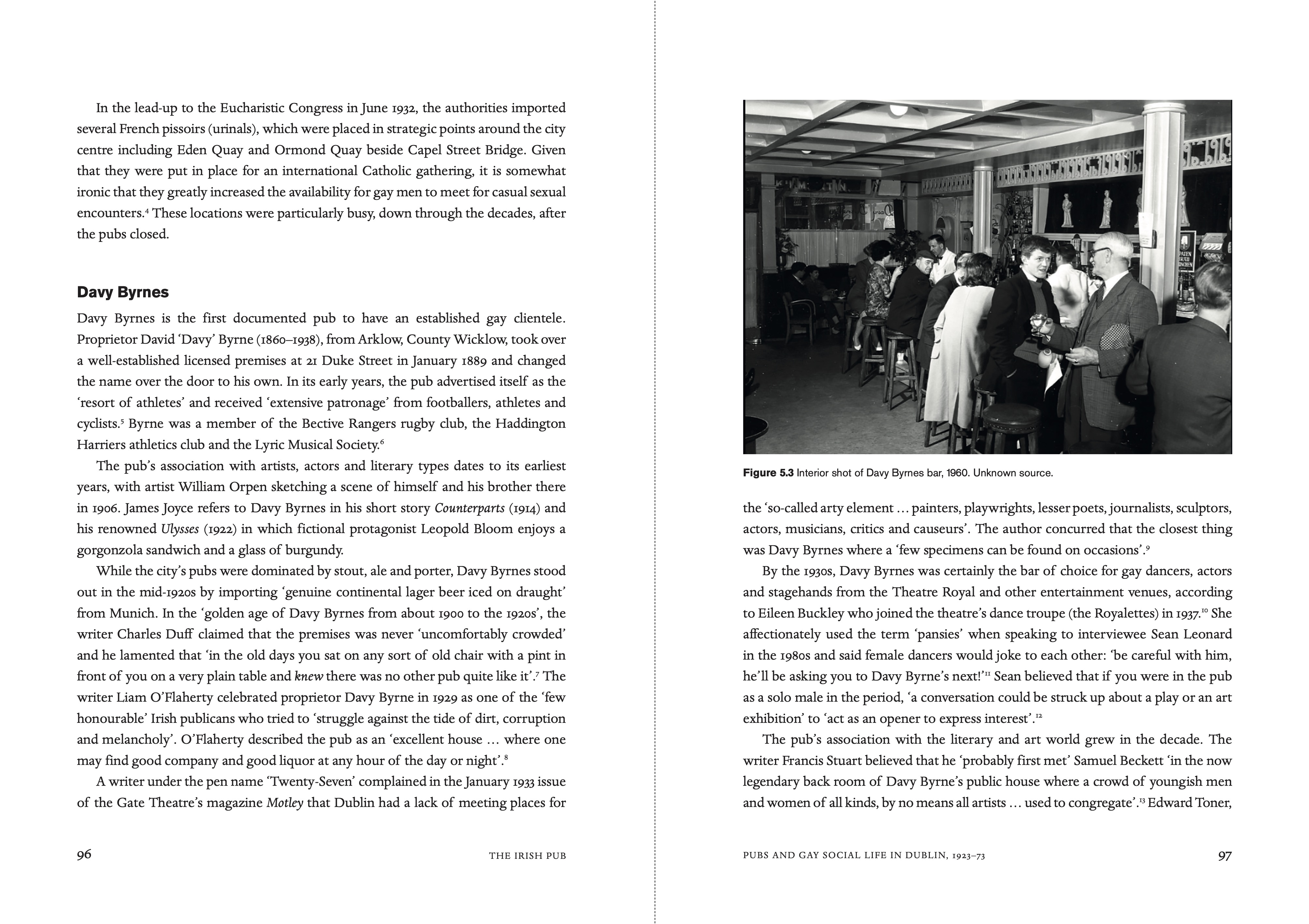
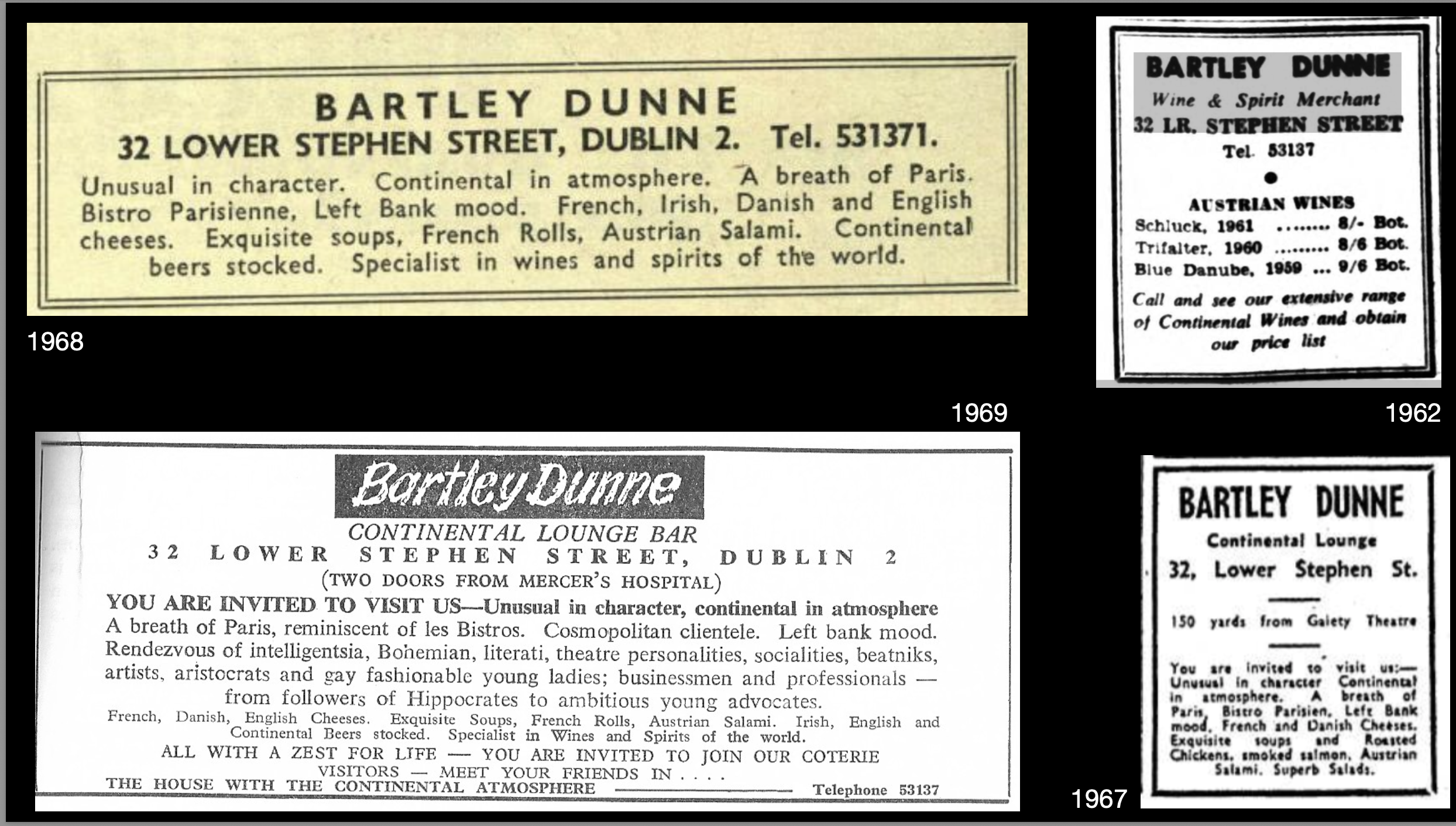


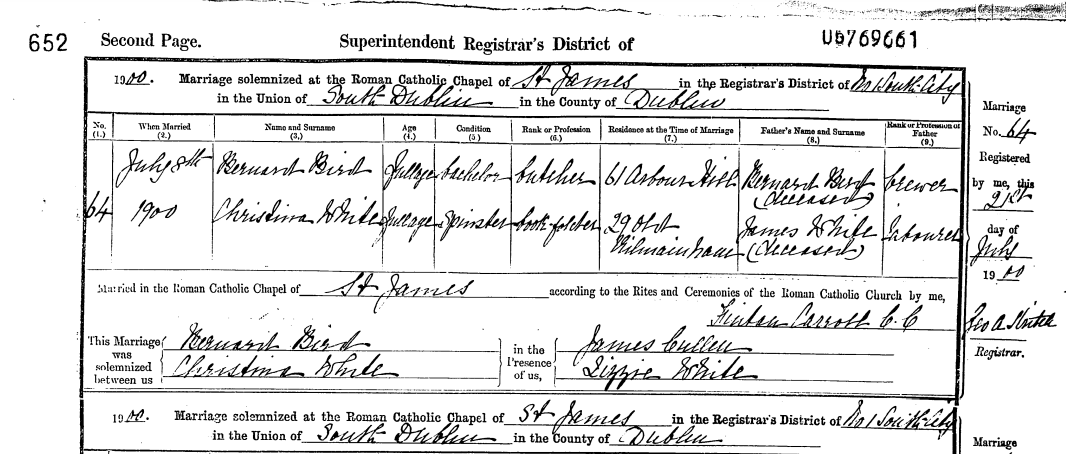

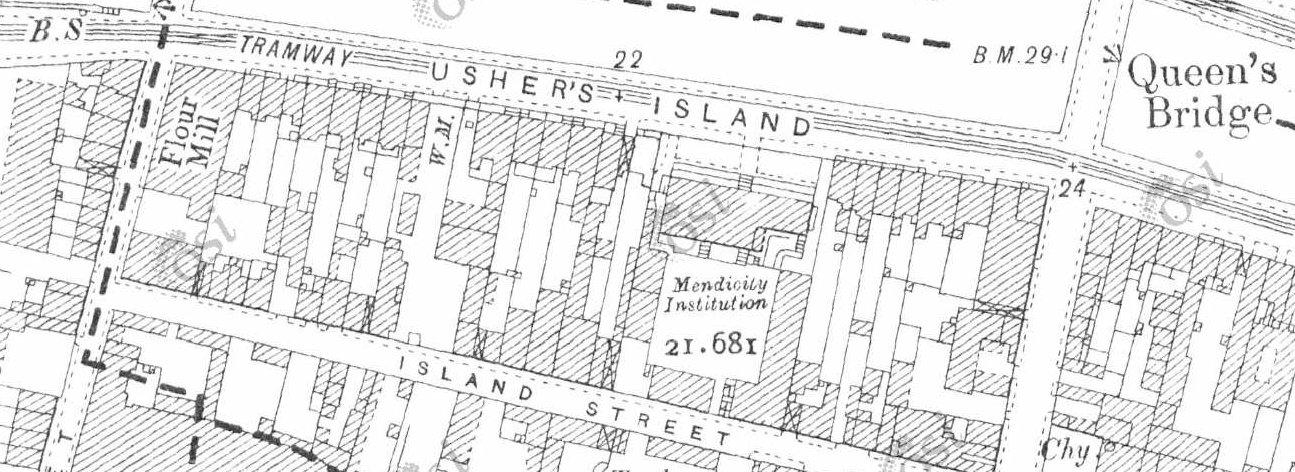
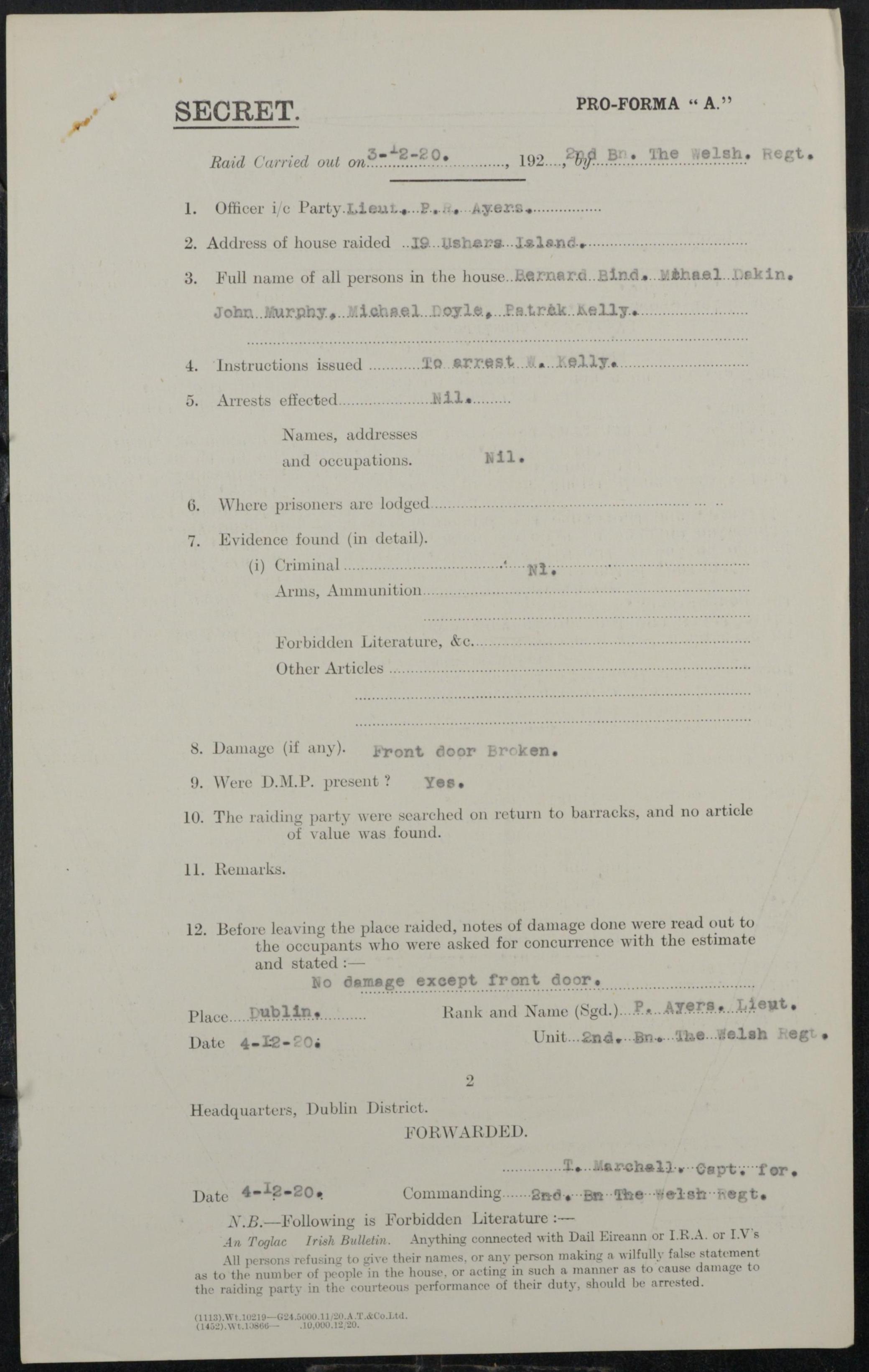
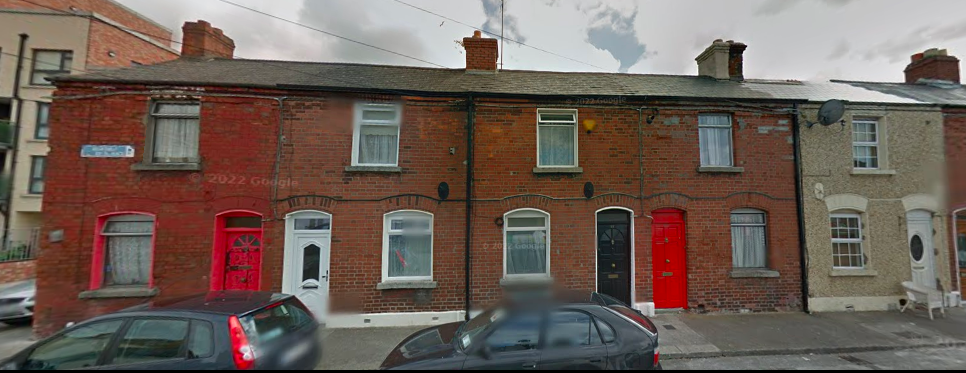

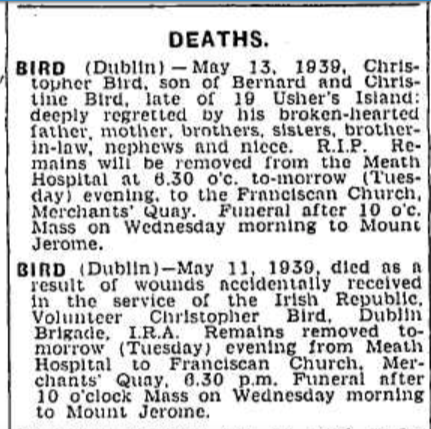
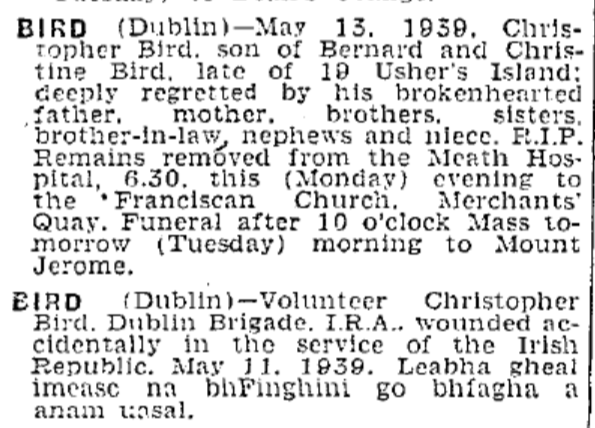
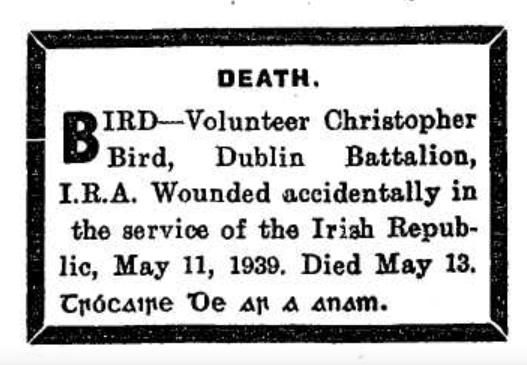
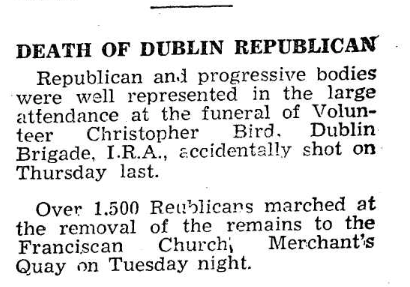
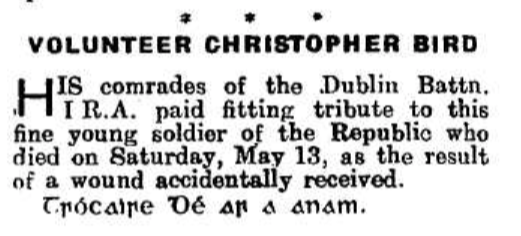
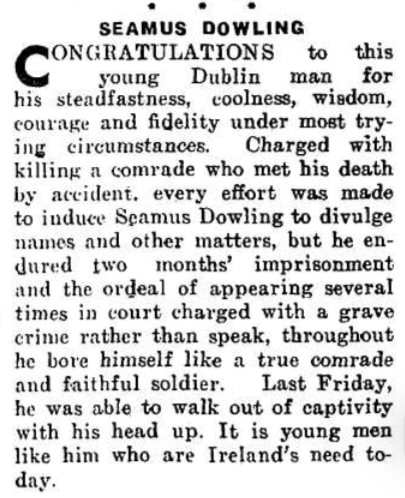
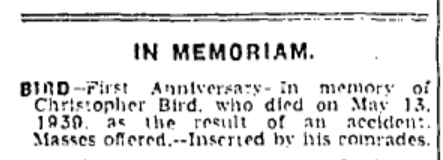
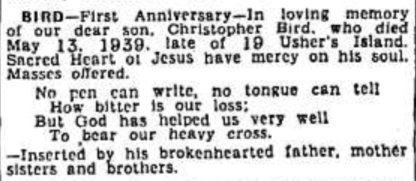
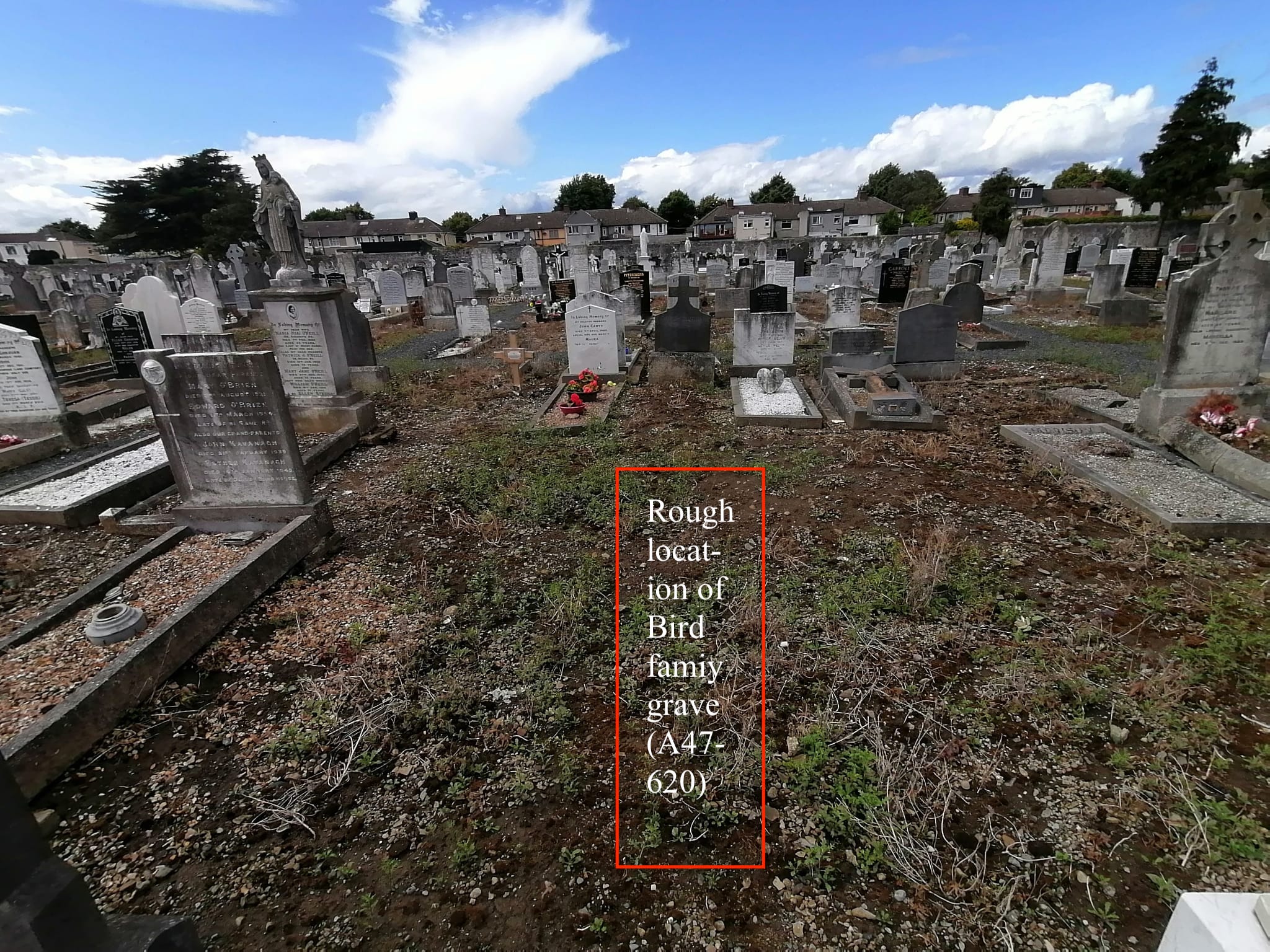

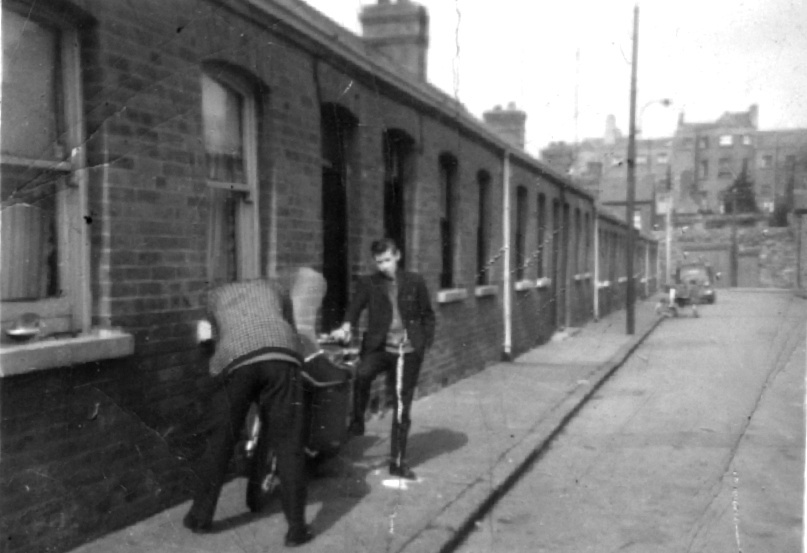
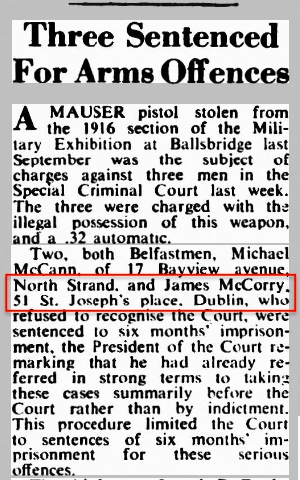
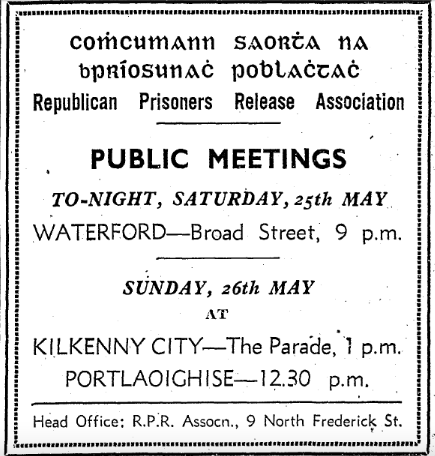
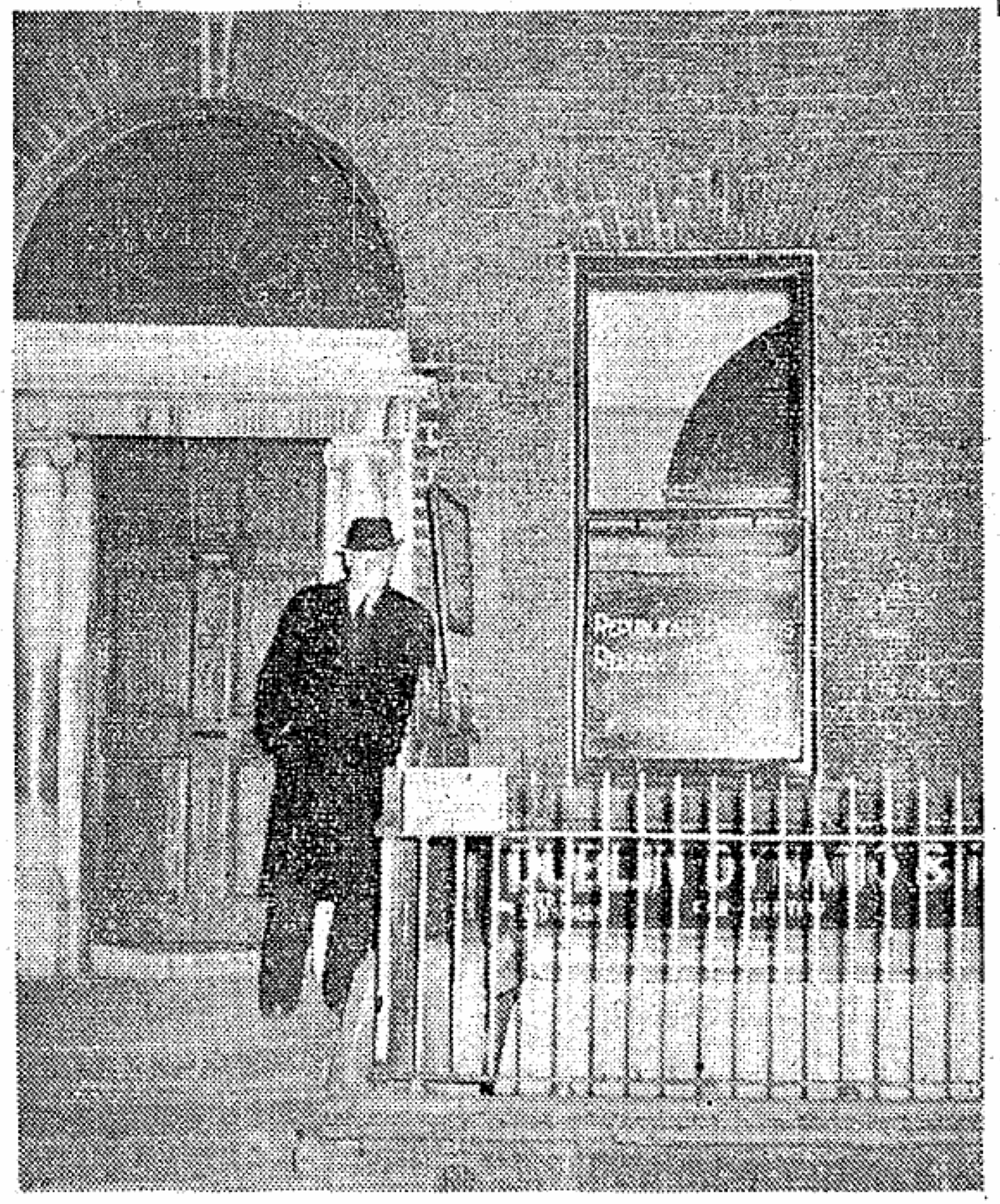
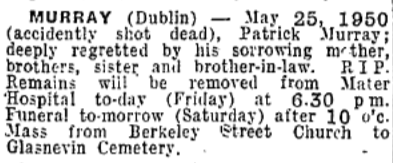
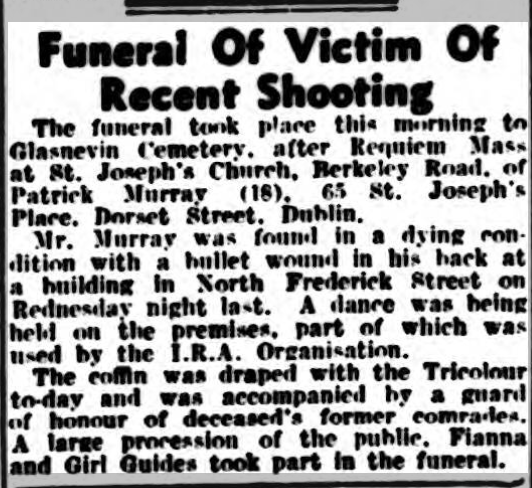
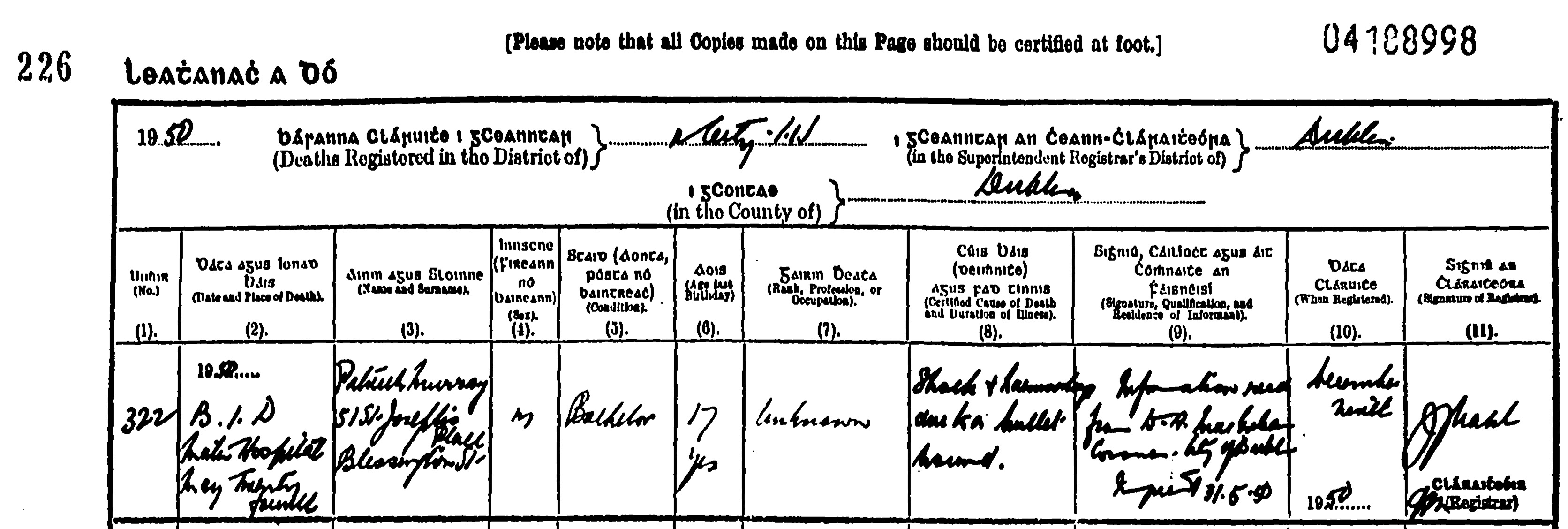
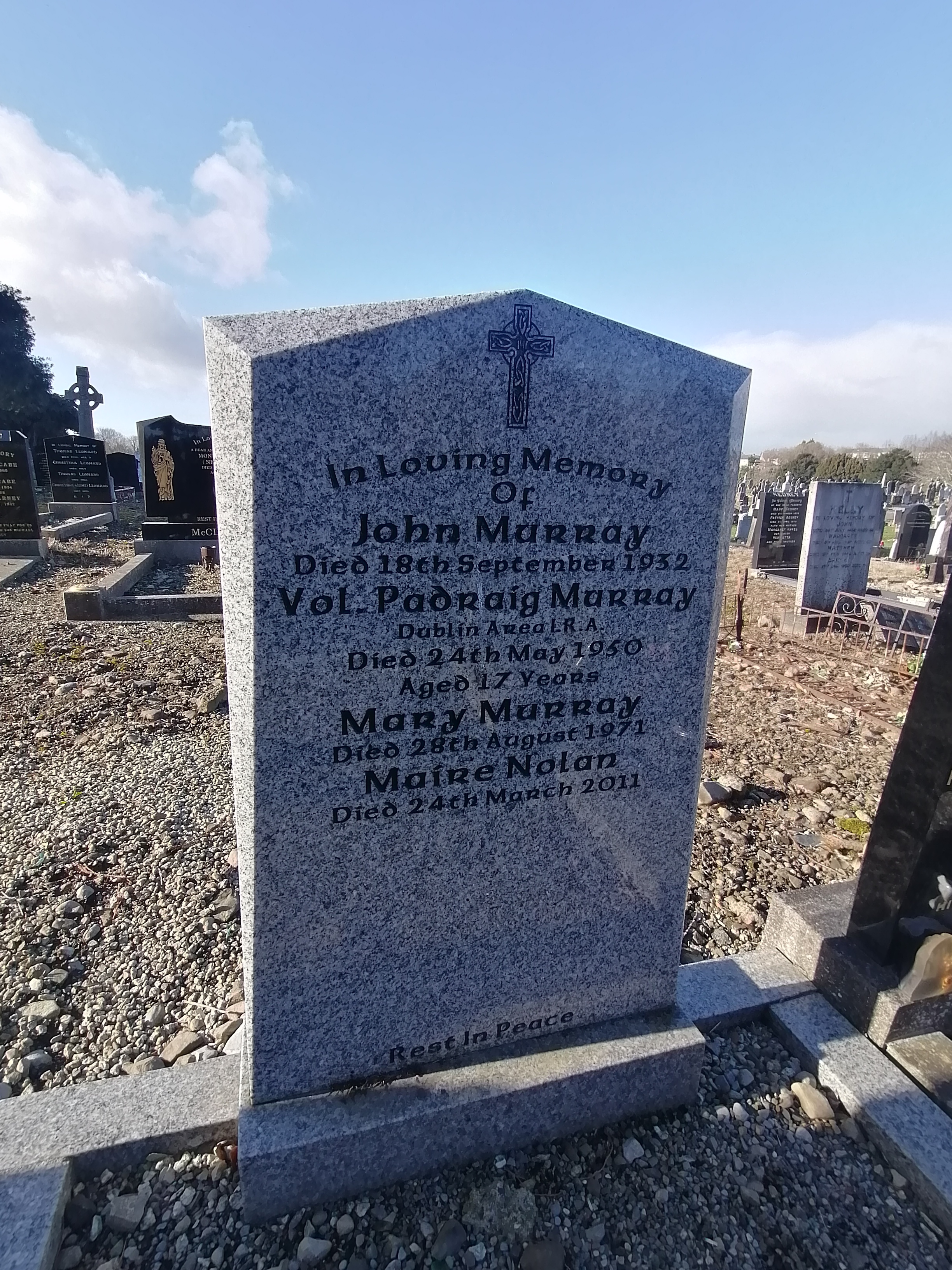

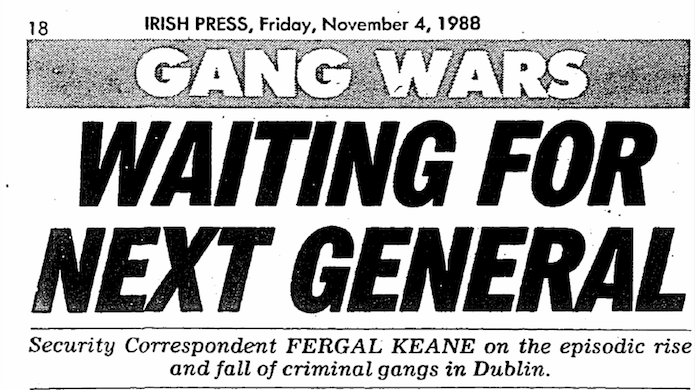
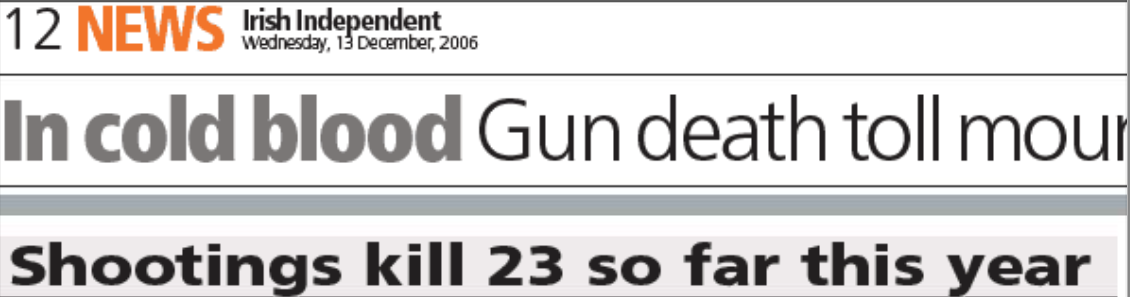
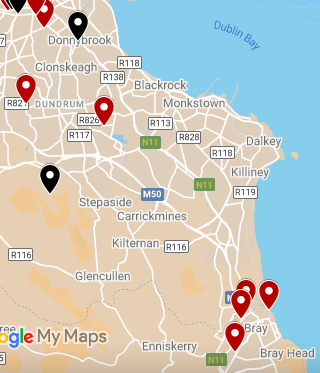


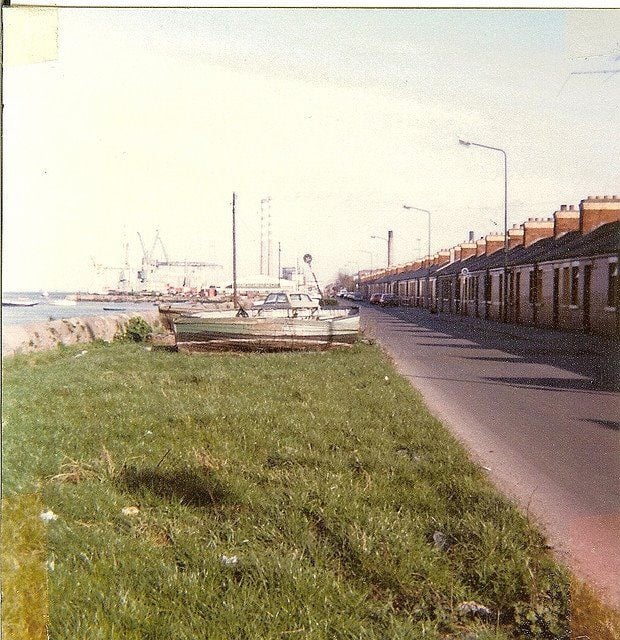
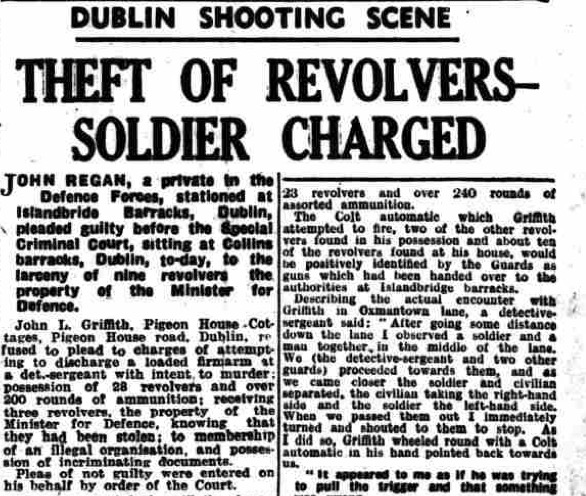
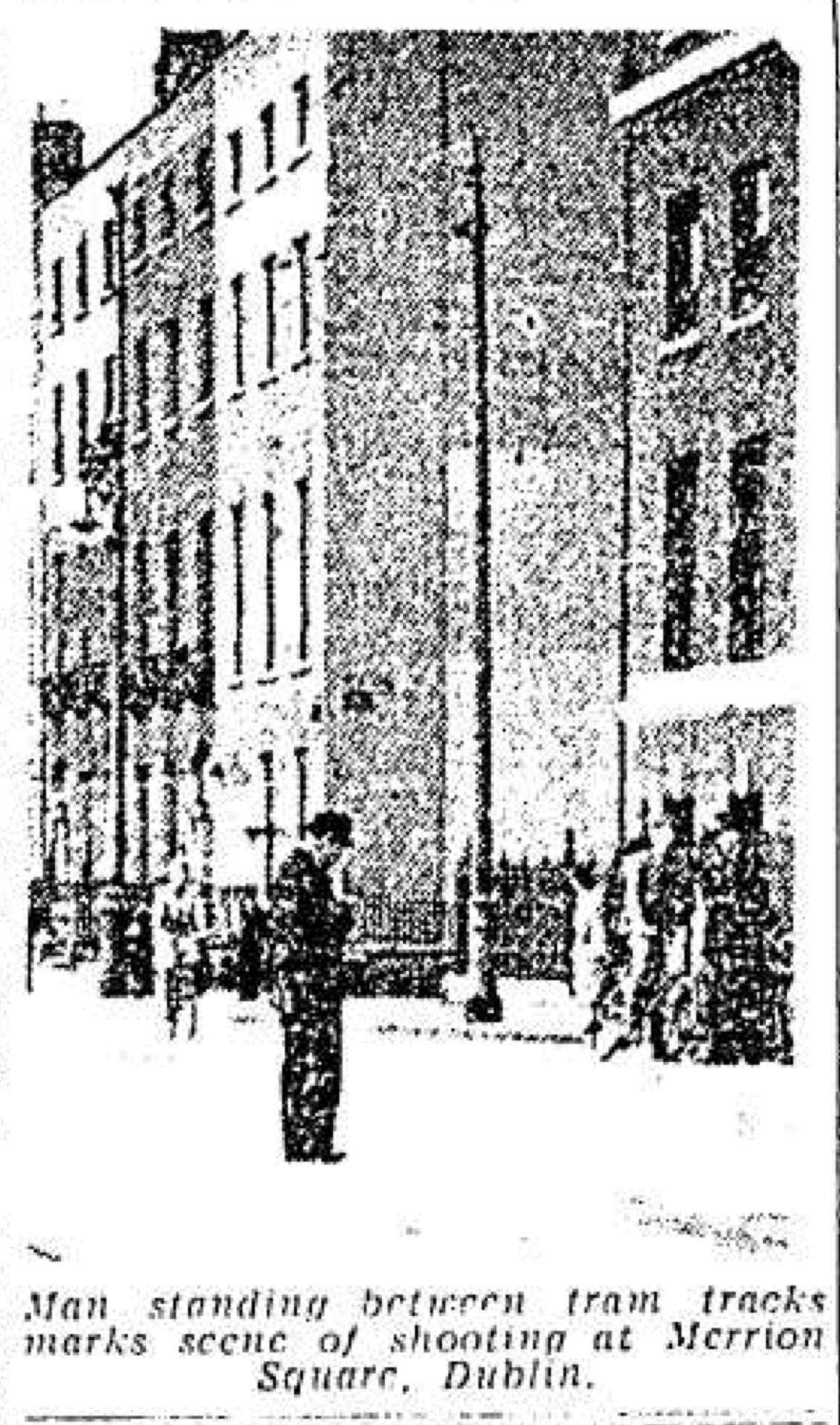

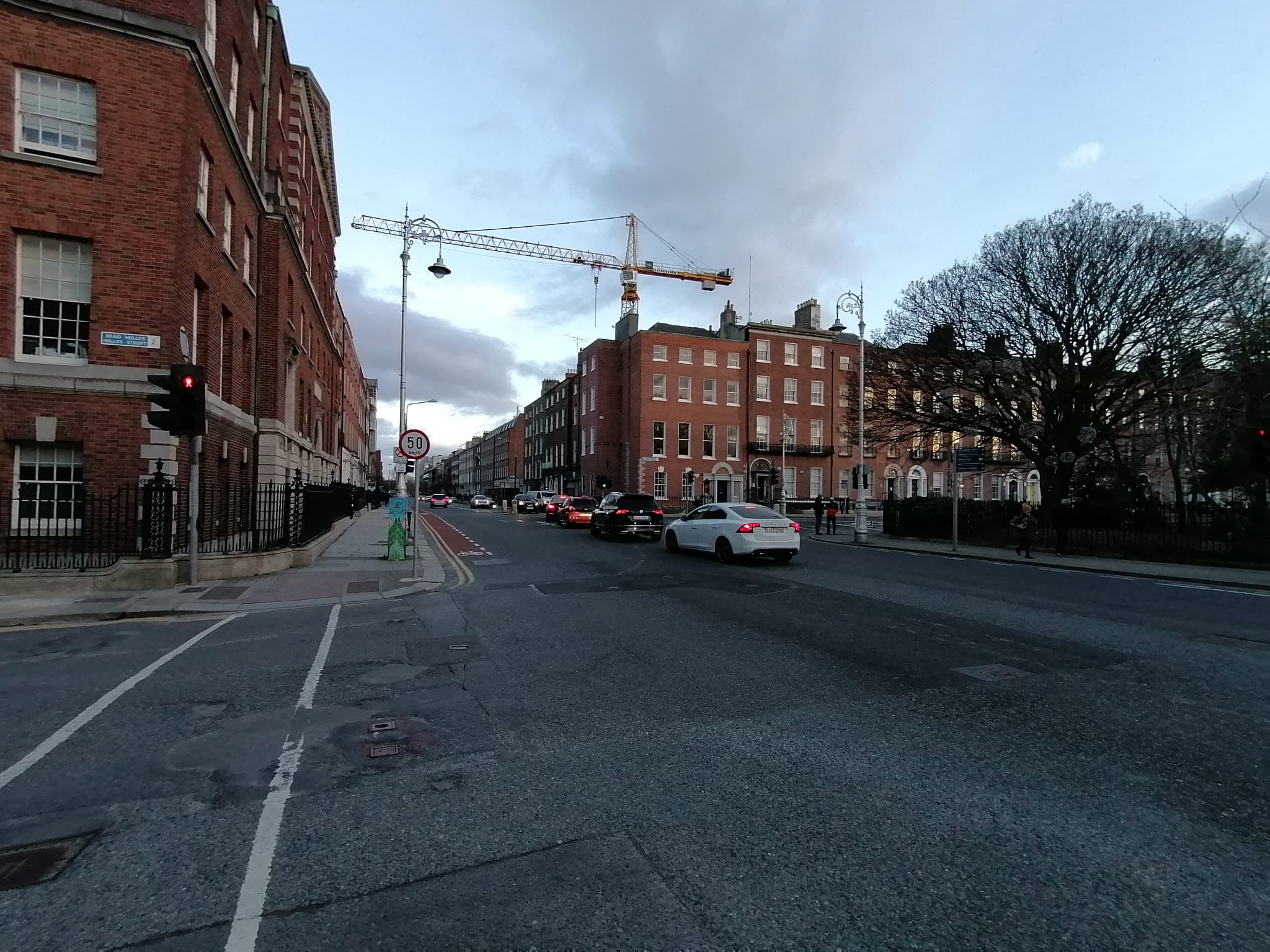
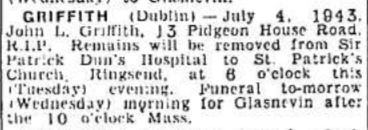
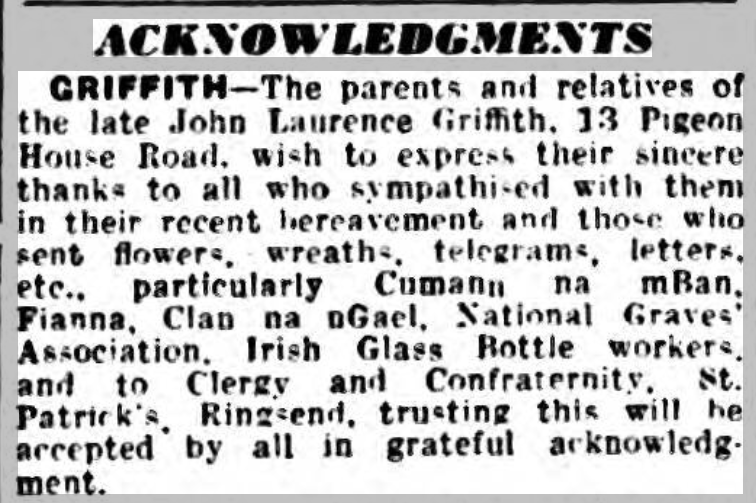
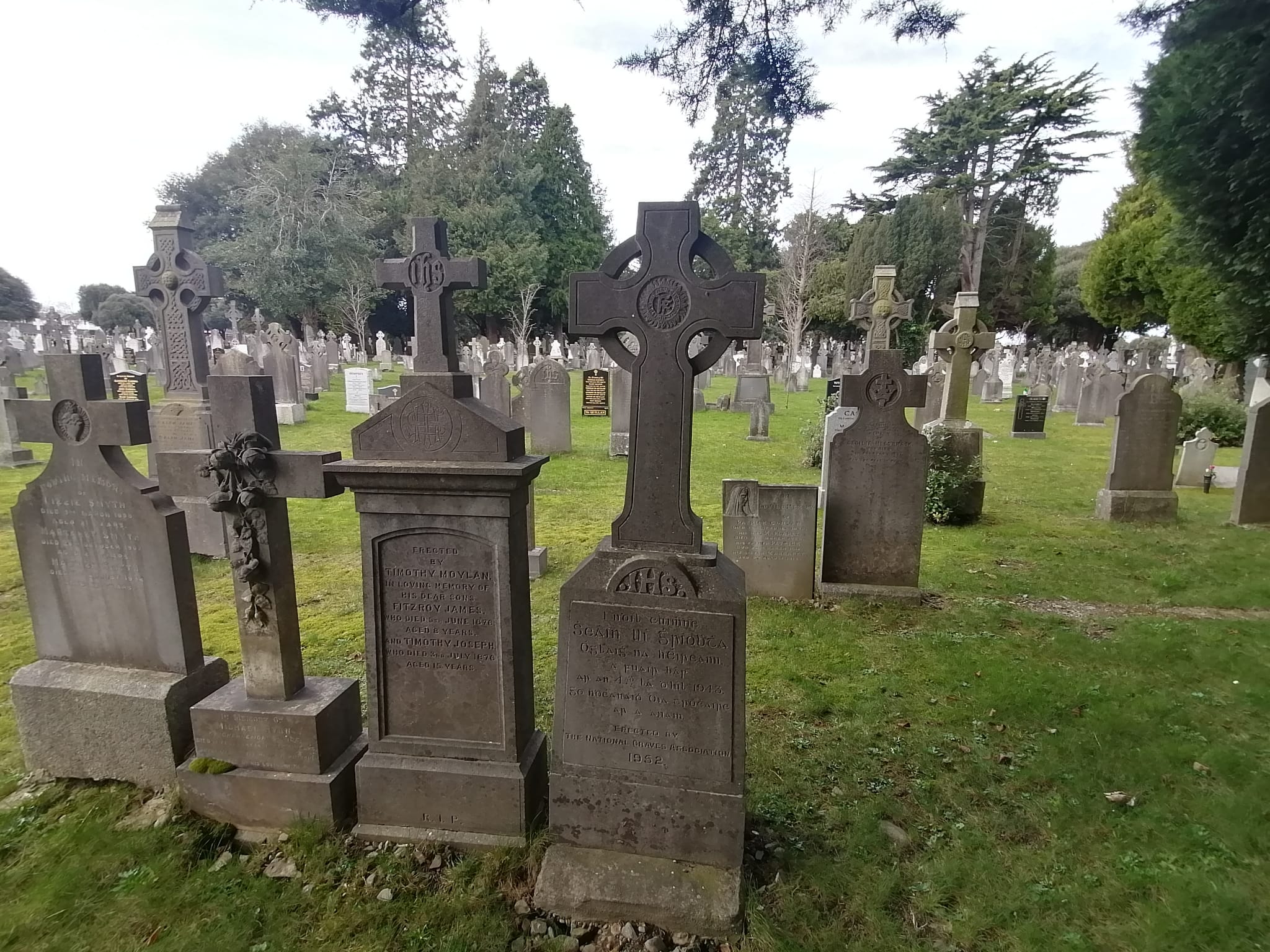
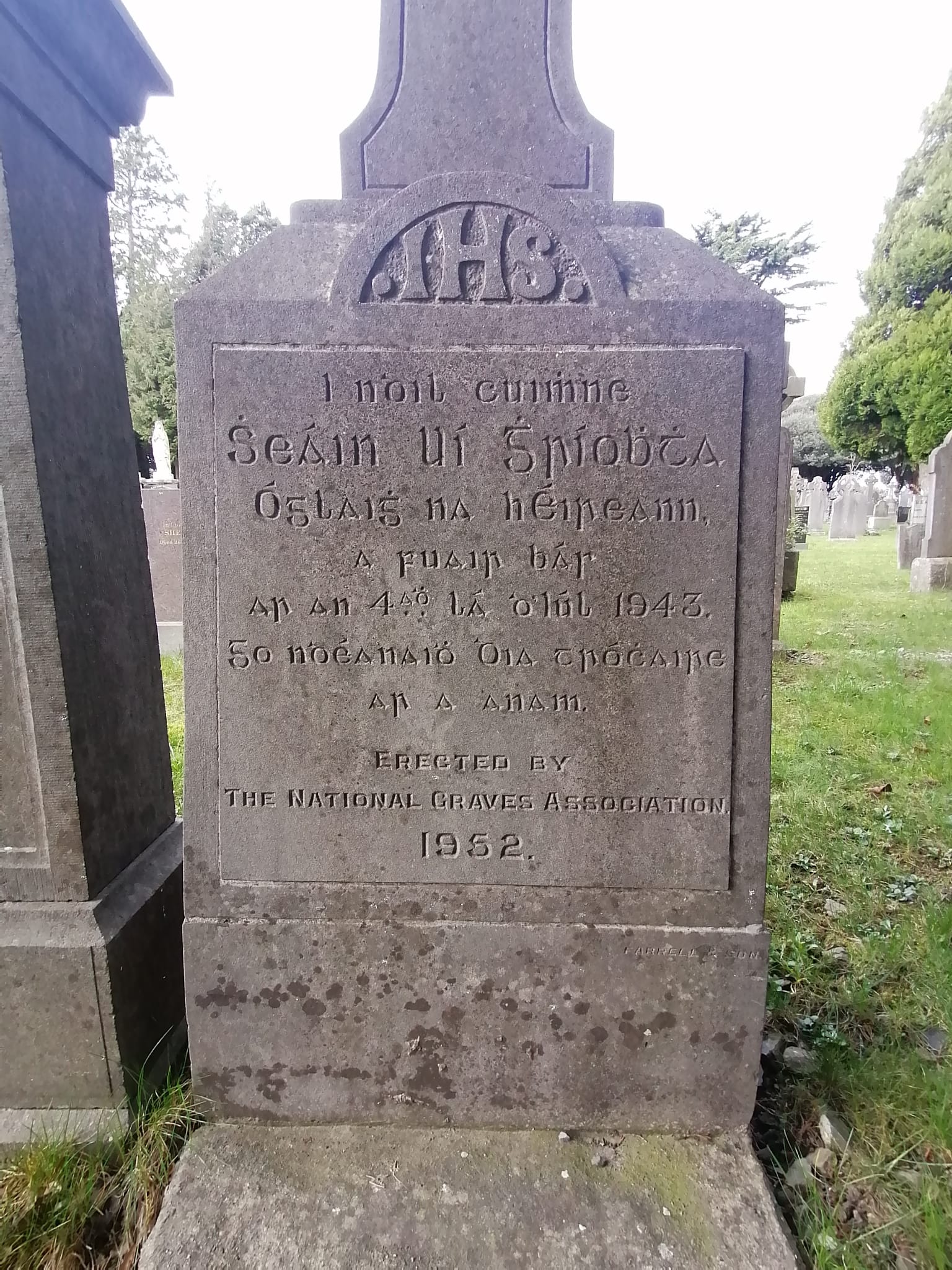
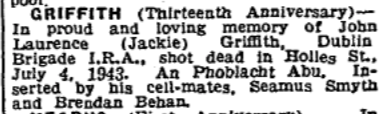
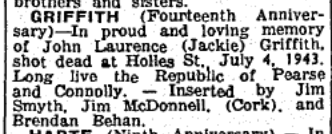
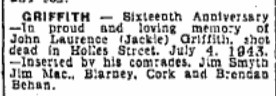
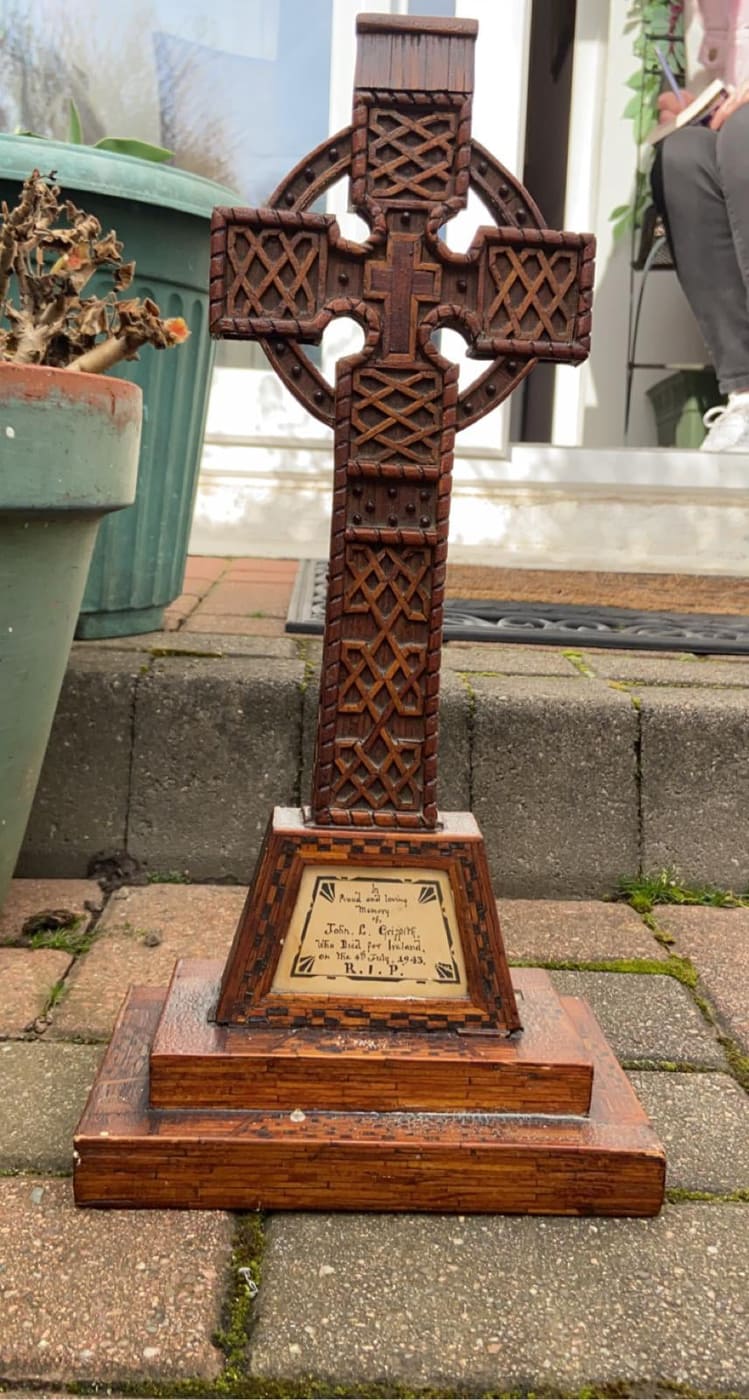
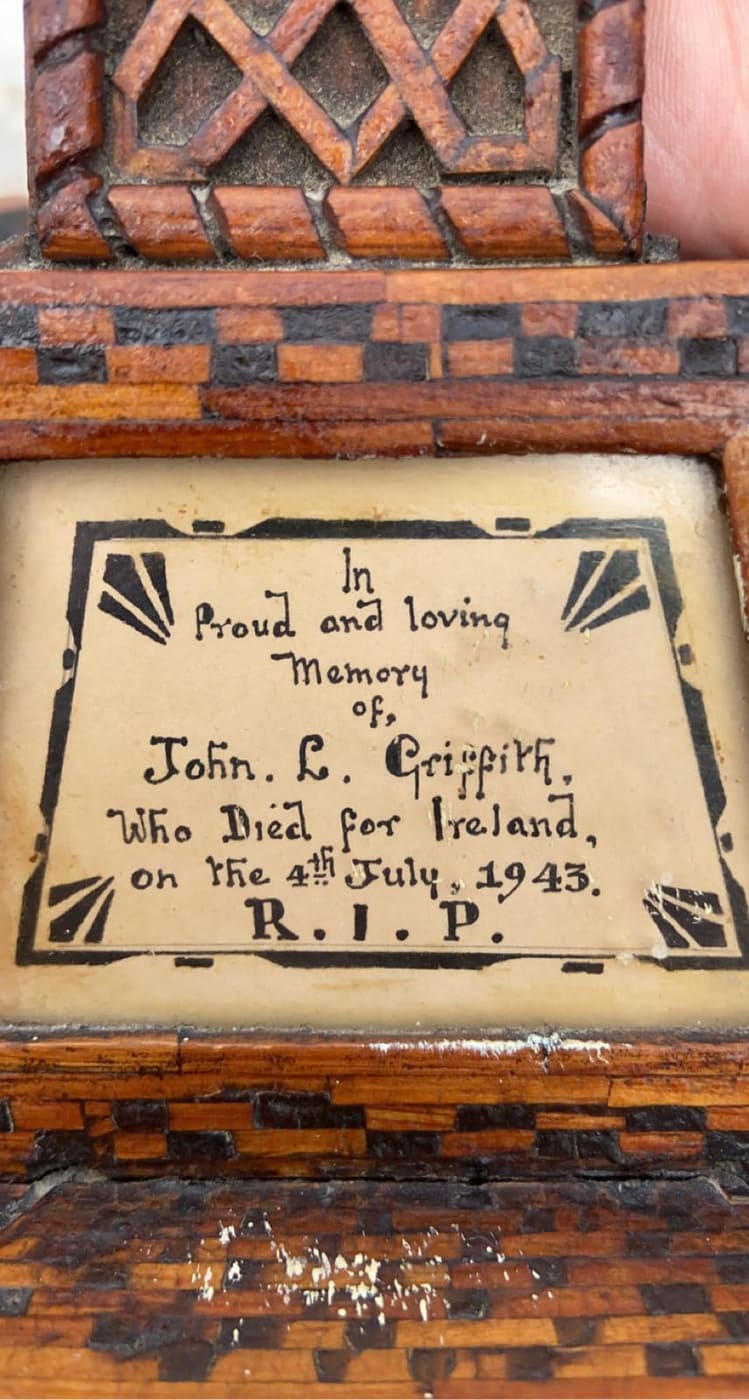
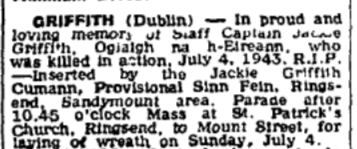
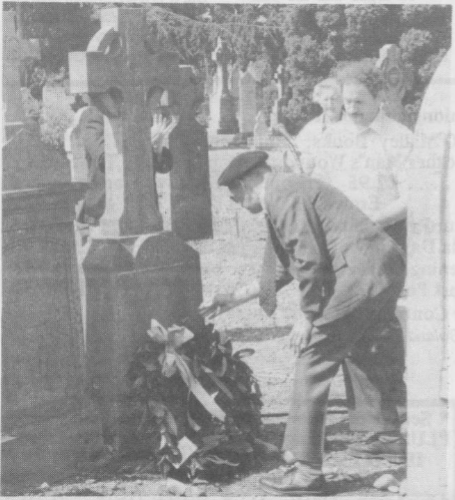


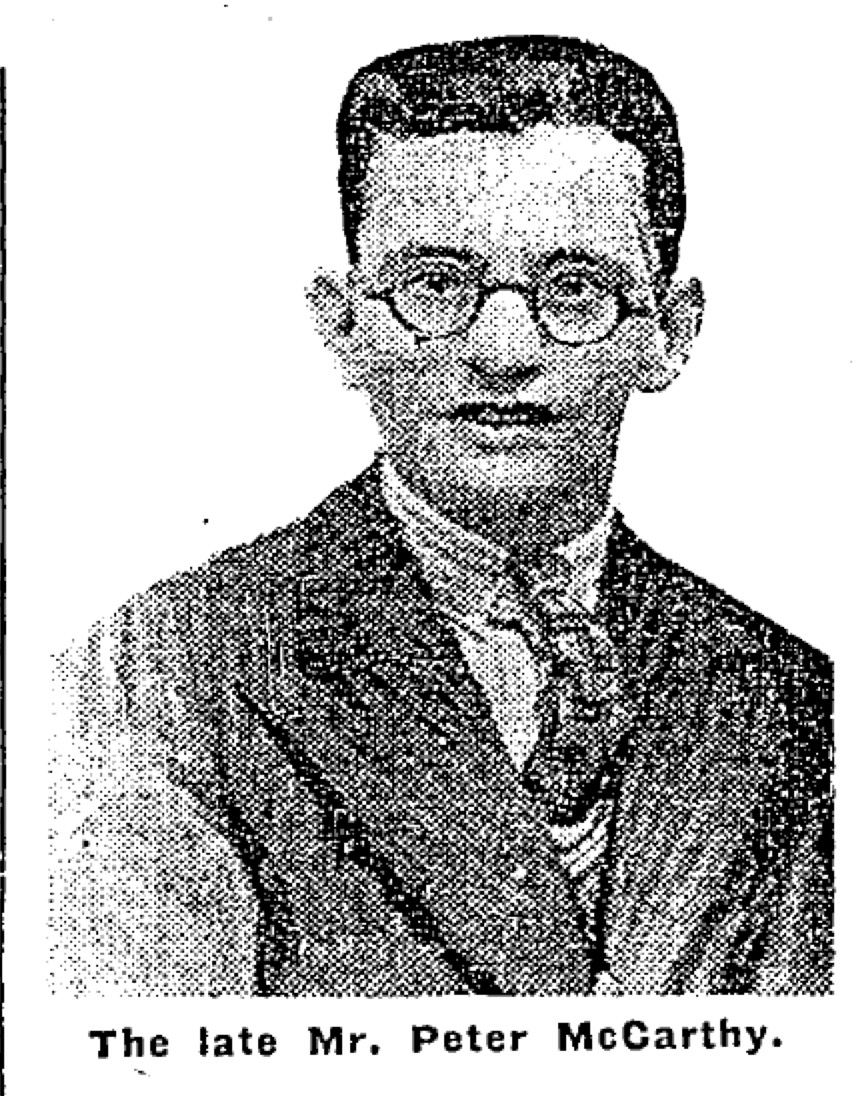
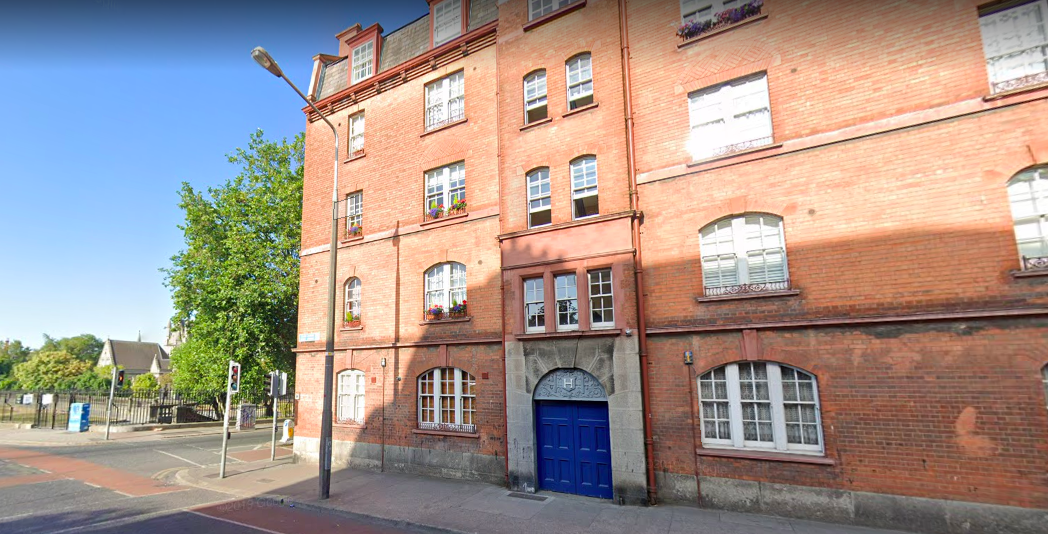
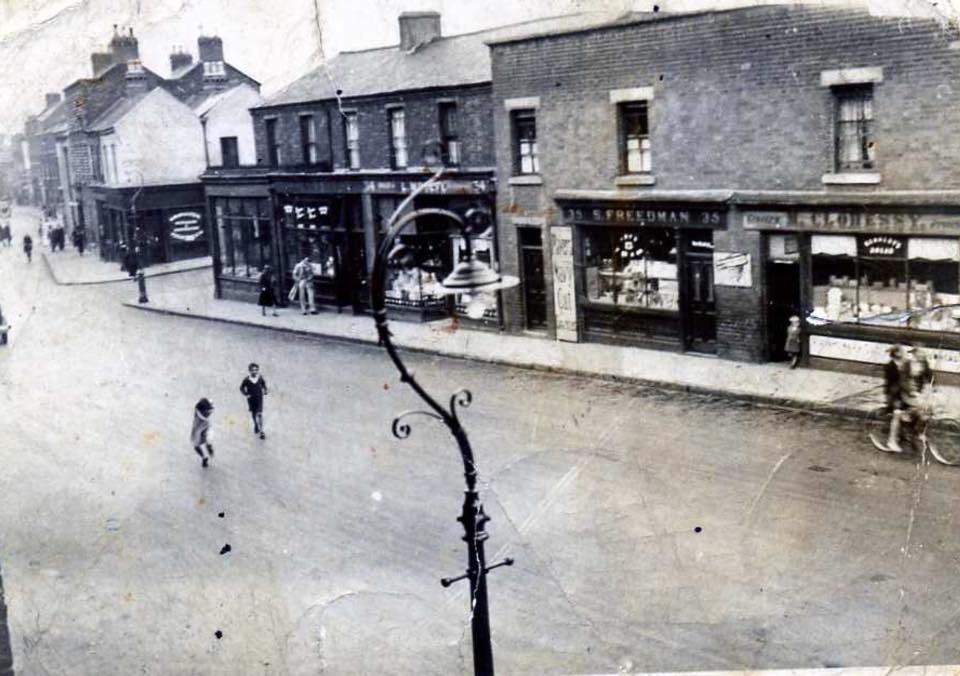
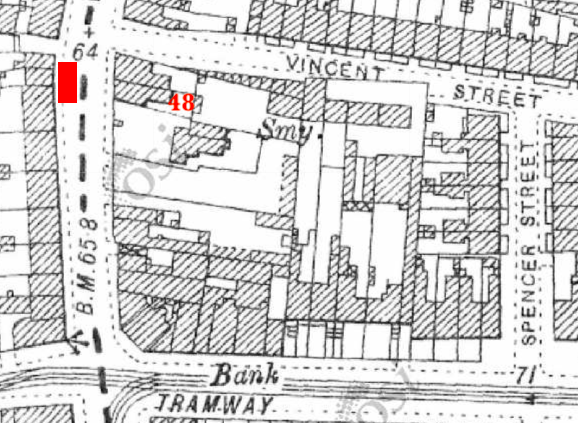
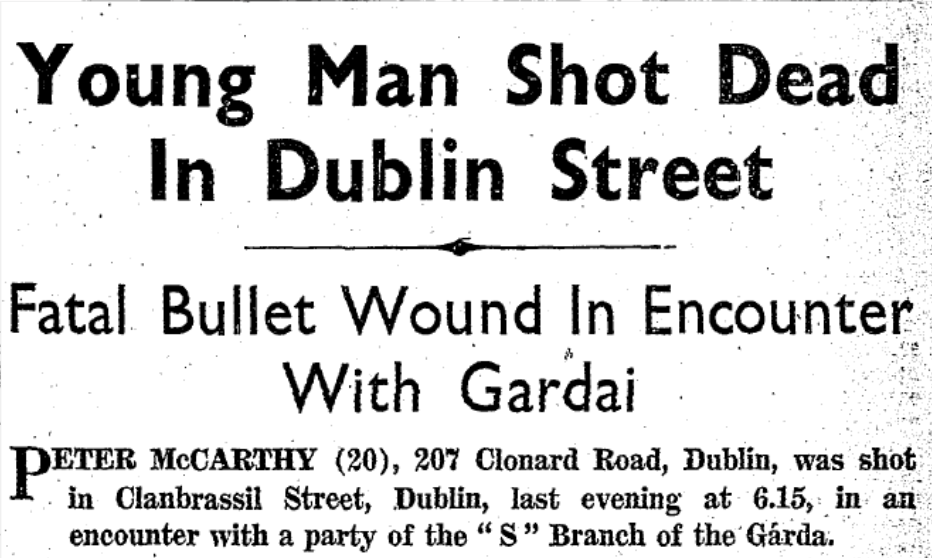
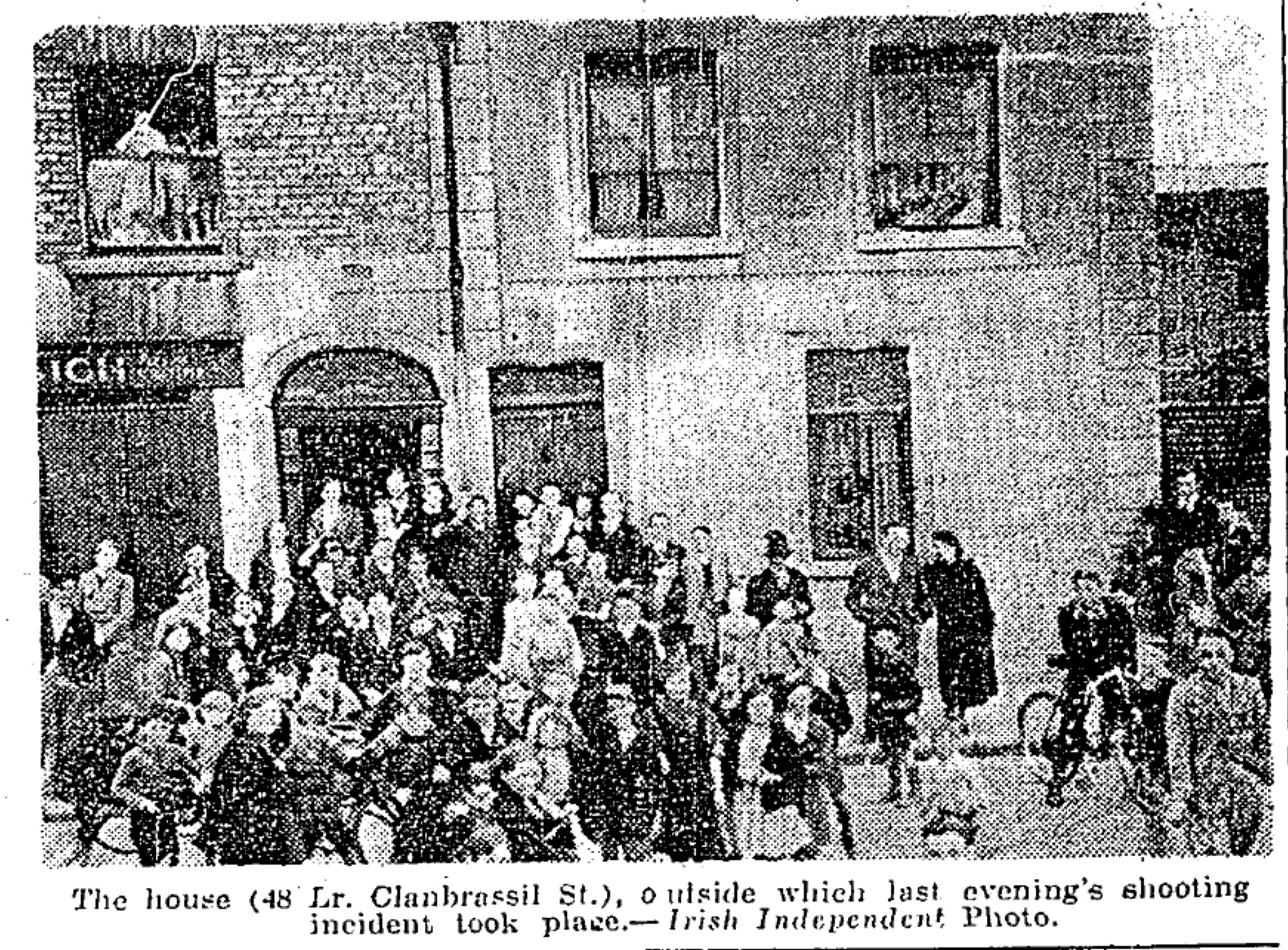
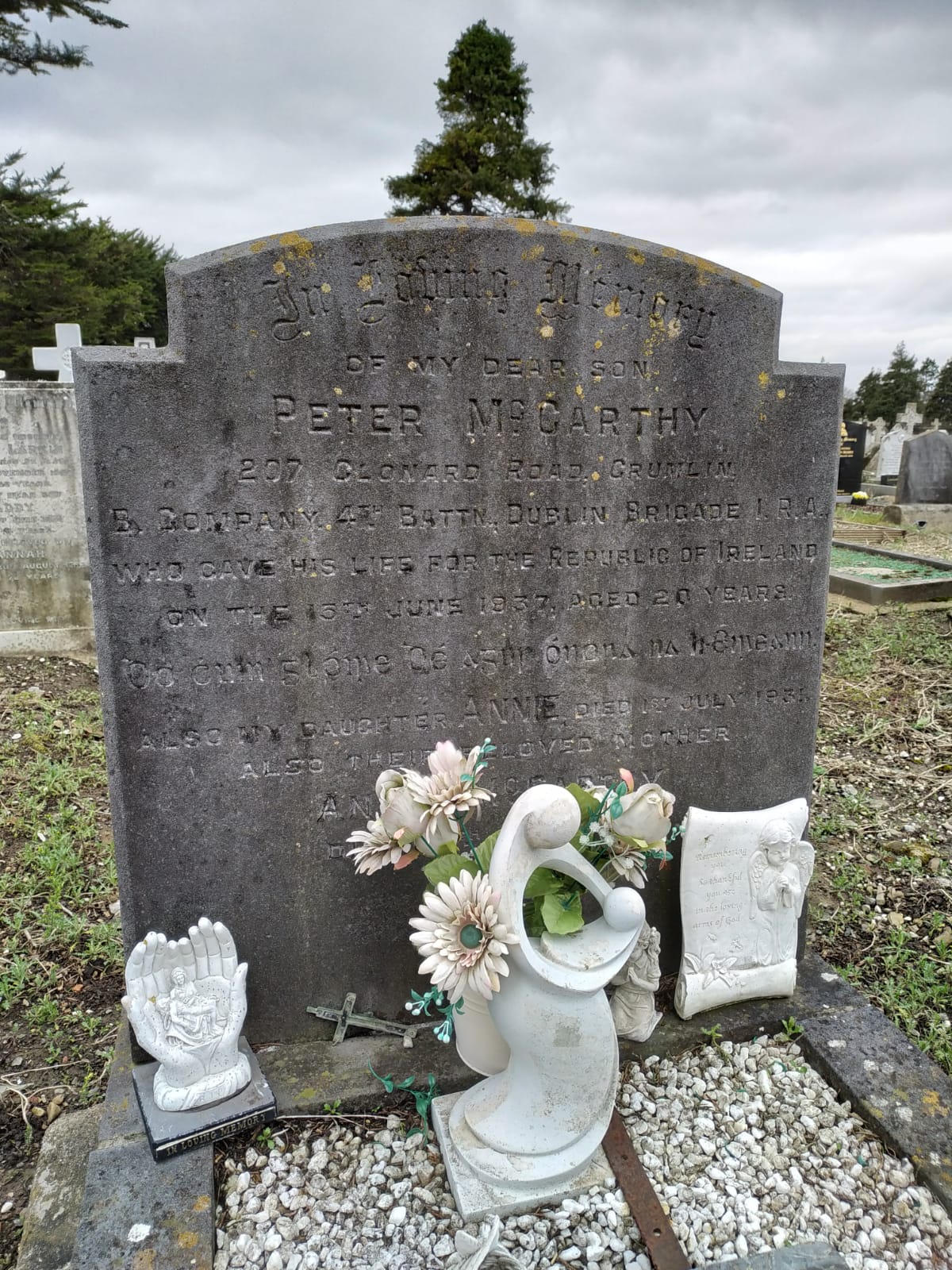
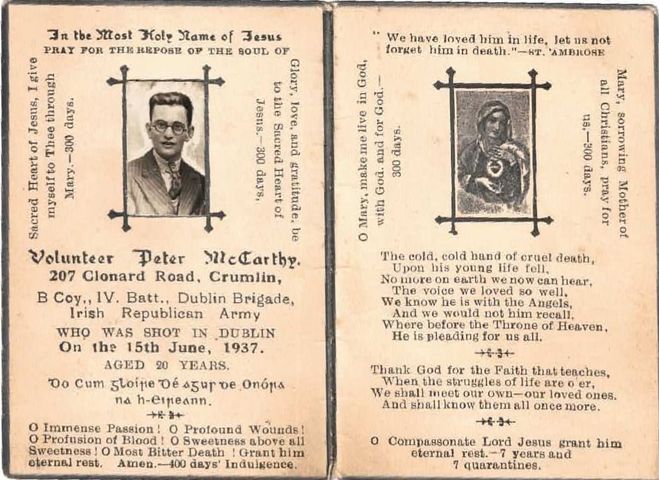
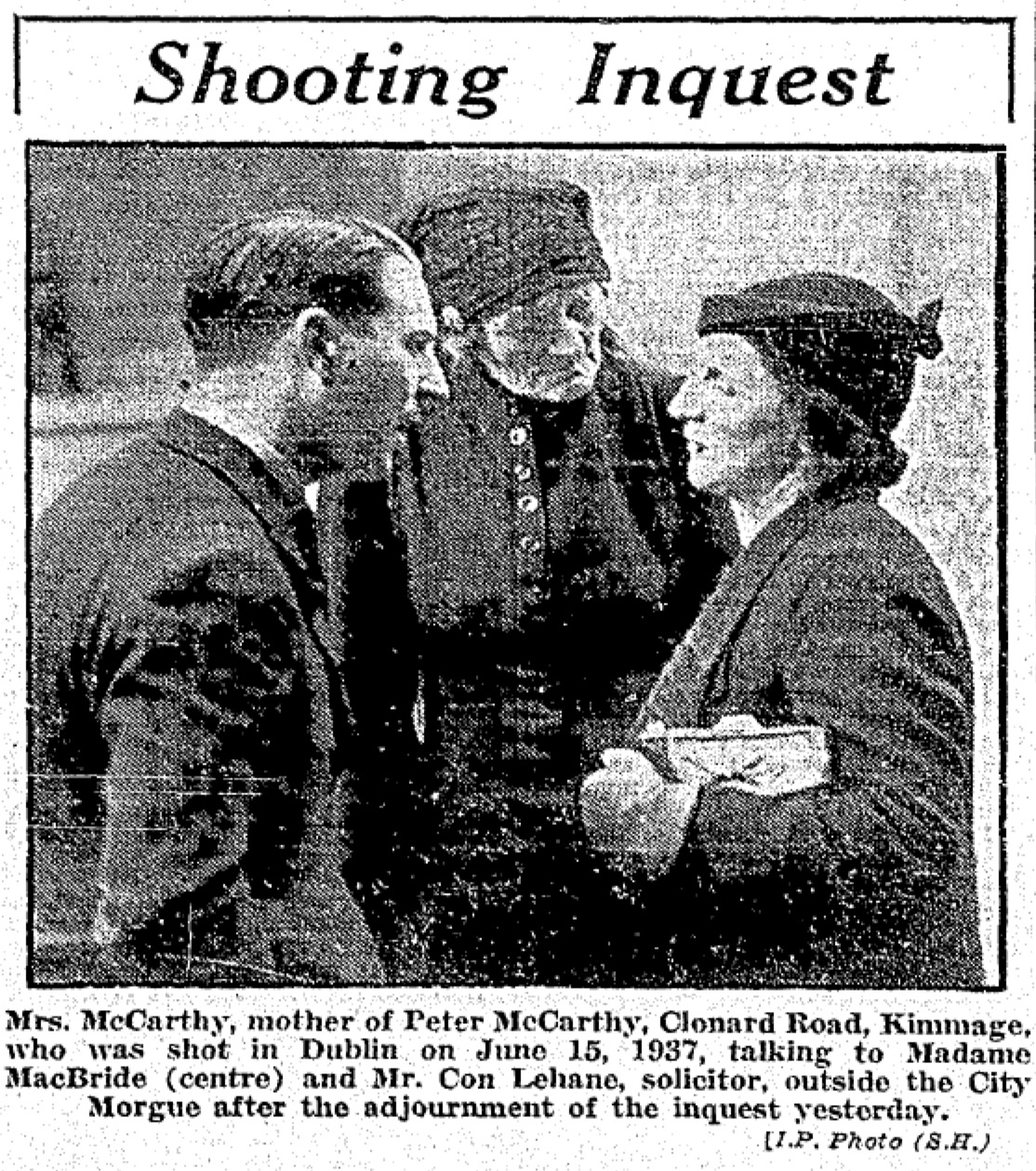
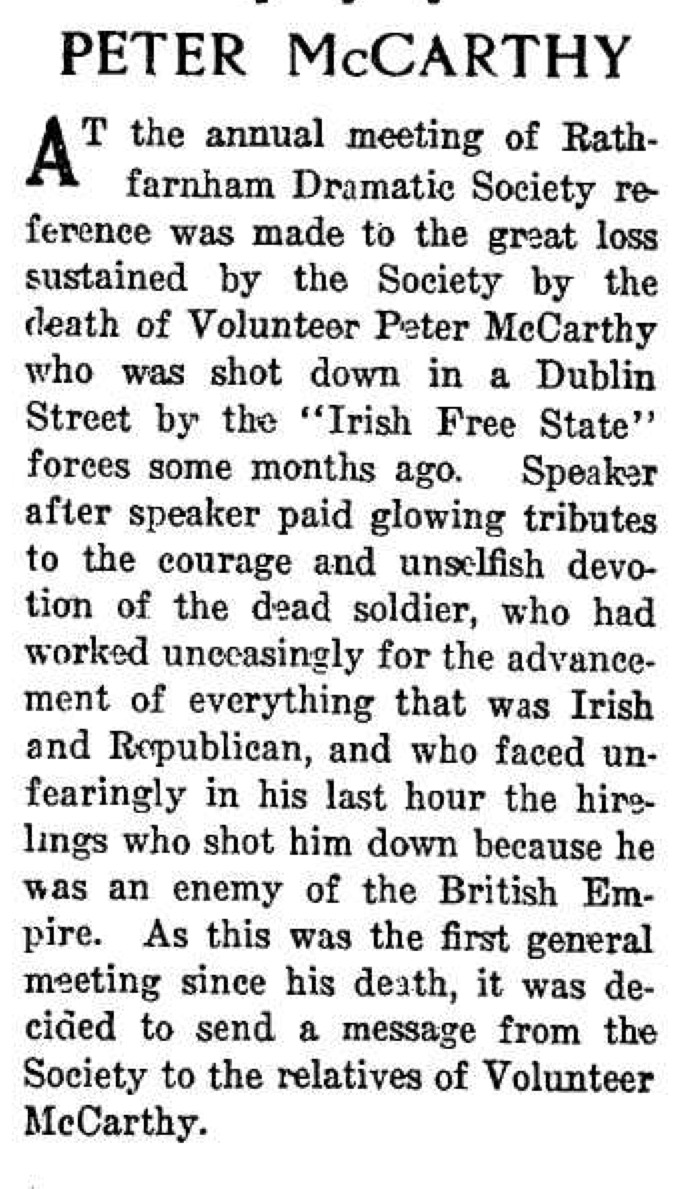
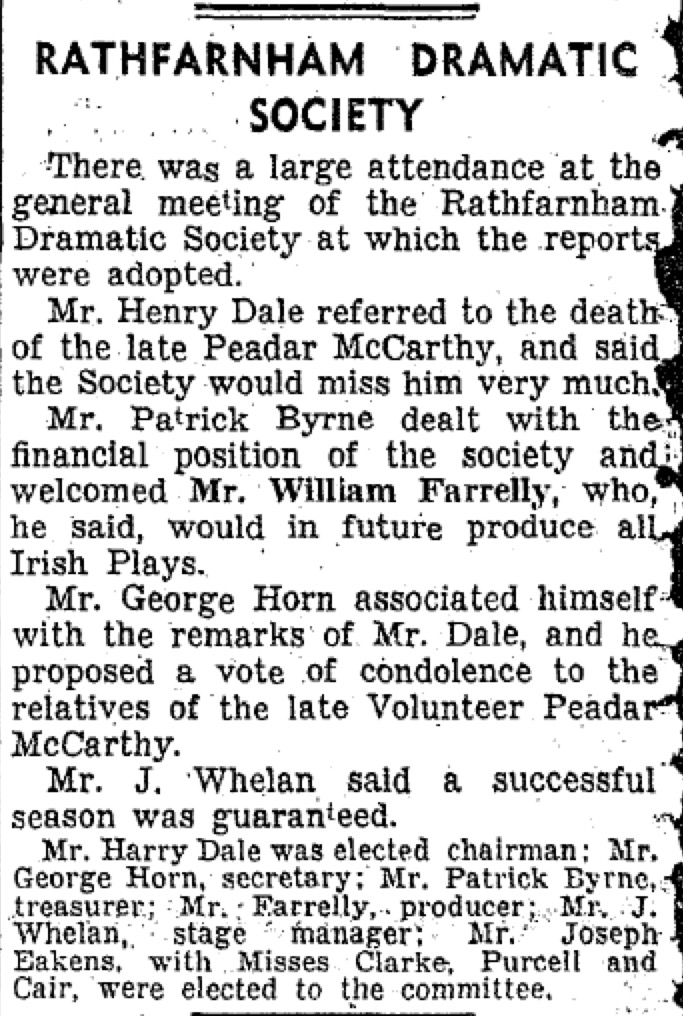
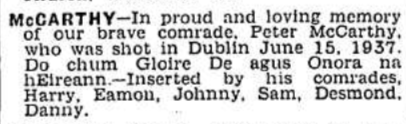
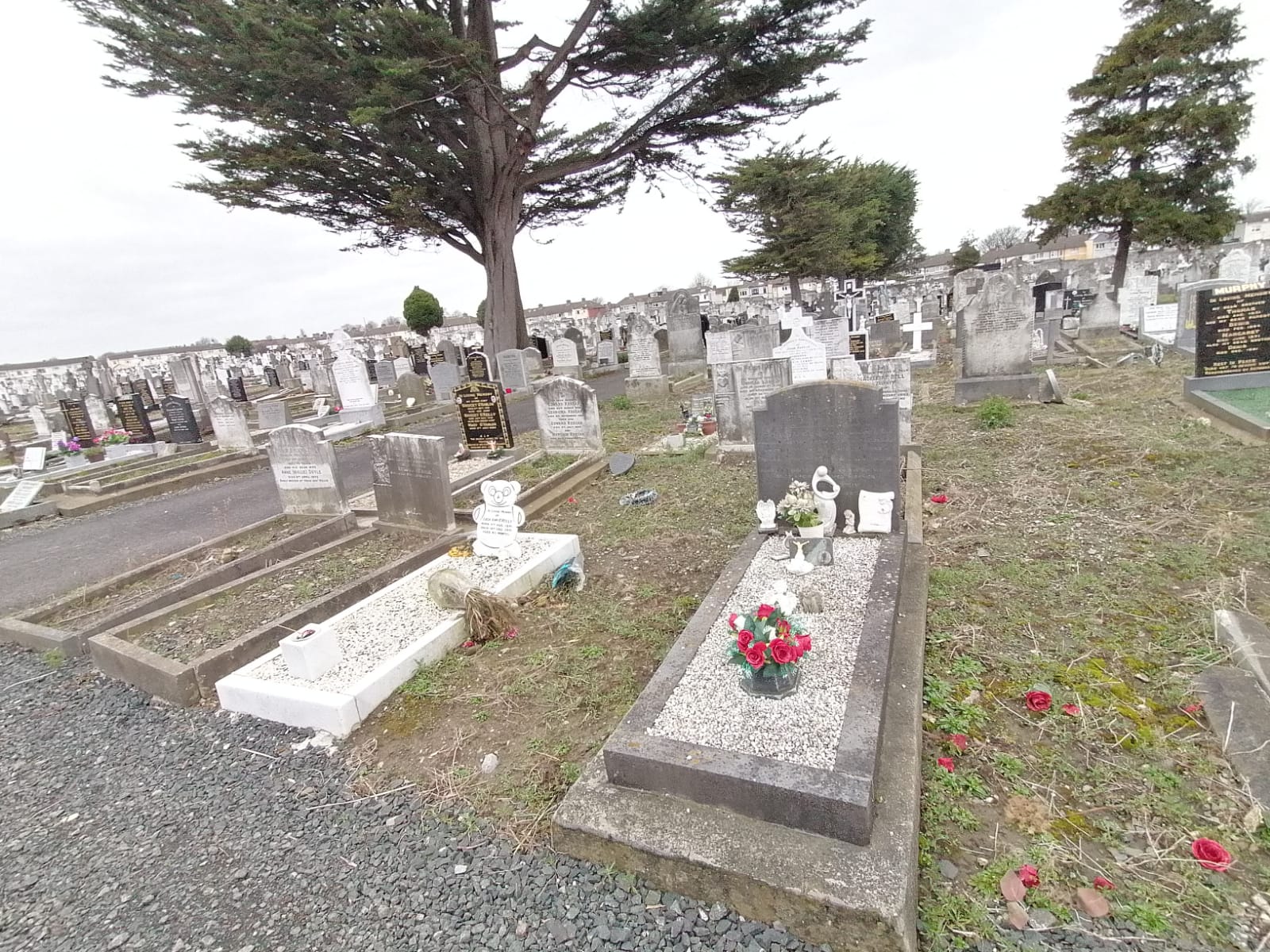


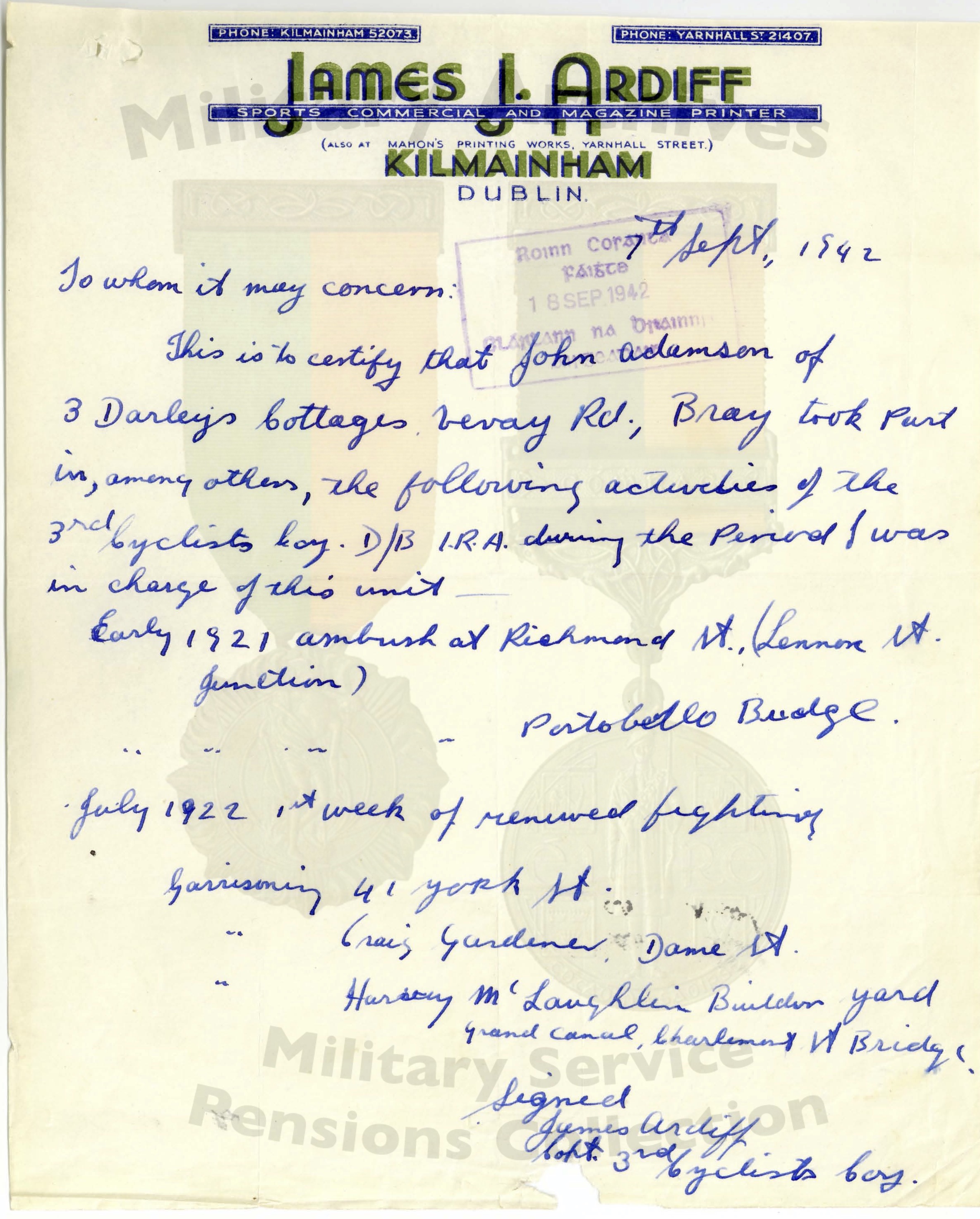

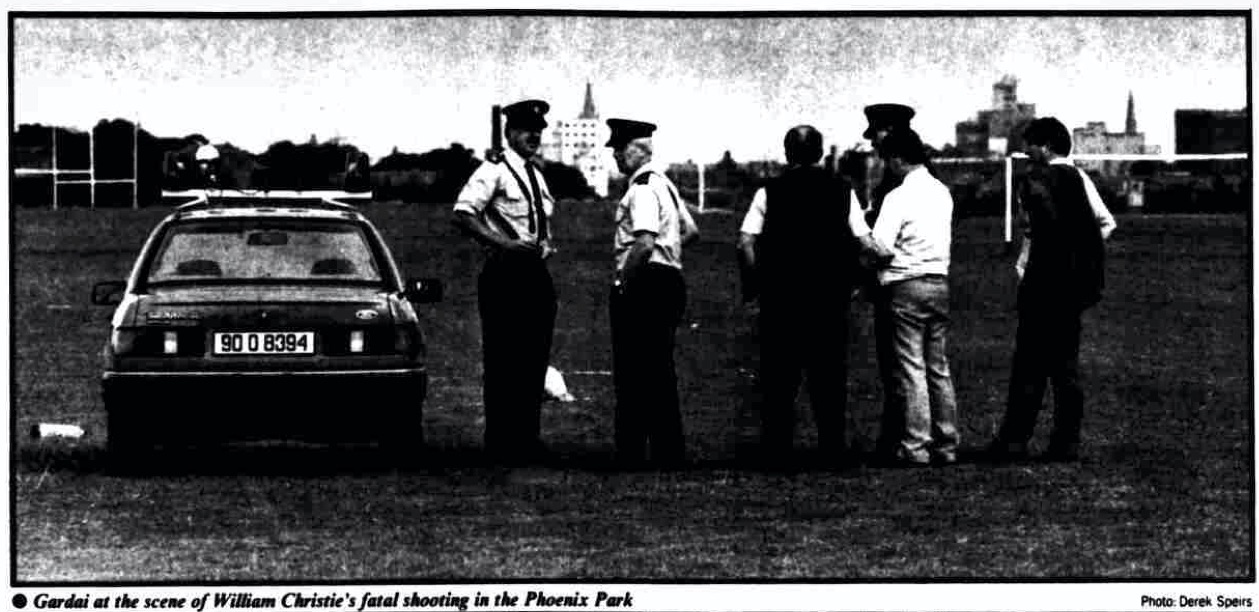
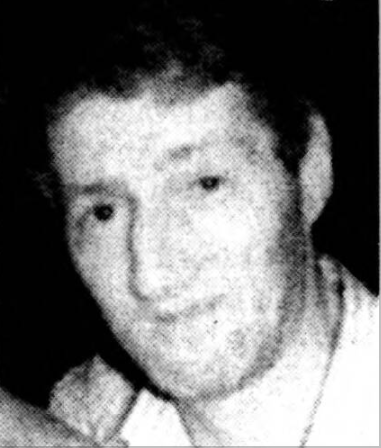
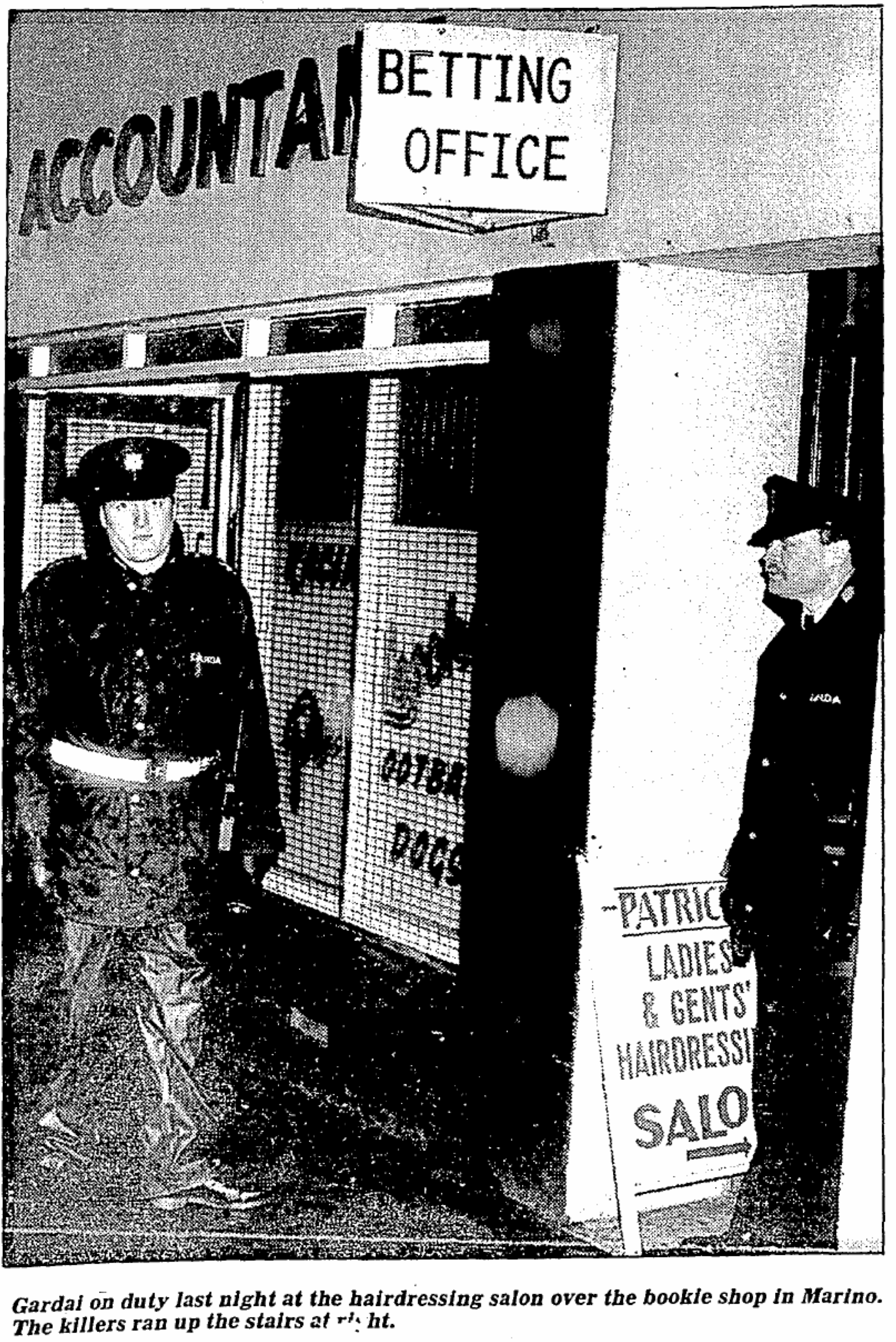
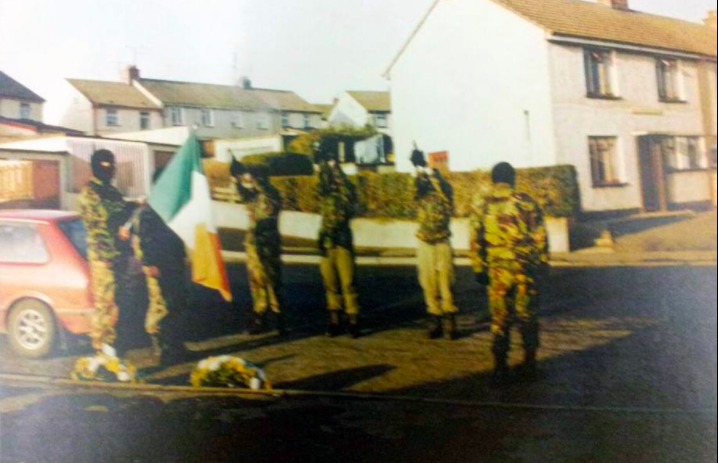
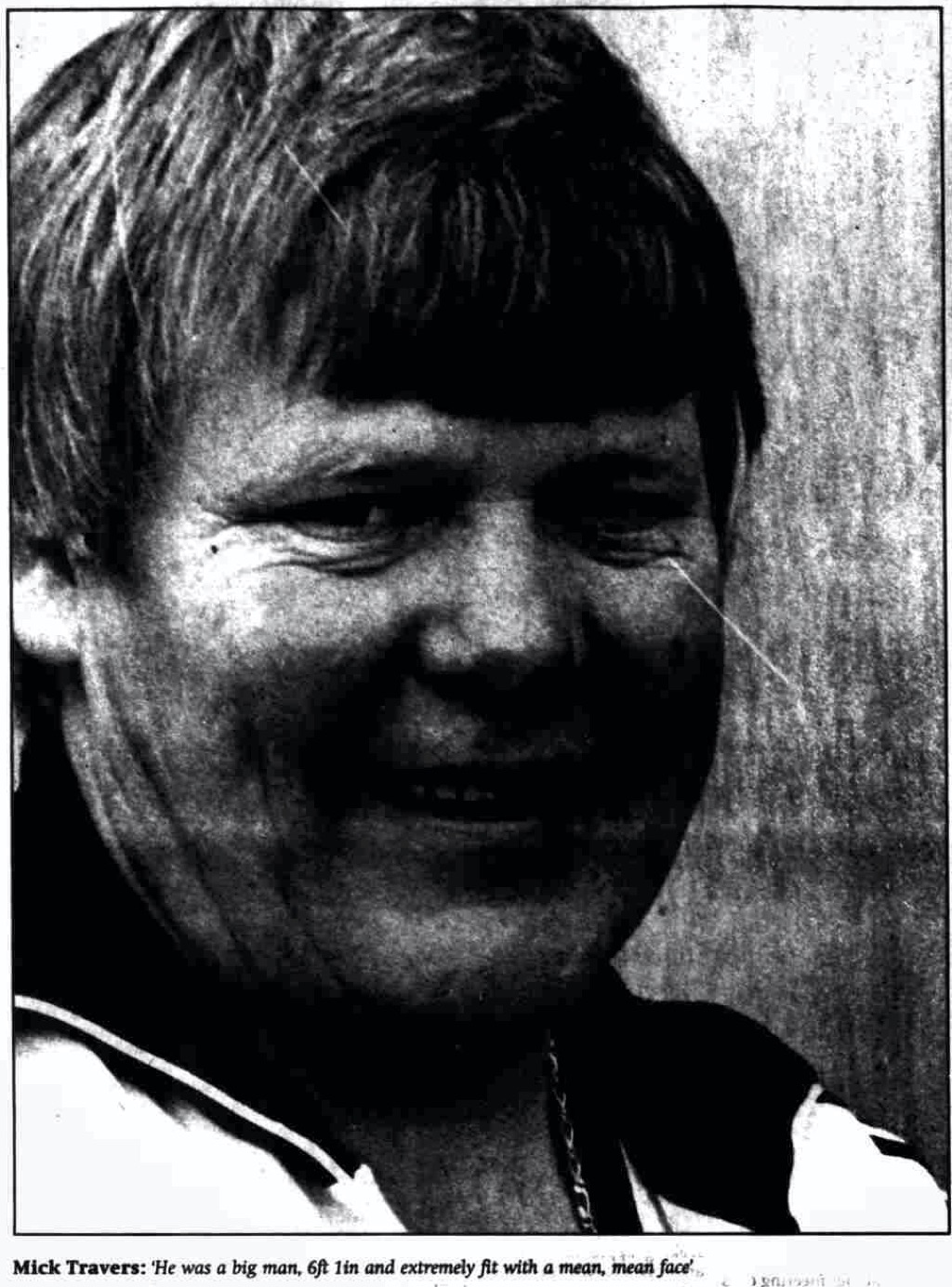
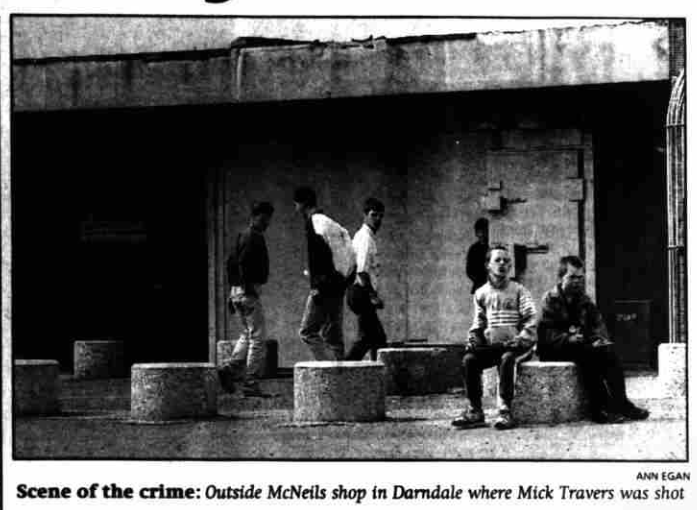

 Click on the book for more.
 Click on the book for more.


