Feeds:
Posts
Comments

Archive for February, 2012

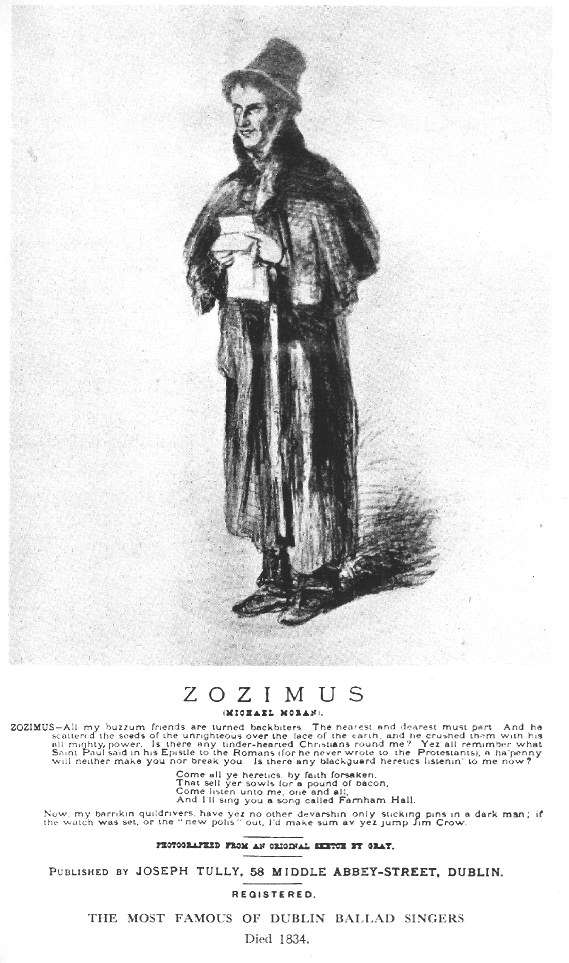
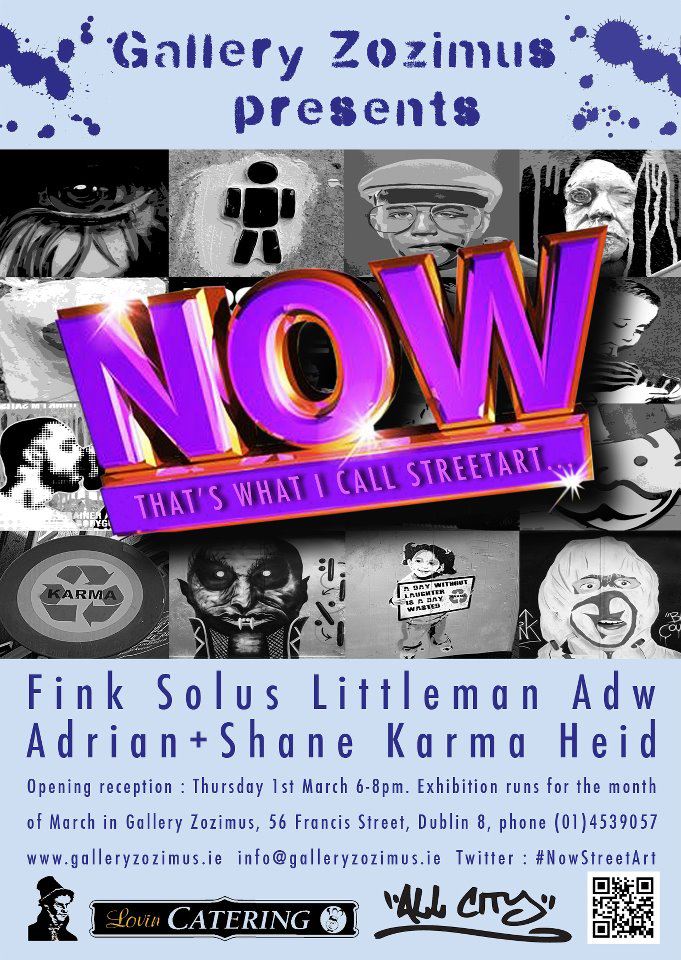
On another note entirely, what a brilliant name Gallery Zozimus is! A nice nod to the old!

The image above comes from ‘Memoir Of Zozimus’, available to read on the excellent Chapters of Dublin site.

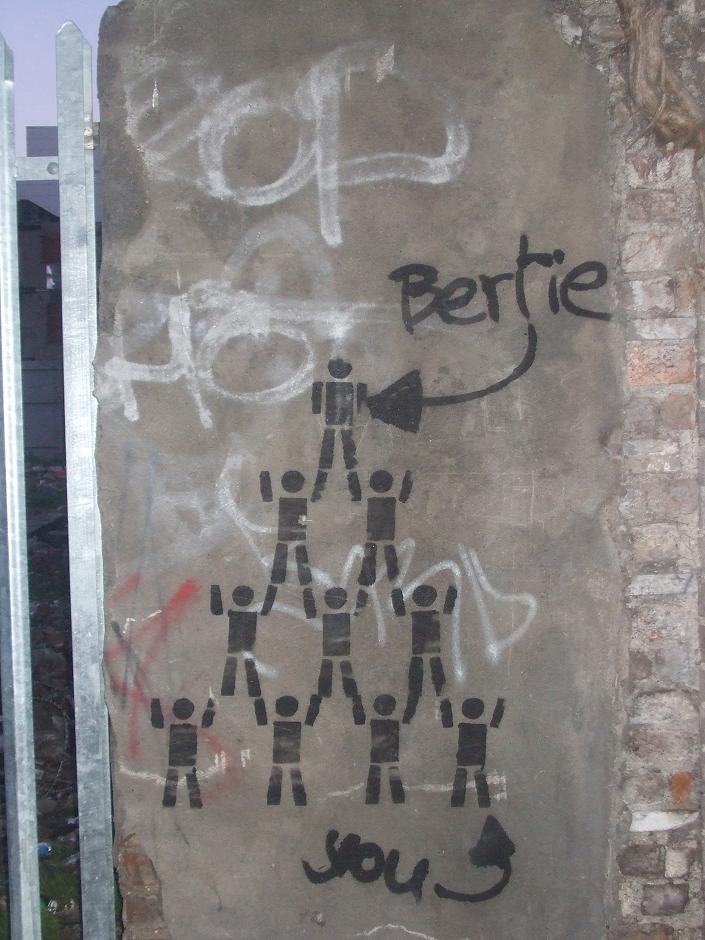
We’ve had photos of work by many of the artists involved in this exhibition on the site in the past, but I thought I’d dig up my favourite snap which is this one I took of Littleman’s ‘tribute’ to Bertie Ahern.

Read Full Post »

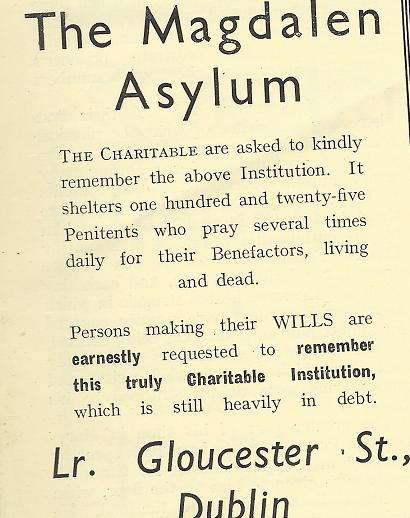
Below are some old Dublin advertisements which were taken out in the Capuchin Annual of 1934. The annuals are a great source for these kind of old snapshots of Dublin life, and these are some of the ads which stood out after a quick glance through the publication.

Firstly, this ad for the Magalen Asylum on Lower Gloucester Street caught my eye. “It shelters one hundred and twenty-five Penitents who pray several times daily for their Benefactors, living and dead.” Chilling.

'The Magdalen Asylum'

This full colour page from the Dublin Illustrating Company on Townsend Street is beautiful, speaking of the “hurrying age of machine production” and the skills of the craftsman which were then in risk.

'Dublin Illustration Co'

You won’t see anything like this one from Specsavers today…..

A great opticians advertisement.

Lastly, this ad from Elvery’s seemed worth scanning up too. A long way from the rugby jerseys of today.

Elvery's Clerical Coats!

Read Full Post »

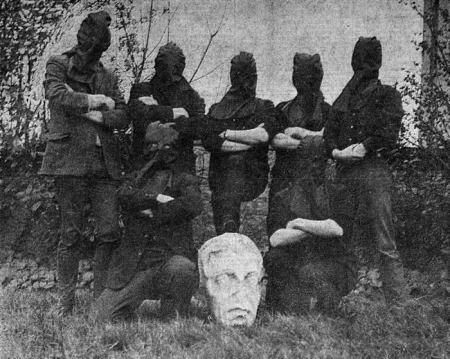
NCAD Black Bloc

After the Nelson’s Pillar was blown up in 1966, the head was stolen by NCAD students from a storage shed in Clanbrassil Street as a fund-raising prank to help clear their debts. Wearing sinister black masks, they held a very civil press conference explaining their motives.

The head made several secret appearances over the next six months including making its way onto the stage of a Dubliners concert in The Olympia Theatre!

Nelson’s head now rests peacefully in the Gilbert Library in Pearse Street.

Read Full Post »

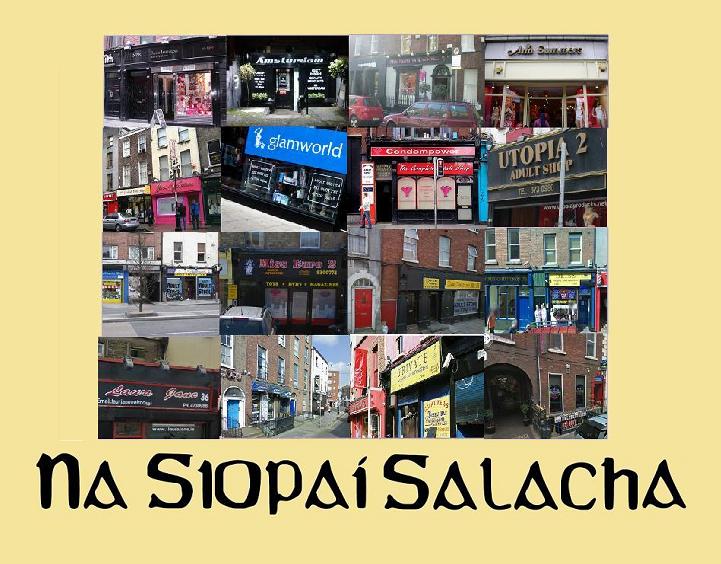
Below is a brief look at the history of Dublin’s sex shops, taking in some of the hysteria and protest that existed around such shops on the island well into the late 1990s. It’s an interesting story, in many ways surprising, looking at shops which today dot the city.
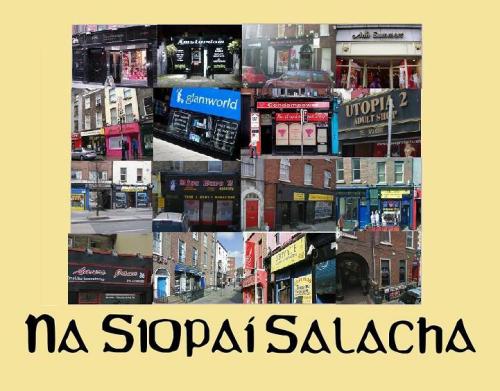
Previously posted to Come Here To Me, the poster I expect no Arts Council funding for.

Ah, the sex shops of Capel Street. Those neon signs and tacky window displays are as much a part of Dublin today as the Chinese restaurants, discount shops and early houses which also dot the street. Yet a great many Dubliners will be surprised to hear just how new such shops are to Dublin. There can be a belief among younger Dubs that with the end of Archbishops MacQuaid’s rule the lights came on (or in this case went off)overnight, and all changed in Irish society. Suddenly, Catholics went to Trinity, censorship ended and vibrators arrived. It’s not quite that simple, and indeed it was February 1991 before even talk of Dublin’s first sex shop hit the national media.

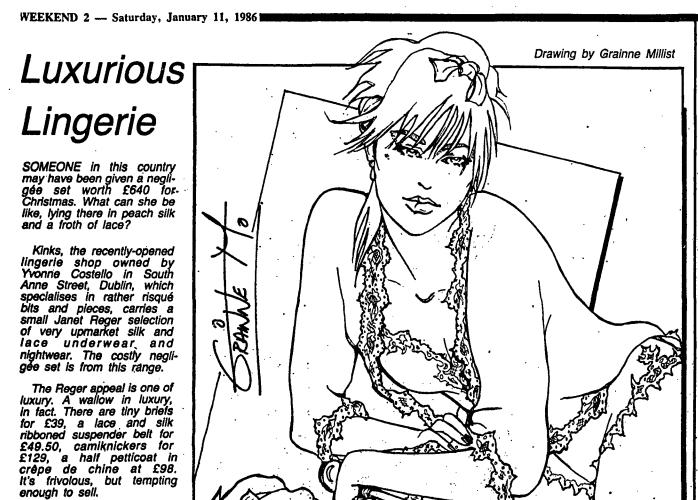
Prior to Dublin’s earliest adult shop, and often mistaken for it, there had been Yvonne Costello’s store Kinks in the 1980s, a lingerie shop which carried some ‘novelty items’ but never went far enough as to bring the force of conservative elements knocking on the door. Costello was of course a former Miss Ireland and a character with which the media held some fascination. Kinks was about as risqué as things were to get in Dublin or the south for some time, and while adult shops thrived north of the border, they were yet to land in the capital. Kinks on South Anne Street even featured in the weekend supplement of The Irish Times, and while widely remembered by Dubs as the first sex shop in Dublin, this labeling just doesn’t suit.
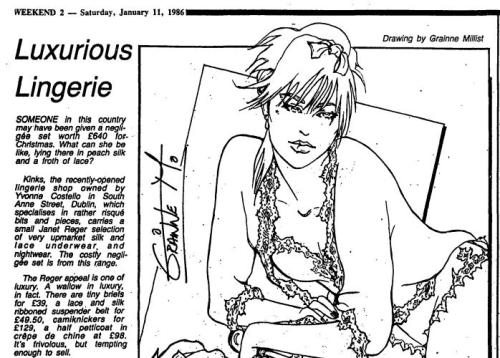
Kinks features in The Irish Times, January 1986. Soon, sexshops would feature in the national media in a very different way.

Frank Young, owner of the Belfast sex shop Private Lines, was interviewed by the Sunday Independent in February of 1991 about his intentions to bring the store to the sexually conservative heart of the Republic. Young, the paper noted, “looks more like an accountant than someone who sells sex for a living”, and in his interview he said that many of his customers were coming from across the border anyway, making a move into Dublin logical in his eyes. Responsible for the Esprit and Excel mags, which were subject to censorship south of the border, Young believed that were it not for the two menaces of “raving feminists and various Christian group”, the magazine would have a circulation on the island to rival the Sunday World. There was, Young insisted, a strong desire for adult shops further south than Newry. Belfast’s first sex shop had opened in 1982, with huge pickets from Christian groups making the owners of ‘Mr Dirty Boots’ perfectly aware they were unwelcome on the Castlereagh Road!

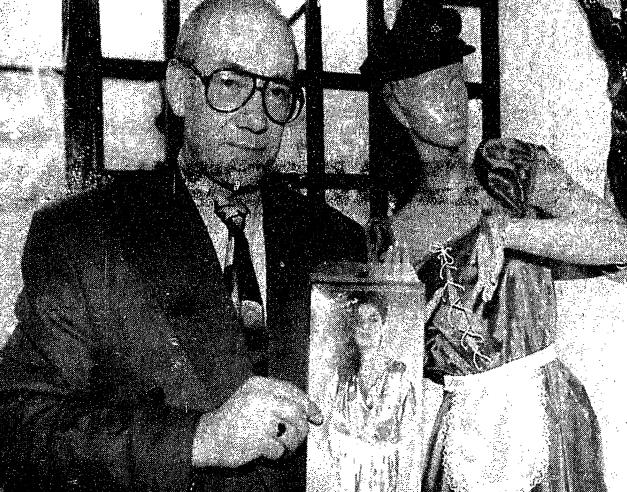
When sex shops did ultimately land in the Republic later on in the 1990s, few could have predicted the backlash. As Diarmaid Ferriter wrote in his excellent history of the Irish and our sexuality, Occasions of Sin, these shops on one level represented the normalisation of sexuality “by its being transformed into a commodity”, but to others this was very much a threat to the very moral fibre which held our society together. Jim Bellamy, an Aberdeen native, was responsible for the earliest sex shops in the south, opening Utopia outlets in Bray,Dublin,Dundalk and Limerick in very quick succession. In Limerick, one protestor told The Irish Times that “paedophiles and other sex perverts feed off these kind of places”, but the sales figures suggested that Jim Bellamy’s store held a wide appeal to the general public. Thousands joined “pray-ins” against Bellamy’s shop in Limerick and throughout the Provence, organised by the ‘Solidarity’ movement. The Irish Times image of Mr.Bellamy, standing alongside a mannequin in a maids outfit, must be one of the most unusual images the paper has ever printed. Bellamy’s Bray outlet, opened late in 1991, was the first sex shop in the Republic. I don’t suppose we’ll ever see a plaque upon the site.
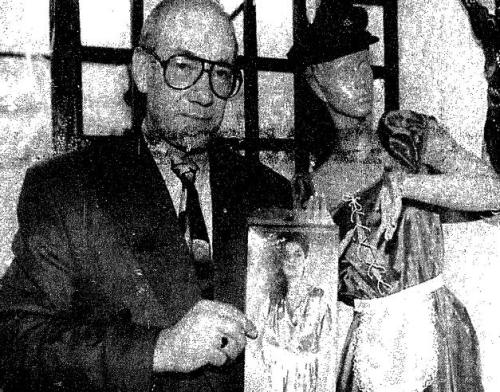
Jim Bellamy in his newly opened Limerick branch, The Irish Times January 17 1995

When Utopia made the short journey into the Irish capital in 1993, it arrived on Capel Street, today home to more sex shops than any other street in Dublin. Utopia however, was about to become Utophia. While the signwriting tradition is sadly dying out in Dublin today, and hand painted shop fronts are few and far between, a painter was given the honour of putting the name above the door of Dubin’s first sex shop. Incredibly, and in the spirit of a good Dublin story, he spelt it wrong and Utophia was born, as it was to remain.

Dublin’s early sex shops found themselves in a very unusual place, coming head to head with the rather extreme censorship laws still in place at the time. While inflatable people and inflatable sheep were both harmless enough in the eyes of the state, the printed word and image still posed the greatest threat to the moral decency of a people. As Bellamy was to tell Sean Moncrieff in a 1994 interview for The Irish Times, what we had was “four old men and a judge deciding the morals of the country”. Through 1995, the shops were raided on numerous occasions by customs officers and Gardaí in relation to the selling of indecent or obscene materials, in the form of video tapes. In many cases such materials were returned to the shops afterwards when they were deemed to be within the law. This situaion saw Bellamy take court proceedings to challenge the decision of the authorities to raid his stores with such frequency.

Heading into the mid 1990s, Utophia was joined by Condom Power, Miss Fantasia and other outlets which remain in Dublin to this day, ironically rather recession proof despite the early controversies around them. Remarkably, by the late 1990s, another scandal would blow up with the opening of Ann Summers on O’Connell Street.
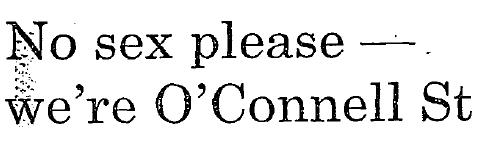
The letters page of the Independent, September 24 1999. Business owners from the area were unhappy with the opening of UK store Ann Summers in Dublin.

It says a great deal about Dubliners today that more of us are offended by the ugly and plentiful ‘temporary signs’ and ill thought-out shopfronts on our main thoroughfare than what is essentially a lingerie store, but in 1999 Ann Summers found itself in hot water over its chosen Dublin location. It would take a High Court challenge to secure the future of the shop, with Ann Summers informed by Dublin Corporation that there use of the premises and their range of products were unacceptable and in conflict with the objectives of the O’Connell Street Integrated Area Plan. Today, it is one of the best performing stores on a street where ‘To Let’ signs have become an all too familiar sight.

How quickly things change in Irish life. While the earliest sex shops on the island were met by rosary beads and placards, today the island is dotted with them. Over time, they have become a ‘normal’ feature on the capitals streets, and much of the hysteria of the early 1990s has proven unfounded. George Bernard Shaw once asked ‘why should we take advice on sex from the Pope?’, and it appears safe to say in the twenty-first century, very few on the island do.

Read Full Post »
A brave vandal!

I love dipping into the Capuchin Annual’s on occasion, they produce not only great features but pages of old Dublin advertisements. In the 1936 annual, this image below caught my attention.

‘Could not see the joke. British soldiers unaware of the inscription on their armored car!’

'Up Sinn Féin' graffiti.

There is certainly a substantial article to be written yet on graffiti, street postering and the like during the War of Independence and into the Civil War.

Read Full Post »

Ooh Ah!

A long time back I posted up some snapshots from the Saint Patrick’s Athletic programme which saw the arrival of Paul McGrath to our club, but at the time I was scannerless and photos had to do. The match was a 1981 League Cup clash with Shamrock Rovers, and inside it was noted that with “..a bit of time and encouragement” young McGrath wouldn’t be a bad player at all. How right they were. Now we’ve a scanner once more, I thought this picture had to go up in all its glory. Some hair!

'Phil McGrath', or Paul to me and you.

On the subject of the great man, he popped down to Vita Cortex workers earlier today. Respect.

Read Full Post »

Dublin, as  you’ve not seen it before. Spurred on from a post on boards.ie, I started to take a look into the USSR’s mapping of the world and was pretty dumbstruck by what I came across. At one stage, it is reckoned that the Soviet had upwards of 40, 000 cartographers and surveyors working on mapping the world in detail of 1:100,000 and some cities, including Dublin, in detail of 1: 10,000.

The Dublin map was compiled in the early 1970’s and spanned four pages.  The purpose for the maps was to forward plan for a worst case scenario, should an invasion need to take place. As “places of interest,” The GPO, King’s Inns on Constitution Hill, The Four Courts, Trinity College, The Old Parliament Building on College Green and the Royal College of Surgeons are marked. Oddly enough, Leinster House and Dublin Castle go unnoticed.

Part of me just loves the fact that they picked the College of Surgeons, Four Courts and the GPO. Who knows, if they extended the map out further, would they have marked Mount Street Bridge, Bolands Mills and the South Dublin Union? Maybe  Joseph Mary Plunkett’s plans weren’t so outlandish; that the sites marked for strategic importance in Easter Week remain every bit as important for military planners now. Either that or the Russians had some sentimental Stickies on their payroll. Its a scary thought.

For Maps and further reading, check out: http://sovietmaps.com/

Read Full Post »

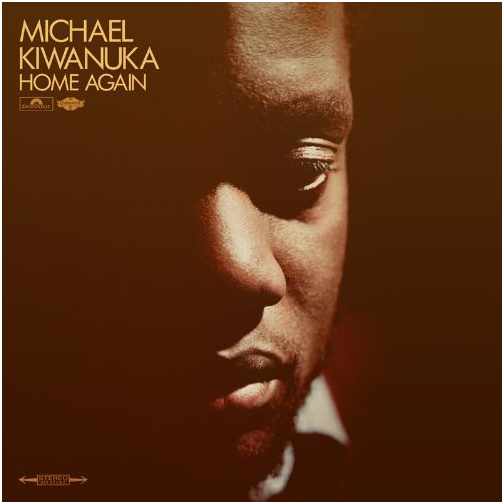
Michael Kiwanuka

Debut Album released 13th March 2012.

It’s fascinating to watch an artists rise to fame, especially from a Dublin angle.

Michael Kiwanuka, the extraordinarily talented 23-year-old London-born soul singer, made his Dublin debut upstairs in The Grand Social on 30th October 2011. Tickets were €14.50 and I heard that The Loft, which has a capacity of 230 seating, was reasonably full. You could argue that only people really on the ball would have known about this gig. The music bloggers, their mates and everyone who spends that little more time than most keeping ahead with what’s going on.

I wish I had been there.

Then, last Saturday (Feb 11) Michael played The Sugar Club. It was one of my favourite gigs, by far, of the last year. Tickets were still priced at a very reasonable €14.50. The Sugar Club, one of Dublin’s most intimate venues, has a capacity of 350 and the gig was completely sold out. Knowledge of this gig would have been known to the next ‘layer’, people like myself who read State.ie, Nialler9 and (occasionally) The Hot Press and pretend to think that they know what’s going on. Reviews here (GoldenPlec) and here (cockandbullTV).

Earlier this week it was announced, obviously on the back of the successful Sugar Club gig, that Michael will be returning to Dublin in May to play The Academy. It’s great to see that tickets have remained low, at only €16.00. Capacity is 650 people with possibility for an additional 200 on the upper balcony, over three times the size of The Grand Social where he first played only four months ago. By this stage the third ‘layer’ of people will be aware of Michael, probably reading about him in Jim O’Carrol’s excellent Ticket (Irish Times).

What’s next? Assuming, everything goes right for the guy maybe a date at The Village (550 capacity) or The Button Factory (750 capacity) early next year followed by a sell out night in Vicar St. (1000 capacity) or even The Olympia Theatre (1300 capacity) in 2013? Who knows.

Read Full Post »
The building today.

The Trinity College Dublin ‘Post Graduate Reading Room’ has a long history, with the structure dating back to 1928 with the erection of a ‘Hall of Honour’ for Trinity men who gave their lives in the Great War, added to on July 3rd of 1937 with the reading room opened by President de Valera. It’s a beautiful building, one of the most unusual in the city, but easy to miss as you take the shortcut through Trinity College Dublin.

The Weekly Irish Times, July 1937

As early as 1919, newspapers were reporting on meetings of “past and present members of the Dublin University” which aimed to promote the idea of a permanent war memorial at the college to those who had fallen during the Great War. Following a meeting in early November of 1919, The Irish Times noted that the Lord Chancellor proposed a resolution which noted ‘That it is desired to promote a College War Memorial of a permanent character, and that the names of members of the University who fell in the Great War may be kept in honour and remembrance’.

Money was raised from a variety of sources, including graduates of the institution, and by the summer of 1920 discussions had moved onto what form of memorial would be most appropriate. A resolution was adopted by the committee responsible for the memorial which read: “That,as at present advised, the executive committee are of opinion that the College War Memorial should be a dignified building in proximity to the West End of the Library to be used as a reading room for students and graduates.”

Of course, all this talk of a College War Memorial was occurring at a time of national rebellion, a rebellion from which Trinity College Dublin couldn’t hide. A tragic incident would occur at the college for example in early June of 1921. The college, steadfastly loyal, was host to a cricket match in connection with Warriors Day which saw the ‘Gentlemen of Ireland’ take on the ‘Military of Ireland’ on June 3rd. The IRA saw this as a legitimate target and opened fire from the railings of Nassau Street, which tragically resulted in the death of Kate Wright, a young student at the college. Kate was only 21 at the time.

The Irish Independent reports on the shooting at Trinity.

It was November of 1928 before the grand permanent College War Memorial would be unveiled, with the honour falling to ‘Lord Glenavy’, the Vice-Chancellor of the Dublin University, a one time member of parliament and appointed Lord Chief Justice in 1916. The building was to commemorate the 463 Trinity College Dublin men who died in the Great War. A large assembly of students and staff gathered for the opening of the Hall of Honour, and witnessed the Memorial Committee handing the War Memorial over to the care of the Provost of the University. Below is the War Memorial as shown in The Irish Times of January 10th 1929. The paper looked at the building in some detail as part of their ‘Building and Reconstruction’ feature, noting that: “The building is in the Doric style of architecture. It is raised on a platform approached by a flight of seven stone steps….The hall is about 36 feet long with a staircase on one side leading to the future reading room….The names of the fallen are inscribed in gold letters on five statuary marble panels.”

In 1937, to the tune of £25,000, the new Reading Room was finally ready to open. Ironically, it was a vetaran of the 1916 rising who was to open the Reading Room attached to the College War Memorial, in the form of President de Valera. In his speech the President talked of Thomas Davis, a graduate of the college, quoting his words: “Beside a library, how poor are all the other greatest deeds of men”

It was undoubtedly symbolic of changing times at the institution that Dev should open the new Reading Rooms, and that he should arrive to the sound of the Garda band playing the national anthem!

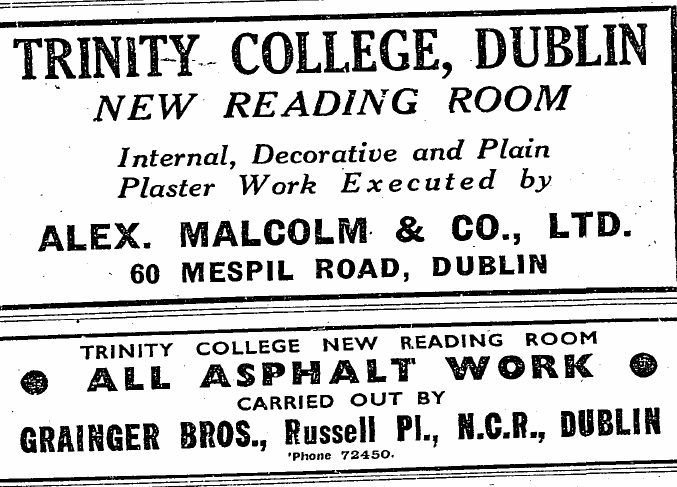
Clever advertising in the Independent following the 1937 opening of the Reading Room!

One thing which baffles Dubliners about the Post Grad Reading Room today are the letters NIKH above its doors.The letters NIKH on the front is the name of the Greek goddess of victory. It’s a beautiful building with a complex history, but easy to miss, dwarfed today by the architecture behind it.

When you’re strolling through Trinity, for another piece of unusual ‘Great War’ era history, pop around to the cricket pitches and you’ll find a monument to a young British soldier buried at Trinity College during the 1916 uprising, Arthur Charles Smith of the Royal Hussars.

NIKH

Read Full Post »

Last week, I posted a link to my ‘Storymap’ contribution, which was a look at what I consider the most unusual military grave on Dublin, that of the horse Vonolel. On the day I filmed it, I noticed an old copy of ‘The Navy and Army Illustrated’ from 1898 on eBay at a very low price. I couldn’t resist snapping it up. The frontpage below shows Vonolel with ‘The Right Hon. Field-Marshal Lord Robers V.C, K.P etc.’ (phew!) upon him, and there’s a brief feature on Vonolel inside which I’ve scanned up too.

The story of Vonolel’s life, death and burial:

Read Full Post »

Carrigstown Street Art.

My brother was out at RTE earlier today, and while there decided Carrigstown was worth a look. We wouldn’t be passionate folowers of Fair City to say the least, who is, but we still watch it in amazement on occasion. The fake northside suburb on the southside threw up a surprise though, in the form of the street art on set!

Read Full Post »

Great news, in that some of those excellent clips of Dublin rappers on YouTube are destined for the box, with RTE 2 showing ‘Reality Bites- Ireland’s Rappers’ next Monday at 9.30pm. The documentary is narrated by Damien Dempsey.

Below are a few of my favourite clips which have made it to YouTube.

Firstly, Costelo and Lethal Dialect from Street Literature filmed at the canal:

MissElayneous out in Finglas is a great clip too, opening with her explaining hip hop to a local.

South of the Liffey, local lad Nugget is excellent, even sticking a reference to ‘The Fureys’ into his Ballyfermot rap.

Read Full Post »

« Newer Posts - Older Posts »