Feeds:
Posts
Comments

Archive for 2012

A 1970 Pub Crawl.

One of our reaccuring features on the site is the monthly pub crawls around the city we organise, visiting five establishments and writing about the day afterwards.

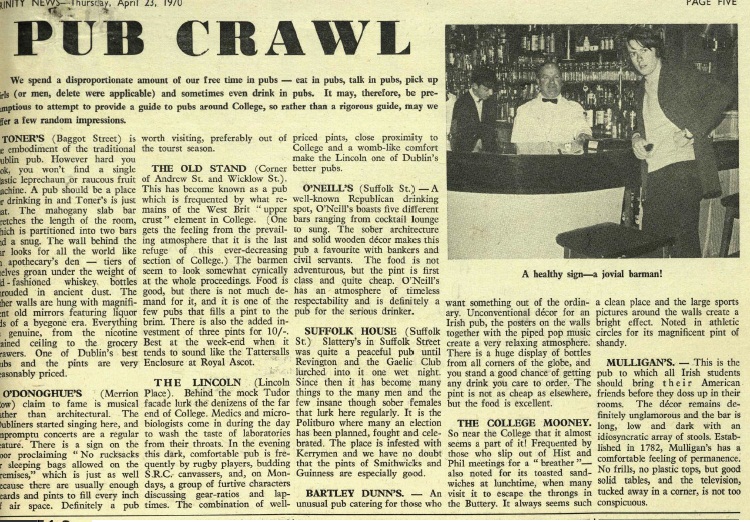
Below is the ‘Pub Crawl’ feature of Trinity News, a student newspaper at TCD. Most of these pubs are of course still doing plenty of business, for example O’Neill’s on Suffolk Street which we’re told is “a well-known Republican drinking spot, O’Neill’s boasts five different bars ranging from cocktail lounge to snug”. The image of a ‘jovial barman’ is fantastic. The College Mooney is today Doyles pub.

Trinity News, 23 April 1970. The left side is difficult enough to read though this is owing to the scan. Via the fantastic ‘Trinity News Archive’

Read Full Post »

A fantastic interview with Damien Dempsey here, recently aired on DCTV, on everything from the difficulties people have understanding the Dublin accent abroad to the state of the nation. “The scam of all scams” sums it up nicely.

Damien Dempsey in action at Cassidy’s on Westmoreland Street, captured by our own hxci last year.

Read Full Post »

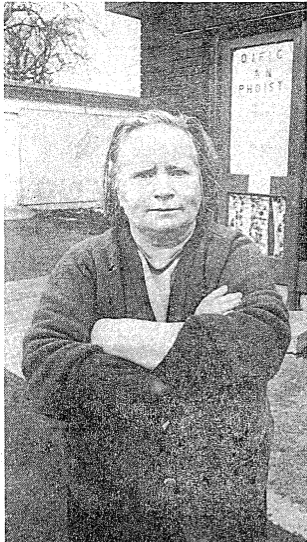
Mena pictured outside her post office. (c) Irish Times May 24, 1985

Update : Mena died this week (6 August 2012). Here is a link to The Irish Times obituary.

Mena Cribben (aka Mena Bean Ui Chribin), aged 84 and mother of six, has been the postmistress of Santry Avenue Post Office for over fifty years. During this time, she has also been one of the most vocal spokespersons for the Ultra-Conservative Catholic strand of Irish politics having been active with the Irish Family League, Family Rights Group, Mna na hEireann, Irish Housewives Union and Ograchas Naoimh Papain.

Perhaps most infamously known for her role in the 2009 Roscommon family incest case, namely that she provided advice and (more than likely) funding for a legal action to stop the State from taking six neglected children into care, Cribben has been active in reactionary politics since the 1960s.

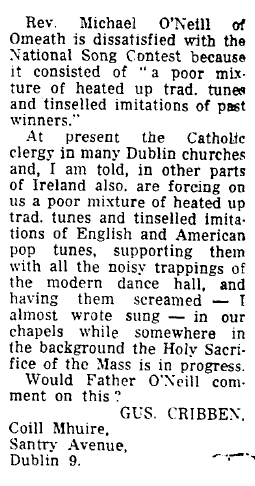
In the late 1960s, she began to write letters to The Irish Independent and The Irish Press and even managed to get published some of her own opinion pieces. Like this one on Marriage:

‘Marriage – an open letter’ by Mary Cribben. Irish Press. Aug 11, 1969.

American television network NBC produced and broadcast a special report, entitled ‘Land Of Saints And Scholars‘, on corporal punishment in Ireland’s schools in September 1969. It featured Mena Cribben and her husband Gus who ran a private after-school programme to help students with their homework. Mena and Cribben admitted giving an “odd smack of a cane” to their several female ‘students’ and spoke in favour of capital punishment. The programme, which was subsequently broadcast on RTE, sparked massive controversy.

Gus himself was a prolific letter writer, mainly on topics of Corporal Punishment and Catholicism, from 1965 right up the late 1970s. He was also the organisers of the annual mass held on a penal-day mass-rock in Wicklow.

Irish Press. Feb 28, 1972.

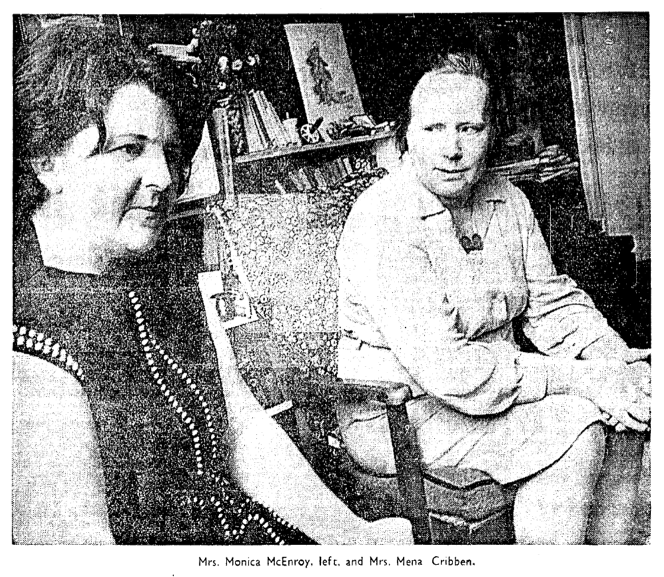
Mena was heavily involved in the campaign against contraception in the early 1970s. In November 1970, Irish Press journalist Mary Kenny brought together Mena Cribben and liberal campaigner and midwife Monica McEnroy for a debate on the subject.
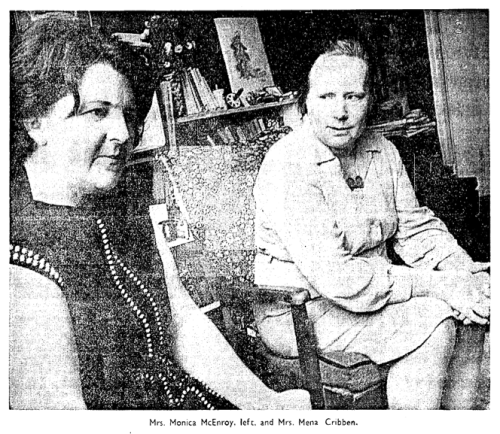
Irish Press. Nov 03 1970

Cribben was quoted as saying:

One can’t plan a family. God alone decides when a child is made (and) the individual … has not the right to murder and that is what the definition of contraception really is

She also admitted that she would withhold any contraceptives that came through her post office.

(more…)

Read Full Post »
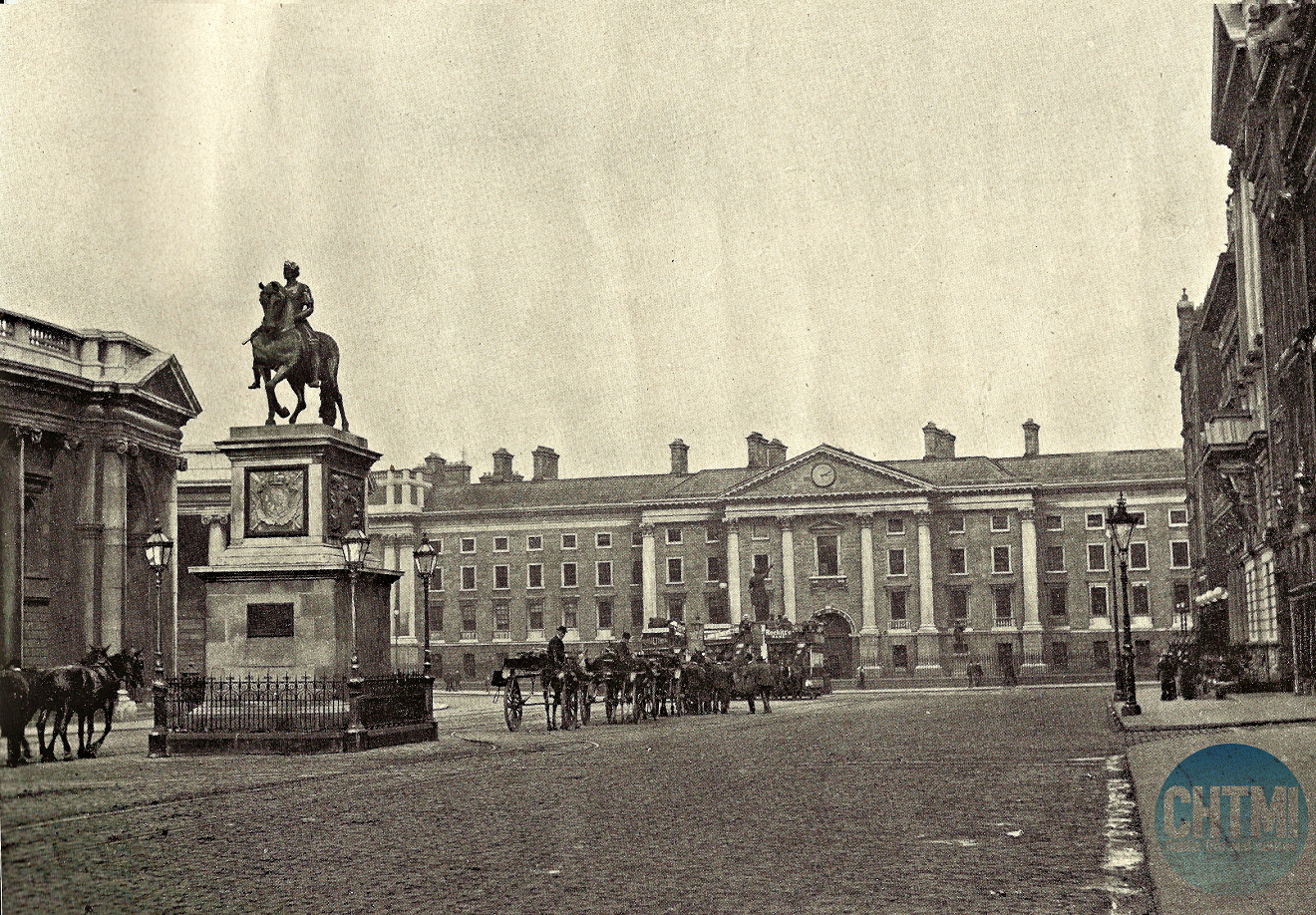
I recently picked up this great image of the King William of Orange statue on College Green, which is taken from ‘Ireland In Pictures’, released in 1898. We’ve had a series on the site here dealing with the statues of Dublin, which is still in its infancy, and I collect old original photographs, postcards and the like showing Dublin monuments and statues. It’s a cheap and cheerful hobby, and not quite as bad as stamps.

It’s a big image, so click to expand if you wish.

The King William of Orange statue on College Green was eventually removed in 1929, following an explosion in the early hours of Armistice Day that year. A bomb had also been placed at the base of the bronze statue of King George II in Stephens Green. It had sat on College Green since 1701, and was frequently the target of vandals (more on that below) but the explosion didn’t mark the end of its traumatic life as the King’s head was removed from the statue while it was placed in storage in Corporation Yard, Hanover Street!

The below is taken from the brief commentary on the statue that comes in ‘Ireland In Pictures’, dating from 1898. It’s a gem of a find.

This equestrian statue of William III stands in College Green, and has stood there, more or less, since A.D 1701. We say “more or less” because no statue in the world, perhaps, has been subject to so many vicissitudes. It has been insulted, mutilated and blown up so many times, that the original figure, never particularly graceful, is now a battered wreck, pieced and patched together, like an old, worn out garment.

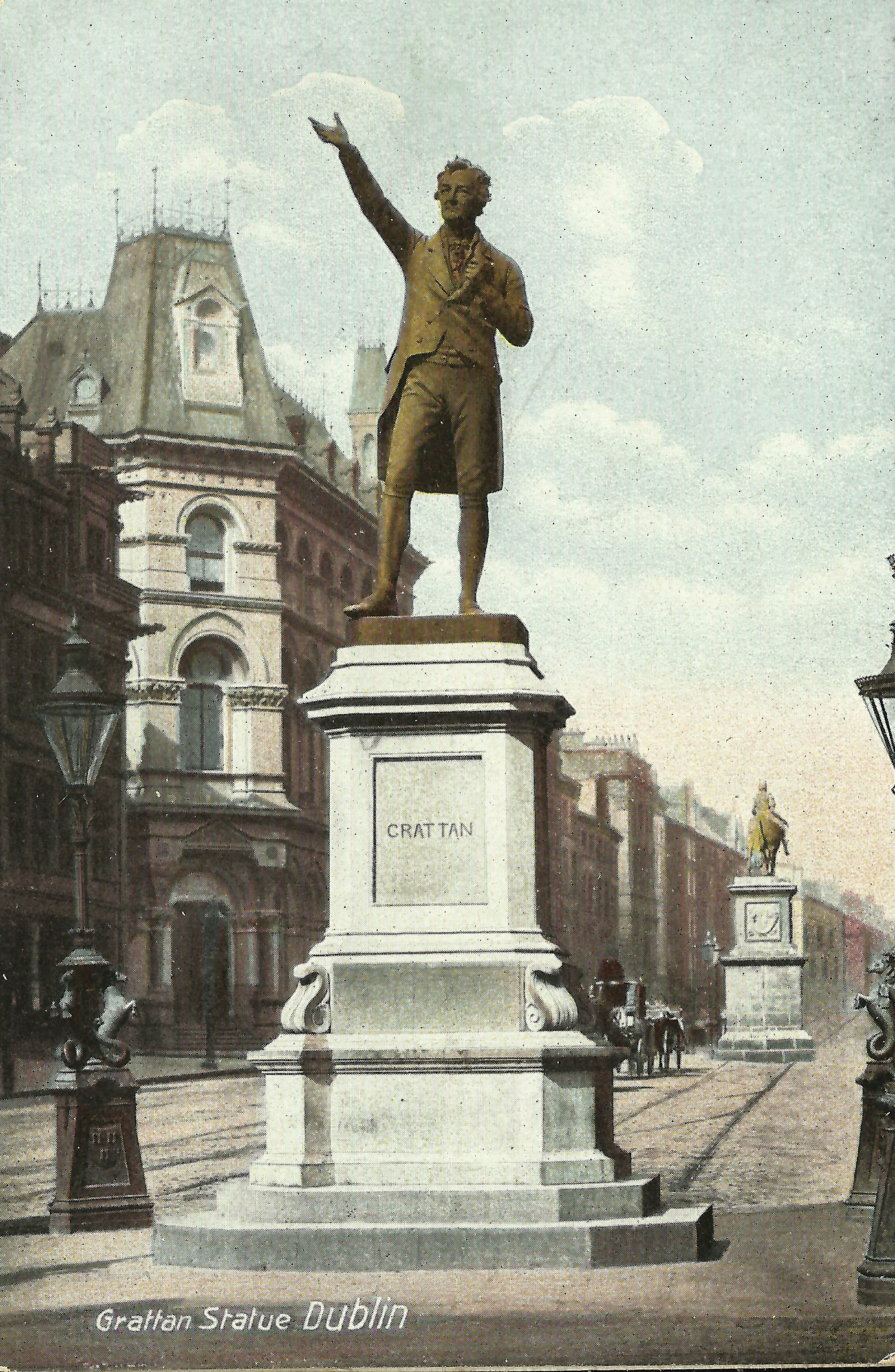
The back of the statue can be seen in this postcard image of the Grattan Statue (Fallon collection)

Read Full Post »

Mounted police were charging quick witted urchins who scattered and lured the attackers into narrow by-lanes. There the boys used stones and pieces of brick with accuracy and rapidity. My sympathies were with the newsboys.

-Ernie O’Malley remembers a newsboy strike in Dublin in his memoir On Another Man’s Wound.

—-

I like working with my brother, as he’s a more than capable illustrator and I find a good illustration brings a history piece to life. We have a piece together in an upcoming issue of Rabble around Dublin newsboys in the first half of the twentieth century. It’s a look at one of the most overlooked working class groups in the history of the city, and is at times both a tragic and humorous story. The final illustration is very, very different from this one below, but I still wanted to share it.

Illustration: Luke Fallon.

If it looks familiar, that’s entirely deliberate, as it’s in the same style as this illustration of the famous Dublin Garda Lugs Branigan he completed for a biography of that Dublin character in another issue of Rabble.

Read Full Post »

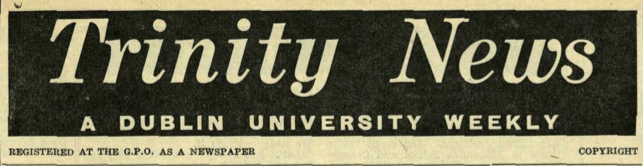
Trinity News masthead from 1956

While researching a different topic, I came across a fantastic new website and resource which presents online every issue of Trinity News from 1953 to 1970. Link here.

This material, the website states, was available thanks to a donation of five bound volumes by Colin Smythe. Funding to digitise the volumes was provided by the TCD Assocation and Trust and the Publications Committee and carried out by Glenbeigh Records Management.

No doubt it will now become an important tool for history students and researchers.

A couple of gems I’ve spotted so far.

Article from 1970 about a “hooligan” attack on a house party in Ranelagh.

Trinity News (29 January 1970)

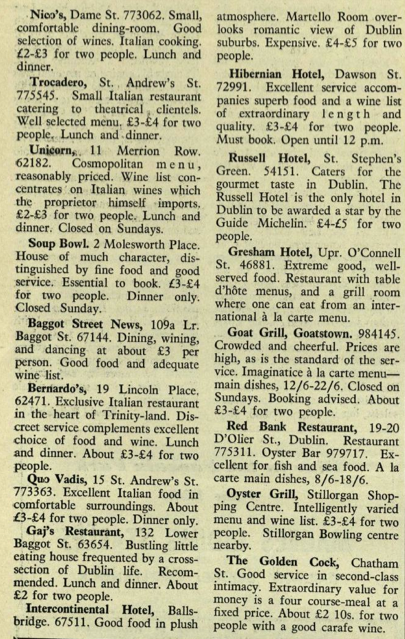
A guide to Dublin restaurants from 1968.

Guide to Dublin restaurants. Trinity News – 18 January 1968

Read Full Post »

(c) Workers Solidarity Movement

It’s fantastic to see the annual Dublin Pride Parade increase in number year after year. Approximately twenty years ago two hundred people attended the parade, last Saturday saw a staggering 30,000 turnout.

I’m not sure if it’s just me but I couldn’t seem to find mainstream reports on the Parade from the mid to late 1990s period. Can anyone help with numbers?

Here’s a incomplete timeline with attendance figures:

1992 – 200 people  (IT 06/07/92 )

1993 – 500 people (IT 28/06/93)

1994 – “Several hundred” (IT 27/06/94)

1995 –

1996 –

1997 –

1998 –

1999 –

2000

2001 – 3,000 (IT 02/07/01)

2002 – 6,000 (IT 29/06/02)

2003 – “Several thousand (IT 07/07/03)

2004 -5,000 (Indymedia 06/07/04)

2005 – 10,000 (IT 27/06/05)

2006 -“thousands” (IT 26/06/06)

2007 -“thousands” (II 23/06/07)

2008 – 5,000 (Indymedia 27/06/08)

2009 – 10,000 (IT 02/07/12)

2010 – 22,000 (IT 02/07/12)

2011 – 26,000 (IT 02/07/12)

2012 – 30,000 (IT 02/07/12)

Read Full Post »

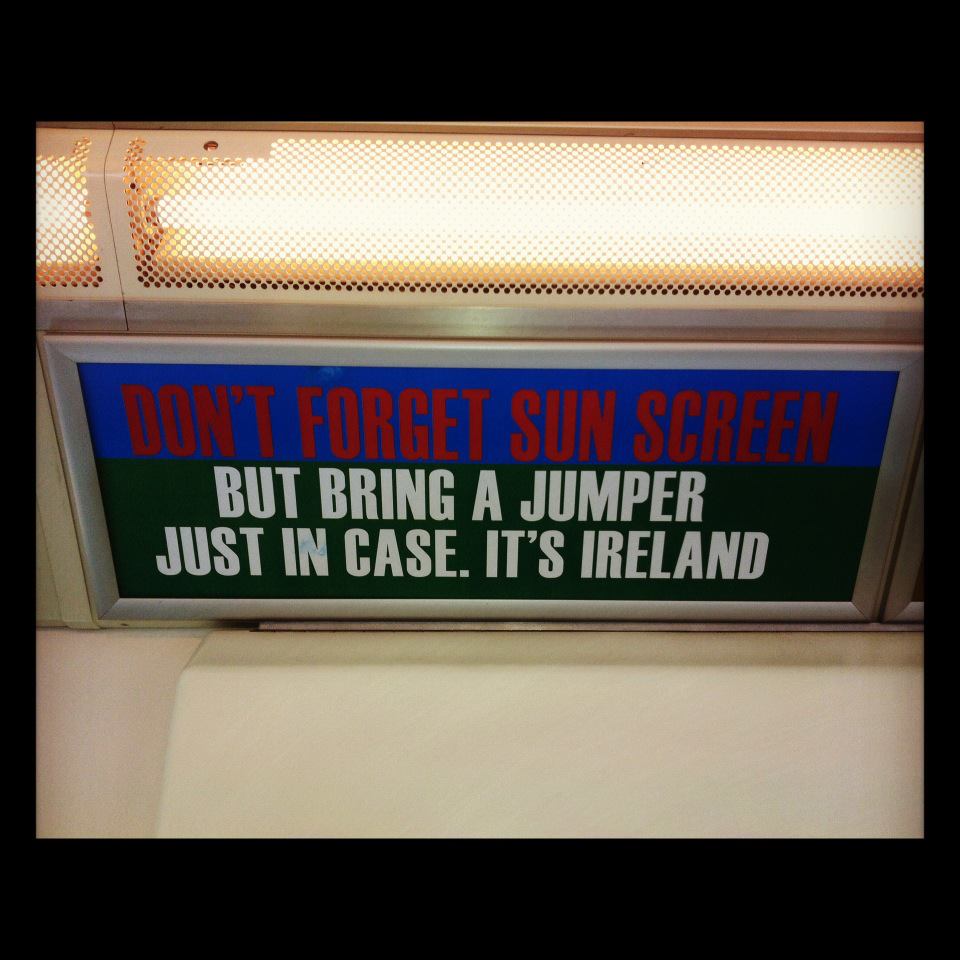
Great lighthearted stuff by street artist Canvaz on the Dart. In the past we featured the political dart-jamming of the Elephant in the Room project. All images originally posted by Canvaz.

(more…)

Read Full Post »

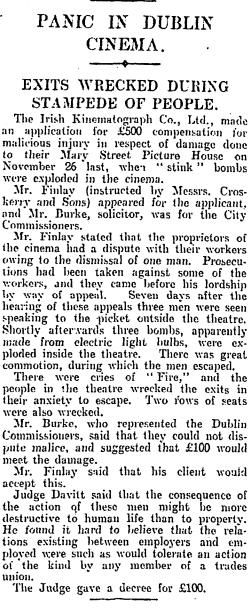
I’d read recently that stink bombs were used during the protests against The Plough and the Stars at the Abbey Theatre in 1926. When researching that, I stumbled upon an interesting incident at one cinema in 1928 were stink bombs were used and seem to have caused a lot of panic. The Mary Street Picture House was the location for an incident that made its way into the national media. The two reports below come from The Irish Times, the first is dated November 27 1928. The sheer panic of the crowd is evident from this report.

Remarkably, the incident appears in the paper again in January 1929, giving some background on the incident and noting that an industrial dispute was underway at the time. The Irish Kinematograph Co. Ltd was seeking £500 compensation as a result of what occurred:

Read Full Post »

Anyone have anymore information on the Anti – Communist Hall that was based in Thorncastle Street, Ringsend in the mid 1930s?

Grainne McGuinness’ article about local Boxing champion George Howell mentions the hall and the activities surrounding it:

(George) when he was a young man … joined the anti-Communist group, which was the hub of social life at the time. It was on Thorncastle Street in Ringsend, opposite the old school, also known as the stables.

It was run by another local man, Mr. Dolan. You could play pool there, and on Saturday nights, if you had 3d in your pocket, you could attend the weekly dance. They had a professional pianist and sometimes when he didn’t turn up, George would step in and play for the night. He was paid five shillings, a lot of money in those days.

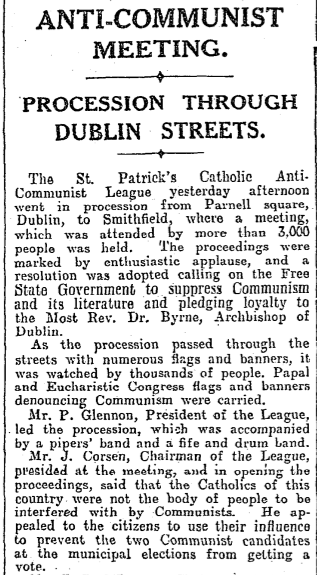
I assume that it was a local branch headquarters of the St Patrick’s Anti-Communist League that was active in the period. Does anyone know of any other similar halls?

Part of the article. The Irish Times. Jun 26, 1933;


Read Full Post »

A great bit of controversial engagement with the city by Will St. Leger, placing a female torso on the plinth at City Hall to highlight the lack of monuments and memorials to women in the city. We’ve run a long-running series on the statues of Dublin here on Come Here To Me, and I’ve always wondered: “Where is the statue to Hanna Sheehy Skeffington?” “Where is the plaque on the old headquarters of the Irish Womens Workers Union?”.

Read Full Post »
90 years ago today.

Four Courts On Fire From Essex Quay, June 1922, Photographer: Joe Rodgers, aged 17.

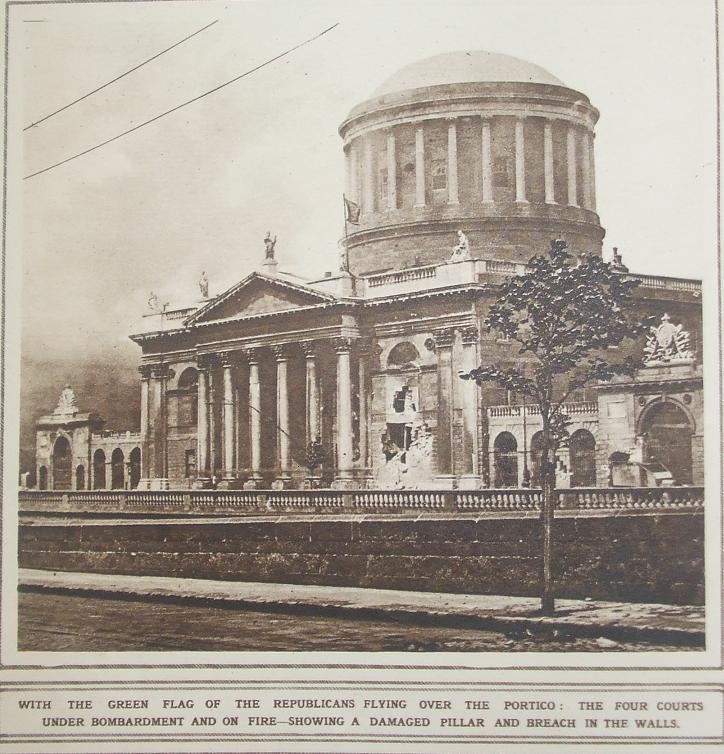
Thanks to Joe Rodgers for leaving this image on our Facebook page, taken by his grandfather Joe. Joe was 17 years old at the time he captured this defining moment in Irish history, and lived on Essex Quay. One thing I noticed immediately was how little the building which is home to early house pub The Chancery has changed! The Battle of Dublin raged for a week from 28 June to 5 July 1922, beginning with the bombardment of the Four Courts, the symbolic headquarters of the republicans.

In addition to this excellent image, here is one printed in the London Illustrated News following the Battle of Dublin. I scanned it up recently with the intention of posting it here today. Notice the flag flying above the building.

Read Full Post »

« Newer Posts - Older Posts »