Feeds:
Posts
Comments

Archive for 2012

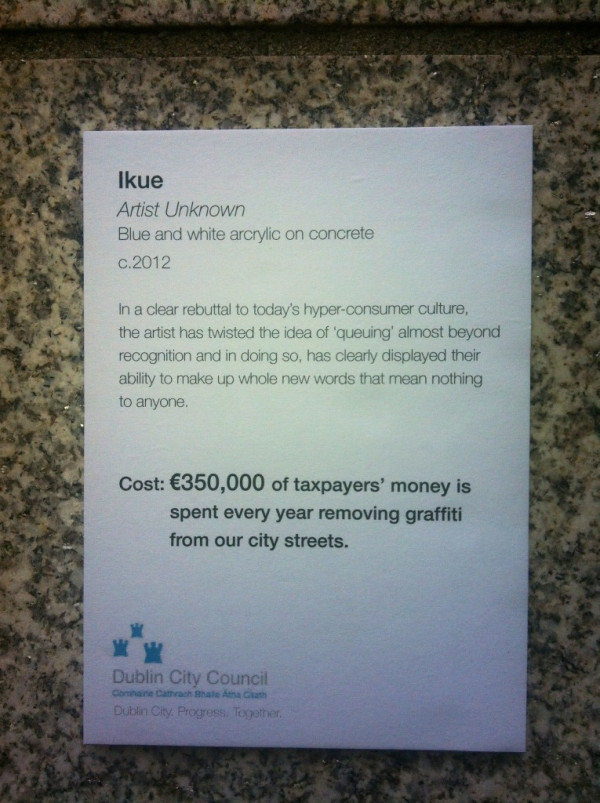
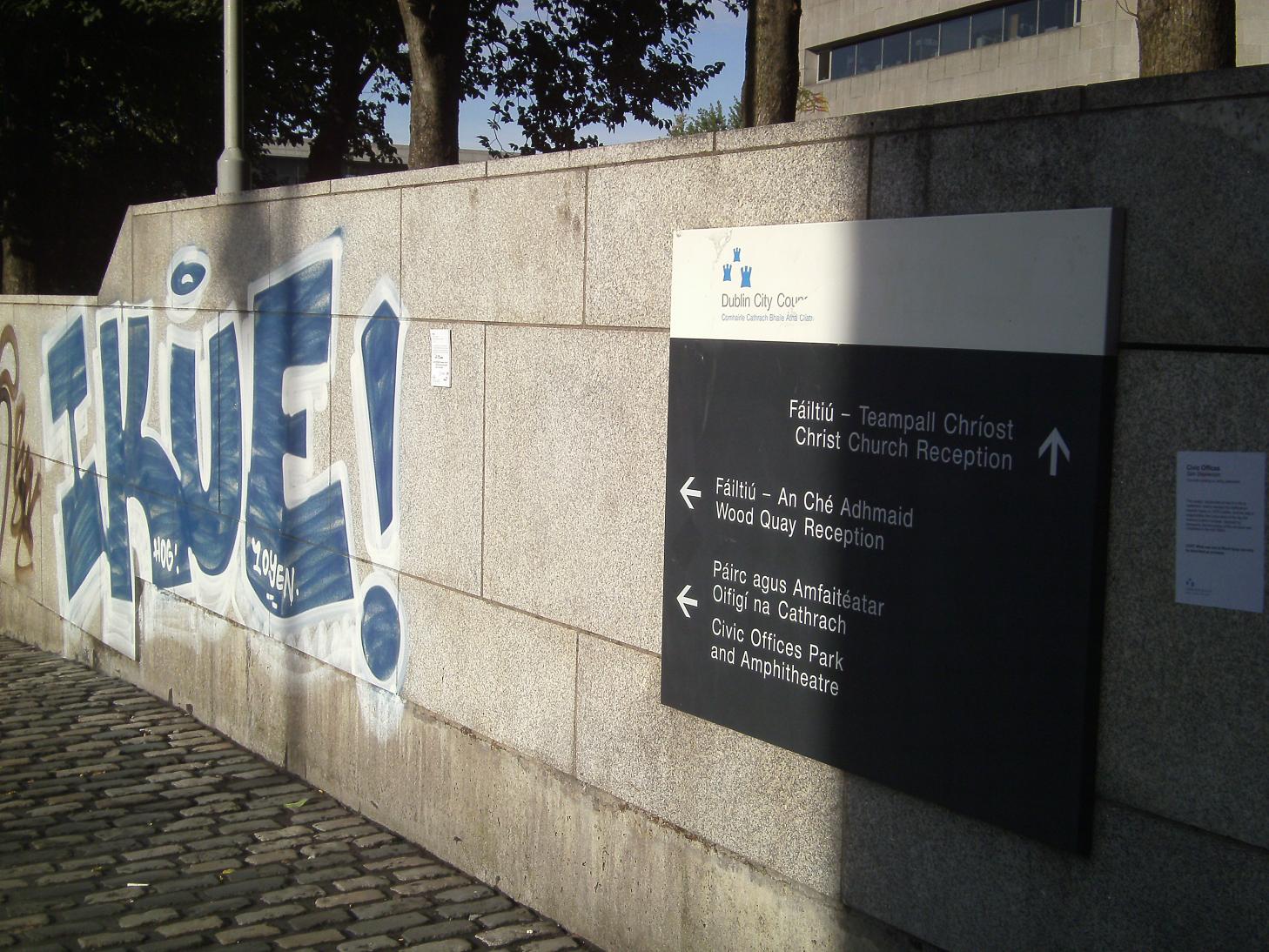
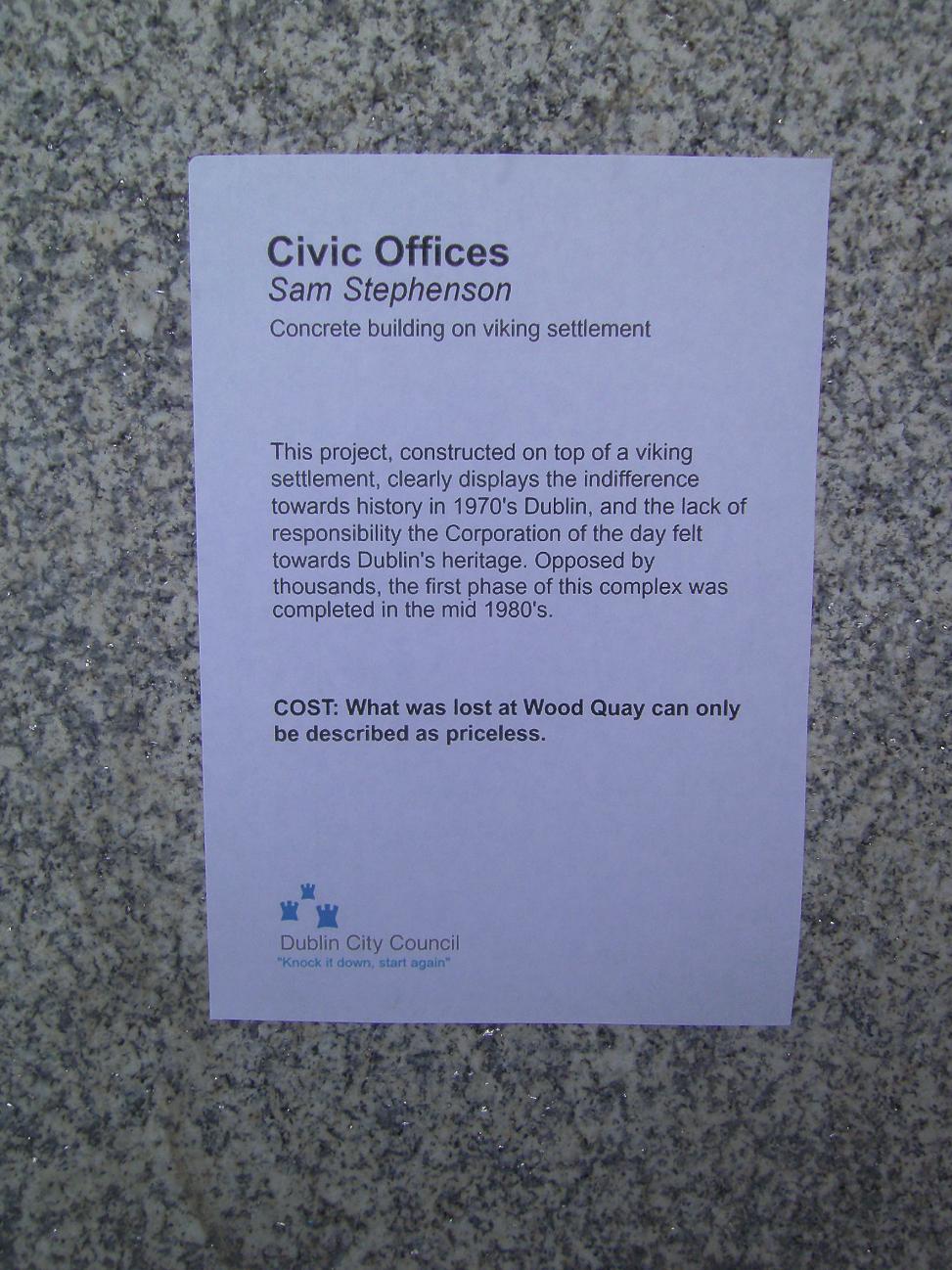
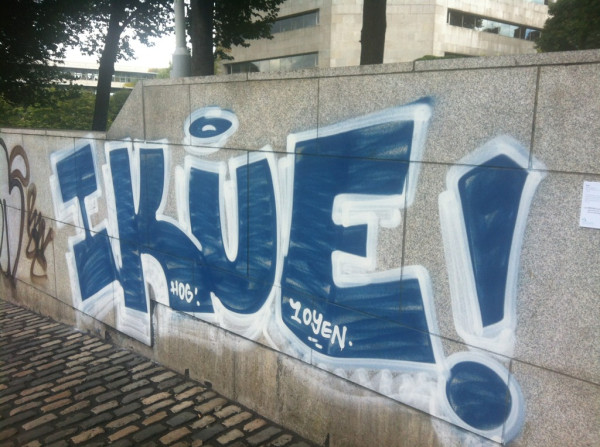
Many of you would have seen a recent post on broadsheet.ie, entitled ‘Everyone’s A Critic’. The topic was the manner in which Dublin City Council were placing art gallery information displays alongside pieces of street art, which were extremely sarcastic in tone.

Image via broadsheet.ie

Image via broadsheet.ie

The irony of this of course is that Wood Quay, and the Dublin Civic Offices, could be one of the greatest acts of vandalism in Dublin’s history. Viking Dublin was literally destroyed in the name of progress in the late 1970’s and early 80’s, in an act of wreckless cultural vandalism.

Thousands marched to save Wood Quay, but it just wasn’t enough.

Some Dubliners haven’t forgotten.

Read Full Post »

September 20th.

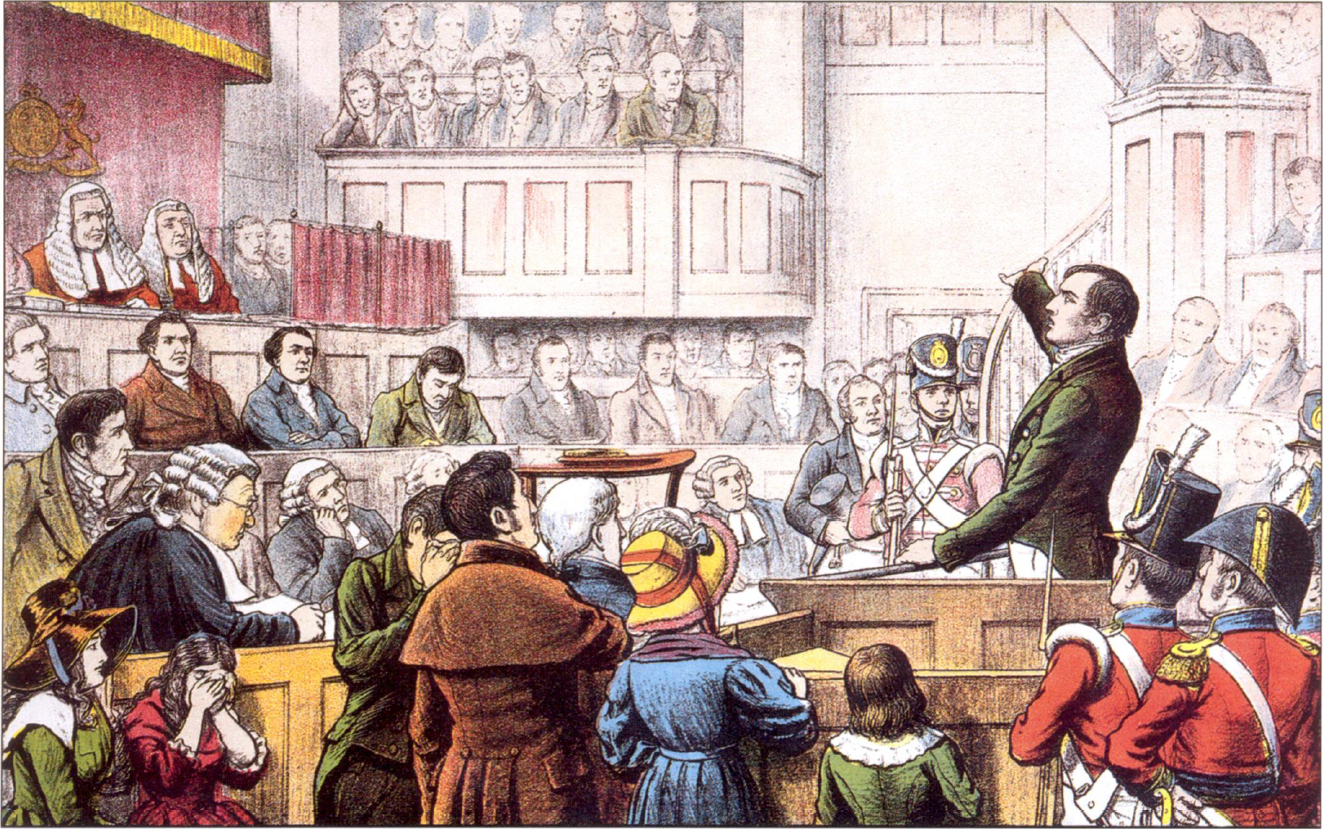
Robert Emmet delivers his famous speech from the dock in 1803. Image via http://irishcomics.wikia.com

September 20th is an important day in Dublin history. It was on this date in 1803 that Robert Emmet met his death on Thomas Street, and on this same date in 1920 a young medical student from UCD by the name of Kevin Barry was captured during a botched raid across the river on Bolton Street. I thought I’d post two fantastic songs, one relating to each character, for the day which is in it.

Firstly, the late and great Frank Harte singing ‘By Memory Inspired’ is a truly fantastic recording. It deals primarily with the rebellion of 1798, but also Robert Emmet’s rebellion of 1803.

The Ballad of Kevin Berry is one of the best known songs of the revolutionary period. It has been sung by Paul Robeson, Leonard Cohen and others. The below is a rare recording of Leonard Cohen singing it in the National Stadium in 1972.

Paul Robeson learned the song, in very unusual circumstances, from the republican Peadar O’Donnell! The story of how Robeson met O’Donnell, on a roadside in the United States, is well recounted in Donal Ó Drisceoil’s brilliant biography of O’Donnell.

Peadar was stranded at a roadside with a burst tyre when a limousine stopped and offered help. He was invited to sit in the car by the passenger while the driver fixed the puncture.The passenger turned out to be Paul Robeson, who told Peadar that he would like to record an Irish song. O’ Donnell suggested Kevin Barry, the ballad glorifying the young IRA man hanged by the British in 1920, which he said conveyed the spirit of Ieland. He procceded to teach the song to Robeson, who released it on record in the early 1950s.

Read Full Post »

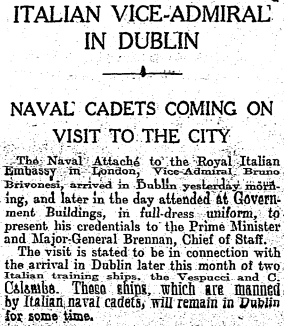
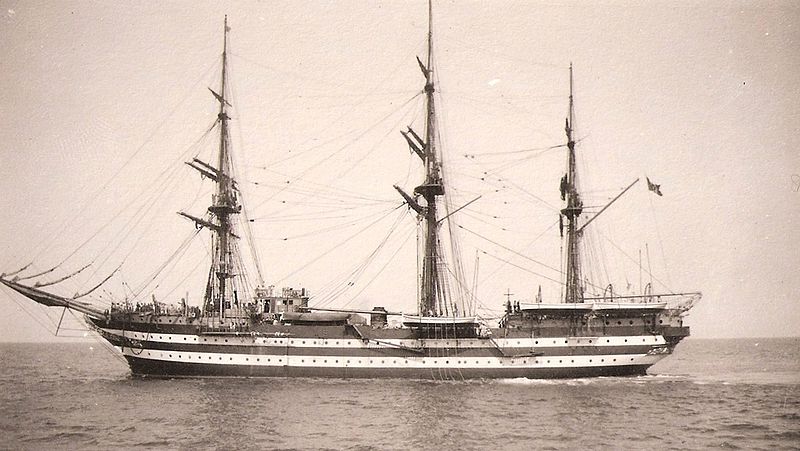
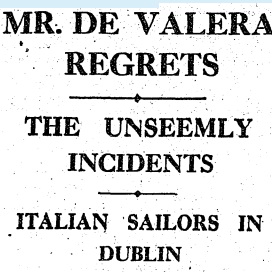
In July 1938, two ships of Italian cadets from the training ships Christopher Colombo and the Vespucci visited Dublin. Their presence here brought about significant interest, and there was a warm welcome towards the cadets, but also some rowdy scenes and protest, with the New York Times giving front page coverage to an incident on O’Connell Street where the cadets were confronted by locals. Interestingly, one of the ships which visited Dublin in 1938, the Vespucci, was here only weeks ago as part of the Tall Ships Festival. I was on board it in Dublin, with no clue of its historical connection to this very city!

Opposition to the visit came from the left-wing of Irish politics, with The Workers Republic newspaper proclaiming:

Ireland in recent times is entertaining strange friends. Some time ago a Nazi training ship made its appearance in Dublin Bay. No protest was made notwithstanding the record of the Nazi Government in the persecution of all opposition forces, particularly the Catholic population. On the contrary, a most cordial welcome was conceded to the forces of Hitler.

Now we are to have a visit from Mussolini in the form of cadets in a training ship. The friendship of these two regimes is universally known and the rebut which His Holiness the Pope delivered to this friendship on the occasion of Hitler’s visit to Rome is equally well-known.

That Ireland, which has such a record in the fight for liberty, should permit these visits with equanimity, is altogether surprising.

There had been considerable interest in the visit in the weeks leading up to their arrival in Dublin from the mainstream media too, as evident from coverage like the below.

The Irish Times, July 6 1938.

The two Italian ships arrived in Dublin on 22 July, beginning their five-day stay in the Alexandra Basin. The officer commanding the visiting Italians was Bruno Brivonesi, who would later go on to play a leading role in the Battle of the Duisburg convoy, where the British Royal Navy inflicted heavy losses on the Italian navy, which was attempting to supply Axis troops in North Africa.

When the Italians arrived in Dublin, soon after 8 o’clock in the morning, their ship fired a 21 gun salute and raised an Irish tricolour alongside the flag of Italy. The salute was replied to by a battery of twelve-pounders, fired by the Irish army, at the East Pier of the Dun Laoghaire harbour, where the Italian flag was then raised.

The Irish Times described the two Italian ships in detail, noting that:

Both the vessels are fully rigged, three-masted ships, with auxiliary engines. The Vespucci is 3,535 tons, and carries 24 officers, 190 cadets, 34 petty officers, 247 seamen and 48 civilian workers. The Colombo is slightly smaller, 2,790 tons, and carries 21 officers, 115 cadets, 32 petty officers,260 seamen and 36 civilian workers.

Both ships were equipped with anti-aircraft firepower. Ironically, following the defeat of fascist forces in World War II, the Colombo was handed over to the Soviet Union as part of the war reparations demanded by the Paris Peace Treaty.
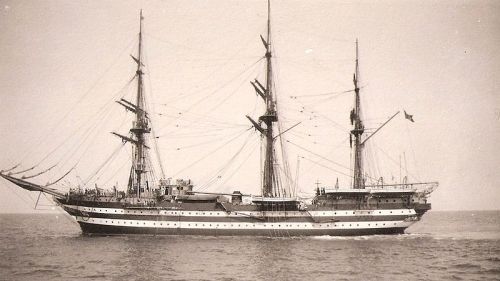
The Colombo training ship is seen here. (Wiki)

During their stay in Dublin, the Italian cadets celebrated mass on board the Vespucci ship in the presence of the Nuncio Apostolic, and also attended mass at the Pro Cathedral and Saint Andrews on Westland Row. Newspaper reports noted that they were cheered exiting the Pro Cathedral, and that a crowd of several hundred had gathered to do the same at Westland Row.

It was evident however that not all Dubliners welcomed the Italian cadets. The Irish Times reported that posters had appeared around Dublin which noted there were “Fascist Warships in Dublin Bay”, and which called on Dubliners to “protest against this Fascist propaganda visit.” Posters told of how “for two years, the people of Republican Spain have fought against the combined forces of Mussolini and Hitler.” Public sympathy around the Spanish Civil War had not rested with the left however in Dublin, and five years previously in 1933, Connolly House, home of the Revolutionary Workers Group, had been laid siege to by a religious mob.

(more…)

Read Full Post »
Culture Night is upon us once more, and having missed Culture Night 2011 I’m looking forward to making the most of it this year. While there is certainly plenty going on across the city, I thought I’d draw up a list of five things I’ll be doing on the night for anyone who is finding it hard to narrow down their own ‘To Do’ lists. Got any tips on something we should check out? Comment below.

1) The Little Museum of Dublin, free from 6-10pm. (St.Stephen’s Green)

We reviewed the Little Museum back in April of this year, and I must say it surpassed my expectations on visiting. From the Magdalene Laundries to the shameful destruction of our viking heritage, this museum isn’t just the ‘good bits’ of 20th century Dublin. It’s a diverse collection worthy of your time, and the late opening hours should be availed of.

The plaque from the Hirschfeld Centre, Dublin’s gay community centre in 1970’s Temple Bar. Today, you can see it in this fantastic museum.

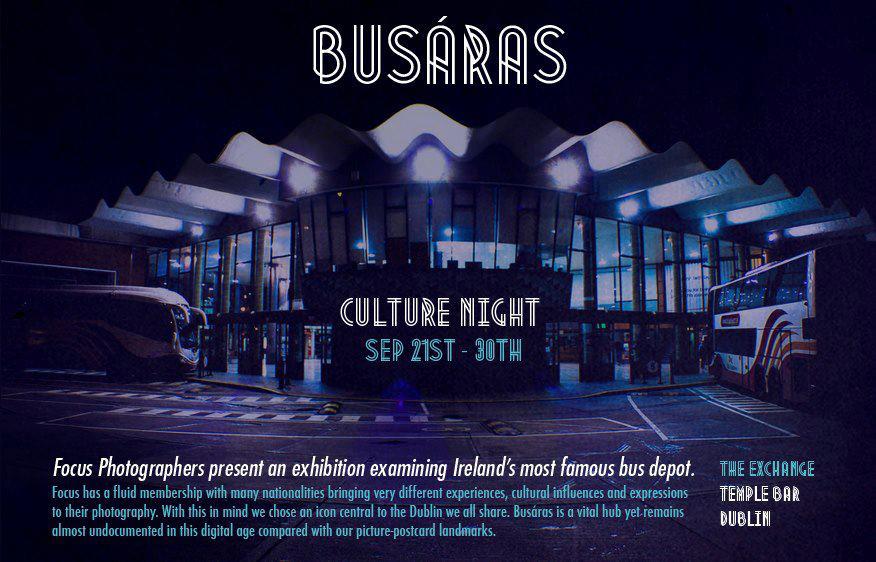
2) Focus Photography exhibition at Exchange (Temple Bar)

Exchange in Temple Bar is hosting an exhibition of photos on one of the least likely subjects imaginable for such a project, Busáras.”Busáras is a vital hub yet remains almost undocumented in this digital age compared with our picture-postcard landmarks.” The exhibition includes photographs from Paul Reynolds, who could jokingly be called the fourth musketeer which such regular appearances on the site here. The exhibition will be launched at 8pm, if timing in Exchange is anything like Busáras it’ll probably kick off at ten past.

3) ‘A Proposed Exhibition for the Irish House’, Dublin Civic Trust (Castle Street)

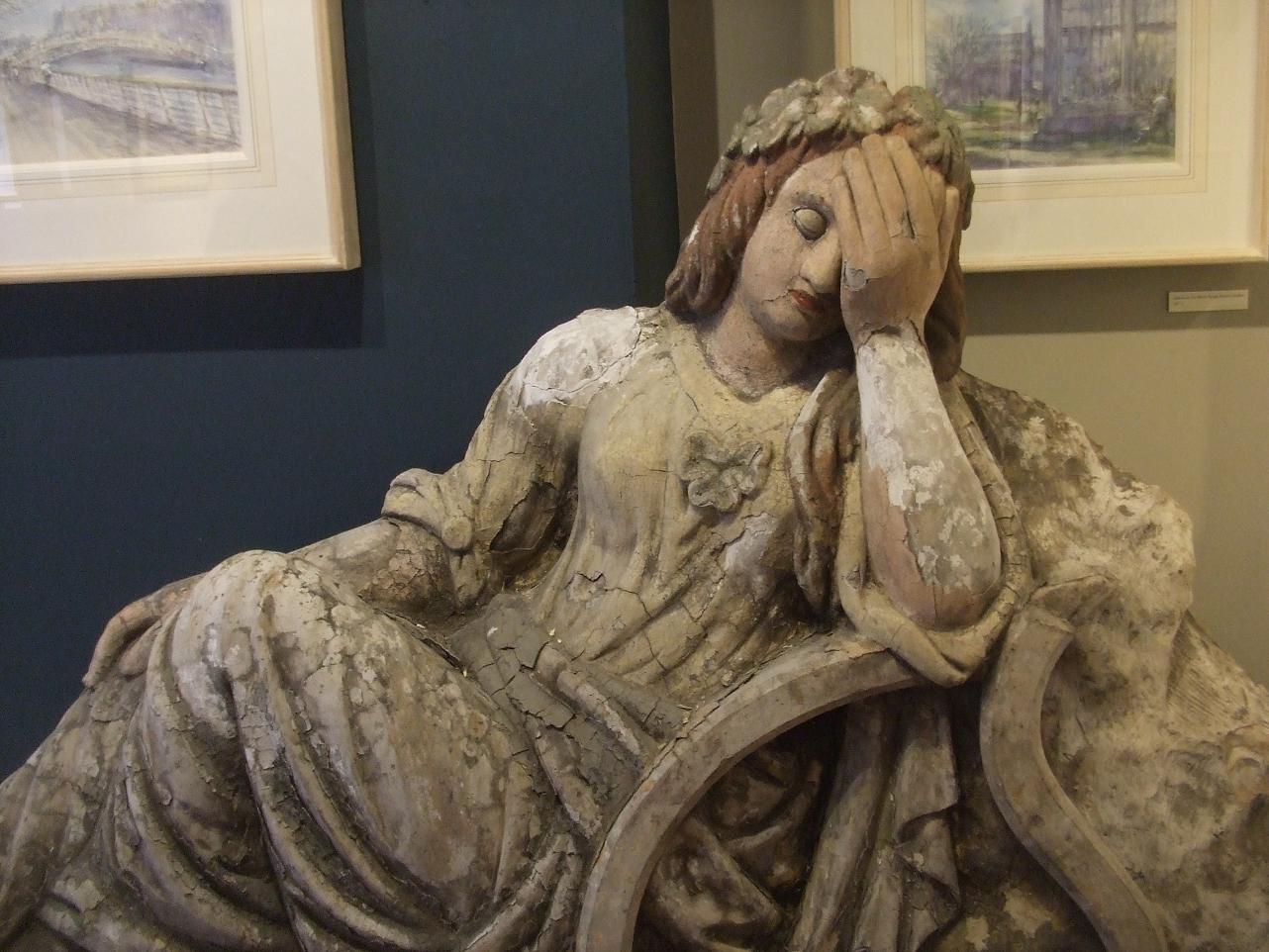
The beautiful Irish House pub was lost to ‘progress’, sitting for many years at Wood Quay. The pub boasted magnificent exterior stucco work, showing figures from Irish history like Henry Grattan and Daniel O’Connell. Some of these figures are today at home in the Dublin Civic Trust building. The Dublin Civic Trust are turning the spotlight onto this fantastic pub, and will be open until 9.30pm on Culture Night.

Eight artists propose an exhibition for the The Irish House, previously located on the corner of Wood Quay and Winetavern Street. The work will be on display in Dublin Civic Trust, 4 Castle Street, opening on the 20th of September at 6.00 pm and will continue until the 30th 10.00 – 18.00, Mon. – Sun.

The figure of Erin, salvaged from the lost Irish House pub (Donal Fallon)

(more…)

Read Full Post »

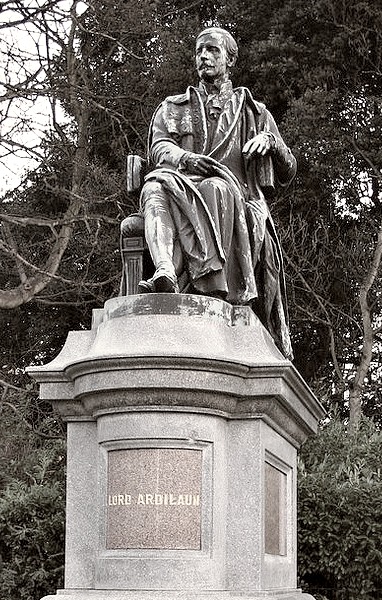
With Arthur’s Day fast approaching, Come Here To Me looks at the monument to Sir Arthur Edward Guinness, great-grandson of ‘To Arthur!’ himself. A leading unionist politician in the city, Sir Arthur opened St. Stephen’s Green Park to the general public

Lord Ardilaun’s statue today (Donal Fallon)

The statue to Sir Arthur Edward Guinness, which gazes over in the direction of the Royal College of Surgeons from St. Stephen’s Green, will be a familiar sight to all Dubliners. Arthur was the son of Sir Benjamin Guinness, who is also commemorated with a statue in Dublin today. Benjamin was a grandson of Arthur Guinness, and his statue outside Saint Patrick’s Cathedral today serves to remind Dubliners that between 1860 and 1865, he undertook the restoration of that Cathedral at great cost. Benjamin Guinness was also elected to the House of Commons in 1865 as a Conservative representative for Dublin City. His son would follow his footsteps in both his political career and his contribution to the city of Dublin, as Sir Arthur Edward Guinness would succeed in opening the beautiful St.Stephen’s Green Park to the general public.

Historically, St. Stephen’s Green had been a private residents park, something which was greatly at odds with a law passed by the City Assembly in 1635 which stated: “That no parsel of the Greenes or commons of the city shall henceforth be lett, but wholie kept for the use of the citizens and others to walke and take open aire, by this reason this cittie is at present groweing very populous” Access to the green was restricted to those who rented keys from the local commissioners, who had been given control of the park in 1814.

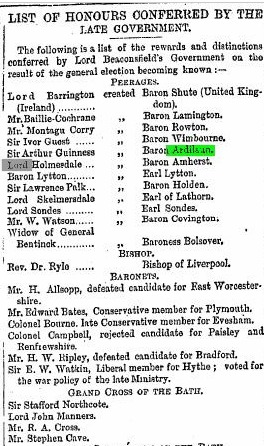
Sir Arthur Edward Guinness, or Lord Ardilaun, would become a unionist politician, like several of the Guinness family before him. He had first been elected to Westminster in the 1868 election, as a Conservative M.P for Dublin. Guinness’ election was deemed void, owing to corrupt practices on the part of his election agent. He was returned again however at the next election of 1874. The title ‘Lord Ardilaun’ was granted onto him in 1880.

From Birmingham Daily Post, 26 April 1880.

As Joe Joyce has noted in his fantastic history of the Guinness family, Lord Ardilaun’s politics had brought him into conflict with John Redmond among other nationalist voices, and Redmond accused Ardilaun, along with Lord Londonerry, of being a reactionary political force. Redmond noted in Parliament that:

So far as Ireland is concerned, we know who they are- Lord Londonderry and Lord Ardilaun, two men who in the whole of their careers never contributed one useful word towards the settlement of any grievance, large of small…I admit his public generosity, but I say, as a politician, he is a man who has never, either in Parliament or out of it, contributed one sensible or useful word to the settlement of any question, large or small.

Lord Ardilaun followed a long line of Guinness philanthropists, and his financial support would prove crucial to opening St.Stephen’s Green to the general public in 1880. On 27 July 1880, St.Stephen’s Green first opened to the public, and The Irish Times noted on that day that:

The work of beautifying and rendering St.Stephen’s Green, one of the most charming public recreation grounds in the Kingdom, having at length been completed, the gates will be this morning quietly and without ceremony open to the public.

Lord Ardilaun himself did not attend the opening of the park. Within a week of its opening, a young 16-year-old by the name of Patrick Grennan, listed in the newspapers of the day as being an ashpit cleaner by trade, became the first youngster charged with malicious damage in the park for tearing up plants! Ironically, his home was Arthur’s Lane.

(more…)

Read Full Post »
The plugs for Look Left magazine on this blog are important and I sincerely hope that readers aren’t getting tired of them.

Look Left is going from strength to strength and increasingly becoming an important magazine within Irish politics (and the culture sphere). There’s no doubt in my mind that CHTM! would be plugging it even if we had no involvement in it.

Yours truly has a short interview with Joe Mooney of the East Wall History Group and an article looking at the politics of The Specials (I’ve previously looked at The Blades and The Pogues).

Donal Fallon, Esq has a fascinating piece on Dominic Behan, the slightly overlooked brother who was, arguably, as equally as talented as Brendan.

There are also interesting pieces on issues as diverse as the recent successful Quebec student strike, the left wing FMLN government in El Salvador, workers co-ops in Belfast and a debate on the legalisation on drugs. As always,  there’s strong interviews. This issue includes one with progressive Dublin footballer David Hickey and up and comingclass-conscious Dublin hip-hop MC Lethal Dialect.

48 pages for €2? It’s a bloody bargain. Pick your issue up in any Easons store, now.


Look Left, Issue 12. (Design – Claire Davey)


Read Full Post »

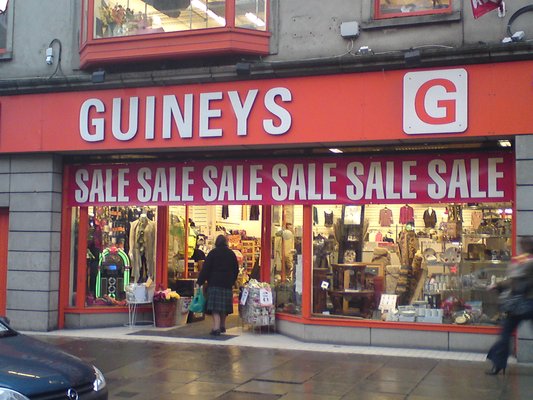
And so another Dublin institution comes to pass. No visit to Dublin by any man or woman over the age of 60 was complete without one of two things. A trip into Bewley’s on Grafton Street, this itself in danger only a couple of years ago, or nipping in to Guiney’s on the way back down Talbot Street to Connolly Station. Socks and jocks, towels, blankets and bed sheets; if you had them, chances are, the majority of them came from Guiney’s.

The phrase “you’d find anything in there from a needle to an anchor” was once used by my mother to describe the place and she wasn’t far off and I’m pretty sure the signs outside constantly proclaiming a permanent  “sale” broke some broke some law of commerce or another, but the shop was constantly packed with old women, who viewed the trip to Guiney’s as some sort of social occasion, rather than an opportunity to pick up a few bits and bobs.

Photo from the Dublin City Library digital archive

At approximately 17:30 on the 17th May, 1974, fourteen people lost their lives on Talbot Street, victims of the second of three explosions in Dublin that would later become known as the Dublin and Monaghan bombings. Thirteen of the victims were women, a number of them found on the pavement outside Guiney’s itself.

Not this Guiney’s, the other one!

Clery’s around the corner has been saved, and with that, 350 jobs and the phrase “I’ll meet you under Clery’s Clock.” Owned by the Guiney family for over seventy years, it has now passed into American ownership. Sister store Guiney’s Home ware’s and their thirty staff aren’t so lucky though and another Dublin institution is set to disappear.

Read Full Post »

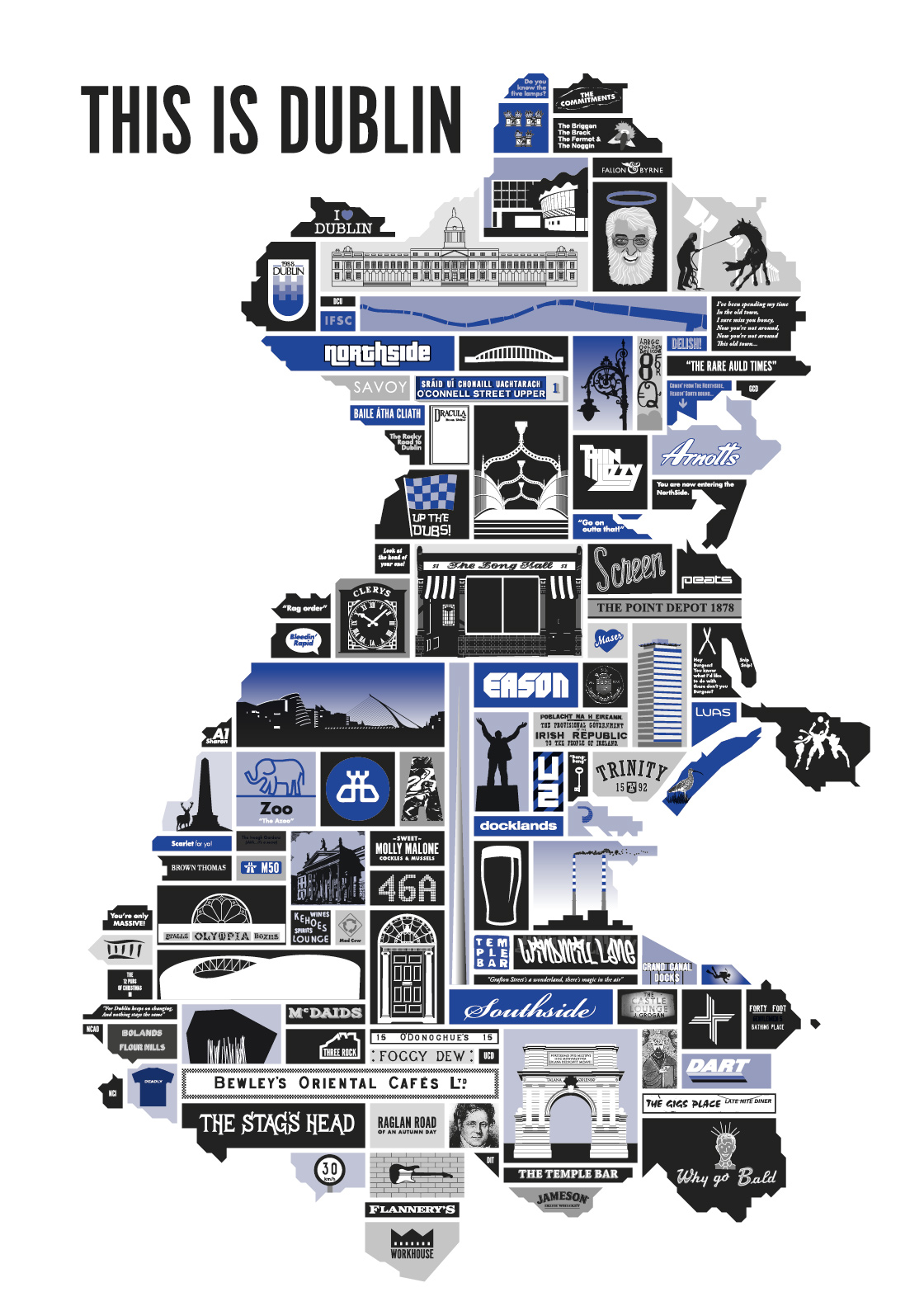
There was a great reaction on our Facebook page to Alan Wall’s brilliant recent Le Cool cover, featuring some iconic Dublin images. Over 100 likes, and 27 shares, indicated that many Dubliners took to Alan’s tribute to the city.

Alan sent on this image below, which shows even more classic Dublin features. This image is available to purchase in poster form from dublinposter.com. A few of my favourites from the image are Ronnie Drew (shown here as a saint!), the logo from Dublin’s ‘fake’ millennium in 1988 and the classic Why Go Bald? sign.

‘This Is Dublin’ by Alan Wall (Workhouse)

Read Full Post »

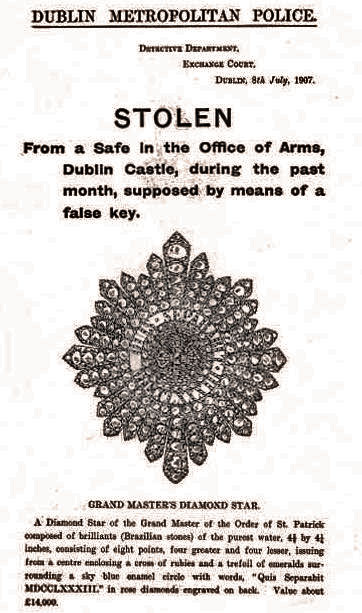
The theft of the Irish Crown Jewels is a mystery that goes back over a century, and remains unsolved. The Jewels were not the equivalent of the English Crown Jewels, rather the insignia of the Order of St. Patrick, the British Order of Chivalry associated with Ireland and disappeared in June 1907.

Supposed to have been assembled from diamonds belonging to Queen Charlotte, they were presented to the Order by King William IV in 1831.The Order itself technically still exists, although there has not been a granting of Knighthood since 1936. The Queen remains the Sovereign of the Order, and the Ulster King of Arms, the position of the person entrusted with the safe keeping of the regalia, still exists today.

Taken from the National Archives, NAI CSORP/1913/18119

The Jewels, valued at $250, 000 in the clipping from the New York Times below, were stolen from a safe located in the Office of the Ulster King of Arms, in the shadow of the then Detective Headquarters in Dublin Castle. The theft occurred in 1907; they were last seen in the safe in which they were stored on June 11th of that year, with the theft not discovered until the third of July, three weeks later. King Edward VII and Queen Alexandra were due to arrive in Dublin for the International Exhibition and plans were afoot to knight Lord Castletown during their visit. The process would have required the regalia of the Order and was postponed as a result. Although the King is said to have been angered by the theft, the visit went ahead.

(more…)

Read Full Post »

I stumbled across this advertisement in the newspaper archives for the unveiling of the millennium countdown clock in the River Liffey. 10,000 people had turned up to see the clock turned on for the first time in March 1996. The project, funded by the National Lottery, was a total failure to put it lightly. The clock was plagued by the issue of visibility in the River Liffey, and in the end the National Lottery chairman John Hynes told The Irish Times that “the Liffey beat us”.

The idea of placing a clock in the River Liffey was first put forward in 1994, when the National Lottery appealed to the public for entrants to its ‘Countdown 2000’ competition. The winning clock design was proposed by Gráinne Hassett and Vincent Ducatez, two architects living in Dublin. For their proposal, they received a £10,000 reward.

In a 1994 newspaper report on the clock for The Irish Times, it was noted that:

Surrounding the clock, which will start ticking at midnight next New Years Eve, will be ‘reeds’ of metallic-coloured carbon fibre, fixed on buoys from which loudspeakers will send out, at 30 second intervals, recorded sounds of Dublin life- the clank of Guinness barrels on pavements, foghorns, seagulls cries and the calls of Moore Street traders.

Video footage of the unveiling of the clock features in the 1996 episode of Reeling In The Years, at the very beginning of the show. Gay Byrne, Joe Duffy and Ruairí Quinn were on hand for the event. A massive fireworks display marked the event.

Dublin’s Millenium Clock.

Three days after the clock was placed in the River Liffey, it vanished from its location. One Dubliner was reported in the media as joking “I’ve heard of moving statues, but this is ridiculous.” When approached by the media, the National Lottery at first insisted it didn’t know where its own clock was, before telling the media a day later that it had been removed for the purpose of facilitating boat races. Bizarrely, The Irish Times reported that there had been a rumour magician Paul Daniels had “mad it disappear” while in Dublin!

To compliment the clock in the river, the National Lottery placed a postcard booth on O’Connell Bridge, where Dubliners could purchase a postcard for 20p bearing the exact amount of time left at that moment until the new millennium. Images of the postcard were uploaded to our Come Here To Me Facebook page by Lois McGrath after we issued an appeal to see one.

Millenium Postcard. Image uploaded by Lois McGrath.

(more…)

Read Full Post »
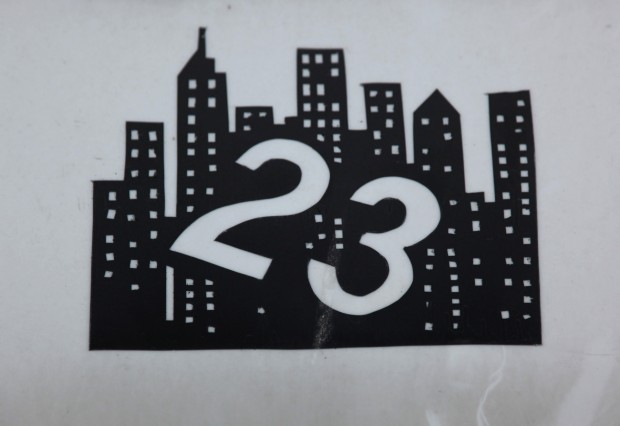
Detail of the shopfront. All credit – Lisa (http://builtdublin.com)

The Manhattan on 23 Harcourt Road was a late night cafe ran by the Woods family from about 1954 until the late 2000s.

A cafe on the same premises was ran by Anthony Tighe in the 1940s known as Tony’s. In April 1941 he was up in court for allegedly  ‘selling or permitting to be sold intoxicating liquor without holding an Excise licence’. On February 1st, it was put to the judge, Tighe had been selling intoxicating liquor between the hours of 5 a.m. and 6 a.m. Evidence was given that customers with porter in cups were found on the premises by Gardaí. Tighe told the judge that ‘none of the drink was paid for and that he was only treating the people’. The case was dismissed as there was not sufficient evidence to convict. In February 1952, the Performing Rights’ Society was granted an injunction to restrain Tighe from permitting his cafe to be ‘used for the performance, in public, for profit, of musical works of which the right of performance was in the society, without its consent’.

The Woods family opened The Manhattan in 1954. It was known widely as Aunty May’s. It was popular with several generations of late night revellers, students, taxi men, shift workers and musicians.

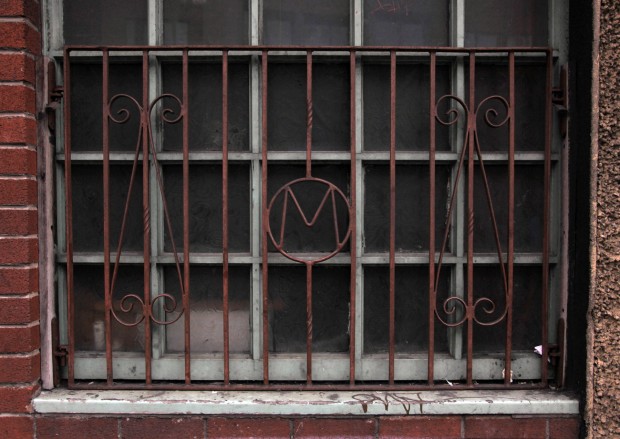
Detail of the shopfront. All credit – Lisa (http://builtdublin.com)

Lisa Cassidy’s excellent Built Dublin blog, which focuses on details of Dublin architecture, recently wrote about The Manhattan:

The main sign, on white backlit plastic, looks an awful lot like it might have been hand-painted. It’s pretty sharp and I hadn’t noticed until standing right underneath. You can see it around the edges and the curves of the letters, or inside the windows of the skyline, where the brush didn’t quite follow the lines. Letters are steadily disappearing with time, leaving us the two bookending skylines, a bit of the ‘m’ and the second ‘a’, and just ‘ttan’ unobscured. The skylines are probably the best part (a vague suggestion of tall buildings totally undermined by there being very few, rather big windows) and if the building is ever demolished, I’ll be scavenging for them.

On the window railings below, there’s an ‘m’ held in the centre above the small, thick panes of glass. It’s slightly silly, like a monograph on a beach towel, but it also disturbs the closed-down domestic look by putting the business at the forefront. There’s little possibility that the customers in search of soakage would have spotted the detail, sure, but it’s a nice oddity in daytime.

A recent post on the Come Here To Me! Facebook page generated a whole load of memories:

Nicko Farrell –  “Never went home without hitt’n the manhattan for a mixed grill and a bottle of the house white (milk!), served up by aunty may, the stairs up to da loo was like a ladder it was that steep at least half a dozen punters fell down it most nites, but due to embarrassment or the gargle they just got up and headed off, don’t think anyone ever claimed, twas a different era but good times none the less.”

Colm Carty –   “I used to run a club in McGonagles in the late 80s and afterwards always brought the guest DJs there for a fry up. Coldcut, Dave Dorrell and Norman Jay amongst others all loved it. As far I remember they had Tyson versus Bruno on the TV one”

Brian Coyle – “This is the only place I was ever a regular in my life. Most times the breakfast was on the table before I’d taken my jacket off. One memorable night was ignited by an aul fella who baited a few lads from Cork with the “you shot Michael Collins” line… to which someone retorted “It might have been an eskimo that shot him but we’d still buy frozen fish.”

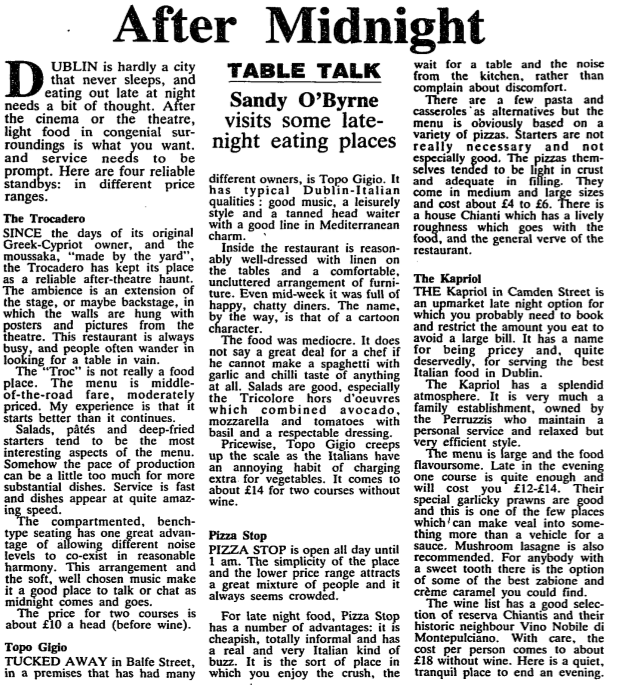
The Irish Times looked at the topic of late night cafes and restaurants later in 1990.

‘After Midnight’. The Irish Times, 03 March 1990.

While the Trocadero and Pizza Stop are both still open, neither remain open late. Topo Gigio on Balfe Street is closed while The Kapriol on Camden Street is now Zaytoon.

Today the Gigs Place and Tandoori Bite on Richmond Street South and Afsana and Shans’ on Temple Lane South remain favourites  for hungry revellers after a night out.

Read Full Post »

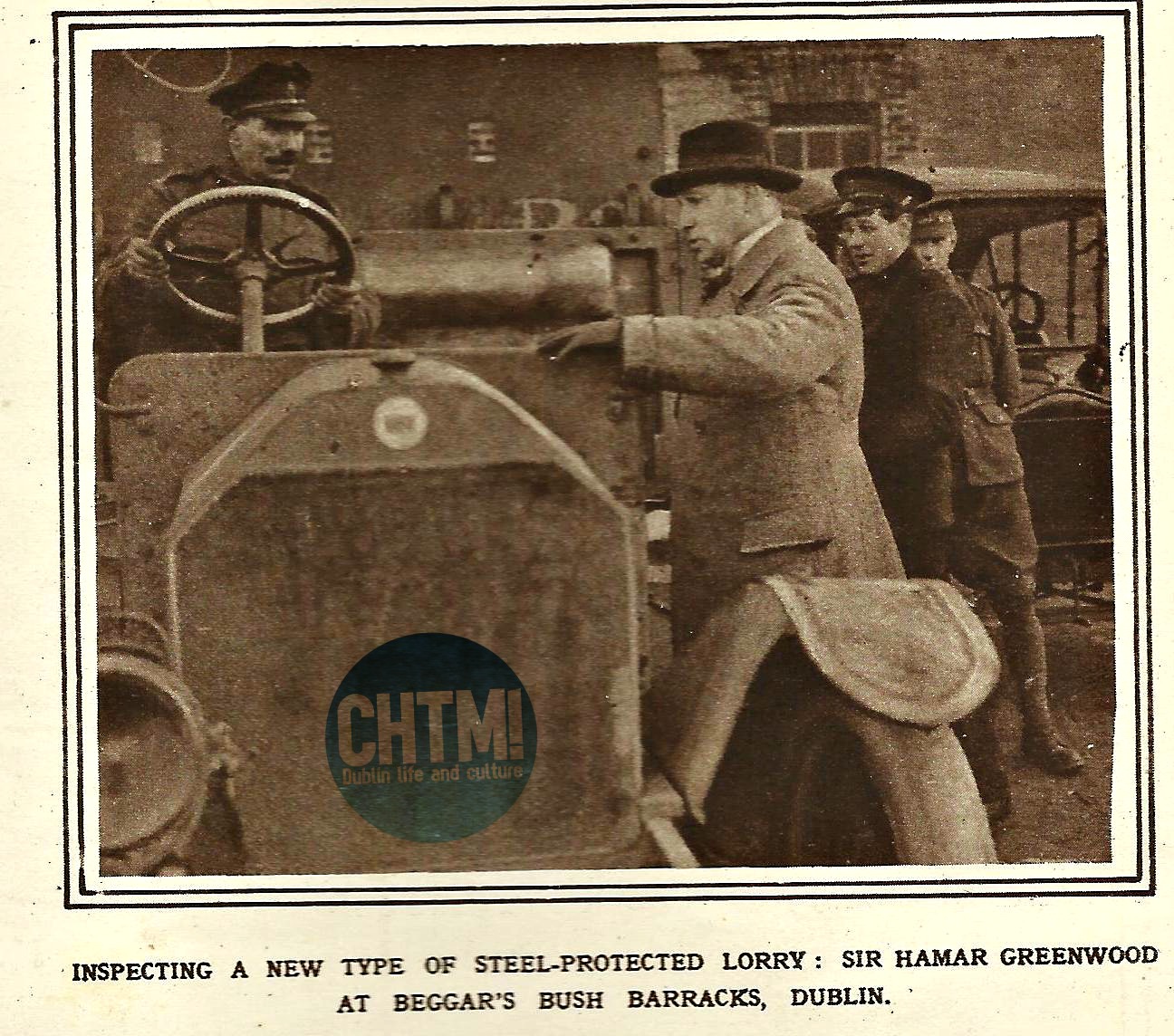
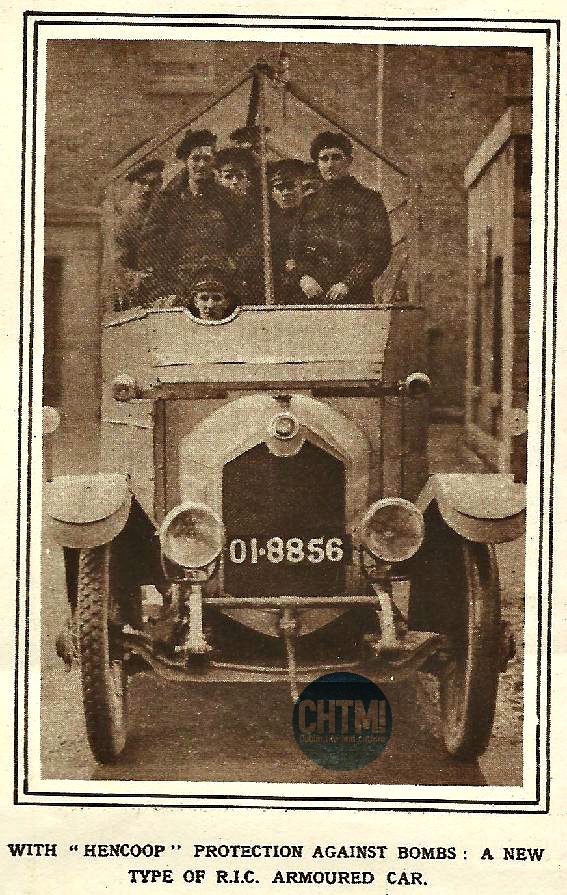
The images below are scanned from an original copy of the Illustrated London News from January 1921. They show Hamar Greenwood, Chief Secretary for Ireland, inspecting R.I.C Auxiliaries in Dublin at Beggars Bush Baracks.As D.M Leeson has noted in his study of The Black and Tans, Greenwood ‘described the Irish insurgency in almost hysterical terms’ when he noted that “For years past now Sinn Féin extremists and their Soviet colleagues in Ireland – their Sovietism in a marked degree in Ireland- have conspired to smash the empire.”

Greenwood was one of those who essentially endorsed a policy of reprisals at the height of the War of Independence. Greenwood had famously told the House of Commons that “things are very much better in Ireland” only days before Michael Collins obliterated what he called the ‘Dublin Castle Murder Gang’ on a November morning in 1920.

Below these images the page contains a quote from Greenwood, telling the men he inspected that:

You are here to rescue Ireland from the assassin, to save her from the small minded misguided minority of her people. You are here to maintain the United Kingdom intact, and to break up that conspiracy which has for its object the smashing of the British Empire!

This is an interesting example of British war propaganda during the Irish War of Independence, and this is also the first time I’ve seen several of these images myself.

From: Illustrated London News, Jan 29 1921.

This second image is interesting, as it shows how the British armed forces attempted to deal with the guerrilla warfare tactics of the IRA, with new “protection against bombs” in the field.

From: Illustrated London News, Jan 29 1921.

(more…)

Read Full Post »
« Newer Posts - Older Posts »