Feeds:
Posts
Comments

Archive for March, 2015

McGarvey’s tobacco shop, popularly known as ‘An Stad’, was a guesthouse and meeting place at 30 North Frederick Street. It was a popular meeting place for the Irish nationalist and cultural movements in the late nineteenth and early twentieth centuries, and was described in the press in 1903 as “the centre of Dublin Gaeldom.”
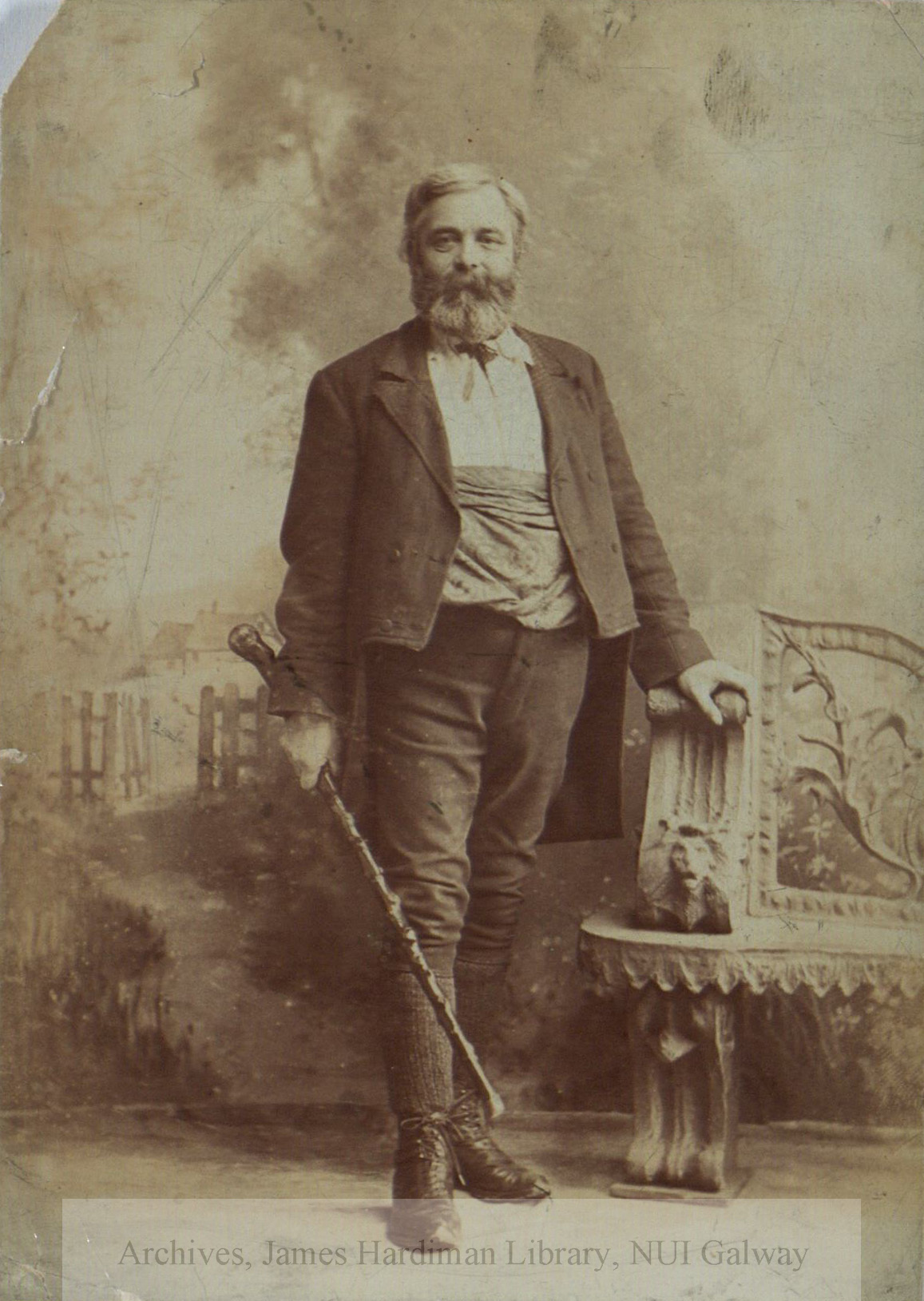
Michael Cusack, founder of the GAA. He was a familiar sight in An Stad. (Image: NUI Galway Archives,  http://archives.library.nuigalway.ie/cusack/)

Michael Cusack, founder of the GAA. He was a familiar sight in An Stad. (Image: NUI Galway Archives, http://archives.library.nuigalway.ie/cusack/)

Amongst others, it was frequented by James Joyce, Major John MacBride, Oliver St. John Gogary and GAA founder Michael Cusack. Harry C. Phibbs, who was a member of the Celtic Literary Society, remembered that “McGarvey’s place was truly a stopping place for anyone interested in the Irish Revival Movement to drop in, meet some other people, know what was going on. It was conveniently located to Rutland Square where many of the societies and branches of the Gaelic League had meeting places.” Cathal McGarvey, who founded the business, was a well-known humourist and song writer, indeed he penned the words to ‘The Star of the County Down.’ Oliver St. John Gogarty, who lived conveniently close to An Stad, recalled of him and his establishment:

There was a great atmosphere of nationality gathered about the Stad. It was a good place to slip out to at night, for one who lived about fifteen doors away, and to talk about the revival of Gaelic. Even if few people talked to me there was always Cathal, who was too civil and too much of a business man not to talk to anyone while waiting for a revival of the nation.

Phibbs remembered years later that Michael Cusack cut something of an unusual shape in the establishment, and that “one of the people who would occasionally wander in was ‘old man Cusack’, a bearded old stalwart who called himself ‘Citizen Cusack’. He always carried a green muffler around his neck and wielded a heavy blackthorn stick.”
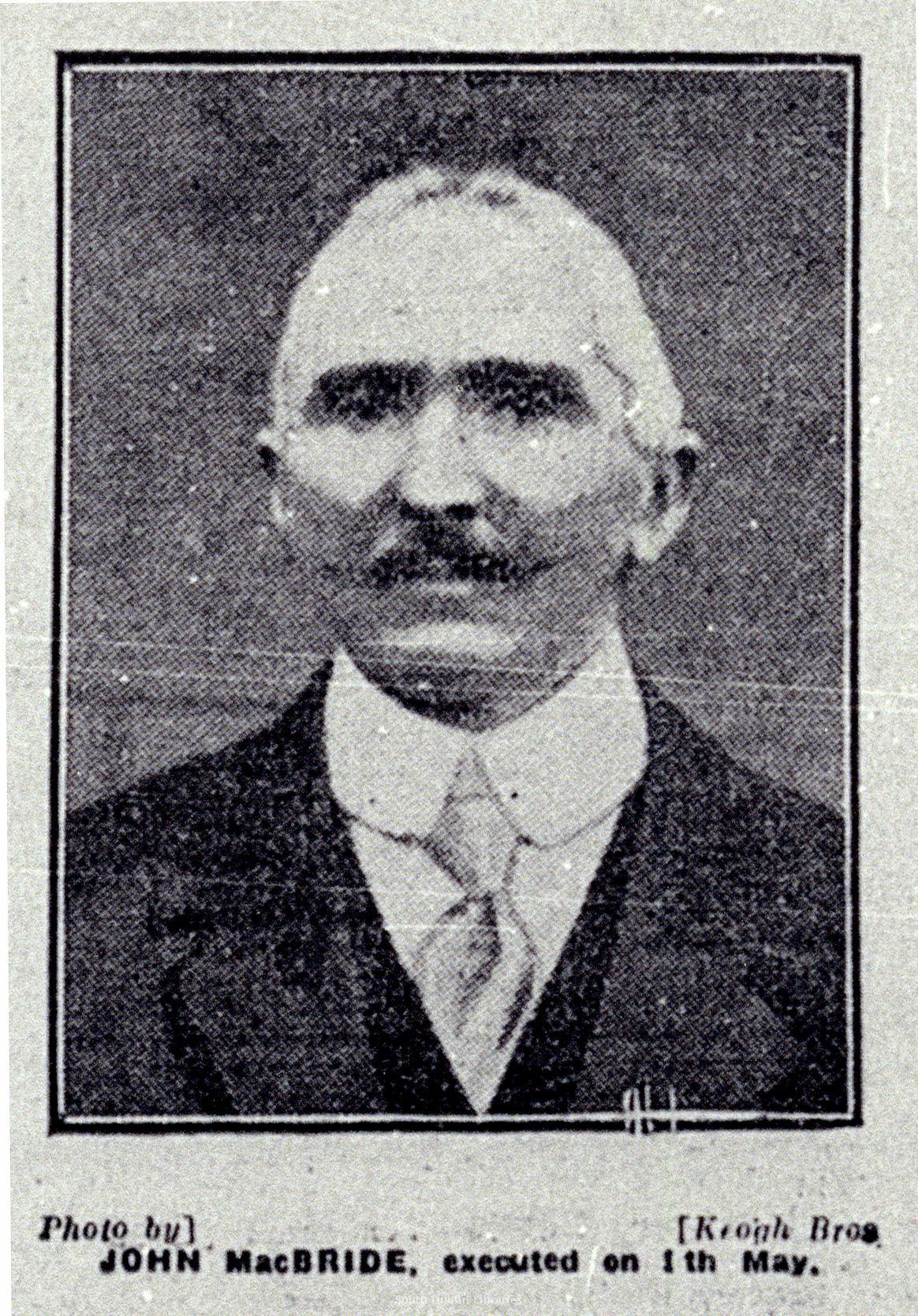
Major John MacBride, whose presence in An Stad was noted by intelligence police (Image Credit: South Dublin County Council Libraries)

Major John MacBride, whose presence in An Stad was noted by intelligence police (Image Credit: South Dublin County Council Libraries)

Police intelligence files from the early twentieth century reveal that McGarvey’s was closely monitored by intelligence. When Major John MacBride returned to Ireland from Paris, having fought in the Second Boer War with the ‘Irish Brigade’, it was noted by police intelligence that he frequented McGarvey’s, in the company of known ‘Secret Society’ men, a reference to the Irish Republican Brotherhood. MacBride was a well-known figure in Irish society for his exploits in South Africa, and had lectured in America to enthusiastic audiences on his fight against the British there, telling the media in New York that “‘Winston Churchill may say what he likes about the war in South Africa being over, but I tell you the war is not over. The Boers will fight just as long as there is a man, woman or child alive.” Following his U.S speaking tour, he had married Maud Gonne in Paris, but the marriage was a brief and unhappy one, leading him back to Dublin. Among the men spotted with MacBride at An Stad were Arthur Griffith (founder of the Sinn Féin party)  and veteran Fenian John O’Leary.

At the time of Cathal McGarvey’s passing, it was noted in the press that the  visitor books would surely become a hugely important historic resource. Having begun in 1900, and continued until about 1905, the books “contain entries of interest by every Irish-Irelander of note who lived in Dublin between those dates.” 30 North Frederick Street today is the building shown below, though a building further down the street at 43 operated under the name ‘An Stad’ in more recent times.
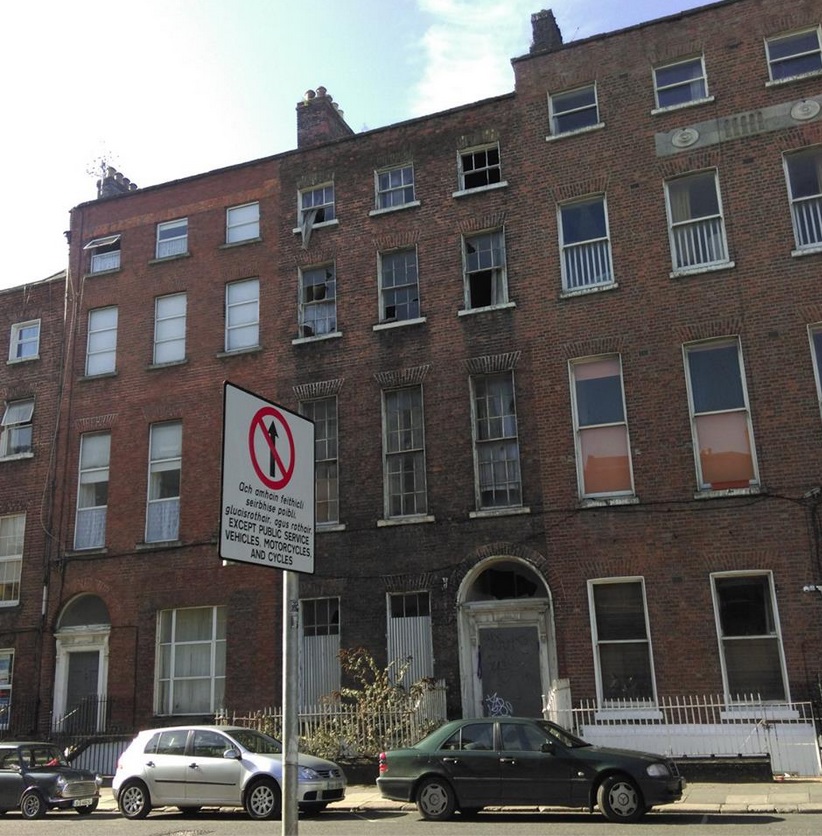
30 North Frederick Street today.

The decay of 30 North Frederick Street today.
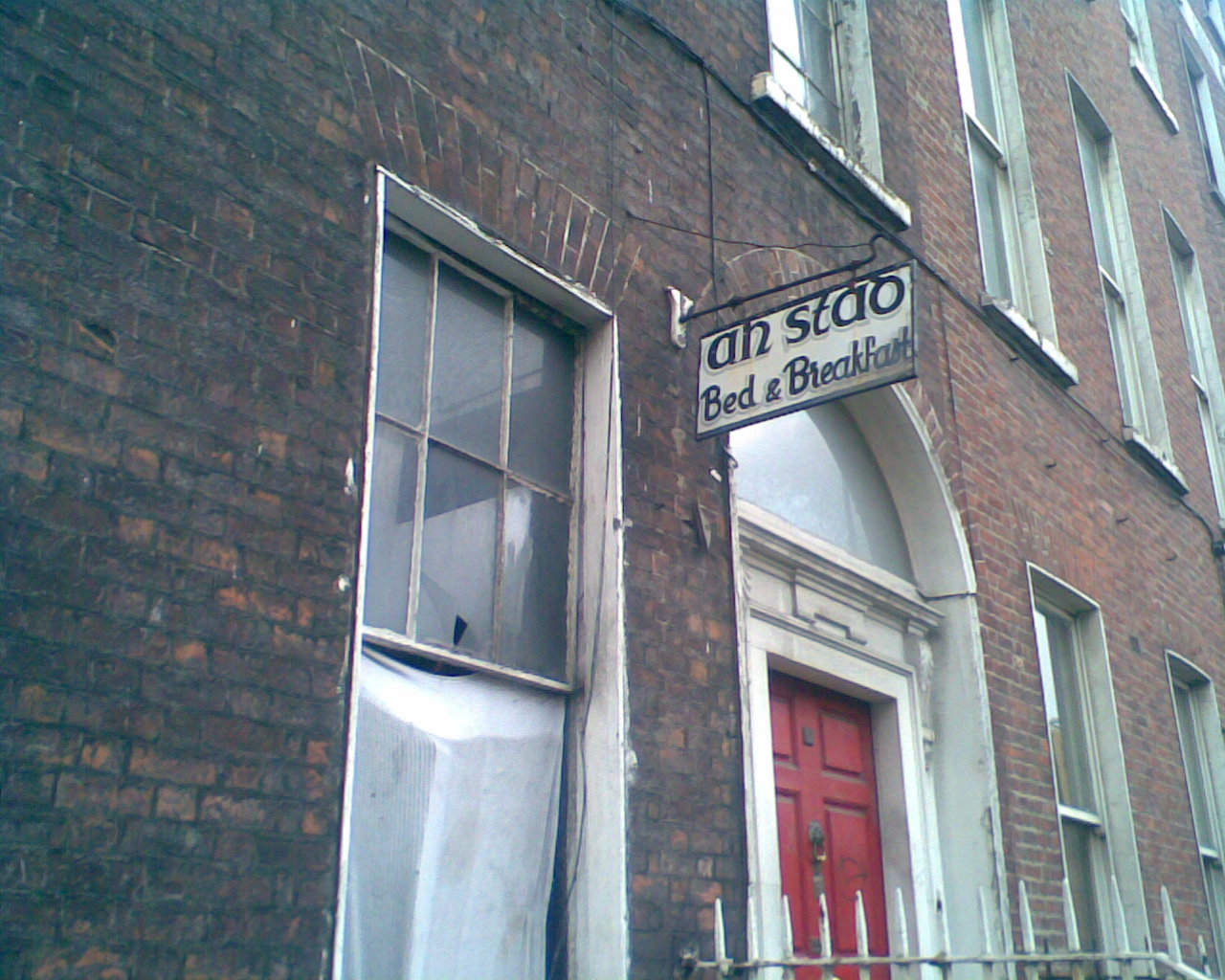
In the years that followed independence, it remained a popular meeting place with republicans. It was managed for some time by Maire Gleeson, an active participant in the War of Independence who was a member of Cumann na mBán, as well as being active in the intelligence network of Michael Collins. With the coming to power of the Fianna Fáil government in 1932, republican prisoners were released from Arbour Hill, Portlaoise Prison and Mountjoy, with Frank Ryan among the twenty IRA men released by the new government. The Irish Press reported that many of the prisoners made by the well known meeting place, and that “An Stad Restaurant in North Frederick Street having been reached, the prisoners found the streets literally black with people to clasp them by the hand. Cinema apparatus was installed in front of the restaurant, and Mr. Frank Ryan was persuaded to address the microphone.” Five years later, in 1937, it was again the location for a celebration in honour of released republican prisoners, which included Moss Twomey, who had been IRA Chief of Staff prior to his arrest.

In 1938, there was an abortive attempt by some members of the IRA to attack the Nelson Pillar on O’Connell Street. Tim Pat Coogan has noted that the plan lacked the sanction of IRA Chief of Staff Sean Russell, but that the plan had been “to set the explosives, withdraw and notify the police, giving them time to cordon off the area.” Coogan interviewed an IRA member of the time who told him that men had actually walked down O’Connell Street with wads of gelignite on their person, before the mission was abandoned. The men had set off, naturally enough, from An Stad!

An Stad itself was raised by the authorities on several occasions in this period, who clearly regarded it as an institution affiliated to the republican movement. While it remained an active guesthouse in the decades that followed the 1930s, its affiliations with the advanced nationalist movement seem to have weakened. It seems a real shame that such an important meeting place of the early twentieth century is unmarked by any plaque.

Read Full Post »

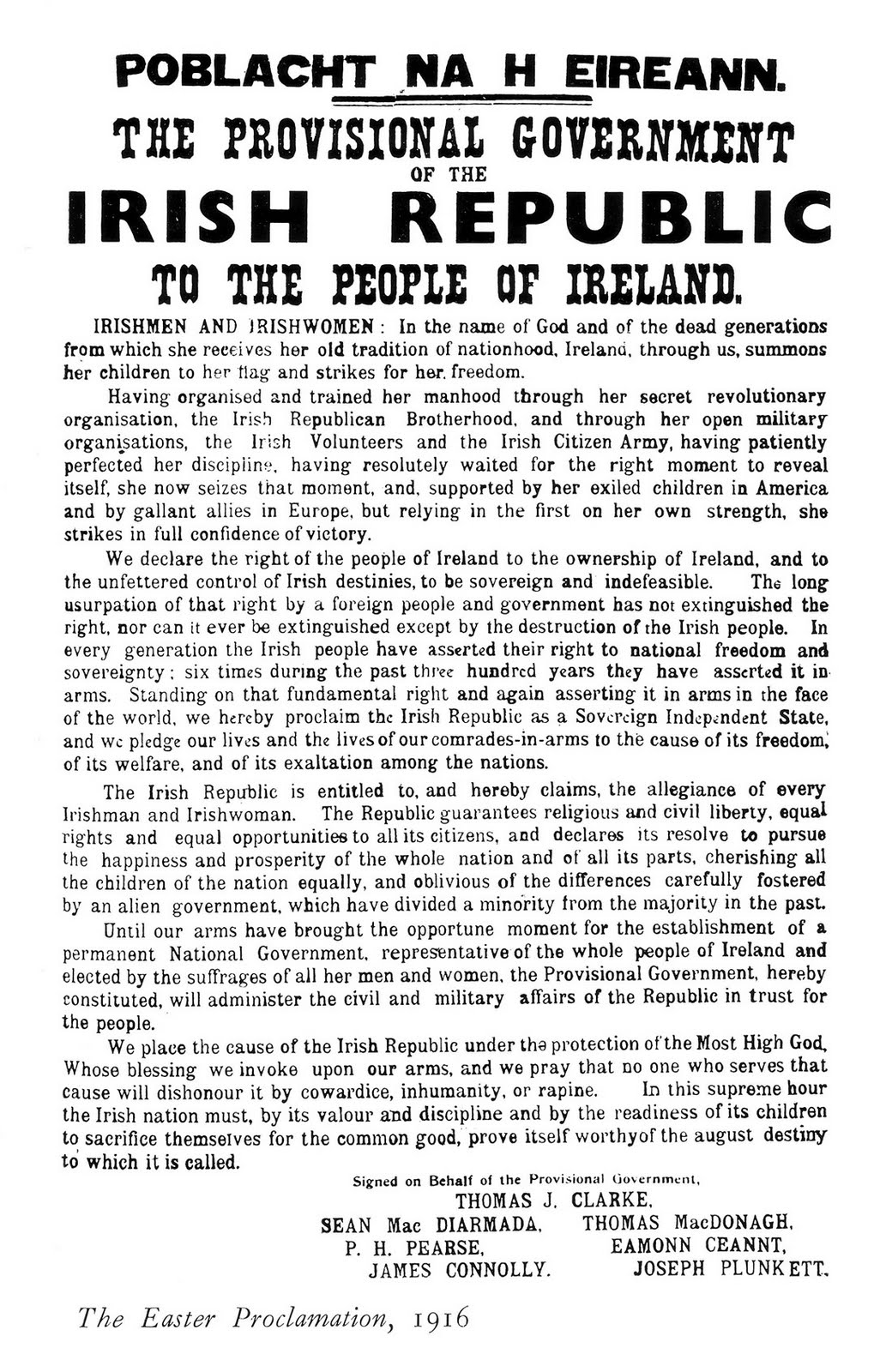
The Proclamation first read aloud by Pearse on the steps of the GPO on Easter Monday is a document synonymous with Easter Week and the birth of the modern Irish State. Widely accepted to have been composed by Pearse himself, there remain very few physical copies in existence.

Though it was intended for 2, 500 copies of the Proclamation to be printed in Liberty Hall and distributed around the country, it is likely that fewer that 1, 000 actually were, and these were entrusted to Helena Moloney for transport to the GPO. Seán T. O’Kelly, the second President of Ireland would from here take these and billpost them around the north and south inner city. The paper upon which they were printed was of poor quality, so very few remain. Fewer still exist of a facsimile of the Proclamation issued by the Irish Citizen Army for the first anniversary of the Rising in 1917 of which there is believed to be a sole surviving copy.

The Proclamation in full

The Proclamation in full, from typefoundry.blogspot.ie

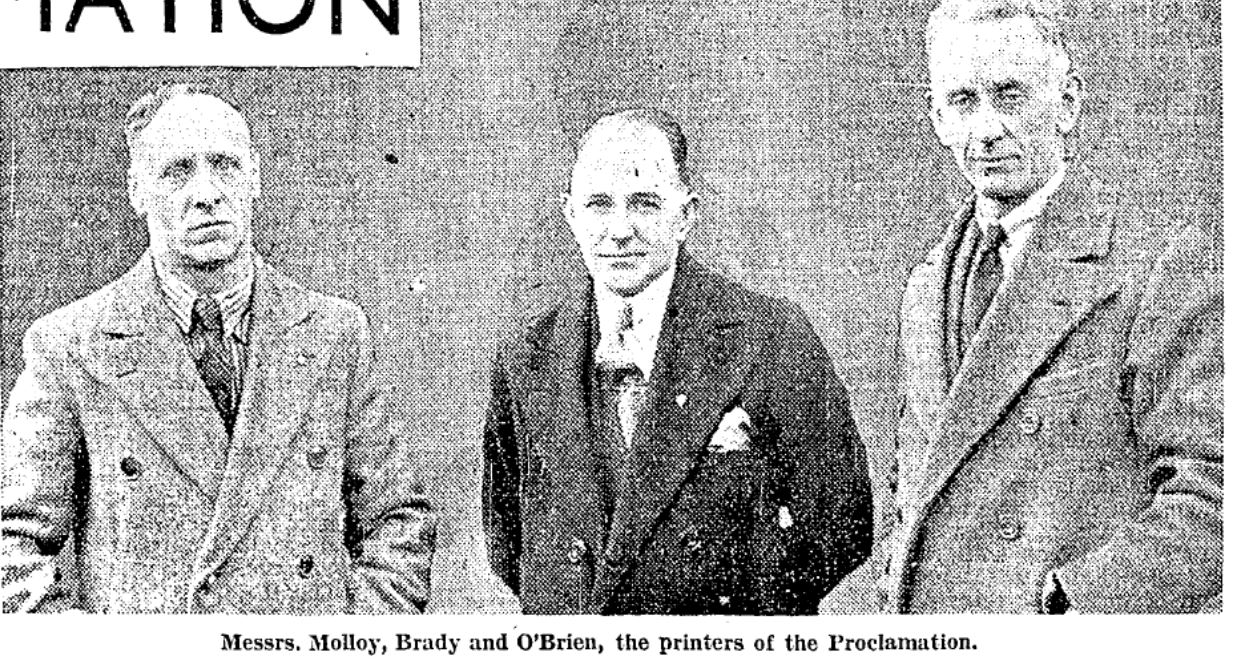
The responsibility for printing the document lay with Michael Molloy and Liam O’Brien, two Volunteers, and Christopher Brady who had until now overseen the printing of ITGWU Weekly, “The Worker’s Republic.” Compositor’s and printers by trade, these men were approached by James Connolly in the run up to Easter week and asked to forego the planned parading of Volunteers in St. Anne’s Park on Easter Sunday morning and to instead meet him in Liberty Hall for a task he had prepared for them. Upon arrival, Connolly and Thomas MacDonagh, also present, handed them a sheet of paper with the words of the Proclamation inscribed upon it and remarked “Do if you wish to, and if not we won’t be the worse friends.” All three accepted the job.

As the men launched into their work, it became obvious that they would not have enough print to finish the job. The machine upon which they were to perform their task, an old Wharfdale Double- Crown machine upon which the Irish Worker was printed was wholly inadequate for the task at hand, the paper of an inferior quality, and print for the machine severely lacking. Different fonts had to be used, (the wrong font for the letter ‘e’ is used in over twenty instances,) many letters had to be fashioned out of others (in several cases, a capital ‘E’ was made from fashioning the type out of a capital ‘F’ and adding wax,) and eventually the men realised they would not have enough type and would simply have to borrow some more.

The Three Printers of the Proclamation. Irish Press,  Tuesday April 24th, 1934.

Irish Press, Tuesday April 24th, 1934.

The type was borrowed from an Englishman named William Henry West, a printer whose premises were located on Stafford Street. Following the tradition of Wolf Tone, the protestant revolutionary who Stafford Street would eventually be named after, West appears to have been sympathetic towards the cause for Irish Freedom. Census returns for 1911 list West as 41 years of age, with an address at Brigid’s Road Upper, Drumcondra. His job title is “Letterpress Printer” and his religion is given as “Cooneyite.” Cooneyism was an offshoot of a home based church movement known as the “two by twos” which gained some traction in Ireland in the late 19th and early 20th Century in Ireland. It was known as an “itinerant” religion and its lay people called “tramp preachers” due to the homeless and destitute nature of their calling.

West was printer of choice for the ITGWU and appeared twice in the courts alongside Jim Larkin. In January 1913, he appeared as a co-defendant with Larkin in a case in which Mr. William Richardson was claiming a sum of £500 after allegedly having been libeled in the Irish Worker. In September of that year, he appeared in a bankruptcy case involving himself, with the creditor bringing the case again him the same Mr. William Richardson, still looking to eek out punishment for his alleged libeling. In examination of his firms accounts, William Henry West had listed the ITGWU’s debt as a “bad debt,” or one which he deemed unrecoverable. West’s examination by the prosecution is below:

Mr. Larkin owes you £227 for the printing The Worker- isn’t Mr. Larkin the proprietor of The Worker?

He is, and he owes me £227.

Have you put that down as a bad debt?

Yes, because it is a bad debt.

Why?

Because I cannot get it.

Can you not recover it from Mr. Larkin?

I wish you could show me how. (laughter)

Has Mr. Larkin refused to pay the amount?

Well, he cannot pay.

He refused to pay?

No.

Did you ask him for it?

Of course, often. But he can’t pay what he hasn’t got.

You know that Mr. Larkin is Secretary of the ITGWU?

Yes, I have heard so.

And can you not recover this amount by suing him for it?

Do you think I would do that, when he’s my best customer? (laughter)

The case also makes reference to debt owed by other organisations, including the Labour Party and a drama class at Liberty Hall, and asked whether he could not sue for payment, to which he replied “I don’t believe in suing, I’ve never sued anybody in my life,” again to laughter.

The Witness Statement of Commandant Liam O’Brien states that on Easter Sunday, upon realising their shortage of type, Michael Molloy was ordered by Connolly to West’s printers along with a messenger and Citizen Army man employed by the Worker’s Republic who was known to him by the name ‘Dazzler.’ West provided the type, under the auspices that it was to be returned to him intact or compensated if lost- it was his livlihood after all. Of course, this wasn’t to be as Liberty Hall was first, pounded by shells from the Helga, and gutted by fire. When entered by British soldiers after the fighting had died down, they found the second half of the type still on the machine.

What happened to West after Easter Week, I can find no reference. But his is another story of the many from the Rising. The English protestant printer who supplied the type for the Irish Proclamation.

Read Full Post »

Thanks to Darragh Doyle and others, we now know more about the rumoured closing earlier this week of two landmark Dublin 8 pubs – The Lord Edward and Fallon’s.

Both floors of The Lord Edward pub will remain open but the upstairs seafood restaurant is closing its doors after 47 years in business. Fallon’s has recently been sold and may shut temporarily for refurbishment but they’re definitely not closing.

It’s as good a time as any to briefly look at the history of these two pubs.

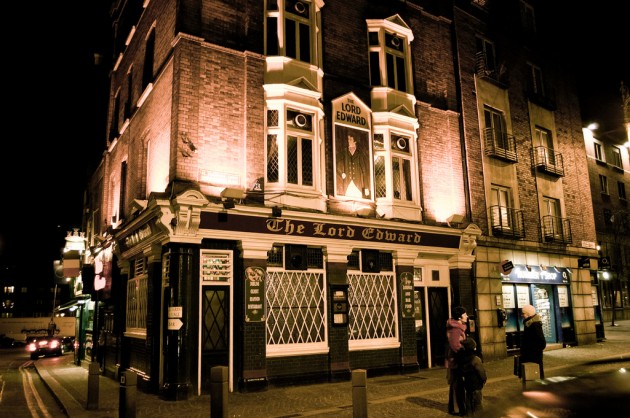
Perched on the corner of Christchurch Place and Werburgh Street, the Lord Edward is a five-storey over-basement building, once part of a substantial terrace. Built in 1875, the former dwelling house was refurbished and reopened as a public house in the late 1890s by the Cunniam family from Co Wicklow. However, it is said that there has been a licenced premises on the site since the late 1600s.

The Lord Edward, August 1979. Credit - sergios56.

The Lord Edward, August 1979. Credit – sergios56.

The ground floor lounge bar features gas lighting, a “confession box” snug, a mahogany and granite bar and a selection of antique bar fittings. The first floor cocktail lounge has a traditional beam ceiling and extensive stained glass. It was formerly the Cunniam’s dining room while the rooms above were bedrooms.

We can see from the 1901 census that 1 Werburgh Street was occupied by Thomas Cunniam (40), a “Licensed Grocer”, from Co. Wicklow, his wife Margaret (31) from Dublin and her mother Elizabeth Kenny (60), a “Green Grocer” from Wicklow. They had two children – Hugh (4) and Elizabeth (3) – and employed two Grocer Assistants, a cook and a nurse.

In the 1911 census, it would appear that the same Cunniam family are living in the house but there are some discrepancies in ages and names. Thomas Cunniam (47), a “Licensed Grocer”, from Co. Wicklow is listed along with his wife (now named) Anastasia (38) from Co. Wicklow. They have four sons and two daughters including Hugh (15) and Elizabeth (14) which match. The family employed two Vintners Assistants, a cook and a general servant.

The Lord Edward, nd. Credit - Fintan Tandy (Old Dublin Pubs FB group)

The Lord Edward, nd. Credit – Fintan Tandy (Old Dublin Pubs FB group)

When the famous Red Bank restaurant on D’Olier Street closed in April 1969, the smart-thinking Tom Cunniam poached a lot of the now-jobless staff for his new Lord Edward seafood restaurant which opened in September of that year. Some of the staff that made the switch include chef Eamonn Ingram who trained in the old Russell Hotel and waiter Tom Smith who were both still working in The Lord Edward until 10 years ago at least.

The Lord Edward, c. 2014. Credit - Flickr user 'fhwrdh' via dailyedge.ie

The Lord Edward, c. 2014. Credit – Flickr user ‘fhwrdh’ via dailyedge.ie

In 1989, the Cunniam family sold the pub to Dublin-born businessman David Lyster and his wife Maureen who still own it today.

So while it’s sad to see the restaurant closing, we’re more pleased that the pub is unaffected.

Fallon’s, otherwise known as The Capstan Bar, has recently changed hands. As a result, the vast majority of the wonderful memorabilia (relating to football, local history etc.) has been removed from the now-bare walls. Staff expect the pub may shut temporarily for refurbishment (hopefully they’ll redo the toilets and little else) but they’re definitely not closing.

On a side note, we believe the Capstan in question refers to the British brand of cigarettes and not the nautical rotating machine.

(more…)

Read Full Post »