Feeds:
Posts
Comments

Archive for September, 2015

[Note : We have previously looked at the history of bona fide pubs, kips and early houses in the city]

There a number of private bars and social clubs in Dublin that cater for different people depending on their profession, nationality or politics.  Here is an incomplete list. Please leave a comment if you have any other suggestions or memories.

The Members Bar in Leinster House is open only to TDs and Senators. It keeps on serving as long as the Dail is sitting, which occasionally could be as late as 4 or 5 in the morning.  The two Dáil bars (members and visitors) save more than €1,000 annually in duty payments because they are exempt from holding a pub licence under ‘parliamentary privilege’.

The RTÉ Sports & Social Club in Donnybrook has a bar and restaurant plus a function room, gym, squash courts and a sauna. As of 2013, the club had around 800 and 900 members, made up of current staff and former employees.

[For journalists of another generation, the Irish Times Club above a bookmakers on Fleet Street opened around midnight and stayed serving until 6.30am. Entry was granted by ringing a bell and hoping for the best.]

The Garda Siochana Boat Club (established 1954) in Islandbridge has a function room with bar. From 1964 to 2014, the Garda Club on Harrington Street in Portobello boasted two ballrooms and a members bar.
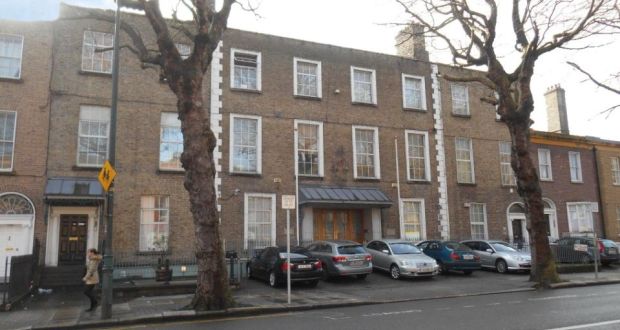
Garda Club, Harrington Street. Credit - Irish Times (2014).

Garda Club, Harrington Street. Credit – Irish Times (2014).

According to an Irish Times article from 2014, the club was:

regularly packed on Mondays and Thursdays during the peak years of the 1970s and 1980s.

At that time most of the unmarried members of the force lived in garda stations such as Harcourt Terrace and Pearse Street. The balance of the support for the club came from what was known as “flatland” – inner city flats rented by teachers, civil servants and firemen “up from the country”.

The club has been in decline since the 1990s, partly because a great many of the young gardaí could not afford to buy houses in the city, opting instead to live and socialise in outlying towns such as Mullingar, Drogheda, Dundalk and Naas.

Housed in two beautifully restored Georgian buildings (36 & 37) on Parnell Square, Club na Múinteoirí (The Teachers’ Club) has a lovely old-fashioned bar upstairs and a large function room in the basement.  It was opened by the Irish National Teachers’ Organisation in 1923. The renowned Góilín Traditional Singer’s Club meets there every Friday evening.
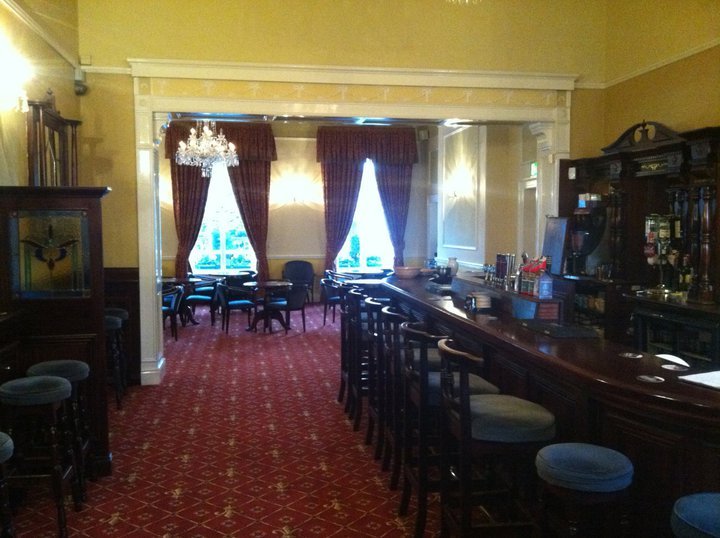
Teachers Club bar, 2012. Credit - M Stephen M. (Yelp)

Teachers Club bar, 2012. Credit – M Stephen M. (Yelp)

The Millmount House in Drumcondra was once home to the Prison Officers Association of Dublin. Prison Officers from Mountjoy are known to drink in the snug in The Hut in Phibsboro.

On the first floor, block A of the Newman building (Arts Block) in UCD, there is a small private bar called the UCD Common Room Club which is open to UCD staff and their guests.

For those working in Dublin Airport and their families, the Airport Leisure Social Athletic Association (ALSAA) in Toberbunny has a bar, gym and a large sports complex.

There is a bar and lounge on the first floor of the Dublin Postal Sports & Social Club in Tallaght. A balcony offers panoramic views of the Dublin Mountains. Full Membership of the social club is open to An Post and subsidiary company employees.

MacTurcaills on Townsend Street (now closed) , a stone’s throw away from Tara Street Fire Station, was once very popular with firefighters and their families. The Dublin Fire Brigade Sports & Social Club took over the famed Ierne Ballroom on Parnell Street in 1994 and ran a members bar, a snooker room, the main ballroom and a smaller lounge. It closed down some years ago.

The City of Dublin Working Men’s Club on Little Strand Street off Capel Street has been based there since 2003. The club’s previous home for 115 years was on Wellington Quay. In 1891, it boasted of having “300 members generally on its books (and) a large lecture and concert hall, library, and reading-room, as well as a comfortable bar and billiard-room.”.
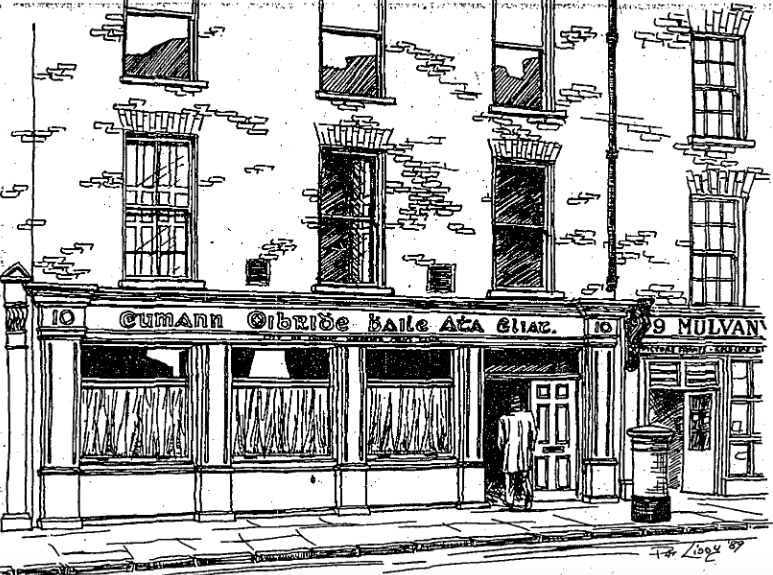
City of Dublin Working Men's Club, Wellington Quay (1989). Credit - Pat Liddy (Irish Times).

City of Dublin Working Men’s Club, Wellington Quay (1989). Credit – Pat Liddy (Irish Times).

A brief history of the club:
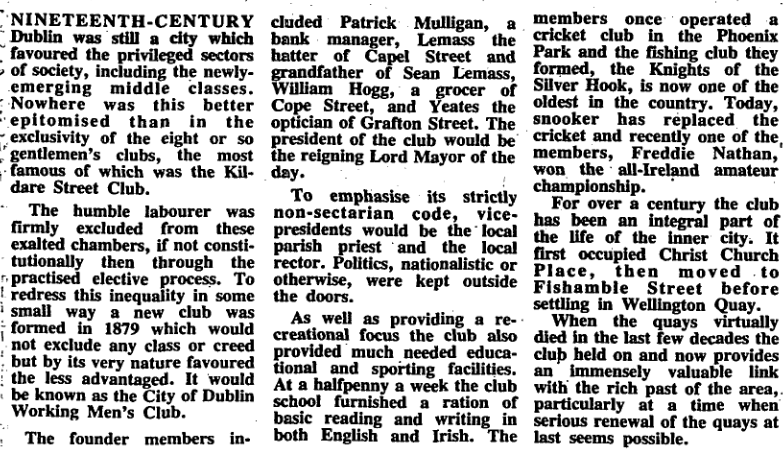
Article by Pat Liddy, Irish Times, 05 Apr 1989.

Article by Pat Liddy, Irish Times, 05 Apr 1989.

This building was sold to Brushfield Ltd (a trading name for the Clarence Hotel, which lists Bono, the Edge and businessman Harry Crosbie as directors) who opened a popular live music venue called The Workman’s Club in 2010.
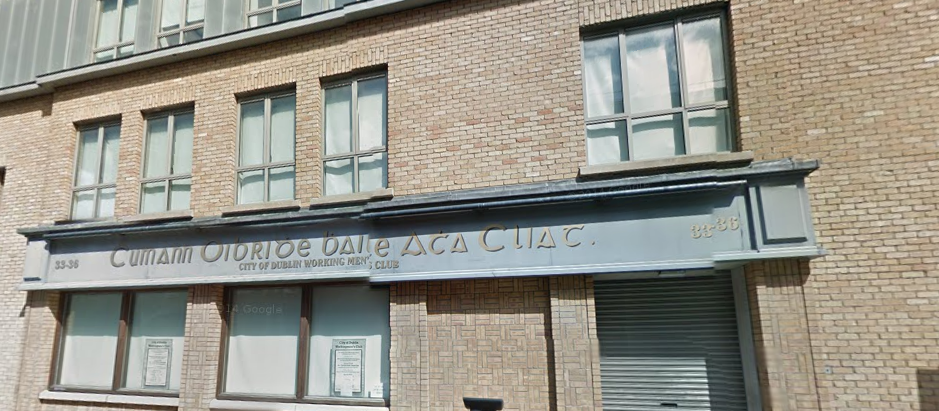
City of Dublin Working Men's Club, Little Strand Street from Google Maps.

City of Dublin Working Men’s Club, Little Strand Street from Google Maps.
(more…)

Read Full Post »

Though Magill is no more today, the magazine was hugely important in its day and remains a very useful tool for those researching the Ireland of the past.

Founded by Vincent Browne in 1977, the magazine included frequent contributions from some of Ireland’s most relevant journalists, including Eamonn McCann and Gene Kerrigan. It also included the photography of Derek Spiers, who captured great images of social movements in the Dublin of the 1970s and 80s. The magazine frequently found itself making headlines in other publications. A 1982 edition, exposing criminal activity on the part of the Official IRA, caused serious headaches for Sinn Féin The Workers’ Party (SFWP), while the magazine also interviewed many controversial individuals, including Provisional IRA spokesmen and criminal elements.

Today, the archive of the magazine is online and free to browse, thanks to the people at politico.ie, and it’s something I want to highlight here. From 1977 to 2008, the collection covers very important moments in Irish political and social history, and it should be noted the publication was incredibly diverse; from the League of Ireland to youth subcultures in Dublin, there is much of merit here.

I have decided to pick out a few particular issues I think will interest CHTM readers here:

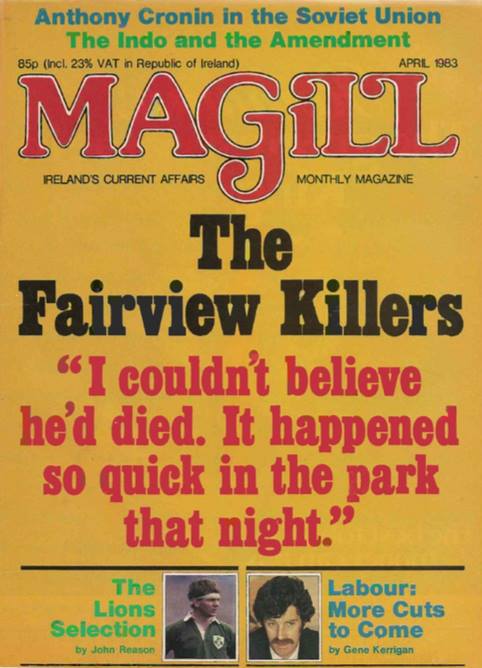
Magill, April 1983.

Magill, April 1983.

Click here for this edition of the magazine.

In April 1983, Magill interviewed the killers of Declan Flynn, an innocent gay man beaten to death in Fairview Park, a well-known cruising spot for the gay community in 1980s Dublin. Flynn was just one of a number of gay men attacked in the park by bigots in the early 1980s. When five men were put on trial for his death in March 1983, Justice Sean Gannon disgracefully told the court that the actions of the men “could never be regarded as murder.” Maggie O’Kane’s interview with some of Flynn’s killers makes for harrowing reading:

They began to beat and kick him. When they had finished Declan Flynn lay on the path choking on his own blood.Tony Maher knew he was dying, he opened his shirt button,his hands were trembling, he felt all panicky. Robert Armstrong went to get the ambulance, the others just stood there and looked. They turned him on his side and then they legged it.

Earlier this year, with the passing of the marriage equality referendum, flowers and ‘Yes Equality’ badges were left at the bench where Declan Flynn sat before he was brutally murdered.

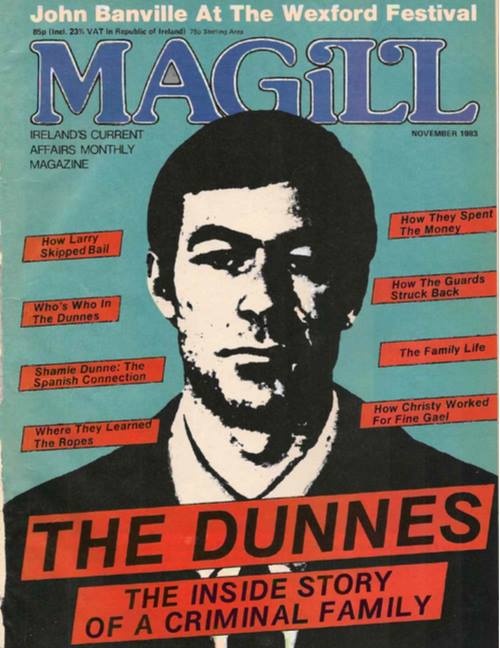
Magill, November 1983.

Magill, November 1983.

Click here for this edition of the magazine.

The Dunne family were a scourge on working class Dublin, directly responsible for the importation of large quantities of drugs that would tear communities apart. Mary Raftery’s piece on the family highlighted the manner in which they were personally profiting from the lucrative heroin trade that was reeking havoc on inner-city Dublin in the early 1980s. Raftery’s piece shocked the public, by shining a spotlight on the rise of a criminal empire that the state was slow to confront:

Down through the years every housing estate had its share of criminal families. They were known to be involved in various kinds of crimes, break-ins and shoplifting and the like. The Dunnes were in that tradition, distinguished only by their success and by their progress to bigger crimes. By the 1980s they had become an anachronism – very visible, their connections obvious.Crime had become a more professional pursuit, with specialist individuals coming together for criminal projects.

As public consciousness of professional crime increased and the issue became one of embarrassment for politicians and police alike the Dunnes became an obvious target.This was why, in the early summer of 1982, Charles Haughey and Sean Doherty had a meeting with Patrick McLaughlin and Joseph Ainsworth, the Commissioner and Deputy Commissioner of the Gardaí. Haughey told them bluntly that he wanted something done about the Dunnes,that they were walking the streets freely. He told them he wanted the Dunnes in prison within twelve months.

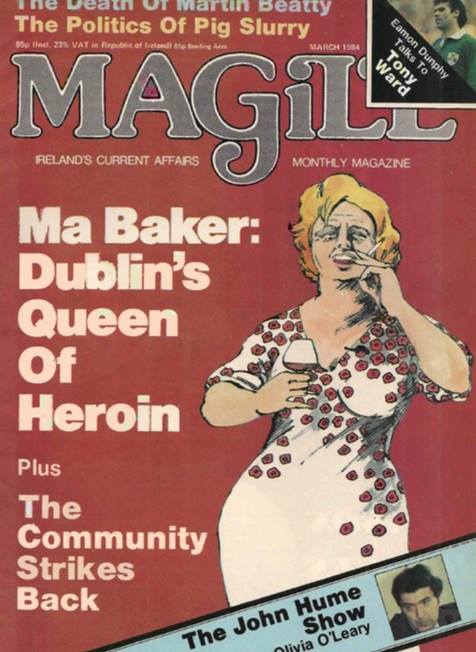
Magill, March 1984.

Magill, March 1984.

Click here for this edition of the magazine.

Like the Dunne family, Ma Baker was responsible for pushing misery onto working class communities. Magill noted that “day by day the heroin bushfire moves Southwest across Dublin, with one community suffering as another chases the pushers out.” Colm Toibin, Mary Raftery and Maggie O’Kane penned a fascinating report on the drugs crisis gripping Crumlin at the time:

Ma Baker and her sons are among the largest pushers in the Crumlin area of Dublin. They have between 150 and 200 regular clients and operate all over Crumlin, but usually not outside it. Five of her distributors are members of her own family. A further six are small boys.The boys are all local and she does not use kids who take heroin. She also changes them regularly. Her nephew, who is currently charged with possession of heroin with intent to supply, also distributes for her.

One of her sons is serving an eighteen months sentence in Mountjoy. Two of her other sons are facing drug-related charges.Baker is not her real name, but she is widely known by other pushers and by addicts as Ma Baker, a corruption of Ma Barker, the name of the machine gun-wielding head of an infamous criminal family in the US in the Thirties.

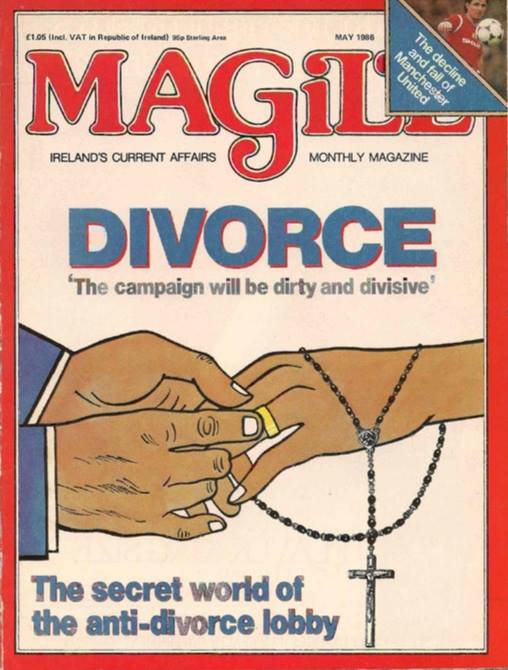
Magill, 1986.

Magill, 1986.

Click here to read this edition.

In 1986, Magill turned its focus to some of the reactionary Catholic forces who were preparing to do battle in the divorce referendum. Emily O’Reilly and Gene Kerrigan combined to produce an eye-opening report on the shadowy bodies preparing to fight any attempt to introduce divorce into Irish society:

The campaign against divorce will be run by a group of Catholic professionals, shadowy but well-organised, linked in varying degrees to Opus Dei and the Knights of Columbanus. Seasoned by their victory in the Pro-Life Amendment Campaign, they have no difficulty in raising finance and no shortage of powerful connections. Even the bulk of Family Solidarity members are unaware of their existence.

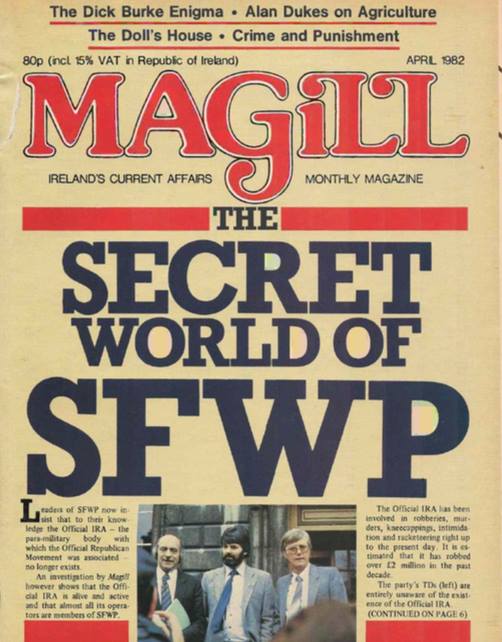
Magill, April 1982.

Magill, April 1982.

Click here for this edition of the magazine.

In April 1982, a Magill article entitled ‘In the Shadow of a Gunman’ raised awkward questions around the Official IRA, noting that “SFWP aspirations towards socialist respectability are undermined by the continued military operations of the Official IRA.” The magazine listed a number of murders and criminal activities which it claimed the OIRA were directly responsible for, and the magazine would also examine “the trade union and media infiltration by SFWP.”

Read Full Post »

Credit: Luke Fallon.

Credit: Luke Fallon.

Thanks to Luke Fallon for this image, showing that Fleet Street has somehow made the leap from Dublin 2 to Dublin 8. Street names and their origins is something that has long interested us on the blog, see for example this piece on names that survived the chop after 1922, including Nassau Street and Waterloo Road.

We wonder how long the sign has been up!

Read Full Post »

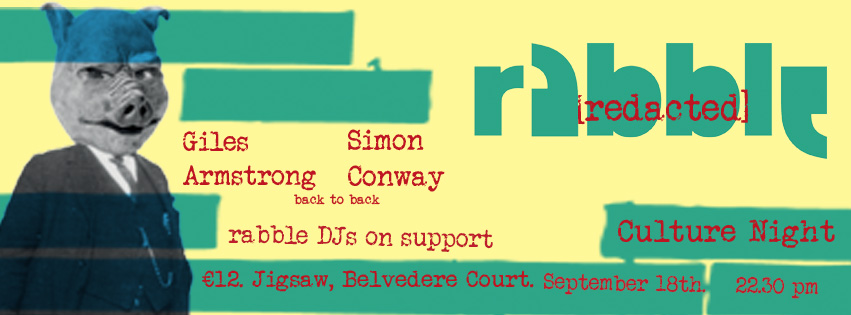
It’s been a while since a post highlighting upcoming events in the city (beyond our own nights!), but there’s a few great events ahead that I want to highlight here. Firstly, our nearest and dearest at Rabble are bringing their own unique brand of culture (!) to Friday night by taking over Jigsaw at Belvedere Place. If the name doesn’t ring a bell – it was formerly Seomra Spraoi. It’s been a busy year for all at Rabble so far, and there’s plenty more to come from them. The name of the night is a fine tribute to Denis O’Brien, if we’re allowed highlight that. Simon Conway and Giles Armstrong are on the decks. It’s BYOB, which beats paying €6.50 for a pint in some awful nightclub in town any day of the week.

Rabble Ruckus.

Rabble Ruckus.

Bargaintown is the story of Dublin’s inner-city before the Celtic Tiger, shot in the inner-city of 1988 by David Jazay. David has described the city in the film as “derelict but hauntingly beautiful, and chock full of amazing characters.” The 2015 restoration of this footage was supported by the Irish Film Institute and Goethe-Institut Dublin, and it will be screened on Sunday 27th September in the IFI. More information here.

Bargaintown. See -http://www.thejournal.ie/dublin-before-the-celtic-tiger-2305950-Sep2015/

Bargaintown. See -http://www.thejournal.ie/dublin-before-the-celtic-tiger-2305950-Sep2015/

On 1 October, I’m taking part in a History Ireland Hedge School at Dalymount Park entitled ‘Dublin in 1890 – When Bohs were born’. The event page is here. This year is of course the 125th anniversary of Bohemian F.C, and while my scarf may be red and white this discussion is all about the context of the Dublin Bohs were born into, and will no doubt touch on the history of The Beautiful Game in Dublin. Chaired by Tommy Graham, the editor of History Ireland, Dr Mary McAuliffe (UCD), Dr David Dickson (TCD, Author of Dublin – the Making of a Capital City) and Ciaran Priestley (a historian who has written some fascinating articles on Bohs) are also on the panel. Dickson’s masterpiece work on Dublin doesn’t need another rave review – so I’ll just say it’s a great feeling to share a panel!

BohsWereborn

Skipper’s Alley are a fantastic seven piece trad ensemble that are gaining quite the following in recent times, and deservedly so.They are taking to the stage of The Sugar Club (our favourite venue dare we say!) on October 4th., with more information here. If you made it to our last Dublin Songs & Stories night, you would have heard John Flynn from the band, who delivered a great little set. There is something wonderful happening in the traditional and folk music scenes of Dublin of late, and Skipper’s Alley are joined on the night by Ye Vagabonds. Having seen them recently in both The Cobblestone and at Electric Picnic, I’m eager to hear more from them too. This should be a great night.

Skipper's Alley in a chipper. Why not.

Skipper’s Alley in a chipper. Why not.

This night from State.ie and Hope Promotions is an absolutely incredible line up on October 4th, bringing together the best of all worlds, from hip hop to punk rock, for one great night in The Grand Social. I am a big fan of the band Fierce Mild and got along to their EP launch in this same venue a few months back before the referendum (check out Equal People). Young Hearts Run Free, Nialler9 and more besides will be DJing on the night too.

What can be said about Hope Promotions? Bringing Jawbreaker, Green Day and other bands to Dublin in the early 1990s, Hope is a huge part of the history of the punk scene in this city. As you can see, this is a fundraiser for a very good cause. Just how we like them. Be sure to support this one.

hope

Read Full Post »

Bohemian City

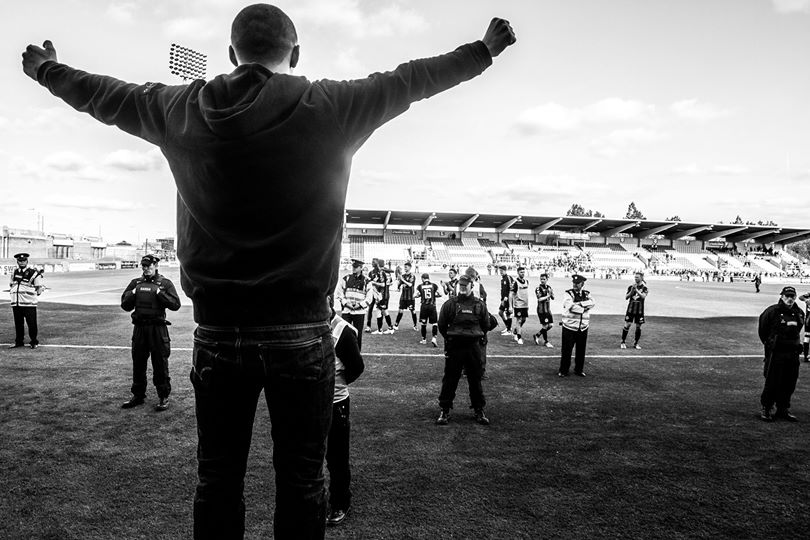
Last weekend was a busy one for sports desks around the country with an All- Ireland football semi final, the All-Ireland hurling final, Ireland versus England in the eggball and one that might have gone under the radar in some quarters, the third and (until the draw for the Leinster Senior Cup was made) last Bohemian FC versus Shamrock Rovers derby of the season. The weekend also marked the 125th Anniversary of the foundation of Bohs and fan group ‘The Notorious Boo Boys’ started proceedings off on the Friday night in style.

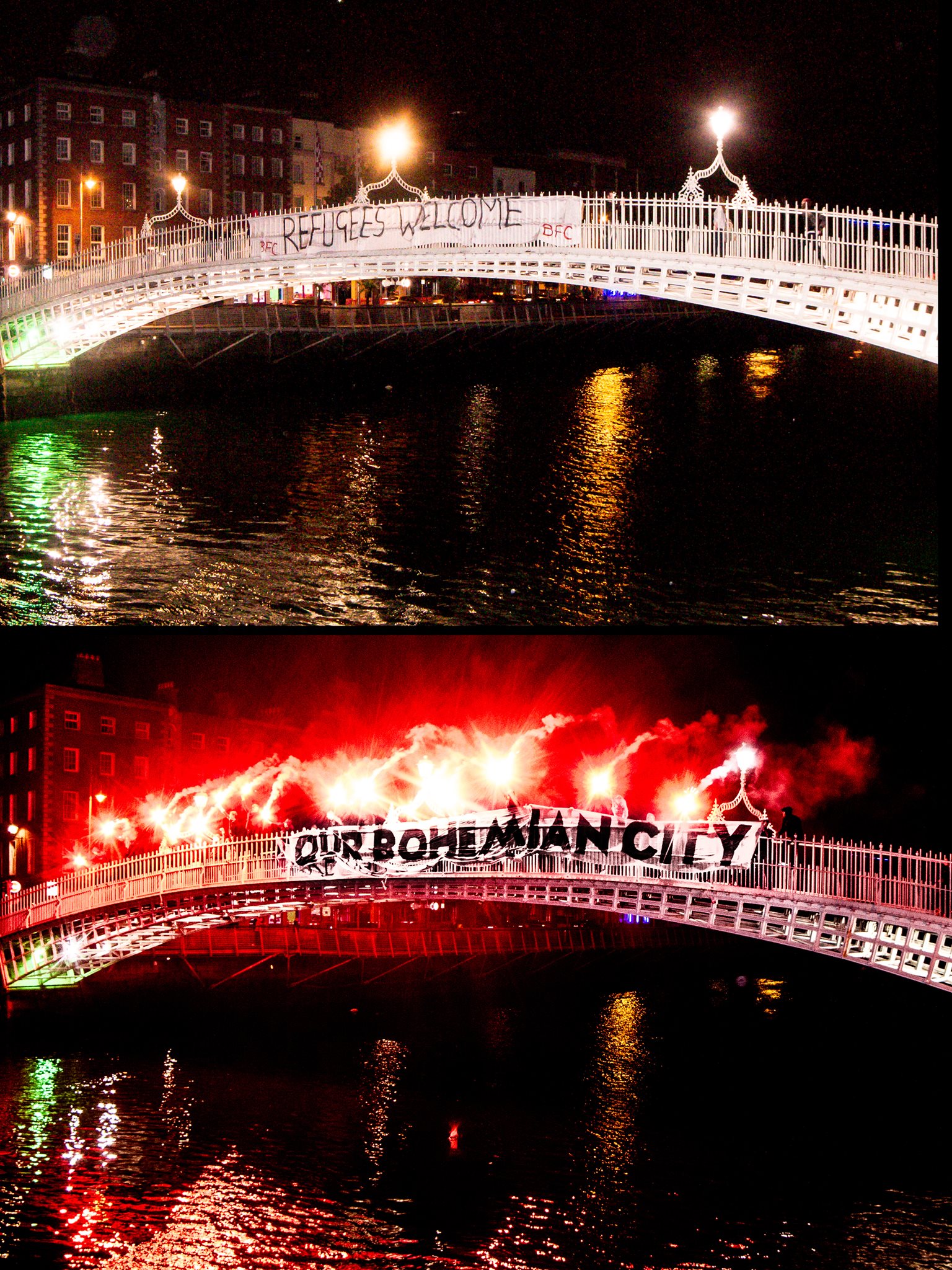
Refugees Welcome/ Our Bohemian City. Credit: Paul Reynolds

Refugees Welcome/ Our Bohemian City. Credit: Paul Reynolds

Around thirty members of the group made their way to the Ha’penny Bridge at 1:25 AM on Saturday morning to mark the occasion, unveiling a banner first saying “Refugees Welcome” and a second saying “Our Bohemian City,” no doubt a nod to the game the following day. The banner drop didn’t go unnoticed on the night, with one Twitter user posting “Just witnessed a bunch of football hooligans stage a protest for refugees on the Ha’Penny Bridge. Bizaare but lovely.” I’m not sure the NBB would describe themselves as ‘football hooligans’ but the sentiment was there! The above image was also shared hundreds of times across social media platforms, with Panti Bliss herself getting in on the act.

125 Not Out. Credit: Extratime.ie

125 Not Out. Credit: Extratime.ie

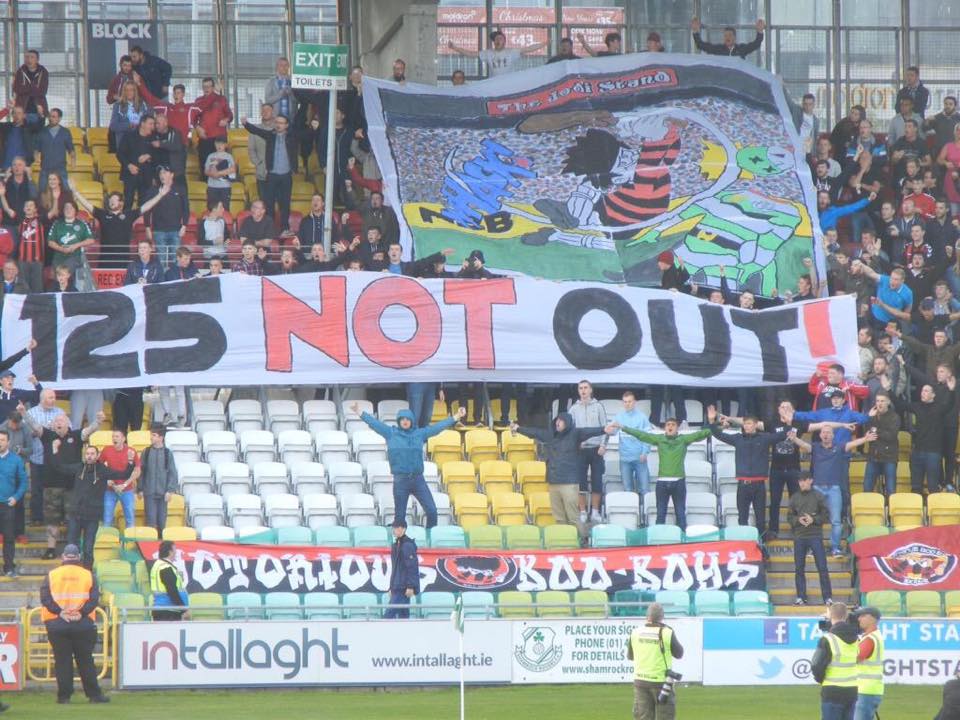
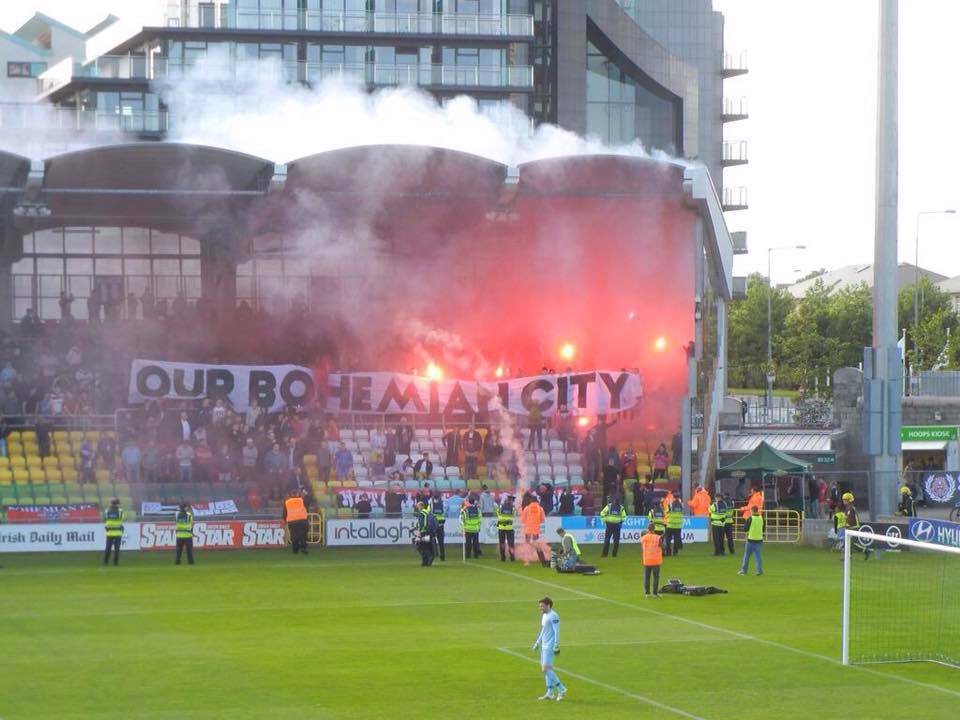
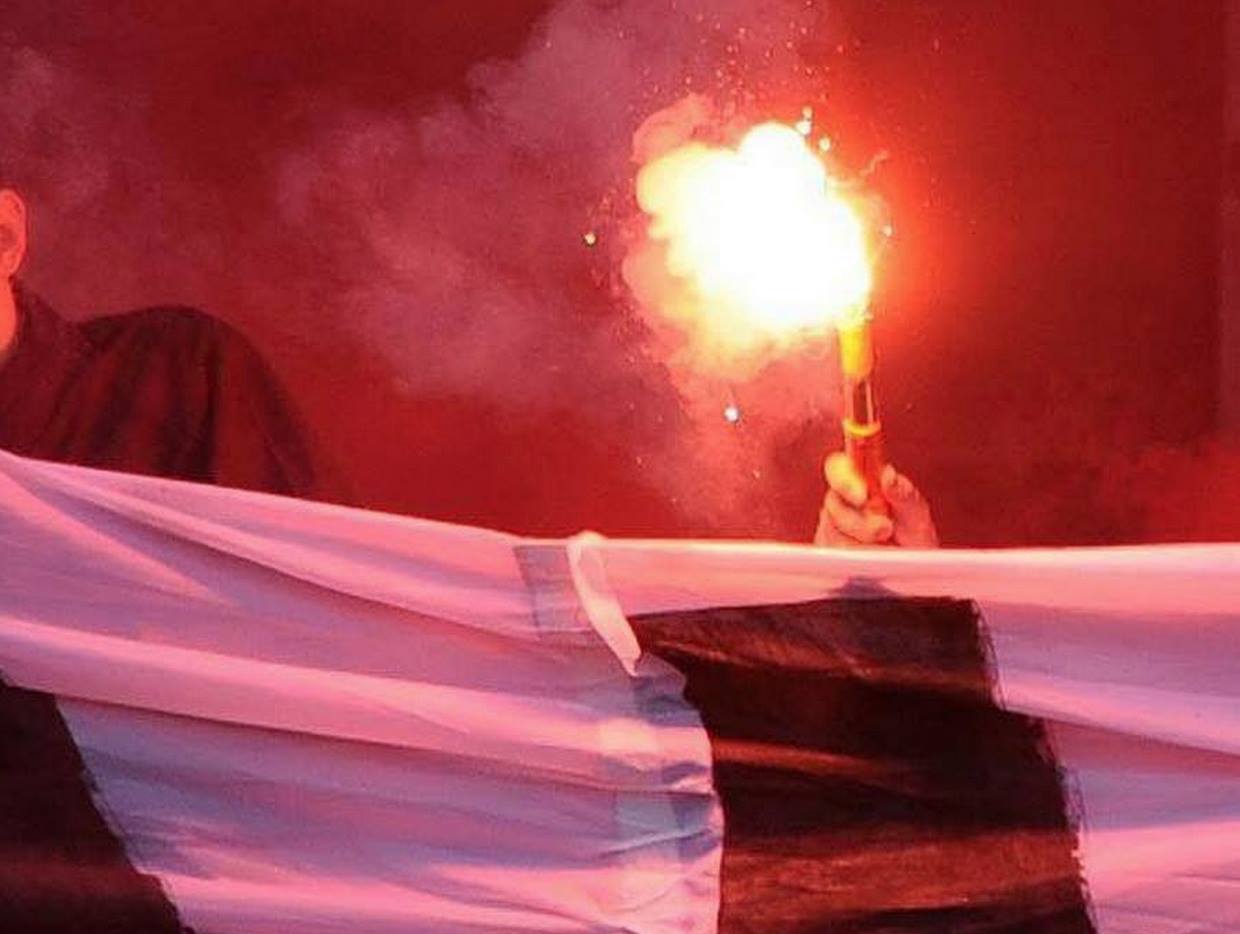
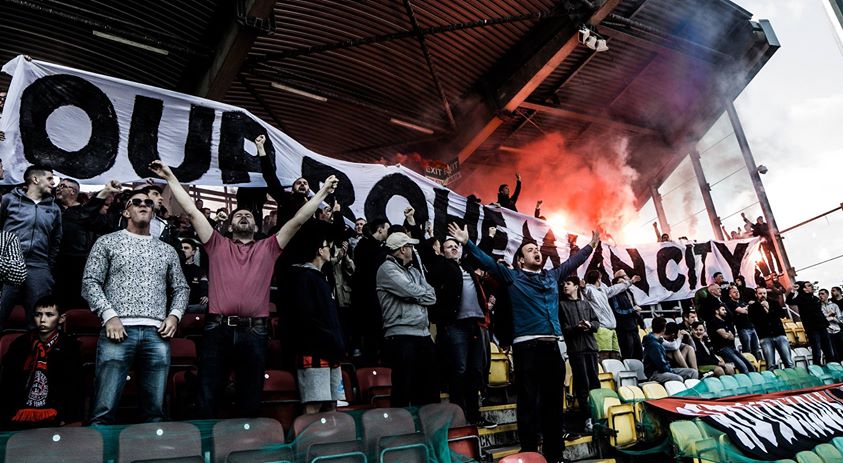
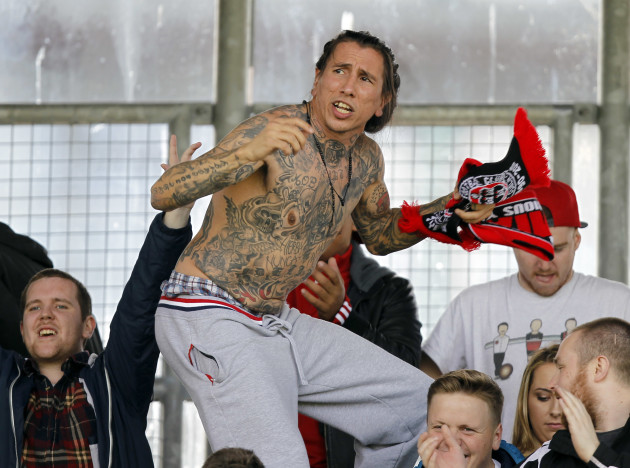
The game the next day was always going to have something relating to the historic weekend, and the NBB started each half with a display. As the players came out for the first half, a crowd cover showing the ever aggravating Hooperman having his head knocked off by Dennis the Menace with a cricket bat was unveiled with a message saying “125 not out.” The second half saw a return of the “Our Bohemian City” message banner, with some accompanying “atmosphere enhancers…”

Our Bohemian City. Credit: Extratime.ie

Credit: Paul Reynolds

Credit: Paul Reynolds

Credit: Paul Reynolds

Credit: Paul Reynolds

Credit: Paul Reynolds

Venezuelan Bohs (!!) Credit ©INPHO/Colm O'Neill

Venezuelan Bohs (!!) Credit ©INPHO/Colm O’Neill

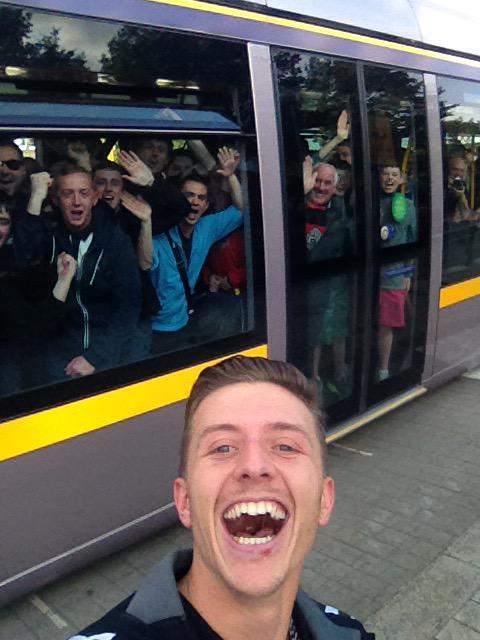
The game itself could have gone either way, with the crowd suffering a bit due to the kick off time (15:00 on a Saturday afternoon) and the clash of so many other sporting events, as well as the Electric Picnic being on. Despite that, both sides played host to visiting from as far away as Venezuela; the Copa90 video covering the last derby inspired a group of Toulouse fans to come to the game with their own Bohs banner! A goal apiece was probably a fair result, with one of the moments of the day coming after the game from Bohs midfielder Keith Buckley who, when picking up his bike from where he had locked it, encountered a Luas rammed full of Bohs fans who serenaded him with his own chant. He responded by posting the selfie below on Twitter, with the caption “Gettin’ me bike at the luas and see these nuts singing my name ! selfie of the year that’s why I love this club.”

Keith Keith Buckley, he will tackle you... Credit: Keith Buckley.

Keith Keith Buckley, he will tackle you… Credit: Keith Buckley.

The weekend finished off on the Sunday with a Family Day in Dalymount Park, with a Bohemians Legends team taking on an Irish Legends team. Plenty of old faces were to be seen on and off the pitch, with Glen Crowe proving to be Bohs hero once more, slotting the ball home to make it one nil. The anniversary programme isn’t over yet, with two more events to come.

On Thursday 1 October, a History Ireland Hedge School will take place at Dalymount Park with the title, Dublin in 1890 – when Bohemians were born.This will be a panel discussion with historians on the social, cultural and political conditions of Dublin in 1890 when a group of students met to found Bohemian Football Club and will feature, amongst others, our very own Donal Fallon. Tickets available here for a paltry €5. Two days later, on Saturday 3 October, Bohemians will lead a Tour of Bohemian Graves at Glasnevin Cemetery. This will leave at 11 am from the Finglas Road entrance of the cemetery and end at the Prospect Square entrance. Tickets available here for €4.

Read Full Post »

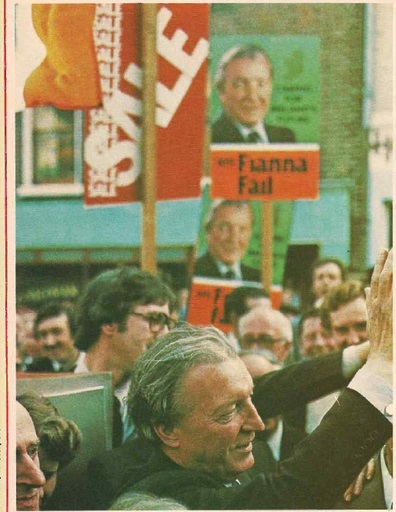
Haughey on the campaign trail (Magill)

Haughey on the campaign trail (Magill)

Charles J. Haughey could be all things to all people. When he emerged on stage during The Late Late Show special celebrating The Dubliners, he told Gay Byrne that what appealed to him most about the band was that they came from his part of the world, the northside of Dublin. Yet Charlie had been born in Castlebar, the son of two veterans of the revolutionary period from Derry, one of whom later joined the Free State army. Beyond any connection to the northside of Dublin though, another thing arguably linked Charlie and the band he was celebrating on Gay Byrne’s platform that night – they could both sell a record or two.

Charlie’s Song, released in 1981, is today better known as ‘Arise and Follow Charlie’. It’s a record not many people would boast of owning in a collection today perhaps, but there are certainly thousands of copies of it in houses up and down the country, and it’s an interesting relic of twentieth century Irish cultural history. Recorded by The Morrisseys, it was the soundtrack to the 1981 General Election campaign. Writing in the Kilkenny People in June 1981, a reporter stated that:

Touring with Charlie is not only exhausting – it can be hazardous, with all those high-powered cars burning up country roads as entourage and security men dash at breakneck speed from one town or village to the next. It is not for one with a musical ear either. After a couple of dozen pays, Charlie’s Song loses whatever appeal it may have had initially – except perhaps for the tone deaf.

The excellent rockroots blog, which aims to build an archive of often overlooked Irish singles, notes that Charlie’s Song was the brainchild of Donie Cassidy, founder of CMR records, who had a strong background in the showband scene. Cassidy wrote the song with Dublin folk singer Pete St. John, and as rockroots note the lyrics of the song “apparently did nothing to embarrass Haughey, who appointed Cassidy a campaign manager for this and four successive general elections.” Interviewed about the song at the time, Donie Cassidy said “it’s got all the ingredients of a hit. Strong lyrics, a catchy air, the best group around and, of course, it’s based on the most popular man in the country.” The “strong lyrics” Donie spoke of included:

Young and old we all approve
He’s kept the Country on the move
He’ll help the Nation to improve
So Rise and Follow Charlie

With Charlie’s song we’ll sing as one
With Charlie’s song we’ll sing along
With Charlie’s song we’ll march along
We’ll Rise and Follow Charlie

In his biography of Haughey, Ryle Dwyer notes that during the election campaign “Haughey ran a high-profile, presidential-style campaign”, and that the song was an important dimension of this. Haughey traveled by helicopter, and Gene Kerrigan in Magill wrote that it was the unpredictable nature of the man that made him exciting for journalists to follow on the campaign trail – “You don’t know when he might lash out and clock someone or suddenly take a flying leap and start biting the furniture.”

Haughey on the campaign trail (Magill magazine)

Haughey on the campaign trail (Magill magazine)

The 1981 election was bitter, and not only between the two leading parties. Haughey encountered protest from supporters of H-Block prisoners, some of whom were standing for election to the Dáil. Bobby Sands, the first hungerstriker to die during the 1981 hungerstrikes, had succeeded in obtaining a Westminster seat, and campaigners hoped to do the same in the Irish parliament. As Dwyer notes, in Leterkenny the Taoiseach “suffered the indignity of being hit on the head with an egg, and when he tried to leave the town his car was blocked by protestors who kicked and pounded on it while the Gardaí strove to clear the way for him.” In Dun Laoghaire, there was an attempt to dump a can of paint on him. Gene Kerrigan wrote at the time of the frequent protests Haughey encountered from such activists, but also the routine developed while seeking votes:

The formula was always the same -shake hands, how are you, shake hands,kiss a woman, how are you. A tall dark-haired young man carrying a Polaroid camera followed Charlie everywhere. Again and again he took pictures of Charlie shaking hands with or kissing a punter – There’s a nice picture of you with the Taoiseach.And on election day you can go out and vote for the man whose picture is on your mantlepiece.

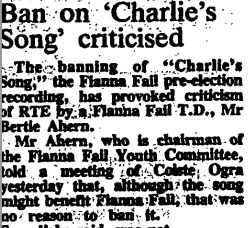
In The Irish Times, Olivia O’Leary reported of an old woman watching Haughey work a crowd and asking “my God, are they all gone mad? What is he but God’s creature like the rest of us, except he has a salary.” The refusal of RTE to play Charlie’s Song, for fear of bias, was attacked publicly by a number of figures in the Fianna Fáil party, including a young Bertie Ahern. A performance of the song on The Late Late Show was cancelled, leading to further complaints in the national press.

A young Bertie Ahern,

A young Bertie Ahern, “chairman of the Fianna Fáil Youth Committee” complains of RTE’s refusal to play the song.

Recorded by Tipperary folk group The Morrisseys, it was not alone a commercial success, but one that opened many doors, as Donie Cassidy of CMR Records was destined to become a Senator in Leinster House in 1982. Ultimately however, the song couldn’t see Charie over the line – the election resulted in a Fine Gael-Labour minority government, and the loss of six FF seats. The Anti H-Block candidates succeeded in winning two seats, and over 29,500 first preference votes.

Haughey, of course, would return to power in 1982, though not for long. He would regain the position in March 1987, holdng it until 1992. His political career has been tarnished by corruption, which is a story for another day, though perhaps best summed up by one letter writer to The Irish Times in 2006 who wrote that “It is customary not to speak ill of the dead. In the case of Charles Haughey there is no need. The unvarnished truth is sufficient to tarnish his reputation forever.”

Read Full Post »

Clet Abraham in Dublin

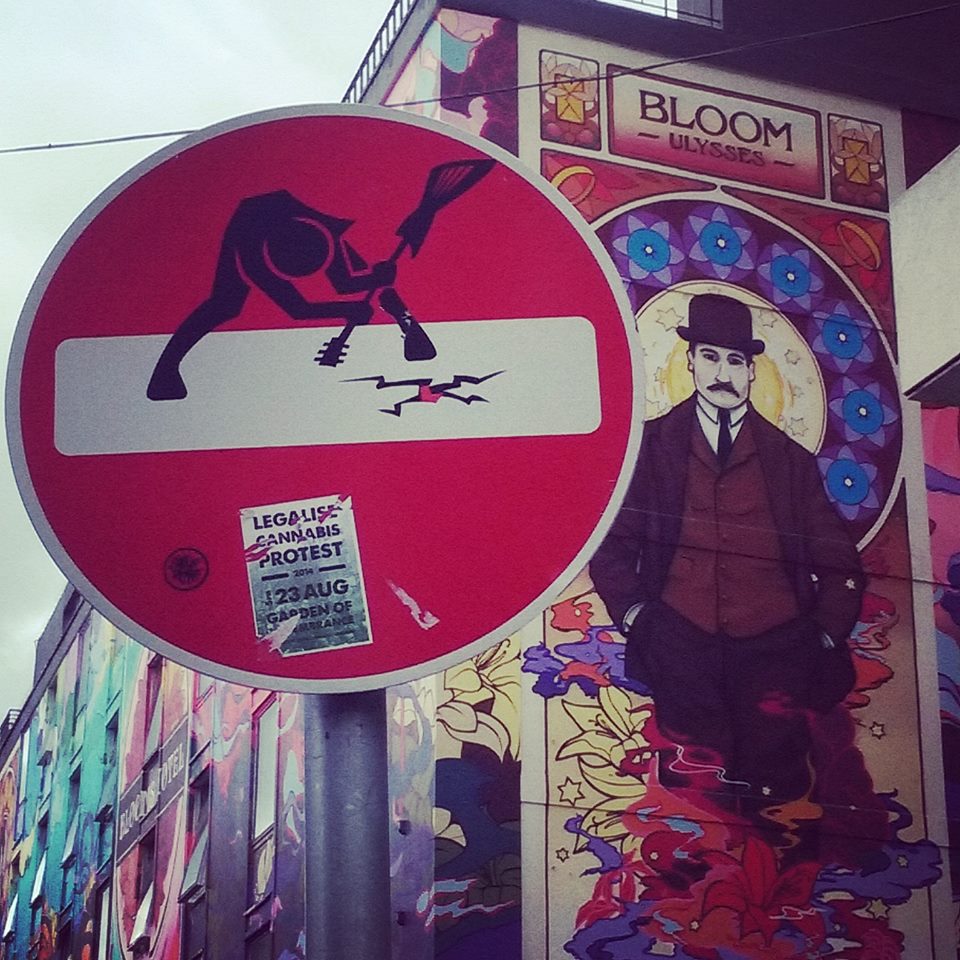
Last week, I posted an image on our Facebook page (give us a like, go on) of a road sign in Temple Bar that had been modified via some well-placed stickers to become a tribute to The Clash album cover London Calling. Almost 300 people liked the image, and my thanks to those of you who pointed out there and on twitter that it was the work of Clet Abraham.

Temple Bar.

Temple Bar.

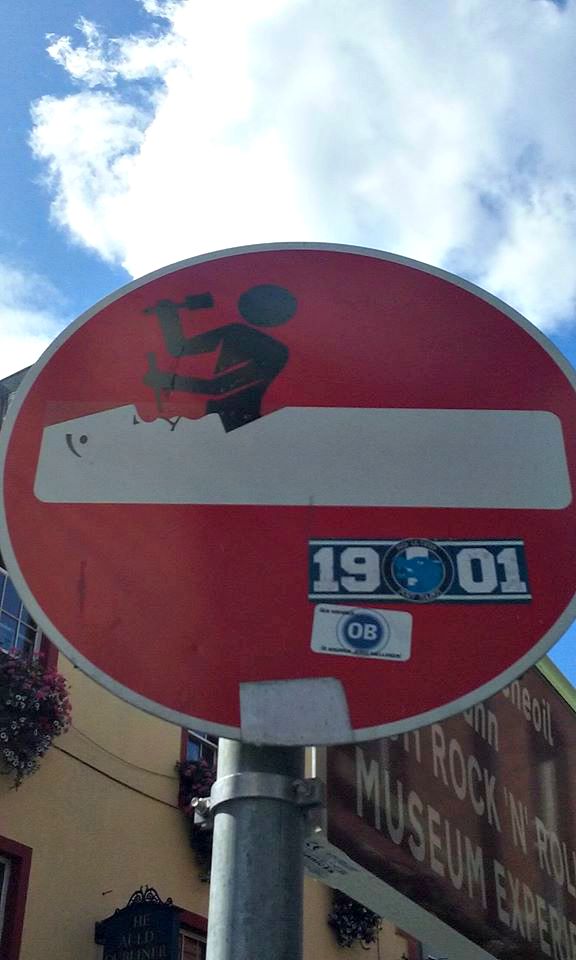
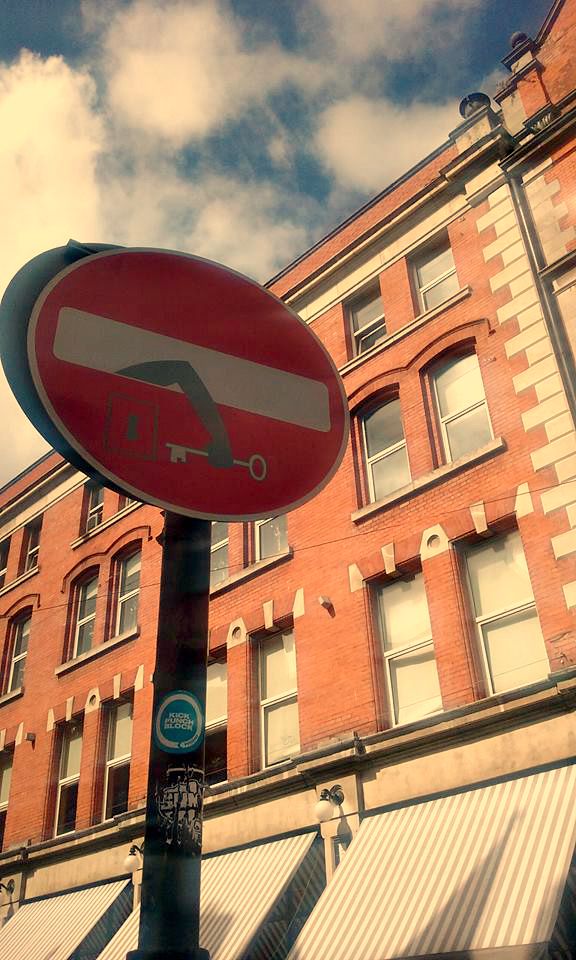
A painter and sculptor by trade, Clet’s sticker work is to be found all over the cities of Europe. Born in Brittany, he said in a recent interview that “it literally takes 10 seconds” to transform a dull street sign into what you see here. We’ve spotted a few more around the city too:

Clet4

Clet1

Clet3

Read Full Post »