Feeds:
Posts
Comments

Archive for May, 2018

In terms of the international stage, Ireland was still finding her feet politically either side of World War 2. Successive Fianna Fáil governments under the stewardship of War of Independence and Civil War veteran Éamon de Valera sought to define a New Ireland, marked by the independence he had fought for.

To assert this independence, he led the country through a period of economic isolationism, and to define her sovereignty denying steadfast at times to engage in acts of support for her neighbours- refusing to deal with the requests of the Allies right down to refusing to repatriate German spies and prisoners of war in her custody. This denial of co-operation should not be seen as a singularly pro-Axis act, rather the naivety of a new nation under a conservative and stubborn leader, but also as Michael Kennedy suggests in his document “A Deed Agreeable to God,” an Ireland sceptical of the British justice which she so well remembered.

The refusal to ‘play ball’ with Allied nations as well as spurious rumours in the press regarding warm welcomes being meted out to German U-Boats in Irish ports and an island swarming with German spies formenting anti- British sentiment did little to dispute the widely held notion that the nation was pro-Axis. The flagrant anti-Semitism and vocal support given to Hitler by Charles Bewley (the Irish minister in Berlin until 1939,) did nothing to help her image. Nor did the nail in the coffin, that being De Valera’s visit, accompanied by the Secretary of External Affairs, Joseph Walshe to Dr. Hempel, the German Minister to Ireland to express his condolences on the suicide of Hitler. Walshe had pleaded with De Valera not to make the visit, and the sensationalist coverage in the press all over the world in the days following proved him correct, along with more bogus allegations amongst others, that the Nazi flag had been flown at half-mast outside various Irish ministries.

In truth, Ireland’s ‘friendly neutrality’ towards the war effort meant freedom for thousands of Irishmen enlist for the war effort, large scale press censorship, shared intelligence between Ireland’s G2 and the British MI5, suppression of the IRA during the war years and although there’s a massive counter argument to be made, there is many a suggestion that Ireland neutral was far more beneficial than Ireland belligerent. And of course the War did come to Ireland, with Nazi bombs raining upon the North Strand resulting in the deaths of 34 Dubliners.

Similarly, the plentiful accusations that Ireland was a bespoke but well-worn ratline for Nazi war criminals whilst ringing true on occasion was, in truth light on merit. Even the Simon Wisenthal Institute argued that no ‘big fish’ had made it to Ireland. The allegations that those who did pass through and the handful that settled here had the backing of the Irish State is also arguable, given the recent Dept. of Justice and Dept. of External Affairs papers examined by Kennedy in his aforementioned work.

Despite all this, it is undeniable that there were some figures that made it to Ireland- from Breton and Flemish exiles, to a mad Scottish separatist with the amazing name of Ronald MacDonald Douglas. Two of the most high profile names to make it though were Hitler’s one time bodyguard, Otto Scorzeny and the inspiration for this piece, Andrija Artuković.
pavelicihitler1-635x300

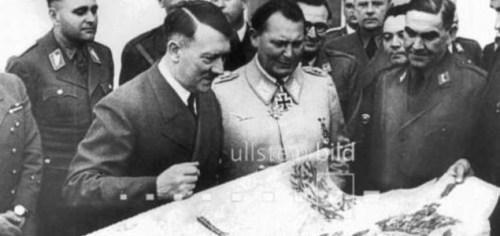
Adolf Hitler, Hermann Goering, Mladen Lorkovic and Andrija Artuković looking over Ante Pavelić’s shoulder

Artuković, in a nutshell was known as the ‘Yugoslav Himmler’ and ‘the Butcher of the Balkans’. As Minister for the Interior of the Nazi puppet ‘Independent State of Croatia’ he oversaw the construction of a string of Ustaše death camps and is claimed by sources to be responsible for the deaths of anywhere between a quarter and three quarters of a million Jews, Roma, Serbs and anti- Ustaše Croats.

(more…)

Read Full Post »

The introduction of the Eighth Amendment into the Irish Constitution in 1983 “was a remarkable feat by a small group of Catholic right-wing conservatives.” After a bitter referendum battle, the anti-abortion legislation was passed 66.9% to 33.1% in September 1983.

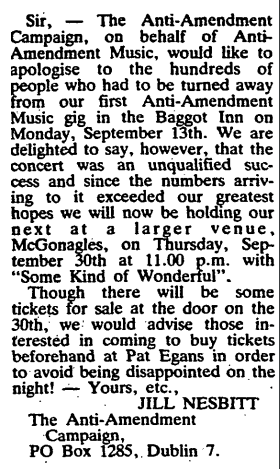
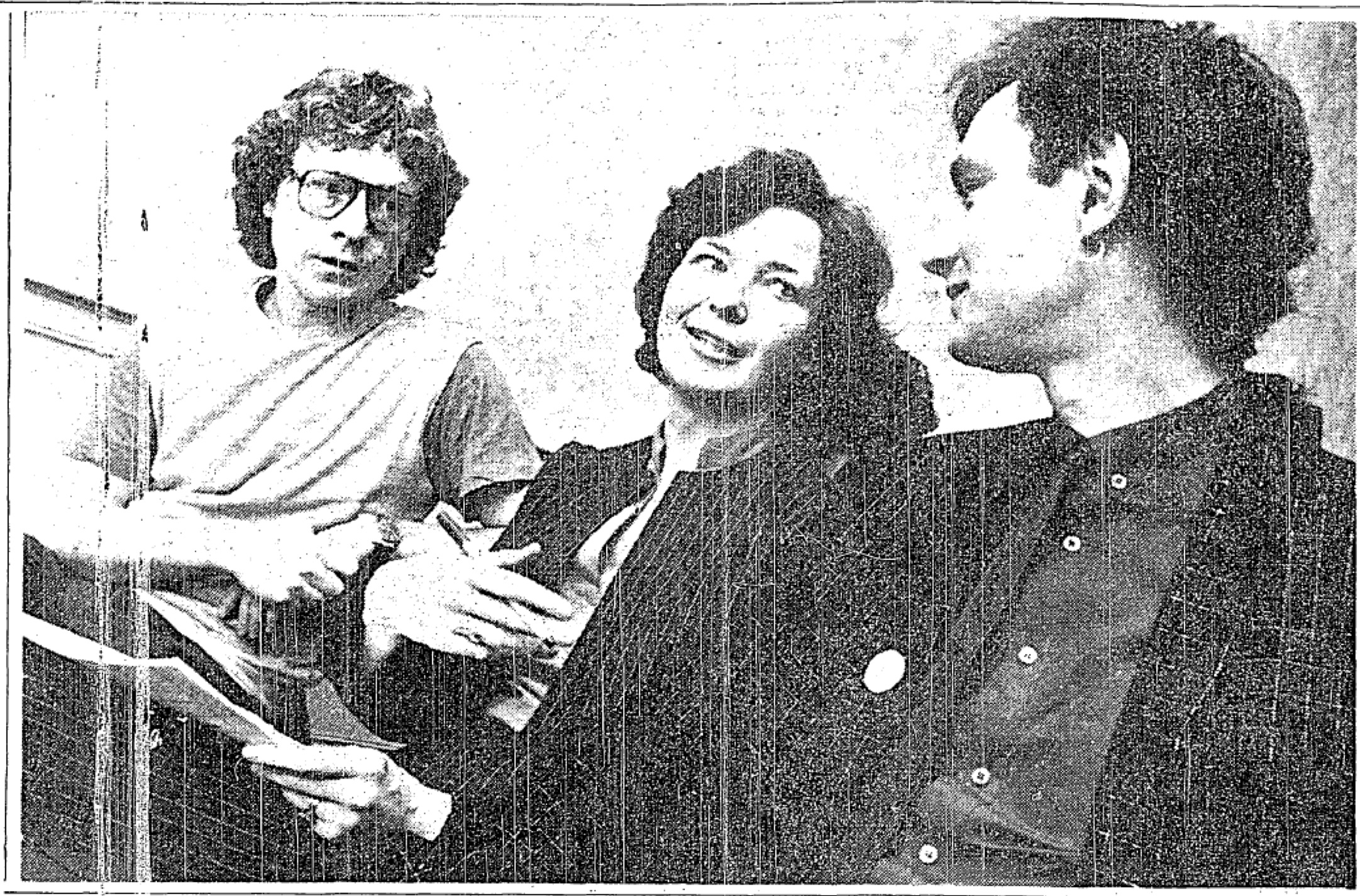
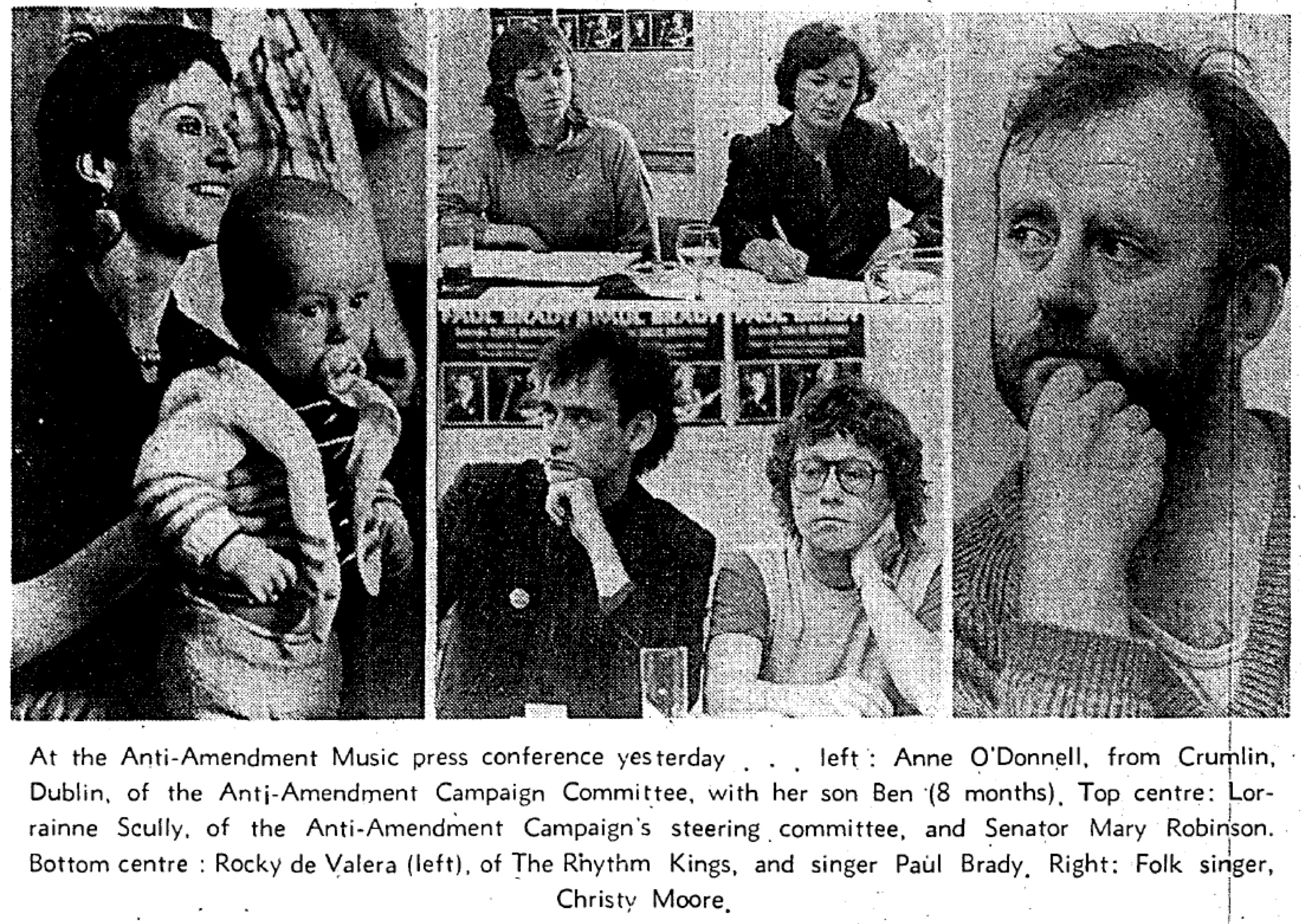
The leading ‘Anti-Amendment Campaign’ was supported by the ‘Anti-Amendment Music’ sub-group which included more than sixty of the country’s leading musicians, singers, actors, comedians, journalists, DJs and poets. It is worth remembering their names and the sacrifices that they took back in a society which is very different to ours in 2018.

The Irish Press, 8 Sep 1982.

Some of the big names who backed the cause were Paul Brady, Moya Brennan (Clannad), Adam Clayton (U2), Paul Cleary (The Blades), Bob Geldof and Christy Moore.

Others who nailed their flags to the mast included:

Bands: Auto Da Fe, Back to Back, Dr Strangely Strange, High Heeled Sneakers, The Lee Valley String Band, Les Enfants, Max, Nine Out Of Ten Cats, Scullion, The Shade, Stepaside, Stockton’s Wing, Tokyo Olympics

Singers/Musicians: Sonny Condell, Jimmy Crowley, Keith Donald (Moving Hearts), Mick Hanly, Honor Heffernan, Donal Lunny, Ferdia MacAnna (The Rhythm Kings), Barry Moore (aka Luka Bloom), Maura O’Connell (ex. De Danann), Red Peters (1946-2012), Noel Shine, John Spillane, Jil Turner (Eugene), Freddie White, Gay Woods

Actresses: Kathleen Barrington, Carol Caffrey, May Cluskey (1927-91), Ingrid CraigieNuala Hayes, Annie Kilmartin

DJs/Presenters: BP Fallon, Dave Fanning, Carolyn Fisher

Comedians: Billy Magra, Dermot Morgan (1952-98), Helen Morrissey, Roisin Sheeran

1982 saw a host of fundraising gigs in some of the capital city’s best venues.

13 September: The Blades, Paul Brady and DJ Dave Fanning at The Baggot Inn

The Irish Times, 22 Sep 1982

30 September: Some Kind of Wonderful, BP Fallon and Max at McGonagles

9 October: The Rhythm Kings and High Heeled Sneakers at The Baggot Inn

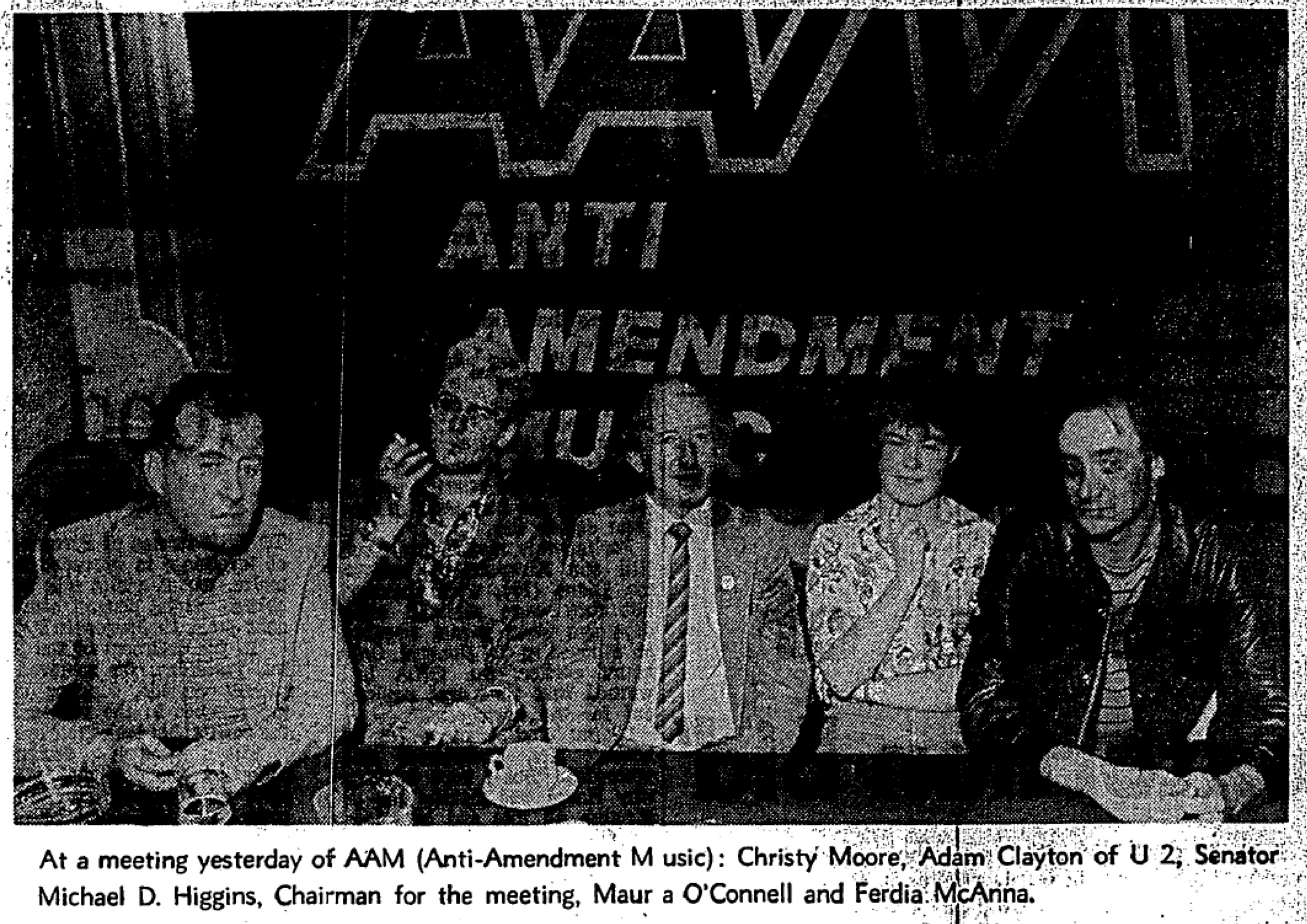
Paul Brady, Mary Robinson and Ferdia McAnna. The Irish Independent, 8 Se 1982.

14 October: Comedy gig with compere Billy Magra at The Sportman’s Inn, Mount Merrion

Anti-Amendment Music – Rock against the Referendum (1982). Uploaded by Student History Ireland Project.

Things picked up again in 1983:

21 April: Unknown acts at Owen O’Callaghan’s (Mark’s Bar), Crowe Street, Dundalk, County Louth

July: The small concert hall in RDS hosted singers Honor Heffernan, Moya Brennan (Clannad), Maura O’Connell (ex. De Danann), comedian Helen Morrissey, actress May Cluskey who performed from her show ‘Mothers’ and actresses Nuala Hayes and Ingrid Craigie staged the “total 30-hour Oireachtas debate on the amendment in 15 minutes flat”. The MC on the night was RTÉ presenter Carolyn Fisher.

Evening Herald, 05 June 1983.

July: Auto Da Fe with Gay Woods, Barry Moore (aka Luka Bloom) and Scullion at Stephen’s Green.

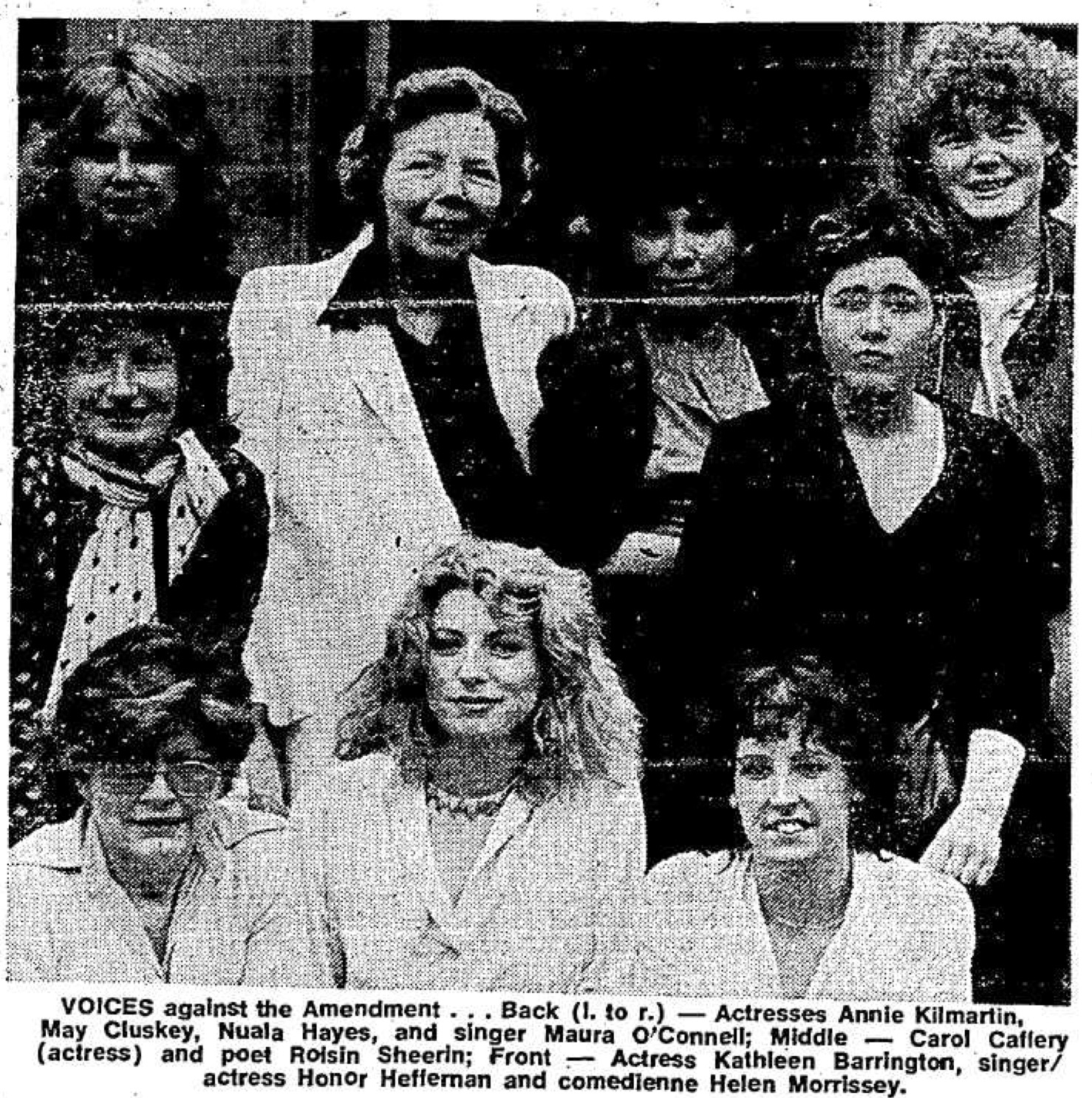
In August 1983, the campaign hosted a press conference with Christy Moore, Keith Donald (Moving Hearts), Paul Cleary (The Blades), Adam Clayton (U2), Ferdia MacAnna (The Rhythm Kings), Jill Turner (Eugene) and Maura O’Connell. It was chaired by Senator Michael D. Higgins. Adam Clayton said: “It is like a witch hunt with people going around saying who is a slut and who isn’t”. Paul Brady told the press that “he agreed with Senator Robinson that there were ‘subterranean rumblings’ to try to take Ireland back to an era which he for one was glad was gone”. Finally Ferdia MacAnna remarked that the amendment would be “as much use as outlawing sex in this country which has been tried before by repressive education”

The Irish Press, 27 Aug 1983.

The last two gigs took place in Dublin and Cork in August 1983.

On 28 August, on the same day that Black Sabbath played Dalymount Park, Paul Cleary, Les Enfants, Donal Lunny, Stepaside, Red Peters, Mick Hanly, Keith Donald (Moving Hearts), Nine Out Of Ten Cats were advertised to play outdoors at Blackrock Park. While in Cork, Jimmy Crowley, The Lee Valley String Band, Noel Shine, John Spillane were listed to play at the Coolquay venue.

If you have any more information or material from the Anti-Amendment Music campaign, please get in touch!

Read Full Post »

The Military Service (1916-23) Pensions Collection today released files relating to claims lodged by 1,442 individuals (or their dependants). The May 2018 release includes 600 female participants and 82 individuals who died in the period 1919-1921. As a Project Archivist employed on the collection, I was responsible for the processing of about 470 of these individuals.

A full list of the names and addresses and of those released today can be viewed here.

Using the name or reference number, users can then download the original files and read the individual’s service histories here.

For those interested in labour and socialist history, this release contains newly digitised and released files relating to seven members of the Irish Citizen Army. All seven applications were unsuccessful.

1. Annie Collins (?-?) 35 Upper Dorset Street, Dublin. Unsuccessful application. Ref: MSP34REF1139.

” Applicant claimed membership of the Irish Citizen Army from 1913 until 1923. On Easter Sunday 1916, Annie Collins states that she was based in Liberty Hall preparing food and bandages.

On Easter Monday, the applicant claims that she carried several dispatches from St. Stephen’s Green to the General Post Office (GPO). Annie Collins states that she returned home but went to the College of Surgeons on Thursday where she was told by Countess Markievicz to return home once again on account of her young age. Applicant states that she did not sign the 1916 Easter Rising Roll of Honor as she believed an individual had to be active for the full duration of the week.

Attached to the Dublin Brigade, ICA, it is stated that the applicant took part in ICA general activity before and during the War of Independence (January 1919 – July 1921) including; first aid work, drill instructions; attending the funeral of [Joseph] Norton (MD33223) in Swords (1917); a reception for Countess Markievicz at Kingstown (Dún Laoghaire) (1918); the 1918 General Election and attending the funeral of Tadhg Barry (1D373) [1921].

Taking the anti-Treaty side in the Civil War (June 1922 – May 1923), the applicant states that when the Four Courts was attacked, she was mobilised for Barry’s Hotel where she spent one night. Annie Collins claims that she was then sent to the Hammam Hotel which acted as Brigade HQ. On several occasions, the applicant states that she transported arms and ammunition from the Stanley Street workshop to the Hammam Hotel. Further states that she carried arms in advance of a raid of Griffith’s boot store on the corner of Upper Abbey Street and Capel Street. Also claims that she brought a dispatch to Harry Boland (MD909) in Blessington [village] from Cathal Brugha and returned to the Hammam Hotel with a Lewis gun, some rifles and ammunition.”

Hand-written testimony from Annie Collins about her Civil War service. Ref: MSP34REF1024

2. Edward Conroy (1901-1982) 4 Robert Street, Dublin. Unsuccessful application. Ref: MSP34REF1126.

“Applicant claimed membership of the Irish Citizen Army from June 1917 until August 1923.

Attached to the Dublin Brigade, ICA, it is stated that the applicant took part in ICA general activity before and during the War of Independence (January 1919 – July 1921) including; a reception for Countess [Markievicz] at Kingstown (Dún Laoghaire); attending the funeral of Mrs. McDonagh (1917); attending the funeral of [Joseph] Norton (MD33223) in Swords [1917]; the defence of Liberty Hall [Armistice Night 1918]; attending the funeral of [Richard] Coleman (1D15) [1918]; the 1918 General Election; Belfast Boycott work; a fight on Dawson Street [1919]; demonstration in connection with the hunger-strikes (1920) and attending the funeral of Tadg Barry (1D373) [1921].

Taking the anti-Treaty side in the Civil War (June 1922 – May 1923), the applicant states that he took part in engagements with the National Army in the area around the Hammam Hotel, O’Connell Street and Marrowbone Lane. Edward Conroy claims that he was arrested by the Free State (National Army) on 28 October 1922 and interned in Wellington Barracks, Dublin and Hare Park, the Curragh, County Kildare until 21 August 1923.”


3. John Craven (?-?) 193 Donnellan Avenue, Mount Brown, Kilmainham, Dublin 8. Unsuccessful application. Ref: MSP34REF863.

“Applicant claimed membership of the Irish Citizen Army from 1913 until 1923.

Attached to the Dublin Brigade, ICA, it is stated that the applicant took part in ICA general activity during the War of Independence (January 1919 – July 1921) including: drilling and “military operations against the enemy”.

Applicant states that he was arrested on 5 August 1922 by the Free State and imprisoned in Maryborough Gaol (Portlaoise Prison), County Louth and Tintown No 3 Camp, Curragh, County Kildare until release on 23 November 1923.”

4. Stephen Hastings (? – 1935). 11 George’s Quay, Dublin. Unsuccessful application. Ref: MSP34REF1024.

“Applicant claimed membership of the Irish Citizen Army from 1917 until 1923.

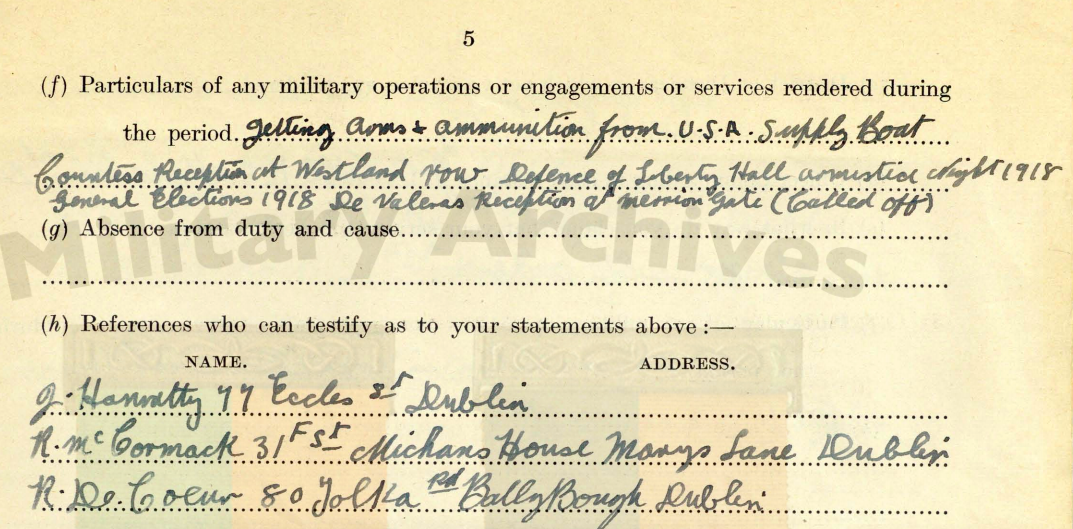
Attached to the Dublin Brigade, ICA, it is stated that the applicant took part in ICA general activity before and during the War of Independence (January 1919 – July 1921) including: removing transport arms and ammunition from an American boat; a reception for Countess [Markievicz]; the defence of Liberty Hall (Armistice Night 1918); the 1918 General Election; attending the funeral of [Joseph] Norton (MD33223) in Swords (1917) and demonstrations in connection with [Mountjoy Jail] hunger-strikes [1920].

Taking the anti-Treaty side in the Civil War (June 1922 – May 1923), Stephen Hastings states that he took part in the defence of Moran’s Hotel, Dublin and the destruction of a bridge in Blanchardstown, Dublin (5 August 1922). Applicant claims that he was arrested by National Forces on 6 August 1922 and imprisoned in Maryborough Gaol (Portlaoise Prison), County Louth and Tintown No 2 Camp, Curragh, County Kildare until October 1923.”

Hand-written account from Stephen Hastings of the 1918 period. Ref: MSP34REF1024

(more…)

Read Full Post »


flipped.png

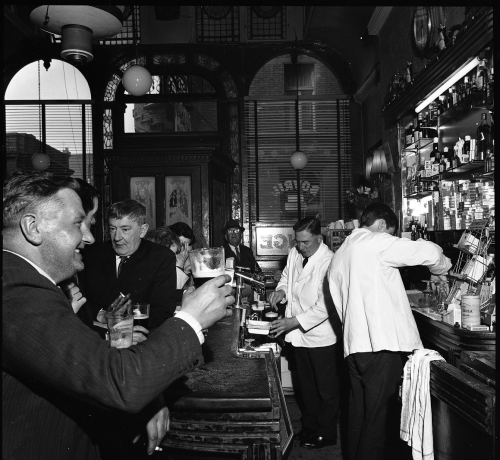
Paddy O’Brien at work in McDaid’s, from Bord Fáilte Archive, Dublin City Council collections.

John Ryan’s memoir Remembering How We Stood may be the most battered book on my bookshelf, which is a remarkable achievement in itself. It has the tea cup stains,  dog-eared pages and the scrawled notes of a truly loved and enjoyed book. It is, in essence, the tale of a man who went to an auction to buy an electric toaster and came back an accidental publican. Ryan was infinitely more than that, and as an artist, publisher, broadcaster and critic he left a fine legacy of work behind. His memoir is packed full of little gems like this:

 A man I knew was taking a stroll down Grafton Street one day when he happened to overhear part of a discussion which three citizens were having outside Mitchell’s Café. The gist of their dialogue was that they were deploring the absence from the Dublin scene of any real ‘characters’. They appeared to be genuinely aggrieved. They were, in fact, Myles na gCopaleen, Seán O’Sullivan and Brendan Behan.

Ryan’s pub, The Bailey, became a central part of the literary scene of Dublin in the second half of the 1950s and into the following decade. Still, there was one public house that was head and shoulders above them all for literary appeal, and that was McDaid’s of Harry Street. In the words of Brendan Behan’s finest biographer, Michael O’Sullivan, it was quite simply “Dublin’s literary Mecca.”

Central to the appeal of the pub was its head barman, Paddy O’Brien. Still fondly remembered in Dublin’s public houses today, O’Brien pulled pints in McDaid’s from 1937 until his departure for the nearby Grogan’s on South William Street, which played no small role in giving the later a literary reputation that continues to this very day. A Dubliner of Meath stock, O’Brien answered an advertisement for a pub job in his early 20s, beginning a career that would span decades.

In the important Kevin C. Kearns oral history Dublin Pub Life and Lore, O’Brien recalled the McDaid’s of the 1930s as a pub that “was nothing at all. It was a dreadful place. Just an ordinary pub with snugs and little partitions and sawdust and spittoons.” To his mind, Davy Byrne’s was then the only true literary public house in the capital. In trying to pinpoint the moment at which McDaid’s began attracting a literary clientele, O’Brien pointed towards the arrival of John Ryan as a regular. In Ryan’s own words, “in those days I published Envoy and people would come into McDaid’s who were seeking me out….There’d be Behan, who was a marvelous stage filler, and Kavanagh and O’Nolan and Donleavy and Tony Cronin. And Liam O’Flaherty was there quite a lot. Quite regularly you’d see five of them together there.”

A young Anthony Cronin, Enniscorthy-born and carving out a name as a poet in literary Dublin, quickly fell for McDaid’s, remembering that “McDaid’s was never merely a literary pub. Its strength was always in the variety of talent, class, caste and estate. The divisions between writer and non-writer, bohemian and artist, informer and revolutionary, male and female, were never rigorously enforced; and nearly everyone, gurriers included, was ready for elevation, to Parnassus, the scaffold or wherever.” Visitors fell for it too; the Irish American hippy Emmett Grogan, so central to the Summer of Love that took San Francisco by storm, recalled in his autobiography (written in third person):

He liked the saloon with its high ceiling, scattered tables and solid wooden bar. It was a big, funky room and the only decor was the people in it. They were very hearthy and whether they were laughing or arguing, discussing or pontificating, they were enjoying themselves and each other. They weren’t dressed up to impress anybody.

In folk memory, the characters of literary Dublin become two dimensional, remembered as heavy drinkers who reveled in each others company. In reality, there were often very real tensions between the men. Writing in the 1980s, Seán Dunne rightly decried the “attitude which finds writers easy to handle as anecdotes but not as artists”, and which overlooks much of the difficulties of the much romanticised 1950s in Dublin public houses. Sometimes, tensions were no doubt motivated by professional jealously and circumstance at any moment in time. In an interview with the Evening Herald in the 1980s, O’Brien recalled how:

Myles (Flann O’Brien) would arrive at the same time every day, half past one, dressed in the same coat and hat…When the ball of malt was set in front of him he’d turn to Kavanagh at the end of the counter and ask ‘Are you buying me that?’ Kavanagh would give him a dirty look and Myes would remark: ‘You mean Monaghan bastard.’

The ability of O’Brien to calm men and tempers was central to his popularity as a barman. Different public houses in the city, as today, had their own regular clientele, who debated the issues of the day, sometimes to a bizarrely localised extent. The poet Louis MacNeice recalled on the eve of World War Two how he “spent Saturday drinking in a bar with the Dublin literati; they hardly mentioned the war but debated the correct versions o fDublin street songs.” The Palace on Fleet Street, like McDaid’s, had its own impressive crew that included diverse faces like Irish Times editor R.M Smylie, the sculptor Jerome Connor, artist Harry Kernoff and the occasional radical like Cathal O’Sullivan and Leslie Daiken. On occasion, people drifted from one milieu into the next. The curious mix of IRA veterans, young poets and aging writers that took McDaid’s to their heart was beautifully described by Ryan as being comprised of “Grafton Street boulevardiers and the MacDaidian intelligentsia.” In O’Brien’s own words, he was not part of such scenes, but he was respected among them.

nli2

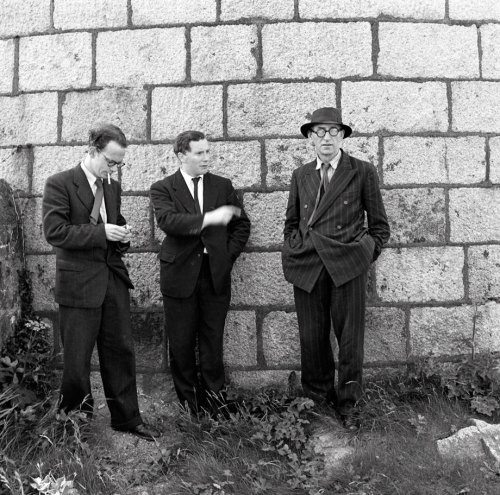
Anthony Cronin, John Ryan and Paddy Kavanagh, all centrally important to the story of McDaid’s in the days of Paddy O’Brien (National Library of Ireland)

(more…)

Read Full Post »