Feeds:
Posts
Comments

Archive for the ‘Dublin History’ Category

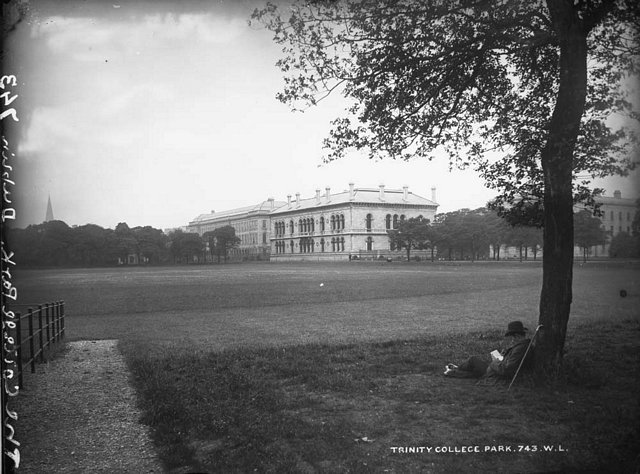
Trinity College Dublin c.1900

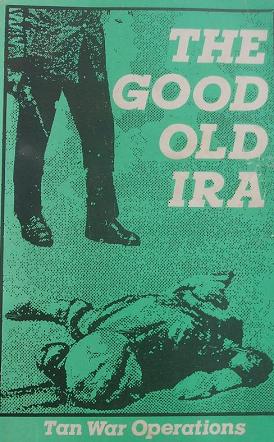
I recently began reading a work titled The Good Old IRA, which was issued by the ‘Sinn Féin Publicity Department’ in November 1985. It lists ‘Tan War operations’ which injured or in some cases killed civilians in an attempt to highlight the hypocrisy of those who honoured the republicans of old while attacking their contemporaries.

The works introduction slates Labour Party leader and “Free State deputy-premier” Dick Spring for example, noting that he was

tongue-tied in attempting to explain the differences between the IRA gun-runner Roger Casement (in whose honour he was unveiling a statue at Ballyheigue, County Kerry) and those IRA gun-runners on the Marita Anne who had been arrested by his government’s forces off the Kerry coast 24 hours previously.

One incident detailed in particular, from 1921, stood out for me. It is listed on page 56 of the work.

Not Cricket

One woman spectator, Miss Kate Wright, a student of Trinity College, was killed and another wounded in an attack by armed civilians on military officers playing in a cricket match at Trinity College Dublin on June 3rd. A man fired shots on to the field of play from the railings at Nassau Street from which the pitch was visible.
The Irish Times reported on the day following the shooting that

The occasion was one of festivity and enjoyment in the College Park. A cricket match in connection with Warriors’ Day was in progress. The teams were the Gentlemen of Ireland versus the Military of Ireland. The general belief is that the latter were the objects of the murderous attack which resulted so tragically

From the contemporary newspaper reports, we can establish quite a lot about Miss Wright. Aged only 21 (based on an Irish Independent report of the inquiry into her death),Kathleen Alexanderson Wright was engaged to be married to a young man who was also a student at the Dublin university. His name was Mr. Geo Herbert Ardall, and he was a native of Sligo. He was studying Science at the University, and was with Kathleen enjoying the cricket match, on what was said to be a lovely summers day in Dublin.
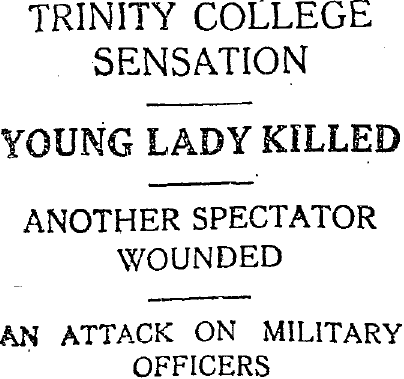
From the following days Irish Independent.

Kathleen was the daughter of the Rev. E.A Wright of All Saints Clapham Park in London, and the Irish Independent of June 4 1921 noted that he had “before going to England filled curacies in Cahir and Seapatrick”, both in county Down. At the time of the shooting she was living on Pembroke Road in Rathmines, but before hand had lived in digs at Trinity.

The Irish Independent reported how he told the inquiry into his fiance’s death that

When the shots were fired he pulled Miss Wright down on the ground as quickly as he could. She was moaning, but he was not certain she was hit until a few moments afterwards when he saw blood on the front of her blouse. Three doctors attended her, and one told him that the case was absolutely hopeless. He did not hear her make any remark. He accompanied her to hospital, where he was told she was dead

The Irish Times report into the inquiry noted that

Another witness stated that he was in the cricket pavilion, and heard someone remark that shots were being fired outside in the park. He went out immediately, and ran to where a crowd was collecting inside the park railings opposite the Kildare Street Club. A few of his friends told him what had happened and said that the shots came through the railings (…) When witness arrived at where the girl was lying on the ground the crowd who are usually gathered in Nassau Street outside the railings to watch the game had all cleared off.

Perhaps the most surreal details about the shooting come from the statement issued by Dublin Castle in the immediate aftermath of the event. The official reported noted that another female was wounded during the shootings, and provided great insight into the initial reaction of those on the green.

As soon as the shooting began,the players, realising what was happening, threw themselves flat on the field. A regimental band, which was on the field at the time, threw down their instruments and also lay prone. The spectators were not so quick to realise what was happening until a number of shots had been fired and persons were hit.

The attackers made good their escape.

Nobody was ever tried for the shooting of Miss Kathleen Wright, and little was written about her after her body returned home. Her story is just one of many told in The Good Old IRA, with other tragic events unfolding on the streets of Dublin over the course of the War of Independence.

I’ll no doubt think of her and her story next time I wander through Trinity College.

Read Full Post »

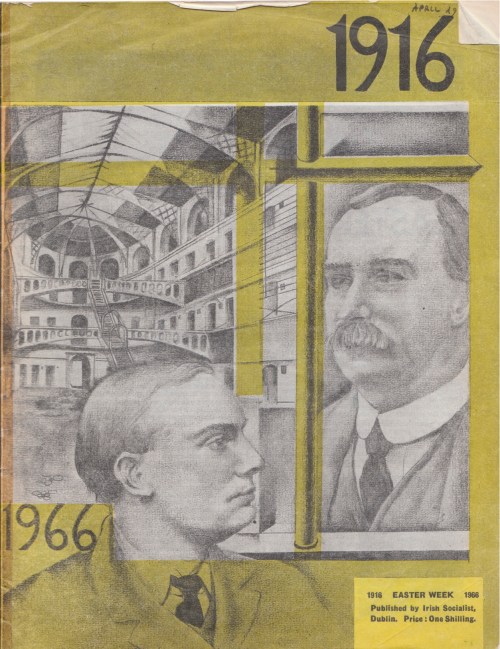
A 24 page commemorative magazine published on the 50th anniversary of the 1916 Easter Rising, kindly passed down to me by my uncle Donal.

1916 Easter Week 1966.
This publication is issued by “Irish Socialist” on the occasion of the Golden Jubilee Anniversary of the 1916 Easter Uprising. It has been assembled and edited by Sean Nolan, at 37 Pembroke Lane, Dublin 4, Ireland. 4/66.
Price: One Shilling.

Articles:

Easter Week 1916 – Sean Murray
1916 Re-Examined – A. Raferty
1913 – 1916: Similar Battle Lines – Joseph Deasy
With James Connolly In America – Elizabeth Gurley – Flynn
Some Recollections of James Connolly – Hanna Sheey-Skeffington
1916 Proved Britain Not Invincible – H. Moore & A. Barr
The Connolly Road should lead to… Labour Republican Unity – A.J. Coughlan
I Appointed Myself… ‘War News’ Courier – Donal O’Reilly
Connolly In Belfast – Betty Sinclair
Citizen Army Vetran’s Memories of 1913-1916 and Connolly – John O’Keefe
Scots Socialist on Connolly – Tom Bell
Connolly – Liam MacGabhan
Lenin Supported The Men Of Easter Week – Michael O’Riordan
1916 And Education – A Secondary Teacher
Women and Easter Week – Marion Jeffares

*CLICK ON THE FRONT COVER BELOW TO READ THE FULL MAGAZINE*

1916 - 1966. (Click to read full magazine)

Read Full Post »

Some information on a wonderful walking tour of the Liberties this Monday, as part of the Liberties Festival 2010.

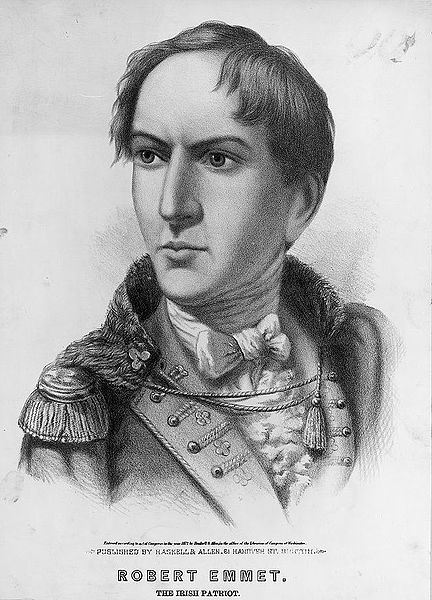
The area known to Dubliners as the Liberties is one with no shortage of history. It holds a special place in the hearts of the Dublin working class, being home to the Guinness Brewery which has provided employment to so many families in this city over the course of generations. The Liberties is also the spot where Robert Emmet was executed in 1803, yet it was to play a role in the rebellion of 1798 before that. The importance of the area in the history of insurrectionary Dublin does not stop with those early rebellions either.

The community has developed on the doorstep of the Guinness Brewery, a Dublin institution.

This area of Dublin is of interest to those of us particularly keen on the history of the 1916 Rising for example, with fierce fighting taking place at outposts like the South Dublin Union and the Mendicity Institute during the Rising. Like many parts of Dublin, this area is home to many plaques, and should be home to many more. It is the history of great events and great characters, but also a history of the mass body of community,for example in the street trading of the area. I, like many Dubliners, have family connections to the area through its Brewery and the Cornmarket Area.

This Monday, as part of the Liberties festival, historian Liz Gillis will be providing a Walking Tour of this fascinating area of Dublin.

The tour departs from Saint Catherine’s Church on Meath Street at 11AM.

It promises to be a most enjoyable tour, some of you may have encountered the host if you’ve visited Kilmainham Jail in recent times, where she works as a guide. Like Kilmainham, this area is central to our understanding of Dublin history. Liz is also an acknowledged expert in the period of Irish history we cover most on this site, the revolutionary years of the early twentieth century.

Here’s a brief scene from the wonderful ‘The Liberties’, available to view on Youtube from Areaman Productions. I always smile watching this.

Read Full Post »

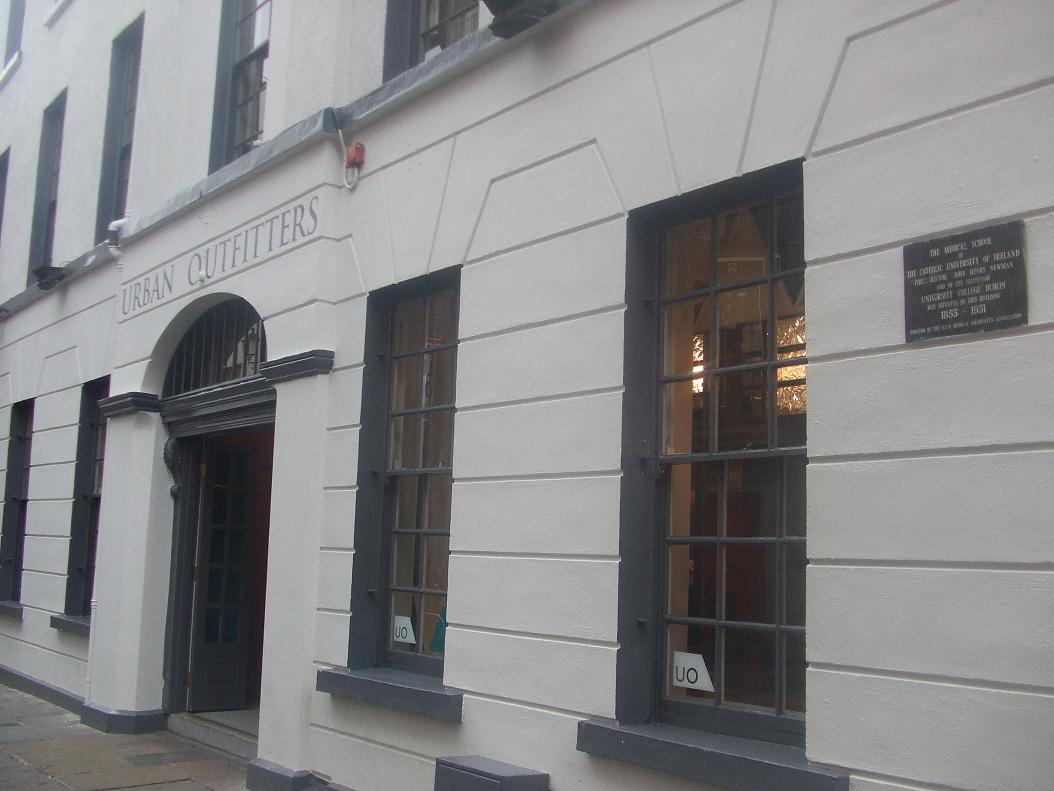
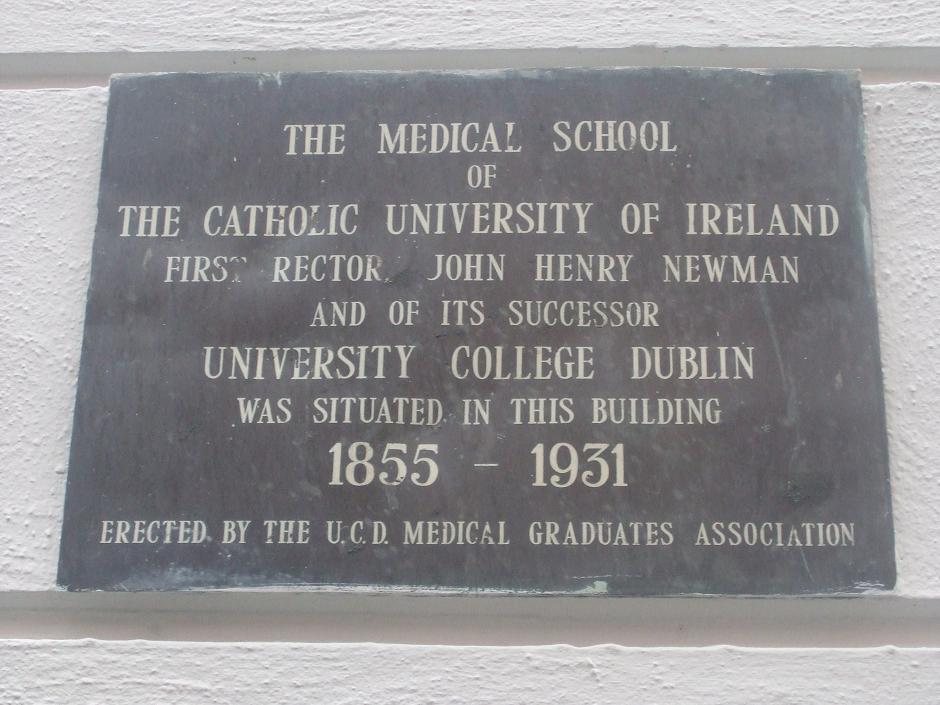
This plaque, marking the old home of the Medical School of ‘The Catholic University of Ireland’, illustrates perfectly to me the fact one can literally walk past history every day and not notice. The plaque is located at the side entrance to Urban Outfitters on Cecilia Street, Temple Bar.

The Irish Times of May 30 1930 noted that

The building was originally a theatre, in fact, the principal one in Dublin during the mid-eighteenth century, and, curiously enough, was once used in 1754 for an exhibition of anatomical waxworks, now preserved in Trinity College

Catholic University of Ireland

So, there you go. Always look up, and always look closely.

Read Full Post »

Lansdowne Road Stadium, February 15 1995

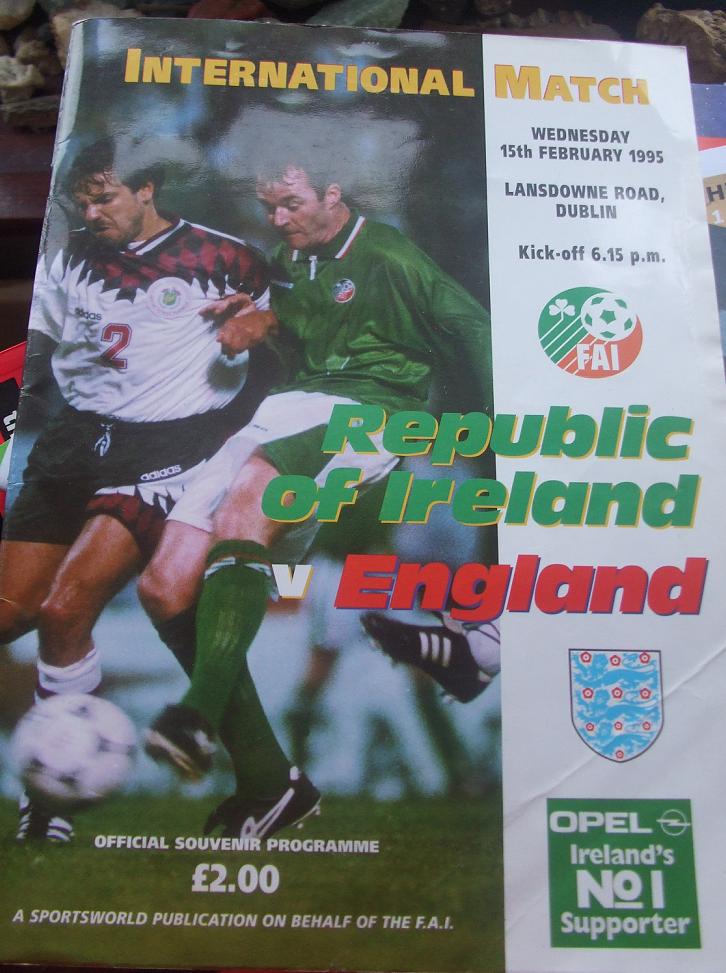
Republic of Ireland versus England, February 15 1995.

The disgraceful behavior at last night’s football international in Dublin must throw into grave doubt England’s role as hosts of next year’s European Championship. It was appalling enough that the pond life who purport to follow England should riot at all. But in Ireland of all places, at such a politically sensitive time, defies belief.

Today Newspaper Editorial, on the day following the riots.

I dug this match Programme out recently, and thought it would be of interest to some of our readers. Page 3, the notes from the manager, is signed. Sadly, it is addressed to Donal, and not eBay.

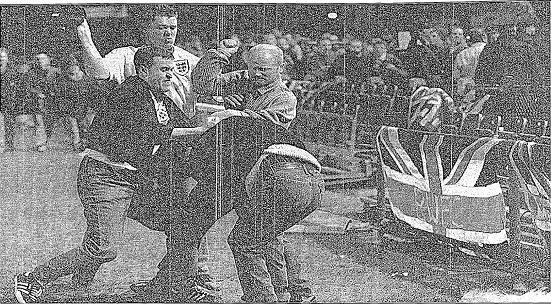
In all seriousness however, this encounter between the Republic of Ireland and England on February 15 1995 marked one of the worst moments for soccer in this country. Largely believed to be as a protest against the peace process in Ulster, and centering around a few fringe groups from London clubs, a small band of fascist supporters within the English away support brought the match to a halt amid scenes of flying chairs and wood. Ireland were 1 nil up in the encounter, before it was called off. Both National Anthems had been greeted poorly at the beginning of the match, and near constant chants of ‘Never surrender to the IRA’ can be heard in footage of the encounter. The damage done to the image of the game in Ireland was quite bad, and the UK tabloids seized the day too to make quite sweeping statements about English football supporters.

Many of the trouble makers had, almost laughably, purchased their tickets from Dublin. The Football Association of Ireland made a haims of the affair, and English fans were located in an area of the stadium one can only describe as madly short sighted in retrospect, with little to no screening of their support. Searchlight magazine told The Irish Times that its “spotters” had noticed a huge number of hooligans from right wing firms and political groupings in the North among the away support. The video footage from the moments following the calling off of the game is incredible, showing a clearly raging Jack Charlton, a man who won a World Cup medal with England in 1966.

There was little evidence of orchestration but many signs of the disturbing presence of the right-wing thugs who have attached themselves to club around the south east of London. Forearms bearing Union Jack tattoos jerked skywards in Nazi salutes. Several skinheads carried the legend “Made in the UK” in blue ink above their ears. There was some excited talk about “doing like the paras” and getting the “Fenian scum”, but for the most part the trouble was caused by dull young men looking for the rush that violence can provide

Tom Humphries writing in The Irish Times , February 18 1995

Interestingly, in 2008, John Delaney remarked to The Guardian that

At some stage, I would like to see England play in Lansdowne Road because there is a game owed. (…)Bringing them to the old Lansdowne Road would have been difficult, and bringing them to Croke Park wouldn’t have been correct given the history.

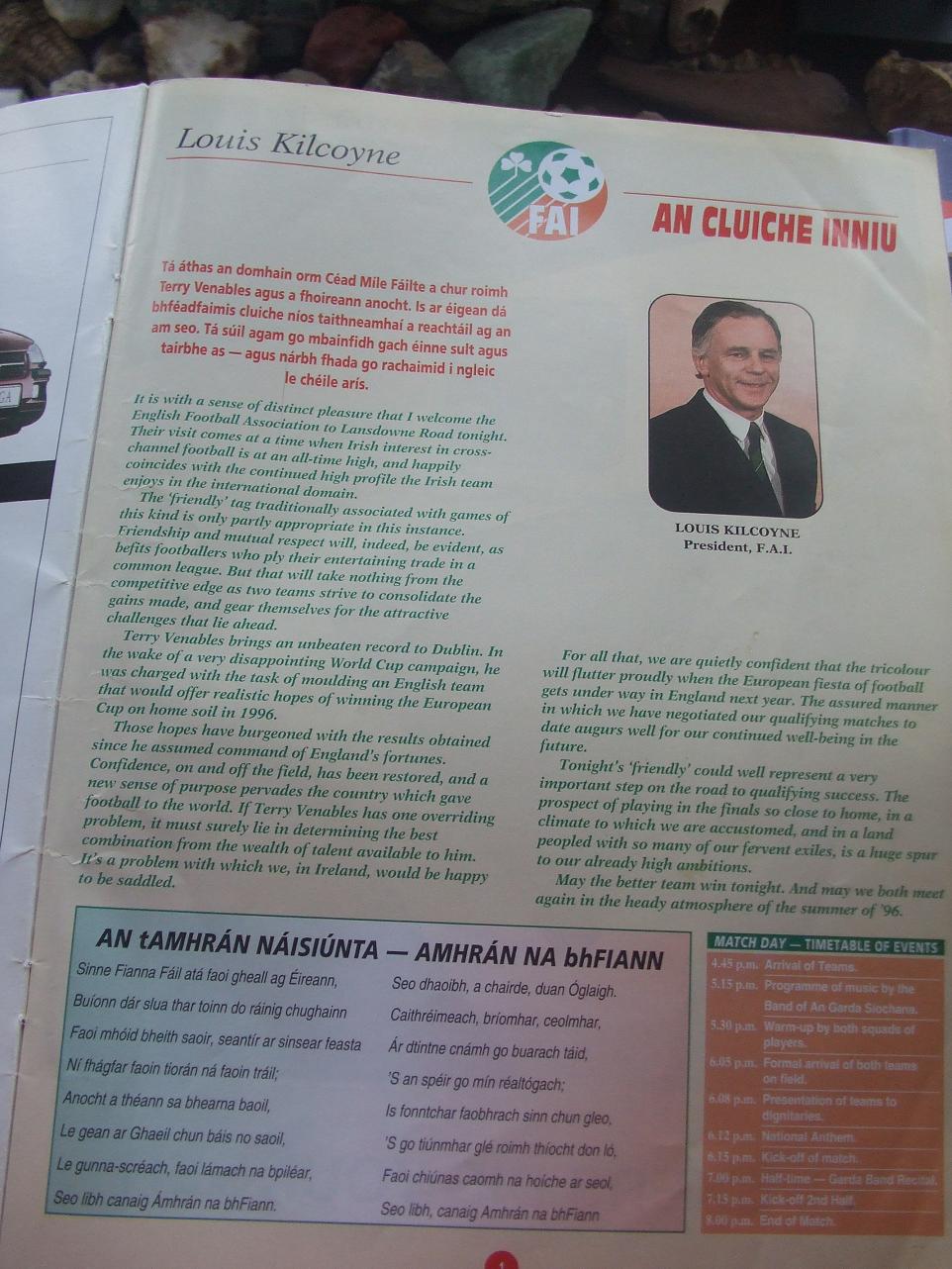
So, here is a selection of content from the match programme. Enjoy. League of Ireland fans should note the fantastic article on the first English visit to Dublin, an encounter at Dalymount Park.

FAI Welcome

(more…)

Read Full Post »

I was very intrigued to read in Paul Clerkin’s Dublin Street Names (2001) that Liberty Lane off Lower Kevin Street used to once extend all the way to the canal at Portobello. Clerkin suggests that “this route can still be traced, although a warehouse now disrupts it and various sections have been assigned new names”.

Using Google Maps, I’ve tried to trace this line.

What do you think?

Read Full Post »

Jumping into the River Liffey has been a dangerous pastime for Dubliners for centuries. Some do it for kicks, others for bets and others just to cool down during hot summer days. A quick scan of The Irish Times archive showcases the long running (and often deadly) activity.

An Irish Times article from March 1890 relates the story of a Miss Marie Finny, “a professional swimmer” who was arrested just before she attempted to jump into the river off O’Connell Bridge. [1]

In 1909, a hotel porter called Hugh Bernard McGrath was rescued from the Liffey after he got into difficulty swimming after jumping from the eastern parapet of O’Connell Bridge. [2]

A “strange affair” was reported in 1932 which concerned an “unknown man” who was seen swimming in the liffey late one Monday evening. It was reported did not “take any notice” of two life buoys that were thrown towards him or a boat that passed. He soon got into difficulty and drowned. [3]

In 1939, a soldier named James Donlan (25) “disappeared” while swimming in the Liffey. It took a extensive search operation to find his body. [4]

The body of Michael Kinsella, 35, a labourer in the Guinness brewery was found in the Liffey in 1954. It was believed that he entered the river “to settle a wager”. [5]

There were also cases of young men drowning in the Liffey in August 1968, January 1977 and December 1986.

In 1994, a Scottish tourist drowned after trying to swim across the Liffey in the early hours of Saturday morning. [6]

As you can see from the youtube clips below, jumping into the Liffey is as popular as ever. (Come Here To Me! does not reccomend it.)

1. Anon, Attempt to jump from O’Connell Bridge into the Liffey, The Irish Times Saturday, March 29, 1890
2. Anon, Rescue from the Liffey, The Irish Times, Saturday, July 10, 1909
3. Anon, Man Drowned In The Liffey, The Irish Times, Tuesday, January 19, 1932
4. Anon, Soldier Drowned In The Liffey, The Irish Times, Friday, August 18, 1939
5. Anon, Swimmers Body Taken From Liffey, The Irish Times, Monday, November 15, 1954
6. Anon, Tourist Dies Trying To Swim Liffey, The Irish Times, Monday, May 30, 1994

Read Full Post »

On my recent walking tour of radical Dublin, one of the places I brought people was to the site of the Irish Farm Produce Company restaurant and shop on Henry Street. It was there that the 1916 Proclamation was signed, and indeed the premises was the ‘radical cafe’ of its time. Interestingly, most of the people on the tour had not noticed the plaque marking the location of the premises before. It truly is an unusual Dublin plaque.

The plaque to Captain Thomas Weafar on the corner of Lower Abbey Street is another prime example of a plaque many Dubliners are unaware of.

Captain Thomas Weafer ( The plaque reads Wafer, however as you will see below Weafer is more commonly found when discussing him) was shot and killed on Wednesday April 26 1916 while occupying the Hibernian Bank on the corner of Lower Abbey Street and Sackville Street. The strategic importance of the building is clear. It allowed Weafer and his men to control access to the street from Amiens Street Station for example, and members of the the GPO Garrison were occupying a number of buildings on each side of Sackville Street.

Meda Ryan wrote about the experiences of Leslie Price (who went on to marry Tom Barry), in her study of the famous Cork rebel leader entitled Tom Barry: IRA Freedom Fighter.

Receiving no orders, like many Cumann na mBan activists, Leslie headed for the G.P.O

Initially they cooked meals and helped the men in the Hibernian Bank. On Tuesday forenoon the building came under attack from British troops. Leslie was standing beside Capt. Tom Weafer, OC of the Hibernian Garrison, when a bullet whizzed past her and into his stomach. As she was about to attend to him another bullet lodged in the chest of the man who had gone to Capt. Weafer’s aid. She had just time to say a prayer in Weafer’s ear when he died.

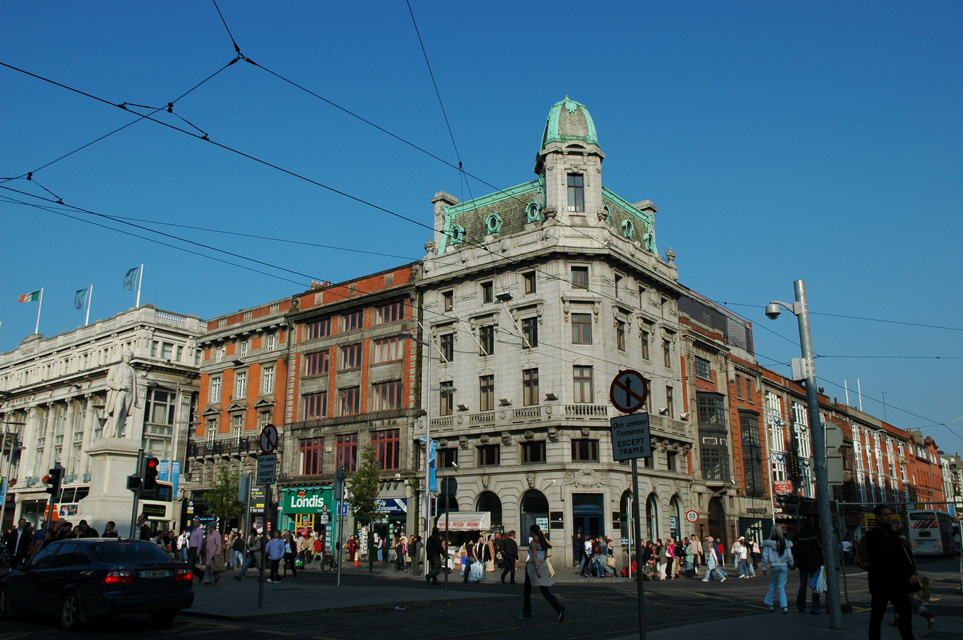
From tropicalisland.de, the building on the corner of Lower Abbey Street and O' Connell Street is the old Hibernian Bank premises

(more…)

Read Full Post »

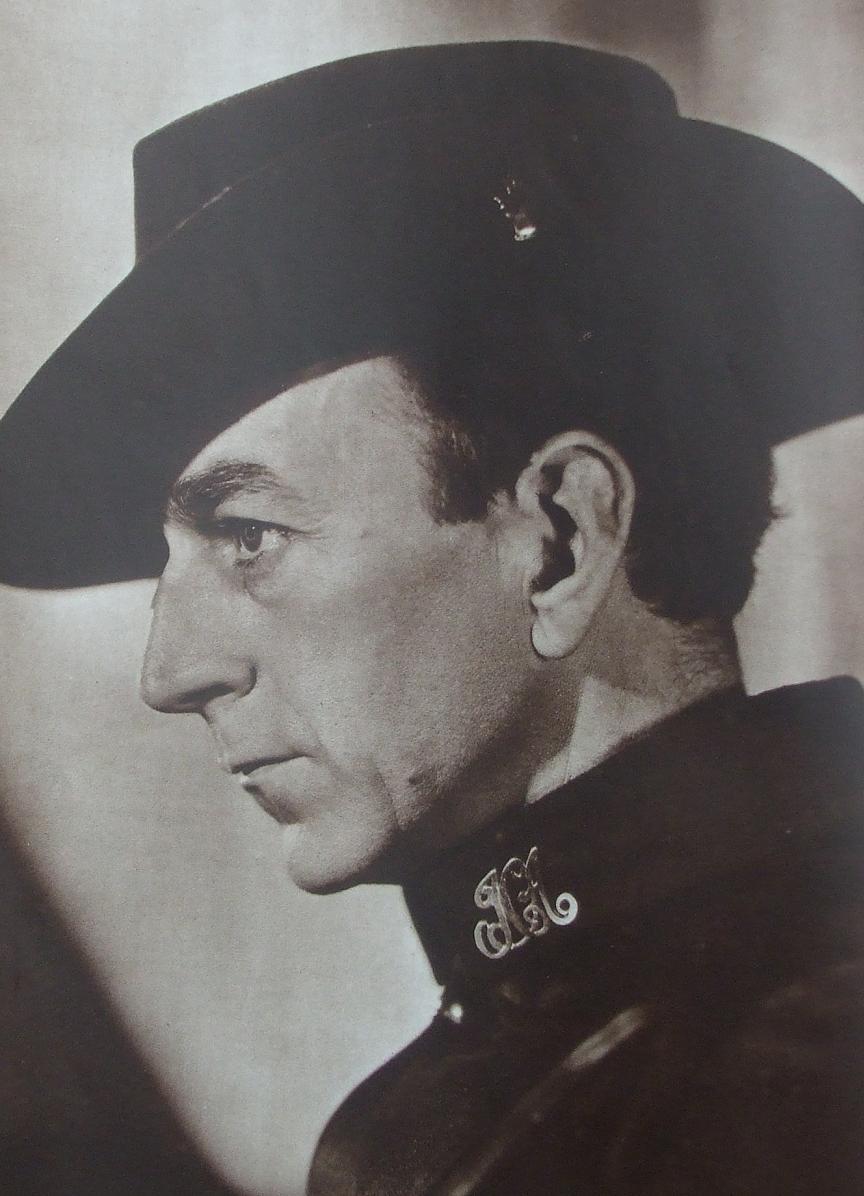
F. J McCormick in The Plough and the Stars as Captain Brennan.

The above image is taken from page 184 of the Capuchin Annual 1948.

The Plough and the Stars returns to The Abbey this summer, hopefully for a far less dramatic run than that of 1926, when the play inspired people to riot. “The Ireland that remembers with tear-dimmed eyes all that Easter Week stands for, will not, and cannot, be silent in face of such a challenge”, said Hanna Sheehy Skeffington, the feminist and social activist.

Sean O’ Casey remarked in the preface to his work on the Irish Citizen Army, The Story Of The Irish Citizen Army, that “It appears certain that Nationalism has gained a great deal and lost a little by its union with Labour in the Insurrection of Easter Week, and that Labour has lost much and achieved something by its avowal of the National aspirations of the Irish Nation.” This feeling is evident in this play, and the work is as tragic as it is funny.

The play is one that can spark debate in a way few others can. It’s run at the Abbey this summer is something I’ve been excited about for some time now. To coincide with the run, The Abbey are hosting a number of Talks and Workshops on the play.

Thursday 29 July, 6pm
Shivaun O’ Casey

Distinguished theatre director Shivaun O’ Casey discusses her father’s work.
Tickets: €3

Tuesday 7 September, 6pm
Keepers Of The Flame

Join us as we trace the political and performance history of The Plough and the Stars at the Abbey Theatre.
Tickets: €3

Saturday 4 September 10am
Talking Text

Voice Director Andrea Ainsworth leads a voice workshop using text from The Plough and the Stars
Tickets: €40 (Includes a light lunch and a ticket to the matinee showing)

Read Full Post »

Occasionally, you pick up something nice along the way.

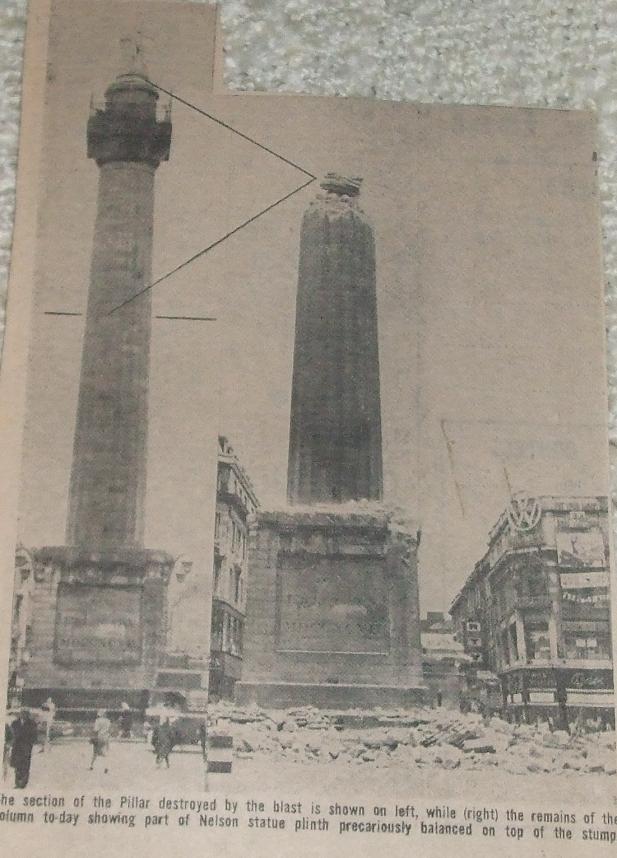
About a year and a half ago I bought a large collection of newspaper clippings at an antiques fair in town, for buttons basically. A varied bunch, they included snaps from the 1966 Easter anniversary events, snaps of Dev doing his thing in the 1970s, photos from after the bombing of Dublin during WWII and various odds and ends. The gems however, were these snaps from the day after Nelson’s Pillar was blown up.

They include a true Dublin entrepreneur going through the rubble hours after the explosion, and a great shot of the damage done at street level. Enjoy!

Front of The Evening Herald

Click image to expand

click to expand

Click image to expand

Read Full Post »

Garda Museum and Archives
Opening Hours:9am to 5pm, Monday to Friday
Dublin Castle Record Tower.

Michael Staines (right) and Eoin O' Duffy. Two first Garda Commissioners.

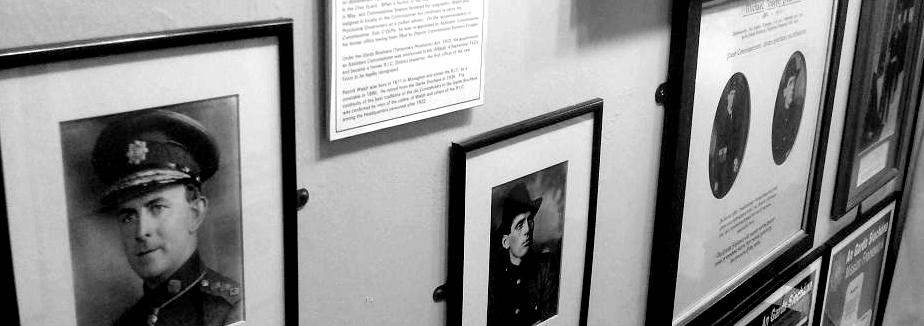
The Garda History Museum is one of individuals, as much as of the force.

Michael Staines was an interesting Volunteer. The son of an RIC man, he was the Quartermaster General within the General Post Office in 1916. When sent to Frongoch, he became ‘Camp Leader’ among the men, and upon his release became active once more at home in the Volunteer movement. On August 17, 1922, as Garda Commissioner he would lead his new police force through the castle gates.

He would be followed by Eoin O’ Duffy, another character of the republican movement, and a most controversial one to boot. Ironically, O’ Duffy had been one of the Republicans involved in the first ever capture of a Royal Irish Constabulary Barracks, in the company of Ernie O’ Malley.

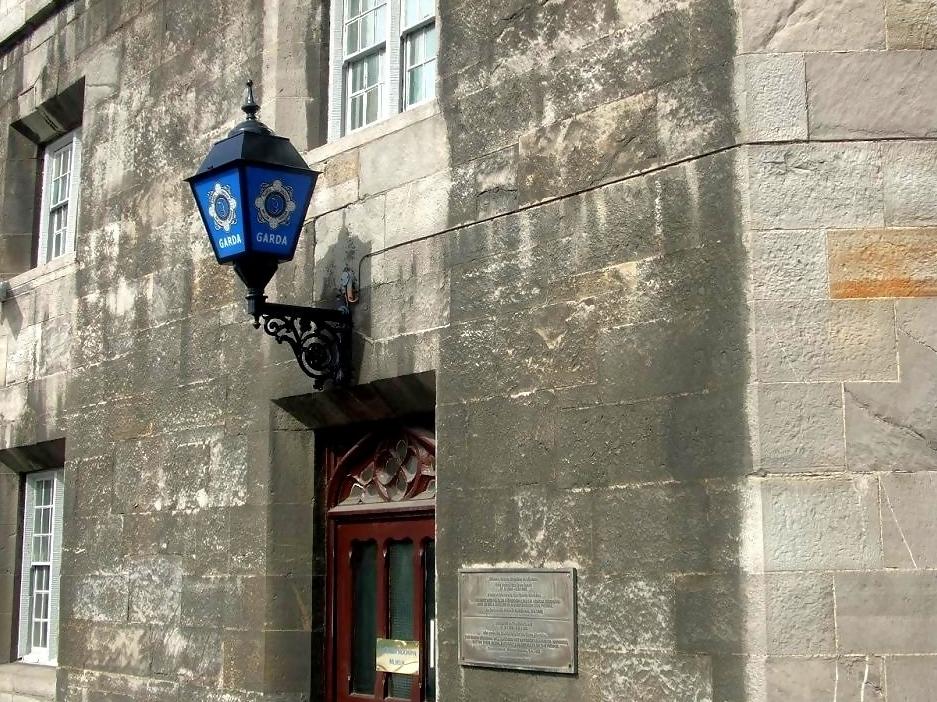
Front of Museum, Dublin Castle.

This Museum, while covering the history of that force which marched into Dublin Castle in 1922, does not shy away from the forces that called it home before them. Rather, it is a comprehensive look at the history of policing in Ireland. The Royal Irish Constabulary and Dublin Metropolitan Police feature prominently in the Museum, featuring both on occasion as a political force (For example the 1913 riots, which resulted in the deaths of several workers) and a day to day police force. The history of the Royal Irish Constabulary in particular is a loaded one, when one considers that, to give one example, the Black and Tans were directly employed by the RIC. Preserving history is not a matter of politics however, and to see so many quality RIC and DMP historical pieces displayed as well as they are here is a treat, and of great assistance to anyone who believes a complete picture is needed when studying some of the most remarkable years in Irish history.

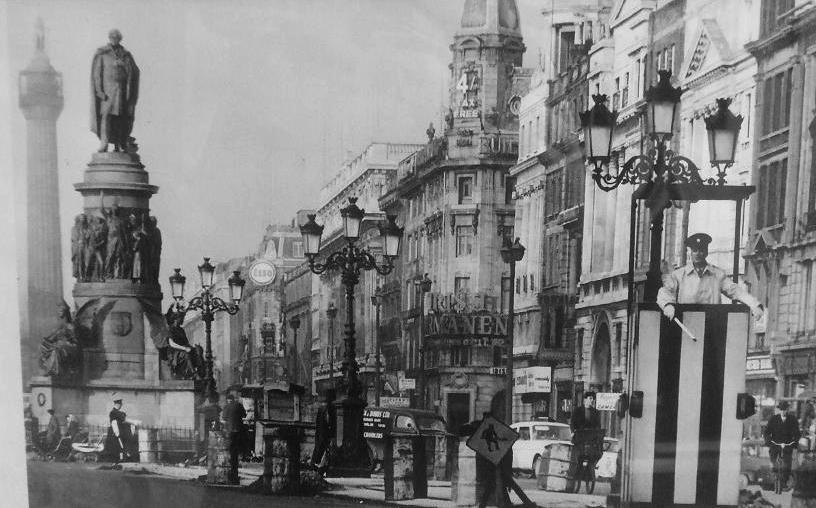
Garda traffic box, a great Dublin shot.

The Museum, spanning an amazing four floors, is one of the last old-fashioned Museums in the city centre in my humble opinion. In fact, along with the Natural History Museum, it is a sort of throwback to Museums of old, and what I feel Museums should be. All the more incredible considering Dublin Castle is only home to the Museum since 1997. The correct approach to displaying items like those in the Garda Museum is simple: Allow the pieces to speak for themselves, and provide the information clearly alongside the items. There is no shortage of information available, in the form of information panels and wall displays, but unlike some museums there is no overpowering audio-visual element.

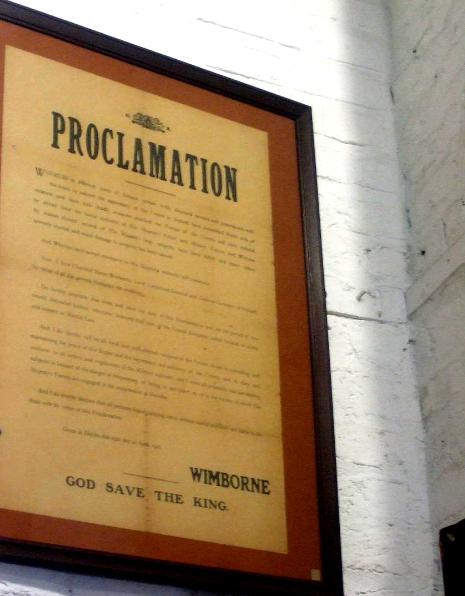
Proclamation issued April 25th, 1916.

One should not attempt to focus on individual pieces in a Museum like this, as in every corner something new grabs your attention. The Museum holds a variety of War of Independence medals for example, belonging to men who would later join the ranks of An Garda Síochanna. The above Proclamation however stands out for me, issued on April 25th in response to the Rising which began a day previous.

“WHEREAS, in the City of Dublin and County of Dublin certain evilly disposed persons and associations, with the intent to subvert the supremacy of the Crown in Ireland, have committed divers acts of violence, and have with deadly weapons attacked the Forces of the Crown, and have resisted by armed force the lawful Authority of His Majesty’s Police and Military Forces. AND whereas by reason thereof several of His Majesty’s liege Subjects have been killed and many others severely injured, and much damage to property has been caused”

The role of the Gardaí in the new state, in its first few years, is covered, where the force was to follow Staines belief that “The Garda Síochána will succeed not by force of arms or numbers, but on their moral authority as servants of the people” Early Garda documents (for example dealing with the unarmed nature of the force), uniforms and insignia are all on display.

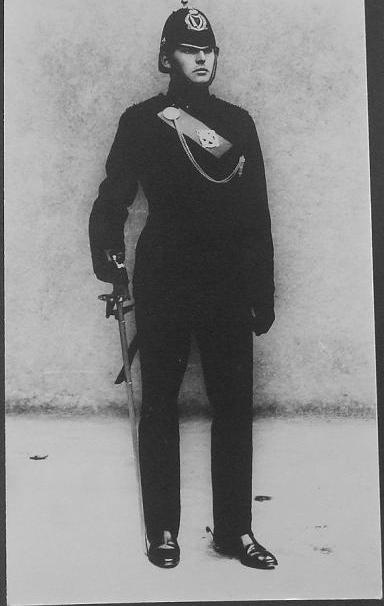
RIC Officer.

Of course, the 1900-22 period is of particular interest to me. Perhaps for other visitors, this isn’t the case. Yet, the story of policing in Ireland told here is so long and broad that certain aspects of it will no doubt appeal to others the way parts of it did to me. Even the stairs here play home to wonderful photographs and pieces, there is not an inch of this Museum left without an item. From my own perspective, approaching the centenary of the 1913 lockout, the Easter Rising and the conflicts that followed on from it, it is no doubt time many of us with a keen interest in the period attempted to increase our understanding of the state forces in Ireland at the time.

I will conclude with a verse from ‘Good Bye RIC’, which I have taken from Jim Herlihy’s wonderful history ‘The Royal Irish Constabulary’

‘We once could walk the city too,
Dressed neatly in our suits of blue,
With polished feet and all complete,
Our heads erect going down the street,
But now we are scattered everywhere,
Far from the dear old Depot Square,
Some of them lie in graves from Foyle to Lee,
Fell fighting in the RIC’

Read Full Post »

Continuing my research into the social history of Dublin youth subcultures in the 1970s and 1980s, I’ve been trying to compile a comprehensive list of venues that were used for punk and new wave gigs from c. 1976 – 1984.

Name / Address / Status

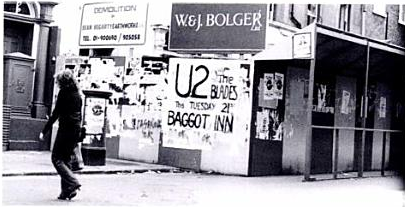
  • Baggot Inn (Baggot Street. Still there but unrecognisable)
  • Dandelion Market (Developed into St. Stephens Green Shopping Centre)
  • Ivy Rooms (Parnell Street. Now Fibber Magees.)
  • Magnet (Pearse Street. Renamed ‘Widow Scallons’ and then developed into a Spar)
  • McGonagles (South Anne Street. Demolished. Rebuilt and now Hackett London store.)
  • Moran’s Hotel (Talbot Street. Now O’Shea’s Hotel.)
  • Olympic Ballroom (Pleasant Street, Dublin 8. Closed but building still standing.)
  • Project Arts Centre (East Essex Street. Temple Bar. Still in use.)
  • SFX (Upper Sherrard Street. Demolished and developed into flats.)
  • TCD Student Bar (Exam Hall)
  • Toners (Baggott Street. Still there.)
  • Top Hat (Dun Laoghaire. Developed into Roller Disco, Fun Factory and now apartments)
  • TV Club (Harcourt Street. Demolished (?) and developed into Garda HQ)
  • UCD Student Bar. (Demolished.)
  • Underground Bar (Dame Street. Now Club Lapello)

Can you think of anymore?

Other places that I’ve heard about include The Youth Expression Centre (Temple Bar), The New Inn (New Street), The Loft, Slattery’s (Capel Street) and Bruxelles (Harry Street). Do they fit the bill? Or did they come a bit later?

Notice for upcoming U2 and The Blades gig at The Baggot Inn, 1979.

Read Full Post »

« Newer Posts - Older Posts »