Feeds:
Posts
Comments

Archive for the ‘Dublin History’ Category

In his classic work The Destruction of Dublin, published in 1985 and now like gold dust to stumble upon, the journalist Frank McDonald quoted a powerful piece penned by a writer in The Observer newspaper. Writing in 1979, the journalist said

Suddenly Dublin has become a shabby city – shabby because its centre is peppered with crude concrete structures, flashy mirror-glass facades and other inappropriate schemes which have no connection at all with the spirit of the place.

Certainly there is much in the city today from this period which some still regard as architectural crimes against Dublin. Some controversial plans from the time however never made it to fruition, and one example is the proposed Central Bus Station in the heart of Temple Bar. This huge development, which would have seen construction projects undertaken on both sides of the River Liffey, was one of the most divisive proposals in terms of city planning in Dublin in the 1970s and 80s.

A 1969 image of Merchant's Arch, Temple Bar (National Library of Ireland))

A 1969 image of Merchant’s Arch, Temple Bar (National Library of Ireland))


Temple Bar, by the nineteenth century, was fulfilling a role for Dublin as a manufacturing and industrial centre for the city. Indeed, in the living memory of the city today many can remember Temple Bar as a district of factories and warehouses, although urban decay became a factor in the district throughout the twentieth century. The idea of constructing a central bus station in this district had long been considered, owing primarily to the areas location, bordering some of Dublin’s prime retail districts. By the 1970s the state-run Coras Iompair Eireann was purchasing property in the area with one-eye to future redevelopment, while simultaneously renting out these properties at low-cost. This is perhaps the single most important transformative moment for Temple Bar, and as Paul Knox has noted:

Paradoxically, this triggered a process of revitalization. Activities which could afford only low rents on short leases moved into the district. These included artists’ studios, galleries, recording and rehearsal studies, pubs and cafes, second-hand clothes shops, small boutiques, bookshops and record stores, as well as a number of voluntary organisations. Together with the districts architectural character, the youth culture attracted by the districts new commercial tenants brought a neobohemian atmosphere to Temple Bar…

In 1977, the following proposal for a Central Bus Station was put forward. Designed by Skidmore Owings & Merrill LLP, this development would span the River Liffey, with development on Ormond Quay designed to complement that in Temple Bar. Looking at Dame Street and Wellington Quay on the map, the sheer scale of this proposal is apparent. It was planned that a tunnel under the Liffey would join both sites, and it was also planned to incorporate the DART into the site.

Proposed Central Bus Station (Credit: Archiseek)

Proposed Central Bus Station (Credit: Archiseek)

A feel of the changing nature of the district can be captured in a 1984 article written by Maurice Haugh for The Irish Times. This once dying part of Dublin had come alive he noted, stating that “It’s a happy uncongested area whose natural character has been preserved from the developers’ touch, and has only been exploited recently.”

The picture Haugh painted was of a vibrant, liberal area. He wrote of the Hirschfeld Centre, an openly gay community centre at the heart of Temple Bar, describing its disco as “one of the liveliest and musically up to date in town. Records are imported directly from London and, as a rule, are played months before they hit the radio and charts.” This centre had opened in 1979, and contained among other things a social centre, cinema and meeting place for Dublin’s LGBT community.

A sign of the times. Taken from the front of the Hirschfeld Centre, it is now on display in The Little Museum of Dublin.

A sign of the times. Taken from the front of the Hirschfeld Centre, it is now on display in The Little Museum of Dublin.

Some of the artistic endeavours of the time are still to be seen in the area today, for example the Temple Bar Gallery and Studios, which emerged in 1983 when a disused shirt factory was rented from CIE by Jenny Haughton and given to a collective of artists. As the history of the Temple Bar Gallery and Studios notes:

The early 20th-century industrial building, which extended through a block from Temple Bar to the Liffey quays, provided the framework of spaces for artists to work in, although the conditions were problematic and at times hazardous. The activities of the artists – studios, exhibition space, cafe, sculptor’s annex – influenced the atmosphere of Temple Bar in the 1980’s, establishing the area’s reputation as a cultural hub and contributing to its regeneration as Dublin’s Cultural Quarter.

No journalist campaigned as strongly for the area as Frank McDonald, a constant opponent of bad planning in Dublin. McDonald reported on Council meetings on the matter, and gave space to alternative voices, such as An Táisce, who believed the area had a future if properly preserved and encouraged. In 1986 he noted that a decade is a long time in city planning, as:

Ten years later, all of this looks like so much pie-in-the-sky. In the first instance, the commercial property market in Dublin is in a state of almost total collapse, with the demand for new office space, not to mention shopping and residential- down to not much more than zero. And secondly, the lynch-pin of CIE’s scheme – the underground central station for DART – is looking more and more like a pipe-dream.

It was not until July 1987 that CIE’s plans for the district were well and truly destroyed, with elected Councillors voting for the preservation and redevelopment of the area. By this stage the issue had become a mainstream debate, with Charlie Haughey vowing before the upcoming election that he would “not let CIE near” Temple Bar. By the early 1990s, the area enjoyed a sort of ‘official backing’, with Temple Bar Properties established with strong government funding, and the aim of organising the development of the area.Eric Zuelow notes in his history of tourism in Ireland since independence that £2 million was spent on the area in 1993 alone, with much of this money drawn from European Union development funds.

Many (including this writer) would argue that the area has drifted far from its cultural and offbeat qualities in the years of protest. Yet while the Hard Rock Cafe, McDonalds and others may have moved in, it should be remembered that some of those who championed the cause of Temple Bar over 20 years ago still call it home.

Read Full Post »

As part of this years Dublin Book Festival, and to promote our own book ‘Come Here To Me: Dublin’s Other History’, we are carrying out walking tours with the DBF team on November 16th and 17th. These tours will look at unusual aspects of Dublin’s history, as featured here on the blog over the years. Tickets for the tours can be booked here. There are a whole series of great events being organised to promote new and established Irish authors, and the entire festival programme can be read here.

CHTM

Read Full Post »

Image Credit: Luke Fallon.

Image Credit: Luke Fallon.

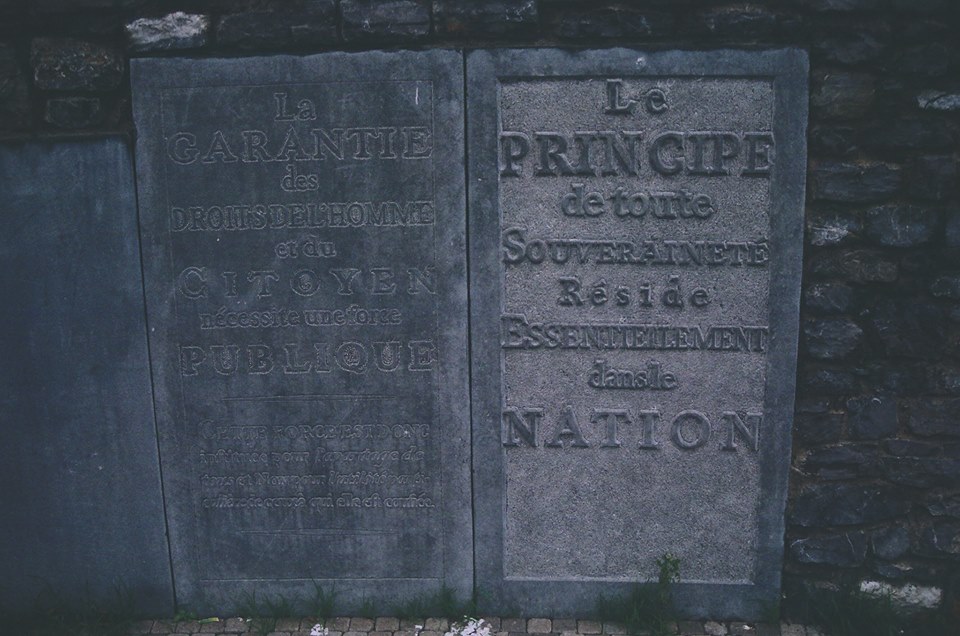
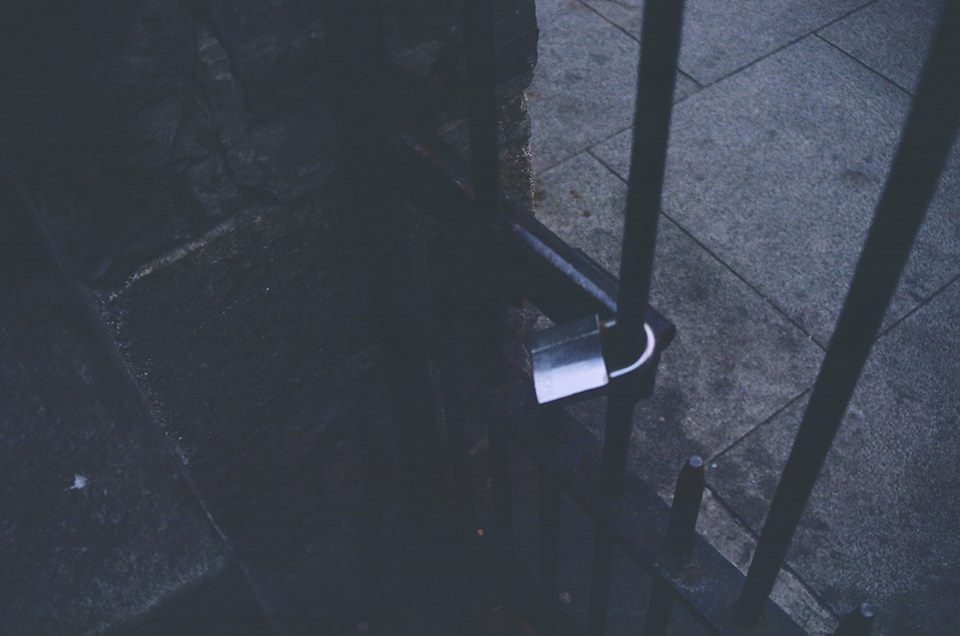
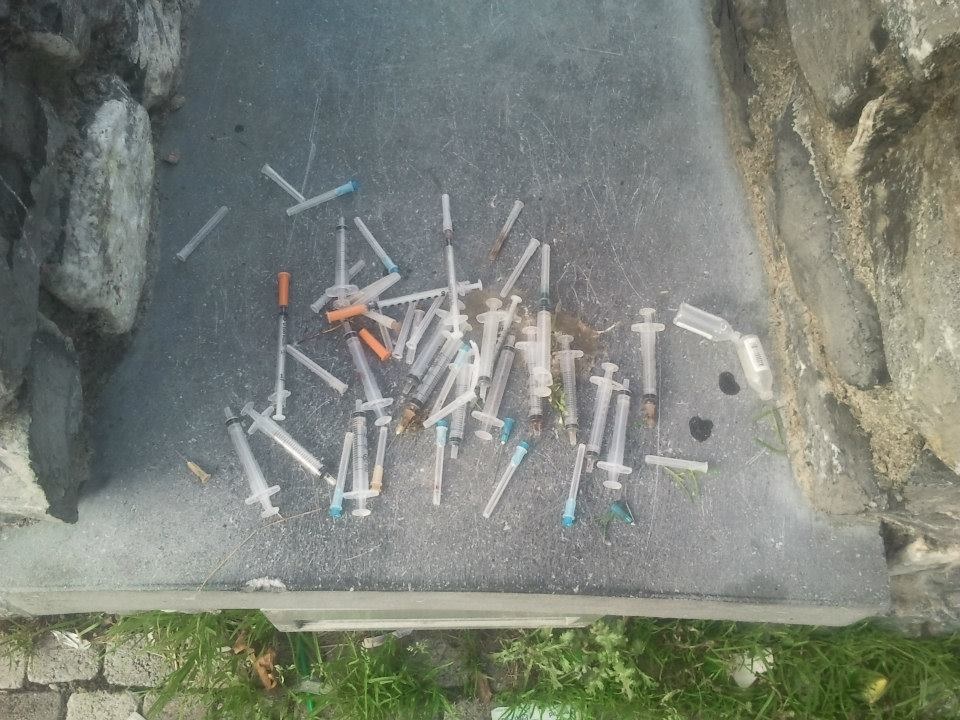
Last week we posted an image from Croppies Acre memorial park, which commemorates those who fought in the United Irish rebellion of 1798. The image, showing a pile of used needles, was a pretty good insight into the life of the park today, which has been locked to the public for well over a year owing to anti-social behaviour and drug use. In recent days Luke Fallon climbed the wall and took a series of photographs for us to post on the site here. He was actually knocking around town experimenting with a film camera for something entirely different, but decided to hop into the wall and see if it was as bad as the image posted here made it seem. In his own words, it’s worse. The memorial itself is beautiful however and this post will hopefully give many readers their first glance inside the railings.

As is often the case with monuments to the republicans of the 1790s, the French language appears alongside Irish and English.

Image Credit: Luke Fallon

Image Credit: Luke Fallon

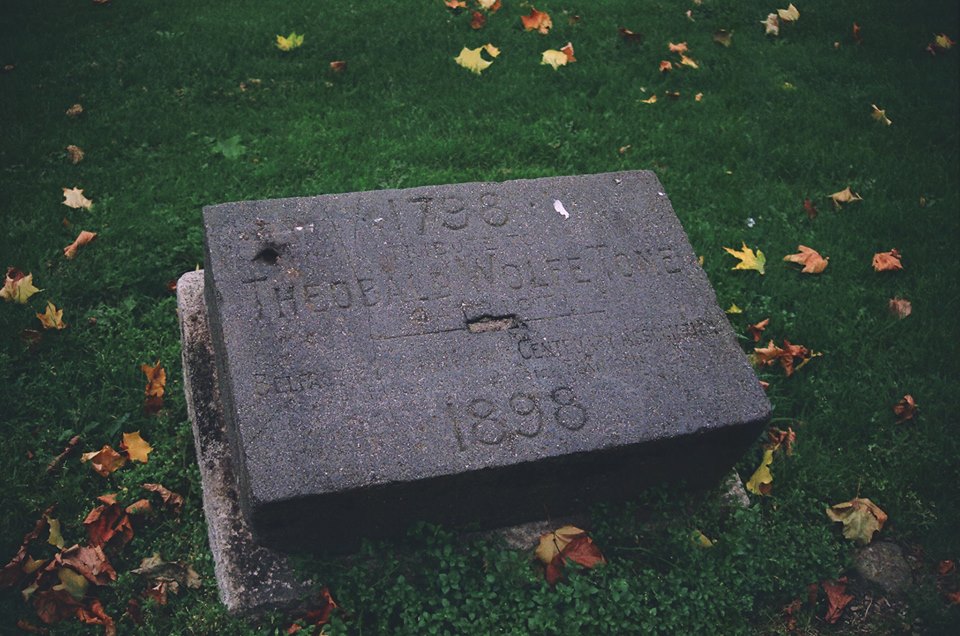
This interesting little Wolfe Tone memorial below grabbed my attention, as it’s dated to 1898. In the past we looked at Wolfe Tone on the site, and in that post noted that in 1898 a crowd of 100,000 marched to Stephens Green for the laying of a foundation stone for a Wolfe Tone monument. Is this it?

On 15 August 1898, ‘Wolfe Tone Day’, 100,000 people came onto the streets to see the laying of the foundation stone for a monument dedicated to Wolfe Tone. The foundation stone began its journey in Belfast, in many ways the ideological birthplace of Irish republicanism as it was there that the United Irishmen were formed.

Image Credit: Luke Fallon

Image Credit: Luke Fallon

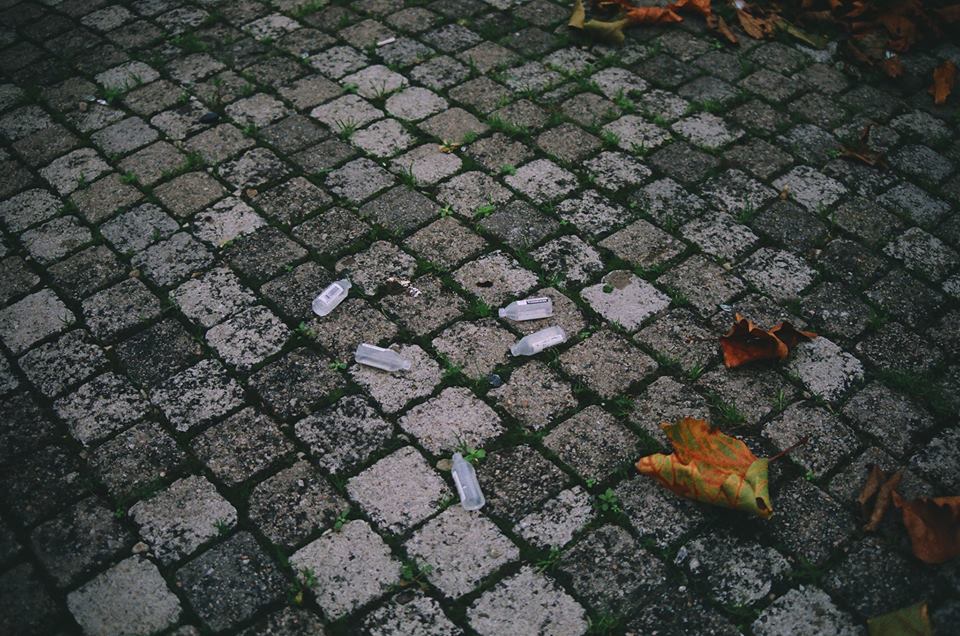
It’s obvious that the park is actually dangerous in its present state, with needles abandoned in both the walkways and the grass. Along with the presence of human bodily waste, the risks to children, pets and others in the park is huge.

Image Credit: Luke Fallon

Image Credit: Luke Fallon

Image Credit: Luke Fallon

Image Credit: Luke Fallon

With so much talk of history at the moment and the centenaries aplenty, it’s an ideal time for the OPW to take control of this park again and open it to the public.

Image Credit: Luke Fallon

Image Credit: Luke Fallon

Read Full Post »

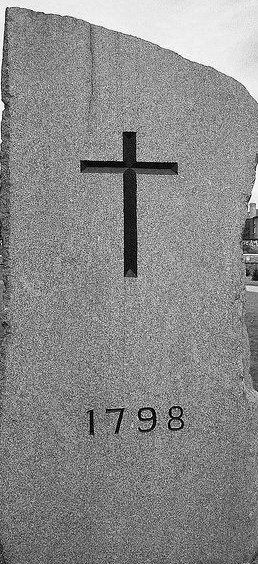
Memorial cross at Croppies Acre.

Memorial cross at Croppies Acre.

The Croppies Acre memorial in Dublin commemorates the United Irish rebellion of 1798. It has been closed to the public for quite some time now, owing to anti-social problems.

This park serves a memorial to many young revolutionaries who were at the backbone of the first Republican movement in Ireland. Many were said to be buried here following their executions, though the claim is sometimes disputed. In a 1998 article about the memorial site, Aengus O Snodaigh noted that:

The most famous names to be recorded in the sad saga of Croppies’ Acre are those of Bartholomew Teeling and Matthew Tone, both hanged at the Provost Prison on Arbour Hill after the Battle of Ballinamuck on 8 September 1798. Bartholomew Teeling was a brother of Defender and United Irish leader Charles Teeling. Having come under suspicion himself he fled Ireland in 1796. Bartholomew was commissioned into the French Army at the instigation of Theobald Wolfe Tone, who also arranged a commission for his own brother Matthew, and took part in the failed expedition of General Hoche in December of that year….

The term ‘Croppy Boy’ was said to emerge from a hairstyle popular with revolutionaries of the day, their closely cropped hair a fashion adopted from French revolutionaries, associated with the anti-wig tendency in France. For many years this incredible site was unmarked, but the contemporary memorial at the site was erected in 1985, and includes some words from Robert Emmet:

No rising column marks the spot
Where many a victim lies
No bell here tolls its solemn sound
No monument here stands.

The site has been in the news in recent times for all the wrong reasons. In September 2012 the OPW, who are tasked with maintaining the site, made the decision to close it to the public. A recent article in the Irish Independent addressed this, and noted:

The Croppies Acre in central Dublin – described as “sacred ground” – has turned into a no-go zone because authorities say they can’t cope with drugs users and dirty syringes that litter the historical site.

Today some photographs from the memorial have emerged that demand attention. Posted to Facebook by the Sean Heuston Dublin 1916 Society, they reveal the extent to which the park has been abandoned by authorities. This particular image is shocking, but deserves a wider audience. Dublin is a city which suffers greatly to the scourge of addiction and drugs, and there is of course a need to provide for those suffering as a result. Yet this memorial park should not be allowed remain as it is, and there is an onus on the OPW and the city to maintain it.

Image Credit: Sean Heuston Dublin 1916 Society.

Image Credit: Sean Heuston Dublin 1916 Society.

Read Full Post »

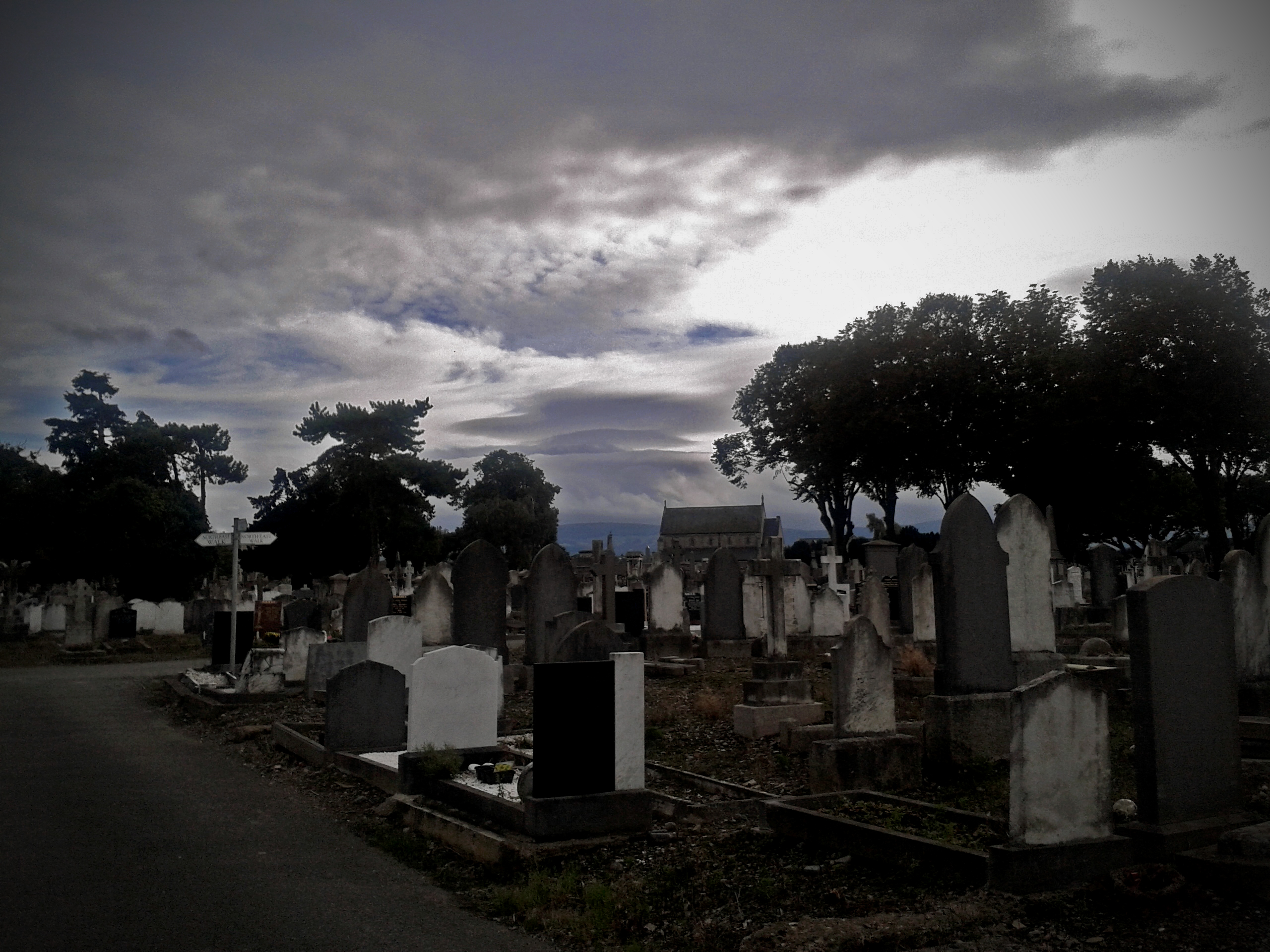
Pere-Lachaise in Paris may hold the remains of Oscar Wilde, and may be known for its beauty and grandeur, but in Dublin, we have several cemeteries to match it in splendor, and one that holds amongst many others, the remains of Wilde’s direct descendents. Mount Jerome Cemetery, like many of Dublin’s burial grounds, sits innocuously behind high stone walls in the middle of Harold’s Cross. But behind the walls lies a resting place of almost 50 acres that has seen over 300, 000 burials.

You don’t generally think of a cemetery as a place to go sightseeing, but Mount Jerome, bought by the then newly formed General Cemetery Company of Dublin in 1836 and receiving its first burial in September of that year is an example of Victorian affluence worth a look for the enormity of some of the tombs alone. Hidden Dublin by Frank Hopkins notes that while it was envisaged that the cemetery would host both protestant and catholic burials, the first catholic burial did not take place there until the 1920’s, when Glasnevin Cemetery was closed due to a strike. James Joyce mentions the exclusion in Ulysees, saying

Then Mount Jerome for the protestants. Funerals all over the world everywhere every minute. Shovelling them under by the cartload doublequick. Thousands every hour. Too many in the world.

Cemetary

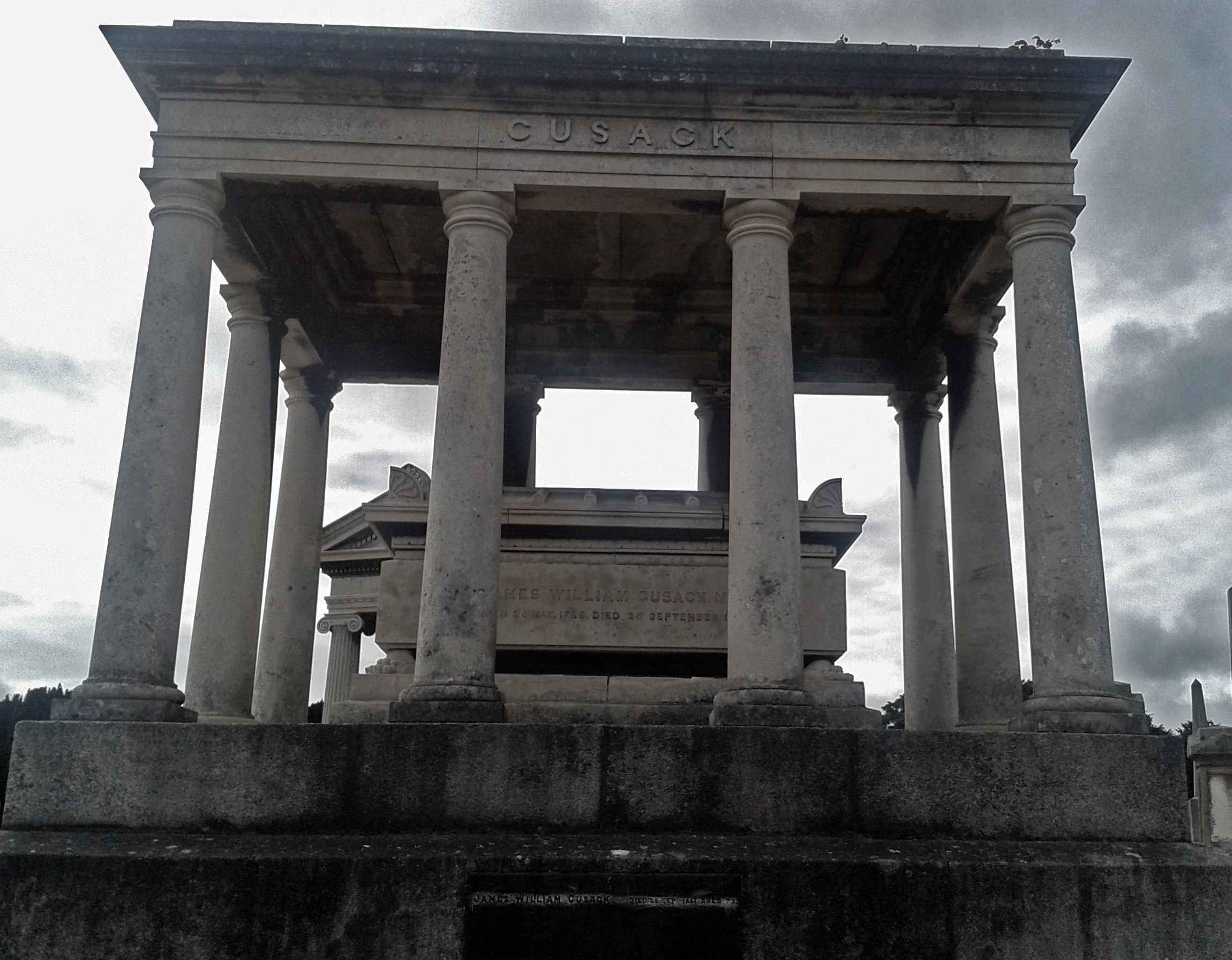
Imposing structures, like the Cusack family vault below can be found across the graveyard. One of the most imposing structures in the cemetery, it was built to house the remains of James William Cusack, doctor and prominent member of the Royal Dublin Society in 1861, and continues to receive the remains of his descendents, E.P.C. Cusack Jobson was the last to be buried there, as recently as 2004.

cusack

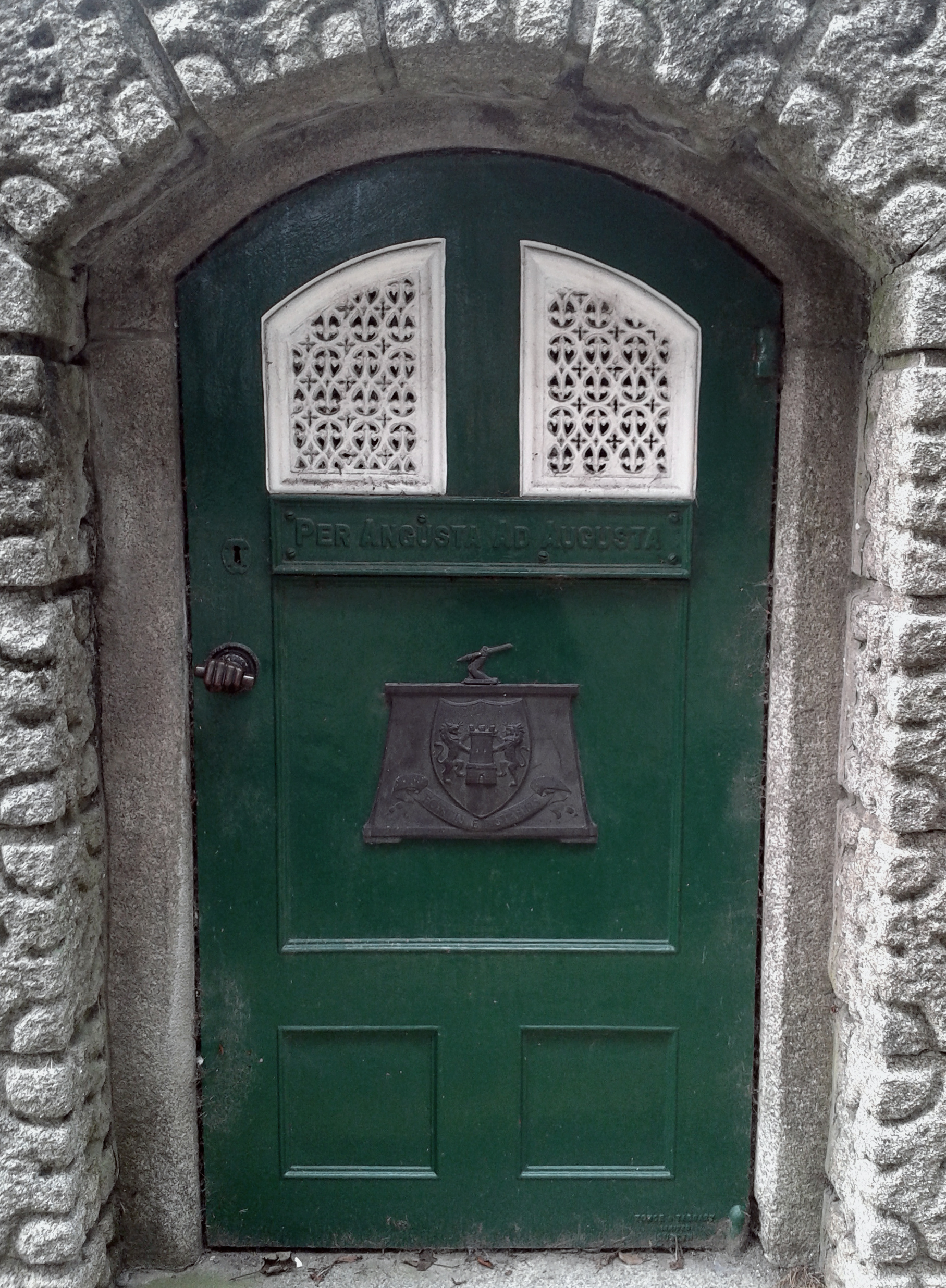
Judging by the family crest on the door, the below vault belongs to someone by the family name of O’Shaughnessy; it stood out because instead of a family name in the centre, “per angusta, ad augusta” appears. From Latin, translated it means “through difficulty, to greatness.”

PerAngusta

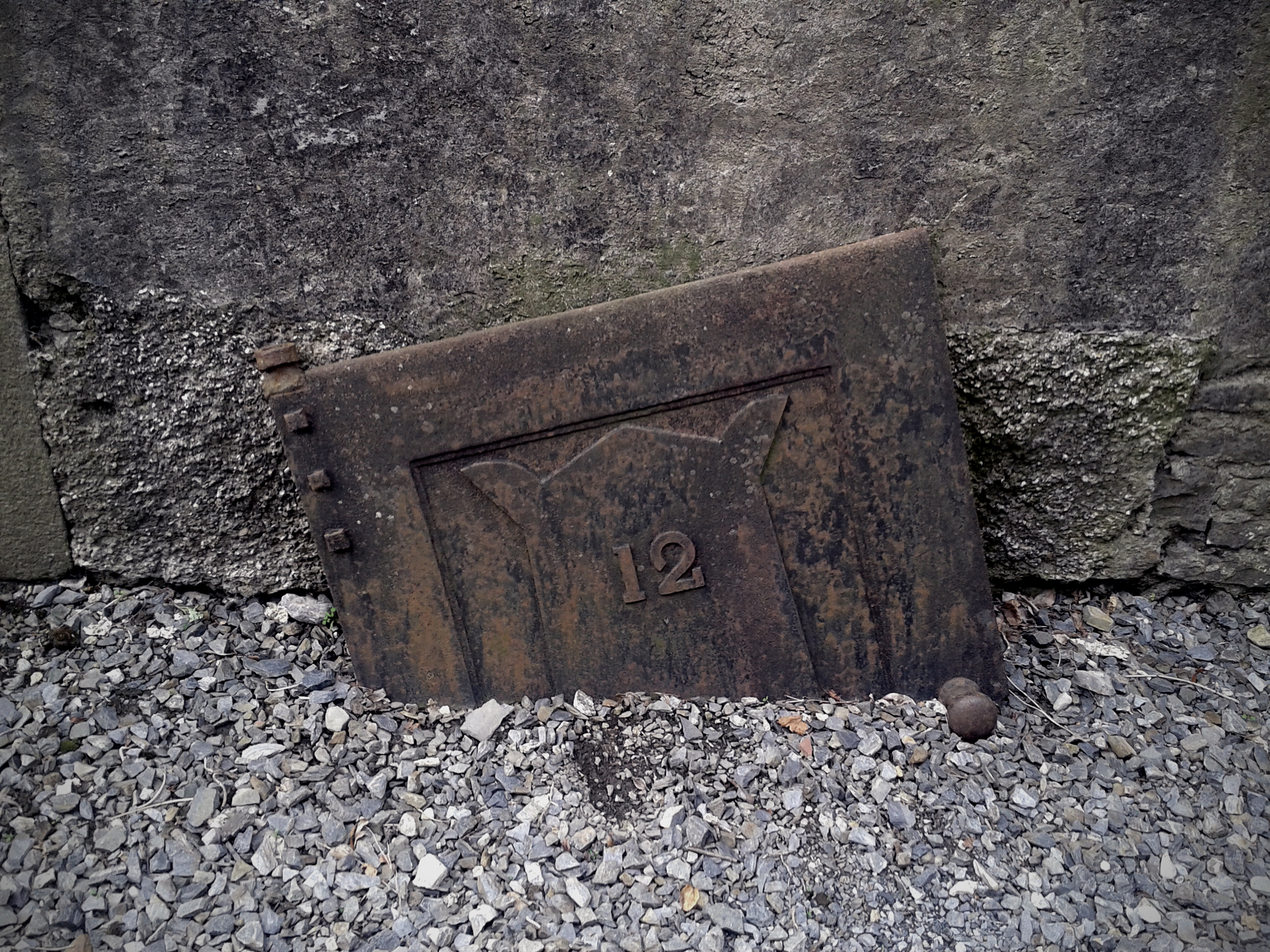
There are various parts to the cemetery, and you can see from plot to plot how burial customs changed over time. From statement making vaults like the Cusack one, to the less grandiose, door into the side of a hill one’s like the O’Shaughnessy one. There are several paths leading down below ground level to lines of doors like the ones above and below. The graveyard is still in use, so the variation between crumbling tombstones and collapsing ground and modern twelve by four graves makes it a walk through time.

Door12 (more…)

Read Full Post »

While Temple Bar is today populated by dozens of bars and restaurants, some would say to its detriment, the area has a long history of taverns and boozing. This post will look at some eighteenth century taverns in the Temple Bar area. Many of these taverns were frequented by certain political movements and groupings, while for many others taverns fulfilled an important social role. In some cases, the names of these historic taverns have been adopted by modern pubs, though in others they are now totally forgotten. One of these taverns is commemorated today with a plaque. The entire axis of the city has shifted substantially since the eighteenth century, but as historian Pat Liddy has noted at the time Temple Bar could almost be described as Dublin’s dockland district, with the Custom House sitting where the Clarence Hall is today.

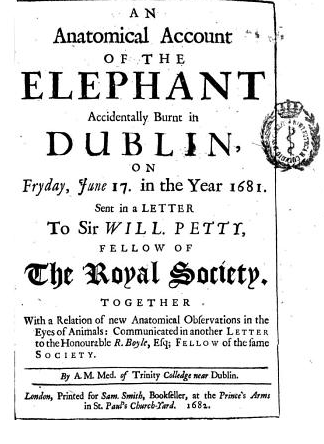
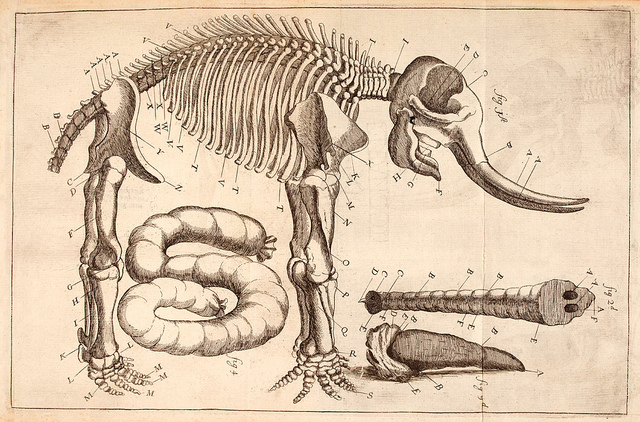
The Elephant on Essex Street took its name from a rather bizarre incident in the history of the city. On 17 June 1681, an elephant which had been taken to Dublin for display at an exhibition was to meet a tragic end, when the stable he was being kept in at Essex Street caught fire. This spectacle brought huge crowds onto the street, and as Frank Hopkins has noted “when the fire was extinguished they proceeded to take parts of the elephant away as souvenirs.” In the aftermath of this incident, An Anatomical Account of the Elephant Accidentally Burnt in Dublin was published. The elephant was dissected by Allan Mullen, from Trinity College Dublin, who published his findings, including several illustrations.

Published in 1682.

Published in 1682.

A high quality scan of this work was posted by the National Library of Ireland to Flickr some time ago:

From historic sources it also appears that The Elephant served as a meeting place for the first Catholic Committee in the 1760s, a forerunner of the influential Catholic Association of Daniel O’Connell in the nineteenth century.

Also located on Essex Street was The Globe, which has been described by the Dublin historian J.T Gilbert as one of the most important taverns of the period, noting that “this house was the chief resort of the Dublin politicians during the reign of George II”, and that it attracted “merchants, physicians, and lawyers” among others. Gilbert quoted from a poem about the tavern, in which it was said

Sometimes to the ‘ Globe’ I stray,
To hear the trifle of the day ;
There learned politicians spy,
With thread-bare cloaks, and wigs awry ;
Assembled round, in deep debate
On Prussia’s arms, and Britain’s fate ;
Whilst one, whose penetration goes,
At best, no farther than his nose,
In pompous military strain,
Fights every battle o’er again :
Important as a new-made Lord,
He spills his coffee on the board….

An interesting character by the name of ‘Blind Peter’ comes up in many accounts of this pub. A shoe black, he was described in one publication as “of hideous aspect, he had but one eye, was most inveterately pitted with the same pox, and his face completely tattoo’d with the scars he received in the various battles he had fought.”

We’ve briefly touched on The Bear Tavern before on the site, as it featured in Crane Lane. This pub was kept by a man named David Corbet until his death in 1787, and he was described by J.T Gilbert as a Freemason, as well as “an excellent musician, and leader of the band of the Dublin Independent Volunteers.” While taverns were hugely popular meeting spots for Volunteers and political activists, historian Padhraig Higgins has noted that publicans were no doubt active in these circles “no doubt for a mixture of patriotic and more self-interested motives.”
(more…)

Read Full Post »

Irish Press 14 June 1946.

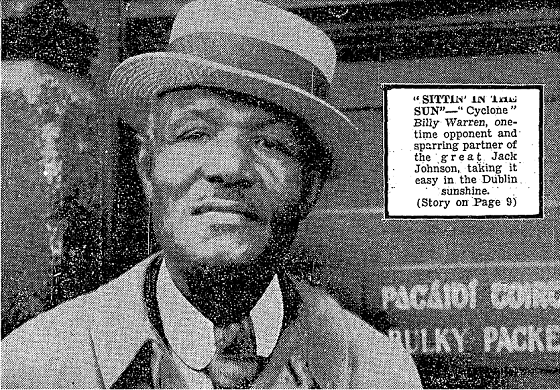
‘Cyclone’ Billy Warren. Irish Press 14 June 1946.

Many people leave a lasting impact on Dublin, becoming a part of its very fabric and remembered as characters of the city. Recently I stumbled upon one very interesting Dublin character of old, remembered for posterity with a brief mention in Me Jewel and Darlin’ Dublin by Éamonn MacThomáis, but otherwise largely forgotten. This character is the black boxer Joseph Warren, who was widely known as ‘Cyclone’ Billy Warren in the first half of the twentieth century. In the words of MacThomáis, Warren “came to Dublin, fell in love with the city and its people and never left.” He was a very familiar face at the General Post Office on O’Connell Street, where he tended to spend his time engaging people in conversation. Warren, who retired in this city, also appeared on screen as an actor and he may have even been painted by Sir William Orpen.

Who was this black boxer who landed in Dublin in the early twentieth century, and what was his background? Information on him is scarce and often seemingly inaccurate, but I’ve tried to piece together the various bits of information out there. There is even disagreement over his nation of origin, with some claiming that Warren was born in Australia, while others insist he was American.The Irish Digest in 1959 wrote of Warren as “Billy Warren, whose father had been born in slavery on a cotton plantation”, yet others would refer to him as Australian in the Irish media. Regardless of origins, it appears Warren would box in Australia, the United States and right across Europe over the course of his career. According to the Irish Independent at the time of his death in March 1951, the “negro boxer, who had been a familiar figure to O’Connell Street crowds for nearly half a century” was 74 years old. It was stated that before settling in Dublin he had married a “Wolverhampton girl” and that they lived in a small one-roomed home on Nelson Street, from which he would emerge and walk down to O’Connell Street daily. His seemingly exotic past and career in the boxing ring, coupled with the relatively unusual fact that Warren was a black man in the Dublin of his time, made him stand out from the crowd.

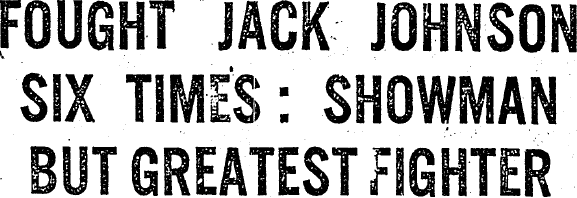
In a June 1946 interview with the Irish Independent, Warren gave some detail of his life and career, claiming that as a 27 year old in 1907 he had boxed with the famous Jack Johnson, the first African American world heavyweight boxing champion. “I was pretty green myself then”, he told the paper. “I didn’t know much about covering up and defence, but I could take a good beating without swallowing the anchor.” However Box Rec, dedicated to recording the histories of boxers who have stepped into the ring, casts some doubt on Warren’s tale of fighting Johnson, noting that:

Claims he made after his career of fighting both Jack Johnson and Peter Jackson have not been proven, and may just be exaggerations by the “Cyclone.” But Warren did square off with Sam McVey, a great black fighter of the era, losing by a second round knockout. “

Warren's claims reported in the above mentioned interview.

Warren’s claims reported in the above mentioned interview.

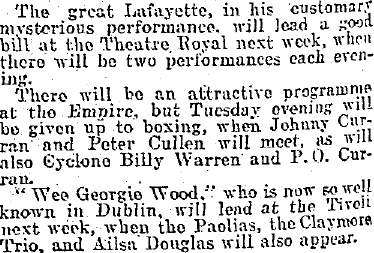
The Box Rec website has also attempted to correlate a list of Warren’s appearances in the ring, though like with all aspects of his story details are sketchy in places. References to Warren boxing in this city begin to appear towards the end of the first decade of the twentieth century and continue from there. In 1910 for example he was advertised as boxing in the Theatre Royal:

June 1910 advertisement for a boxing match featuring the Cyclone.

June 1910 advertisement for a boxing match featuring the Cyclone.

Even earlier, in August 1909, there is reference to Warren fighting Wexford man Jem Roche for the Championship of Ireland in Belfast and later in Dublin. Warren would succeed in beating Roche in Belfast. Interestingly, the Australian Auckland Star heralded this event, praising “the Australian boxer” for his talents. Not long after this success, Warren would lose the title in Dublin to Roche. Some argued that as a non-national he should never have been allowed compete for the Irish Championship at all. (more…)

Read Full Post »

Introduction

The social life of a gay man in Dublin in the early 1970s was summed up as such by one contributor in the book Coming Out (2003):

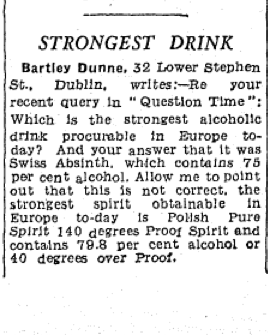
As for most of us, being gay in those days was a very lonely experience. There weren’t many opportunities to meet gay people, unless you knew of the one bar – two bars, actually, in Dublin at that time, Bartley Dunne’s and Rice’s … They were the two pubs and if you hadn’t met gay people, you wouldn’t have known about these pubs; there was no advertising in those days, and it was all through word-of mouth.

Bartley Dunne’s and Rice’s proved to be critical points of social interaction and first emerged as gay- friendly pubs in the late 1950s and early 1960s. George Fullerton, who emigrated to London in 1968, was quoted in Dermot Ferritier’s book Occasions of Sin: Sex and Society in Modern Ireland (2009) as saying that:

In 1960s Dublin the [gay] scene basically consisted of 2 pubs – Rice’s and Bartley Dunne’s. I never experienced discrimination as such, probably because we were largely invisible.

Rice's, South King Street. early 1980s. Dublin Insight Guide (1989)

Rice’s, South King Street. early 1980s. Dublin Insight Guide (1989)

There are no traces left of either establishment. Rice’s, at the corner of Stephen’s Green and South King Street, was demolished in 1986 to make way for the Stephen’s Green Shopping Centre. While Bartley Dunne’s, on Stephen’s Street Lower beside the Mercer Hospital, was torn down in 1990 and replaced with the Break for the Border pub and nightclub.

On a side note, some people may be surprised to hear that gay taverns in England date back to the 1720s (Molly houses) while more ‘modern’ establishments like Café ‘t Mandje in Amsterdam have been open since 1927.

Many in both the gay and straight community have described Rice’s and Bartley Dunne’s as deserving the title of being the city’s first gay friendly pubs. Why these two particular pubs though?

Most people point to the fact that both were in close proximity to the Gaiety Theatre and St. Stephen’s Green which at the time was a popular gay cruising area.

Paul Candon in Gay Community News (February 1996) labeled Bartley Dunne’s as “the first gay pub as we know it in the city” and also referenced Rice’s. He said there was a total of five regular gay-friendly bars to choose from in the 1960s in the Stephen’s Green/Grafton Street area. The other three being the short-lived Kings (opposite the Gaiety Theatre), The Bailey and Davy Byrne’s, both on Duke Street.

Rosemary Flowers told me via Facebook (20 Oct 2015):

My memories are from the mid 1960s but my dad worked in Renshaw’s opposite Mercer’s Hospital from 1955 and he was aware of the gay clientele in Rices, Dunne’s and The Bailey. In Rice’s. when I knew it, most of the gay men were in the front part. The ‘arty’ crowd mostly stuck to Rice’s and the younger crowd to Dunne’s. The Gardaí for the most part left them alone as they included some very famous names. The odd time they hassled the younger men in Dunne’s. Bruxelles was also a gay -friendly place for soldiers & a recruiting ground for mercenaries who were thrown out of the army. It was a much ‘butcher’ crowd in the Bailey and Bruxelles. Rice’s and Dunne’s had a very middle-class clientele.

Kevin Myers wrote in The Irish Times (18 May 1995) of his student days in UCD in the late 1960s and how he discovered that “Rice’s … (was) in part a gay bar … Bartley Dunne’s was another”. Furthermore Bartley Dunne’s was described as “the most famous and oldest gay bar in Dublin'” by Victoria Freedman in The cities of David: the life of David Norris (1995).

Bartley Dunne's in 1985. Credit - blogtrotta80s.blogspot.com

Bartley Dunne’s in 1985. Credit – blogtrotta80s.blogspot.com

One contributor to Coming out: Irish gay experiences (2003) talks about coming up to Dublin in the late 1970s from the country and spending “vast amounts of time in Rice’s, Bartley Dunne’s and the Hirschfield Centre”. Patrick Hennessy made a similar comment on an Irish Times article about the death of early LGBT campaigner in Christopher Robson in March of this year:

Yes farewell to one who fought the good fight back in the days when young and not so young men would come round to the Hirschfeld Centre nervously asking for info. Or sitting in circles exchanging their first tentative views in public about being gay. And then a few weeks later you might see one or two of them sipping a drink in a corner of Bartley Dunne’s or Bobby Rice’s.

The 1971 edition of ‘Fielding’s Travel Guide to Europe’ described “the historic Bailey, entirely reconstructed” as being full of “hippie types and Gay Boys”. It went onto say that neither it nor Davy Byrne’s would be “recommended for the “straight” traveller”.

Bartley Dunne’s, 32 Stephens St Lwr

In 1940, Hayden’s pub (“a well known seven-day licensed premises”) on Stephen’s Street Lower was put on the market after the owner James Bernard Hayden declared bankruptcy. In a related series of events, it was reported in the Irish Press (26 September 1940) that Gardaí had objected to renewing the pub’s licence on the grounds that the premises was not being conducted “in a peaceful and orderly manner'”. It had only closed one day the previous year.

The licence was taken over in August 1941 by Bartholomew ‘Bartley’ Dunne. A native Irish speaker from Kilconly, Tuam, County Galway, he had returned to Dublin after nearly 40 years of living and working in Manchester where had been prominent in the United Irish League and the Banba Branch of the Gaelic League. Bartley Dunne’s pub could “boast a distinguished clientele” in the mid 1940s according to the Nationalist and Leinster Times (23 Nov 1946). Popular with “cross-channel visitors, it frequently affords glimpses of such celebrities” as Dylan Thomas (Welsh poet); Sorley MacLean (Scottish Gaelic poet) and Valentine McEntee MP.

I assume Bartley Sr. retired sometime in the 1950s. He died on 25 June 1961 aged 85. His two sons – Bartley Jr. (known as Barry) and Gerard (known as Gerry) – had been working in the pub for sometime and took it over then. They built up a reputation for stocking exotic drinks from all over the world. Barry later recalled to The Irish Times (07 Sep 1985) that “there was a time when, if a customer wanted a particular drink and we didn’t have it in stock, he got something else for free”. We take it for the granted the range of drinks available in Dublin bars today but Bartley Dunne’s was really a trailblazer. It offered saki, tequila and ouzo before any other place in the city. Mary Frances Kennedy writing in The Irish Times (15 July 1960) was amazed at the range of wines available including Bull’s Blood of Eger (11s 6d a bottle); Balatoni Reisling (10s a bottle); Tokak Aszu (19s 6d a bottle) and Samos Muscatel (11 6d a bottle).

Letter from Bartley Dunne to Irish Independent (27 Aug 1959)

Letter from Bartley Dunne Sr to the Irish Independent (27 Aug 1959)

It would seem that Bartley Dunne’s (known to many as BD’s), which had already been attracting Dublin’s avant garde and theatre crowd, started to become gay-friendly by the late 1950s.

David Norris visited the pub as a schoolboy in his late teens circa 1961/62. In his 2012 autobiography ‘A Kick Against The Pricks’, he wrote:

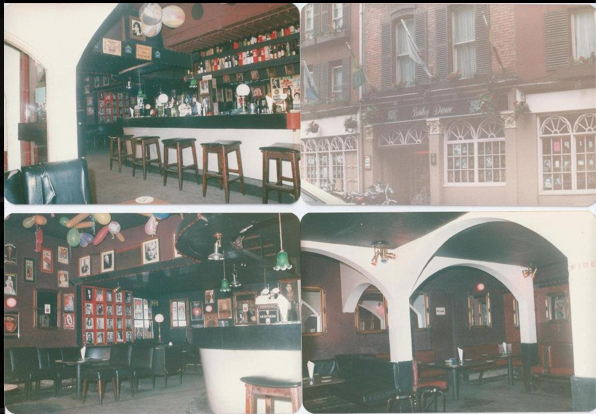
Towards the end of my schooldays I started to explore a little. I had a kindred spirit in school and we occasionally visited a city centre bar called Bartley Dunne’s which was a notorious haunt of the homosexual demi-monde. It was an Aladdin’s cave to me, its wicker-clad Chianti bottles stiff with dribbled candlewax, tea chests covered in red and white chequered cloths, heavy scarlet velvet drapes and an immense collection of multi-coloured liqueurs glinting away in their bottles.

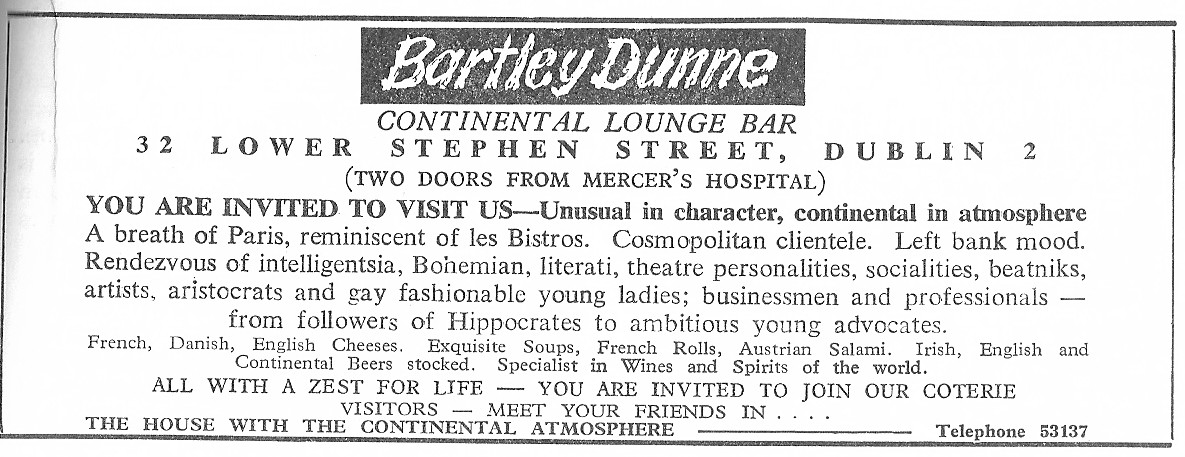
The place was (full) of theatrical old queens, with the barmen clad in bum-freezer uniforms. While not being gay themselves, as far as I know, the Dunne brothers were quite theatrical in their own way. Barry would hand out little cards, bearing the legend ‘Bartley Dunne’s, reminiscent of a left bank bistro, haunt of aristocrats, poets and artists’. Whatever about that, Saturday night certainly resembled an amateur opera in full swing. There only ever seemed to be two records played over the sound system: ‘Non, Je Ne Regrette Rien’ by Edith Piaf, and Ray Charles’ ‘Take These Chains From My Heart’.

Screenshot 2020-10-05 at 18.41.55

Advertisement for Bartley Dunne’s in 1916-1966 Sinn Féin booklet (1966).

Brian Lacey in his excellent book Terrible Queer Creatures: A History of Homosexuality in Ireland (2008) noted that among the many characters that frequented the bar was the then virtually unknown Norman Scott, whose 1960s affair with Jeremy Thorpe (later to become leader of the British Liberal Party) forced him to resign from the party in 1976. Scott lived in a flat near Leinster Road while in Dublin. Ulick O’Connor mentioned in his diaries that Scott also had a long relationship with an unidentified person prominent in an Irish political party.

Bartley Dunne's, 1980s. Credit - 'Bartley Dunnes Reunion' Facebook

Bartley Dunne’s, 1980s. Credit – ‘Bartley Dunne’s Reunion’ Facebook

It was noted in The Irish Times (22 March 1967) that Moscow journalist Lev Sedin, who has visited Dublin a number of times, had recently published a book on Ireland that dealt with politics and economics as well as more “frivolous subjects”. One of these was a lyrical poem about Bartley Dunne’s and his experience there of being consulted on the correct pronunciation of the Russian wines in stock. Sedin recommended the pub to anyone in Europe “who wished to imbibe true culture”.

bartley-dunne-196768-1

Daggas (a Swedish student,) Anita Casey, Barry Dunne (the proprietor) and Charlotte Leahy. Outside Bartley Dunne’s, 1967/68. Credit: Charlotte Okonji via FB.

A writer going by ‘Endymion’ in a 1968 Dublin guide book described Bartley Dunne’s as the city’s “most unusual pub'” Its clientele was an “an odd mixture of bohemians and down-to-earth Dubliners [that] creates an atmosphere which would have interested James Joyce.”

Advertisement for Bartley Dunne's, 1969. Credit - Cedar Lounge Revolution

Advertisement for Bartley Dunne’s, 1969. Credit – Cedar Lounge Revolution

The pub was described by Roy Bulson in ‘Irish Pubs Of Character’ (1969) as:

one of Dublin’s most unusual pubs with its Continental atmosphere. Well worth a visit to mix with a variety of characters. Ask for the wine list which is one of the most reasonably priced and extensive in Dublin.

Bartley Dunne’s had a “French bistro ambience” with prints on the walls by Cezanne, Monet, and Picasso as well as Parisian theatre posters and photographs of film stars. It was also famous for its dimly lit nooks and crannies. Elizabeth Taylor and Richard Burton drank there regularly in 1965 during the filming of ‘The Spy Who Came in from the Cold’ as did actors Kim Novak and Laurence Harvery when they took time off from filming Of Human Bondage at Ardmore Studios. Noël Coward was another visitor.

Front cover of 'In Touch' magazine showing a group of Irish Gay Rights Movement members outside Bartley Dunne's in 1977. Credit - IGRM 40 Years (facebook.com/igrm40)

Front cover of ‘In Touch’ magazine showing a group of Irish Gay Rights Movement members outside Bartley Dunne’s in 1977. Credit – IGRM 40 Years (facebook.com/igrm40)

Snaps of Bartley Dunnes, late 1980s. Credit - 'Bartley Dunnes Reunion' Faecebook

Snaps of Bartley Dunne’s, late 1980s. Credit – ‘Bartley Dunne’s Reunion’ Facebook

(more…)

Read Full Post »

‘Crime in the City: Crime & History’ is a series of upcoming talks being organised in the Central Library, inside of the Ilac Centre.

All of the talks are free to attend and I’m actually giving one myself, which will focus on the ‘Animal Gang’, anti-communism and gang violence in 1930s Dublin. Also speaking are some of my favourite authors and bloggers, including Finbar from the Irish History Podcast on the subject of crime in medieval Dublin, and Joe Joyce, author of a brilliant biography of the Guinness family and a regular contributor to The Irish Times.

All talks take place on Thursday’s, and kick off at 1pm. My talk is designed to tie-in with the recent release of Locked Out: A Century of Irish Working-Class Life, which includes a chapter from me on the ‘Animal Gang’. Feel free to attend, but also please inform others who you think may be interested.

Trouble in the 1930s!

Trouble in the 1930s!


Joe Joyce: 3rd October
Joe is author of ‘The Boss’, ‘The Trigger Man’, ‘The Guinnesses: the untold story of Ireland’s most successful family’ and ‘The Tower’. His most recent book ‘Echoland’ is set in a divided Dublin in June 1940.

Donal Fallon: 10th October
Donal is co-author of ‘Come Here To Me: Dublin’s Other History’ and a regular contributor to the ‘Come here to Me’ blog. He will speak on ‘The Animal Gangs’ and gang violence in 1930’s Dublin.

Michael Russell: 17th October
Michael is author of ‘City of Shadows’ and the sequel ‘City of Strangers’. Both books are set in 1930’s Dublin. ‘City of Strangers’ will be published in November 2013. ‘City of Shadows’ was longlisted for a (Crime Writers Association) John Creasey Award in the UK this year.

Finbar Dwyer: 24th October
Finbar is an historian and founder of http://www.irishhistorypodcast.ie. His forthcoming book is called ‘Witches, Heretics and Stockholm Syndrome: Stories from Medieval Ireland’.

Kevin McCarthy: 31st October
Kevin is the author of the historical crime novels ‘Peeler’ and ‘Irregulars’. ‘Irregulars’ was released in May and is a detective story centred in the Monto and set during the civil war in 1922.

Read Full Post »

Here is a very interesting account from the summer of 1982 of fifteen men and women from the gay community who visited a total of eight pubs in Dublin city centre and recorded their experiences.

Credit: Gay Pride Week 1982. NGF Newsletter, July 1982. Report of GPW Pub Zap, unattributed (probably Bill Foley or Liam Whitelaw).

Credit: Gay Pride Week 1982. NGF Newsletter, July 1982. Report of GPW Pub Zap, unattributed (probably Bill Foley or Liam Whitelaw).

I found it on the excellent Irish Queer Archive facebook page.

The eight pubs visited were The Viking, The Oak Tree, The Grannery (sic), The Clarence Hotel,  The Lord Edward, The Castle Inn, Rices and Fives.

I thought it would be interesting to collate the experiences  of the group in each pub and find out whether that particular establishment is still open 31 years later.

1. The Viking, 75 Dame Street.

Some of the group were allowed in, others were not. This did not seem to have been directly to with sexual orientation but apparently due to the fact that three of the women had gotten into an argument with the barman the previous evening. We have previously about how written how The Viking has been described as the first bar in the city to be owned by a gay proprietor and to be opened specifically as a gay bar.

Today it is known as Brogans.

2. The Oak Tree, 81 Dame Street

The group were served here without any issues but left after a few drinks as it was too noisy. A couple of older gay men have mentioned online (see here and here) that this bar was gay-friendly in the 1980s.

Today it is known simply as The Oak

3. The Granary, 35-37 East Essex Street

Though quickly becoming “the largest and most conspicuous” group and “loudly discuss(ing) gay politics”, the service was “friendly and efficient”.

Today it is known as Bad Bob’s, before that it was called The Purty Kitchen.

4. The Clarence Hotel, 6-8 Wellington Quay (with an entrance on East Essex Street)

The group was refused service here being told by a bouncer that “this is not your kind of place”.

Today is still The Clarence. It was taken over by Bono, the Edge and Harry Crosby in 1992.

5. The Lord Edward, 23 Christchurch Place

Ushered upstairs where “there would be no room”, the group (who were wearing Pink Triangle badges) were then threatened that the police would be called. Presumably if they didn’t leave.

Today it is still known as The Lord Edward.

6. The Castle Inn, 5-7 Lord Edward Street

Fairly empty on arrival, the group were all served here though “not without a little resentment”. Three women left the pub when the gay group sat down in a table beside them.

Today it is known as The Bull & Castle.

7. Rice’s, 141 Stephens Green/1 South King Street

It was mentioned in the piece that a smaller group had tried to have a drink in Rices but were refused.

This is quite interesting as Rice’s has been widely described as being gay-friendly from as early as the 1960s to mid 1980s when it was demolished to make way for the Stephens Green Shopping Centre.

Letter to Irish Times re: knocking down of Rices. 28 Jan 1986

Letter to Irish Times re: knocking down of Rices. 28 Jan 1986

8. Fives, 55 Dame Street

A smaller number of the group were also refused here earlier in the evening.

After much searching, I cannot find anymore information about a pub in Dublin in the early 1980s called ‘Fives’.

(Edit: Facebook commenters Tommy Doran and Vince Donnelly have helped solve the mystery. Fives was the name of a indie club on Dame Street. It later became The Underground. It is now Club Lapello, “Dublin’s longest established Lapdancing club”)

Read Full Post »

The Spanish Civil War occurred at a time of intense political conflict between the Left and the Right across Europe, and many Irishmen would partake in the war, both in defence of the Spanish Republic and on the side of Franco and the fascist coup. The majority of those from this island who fought in the conflict fought with Eoin O’Duffy and the Irish Brigade, though in excess of 300 Irishmen did fight with the International Brigades. A quarter of those Irishmen who fought against fascism in this war would die on the battlefields of Spain.

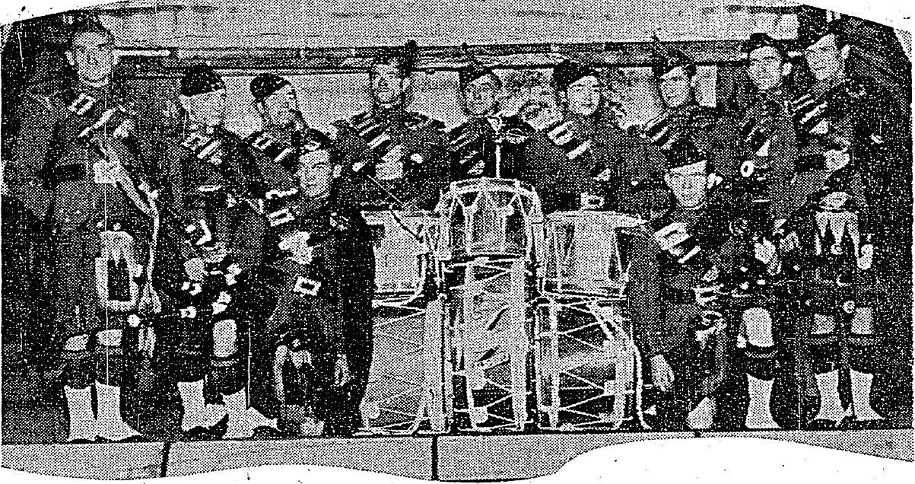
Perhaps the most unusual group to travel to Spain were the St. Mary’s Pipe Band, who set off from Dublin for the frontiers of Spain on a mission: to ensure that O’Duffy’s men could march to and from the frontlines to the sound of Irish airs. At the time they were widely refered to as the ‘St. Mary’s Anti-Communist Pipe Band’. A contemporary newspaper report on the arrival of the band in Spain noted that their “kilts and bagpipes caused more excitement on their arrival than a bombardment by Government aeroplanes.”

The band just prior to departing Ireland (Irish Independent)

The band just prior to departing Ireland (Irish Independent)

The St. Mary’s band took their name from St.Mary’s Pro-Cathedral, at the heart of Dublin city centre. The church features prominently in anti-communist street agitation in 1930s Dublin. It was a particularly heated sermon in this church in March 1933 that would lead to hundreds of Dubliners laying siege to Connolly House on Great Strand Street, the headquarters of the communist movement in Ireland, starting three nights of anti-communist violence in the city. Bob Doyle, a young Dubliner who would later fight on the republican side of the Spanish Civil War, remembered being in the Pro-Cathedral on that night:

I had attended the evening mission on Monday 27 March 1933 at the Pro-Cathedral, during the period of Lent where the preacher was a Jesuit. The cathedral was full. He was standing in the pulpit talking about the state of the country, I remember him saying – which scared me – “Here in this holy Catholic city of Dublin, these vile creatures of Communism are within our midst.” Immediately after the sermon everybody then began leaving singing and gathered in a crowd outside, we must have been a thousand singing “To Jesus Heart All Burning” and “Faith of our Fathers, Holy Faith”. We marched down towards Great Strand Street, to the headquarters of the socialist and anti-Fascist groups in Connolly House. I was inspired, if you could use that expression, by the message of the Jesuit. There was no attempt by the police to stop us.

Gardaí inside Connolly House after it was attacked by a mob. March 1933. (Authors collection)

Gardaí inside Connolly House after it was attacked by a mob. March 1933. (Authors collection)

The St. Mary’s band were a feature at several anti-communist demonstrations in Dublin, appearing for example at a huge Irish Christian Front demonstration at College Green in October 1936. At that meeting Desmond Bell told the crowd that “if Spain fell to communism today, Europe would fall to it tomorrow” and that “the frontiers for Irish Christianity today are the trenches around Madrid”. The St. Mary’s band were joined by several others at that meeting including the Postal Workers’ Band, O’Connell Fife and Drum and a band from Maynooth.

In February 1937 it was reported in the Irish Independent that “a chaplain, two nurses and the members of the St.Mary’s Pipers Band, Dublin, left Dublin last night for Spain, via London. In Spain they will join the Irish Brigade, of which General O’Duffy is the leader.” The paper also named the members of the band who had gone to Spain as follows:

Irish Independent. 20 February 1937.

Irish Independent. 20 February 1937.

(more…)

Read Full Post »

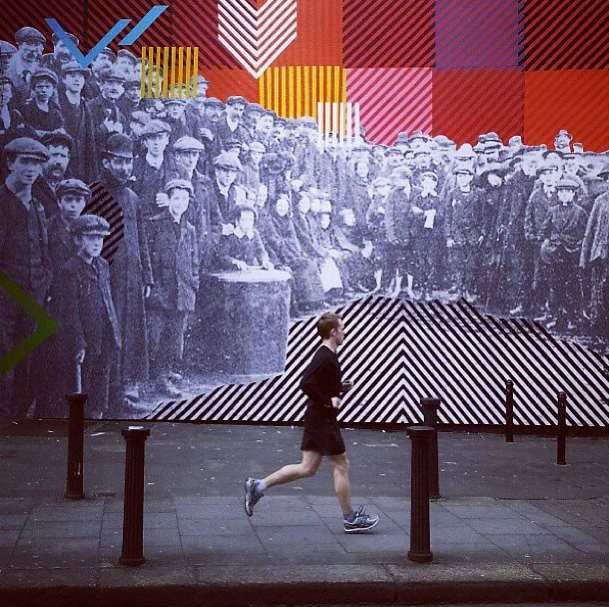
Dubliners await the arrival of the S.S Hare (Art project by Maser/Jr on The Sugar Club, Image: 'MASER ART')

Dubliners await the arrival of the S.S Hare (Art project by Maser/Jr on The Sugar Club, Image: ‘MASER ART’)

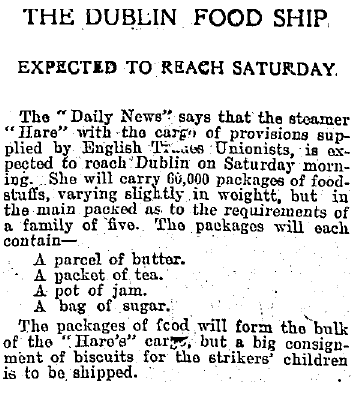
On 27 September 1913, the S.S Hare arrived in Dublin from Salford, loaded with food and supplies intended to assist the families of those locked-out by William Martin Murphy and other Dublin employers.

The food ship provided desperately needed relief to many Dublin families, and the “60,000 packages of butter, sugar, jam, potatoes, fish and biscuits” were very welcome assistance. As Joseph O’Brien noted in the classic Dear,Dirty Dublin, this ship would be “the first of a dozen or so such T.U.C [Trade Union Congress] sponsored operations over the next four months.”

Dublin was a city of intense poverty even prior to the Lockout, as the precarious jobs situation ensured that for many families labour was often casual and irregular, thus creating uncertainty for families with regards income. Johnston Birchall, in his history of the Co-op movement in Britain, states rightly that Dublin was a city “that was already the poorest and most slum-ridden in the kingdom”, and with the dispute having begun in late August, by the end of September people were in dire need of assistance.
An undated image of the S.S Hare.

An undated image of the S.S Hare.

The Co-operative Wholesale Society in Britain celebrated its fiftieth anniversary in September 1913, and it was thanks to the sizeable financial backing of the Trade Union Congress, to the tune of £5,000, that it began the task of making up thirty thousand food parcels for the Dublin poor.

The S.S Hare was built in Glasgow in 1886, but was owned by George Lowen of Manchester at the time of the Dublin dispute. Ironically, the Hare was involved in a labour dispute of its own at the time, and as Padraig Yeates notes in his study of the Lockout, the Pomona Docks where the ship sat ready to sail to Dublin was entangled in a dispute involving the right to union recognition. The ship had just arrived from Dublin carrying a consignment of Guinness stout. Guinness feature in the story of the 1913 Lockout, as the company sent £500 to the employers’ fund during the dispute. While refusing to ‘lock out’ unionised workers initially, it did take action against certain workers who did engage in sympathetic strike action.

Incredibly, trade union leaders in Manchester convinced the men at the docks to break their own strike temporarily, and “a deal was struck: the ship would be released with its return consignment of empty Guinness tasks, provided it also took the food for the city’s strikers. By 5 p.m. on Friday the Hare had left Salford on its historic voyage.” Shortly after noon, she would arrive along the south wall of the River Liffey. Huge crowds had gathered by that point, believing the ship would arrive earlier, but weather conditions had delayed its journey. On board were leading British trade unionists, one of whom would inform the crowd that “we recognise that your fight is your fight and we are going to stand by you until it is won.”

William Martin Murphy's Irish Independent reports on the Hare.

William Martin Murphy’s Irish Independent reports on the Hare.

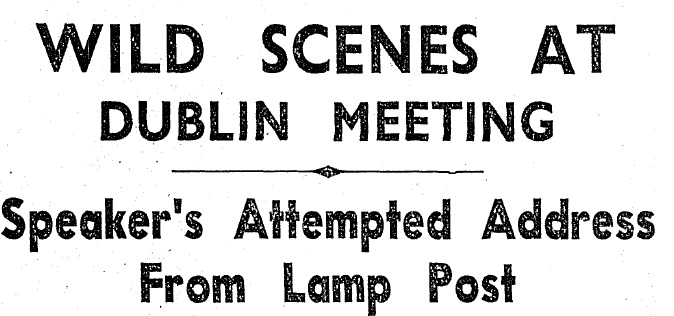
On the day following the arrival of the foodship, a disgusting report in the Sunday Independent attacked the “unfortunate dupes” of Larkinism who had gathered at the South Wall for the food distribution. The paper claimed that the scenes “sounded a note of degradation that must always ring in the ears of Dublin”, and went on to claim that the scenes made “a pitiable sight.” A journalist with The Irish Times noted that there were varying degrees of poverty evident in the crowd, ranging from “the wan dweller in some noisome tenement” to “the carter’s wide, who had a bonnet as well as a shawl.” Food was distributed to all who had union issued vouchers, and sadly many poor Dubliners who were not entitled to any assistance had come down to the ship too, perhaps in the expectation or hope there would be additional food.

The arrival of the Hare (Image:UCC Multitext)

The arrival of the Hare (Image:UCC Multitext)

Padraig Yeates has noted that this vital assistance was not alone important for those living in Dublin city centre, but those beyond the city, writing that:

It took until 8 p.m to unload the Hare and until 9 p.m to finish distribution at the South Wall. More workers’ families were supplied from carts that took consignments of food for distribution in Kingstown, Clondalkin, Swords, Lucan and other parts of County Dublin. By the end of the day nine thousand workers and their dependants had received provisions.

What became of the Hare? In December 1917, as the ship was sailing from Manchester to Dublin once more, it was torpedoed and sunk seven miles east of the Kish lighthouse. This attack was carried out by the German submarine, U62. Sadly, twelve lives were lost in this attack. Five of those killed were born in Dublin.

Read Full Post »

« Newer Posts - Older Posts »