Feeds:
Posts
Comments

Archive for the ‘Dublin History’ Category

John's Lane Church - Image by Paul Reynolds

John’s Lane Church (Paul Reynolds)

This image by Paul Reynolds captures the beautiful John’s Lane Church in the heart of the Liberties, which has long interested me because of its hidden history.

The Thomas Street church first opened in 1874 (after work began in 1862), with Edward Welby Pugin the architect behind the project. Pugin came from an incredibly distinguished architectural family, the son of Augustus Pugin, who carried out the interior design of the Palace of Westminster, as well as being responsible for many religious buildings in Ireland and Britain.

My interest in John’s Lane Church comes not from the architectural history of the building, but rather a nickname the church has acquired in its own community, spoken of as the ‘Fenian Church’. This nickname comes from the fact many Fenians worked at the building site, such as the Pagan O’Leary, Denis Cromien, Dan Gleason, Michael Lawless and Michael Malone. Ironically however, so too did a man named Pierce Nagle, a comrade in their eyes but a secret informer who would send them to penal servitude.

The Fenian Brotherhood in Ireland had been founded in Dublin by James Stephens and others on Saint Patrick’s Day in 1858. Stephens was a veteran republican who had spent time in exile in Paris as a result of his revolutionary activity. It was to be a secret revolutionary organisation, established thanks to American financial backing, which would advocate armed revolution to establish Irish independence. The Fenians were a real threat to the establishment, mounting bombing campaigns in Britain for example which targeted military infrastructure, government and public transport among other targets.
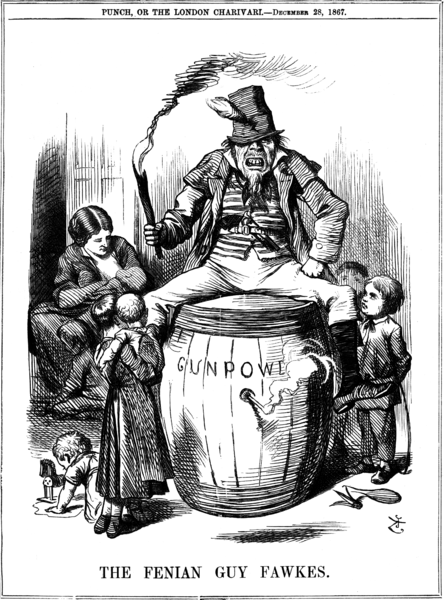
A Punch cartoon from 1867 depicting a 'Fenian Guy Fawkes'

A Punch cartoon from 1867 depicting a ‘Fenian Guy Fawkes’

The centenary booklet of the church issued by the church in 1962 noted that:

…While their hearts were busy with trowel and shovel their hearts were busy with revolution. By day they were the busy builders of John’s Lane, by night they talked of arms and Man and drilled in halls and fields. They were the Fenian Men. Denis Cromien, foreman of foremen, was there and had sworn a thousand men of the building trade into his circle.

Patrick O’Leary who worked on the site, known as the Pagan O’Leary, is a fascinating character in the history of Irish republicanism. Originally from County Cork, O’Leary spent some time in America, studying for a priesthood in the Catholic Church and even fighting in the Mexican War. Active within the Fenian Brotherhood having settled in New York, he would develop intense anti-Catholic views, and as Bridget Hourican has noted “he hated England and the Roman Catholic church with equal intensity, arguing that after driving out the English, Ireland should revert to the old paganism of Fionn mac Cumhaill”. As a result of these views, the name Pagan O’Leary was bestowed upon him by contemporaries.

While many of the stonemasons working on the church had taken the Fenian Oath, their betrayal came in 1865 thanks to the testimony of Pierce Nagle, a Tipperary native who had won the confidence and trust of those around him within the republican movement and at the John’s Lane site. He had first offered his service to the British authorities in 1864 while in America, and Nagle’s position within the movement kept the authorities aware of plans for insurrection and revolt in 1865. Many of the men who worked on John’s Lane Church would be sentenced to terms of penal servitude on the back of Nagle.

The church also boasts a strong connection to James Pearse, the father of Patrick and William Pearse. The English-born Pearse was a mason and monumental sculptor, who operated out of a premises on Great Brunswick Street. This street is today known as Pearse Street, and the family shop front has been beautifully restored with a plaque to the Pearse brothers also upon it.

27 Pearse Street today.

27 Pearse Street today.

The twelve statues in the niches on the church tower are the work of Pearse. Pearse was a very capable sculptor, and had won an award at the 1882 Dublin Exhibition for example for his High Altar for the Rotunda. The name ‘Pearse and Sons’ was adopted by the company he had established at the time of his death, and The Ireland Institute (who maintain the premises today) note:

On his death, Willie and Patrick Pearse took over the running of the business. Willie was nineteen and studying at the Metropolitan School of Art and was later to travel to London and Paris for further training. Patrick was at this stage using the title ‘Patrick H. Pearse, Sculptor’ and the company’s name had become ‘Pearse and Sons.’

Following the closure of the family business, the premises became home to the South City Workingmen’s Temperance Club, later a car company and many other ventures. It was acquired by its present owners in 1996, and has hosted many cultural and political events. Its facade, and the figures upon the ‘Fenian Church’ on Thomas Street, are reminders of the talented James Pearse.

Read Full Post »

Image cover: Irish Academic Press

Image cover: Irish Academic Press

I’m very pleased to announce that Locked Out: A Century of Irish Working-Class Life is about to be released by Irish Academic Press. Edited by David Convery, a historian and friend of Come Here To Me, it is a collection of chapters looking at the lives of working class people in Ireland in the last hundred years. I have contributed a chapter to the book looking at the rather infamous ‘Animal Gangs’ of the 1930s, a product of inner-city Dublin who emerged from a newspaper strike in 1934 but whose name became synonymous with gang violence in the city for generations. Other chapters look at things like the beautiful game, the NSPCC, class and gender, and one chapter even has reference to Tallafornia in it. It’s the one I’m most eager to read. The full list of chapters and more information is here. The book aims to remain affordable (sadly so often not the case with academic titles) and should be in all good bookshops very soon, in fact as early as next week.

In 1913, a titanic battle gripped the city of Dublin that polarised Irish society. The Irish Transport and General Workers’ Union, led by Jim Larkin, took on the might of one of the biggest Irish capitalists of the day, William Martin Murphy. What began as a strike over union recognition in Murphy’s Dublin United Tramway Company quickly escalated, as Murphy, backed by the state and the Dublin Employers’ Federation, declared all-out war on the trade union movement. Despite tremendous efforts, the workers went down to a bitter defeat. Historians and other commentators have tended to view the 1913 Lockout as a tragic, but unique case in Irish history. However, its uniqueness lies mainly in its scale. The working class continued to exist after 1913. It continued to develop its own organisations, its own cultural and leisure activities, its own forms of self-representation and identity. It also continued to engage in strike action and other forms of protest against the employers and ruling establishment. Yet the study of an independent working class has been neglected in favour of an all-embracing focus on nationalism in politics, culture and wider society. That class, rather than ethnicity, religion, or the idea of national identity could have a role to play in politics and cultural production is an alien one to mainstream Irish debate. The working class has been locked out of history.

Read Full Post »

An artist’s impression of the proposed new Irish Jewish Museum in Portobello, Dublin, which would involve demolishing five houses and building a two-storey-over-basement museum incorporating a cafe, synagogue, archive storage and audiovisual theatre. Credit - The Irish Times

An artist’s impression of the proposed new Irish Jewish Museum in Portobello, Dublin, which would involve demolishing five houses and building a two-storey-over-basement museum incorporating a cafe, synagogue, archive storage and audiovisual theatre. Credit – The Irish Times

Last year, the Irish Jewish Museum in Portobello, Dublin 8 announced a major development plan which would involve demolishing five houses and building a new two-storey-over-basement museum incorporating a café and synagogue.

(A review from Donal of the fantastic museum can be found here)

However, local residents, councillors and the city council conservation officer have criticised aspects of the plan. Residents are worried about the massive increase in cars and pollution into the area while conservation officer Nicola Matthews, referring to the proposal to demolish and reconstruct the synagogue, said this “façadist approach” would mean “removing the authenticity and real experience of the original site”. Locals are also worried that excavations and pile-driving for the 5.5-metre deep basement could destabilise nearby houses.

Recently a number of posters have appeared on lamposts and in the windows of houses in the area.

This particular poster shows photographs of a large tour group visiting the museum and the related congestion on the narrow streets.

Poster on pole.

Poster on pole. Credit – Sam

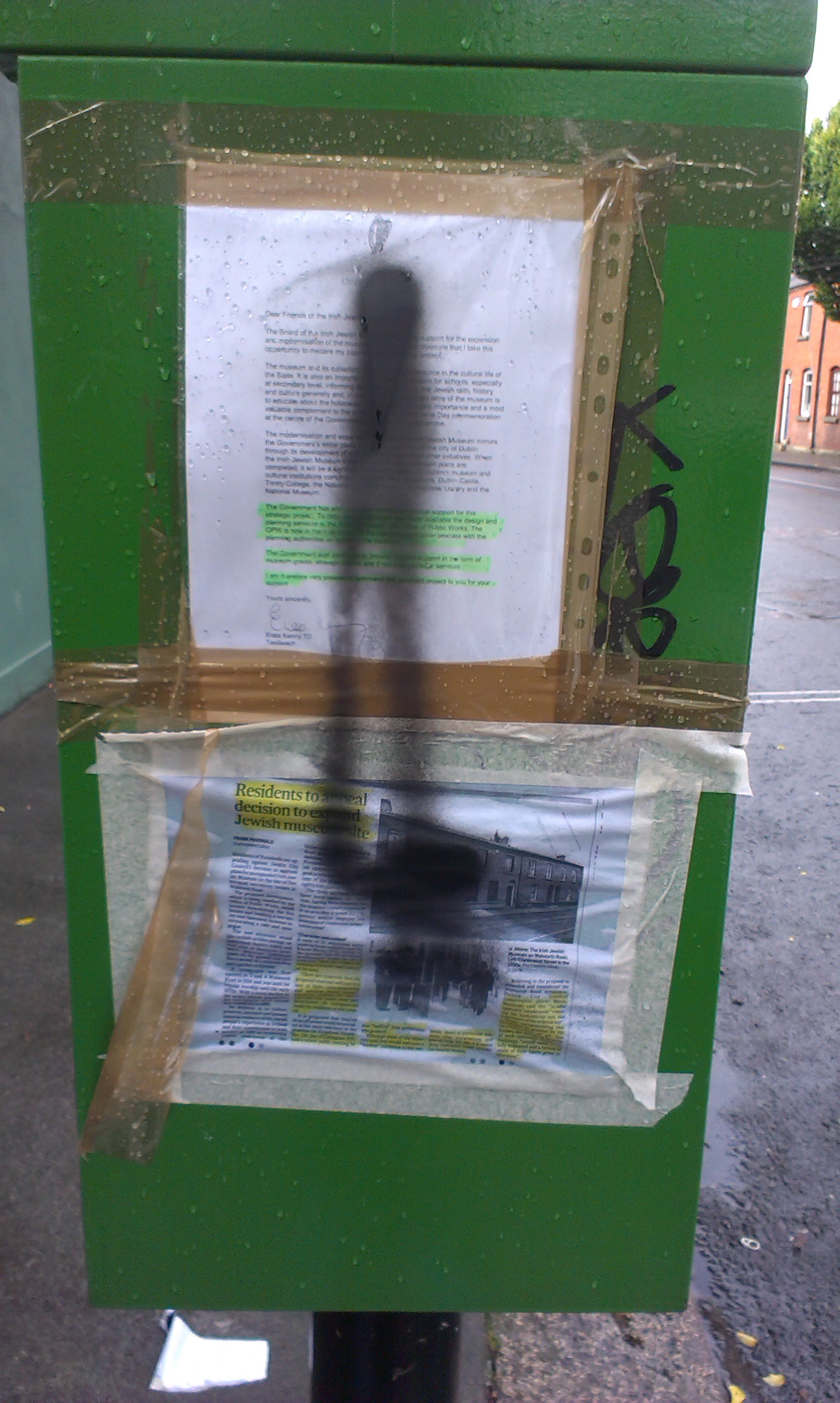
It would appear that someone, perhaps in favour of the development, used black spray paint to cover newspaper articles (in relation to local opposition to the plan) which were fastened on a post box.

An individual has used black spray paint to cover newspaper articles which critised the plan

An individual has used black spray paint to cover newspaper articles which critised the plan. Credit – Sam

Similar thing again:

Another poster was torn

Another poster was torn. Credit – Sam

Finally, one example of a large number of houses who have put posters in their front windows:

One of a large number of houses who have put similar posters in their front windows

Front window. Credit – Sam

I have family in the area and they’ve told me that they are both worried about the scale of the planned development and are upset that the anonymous campaign against the development has made no reference in their posters for support for the museum in general.

Let’s just hope that a resolution is found that is agreeable to all parties.

More on Jewish history from the blog:

RTE Nationwide special on Dublin Jewish community (January 2013)

Reactionary murders in Dublin (including two Jewish men killed in 1923)

Dublin Maccabi Assoication Facebook page

Burman vs. Alpers court case (1946)

Stein Opticians

Remembering Ettie Steinberg 

A look at the Dublin story of ‘Joe Edelstein’s Alarm’ in Little Jerusalem

James Connolly’s 1902 Yiddish election leaflet translated

“I am a Jew and I’m quite happy to live in that country” – Robert Briscoe

Read Full Post »

William Blakeny

William Blakeny, who once stood on Sackville Street

While many Dubliners are aware of the fact the site of the Spire today was once occupied by Nelson’s Pillar, what stood there before the Pillar is a mystery to most. Given the manner in which the Spire is often ridiculed and its merit debated by the locals, I’ve always liked the fact Nelson was quite controversial too in his day. Yet even before Nelson the site was occupied by a monument of a military figure, which went up on Saint Patrick’s Day in 1759. Fittingly, given the history of the site, it seems Dubliners were eager to vandalise and attack it.

Long before Admiral Nelson, a statue of William Blakeney (1st Baron Blakeney) stood in the centre of Dublin’s Sackville Street. It was placed there by an organisation known as the Friendly Brothers of Saint Patrick, who made the decision in 1756 to honour Blakeney with a monument, in praise of his defence of Port Phillip in the island of Minorca against French attack in that same year. At the time Blakeney was serving as Lieutenant Governor of Minorca, but the Limerick man had a long military career behind him, and had even served in the Irish House of Commons. He had been given the freedom of Dublin by the Corporation in 1757, indicating the respect for him at the time.

The Friendly Brothers of Saint Patrick, who erected the monument, were a very interesting organisation in the Dublin of their day. Described by Robin Usher in his work Protestant Dublin, 1660-1760: Architecture and Iconography as “a masonic fraternity that opposed duelling and aimed to promote social harmony among the respectable, Catholics (nominally) included”, the Friendly Brothers of Saint Patrick frequently met at the Rose Tavern, which was one of the most notable taverns of Dublin. J.T Gilbert writes about it in his history of Dublin which was published in the late 1850s. He states that it stood on the north side of Castle Street, and that “This establishment continued in fashion from the first part of the eighteenth century to about thirty years before the Union.” Gilbert gives great detail of the customs and styling of the order, noting that the members wore “Gold medals, suspended from a green ribbon, bearing on one side a group of hearts with a celestial crown”, and with the motto ” Quis separabit?” upon them. This translates into ‘who shall separate us?’, and in more recent times the motto has been associated with sections of the Loyalist community in the north, as it was adopted by one Loyalist terror group. Arthur Guinness was very involved with the Friendly Brothers of Saint Patrick, at one point serving as Secretary.

Arthur Guinness, brewer and Secretary of the Friendly Order of Saint Patrick.

Arthur Guinness, brewer and one-time Secretary of the Friendly Order of Saint Patrick.

The statue was the work of celebrated sculptor John Van Nost, responsible for several statues in the city of Dublin, including King George II who stood in Saint Stephen’s Green and the monument of Justice in Dublin Castle. Ciarán discussed this monument in our recent book, quoting the brilliant epithet in her honour that: ‘There she stands, upon her station, with her face to the Castle and her arse to the nation.’

Lady Justice at the Castle (Ciarán Murray)

Lady Justice at the Castle (Ciarán Murray)

The entry on Van Nost in the classic A Directory of Irish Artists (1913) gives great detail of the ceremony that unveiled the statue on Saint Patrick’s Day in 1759. The pieces quotes from an article published in Pue’s Occurrences magazine in March 1759. It seems that following the unveiling of the statue, the Friendly Brothers of Saint Patrick returned once more to their haunt at the Rose Tavern.

Last Friday evening the fine Brass Statue of the Right Hon. Lord Blakeney, Knight of the Bath, richly gilded and done by Mr. Van Nost, was carried from his house in Aungier Street, and erected on a superb white marble pedestal in the centre of the Mall in Sackville Street, and Saturday, being St. Patrick’s Day, the anniversary festival of that Patron of Ireland, the Grand Knot of the Ancient and Most Benevolent Order of the Friendly Brothers of St. Patrick, assembled in the morning at the Rose Tavern in Castle Street, and, according to annual custom, walked in procession to St. Patrick’s Cathedral, where they heard a sermon preached by the Rev. Mr. Benson; after which they proceeded to the Mall where that curious figure was unmasked in the presence of that illustrious body, and amidst unnumbered spectators, amongst whom were many travellers and competent judges of statuary, who declared this performance to be equal, if not superior, to any piece of the kind in Europe, not only for the strength and judgment expressed in the likeness of the brave old original, but also in the beauty and elegance with which the drapery and armour is executed, and which will be a monument to perpetuate the memory of the noble veteran whom it represents, as well as a lasting honour to him and his native country at whose expense it was erected, and which produced a member so worthy of such a reward for his valour, integrity and unshaken fortitude in his eminent services to the King and the public. After the statue was unmasked the Society returned to the Rose, where an elegant entertainment was prepared for their reception.

This statue was all the more remarkable considering its subject was still alive, with Blakeney dying in September 1761. This was also the first statue erected to the honour of an Irishman in Dublin, though it would fall victim to frequent attack, thrown down from its pedestal and greatly damaged in 1763. Indeed, the monument was so badly damaged it had to be taken away at the time. Just when the statue was removed once and for all is somewhat unclear, but an article in the Hibernian Magazine in 1783 refereed to it in the past-tense, noting that there “formerly stood a pedestrian statue of General Blakeney” at the site, but “what became of it we know not.” Robin Usher has suggested that perhaps the Friendly Order of Saint Patrick did not “attempt to make good the damage”, and that the vandalism to the monument so soon after it was erected may have removed it from the streets for good. A 1926 article in the Irish Independent on this mysterious statue claimed that “it was taken to the brass foundry at Clondalkin and melted down to make cannon”, but I haven’t found a reference to this elsewhere.

It seems like Admiral Nelson was doomed from the start!

Read Full Post »

Dr Daire Keogh, President of St Patrick’s College, Drumcondra will launch the book ‘Defying the law of the land: Agrarian radicals in Irish history’ (ed. Brian Casey) tomorrow evening (Friday) at 6.30pm in the Teacher’s Club Parnell Square.

The book, published by the History Press, looks at the Land League, the Knights of the Plough and the perception and reality of Irish landlords while furthering understanding of the importance of the land question in Irish history.

Book cover

Book cover

The collection of academic authors includes both established experts in their field, namely Carla King, Gerard Moran and Fintan Lane, and new voices in the arena from young and upcoming scholars across Ireland.

A link to the Facebook event page can be found here.

Read Full Post »

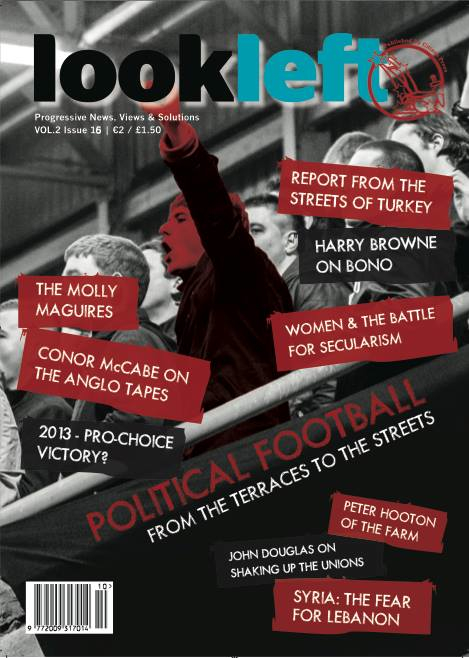
Our bi-monthly update letting our readers know about the publication of the latest issue of Look Left. Available for €2 in Easons and other newsagents, issue 16 includes articles on:

POLITICAL FOOTBALL
Kevin Brannigan examines some of the political dimensions to football, past and present

NO GODS: ONLY OPPRESSION
Angela Nagle reports from a recent conference on secularism and feminism

2013 – PRO-CHOICE VICTORY?
The debate on abortion was to the fore in the Dáil and on the streets once again

WE OWN IT
Cian McMahon on the international union interest in co-operatives

NO ONE DARES PUSH US AROUND
Who were the Molly Maguires asks Joe Mooney.

THE SAINT OF CAPITALISM
Kevin Squires talks Bono with Harry Browne.

I’M SPARTACUS
Sam McGrath on the The Farm’s mix of music, football and politics

Look Left (Issue 16)

Look Left (Issue 16)

Read Full Post »

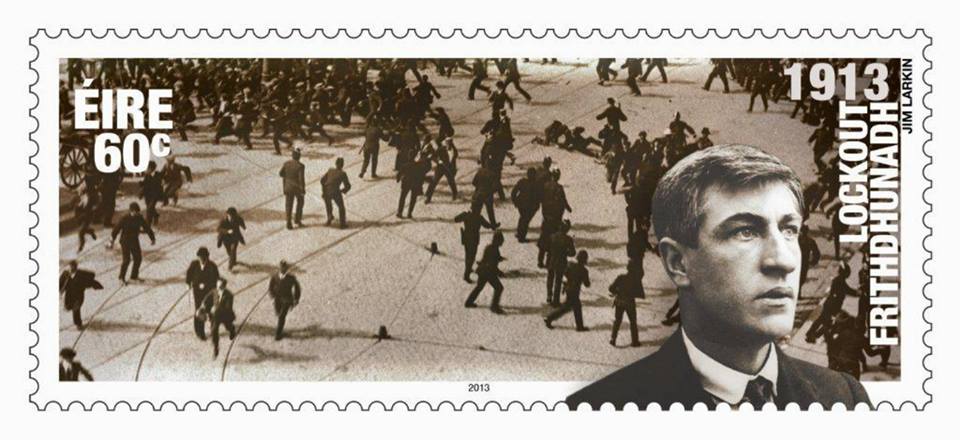
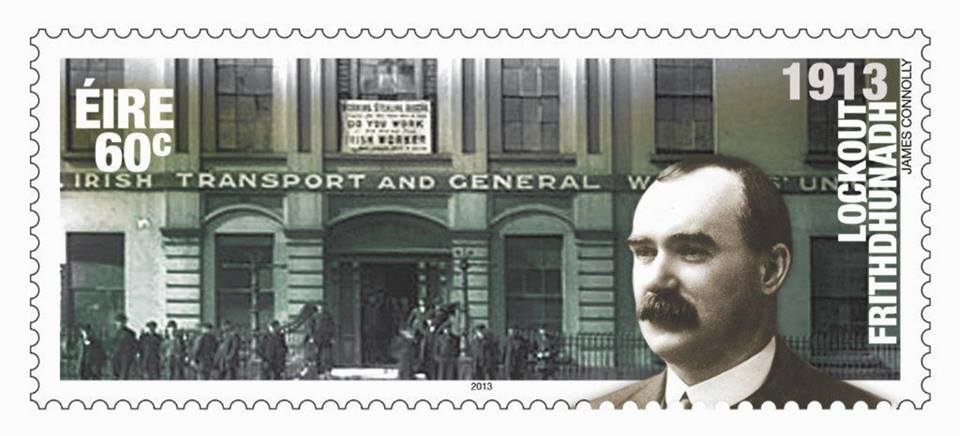
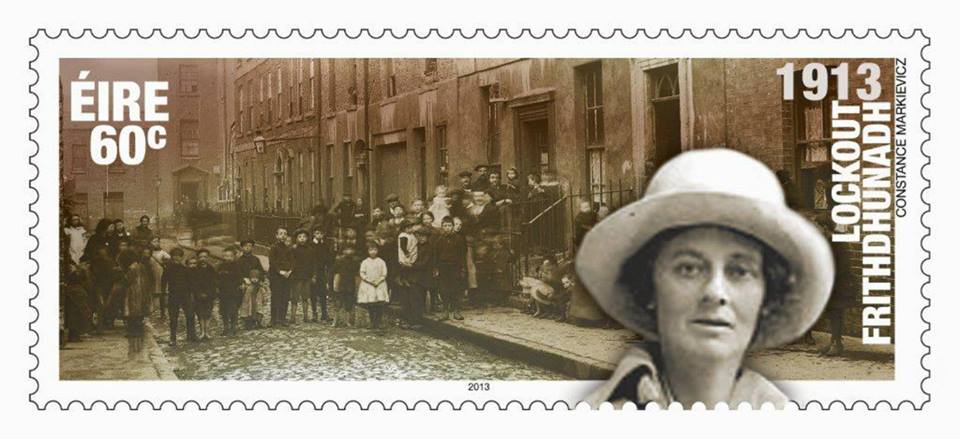
An Post are issuing three beautiful stamps to commemorate the 1913 Lockout. The stamps commemorate three of the leading figures of the labour movement at the time, in the form of Jim Larkin, James Connolly and Countess Markievicz. They go on release on August 22nd. More information on the stamps is available in a recent issue of ‘Irish Stamps: The Collector’. They certainly make a nice little commemorative and collectable piece, much like the stamps issued in 1966 on the fiftieth anniversary of the Easter Rising.

JimLarki

JamesConnolly

Countess

Read Full Post »

Dublin has seen her fair share of disturbances involving theatres. From the famous incidents at the Abbey like the 1926 demonstrations at The Plough and the Stars, to an attempt by militant Suffragettes to torch the Theatre Royal, there are many stories of protest and outrage. This post looks at the attempt of members of the Orange Order to cause a sectarian riot in the Theatre Royal in 1822, during a performance that was attended by the Lord Lieutenant and others.

On December 14th 1822, a performance of Oliver Goldsmith’s She Stoops to Conquer took to the stage at the Theatre Royal in Dublin. Among those in attendance was the Lord Lieutenant of Ireland, Marquis Wellesley, the brother of the Duke of Wellington. Wellesley was quite unpopular at the time among Orange Order members in the city, owing to what their perceived as he’s role in stopping an annual ceremony at the statue of King William of Orange on College Green, and other perceived concessions to the Catholic population.

Undated postcard showing the monument of King William of Orange on College Green.

Undated postcard showing the monument of King William of Orange on College Green.

This statue was the location for annual rituals organised by loyalist elements in the city, with events held in July (to mark the Battle of the Boyne) and November (to mark the birthday of William) a flashpoint on the Dublin calendar. The historian Shunsuke Katsuta has noted that it was common at this ceremony to “decorate the equestrian statue of William with orange symbols (‘dressing the statue’), with shamrocks strewn under the feet of the king’s horse, to symbolise William’s victory over Catholics.” Heavily criticised by Daniel O’Connell and other nationalist voices, Dublin Castle would distance itself from the ceremonies, but it was the eventual banning of the November ceremony which infuriated the Orange Order into action.

Following clashes at the event in July 1822, a decision was made by Marquess Wellesley, in his capacity as Lord Lieutenant, to seek a ban against the November event. A heavy military presence prevented the traditional loyalist display. This decision would cause great resentment towards Wellesley from loyalists in the city, as would other actions such as appointing a Catholic lawyer to a position of importance in the courts. A visit by him to the Theatre Royal was seen as an opportunity to show that discontent. The Theatre Royal on Hawkins Street was relatively new at the time, having only opened the previous year. The announcement that the Lord Lieutenant would be attending the theatre caused considerable excitement in the city, with the Freeman’s Journal printing the below notice days before the event:

An announcement that appeared in the Freeman's Journal, December 1822.

An announcement that appeared in the Freeman’s Journal, December 1822.

In his study A History of Irish Theatre 1601-2000, Chris Morash notes that:

The conspiracy was hatched in the Shakespeare Tavern, on the edge of a grimy alley known as Leinster Market, directly across from the canopied state entrance of the Theatre Royal on Hawkins Street.

Six men met in the tavern on Wednesday December 11th, all members of the Orange Order. John and George Atkinson, James Forbes, William Graham and Henry and Matthew Handwith drank to “the glorious, immortal and pious memory” of King William of Orange, plotting a protest against the Lord Lieutenant which would grab the attention of the city. On December 13th, a meeting of Lodge 1612 of the Orange Order on Werburgh Street decided to fund the purchase of twelve pit tickets for the upcoming play, with the aim of creating a scene which would embarrass the Lord Lieutenant.

A highly dramatic and over-the-top description of what unfolded in the theatre comes from a contemporary source, with the Theatrical Observer writing that:

His Excellency the Lord Lieutenant honoured the theatre with his presence on Saturday evening, when the rank and fashion of the metropolis crowded to receive him. Upon his arrival he was cheered with the most ardent and enthusiastic plaudits, which continued throughout uninterrupted for several minutes; but soon a serpent’s hiss, poisoning the atmosphere of the house, became the signal to some sanguinary confederation of satanic monsters and rebellious cowards to mar the harmony of the evening and kindle within the theatre the torch of political discord and rebellious fanaticism…

Richard Wellesley, 1st Marquess Wellesley.

Richard Wellesley, 1st Marquess Wellesley.

In reality, the trouble had begun inside of the theatre with the tossing of pamphlets with the slogan ‘No Popery’ upon them, most of which drifted towards the stage. There were some cries of ‘No Popish Lord Lieutenant’, and the Lord Mayor of Dublin was also subject to ridicule. Yet the play began as planned, only to be interrupted throughout. One rather comical intervention came as two characters sat down to a drink, with an Orange heckler encouraging them to drink the toast to “the glorious and immortal memory” of King William of Orange! The crowd also called on the cast to sing ‘God Save the King’, and a series of items were thrown in the direction of the Lord Lieutenant, including “the blade of a watchman’s rattle, an empty bottle, and an orange labeled ‘no popery'”. The event would come to known as ‘The Bottle Riot’ in Dublin, owing to the missiles thrown. While the Lord Lieutenant was never in any real physical danger, the incident was hugely embarrassing for the authorities, with mob rule taking centre stage at one of Dublin’s most prestigious venues.

Several days later, the behaviour of the Orangemen was the subject of a protest meeting in Dublin. This meeting was significant as it was addressed by some hugely influential figures, including the Duke of Leinster, Daniel O’Connell, Henry Grattan jr. and Arthur Guinness jr, son of the famous brewer. Guinness denounced the men as a “mischievous faction” and called for them to be opposed “by the severe but wholesome discipline of the laws”.

While the instigators of the affair were brought in front of the courts on two separate occasions (first tried on the grounds of conspiracy to murder and attempted murder, and later on the grounds of conspiracy to riot and rioting) both cases collapsed, causing much anger. Chief Justice Charles Kendal Bushe remarked to the jury in his summation that “an audience may cry down a play, or hiss, or hoot an actor”, but that riotous behaviour was not permitted. One effect of the mini-riot was the outlawing of the Orange Order for a period, when the Unlawful Societies Act of 1825 came into being.

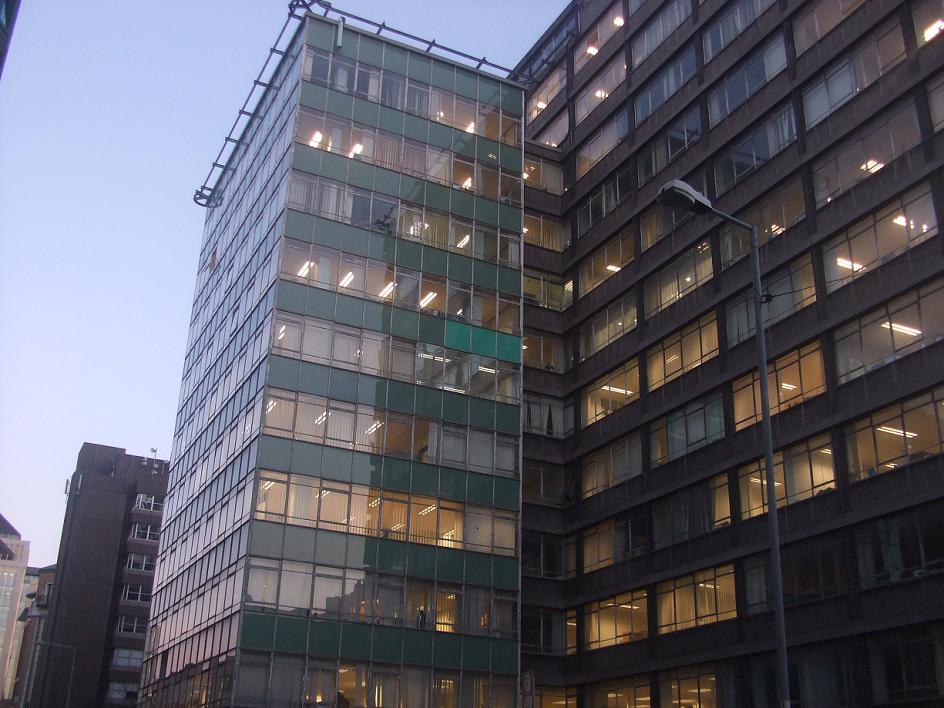
The Theatre Royal is no longer with us in any form, though the building in which the mini-riot occurred was destroyed by fire in 1880. The theatre which replaced it was demolished in the 1930s, and the third and final theatre would stand in the location until 1962. Today, the location is occupied by Hawkins House.
Hawkins House today.

Hawkins House today.

Read Full Post »

The Real Dublin Decider

On a weekend when huge crowds flocked to Lansdowne Road for a glorified friendly, it could be forgotten that Shelbourne, Saint Patrick’s, Bohs, UCD and Rovers were all in action too on the domestic front, with a huge Dublin derby in Tallaght the highlight. While nothing really remains to be said on this site about the running of the domestic league and the priorities of the F.A.I, I’ve always felt it more productive to promote the national league. This brilliant video by Billy Galligan captures the emotion in Tallaght Stadium on Friday night perfectly, where Pats took home a 4 goal victory over Shamrock Rovers.
Point a camera into the crowd instead of onto the pitch, this is what you get:

Read Full Post »

Last month, a Youtube user uploaded the 94 minute documentary ‘Que Sera Sera’ which traced the Republic of Ireland’s historical path to Italia ’90 and their first ever World Cup Finals.

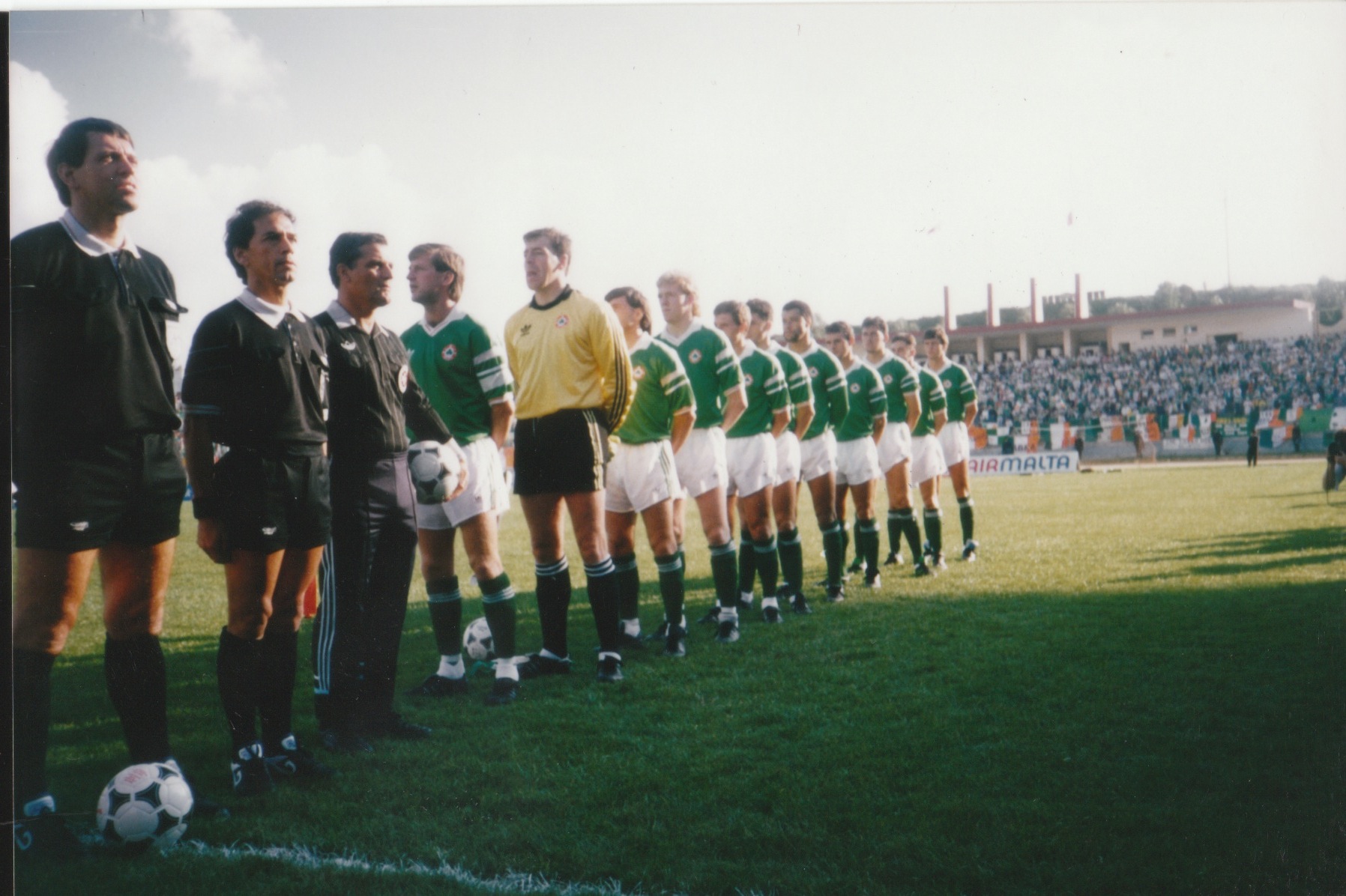
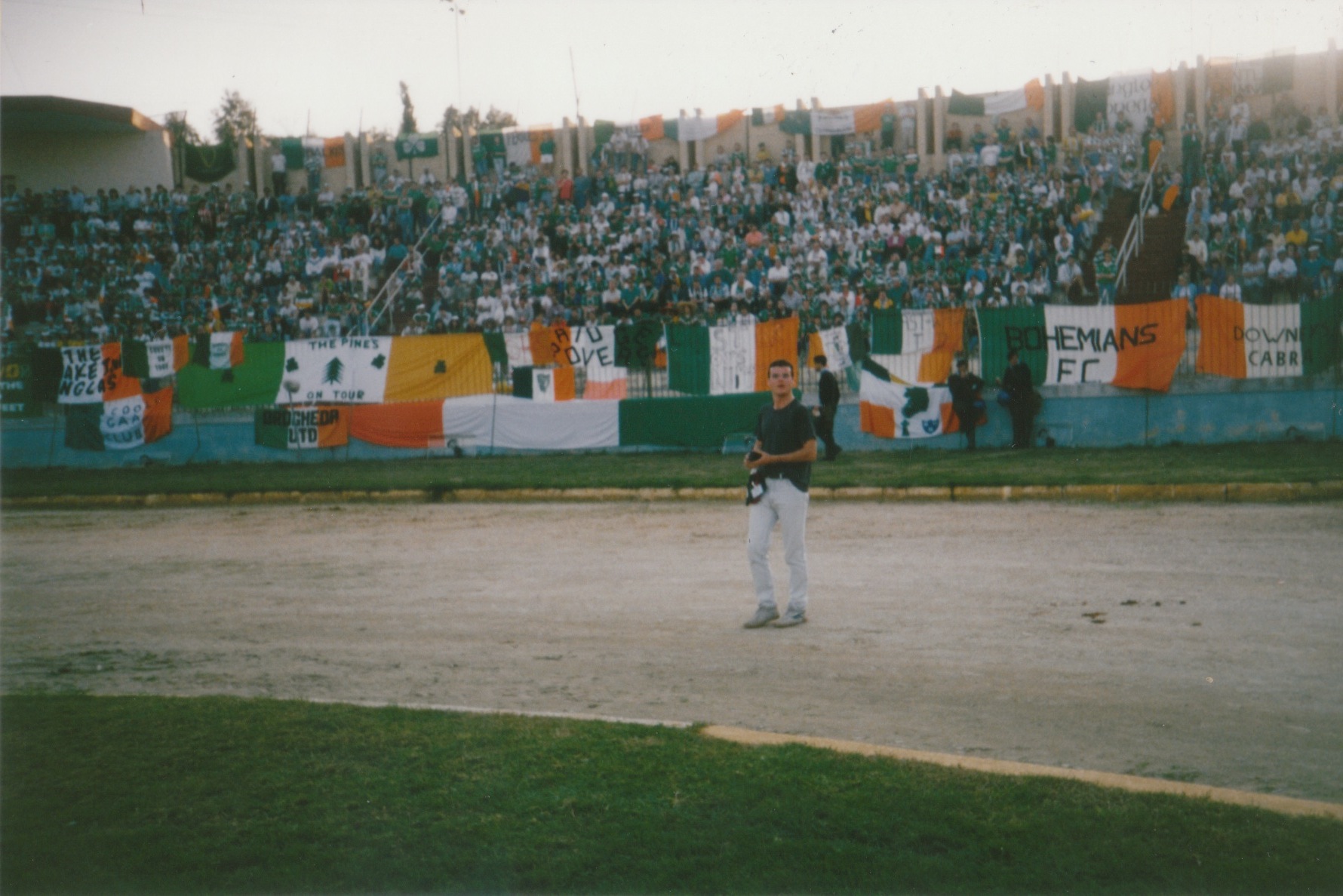
A family member was involved in the production of this film and I recently scanned up some pictures he had taken from Ireland’s game against Malta (which secured their place in the finals) in November 1989 and the trip to Italy in the summer of 1990.

Here are a few from the Malta game:

Republic of Ireland team lining up. Copyright - BM.

Republic of Ireland team lining up against Malta. Copyright – BM.

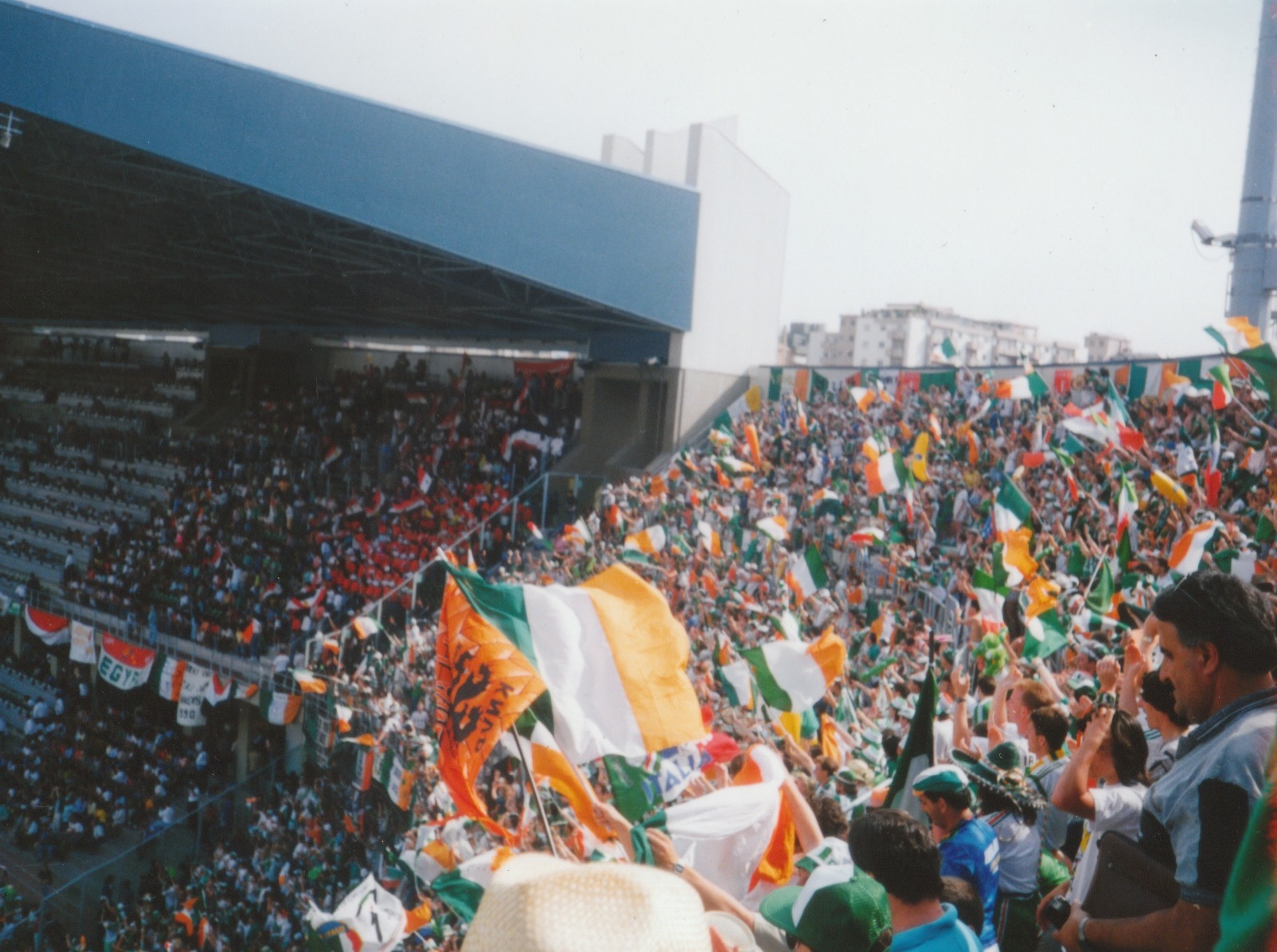
Irish fans and their flags. Credit - BM

Irish fans and their flags in Malta. Copyright – BM

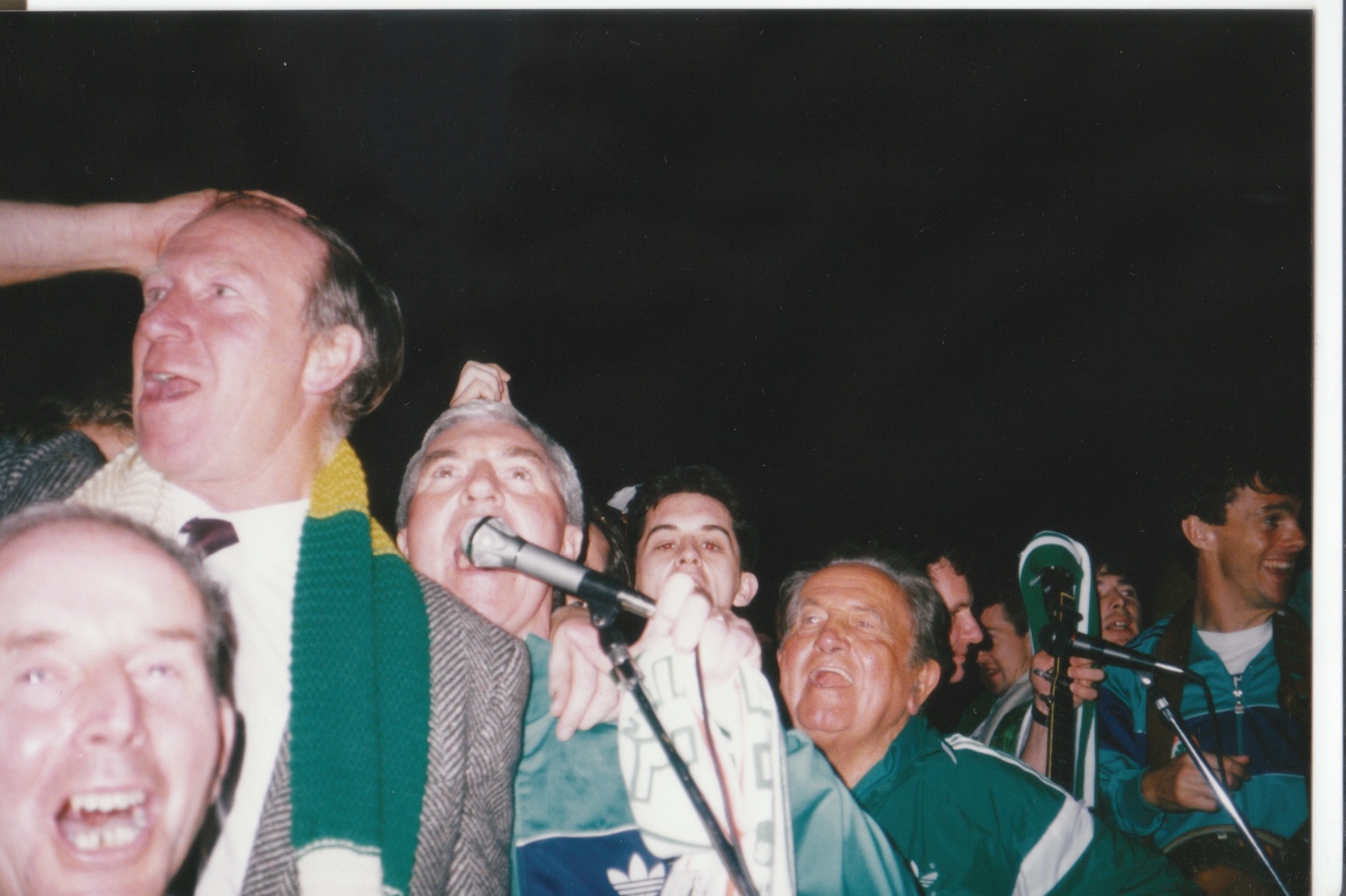
Jackie Charlton celebrating. Copyright - BM

Jackie Charlton singing ‘Molly Malone’ and celebrating win against Malta. Looks like David O’Leary at far right. Copyright – BM

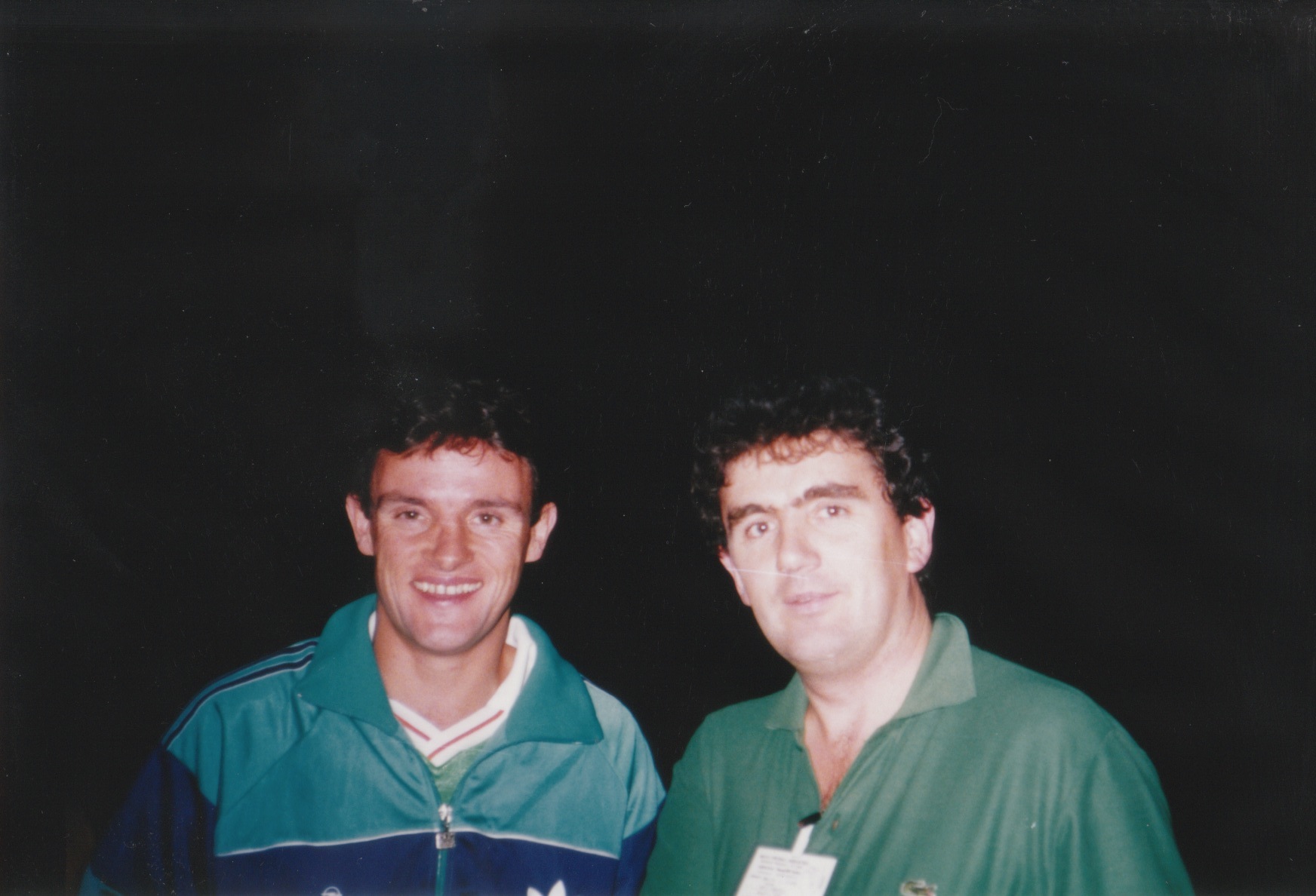
Kevin Moran and Des Cahill (RTE). Credit - BM

Kevin Moran and Des Cahill (RTE). Copyright – BM

From Ireland’s one-all draw against the Netherlands, 21 June 1990:

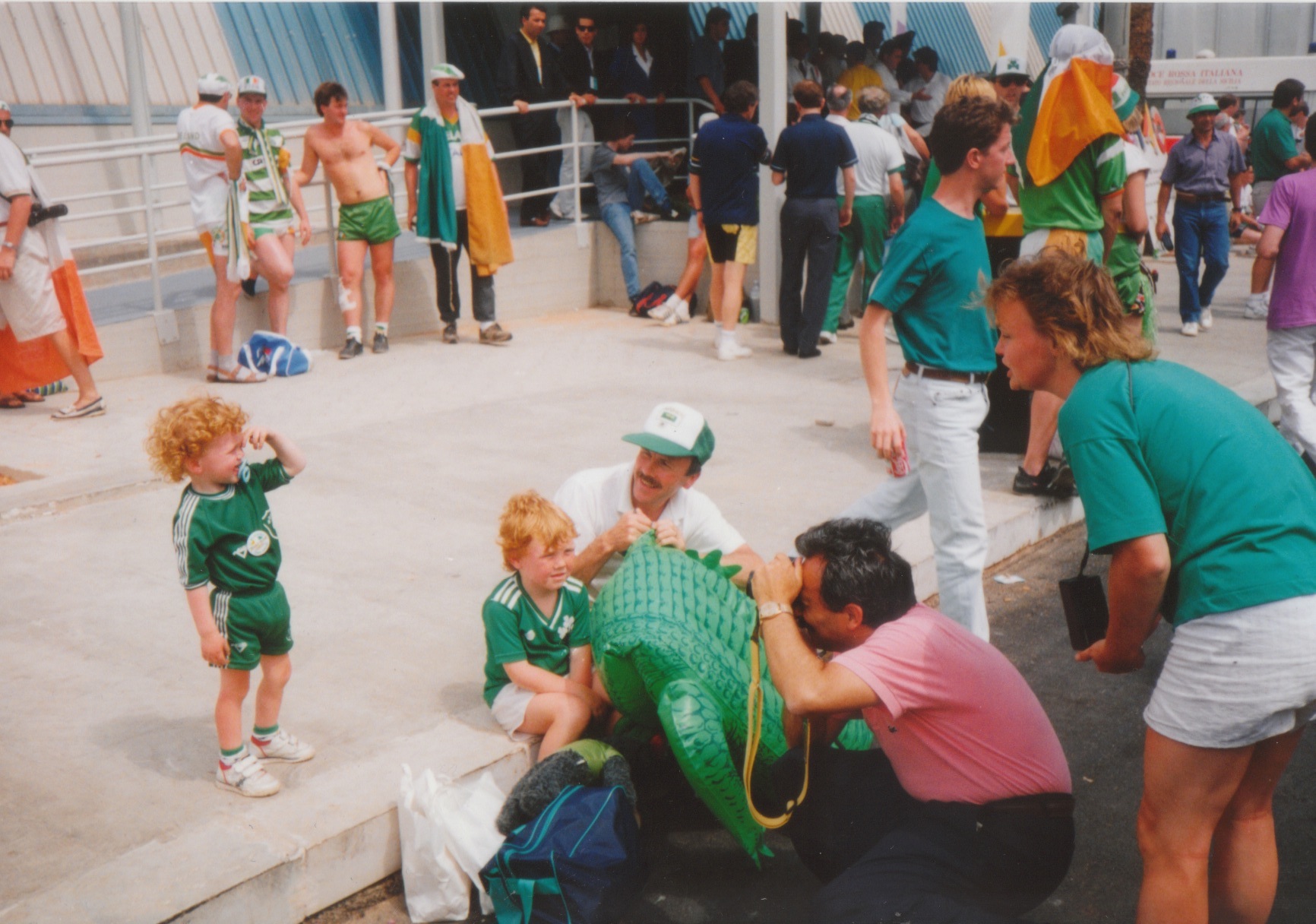
Young Irish fan is overwhelmed by the attention of a photographer. Credit - BM

Young Irish fan is overwhelmed by the attention of a photographer. Copyright – BM

Irish and Dutch fans. Credit - BM

Irish and Dutch fans. Copyright – BM

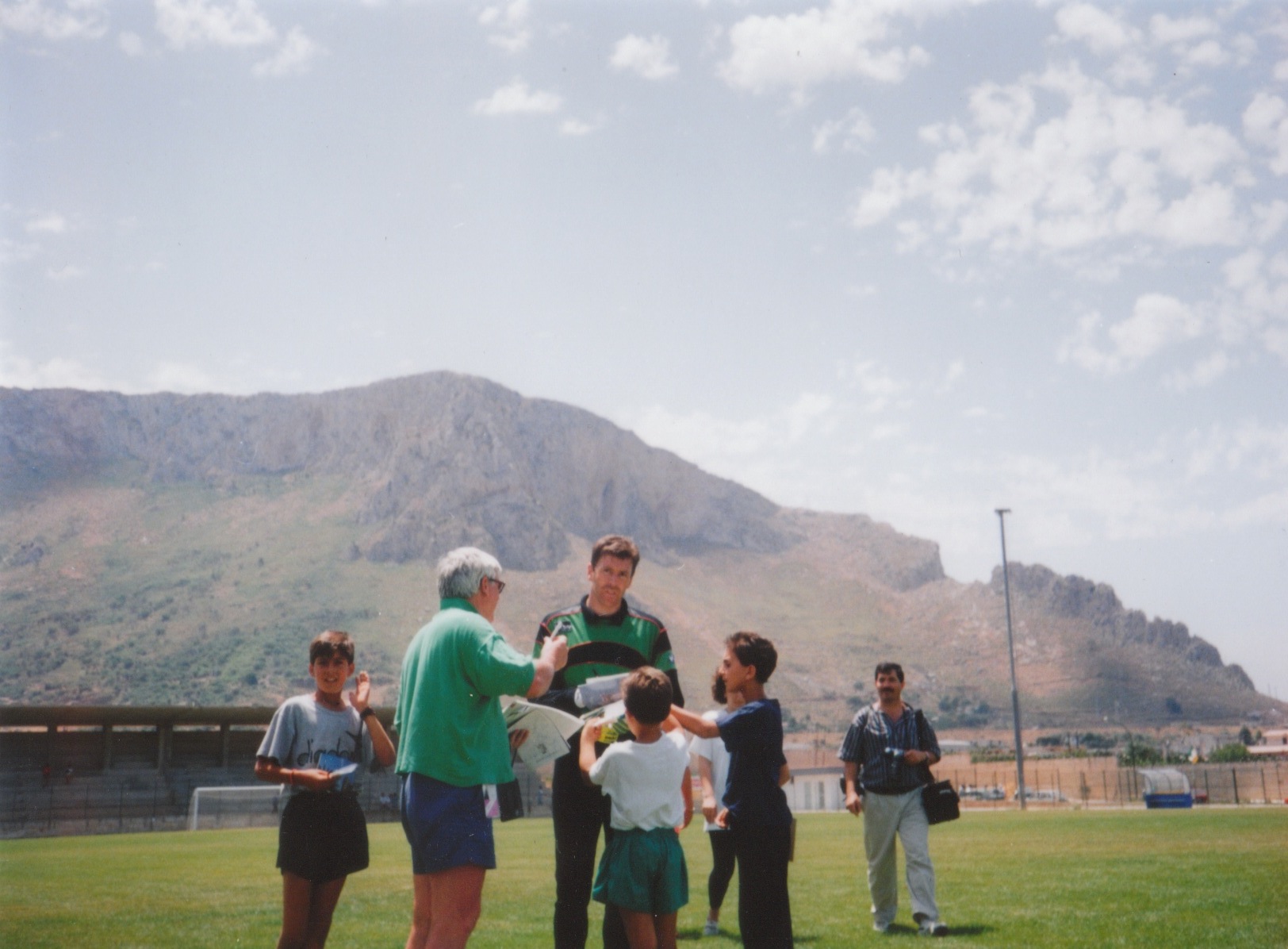
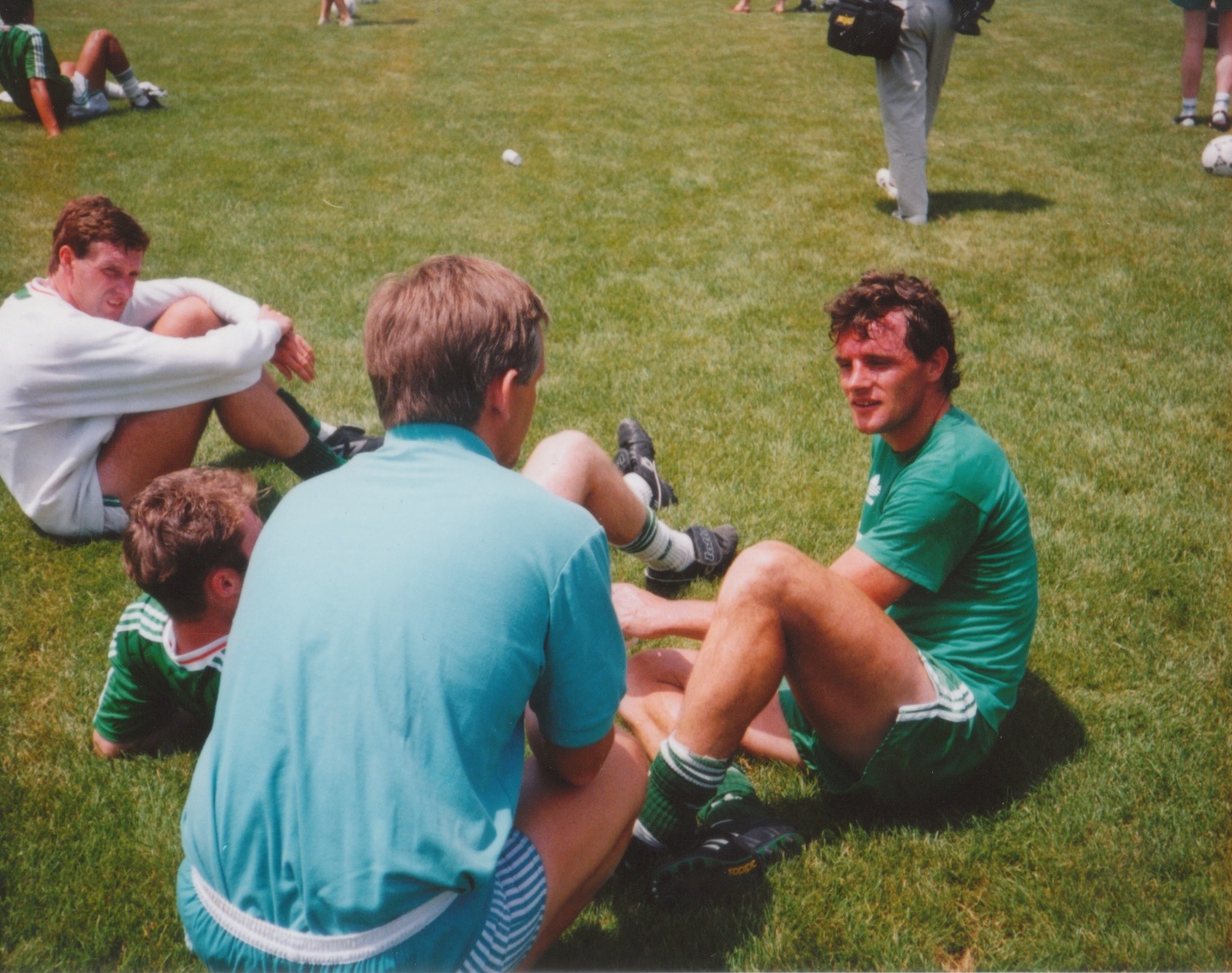
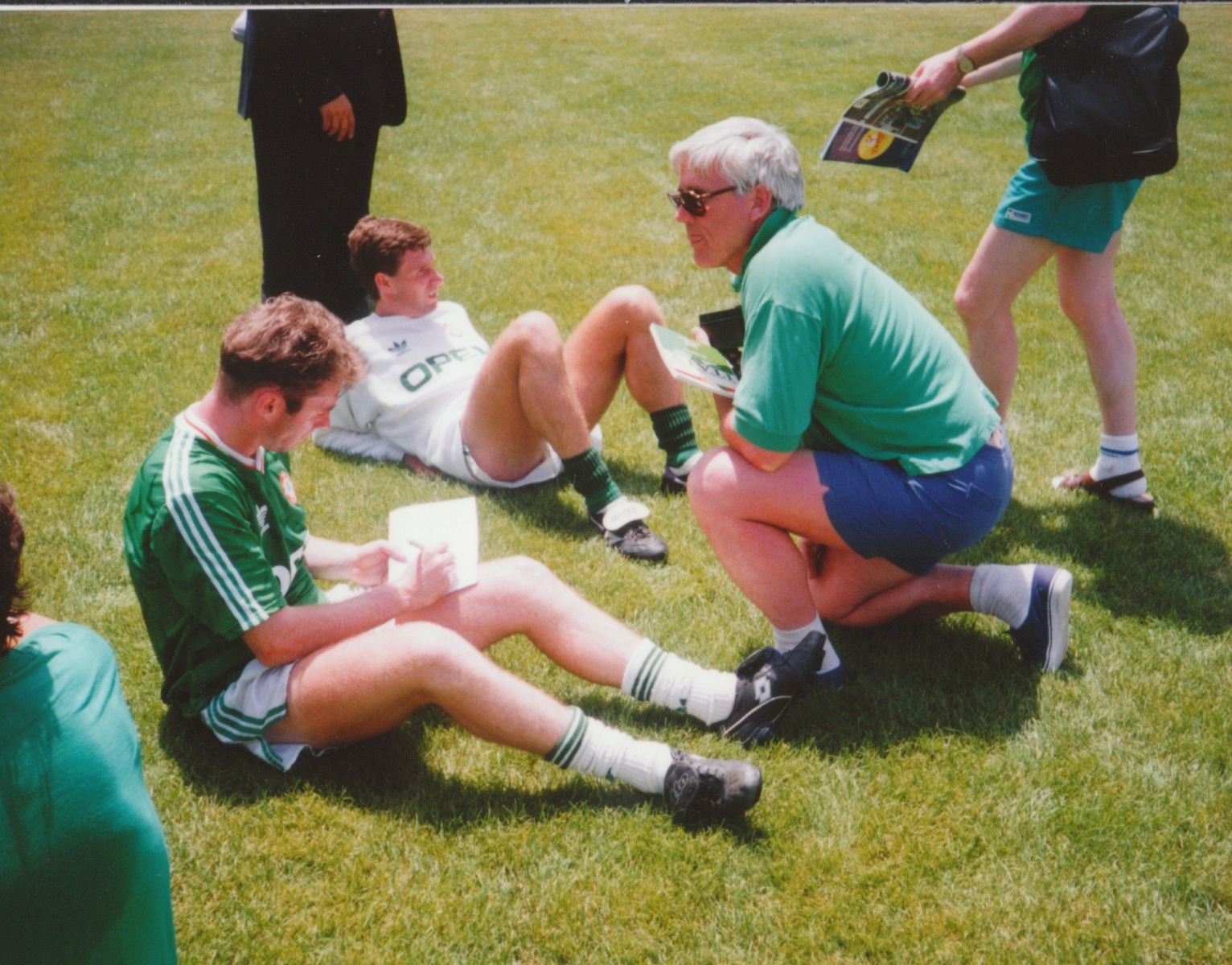
These are taken in Ireland’s training ground in Sicily:

Packie Bonner signing autographs. Credit - BM

Packie Bonner signing autographs. Copyright – BM

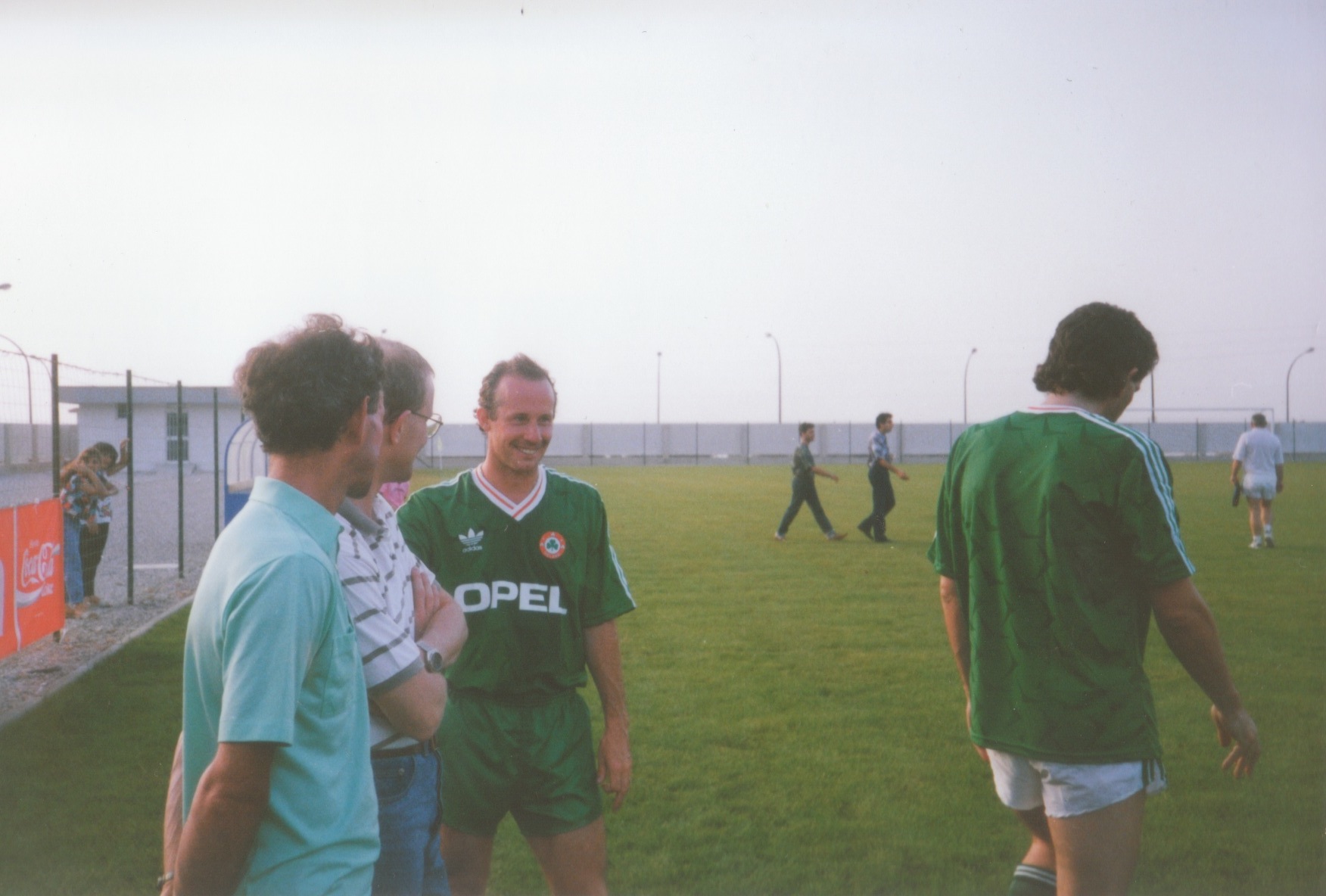
Kevin Moran and other players taking a break. Credit - BM

Kevin Sheedy, Chris Morris and Kevin Moran taking a break. Copyright – BM

Autograph hunters approach Packie Bonner. Credit - BM

Autograph hunters approach Packie Bonner. Copyright – BM

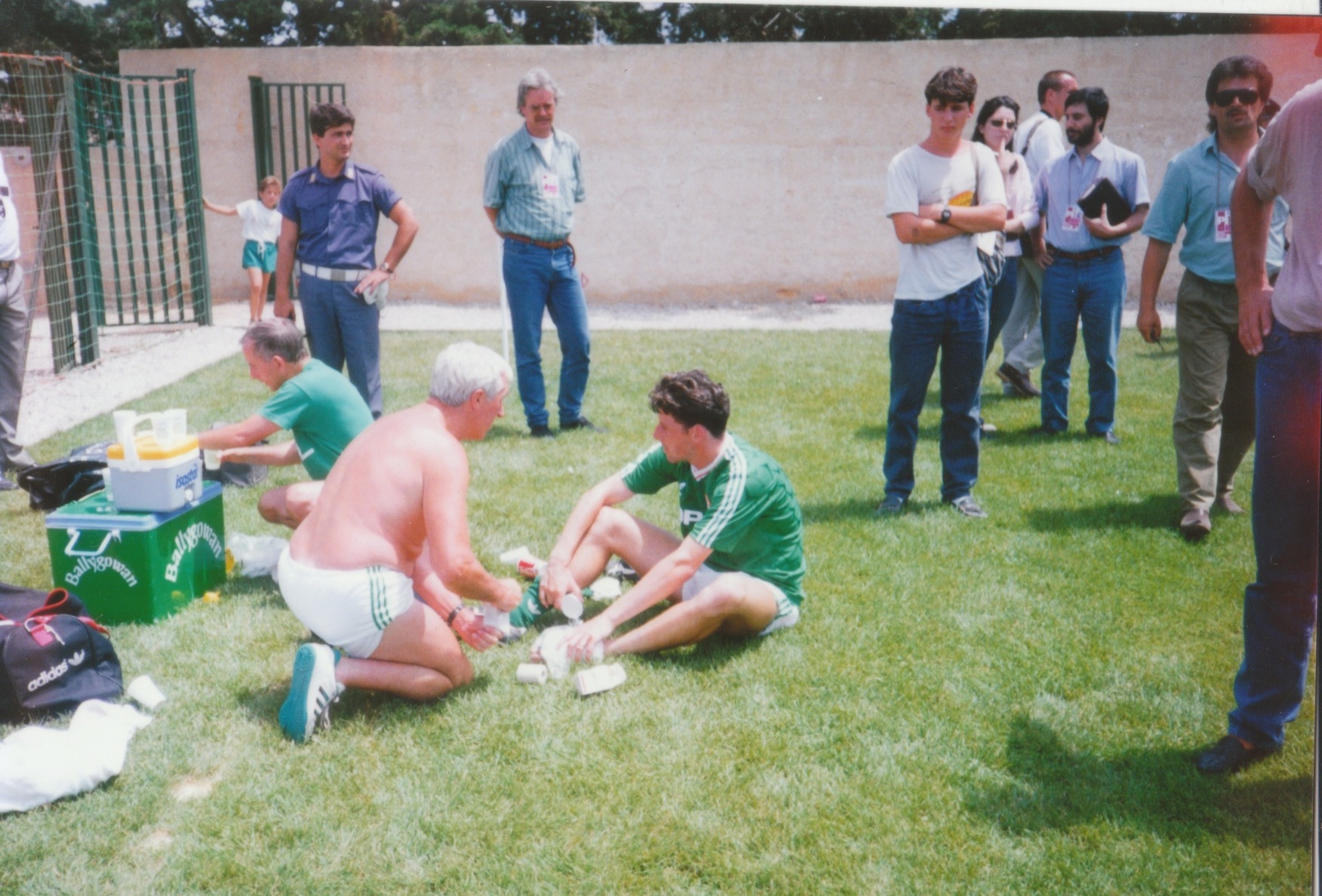
Andy Townsend receiving some treatment. Credit - BM

Andy Townsend receiving  treatment. Copyright – BM

A smiling Liam Brady. Credit - BM

A smiling Liam Brady at game between Irish and Italian media. Copyright – BM

This got me thinking about Ireland’s 22 man squad that played at the finals and how many were Dublin born or had played for League of Ireland clubs. This is what I came up:

Kevin Moran, who grew up in Rialto and then Walklinstown, made one appearance with Bohemians in the 1974/75 season before moving to UCD. In December 1975, UCD won the Collingwood Cup beating Dublin University at Belfield Park. In February 1976, Moran scored the winning goal for ‘Irish Universities’ in the Universities Championship final against their Scottish counterparts. Moran joined Manchester United in 1978.

Ronnie Whelan, grew up in Finglas West, made his League of Ireland debut for Home Farm on his 16th birthday at Tolka Park on 25th September 1977. He played with the side for two seasons before joining Liverpool in 1979.

Paul McGrath, who was born in London but was brought up in a number of orphanages in Dublin, made his debut for St. Patrick’s Athletic in a League of Ireland Cup clash with Shamrock Rovers in August 1981 at Richmond Park. He ultimately excelled at St Pat’s, earning the nickname “The Black Pearl of Inchicore” and receiving the PFAI Player of the Year Award in his first and only season, scoring four goals in 31 total appearances. He joined Manchester United in 1982.

David O’Leary moved to Dublin from London at the age of three but did not play for any League of Ireland side. Neither did Niall Quinn from Perrystown in Dublin or Frank Stapleton who grew up in Artane.

Meanwhile Steve Staunton from Drogheda made 13 appearances in the 1985/86 season with Dundalk F.C. while Birmingham-born David Kelly finished his football career with seven appearances (and two goals) at Derry City F.C. in 2002.

Read Full Post »

Grafton Street, 1973 (Irish Press)

Grafton Street, 1973 (Irish Press)

On 8 June 1973, five men were brought before District Justice Breathnach in Dublin District Court 6. They were all members of the Hare Krishna grouping. A Garda detective rose before the courts, and stated that:

They were walking down Grafton Street playing music and making a lot of noise. I had cautioned them on previous occasions not to play music to the annoyance of the inhabitants of the street….They were using cymbals and drums and bells. They were walking in single file but people had to walk in the roadway to avoid them.

Charged with obstructing traffic while playing instruments, the Judge asked if any of the five before him spoke English, only to hear that three came from Ireland. Angered by the presence of a cylindrical drum suspended from the neck of one the men, the Judge informed them that “I can warn you that you are lucky not to have been assaulted by a crowd. Any decent Irishman would object to this carry-on.” Going one further, he complained that “I’ve no jurisdiction to order a forfeiture of those things, bells and leaflets. If I had, I’d be fairly radical and confiscate those nonsensical things.” The five were fined seven pounds each and sent on their way, but outside there was more to come when The Irish Times reported a Garda as asking the five why they prayed the way they did. “You should pray in the church”, he told them, “and even then the priests don’t pray all day.”

A bad day for tolerance in Ireland then, a country clearly still adapting to the new presence on its streets, in the form of practising Hare Krishnas. Their first appearances in the Irish media seem to have been in 1971, though then it was their London equivalent who were being discussed, with the Inside London column of The Irish Times noting that “not that it could ever happen in Dublin: we already have our Jesus freaks.”

Essentially, The International Society for Krishna Consciousness is a faith group dating back to 1966. Its followers ” dedicate their thoughts and actions towards pleasing the Supreme Lord, Krishna”, and today it runs an impressive international network that includes over 50 schools and 90 restaurants, several of which are here in Dublin.

1973 saw the group the focus of huge media attention in Ireland. Not alone had the recent arrivals attracted the scorn of Gardaí and Judges, but there was huge general interest in their acquiring a premises, in the form of a bungalow overlooking Dublin Bay at Sutton. Following on from the remarks made by District Justice Breathnach, journalists flocked to the Hare Krishnas to hear their story, with Des Hickey from the Irish Independent writing that six men were living in the bungalow, or “temple” as they described it, able to live on £20 a week between them. He wrote that “After the chanting and praying and dancing, Narrahari brought me into a small room to show me rows of bottles of perfume he had made. They sell them in a Dublin market at weekends, with colourfully produced Krishna books.” Far from District Court 6, it seemed the people of Sutton were largely not bothered by their neighbours.

An image from inside the Hare Krishna home at Sutton, taken from the Irish Independent.

An image from inside the Hare Krishna home at Sutton, taken from the Irish Independent.

An Irish Press journalist visiting the home was introduced to Brendan, a young man from Drimnagh, who had become involved with the group though was not yet fully initiated. He may well have best captured the appeal of the group to young Dubliners at the time, noting that “I’ve been into a lot of things since I left school, you know? Things like Yoga, the Divine Light Mission, the hippies. I suppose I’ve been into a lot of isms”.

Rather unsurprisingly, the incredibly reactionary comments of the District Judge led to quite a lot of rather sympathetic coverage for the group, with a sort of eagerness to understand them in the media. The Irish Times followed several members from Dublin to Galway, on a “brief tour to towns and villages along the coat, preaching their antidote to the ills of modern life.” The group managed to get lost in the housing estates of Raheny first however, “looking for a laundry to collect some clean robes.”

Previously on the blog Sam has looked at the history of vegetarianism in Dublin. In a 1975 Irish Times article entitled ‘The Whole Vegetarian Thing’, Patrick Comerford quoted the owner of the Ormond Health Centre as saying the growth of organisations like the Hare Krishnas and the Divine Light Mission was contributing to a rise in demand for vegetarian produce in the city. Still, the group remained minuscule in Dublin with regards to numbers, and gradually media interest waned until the later half of the 1970s. Indeed, in 1975 the religious correspondent of the same newspaper asked “whatever happened to Hare Krishna?”

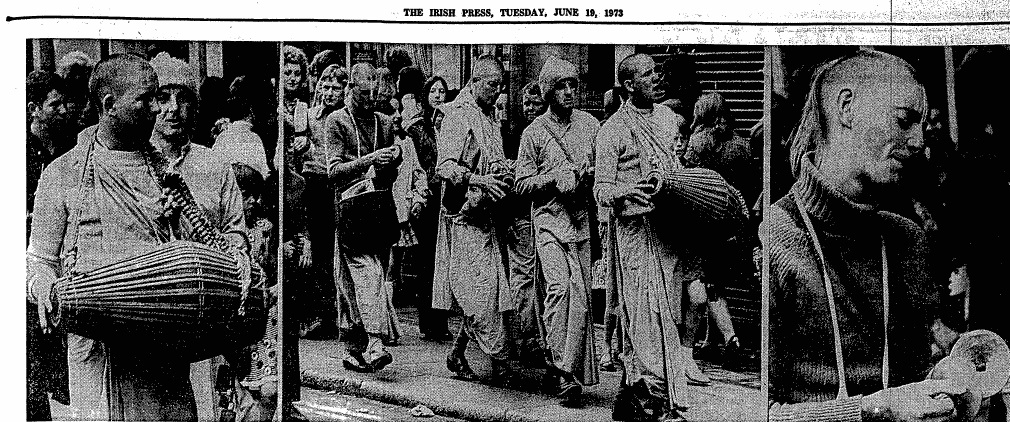
Irish Press images of Hare Krishnas.

Irish Press images of Hare Krishnas.

In 1978 a new premises was acquired at Belvedere Place, leading to a new media interest in the faith once more. This impressive premises, opened in what was a fine renovated Georgian House, gave some indication of the growth of the faith globally, and 50 to 60 people partook in the opening ceremony, with some travelling to Dublin for the occasion. No doubt in reference to the remarks made in 1973, The Irish Times asked “whether Dublin wants the knowledge which they claim they and their scriptures offer remains to be seen, but hopefully it has grown more tolerant since they were here before.” A follow-up article a year later would see the group claim that Ballymena in Antrim was “where they are received best” outside of Dublin, and the group claiming 30 full-time Irish devotees. The group welcomed the visit of the Pope in 1979, noting that “the essence of all religions is to develop love of God”.

Read Full Post »

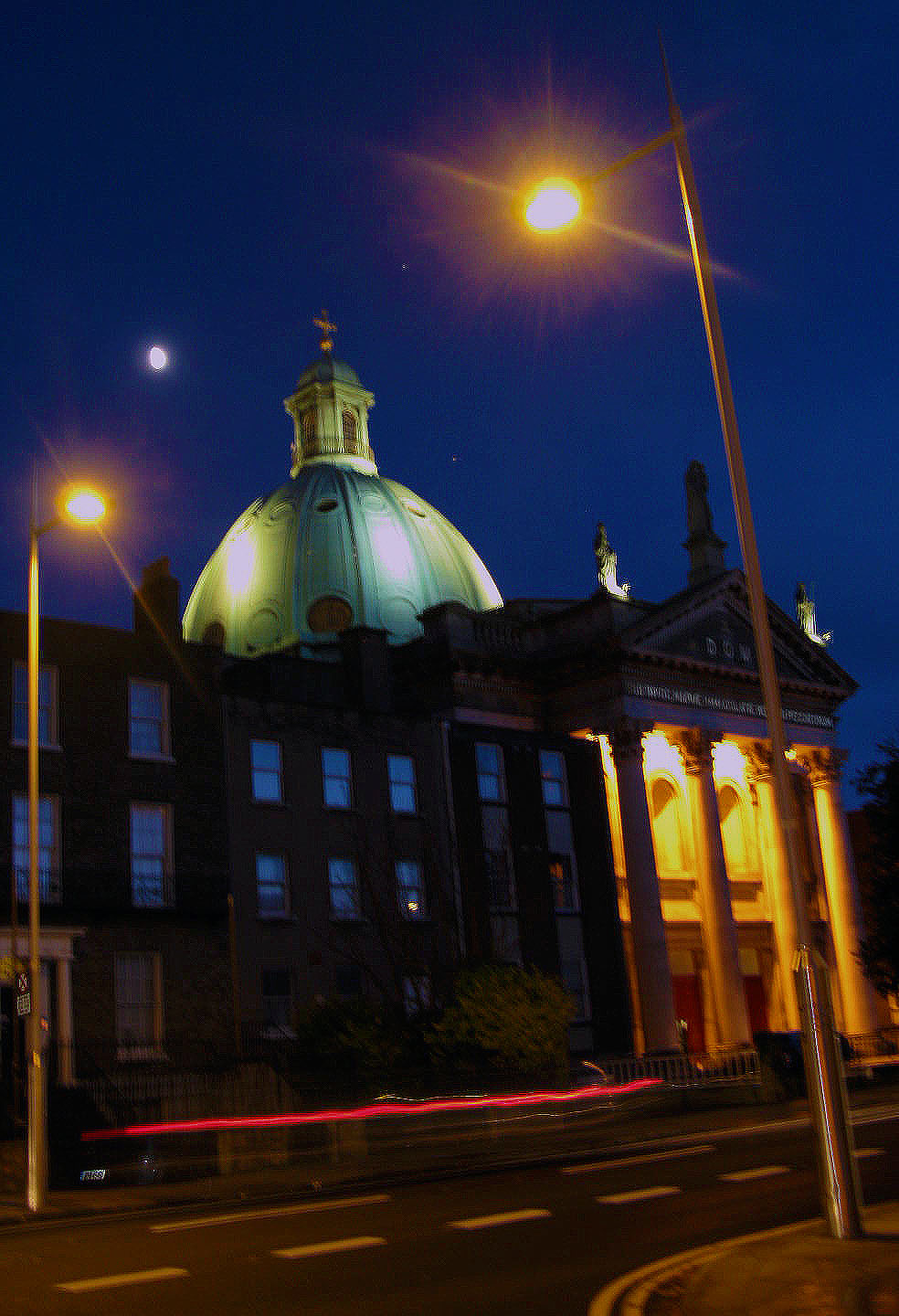
One of my favourite views in Dublin is looking over into Rathmines from the Portobello Bridge, with the dome of the Catholic church visible.

The beautiful dome of the church dates back to 1923, as the church was almost totally destroyed by a fire in 1920. Incredibly, it appears from the statements of some IRA members to the Bureau of Military History that this church premises was being used to store weapons at the time of the fire by republicans in Dublin, and that weapons were hidden from authorities following the destruction of the church by sympathetic figures in the fire brigade.

The dome of the church at night. (Image: Ciaran Murray/CHTM)

The dome of the church at night. (Image: Ciaran Murray/CHTM)

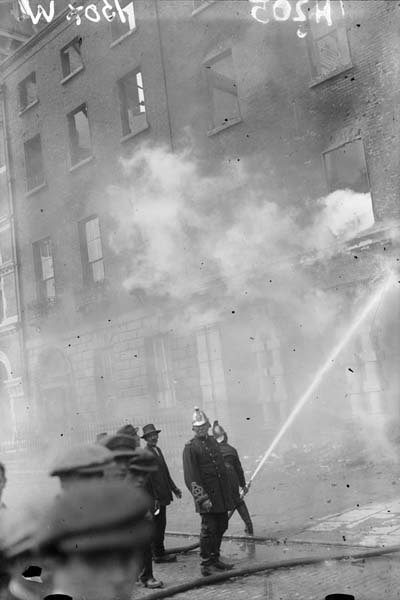
On 26 January 1920, the sacristan of the Catholic Church of Our Lady of Refuge arrived shortly after six o’clock to find the switchboard that controlled the electricity ablaze inside the vestry. Fire quickly spread throughout the church, with newspapers noting that the flames were “spreading with alarming rapidity in all parts of the building, and mounting up the walls to the base of the spacious dome.” While Rathmines had its own functioning fire service at this time, the Dublin Fire Brigade also arrived on the scene, with The Irish Times reporting that:

The Dublin Fire Brigade, which had been sent for, worked in unison with the Rathmines Brigade, and placed two engines on either side of the Grand Canal at Portobello Bridge, and soon had a copious supply of water sent in through the rear of the church by way of Mountpleasant Avenue.

The fire was an incredibly dangerous job for the firefighters on the scene, with the dome roof of the church crashing down, leading to fears some men may have been trapped underneath, although this was thankfully not the case. The Irish Times noted that for hours after the blaze continuous streams of water were poured upon it, and that the overall damage to the church was estimated at between £30,000 and £35,000, thankfully covered by insurance.

The first hand testimonials of several republicans given to the Bureau of Military History suggest that the church in Rathmines was used by republicans as a place to store weapons, and indeed as a place in which to seek refuge. Henry Murray, a veteran of the Easter Rising and active with the Dublin IRA through the War of Independence recalled that he and another members of ‘A’ Company of the Dublin Brigade “frequently slept in Rathmines Catholic Church when ordered to remain away from home to evade arrest.”

Murray gives plenty of information in his Witness Statement to suggest that there was a strong relationship between local republicans and this church, noting that:

The Clerk of this Church was at that time a member of “A” Company and he acted as assistant to the Company Quarter-master. In pursuance of his military duties he utilised some of the vaults in the Church as a “dump” for the major portion of the Company’s arms and equipment.

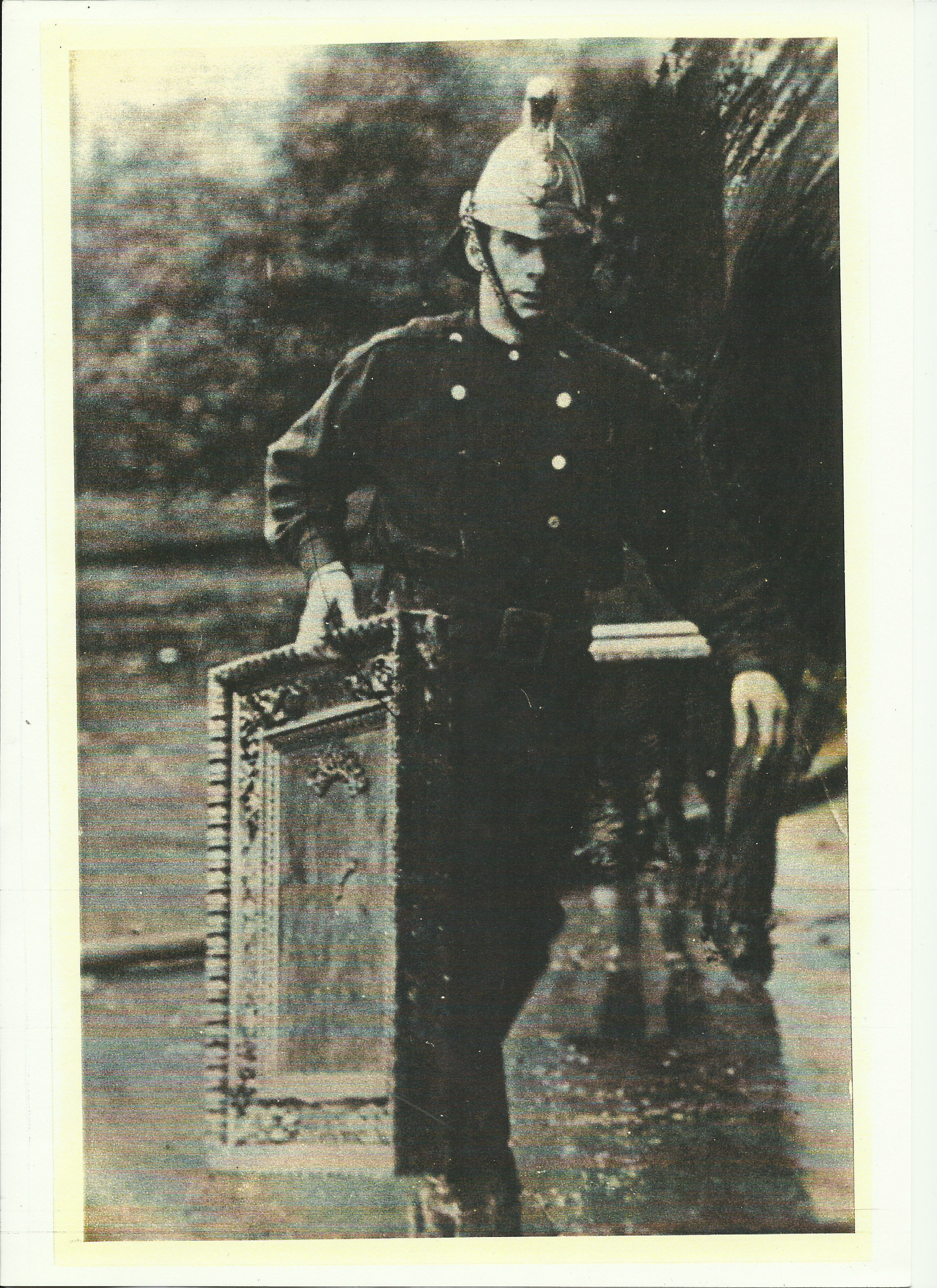
A firefighter removes an item from the fire in the  Rathmines church (Image via Las Fallon)

A firefighter removes an item from the fire in the Rathmines church (Image via Las Fallon)

Murray claimed that the IRA were storing “rifles, revolvers, ammunition, hand grenades and military equipment” in the vaults of this church, and that when he arrived at the scene of the fire:

I found that several members of the Company who were aware of the position, had entered the building at great personal risk, made their way to the vaults and were engaged in removing the dumped arms and ammunition to places of safety.

Another account of the church and the movement is found in the statement of Michael Lynch, a member of ‘B’ company of the 4th Battalion of the Dublin Brigade of the IRA. Lynch gives a different account of the fire somewhat, which suggested that many weaposn were destroyed by the blaze, but noting that there existed a fear among the IRA that the presence of a weapons dump in the church may be discovered by the British during the clean-up, and that “I knew what a disaster it would be to ourcause if the British got hold of the fact that we were using the vaults of houses of worship as dumps for arms.”

Lynch describes going to meet with Captain Myers of the Dublin Fire Brigade, who he knew to be “a very fine fellow and, from the
national point of view, thoroughly sound and reliable in every way.” John Myers, the head of the Dublin Fire Brigade at the time, could even boast of appearing within the pages of Ulysses, and in the days of revolution in Dublin he appears to have been a very useful ally to the IRA, as Lynch recalled:

I told him the true story and asked him to see that the Rathmines people got no inkling whatever of the fact that some dozens of rifles and revolvers were lying in the debris under the floor of the church. He told me not to worry, that nobody would ever know. The incident passed unnoticed by anybody.

Captain Myers, who was asked by concerned republicans to ensure no weapons would be recovered from the church (NLI)

Captain Myers, who was asked by concerned republicans to ensure no weapons would be recovered from the church (NLI)


If Myers had republican sympathies, he was certainly in the right line of work. In the recent book Dublin Fire Brigade and the Irish Revolution, Las Fallon details how several members of the Dublin fire service were secretly involved with the IRA and Irish Citizen Army at the height of the troubles, even assisting in rescuing IRA men from inside the Custom House following the burning of that building in 1921. Indeed, on that occasion one fireman would recall entering the building and spreading the fire “into parts of it which had not previously been on fire.” Members of the Dublin Fire Brigade had fought in the Easter Rising, War of Independence and Civil War, and the likely assistance of Dublin firemen in keeping an arms vault at Rathmines secret may well also indicate republican feeling in the ranks of the job.

A 1923 image of the new church dome. (Irish Times)

A 1923 image of the new church dome. (Irish Times)

The distinctive dome of the church today is often said to have originally been intended for Russia, with an article in the Sunday Times in 2001 writing of the fire that destroyed the Rathmines church in 1920 and noting that:

Meanwhile, across the water in Glasgow, a specialist manufacturing firm had just mothballed a massive, ornate copper dome believed to have been commissioned for a church in Russia. It is likely the contract was derailed as a result of the Russian revolution and the emergence of Lenin’s anti-religious Bolsheviks.

A contemporary newspaper report from the 1920s on the construction of the new dome however stated that “the architects are Messrs. W.H Byrne and Sons, Suffolk Street, Dublin; the consulting engineer Mr. Alfred Delap….of Dublin and the steel contractors Messrs. J and C. McGloughlin Ltd., Great Brunswick Street, Dublin.” We’d love to hear from anyone who knows more of the contemporary dome and its origins.

——

Rathmines has featured on CHTM before, with this article from Sam looking at working class housing in the area. Dublin Fire Brigade and the Irish Revolution, referenced above, is available to purchase here.

Read Full Post »

« Newer Posts - Older Posts »