Feeds:
Posts
Comments

Archive for the ‘Dublin History’ Category

If there is anything more depressing than a study of Dublin’s slums in detail it is a study of Dublin’s slum-dwellers…They look like people who have no healthy interests, no fresh and natural desires, nothing that the wildest imagination could call dreams; people who go through life as a narrow, burdensome, unintelligible pilgrimage; they have lost the capacity of sympathy, understanding and hope.

-From William Patrick Ryan’s The Pope’s Green Island, 1912.

Today is the 70th anniversary of the death of Herbert George Simms, Dublin’s pioneering Housing Architect. We have previously examined Simms in this piece on housing in 1930s Dublin. Much can be taken today from the work of Simms, who was responsible for the construction of some 17,000 new working class dwellings in his time in office, ranging from beautiful Art Deco flat schemes in the inner-city to new suburban landscapes. Speaking to a housing inquiry in 1935, Simms outlined his belief that “you cannot re-house a population of 15,000 people, as in the Crumlin scheme, without providing for the other necessities and amenities of life.” Future decades and failed projects have proven those words correct.

The death of Simms in September 1948 was tragic, with the architect throwing himself in front of a train near Coal Quay Bridge. His suicide note, which was rather curiously reprinted in the Irish Press newspaper, said “I cannot stand it any longer, my brain is too tired to work any more. It has not had a rest for 20 years except when I am in heavy sleep. It is always on the go like a dynamo and still the work is being piled on to me.”

To mark the anniversary of his passing, today we post this stunning image from the collections of Dublin City Public Libraries and Archive. It shows a familiar Dublin landmark, in the form of St. Michan’s Church, but also the meeting of two ages of housing in the Irish capital. On our right, we see the construction of the Greek Street flats. These flats were described in the press as being of “the most modern type….to us they recall photographs of municipal flat schemes from Berlin,Moscow or Vienna.” On the otherside, the tenement slums of Mary’s Lane remain. The image appeared in the Evening Mail, and captures the beginning of the work of Herbert Simms for Dublin.

Simms.png

Image Credit: Dublin City Public Libraries and Archives.

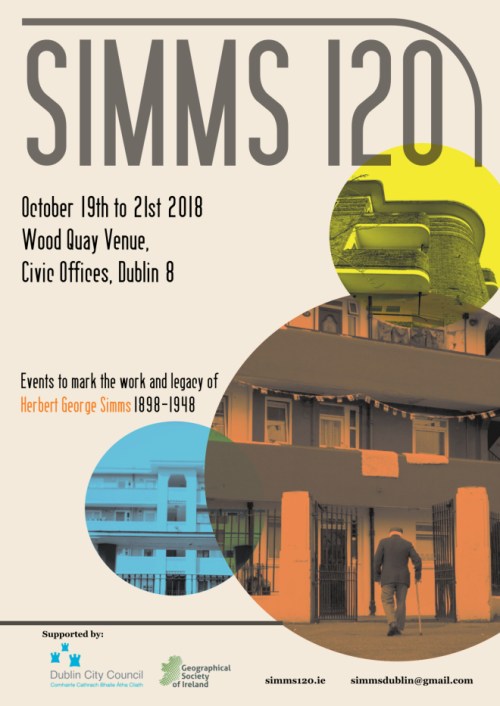
Simms will be honoured in October with the Simms120 conference, open to the public though registration is required:

simms120posterlores


Read Full Post »

“The pirate buses used to go around to all different routes. Oh, they could go anywhere they liked. They weren’t confined to one route – a free-for-all! There was no bus stops, anybody could just put up their hand and stop you anywhere. Oh, they’d cut one another’s throats.” (George Doran in Dublin Street Life and Lore, Kevin C. Kearns)

Prior to the Dublin United Tramways (Omnibus Services) Act, 1925., Dublin’s streets were akin to the high seas with privateers commanding routes at will in their ships (buses) with names adorning their sides such as the Whiteline Bus Co., the Blueline and Excelsior Bus Company and the Old Contemptible Omnibus Company. The act empowered the Dublin United Tramways Company to ‘provide and maintain omnibus services in the city and county of Dublin’ and was to spell the end for the private (or as they became known, pirate) bus companies as one by one they dropped off or were consumed by DUTC. The act was in part a response to the marauding pirates who, free from regulation were a law onto themselves. Their presence was seen as an affront to the city’s traditional tramlines, and a perhaps a signal of the demise of her once famed tram system.

Capture

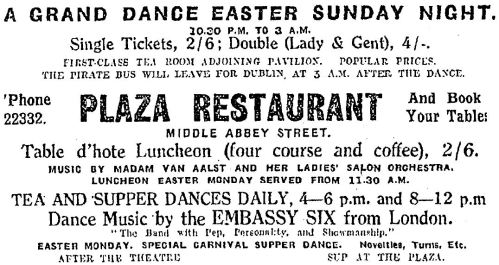
“THE PIRATE BUS WILL LEAVE FOR DUBLIN AT 3 A.M. AFTER THE DANCE.”

The pirates had several tricks up their sleeves and at all times were on the make- their goal was to pick up as many customers as possible and free from the constraints of the electric lines required for lighting and moving the carriages used on the tramways, were better able to navigate Dublin’s streets. Because of this, the buses were known to slowly drive along lines, delaying trams and allowing their colleagues to race ahead and poach customers. In response, tram drivers would sandwich buses front and back and refuse to move until they had emptied.

The pirates were notorious for their ill behaviour- not just against the tram drivers but also among themselves. In the words of  tram driver William Condon, “Oh they were a desperate gang. They wore their own clothes, no uniforms. And they’d blow their horns at one another and hurling words and shaking their fists at one another. The attitude in the pirate business was, ‘I’ll do it my way,’ and rough language.” (Dublin Voices: An Oral Folk History, Kevin C. Kearns.)

The Old Contemptible Omnibus Company formed in 1924 and was owned by a Kathleen Gilbert of Clontarf. Its initial route ran from Eden Quay to Abbeyfield in Killester,  “primarily to serve the ex-servicemen’s housing estate built there in the aftermath of the first World War.” (Irish Times, April 4th 2016.) Their drivers tended to be veterans of the war and their fantastic name stems from military lore, with survivors of the British Expeditionary Force post WWI dubbing themselves “The Old Contemptibles” due to a dismissive quote by Emperor Wilhelm II.  Their routes would later expand to Philipsburgh Avenue, Howth and Dollymount using 26-seater and 32-seater buses manufactured by Guy Motors in Wolverhampton.

contemptible bus in Fairview

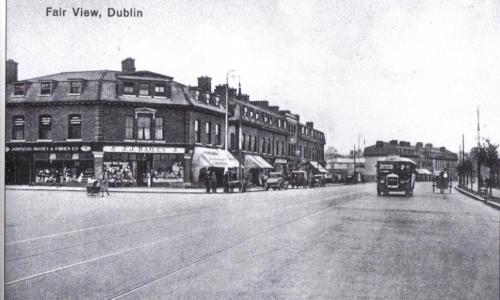
An alleged Contemptible Omnibus in Fairview

The Old Contemptibles weren’t the only soldiers on the road, with the same article stating “after the end of the Civil War in 1923, some ex-servicemen used their demobilisation gratuities to buy a small bus, taking advantage of the lack of regulation to compete with each other and with the tramway company and railways.”

The Company was not averse to the ill feeling between the privateers and the DUTC, with both appearing in Dublin Circuit Court in April 1927 pursuing counter claims against each other for an accident that happened the previous October. Reading from the Court Notes, it appears a ‘Contemptible’ bus and a ‘DUTC’ bus were involved in a collision near Liberty Hall, as they both looked to be racing for the same spot on the road. “On behalf of the tramways company it was submitted that as their ‘bus emerged from the archway, the ‘Contemptible’ bus was obviously making for the same archway, and was only about 50 feet away. The tramway ‘bus came to a stop without any danger or trouble, but the other driver made no attempt to avoid it and crashed into it. The driver of the ‘Contemptible’ ‘bus was, it was stated, on his wrong side and was not going for the proper arch at all.” (Irish Times, April 8th 1927)

In time, the DUTC would vanquish Dublin’s pirates, little by little buying out the myriad of companies and it would be over 80 years until their descendants in Dublin Bus would relinquish control of their routes to privateers again.


Read Full Post »

DG13a

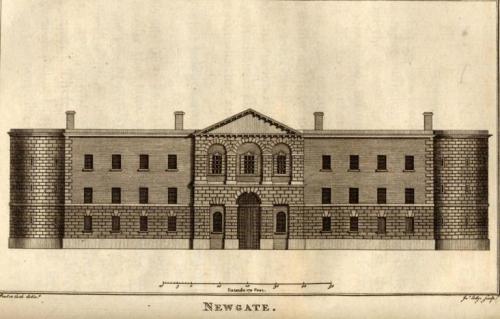
Newgate Prison from Robert Pool & John Cash. Views of the most remarkable public buildings, monuments and other edifices in the city of Dublin; 1780 (Dublin City Council)

Though a grim thought to us today, many eighteenth century Dubliners regarded public hangings as public spectacles. While some voices maintained that nothing of merit could come from “bringing unhappy wretches through a city, amid the sighs, and too often the commendation, pity and tears of the common people”, others reveled in the scenes and crowded streets.

I’m currently reading Brian Henry’s study Dublin Hanged: Crime, Law and Punishment in Eighteenth Century Dublin. Published 25 years ago this year, it is a masterclass examination of crime and responses to it in the Irish capital, drawing heavily from the eighteenth century press.  It’s interesting to note how punishments changed over the course of a century, and likewise how the attitude of Dubliners towards very public spectacles of death changed too.

By the end of the century, the authorities wished to put an end to the centuries-old spectacle of hanging processions in the city,  which essentially witnessed the condemned riding in a cart through the city – followed by family, friends, the generally curious and the more than occasional jeering spectator – towards the “fatal tree” in the vicinity of Stephen’s Green. These were, Henry notes, “well publicisied affairs and attracted huge numbers of people.”

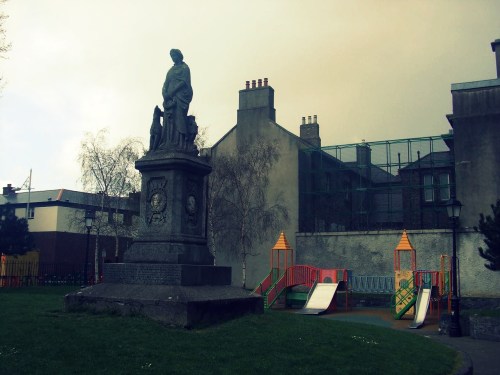
By Janaury 1783, it was time for change, with the Lord Lieutenant ordering that future executions occur instead on the city’s northside outside of the Newgate Prison beside Green Street. The site of the prison is today occupied by St. Michan’s Park, where a monument commemorates John and Henry Sheares, two prominent United Irishmen. Following their betrayal by a paid informer, they were hanged outside the prison in 1798, walking to the gallows holding hands, comrades and brothers until the end. The inscription on the monument notes, “within this park once stood Newgate prison associated in dark and evil days with the doing to death of confessors of Irish liberty, who gave their lives to vindicate their country’s right to national independence.”

eirestatue1

Erin reflects in the playground of St. Michan’s Park.

Not all who went to the gallows of Newgate prison were “confessors of Irish liberty.” The first man to meet his end there was Patrick Lynch, hanged on 4 January 1783. Lynch was tried and sentenced only a day earlier for robbing one Mr. Dowling and firing two pistol shots at him in the process. Lynch was sentenced under the Chalking Act, under which those convicted “were to suffer death without benefit of the clergy, a medieval term which came to mean loss of regal recourse. In 1784 the Chalking Act was amended and those convicted under it were to have their bodies, after hanging to death, delivered to the surgeons in Dublin or the anatomists at Trinity College, Dublin for dissection or anatomisation.”

If the intention in moving hangings from the Stephen’s Green area to Newgate Prison was to prevent a public spectacle,  it was a colossal failure. The area in the vicinity of Green Street was a long established market district, beside the Ormond fruit and vegetable market and amidst a warren of streets occupied by small shops, making it a hive of activity. Warburton, Whitelaw and Walsh, in their classic history of Dublin, were scathing of conditions in the prison and its locality, noting that it was “environed by dirty streets,and in so low a situation as to render the construction of proper sewers to carry off its filth impracticable.” To them, it was quite simply “a disgrace to the metropolis.”

Less than 24 hours after his conviction, Lynch, a member of a sizeable criminal gang in the city who had been tried previously for several robberies and burglaries, appeared on the front steps of the prison. The executioner fixed a noose around his neck, attaching it to a mechanical apparatus on the first landing, then “Lynch was suddenly hoisted up in the air by a pullet affixed to the window just above the front door.” The Dublin Evening Post described the hanging apparatus thus:

A tremendous apparatus for the execution of criminals is fixed at the front of the New Gaol in the Little Green. It consists of a strong iron gibbet with four pulleys of the same metal, underneath which is a hanging scaffold on which the fated wretches are to come out from the centre window and on a signal the supporters of the scaffold are drawn from under it and the criminals remain suspended.

His body swung there from noon until four in the afternoon, witnessed by thousands of people. It was a grim spectacle, to such an extent that in its aftermath it was decided bodies should not be suspended for more than an hour at future hangings. The manner of hanging was brutish, Dubliners christening the “city crane” which so violently lifted men to their deaths. It was quickly replaced by a drop platform system, ensuring that the Newgate’s second victim met a quicker end.

Not long after Lynch’s death, reference was made in the press to troublesome young men who were “loose, idle and very profligate fellows…belonging to the gang of that heinous offender, Lynch, who was lately executed in that exemplary manner.” Patrick Lynch was the beginning of a tradition of death by hanging at the Newgate that would continue into the nineteenth century. The site gained a certain romanticism because of the death of prominent United Irishmen there. In 1898, nationalists marked the centenary of the United Irish rebellion by parading at the site of the prison and playing the ‘Marseillaise’ to the memory of those who had died for the ideals of ‘Liberty, Equality and Fraternity’. Yet most of those who were hanged at the prison were lowly criminals like Lynch, and there was no romanticism in their deaths before the Dublin crowds. The prison finally closed in 1863, and was demolished thirty years later.


Read Full Post »

DFOH

The Dublin Festival of History begins next week, and will run right through into a brilliant weekend of talks in Dublin Castle. There are over 140 events taking place in Libraries across Dublin. Highlights include a talk from the team behind the marvelous Atlas of the Irish Revolution, songs from the struggle for Suffrage  and  Paddy Cullivan’s very funny yet very serious 10 Dark Secrets of 1798.

I have quite a few talks in the Festival. Please note that in the programme I am down for several walks, unfortunately I’ve broken my ankle (one of the few things in life that actually is as bad as it sounds), the 1918 walk from the Mansion House will go ahead in the very capable hands of Justine Murphy, while the Revolutionary Dublin tour is in the hands of Dr. Brian Hanley, author of The IRA 1926-1936, The Lost Revolution and a new study from Manchester University Press examining the impact of the conflict in the North of Ireland on southern society.

Catch me hobbling into the following libraries:

CABRA LIBRARY:

Tenements and Suburbia, 27 September, 6:30PM

Gaelic Sunday 1918, 4th October, 6:30PM.

DRUMCONDRA LIBRARY:

The Many Lives of Jackie Carey, 25th September, 6:30PM

FINGLAS LIBRARY:

Tenements and Suburbia, 24th September, 6:30PM.

30th Anniversary of Feel No Shame: An Interview with Christy Dignam, 26th September, 6:30PM (booked out)

The Life and Politics of Liam Mellows, 1 October 6:30PM.

ILAC LIBRARY (CENTRAL LIBRARY)

From The Plough to the Stars: James Connolly at 150, 28 September,1PM.

SWORDS CASTLE

1918: The Year Everything Changed, 29 September, 11:15AM.


Read Full Post »

42167251_269784833652474_7443249809403674624_n

Handball Alley, Mount Pleasant Buildings, Dublin. (date unknown)

The story of Dublin handball is interesting. Through the years the country has always been a recognised stronghold of the game, which at times has flourished, dwindled, though not to the point of extinction and, in turn, regained prominence.

So proclaimed the Irish Press in 1966, at a time when handball was already in sharp decline in the capital. Of the GAA sports, handball is the least familiar to the general public today, and yet in the urban landscape of Dublin you can still find handball alleys or the remnants of them, in both city and suburbia. For decades, the game was second only to soccer as a street game in Dublin. In 2014, the photographer Kenneth O’Halloran photographed dozens of old handball alleys across Ireland, estimating there to be close to a thousand dotting the landscape.

The rules for the modern game of handball in Ireland were written by the Gaelic Athletic Association, who included the game within the GAA’s charter of 1884, though the Comhairle Liathróid Láimhe na hÉireann ( the Irish Handball Council) was not established until 1924. The game enjoyed some popularity among the revolutionary generation, with Frank Thornton recalling of his time in prison during the War of Independence that “Inter-wing rivalry was encouraged, and it wasn’t long until the Handball Championship of the prison was being fought out against the gable end wall of one of the wing.” The pivotal figure in the early development of the game in Ireland was John Lawlor, a brilliant player of the game in both Ireland and the United States, who was also a committed trade unionist and nationalist. His graveside oration in 1929 was given by none other than Jim Larkin, and handball historian J.K Clarke has detailed the manner in which Lawlor fought tooth and nail to promote the game.

A contributing factor in the popularity of the game was the inclusion of handball courts in large places of work, with factories and depots looking to handball as a means of providing physical exercise for staff on breaks. Workers at the Great Southern Railway in Inchicore had their own handball alley, and they would also become common place in fire stations and police stations. Early Garda Commissioner Eoin O’Duffy was a great supporter of the game and Gaelic games more broadly. Some of the most capable handball players in Dublin emerged from the force, including Paddy Perry, who took the Irish senior softball title every year between 1930 and 1937, and Tom Soye. Yet such alleys generally give us insight into the game’s popularity among working adults; it was handballs incredible popularity as a street game among urban youth that made it so important in a Dublin context. Paul Fitzpatrick, who has written a number of insightful articles on various aspects of the game, pinpoints the early decades of independence as the glory age for the sport, noting that “Handball shone briefly, brightly and brilliantly in the 1920s through to the ‘50s and just as quickly faded away.” This was a time of rapid suburbanisation in Dublin, and the game proved popular in ever-expanding Dublin.

The popularity of the game, much like soccer, came from its simplicity in terms of requirement to participate. Soccer is sometimes described as the most egalitarian of games, requiring only four jumpers and a ball for youths to enjoy themselves, handball required merely a wall and ball. The dominance of the game is remembered in oral histories of Dublin, including the masterclass Dublin Tenement Life: An Oral History of the Dublin Slums. Billy Dunleavy, who grew up in Dublin’s notorious Monto district, told the interviewer that “Kids would be knocking about the streets. We used to play handball against a big wall….and if you mitched from school you’d get a hiding.”

One of the most important handball alleys in Dublin was constructed in Ballymun at The Boot Inn in 1909, remaining in use for decades afterwards, and witnessing a challenge in 1924 between Irish professional champion, J.J Kelly of Dublin, and visiting world champion J.J Heaney of New York. While The Boot is gone, the website irishhandballalley.ie does contain an interesting visual archive of remaining handball alleys in Dublin, including in Blackrock College, Casement Aerodrome and Pigeon House Fort, Ringsend.

Why did the game go into such sharp decline in the 1960s? Rian Dundon, who compiled a beautiful photographic piece on the game in the United States for timeline.com pinpoints a later date for its decline there, noting that “Handball’s ubiquity began to decline in the 1980s as basketball, another urban sport with a low bar for entry, rose to dominance in parks and schoolyards.” By then, the game had sadly all but faded from the sports pages in Ireland.

Despite its declining popularity in recent decades, the game still has its disciples in Dublin. Numerous GAA clubs actively promote the game, and it is included in the ‘Experience Gaelic Games’ programme offered by Na Fianna in Dublin, where the game is still played competitively too. To those who participate in it, it remains an important sport, and perhaps the old handball alleys dotted across this island should encourage the rest of us to investigate the sport more. As sports historian Paul Rouse recently wrote in the Irish Examiner:

They thrived as sites of popular recreation, places where people could gather and play or watch. Or just sit. The image of the ball alley with dozens of bikes scattered around its perimeter waiting to be reclaimed by their owners is one of the great iconic images of mid-20th century Ireland.

Read Full Post »

sarah-parker-remond.png

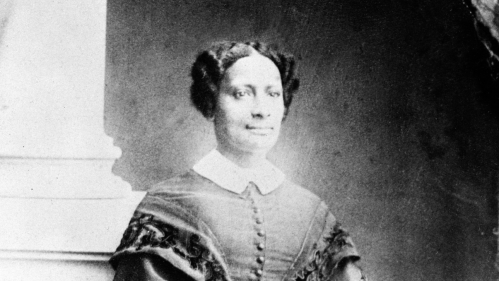
Sarah Parker Remond, who spoke in Dublin in 1859 and 1861.

This year is the bicentenary of the birth of Frederick Douglass, the influential abolitionist who visited Ireland in 1845. His time in Ireland coincided with Daniel O’Connell’s campaign for Repeal of the Act of Union, a remarkable grassroots movement that greatly impacted Douglass. Of his time in Ireland, Douglass wrote that “I have spent some of the happiest moments of my life since landing in this country, I seem to have undergone a transformation, I live a new life.”

Douglass was not the first or last anti-slavery voice to be heard in Irish meeting halls. In the 1790s, Olaudah Equiano spoke in both Dublin and Belfast, and his cause was championed by prominent members of the United Irishmen, who were vocal opponents of slavery.

In the later decades of the nineteenth century, a number of anti-slavery campaigners spoke in Dublin, following in the footsteps of Equiano and Douglass. These included Sarah Parker Remond (1815-1894) from Salem, Massachusetts. In 1859 and 1861, she spoke in Dublin before sympathetic audiences, her second speech coming at  a time when America was gripped by Civil War. An activist with the American Anti Slavery Society, she spoke in Britain and Ireland, writing before departure from Boston to Liverpool that she feared not “the wind nor the waves, but I know that no matter how I go, the spirit of prejudice will meet me.” Like the pioneering figures who had come to Dublin before her, she found a receptive audience, with one report of her first speech noting:

They [the audience] were accustomed in this country to hear lectures on public subjects delivered by men only, but this was a great moral question. Miss Remond had identified herself with it, and had made it her own.

Screenshot 2018-09-16 at 10.22.04 PM

Freeman;s Journal, 19 March 1859

One of those who attended Remond’s speeches in Dublin was Richard D. Webb, the leading voice in Ireland for the abolition of slavery, and a founding member of the Hibernian Anti-Slavery Association and a political ally of Daniel O’Connell. Webb, with O’Connell, had attended the important Anti-Slavery Society Convention in London in 1840, and was instrumental to arranging Frederick Douglass’s speaking arrangements during his visit to Ireland. Of Remond, he was moved to write that “she is really very clever – the most so of all the coloured people I ever met, except Douglass, and is a very much more sensible and thoroughgoing person than he.”

The 1859 meeting was described in the press as being organised by the Dublin Ladies Anti-Slavery Society, a respected body which had emerged from the Hibernian Negro’s Friend Society in 1837. The meeting was addressed also by James Haughton, who stated that “although the Irish people, as a nation, always kept their hands clean from participation in the guilt of the African slave trade, that did not weaken their responsibility. It might be that our countrymen in America were sometimes misled, and their ideas perverted, by the outcry of mob opinion in favour of slaveholding.” Remond was presented with an Address of the Irish People to their Countrymen and Countrywomen in America urging Irish Americans to oppose the barbarism of slavery.

In speaking in the Round Room of the Rotunda, to an audience that included notable Dublin citizens, Remond received a welcome not unlike that afforded to those who came before her. The welcome of many Irish nationalists was not unlike the friendly hand extended in the past too, but as I noted in a recent piece on Equiano:

It would be a gross over-simplification to insist that Irish radical separatism and the cause of abolitionism have always gone hand in hand; in the 1840s, The Nation newspaper proclaimed that slavery in America was no concern to Irish republicans, as, “we have really so very urgent affairs at home … that all our exertions will be needed in Ireland. Carolina planters never devoured our substance, nor drove away our sheep and oxen for a spoil … Our enemies are nearer home than Carolina.”

By the late 1860s, Remond had settled in Italy. As the website BlackPast notes, “although subsequent records of her life remain scarce, one of the last sightings comes from none other than Frederick Douglass. While visiting Italy in 1886 Douglass encountered Remond and two of her sisters.  All three Remond women had chosen exile over life in the United States.” She died in December 1894.

Read Full Post »

Unless you’ve been hiding under a rock, you will have heard that Sam Maguire is to remain in Dublin at least a year longer. This year marked the 80th anniversary of the last time the Liam McCarthy cup resided in the Irish capital, something which went largely unmentioned. This wonderful clip from British Pathe, audio and all, captures the 1938 All Ireland Hurling Final and is criminally underviewed on YouTube. Dublin defeated Waterford 2-5 to 1-6.

The archive clip is noticeable for the wonderful shots of the Croke Park crowd and terrace. While the official attendance at the match was 37,129, the news clip gives a significantly higher estimate, and the ground seems packed.

Much has changed since 1938, evident even from reading the beginning of the Irish Press report on the occasion:

Liffey men, Lagan men, Suirsiders, Leesiders, country folk and city dwellers, some from every one of the 32 counties, encircled Croke Park’s playing pitch yesterday and saw Dublin win the nation’s premier atheltic trophy.

The actual match was not outstanding – spectators found it a ding-dong terrior-like game – but the unique atmosphere of an All-Ireland Hurling Final was present. It was more than a game, it was a national occasion. Sections of the crowd were still singing ‘Faith of Our Fathers’ when Padraig Mac Con Midhe, Preisdent of the GAA, escorted the Bishop of Waterford on the field to throw the ball in.

In time, the writer got to the action:

Dublin’s lead was reduced to two points shortly before the end, and Waterford, fighting hars gve its supporters – there in big numbers – some hope that they would win the day. The Metropolitan hurlers, however, kept their territory intact. All-Ireland Champions, they yet again have won the coveted trophy their opponents have yet to capture.

Remarkably, Jim Byrne of the 1938 Dublin hurlers is the only native Dubliner to have won an All-Ireland hurling medal. As Hell for Leather: A Journey Through Hurling in 100 Games notes, the strong Dublin sides of the 1920s and 30s were drawn from right across the island of Ireland, as “the exclusion of native Dubs from their own county team peaked in the 1920s and 1930s when legions of countrymen migrated Liffeyside to join the guards, army or civil service.” When Dublin won the 1927 All-Ireland hurling final, there was not a single native Dubliner on the team!

Read Full Post »

GaietyPoster_big

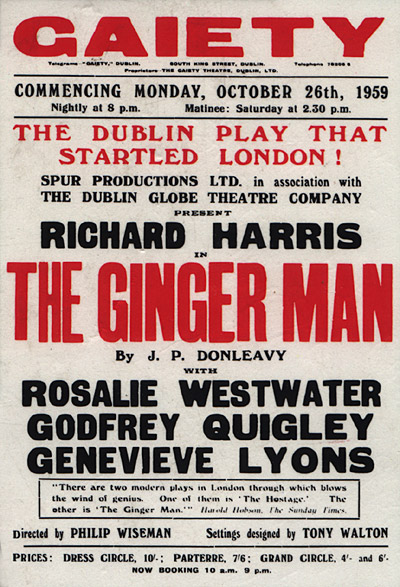
“The Dublin play that started London!” (Image credit: the excellent JPdonleavy-compendium.)

J.P Donleavy’s The Ginger Man is, to my little mind, second only to Ulysses as a Dublin masterpiece of fiction. Like Joyce, Donleavy had his fair share of detractors upon publication of the work, and its eventual banning on both sides of the Atlantic was almost routine. The novel trashes the proclamation of politician Oliver J. Flanagan that there was “no sex in Ireland before television”, and it is a brilliant journey through the catacombs, darkened alleys and public houses of the Irish capital in the 1940s, through the eyes of a sex (and drink) addicted American here thanks to the post-war G.I Bill that enables him to study in Trinity College Dublin. In particular, I adore Brendan Behan’s brief cameo as Barney Berry, “son of the rightful Lord Mayor of Dublin.” Behan was the first to see a manuscript of the work, and his amendments were mostly included by Donleavy.

As was the custom for a 1950s masterpiece, Donleavy’s work made the leap from printed word to stage, being performed in London and Dublin in 1959, four years after its initial publication in Paris. The stage adaptation, performed at the Gaiety Theatre, made it all of three nights before being shut down by clerical pressure. It remains one of the most curious incidents in the long history of Irish censorship, showing that there were agents beyond just the state who wished to control what was read, seen and enjoyed by the Irish public.

When The Ginger Man took to the London stage, it attracted the ire of some in the Irish media. The play was running at the same time as Brendan Behan’s The Hostage and Seán O’Casey’s Cock-a-doodle Dandy, with the Evening Herald lamenting the politics of these works for providing a view of Ireland that was “misleading and distorted….A non-Irish foreign visitor to London would come away from these plays with a depressing opinion of Ireland.”

Richard Harris dominated the reviews of The Ginger Man, with even the most cynical of theatrical reviewers acknowledging his brilliance in the role of Sebastian Dangerfield. At London’s Fortune Theatre in Covent Garden, they came to hear every bad word, though a few were cut. After six weeks, the production transferred to Dublin. Here, it made it all of three performances before clerical pressure led to its sudden cancellation.

To the Evening Herald, a trip to the play amounted to a “sordid and repulsive evening to the theatre.” Going further still was the Irish Independent, to whom the play was a disgrace almost without parallel:

The Ginger Man is one of the most nauseating plays to ever appear on a Dublin stage and it is a matter of some concern that its presentation should ever have been considered. It is an insult to religion and an outrage to normal feelings of decency.

Unlike the Playboy of the Western World, The Plough and the Stars or The Rose Tattoo, there was nothing in the line of audience denunciation, at least nothing significant enough to make it into the media. But then, after only three presentations, it was reported that the play was finished. The following statement was issued by the Gaiety to the press on the third night of the run:

The management of the Gaiety announce that the run of The Ginger Man will be discontinued after tonight’s performance because of the lack of co-operation by Spur Productions Ltd. of London, who refused to make cuts as demanded by the management on Monday.

The driving force behind the collapse of the production was Archbishop John Charles McQuaid. As McQuaid’s biographer John Cooney has noted, “one of the Archbishop’s secretaries arrived at the theatre to convey His Grace’s disapproval of the play, which had been described in the newspapers as an insult to religion and decency. ‘There goes a battleship’, Richard Harris remarked as the priest left the theatre.” In the words of theatre historian Joan Fitzpatrick Dean, “McQuaid’s action was perhaps most menacing because it was not only so effective but also wholly outside the rule of law.” McQuaid’s influence would be utilised repeatedly in this period against what he regarded as low culture. Famously, he would condemn Edna O’Brien’s breakthrough novel as “a smear on Irish womanhood”.

Donleavy never forgave McQuaid for his action, and it took four decades before the play returned to the stage in Dublin for the Dublin Theatre Festival in 1999.  Despite its initial banning, more than forty million copies of The Ginger Man have been sold internationally, and Sebastian Dangerfield’s exploits continue to shock and fascinate new readers.


In memory of J.P Donleavy, who died a year ago this month.

Read Full Post »

History On Your Doorstep

Back in 2011 I attended a conference in Barcelona where social historians and others active in a similar field of history to ourselves from across Europe met up and talked shop. I was very struck in particular by a group called Raspouteam from Paris, who took images of the iconic Paris Commune and essentially pasted them onto the contemporary streets. It was all very naughty, seditious and illegal of course.

la-commune.jpg

‘La Commune’ – BY RASPOUTEAM

The idea of putting historic images back on the street in relevant places stayed with me. When I was fortunate enough to get employment with Dublin City Council as one of their Historians in Residence, the idea came out almost immediately for something called ‘History On Your Doorstep’.  It is, of course, very different from that glorious French street art intervention. Done in conjunction with the city, it nonetheless would bring historic images back to the places they depict and capture.

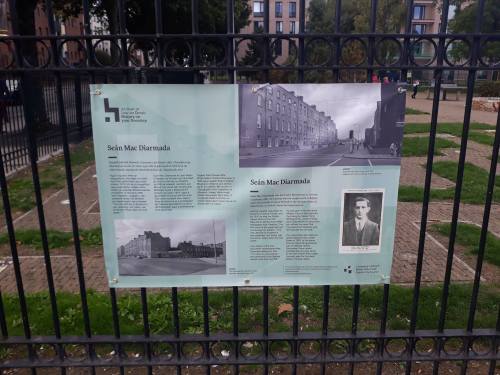
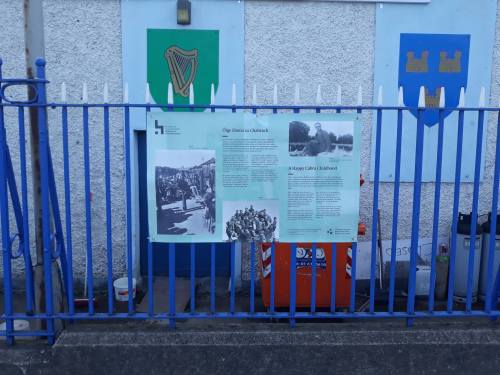
All of the images featured are taken from Dublin City Archives, contained in the expansive Pearse Street Library. Already, a team of us have compiled dozens of these, with a few already on the streets in various forms. They are in Ballybough (Heffo’s Army), Chapelizod, Dolphin’s Barn, Cabra, Finglas and more besides.

41188836_244892676215818_1053546252119048192_o

Historic images of Seán MacDermott Street and biography of the Fenian leader.

41339021_244892509549168_2465931206433177600_o

1930s Cabra and Herbert Simms, Naomh Fionnbarr’s GAA.

41141768_244892446215841_4048327416047730688_o

“Many bridges to cross” – Ringsend.

This is still in its infancy, and hopefully in time the various info boards and banners across the city can be mapped and put online. Do keep an eye out for them however, and remember that these images all come from the archives of the city. Anything that takes history and puts it back where it was made is something I see as a worthwhile endeavour.

Read Full Post »

Thompsonad1sm

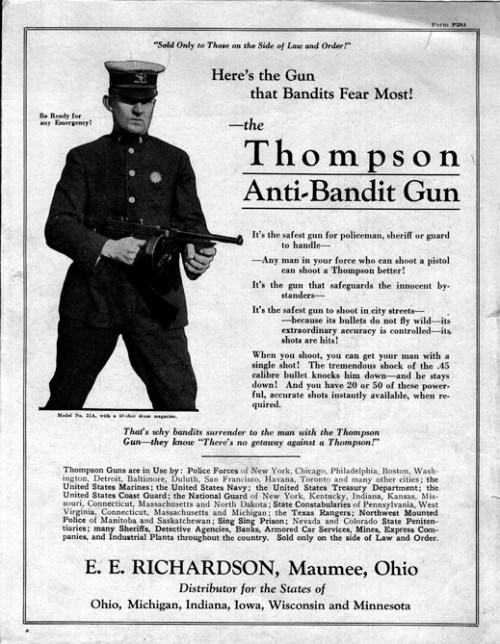
US 1920s advertisement for the Tommy Gun, “the gun the bandits fear most.”

In time of revolution, hushed meetings can happen in the most unlikely of places. In revolutionary Dublin, intelligence policemen followed republican suspects from cafe to newsagent and everywhere in between. At the National University of Ireland, Earlsfort Terrace, both students and staff had radicals in their midst.

That some prominent nationalists worked in academia at the university ensured that more than just academic issues were discussed on campus. P.J Paul, Officer Commanding the East Waterford Brigade in the intensifying guerilla war in the Irish countryside, recalled meeting Richard Mulcahy in his office in the university in 1921 to discuss the course of the conflict, before being taken to another room in the University:

which I remember had the name on the door saying that it was the room of Professor Eoin McNeill. There I met Emmet Dalton and a man named Cronin, an American, and another American who was with him. I was shown a specimen of the Thompson sub-machine guns which I learned were being smuggled in from America in some quantities. The two Americans were the experts on the gun and they demonstrated how it worked and explained its mechanism.

The Thompson submachine gun, or the Tommy Gun, was invented in 1918 by United States Army officer John T. Thompson, coming onto the market in 1921. The gun is synonymous in popular culture with Prohibition-era Gangsterism in the U.S, recalling Al Capone and incidents like the St. Valentine’s Day Massacre. The so-called ‘Chicago Piano’ has maintained a lasting place in popular memory owing to television shows like Boardwalk Empire and Peaky Blinders. Still, before the gun was ever utilised in the chaos of mob warfare, it was tested by the Irish Republican Army in Marino and fired for the first time in a military capacity in an IRA ambush in Drumcondra. For the Irish republican movement on both sides of the Atlantic, the gun would represent a definitive turning point in the war in Ireland. Internationally, it is remembered as “the gun that made the twenties roar.” In Ireland, it arrived late in the War of Independence, but would have a formative influence in subsequent political turmoil.

Scarface

A famous 1930s Hollywood depiction of the Tommy Gun, from Scarface: Shame of the Nation.

Developing and selling the Tommy Gun:

For General John T. Thompson, the journey towards a “one-man, hand-held machine gun” began in 1916 with the foundation of the Auto-Ordnance Company. Financially backed by American insurance magnate Thomas Fortune Ryan, a supporter of the Clan na Gael Irish-American Fenian movement, Thompson’s gun prototype was initially known as ‘The Annihalator’.  Unsurprisingly, the gun attracted the attention of Irish republican representatives in the United States, who supplied IRA GHQ in Dublin with as much information as possible on the Tommy Gun and its capabilities. GHQ relied on number of channels – including the Liverpool docks and European arms dealers – to equip the IRA in its guerilla campaign, and attempted to remain abreast of developments in arms on the continent and beyond.

The Tommy Gun was not cheap, retailing at $225 a piece. Likewise, the absence of suitable ammunition in Europe would create real headaches. Still, greatly encouraged by reports of the guns capabilities, IRA GHQ encouraged those in America to secure quantities of the weapon. Having received cuttings on the gun from Harry Boland in the U.S, Michael Collins sent a memo to the Quarter Master General of the IRA in January 1921, writing “I wonder if you saw the attached having reference to the submachine gun. It looks like a splendid thing certainly. I’d like to know what it costs.”

By May 1921, small quantities of the gun were beginning to arrive in Ireland, along with Major James Dineen and Captain Patrick Cronin, former officers of the US Army who were to train IRA men in their use. Oscar Traynor of the IRA’s Dublin Brigade later recalled:

The first introduction of these guns followed the arrival of two ex-officers of the American Army, one was Major Dineen and the other, whose rank I forget, was named Cronin. These two men were made available to the Brigade for the purpose of giving lectures and instructions in the use of the Thompson submachine guns. The lectures, which were given to selected men of the Dublin Brigade, consisted in the main of taking the gun asunder, becoming acquainted with the separate parts and securing a knowledge of the names of these parts, the clearance of stoppages, as well as the causes of these stoppages. In the early stages it was not possible to give practical demonstrations of the shooting powers of these weapons, but the handling of the guns, together with the methods of sighting, made the men reasonably proficient.

In the presence of Dineen and Cronin, the gun was test fired underground at the Casino in Marino before a select audience of IRA men. Vincent Byrne recalled that “It was Cronin who gave the demonstration. Standing back a few yards, he fired at a tin can. The first shot lifted it into the air and he kept hitting it in mid-air. The Big Fella and Mulcahy were delighted at the results and our only wish was that we had plenty of them.” Tom Barry of the IRA’s 3rd West Cork Brigade fired the gun at Marino too, but the massive roar of the gun led to fears the men would be discovered. All in attendance left impressed by its remarkable capabilities.

Casino_Marino_008

The Casino in Marino, where the IRA tested the Tommy Gun for the first time. (Image Credit: WikiCommons)

(more…)

Read Full Post »

In March 2013 we published an article on the site looking at the Papal Cross in the Phoenix Park. For the week that is in it I have revisited this subject, and this is an expanded piece on the subject. The original comments are included below.

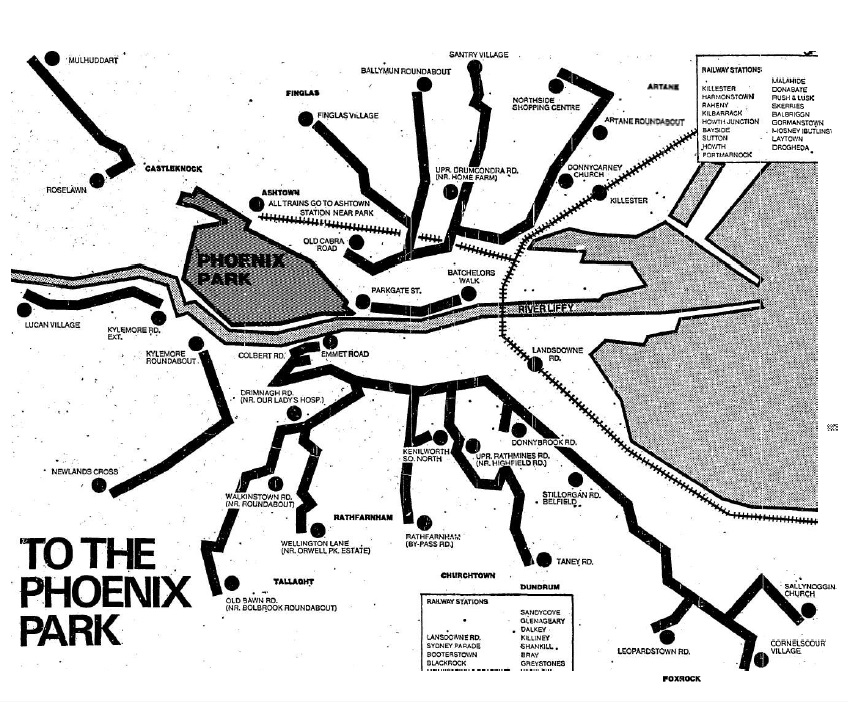
ToThePhoenixPark

Irish Independent map, September 1979.

Yellow and white pontifical flags are flying on the main streets. Bright coats of green paint have been slapped on hundreds of buildings and “Brits Out” and other graffiti have been scrubbed from thousands of walls. At Phoenix Park in Dublin a 200‐foot steel cross, bleachers and vast roped enclosures await a crowd of a million for an outdoor mass Sunday afternoon.

So wrote The New York Times days before Pope John Paul II arrived in Ireland in 1979. American readers were told that “no Pope has come to Ireland before, and John Paul’s visit is viewed here as a kind of papal blessing on Irish nationhood.” Never mind New York, perhaps the truest observation came from The Spectator on the neighbouring island, proclaiming that “Ireland in its history has been more loyal to Rome than Rome has been to Ireland.”

When it was all over, they made their way home from the Phoenix Park in their hundreds of thousands, still streaming out of the park six hours after the conclusion of mass. The Irish Independent correctly proclaimed that it all “proved the most major feat of organisation in the history of the state.”

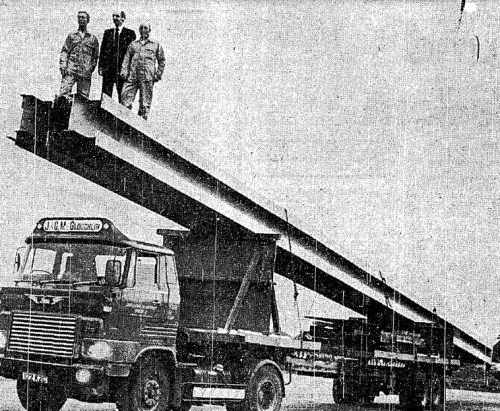
Little remains to be said or written about that Papal visit of 1979. The lasting legacy, of course, is the Papal Cross monument in the Phoenix Park, which will be central to this weeks visit by Pope Francis. The story of its construction and placement in the Phoenix Park is the stuff of legend, with the structure turned around in mere weeks. The visit saw something in the region of a million people crowd into the park, with six thousand people in the choir alone. The Papal Cross was the work of Scott Tallon Walkers Architects, and cost an incredible £50,000. It was constructed in the Inchicore steelworks factory of J and C McGloughlin, and the structure weighed in at 31 tons. It, in many ways, was the main symbol of the event, attracting international media attention and designed to capture the magnitude of the occasion.

Writing about the cross in 2004, architect Ronnie Tallon gave some idea of how quickly the project was completed, noting that:

At the beginning of August 1979, I received a call from the Archbishop of Dublin appointing our practice to design and build an outdoor event for the celebration of Mass for one million people. He had just received confirmation that the Pope was coming to Ireland in eight weeks’ time.

ToThePhoenixPark

The arrival of the cross in the Phoenix Park, Irish Independent.

The sheer scale of the event is clear from all the small details of the day. The Papal carpet alone was two acres in size, and was delivered to Dublin upon three lorries, each carrying thirty rolls. The carpet was made in Antrim, the home county of the Rev. Ian Paisley, something which the media didn’t fail to comment on. Ian Paisley outlined his “total opposition” to any attempt by the Pope to visit the north, and in the end Dundalk was as far north as he went.

Tallon recalled that “we decided that we required a cross the height of Nelson’s Pillar, which was 125 feet high, which would be clearly visible to all from the furthest reaches of the vast congregation and which would give a sense of focus to the occasion.” Tallon was afterwards awarded a Papal knighthood for his efforts in designing the cross and altar for the historic event. According to Tallon, “normally if you were doing a steel contract it would take six weeks to get the material in and another twelve weeks on top of that to have it fabricated and erected.”

book4.jpg

Evening Herald, 1979.

The cross arrived at the park on 7 September, and took a rather unusual route, beginning its journey in Inchicore but heading into the city and crossing the O’Connell Bridge. The sheer size of the structure meant that this longer journey was required, as shorter routes would not accommodate the cross. It took two hundred-ton cranes to lift the cross into position. Was Tallon ultimately satisfied with his Papal Cross? He would tell a journalist that “I’m never happy with anything I’ve made and if I was I’d retire. It’s one of the difficulties of any creative society. You aim at perfection, which is impossible to achieve.”

(more…)

Read Full Post »

Gabriel Lee is the only member of Eoin O’Duffy’s Pro-Franco ‘Irish Brigade’ to be commemorated with a public memorial in Ireland. A small plaque in Dublin’s Pro-Cathedral marks the fact that he died fighting with the Fascist forces in Spain in 1937.

This is in stark contrast to the 20+ plaques and memorials across the island to Irishmen who fought with the International Brigades in defence of the Spanish Republic.

Gabriel Lee was born on 21 May 1904 in Kilcormac (formally known as Frankford), a small town in County Offaly between Tullamore and Birr. His parents were James Lee, a Sergeant in the Royal Irish Constabulary (RIC), and Elizabeth Lee (née Conroy).

Gabriel Lee, birth certificate 1904.

At the time of the 1911 Census, Gabriel Lee was living with his large family at 22 Townsend Street, Birr, County Offaly.

It is claimed that Gabriel Lee was a member of the Pre-Truce IRA although he only would have been in his mid to late teens during the War of Independence (1919-1921). Taking the Pro-Treaty side in the Civil War, he enlisted with the National Army on 25 March 1922 at Marlborough Hall, Dublin. When the Irish Army census was conducted in November 1922, he was serving with the 1st Battalion, South-Western Command at Mallow, County Cork. His home address was given as 45 Lower Drumcondra Road, Dublin.

Gabriel Lee, 1922 Army census.

During the early 1930s, Gabriel Lee served as Vice-Chairman of Fine Gael’s Dublin North West Exectutive and Vice-Divisional Director of the League of Youth, Dublin. He was known to his comrades as Gabe Lee.

James Lee and and his son Gabriel Lee photographed on O’Connell Street, 1934. Credit: ‘Arthur Fields: Man on Bridge’

A committed anti-Communist and devout Catholic, he left Galway with Eoin O’Duffy’s ‘Irish Brigade’ for Spain on 12 December 1936.

Gabriel Lee was injured by shellfire at Ciempozuelos on 13 March 1937 and was brought to Griñón Hospital, Madrid. Eoin O’Duffy recalled in correspondence that Lee had tried to “raise his hand in the Fascist salute” in his hospital bed. Apparently his “final request” was to be buried in a green shirt as retold in Fearghal McGarry’s 2007 biography of Eoin O’Duffy. This indicated his strong loyalty to O’Duffy who had broken away from Fine Gael in 1935 to form the National Corporate Party and the Greenshirts (military wing).

Gabriel Lee died of his wounds on 20 March and was buried in Cáceres, Spain with several other members of the ‘Irish Brigade’.

Gabriel Lee. The Sunday Independent, 12 June 1960.

The Irish Brigade Headquarters, 12 Pearse Street, Dublin released a statement three days after Lee’s death to the Irish Independent (23 March 1937) saying that:

To those who scoff at the motives impelling such sacrifices we say that charity should dictate that only good be spoken of such bravery men. We in this Headquarters know how little inducement or hope of worldly gain was offered to the members of the Irish Brigade. We know their motives, and we know that the souls of these men are with God because they died for God.

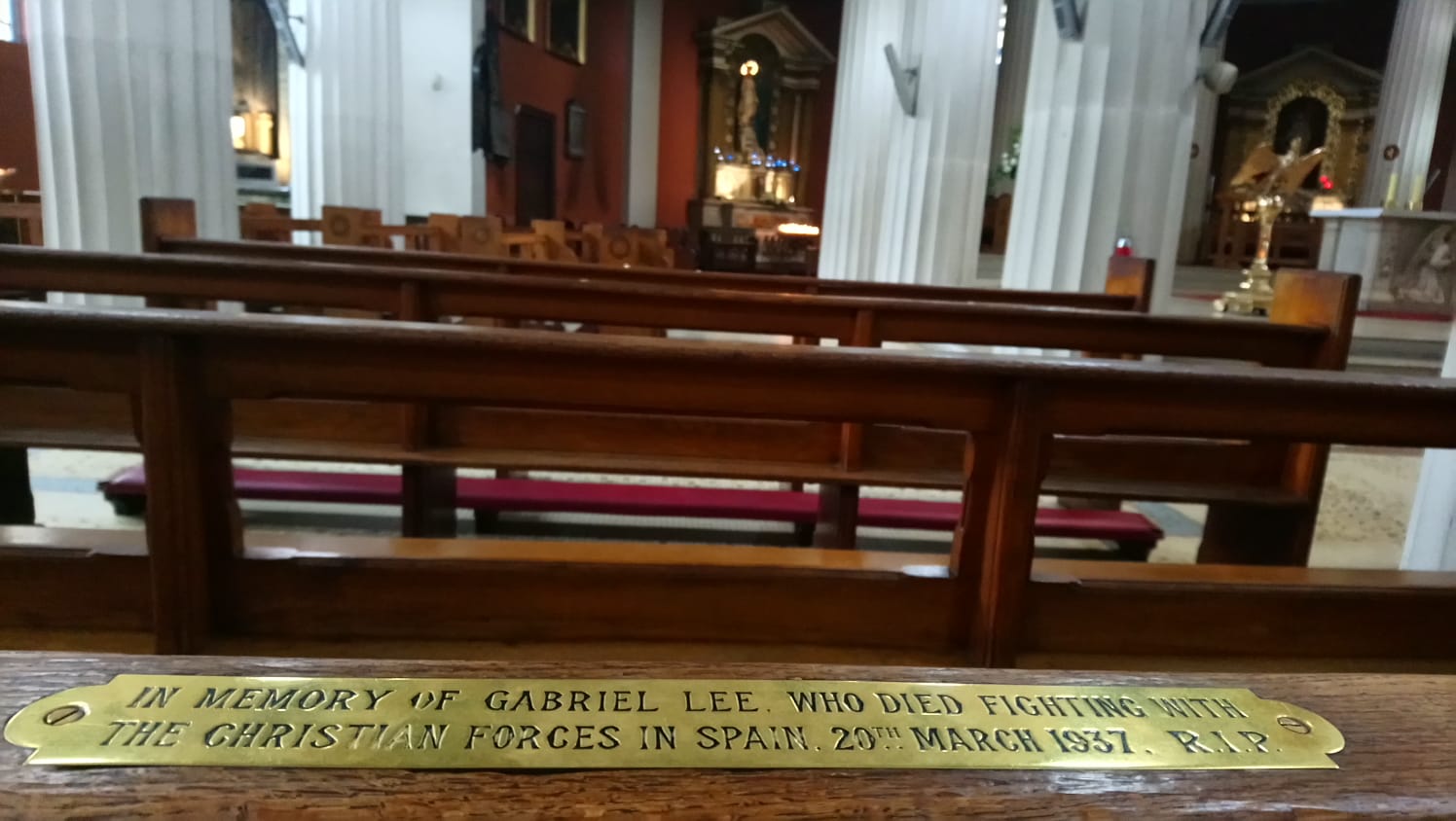
Historian Robert Stradling believed that Gabriel Lee was the only individual who fought with Eoin O’Duffy’s ‘Irish Brigade’ in Spain to have a public memorial in Ireland. In Dublin’s Pro-Cathedral, there is a small plaque on a pew dedicated to his memory which I photographed over the weekend.

Gabriel Lee plaque, Pro-Cathedral Dublin. Credit – Sam, Come Here To Me! August 2018.

Gabriel Lee plaque, Pro-Cathedral Dublin. Credit – Sam, Come Here To Me! August 2018.

In total, I believe that 10 pro-Franco Irishmen were killed in action during the conflict. I have collected these dates, names and addresses from contemporary newspaper articles and death certificates via Irishgenealogy.ie:

1937-02-19 – Captain Thomas Hyde (40) of Ballinacurra, Midleton, Cork – killed at Ciempozuelos in friendly fire incident – buried in Cáceres, Spain. Refs: (1)(2)

1937-02-19 – Daniel Chute (27) of Boherbee, Tralee, County Kerry – killed at Ciempozuelos in friendly fire incident – buried in Cáceres, Spain. Refs: (1)(2)

1937-03-13 – John MacSweeney (23) of Mitchell’s Crescent, Tralee, County Kerry – died from wounds received on Madrid Front – buried in Cáceres, Spain. Refs: (1)(2)

1937-03-13 – Bernard Horan (23) of Mitchell’s Crescent, Tralee, County Kerry – died from wounds received on Madrid Front – buried in Cáceres, Spain. Refs: (1)(2)

1937-03-20 – Gabriel Lee (32) of 45 Lower Drumcondra Road, Dublin – died from wounds received on Madrid Front – buried in Cáceres, Spain. Refs: (1)(2)

1937-03-21 – Thomas Foley (30) of 16 Mary Street, Tralee, County Kerry – died from wounds received on Madrid Front. Refs: (1)(2)

1937-07-15 – Michael Weymes (29) of Mullingar, County Westmeath and later 2 Belton Park Gardens, Donnycarney, Dublin – killed at Villafranca del Castillo on the Mardrid Front- buried in Cáceres, Spain. Refs: (1)(2)

1938-08-? – Patrick Dalton of Pilltown, County Kilkenny- killed in Spain. Incorrectly listed as P. Dolan in one source. Described as Irish student in Spain studying to be a priest. Not Patrick Dalton (1897-1956) of Waterford/Dublin who also served in Spain. Refs: (1)(2)

1938-09-10 – Daithi Higgins (21) of Ballyhooly, County Cork – killed at the Battle of the Ebro fighting with the Spanish Foreign Legion. Refs: (1)(2)(2)

1938-10-? – Austin O’Reilly of Kilmessan, Co Meath – killed at the Battle of the Ebro. Refs: (1)(2)
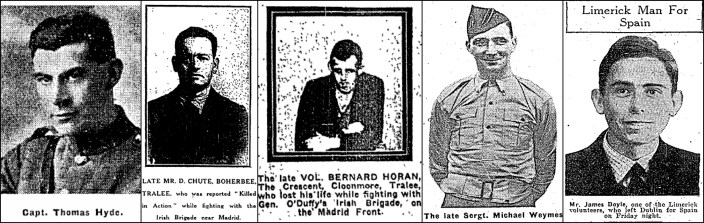
Five of the Irishmen on the Irish Brigades’ ‘Roll of Honour. The first four were killed in action, the fifth died of diseases contracted in Spain.

I have also calculated that about 21 of Eoin O’Duffy’s men also died in at home or abroad from diseases contracted while serving with the ‘Irish Brigade’:

1937-04-?? – John Walsh of Midleton, County Cork – died in Spain and buried in Cáceres. Refs: (1)(2)
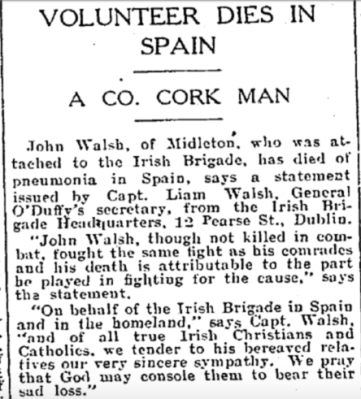
John Walsh, Irish Independent (05 April 1937)

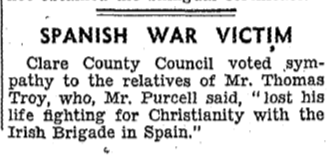
1937-06-?? – Thomas Troy of Tulla, County Clare – died in Spain. Refs: (1)(2)

Thomas Troy, Irish Press (30 June 1937)

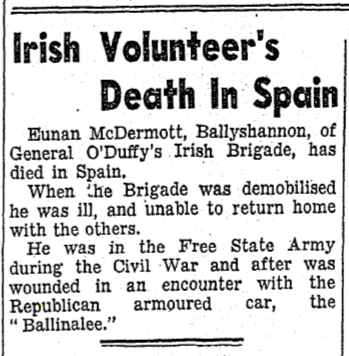
1937-07-?? – Eunan McDermott of Erne Street, Ballyshannon, County Donegal – died in Spain. Refs: (1)(2)

Eunan McDermott, Irish Press (12 July 1937)

1937-07-24 – John McGrath (22) of Lenaboy Avenue, Salthill, County Galway – died in IRL. Refs: (1)(2)

John McGrath, Irish Independent (27 July 1937)

1937-08-20 – Thomas Doyle of Roscrea, County Tipperary – died in Salamanca, Spain. Refs: (1)(2)

Thomas Doyle (Longford Leader, 04 Sep 1937)

1938-01-08 – Matthew Barlow (44) of Chapel Street, County Longford – died in IRL. Refs: (1)(2)
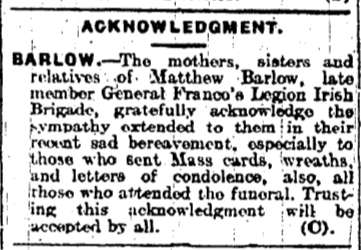
Matthew Barlow, Longford Leader (22 January 1938)

1938-02-02 – John Cross (32) of 49 William Street, County Limerick – died in IRL. Refs: (1)(2)

Jack Cross, Irish Independent (04 February 1938)

1938-02-09 – Patrick Dwyer (32) of 19 Sheehy Terrace, Clonmel, County Tipperary – died in IRL. Refs: (1)(2)

1938-09-17 – Martin O’Toole (28) of Ballynacally, County Clare – died in IRL. Refs: (1)(2)
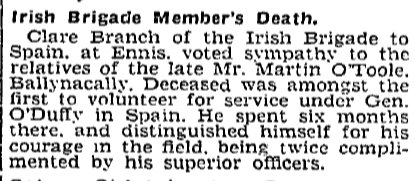
Martin O’Toole, Irish Independent(21 September 1938)

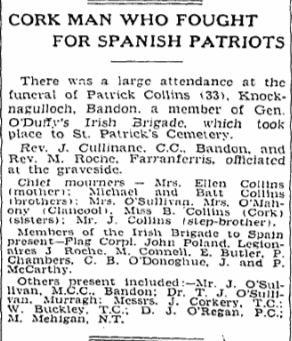
1939-03-04 – Patrick Collins (33) of Bandon, County Cork – died in IRL. Refs: (1)(2)

Patrick Collins, Sunday Independent (12 March 1939)

1939-03-27 – Thomas Slater (30) of 47 Garrymore, Clonmel, County Tipperary – died in IRL. Refs: (1)(2)

Thomas Slater (Irish Independent, 30 March 1939)

1939-04-12- James Doyle (22) of Boherglass, Clonlong, County Limerick and later 63 High Street, Thomondgate, County Limerick. Died in IRL. Refs: (1)(2)

James Doyle, Limerick Leader (22 April 1939)

1939-06-29 – Francis Maguire (32) of Belgium Square, Monaghan Town, County Monaghan – died in IRL. Refs: (2)

1939-09-13 – Laurence Heaney (37) of 32 North Great George’s Street, Dublin – died in IRL. Refs: (1)(2)

1940-02-04 – William Tobin (37) of 2 Abbeyside, Cashel, County Tipperary – died in IRL. Refs: (2)

William Tobin, Irish Independent (8 February 1940)

1940-02-05 – Philip Comerford (25) of Kells, County. Kilkenny – died in IRL. Refs: (2)

Philip Comerford, Irish Independent (13 February 1940)

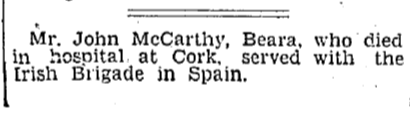
1940-03-23 – John McCarthy (37) of Castletownbere , County Cork – died in IRL. Refs: (2)

John McCarthy, Irish Independent (6 April 1940)

1940-03-26 – Austin Hamill (33) of Hill Street, Monaghan town, County Monaghan – died in IRL. Refs: (2)

1940-04-25 – Denis Maher (36) of 25 King Street, Clonmel, County Tipperary –  road traffic accident in IRL. Refs: (2)
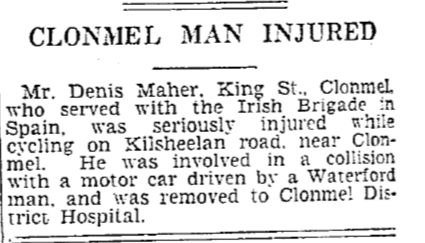
Denis Maher, Irish Independent (26 April 1940)

1940-06-?? – Thomas Gunning of County Leitrim – died in Germany Refs: (2)

?? – Frank Nevin of 82 St. Lawrence Road, Clontarf Dublin – died in IRL. Refs: (2)

Couldn’t find obit in newspapers but thought this was interesting re: Frank Nevin (Irish Independent, 3 April 1937)

?? – Michael O’Donoghue of County Galway – died in IRL. Refs: (2)

?? – Patrick McGarry of Newtownforbes, County Longford – died in IRL. Refs: (2)

(1) Listed as one of the 21 men who “lost their lives” while serving with the Irish Brigade. The Irish Independent, 03 May 1939

(2) Listed as one of the 33 “deceased members” of the Irish Brigade. The Irish Independent, 16 October 1940

Thank to Gerard Farrell for additional documents and information.

Read Full Post »
« Newer Posts - Older Posts »