From the ‘Animal Gangs’ of the 1930s to football hooliganism in the 1970s and 80s, we’ve long had an obsession around these parts with the violent past of the capital. Even yesterday jaycarax wrote a piece on triad gang violence in the capital in the late 1970s. Gang violence and mentality is a fascinating and often revealing subject.
This year, as part of the Electric Picnic festival in Stradbally, History Ireland are presenting two Hedge Schools in the Mindfield area, both taking place on the Leviathan Stage. Essentially Mindfield is a large, spoken word corner which adds to the fun of EP in a big way for me. This is the third year of History Ireland Hedge Schools at the event.
I’m on the panel for a discussion on Sunday:
From the Liberty Boys to the Westies: gang culture in Ireland with David Donnelly (ex-Black Catholics punk gang), Donal Fallon (Come Here To Me Blog), John Gibney (History Ireland) and Niamh Hourigan (UCC).
It is due to begin at about 2.45pm on Sunday . With festivals, things naturally start and finish a little off schedule so keep that in mind but it should make for an interesting discussion. I’m going to be focusing primarily on the capital and the first half of the twentieth century. We’ll be looking not only at actual gangs, but also media hysteria and coverage of different subcultures and the like.
I’ll likely be focusing on the ‘Animals’ of the 1930’s and 40’s, as well as the various subcultures of the 1950s onwards and the violence or perceived violence around them.
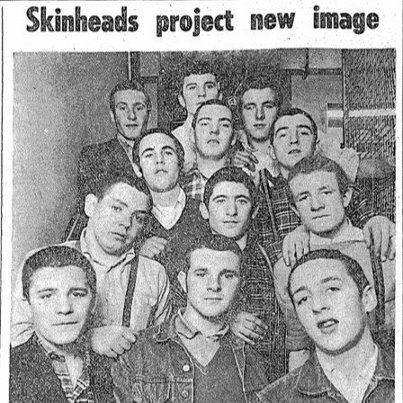
A classic newspaper image of Dublin skinheads, first posted online by our own JayCarax here on site.
A 2011 Hedge School on the Animal Gangs can be heard below:
There is another Hedge School on the Saturday,on the subject of the Irish and racism. It is due to begin at 2.45, though again these times can change and shift.
Racism and the Irish: perpetrators or victims? with Mary Corcoran (NUI Maynooth), Lar Joye (National Museum), Angus Mitchell (Casement—Life and Times) and Hiram Morgan (UCC)
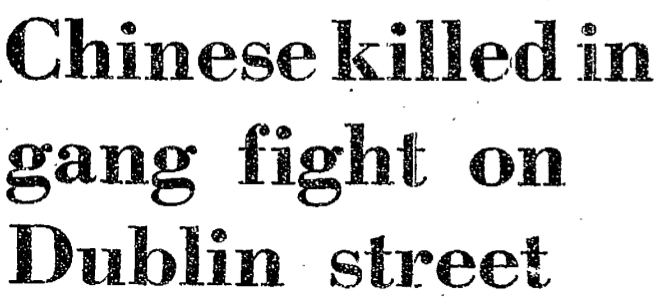
Two Chinese men died and several others were badly injured (including one blinded for life) after a bloody battle broke out between rival groups outside the New Universal Chinese Restaurant on Middle Abbey Street in the summer of 1979.
A .22 long rifle, butchers cleavers, kitchen knives and iron bars were used in the fight which left blood spattered across the road and traffic cordoned off for a number of hours.
Irish Independent, July 18 1979
Witnesses said the fight on July 17 1979 started:
when a group of about seven well-dressed young Chinese arrived in two cars and went into the New Universal Chinese Restaurant, near the corner of Liffey Street. Within minutes, eye witnessed said, there was a commotion inside inside and young Chinese were seen rushing out of the street.
The violence was the climax of a building conflict when a Triad protection gang from Cork, Belfast and England tried to muscle its way on a Dublin Chinese restaurant chain.
Cinema goers at the Curzon and the Adelphi had to run for cover when the fighting broke out. Ms Pat Keating, manageress of the Curzeon, said the scene on the street was ‘much worse than any Kung Fu film we ever showed here’.
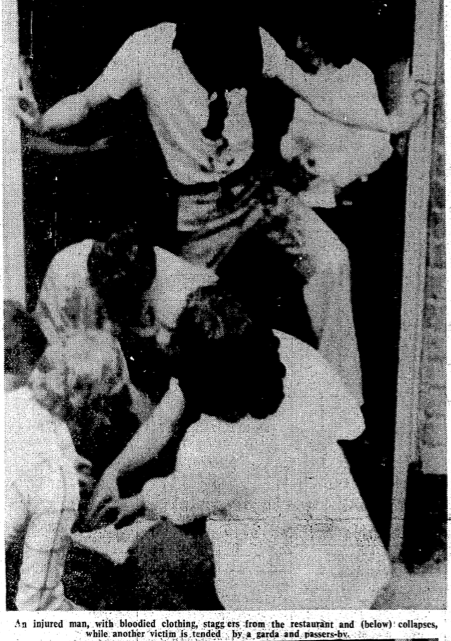
Onlookers help a victim. Irish Independent, Jul 18, 1979.
One of the the key personalities in the affair, Tony Lee based in Cork, allegedly a ‘big boss in the 14K’ triad had his throat slashed and died shortly afterwards. His wife, Louise Lee, who was a secretary-director of a limited company set up by her husband in the early 1960s in Cork vigorously denied that he had anything to do with the Triads.
‘A frightened family group flee the scene of terror’. The Irish Independent, Jul 18, 1979.
Michael Tsin (26) from Dublin was shot dead in the brawl. Tsoi Foh Sing of Cork was charged with Tsim’s murder but was later acquitted.
It was revealed at the trial at the Central Criminal Court in November 1981 that trouble had been brewing between the two groups for at least three months before the fight. One group had demanded protection money from the other group who ran the Bamboo House restaurant on Dorset Street. There had also been a fight recently between members of the two groups outside the National Stadium after a martial arts exhibition.
In August 1983, twelve members of the 14K triad were arrested in Limerick in connection with the attempted extorting of protection money from the owners of Chinese restaurant in the city. Nine of the men were believed to have come over from Britain. During the operation a hoard of weapons including knifes, pickaxes, bars and clubs were found.
It was believed that the attempt to extract money had reached a critical point and the arrests may have ‘just managed to forestall a fight which could have been as bloody as that in Dublin’ in 1979. Contemporary newspaper reports suggested that the triad gangs – 14K, Sing Woo and Shui Fong all operated in the different parts of the country.
Refs:
The Irish Times: Jul 18, 1979; Jul 19, 1979; Nov 14, 1981; Aug 27, 1983;
The Irish Press: Nov 06, 1981; Nov 07, 1981; Nov 11, 1981
Hopalong Cassidy, a fictional cowboy hero created in 1904, was one of the most beloved characters of children worldwide for generations. The character inspired cartoons, comic books, television programmes and more besides, and even inspiring ‘Hoppyland’, an amusement park in Los Angeles, in the early 1950’s.
William Boyd was the actor who brought Hopalong Cassidy to international stardom. Indeed, the screening of the Hopalong Cassidy series featuring Boyd marked the beginning of a long running genre of such westerns on television, aimed at a young audience.
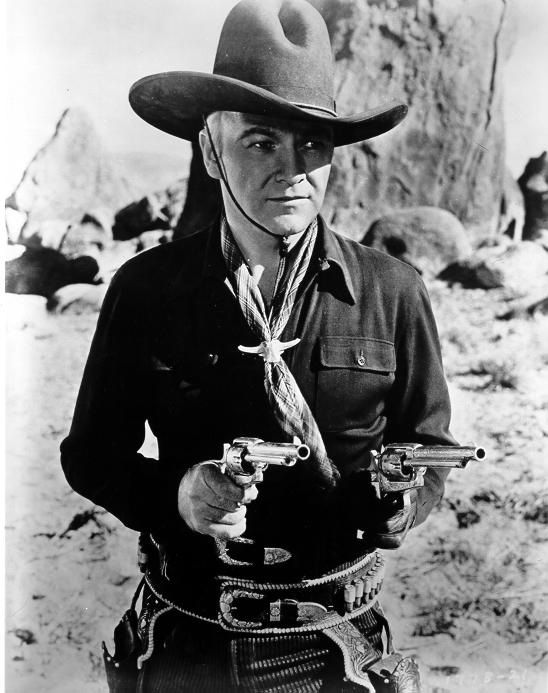
Boyd as Hopalong Cassidy, via /www.westernposterpage.com/
Between 1935 and 1948 Boyd would star in a total of 66 Hopalong Cassidy western films, the last 12 of which he produced himself. It was the rise of television and the screening of the films on the small screen which would make an icon of Boyd from the 1950’s onwards. Below is the trailer for the first Hopalong Cassidy western.
In Ireland, Hopalong Cassidy comic strips featured in the Irish Independent newspaper, and the character enjoyed huge popularity among the Irish youth. In July 1954, Hopalong Cassidy visited Dublin, grabbing national headlines and media attention. Boyd was joined by almost 100 youths, 48 of whom were from America and 46 from the UK. The event was advertised as being part of an “International Goodwill Tour”, which had seen the cowboy tour the UK and Ireland. Among the 100 youngsters were two Irish lads, with Norman Gedess from Belfast and Charles Vize od Decies Road in Ballyfermot.
When Boyd landed in Ireland on 27 July 1954, they landed in Dun Laoghaire and were then treated to a dinner organised by the Variety Club of Ireland in Butlin’s, Co.Meath. Among those in attendances at the dinner was Alfie Byrne, the popular Lord Mayor of Dublin. Boyd was accompanied on the trip by over 20 UK and American pressmen, giving a good idea of his international appeal.
An Irish Times journalist refered to a social function involving Hopalong Cassidy in Dublin as perhaps “one of the most curious social functions to take place in this stick-in-the-mud old town of ours”, noting that “a small, puzzled group of Dublin newspaper men stood awkwardly near the door, wondering what it was all about.” The journalist noted that so strong was the influence of American culture on young people globally, it was difficult to tell the British boys from the Americans. In the words of Boyd himself, the visit was apparently all about his “Operation Friendship”, and bringing boys of different nationalities together.
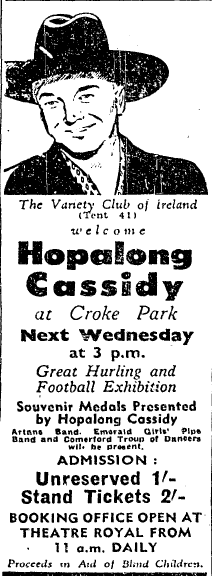
As part of the brief visit to Ireland, the world-famous cowboy visited Croke Park where the boys took in exhibition matches in native games. The teams were made up of boys from primary schools on both sides of the Liffey, and Boyd presented the winning teams with medals on the day.
Hopalong Cassidy at Croke Park, from ‘The Weekly Irish Times’.
Beyond newspaper reports, I could find precious little on this visit to Dublin, but I did see something interesting on the website of photopol, a frequent commenter of the site here. Writing about his memories of Butlins, Póló notes that:
Butlins was magic. The only disappointment in my time there was Hopalong Cassidy. The actor William Boyd had become completely identified in young minds with this fictional cowboy character. Boyd was Hopalong Cassidy. So when he was scheduled to appear at a campfire in Butlins, during his short visit to Ireland, we were ecstatic.
On the appointed night, we waited, and waited, and waited. But he never appeared. There were rumours of an excess of hospitality at a Croke Park function earlier in the day. A hero utterly destroyed for ever in the eyes of those eager young campers.
When Boyd and the ‘junior ambassadors’ were leaving Ireland, via a special flight from Dublin Airport, newspapers reported that hundreds of young boys and girls packed the airport, waving them off and creating a huge scene, as they departed for New York. The Sunday Independent captured the below image of their departure.
Hopalong Cassidy remained an international icon for children here long after he departed Dublin Airport. Wiliam Boyd passed away in September 1972 and the age of 77. Was anyone at the Croke Park games, or did you meet Boyd on his visit to Ireland?
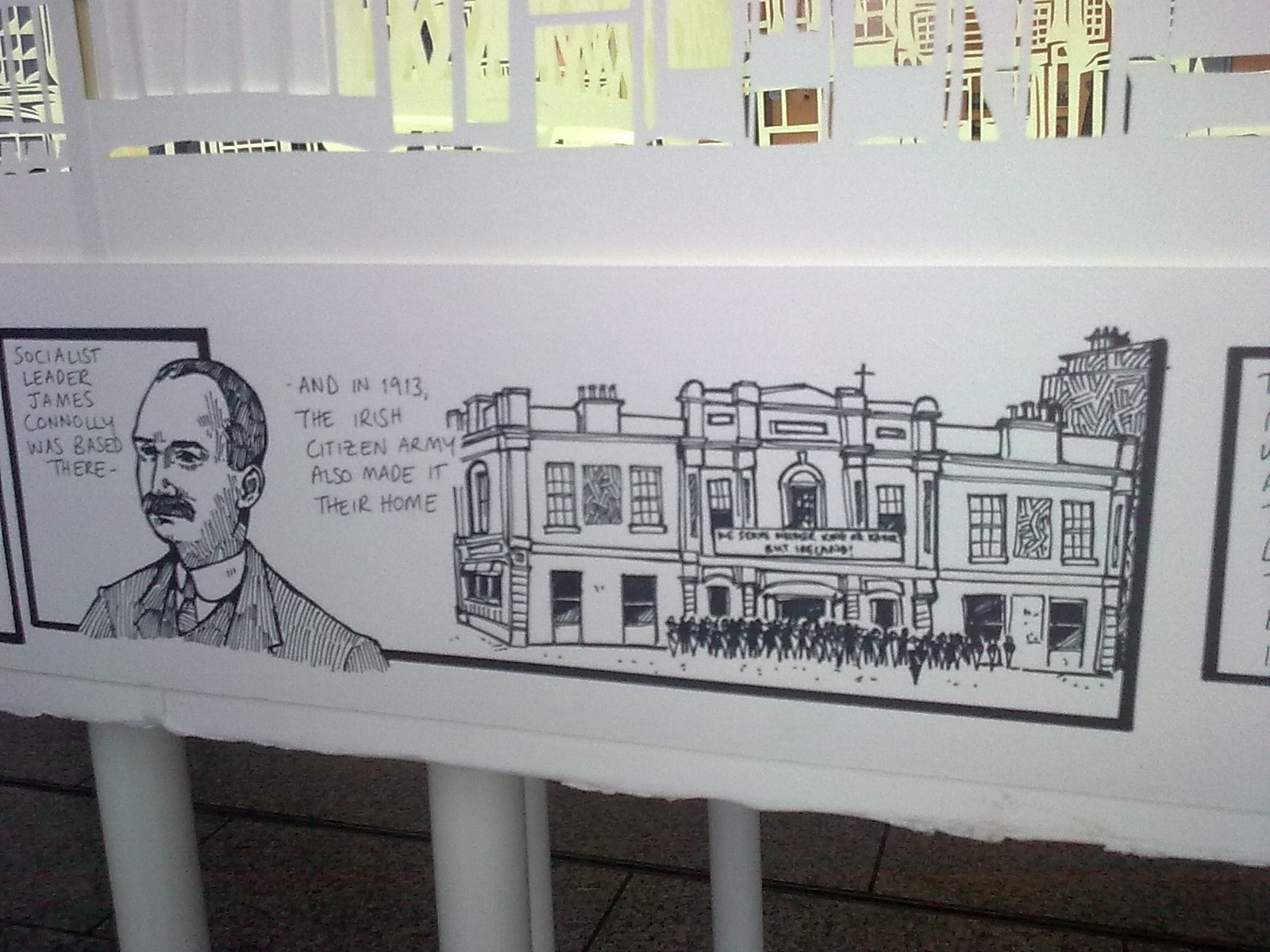
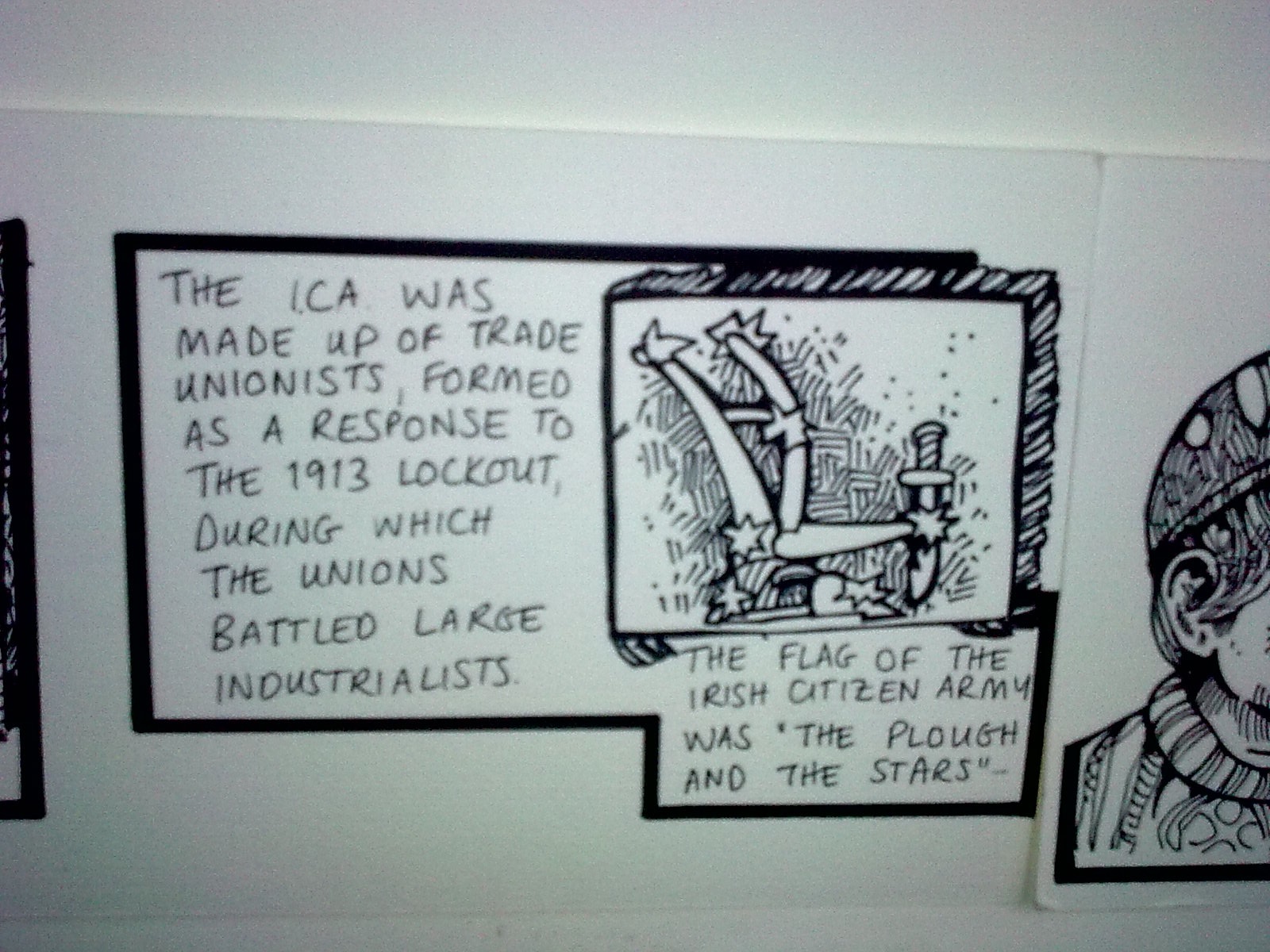
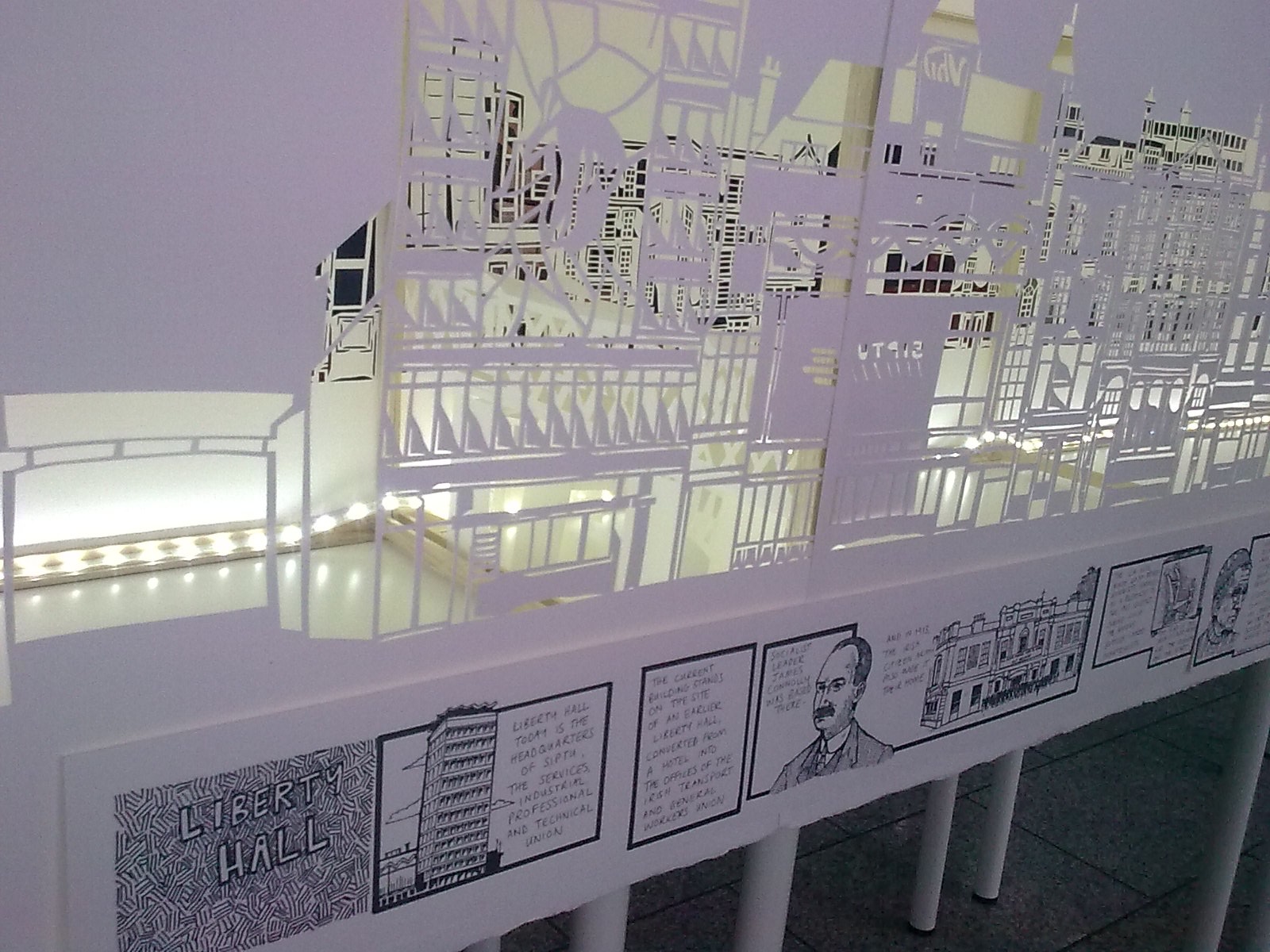
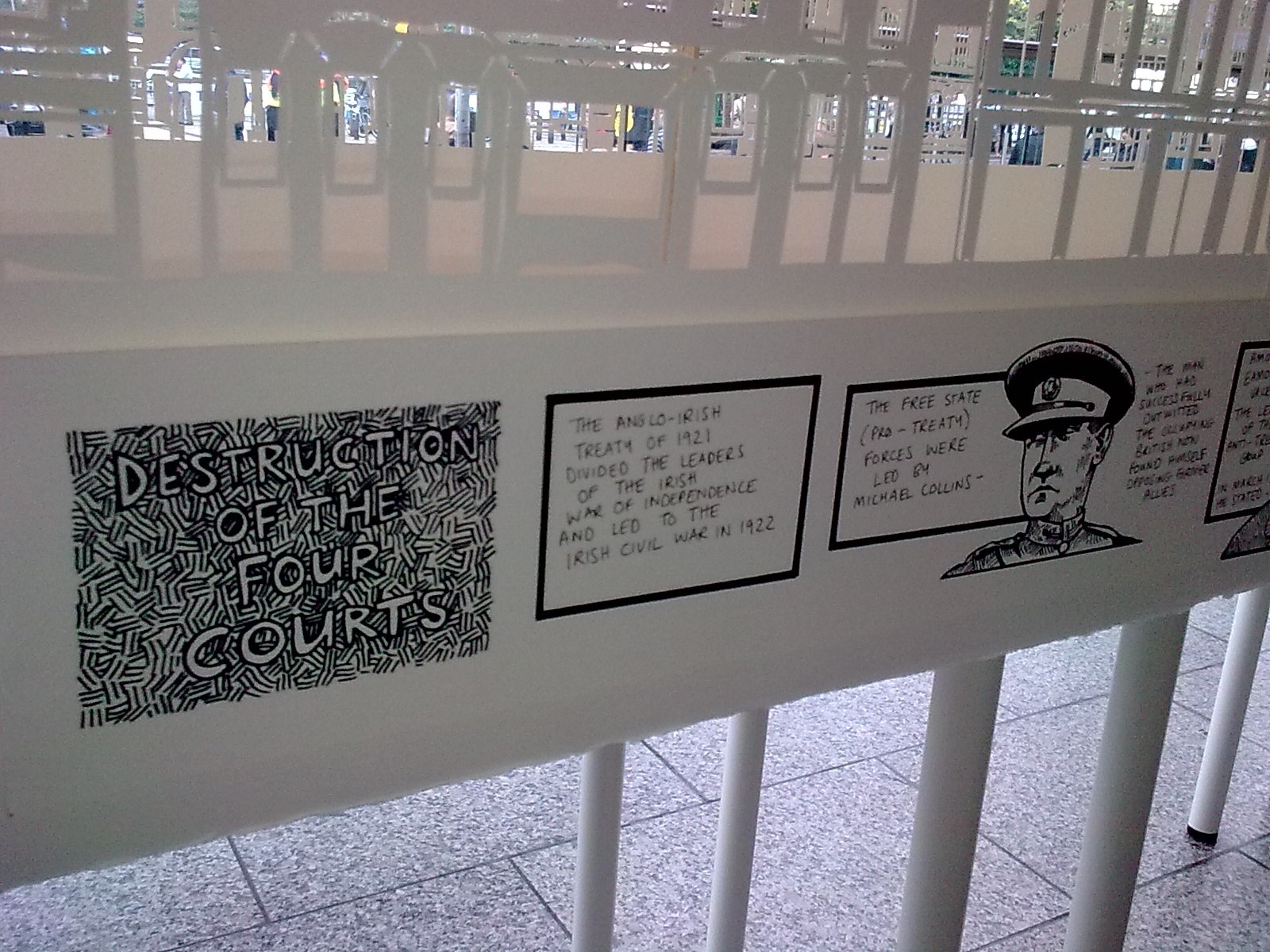
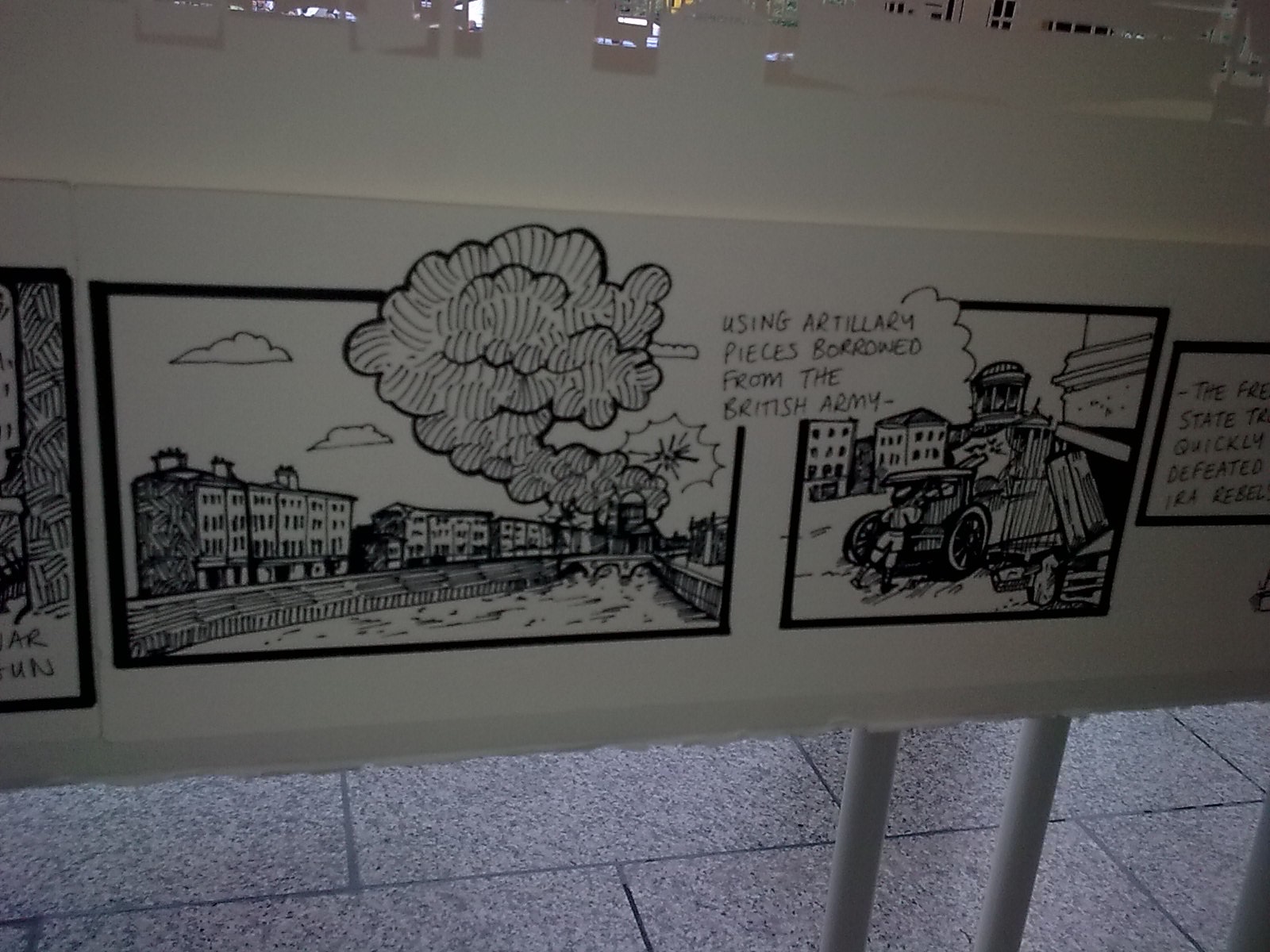
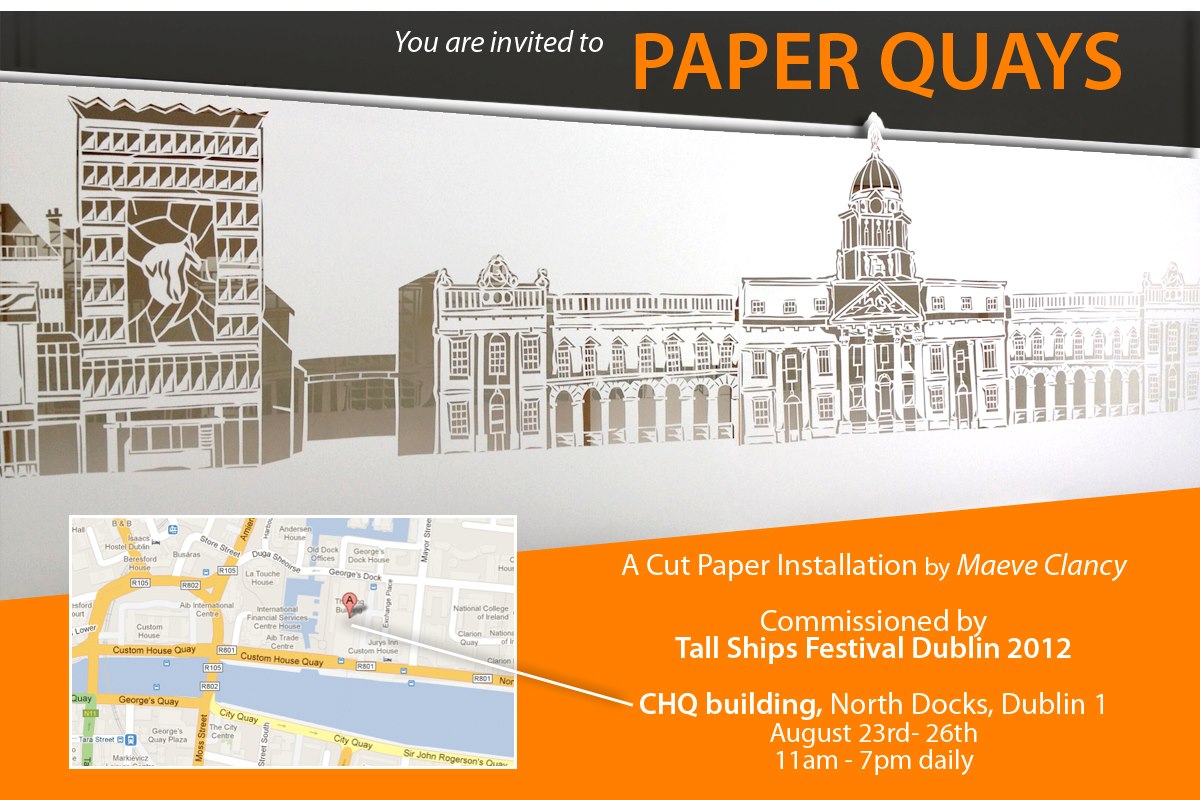
Myself and Dfallon popped down to the Tall Ships Festival on Thursday evening and visited the Paper Quays exhibition at the CHQ building on the North Docks.
Here’s some snaps of the wonderful Cut Paper Instillation by Maeve Clancy which I captured on my camera phone:
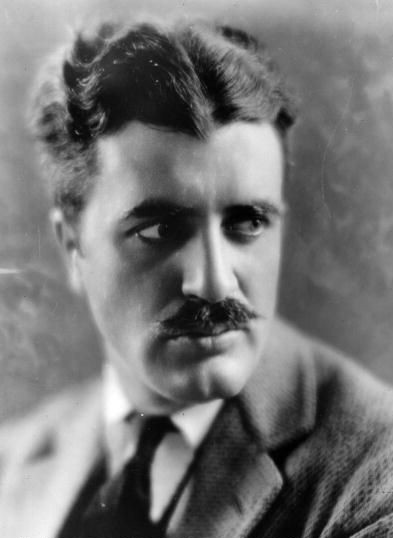
Long before Colin Farrell, Colm Meaney and Jonathan Reese Myers, Dublin had irrevocable links to Hollywood, right back to its formative years. Its pretty much common knowledge now that the roaring lion in the clip at the start of MGM films, Cairbre, was born and reared in Dublin zoo. Less well known is the fact that the man responsible for his presence, Cedric Gibbons, was a Dubliner.
Cedric Gibbons
Disputed the fact may be, as little is known of his early life, but most reports say Gibbons was born in Dublin on March 23, 1893 into a wealthy family, with an architect father and a housewife mother. Conflicting reports say that he was born in Boston, but nonetheless, both sides of the story state that his parents were Dubliners. Gibbons was an architect and artist before joining the Edison Studios in 1915 as an art director. By 1918, he had moved on to working for producer, Sam Goldwyn, the “G” in “MGM” motion-picture studio, which formed in 1924.
His talent saw him work on approximately 150 films throughout his career, but arguably the most interesting thing about him is that he is credited with designing the first “Oscar” statuette in 1928. one of the original 36 founding members of The Academy of Motion Picture, Arts and Sciences, the model for the the original statuette was his future wife, actress Dolores Del Rio. He went on to win eleven Oscars himself, notably for his work on “Pride and Prejudice” (1940), “Little Women” (1949), and “An American in Paris” (1951.) In total throughout his career, he was nominated for thirty nine of the awards.
I’ve searched the 1901 and 1911 census’ for an architect Gibbon’s in Dublin but couldn’t find any reference. An elusive character he may be, the presence of Cairbre in the MGM logo gives at least some credence to the story that one of Tinseltown’s most decorated art directors was a jackeen.
Occasionally national papers report on incidents of either local residents or striking workers engaged in would be ‘vigilante activity’. Here is a very brief look at some incidents from 1970 – 1984. I’ve purposely omitted stories surrounding the anti-Drugs movement as they really need an articles(s) of their own.
In June 1970, ‘Cement strike vigilantes’ attacked and damaged two loaded lorries in Glasnevin. The strike had reached its 20th week at this stage. As the two drivers stopped to go to the toilet outside Glasnevin Cemetery:
Four men, brandishing hammers an an iron bar, leaped from a car and wrrecked the braking systems of the lorries, smashed parts of the engines and ripped open cement bags.
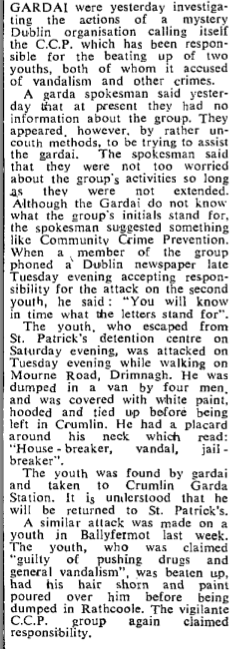
In October of that year, a grouping calling itself the C.C.P. made its first and last appearance in the national media with the headline ‘Mystery of Dublin Vigilantes’:
Irish Times, Oct 6, 1972
In May 1973 in Benburb Street, tenants formed a committee to agitate the council to get the flats there pulled down and replaced with better housing. They blocked the street to draw attention to their plight and formed a vigilante group to prevent robberies and other anti-social acts in the area.
In March 1974, Dublin bus men threatened to form ‘vigilante groups’ to ‘provide proper protection for bus crews and stop hooliganism on public transport’. The call came after a sharp increase in attacks on Dublin Bus workers.
A mystery group calling itself the ‘Crumlin and Walkinstown Vigilante Group’ claimed responsibility, in October 1982, for a shotgun attack on four men outside a fish and chip shop in Drimnagh. Gardai said that the four men had no connection with the drug business and added they they hadn’t heard of the group.
Bertie Ahern, then Fianna Fail chief chip, was widely criticised in April 1983 after he maintained that crime had dropped significantly in one particular area of his Dublin central constituency after certain ‘known criminals’ had been kneecapped.
Ringing our bells?: Bertie Ahern at St George’s Church in Dublin in July 1983.Photograph: Tom Lawlor. (c) The Irish Times.
Speaking on the RTE radio programme ‘Day by Day’, Ahern told the interviewer John Bowman that groups of residents often came to him to say they were setting up groups and seeking his advice:
I take the Garda line on this – I tell them that that’s very dangerous. At the same same time they come back a few months later and tell me how they’ve succeeded in cutting down crime in the various areas where they have vigilante groups. It’s hard to keep on saying: “Well it’s not a good idea”. In my own area they’ve taken various actions, some of them I’m totally opposed to. But unfortunately John, I must say that they are quite effective. In one particular part of my constituency, very severe action was taken against known criminals and the area has almost cleaned itself since.
His comments were condemned by Ger Doyle of the Association of Garda Sergants and Inspectors.
Padraig Yeates in The Irish Times later that month suggested that vigilante groups of some sort existed in a whole range of areas of Dublin, stretching from Manor Street and O’Devaney Gardens to Rialto, Cabra, Finglas, Ballymun, Darndale and Coolock. Apparently one of the largest of these gangs operated in Coolock and had been in existence for nine months, when Yeates interviewed one of its members. During that time it was involved in several clashes with local teenage gangs, and a man associated with the group was beaten last Easter.
Later that week another journalist at the same papar, Michael Foley, went down to Rialto to interview local people and could find no evidence of organised vigilante activity.
In April 1984, the Campaign Against the Criminal Justice Bill, at a press conference in Dublin, claimed that the Minister for Justice Mr Noonan had
organised one group of vigilantes from South Hill in Limerick and that a Fine Gael TD was doing the same in Crumlin.
The campaign involved tenants associations, the Simon Community, the Dublin Travellers’ Committee and the Prisoners’ Rights Organisation. Also speaking at the press conference was Mick Quinlan of the Gay Collective who complained that gay men were widely being harassed and abused by the Gardai. He said that during the Charels Self murder investigation when gays were detained under section 30 of the Offences Against the State Act, the Gardai had built up files on 1,500 gay men.
Jackie Jameson is one of the legendary figures of Irish football, with a banner in his memory proclaiming him to be ‘The Great Man’ a frequent sight at Bohs games in Dalymount Park. Jameson spent a number of years with Saint Patrick’s Athletic too, but it is undoubedly with the Phibsboro club that Jameson is most closely associated. Born in 1957, Jameson passed in 2002.
A Facebook page in his honour has quickly become one of our favourite pages on the social network site, as it has become a great archive of Bohemians and Irish football history. Below are some examples of images on the page.
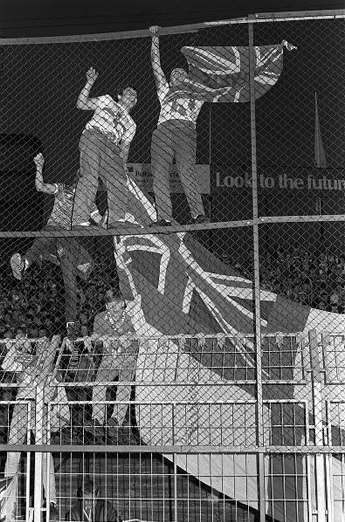
Glasgow Rangers fans in Dalymount during Bohs 3-2 victory in 1984 (Image via ‘Jackie Jameson: Irish Football Legend’)
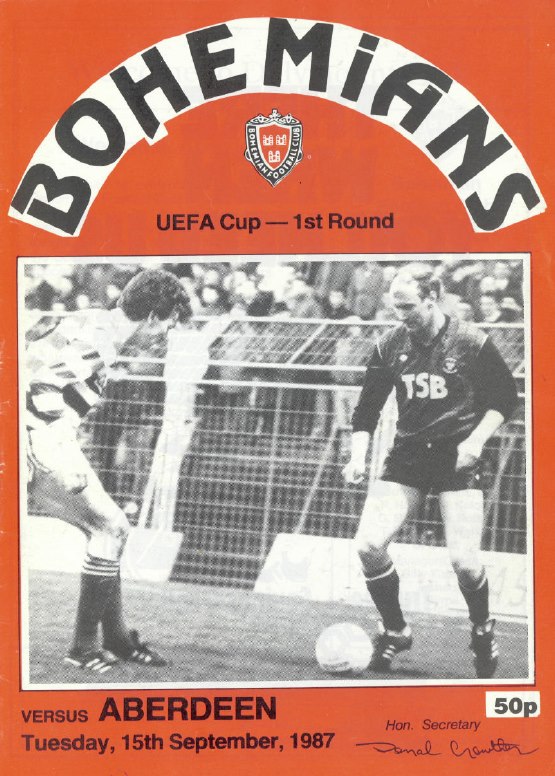
Match programme for Bohemians versus Aberdeen (Image via ‘Jackie Jameson: Irish Football Legend’)
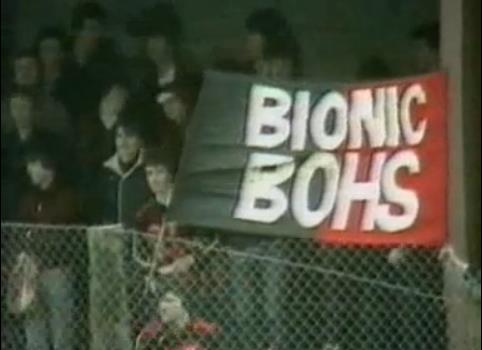
Bionic Bohs banner! A time before ultras. (Image via ‘Jackie Jameson: Irish Football Legend’)
Interestingly, the page posted that:
As much as we don’t like to admit it, Bohs were not Jackie Jameson’s only club, he spent 3 years at Richmond Park where he is still fondly remembered, we would love to see some contributions here from Pats fans, if you have any images or articles share from that time.
This is a very enjoyable video about Oisín Kelly’s sculpture ‘Two Working Men’. Paddy Cahill, responsible for an excellent documentary on Liberty Hall, captured the late Desmond Rea O’Kelly telling the tale of a fine piece of sculpture which was due to the placed outside of the union headquarters but rather oddly ended up in Cork. I’ve long been fascinated by the many lives of Liberty Hall, recently we had a post here on the site about the history of the Northumberland Hotel which occupied the location prior to the purchase of the premises by Jim Larkin on behalf of the union movement.
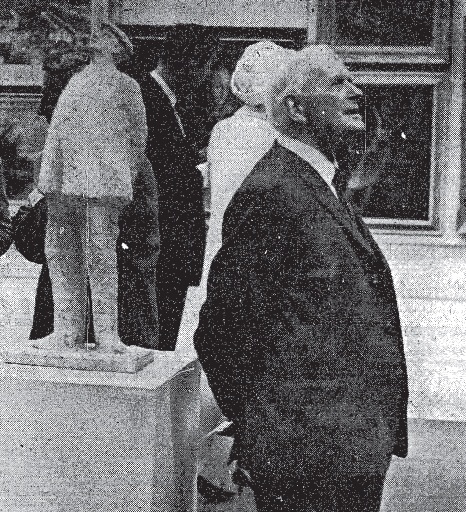
“Professor Liam O Briain unconsciously reflects the attitude of Oisin Kelly’s sculpture “Study for Liberty Hall” at the opening yesterday of the Royal Hibernian Academy of Arts exhibition in the National College of Art” (The Irish Times, May 3 1966)
The blurb below comes from Paddy.
A few years ago I made a documentary about the building Liberty Hall (vimeo.com/851474). At the time I regretted not being able to include in the documentary the story of Oisín Kelly’s sculpture ‘Two Working Men’. The sculpture was designed and due to go outside Liberty Hall in Dublin but due to some political interference it ended up outside Cork County Hall where they have since become known as Cha & Miah.
In this video Desmond Rea O’Kelly the Architect of Liberty Hall talks about the sculpture and tells the story of how it ended up in Cork. I did the interview with Desmond in 2006, sadly he died in February 2011.
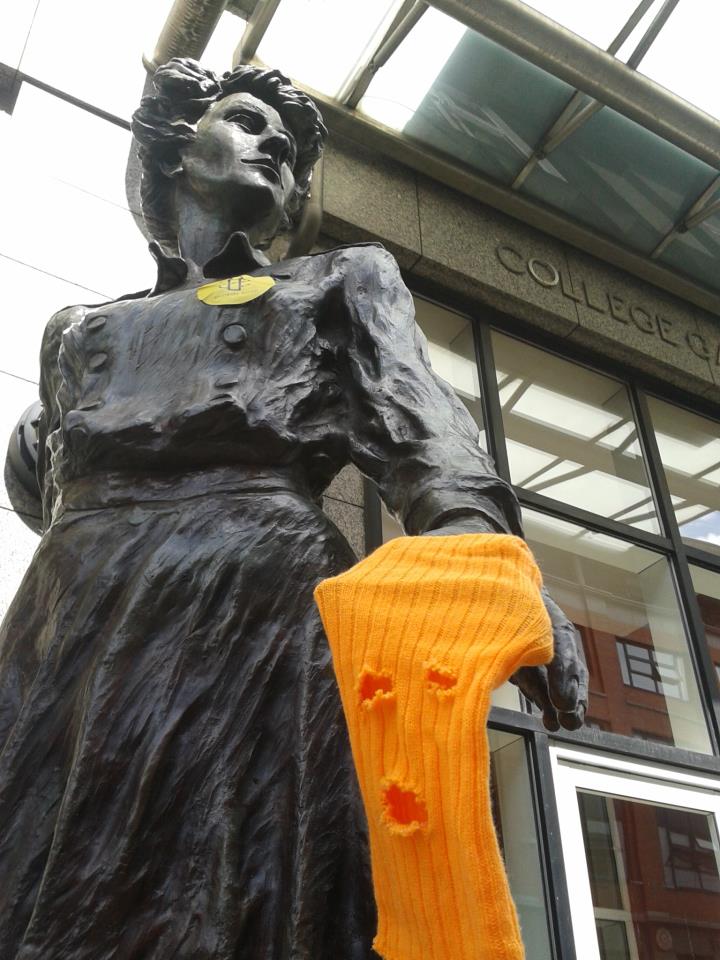
A fantastic and striking image of Countess Markievicz cluctching a balaclava, the symbol of Russian punk act Pussy Riot. Three members of that band have been sentenced to two years imprisonment for performing the song “Mother of God, Put Putin Away” inside the Russian Orthodox Church in Moscow.
Trade Union TV recorded this video at a demonstration in support of the band held recently on O’Connell Street.
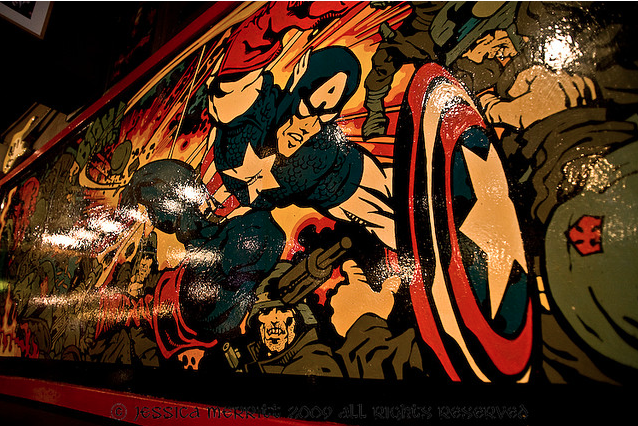
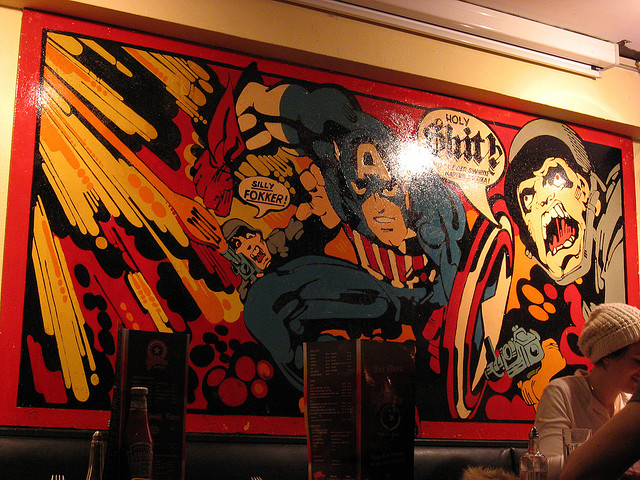
Renowned artist Jim Fitzpatrick has at least two huge pop art murals in Captain Americas burger joint on Grafton Street. The Dublin institution first opened its doors in 1971 and the murals were painted in 1982.
Jim Fitzpatrick mural 1. Photo – Jessica Merritt
Jim Fitzpatrick mural 1. Photo – gwarcita
In the early 1970s, the restaurant became the unofficial headquarters for the band Horslips. Philip Chevron, of the Radiators from Space and The Pogues, interviewed the band there for his school magazine Write Up Your Alley and recalls:
Captain America’s was at the time about the ONLY remotely hip place in Dublin. This despite the fact that the resident singer/songwriter was Chris Davidson, a friend of Horslips [he supported them at their first ever headlining Stadium show in May 1972, my own first ever gig] who later found fame as Chris De Burgh. The Roy Lichtenstein type graphics on the wall, long since obscured by inferior murals, were by Jim Fitzpatrick, who did most of Thin Lizzy’s best graphic work and who claims to have originated that iconic Che Guevara image…
I’ve fond memories of being brought here when I was kid. Myself and Dfallon recently availed of a Living Social voucher (buy €60 worth of food & drink for €30). It was my first time eating there in years. The food was lovely, service was great but if hadn’t of had a voucher, I don’t really think we’d have considered it as it remains an expensive place.
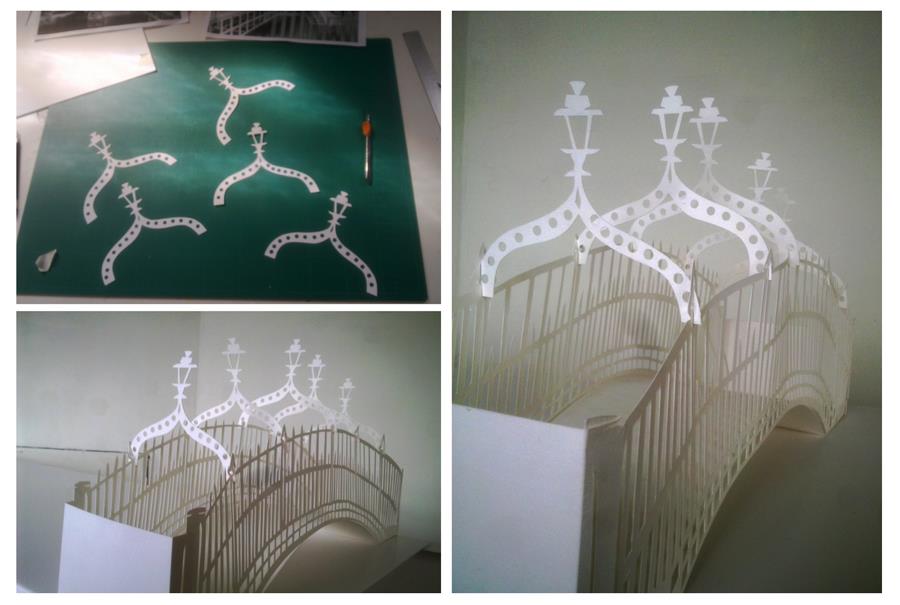
This caught my eye on Facebook and is more than deserving of featuring here. As part of the upcoming Tall Ships Festival, there will be a cut-paper installation depicting Dublin’s quayside from the Four Courts to the Customs House. e 25 metre long installation will be viewable in the CHQ Building on the North Dock, and is the work of Maeve Clancy.
This image of the Ha’penny Bridge being prepared for the exhibition, taken from its event page on Facebook, is excellent and gives a good taster:
(photo credit: Craig Cox @ ShootToKill)
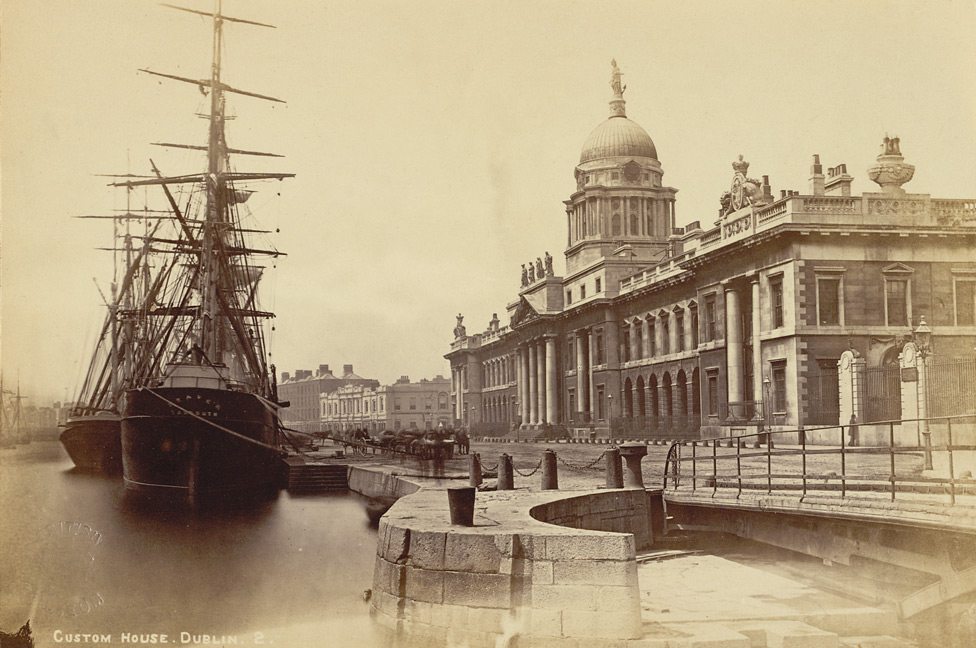
I’m looking forward to seeing how some buildings along the iconic quays are presented. The Four Courts and the Custom House for example, two of our iconic James Gandon buildings, are beautiful architectural achievements with tragic pasts.
Prior to the establishment of a city municipal fire service, citizens who wished for their premises to be secure in the event of fire had to seek protection from insurance companies in Dublin. Buildings which were covered by insurance were marked by a small ‘fire mark’. Recently, we featured a post on one of the few remaining fire marks in Dublin, which is above a fine pub in Kilmainham.
Fire mark above The Patriots Inn, Kilmainham. Thanks to David Power for the excellent image.
In his history of the Cork fire service, For Whom The Bells Tolled, Pat Poland noted that:
The firemark served a number of purposes: it marked the property so it was obvious to all that the building was covered by insurance, it acted as an advertisement for the insurance company, and it let firemen responding to a call in no doubt as to which particular building was insured with their office.
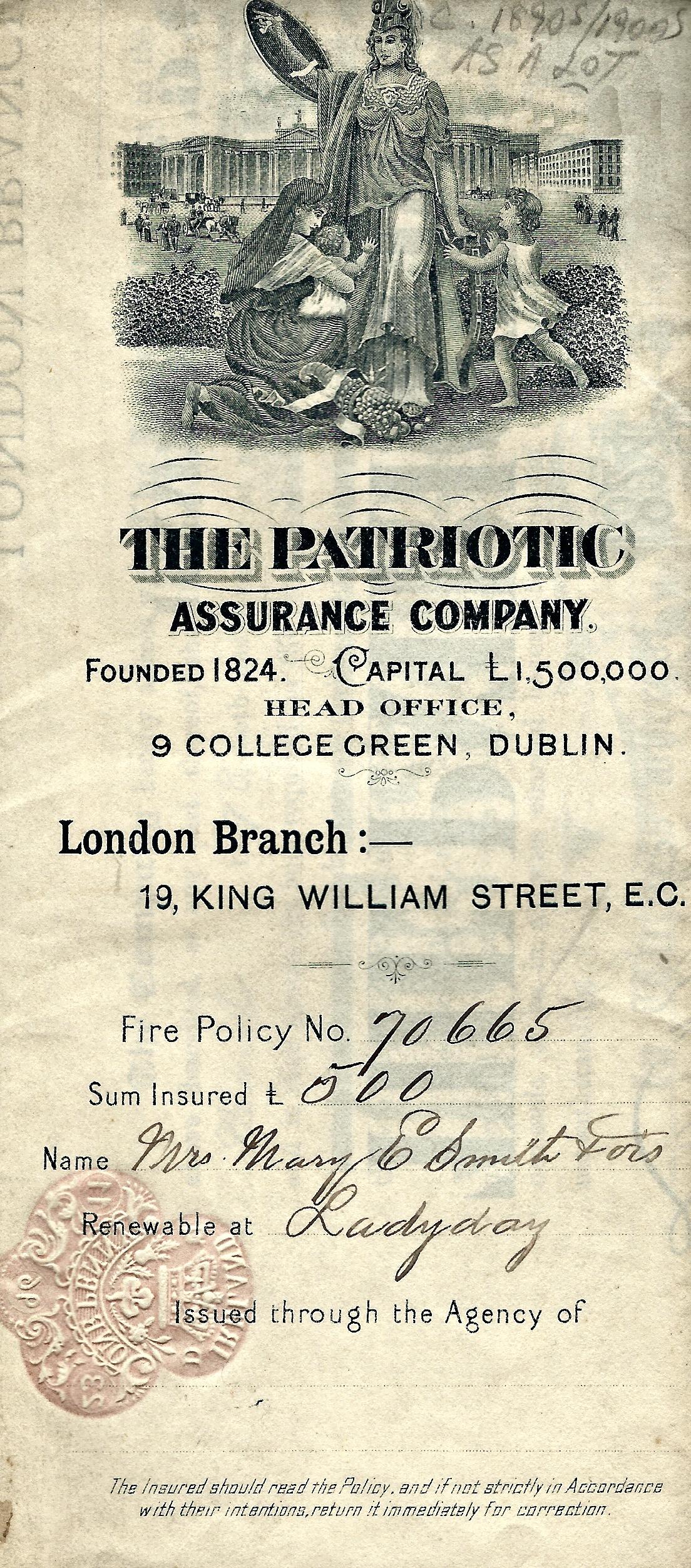
The below is an example of fire policy itself, which would be given to the insured party as proof of payment. I thought it worth scanning up. The illustration is fantastic, with the company ‘The Patriotic Assurance Company’, availing of strong Irish symbolism, for example the harp. Notice the old Irish Parliament building features behind. Of course, this was long in the ownership of the Bank of Ireland by the time this insurance policy form was printed.

















 Click on the book for more.
 Click on the book for more.
 Donal
Donal Ciarán
 Sam
Sam


 Come Here To Me!