Feeds:
Posts
Comments

Archive for the ‘Dublin History’ Category

I recently picked up this great image of the King William of Orange statue on College Green, which is taken from ‘Ireland In Pictures’, released in 1898. We’ve had a series on the site here dealing with the statues of Dublin, which is still in its infancy, and I collect old original photographs, postcards and the like showing Dublin monuments and statues. It’s a cheap and cheerful hobby, and not quite as bad as stamps.

It’s a big image, so click to expand if you wish.
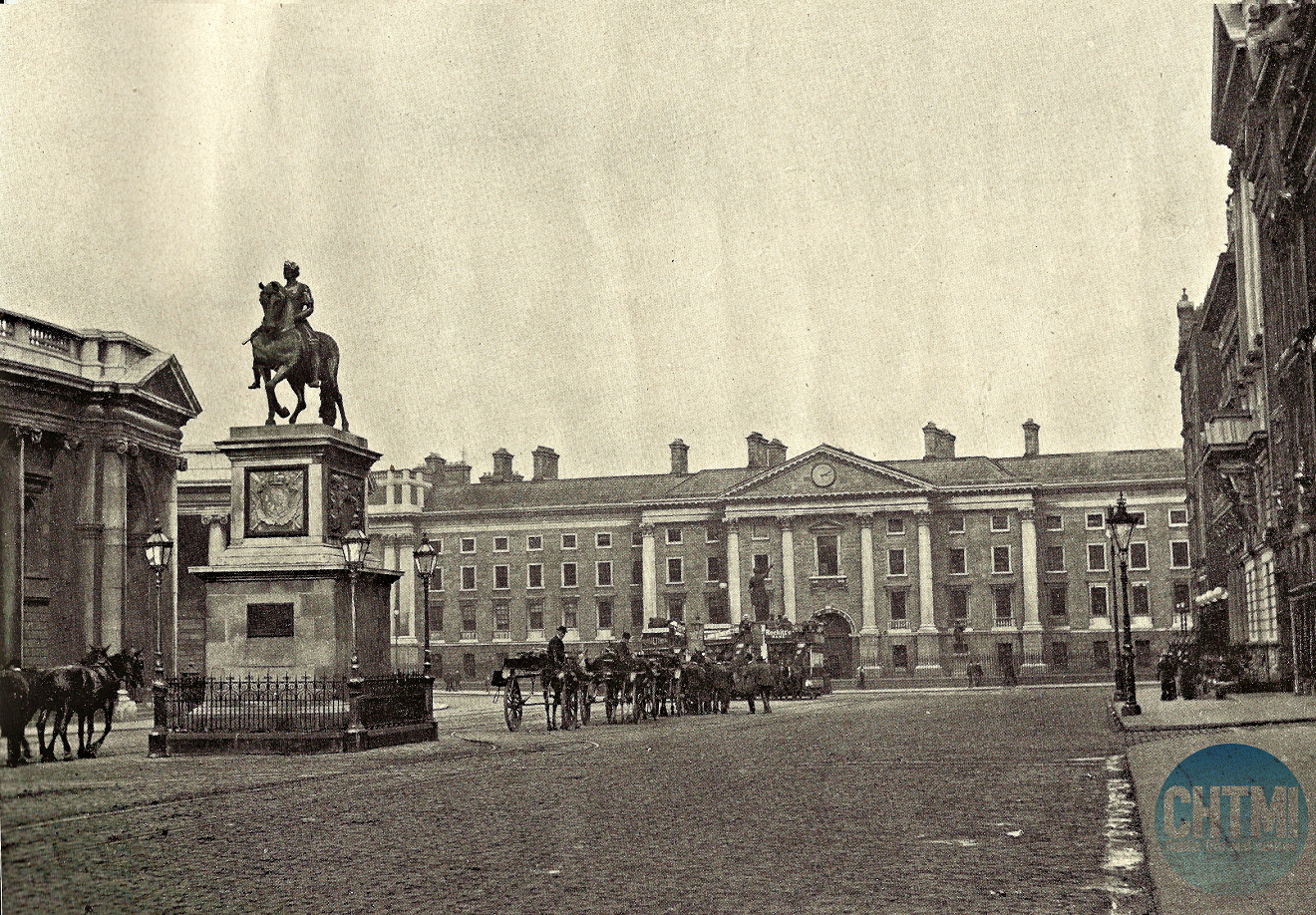
The King William of Orange statue on College Green was eventually removed in 1929, following an explosion in the early hours of Armistice Day that year. A bomb had also been placed at the base of the bronze statue of King George II in Stephens Green. It had sat on College Green since 1701, and was frequently the target of vandals (more on that below) but the explosion didn’t mark the end of its traumatic life as the King’s head was removed from the statue while it was placed in storage in Corporation Yard, Hanover Street!

The below is taken from the brief commentary on the statue that comes in ‘Ireland In Pictures’, dating from 1898. It’s a gem of a find.

This equestrian statue of William III stands in College Green, and has stood there, more or less, since A.D 1701. We say “more or less” because no statue in the world, perhaps, has been subject to so many vicissitudes. It has been insulted, mutilated and blown up so many times, that the original figure, never particularly graceful, is now a battered wreck, pieced and patched together, like an old, worn out garment.
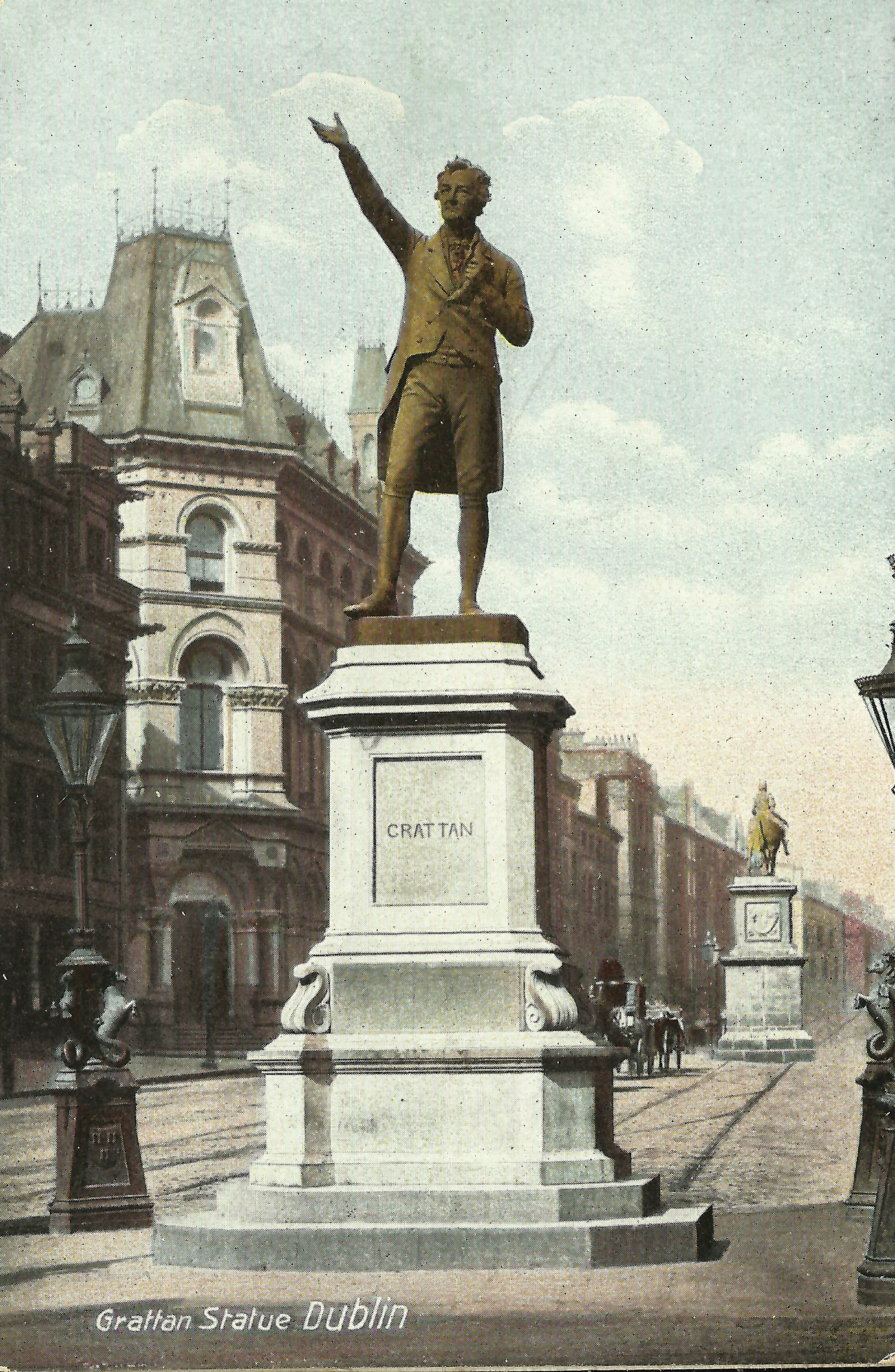
The back of the statue can be seen in this postcard image of the Grattan Statue (Fallon collection)


Read Full Post »

Mounted police were charging quick witted urchins who scattered and lured the attackers into narrow by-lanes. There the boys used stones and pieces of brick with accuracy and rapidity. My sympathies were with the newsboys.

-Ernie O’Malley remembers a newsboy strike in Dublin in his memoir On Another Man’s Wound.

—-

I like working with my brother, as he’s a more than capable illustrator and I find a good illustration brings a history piece to life. We have a piece together in an upcoming issue of Rabble around Dublin newsboys in the first half of the twentieth century. It’s a look at one of the most overlooked working class groups in the history of the city, and is at times both a tragic and humorous story. The final illustration is very, very different from this one below, but I still wanted to share it.

Illustration: Luke Fallon.

If it looks familiar, that’s entirely deliberate, as it’s in the same style as this illustration of the famous Dublin Garda Lugs Branigan he completed for a biography of that Dublin character in another issue of Rabble.

Read Full Post »

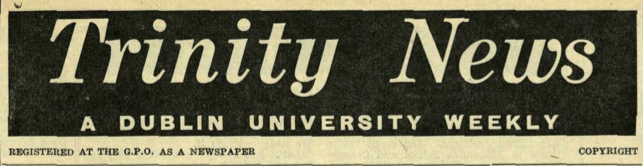
Trinity News masthead from 1956

While researching a different topic, I came across a fantastic new website and resource which presents online every issue of Trinity News from 1953 to 1970. Link here.

This material, the website states, was available thanks to a donation of five bound volumes by Colin Smythe. Funding to digitise the volumes was provided by the TCD Assocation and Trust and the Publications Committee and carried out by Glenbeigh Records Management.

No doubt it will now become an important tool for history students and researchers.

A couple of gems I’ve spotted so far.

Article from 1970 about a “hooligan” attack on a house party in Ranelagh.

Trinity News (29 January 1970)

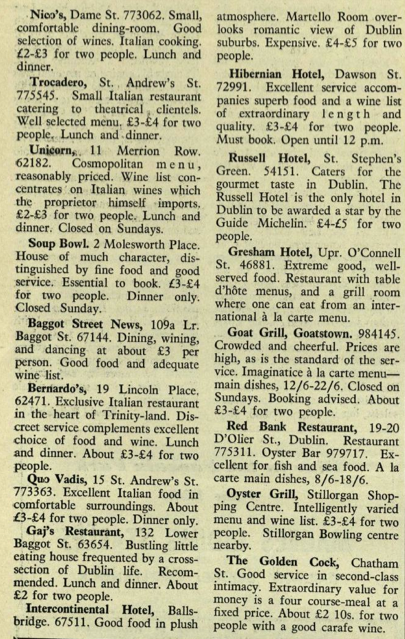
A guide to Dublin restaurants from 1968.

Guide to Dublin restaurants. Trinity News – 18 January 1968

Read Full Post »

(c) Workers Solidarity Movement

It’s fantastic to see the annual Dublin Pride Parade increase in number year after year. Approximately twenty years ago two hundred people attended the parade, last Saturday saw a staggering 30,000 turnout.

I’m not sure if it’s just me but I couldn’t seem to find mainstream reports on the Parade from the mid to late 1990s period. Can anyone help with numbers?

Here’s a incomplete timeline with attendance figures:

1992 – 200 people  (IT 06/07/92 )

1993 – 500 people (IT 28/06/93)

1994 – “Several hundred” (IT 27/06/94)

1995 –

1996 –

1997 –

1998 –

1999 –

2000

2001 – 3,000 (IT 02/07/01)

2002 – 6,000 (IT 29/06/02)

2003 – “Several thousand (IT 07/07/03)

2004 -5,000 (Indymedia 06/07/04)

2005 – 10,000 (IT 27/06/05)

2006 -“thousands” (IT 26/06/06)

2007 -“thousands” (II 23/06/07)

2008 – 5,000 (Indymedia 27/06/08)

2009 – 10,000 (IT 02/07/12)

2010 – 22,000 (IT 02/07/12)

2011 – 26,000 (IT 02/07/12)

2012 – 30,000 (IT 02/07/12)

Read Full Post »

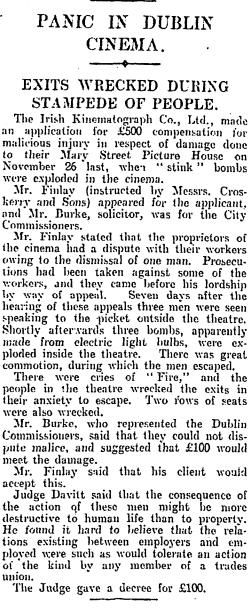
I’d read recently that stink bombs were used during the protests against The Plough and the Stars at the Abbey Theatre in 1926. When researching that, I stumbled upon an interesting incident at one cinema in 1928 were stink bombs were used and seem to have caused a lot of panic. The Mary Street Picture House was the location for an incident that made its way into the national media. The two reports below come from The Irish Times, the first is dated November 27 1928. The sheer panic of the crowd is evident from this report.

Remarkably, the incident appears in the paper again in January 1929, giving some background on the incident and noting that an industrial dispute was underway at the time. The Irish Kinematograph Co. Ltd was seeking £500 compensation as a result of what occurred:

Read Full Post »

Anyone have anymore information on the Anti – Communist Hall that was based in Thorncastle Street, Ringsend in the mid 1930s?

Grainne McGuinness’ article about local Boxing champion George Howell mentions the hall and the activities surrounding it:

(George) when he was a young man … joined the anti-Communist group, which was the hub of social life at the time. It was on Thorncastle Street in Ringsend, opposite the old school, also known as the stables.

It was run by another local man, Mr. Dolan. You could play pool there, and on Saturday nights, if you had 3d in your pocket, you could attend the weekly dance. They had a professional pianist and sometimes when he didn’t turn up, George would step in and play for the night. He was paid five shillings, a lot of money in those days.

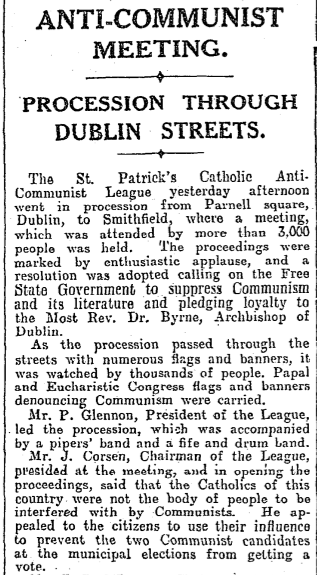
I assume that it was a local branch headquarters of the St Patrick’s Anti-Communist League that was active in the period. Does anyone know of any other similar halls?

Part of the article. The Irish Times. Jun 26, 1933;


Read Full Post »

A great bit of controversial engagement with the city by Will St. Leger, placing a female torso on the plinth at City Hall to highlight the lack of monuments and memorials to women in the city. We’ve run a long-running series on the statues of Dublin here on Come Here To Me, and I’ve always wondered: “Where is the statue to Hanna Sheehy Skeffington?” “Where is the plaque on the old headquarters of the Irish Womens Workers Union?”.

Read Full Post »

90 years ago today.

Four Courts On Fire From Essex Quay, June 1922, Photographer: Joe Rodgers, aged 17.

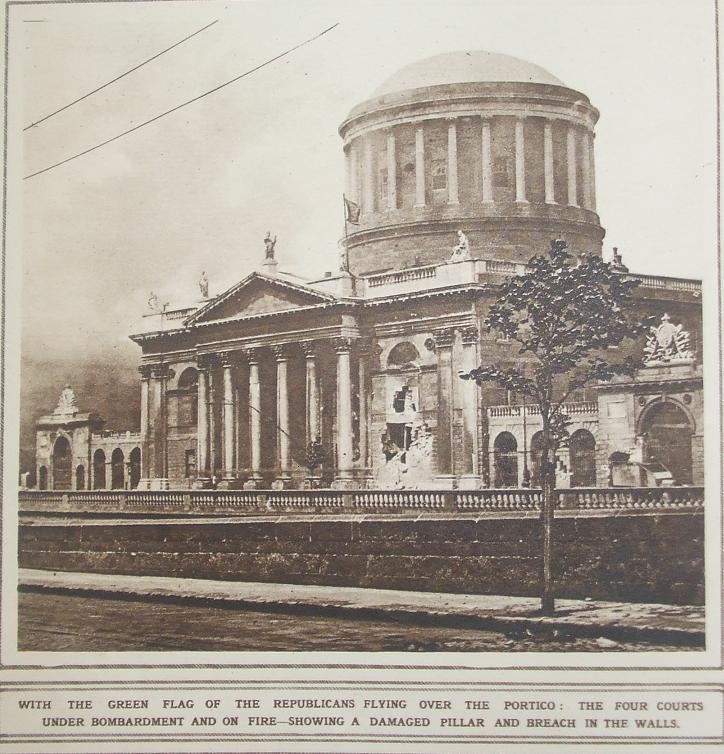
Thanks to Joe Rodgers for leaving this image on our Facebook page, taken by his grandfather Joe. Joe was 17 years old at the time he captured this defining moment in Irish history, and lived on Essex Quay. One thing I noticed immediately was how little the building which is home to early house pub The Chancery has changed! The Battle of Dublin raged for a week from 28 June to 5 July 1922, beginning with the bombardment of the Four Courts, the symbolic headquarters of the republicans.

In addition to this excellent image, here is one printed in the London Illustrated News following the Battle of Dublin. I scanned it up recently with the intention of posting it here today. Notice the flag flying above the building.

Read Full Post »

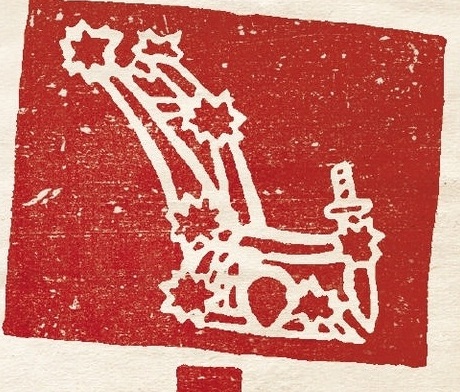
(Starry Plough image taken from the cover of ‘The Lost Revolution’)

DCTV have uploaded this fantastic audio recording of last nights public meeting in the Ireland Institute on Pearse Street, with historians Brian Hanley and Matt Treacy discussing Republicanism in the 1960s. The meeting was chaired by Tommy Graham of History Ireland magazine, and certainly contained a lot of interesting discussion on the ideology and aspirations of those active in Republican circles in the period. The meeting was attended by a huge crowd, and there were familiar faces from the period in the audience. I’ll leave it to the listener to draw their own conclusions!

Click the link below to hear proceedings:

Read Full Post »

Lord Edward Carson confronted by the Irish Women’s Franchise League in Dublin. (NLI)

Edward Carson, the father of modern Irish loyalism, was born at number 4 Harcourt Street and the location is marked today by a small plaque. For many years, Carson’s birthplace sat in a decaying condition and looked likely to be demolished:

A 1994 Irish Independent image of 4 Harcourt Street.

While researching something entirely different, I stumbled across this ‘obituary’ to Carson in the pages of the left-wing Republican Congress newspaper in 1935. The Republican Congress emerged out of the left of the republican movement in the period, and many important figures like Frank Ryan, Nora Connolly O’Brien, Peadar O’Donnell and George Gilmore were active participants for varying lengths of time. This piece on Carson’s death ran on the papers front page on October 26 1935. It’s far from complimentary!

Lord Carson is dead- twenty five years too late. No tears will be shed for the maker of partition and the father of sectarian strife.

There was nothing inconsistent in the fact a Dublin lawyer should espouse a sectarian Belfast cause. It was the call of his class that Carson answered when he led the opposition to Home Rule.

In pursuit of personal gain Carson wrecked the unity of the nation. He got his reward- the power and pelf he sought. His dupes had to face disillusionment. Carson lived longer than most expected. But Castlereagh and the Sham Squire have boon company now!

Read Full Post »

Front Cover of ‘Paradise Alley’

Tuesday, June 26th sees the launch of a reprint of John D Sheridan’s classic account of working class life in Dublin’s docklands during the Lockout.

“Paradise Alley” was first published in 1945 by Talbot Press and has been largely unavailable for half a century. This new edition, from Seven Towers, a not for profit publishing house, features an introduction by Sarah Lundberg and Joe Mooney of the East Wall History Group.

It will be launched by Caitriona Crowe of the National Archives at St Joseph’s Co-Ed National School, East Wall Road, at 7.30pm on Tuesday.

The East Wall History Group has been doing sterling work to help collate the working class, radical and social history of their area. Tomorrow’s book launch is their latest event. It certainly won’t be their last.

More info can be found here.

Read Full Post »

The Irish Independent – Sep 15, 1939.

In September and October 1939 a 21-year-old “coloured alien” by the name of Karl Schumann, who also used the alias Ashely Shoeman, was found sleeping, on at least on two occasions, on the roof of the Polo Pavilion in the Phoenix Park.

It was heard in court that Schumann first arrived into Ireland, via Limerick, on a German steamer boat and decided that he “did not want to go further”.

Due to the fact that he reached Ireland in a German vessel, there was some confusion over his his nationality.

He was described first in court in by Senior District Justice Little as a “German from Cape Town”. However Mr. Donovan from the Chief Solictor’s Office raised the point that it “was mere chance that he was on a German ship” and because of his South African birth he should be described as a “British subject”.

The Victorian Polo Pavilion on the Nine Acres in The Phoenix Park from ‘The Illustrated Sporting & Dramatic News’, September 8 1900.

At the time, Schumann was living at an address in James Street but the house number was not given.

Schumann was again up in court in October 1939 for the same offence and here he was described as “British national … born in Cape Town”. The case was dismissed by the judge.

That’s when his trail ends.

I wonder what happened to Karl Schumann? Did he stay in Dublin? Return to his birthplace of Cape Town? Or perhaps make a new life in Britain?

He was born in 1917/1918 so he has, most likely, passed away at this stage.

If anyone has any information, please get in touch.
[References –  Irish Press; Sep 15 1939 & Oct 03 1939. Irish Independent; Sep 15 1939.]

Read Full Post »

« Newer Posts - Older Posts »