Feeds:
Posts
Comments

Archive for the ‘Dublin History’ Category

Mark O’Brien in his 2001 book De Valera, Fianna Fáil and the Irish Press makes fleeting reference to an Irish Press reporter named Paddy Clare who ‘took sabbatical leave’ [1] in order to join the International Brigade during the Spanish Civil War.

Immediately, I became fond of this chap who decided to take a ‘leave of absence’ from work, not to go on holiday but to join the International Brigade and his risk his life in the defence of the Second Spanish Republic.

A bit of digging unearthed that Clare was firstly, a life long Irish Republican who fought in both the War of Independence and in the Civil War on the Anti-Treaty side and secondly, an individual who has largely been forgotten.

Born in Dublin into a republican family in 1908, his father Mick was an old Fenian. Joining Na Fianna Éireann in his early teens, he saw action in Dublin during the War of Independence. Following the treaty, he took the Republican side in the Civil War and was a member of the Four Courts garrison in 1922. Subsequently, he was imprisoned in both Kilmainham and Mountjoy where, in the latter, he once went on hunger strike. [2]

Always a keen writer, Clare contributed articles to An Phoblact and The Nation. His work caught the eye of De Valera who asked him to join the fledgling Irish Press in 1931. He would stay with the paper for the next forty-three years, first as diary clerk, then a reporter and finally as ‘night-town man’.

Still committed to Irish Republican Socialist politics, he made the decision to take a period of leave from the newspaper to join the International Brigade.

Unfortunately that is all I know about his involvement in the SCW. I’ve emailed Ciaran Crossey (from the Irish SCW website) to see if he has any more information

Returning to Dublin and to The Irish Press, he was appointed as the paper’s ‘night-town’ reporter, a post in which he’d keep until 1973. A tough job, Clare would man the office throughout the night and chase any leads or stories that occurred during the hours of darkness.
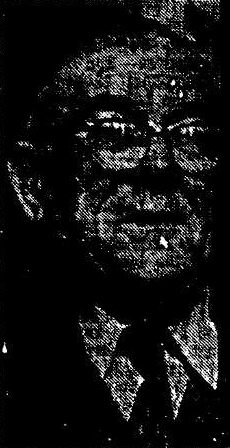
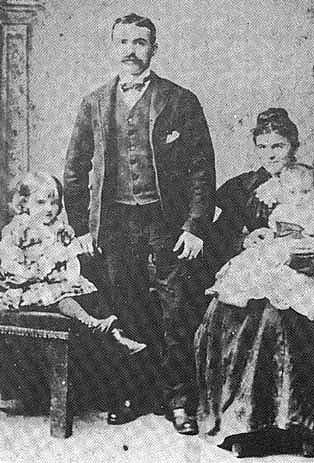
Grainy photo from The Irish Press (March 1, 1983)

Clare passed away in 1983 at the age of seventy-five. Tim-Pat Coogan wrote at the time:

Gravely voiced, indefatigably cheerful, with the yellow pallor of the night worker, which he was for scores of years, Paddy Clare to generations of young Irish Press journalists, epitomised the ideal of the hard-shelled, heart-of-gold professional reporter.

An IRA veteran of at least two wars (possibly three) and a respected journalist of over forty years, Clare lived a full life.

1 Mark O’Brien, De Valera, Fianna Fáil and the Irish Press (Dublin, 2001), 68
2 Unknown, Death of Paddy Clare, Irish Press, Mar 1, 1983

Read Full Post »

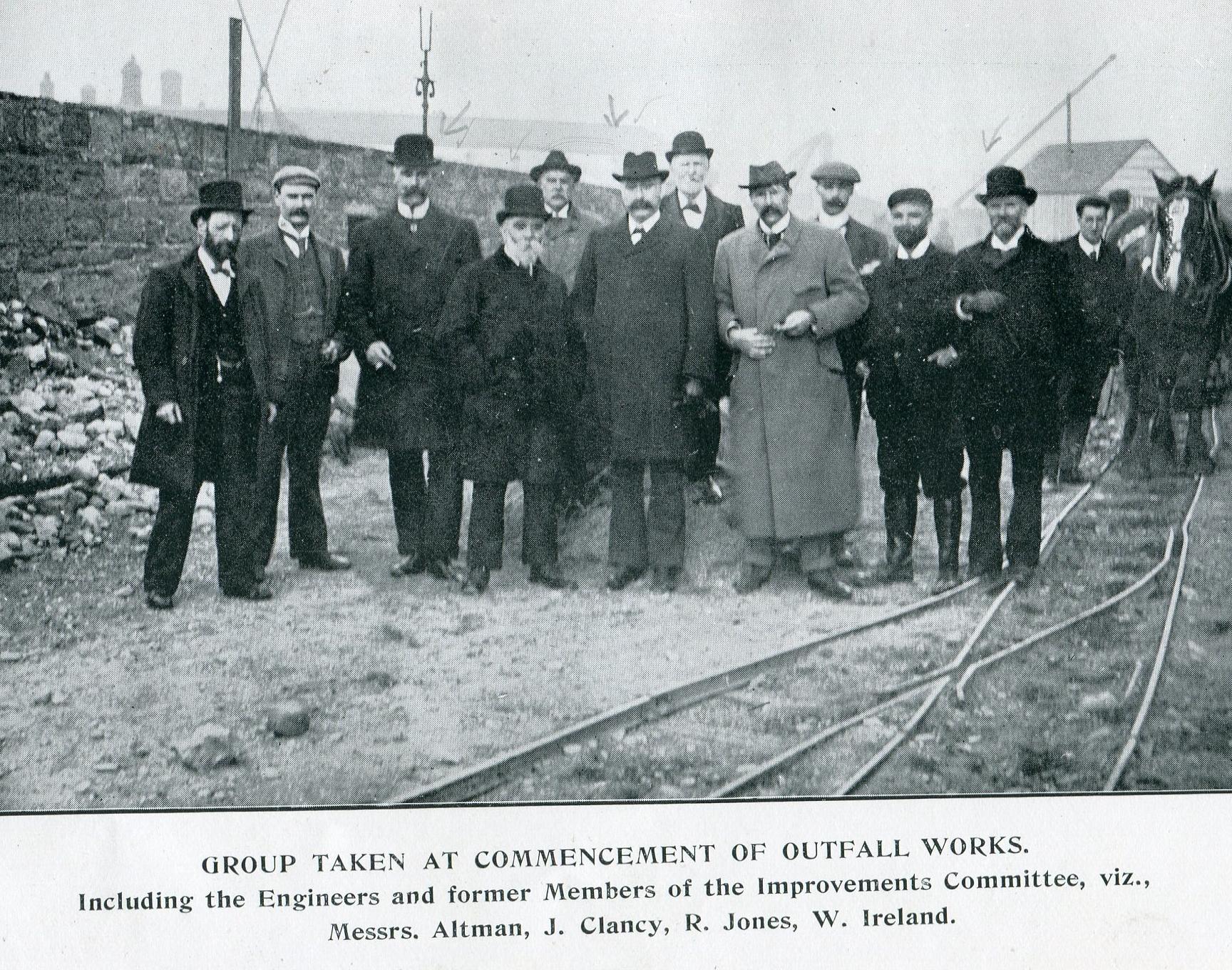
The question above is posed by Shane MacThomais, historian at Glasnevin cemetery. Shane contacted me with this image and the information below, and I’m sharing here in the hope someone can provide an answer either way. The photograph relates to the Dublin Main Drainage Scheme, and Shane details some of the characters in the photograph below. What about the man second on the left? Connolly did work on the scheme in the 1890s, could this be him? The man certainly bares more than some resemblance to Connolly.

Beyond the boots on the man second from right, the men do not appear in what I would deem workman’s attire, but if there is a foreman or labourer among the pile who knows.

Regardless, read Shane’s information below on ‘Altman The Saltman’, ‘Long John Clancy’ and the Dublin Main Drainage Scheme and then give the photo a close look.

By the middle of the 19th century Dublin Rivers like the Camac, Poddle and Liffey became seriously polluted. Several proposals were put forward in the mid to late 19th Century to mitigate this problem, but it was only in 1886 that the Main Drainage Scheme for Dublin City commenced, involving the construction of the North and South Quay interceptor sewers and the Ringsend treatment plant, the latter being completed in 1906.

When this work was completed in 1906 the Dublin Corporation decided that such sterling work deserved a publication. The Dublin Main Drainage Scheme Souvenir Handbook was published in 1906 and is no doubt a riveting read for anyone interested in centriifugal pumps and the inlet pipes and the affects of silt. The book has an interesting chapter on the history of pollution in Dublin and has countless photographs of the city fathers under whose benevolent eyes this work was carried out.

Amongst the photographs is this one of a group at the commencement of the outfall works. In the photograph are Albert Altman better known as ‘Altman the Saltman” whose business in the liberties supplied salt and coal to the numerous public baths across Dublin at the turn of the 19th century. Alongside Messrs Altman is John Clancy known as “Long John Clancy” who steps in and out of many a James Joyce novel. But it is the man 2nd from the left who raises my curiosity. Could it be the man himself Mr. James Connolly? Connolly did work on the scheme in the late 1890s but is it him?

    UPDATE: Lorcan Collins of the 1916 Rebellion Walking Tour has sent in this image of Connolly from 1894. He’s not convinced it’s Connolly above, and see his logic below in the comment section.

    Read Full Post »

    Today, stand-up comedy is a multi-million Euro business. Comics like Dara O’Briain and Tommy Tiernan regularly do stints of ten or more nights in Vicar Street, Michael McIntyre can sell out The 02 twice over, dozens of comedians release DVDs for the Christmas market and a whole range of venues like The Laughter Lounge on Eden Quay, The Comedy Cellar at The International, Stand Up at Bankers pub and The Ha’Penny Bridge Inn offer people seven nights a week of comedy.

    This wasn’t always the case.

    From the late 1970s to the late 1980s comics struggled to establish comedy nights in the upstairs of pubs, backrooms of hotels and theatres in the city. The history of stand-up comedy in Ireland is quite an overlooked subject (we do use that phrase a lot on this blog) and besides Deirde Falvey and Stephon Dixon’s fantastic Gift of the Gag: The Explosion in Irish Comedy (1999), nothing has really been written on the topic.

    Particularly interesting and forgotten is the development of Irish stand-up from the birth of ‘alternative comedy’ in the late 1970s to the establishment of The Comedy Cellar in The International Bar on Wicklow Street in 1988. The groundwork that a small number of people did in these early years helped to nurture and progress the scene to what it is now.

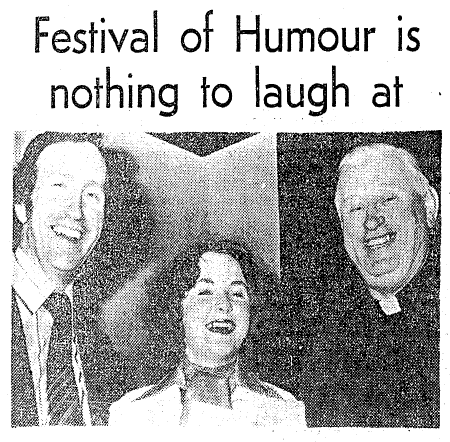
    The 1970s were, in many ways, dark times for comedy in this country. The first so-called Festival of Humour took place in May 1978 in Virginia, Co. Cavan. Things can be summed up by the fact that the chairman of the festival committee was the local priest Fr. Pat Morris.

    Festival committee of the Cavan’s ‘Festival of Humour’ Irish Independent. May 10, 1978.

    These were the days of Hal Roach at the Jury’s Irish Cabaret and Jimmy O’Dea.

    Coinciding with this brand of boring, ‘king of blarney’ Irish comedy a new generation of jokers were beginning to assert themselves, particularly in the Dram Socs and Rag Weeks of the island’s colleges. In the early 1970s in UCD Billy McGrath/Magra, Paddy Murray and Brendan Martin formed a sketch group called The Spike Milligan Comedy Machine known simply as The Machine. Dermot Morgan (of Father Ted fame) wasn’t too far behind and later performed as Big Gom and The Imbeciles in Theatre L.

    Spurred on by the explosion (a revolution even?) of intelligent, often anarchic, progressive stand-up (coined by Tony Allen as ‘Alternative Comedy’) in London’s Comedy Store by comics such as Alexi Sayle, Andy de la Tour and Pauline Melville and in The Comic Strip which soon followed by comics such as Rik Mayall, Ade Edmondson, Nigel Planer and French & Saunders – stand up comics in Dublin began testing the water and starting up their own nights.

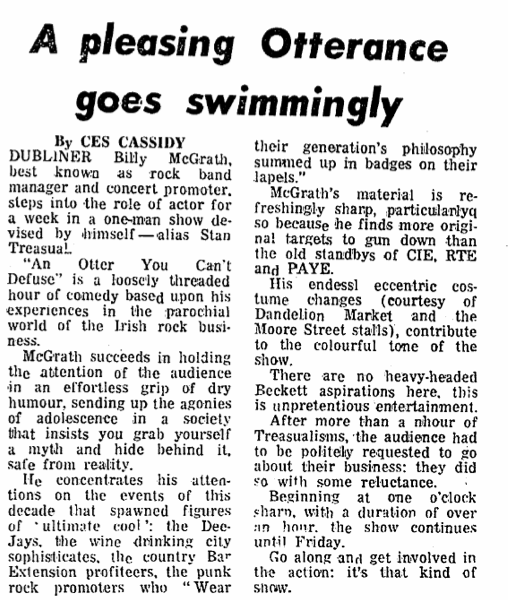
    A review of Billy McGrath’s one-man comedy show ‘An otter you can’t diffuse’. Irish Press. May 9, 1979.

    It has been said that Dublin’s first-ever stand-up comedy club was set up in Harcourt Street in the very late 1970s by a Scottish performance artist called Oscar McLennan.

    In January 1981, novelist Peter O’Connor launched the Comedy Store at the Holyrood Hotel, Harcourt Street. It seems to have lasted only a few months.

    Billy McGrath (Billy Magra) started up Club Comedy in the Sportman’s Inn in Mount Merrion in February 1982. There were further gigs in The Project Arts Centre on East Essex Street, McGonagle’s on South Anne Street, The Mansion House on Dawson Street. The gigs featured Michael Redmond, Kevin McAleer, Ian MacPherson, Mannix Flynn, ‘new wave’ poet Roisin Sheeran, Helen Morrissey, Owen Roe (aka Ronald Raygun), Peter Howick, Garrett Keogh, The Robots (David Rogers and Gerry Sammon), mime group Friends Electric and impressionist Gerry Lavelle.

    Sharing the same venues and many of the same values, this exciting new brand of ‘alternative comedy’ ruffled the feathers of the established comedy scene as much as Punk did to music.

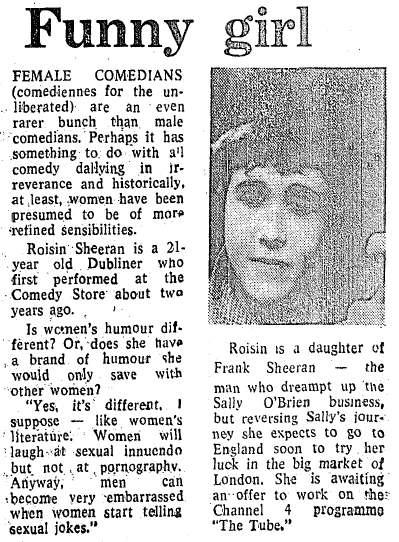
    A piece on Dublin comedienne Roisin Sheeran. Irish Independent. November 28, 1983

    In 1984, the Comedy Store (Dublin) ambitiously released its own live LP

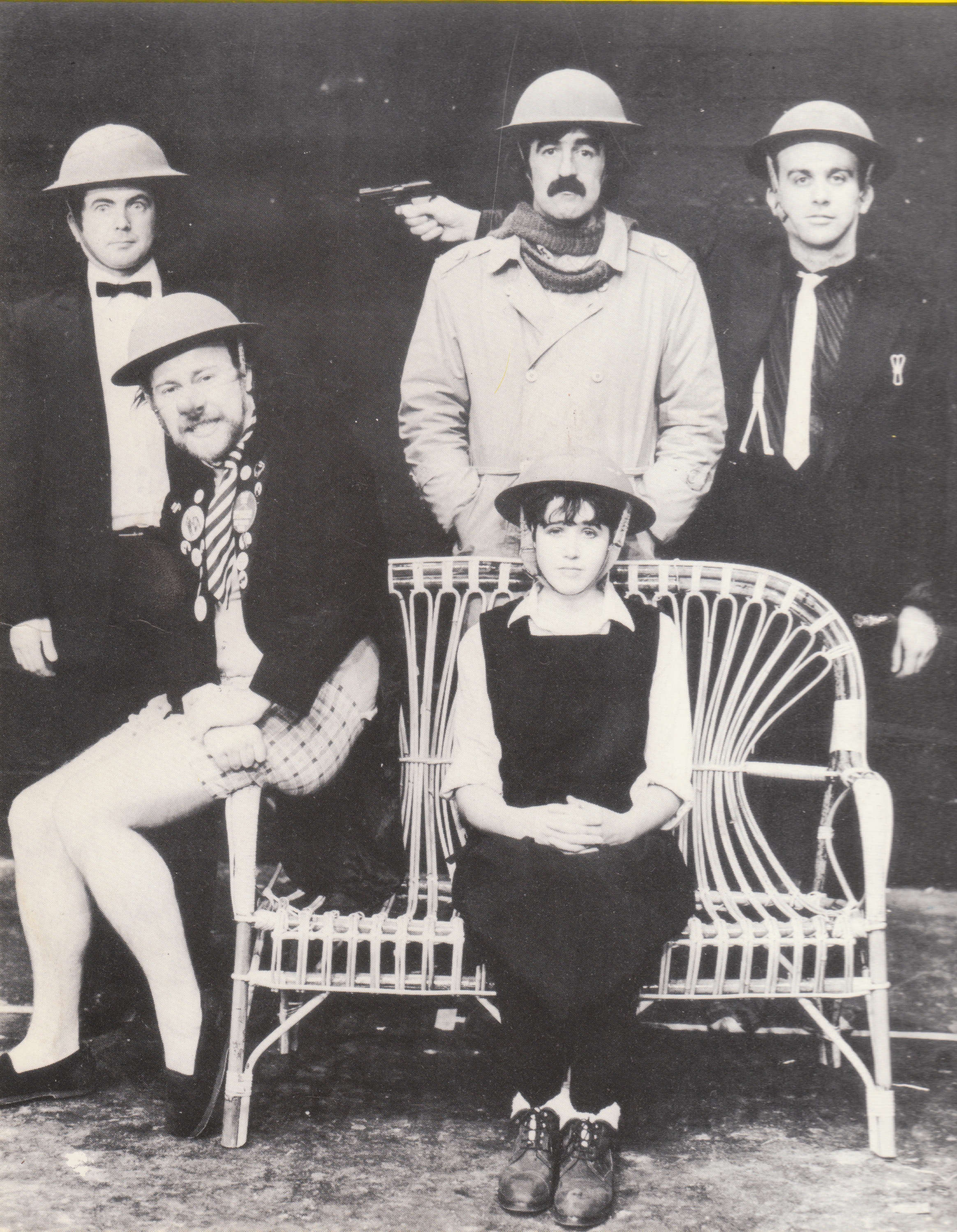
    Image from the LP – The Comedy Store (Dublin) Live At the Project. Recorded October 1983. Released 1984. Picture: “Gerry Lavelle, Ronald Raygun, Michael Redmond, Roisin Sheeran, Billy Magra (Missing Ian Mac Pherson – in London and Helen Morrissey – in hiding)”

    The 13-track LP was recorded live at the Project Arts Centre by Eerie Music Mobile, engineered by Johnny Byrne and Peter Eades, mixed and edited by Slimmer Twins and produced by Stand Treasual (aka Billy McGrath). The executive producer was MCD’s Dennis Desmond.

    Slowly but surely modern ‘alternative’ stand-up comedy began to be assert itself, influence a whole new generation and gain credibility. By the late 1980s, this opened up the path for Mr. Trellis (Ardal O’Hanlon, Barry Murphy & Kevin Gildea) and The Quack Squad (Joe Rooney & Paul Tylak) to open up The Comedy Cellar in The International Bar.

    Thus starting the next chapter of Dublin’s stand-up history…

    Read Full Post »

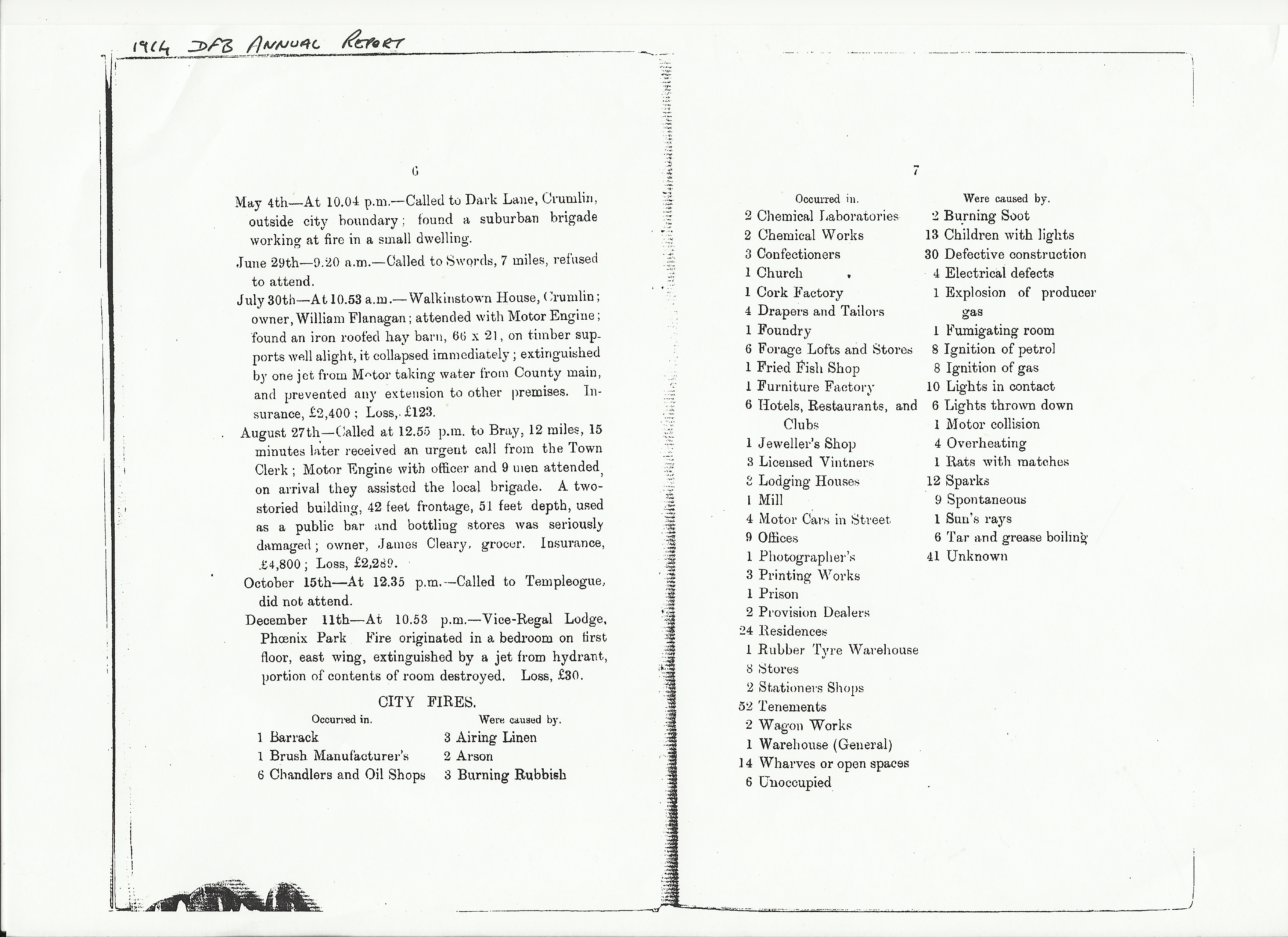
    I had to laugh at this from the Dublin Fire Brigade Annual Report for 1914. In the past we posted excerpts from the 1913 Annual Report, which dealt with “Abnormal labour disturbances”, arson and collapsing tenement houses.

    What’s interesting about the 1914 report, also compiled by Chief Officer Thomas P. Purcell, is one of the listed ’causes’ for fires in the city. 13 fires are attributed to children with lights, 30 to defective construction and one is attributed, quite amazingly, to “rats with matches”!

    1914 Dublin Fire Brigade Annual Report.

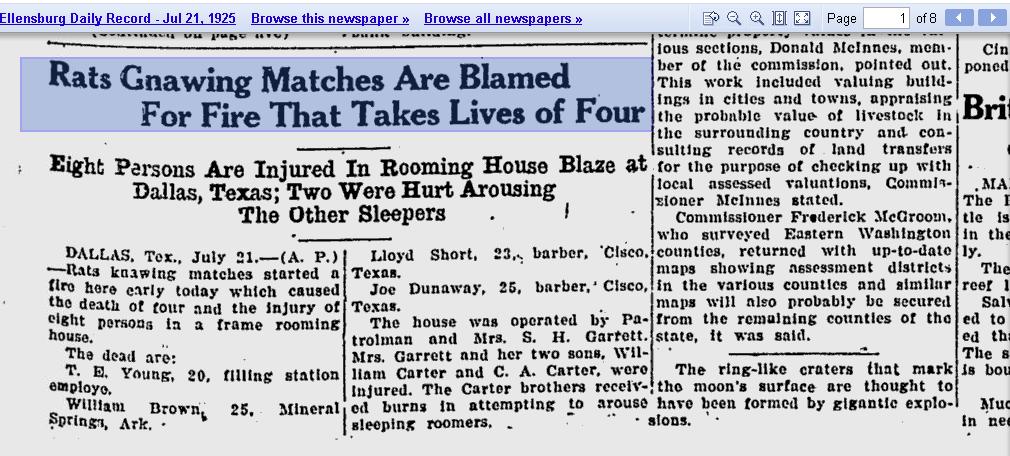
    **Thanks to B.Whelan on the Facebook page for pointing me towards this American newsreport, where rats with matches were responsible for a fire that claimed four loves.**

    Read Full Post »

    I contacted AK over at the Irish Election Literature Blog recently enquiring about the possibility of posting the below to Come Here To Me, a letter of support from The Housemartins to Shamrock Rovers supporters in their battle to save Miltown Road from destruction.

    I’d long known of Paul Heaton’s love for the beautiful game, his interview with the Celtic fanzine TÁL is worth taking the time to read, and gives good insight into his views on the modern game. There’s also a great bit of Dublin related humour in it.

    Interviewer: Is ‘The Rising of Grafton Street’ by The Beautiful South in reference to the Easter Rising?
    Paul: Not intentionally
    Interviewer: Lol, we can claim it for Ireland anyway?
    Paul: You certainly can!

    The Housemartins letter of support for Shamrock Rovers supporters was printed in the 1988 ‘Glenmalure Gazette’ Christmas edition.

    In the past we’ve featured a range of League of Ireland fanzies on the site, including Osam Is Doubtful from Saint Patrick’s Athletic and numerous fanzines from Bohs fans. We obviously had easier access to Bohs and Pats materials with our own loyalties here, but Come Here To Me is about something broader and we welcome all fanzines from the capital, in my eyes they represent a great part of the game here and one which is sorely missed by many.

    Some previously featured fanzines.

    I was directed towards the following files, which contain an archive of Shamrock Rovers fanzines from over the years, not only the Glenmalure Gazette from which the letter above comes but other fanzines entirely including Some Ecstacy and Hoops Upside Your Head. It’s an important bit of League of Ireland social history and great praise is due to those who took the time to scan and scan and scan away to bring these to a winder audience, not only young Hoops but the broader LOI community.

    The Glenmalure Gazette:

    1-5 http://www.mediafire.com/?qrsa42y124m1lgn
    6-10 http://www.mediafire.com/?11n2boi46oewow9
    11-13 http://www.mediafire.com/?1relcdt52k90q83
    14-15 http://www.mediafire.com/?03n1xw766zj5gt7
    16-18 http://www.mediafire.com/?oo1wf3m0czno1zz
    19-20 http://www.mediafire.com/?kngx9s5njzx17o6
    21-22 http://www.mediafire.com/?1bbm3b4h3e72mku

    Some Ecstasy
    1-5 http://www.mediafire.com/?oc8wf1f54xyxzax
    6-8 http://www.mediafire.com/?gyxuj32yak4em4u
    9-11 http://www.mediafire.com/?3wcw3s85t75rpp1

    Hooped On A Feeling
    Only One Issue : http://www.mediafire.com/?c3745xxia4m71eb

    Hoops Upside Your Head
    1-3 http://www.mediafire.com/?6y13ntvqk3fvua2
    4-6 http://www.mediafire.com/?ez5d7z7v7f71dzz
    7-9 http://www.mediafire.com/?ya6fwodwgik7o1c
    10-11 http://www.mediafire.com/?d9amjej0msjler5
    12 http://www.mediafire.com/?ag2aala7ep7srhm
    13-14 http://www.mediafire.com/?5g7d7bn481g4koa
    15-16 http://www.mediafire.com/?sr4gkua4kh6683d

    Read Full Post »

    Capuchin Annual’s really are the gifts that keep on giving. Not only do they frequently contain interesting essays, poems and the like but they throw up fascinating advertisements and photography from times past.

    The Capuchin Annual 1948 has been sitting on the shelf opposite me for some time. Flicking through it, I stumbled on a series of photos from the launch of an art exhibiton in Dublin that year. An exhibition of Richard J. King’s work, two photos in particular stood out.

    One featured M.Louis Jammet and Madame Jammet. Jammet’s Restaurant has featured on Come Here To Me in the past, when jaycarax sought out Dublin’s oldest restaurant. The other featured Jack B. Yeats and Ernie O’Malley. O’Malley of course has featured here on several occasions in the past, even popping up in a review of Trinity’s famous Pav. There are few pictures of Ernie online, so I thought this worth sharing too.

    Louis Jammet and Madame Jammet

    Jack B. Yeats and Ernie O'Malley

    Read Full Post »

    Women show their loyalties, Dublin 1922.

    Michael Staines, of the Irish Volunteers, was Quartermaster General within the General Post Office during Easter Week 1916. He was the son of an RIC man, sent to Frongoch for his part in the rebellion where he became ‘Camp Leader’. In 1922, only six years on from the insurrection, he would be leading the Civic Guards through the gates of Dublin Castle, once more playing a leading role in Irish history.

    For 700 years, prior to Staines and his men marching into that complex, Dublin Castle had meant one thing and one thing only, representing the fortified home of English (and later British) rule in Ireland. Standing in its courtyard today Justice gazes down on you, the work of John van Nost the Younger dating to 1753 and facing not towards the people of Dublin but away from them. She comes complete with drainage holes in her scales, to keep them from tipping unevenly. One couldn’t make it up. Does any statue say so much?

    Notice the holes in the scales of Justice.

    To mark the 90th anniversary of the handover of Dublin Castle, a series of public tours and talks have been organised. Details on how to attend are below. Some of these events will give visitors a different experience to the normal Dublin Castle tour. I’ll be attending several of the events, and am especially looking forward to Dr. Shane Kenna’s lecture ‘The Secret Service in Dublin Castle’.

    Monday 16 January 2012; Anniversary of Handover 18.15
    The Last Years of British Rule in Dublin Castle
    Tour with Aisling Gaffney

    Sunday 22 January 2012 12.00
    What do national and foreign dignitaries miss on their visit to Dubiln Castle? Join Liz McCay for a quirky tour of her choice of art works from the historic collection, including behind the scenes access.

    Tuesday 24 January 2012 18.15

    Bedford Hall

    ‘The Secret Service in Dublin Castle’:
    Lecture on a permanent secret service department established at the Castle after the Phownix Park assassinations in May 1882.

    By historian Dr Shane Kenna.

    Sunday 29 January 2012 11.00
    ‘A Piece of Make-do and Mend’:
    An architectural tour with William Derham.

    Limited places available by booking only.
    Please email jenny.papassotiriou@opw.ie or dublincastle@opw.ie
    or Tel: 01 645 8812

    Read Full Post »

    The Free Peace Festival in The Phoenix Park in 1978 can either be seen as a bitter disappointment or as a fantastic achievement depending on your outlook.

    It can be seen as a disappointment for it was supposed to take place over a full weekend, feature over ninety acts over three stages and attract over 50,000 revelers, but in the end, the festival opened with only one stage, a handful of bands and only 3,000 or so fans.

    The achievement lies that in the fact that a free festival took place in The Phoenix Park which attracted 3,000 people, three times more than the one the year before.

    Irish Press, Aug 08, 1978.

    Bill ‘Ubi’ Dywer (1933 – 2001), the ecentric Irish-born self-described ‘non-violent anarchist’ and main organiser, made his name running the Windsor Free Festival in London from 1972 – 1974 which saw over 100,000 attend and was widely seen as being the forerunner for the Free Festival Movement and directly the Stonehenge Free Festival and the later Glastonbury Festival.

    Ubi and Friend. © Al Lyons

    The 1978 festival in The Phoenix Park was supposed to feature over ninety acts including U2, De Dannan, Clannad, Horslips, Paul Brady, The Bach St Kids, VHF, Biro’s, Revolver, Rocky De Valera & The Gravediggers and Brown Thomas. I’m not sure which of those actually played in the end. As well as music, there was theatre, mime and an adventure playground for children.

    Gareth Byrne remembers that day:

    Saturday 5th August the first morning was bright when organisers began to arrive at The Hollow. The first band played to a trickle of spectators. By midday I spotted half a dozen individuals in wheel chairs at one corner, supervised helpfully by Fergus Rowan and a friend, who had arranged special transport. Gradually the attendance swelled to a few hundred individuals and parents with children. More bands arrived and got their gear ready. By lunchtime the sky had clouded over and there was a heavy downpour. Ubi donned a yellow showerproof cape and put a cheerful face on things by dancing and twirling to the music around the bandstand. I noticed a sharp row he had with members of one band who got nervous about the possibility of electric shock and wanted to switch off the AC/DC system. He effed and blinded loudly at them and insisted that the show go on. The shower died down, the sun reappeared, and Ubi disappeared. More people turned up to listen and the music went on smoothly until about 7 p.m.

    Around 4 p.m. Ubi reappeared at the bandstand and looked the worse for drink. His reeking breath and raving demeanour suggested several double shots of Irish whiskey in addition to the customary pints of Guinness. A uniformed member of the Gardai (police) and a plainclothes detective tried to reason with him. He was escorted from The Hollow, somehow got to the ferry harbour at Dun Laoghaire and took the boat and overnight train to London. British newspapers reported a week later that Thames Valley police arrested him as he arrived at Windsor Park intending to launch a banned free music festival there. He was sentenced to jail and didn’t return to Dublin until the autumn of 1979.

    In many ways, the Free Peace Festival was overshadowed by the first Carnsore Anti-Nuclear Rally which took place just two weeks after and attracted over 10,000 people.

    Ubi later ran as an independent in Dun Laoghaire for the Dail in 1981 and 1982, receiving 927 and 418 votes respectively, and later was involved in the campaigning for legalisation of Cannabisand H-Blocks prisoner rights. He was involved in a cycling accident in the late 1990s in the Dublin mountains, never fully recovered from his injuries at died at the age of 68 in 2001.

    Read Full Post »

    They could’ve built flats in the centre of the town for us and kept reservations like this for them that come in from the country. Home from home it would have been. But us! And the only grass we ever saw we were asked to keep off it. – Dominic Behan

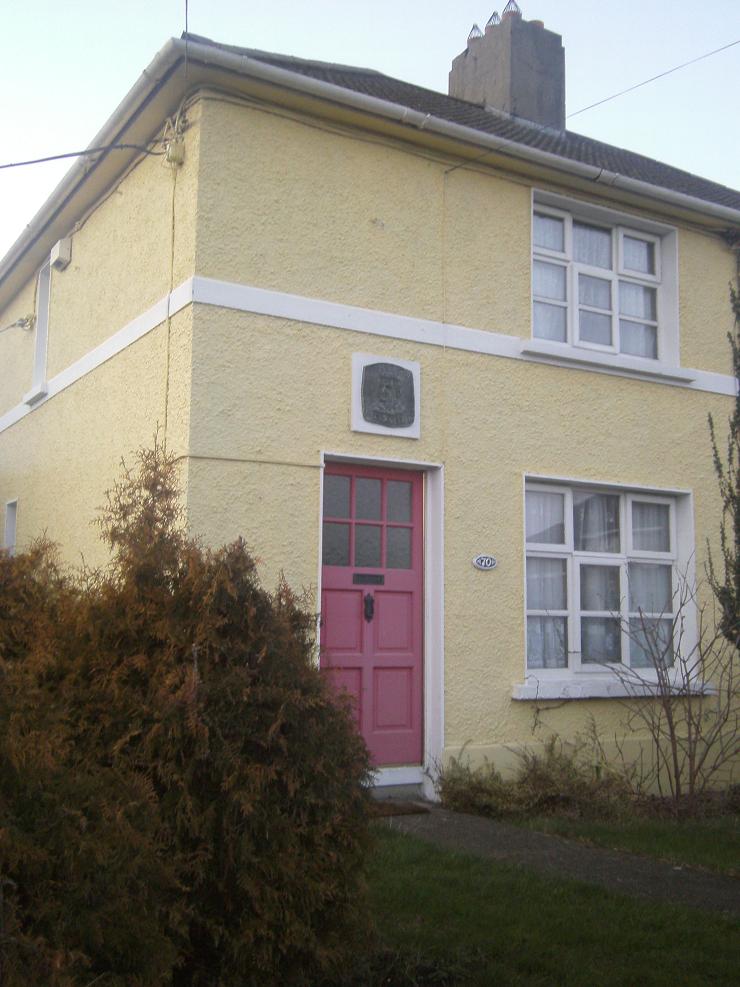
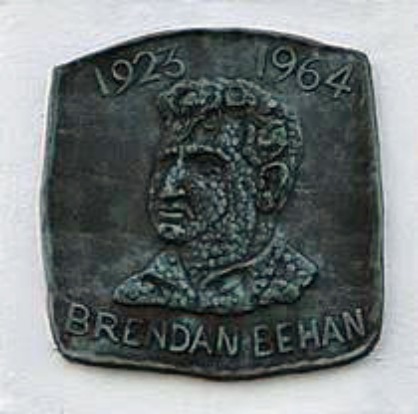
    Passing Kildare Road in Crumlin, you couldn’t miss the plaque on no.70. It shows a very familiar face, that of the writer and poet Brendan Behan.

    Behan and his family were moved to Crumlin from a tenement in Russell Street. As Ulick O’Connor noted in his biography of the great writer, his childhood in Russell Street would greatly shape Behan, as ‘besides the cultural advantages Brendan inherited from his parents, the indigenous tradition of Dublin played a major part in his development’. To many inner-city Dubliners, Crumlin and the like represented the countryside.

    O’Connor notes that the general impression in Russell Street towards the new suburbs where the working class of the city were sent was that they were a place where they ‘ate their young’. Behan himself would refer to the area as the ‘Wild West’. In Behan’s play Moving Out, these new suburbs are referred to as Siberia!

    Andrew Kincaid wrote of the emergence of Crumlin, Cabra and the like in his excellent Postcolonial Dublin: Imperial Legacies and the Built Environment. The corporation planned Crumlin at first for 3,000 houses, but by 1938 had zoned 2,400 more at Crumlin North.

    The Behan’s arrived in the area in 1937, and Brendan himself would soon after be active in republican campaigns in Britain. Still, returns to the house were frequent for the writer. His brother Dominic, a celebrated writer in his own right, would join Na Fianna at the time the family moved to Crumlin.

    It was 1977 before the home would be marked by a plaque.

    We parked our car by the Clogher Road Allotments nearby, a credit to the local community in the grounds of Pearse College. Walking through them, you find this great tribute to the local lad Brendan. A local lad, but not by choice. What would he think of being honoured in Siberia today?

    Read Full Post »

    Downey’s pub, formerly of 108 Upper George’s Street, Dun Laoghaire, has the dubious title of being host to the world’s longest ever strike. It began in March 1939 and ended in November 1953, lasting a total of fourteen years and eight months.

    The trouble started when the unionised bar staff objected to a senior male assistant being let go and a non unionised barmaid taking his place. The owner James Downey’s response was, as apprentice Con Cusask remembers, to “sack all of his staff and replace them all with non-union labour”.

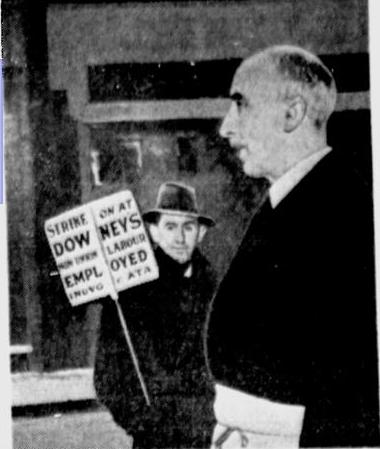
    In reaction, the Irish National Union of Vinters, Grocers and Allied Trades Assistants put a picket outside. Here on, from 10am to closing, they tramped up and down outside carrying their battered placard: ” Strike On at Downey’s.”

    James Downey stands at the door of his pub with striker in foreground. (c) The Age

    After five years on the picket, Con Cusack left to find work elsewhere and two years after that Patrick Young (the barman dismissed) also found new employment. Undeterred, the union continued to send on picketers for the next seven years. In total, it is believed that they walked a total of 41,000 miles altogether.

    The strike was featured in newspapers and periodicals around the world including Time Magazine. It was said that tourists used to go out of the way to visit the pub to see for themselves if the “everlasting strike” was still going strong. (This prompted some to suggest that Downey was paying the strikers in order to attract the tourists!)

    On 20 March 1943, the German U-boat U-638, commanded by Kapitänleutnant Heinrich Oskar Bernbeck stopped the Irish Elm ship. Rough seas prevented the Elm‘s crew from pulling their rowboat alongside the submarine to present their papers, so the interview was conducted by shouting. During the course of the conversation, the Elm‘s Chief Officer Patrick Hennessy gave Dún Laoghaire as his home address which prompted Bernbeck to enquire whether  “the strike was still on in Downey’s”. [1]

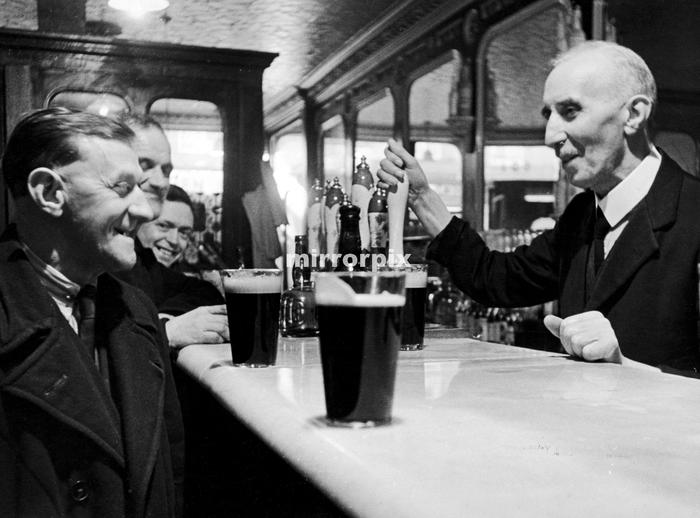
    Landlord James Downey serving a pint to one of his regulars. 16th February 1948

    On the anniversary of the start of the strike, March 3rd, Downey would host a party in the pub and allegedly would even ring up the union to tell them if the picketers weren’t there when he opening up.

    Downey, a former boxer originally from Laois, died in May 1953 at the age of 79. The strike finally ended in November after an agreement was reached with the new owner. In July 1958 the premises was bought by Hugh Larkin, proprietor of the Royal Hotel in Arklow and Flynn’s pub in D’Olier Street. It was put on sale again in April 1963 and bought in February 1964 by the Dublin supermarket company of W.H. Williams Lt.d for a five-figure sum. It was demolished to make way for the Dun Laoghaire shopping centre in 1976.

    [1] Frank Forde, The Long Watch (Dublin, 1981), 56

    Read Full Post »

    One of my favourite websites to check in on almost daily is the Flickr account of the National Library of Ireland. It’s ‘Pic of the Day’ feature has thrown up a great many gems, not only from the capital but throughout the country, pictures which often are of special interest to those of us with a keen interest in social history.

    Recently, they uploaded a picture of what they described as a “very ornate” urinal on Ormond Quay, dating from 1969 and in black and white.

    It was soon followed by a great colour photo, believed to be from 1973, showing the same urinal this time with ‘The Eagles’ scrawled across it. I actually cringed upon seeing that, a bit like you would if one of your parents featured in the recent ‘Where Were You?‘ sporting skinny jeans.

    Interestingly, a comment suggests that these style urinals were “imported prior to the 1932 Dublin Eucharistic Congress as part of a ‘clean up Dublin’ campaign.”

    Sadly, the public toilets of Dublin are no more and those in need of a wee are advised to make for the nearest McDonalds, glance at the menu briefly for the security lad thinks you’re pondering a purchase, and then make a move when you have him off guard. We’ve come so far as a city.

    Read Full Post »

    Xmas swag

    Over recent years, my Dad and myself have come to a great arrangement where I go out and buy a few books for Xmas and then he gets me back. It avoids any sort of hassle (for him) and any disappointment (for me). This is what I got this year, all from Hodges & Figgis.

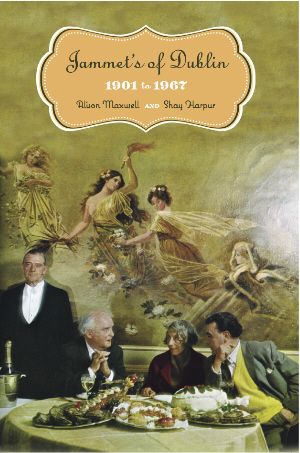
    Jammet’s of Dublin: 1901-1967 by Alison Maxwell and Shay Haurper (The Lilliput Press, 2012) €15 paperback

    With the paperback coming in at only €15 and with 249 pages, you’re definitely getting value for your buck (no pun intended). Beautifully designed (Niall McCormack yet again), this book traces the history of what was Dublin’s most famous restaurant.

    Particularly interesting are the stories of Jammets getting through WWII (extremely well by all accounts except for a small incident when their windows was broken by a group of nationalist UCD students on an anti Allied rampage), of the Jammet staff football team who won the Hotels Cup and League many times in the 1940s and 1950s, of Brendan Byrne’s shop on South Anne which was visited by the mega wealthy including Aga Khan when he visited the city and finally the personal accounts and stories of former Jammet’s waiters Shay Harpur, Jimmie Beggan and Victor Hurding.

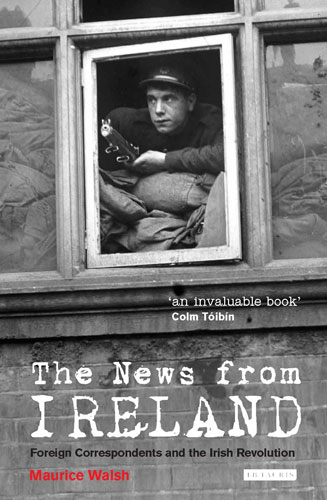
    The News from Ireland : Foreign Correspondents and the Irish Revolution by Maurice Walsh (I.B. Tauris & Co. Ltd., 2008) €16.35 paperback

    A fascinating but quite academic book looking at the role of foreign journalists and writers, particularly British and American, in the Anglo-Irish war of 1919 – 1921. The chapter focusing on ‘literary tourists’ – G.K. Chesterton, Wilfred Ewart and V.S. Pritchett is particularly interesting. All three spent time in Ireland and wrote upon their experiences. Another issue that jumped out was the effect that WW1 had on the ‘ascendancy families in the South’. The writer Lennox Robinson observed that ‘the Big Houses were emptied of all men of a fighting age [the Great War being] the last chapter in the history of the many families’ while Mark Bence-Joyce said by the end of the war ‘in all too many Irish county houses in 1919 the Young Master was no more than a memory and a photograph in uniform on a side-table’.  All very Downton Abbey.

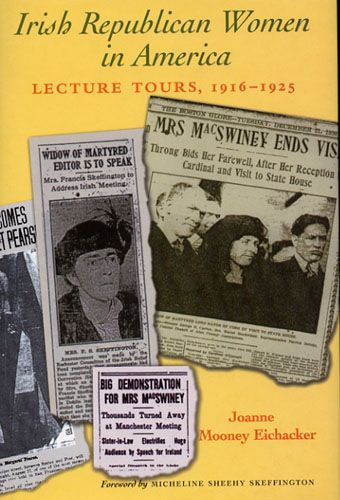
    Irish Republican Women in America Lecture Tours, 1916-1925 by Joanne Mooney Eichacker (Irish Academic Press, 2003) €4.99 paperback

    Found in the bargain basement, this book is well worth a read for anyone with an interest in Irish republican or Irish feminist history. Particularly interesting were the revelations that Hanna Sheey Skeffington established close friendships with a number of IWW activists including Elizabeth Gurley Flynn and Marie Equi and for the passing mention that in Butte, Montana in June 5 1917, the local Pearse-Connolly club ‘led a large and unruly anti-draft protest’ ending in a riot and the Montana National Guard being called in to assist the ‘federal, county and city police’ when the disturbances accelerated and more than 25,000 citizens congregated in the streets.

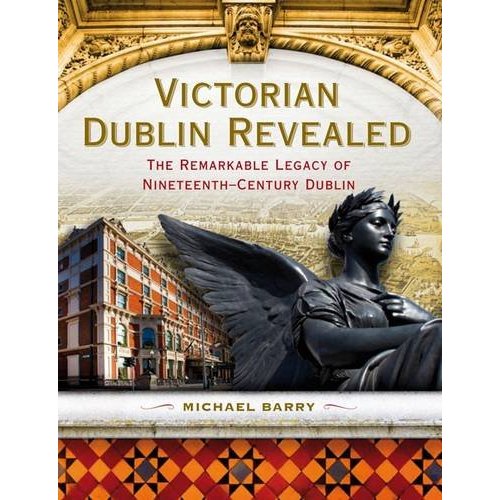
    Victorian Dublin Revealed: The Remarkable Legacy of Nineteenth-Century Dublin by Michael Barry (Andalus Press, 2011) €24.99

    Beautiful full colour 192 page photography book focusing on Victorian Dublin, 1837 – 1901. Besides a few minor design errors (p. 32 and p. 36), the book is a treat on the eye. The Prince Albert statue (1871) on Leinster Lawn, the Zodiac mosaic floor at the entrance of the National Museum (1890), the columns of the Kildare Street Club (1859) [now Alliance Francaise], the entrance floor of the former Masonic Girl’s School (1880) in Ballsbridge [now Bewley’s Hotel], the synagogue at Adelaide Road (1892) and Nearys on Chatham Street (1900) are some of the most interesting examples that feature.

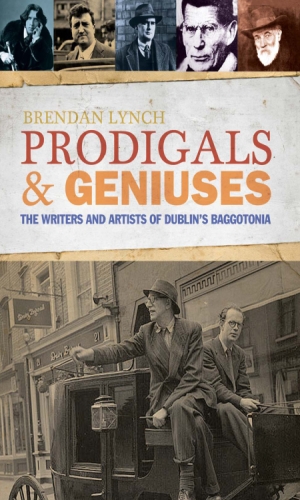
    Memories of Baggotonia: Bohemian Dublin from Wilde and Joyce to Beckett and Behan by Brendan Lynch (The Liffey Press, 2011) €19.95

    Well-written, engaging book focusing on the writers, artists and journalists that lived around the Baggot Street area. There are chapters focusing on individuals like John Butler Yeats, Brendan Behan, Patrick Kavanagh, Bertie Smyliee and Harry Kernoff and on places like the United Arts Club, Parsons Bookshop and the bars that were frequented by the residents of Baggontia.

    I never knew anything about the ‘Catacombs’ before reading the book. This was a shebeen based out of the basement of 13 Fitzwilliam Place which boasted of a ‘maze of dark pantries and windowless rooms’ and regularly attracted ‘up to sixty imbibers, eager to prolong the night after pub-closing’. It was run by Richard ‘Dickie’ Wyeman, English-born former nightclub manager who had fled to Dublin after his army officer boyfriend was killed in the war. (More on the Catacombs here)

    Read Full Post »

    « Newer Posts - Older Posts »