Fantastic news. The Radiators are back recording and hopefully gigging.
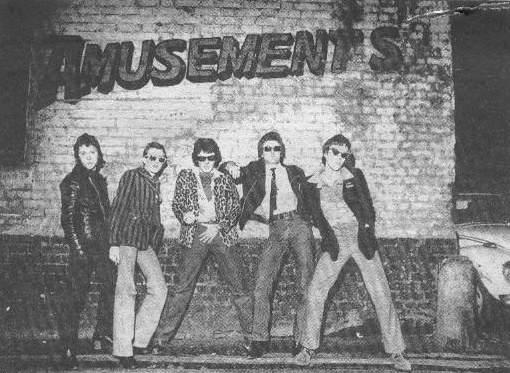
The Radiators From Space, 1977

The Radiators From Space, 2011
Posted in Dublin History on April 19, 2011| 7 Comments »
Fantastic news. The Radiators are back recording and hopefully gigging.
The Radiators From Space, 1977
The Radiators From Space, 2011

Posted in Dublin History, Photography on April 19, 2011| Leave a Comment »
Continuing in their excellent series of digital collections on different aspects of Dublin history, the council has uploaded two sets on ‘Commercial Dublin‘ and ‘Dublin Shops and Shopping‘. Do have a look.
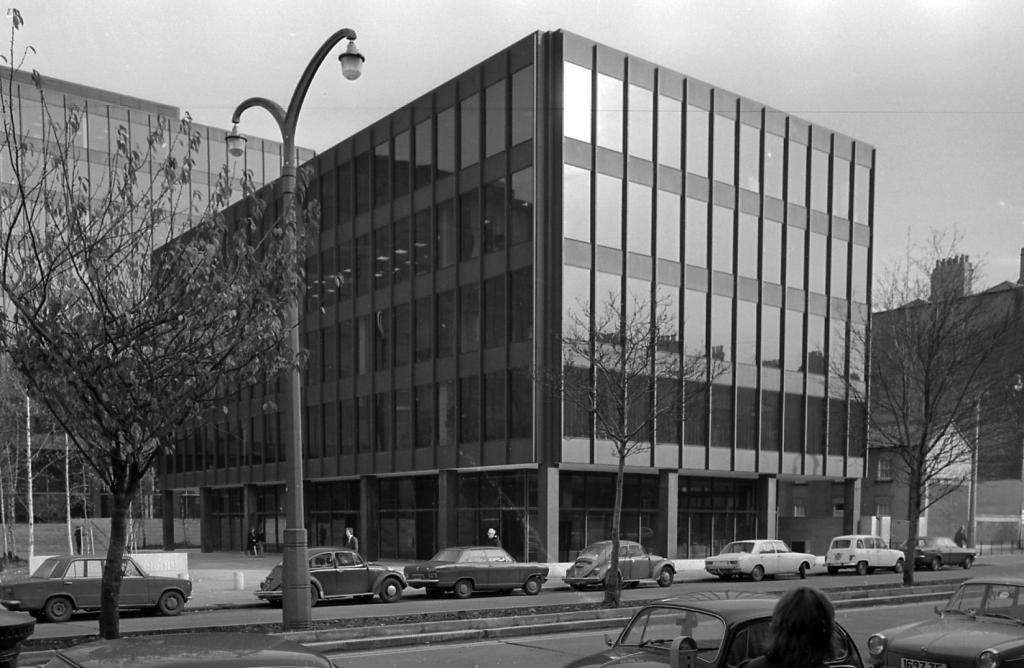
Bank of Ireland, Baggot Street. (DCC)
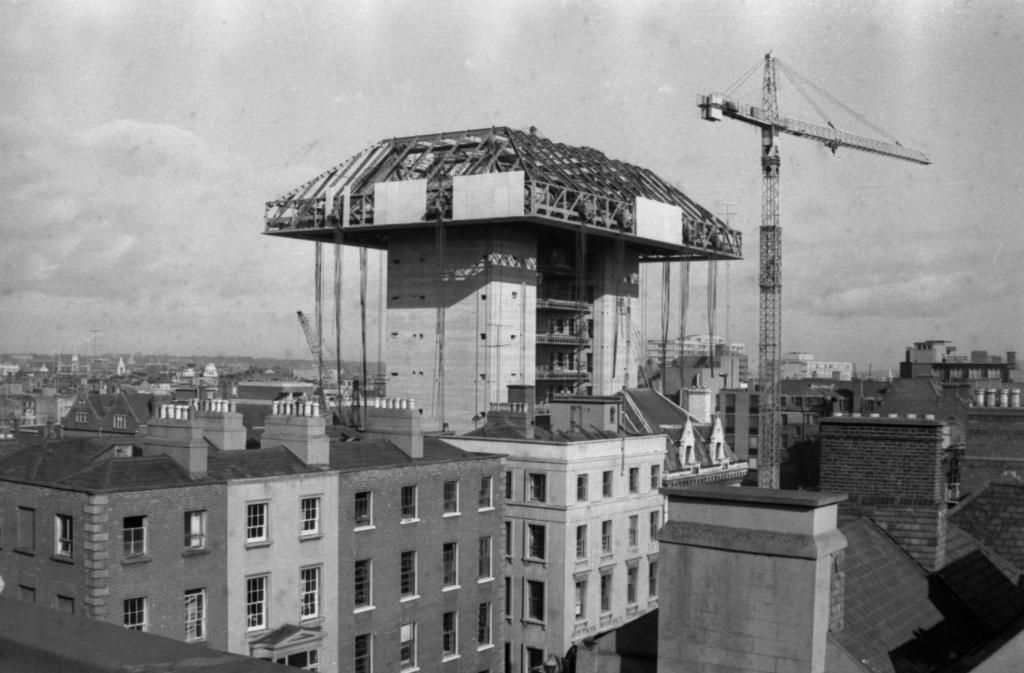
Construction of Central Bank. (DCC)

Posted in Dublin History, Social History, tagged Belcamp College Fire on April 14, 2011| 33 Comments »
What a tragedy that Belcamp College in Dublin 17, a remarkable building boasting a fine connection to James Hoban, architect of the White House in Washington D.C, should fall victim to fire.
There are some excellent images of the college in this 2009 video:
By remarkable coincidence, there was an article in The Sunday Times last week detailing the condition the building was in now, noting its historic importance and the sad condition it is currently in. The report noted that the council had begun removing stain glass windows of importance from the premises.
There is some video footage of the fire last night already making its way onto YouTube:
Local Counciller Larry O’Toole raised some good points this morning.
Belcamp College was an historic building and its destruction by fire is a major loss. After it was closed as a school it was taken over by a developer, Gannon Ltd. and had lain unused since, ending up in NAMA with other Gannon properties.
This fire raises major questions for Gannon and NAMA. Why was this building not secured better? Was security increased after previous break-ins?

July 1922 Irish Times report on fire at the college.

Posted in Dublin History, Music, Photography on April 7, 2011| 14 Comments »
A couple of nice snaps of The Bleeding Horse public house on Camden Street.
The pub, which dates back to 1649, claims to be the second oldest pub in Dublin.
There are many stories on how the tavern got its name. The most frequent one told is that during The Battle of Rathmines (1649), Cromwellian forces brought their wounded horses to the thatched, timber inn that stood here.
From the early 1970s to the early 1990s, it was called The Falcon Inn.
Charlotte Street, to the left of The Bleeding Horse, was demolished in 1992. I plan to write an article on this disappeared street in the near future.
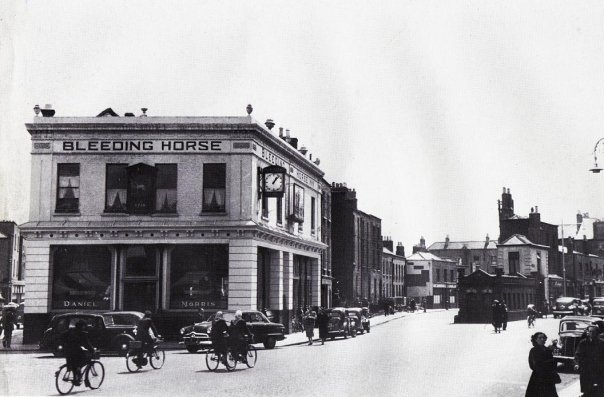
The Bleeding Horse (1950s)

The Falcon Inn (1972) Credit - Hohenloh

The Falcoln Inn (1972) Credit - Dublin City Council
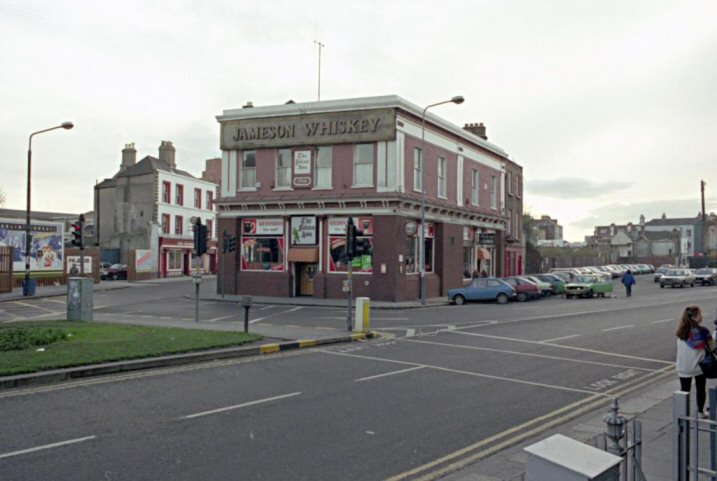
The Falcon Inn (1990) Credit - Dublin City Council
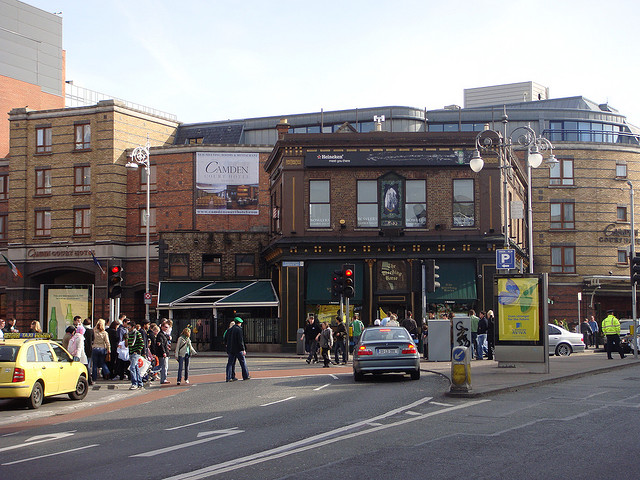
The Bleeding Horse (2010) Credit - nycbrent

Posted in Dublin History, Photography on April 5, 2011| 2 Comments »
Fantastic picture from August 1923 showing a young man sticking up poster proclaiming that De Valera has been arrested over old election posters asking people to vote for him.

© Hulton-Deutsch Collection/CORBIS

Posted in Dublin History, Events, Pubs, Reviews on April 3, 2011| 1 Comment »
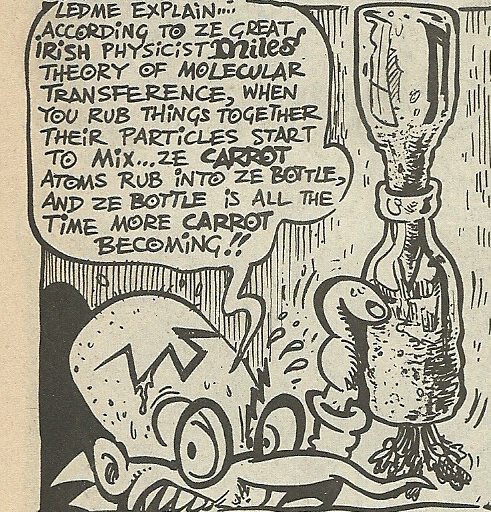
From Hunt Emerson- Firkin (1989). Scanned from 'the brothers' collection.
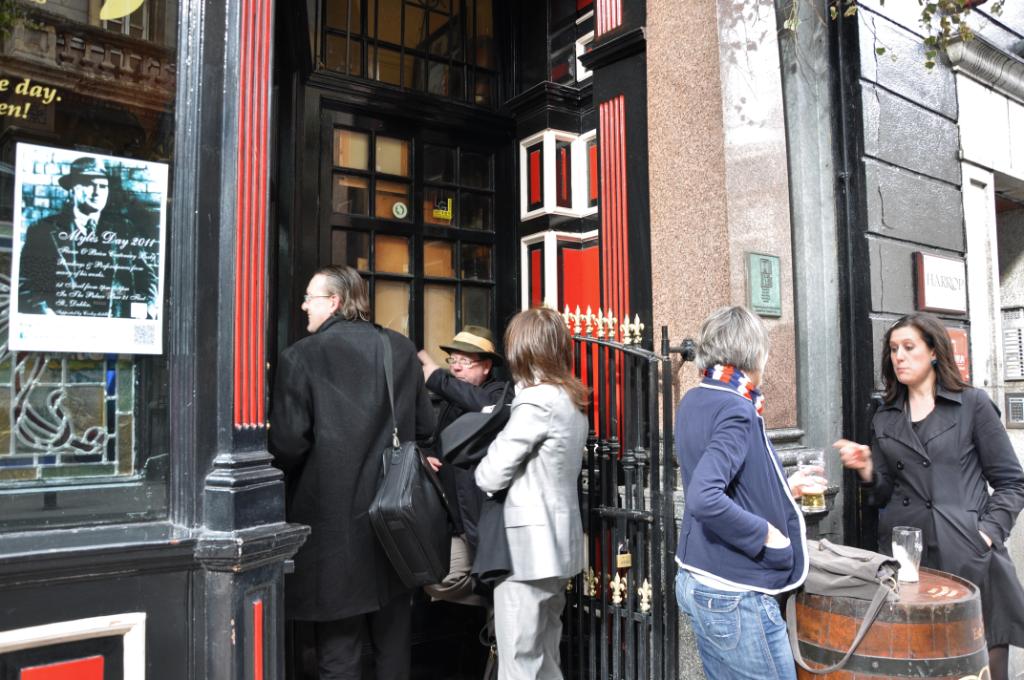
I popped into the inaugural MylesDay on Friday. Flann O’Brien is among my favourite writers to emerge from this country, and The Palace Bar is undoubtedly the most fitting of places to honour him, owing to his frequent custom in times long past.
I arrived at 2:15, a quarter of an hour before kick-off. Alas, there was not a seat to be found in the pub. Journalists, writers, plain people of Ireland like myself and more besides had gathered for a day of readings and performances.
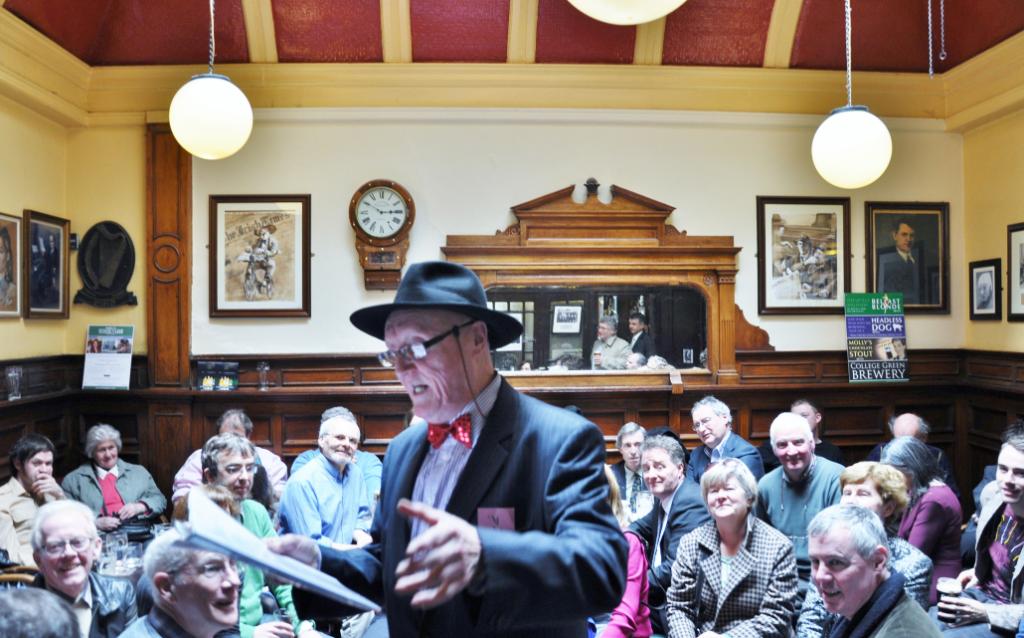
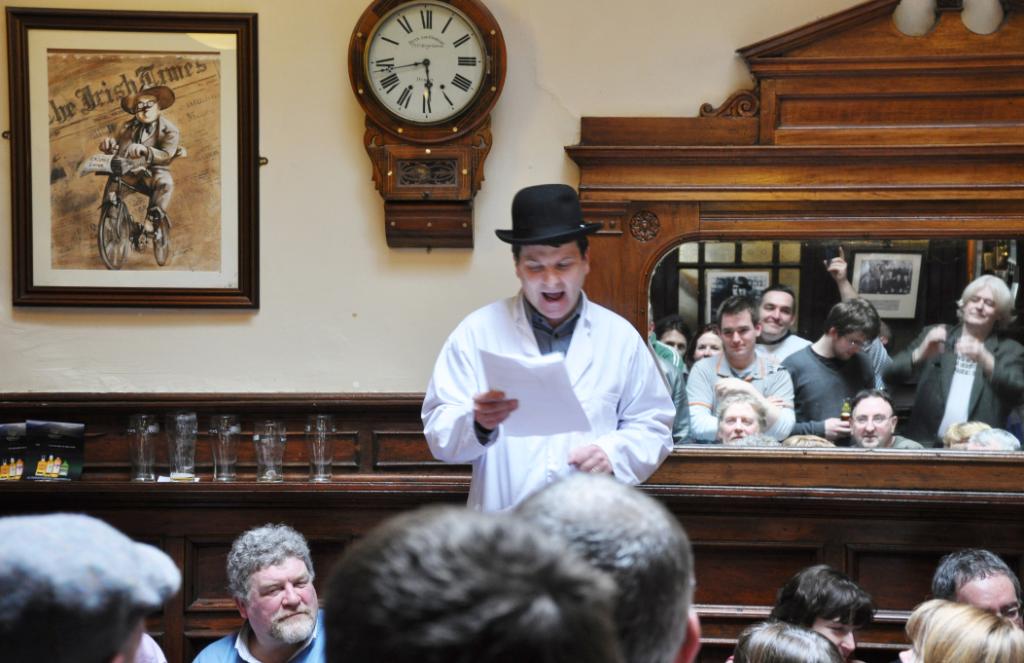
Val O’Donnell got things off to a flying start with bookhandling. It’s all in the delivery of course, and Val was just the man to launch the day:
A visit that I paid to the house of a newly-married friend the other day set me thinking. My friend is a man of great wealth and vulgarity. When he had set about buying bedsteads, tables, chairs and what-not, it occurred to him to buy also a library. Whether he can read or not, I do not know, but some savage faculty for observation told him that most respectable and estimable people usually had a lot of books in their houses. So he bought several book-cases and paid some rascally middleman to stuff them with all manner of new books, some of them very costly volumes on the subject of French landscape painting. I noticed on my visit that not one of them had ever been opened or touched, and remarked the fact.
‘When I get settled down properly,’ said the fool, ‘I’ll have to catch up on my reading.’
This is what set me thinking. Why should a wealthy person like this be put to the trouble of pretending to read at all? Why not a professional book-handler to go in and suitably maul his library for so-much per shelf? Such a person, if properly qualified, could make a fortune.
One by one excellent performers rose to pay tribute to O’Brien and as the clocks ticked away the laughter went on unabated.
I hope MylesDay becomes an annual event. Well done to the organisers, speakers and performers. The brother says he’s raging he missed it.
My thanks to FXR for the photos:

Posted in Dublin History on April 1, 2011| Leave a Comment »

Page 235, The antiquities and history of Ireland (1705).
Dublin has the disreputable honour of given the world the first known Black Monday.
On Easter Monday 1209, the native Irish, primarly the O’Tooles and others from Wicklow, massacred over three hundred Dublin citizens (many who had recently moved over from Bristol) in Cullenswood, close to modern Ranelagh.
The Irish Fireside (Vol. 1, No. 10, Sep 3, 1883) recalls that the native Irish:
… suddenly sprang from their lurking place on the unsuspecting (citizens), of whom they slew three hundred, besides a multitude of women and children who had accompanied their friends to partake in their harmless recreations.
The affair, which was dubbed The Cullenswood Massacre, was commemorated by Dubliners at its very spot every year for up to four centuries after.
It is generally assumed that the actual massacre took place in the area between modern Ranelagh and Rathmines which was afterwards christened Bloody Fields.
The Bloody Fields name was well-earned as in 1649 during the Battle of Rathmines it was the scene of another brutal slaughter, this time over 3,000 of the Marquis of Ormonde’s men.
This area, which now encompasses modern Oakley Road and Palmerston Road, is still known to some older locals as Bloody Fields.

Ranelagh and Cullenswood. c.1842

Posted in Dublin History, Miscellaneous, Social History, Uncategorized, tagged April Fools Day, dublin, Dublin Life, Dublin Pranks, Pranks on March 31, 2011| 10 Comments »
We… well I, was thinking about launching an April Fools prank on here tomorrow to see how far it would spread (if it spread at all,) but these things rarely work well, and if they do, its the elaborate ones that do and I’m far too hungry to think of one of those. It got me thinking though of pranks that have been played out in this city. Below is my top five:

Save the Park!
5) Save the Park, 2006. In 2006, more than 250k listeners to the RTE radio programme “Mooney goes Wild on One” were informed of impending government plans as per a report entitled “Amended Programme for Rail, Integrated with Luas; First Official On- line Report” to build a dual carriageway with ten metre high screening walls down Chesterfield Avenue in the middle of the park. It was announced protestors had arrived to demonstrate the abominable plans. Pity they didn’t cop the abbreviation of the report spelt out APRIL FOOL.
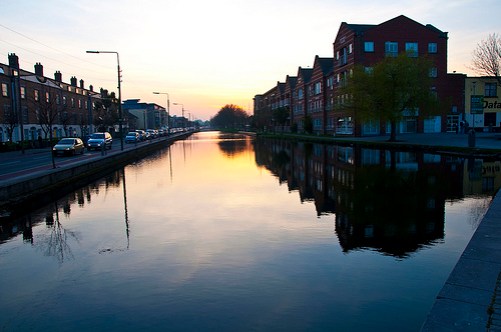
"Like icebergs it was. Icebergs floating down the canal."
4) Icebergs on the Grand Canal, 1968. Not an April Fool this one, but an October one. October 1968 to be precise. JayCarax has an interesting piece on this here, that I’d only be doing an injustice in trying to re-hash for this piece. Just think of your average “Fairy Liquid in the fountain” trick times twenty.

Posted in Dublin History, Social History on March 30, 2011| 4 Comments »

This ad is taken from the K.Coy 3rd Battallion IRA reunion dinner in Clery’s in March of 1947. It is for the barbershop of James Mallon.
James Mallon, who was born in the north, had a hairdressing business in Eden Quay prior to becoming involved in the republican movement upon joining the Irish Volunteers in 1913. He had fought at Bolands Mills during the insurrection in 1916, and was interned as a result of his role in the rebellion at Frongoch. He is popularly known as the ‘the Frongoch Barber’ from his time there.
The advertisement notes that J Mallon and sons was established in 1907, and refers to the business as “The Frongoch Hairdressing Saloon.” There is great wit in the ad, not to mention a picture of Mallon as an older man. There are some wonderful ads in the souvenier programme I hope to upload here in time.

Posted in Dublin History, Events on March 30, 2011| 2 Comments »
In his excellent and highly entertaining history of the city of Dublin published in 1861, J.T Gilbert wrote of the arrival of George Frideric Handel to Dublin:
Handel, driven by ‘the goddess of dulness to “the Hibernian shore,” arrived in Dublin on the 18th of November, 1741, six weeks after the opening of the Music Hall, and issued the following public notice of his intended performances:-
“At the new Musick Hall in Fishamble-street, on Wednesday next, being the 23rd day of Dec., (1741). Mr. Handel’s Musical Entertainments will be opened, in which will be performed L’Allegro il Penseroso, il Moderato, with two Concertos for several instruments, and a Concerto on the Organ. To begin at 7 o’Clock. Tickets for that night will be delivered to the Subscribers (by sending their Subscription Ticket), on Tuesday and Wednesday next, at the place of Performance, from 9 o’Clock in the Morning till 3 in the afternoon; and attendance will be given this Day and on Monday next, at Mr. Handel’s House in Abby-street near Liffey-street, from 9 o’Clock in the morning till 3 in the afternoon, in order to receive the subscription money, at which time each Subscriber will have a ticket delivered to him, which entitles him to three tickets each night, either for ladies or gentlemen.
“N.B., Subscriptions are likewise taken in at the same place. Books may be had at the said place, price, a British sixpence.”
It is, in my mind, one of Dublin’s great claims to fame that the first performance of Handel’s Messiah took place in our city. When first performed, with seven hundred people present, the work raised more than £400 in aid of “The Charitable Infirmary, Mercer’s Hospital and the Releasement of Prisoners’.
Jonathan Swift famously objected to the work, and almost forbid singers from Saint Patrick’s Cathedral where he was Dean from partaking. Swift was opposed to the title of the work, and insisted it be titled ‘A Sacred Oratorio’. Ultimately the choir used contained boys from Saint Patrick’s Cathedral. What a bizarre tragedy it would have been had the great Swift and Handel clashed in such a manner that would have prevented the works premiere here. It was said that when Handel went to take his leave of Dean Swift, he remarked “Oh, a German and a genius! A prodigy!”
I feel a great sorrow on Fishamble Street thinking of how a part of Dublin’s history was lost forever here to the diggers and construction of the Civic Offices. A great street, first laid down by the Vikings to connect the Liffey to High Street, it has a remarkable story to tell. Neal’s Music Hall and Handel’s time in Dublin is one chapter in its amazing story, and one we should remember.
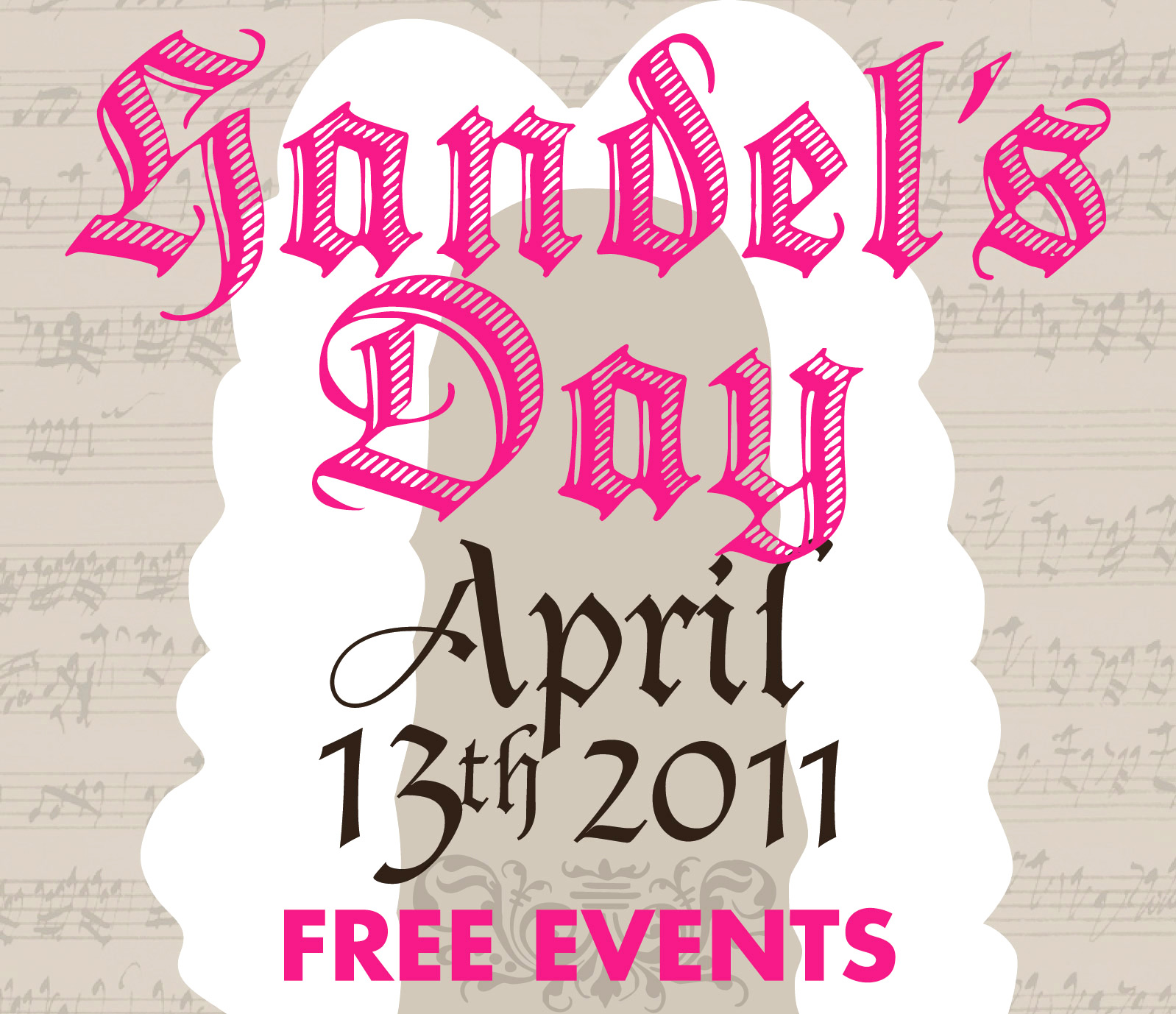
The Temple Bar Cultural Trust have once again organised a day of events to mark Handel’s Day on Wednesday April 13th. These events include a walking tour from Pat Liddy and ‘Messiah on the Street’, a performance on Fishamble Street itself conducted by Proinnsías Ó Duinn with live accompaniment from the National Sinfonia.
More information can be found here.

Posted in Dublin History, Social History on March 29, 2011| Leave a Comment »
There was a great discussion on The Frontline last night around TD’s and whether their role is a local or national one, looking at the role of ‘parish pump politics’ in Irish society.
I love the term ‘parish pump politics’. I firmly believe the roots of it are to be found in the early days of firefighting when church parishes were obligied to provide fire protection.
In 1676 an Order in Council would force every Dublin church to hold thirty-six buckets, two ladders and three hooks for the purpose of fire prevention. By 1711, the Lord Mayor of Dublin ordered that each Parish within Dublin hold two water fire engines, for the purpose of combating fires which broke out in the city.
Remarkably, at Saint Werburgh’s Church on Werburgh Street, one can see two early examples of parish water fire engines.
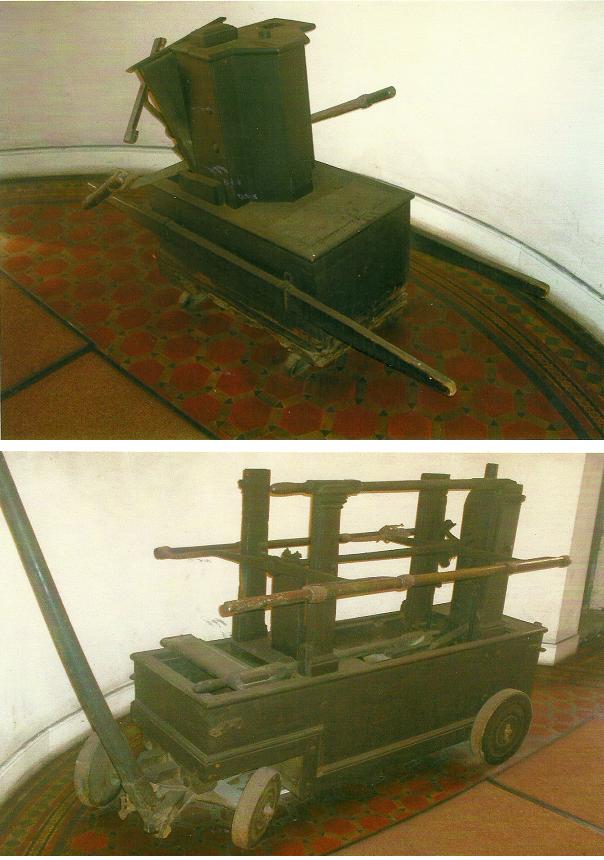
(c) Las Fallon
Historian of the Cork city fire service Pat Poland noted that heavy penalties were imposed upon churchwardens who did not hold two engines, and also that it was specified that different sums of money should be paid to the first, second and third engines to arrive at fires.
In Dublin, the figures stood at thirty shillings for the first arrival, twenty shillings for the second, and ten shillings for the third. These payment levels did not reflect the level of work put in by particular engine in combating a fire, but rather their speed in reaching one! As Poland notes “These shenanigans and conniving may originally have given rise to the expression ‘parish pump politics’

Posted in Dublin History, Events on March 29, 2011| Leave a Comment »
Fin over at Irish History Podcast will be providing a walking tour of Viking Dublin on April 10th. I’ve done a brief walk through some of the sites of the Viking town with Fin and it was a remarkable insight into aspects of the capitals history I knew very little of.
Places on the tour are limited: If you are interested you’re asked to email history@irishhistorypodcast.ie. It will be a two hour tour, kicking off at 2pm in the city centre and it is free, though donations are welcomed.
On Sunday, April 10th I am organising a walking tour of Viking Dublin where you can retrace the steps of Dublin’s earliest inhabitants in the modern city today. This tour will journey through early medieval Dublin looking at the first few centuries of the city’s history during its days as a Viking stronghold.
The tour will bring you through the remains of the Viking Town that lie within modern Dublin’s buildings, streets, lanes and alleys.
We will see what the Dublin area was like when the Vikings arrived, why they came, where they first established their base and how the city grew from a fortified camp to a medieval town with a thriving slave market.
The tour will take you through the heart of the old city, looking at where the inhabitants lived and what life in early Dublin was like. This tour will finish in 1171 when Ascall Mac Torcaill, the last king of Dublin, was ousted by the Normans.
This tour is free (although donations are greatly appreciated!) and will start at 2 o clock on Sunday, April 10th in the city centre. It will take about 2 hours.
Places are limited so booking is essential. If you are interested in coming please contact me at history @ irishhistorypodcast.ie

 | Mindy on Plaques of Dublin: The Eagle… |
 | Aidan Convery on From McDaid’s to Grogan… |
 | Cormac Figgis on A divided Rathmines |
 | cian reardon on Dublin’s connection to t… |
 | Steven O'Shaughnessy on The Assassination of Kevin O… |

 Click on the book for more.
 Click on the book for more.
 Donal
Donal Ciarán
 Sam
Sam Come Here To Me!