Feeds:
Posts
Comments

Archive for the ‘Social History’ Category

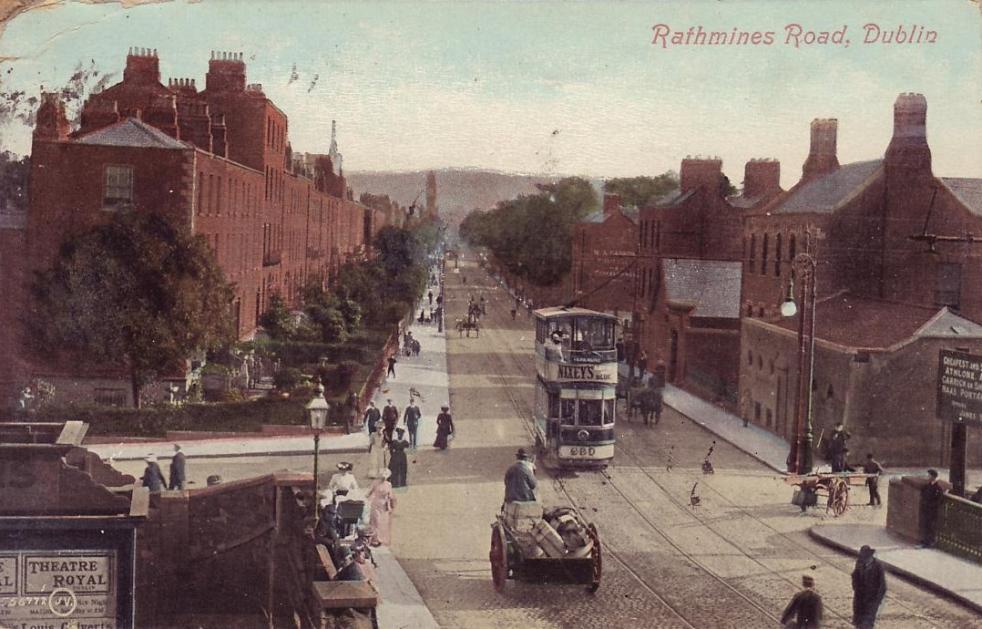
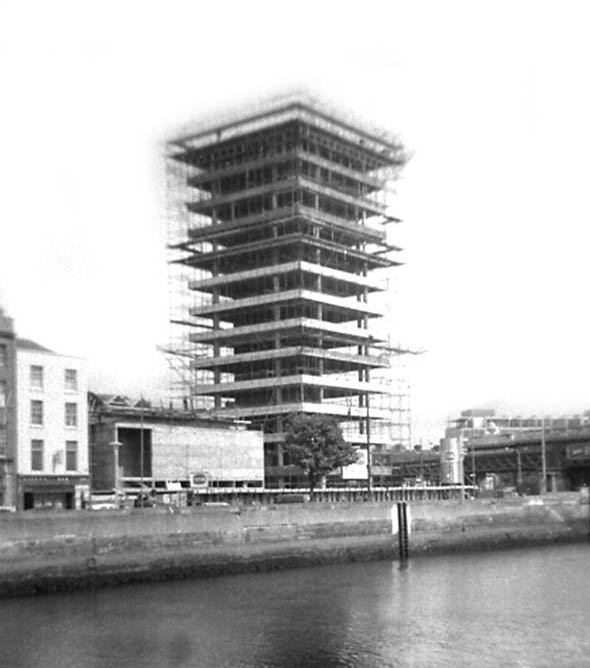
Three old images of Dublin that I’ve come across lately online.

Though the pub has now been replaced by a Chinese restaurant, you can still see the lion above the door. c. 1940s/50s?


A view towards Rathmines from Portobello. Early 19th century?


A rare photograph from the construction of Liberty Hall. c.1962

Read Full Post »

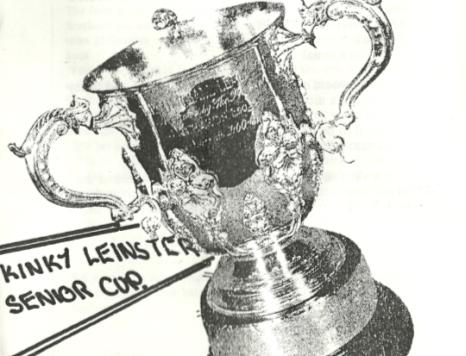
God, this fanzine is confusing. Confusing, yet laugh out loud funny on several ocasions.

Should appeal to the Bohs faithful. Loaned to us by Kevin Brannigan and the property of Neil Mulvey, these are sitting in a brown envelope for a while now waiting to go back across the liffey. Must meet that Brannigan for a pint and get them back to their rightful owner.

Previous fanzines posted on Come Here To Me:

Only Fools and Horses (Bohemian F.C)
Hoops Upside Your Head (Shamrock Rovers)
Osam Is Doubtful (Saint Patrick’s Athletic)
A Rough Guide To Dalymount Park 1993

As ever, fullscreen it

(more…)

Read Full Post »

Haven’t seen this one for a while, but it appeared on someones Facebook the other day. Such a strange mix of mates, comrades and Ryan Bloody Tubridy, but it always rises a giggle. Being the only non- Dub on the blog, I probably shouldn’t be spreading a video taking the piss out of  my bretheren beyond the pale but, ah well, self- depreciating humour is sometimes the best.

Read Full Post »

Our friend Orla over at Jacolette found this fantastic photo in a skip on Oxmantown Road. She’s trying to figure out whether it was taken in Dublin and if so, where. Click on the photo below to view the full post.

Read Full Post »

Go, fetch to me a pint o’ wine,
And fill it in a silver tassie,
That I may drink before I go.
A service to my bonie lassie

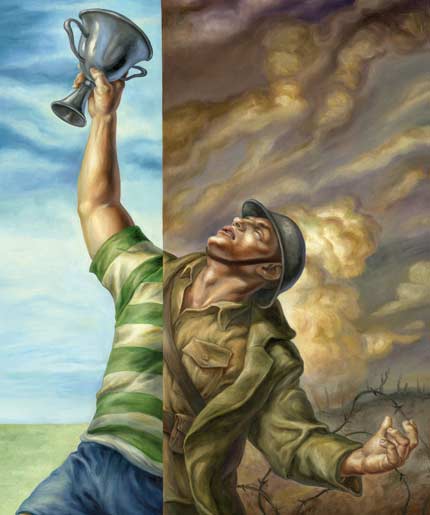
From that song came the footballer, Harry Heegan, who won the cup and went to war, and the entire narrative of The Silver Tassie….Sean had spoken with great excitement and urgency of his treatment of the second act in the war zone on The Western Front.
Eileen O’ Casey from ‘Sean’

The 1920s in Britain produced plenty of literature, plays and drama inspired by the ‘Great War’. The majority of this of course was almost nostalgic, reflecting the soldiers of the empire as a unified organisation of heroes. It was also for the most part the product of men who had been nowhere near the war, and C. Desmond Greaves remarked in his excellent study of the politics of Sean O’ Casey that in such works “..officers and gentlemen emitted the cosy sentiments of the cricket field”.

The cosy repackaging of the war was a long way removed from the view held by many in the labour movement of course. James Connolly had written in the midst of the war that “the carnival of murder on the continent will be remembered as a nightmare in the future”, a view no doubt shared by O’ Casey. In The Silver Tassie, O’ Casey’s excellent anti-war play, we see a rejection of the more comfortable version of events. Like Connolly before him, O’ Casey saw the war as nothing but the slaughter of working class men.

The Abbey rejection of The Silver Tassie is well documented. It was perhaps unsurprising, owing to the response to The Plough and the Stars in 1926, and the new direction of O’ Casey’s work. Yeats famously wrote to O’ Casey that “…you are not interested in the Great War; you never stood on its battlefields, never walked in its hospitals, and so write out of your opinions.” Yet O’ Casey had seen the horror of the war firsthand. While at St. Vincent’s Hospital he had been in the presence of men completely destroyed by the war. His own brothers had been in the British army, and like any working class Dubliner O’ Casey had seen men walking around the city as shadows of their former selves. The hurt caused to O’ Casey by the rejection of the play was perhaps clearest when he refused to meet Lady Gregory in London, despite her writing of her desires to see the play there.

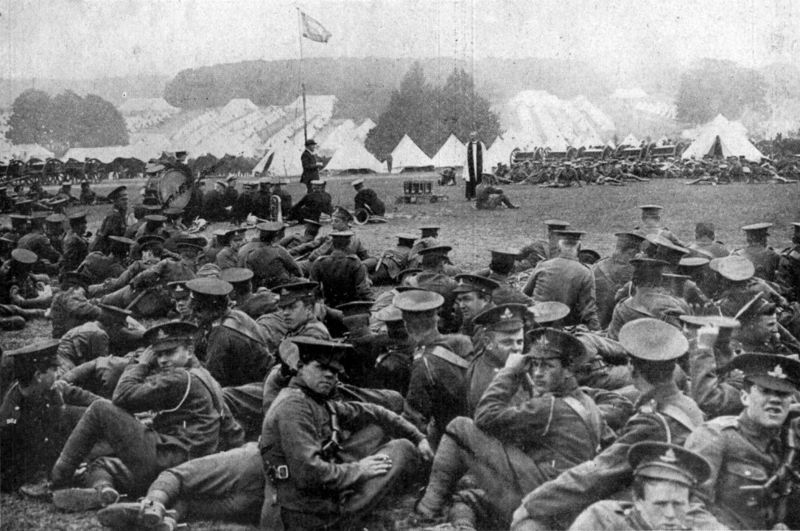
Men of the 10th (Irish) Division.

(more…)

Read Full Post »

I’m hoping that Dave Fanning’s memoir “The thing is…” which was published last week will be of interest to those like myself with a preoccupation with 1970s & 1980s Dublin youth/music culture.

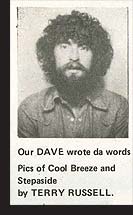
Till I report back, here’s a hilarious photo of Dave from 1977 (included with a review of the band stepaside) recently published on the website of Kiely’s, a pub in Mount Merrion.

Kiely’s, which used to be called The Sportman’s Inn and before that The Stella, boasts a illustrious musical history going as far as to describe itself as “Ireland’s Oldest Live Pub Rock Music Venue”.

In the 1960s, The Stella was a popular spot with the Showbands. Between 1976 and 1983, The Sportman’s Inn played host to a who’s who of Irish New Wave acts (U2, The Radiators From Space, The Atrix (?), D.C. Nien, The Moondogs,  Auto Da Fe, The Resistors, Fit Kilkenny and the Remoulds and Rocky DeValera and The Grave Diggers) and an array of national and international talent including Desmond Dekker (!!), Dexy’s Midnight Runners, Christy Moore, Van Morrison, Rory Gallagher and Clannad.

It’s great to see that Kiely’s is continuing the tradition having recently launched a new weekly night called Kielys Student Sessions offering €3.50 pints and the chance to see local up and coming bands.

Read Full Post »

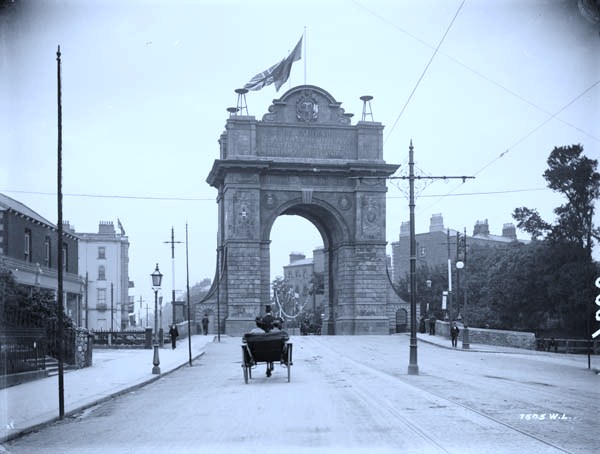
A bit of a mystery post this. On going through the National Libraries excellent online collection of photographs (which can be found here) I found the glass plate below. And while there were a set of mock gates erected on Leeson Street Bridge for the visit of Queen Victoria in 1900, they don’t fit the description that follows and besides, the scene looks much older than 1900.

Dublin City Gates?

The large mock medieval castle gate and tower erected at the bridge echoed the more ancient gate to the walled city of Dublin. The 70 foot high tower made of wood, covered in canvas and painted to imitate the 16th century stonework of medieval Baggotrath Castle. A number of beefeaters in their tradition costumes flanked the gate and a stand was erected nearby to seat various dignitaries…

 An image of the above gates can be seen below, as found here.

Leeson Gates, as from Chapters of Dublin

 As you can see the two gates look very different- but the top one definitely looks like Leeson Street Bridge if you were heading towards town from the UCD direction. The visit of Queen Victoria to Dublin was a momentous one. An estimated 200, 000 lined the streets of Dublin and the occasion was marked by declaration of a public holiday. The Queen was presented with the keys of the city from the Lord Mayor and was given a rapturous welcome from the students of Trinity College as she passed by on her way to the Phoenix Park.

If anyone could shed any light on the first gate, an e-mail to ci_murray@hotmail.com would be much obliged. Alternatively, you can comment on here.

Read Full Post »

On December 22 1967, a group of schoolboys on their holidays began transmitting music and stories across the airwaves. The Irish Times noted that the transmissions had come from “somewhere south of the Liffey” and that the young boys had made two one hour broadcasts, at 8am and 12.30pm.


“…pop music programmes were interspersed with greetings from the announcer to school-friends. The transmissions also featured excerpts from the satirical magazine, Private Eye”

At 1.30, a young boy in fits of laughter told listeners that if they wanted to hear the news they had come to the wrong place and needed to turn to Radio Eireann.

The Department of Posts and Telegraphs didn’t see the funny side in this schoolboy prank. A spokesman warned the youngsters that they would track the schoolboys down. As far as I can see, the promised second day of broadcasting never came from Radio Jacqueline, and the boys probably went back to school in January with an excellent story to tell about how they made the national media through their DJ exploits.

A much more infamous station preceded Jacqueline, and that was Radio Juliet from Cork. A newspaper report into it in 1964 described it as the nations first “non-political pirate radio station”,and it was also the work of a small group of schoolchildren. They numbered a dozen or so. A spokesman for the group (in which the average age was 16) remarked that after a few days in operation over the summer holidays of ’64, it was becoming “too hot to handle” and it was time to wrap up operations. The boys had made a six shilling investment in the station, the cost of a transmitter which one of them built.

Amazingly, on the Cork station, the Irish language featured too.

“One third of the announcements were made in Irish, he said, and this was an ideal way of promoting the language”.

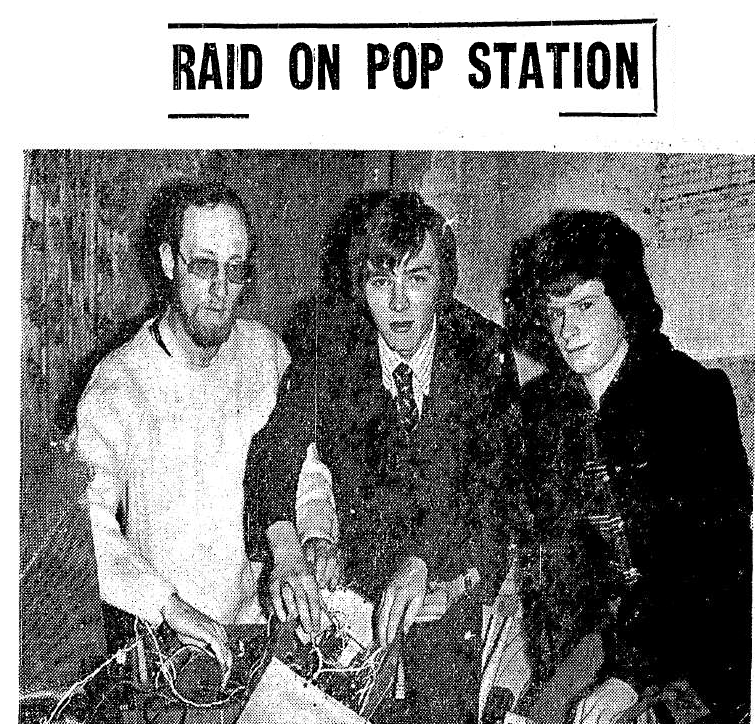
The late 1970s and early 1980s of course saw an explosion in pirate radio stations, not least in working class pockets of Dublin. In the summer of 1981 several Fianna Fail TDs and Ministers landed themselves in hot water for using pirate stations to advertise political message. Liam Lawlor used a Ballyfermot Pirate Station to thank the hugely popular Peace Corp youth group there for their efforts and a “great day” he’d enjoyed in their company.

What about Fine Gael?
“We’re using them in relation to our youth policy and Dublin plan” said Mr. Bill O’ Herlihy, the RTE sports commentator who is working in Fine Gael HQ.

Radio Dublin makes the news, '78.

Efforts to shut pirate stations across the capital frequently led to the courtroom. In 1978 “Captain” Eamonn Cooke of Radio Dublin was hit with a £35 fine for running a pirate station out of Sarsfield Terrace in Inchicore, the famous Radio Dublin. An Irish Independent report into the court case felt it important to note that “During the entire two hour case Mr. Cooke was accompanied by Radio Dublin disc jokey, blonde Sylvia McKenna, dressed in tight grey jeans and a sweater”. Good journalism that.

(more…)

Read Full Post »
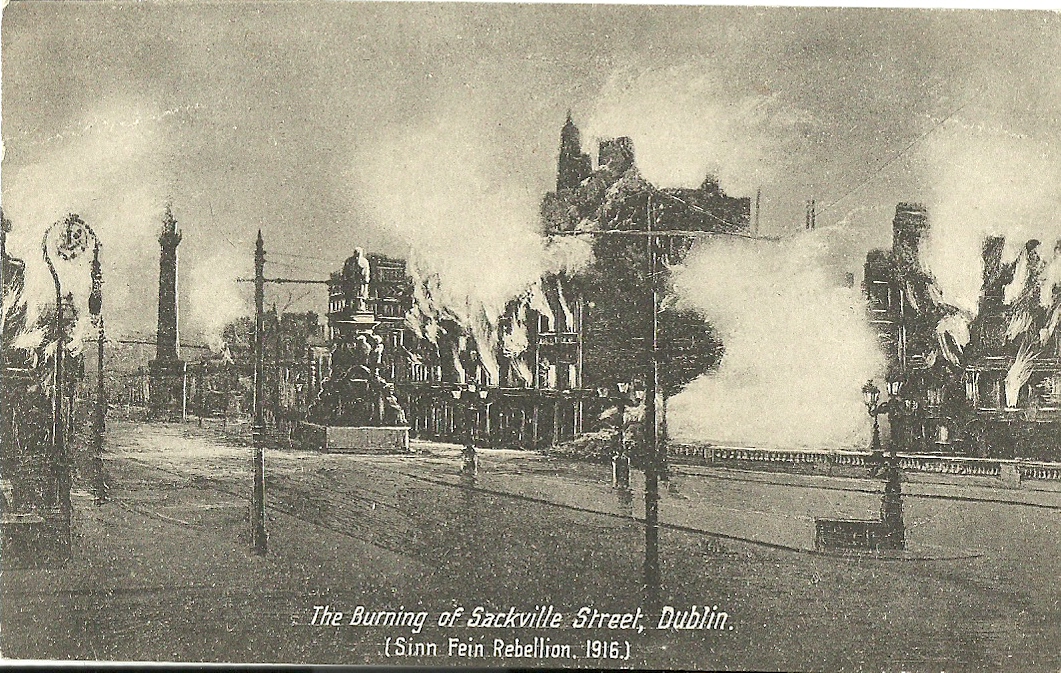
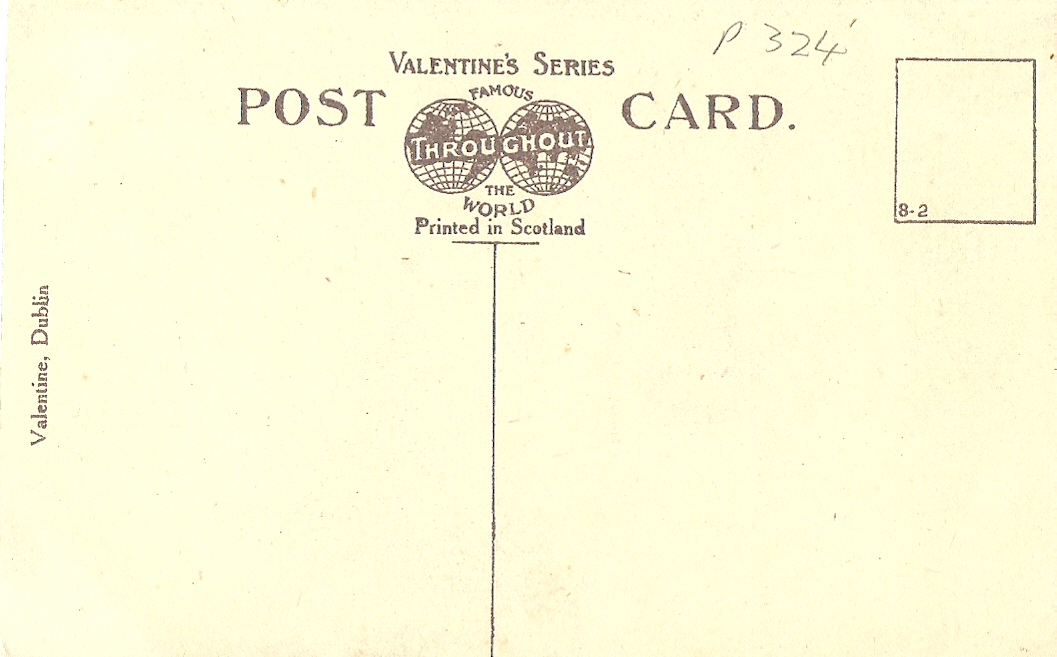
This is a nice little land, and what I like most about it is that it’s one of the ‘Sinn Féin Rebellion’ postcards I’d not seen before. Printed in Scotland, it’s from the famous Valentine Company.

Read Full Post »

With RTÉ currently running a weekly programme geared towards finding Ireland’s greatest ever citizen, its nice to see SIPTU getting in on the act in calling for James Connolly to be voted number one. And who wouldn’t, considering the remaining top five contains none less than, as Donal recently called them, the “Freestate Prick” Michael Collins and the “Northside Dick” Bono. Lucky enough we are I suppose that Stephen Gately and Adi Roche missed the cut (no offense to either of course…)

Do what the ominous big building tells you to

I can say with a good deal of confidence that the other two lads on here would be with me in calling readers to vote Connolly, and never mind the biters who try and say “sure he’s not Irish…” Take half an hour out of your time and watch TG4’s newest “Seachtar na Casca” programme on the man, then try and listen to someone tell you that James Connolly is not Irish…

Read Full Post »

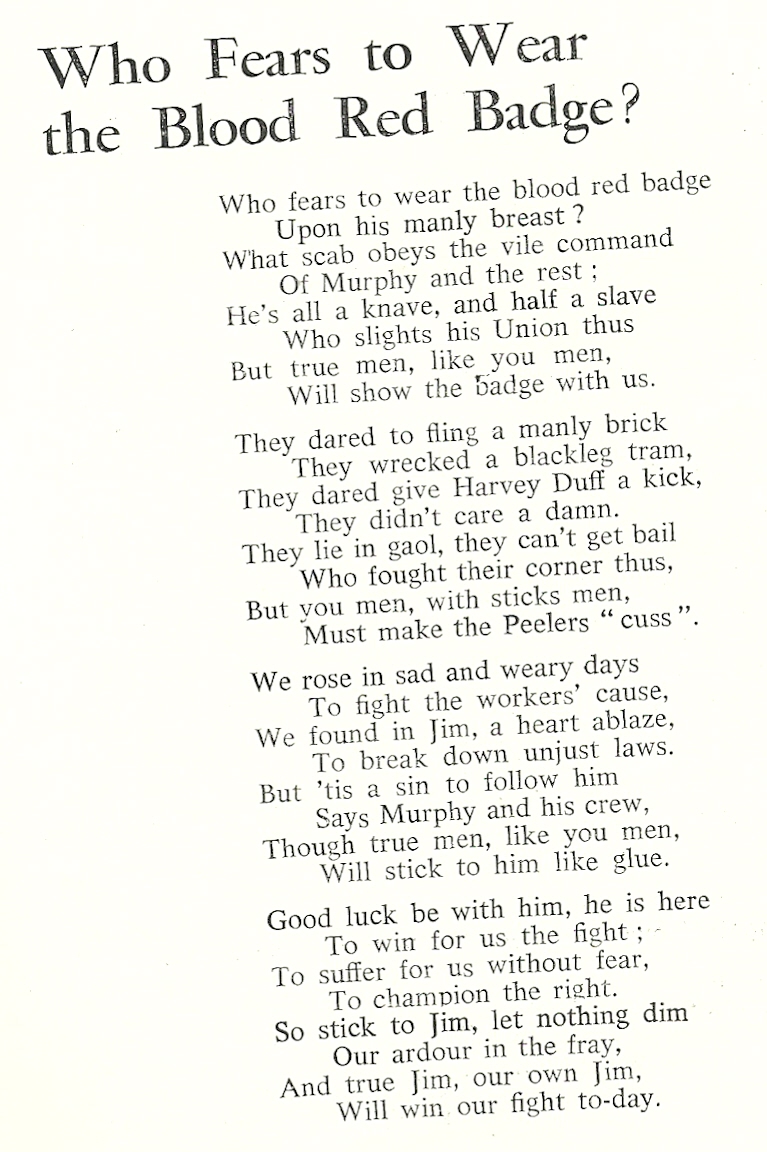
I’ve never heard this song sung, though it is sung to the same air as ‘Who Fears To Speak Of 98’ and ‘Who Fears To Speak Of Easter Week’. I picked it up from the excellent 1913:Jim Larkin and the Dublin Lockout book (1964), the hard work of the Workers Union of Ireland.

“It is appropriate that the Workers Union of Ireland should sponsor such a book as Jim Larkin was its founder and first general secretary as he had been the founder of and the first general secretary of the Irish Transport and General Workers Union”

If you’re wondering about the air, here is a version sung by Brendan Behan in relation to the 1916 rising that has been uploaded onto YouTube.

Read Full Post »

“The National Graves Association and the Save 16 Moore Street Committee cordially invite you to an information meeting on Thursday 14th October 8pm at Wynns Hotel, Middle Abbey Street, Dublin. It is essential that as many people as possible attend this event. TDs, special guests and relatives of the 1916 leaders will be present.”

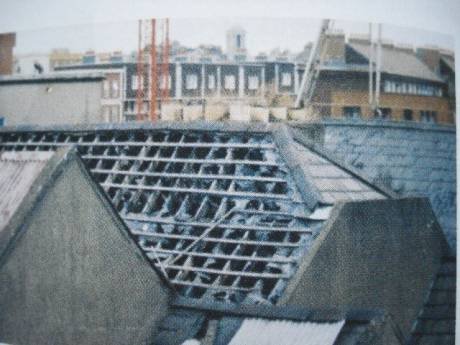
August 2005: The roof of 16 Moore Street.

Anyone who attended the recent free Heritage Week walking tours around the Moore Street area detailing the fighting there during the 1916 Rising would have come to the conclusion that it is not alone ‘the building’ of 16 Moore Street that is historically important, but the area itself. The buildings the Volunteer and Citizen Army men and women broke their way through, the laneway where they came under intense fire from the Rotunda hospital and the alleyways where some died are as historically important as the building with the plaque.

Growing up in Dublin, I was always fascinated by Moore Street. Even without the historical connection to 1916, the street is worth saving purely for its character today. It is a melting pot of the old and the new, and among the last markets of its kind. I love passing through it.

Under threat from a major planned development, the campaign to save the Moore Street sites continues. Did we learn nothing at Wood Quay? Nothing so clearly shows how a tokenistic historical feature can be dwarfed by an unsuited development. Come along.

“The plan of the property developers, Chartered Land, encompasses around 5.5 acres bordered by Upper O’Connell Street (including the Carlton building, a cinema in previous years), Henry Street and Parnell Street, right back to Moore Street. The objections centre around Moore Street itself and the perceived effect of the development on no.s 14-17, officially designated a National Monument, but also on the effect on Moore Lane. While the objectors agree with the need for development they hope to see one which will preserve the character of the terrace. Some objectors have also stressed their wish to keep the street market character of Moore Street in any development.”
-From a 2009 Indymedia report, located here.

Read Full Post »
« Newer Posts - Older Posts »