Feeds:
Posts
Comments

Archive for the ‘Social History’ Category

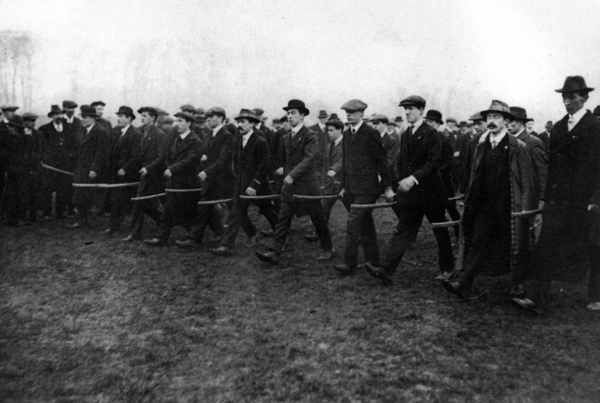
Citizen Army men and women gathered at Liberty Hall on Easter Sunday for the final mobilisation before the Rising. Here Connolly gave each a last opportunity of drawing back. No one availed themselves of this chance. ‘I never doubted ye!’ Connolly told them, his face shining

R.M Fox- From ‘Dublins Fighting Story’

This may well be of interest to many of our readers.

I inherited the 1916 bug from my father, without a doubt. Even today, only hours before writing this, I was standing on Northumberland Road like a Japanese tourist only moments in Times Square. I’m still amazed that for such a short historical event, there seems to be an endless amount of research and new finds related to Easter Week 1916.

The week is one of personalities. Like Winifred Carney, the suffragette and secretary to James Connolly, who would find her place in Irish history as the ‘Typist with a Webley’. Returning to Northumberland Road, perhaps no man on the republican side was to leave such a deadly mark on the week as Michael Malone, hiding out with a small group of men (and a moveable store dummy too!) in 25 Northumberland Road. Ultimately he and one other man, James Grace, would hold the spot. Who could forget to mention Sean Connolly of the Irish Citizen Army? An Abbey actor of great reknown, who had taken the lead role only a week previously in ‘Under Which Flag?’,a play penned by none other than James Connolly. Siblings of Sean, both male and female, would join him in the insurrection.

Michael Malone, killed in action at 25 Northumberland Road

The week is also one of great tragedy. There is the heartbreaking story of one of the Sherwood Foresters being taken aback to see his own family in Dublin, having fled Britain for fear of Zeppelin raids. He would never make it past 25 Northumberland Road.

Members of the Irish Citizen Army drill.

One must really see the sites to appreciate them. Even today, I learned this to be most true. When you look from Clanwilliam House down the street towards number 25, you get a clear sense of the Volunteers line of fire. Likewise, I can remember as a young lad being taken to see the Royal College of Surgeons and being amazed by the bulletholes still littering the front of the building.

This tour is one I’ve been told often enough to get myself along to. Carried out by the authors of one of my favourite studies of the week, for €12 you’re promised about two hours worth of a wander around some of the keysites of the 1916 Rising.

Of coure, one can not take everything in in two hours, for instance some of the Sackville Street lancers who fell under fire are buried at Grangegorman cemetry. The Rising has left us with historical sites all over Dublin worthy of visiting.

As a city centre tour however, the reputation of this one is one that, to me, renders Saturday morning worthy of an alarm clock.

….if you know me at all, that’s a huge achievement.

Saturday 20th February 2010
Meeting at 10 am at the International Bar, 23 Wicklow Street.
€12

Facebook page for the 1916 Walking Tours

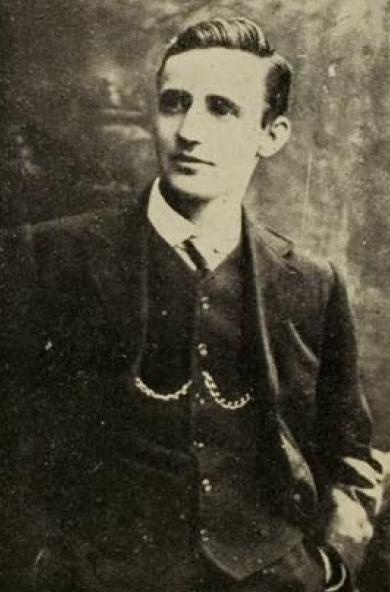
Eamon Ceannt, Commandant of the 4th Battalion of the Irish Volunteers at the South Dublin Union, 1916

Read Full Post »

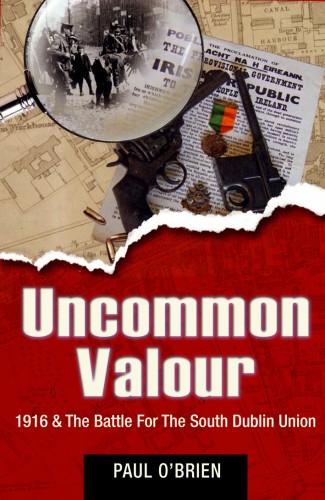
The Cover Of Paul O' Brien's latest work, Uncommon Valour

I’m currently looking forward to the launch of the latest 1916 work from Paul O’ Brien this Thursday at Kilmainham Jail, not least having flicked through the book today in the NUI Maynooth bookshop.

For a one week insurrection, I am constantly amazed at the amount of material published on the 1916 Rising. Hitting fever-pitch in 2006, things have continued at a steady pace since. Much more than ‘broad sweep’ accounts however, it is the particular and specific studies that are of interest to me.

Blood On The Streets became one of my favourite 1916 studies. The battle of Mount Street Bridge was, to say the least, bloody brutal. Wednesday the 26th of April was one of the most eventful days of the insurrection, with the shelling of Liberty Hall (completely empty bar one cleaner)commencing that morning. The rebels were holding up reasonably well across the city, despite a severe disadvantage with regards numbers. Sean Heuston’s efforts at the Mendicity Institute on Ushers Quay being a perfect example of a small band of rebels keeping large government forces at bay. That day however will be remembered as the day when four battalions of the Sherwood Foresters (Many of whom believed themselves to be on French soil at first) would encounter hell by Mount Street Bridge, not least from the (initial) 4 volunteers at home in 25 Northumberland Road. A far superior number of Sherwood Foresters, attempting to advance towards Trinity College, were ultimately stalled for days by a tiny band of rebels.

General Sir John Maxwell himself noted that:

“Four officers were killed and fourteen wounded and of the other ranks, 216 were killed and wounded”

Paul O’ Brien’s account of the battle is a comprehensive and long overdue one, where the reader feels they themselves are there in Clanwilliam House, or 25 Northumberland Road. Such is the effect of somebody focusing on such a key event in itself, rather than giving it a passing role in a broader study.

Eamonn Ceannt, from the National Library of Ireland online.

Hopefully, this account of the South Dublin Union garrison will be more of the same. One of the most interesting sites from during the week, not just in terms of the action that occured there- but the characters involved. Commandant Eamonn Ceannt was in charge of the 4th Batallion on the day, with Cathal Brugha and W.T Cosgrave next in line. It’s miraculous Cathal Brugha emerged from the battle here at all in truth, and it was here that Nurse Margaretta Keogh was to become the first female casualty of the week

The priceless 1916 Rebellion Handbook observed that

“The rebels took up suitable sniping positions at Dolphin’s Barn, Marrowbone lane, Watling street, Kingsbridge, Kilmainham, Rialto and Inchicore, while a party which seized Messrs Roe’s malting stores near Mount Brown also gave trouble”

The account of the assembly of the 4th Batallion, as noted in Dublins Fighting Story, provides fascinating insight into the chaos and disorganised nature of the rebellion at first. The Batallion had a roll call of about 1,000 Volunteers before the Rising. Where were they on the day?

There is an amazing tale of when Cathal Brugha -boasting twenty five wounds (Of which five were after cutting through arteries) and feared dead by many of his comrades- burst into song. Ceannt rushed to see the sight of Brugha slouched against a wall with his pistol to his shoulder still.

“The two heroes laid aside their weapons. The commandant came on bended knee the moment he saw the dreadful condition of his comrade- lying in a pool of his own blood four square feet in extent- embraced him, pressed him to his heart in a very passion of affection and tenderness. They exchanged greetings, very briefly, and the fond eyes of the commandant were flooded with tears”

In the end, the British would focus their attention on the General Post Office and the Four Courts, and the South Dublin Union garrison would ultimately not hear of the surrender until Sunday. Two miles west of the headquarters of the Provisional Government, Ceannt and his men – severely outnumbered by government forces from the nearby Richmond Barracks- would hold out for the length of the insurrection.

An individual study of such a key flashpoint of the 1916 Rising is most welcome. I look forward to obtaining my copy! If you’re there on Thursday say hello.

Read Full Post »

Now; it was in my head beforehand that this months pub crawl was going to be a rare treat; We were all to be taking our pints in five pubs we hadn’t set foot in before, a rare occurrence when you consider we once tried naming every pub we’ve drank in Dublin before, and ended up giving ourselves migraines. And I wasn’t to be disappointed. This Sunday, our territory had been marked out in advance by fellow pub-crawler JFlood; we were out of the town centre, away from our comfort zone and up into his neck of the woods- this week, CHTM would hit Rathmines.

Rathmines, last week.

Now it’s odd, I’ve been in Dublin for nine years now, and have been drinking for the majority of those, but I’ve never crossed either of the canals for a pint; unless you count the student bar in UCD that is, or of course Croke Park, the odd time my home county made it there. So there’s a wealth of pubs that I’ve yet to experience, many roads to walk and chippers to drunkenly stumble into afterwards… So, still feeling the after-effects of a bit of a mad one on Saturday night, but looking forward to more-of-the-same, I met with the usual heads at Portobello plaza, and we were joined by another connoisseur in Soundtracksforthem veteran DMcHugh. Crossing the bridge into flatland, we were given a heads up on a bit of local history from jaycarax, who told a tale of the first bridge to cross the canal at Portobello, and a horse drawn carriage that plunged into the lock from it, taking the lives of its six inhabitants. This led to a tradition which was followed for many years of superstitious people disembarking from their transport at the Rathmines side of the bridge and walking across, only to take it up again on the far side.

Toast, by Turgidson, from Flickr

So, enlightened by that gem, we made our way to our first port-of-call, Toast, on Lower Rathmines Road. According to John, this is the bar that the yuppies and monied classes of Rathmines drink in; A self-styled Café Bar, it’s the sort of place you’d have your “hummus pannini and skinny latté” types alongside seasoned Guinness drinkers. Deceiving from the outside, the bar stretches well back more than its exterior would suggest, and seating is a mix of high stools around tables and comfy looking sofas around low tables. Unfortunately the latter were all occupied so we had to make do with the former. Nice looking on the inside too, this place, recently redecorated by the looks of it. At €4.35,  it wasn’t a bad pint, but not a great one either; Something I noticed on this pub crawl was that, while we didn’t get any terrible pubs for pints, we got two lovely ones, two mediocre ones, and one that just didn’t go down right. And this was one of the mediocre ones to be honest. But still, we were happy enough here, we had plenty of space, and the bar-staff even brought us down our pints. This is one of those pubs in which Diageo is running its “Pour your own pint” initiative; We stayed well clear, though there’s a couple of barmen/ex-barmen in the group, we said we’d leave it to the staff… It is their job after all! I liked this place to be honest; It’s the kind of place you might stop by for a pint and the spuds on a Sunday and a read of the paper.

Slatterys, by Mark Waldron, from Flickr

Having settled in comfortably and taken in as much of the atmosphere as we could in a short time, we upped and headed out. As I said, JFlood picked out the route this week and he didn’t disappoint; Next stop was to be MB Slattery’s, JFlood giving us a nice spiel on the history of Rathmines Town Hall on the way. As soon as we walked into this pub, I knew straight away we were onto a winner. For those of you who have never been before, Slattery’s is one in a line of pubs we are losing in Dublin bit by bit- Think of Mulligan’s crossed with Grogan’s, minus the journos and failed writers and you’ve got something close. Unfortunately the little snug inside the door was occupied so we had to make do with a few stools down the back. No matter, lots of ledges and tables to rest the pints on and plenty of space to make ourselves comfortable in. At €4.30, this was one of the lovely pints- You could tell the difference between a good pint and a mediocre one- that after a round of “Sláintes” and a mouthful taken apiece, a certain satisfaction creeps into us all; just lovely. It’s this kind of boozer we’re running out of in this city, as they get shunted out and replaced by pretentious café bars, and the culture and social history that go along with them find it harder and harder to keep on. Obviously the gaffer is sport mad, the walls are bedecked with Irish flags, while a Munster flag and a couple of sporting wall-planners hang on the wall down the back, it pleased me to see that as soon as the football was over, the telly was turned off. No having to spend your quality pub time spoiled by the annoying drawls of Dunphy, Giles and co. I come to pubs for pints and conversation, not to hear those twats! Nice spot from DFallon, copping that while there was no mirrors in the jacks, there was a St. Pauli sticker on the condom machine- We all had a smile at that one.

Graces, not the night we were there though! By Professor Michael Johson, from Flickr

It was with a heavy heart we left this place, for a number of reasons, and we made our way around the corner to Graces/ The Loft.  Now, while airs and graces weren’t required in Slattery’s, they certainly weren’t required here. This is definitely a locals bar, as the shouts and laughter indicated as we entered- no, they weren’t in our direction, just between regulars whose main topic of conversation was to rip the piss out of each other. I don’t blame the barman for eyeing us somewhat suspiciously but he, along with the regulars soon lightened up and we had a chat about the rugby while waiting for the pints to settle. The cheapest pint of the night here, at €4.10, but I’m sad to say it was one of the mediocre ones; maybe it’s just that the drink in Slattery’s was so good, but the pints here just didn’t go down as well. That said, it’s a nice little boozer, maybe not one you’d take a lady friend to on a first date, I’d pick Toast for that accolade, but alright as a “waiting for me mate so I might as well get a quick one into me” sort of place, it reminded me of the Metro on Parnell Street to be honest, plain and not a whole lot going on, but not the worst place around either. Plenty of space in the place divided into restaurant style booths, but with comfy seats; Not one I’d rush to go back to but I wouldn’t mind ending up there either. Looking for pictures for this piece I see they do music, I’d like to try it on a night like that and I might be more enamoured!

Mother Reillys, by Infomatique, from Flickr

Next up on the list was Mother Reilly’s and lord, was I happy we found this place. As inviting as Slattery’s was, Mother Reilly’s is my kind of place and one I’ll definitely be back to. The place oozes character, with flagstone floors, oak beams, candles and cubby holes; It has the feel of a lovely pub, with two (gas powered) open fires that the friendly bar-staff had no problems with us pulling our stools up around. An absolutely cracking pint to beat all that too, great value at €4.15 (or €3.50 with a student card.) I think we all agreed this was the top pub of the night, for look, character and musically too (piped music at a low volume, but good piped music, and that makes all the difference!) DFallon had a Christie Moore songbook with him for some reason, and it was very tempting to bang out a few of the tunes within; You get the feeling they couldn’t care less in this place if you did- I’m sure the regular that happened on our conversation about Moving Hearts might have even joined in. A large beer garden/ smoking area out the back looked as though it might have served us well, had it been closer to the month of June or July, but the February cold drove us closer to the fire, and all the better for it. We took in a couple more pints, such was the welcome in this place, and a props to jaycarax and H for sticking with the black stuff; Usually by the forth pub they’ve switched to the lager- shocking stuff I know, but I think we’ve finally got them hooked. About time and all. I think this joins a list of maybe three or four pubs out of the 25 we’ve visited so far that I’d have no problem recommending to anyone. I’ll be back for a Random Drop Inn anyways.

Rody Bolands, by Professor Michael Johnson, from Flickr

With the night getting on, we decided a pit-stop for soakage was in order so we took a detour up to Burdocks. Fast becoming a staple with us here, their 2-for-1 deal on Haddock and chips (€4.60 a piece between two, sure you’d spend that on a pint.) It went down a treat anyways, and we didn’t stay long as we were due to hit one more pub before the long trek home. I was skeptical enough about the last pub on our list, as the locals in Graces laughed while telling us most of our number wouldn’t get in what with their Dublin accents… We soon realized what the joke was about when we headed into Rody Bolands and saw that every wall was bedecked in Tipperary garb, pictures, old hurls and the kind of tat you’d see in any Irish pub anywhere in the world. We just couldn’t take to this place at all- Why have a beautiful, old bar like this banging out the worst kind of 80’s pop at such a high volume? Where Mother Reillys was a joy to behold, this place was the opposite, the pint of plain tasted a bit sour here, and the music was a complete turn-off. We were unfortunate in that trad sessions run here on a Sunday nights from six, but JFlood wasn’t informed when he was talking to the barman earlier in the week that they ended at eight. Again, what’s the point in that- Surely people are only getting warmed up at that stage? Maybe if we were all a few years younger, and on the pull for someone from Cork, Clare or Tipperary we’d have enojoyed it but… It just wasn’t for us; another night, maybe it would have been fine but. The pint, as I said, wasn’t the may west, and as far as I recall, came to €4.30. Service was prompt, and there were plenty of floor staff around, collecting glasses and cleaning tables. That, I liked, as well as the old shop counter up at the back, which I thought was a nice touch.

So that was that, with a long walk back into town, we all went our separate ways, happy out after a good evening on the tear. Two great finds in Slattery’s and Mother Reilly’s, two grand pubs in Graces and Toast, and an alright one in Rody Bolands. It has to be said, great work from JFlood, it’s only a pity he wasn’t able to do the write-up too. Next months pubs are on me, and we’re back into town for this one!

February’s five pubs were:
1. Toast, Lower Rathmines Road.
2. MB Slattery’s, Lower Rathmines Road.
3. Graces, Rathgar Road.
4. Mother Reillys, Upper Rathmines Road .
5. Rody Bolands, Upper Rathmines Road.

Read Full Post »
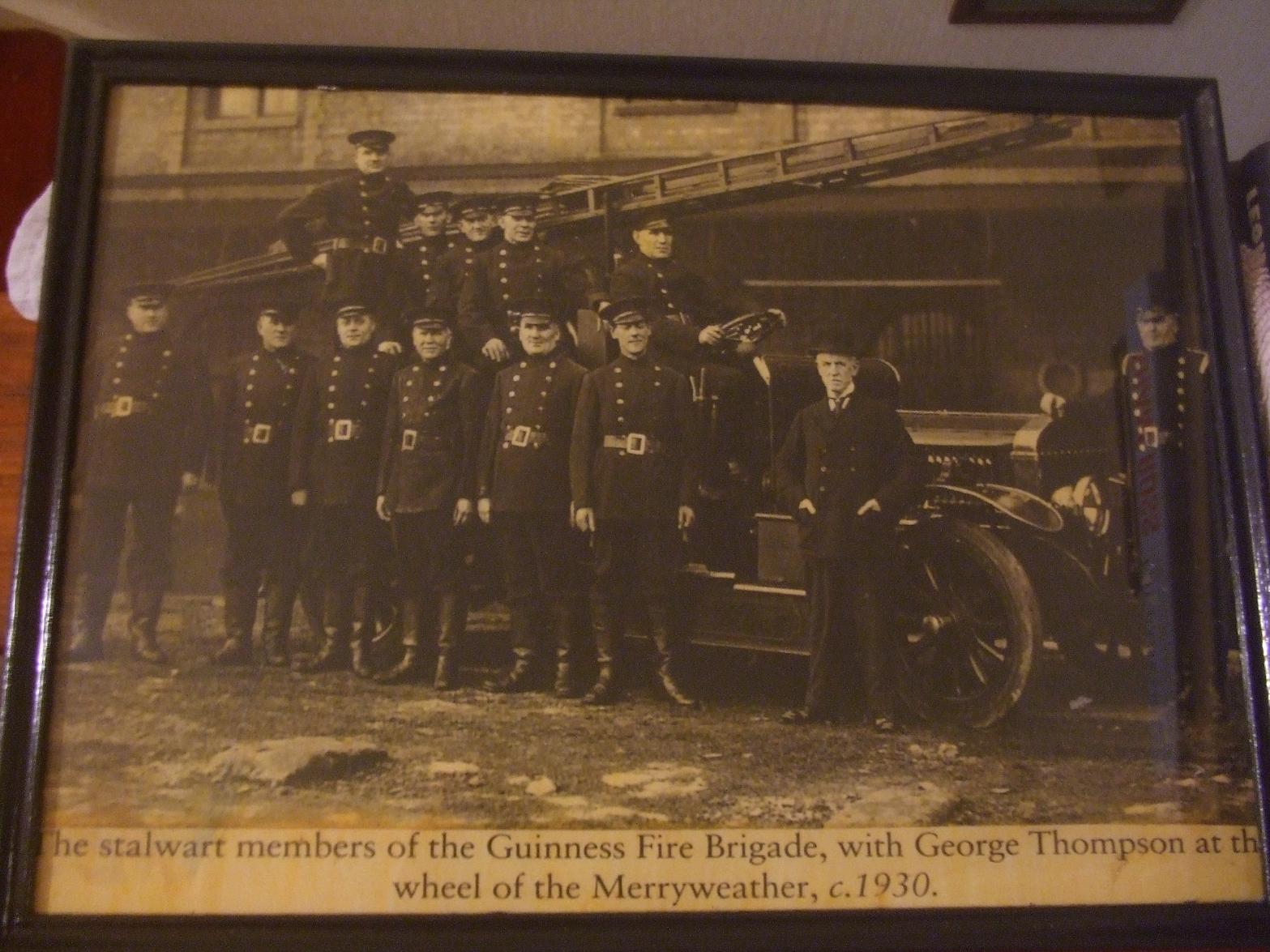
A recent post on the Guinness Fire Brigade was, as far as I am aware, the only study on the Brigade online. Bar a passing reference on the Irish Times 1916 special website, there seems to be a complete shortage of information when it comes to the ‘Arthur Guinness and Sons’ fire service.

So, what were the odds of this:

Picked up at the Blackrock Market, for an unbeatable €10.

A nice welcome addition in the search for information, pictures and more on the Guinness Brewery Fire Service.

Read Full Post »

The Leprechaun, February 1910 (Page 185)

During the recent snow in the city the streets were neglected for days. We venture to offer the above suggestion.

Discovered this one recently hiding in a collection of old cartoons, nice to spot the Lord Mayor and his £3,600 sweeping brush in the Dole line. Before John Gormley, they were still Gormless.

Read Full Post »
Dublin firefighters inspect the General Post Office, from \’The Dublin Fire Brigade\’ (2004,Dublin City Council Press)

Recently, I spent painful hours online attempting to track down information on the Guinness Fire Brigade, but it was a hard task! Bass, Powers and Guinness all operated functional (and branded) fire services in their respective workplaces due to the nature of production and the risk posed. My interest in the men of what was branded the ‘Arthur Guinness and Sons’ Fire Brigade, centres around the events of Easter week 1916, but is by no means limited to that week alone.

Guinness, along with Powers Distillery , were both called out by Captain Purcell of the Dublin Fire Brigade during the 1916 insurrection to assist the city Brigade, who, along with Pembroke and Rathmines firefighters, found themselves working against the odds.

The Irish Times Focus on 1916 gives some extent of the damage caused to the city during the uprising

Fire had raged from the GPO towards the Liffey, reaching back along Henry Street to Henry Place and Moore Street, advancing towards Liffey Street, almost as far as the Irish Independent’s printing works on Middle Abbey Street. On the Sackville Street frontage, the Metropole Hotel, standing between Eason and the GPO, was gone, and with it adjoining buildings including the Oval bar. Thom’s printing works was destroyed.

On the Saturday night, well into the uprising that had, in the words of Captain Purcell, done at least £2.5 Million worth of damage to the streets of Dublin, it became apparent that there was a very real threat Jervis Hospital was going to burn to the ground. Purcell called on the fire brigades of Guinness Brewery and Powers to assist his Brigade. Occasionally under fire, they worked heroically and ensured the safety of the hospital.

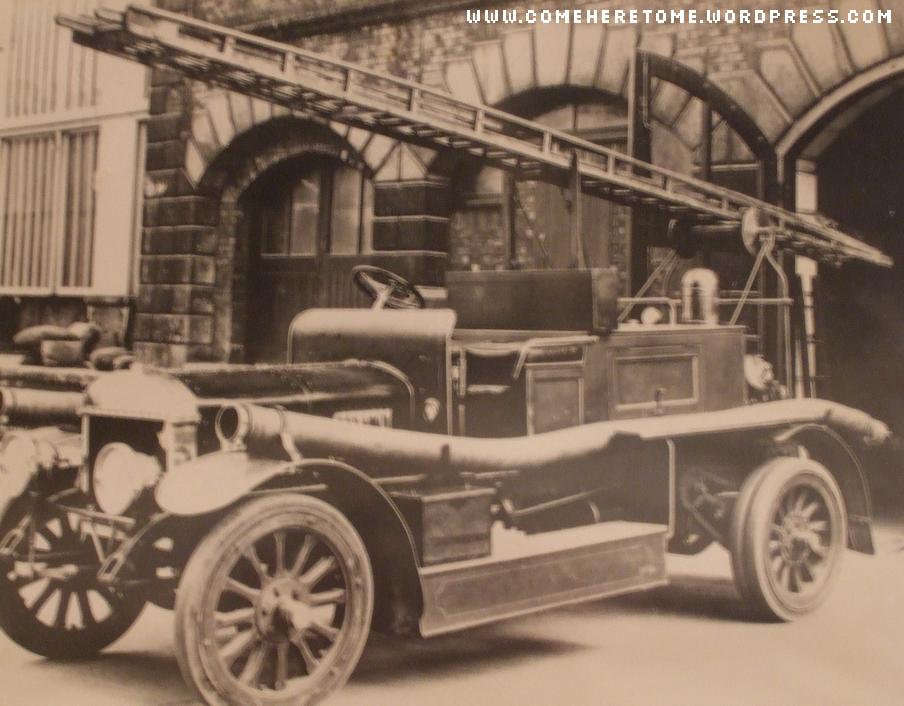
Dublin Fire Brigade,1916 period standard. Las Fallon collection.

Little is known about the Guinness Fire Brigade in so far as a date of formation. Their exploits during Easter Week are documented in so far as possible in Tom Geraghty and Trevor Whiteheads ‘The Dublin Fire Brigade’ published by Dublin City Council in 2004 and an essential read for all interested in the history of the city. Yet they were a different Brigade, seperate from the Dublin Fire Brigade entirely. Thus, they have remained somewhat of a mystery.

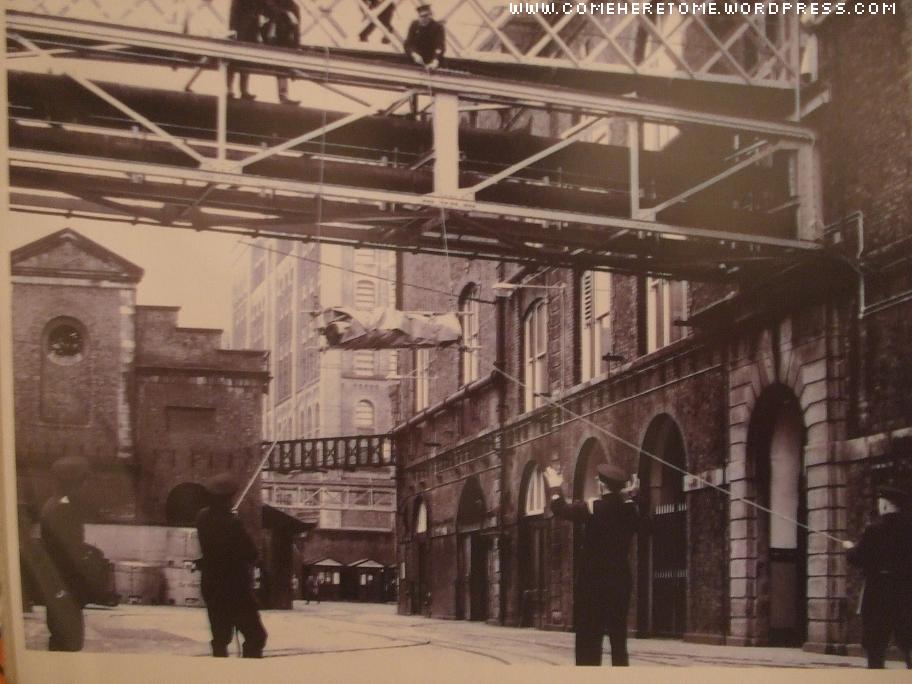
Firefighters training at the site of what is now the Guinness Storehouse attraction

Some interesting insight can be gained into life for the Brewery fire and rescue squads from Edward J. Burkes recent The Guinness Story: The Family, The Business, The Black Stuff (O’ Brien Press, 2009) The book also provides information on the companies support for the repression of the Easter Rising, which makes for interesting reading in itself (for example a company of Dublin Fusilers were allowed set up in the Robert Street grainstore, and Guinness Daimler trucks topped with railway engine smoke boxes were a popular mode of transport and defensive/offensive tool for British forces)

Guinness firefighters, around the 1950s. Notice the \’AGS\’ branding of helmets.

From Burkes book, we can gather information of a fire at the Guinness Brewery in 1820, as reported in the Freemans Journal. All breweries and distillers in the area operated a fire-service (No surprise due to the highly flamable nature of the work) and all, along with the insurance companies of the area, helped to ensure no extensive damage occured.

One can only be reminded of recent events and the fire in the Guinness complex when they read the company press-statement which boasted…

“….the damage done is not very extensive, nor of such a nature as to stop the business of the brewery even for a day”

Brewery Fire Brigade piece.

The Guinness Fire Brigade in the 1930s.

The Guinness Fire Brigade in the 1930s.

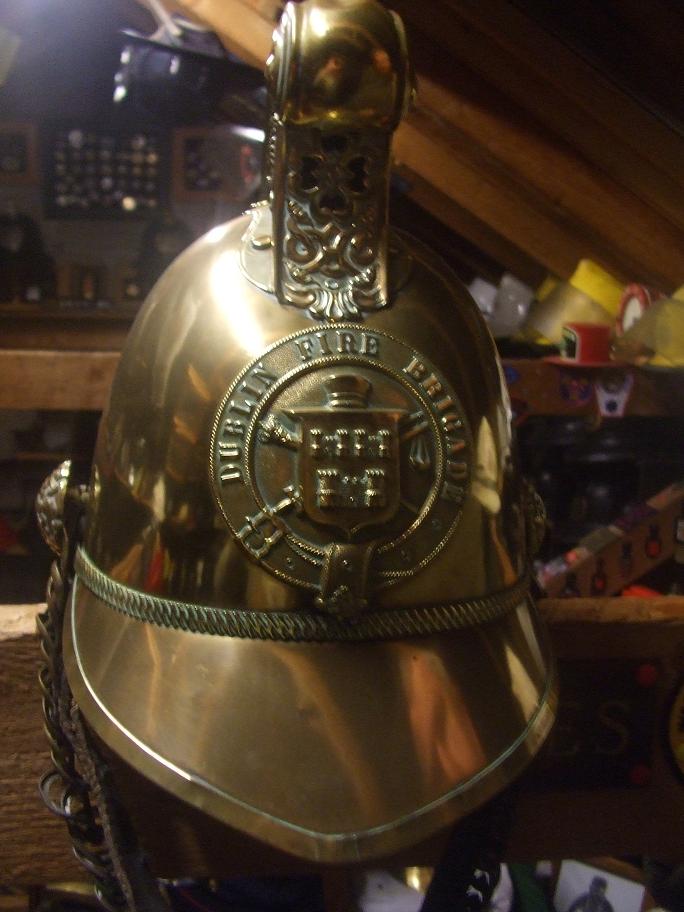
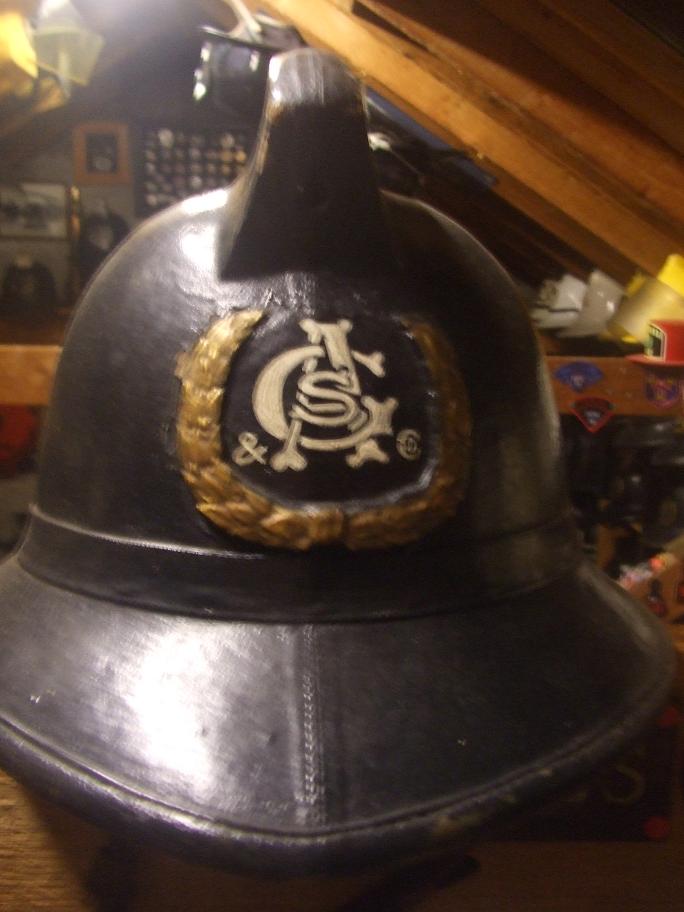
To many people,the Guinness fire-helmets are the most exciting part of the story. Below, I’ve included some snaps of Guinness helmets over the years, from the time of the Rising up until the mid 1900s. AGS, of course, stands for Arthur Guinness and Sons.

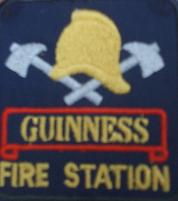
A patch from near the end of the Brewery Brigades lifetime. Las Fallon collection.

Guinness has long been a powerhouse of Dublin life, employing thousands of working class people in this city through boom and bust alike, but this is certainly an overlooked aspect of the story. The men of the Brewery Brigade, perhaps more than anyone else, show there was,and indeed remains, much more than stout at the heart of Saint James’ Gate.

\’Arthur Guinness and Sons\’ early helmet. Las Fallon collection

Helmet from mid-century period, again branded \’AGS\’ Las Fallon collection

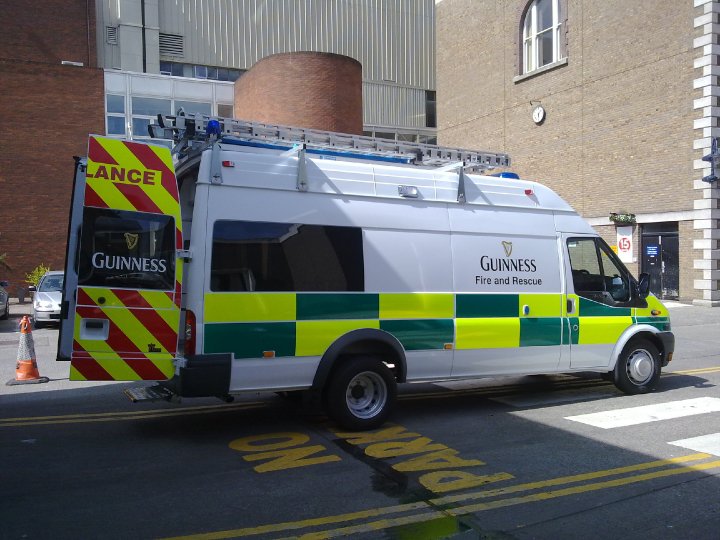
My thanks to the lads at the contemporary Guinness Fire and Rescue Service for getting in touch. This image shows the modern service Guinness operate on site.

Credit to D.Doyle for photograph

Read Full Post »

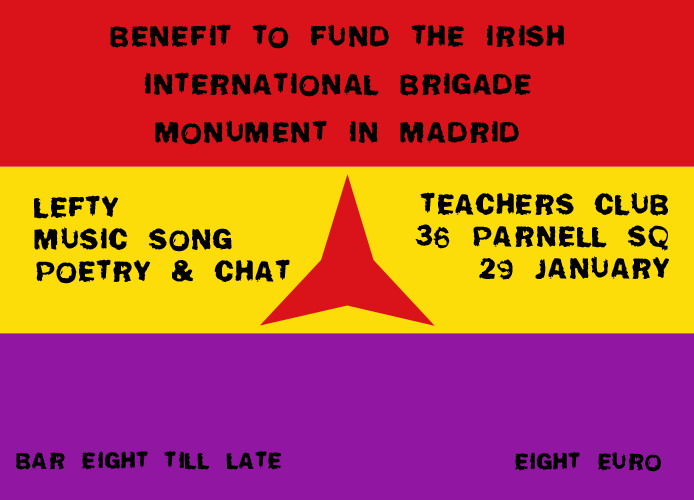
Some friends of ours are organising a benefit night next week to help raise money to erect two monuments in the memory of Charles Donnelly, poet, anti fascist and UCD graduate. The first near his birthpace in Dungannon, Co. Tyrone and the second near the spot where he died at the age of 23 in the Battle of Jarama.

Unfortunately the night clashes with a gig I’m organising but we still encourage people to help to finance the stone’s engraving and its transport to Madrid by attending the event or sending money directly (details below)

The night will comprise music, poetry and song but, more importantly, it will give like-minded people who appreciate the continuing significance of the Spanish War of 1936-9, an opportunity to meet up, have the craic and celebrate the spirit and legacy of people such as Charlie Donnelly.

To reserve tickets beforehand or make a donation, contact:
Eddie O’Neill at 087 271 2864 or eddietyrone@gmail.com.

Note: I wrote an article about Donnelly’s time in UCD last year.

Read Full Post »
I’m not sure if the same situation carries here in Dublin, it probably does up in North County anyways, but the mother said something today that put the notion of it back in my head… When I was younger, much younger, you’d hear tell in the house of “Oh, she has the cure for the croup” or “He has the cure for the shingles, he inherited it from his father.” This mysterious cure, administered in secret in the homes of even more mysterious septuagenarians was spoken of in hushed reverent tones in households and bars all over town, and was seen as a gift or a burden, or in some cases, a bit of both. The “man” or the “woman” was generally a bit… odd, and more often than not would be quite pious, but fond of a drop at the same time, their methods for ridding you of whatever they had the cure for, secret to only them.

Old People: They can cure you.

Old people: They can cure you.

My first memory of hearing something like this was many moons ago and was a story about the Da, who for thirty years had been burdened with a wart on his thumb the size of an old penny. On his rounds, this caused him great discomfort, be he tweaking at cars, fixing a lock, or replacing a door for the woman down the road or whatever job he was doing in his job away from a job, he often came home with his hand covered in blood. Not nice for him, and not nice to hear about either. One day, my brother in law stopped by for a cuppa on his break from work and said “Jaysus Dick, would you ever get that looked after. I know a man down in Caseys who said to write your name on a bit of paper and give it to him; he has the cure for the warts.” So, with that, the Da wrote his name on a bit of paper and gave it to the brother who went back to work that evening and passed it on to “the man.” Now, I’ve absolutely no idea of what the hell happened after he got the bit of paper, but within a week, that wart of thirty years was gone. Sounds mental, I know, but it’s true.

I could dismiss it as myth and superstition, had I not experienced it myself, having had a similar, though much, much worse ailment to the Da. This time, though, it meant a visit out to a whitethorn bush in an ancient, crumbling graveyard around 12 miles outside of Mullingar. Three visits, dipping your hands in a little pot of water in the middle of the bush each time, and the warts would be gone. Now I’m not superstitious in the slightest; but after three visits, the warts shrinking each time, and a week after my last visit, they were gone. I won’t shock you by telling how many there were but, to say losing them was a relief would be the understatement of the century.

I know of an old friend, crippled with shingles so much that he had to be carried into an old ladies house three times in a week, for “the cure.” He went from being crippled, to being up and about, though having shed four stone in the two weeks he was sick, (I jest not; he wasted away,) it took a lot longer to recover fully. But he went from being laid out in a bed in his kitchen, in so much pain it hurt to blink, to walking around again, it was close to a miracle. Now, I never would have thought this lady was one of the religious types of faith healer, she was closer to the mad cat lady type, but this “cure” worked anyways. The Ma had a similar complaint shortly after the Da passed away and went to the same lady and she described to me how it worked. On each visit, the woman would welcome the Ma into her home, take off her wedding ring, bless it, and touch the inflicted part of her body (In my Ma’s case, it was around her ear) with it, while muttering a few words, of prayer or what, I don’t know. She would do this for a few minutes, and then sit you up and talk the head off you apparently. She was a mine of knowledge, and would describe the healing properties of various common garden plants and herbs, lamenting the fact that a lot of the weeds and herbs are much harder to come by these days, and harping onto the Ma about the wonders of apple cider vinegar . I’d love to get an interview with this woman, the Ma says she’s a wonderful lady; sure we might have a look into it in the future.

My nephew, who is now in his eighteenth year, gave us many a sleepless night in the first year of his life, a small little thing but his body was wracked with croup (Think of the cough you hear from auld lads down the pub, forty a day and ten half ones before bed and put that cough in the body of a wee baba. The cough now IS probably from forty a day and ten half ones before bed but thats another story.) This went on for ages though, the medicine given by the doctor not having the slightest bit of effect, nor the nights of boiling kettles in the room, hoping the steam would clear the chest out. So “the man” was called upon to administer “the cure,” which, if I remember correctly involved him laying a hand on his chest and muttering a few words. Within a week, the cough was gone. I know, again with the jiggery pokery but…

Now it’s an odd tradition, I know. And certainly not one with my political persuasion I should have any time for. But whether it’s a psychological thing or whatever I don’t know, and to be honest, care; it’s an interesting one. So whether it’s a cough that ails you, or you have a wart you need rid of, give me a bell. I know a man.

Read Full Post »

“Rainclouds shake down tribute,

for the Liffey, goods of water

to be trundled grey-green past Wood

and Ormond Quay, the traffic

in opposite direction turning

up Bridge Street right into High

into the Liberties and late afternoon.”

Dublin, The Liberties by Alfred Corn.

Ever since I spent a couple of months living on Marrowbone Lane, at the back of the Guinness Brewery, I’ve held a deep affection for this part of town. It’s often said the patrons who line the streets here are the salt of the earth and they are not far wrong; Wit and humour unrivalled, stories and gossip whispered on the corners, and “Howaya’s” roared across at neighbours the far side of the road… The pervading smell of the roasting of Hops in St. James Gate, the women selling their wares from street stalls, their voices loud, “THE STRAWBERRIES THERE, TWO EURO!” Ah, I just love it. It feels real. That’s why I was delighted to come across these documentaries shot, produced and directed by Shane Hogan and Tom Burke. Each a part of a series of 12 crafted short films, they all focus on a different character within Dublins Liberties community. Its close to a documentary film equivalent of a portrait gallery.

All twelve pieces can be found here, and they’re all worth a look; I’m always happy when I find videos like these, as its very easy for bits and pieces of social history like this to die out, and to have people keeping it alive.. It’s the business.

Read Full Post »

I stumbled upon a great new blog, called Jacolette, which focusing on vernacular photography, mainly Irish and amateur.

Most of these photographs were found in charity shops, skips or bought from online auctions and I am interested in the process whereby they have become separated from the families who once valued them.

Some gems include a picture of three Dublin men drinking that was “found in a skip on Oxmantown Road”, a number of Irish American mugshots that the the author bought on Ebay and some beautiful shots of O’Connell Street taken from Nelson’s Pillar in September 1942.

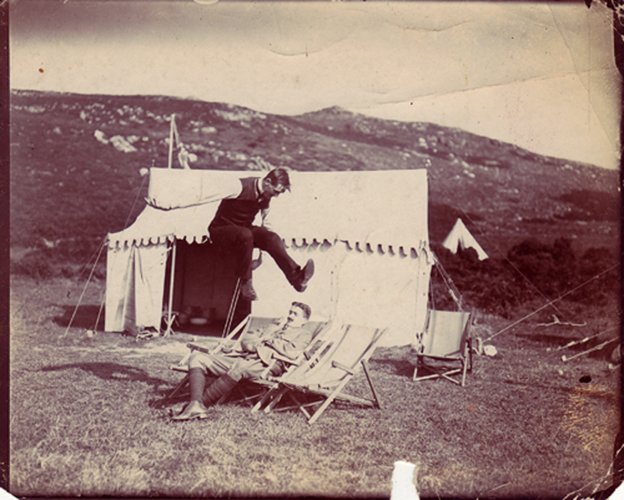
Hi-jinks in Dublin!

Read Full Post »

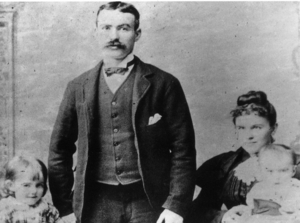
James Connolly lived in a number of houses in Dublin during his time in the city. How many have plaques to mark this? None.

In 1896 when Connolly first came to Dublin the family lived in a one roomed tenement at 76 Charlemont Street. The following summer they moved to 71 Queen Street (beside Smithfield) and then to an end of terrace house at 54 Pimlico in the Liberties.

James Connolly with his wife, Lillie and daughters Mona, and Nora, c. 1895.

Before their move to the United States, they lived in a cottage in Weaver Square off Cork Street.

On his return to Dublin in 1910, James Connolly lived at 70 South Lotts Road, Ringsend. You can see the 1911 census return for the household here On his visits to Dublin in 1913 he stayed occasionally at Moran’s Hotel (now O’Sheas) at the corner of Gardiner Street and Talbot Street.

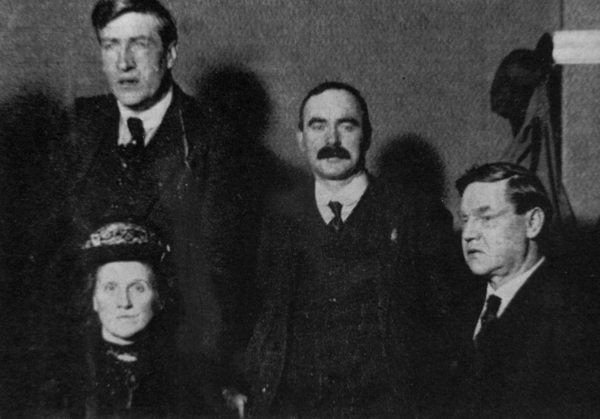
At back: Jim Larkin & James Connolly. In front: Mrs Bamber (Liverpool Trades Council) & Bill Haywood (IWW), 1913.

More frequently he lodged in 49b Leinster Road, Rathmines, (a.k.a Surrey House) the home of Constance Markievicz where several of her colleagues in the Fianna organisation also lived. (James Larkin hid in this house after he was arrested on 28 August 1913 and before he addressed the crowd from The Imperial Hotel on Sackville Street on 31 august. The house also served as Connolly’s and Markievicz’s office for The Spark and The Workers’ Republic which was also printed here.)

Some time before the Rising Connolly moved into Liberty Hall. During this time, his family stayed with Constance Markievicz’s in her cottage at the foot of Three Rock Mountain in South Dublin.

The houses in Charlemont Street, Queen Street, Pimlico, Weaver Square and South Lotts Road where Connolly and his family lived should have small plaques to mark their importance. If Dublin City Council can’t provide them, maybe all the left wing groups active in the city could raise the money?

[References:
Joseph E.A. Connell Jnr, Dublin in Rebellion: A Directory 1913 – 1923, Lilliput Press, 2009 and Donal Nevin, James Connolly: A Full Life, Gill & Macmillan, 2006.)

Read Full Post »

Master at work…

As told to me by a gentleman of high standing in a local hostelry a couple of weeks ago…

McDaids Bar has always done a brisk passing trade, being off one of Dublins busiest streets, while at the same time maintaining it’s regular and staunchly loyal customer base. Now, this story is set in the late fifties/ early sixties, and Ireland at that time was not awash with cash, and this regular and staunchly customer base was not shy of asking for a couple of half ones to be “put on the tab,” or of looking for a way to cadge a pint or two.

On an Easter Monday, sometime around the turn of the sixties, the owner of the bar decided to take himself and some close allies on a trip to the races, leaving the bar in the not so capable hands of a new, young (and very naïve) barman. Away he went on his jolly way, and not long after he was gone, one of the locals (who, as the story goes, was a notoriously nice man, but a terrible one for not having two shillings to rub together,) spotted his chance for a day on the gargle. A carpenter by trade, he still had his toolbelt on him when he came in the door. Up to the bar he went and asked the barman for a pint of plain and a Créme De Menthe. The barman, only in the job a couple of weeks, looked nervously around him before saying, “I don’t think we have that sir.” “Oh, sure of course ye do. The boss keeps it down in the cellar; to keep it cool.” The barman looked around him undecidedly but deciding rather than face the wrath of the boss for annoying a regular customer, took the chance, swung open the cellar door and darted down the ladder. Not wasting any time, the carpenter hopped the counter, slammed the door shut and drove several six inch nails into it, fastening it shut and promptly started dishing out the scoops.

Needless to say, word travelled fast that McDaids were having an unwitting free bar and the place very quickly filled up with Dublin’s finest. Whiskey and Porter were being thrown across the counter at a ferocious pace, with little to be seen of money passing the other way. Of course, our carpenter friend drank his fill and promptly scarpered…

So, after a grand day at the races, a few shillings up and all the happier for it, the landlord turned off Grafton Street and started up Harry Street, towards where his pub was, and still is, situated. He was only too delighted to see the place full to the gills, people staggering around outside and inside. I’m sure he thought all his dreams had come true… Until he got inside… And recognised none of the people behind the bar. With a roar, he made his way through the fast-emptying pub and got the strangers out from behind the taps. With the pub now empty at this stage, he noticed the cellar door crudely nailed shut, and heard the feeble knocks that emanated from within. He took a jemmy bar to it and managed, after a time, to prise it open. Upon opening it, a very dazed and anxious looking barman hauled himself out of the hatch and asked “No Créme De Menthe then?”

As with all Dublin stories, I’m sure this one has sprouted legs but sure who gives a toss. These stories are the ones that will soon disappear unless we tell them, and keep re-telling them…

Read Full Post »

« Newer Posts - Older Posts »