Feeds:
Posts
Comments

Archive for the ‘Social History’ Category

The following advertisements have been scanned from the Capuchin Annual, 1936. We’ve a decent collection of the annuals here and I’m a big fan of the insight they offer into a Dublin long gone through the advertising pages at the front and back.

Some of these companies are still with us, but trading in different stock. I doubt clerical tailoring is a major part of the Clery’s business plan in 2012!

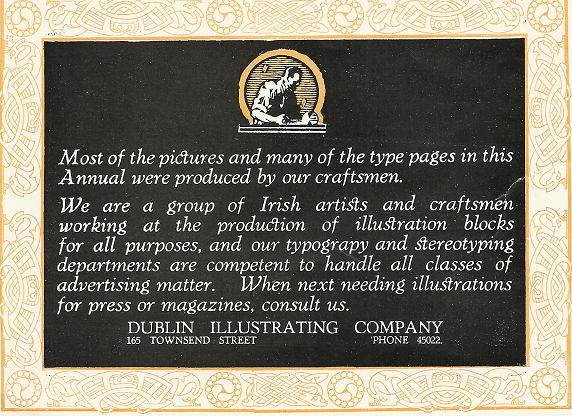
'Dublin Illustrating Company'

The Magdalen Asylum

Elverys.

Clerys Clerical Taoiloring

(more…)

Read Full Post »

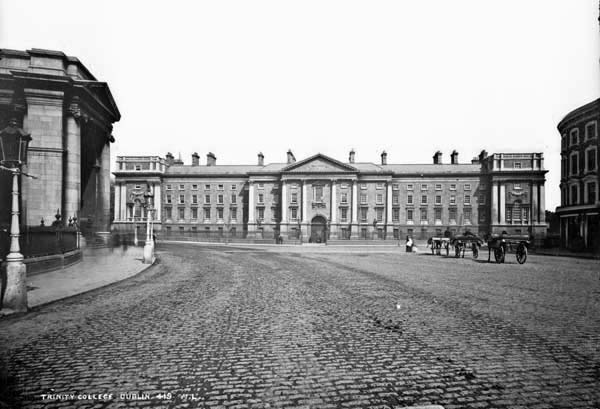
Robert French collection, NLI.

I had to jot this down recently when I stumbled across it, excellent. The railings of Trinity College Dublin are now fair-game for natives, tourists, large groups of Spanish secondary school backpackers or anyone else to sit on it seems.

Once upon a time, the students of Trinity College were in the habit of spending the fine summer afternoons seated on the railings between the front gates and the archway, sunning themselves and contemplating the world as it passed by. About five years ago the Board issued an edict which made it illegal for any student to sit on the railings ever again. The loungers in the sun withdrew to prepared positions behind the classical facade, the statues of Burke and Goldsmith, and the porters in black velvet jockey-caps.

This rather curious regulation was prompted, apparently, by the Boards constant concern for appearances. As far as one can judge, without inspection of the minutes of that secret conclave, it felt the sight of students lounging on the railings gave the outsider the impression that Trinity students never did any work. And the Board, with some justice, is tired of being misunderstood. As far as the average citizen of the new Ireland is concerned, Trinity College is still the retreat of the sons of the Big House, young men with more money than sense, every Trinity man has imperialism in his blood, and is only waiting his chance to re-establish the British Raj in Dublin Castle; they are the undying West Britons, and they are all snobbishly contemptuous of everything Irish.

Read Full Post »

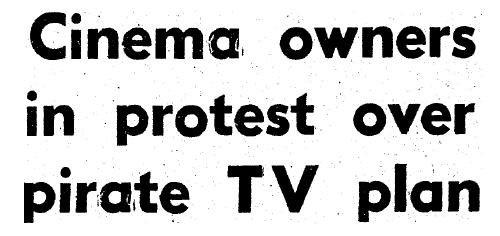
The Irish Press, April 15 1981.

In the past, we took a brief look at some unusual Dublin pirate radio stations here on the site, such as Radio Jacqueline, a 1967 schoolboy effort which made its way into the national media.

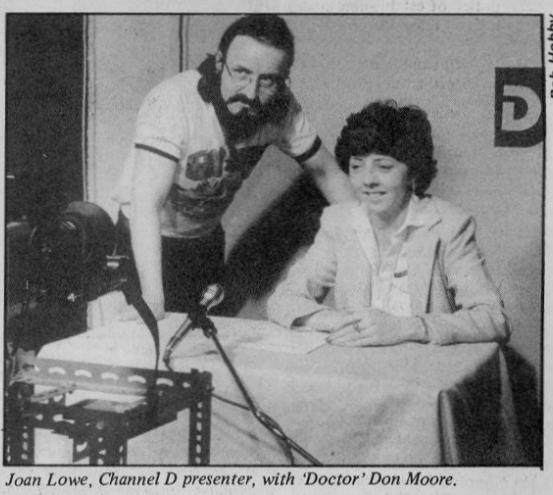
With RTE television turning 50 this year and much nostalgic feeling coming with that, perhaps some of you will remember Channel D, the first Irish pirate television station which popped up in April of 1981. Channel D, subtitled as ‘Independent Television Dublin’, lasted only a number of months due to pressure from state forces, and ultimately failed to establish any sort of loyal base like the pirate radio stations had succeeded in doing. Jim Reidy, one of the stations directors, and ‘Doctor’ Don Moore were among those involved with the station. Don Moore had played a leading role in the development of the pirate radio format in Ireland. Indeed, many involved in the earliest pirate television efforts in this city had come from that background.

Channel D snap from In Dublin (scanned by daxarchive.com)

Even prior to Channel 3 (as the station was first known) taking to the small screen, the buzz around the station led to The Irish Press of April 21 1981 reporting that:

“All the means at its disposal” are to be used by the Department of Posts and Telegraphs to prevent the operation of the country’s first pirate television station which intends to start transmissions from north Dublin in the next few days. Action, in the form of the seizure of equipment, will be taken against this unlicensed station in others in Cork and Limerick which also mean to begin operations soon.”

Some of the fears around the stations had come about as a result of cinema owners taking to the media and complaining of their fears of uncensored films being shown on such stations. Jack Bourke, an owner of two cinemas, told The Irish Press that if films were to be shown on pirate television uncensored or prior to their cinema release, “cinemas will close or we will not bother about submitting films to the censor.” This led to a situation where a Limerick based consortium planning to soon commence pirate transmissions found themselves telling the national media they were prepared to submit their films to the film censor, Frank Hall.

It was April 25th when Channel 3, the nations first pirate telly station, took to the air. This was an incredible new experiment for those involved of course, which brought all sorts of difficulties with the task. An In Dublin feature on the station that summer noted that with these earliest transmissions:

The signal was weak, the reception in black and white and the frequently-repeated material irritating. One observer described the operation as ‘amateur-land’. But somebody, somewhere, had succeeded in putting a picture on my screen.

In its infancy, the station was broadcast out of the Camelot Hotel on the Malahide Road, and was only obtainable within a five mile radius of that location. Still, despite its incredibly small potential audience, it grabbed the national attention through the newspapers of the day. The station went to great lengths to stress the fact it didn’t want to be seen as a threat to the national broadcaster, with a spokesperson telling The Irish Press that the station only went on air after RTE had ceased transmission and that “we are not posing a threat to anyone.”

The Irish Times was completely correct when it stated that Channel D was “strangled at birth”, with a High Court settlement see ing the station banned from showing any films less than thee years old. The station had planned to show ‘Kramer versus Kramer’, but alas this wasn’t to be.

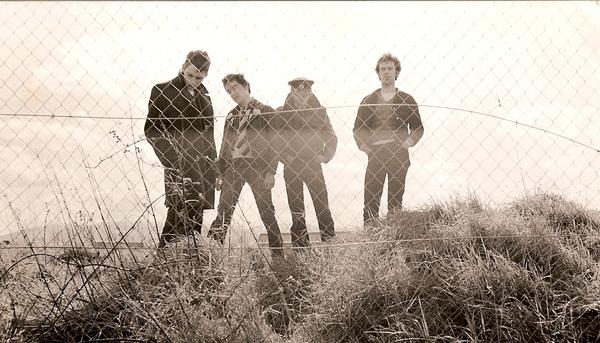
So, what did they show? Irish-TV.com notes that that it was said that Channel D’s stock of video cassettes was “burnt out in a ‘freak’ accident at a Dublin petrol station, so Channel D constantly repeated the same film, No.1 of the Secret Service in the evenings and a magazine programme filmed on a domestic camera in the day.” Also broadcast with great frequency was Don’t Swim on the East Coast by The Sussed. The song was about the Windscale Nuclear power station, Sellafield to me and you today.

'The Sussed', taken from the bands MySpace account.

The In Dublin feature noted that “broadcasts begin very suddenly, without any ceremony. The equipment consists solely of a video-cassette recorder linked to a transmitter and thence to an aerial in the roof.” By the time the In Dublin feature was written in August of 1981, the station was broadcasting from the State Cinema in Phibsborough. The feature noted that “Channel D is financed by a large consortium of business interests whose main concern was to provide Dublin with local independent television at no extra cost to the viewers, since funds would be generated by advertising.”

Ultimately, Channel D was not the success it could have been, with state interference and poor equipment to blame. The station had ambitious plans which even included breakfast television, unheard of in Ireland at the time. Other pirate television stations would follow, with Radio Nova attempting to make the leap to the format too, but like Channel D these efforts would be shortlived.

At the time when Radio Nova attempted the move to the small screen, chairman of the RTE Authority, Mr. Frank O’Donovan, described pirate telly as nothing but “a two finger excercise to the government, to RTE and to the law of the land.” These stations represent a fascinating and forgotten piece of Dublin’s social history.

——————-

Sources consulted:
Newspaper archives
The DX Archive ( a brilliant site dedicated to pirate radio)
Irish Rock Discography

Read Full Post »

Below are some old Dublin advertisements which were taken out in the Capuchin Annual of 1934. The annuals are a great source for these kind of old snapshots of Dublin life, and these are some of the ads which stood out after a quick glance through the publication.

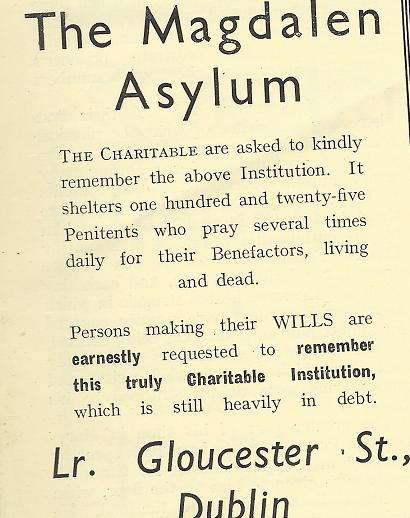
Firstly, this ad for the Magalen Asylum on Lower Gloucester Street caught my eye. “It shelters one hundred and twenty-five Penitents who pray several times daily for their Benefactors, living and dead.” Chilling.

'The Magdalen Asylum'

This full colour page from the Dublin Illustrating Company on Townsend Street is beautiful, speaking of the “hurrying age of machine production” and the skills of the craftsman which were then in risk.

'Dublin Illustration Co'

You won’t see anything like this one from Specsavers today…..

A great opticians advertisement.

Lastly, this ad from Elvery’s seemed worth scanning up too. A long way from the rugby jerseys of today.

Elvery's Clerical Coats!

Read Full Post »

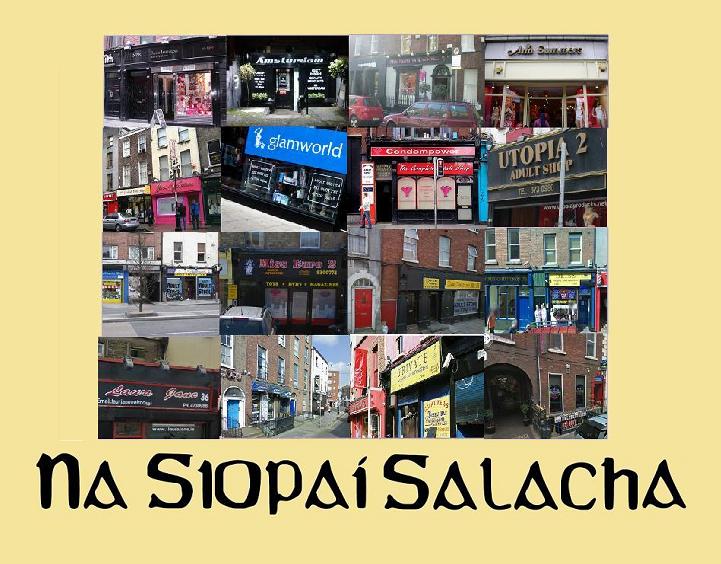
Below is a brief look at the history of Dublin’s sex shops, taking in some of the hysteria and protest that existed around such shops on the island well into the late 1990s. It’s an interesting story, in many ways surprising, looking at shops which today dot the city.
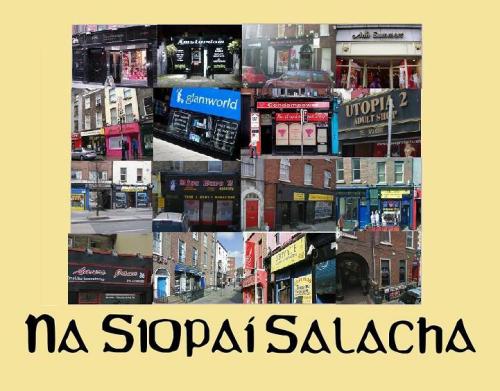
Previously posted to Come Here To Me, the poster I expect no Arts Council funding for.

Ah, the sex shops of Capel Street. Those neon signs and tacky window displays are as much a part of Dublin today as the Chinese restaurants, discount shops and early houses which also dot the street. Yet a great many Dubliners will be surprised to hear just how new such shops are to Dublin. There can be a belief among younger Dubs that with the end of Archbishops MacQuaid’s rule the lights came on (or in this case went off)overnight, and all changed in Irish society. Suddenly, Catholics went to Trinity, censorship ended and vibrators arrived. It’s not quite that simple, and indeed it was February 1991 before even talk of Dublin’s first sex shop hit the national media.

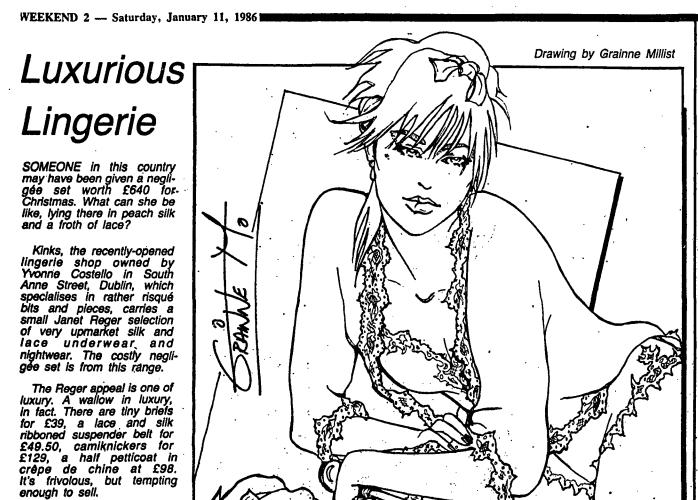
Prior to Dublin’s earliest adult shop, and often mistaken for it, there had been Yvonne Costello’s store Kinks in the 1980s, a lingerie shop which carried some ‘novelty items’ but never went far enough as to bring the force of conservative elements knocking on the door. Costello was of course a former Miss Ireland and a character with which the media held some fascination. Kinks was about as risqué as things were to get in Dublin or the south for some time, and while adult shops thrived north of the border, they were yet to land in the capital. Kinks on South Anne Street even featured in the weekend supplement of The Irish Times, and while widely remembered by Dubs as the first sex shop in Dublin, this labeling just doesn’t suit.
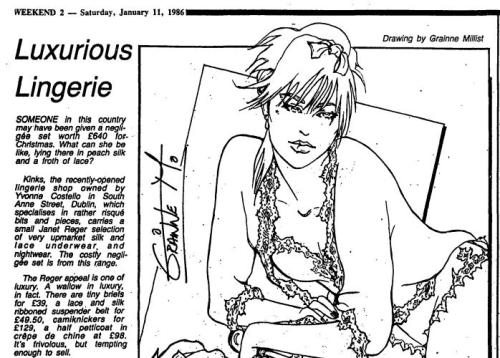
Kinks features in The Irish Times, January 1986. Soon, sexshops would feature in the national media in a very different way.

Frank Young, owner of the Belfast sex shop Private Lines, was interviewed by the Sunday Independent in February of 1991 about his intentions to bring the store to the sexually conservative heart of the Republic. Young, the paper noted, “looks more like an accountant than someone who sells sex for a living”, and in his interview he said that many of his customers were coming from across the border anyway, making a move into Dublin logical in his eyes. Responsible for the Esprit and Excel mags, which were subject to censorship south of the border, Young believed that were it not for the two menaces of “raving feminists and various Christian group”, the magazine would have a circulation on the island to rival the Sunday World. There was, Young insisted, a strong desire for adult shops further south than Newry. Belfast’s first sex shop had opened in 1982, with huge pickets from Christian groups making the owners of ‘Mr Dirty Boots’ perfectly aware they were unwelcome on the Castlereagh Road!

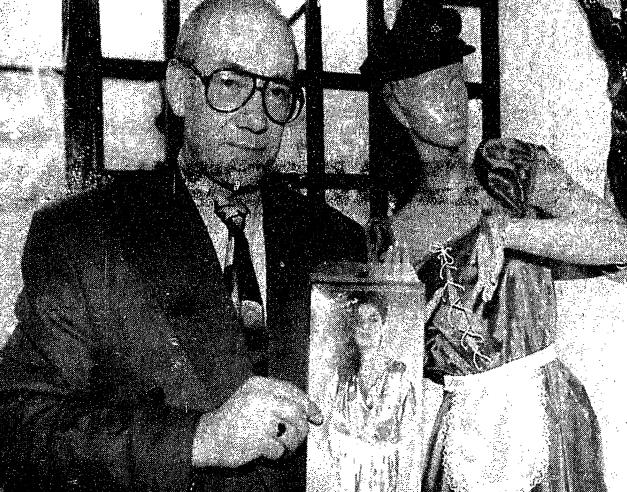
When sex shops did ultimately land in the Republic later on in the 1990s, few could have predicted the backlash. As Diarmaid Ferriter wrote in his excellent history of the Irish and our sexuality, Occasions of Sin, these shops on one level represented the normalisation of sexuality “by its being transformed into a commodity”, but to others this was very much a threat to the very moral fibre which held our society together. Jim Bellamy, an Aberdeen native, was responsible for the earliest sex shops in the south, opening Utopia outlets in Bray,Dublin,Dundalk and Limerick in very quick succession. In Limerick, one protestor told The Irish Times that “paedophiles and other sex perverts feed off these kind of places”, but the sales figures suggested that Jim Bellamy’s store held a wide appeal to the general public. Thousands joined “pray-ins” against Bellamy’s shop in Limerick and throughout the Provence, organised by the ‘Solidarity’ movement. The Irish Times image of Mr.Bellamy, standing alongside a mannequin in a maids outfit, must be one of the most unusual images the paper has ever printed. Bellamy’s Bray outlet, opened late in 1991, was the first sex shop in the Republic. I don’t suppose we’ll ever see a plaque upon the site.
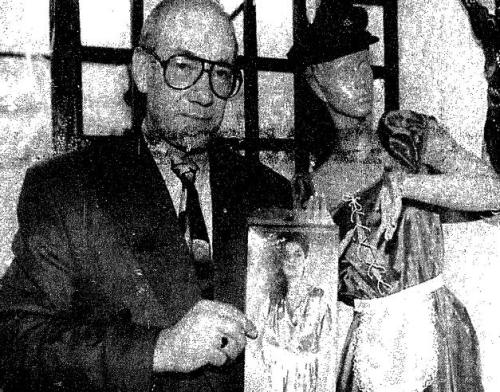
Jim Bellamy in his newly opened Limerick branch, The Irish Times January 17 1995

When Utopia made the short journey into the Irish capital in 1993, it arrived on Capel Street, today home to more sex shops than any other street in Dublin. Utopia however, was about to become Utophia. While the signwriting tradition is sadly dying out in Dublin today, and hand painted shop fronts are few and far between, a painter was given the honour of putting the name above the door of Dubin’s first sex shop. Incredibly, and in the spirit of a good Dublin story, he spelt it wrong and Utophia was born, as it was to remain.

Dublin’s early sex shops found themselves in a very unusual place, coming head to head with the rather extreme censorship laws still in place at the time. While inflatable people and inflatable sheep were both harmless enough in the eyes of the state, the printed word and image still posed the greatest threat to the moral decency of a people. As Bellamy was to tell Sean Moncrieff in a 1994 interview for The Irish Times, what we had was “four old men and a judge deciding the morals of the country”. Through 1995, the shops were raided on numerous occasions by customs officers and Gardaí in relation to the selling of indecent or obscene materials, in the form of video tapes. In many cases such materials were returned to the shops afterwards when they were deemed to be within the law. This situaion saw Bellamy take court proceedings to challenge the decision of the authorities to raid his stores with such frequency.

Heading into the mid 1990s, Utophia was joined by Condom Power, Miss Fantasia and other outlets which remain in Dublin to this day, ironically rather recession proof despite the early controversies around them. Remarkably, by the late 1990s, another scandal would blow up with the opening of Ann Summers on O’Connell Street.
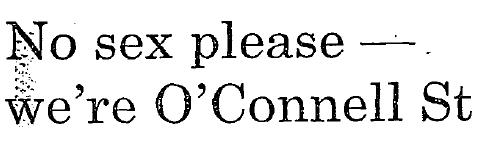
The letters page of the Independent, September 24 1999. Business owners from the area were unhappy with the opening of UK store Ann Summers in Dublin.

It says a great deal about Dubliners today that more of us are offended by the ugly and plentiful ‘temporary signs’ and ill thought-out shopfronts on our main thoroughfare than what is essentially a lingerie store, but in 1999 Ann Summers found itself in hot water over its chosen Dublin location. It would take a High Court challenge to secure the future of the shop, with Ann Summers informed by Dublin Corporation that there use of the premises and their range of products were unacceptable and in conflict with the objectives of the O’Connell Street Integrated Area Plan. Today, it is one of the best performing stores on a street where ‘To Let’ signs have become an all too familiar sight.

How quickly things change in Irish life. While the earliest sex shops on the island were met by rosary beads and placards, today the island is dotted with them. Over time, they have become a ‘normal’ feature on the capitals streets, and much of the hysteria of the early 1990s has proven unfounded. George Bernard Shaw once asked ‘why should we take advice on sex from the Pope?’, and it appears safe to say in the twenty-first century, very few on the island do.

Read Full Post »
Dublin, as  you’ve not seen it before. Spurred on from a post on boards.ie, I started to take a look into the USSR’s mapping of the world and was pretty dumbstruck by what I came across. At one stage, it is reckoned that the Soviet had upwards of 40, 000 cartographers and surveyors working on mapping the world in detail of 1:100,000 and some cities, including Dublin, in detail of 1: 10,000.

The Dublin map was compiled in the early 1970’s and spanned four pages.  The purpose for the maps was to forward plan for a worst case scenario, should an invasion need to take place. As “places of interest,” The GPO, King’s Inns on Constitution Hill, The Four Courts, Trinity College, The Old Parliament Building on College Green and the Royal College of Surgeons are marked. Oddly enough, Leinster House and Dublin Castle go unnoticed.

Part of me just loves the fact that they picked the College of Surgeons, Four Courts and the GPO. Who knows, if they extended the map out further, would they have marked Mount Street Bridge, Bolands Mills and the South Dublin Union? Maybe  Joseph Mary Plunkett’s plans weren’t so outlandish; that the sites marked for strategic importance in Easter Week remain every bit as important for military planners now. Either that or the Russians had some sentimental Stickies on their payroll. Its a scary thought.

For Maps and further reading, check out: http://sovietmaps.com/

Read Full Post »

Historic photos of the past from the North Inner City Folklore Project at The Lab art space.

Frequently we draw upon the work of historians much longer in the field, and the work of Terry Fagan and the North Inner City Folklore Project has appeared on this site on several occasions. We have had reports from the 2011 (Patrick Heeny) and 2010 (Connolly Siblings and Molly O’Reilly) North Inner City Folklore Project Easter commemorations, and in the past we’ve drawn upon Terry’s research on a range of topics from Monto to women in the republican movement. The beauty of Terry’s work is the fact he is a local, raised in the Corporation Buildings. People are always more willing to talk to their own. Terry is refreshingly dismissive of the nonsense one often hears that “we were poor but we were happy”, and rather the Folklore Project focuses on telling Dublin’s history from a working class perspective, warts and all.

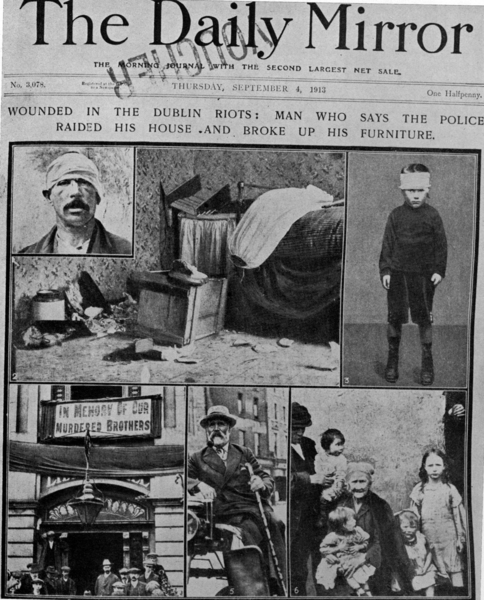
Newspaper report of DMP riot in Corporation Buildings, 1913.

I’d long wanted to sit down with Terry Fagan and talk about the complex history of the north inner city, but not limit ourselves to one specific subject. I met him at the small flat which has become a sort of HQ for the project in the heart of the community in which he grew up, and talk for well over an hour on the history of the local area. When walking through the area with Terry, we constantly passed people who know him and acknowledge him, the area is not only his historical area of expertise but also very dear to him.

If you listen to this interview, which I feel confident in saying will appeal to many of you regardless of whether or not history is the main draw for you to the site, you’ll hear a whole range of topics discussed. The tragic history of prostitution in Dublin’s inner-city (over 1,600 women worked in brothels in the city at one point), the history of youth criminality and gang culture, the forgotten history of women in the area, the role of the Legion of Mary in changing Monto and the revolutionary period were all discussed.

In this interview there are stories as diverse as Maud Gonne and the Countess visiting the north inner-city tenements at the time of the Lockout to stories of the ‘Solemn Blessing of Monto’ by the Catholic Church and Frank Duff. There are stories which show the failures of both church and state in this area historically, but there’s also stories of hope. Stories of how a working class community decided to mark and honour it’s own history. There are huge personalities who shine through in this interview, like Lugs Branigan and Jim Larkin, but there’s also stories of the community as a whole.

I had some technical issues at the very beginning, but this opens with Terry answering my first question, which is what it was like growing up in the Corporation Buildings. He began by talking about those buildings, his school days at the ‘Red Brick Slaughterhouse’ and more besides. The interview below is one hour and twenty minutes long, put the kettle on and enjoy.

Read Full Post »

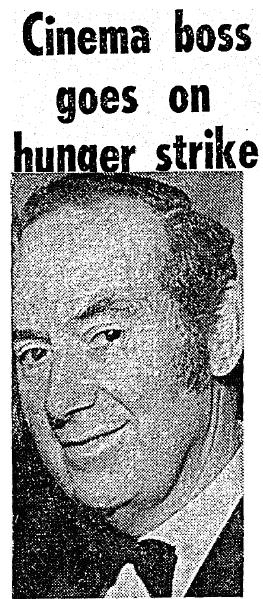
The story of the dispute between the owner of the Forum Cinema in Dun Laoghaire and the Irish Transport and General Workers Union in 1979 is a fascinating one.

On November 19 1979, Barney O’Reilly went on hungerstrike with the intention of drawing public attention to a dispute involving his cinema and the Irish Transport and General Workers Union.

The Irish Press reported that Mr.O’Reilly had told them he would “neither eat nor open the door until he had the choice to run his cinema as a non-union house. After the film was run in the cinema last night he locked the door to begin his protest.”

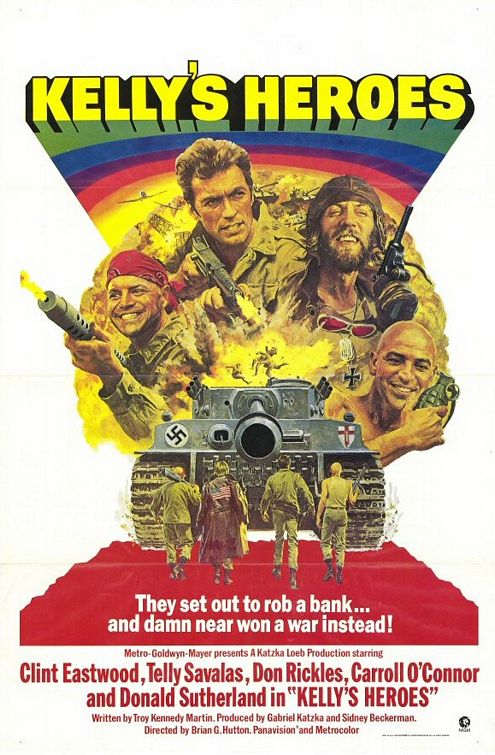
O’Reilly had been in dispute with the No.7 branch of the union, with members of the union refusing to co-operate with him. The first film due to be shown in his brand new cinema was Kelly’s Heroes which was distributed by M.G.M, but I.T.G.W.U members inside M.G.M’s dispatch department refused to handle a film intended to be shown in the Forum Cinema, owing to O’Reilly’s anti-union policies. The Irish Times noted O’Reilly had to replace the planned film with The Trials Of Oscar Wilde at short notice.

The Irish Times report at the start of O’Reilly’s hunger strike noted that he had spent £25,000 on renovating the cinema, formerly the Astoria, and that he intended to use a small-skeleton staff, unpaid and consisting mainly of family members for the first three months following opening.

Patrons who arrived at the cinema to see Kelly’s Heroes were met by a sign informing them that because of “victimisation and intimidation by the Irish Transport and General Workers Union” the film could not be shown. The union had blacklisted the cinema until O’Reilly agreed to employ union labour.

An I.T.G.W.U spokesperson told newspapers at the time that their letter to O’Reilly had gone unresponded to, a letter in which they informed him that they represented cinema workers in the Dublin and Bray areas. Members of the union who had been working in The Forum cinema installing automated equipment then withdrew their labour.

I.T.G.W.U members at other cinemas in Dublin had engaged in radical action in the 1970s, for example the sit-in protests which occurred at both the Ambassador and Academy Cinemas in 1977 with the announcement of the closure of those two cinemas. Earlier, in 1973, a strike of 300 I.T.G.W.U workers against Odeon Ltd. had closed nine cinemas in Dublin and Bray.

The hunger strike went on for a number of days. The Irish Press noted that on the fifth day of the strike O’Reilly was visited by a doctor who advised him to end his fast, and it was upon the advice of this doctor that O’Reilly thankfully ended his five day hunger strike. He told The Irish Press that his 120-hour fast had led to “other people and organisations getting involved” and brought public attention to his cause.

The Forum cinema is no longer with us, demolished in the summer of 2002, having closed in 1999. It was a small, two-screen cinema, and sadly many such cinemas would lose out in the days of the new multiplex outlets. As Justin Comiskey wrote in The Irish Times at the time of the Forum’s closure: ‘Small cinemas are dead, long live the multiplexes. That would appear to be the message following the closure of The Forum in Glasthule four weeks ago, leaving two small independent cinemas in Dublin.’

I’d be interested in hearing more from people about relations between the I.T.G.W.U and The Forum cinema following this dispute.

On a sidenote, some of you may remember a recent piece on this site from jaycarax which looked at a Dublin industrial dispute which lasted fourteen years. It occurred in Dun Laoghaire too, at Downey’s Pub.

Read Full Post »

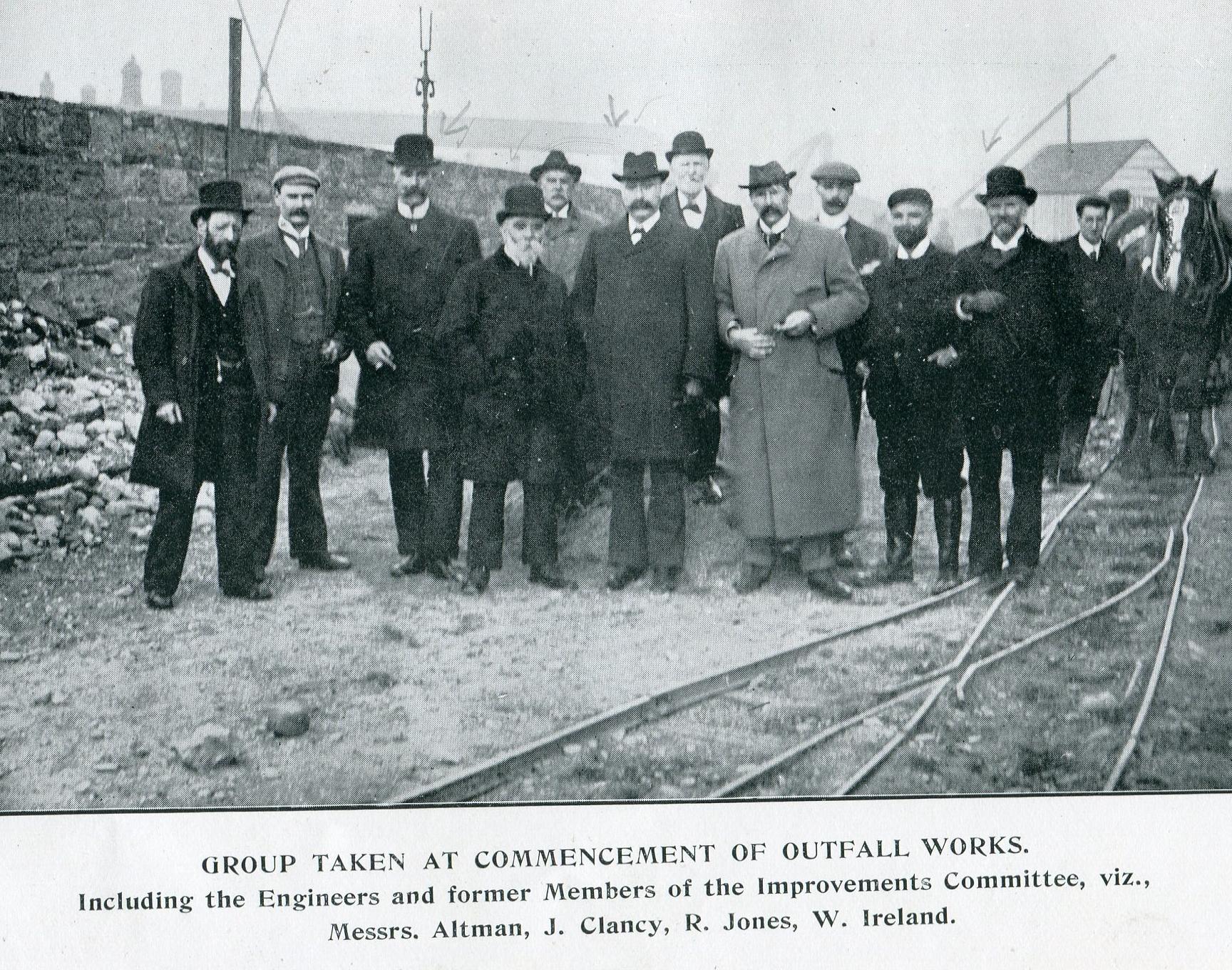
The question above is posed by Shane MacThomais, historian at Glasnevin cemetery. Shane contacted me with this image and the information below, and I’m sharing here in the hope someone can provide an answer either way. The photograph relates to the Dublin Main Drainage Scheme, and Shane details some of the characters in the photograph below. What about the man second on the left? Connolly did work on the scheme in the 1890s, could this be him? The man certainly bares more than some resemblance to Connolly.

Beyond the boots on the man second from right, the men do not appear in what I would deem workman’s attire, but if there is a foreman or labourer among the pile who knows.

Regardless, read Shane’s information below on ‘Altman The Saltman’, ‘Long John Clancy’ and the Dublin Main Drainage Scheme and then give the photo a close look.

By the middle of the 19th century Dublin Rivers like the Camac, Poddle and Liffey became seriously polluted. Several proposals were put forward in the mid to late 19th Century to mitigate this problem, but it was only in 1886 that the Main Drainage Scheme for Dublin City commenced, involving the construction of the North and South Quay interceptor sewers and the Ringsend treatment plant, the latter being completed in 1906.

When this work was completed in 1906 the Dublin Corporation decided that such sterling work deserved a publication. The Dublin Main Drainage Scheme Souvenir Handbook was published in 1906 and is no doubt a riveting read for anyone interested in centriifugal pumps and the inlet pipes and the affects of silt. The book has an interesting chapter on the history of pollution in Dublin and has countless photographs of the city fathers under whose benevolent eyes this work was carried out.

Amongst the photographs is this one of a group at the commencement of the outfall works. In the photograph are Albert Altman better known as ‘Altman the Saltman” whose business in the liberties supplied salt and coal to the numerous public baths across Dublin at the turn of the 19th century. Alongside Messrs Altman is John Clancy known as “Long John Clancy” who steps in and out of many a James Joyce novel. But it is the man 2nd from the left who raises my curiosity. Could it be the man himself Mr. James Connolly? Connolly did work on the scheme in the late 1890s but is it him?

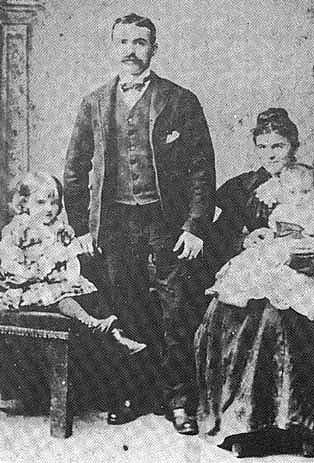
    UPDATE: Lorcan Collins of the 1916 Rebellion Walking Tour has sent in this image of Connolly from 1894. He’s not convinced it’s Connolly above, and see his logic below in the comment section.

    Read Full Post »

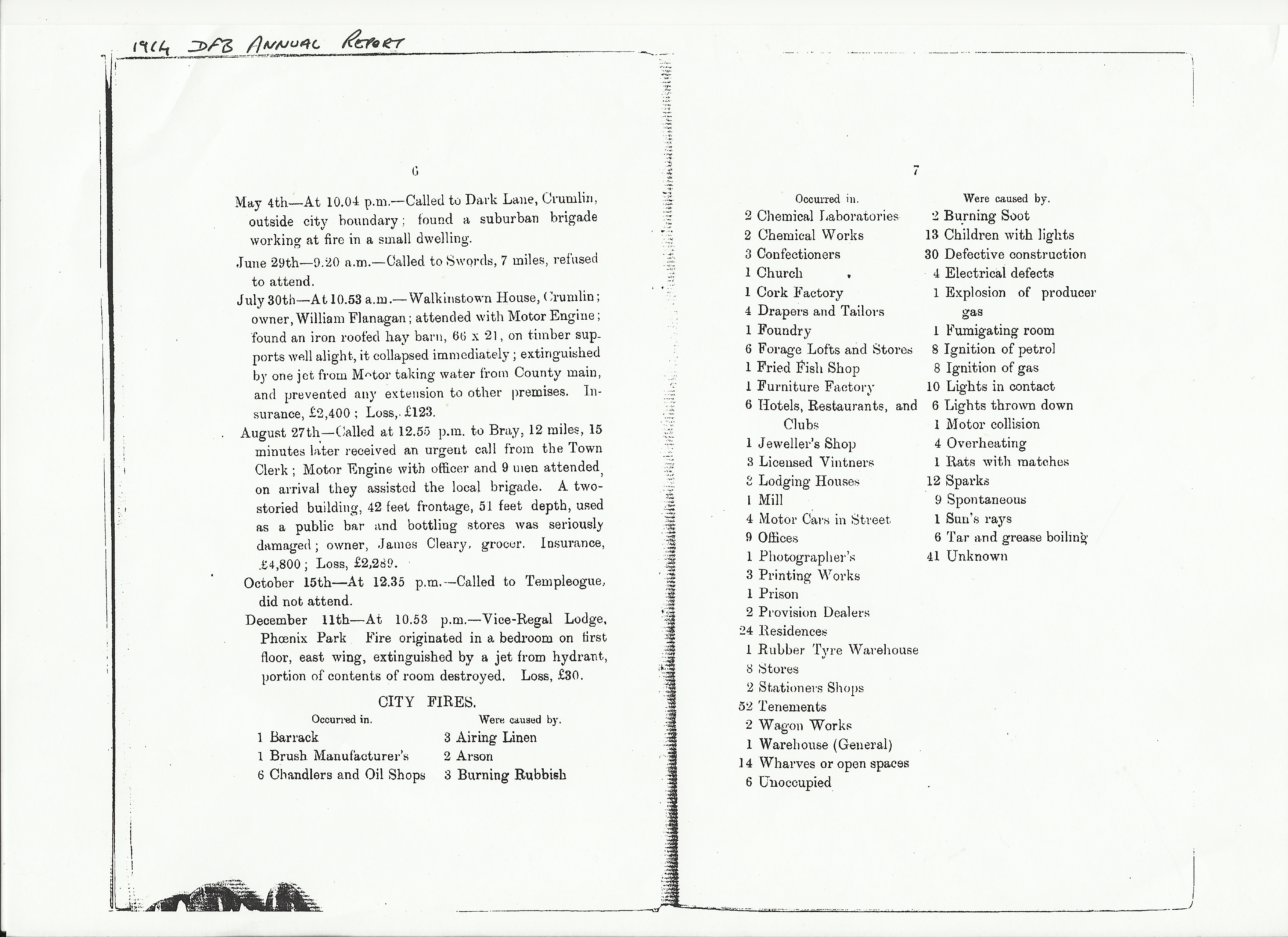
    I had to laugh at this from the Dublin Fire Brigade Annual Report for 1914. In the past we posted excerpts from the 1913 Annual Report, which dealt with “Abnormal labour disturbances”, arson and collapsing tenement houses.

    What’s interesting about the 1914 report, also compiled by Chief Officer Thomas P. Purcell, is one of the listed ’causes’ for fires in the city. 13 fires are attributed to children with lights, 30 to defective construction and one is attributed, quite amazingly, to “rats with matches”!

    1914 Dublin Fire Brigade Annual Report.

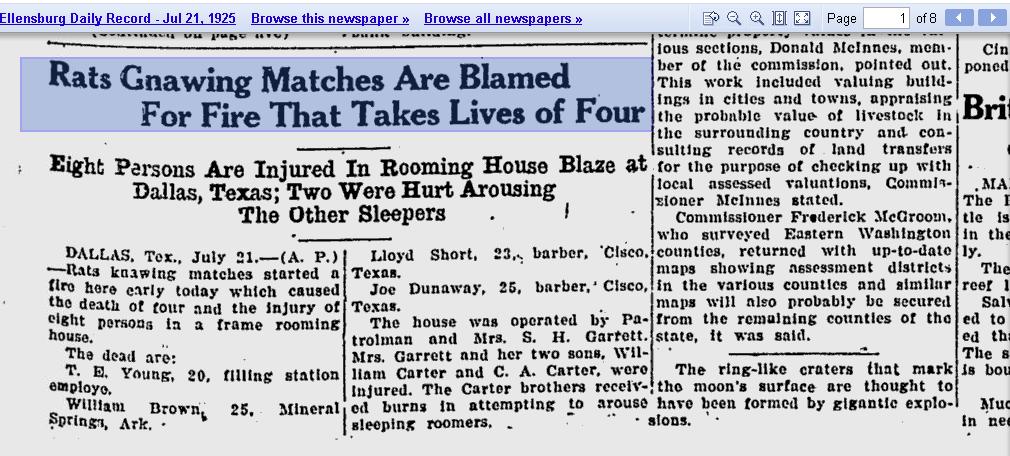
    **Thanks to B.Whelan on the Facebook page for pointing me towards this American newsreport, where rats with matches were responsible for a fire that claimed four loves.**

    Read Full Post »

    I contacted AK over at the Irish Election Literature Blog recently enquiring about the possibility of posting the below to Come Here To Me, a letter of support from The Housemartins to Shamrock Rovers supporters in their battle to save Miltown Road from destruction.

    I’d long known of Paul Heaton’s love for the beautiful game, his interview with the Celtic fanzine TÁL is worth taking the time to read, and gives good insight into his views on the modern game. There’s also a great bit of Dublin related humour in it.

    Interviewer: Is ‘The Rising of Grafton Street’ by The Beautiful South in reference to the Easter Rising?
    Paul: Not intentionally
    Interviewer: Lol, we can claim it for Ireland anyway?
    Paul: You certainly can!

    The Housemartins letter of support for Shamrock Rovers supporters was printed in the 1988 ‘Glenmalure Gazette’ Christmas edition.

    In the past we’ve featured a range of League of Ireland fanzies on the site, including Osam Is Doubtful from Saint Patrick’s Athletic and numerous fanzines from Bohs fans. We obviously had easier access to Bohs and Pats materials with our own loyalties here, but Come Here To Me is about something broader and we welcome all fanzines from the capital, in my eyes they represent a great part of the game here and one which is sorely missed by many.

    Some previously featured fanzines.

    I was directed towards the following files, which contain an archive of Shamrock Rovers fanzines from over the years, not only the Glenmalure Gazette from which the letter above comes but other fanzines entirely including Some Ecstacy and Hoops Upside Your Head. It’s an important bit of League of Ireland social history and great praise is due to those who took the time to scan and scan and scan away to bring these to a winder audience, not only young Hoops but the broader LOI community.

    The Glenmalure Gazette:

    1-5 http://www.mediafire.com/?qrsa42y124m1lgn
    6-10 http://www.mediafire.com/?11n2boi46oewow9
    11-13 http://www.mediafire.com/?1relcdt52k90q83
    14-15 http://www.mediafire.com/?03n1xw766zj5gt7
    16-18 http://www.mediafire.com/?oo1wf3m0czno1zz
    19-20 http://www.mediafire.com/?kngx9s5njzx17o6
    21-22 http://www.mediafire.com/?1bbm3b4h3e72mku

    Some Ecstasy
    1-5 http://www.mediafire.com/?oc8wf1f54xyxzax
    6-8 http://www.mediafire.com/?gyxuj32yak4em4u
    9-11 http://www.mediafire.com/?3wcw3s85t75rpp1

    Hooped On A Feeling
    Only One Issue : http://www.mediafire.com/?c3745xxia4m71eb

    Hoops Upside Your Head
    1-3 http://www.mediafire.com/?6y13ntvqk3fvua2
    4-6 http://www.mediafire.com/?ez5d7z7v7f71dzz
    7-9 http://www.mediafire.com/?ya6fwodwgik7o1c
    10-11 http://www.mediafire.com/?d9amjej0msjler5
    12 http://www.mediafire.com/?ag2aala7ep7srhm
    13-14 http://www.mediafire.com/?5g7d7bn481g4koa
    15-16 http://www.mediafire.com/?sr4gkua4kh6683d

    Read Full Post »
    They could’ve built flats in the centre of the town for us and kept reservations like this for them that come in from the country. Home from home it would have been. But us! And the only grass we ever saw we were asked to keep off it. – Dominic Behan

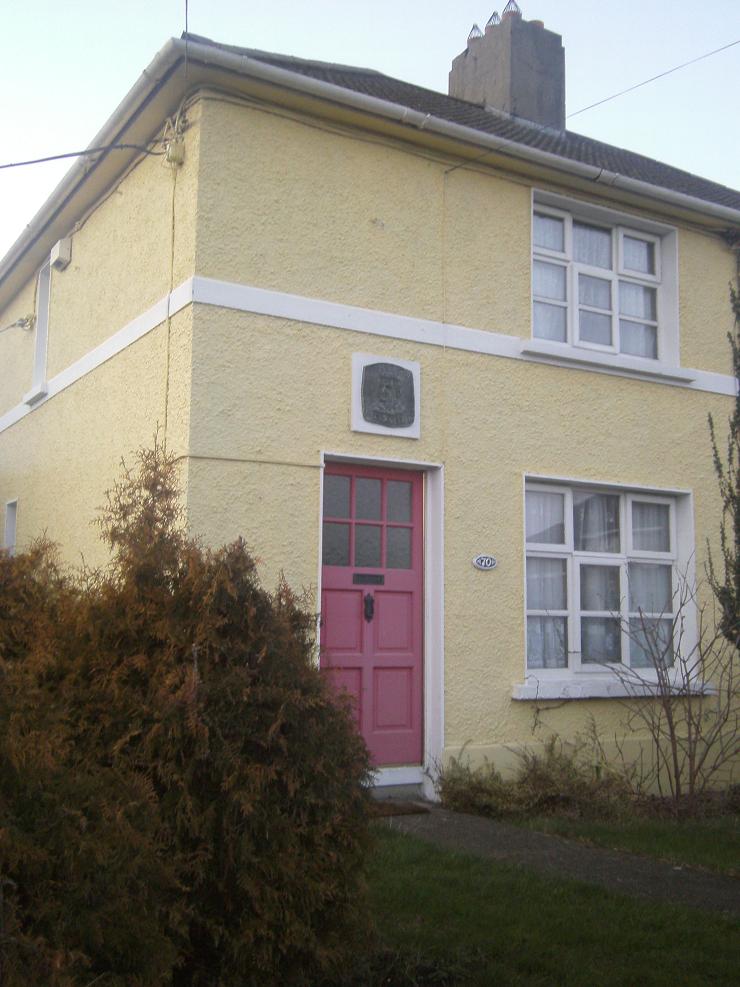
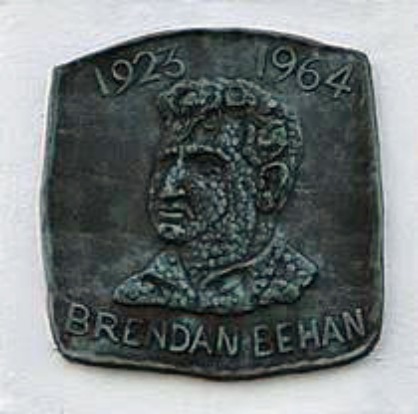
    Passing Kildare Road in Crumlin, you couldn’t miss the plaque on no.70. It shows a very familiar face, that of the writer and poet Brendan Behan.

    Behan and his family were moved to Crumlin from a tenement in Russell Street. As Ulick O’Connor noted in his biography of the great writer, his childhood in Russell Street would greatly shape Behan, as ‘besides the cultural advantages Brendan inherited from his parents, the indigenous tradition of Dublin played a major part in his development’. To many inner-city Dubliners, Crumlin and the like represented the countryside.

    O’Connor notes that the general impression in Russell Street towards the new suburbs where the working class of the city were sent was that they were a place where they ‘ate their young’. Behan himself would refer to the area as the ‘Wild West’. In Behan’s play Moving Out, these new suburbs are referred to as Siberia!

    Andrew Kincaid wrote of the emergence of Crumlin, Cabra and the like in his excellent Postcolonial Dublin: Imperial Legacies and the Built Environment. The corporation planned Crumlin at first for 3,000 houses, but by 1938 had zoned 2,400 more at Crumlin North.

    The Behan’s arrived in the area in 1937, and Brendan himself would soon after be active in republican campaigns in Britain. Still, returns to the house were frequent for the writer. His brother Dominic, a celebrated writer in his own right, would join Na Fianna at the time the family moved to Crumlin.

    It was 1977 before the home would be marked by a plaque.

    We parked our car by the Clogher Road Allotments nearby, a credit to the local community in the grounds of Pearse College. Walking through them, you find this great tribute to the local lad Brendan. A local lad, but not by choice. What would he think of being honoured in Siberia today?

    Read Full Post »

    « Newer Posts - Older Posts »