Feeds:
Posts
Comments

Fundraiser, 05 November 2011:

8.30pm-2.30am
King 7, Capel Street, Dublin 1
€5 before 11pm, €7 after 11pm

Poster Fish Presents .... ReggaeMovement Exhibition Fundraiser

Bands//

The Bionic Rats (Ska, Reggae)
Madu (Dub, Reggae, Jazz, Soul)

DJs//

Enda Star (Firehouse Skank)
Tuathal (Roots Corner)
Carax (Punky Reggae Party)


Exhibition, 09 November – 15 November 2011:

The Little Green Street Gallery, Dublin 1

Sound System: The Hidden History: The story of the sound system is one of technological innovation, creative enterprise and musical genius, but it is also a story of deep spiritual and cultural significance. From its first incarnation in 1950s Jamaica, the sound system was the radio of the people. Through artists and producers from Prince Buster to King Tubby and Augustus Pablo, the music expressed the aspirations, sufferings and joys of everyday life. The exhibition follows the growth of sound system culture from Kingston across Jamaica, to the UK and then to Europe, spreading the sounds of ska, rocksteady, reggae and dub and planting the seeds of a new generation of singers, musicians, DJs, producers and dancers.

Exhibition in Berlin

Exhibition: The text is written by Ronan Lynch, an historian of music who has written widely about reggae, politics and culture. He is editor and publisher of Irie Up magazine. The show is designed by Paula Strzelecka, who is a graphic designer and photo editor of Irie Up magazine. The artwork for the show is produced by Michael Thompson and Mau Mau. Thompson, also known as Freestylee, is a designer and graphic artist from Jamaica who specializes in political and revolutionary themes. He lives in the USA. Mau Mau is the English artist whose graphic works adorn many lanes and walls in Kingston, Jamaica, Berlin and other reggae hotspots around the world.

Evening Programme: There are several evening events planned to run alongside the exhibition. The official opening party is 6.30 on Wednesday night, 9th November. On Thursday night, at 7pm, we will be showing the Irish premiere of the film ‘Holding On To Jah’. On Friday night, Irieland Sound and guests will nice up the area from 8pm and the Dublin Reggae Crews will be on the decks on Saturday night, also from 8pm. There will be a second screening of the film at 2pm on Saturday afternoon.

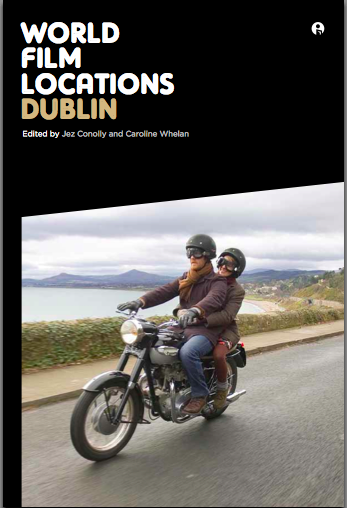


World Film Locations: Dublin Edited by Jez Conolly and Caroline Whelan (Intellect, Oct 2011)

Images of Dublin city in film and music videos has always been an interest of mine. Over time, I’ve tried to do features on both on this blog. The latter (see end of page) being far more successful.

Thankfully a duo have put together a remarkable 128 page book, focusing on films either shot or set in Dublin, which is so far beyond anything that I could ever wish to do on CHTM!

Entitled World Film Locations: Dublin and part of the series of the same name, the book is a “collection of over forty reviews of scenes from films … illustrated by images from the scenes in question, and photographs of locations, often as they are today.”

I’ve been lucky enough to have a quick glance at the finished piece. It features many of my favourite Dublin related movies – Educating Rita (1983), The Commitments (1991), The Snapper (1993), The General (1998), Intermission (2003) and Once (2006) but also many more that I have never heard of or got around to seeing yet – Girl With Green Eyes (1964), Pigs (1984), A Man Of No Importance (1994), Accelerator (1999) and Six Shooter (2004).

Each film is given two pages, the first an introduction to the movie itself and a background to the scene while the second page gives vividly, clear screen grabs of the scenes in question (with a timecode for the true anoraks!)

The book also includes seven two-page essays by leading Irish film critics and writers, the most interesting being on the representation of Dublin’s music scene on the big screen, Dublin films concerned with revolution and rebellion and the image of the  gangster figure in Dublin cinema.

Kudos to Jez Conolly and Caroline Whelan for bringing out such a fascinating and much needed piece of work.

You can pre-order the book (RRP £9.95) at the publisher’s website here.


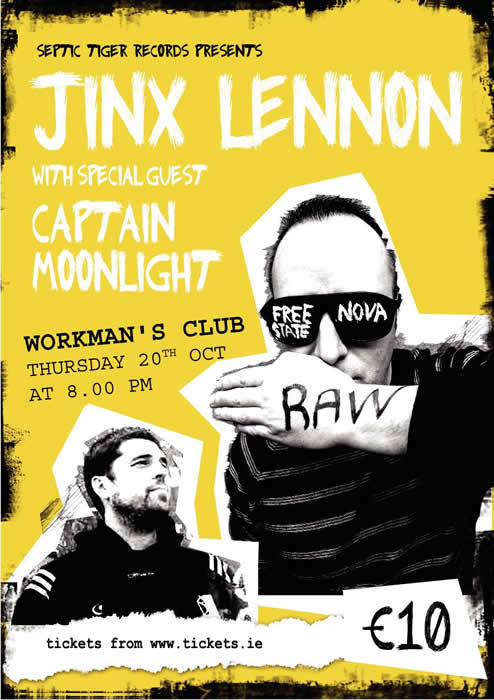
Jinx Lennon will be dropping by the Central Bank tonight about 8 according to the Occupy Dame Street Twitter and Facebook accounts, on his way to playing at The Workmans Club later on with Come Here To Me favourite Captain Moonlight. You could do a lot worse than to pop down to this, but bring a scarf and gloves!

If any of you attended the History Ireland Hedge School on the Animal Gangs at the National Library recently, you’ll remember that as well as the 1930s the following decade was discussed at some length, and particularly youth violence and criminality in early 1940s Dublin. The so caled ‘battles’ of Baldoyle and Tolka Park would of course feature in such a discussion.

In his biography of Garda James C. Branigan, or Lugs as he is known to generations of Dubliners, Bernard Neary would note that the 1940s saw the Gardaí and indeed the state adopt a much tougher approach to Dublin gangs. Two particular outbreaks of violence at Baldoyle and Tolka Park saw a very serious crackdown from the state against ‘gang culture’ in the city at the time, with the first showdown at Baldoyle in May of 1940 displacing the second World War from the top of the national media and whipping up hysteria in the capital that the ‘Animal Gangs’ were still alive and well.

That battle is a story for another study and another day, and in this post I intend to look at a particular day of violence in early 1940s Dublin, when Dublin’s youth gang culture would raise its head at Drumcondra Soccer Grounds during a match, grabbing the attention of the national media and indeed state forces. It was an event which would see the national media reporting on March 26th of nine youths being charged with attempted murder.

‘Dublin Football Venue Onslaught!’ read the headlines of The Irish Times on March 24th, reporting on bizarre scenes of violence in the capital. Two days previous, during a clash between Mountain View and St.Stephen’s United in the Junior Combination Cup, blood had been spilled on the terraces of a Dublin football ground.

Continue Reading »

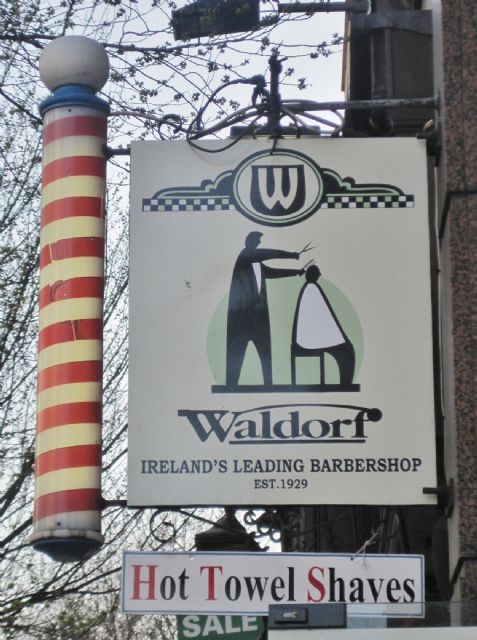
Absolutely brilliant stuff this, a brief history of the Waldorf Barbershop many of us walk by daily, delivered by Brian Hurson.

A nice and surprising bit of news this, that Billy Bragg will be joining the march on Saturday from the Garden of Remembrance at 2pm in support of the Occupy Dame Street movement. Bragg of course is performing in Dublin next Friday at The Button Factory.

(event blurb below)

This is an interesting talk and panel discussion coming up tomorrow at 7pm in Earlsfort Terrace, looking at events in that very building in 1968 when students declared a ‘Liberated UCD’ and student activism was at its peak across Europe. The discussions will look at protest in Ireland then and indeed protest here now. Interestingly, one of the panelists is current Union of Students in Ireland President Gary Redmond.

While some former revolutionaries (Joe Duffy, Kevin Myers and the like) have arguably become a part of the establishment, Gary Redmond’s gone the other way. Below he can be spotted partaking in a Fianna Fáil photoshoot, and who could forget his comments in the media after students wandered in front of Garda batons last November, so he’s come a long way to be talking revolution. Fair play I say.

Sure we were all in Fianna Fáil once....

In all seriousness, the talks at Earlsfort Terrace to date as part of Dublin Contemporary have been excellent, and this one should be interesting with a panel including former UCD student Ruairi Quinn and a representative from the Occupy Dame Street movement. Entrance is free.

Our own Jaycarax has written a wonderful piece in the past on the ‘Gentle Revolution’ and student activism at University College Dublin in the late 1960’s. It can be read on the Hidden History of UCD blog.

In December, a recently formed group, Students for Democratic Action (SDA) held a 400 hundred strong ‘sit-down’ protest outside a meeting of the Academic Council. They were protesting against the Council’s refusal to recognise the Republican Club as a society. The council postponed the meeting with some members managing to leave by the door, others by the window. The SDA then promptly decided that the Academic Council did not merit the authority to recognise the Republican Club. They followed this by declaring their group the real and legitimate Academic Council, voting overwhelming to recognise the Republicans.

Event blurb from Dublin Contemporary website:

In the Winter of 1968, UCD Earlsfort Terrace was declared a ‘Free Zone’ by students who occupied the building demanding a greater involvement in the governance of their university. One of those involved in this so-called ‘Gentle Revolution’ was then a young architecture student and currently the Minister for Education, Ruairi Quinn.

Over the past twelve months Ireland has seen unprecedented levels of protest across all sectors of our society as well as a landmark change in government.

This discussion will look at the legacy of those sit-ins 43 years ago and question whether there is anything we can learn from them today and the effectiveness of protest as a catalyst for change.

The evening will be hosted by student and broadcaster Dylan Haskins who will interview the Minister for Education, Ruairi Quinn and then chair a panel discussion which will include Executive Director of Amnesty International Ireland, Colm O’Gorman, journalist and broadcaster Una Mullally , President of the Union of Students, Ireland, Gary Redmond and a representative from the Occupy Dame St. group . The audience are encouraged to join in the debate and admission is free.

The Beautiful Game

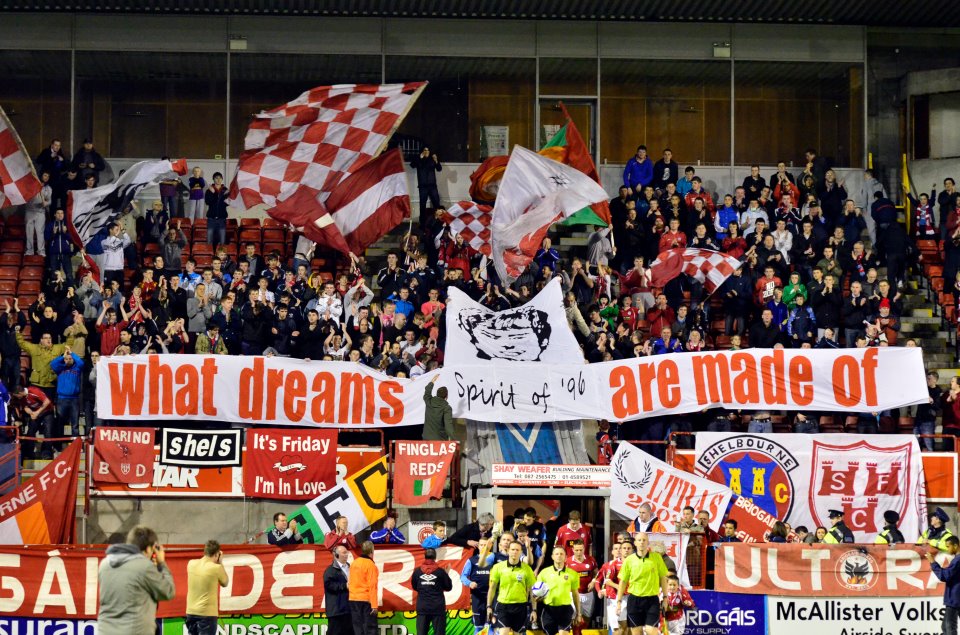
There was an electric atmosphere inside Tolka Park on Friday for the FAI Cup Semi-Final between Shelbourne F.C and Saint Patrick’s Athletic. As much as the action on the pitch, great credit is due to both sets of supporters for their efforts in the stands. Both sets of supporters produced efforts which showed the desire among the rank and file to bring the cup home. For Pats, it’s FIFTY YEARS since the cup came back to Inchicore. Shelley’s words, to ‘Rise like lions after slumber’, seem most fitting.

A one-all draw, the two sides will line up against each other once more tomorrow night in Inchicore.

Briogaid Dearg

Shed End Invincibles ( Photopat (c) )

This is a great one, and a nice bit of labour history. This leaflet comes from the 1988 Dublin Fire Brigade dispute, from the Sinn Féin Trade Union Department. Details of the dispute are found on the reverse side of the leaflet below. Who is the brave fella on the front of the leaflet? Scroll down to see!

Continue Reading »

A round up of Dublin related news stories for this week. (Might try to make this a weekly feature)

1. ‘Oriental enclave’ recommended for Dublin

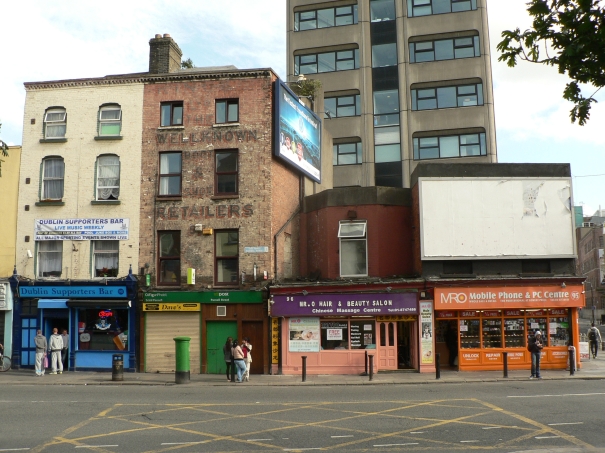
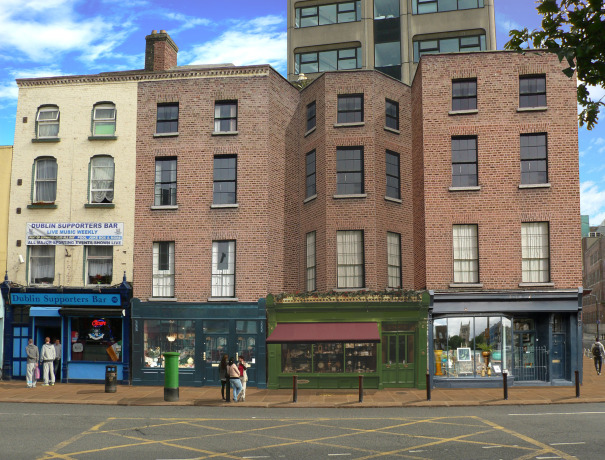
Dereliction and urban blight which have dogged one of Dublin’s historic inner city areas could be reversed if an oriental quarter were developed on Parnell Street according to a report by the Dublin Civic Trust.

The report recommends restoration of the traditional 18th and 19th century facades, the removal of garish shopfronts and signage, new paving, lighting and trees on Parnell Street East and the creation of an off-street “oriental enclave” or village of restaurants and shops. – The Irish Times (13/10/11)

Marlboro Corner (Before)

Marlboro Corner (After)

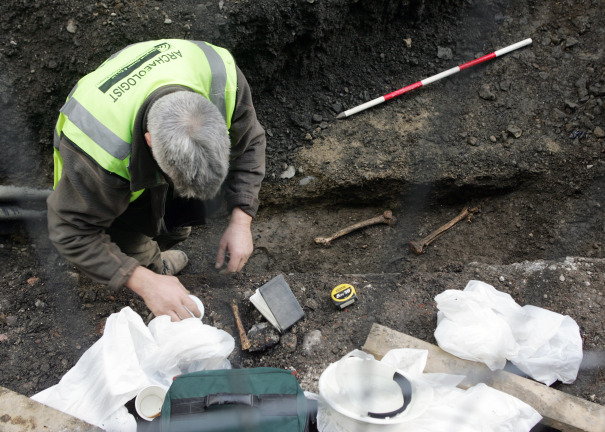
2. Workman unearths 400-year-old skeleton (in Smithfield)

Nobody knows how he lived or died but yesterday — 400 years on — the remains of his skeleton were discovered. Against the backdrop of Dublin’s historic St Michan’s Church, the bones were found by a workman from the Smithfield Improvement Project As the excavation work intensified early yesterday morning the remains were discovered protruding under a metre and half of rubble.

Franc Myles, archaeologist with Dublin City Council, said: “This is a significant find. I believe the bones date from the 1600s because we also found nearby a type of pottery from Devon in England, which dates from that time. – The Irish Independent (15/10/11)

(Note: Second skeleton has been found)

Myles (and CHTM! commenter) in action. (c) Sam Boal/Photocall Ireland

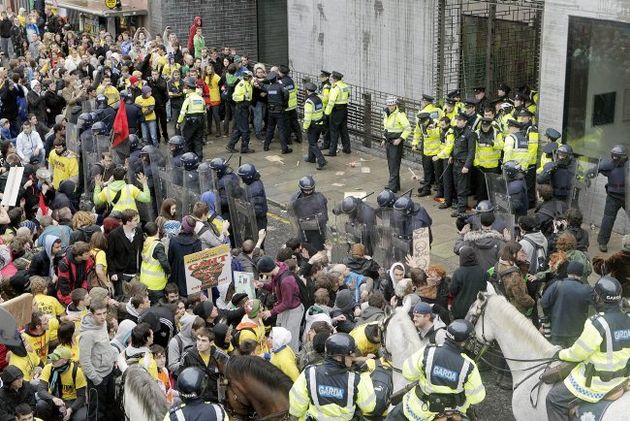
3. Students will march for Freeze in Fees

A mass demonstration organized by the Union of Students in Ireland (USI) is set to take place in Dublin next month, the College Tribune has learned.

The organization is launching a national “Freeze the Fees, Save the Grant” campaign in reaction to speculation that the registration fee may increase to €5,000 in December’s budget. The campaign will include a protest march in Dublin on Wednesday November 16th.

“November 16th should be a completely peaceful protest. USI and indeed students’ unions across the country will do whatever it take to ensure that education is protected in the budget” USI President Gary Redmond said. – The College Tribune (15/10/11)

Student demo, November 2010.

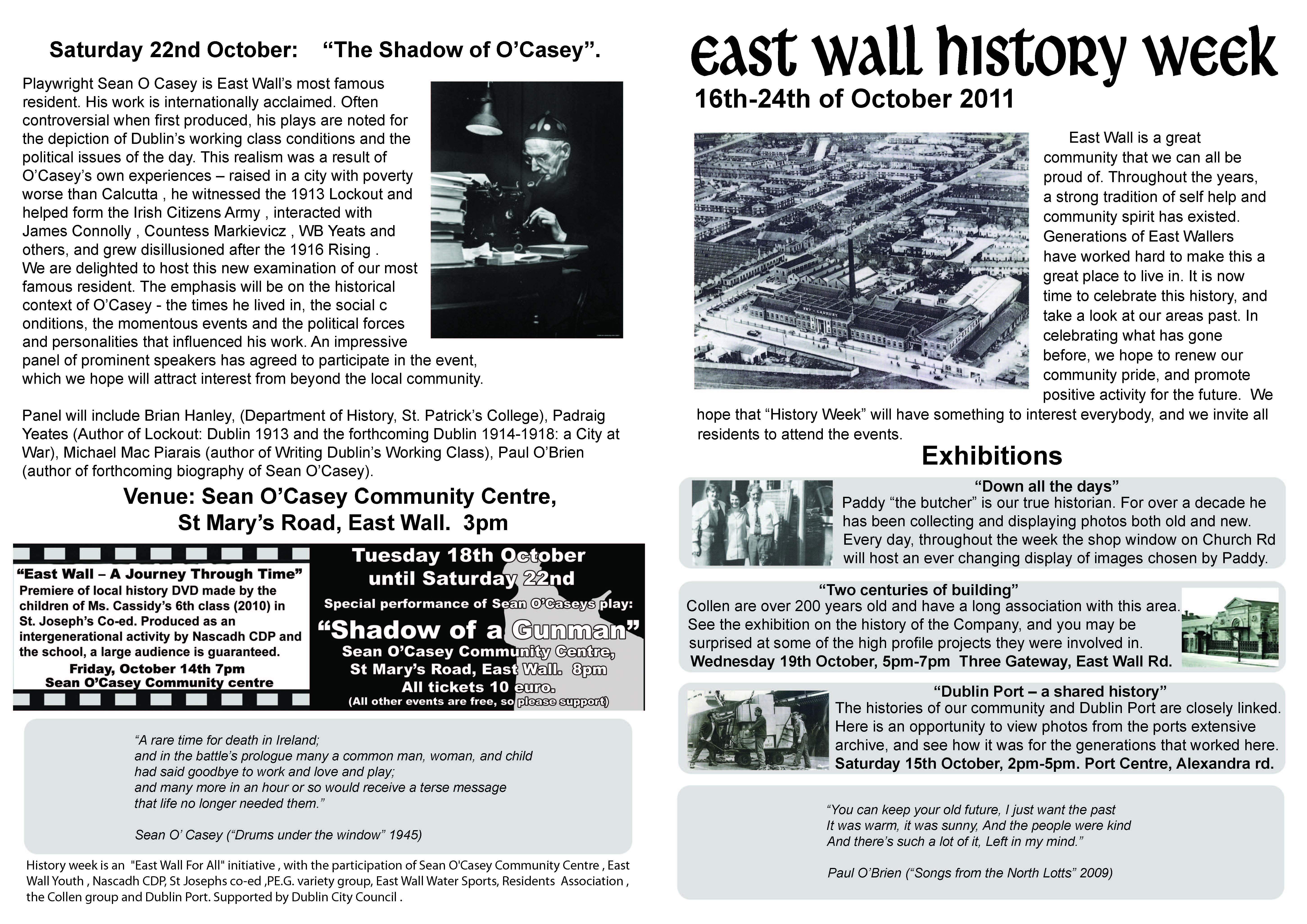
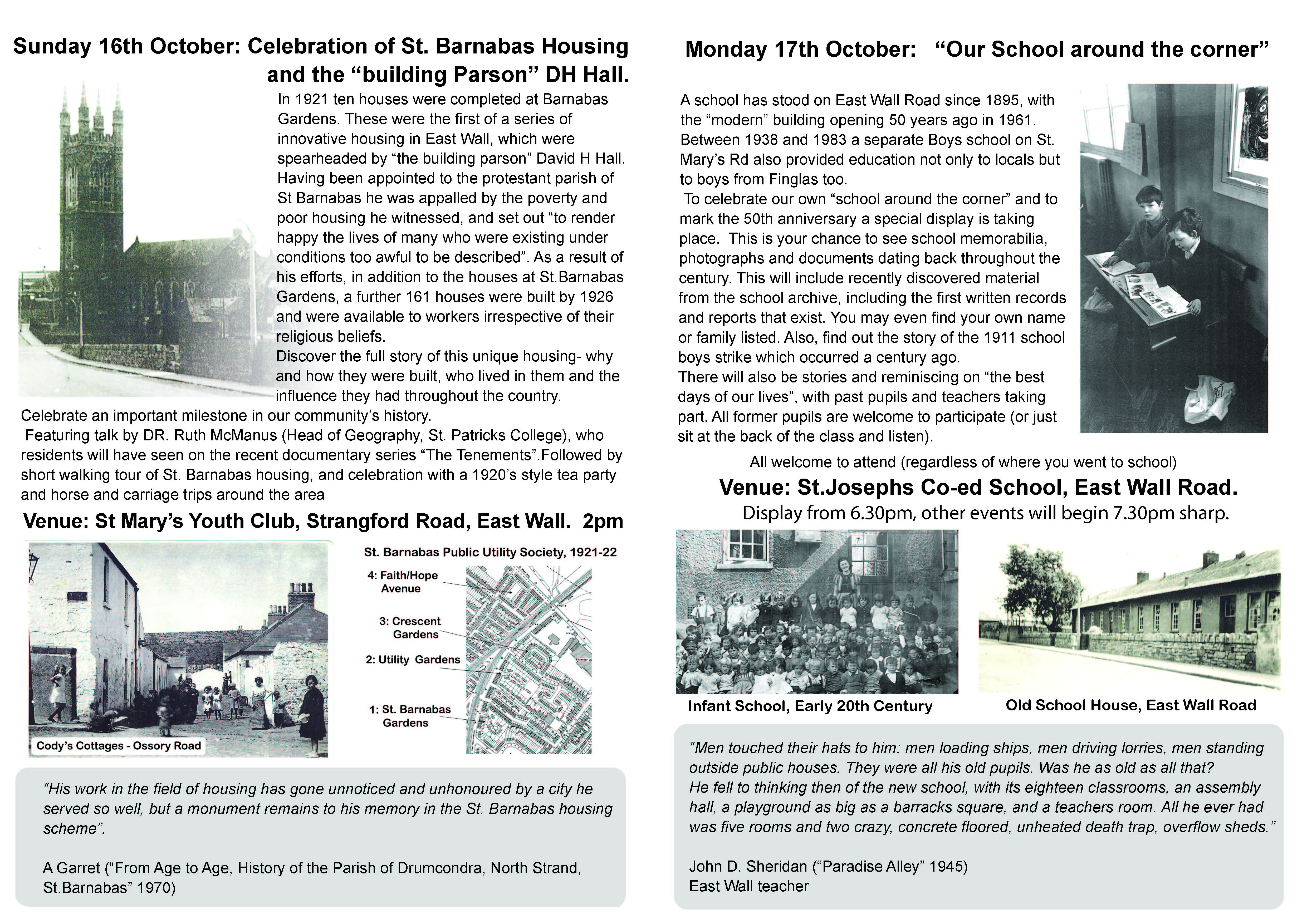
One of the most endearing Dublin history stories to come out this year was the tale about the school children at East Wall Wharf national school who struck for “shorter hours, cheaper books and an end to canings” in September 13th, 1911.

This story, along with many more, will feature in the East Wall History Week which kicks off tomorrow. The week’s events should be of interest to both local residents and those interested in our city’s history.


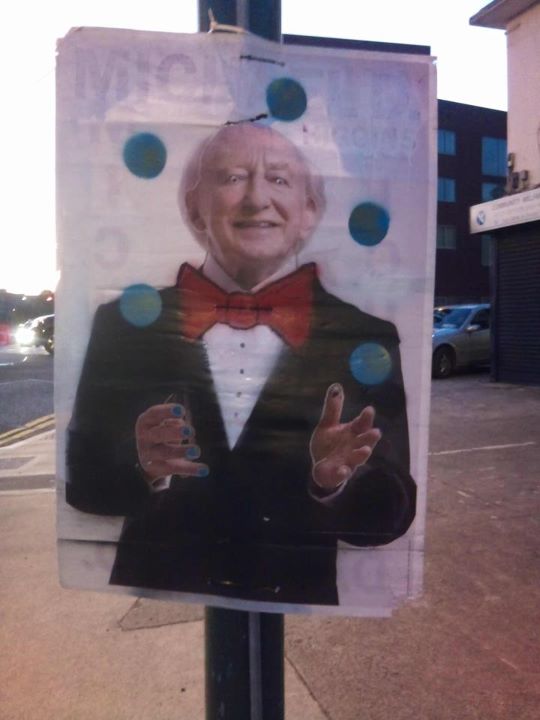
Cheers to Johnny M. for this snap, taken in Kilmainham today. The General Election was pretty much open-season for election poster re-decoration, has anyone spotted any more posters like this one around the city?