Feeds:
Posts
Comments

‘Deposed In Dublin’

Earlier in the month, we posted a piece looking at the George II monument in St. Stephen’s Green, which was bombed in May 1937.  The monument stood in the centre of the Green from 1758 until the eventual destruction of the work, which was not the first bombing carried out against it.

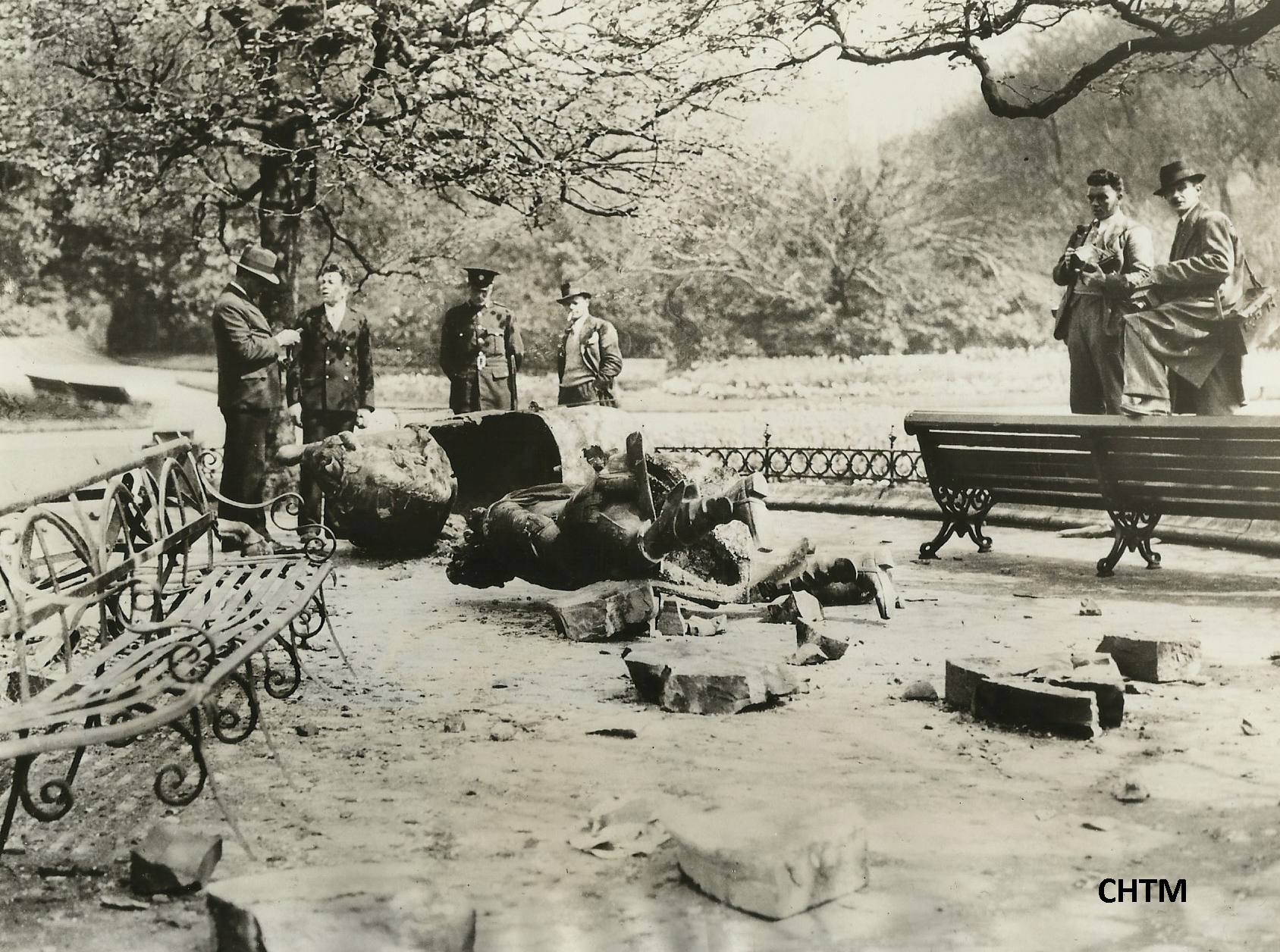
Since publishing the piece I picked up this great original press image of the scene following the attack. Gardaí, photographers and journalists mingle and the total destruction of the monument is clearly visible:

Press photograph showing the damage to George II monument.

Press photograph showing the damage to George II monument.


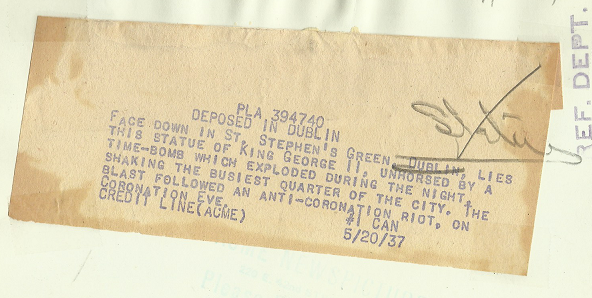
Press description on back of image.

Press description on back of image.

Every Saturday morning at 11.30am I do a tour of St. Stephen’s Green park at 11.30am from the Little Museum of Dublin. Poor old George II is one of the stories told on this tour. More information available from the Museum website.

A few snaps with my trusty camera phone while having a mooch around Temple Bar yesterday.

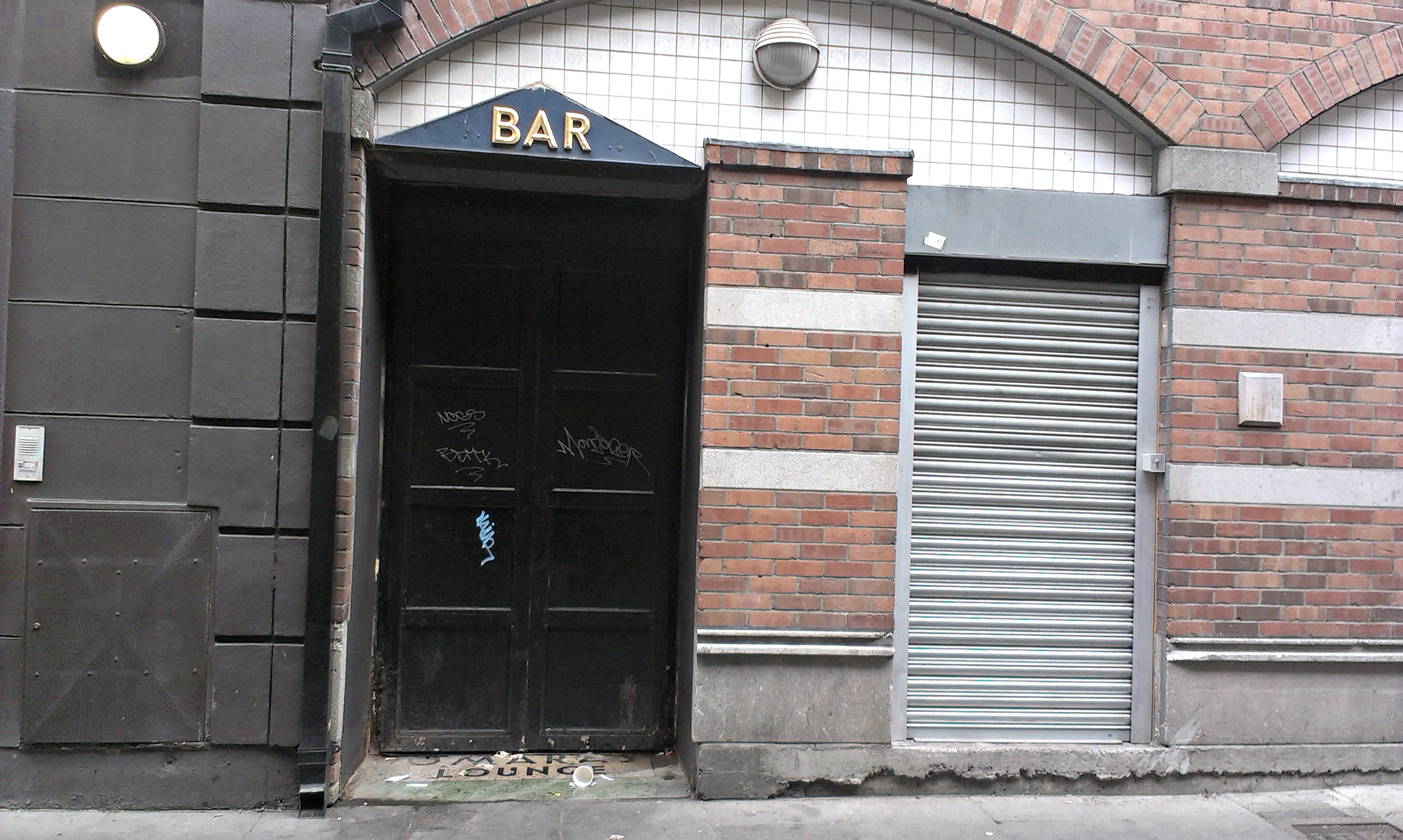
Prince’s Lane is the first lane on the right as you head down Fleet Street into Temple Bar from Westmoreland Street. Close to the quays, I spotted this little old door with a sign above saying ‘bar’.

Old bar entrance. Prices Lane, Temple Bar. Credit - Sam.

Old bar entrance. Prices Lane off Fleet Street, Temple Bar. Credit – Sam.

On closer inspection, an original tiled floor sign at the entrance displays the name O’Mara’s Lounge. I have not been able to find any reference to this bar/lounge anywhere online or in the newspaper archives.

Anyone have any information?

O'Mara's Lounge. Prices Lane off Fleet Street, Temple Bar. Credit - Sam

O’Mara’s Lounge. Prices Lane off Fleet Street, Temple Bar. Credit – Sam

One of the most lovely housing complexes in the city, Asdill’s Row is receiving a much needed facelift.

Built in 1891 by the Dublin Artisans’ Dwelling Company, there are 54 flats, 27 each across the first and second floor levels. For more information, check out the great Built Dublin’s post on the buildings.

This is a glimpse into the building site.

Glimpse into Asdill’s Row as refurbishment continues. Credit - Sam

Glimpse into Asdill’s Row as refurbishment continues. Credit – Sam

A new barbershop, Finnegan’s Green Rooster, has taken over the building which housed the Amnesty International cafe on Fleet Street.

Tattooist takes over Amnesty Cafe. Credit - Sam

Barbershop takes over Amnesty Cafe. Credit – Sam

While their Facebook page says the business opened in ‘May 2014’, they’ve bizarrely claimed that the barbershop has been going since 1959.

What’s the point? Who are they trying to kid?

It’s a bit like ‘The Snug‘ bar, attached to Bad Bob’s, which is the self-proclaimed ‘Temple Bar’s Oldest Pub’.

Estd. 1959, eh? Credit - Sam.

Estd. 1959, eh? Credit – Sam.

Brogan’s pub beside the Olympia Theatre looks temporarily naked as contractors work on a new sign. 75 Dame Street used to be a gay bar called The Viking while Crampton Court (the lane down to the side entrance to the Olympia Theatre) is one of my favourite shortcuts in the city.

Brogans on Dame Street gets a paint job. Credit - Sam

Brogans on Dame Street gets a paint job. Credit – Sam

While on my travels, I bumped into actor and City Councillor Mannix Flynn. Thankfully, he was able to inform me that the Thomas Reads sign was taken down for safety reasons and is currently being kept safe in the building itself.

Signless Thomas Reads. Credit - Sam.

Signless Thomas Reads. Credit – Sam.

A cutlers operating from 1670 to 1997, the dusty and fading Thomas Reads building is an iconic piece of old Dublin. Let’s make sure we keep it.

Thomas Reads on Parliament Street. Credit - Sam

Thomas Reads on Parliament Street. Credit – Sam

Hill 16, the terrace of Croke Park, is a source of immense pride to Dublin sporting fans. There is a widely believed (but untrue)  story in Dublin has it that the original Hill was built using rubble from the Easter Rising and the destruction of O’Connell Street, but while the Hill may not have a connection to the folklore of Easter Week it is certainly central to the folklore of the GAA and the historic trials, tribulations and successes of the Dubs in particular.

While researching the problem of “hooliganism” (real or often merely perceived) in Irish football (by which I mean the game where you get sent off for using your hands, unless you’re a goalkeeper) throughout the 1970s, I was struck by the number of references to crowd trouble and percieved ‘hooliganism’ at Croke Park. For the sake of this brief post, I am going to limit the focus to Dubs fans in the 1970s, and I emphasis that the post is about media coverage of events.

"Football hooligans - smoke bombs" (Irish Independent, 1978)

“Football hooligans – smoke bombs” (Irish Independent, 1978)

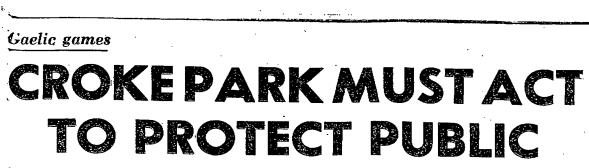
‘CROKE PARK MUST ACT TO PROTECT PUBLIC’ (1975 headline)

The All-Ireland football semi-finals in 1975 led to a number of articles in the mainstream press attacking GAA authorities and  the existing Croke Park security arrangements over a problem element gathering on Hill 16. One newspaper noted that “a group of Dublin followers, mostly teenagers, threw stones and bottles at stewards and Gardaí before and during the minor game between Tyrone and Kildare and after the senior game between Dublin and Derry inciting violence which resulted in injuries to a number of people.”  The blame was firmly placed on the fans who congregate on the Hill terracing, with Paddy Downey in The Irish Times comparing the actions of fans there to the behavior that was common on English football terraces. Downey wrote that  “a large force of Gardai, at least 40 and in riot gear if necessary” should be put in the area behind the Railway goal, as “the presence of such a force would act as a deterrent, not only in the main trouble area, but also over the whole of Hill 16.”

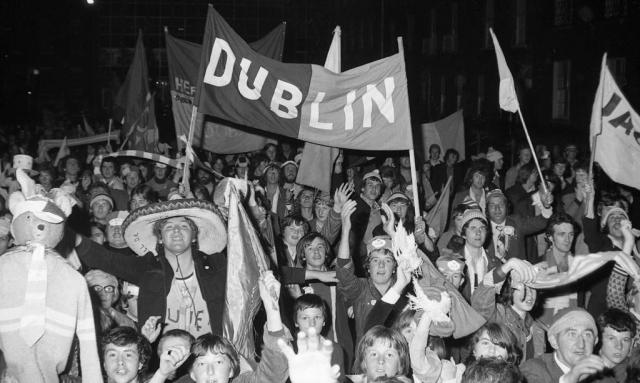
 Dublin fans brought a unique colour and support to the GAA in the period. "Heffo's Army', Civic Reception for All-Ireland Champions, O'Connell Street, 26 September 1976" (Image Credit: Dublin City Public Libraries and Archive)

Dublin fans brought a unique colour and support to the GAA in the period. “Heffo’s Army’, Civic Reception for All-Ireland Champions, O’Connell Street, 26 September 1976”
(Image Credit: Dublin City Public Libraries and Archive)

Ironically, only a year before this Downey had been dismissive of talk of hooliganism marring the 1974 final, by writing:

How serious is the threat of violence on the Croke Park terraces during the All-Ireland football final between Dublin and Galway next Sunday? Perhaps this is a better question: How serious is the talk of the threat of violence at an event which is renowned for the good behavior of spectators, whose numbers exceeded 80,000 several times before the capacity of the stadium was reduced? Fear fashions a good headline.

In the run up to the 1975 All Ireland football final  between Kerry and Dublin the Irish Press reported that:

Croke Park’s notorious Hill 16 may be surrounded by a 12-foot-high barbed-wire fence. But GAA Director-General Sean O Siochain stressed last night there will be no such security arrangements at the All Ireland hurling final next Sunday. Hurling supporters are a race apart, and we will not need any special precautions next Sunday” he said.

The same newspaper warned that the GAA, if unable to confront the problem head-on “could have a problem of the magnitude of that facing the British soccer world.” Double the number of Gardaí who were present at the semi-final appeared in Croke Park for the 1975 football final, and the Irish Independent noted that “another problem facing the Gardaí is the possibility of a hooligan element “going on the rampage” after the game if Dublin lose – and even in victory.” In the end, despite a Kerry victory, the ugly scenes of the semi-final were not repeated, perhaps to the dismay of the nations  journalists.

Gardaí on the pitch in 1975 (Irish Press)

Gardaí on the pitch in 1975 (Irish Press)

“Where did ‘Boot Boys Rule O.K’  begin? Didn’t the Skinhead cult begin in Britain?”

So asked one letter writer to the Independent in 1975. A common argument made in the media throughout the 1970s was that Irish football and GAA fans were merely aping the behavior of  fans across the water.

At last year’s All-Ireland football final I was standing on Hill 16 in the middle of a huge crowd of Dublin fans. It was a disappointing experience. Gone was the wit, the good humor and the banter of other years. Also the sportsmanship. Instead, we had silly, tribal chanting, foul language and a terrible attitude of hostility towards the Galway team and its supporters. Just like Old Trafford, White Hart Lane or Highbury! When the match ended the Dublin captain’s speech was drowned out by ‘You’ll Never Walk Alone.’ It could have been the Kop or Wembley.

Interestingly, GAA authorities did look towards British soccer clubs for some help in this period – with approaches made to Manchester United for information on fencing arrangements at Old Trafford.

A 1975 warning from The Irish Times.

A 1975 warning from The Irish Times.

Continue Reading »

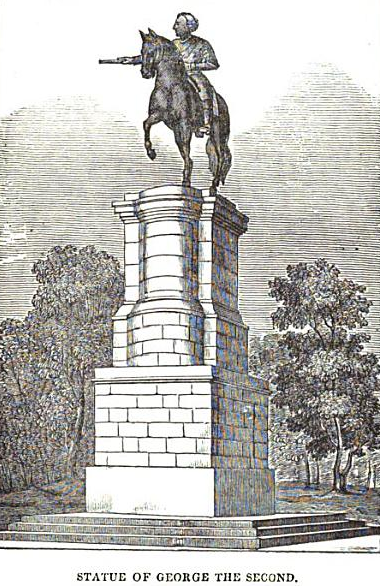
George II statue in St. Stephen's Green (1835, Dublin Penny Journal)

George II statue in St. Stephen’s Green (1835, Dublin Penny Journal)


St. Stephen’s Green as we know it has been open to the public since 1880, thanks to the generosity of Lord Ardilaun, or Arthur Guinness, the great-grandson of the founder of the Guinness company with whom he shared a name. It was Ardilaun who financed the landscaping of the park in the late 1870s, at great personal expense. Prior to this it had very much been a contested space, and as  Desmond McCabe has noted in the late 1700s “the square fell victim to  quarrels between the Corporation and the residents of the Green as to how it ought to be developed”, while from 1814 the space was effectively privatized under a Local Act, something that was rather  common also in late Georgian London. By 1814  the Green was spoken of in an almost entirely negative light in the media, before its effective privitisation. One contemporary newspaper, reprinted by the Freeman’s Journal, commented just prior to this that:

It appears that this extensive Square is likely to undergo immediate improvement: its filthy and neglected state for several years past has been notorious; all parties agreed that is a disgusting nuisance, but no one had found the proper remedy: The Corporation Funds would not allow them, however willing, to make the necessary expenditure; the Inhabitants declined to take the burthen exclusively on themselves….. Government was resorted to hopes of obtaining a City Lottery, Parliamentary Grant, or some general tax, but this having failed, matters rested, and the nuisance was daily increasing.

Today the park is home to a wide range of monuments, which capture the complexities of Irish political history. Robert Emmet, romantic leader of the doomed rebellion of 1803, stands only a short distance from a memorial to Irishmen who died serving with the Royal Dublin Fusiliers in the Second Boer War. The first individual commemorated in the Green however was King George II, whose monument was erected in 1758. A centre-piece for the park,  it played a significant role in politicising the space in the eyes of many.

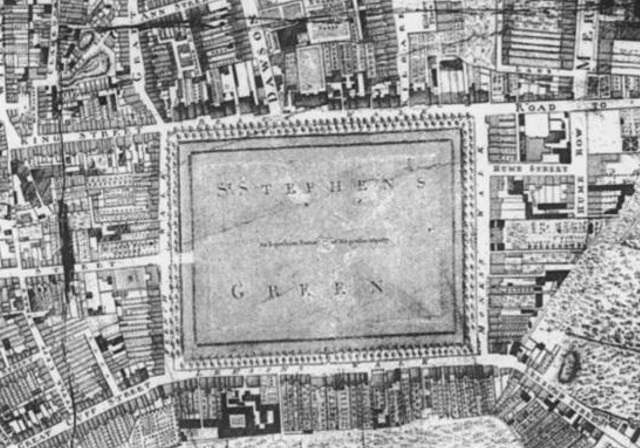
A map of St. Stephen's Green in 1758. The park appears radically different today, thanks to the landscaping financed by Lord Ardilaun.

A map of St. Stephen’s Green in 1758. The park appears radically different today, thanks to the landscaping financed by Lord Ardilaun.

The decision to place a monument of King George II in  Dublin had been made by the City Assembly in 1752, who passed a motion of gratitude for “the many and great benefits they daily enjoy under His Majesty’s most gracious administration and protection.” For the task of carrying out this work, the city chose the talented sculptor John Van Nost The Younger, who came from a family long-established in the field.

The Dictionary of Irish Artists, published in 1913, notes that:

The Corporation of Dublin having resolved to erect a statue of “King George II,” advertised for tenders for the proposed work in 1752. Two designs were submitted by Van Nost, “whom we apprehend,” says the report of the Committee, “to be the most knowing and skillful statuary in this Kingdom”; and one was accepted and agreed to by the Council in July, 1753. Van Nost went to London and had sittings from the King, returning in August, 1754, when he commenced the work. The statue, which cost £1,000 exclusive of the pedestal, was completed in 1756, and erected in the centre of St. Stephen’s Green in 1758, and was, say the Corporation Records, “allowed by persons of skill and judgment to be a complete and curious piece of workmanship.

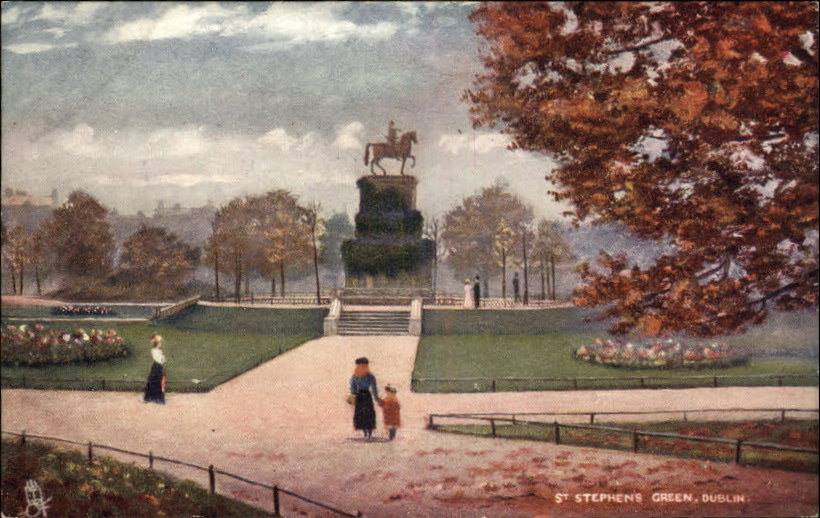
Van Nost’s work depicted the King in Roman habit upon an equestrian statue. The statue was placed upon a tall pedestal, which it has been said ensured it’s visibility from as far away as Nassau Street. It is likely that this owed as much to security concerns as to aesthetics. Earlier monuments erected in the city to figures of authority, such as that to King William III at College Green,  were subject to frequent ridicule and vandalism. In 1710 for example boisterous students from Trinity College Dublin covered the statue of William  in mud and liberated the King of his truncheon.  Yvonne Whelan has noted that while this statue “effectively served as one of the first symbols of Protestant Dublin’s allegiance to the crown” it is important to also note that “it was a means by which those at odds with the established regime could give vent to their dissatisfaction, hence the many attacks it suffered.” Certainly, King William’s troubled existence at College Green may well have influenced George’s huge pedestal.

A historic postcard showing the monument and giving an idea of the sheer scale of its pedestal.

A historic postcard showing the monument and giving an idea of the sheer scale of its pedestal.

Thomas Newburgh, in his poem ‘The Beau Walk’ published in 1769, commented on the placement of the statue in a highly protected situation by writing:

But lo! A statue from afar salutes your eyes,

To which th’ Inclosure all Access denies.

Continue Reading »

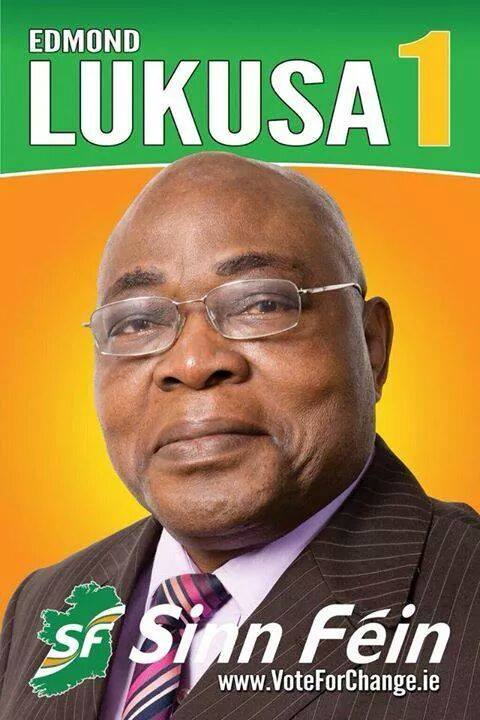
Edmond Lukusa, from the Democratic Republic of the Congo in Central Africa, has made history by becoming Dublin’s first elected Black Politician.

Representing Sinn Féin in the Mulhuddart ward of Fingal County Council, Councillor Lukusa received 353 first preference votes and was (greatly) helped across the finishing line by his running mate Paul Donnelly who topped the poll.

Lukusa moved to Ireland with his wife and family in 2001, became an Irish citizen in 2007 and joined Sinn Féin shortly afterwards. In his home country, he was active with the Centre-Left party ‘Union for Democracy and Social Progress’.

Edmond Lukusa's election poster (Credit: Sinn Féin)

Edmond Lukusa’s election poster (Credit: Sinn Féin)

He was not the first and certainly won’t be the last migrant to achieve electoral success in his adopted country.

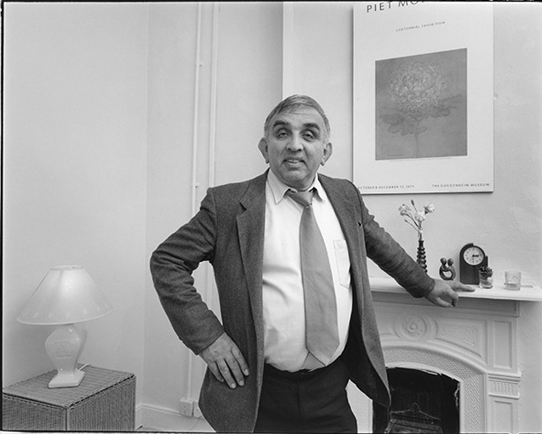
Dr. Moosajee Bhamjee was described brilliantly by Patsy McGarry in the Irish Times as the “first ethnic Indian Muslim socialist psychiatrist” to be elected to the Dail. He represented the Labour Party in Clare from 1992 to 1997.

Born in Pietermaritzburg, South Africa to parents who had emigrated from Bombay at the turn of the century, Bhamjee moved to Dublin in 1965 to study medicine at the Royal College of Surgeons. During his time here, he met an Irish woman Claire Kenny at a student party in Rathmines. After several years of a romance that criss-crossed between Ireland and South Africa, Bhamjee returned to Ireland in 1975 where he went onto marry Claire and have three children.

Moosajee Bhamjee. Credit - liamblakephotographer.com

Moosajee Bhamjee, Ireland’s first Muslim and first Indian TD. Credit – liamblakephotographer.com

Training as a psychiatrist in Cork, Bhamjee started a permanent post at Our Lady’s Hospital in Ennis in 1984. He got involved in local politics, founding the Kilmoran Residents Association and becoming active with the Clare Divorce Action Group. In 1991, he joined the Labour Party and took the political establishment by surprise when he won a seat in the General Election of 1992 with 5,113 first preference votes. He was affectionately nicknamed “the Indian among the cowboys” by the Press.

Talking to the Irish Times in 2010, Bhamjee described his early “disillusionment” with Dail politics. He found himself dealing with “trivial things” like lighting and potholes when he wanted to engage in national issues like health and education. He retired from politics at the following General Election.

A liberal Muslim – “something like a lapsed Catholic” he once quipped – Bhamjee drank alcohol and told a newspaper that the person he admired most in the world was Vietnamese communist revolutionary leader Ho Chi Minh.

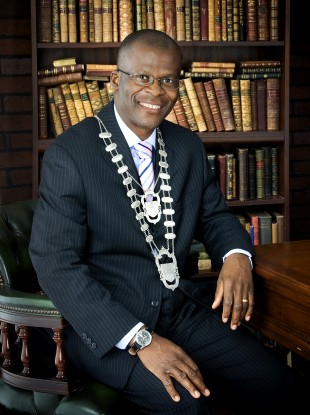
Rotimi Adebari made history in 2007 by becoming Ireland’s first Black Mayor. He was elected as mayor of Portlaoise Town Council with support from Fine Gael, Sinn Féin and an Independent councillor.

Rotimi Adebari, Ireland's first Black Mayor. Credit - theJournal.ie

Rotimi Adebari, Ireland’s first Black Mayor. Credit – theJournal.ie

Settling in Laois in 2000, the Nigerian-born Christian convert from Islam was elected first as an Independent Councillor in the 2004 Local Elections. Adebari told an Irish Times journalist in the run up to the election:

I don’t see myself as a immigrant’s candidate. I am a black man who is representing issues which cut across black and white people. I will be looking for better services for the elderly and for activities that will challenge and engage young people like a sports arena and a skateboard park

He retained his seat in 2009 but lost it this year.

In 2004, Nigerian Born Dr. Taiwo Matthew was elected to Ennis Urban District Council as an Independent Councillor. He has not ran since.

Do you know of any other people of colour who have successfully contested an election in Ireland?

It may not be widely known that London’s first Black Mayor was half-Irish.

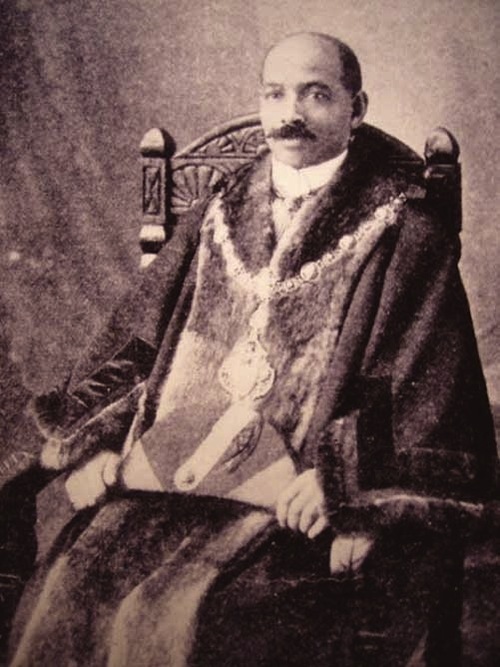
John Archer (1863 – 1932), whose father Richard Archer was from Barbados and mother Mary Theresa Burns from Ireland, was born in Liverpool. He became one of the first people of African descent to be elected to public office in Britain as a councillor in Battersea, and in 1913, the first black mayor in London. Archer was active with Labour Party and the African Progress Union and became election agent for Irish socialist and suffragette Charlotte Despard in 1918 her bid for parliamentary candidate in North Battersea.

John Archer c. 1913. Credit - http://medievalpoc.tumblr.com

John Archer, London’s first Black mayor. c. 1913. Credit – http://medievalpoc.tumblr.com

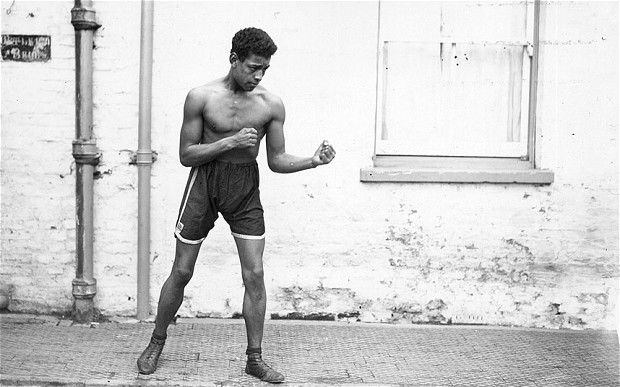
Another fascinating mixed-race character is Len Johnson (1902 – 1969) from Manchester. A legendary professional middle/light heavyweight boxer of the 1920s and ’30s, Johnson was also a life-long Socialist and ran for the Communist Party in his local Moss Side in six different elections. The son of a merchant seaman from Sierra Leone and an Irish Mancunian mother, he is considered one of the best boxers of his generation. Johnson went onto raise a family with an Irish woman.

His story has recently been picked up on by the Telegraph and a play about his life is due to feature as part of the Manchester Fringe festival in Paul Heaton’s The Kings Arms in Salford from 15-18 July.

Len Johnson. Credit - telegraph.co.uk.

Len Johnson, legendary Manchester boxer and Communist activist. Credit – telegraph.co.uk.

Dear, Dirty Dublin

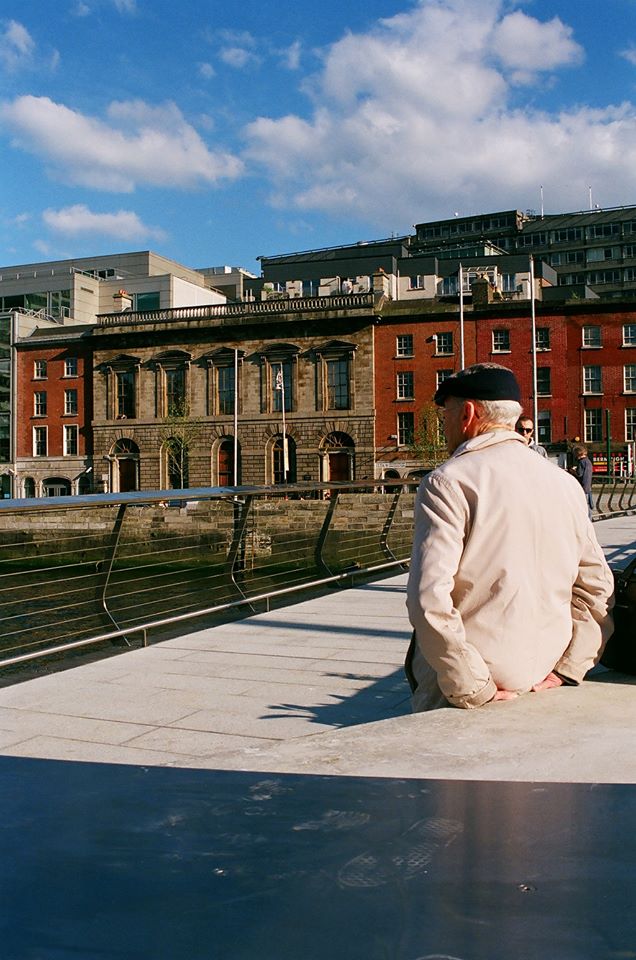
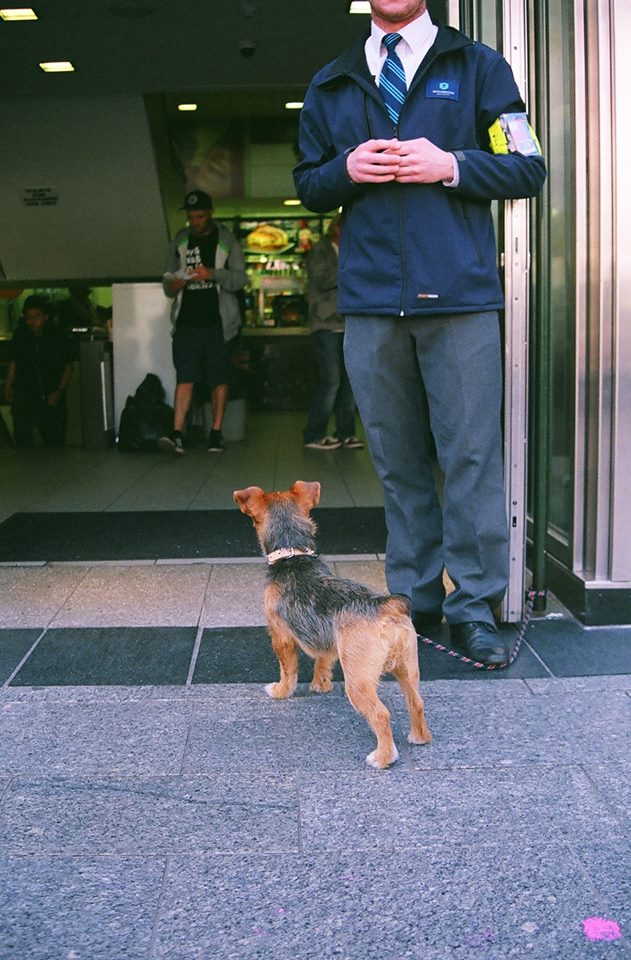
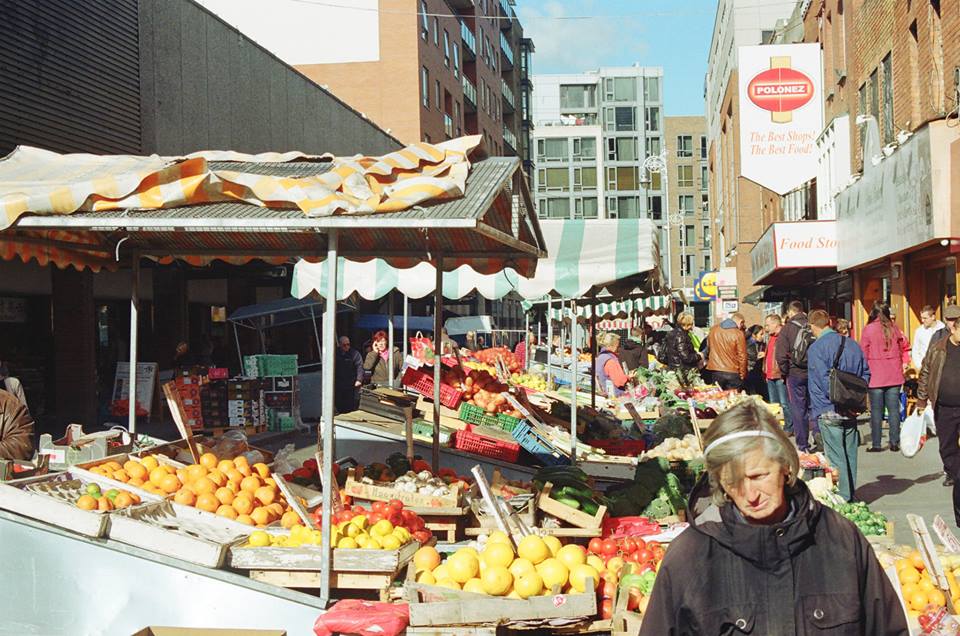
My thanks to Luke Fallon for permission to reproduce some of his photographs on the site here. Luke is very much the fourth musketeer around these parts, and as an  illustrator was responsible for several images in our book and the image that formed the basis of the cover. These images were all snapped on film.

While we’re running them without commentary, I should point out that the first two images show the new Rosie Hackett Bridge.


Credit: Luke Fallon

Credit: Luke Fallon

Credit: Luke Fallon

Credit: Luke Fallon

Credit: Luke Fallon

Credit: Luke Fallon

Credit: Luke Fallon

Credit: Luke Fallon

Credit: Luke Fallon

Credit: Luke Fallon

Continue Reading »

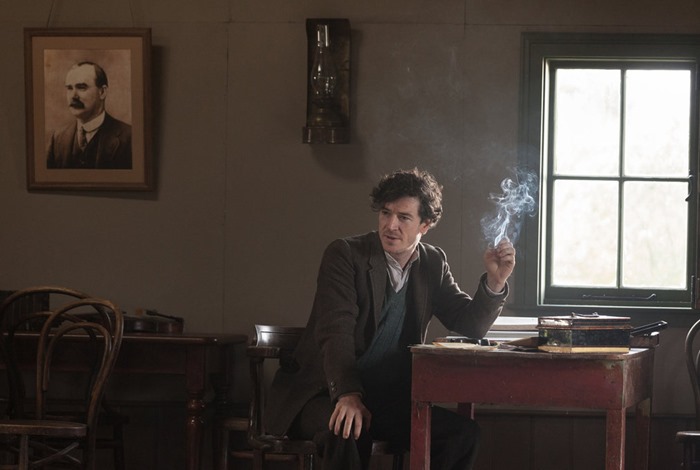
There’s quite a bit of talk about the wonderful Ken Loach at the moment,  as the much celebrated English film director has returned to the theme of revolutionary Irish history. His latest film, Jimmy’s Hall, tells the tale of Jimmy Gralton, the only Irishman ever to be deported from Ireland. Gralton, as a revolutionary socialist, was not exactly the most welcome of individuals in conservative 1930s Ireland.  The film sees Loach tackle  a period only a decade on from the entrenched bitterness of the Civil War he captured so well in The Wind That Shakes The Barely.

A publicity shot for Jimmy's Hall, showing Aidan Gillen as the Leitrim radical Jimmy Gralton.

A publicity shot for Jimmy’s Hall, showing Barry Ward as the Leitrim radical Jimmy Gralton.

Anyway, what does this have to do with Dublin?

One of Loach’s most controversial works  is Hidden Agenda, set against the backdrop of the conflict in the North. It deals with the tricky subjects of state terrorism during the conflict.  Released in 1990,  the film depicts the  fictional assassination of an American civil rights lawyer in the North.

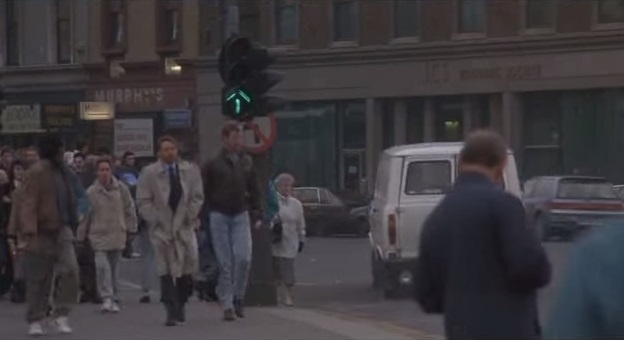
It includes what I think is one of the most dramatic scenes ever filmed in Dublin. In the video below, Dublin can be seen from 1:32:15, with a car turning onto College Green.  The SAS are monitoring a meeting on the O’Connell Bridge between a former  army intelligence officer and an investigator, but they soon sweep in and bundle the man into a van. The panicked investigator hops into a Dublin taxi, and a rather comical exchange follows.


There was certainly nothing comical about the shooting of the kidnap scene on the bridge however. It was filmed using hidden cameras and passersby, who knew nothing about the filming of Loach’s movie , barely blink an eye! I think it’s one of my favourite Dublin moments on the big screen.


The van takes off down O'Connell Street, on a normal day in Dublin...

The van takes off down the street, on a normal day in Dublin…


The way we drink in Dublin has been changing over the last few years; I can’t say evolving, so much as there has been a restoration of natural order. Craft beers vie for counter space alongside Diageo products and pubs like the Black Sheep, Against the Grain and The Beerhouse have sprung up to back up the Porterhouse in breaking the Guinness monopoly. Most importantly, our brewers are starting to brew again, with Five Lamps Brewery and JW Sweetman’s to name but two.

I say ‘again’ as while for decades Guinness and later their parent company Diageo would fully monopolise brewing in Dublin, ours was once an industry that could “present an unrivalled record to the world” (Irish Independent, 05/06/1908) and this city’s brewing was said, as far back as the 17th century to be “the very marrow bone of the commonwealth of Dublin.” (http://simtec.us/dublinbrewing/history.html) The excise list for 1768 showed returns for forty three brewers in the city, with many of these large operations employing dozens of workers.

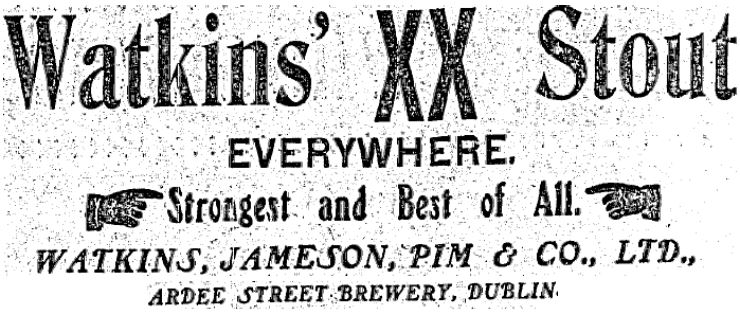
Throughout the 1800’s, with the rise of Guinness’, Dublin’s breweries either amalgamated or closed so by 1850, there were twenty breweries left, by the 1870’s, there were ten left, and by 1920, there were just four breweries including Guinness’ operating in Dublin. One of the largest breweries during this time was Watkins’ Brewery, originally founded as the Ardee Street Brewery, and later known by the title of Watkins, Jameson, Pim & Co., Ltd.
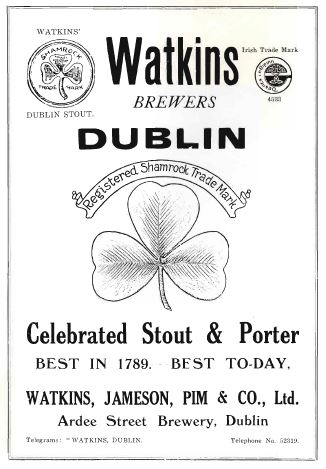
Advertisement for Watkins' Brewers. From the Aonach an Garda programme,1926.

Advertisement for Watkins’ Brewers. From the Aonach an Garda programme,1926.

A date for the foundation of the brewery is hard to ascertain, but the Irish Times, in an article on Dublin brewers (21/01/1932) reported that Watkins’ “of Ardee Street Brewery hold the record of having paid the highest excise duty of any Dublin brewer in 1766”  so its going at least that long, with the excise list naming Alderman James Taylor as the owner. By the 1820’s, the brewery at Ardee Street was the third largest in Dublin, with an output of 300 barrels per week. It was bettered only by Guinness’ with 600 barrels per week and Michael Sweetman’s with 450 barrels per week.

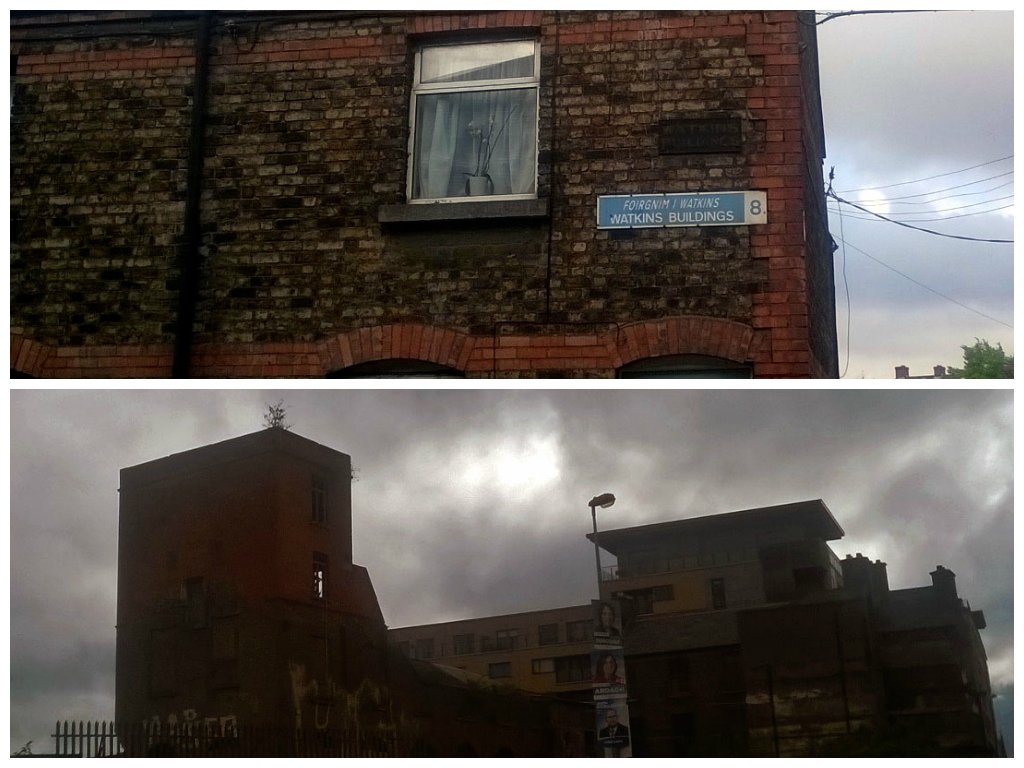
By 1865 the brewery was exporting over 14, 000 hogsheads or approximately six million imperial pints of stout. (Findlaters: The Story of a Dublin Merchant Family 1774-2001, chapter 4.) The brewery was dissected by Cork Street, with the brewing house and offices on its south side, and 87 dwellings for their workers on the north side, some of which exist today, as can be seen in the image below. The houses were built at at outlay of £14, 460, with rents “from 2/6 to 6/-.”  (Irish Independent, Sept. 12th, 1913.)

Watkins' Buildings, and all that remains of the brewery.

Watkins’ Buildings, and all that remains of the brewery.

The Freemans’ Journal, (12/02/1904) spoke of rumours circulating Dublin of an amalgamation of two of its more prosperous breweries, namely Watkins’ and Jameson, Pim and Co., who would move from their premises between Anne Street and Beresford Street to make way for another Jameson: John Jameson and Son, the whiskey distillers. The article also reported that the Watkins’ family had “long since disappeared, and the business now carried on by Mr. Alfred S. Darley.”

The brewery saw action (although not much) during the 1916 rising, when it was occupied by Con Colbert (a teetotaller) and a garrison of 20 men- an outpost under the direct command of Eamonn Ceannt in the South Dublin Union. The outpost was ineffective, and the volunteers eventually joined up with the Marrowbone Lane distillery garrison. It was also tragically caught up in the events of the “Battle of Dublin,” a week of clashes in Dublin from 28th June to 5th July 1922, at the start of the Civil War that saw over sixty people killed. A cooper by the name of James Clarke who worked in the brewery was shot near Gardiner’s Row on the 6th July whilst walking a friend home. He took a bullet straight to the face and died half an hour after admission to Jervis Street Hospital.

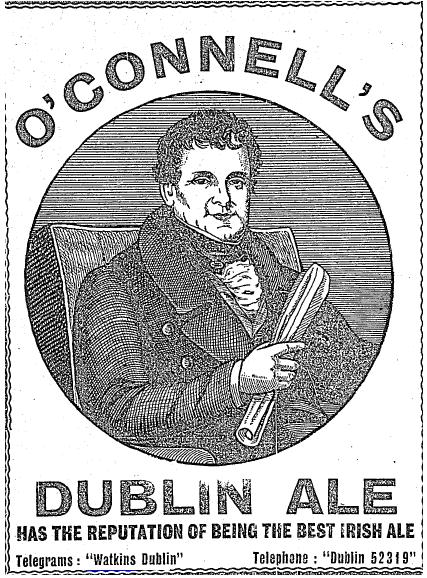
O'Connell's Dublin Ale

O’Connell’s Dublin Ale

Towards the end of the twenties, Watkins’ Jameson, Pim and Co. acquired Darcy’s Brewery and it’s trademarks, including O’Connell’s Dublin Ale, which we’ve mentioned briefly on here before. The Findlaters book acknowledges the takeover of Darcy’s brewery, and also mentions that the company owned several Dublin pubs, “which it called Taps.” In March 1937, the financial paragraph of the Irish Times announced that the firm was in voluntary liquidation. The article shows that at the time, the brewery still employed over one hundred men, and blamed rising excise and falling exports for their downturn.The Findlaters book above also says that while the company outlasted many of it’s competitors, it closed down in 1939.
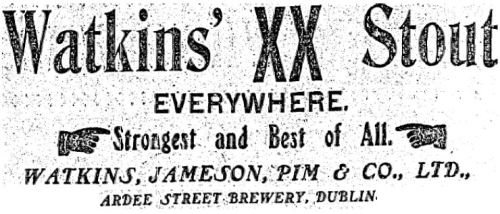
watkins22

We took a look at Dublin’s air raid shelters recently, and in 1943, the brewery was subject to a high court wrangle with a High Court judge quashing a warrant issued by a district justice who, under the “Air Raid Precautions Act, 1939” demanded that the Dublin Corporation be allowed enter the brewery, by force if necessary, to build a shelter in its basement. The demand wasn’t met. After this, as the excellent Wide and Convenient Streets concur, things get a little bit hazy regarding the brewery. In September 1951, there was a large fire at the site, and by 1954, advertisements pop up in various papers offering factory premises to let. With a history spanning three centuries, the brewery seems to have gone “quietly into that good night” along with the rest of Dublin’s breweries, which we hope to cover in the near future.

* Company records sites suggest there was a “Watkins, Jameson, Pim & Co. (1976) Limited”  set up on Wed the 28th of Apr 1976 and is still in existence at 10 Ardee Street.
 

The Other Half Lives.

wherewereyou


Tomorrow evening sees the launch of The Other Half Lives, a new collection of photographs from Wally Cassidy. Yours truly will be saying a few words. The work will be launched in the Gallery of Photography, Meeting House Square.  The book contains a wide selection of street images captured by Wally between 1989 and 1993. We’ve featured plenty of his work on the site before, and below are a few personal favourites.


Protesters burn an effigy of Haughey on Kildare Street.
Protesters burn an effigy of Haughey on Kildare Street.
 

When England came to town: A forgotten football fixture in 1990.

When England came to town: A forgotten football fixture in 1990.


Famous Dublin street photographer 'The Diceman'.

Famous Dublin street performer ‘The Diceman’.

The Dublin Penny Journal was a weekly newspaper published in the Irish capital in the 1830s. I’ve always found it to be of mixed quality as a source, but one thing I have always enjoyed about dipping into it are the illustrations. Whole volumes of the magazine have been digitised here.


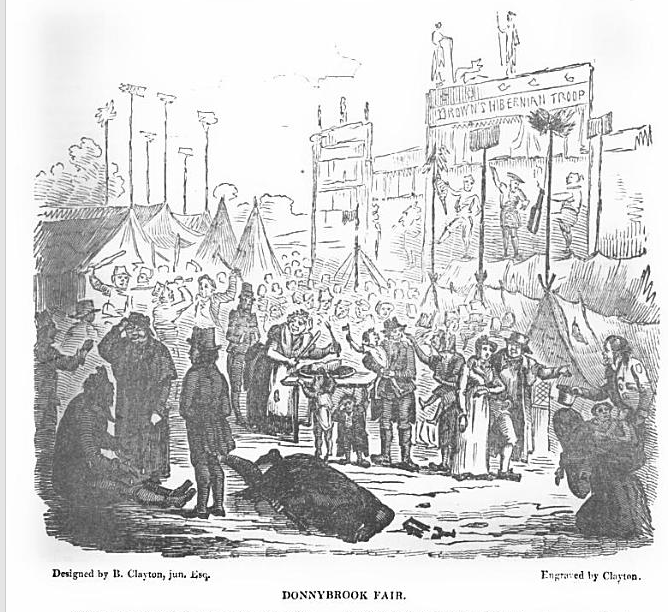
The infamous Donnybrook Fair (1835)

The infamous Donnybrook Fair (1835)

This first illustration shows the (in)famous Donnybrook Fair, which we’ve looked at on the site here before. In that piece Ciaran noted that “By the time it was dissolved by Dublin Corporation in 1855, it had become a cacophonous event famed for music, heavy drinking, cock-fighting and shillelagh swinging.”


George II statue in St. Stephen's Green (1835)
George II statue in St. Stephen’s Green (1835)
The missing centre-piece of St. Stephen’s Green also appeared in the publication. The work of the talented John Van Nost The Younger, this statue stood in the centre of the park from 1756 until it was bombed (not for the first time) by republicans in 1937.

Entrance to the Zoological Gardens (1834)

Entrance to the Zoological Gardens (1834)

Illustrations depicting Dublin zoo were plentiful in the magazine. The below combination of a puma and a camel may not have worked so well in real life…..

The Zoological Society

The Zoological Society (1834)


Continue Reading »

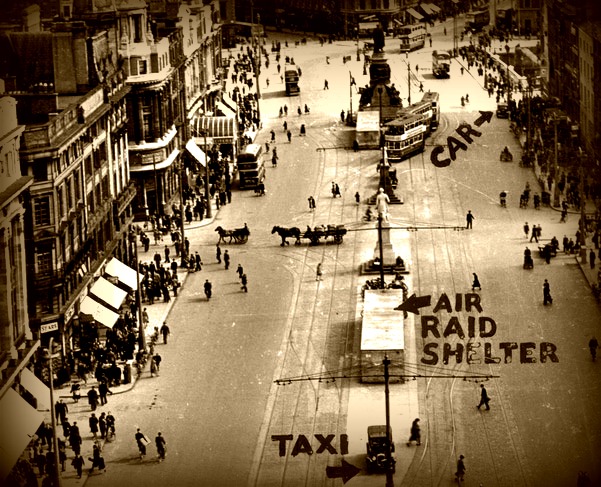
Image taken from the Nelson Pillar showing an air raid shelter on O'Connell Street during WWII.

Image taken from the Nelson Pillar showing an air raid shelter on O’Connell Street during WWII.

While there was no World War II in Ireland (don’t you just love the term ‘The Emergency’), there were many air raid shelters constructed in the Irish capital during the years of that conflict. The above image, showing an overground shelter, was taken from the top of the Nelson Pillar.

A September 1940 news-report gives some idea of how widespread shelters were in the city, and also highlights the fact overground shelters appeared primarily in the principal streets of the capital and in areas with tenement populations:

At the moment trench shelters have accommodation for 6,500 people, and they are situated at Fitzwilliam Square, the Custom House, Merrion Square, Oscar Square, St. Patrick’s Park Spitalfields, Pimlico and Ordmond Square. The overground shelters, which are situated in the principal streets and in the vicinity of tenements, will give accommodation to some eight thousand people.

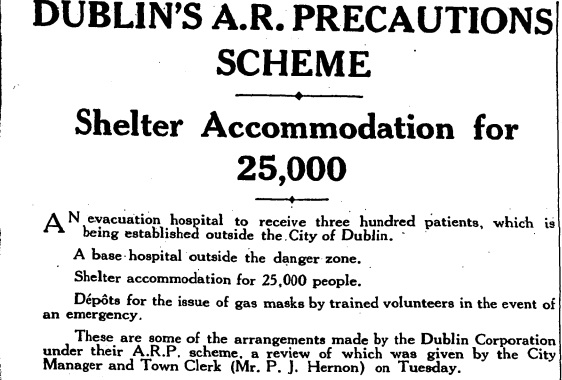
The Irish Times of 11 November 1939 details Dublin's planned precautions.

The Irish Times of 11 November 1939 details Dublin’s planned precautions.

Shelters were not only provided and constructed by Dublin Corporation, some emerged from private  (and often subsidised) construction efforts. The Irish Press reported for example that “at least one Dublin cinema is providing its own air-raid shelter. This cinema was built on the site of a Turkish baths, and the old bath chamber, which as underground, has been adapted as a shelter. ”


The Irish Times noted in September 1940 that there was “much willful  damage” being done to the shelters, quoting a Captain J.J Blake of the Irish Army who issued a radio appeal to citizens not to vandalise the structures. Blake explained that when first constructed the policy was to leave the shelters open, but “so great was the willful destruction and damage that the authorities were compelled to close them.”


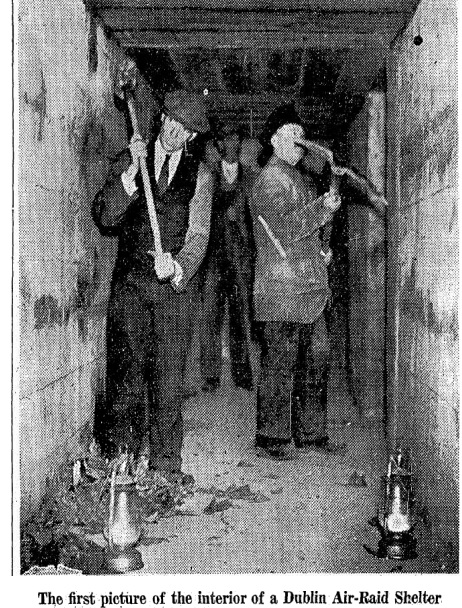
A 1939 image of men working on an air raid shelter (Image: Irish Press)

A 1939 image of men working on an air raid shelter (Image: Irish Press)

Continue Reading »

‘Shake Hands With The Devil’, released in 1959, is a film set during the Irish War of Independence and filmed here in Dublin. It was directed by the English film director Michael Anderson, and at the time of its release it received quite a lot of media attention owing to the fact it was banned by Belfast authorities,  with one northern politician jokingly asking if it was banned because it’s title could be mistaking for ‘Shake Hands With Dev’!

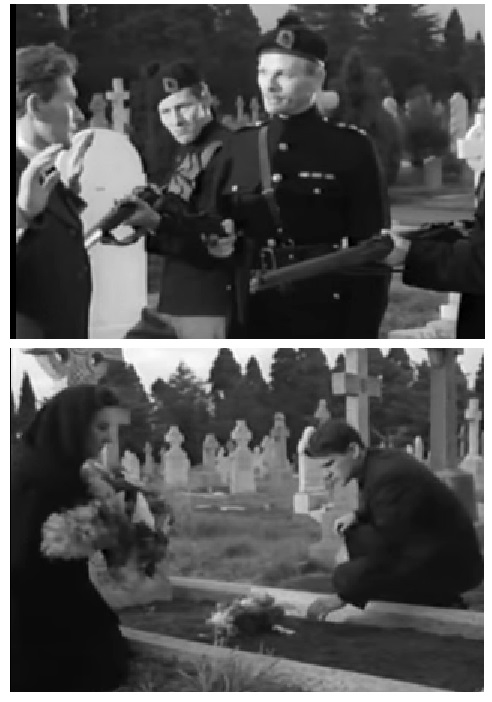
The film is worth watching for some great historic shots of Dublin. The plot essentially revolves around an American medical student, Kerry O’Shea (played by Don Murray) who is drawn into the IRA campaign.In the opening stages of the film, from 1:45 onwards, as the narrator that tells us “often in its turbulent history, the men of Ireland had risen to fight for their freedom – only to be crushed”, we see brilliant shots of Glasnevin Cemetery, including from the top of Daniel O’Connell’s roundtower. IRA men are seen carrying out a fake funeral in the cemetery for a casket loaded with riffles, while Black and Tans burst onto the screen in pursuit.


Scenes from Glasnevin Cemetery.

Scenes from Glasnevin Cemetery.


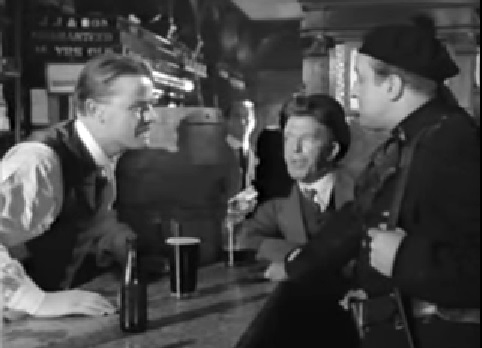
Trinity College Dublin plays the part of the Royal College of Surgeons in the following scene of the film, while from 9.30 on the inside of a Dublin pub is shown, though I’m unable to identify it. Black and Tans enter the premises and interrogate locals.


A Black and Tan enters a Dublin public house.

A Black and Tan enters a Dublin public house.


Michael Connelly, who has researched depictions of the IRA in film and television has noted that “The message of the film is that the Old IRA was a legitimate force of common men, much like American patriots, who fought the British for independence and freedom. By being willing to accept a compromise they appear reasonable, peace loving and hesitant to use violence.”

My thanks to Paddy Gifford for bringing my attention to this film.

Image credit: moviepostershop.com

Image credit: moviepostershop.com