Feeds:
Posts
Comments

This month marks the centenary of Cumann na mBán being founded in Dublin, and there has been much talk about the role of women in Irish political history. While Cumann na mBán was a nationalist organisation focused on providing practical support to the male Irish Volunteers, many other women were also active in politics a century ago, ranging from trade unionism to suffrage campaigns seeking the vote. This brief post looks at some examples of militant opposition to suffragists on the streets of the capital, and while it’s not a subject I’ve a great familiarity with I found all of these little stories interesting and worth sharing.
Francis Sheehy Skeffington, who refereed to the Catholic Ancient Order of Hibernians as the "Anicent Order of Hooligans".

Francis Sheehy Skeffington, who refereed to the Catholic Ancient Order of Hibernians as the “Anicent Order of Hooligans”.

The ‘Ancient Order of Hooligans’ in the Phoenix Park, August 1912.

In early August 1912, a huge crowd assembled in the Phoenix Park to hear a number of male and female speakers discuss the need for votes for Irish women. The Irish Times commented that “uproar and considerable interruption were a leading feature” of the event, with the paper noting that “several attempts were made to rush the platform”.

Vigorous hissing, booing and groaning greeted the speakers at almost every stage of the proceedings, which were opened by the police taking the precaution of forming a wide space between the mob and the position taken up by the suffragists.

One of those to speak was Francis Sheehy-Skeffington, a prominent figure in Dublin at the time, “who was accorded a very hostile reception, which he appeared to regard with considerable satisfaction.” Skeffington caused pandemonium by addressing the crowd as “Ladies, Gentlemen and members of the Ancient Order of Hooligans”, a reference to the conservative Catholic Ancient Order of Hibernians. Despite the fact missiles were thrown at the stage on this particular occasion, the speakers succeeded in leaving the park in safety, vowing to return at a later date.

The Phoenix Park was a regular spot for political demonstrations at this period in Irish history. Only weeks after the above rally was disrupted, another pro-suffrage rally in the park encountered similar hostility. On that occasion, prominent Dublin Jew Joe Edelstein spoke of his belief in the right of women to vote, asking the crowd “whether they were the people who gave to Ireland Wolfe Tone, Robert Emmet, Michael Davitt etc, who were now going to condemn their own sisters, their mothers and their daughters.” Edelstein’s appeals to the crowd, much like Skeffington’s, went down like a lead balloon. Edelstein appears in the newspapers the following month at a suffrage meeting once more, though on that occasion openly hostile to the movement! At a meeting in September 1912, Edelstein drew loud boos from women by asking if “the Irish people should subjugate the great important question of Home Rule to a petty movement like theirs.”

The Women’s Anti-Suffrage League.

Not all women who involved themselves in suffrage politics were seeking the vote. Some were quite opposed to the very idea. One such organisation was the Women’s Anti-Suffrage League, who attracted considerable attention in the media. Detailed reports of the Annual General Meeting of this body appeared in the Irish media in March 1912, where the following motion was carried:

That we, as women, appeal to the women of Ireland to express their profound disapproval of the late exhibition of lawlessness by militant suffragists, and to condemn such action as fatally injurious to the best interests of their sex.

One woman noted that it was with feelings of “indignation, mortification and shame” that many of them had read of the actions of militant female activists. The first references to this body being established in Dublin appeared in the media in February 1909, and the League seem to have brought a number of figures from the anti-suffrage movement in Britain to Dublin on public speaking engagements. Elizabeth Crawford has noted that in the years prior to the First World War the chairperson of the Anti Suffrage League in Dublin was a Mrs. Bernard, who was also the wife of the Dean of St. Patrick’s Cathedral.
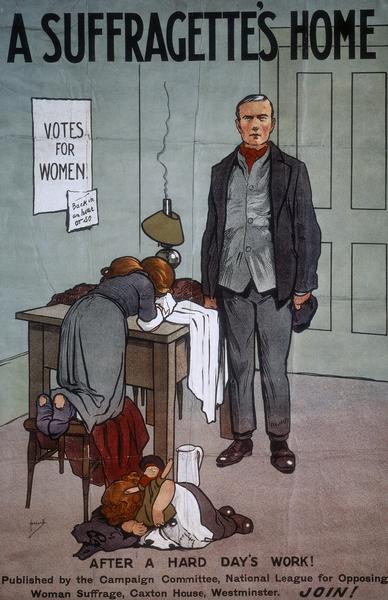
A poster from the League for Opposing Woman Suffrage (UK)

A poster from the League for Opposing Woman Suffrage (UK)

Chased down the street and onto a tram, August 1912.

On 8 August 1912, the following brief report appeared in The Irish Times:

When passing through Henry Street yesterday afternoon…a young woman, whom the crowd regarded as a suffragist was attacked, and a noisy scene followed. She was pursued in the direction of Nelson Pillar, where the police intervened, and saved her from the mob by getting her into a tramcar which was going in the direction of Dalkey. A good deal of excitement was caused, and as the tramcar moved off, a large section of the crowd gave chase…giving vent to their feelings as they ran along.

Trinity College Dublin students goading suffragists, 1914.

Previously on the blog, we’ve looked at the phenomenon of Trinity Monday in the early twentieth century, a day when new Scholars were announced on-campus and Trinity students tended to run amuck around Dublin. Shortly after midday on Trinity Monday in 1914,there were unexpected visitors at the offices of the Women’s Social and Political Union on Clare Street. The Irish Independent reported that “a large number of students arrived here” and that “a number of them bundled papers and banners together and threw them out of the window to a cheering crowd outside.” Not content with this, a political flag belonging to the movement was stolen, which was later carried triumphantly from the building. The students made for the Mansion House, and rushed the building as a delivery was taking place. The Irish Times reported that:

On a landing they found the municipal flag, which owing to the absence of the Lord Mayor from the city was not hoisted on the pole on the house-top. The students tore up the flag, and hoisted the ‘Suffragette’ flag upon the flagpole. For an hour this floated over the Mansion House.

Only last week I attended a very interesting meeting in The Cobblestone pub, organised by the Stoneybatter and Smithfield People’s History Project. The historian Liz Gillis spoke about the bombardment of the Four Courts in June 1922, when Free State forces shelled the historic building in an attempt to defeat republican forces who had occupied it. The entire event remains incredibly controversial, as the Public Records Office went up in smoke, damaging priceless Irish historic archival materials.

An iconic image of the Four Courts ablaze.

An iconic image of the Four Courts ablaze.

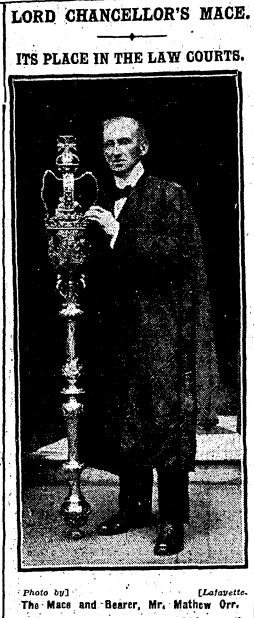
In the aftermath of the destruction, it was noticed that it wasn’t only archival historical material that had gone missing in the fight. The ceremonial Lord Chancellor’s Mace vanished from the premises, but was recovered within a fortnight, buried under the floorboards of a nearby tenement!

The mace photographed in The Irish Times.

The mace photographed in The Irish Times.

On 12 July 1922, the Freeman’s Journal reported:

A remarkable story of the disappearance of the Lord Chancellor’s mace from the Four Courts was told at the North City Parish Court yesterday, where William Holland, of 8 Arran Quay, was charged with having stolen the article on June 30. The value of the mace was given as £500 on the chargesheet, and it was described as the property of Saorstat na hÉireann.

The paper note that “by some mysterious means” the mace had found its way not only to 8 Arran Quay, but to below the floorboards of 8 Arran Quay! Holland alleged that”he received the mace from an officer of the National Army, who asked him to take care of it until such time as the trouble would have ended, and that after a couple of days the officer along with others returned and told the prisoner he mght keep the article as a souvenir.” The media noted that according to a leading member of the legal profession, the mace “was made in the city about 1773.” Evidence was provided in court that two members of the Free State forces had brought the mace with them while dining in the Four Courts Restaurant, over which Holland lived, and that the mace had not been seen since that time. It was alleged by several members of the Free State forces in court that Holland had stolen the mace, rather than being given it as any sort of souvenir. One woman who lived in the vicinity, Miss Mary Keating, alleged that Holland had told her he expected there would be a large reward, perhaps £1,000, for the return of the mace, but she did not take his talk seriously at the time.

Curiously, while Holland was charged before the courts, the trail in the mainstream press seems to go cold, and I’m unable to figure out just what punishment was handed down, if he was found guilty. Regardless, the mace has the privilege of being a rare historic item that wasn’t lost to the bombardment of the Four Courts.

Firstly, my apologies for being quite inactive on here of late. There’s quite a lot going on at the moment, some of which I’ll say more about here in future, but all exciting none the less.

50_anit_nuc

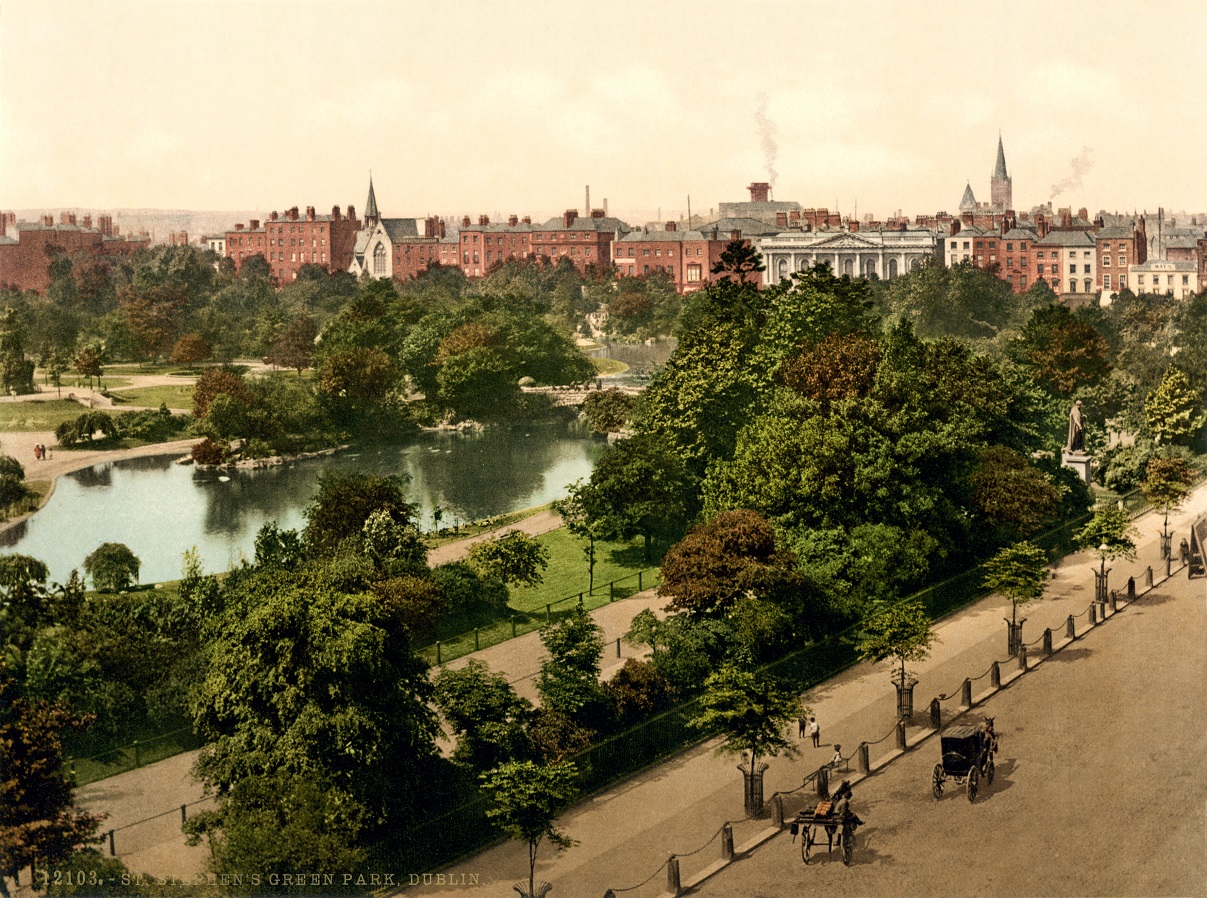
Starting tomorrow, I will be doing a weekly tour of St. Stephen’s Green. The park, and not the shopping centre. The tours run every Saturday and Sunday at 11.30am from The Little Museum of Dublin, and I will be delivering the Saturday tour each week. It’s incredible to think it’s taken so long for a tour specific to the Green to emerge in Dublin, and this is the brainchild of the Little Museum of Dublin, the museum of twentieth century Dublin that sits right alongside the park.

.

The Sunday tours will be conducted at the same time by Ronan Sheehan, who produced one of our favourite books about the city, ‘The Heart of the City’, which we’ve featured on the site before here.

The admission cost to the Museum covers the tour, so that’s €7 for adults but less for students and U18’s. My tours will cover, among other things, the history of ownership of the park, the various monuments within it, the relationship between the park and local residents through the ages and the revolutionary history of the Green. I look forward to meeting some of you over the coming weeks and months.

Over the weekend I was asked by thejournal.ie to pen a piece on the passing Shane MacThomais. I’m reposting it here as all references to Shane’s passing from Come Here To Me have been made elsewhere, on our Facebook page. For the historical record I wish to mark his passing here on the actual website. The three of us at Come Here To Me extend our deepest sympathies to Shane’s family and many friends.


Bohemian F.C and Shamrock Rovers players join in a minutes applause for Shane MacThomais, a regular at Dalymount Park (Image: Paul Reynolds)

Bohemian F.C and Shamrock Rovers players join in a minutes applause for Shane MacThomais, a regular at Dalymount Park (Image: Paul Reynolds)


FEW FINAL RESTING places in Ireland command the respect of the round tower tomb of Daniel O’Connell. Forever immortalised in Irish school books as ‘The Liberator’, O’Connell is just one of the one-and-a-half million people whose mortal remains rest in what is officially known as Prospect Cemetery. The story of Ireland can be told by walking the grounds of this amazing place.

There is the tragic young Sean Healy, a 15-year-old rebel who perished in the rebellion of 1916, gunned down on a Phibsboro street corner. There are ‘characters’ of centuries past like Michael J Moran, or Zozimus as he was known, the blind bard of nineteenth century Dublin who captivated Dubliners with song. There are shocking reminders of the wrongs of Irish society in recent times too, with many victims of the Magdalene Laundry system to be found within the cemetery. Shane MacThomais understood that each and every human being buried within the walls of the cemetery he loved so passionately had a story, and his ultimate ambition was to tell as many of those stories as he could.

I had the good fortune of encountering this ambition of Shane MacThomais first-hand. My great-grandfather was one of the tens of thousands of Irishmen who would die as a result of the First World War, though lacking a heroic ‘over the front’ battlefield death and the Commonwealth Graves headstone that might come with it, rather dying months later in the Richmond Hospital in Dublin. A working class statistic of the most horrific war in human history, MacThomais was able to help my family locate the paupers’ grave in which he now rests. It may have been far from a round tower, but to my mother it was a spot to stand and pay homage to a man she had heard so much about, and an emotional experience. This was only one part of Shane MacThomais’ job, but all who knew him knew it was an important part to him.

In all the time I was fortunate to know Shane, he was a tireless champion of the underdog in Irish history. Only last year he passionately argued for Dublin’s newest bridge to be named after a woman, Rosie Hackett, arguing that “all too often the role of Irish women is forgotten in our history books.” There has often been much else missing in our history books in Ireland, such as the victims of tragedies like tenement collapses and tuberculosis outbreaks.

Continue Reading »

Thomas ‘Tommy’ Wood (1919-1936), aged just 17, was the youngest Irish volunteer to fight and die with the International Brigades. A Dubliner from a staunch Republican family, he left for Spain with Frank Ryan on 11th December 1936 and was mortally wounded just 18 days later at the Battle of Cordoba.

Wood (often misspelt as Woods) joined Na Fianna Éireann at the age of seven and was later active with B Company, 2nd Battalion, Dublin Brigade, IRA. Before leaving, he wrote a letter to his mother:

I am very sorry for not telling you where I was going. I am going to Spain to fight with the International Column. Please forgive me for not letting you know. I got my wages in the Gas. Co. alright. I left a message to be delivered on Sunday. We are going out to fight for the working class. It is not a religious war, that is all propaganda. God Bless you.

He lived with his parents John C. Wood and Sarah Ann Wood (nee Doyle) at 16 Buckingham Place just off Amiens Street with siblings Sean (who died in a workplace accident in 1938), Patrick, Donald, Seamus, Ellis, Kathleen and Frances.

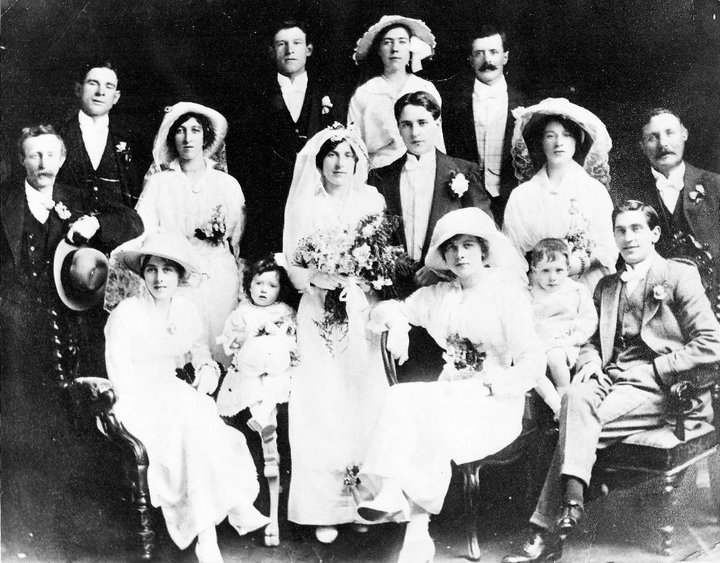
Wedding photo of Sarah Doyle and John Woods, 1915. Credit - ailishm49

Wedding photo of Tommy’s parents Sarah Doyle and John Woods, 1915. Credit – ailishm49

During intense fighting at the Battle of Cordoba, which saw eight Irish anti-Fascists killed, Wood was shot in the knee and then in the head. Frank Ryan wrote to his parents:

He was wounded on the Cordoba Front on December 29 last. I was talking to two comrades who brought him to the dressing station. He was hit above the left knee and then as they were bringing him in, he and one of his comrades was hit again. This time the bullet hit Tommy in the head, but the two lads with him thought it was only a graze as he was conscious all the time. He was brought to Andujar Hospital and the first report from there was very favourable, then we could get no more news of him. It is only now that we have found out why.

Ryan went onto say that name of Woods was confused originally with that of Wools, a Dutch comrade who was also in the hospital. His letter continued:

His comrades here wish to be associated in rendering you their sympathy. Tommy was universally liked during the time he was with us here. I want to emphasise that his life was given in a great cause. He did not come looking for adventures nor for reward. He believed in the cause for which the people of Spain, helped by men such as himself, are fighting. He has given his life not only for the freedom of the people of Spain, but of the whole human race and he will be remembered and honoured equally with those who gave their lives for freedom in Ireland.
On 13th January 1937, the Irish Independent reported:

News has reached Dublin that natives of Dublin serving with the Reds at Albacete – T. Woods (aged 17 years), of Buckingham Place, is suffering from shell shock, and C. Gough, of Cabra, is in hospital with a neck wound. Both casualties were sustained in an air raid on Albacete.

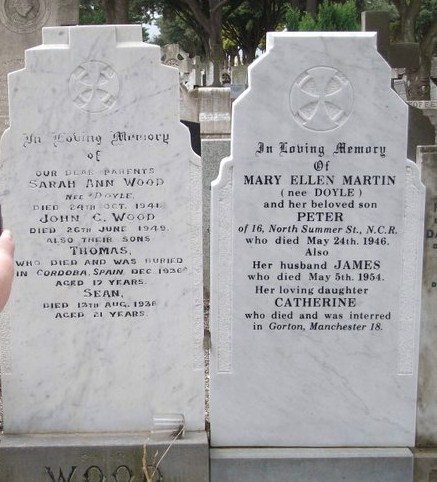
Buried in Corboda, Tommy’s name is inscribed on the grave of his parents Sarah and John Wood and brother Sean in Glasnevin Cemetery:

Wood family grave. Credit - ailishm49.

Wood family grave. Credit – ailishm49.

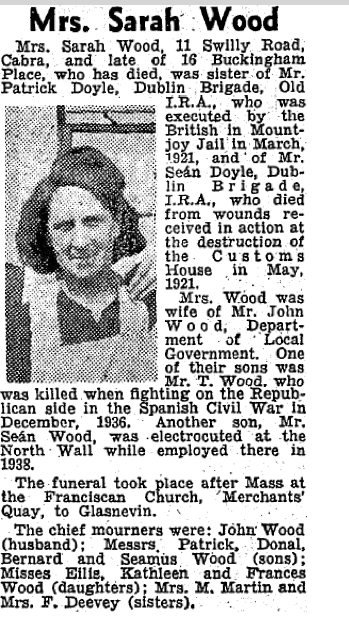
The Irish Press (29 Oct 1941) reported on the death of Sarah Woods (nee Doyle):

Sarah Woods - Irish Press (29 Oct 1941)

Sarah Wood – Irish Press (29 Oct 1941)

Tommy was immortalised in Christy Moore’s song ‘Viva La Quinte Brigada’:

Tommy Wood age seventeen died in Cordoba
With Na Fianna he learned to hold his gun
From Dublin to the Villa del Rio
He fought and died beneath the Spanish sun.

Two of Tommy Wood’s uncles were killed during the War of Independence.

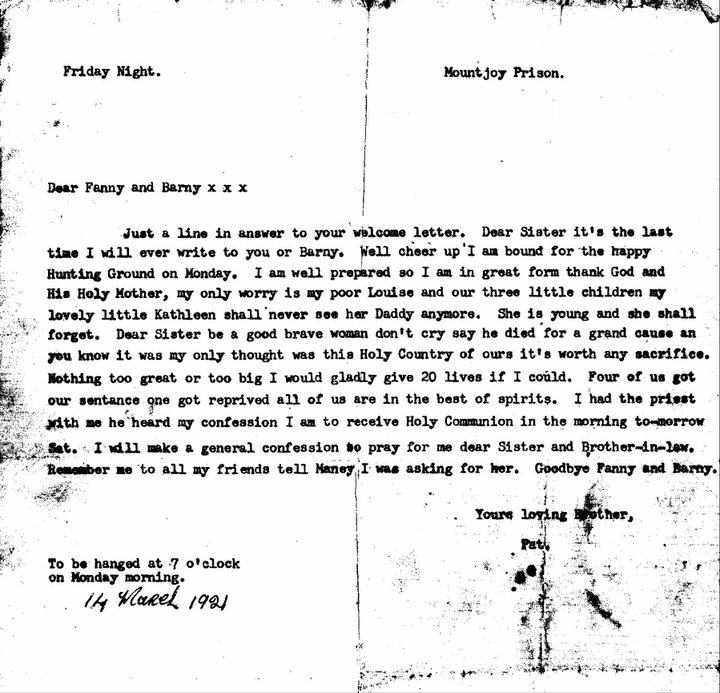
Patrick ‘Paddy’ Doyle (29), of 1 St. Mary’s Place, a carpenter married with two children was hanged in Mountjoy Jail on 14th March 1921. Active with F Company, 1st Battalion, Dublin Brigade, IRA, he was arrested and charged with high treason and levying war against the King for his part in an attempted ambush of British forces at Drumcondra on 21st January.

Letter from Patrick Doyle to his sisters a few days before his execution. Credit - ailishm49.

Letter from Patrick Doyle to his sisters a few days before his execution. Credit – ailishm49.

Six weeks after his execution, his brother Seán ‘Jimmy’ Doyle was killed during the IRA’s attack on the Custom House on 25th May 1921. During an attempt to escape, he was cut down by a British Army machine gun and died of his wounds in the Mater Hospital. Doyle had been active with Michael Collin’s ‘Squad’. Oscar Traynor (BMH WS 340) wrote of his last hours:

As he lay on his deathbed (the nuns) said his one worry was, “Are the boys beaten?”, and that night as the sound of nearby explosions shook the air, Sean’s face, wreathed in smiles, turned to the Nun who was attending him, and he feeble whispered, “Thank God, Sister, the fight goes on”.

If anyone has a photograph or any further information on Tommy Wood, please get in touch.

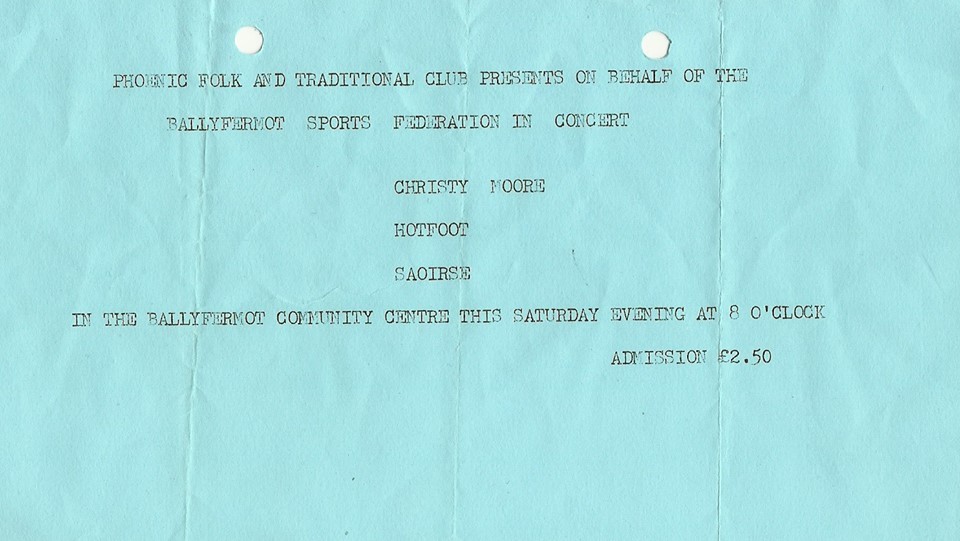
A ticket for Christy Moore in Ballyfermot once upon a time, a find which sparked my interest in interviewing Christy about his recollections on Dublin.

A ticket for Christy Moore in Ballyfermot once upon a time, a find which sparked my interest in interviewing Christy about his recollections on Dublin.

One of the joys of Come Here To Me to date has been interviewing people who we feel have made a real contribution to this city and its culture. We had the honour of publishing an interview with the late Philip Chevron of The Pogues and the Radiators of Space, and we’ve also discussed the city with people as diverse as the street artist Maser and inner-city historian Terry Fagan.

For us, these interviews are a means of collecting important social history from people who have proactively engaged with Dublin and who have stories to tell about the city and its people. For a long time now, I have wanted to interview Christy Moore, someone who has been a constant presence on the music circuit of the capital since releasing his first album under the stewardship of Dominic Behan in 1969. A veteran of iconic acts Planxty and Moving Hearts, Christy has also been an active campaigner in Irish political life for decades, standing beside and a wide range of causes in Irish life, ranging from the anti-nuclear movement of the 1970s to the anti-drugs movement that emerged in working class Dublin thirty years ago.

Christy agreed to answer a wide variety of questions on his relationship with this city through the ages, ranging from the great venues of Dublin’s past to his encounters with people such as Seamus Ennis and Liam Weldon who are institutions in the traditional music heritage of Dublin. I hope readers enjoy it. I’ve followed the format of previous interviews here, with question in bold.

Before you we’ve spoken to Philip Chevron from Santry and Paul Cleary from Ringsend about their memories of Dublin in the decades that have passed, as a young lad from Kildare did you have much engagement with Dublin city growing up?

My earliest memories of coming to Dublin are back to the early 50s. Then I spent a lot of time with my grandparents Jack and Ellie Power who lived at Back-Weston near Lucan. Jack loved the old cowboy movies. We would go to The Carlton,The Savoy,The Metropole or to any of the fine cinemas that festooned the city centre. Back then cars could be parked on O’Connell St right outside a cinema. I recall the picture house queues, the excitement. I remember one singing busker who moved down the queue. Also a street photographer who was always snapping near The Pillar.I remember going to the Theatre Royal in Hawkins St, hearing the magic organ and seeing the Royalettes high kicking before the big picture. We always stopped on the way home at Pacitti’s Ice Cream parlour on Parkgate Street .There I had a young boy’s blushful crush on one of Mr Pacitti’s daughters. Later Jack would pull into the Ball Alley House in Lucan or The Dead-Man-Murrays in Palmerstown for a few swift pints.

My first visit to Croke Park was around this time too. The excitement of that is still palpable. The paper hats and rosettes, the Artane Boys Band, The Hawkers ( “anyone for the last few choc ices”). My grandfather was a proud Meath man. If The Royal County were playing The Dubs the pressure would mount. I remember seeing Snitchy Ferguson, Kevin Heffernan and Ollie Freaney playing for Dublin. Croke Park was an awesome spectacle for a young country lad. We always went there on Patrick’s Day to see The Railway Cup Finals. Back then those Inter-Provincial games were second only to All-Ireland Finals in terms of importance and crowd numbers.

Before he died in 1956 my father took me once to Lansdowne Road to a Rugby International. I remember seeing Gordon Woods and Tony O’Reilly play for Ireland against Wales when I was 10 years old. The atmosphere was quite different at Lansdowne Rd.You’d not find too many hip flasks nor rugs in The Cusack Stand.

Recently a box in our family attic unearthed a ticket for a Christy Moore gig in Ballyfermot from the early 80s, organised by the local folk society. Does Ballyfermot bring back any memories? I know you played there a bit, and the brilliant talent that was Liam Weldon was from there, while one of the most powerful images in your book One Voice comes from that suburb, from the day Bobby Sands passed away.

I recall a number of gigs in Ballyer. The one you mention and another one run by my sister Eilish in the Community Centre, I also recall one in The Cinema but my recall is a bit hazy on these. I well remember visiting The Keenan Family when we played together for a TV programme in The Abbey Tavern, Howth circa 1979. I also visited the home of Liam and Nellie Weldon to swap songs with Liam. Back in the early days of Ballyfermot Rock School I did a workshop and small gig there. One of the students that day was Damien Dempsey. I can still see the lovely wild head on that young fella.
A candid shot of a member of the Special Branch stopping Christy Moore in Ballyfermot, which recently picked up huge traction online, with thousands of likes on a variety of Facebook pages. The image was published in 'One Voice: My Life In Song'

A candid shot of a member of the Special Branch stopping Christy Moore in Ballyfermot. This image recently picked up huge traction and interest online. The image was published in ‘One Voice: My Life In Song’

Continue Reading »

War can bring out the worst in people, and not only those on the front-lines of battle. In 1914 there were a number of attacks in Dublin carried out against businesses owned by German nationals, with particular attention being paid to pork butchers in the city. Much of this violence occurred on a single night, with a number of premises attacked in Dublin on 15 August 1914.

The violence was detailed in contemporary newspaper reports, with the Irish Independent reporting that “German pork shops on the south side of Dublin city had a rough time on Saturday night. Between 11 and 11.30 Lang’s shop in Wexford Street was wrecked. A jeering crowd of youths, it appears, had become aggressive towards the manager.” According to the newspaper, “everything breakable in the place was smashed, and the shop left a wreck.” The paper condemned the violence, stating that “the mob, never a wise arbitrator” had no authority to carry out such actions. The poet Padraic Colum asked, in a letter to the Irish Independent, “what have these defenceless traders done to the citizens of Dublin that their means and substance should be destroyed? What has Germany done to Ireland that she should be insulted by mean attacks?”

A popular recruitment poster from WWI asking Irishmen if their home was worth fighting for, and showing German soldiers entering a home.

A popular recruitment poster from WWI asking Irishmen if their home was worth fighting for, and showing German soldiers entering a home.

While there was considerable damage done to Lang’s premises, it was not the only one to be greatly damaged in the heat of the moment. Newspapers noted that George Retz’ butchers on the South Circular Road and Morton’s tobacconist on the same road were also attacked. It was reported that a sum of £20 was taken from the till of Reitz’ premises, while £14 was taken from the till of Lang’s premises.

In October it was reported that Lang was seeking compensation via a sitting of the City Sessions for the damage done to his premises, which was estimated to be just over £117. It was noted that he had lived in the country for twenty-three years, had married an Irish woman and had children here, yet amazingly it was argued on behalf of the Corporation that “the applicant was an alien enemy, and therefore not entitled to sue in their courts while a state of war existed between Great Britain and Germany.” Reitz also sought compensation from the authorities, to the sum of £223, and detailed that he had lived in Britain for the past twenty-six years and was not eligible for German military service. The Independent report noted that “his Lordship during the discussion said very few Englishmen had been allowed to do business in Germany. If these claimants had any right to sue, it was suspended during the war.”

Manus O’Riordan has noted that that among those to condemn the outrage outright was The Irish Worker newspaper, which accused the mob of “German baiting” and the authorities of turning a blind eye, noting that the DMP had arrested Reitz himself. The paper claimed that it was the “sport” of Redmondites, and also made it clear that if the homes and businesses of Germans were to be attacked again, “an appeal to the men of the Transport Union and the Citizen Army to act as a guard for their houses would not fail to produce good results.”

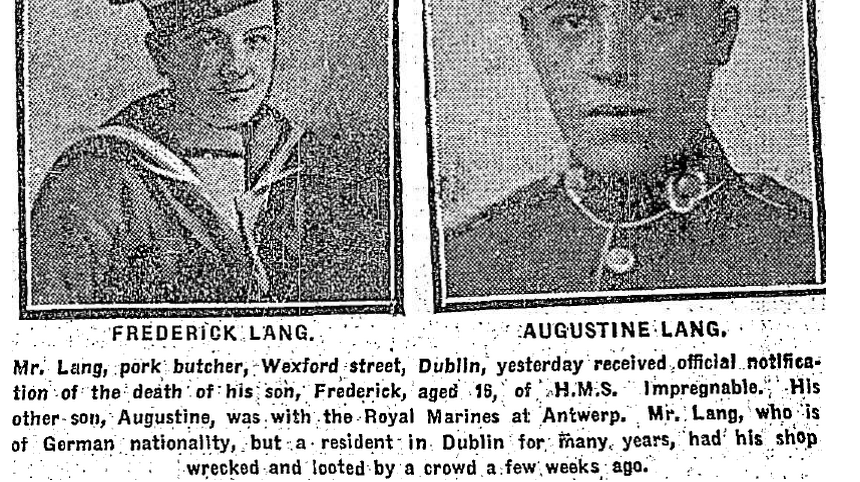
Highlighting the moronic and politically clueless nature of the attack on Lang’s premises was a report in newspapers on 20 October of that same year, detailing the fact his son Frederick Lang, aged 16, had died in the war effort in the service of British forces. His other son, Augustine, also served in the war effort with the Royal Marines at Antwerp.

Report detailing the death of Lang's son.

Report detailing the death of Lang’s son.

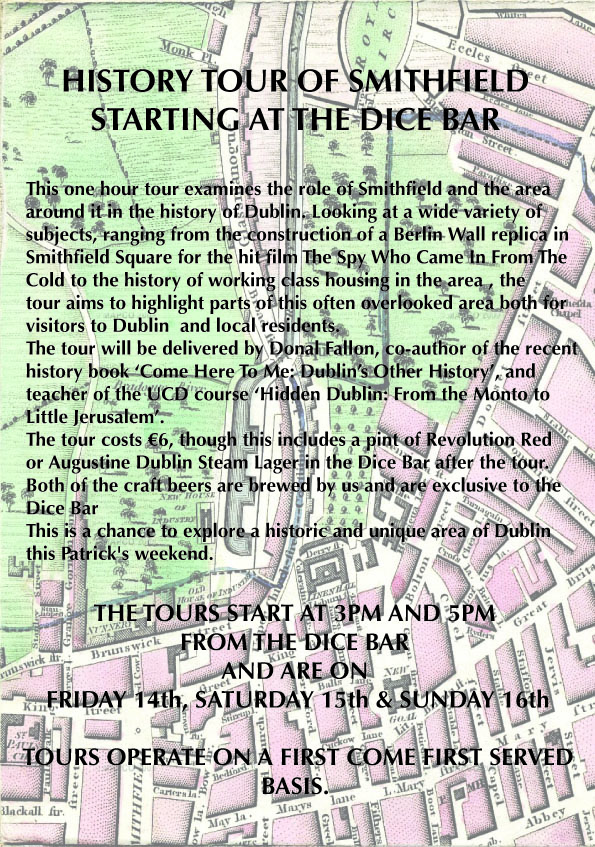
As part of a series of events being organised by the Dice Bar and others in Smithfield, I’ll be doing a few walking tours of the area this weekend, running Friday, Saturday and Sunday. The one hour tours cost €6 but include a pint (or a coffee/soft drink) in the Dice. All details are below in the poster, it’d be great if people can share notice of these events. This is being run by the Dice, just pay at the bar.

Print

Dalymount Spray Jam

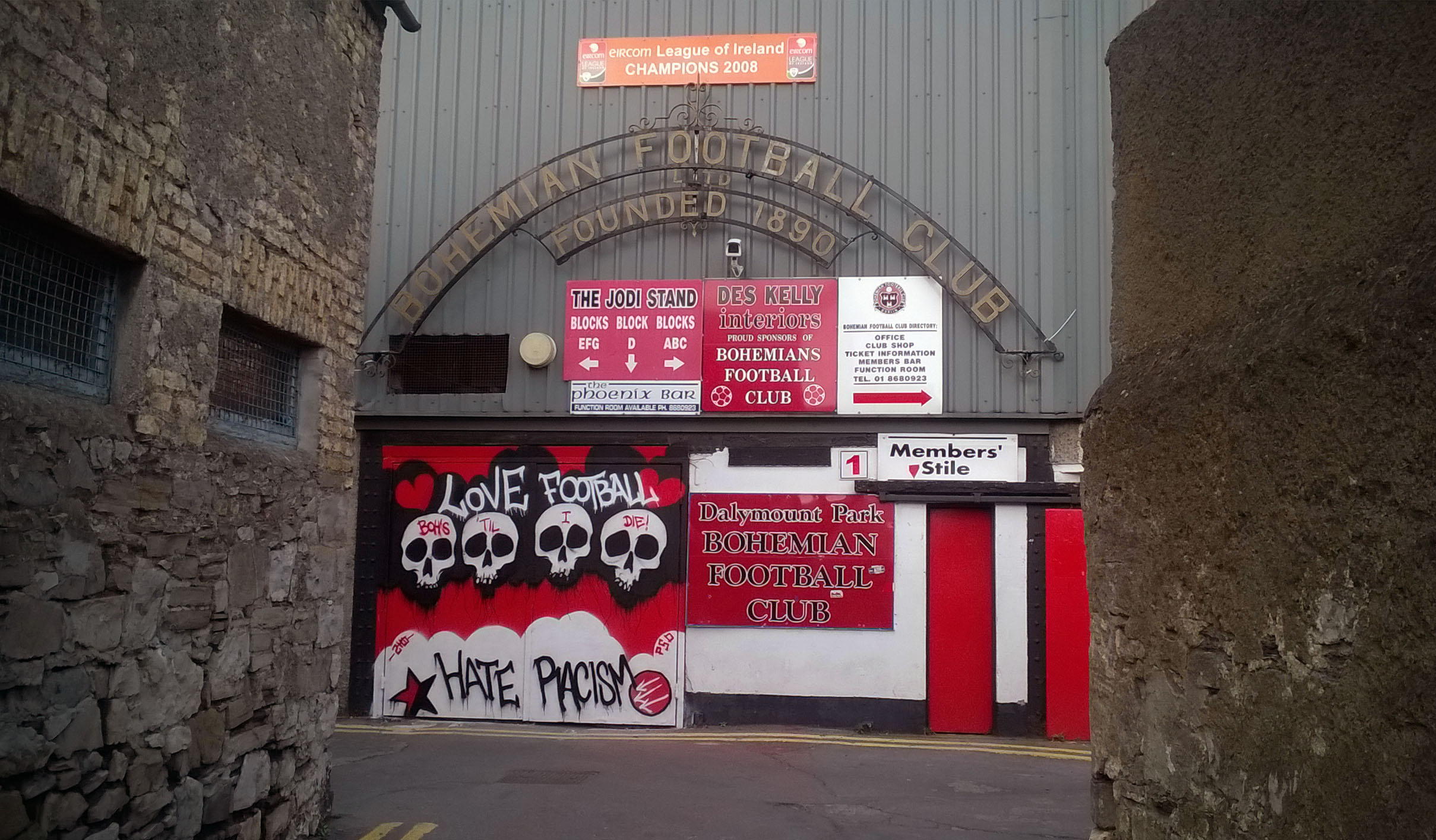
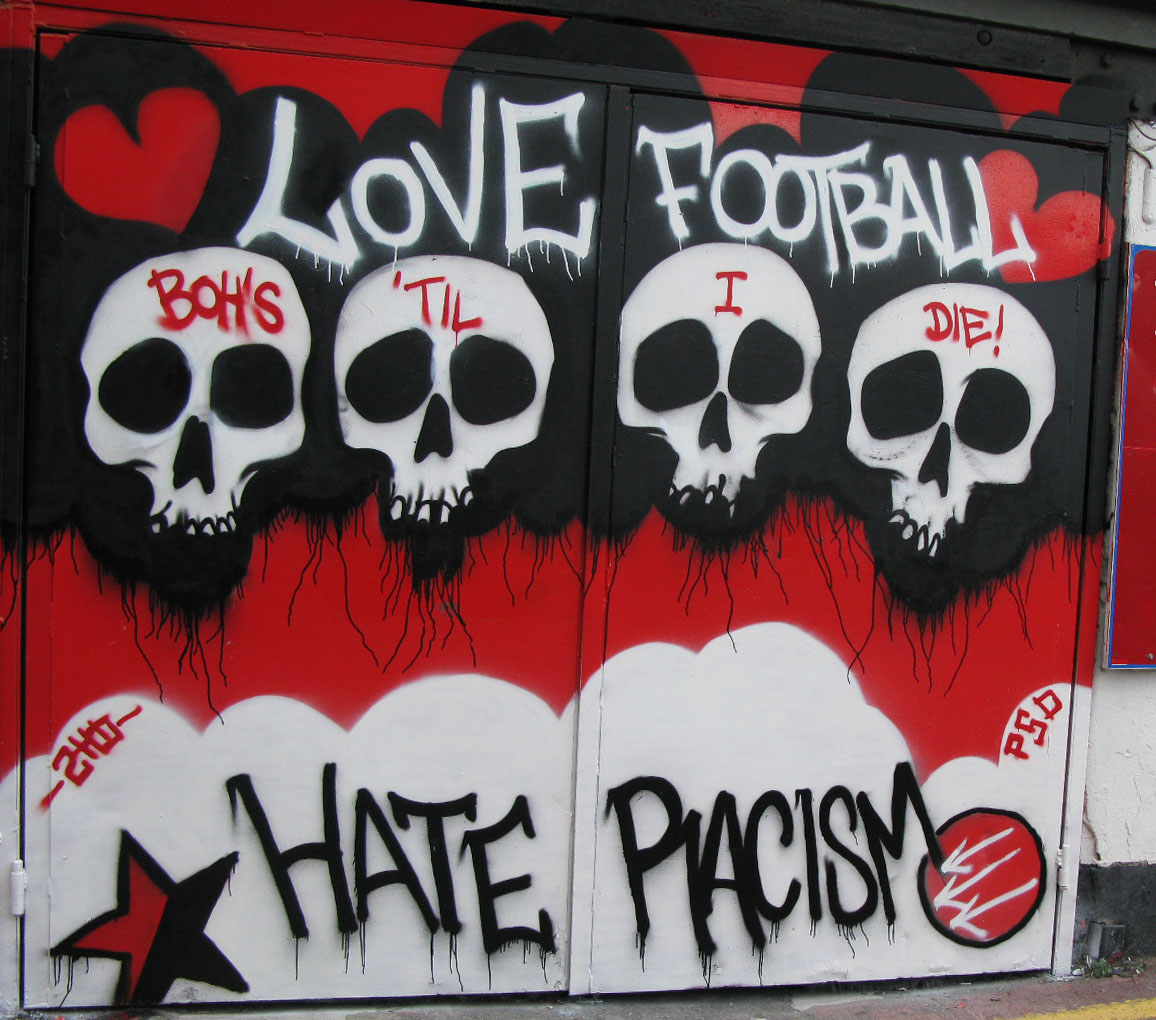
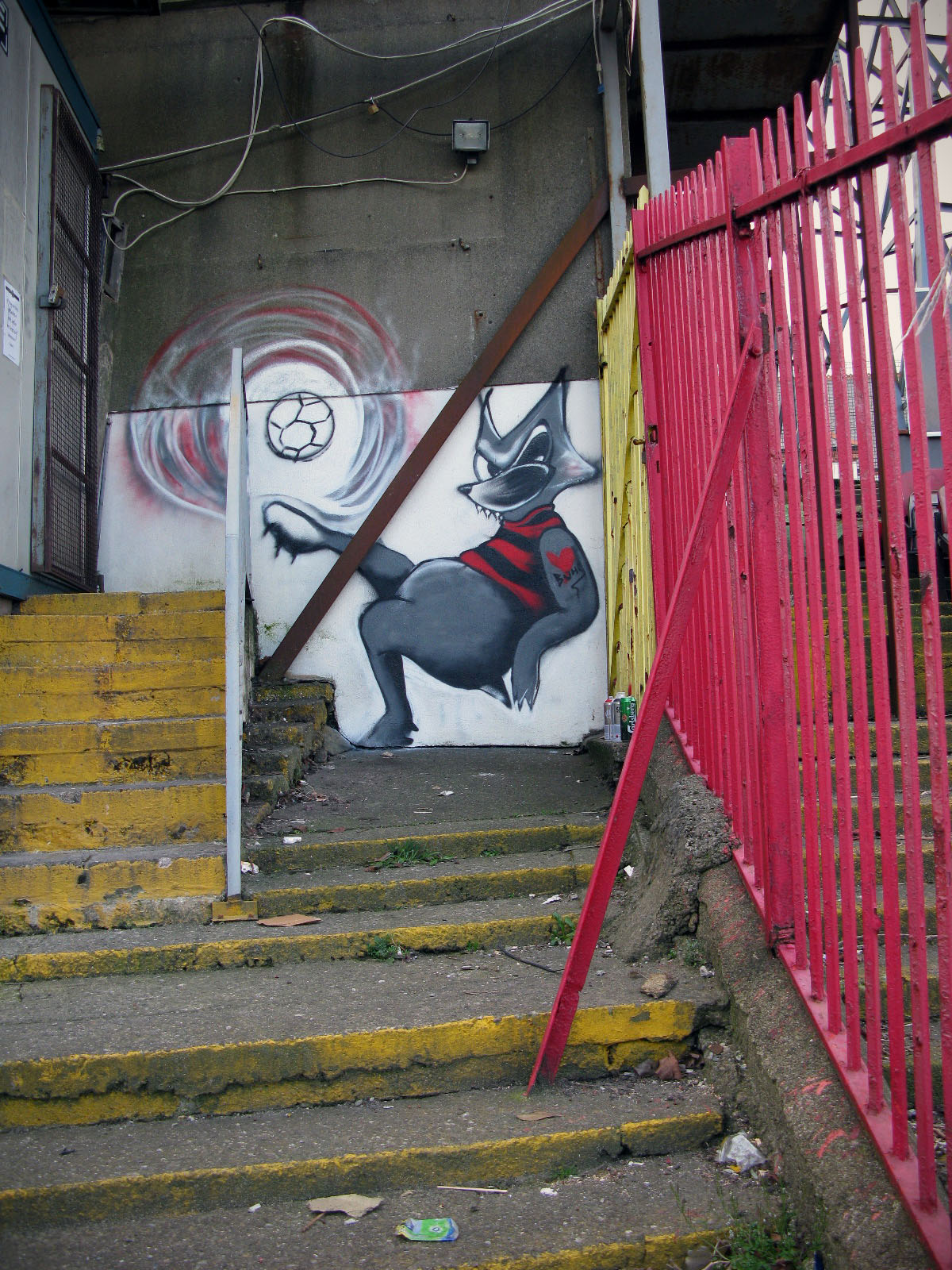
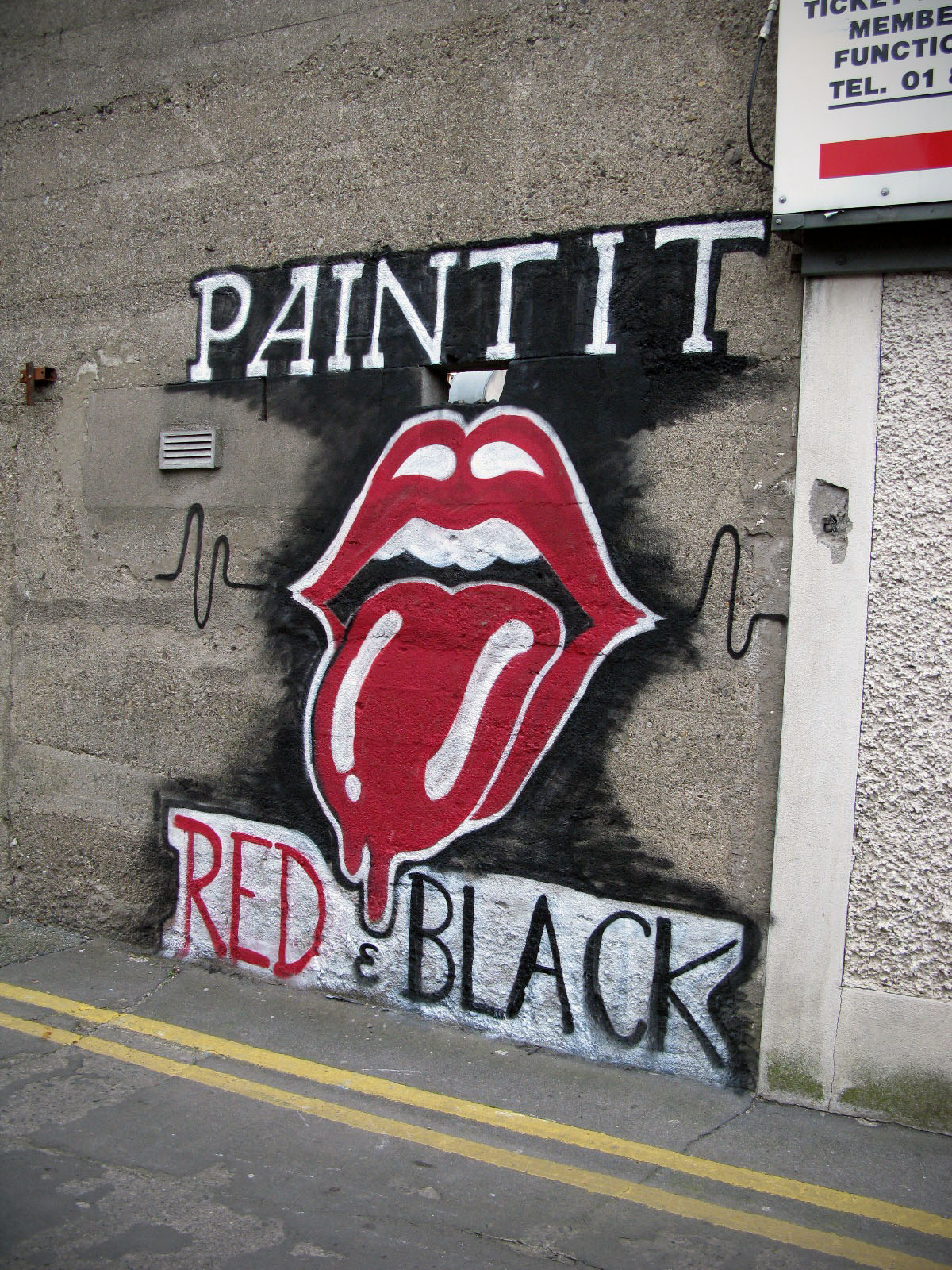
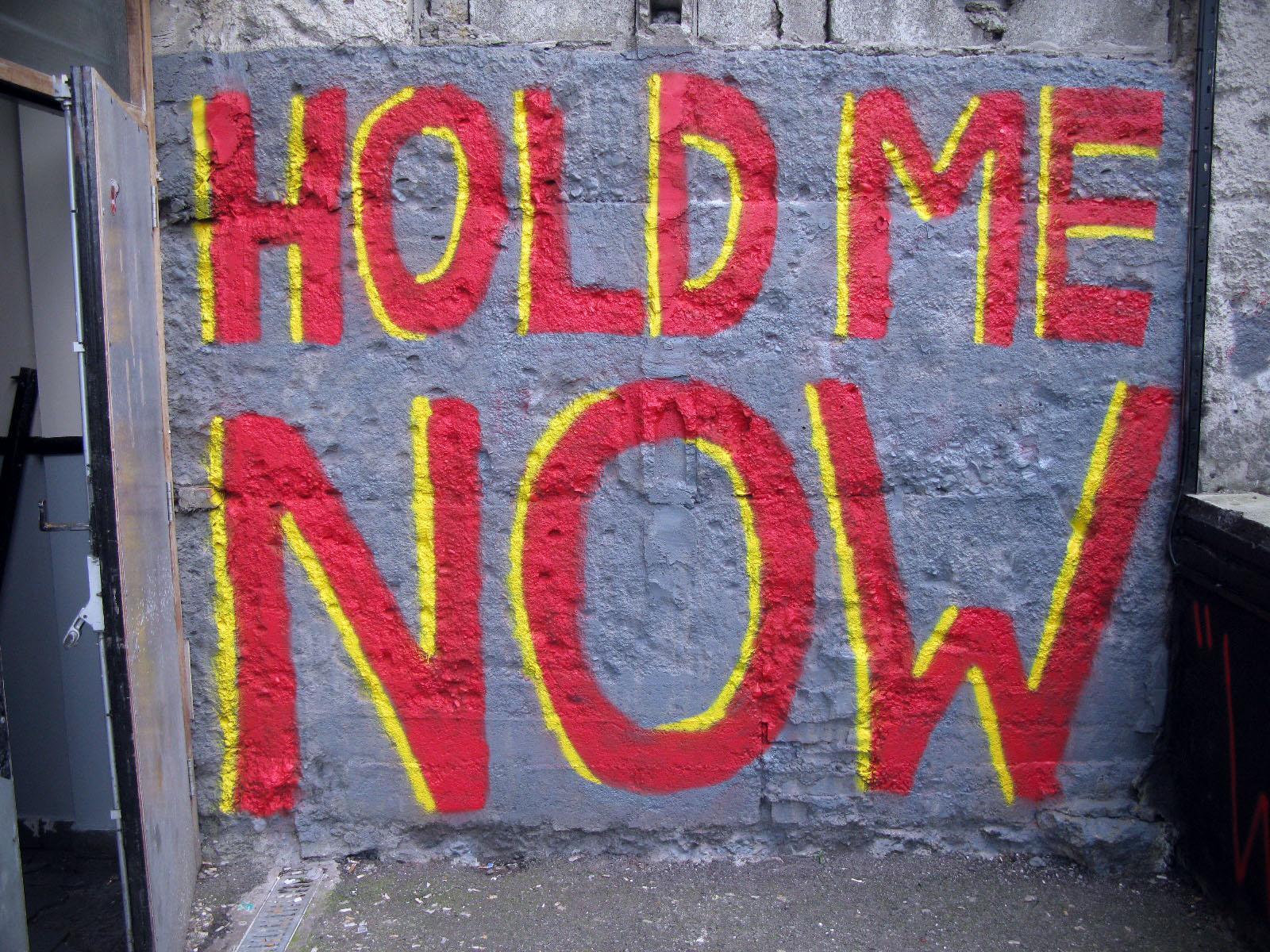
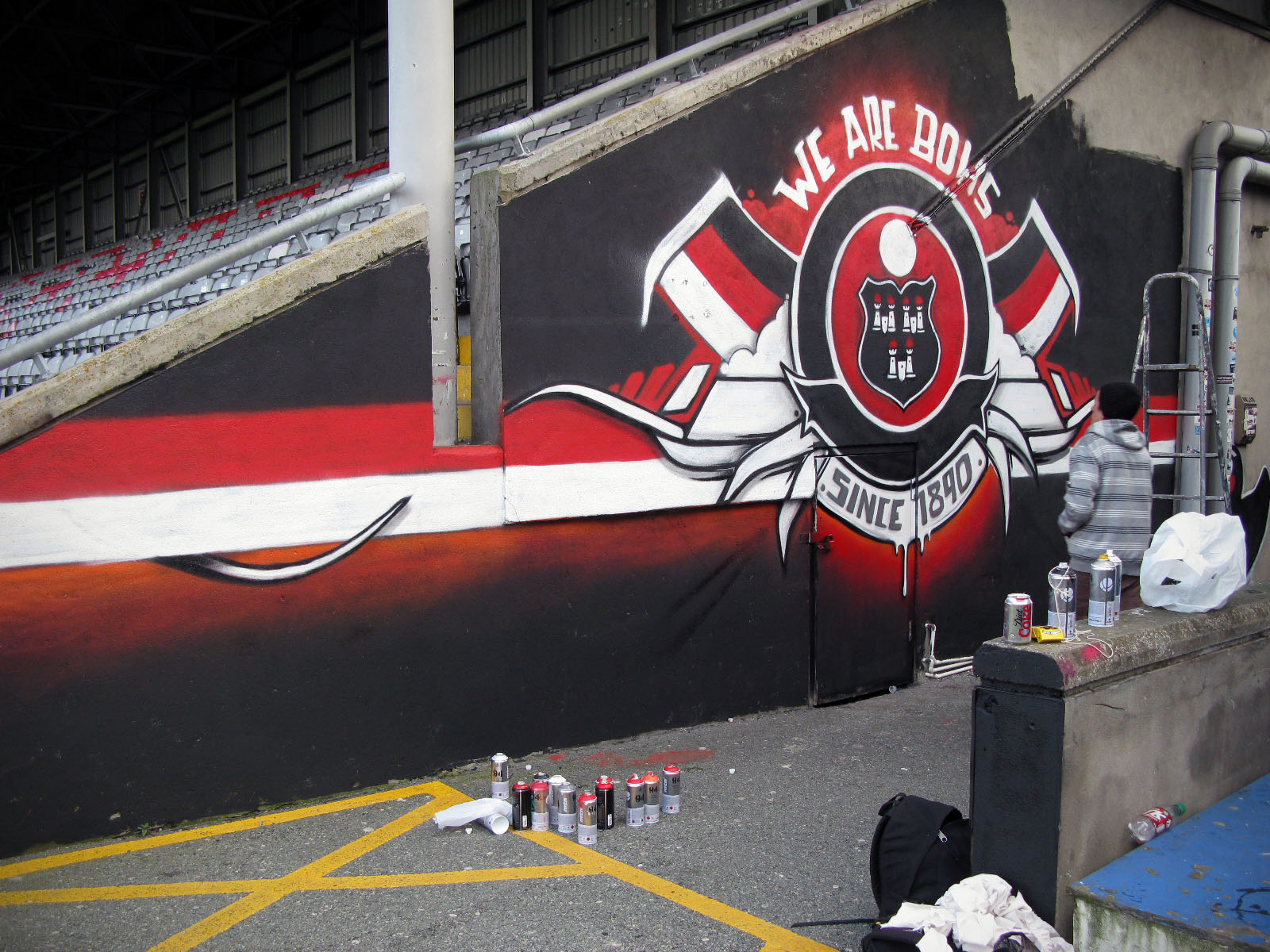
Dalymount Park, fresh from getting a pre-season lick of paint in the bars and corridors, got a lick of paint outside this weekend too as it played host to a selection of Dublin’s graffiti artists. Two-Headed Dog, Kevin Bohan, Marca Mix, Debut, Iljin, Tommy Rash, Kin Mx, Panda & Elroy and CJ Macken amongst others were involved in Dalymount’s first ever Spray Jam, with paint provided by http://www.vinnybyrne.com/ . Most are pictured below, a couple didn’t come out right, but I’ll get them again on Friday when Bohs play their first home game of the season.

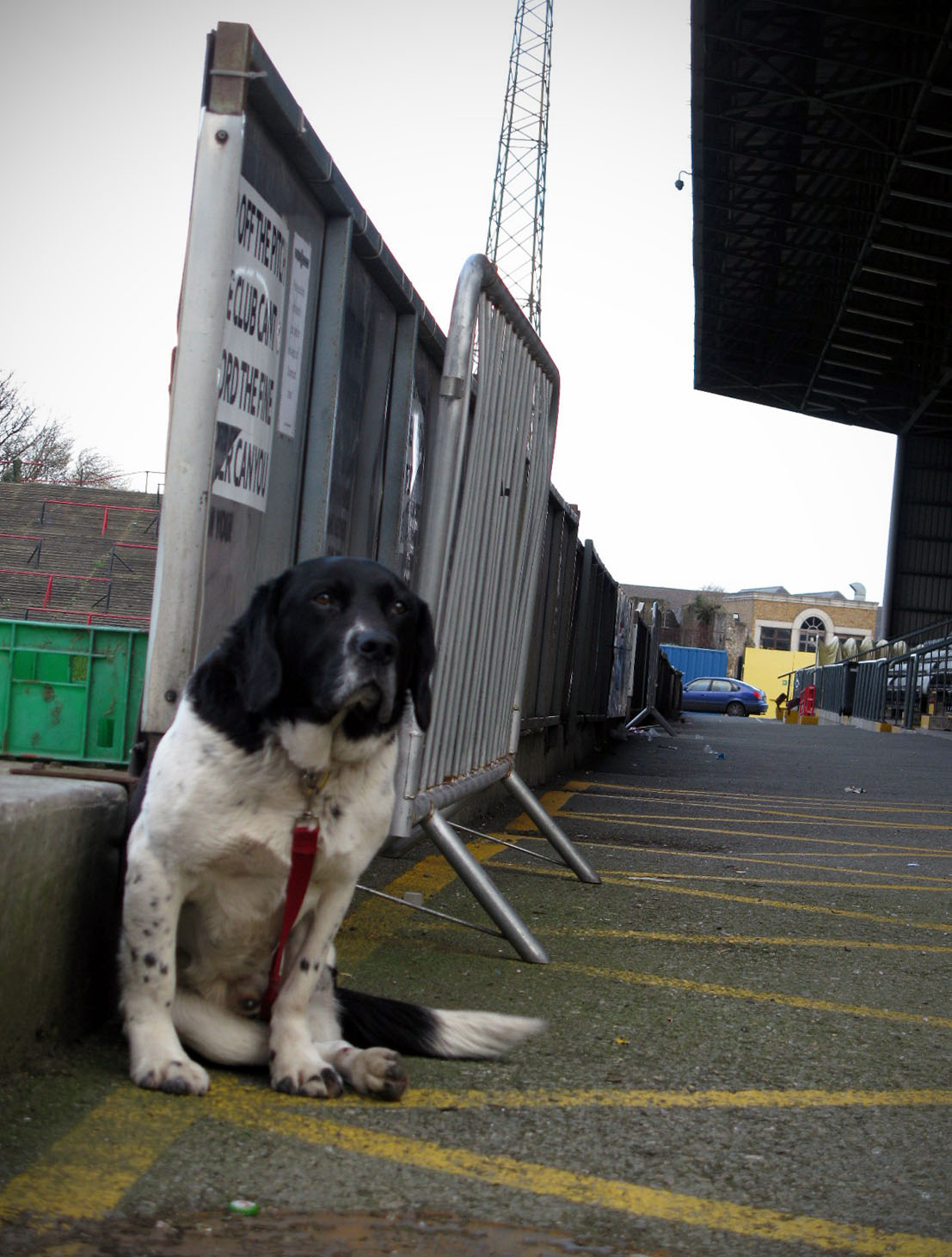
The front gate and the side of the Jodi are the stand-outs in my opinion, but that’s not to take away from the other superb pieces. A long time patron of Dalymount said of the below, and I can’t but agree: “It’s the first thing a foreign or domestic visitor will see as they enter the Mecca… It’s what we’re all about, it’s a statement of intent and something to be proud about.” I’m not sure who owns what, so I’ll just put them up as I took them. Gratuitous dog shot at the end.

WP_20140309_002

037

031

014

030

018

015

2C copy

1CHTM

An attempt to collate a chronological list of all the major incidents in Dublin during the conflict in the North. If I have missed any, please leave a comment.

1969
5 August – The UVF plant their first bomb in the Republic of Ireland, damaging the RTÉ Television Centre in Donnybrook. No injuries.
27 December – The UVF plant a bomb at the Daniel O’Connell statue on O’Connell Street. Little damage was done to the statue but the blast smashed windows in a half-mile radius.
28 December – The UVF detonate a bomb outside the Garda central detective bureau in Dublin. The nearby telephone exchange headquarters is suspected to have been the target.

1970
3 April – Garda Richard Fallon (44) is shot by members of Saor Eire during a robbery of the the Royal Bank of Ireland at Arran Quay.
26 March – A bomb damages an electricity substation in Tallaght. An anonymous letter claimed responsibility on behalf of the UVF.
2 July – A bomb damages the main Dublin-Belfast railway line at Baldoyle. Gardaí believed it was the work of the UVF.
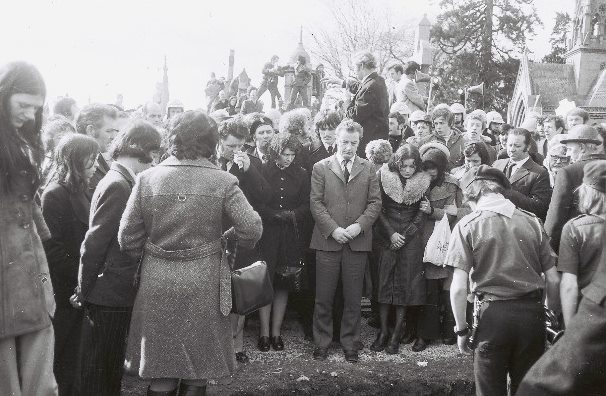
13 October –  Saor Eire member Liam Walsh (35) is killed in a premature explosion when himself and another member Martin Casey were planting a device at a railway line at the rear of McKee army base off Blackhorse Avenue in Dublin. His funeral was attended by over 3,000 people.

Funeral of Liam Walsh (Saor Eire), O’Connell St, 1970. Note two revolvers. Photos were in possession of the late Paddy Browne

Funeral of Liam Walsh (Saor Eire), O’Connell St, 1970. Note two revolvers. Photos were in possession of the late Paddy Browne

1971
17 January –  Daniel O’Connell’s tomb in Glasnevin Cemetery is damaged by a Loyalist bomb. No injuries.
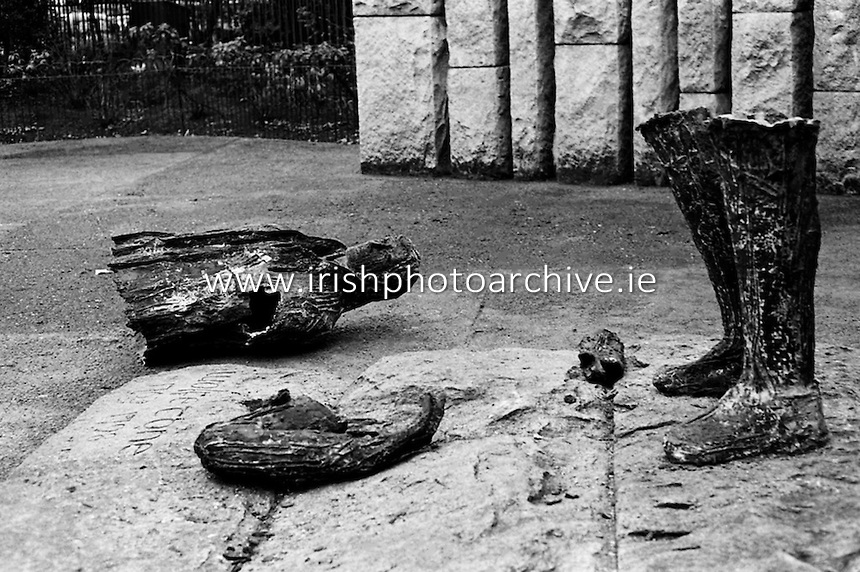
8 February –  The Wolfe Tone statue at St. Stephen’s Green is destroyed by a Loyalist bomb. No injuries.
25 October –  Saor Eire member Peter Graham (26) is shot dead in his flat at 110 Stephen’s Green in an internal feud.
30 December –  PIRA member Jack McCabe (55) is killed in a premature bomb explosion in a garage, Swords Road, Santry. McCabe had been active in the IRA since the 1930s.

Pieces of the statue of Theobald Wolfe Tone on St Stephen's Green, 1971. Credit - Irish Photo Archive

Pieces of the statue of Theobald Wolfe Tone on St Stephen’s Green, 1971. Credit – Irish Photo Archive

1972
2 February –  The British Embassy on Merrion Square is burned down in response to Bloody Sunday. A British-owned insurance office in Dun Laoghaire and Austin Reeds outfitters on Grafton Street are also petrol bombed. The Thomas Cook travel agency along with the offices of British Airlines and the RAF club on Earlsfort Terrace were also attacked.
28 – 29 October – A 12lbs bomb is planted in Connolly Station, Amiens Street by Loyalists but dismantled by the Irish Army before it went off. They are also responsible for leaving firebombs in bedrooms in four Dublin hotels (Wynns, The Gresham, The Skylon and The Crofton).
26 November – Loyalists plant a bomb outside the rear exit door of the Film Centre Cinema, O’Connell Bridge House injuring 40 people.
1 December –  Bus driver George Bradshaw (30) and bus conductor Tommy Duffy (23) are killed and 127 injured in the first Loyalist car bomb planted in the Republic close to the CIÉ Depot at Sackville Place off O’Connell Street. A second car bomb exploded 7 minutes before causing massive damage to Liberty Hall and many injuries.

1973
20 January –  CIE bus conductor Thomas Douglas (25) is killed and 17 injured in Loyalist car bomb in Sackville Place off O’Connell Street. The car used in the bombing had been hijacked at Agnes Street, Belfast.
3 August – Cashier James Farrell (54) is killed by the IRA during during an armed robbery while delivering wages to British Leyland factory, Cashel Road, Crumlin.
31 October – The IRA use a hijacked helicopter to free three of their members from the exercise yard of Mountjoy Prison, Dublin. On of those who escaped was Séamus Twomey, then Chief of Staff of the IRA who was later recaptured in December 1977.

1974
17 May –  Three no-warning bombs explode in Parnell Street, Talbot Street, and South Leinster Street during rush hour. 26 people and an unborn child are killed. Over 300 are injured. Italian restaurant owner Antonio Magliocco (37) and a French-born Jewish woman Simone Chetrit (30) are amongst those killed.
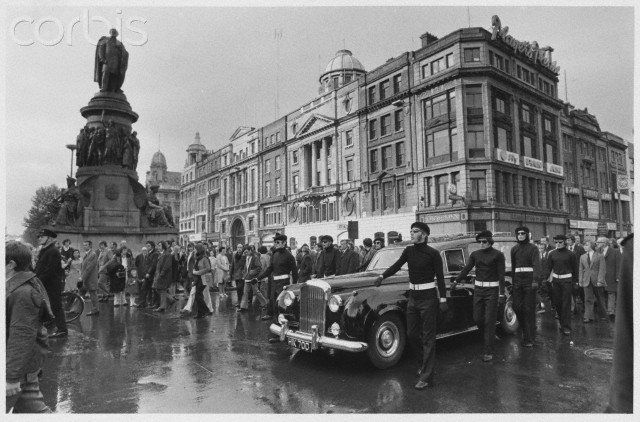
8 June – Tens of thousands attend the funeral march of PIRA volunteer Michael Gauaghan from Co. Mayo who died on hunger striker in Parkhurst Prison on the Isle of Wight.

Michael Gaughan's IRA guard of honour passes Daniel O'Connell statue, 1974. Credit - corbisimages.com.

Michael Gaughan’s IRA guard of honour passes Daniel O’Connell statue, 1974. Credit – corbisimages.com.

1975
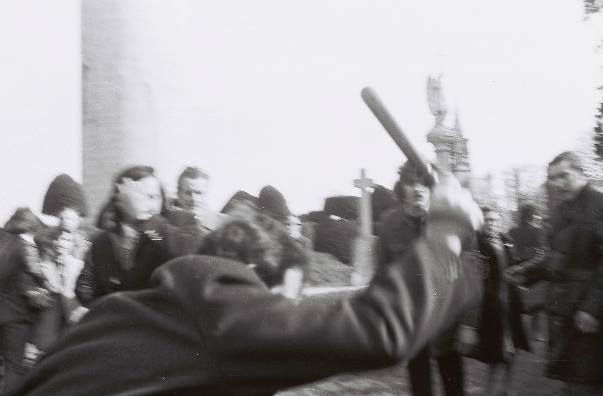
22 March – The funeral of IRA member Tom Smith, shot dead during an escape attempt from Portlaoise Prison on St. Patrick’s Day, is attacked by Gardai. Three people, including a press photographer, are injured.
22  June – Christopher Phelan stabbed to death after he came upon the UVF attempting to place a bomb on the railway line near Sallins on June 22 1975.
11 September – An off-duty Garda, Michael Reynolds (30), is shot dead in St. Anne’s Park by two Anarchists Noel and Marie Murray, former members of Official Sinn Fein, following an armed robbery at the Bank of Ireland, Killester.
2 October – Official IRA member Billy Wright (35) is shot by members of the organisation in his brother’s hair salon on the Cabra Road. He died in hospital on 19 October. He was targeted after he made a statement to Gardai, implicating a prominent member of the Official IRA, about an armed robbery in Heuston Station that occurred in September 1973.
28 November – Two Loyalist bombs at the arrival terminal at Dublin airport injure eight and kill John Hayes (30), an Aer Rianta employee.

Funeral of IRA member Tom Smith attacked in Glasnevin, 1975. Credit - Coleman Doyle via Shane MacThomais.

Funeral of IRA member Tom Smith attacked in Glasnevin, 1975. Credit – Coleman Doyle via Shane MacThomais.

Funeral of IRA member Tom Smith in Glasnevin, 1975. Credit - Coleman Doyle via Shane MacThomais.

Funeral of IRA member Tom Smith in Glasnevin, 1975. Credit – Coleman Doyle via Shane MacThomais.

Continue Reading »

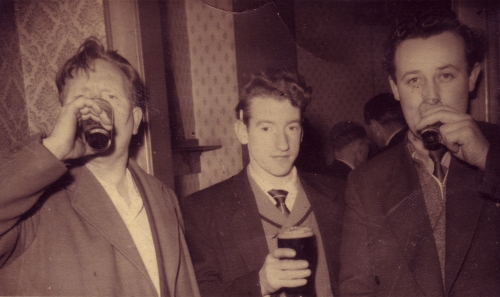
Three lads drinking. nd.

Three lads drinking, nd. (Credit – Jacolette blog)

If you knew where to go, it was possible to drink around the clock in 1930s, 1940s and 1950s Dublin.

When regular pubs closed at 11pm, still-thirsty revelers could travel to ‘bona-fide’ pubs on the outskirts of the city. A ‘bona-fide’ house utilised a legal loophole, dating back to early coaching days, that allowed a genuine ‘bona-fide’ traveler three miles (five in Dublin) from his place of residence to drink alcohol outside normal hours.

Some creative drinkers would send a letter to “themselves” using the address of a friend who lived the required distance away from their desired pub. They could then show the letter to the publican to give him some piece of mind. During a police raid, the publican would try to hide those who shouldn’t be there in his living quarters or rush them out a back door so they could attempt a getaway.

In a piece entitled ‘The Irish “Bona Fide Traveller” Nuisance”, The Sacred Heart Review (13 September 1902) noted:

Travelers, tramps and tourists are common the wide world over, but the so-called ” Bona Fide Traveler ” is peculiar to Ireland. Under the curious laws which govern or misgovern Ireland, it has been decreed that when any person “travels” three miles to a “public-house” on a Sunday he is entitled to all the drink he can buy, even though the Sunday closing law is in full force there. Thus a man living in the town of Kilronan can not legally enter a public-house to secure a drink, but let him walk or ride to Knooknagow, three miles away, and he can have all the drink he wants…

The United Irishman of recent issue, discussing the new Licensing Act, complains that it does not deal with the bona fide traveler scandal, and says:— ” Blackrock and Dunleary on the average Sunday night are a blot on Ireland. We heartily sympathize with the real bona fide traveler. But seventy-five per cent, of the people who travel down to Blackrock and Dunleary on Sunday evenings after seven o’clock do so for the purpose of indulging in the luxury of treating one another to drink … The bona fide traveler has become a standing joke in Dublin, and it was not, perhaps, too presumptuous to hope that the absurdity of men leaving a Dublin public-house at seven o’clock on a Sunday evening, stepping on a tram-car, and a few minutes later descending at the door of another Dublin public – house, invested with the rights of travelers, should have been considered. We have witnessed in English towns, it is true, scenes more degrading than we have witnessed in the streets of Blackrock and Dunleary on Sunday nights, but it is no excuse for an Irishman to make himself a bonham because an Englishman makes himself a hog.

There was at least one ‘bona-fide’ on each main road out of Dublin. They included Lamb Doyles (Dublin Mountains), Widow Flavin’s (Sandyford), the Dropping Well (Dartry), the Deadman’s Inn (Lucan), the Swiss Cottage (Santry), the Igo Inn (Ballybrack) and The Goat (Goatstown).

Throughout the years a number of late-night revellers, staggering or driving under the influence towards the bona-fide, were involved in deadly accidents. This was one of the main reasons for the Government abolishing the law in 1960.

If you wanted to keep on drinking after the bona-fide closed, you could travel back into the city and visit one of the ‘kips’ around Capel Street or Parnell Square. A ‘kip’ was a brothel-cum-speakeasy that sold whiskey or gin from tea cups till the early morning.

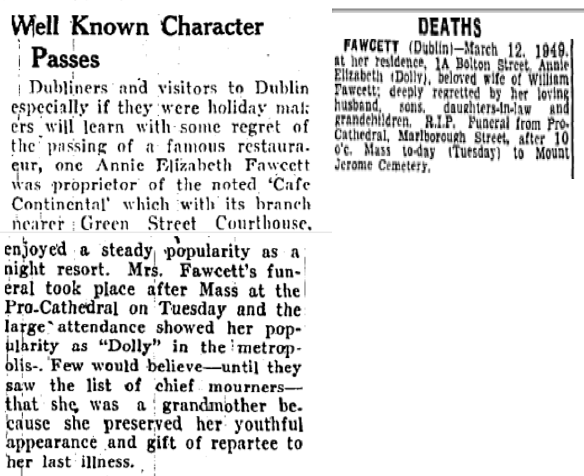
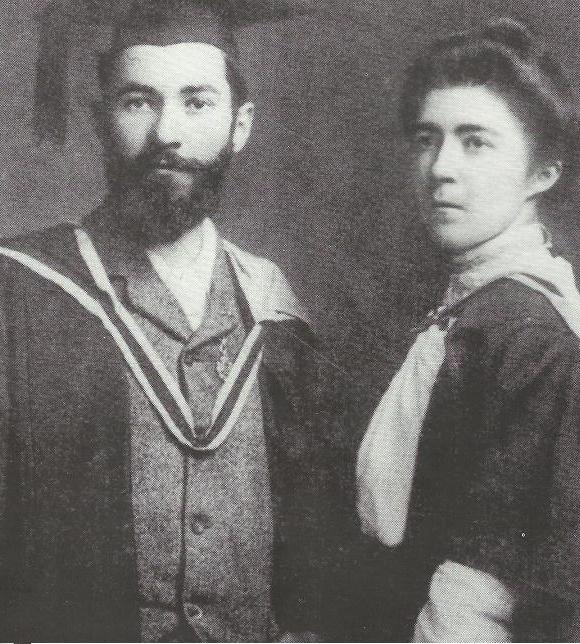
One of the City’s most famous ‘kips’ was the Cafe Continental at 1a Bolton Street near the corner of Capel Street which was in operation from the 1930s (?) to the mid 1960s. It was run by the legendary madam ‘Dolly’ Fawcett (often misspelled as ‘Fossett’ or ‘Fosset’). Annie Elizabeth, originally from Wicklow, married William Fawcett who was rumoured to have been a former Dublin Metropolitan Police (DMP) officer from the North who was discharged because of his relationship with her.

The Fawcett family also ran another ‘kip’ called the Cozy Kitchen on nearby North King Street.

Ostensibly an innocent late-night cafe, the Cafe Continental was a haven for late-night revelers who often carried clandestine “Baby Powers,” or miniature bottles of whiskey, which they tipped into their cups of coffee. ‘Dolly’ also served up ‘red biddy’ (mixture of red wine and methanol), poitín and water-down whiskey.

It was a popular place for ladies of the night and they’d often find clients there. So Dolly Fawcett’s would be better described as a ‘prostitute pick up-place’ as opposed to a brothel in the traditional sense of the word.

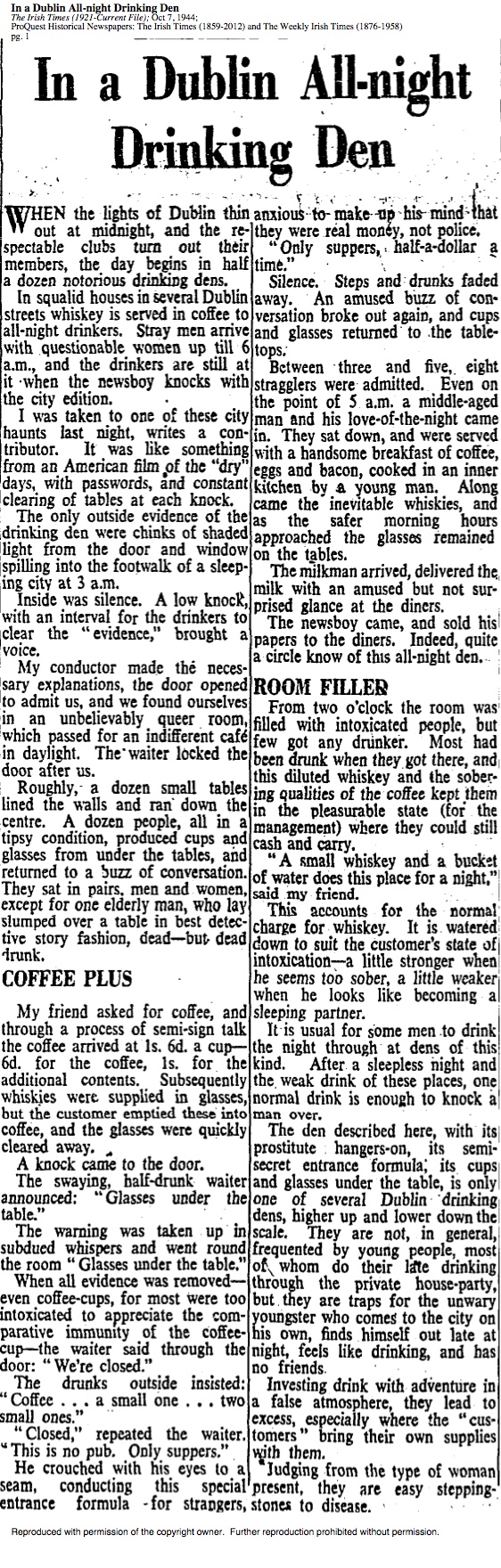
The Irish Times (7 Oct 1944) ran a front page piece about a journalist’s visit to an “all-night drinking den”. My bet would be that it was Dolly Fawcett’s.

'In a Dublin All-night Drinking Den'. The Irish Times, 7 Oct 1944.

‘In a Dublin All-night Drinking Den’. The Irish Times, 7 Oct 1944.

Dolly, who lived over the Cafe Continental with her family, passed away at home on 12 March 1949. Her funeral, which took place after mass at the Pro-Cathedral, attracted a large attendance. She was highly regarded in the area for her numerous charitable acts.

Longford (XXX) & The Irish Independent (15 March 1949)

Longford Leader (19 March 1949) & The Irish Independent (15 March 1949)

Continue Reading »

The Irish Times, 17 April 1958.

Radio equipment and arms seized by Gardaí in Dublin. The Irish Times, 17 April 1958.

Ireland has a long history of pirate radio, something I’ve looked at before in an article for Rabble that can be read here. This brief article looks at a number of political pirate radio stations that operated in Dublin, many of which were operated by the republican movement as a means of spreading propaganda.

There is no denying that pirate radio was always taken seriously by the authorities in Ireland, even when it lacked a political bent. Radio Milinda, which operated from North Gloucester Place, was raided by almost 100 Gardaí in December 1972, becoming the first pirate radio station to be raided by the authorities and prosecuted. It was not a ‘political’ station, indeed in an interesting history of the station that is available to read here, one of its founders talked about how the emphasis was very much on music, both in terms of charts and classics:

So many wonderful things happened to us in the “Milinda Days”. We met so many wonderful people. One who comes to mind straight away was James McGuinness who lived across from us in the Diamond. He had the most wonderful collection of records and I remember doing a four hour special on the life on Glen Miller thanks to his record collection. At the weekend the house was full of people who just wanted to sit around, listen and chat.

Pirate radio was often utilised in the North during the conflict there, in particular by republicans. Among the most celebrated examples of this is Radio Free Derry, which broadcast during the Battle of the Bogside in 1969. In the south, pirate radio often offered a means of countering the Section 31 legislation, which was designed to keep republican voices off the airwaves and off television screens. In 1987 for example Gerry Adams conducted a 75 minute interview with a pirate radio station in Limerick, something that was condemned by the authorities as a breach of the legislation. Even before that legislation however republicans were utilising pirate radio across the Republic.

In 1936 a reference was made in several newspapers to “the mysterious pirate radio station in the Free State”, with the Leitrim Observer noting that “Many listeners in the Free State heard the stations unknown announcer deliver a speech in which there was a denunciation of recent Government decisions. The speaker said the station had been acquired for the purposes of the Irish Republican Army.” In late 1939 a republican named Sean McNeela was sentenced to two years imprisonment for his involvement with an IRA pirate radio station which was broadcasting from Rathmines, and raided by state authorities while on air. Sentenced for “conspiracy to usurp a function of Government”, he died on hunger strike, along with Tony Darcy, in 1940.

The death of McNeela is reported in the press, 20 April 1940.

The death of McNeela is reported in the press, 20 April 1940.

Continue Reading »