Feeds:
Posts
Comments
Image Credit: Broadsheet.ie

Image Credit: Broadsheet.ie

Dublin has long prided itself on its literary heritage and history, and perhaps no work has put Dublin centre-stage in quite the same way as Ulysses. Many of the locations from Ulysses are still with us today, while others are no more. Nelson’s Pillar was lost in rather dramatic fashion, but others have just been lost to redevelopment and the changing city.

The Ormond Hotel on the quays featured in the work, with Joyce setting Sirens (Episode 11 of the work) at the hotel, with Bloom dining there. The hotel has fallen into total ruin in recent years, and not too long ago the plaque connecting it to Ulysses vanished from the front of the building, something which set alarm bells ringing for many. The front of the building has attracted quite a bit of graffiti in recent times, including the rather mad ‘I ❤ SCALDY MOTS', which was there for some time and based on a quick glance online attracted more than a few camera shots.

Plans for a massive redevelopment of the site have fallen through. The Independent has reported that:

A €15m plan by investors including AirAsia boss and Queen’s Park Rangers owner Tony Fernandes to demolish the capital’s Ormond Hotel to build a new hotel on the site have been shot down by Dublin City Council.

Mr Fernandes and shareholders in Monteco Holdings had wanted to construct a new five and six-storey property with 170 bedrooms in what would have been one of the latest plays by foreign investors in Dublin’s resurgent hotel sector.

But a number of well-known individuals and organisations voiced concerns over the plans by Mr Fernandes, including Mannix Flynn, Ciaran Cuffe and the James Joyce Centre.

My thanks to Luke Fallon for permission to reproduce his illustration below on the site today:

Credit: Luke Fallon.

Credit: Luke Fallon.

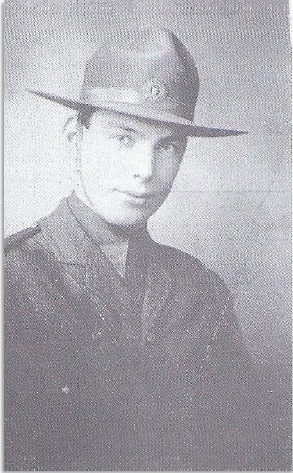
Noel Lemass, Captain of the 3rd Battalion, Dublin Brigade IRA, had a short but eventful life. He fought in the Imperial Hotel during the Easter Rising of 1916 and was wounded while taking dispatches to the GPO. He later played an active role in the War of Independence (1919-1921) and joined the occupation of the Four Courts after taking the anti-Treaty side in the Civil War.

Noel Lemass in uniform. Credit – http://irishvolunteers.org

Noel Lemass in uniform. Credit – http://irishvolunteers.org

In July 1923, two months after the Civil War had ended, Noel was kidnapped in broad daylight by Free State soldiers. Three months later, on 13th October, his mutilated body was found on the Featherbed Mountain twenty yards from the Glencree Road, in an area known locally as ‘The Shoots’. It was likely that he was killed elsewhere and dumped at this spot.

There are many amusing anecdotes of his military career in the Witness Statements. One of my favourites is from Andrew McDonnell (BMH WS 1768) who was an officer with the Irish Volunteers and then the IRA in Dublin from 1915 to 1924. He said Noel Lemass had the:

the distinction of being the only man in the Dublin Brigade ever to commandeer a tram. Always looking for action, and willing to go anywhere to take part in a scrap, I mentioned to him once about an attack coming off, on the Naval Base, Dun Laoghaire. This was something that appealed to him, and it was arranged that she should be in Dun Laoghaire, about 10.30pm, on a fixed night. He was then attached to the 3rd Battalion. The day arrived, and Noel made frantic efforts to contact me – could we wait for him until 11 p.m. as a dinner dance, or some such, would delay him? 11 p.m. it would be, but not later. We were at the spot, on time. No sign of Noel. A tram came along, very quickly, and off stepped noel, complete in dinner jacket, coat and white scarf …

Lemass revealed to McDonnell that he had:

boarded the tram somewhere about Mount Street, going upstairs. As it got further out, passengers got fewer and fewer, until Noel was along on top, and, to this mind, progress was very slow. Slipping down the stairs, on to the driving platform, he told the driver to keep going, and fast. He did and Noel arrived on time, with the help of the conductor, who happened to be Jack Luby of the Dalkey Section.

One can only imagine the sight of Lemass, alighting of a near empty tram, decked out in dinner jacket and white scarf and ready to join an IRA attack on a British Naval Base in Dun Laoghaire.

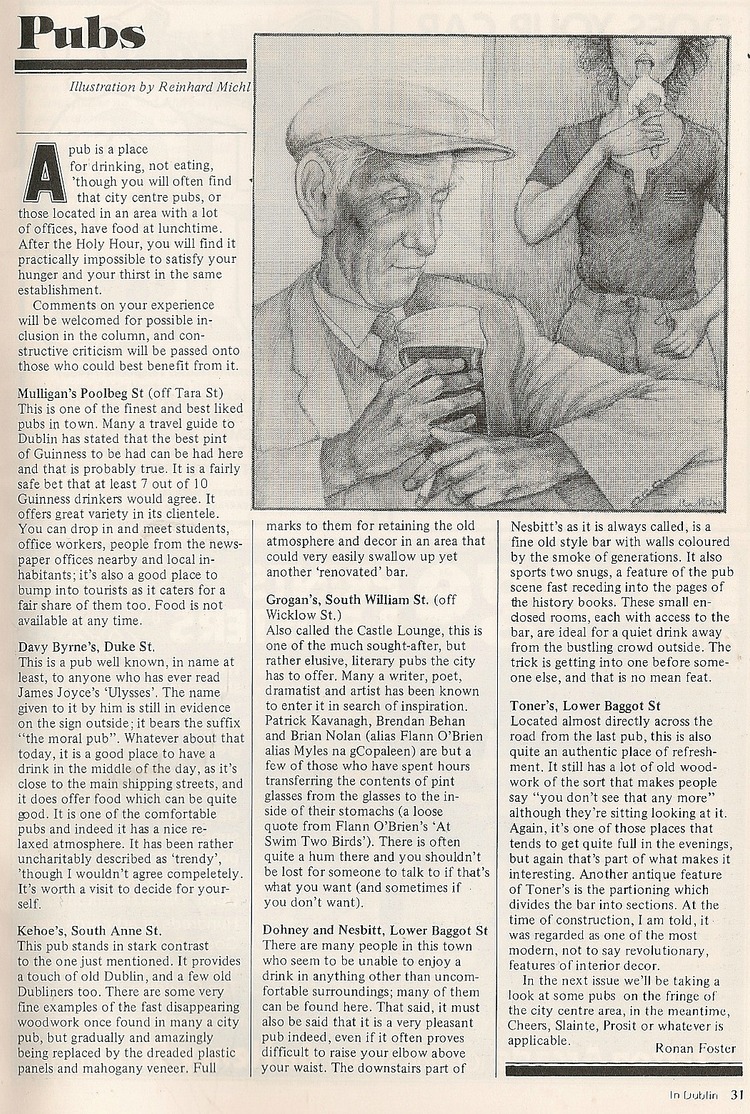
1977 Dublin pub reviews

I came across two reviews of pubs in the city from magazine ‘In Dublin’. Both from 1977. This issue (no. 34, Aug 1977) reviewed:

– Mulligans, Poolbeg Street
– Davy Byrne’s, Duke Street
– Kehoe’s, South Anne Street
– Grogan’s, South William Street
– Dohney and Nesbitt, Baggot Street
– Toner’s, Lower Baggot Street

Pub review. In Dublin 1977. (Credit -  David Denny2008)

Pub review. In Dublin 1977. (Credit – David Denny2008)

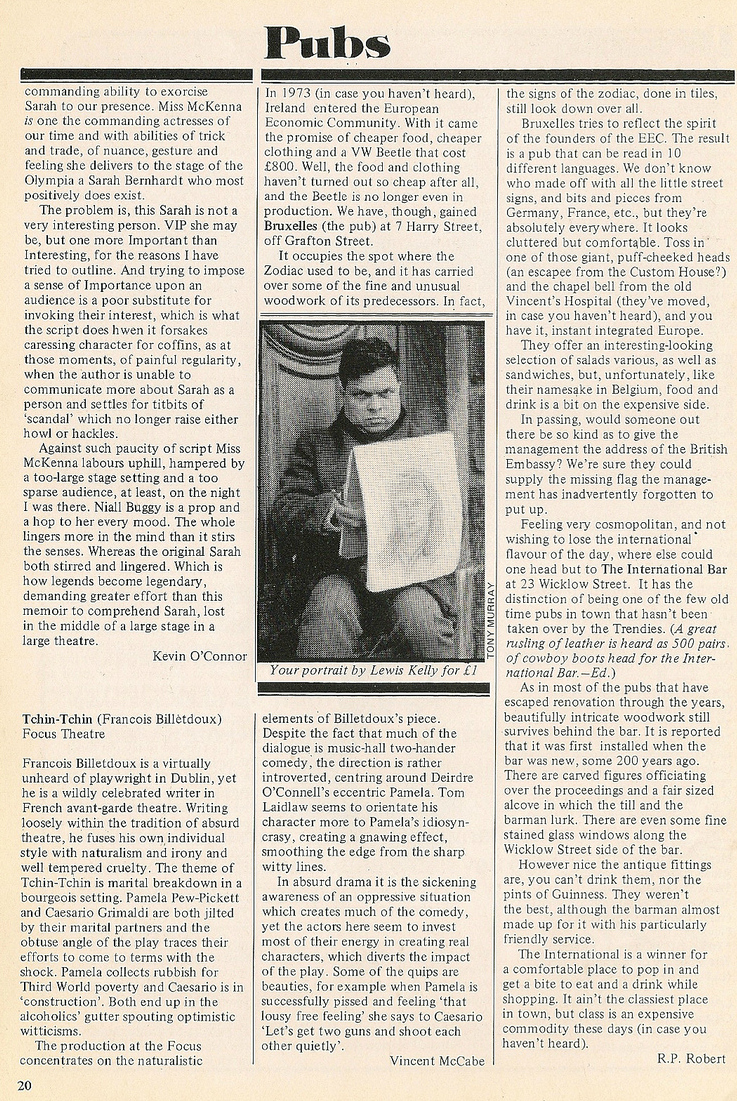
Later in the year, issue (no. 40, Nov 1977) reviewed:

– Bruxelles, Harry Street
– The International Bar, South William Street

Pub review 2. In Dublin 1977. (Credit -  David Denny2008)

Pub review 2. In Dublin 1977. (Credit – David Denny2008)

Nearly forty years later and all those pubs are still there. Most of them probably haven’t changed that much. Except for the price of course.

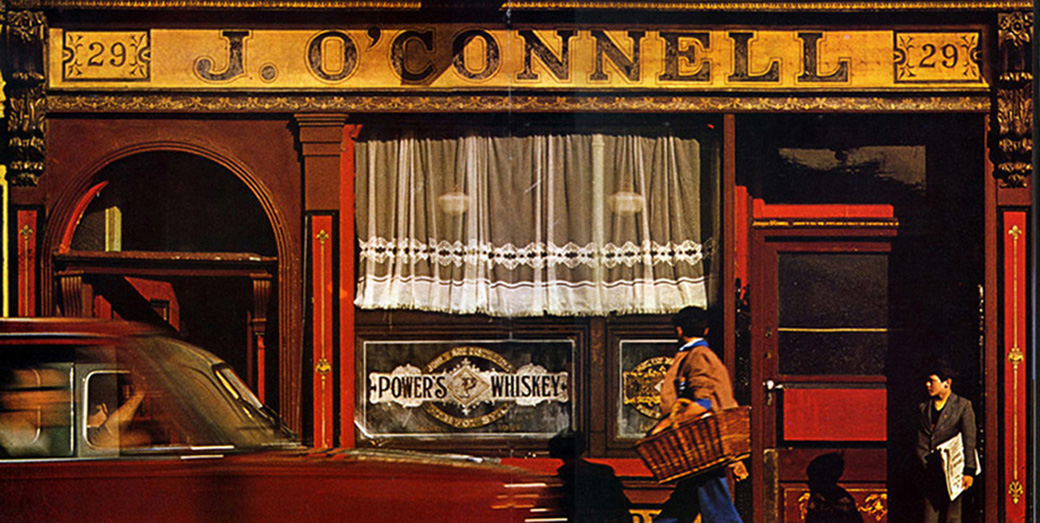
I also stumbled upon this lovely photo of O’Connell’s on South Richmond Street in Portobello. One of my favourite pubs in the city. At a guess, I’d say it was taken in the 1960s.

J. O'Connells, Sth. Richmond St. (Credit - whiskiesgalore.blogspot.ie)

J. O’Connells, Sth. Richmond St. (Credit – whiskiesgalore.blogspot.ie)

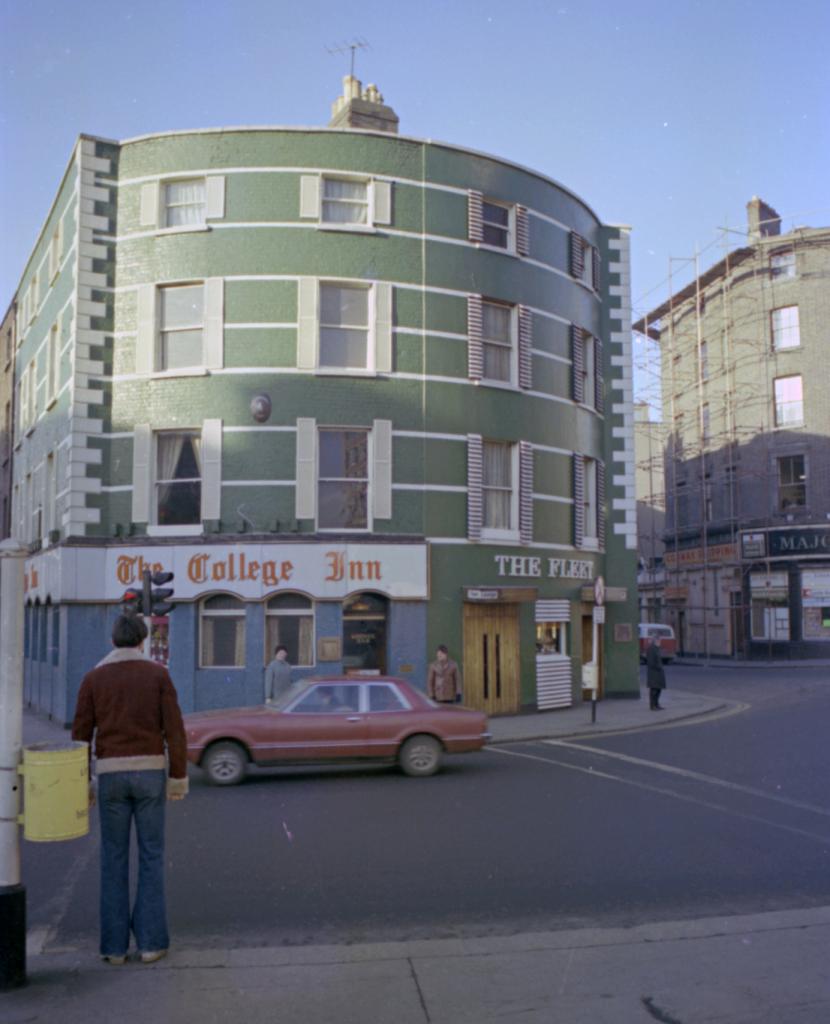
Also this snap of Doyles, then called The College Inn with The Fleet attached, on College Green opposite Trinity. It’s a great shot with red car flying past and yer man in the sheepskin jacket waiting to cross.

The College Inn (now Doyles) in 1978, College Green. (Credit - dublincitypubliclibraries.com)

The College Inn (now Doyles) in 1978, College Green. (Credit – dublincitypubliclibraries.com)

Billy Morley RIP

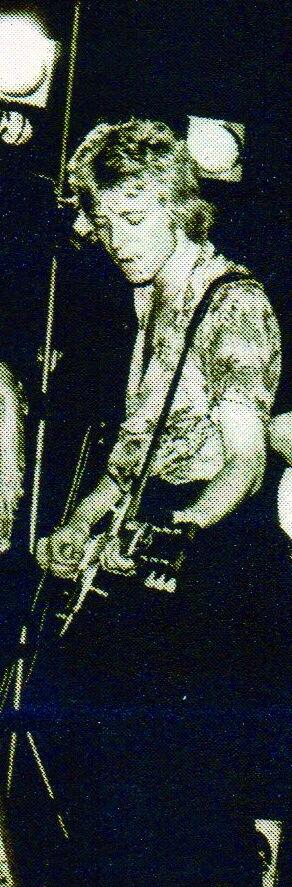
We were very sorry to hear that Dublin guitarist and graphic designer Billy Morley has passed away. During his career, he played with The Radiators From Space, Revolver, The Defenders, The Teen Commandments and Lucky Bones.

Morley in action. Posted by Eamon Carr (@carrtogram) with the following "Another good man down. Billy Morley talented guitarist & designer All round good guy R.I.P. #DublinHero".

Morley in action. Posted by Eamon Carr (@carrtogram) with the following “Another good man down. Billy Morley talented guitarist & designer All round good guy R.I.P. #DublinHero”.

As first reported by Hot Press, Billy began his career in the early to mid 1970s as a guitarist with New York Dolls style glam-punk outfits ‘Bent Fairy and The Punks’ and ‘Greta Garbage and the Trash Cans’. The latter band also featured both Steve Averill and Pete Holidai, later of The Radiators From Space.

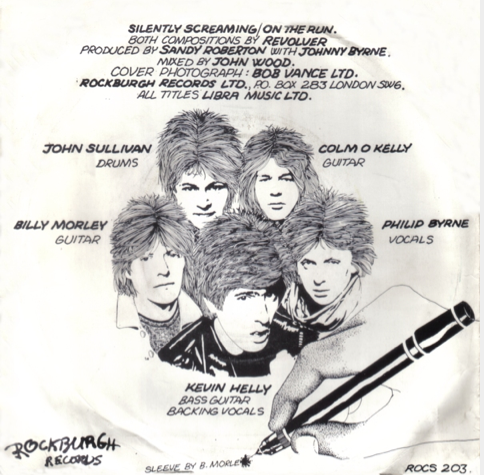
Billy then went onto play with Revolver (1977-79), one of the top bands in Dublin’s emerging punk rock scene.

Back of 'Silently Screaming' 7inch. Scanned by 'lastpost' (45cat.com)

Back of ‘Silently Screaming’ 7inch. Scanned by ‘lastpost’ (45cat.com)

The group released two singles on the Rockborough label, ’Silently Screaming’ (June 1978) and ‘You Won’t Know What Hit You’.

Overlapping this period slightly, Billy took up the post of second guitarist with The Radiators from Space from approximately September 1978 to March 1979. He joined the post ‘Ghosttown’ tour but didn’t play on the record itself. In a separate Hot Press piece today, Steve Averill called Billy:

… perhaps, the most underrated guitarist of his generation and was extremely modest about his talent, as well as being incredibly shy about performing on a stage – something that held him back from achieving his due. He had a real natural talent that all those who played with him recognised

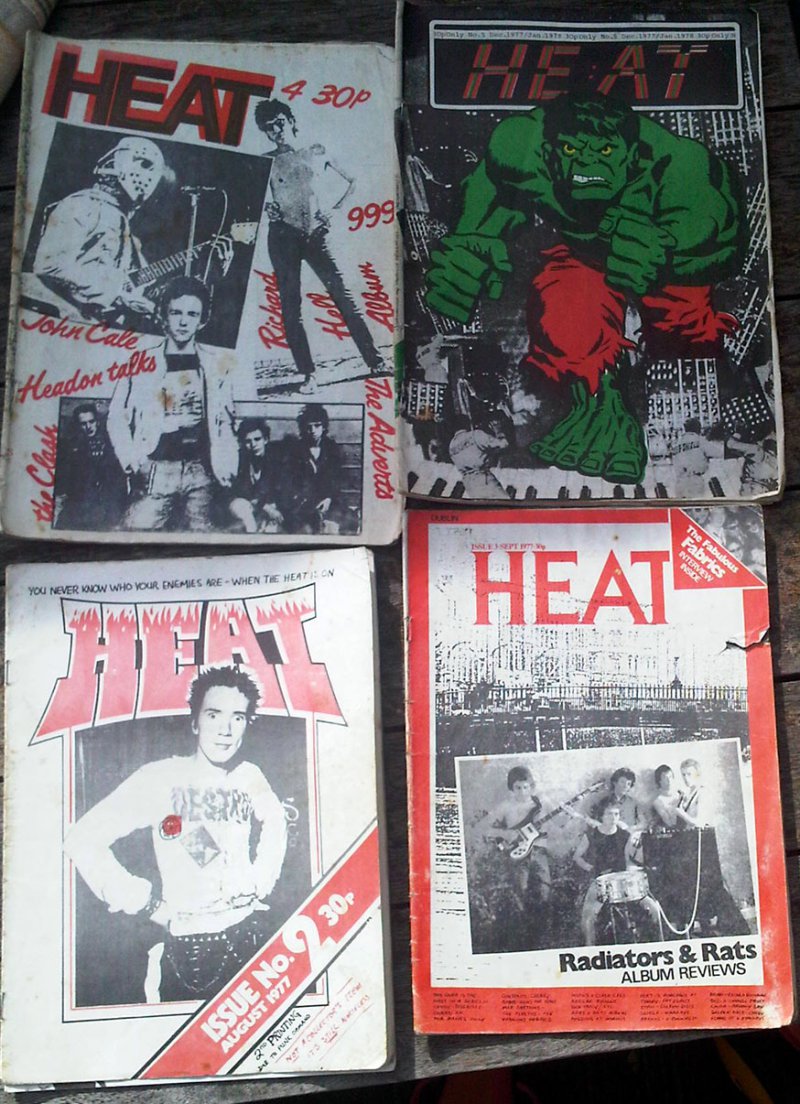
In late 1979, Billy was involved with the short-lived group The Defenders, formed to help Heat fanzine pay legal costs to U2’s manager Paul McGuinness.

Issues 2 - 5 of Heat fanzine. Credit - brandnewretro.

Issues 2 – 5 of Heat fanzine. Credit – brandnewretro.

McGuiness had objected to an article entitled “McGuinness (Isn’t) Good For U2′” in Vol. 2, No. 2 of the magazine which accused him of using back-handed tacits to ensure that U2 got a prestigious support slot at a gig in Trinity College, bumping a rival band from the bill. The story was later proved to be wrong. Decan Lynch in the Irish Independent wrote about the incident at length back in 2006.

The Defenders line up, along with Billy, included:

– Eamon Carr and Johnny Fean of Horslips
– Steve Averill and Mark Megaray of The Radiators
– Frankie Morgan of Sacre Bleu
– Gary Eglington of The Noise Boys, and later The Zen Alligators.

Heat fanzine was co-owned by Jude Carr (Eamon’s brother) and Pete Price and was one of the most well-respected and well-designed punk fanzines in the 1977-79 period. A benefit gig in the National Ballroom was organised for 25th July which was followed by a single released on Guided Missile Records, a label owned by Jude Carr and Karl Tsigdinos, a DJ and graphic designer with Hot Press. Unfortunately, the magazine folded despite these efforts.

In 1981, Billy played on the Teen Commandment‘s first single ‘Private World’. A great powerpop band formed by Philip Byrne (ex. Revolver) in 1979 that originally featured Dave Maloney (ex. The Vipers) on drums. Pete Holdai of the Radiators produced their work.

Billy, a very talented illustrator and graphic designer, went onto work for a number of advertising agencies in Dublin and Hot Press magazine for a short period. This was followed by a long career in RTE’s graphics department.

While Ireland’s first reggae band was without doubt Zebra (1979-80), a number of pop and rock bands recorded songs with ska and reggae influences in the 1960s, 1970s and 1980s. Some were absolutely awful, others mediocre, while a handful were just about listenable. This is an attempt to compile an accurate list of those records.

1969 was the year of the skinhead reggae explosion in England. Desmond Dekker & The Aces’s single ‘Israelites‘ reached the UK No. 1 spot in April. Other significant singles released that year included ‘Monkey Man‘ by Toots & The Maytals and Symarip’s ‘Skinhead Moonstomp‘ which was aimed specifically at the British reggae-loving skinhead audience.

That same year an Irish showband called The Fairways from Edenderry, Co. Offaly, on the go since 1966, released a novelty ska-influenced single “sung in a cod West Indies accent”. Titled ‘Yoko Ono’, after the Japanese artist who married John Lennon that year, the lyrics concern a man’s attempt to to find transport to bring him to a plantation where Yoko is waiting for him. The song opens with:

Mister, can you help me?
Can I get to Skaville?
Anyone going? My way
Anyone leaving? Today

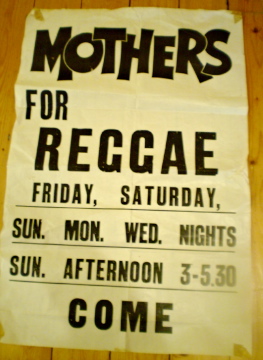
In Dublin in the early 1970s, as revealed by Garry O’Neill in his book Where Were You?, skinheads danced to reggae in clubs called Bartons and Mothers, both on Parnell Street, and Two Ages on Burgh Quay. The scene also opened its own short-lived club, the Boot Inn, in a basement on Middle Abbey Street.

London-based Jamaican reggae band The Cimarons became the first international reggae act to play Ireland, playing their first Irish gig in the Exam Hall in Trinity College in April 1978. This was followed by the Macroom Festival in Cork in June of that year and further dates around the country in 1979. Journalist Kieran Flynn wrote in Magill magazine that:

Reggae has never been a particularly popular form of music in Ireland, but the Macroom audience response suggests that the Cimarons will be back here soon.

Eamonn over at Irishrock.org describes that Belfast-band Dirtywork (pre-Katmandu) released a “reggae version” of the ‘Rose of Tralee’ in 1976. You’ll have to make up your own mind about that.

Early 1979 saw the release of the debut album ‘Infammable Material‘ from Belfast punks Stiff Little Fingers. It included a punky reggae cover of Bob Marley’s ‘Johnny Was‘:

The Bogey Boys, pub-rock band from Dublin/Meath, released their debut album ‘Friday Night’ in October 1979. One song ‘Gunslinger’ was vaguely reggae-influenced.

1979 also saw the release of Ireland’s first real single. ‘Repression’ by Zebra which was brought out by Terri Hooley’s Belfast-based ‘Good Vibrations‘ label.

Con O’Leary ran the reggae Operator Sound System from 1979-83, playing venues like the TV Club and McGonagles. If you have anymore information, please get in touch.

Continue Reading »

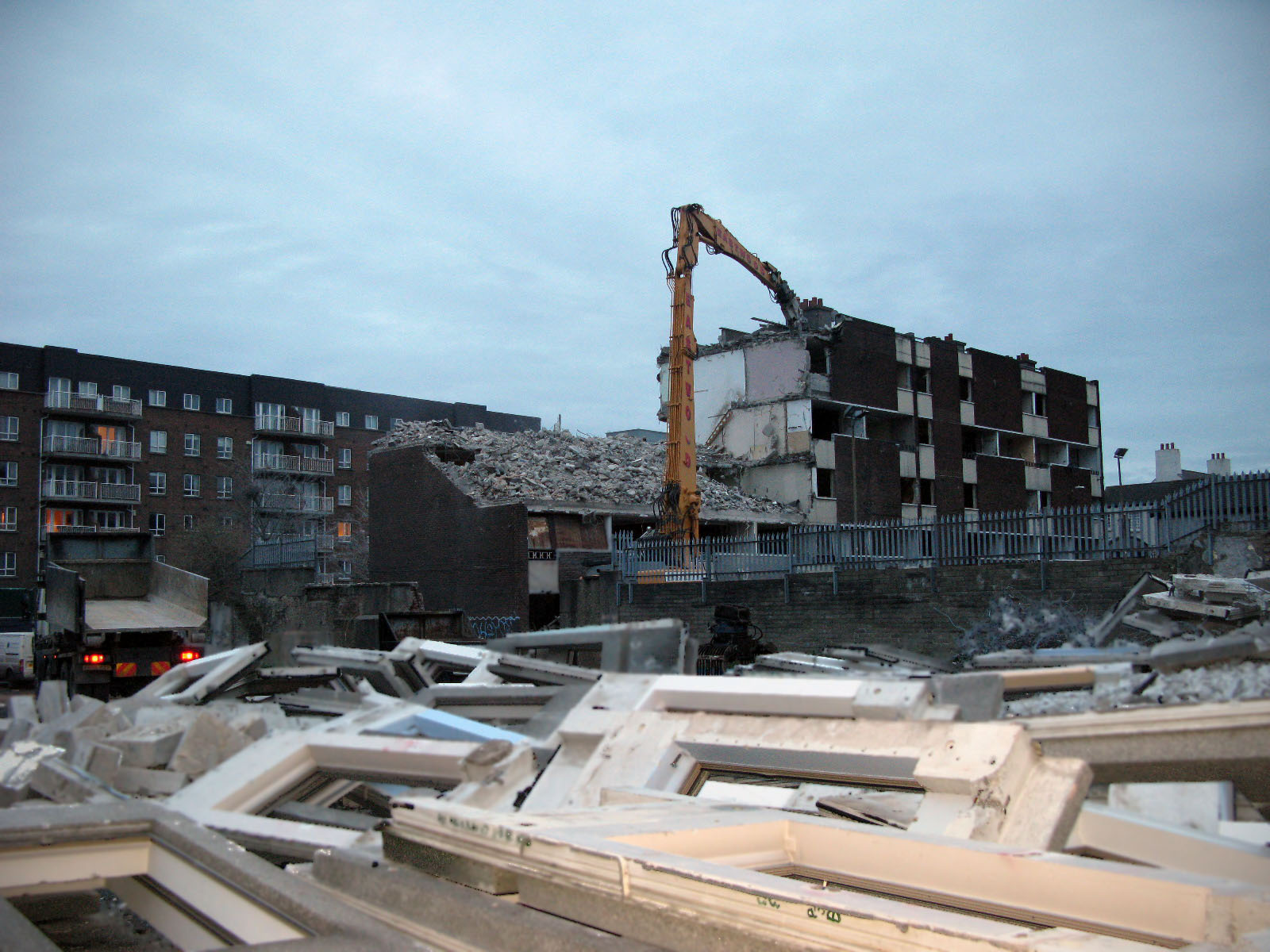
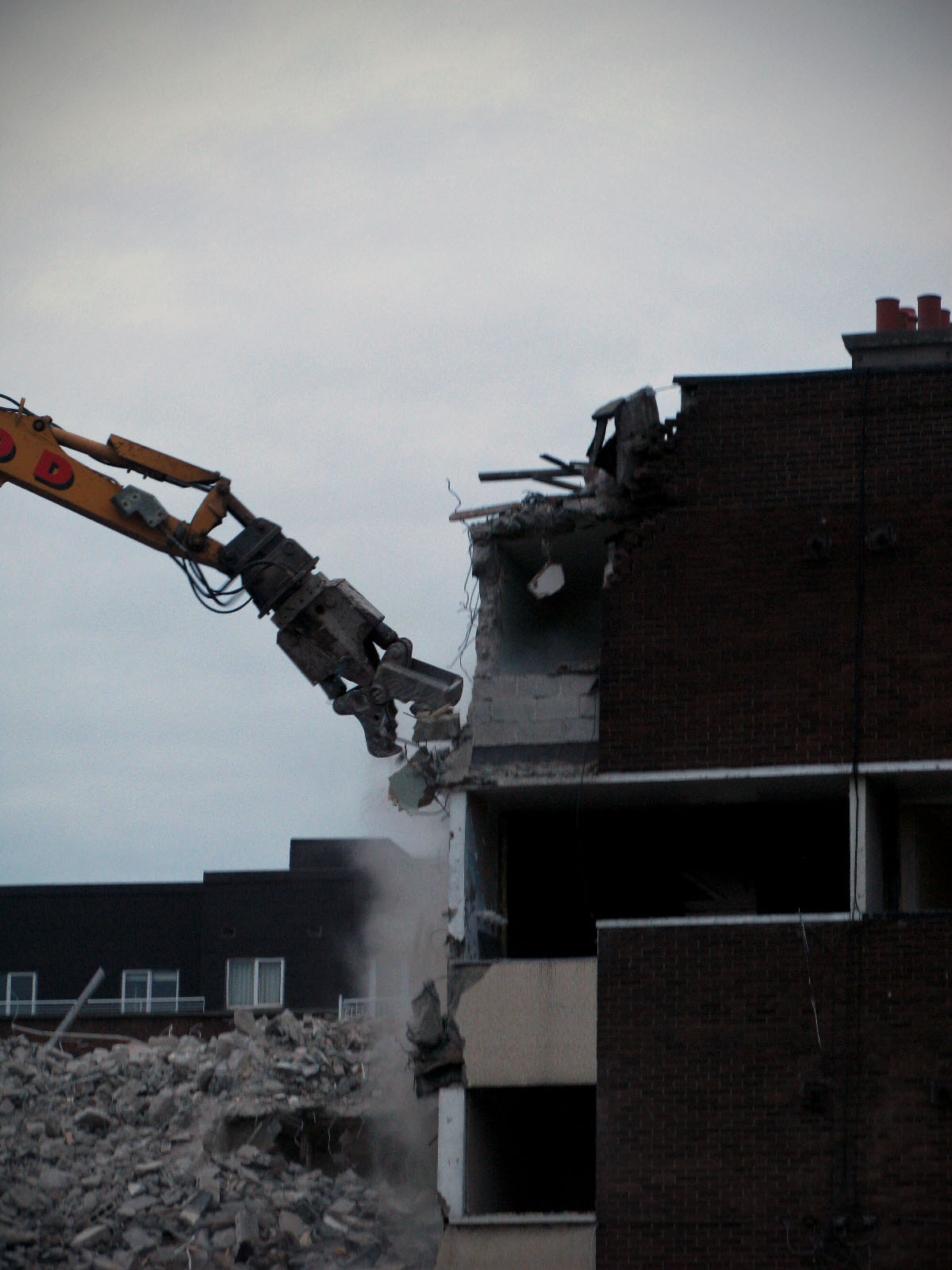
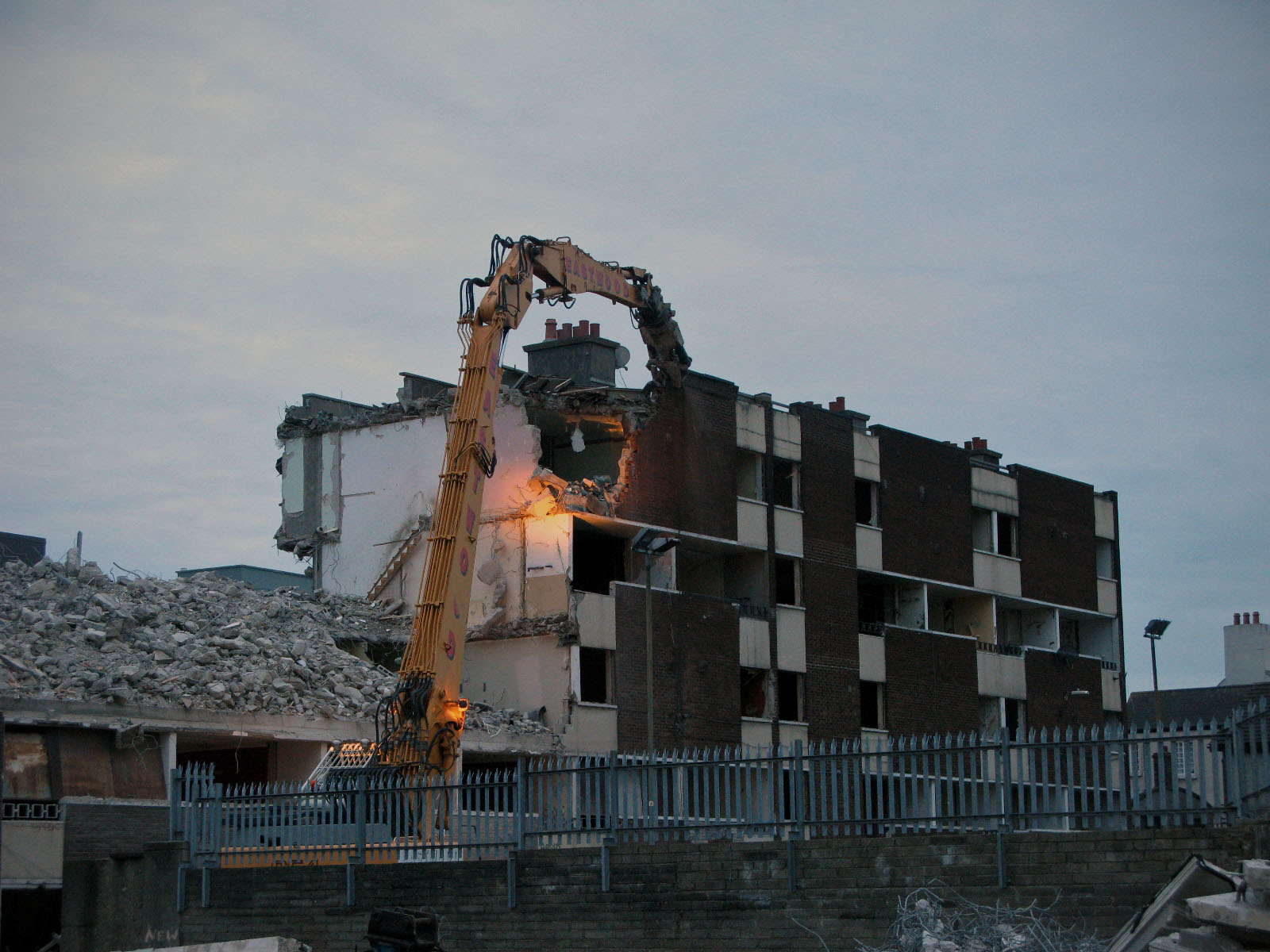
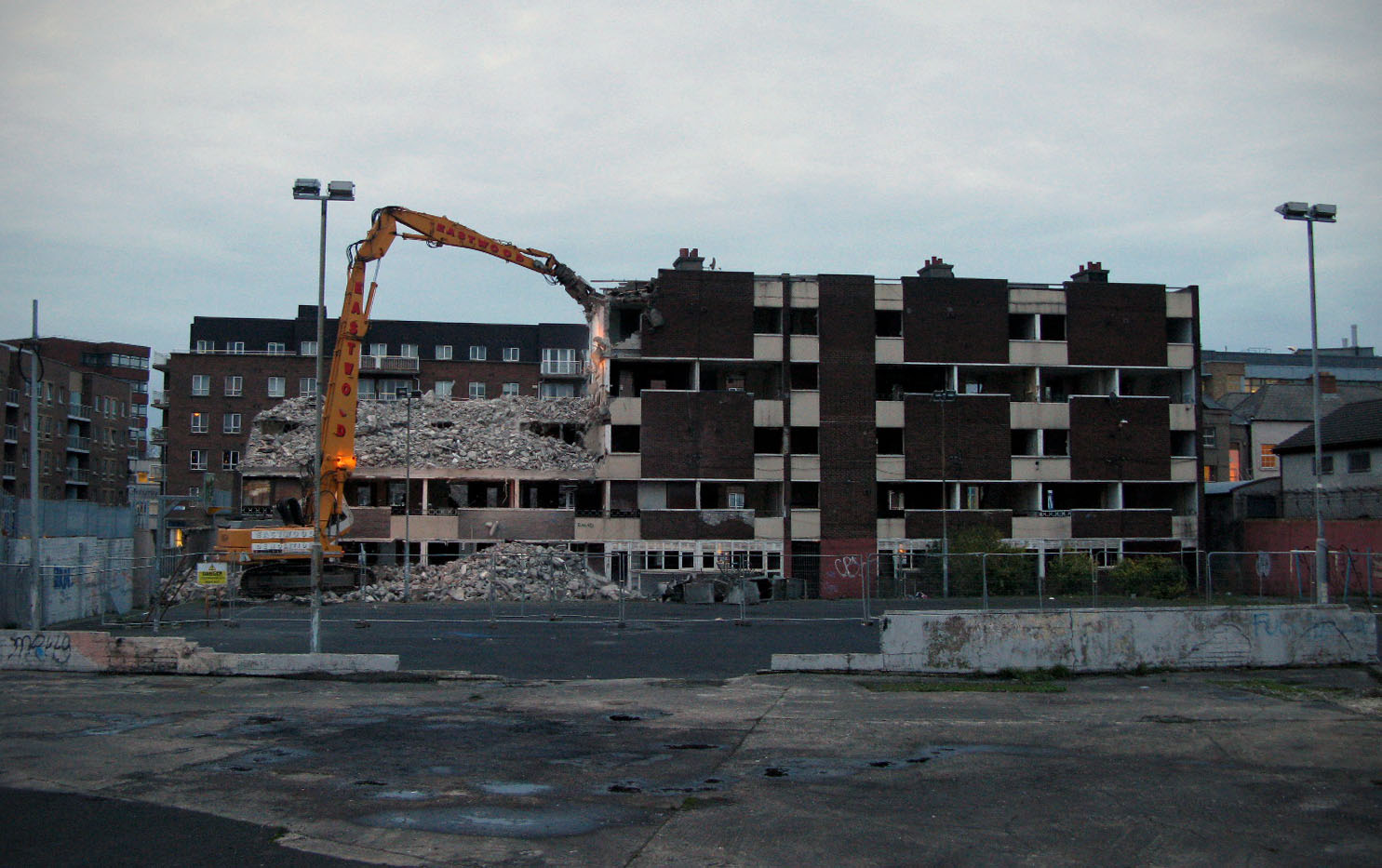
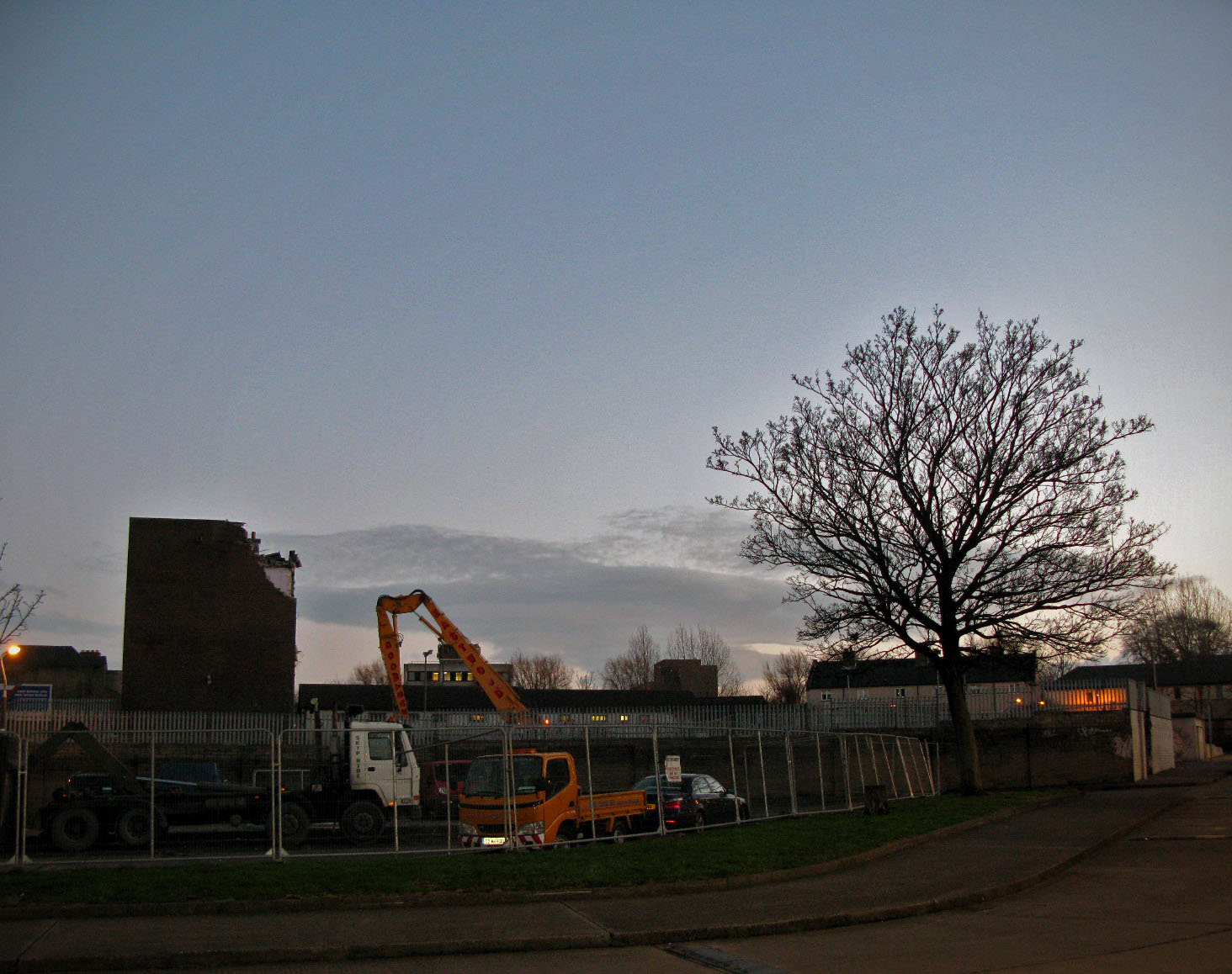
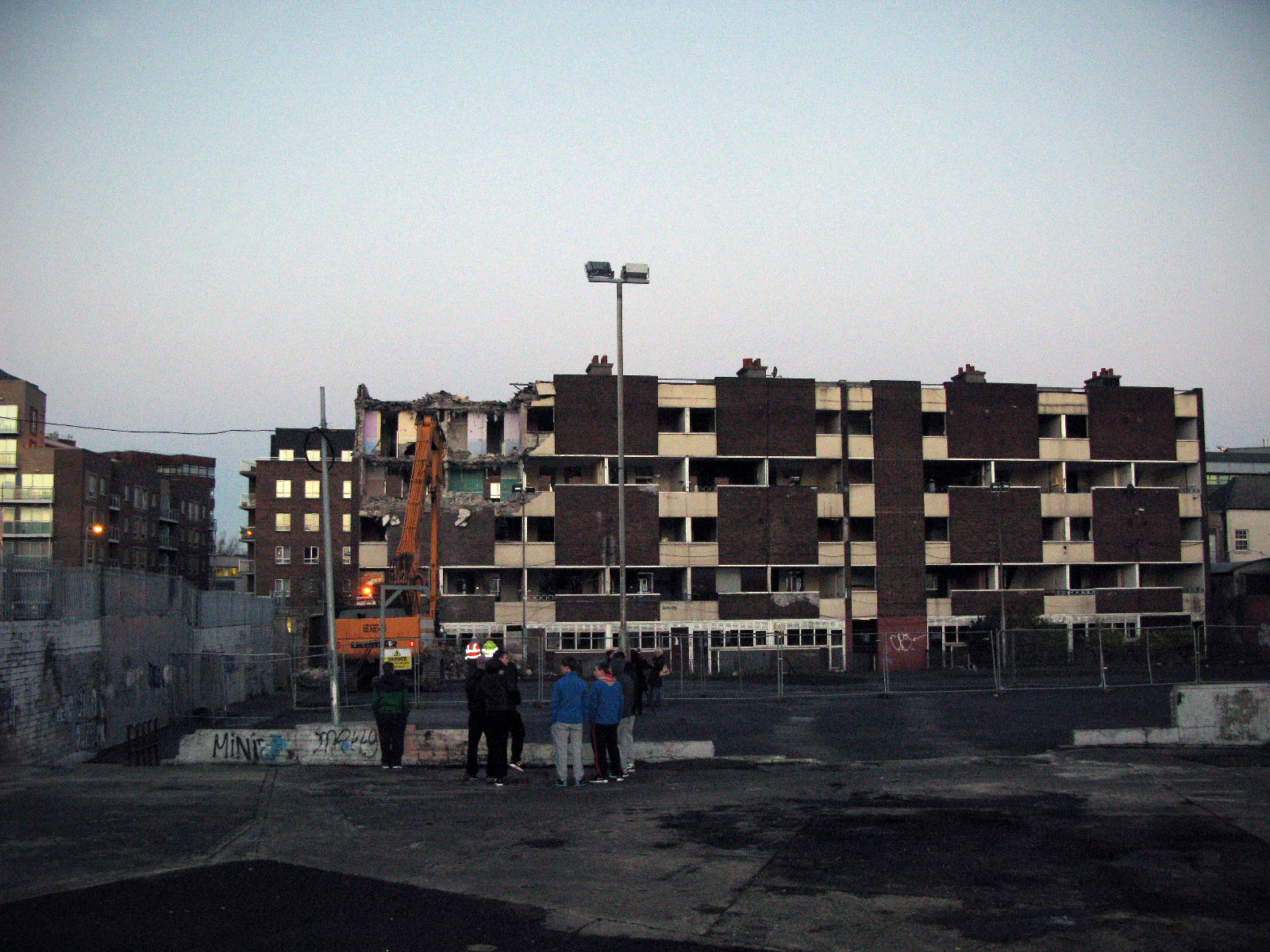
I was down on Charlemont Street yesterday to take some pictures of the going’s on down there, namely the tearing down of the flats, as well as Ffrench- Mullen House, named after Madeline Ffrench Mullen, the republican activist and feminist, and driving force behind the construction of nearby St. Ultan’s Hospital for Women and Infants in 1919. Ffrench- Mullen House has yet to be touched by the jaws of the machine below, but has been stripped back to a shell and it’s only a matter of time.

2charl1The demolition of the buildings is a controversial one, for while there was a planning application submitted for a regeneration and redevelopment project incorporating housing, offices and commercial units, permission has yet to be gained for all aspects of the plans.

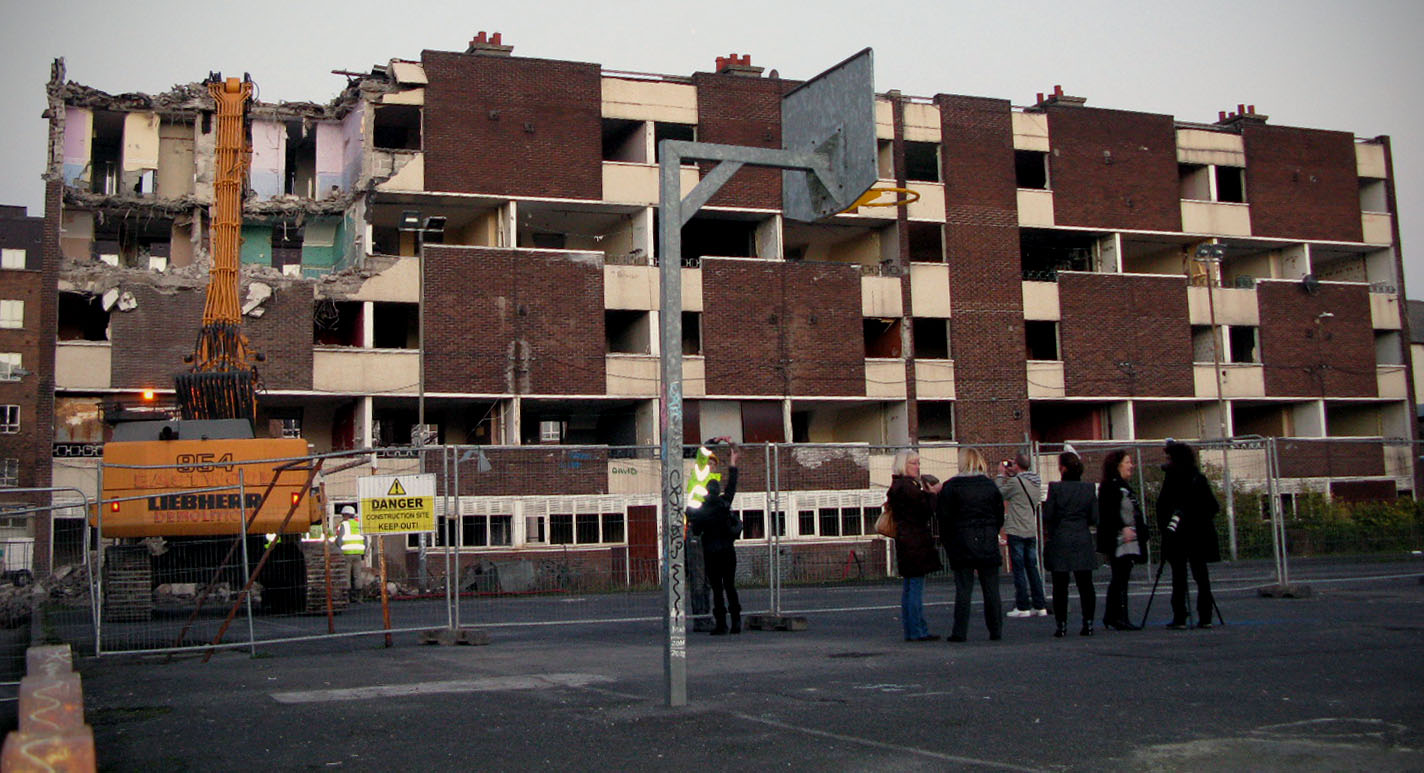
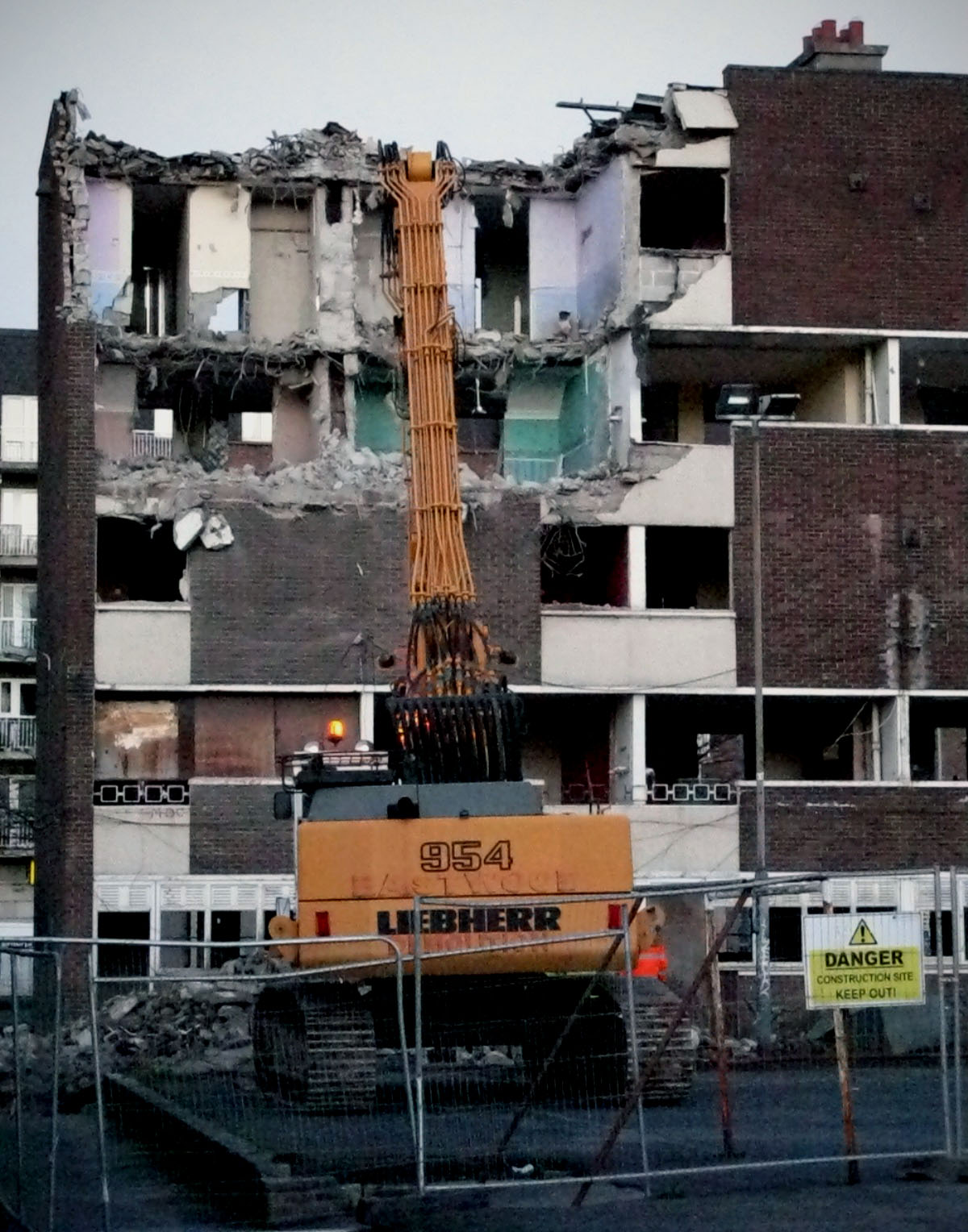
2charl2Proximity to a main road, nearby homes and offices means the demolition is slow work, with the machine slowly munching it’s way through the roof and brickwork as seen in the images below.  Unlike yesterday, there weren’t many around watching the work, apart from a few women watching from balconies nearby. 2charl3

2charl4

2charl5

2charl6Work, weather and interest permitting, I’ll try get down each evening until they’re gone.

As reported by our good friends across at Rabble, the Charlemont Street flats started to come down this week. Tuesday saw demolition begin on Ffrench- Mullen House, designed by Michael Scott, one of the most renowned Irish architects responsible for amongst others, Busaras and the Abbey Theatre. I dropped by on my way home from work, as the day was drawing to a close and workers were beginning to down tools. Will try get along tomorrow to see how far along they’ve gotten.

Charlemont1

Charlemont2

Charlemont3

Charlemont4

I was hanging around the site for half an hour or so. In that time, dozens of people walked around, took a look at the flats, a couple of pictures and headed off. Most of them knew each other so I’m guessing they were from the area. These lads stayed here throughout, as did the women below, who looked like they were being interviewed. One of them called a workman over and asked for a bit of the rubble, just managed to get a shot off in time.

Charlemont5

Charlemont6

Charlemont7

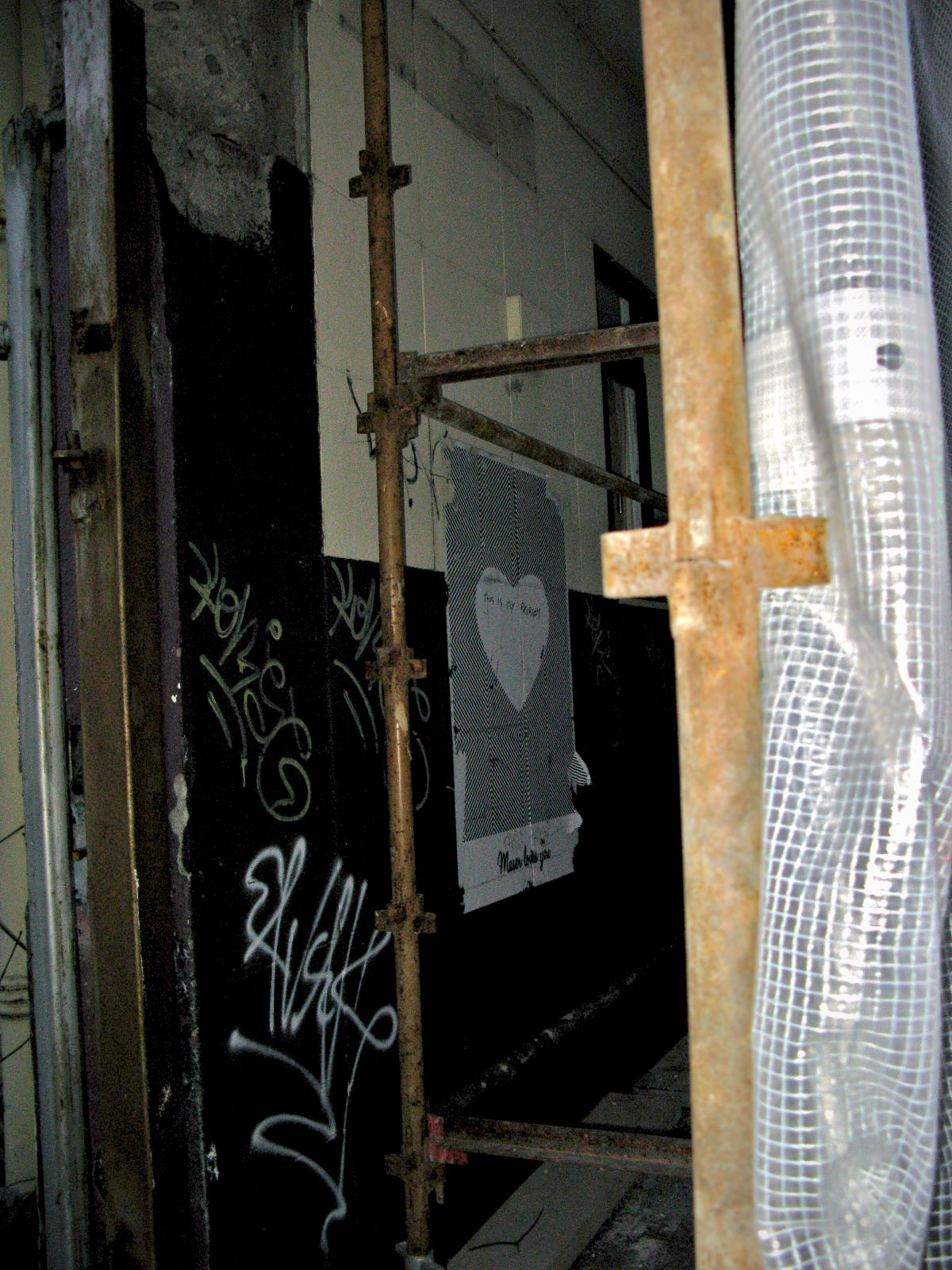
The last picture is of the front wall of Ffrench- Mullen House, mentioned in the intro. The poster is of course, by the good man Maser, whose work adorns the walls of the Bernard Shaw not far away.

Anyways, as I said, I’ll try get over tomorrow for another look.


Ramble of January 2014

Last year, a small group of us went on two rambles up the Dublin Mountains. The first was to the historic and spooky Hellfire Club.

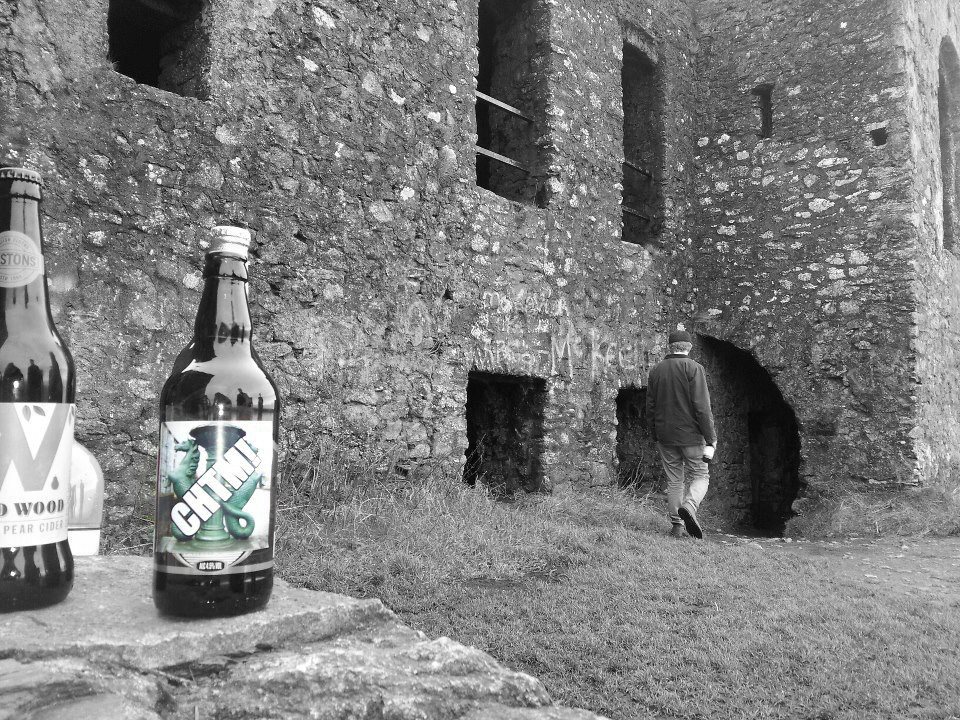
CHTM! at Hellfire Club, Jan 2013.

CHTM! at Hellfire Club, Jan 2013.

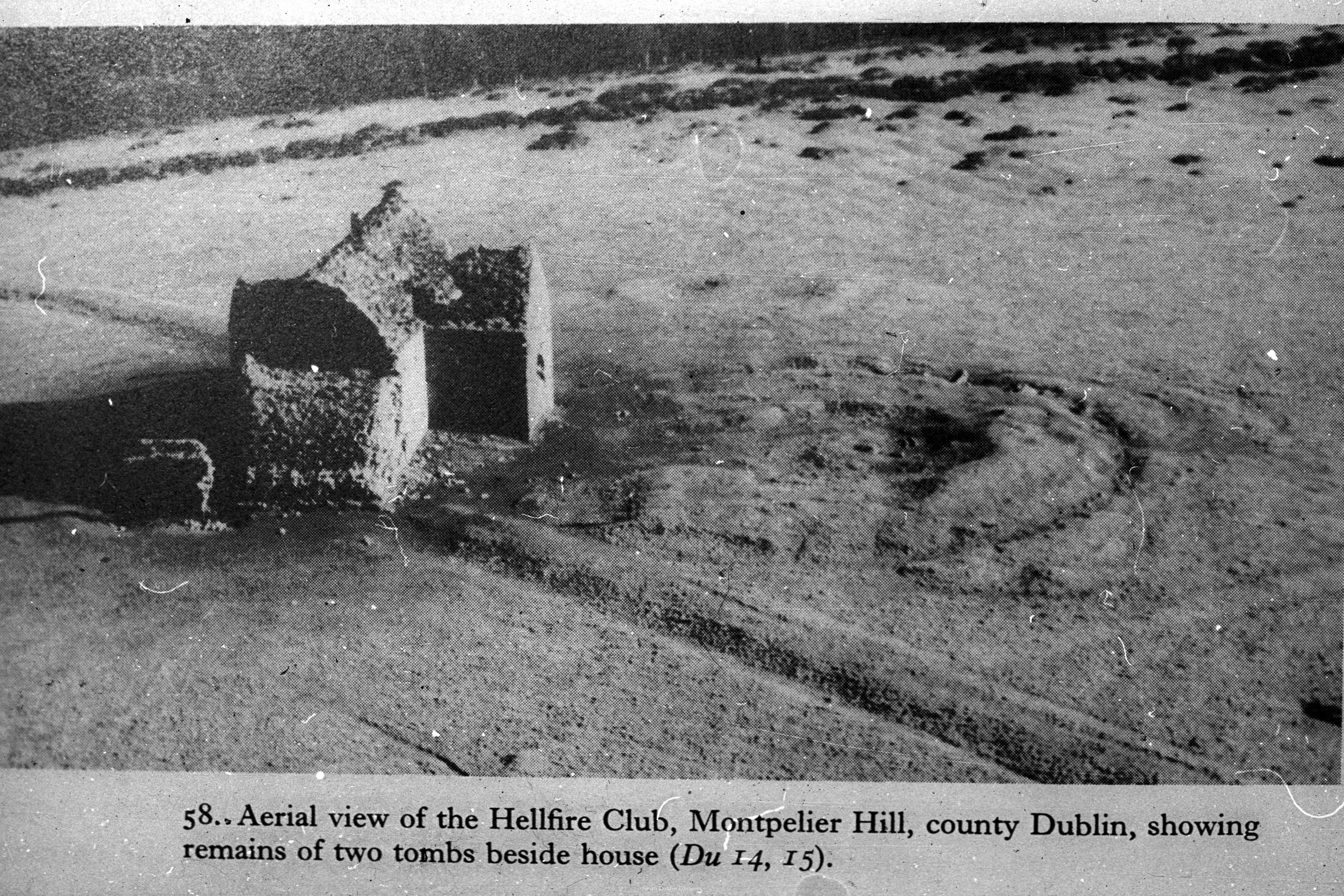
Here is a lovely aerial shot of the ruined hunting lodge that has been a source for all sorts of sordid tales for hundreds of years:

Hellfire Club. Credit - source.southdublinlibraries.ie.

Hellfire Club. Credit – source.southdublinlibraries.ie.

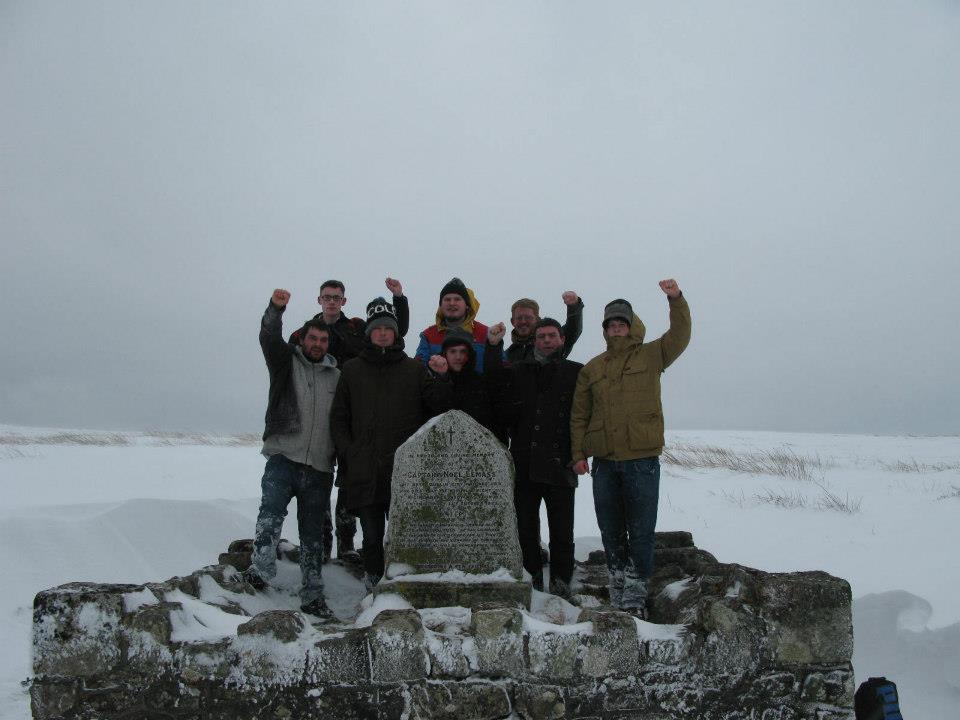
The second trip (in tough snowy conditions) was to the spot where the mutilated body of Captain Noel Lemass (anti-Treaty IRA) was found in October 1923.

CHTM! and friends at Noel Lemass memorial plaque, January 2013.

CHTM! and friends at Noel Lemass memorial plaque, January 2013.

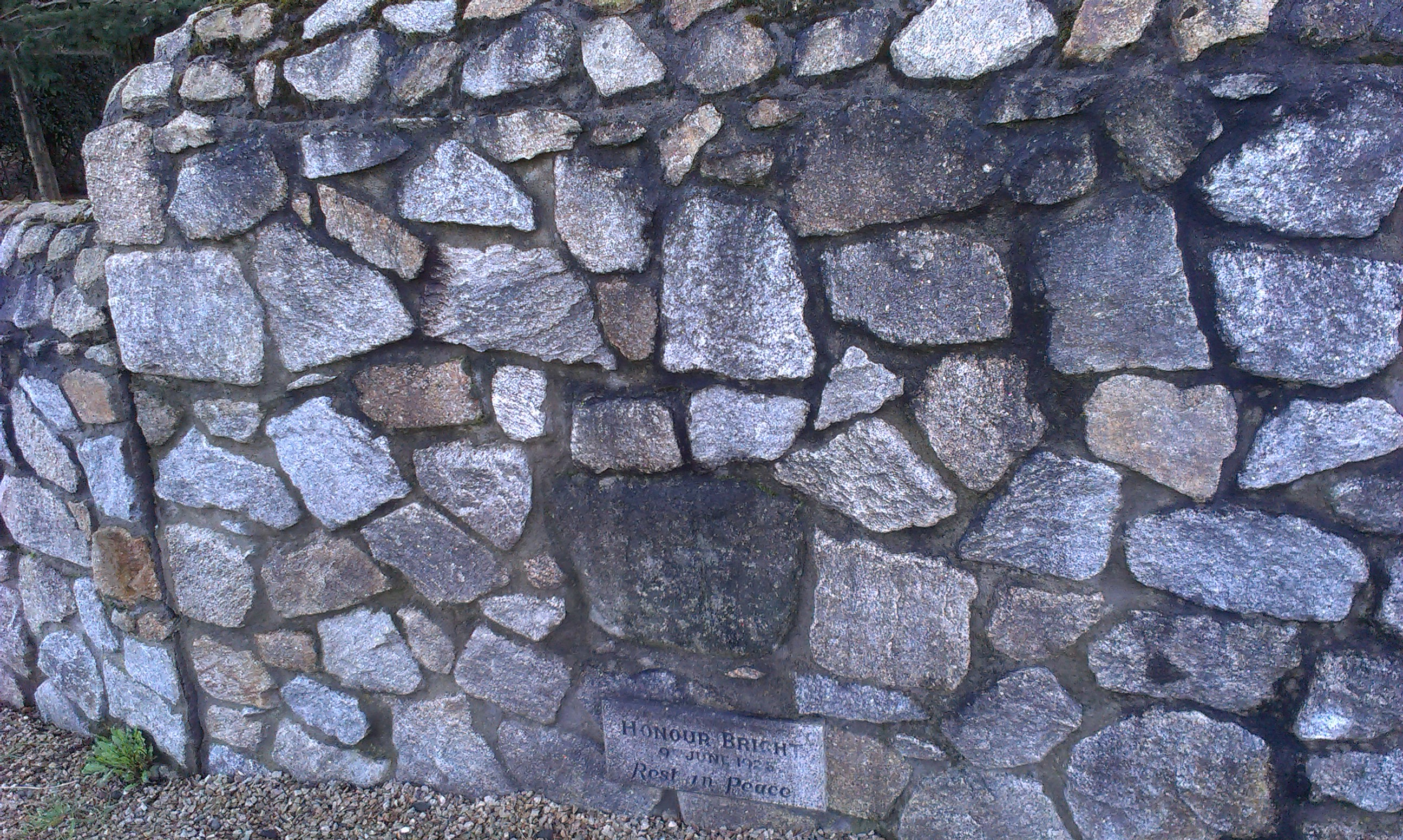
We went on our first ramble of the year this month. Our journey took us from Rathfarnham up to the small plaque to mark where the body of Honor Bright was found in 1925, to Lamb Doyles in Sandyford at the foot of then Dublin Mountains and finally to The Blue Light in Barnacullia.

Our group of five met in Rathfarnham on what turned out to be a beautiful Saturday afternoon. One of the sunniest days of the month so far. We walked up through Kingston housing estate, crossed the M50 motorway and onto the Blackglen Road. Taking a sharp right onto Ticknock Road, we located the small plaque marking the place where the body of Honor Bright (real name Lily O’Neill), shot through the heart, was found on June 9th 1925.

Small plaque. Photograph - Sam (CHTM!)

Small plaque. Photograph – Sam (CHTM!)

Lily, originally from County Clare, lived at 48 Newmarket in the Liberties and worked as a prostitute in the vicinity of the Shelbourne Hotel on Stephen’s Green. A mother of a young child, it was rumoured that she was forced to turn to prostitution after she was fired from her job for having a child out of wedlock. On the night of her murder, she was seen outside the Shelbourne talking to two men in a grey sports car. These were later identified as Dr. Patrick Purcell from Blessington, Co. Wicklow and a former Garda Superintendent, Leo Dillon from Dunlavin, Co. Wicklow. It was reported in the press that Dillon had served with both the British Army and Free State army.

Continue Reading »

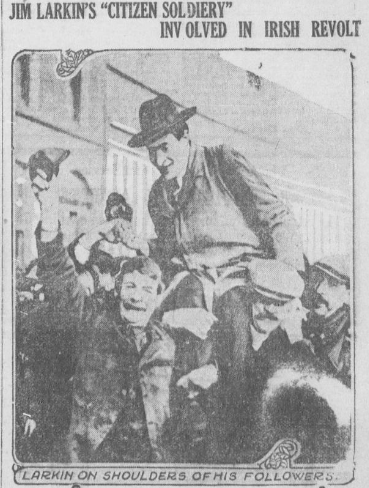
The Daily Capital (Oregon) reports on the involvement of followers of Jim Larkin in 1916 rebellion.

The Daily Capital (Oregon) reports on the involvement of followers of Jim Larkin in 1916 rebellion.

It’s almost a century since the Easter Rising broke out on the streets of the capital. Today, news travels quickly throughout the world with an international press and ever evolving technology, but how was the 1916 reported internationally at the time? The U.S Library of Congress website gives us a good idea, with thousands of editions of U.S newspapers from the period digitised.

Breaking the news of rebellion in Ireland.

The first news Americans would have heard of rebellion in Ireland was published on 25 April, the day after the uprising in Dublin had commenced. Depending on the newspaper they were reading though, they may have believed the rebellion had been stopped in its planning stages. Reporting on the capture of Roger Casement and the sinking of a German arms shipment of the southern coast, The Sun in New York told readers that “An attempt to stir up a ‘revolution’ in Ireland was nipped in the bud when a German auxiliary cruiser, carrying a strong load of German sailors and loaded with stores of rifles and ammunition, was sunk off the coast of Ireland by British patrol warcraft.”

Claims that the rebellion had been “nipped in the bud” were totally at odds with the front pages of evening newspapers however, with The Evening World in New York announcing that ‘Irish in Dublin rise in revolt!’. The paper reported that the Post Office had been seized by Irish revolutionaries, but was “recaptured by troops.” The information of the paper, and other U.S outlets, was largely second-hand information from London. The rebellion was spoken of in the past tense, coming across as more of a riot than a political uprising. To The Evening World “A revolution in Ireland, planned by the German Government, brought about a terrific riot in Dublin yesterday in which twelve citizens were killed by British soldiers and four or five soldiers were killed by the rioters.”

Oklahoma City Times, 29 April 1916.

Oklahoma City Times, 29 April 1916.


As news of the rebellion broke in the U.S, different versions of what was happening in Dublin spread too. The Washington Herald for example ran a story on the front of its April 26th edition, filed from New York, that indicated a belief there among Irish Americans that the rebellion was proving successful:

There was a general report today in circles that have been interested in Irish Nationalistic propaganda that the Dublin insurrection had been almost completely successful, and that the Irish Volunteers had captured and held as hostage Lord Wimborne, Lord Lieutenant for Ireland, and other high English officials.

The question of blame.

Almost instantly in the American press, as in Britain, the blame for the Dublin violence was firmly placed on the shoulders of Imperial Germany. The rumour of heavy German involvement in orchestrating the violence remained rife throughout the week long rebellion. The Democratic Banner, on 28 April 1916 led with a front page story that ‘Irish Waters are Swarming with German Submarines’, going on to claim “The entire Irish sea and the Atlantic waters to the west and south of Ireland are swarming with German submarines, whose sole task is to sink every troop transport destined for Ireland to quell the rebellion.”

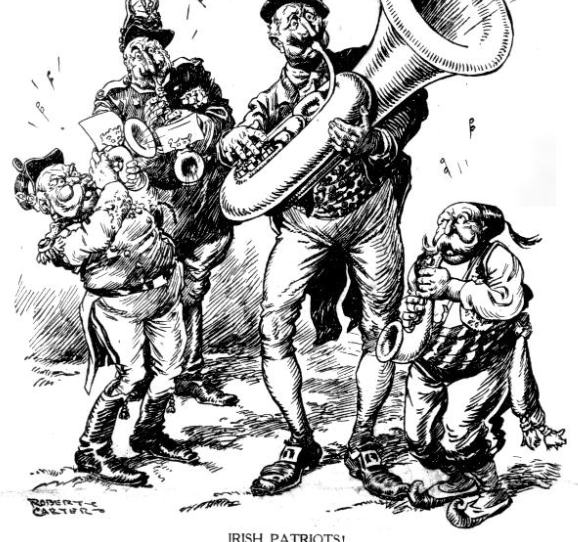
Some very German looking 'Irish Patriots' on the front of the Washington Herald, 1 May 1916.

Some very German looking ‘Irish Patriots’ on the front of the Washington Herald, 1 May 1916.

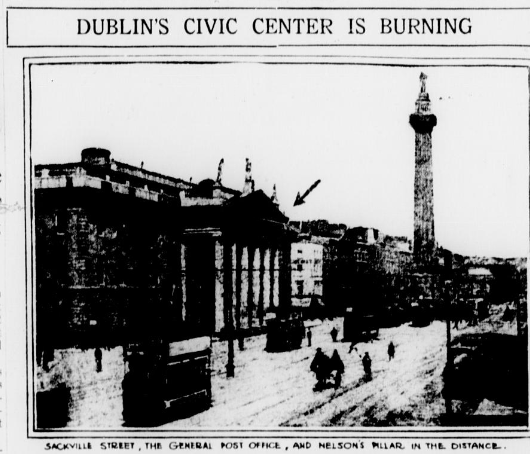
Not content with German submarines in the Irish seas, some news sources began to make claims that German bodies were being discovered in the rubble of Dublin. On 1 May, the New York Tribune noted that “‘bodies of two German leaders reported found in Dublin.” According to the paper there were rumours that German bodies had been found in the rubble of Sackville Street. This was likely misinformation coming from London outlets, but it was often taken at face value.

Interestingly, Jim Larkin also took quite a lot of blame for the events in Dublin. Larkin had left Dublin for America in 1914, following the defeat of the Dublin workers. In America he had thrown himself into radical politics in New York, becoming involved with the Socialist Party of America and the Industrial Workers of the World trade union. One newspaper, The Daily Capital from Oregon, noted that:

Just how deep James Larkin, the turbulent Irish labour leader, and his followers are involved in the Irish revolt is not known, but it is not to be doubted that the man who preached firey opposition to government in 1913 will take advantage of the disturbances in Ireland.

The strength of Larkin’s followers in Ireland was grossly exaggerated, with the El Paso Herald for example claiming on 29 April 1916 that the “rebel forces numbered about 12,000, of which 2,000 were Larkinites and 10,000 were Sinn Féiners.” In reality, there were about 1,500 rebels out in Dublin, and the Irish Citizen Army could only dream of 2,000 armed members in revolt!

Key personalities of interest to the American media.

There was huge interest in the story of Countess Markievicz among the American press, with her ‘riches to rags’ story grabbing the public imagination. It was alleged by The Evening World in New York that she had shot six rebels who refused to follow orders, and they noted that “in mans clothing and flashing a brace of revolvers” she had led an attack on the Shelbourne Hotel.
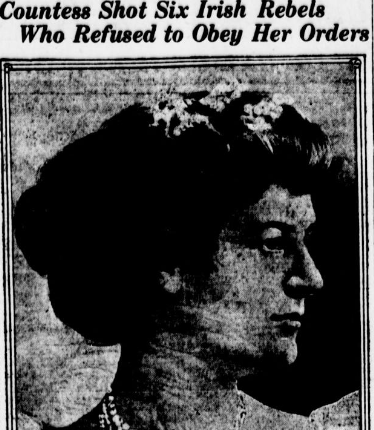
Allegations against the Countess repeated in a  New York newspaper.

Allegations against the Countess repeated in a New York newspaper.

A name which appeared again and again the American press was that of James Mark Sullivan. Sullivan was an Irish-American lawyer and former Minister to Santa Domingo, not to mention a film director who had established the Film Company of Ireland in March 1916, only months before the insurrection, and ironically the offices of the Film Company went up in flames during the uprising. Sullivan was arrested in Dublin, and of course the arrest of a former American diplomat was a huge story in the states. Sullivan spent some time imprisoned in Kilmainham Gaol in Dublin, but was ultimately released. America was at this point ‘neutral’ in the First World War, and so the detention of a high profile U.S figure was perhaps something the British authorities were eager to avoid. Sullivan returned to the U.S, but he pops up again in the War of Independence period in Dublin. Eamon Broy, who worked as an agent for Michael Collins inside Dublin Castle remembered a party at Sullivan’s house in Dublin during the War of Independence in his Witness Statement many years later:

Apples and oranges were laid on a table to make the letters “I.R.A.” and we all enjoyed ourselves for that evening as if we owned Dublin. Tom Cullen spoke there and said that we would all die forMick Collins, “not because of Mick Collins, but because of what he stands for”. Mick was persuaded to recite “The Lisht”, which he did with his own inimitable accent. When he was finished, there was a rush for him by everybody in the place to seize him.

In later years Sullivan retired to Florida in the United States, but upon his death his body was taken to Dublin and buried in Glasnevin Cemetery. He is certainly a forgotten figure of the revolutionary period, and you have to wonder how with that kind of story!

The leadership figures caused some confusion for the press, with claims Connolly had died during the rebellion, and Patrick Pearse widely named ‘Peter’. The Day Book,a popular Chicago newspaper noted that “The backbone of the rebellion was broken when James Connolly, ‘General of the Irish Army, was fatally wounded at Liberty Hall. When Peter Pearce, leader of the rebels, was wounded in the leg most of his followers surrendered.”

The response of Irish America to events in Dublin.

The Kentucky Irish American makes its feelings known, May 1916.

The Kentucky Irish American makes its feelings known, May 1916.

In New York, it was reported that a meeting of the United Irish League of America condemned the rebellion, but that it was interrupted by several men and women, while ‘outside of the hall’ scores cheered Sir Roger Casement and Germany and “loudly denounced John Redmond, leader of the Irish nationalists in the British parliament.” A meeting was held in New York in support of the aims of the rebellion, with a reported attendance of 1,500 in many newspapers. Deutschland Uber Alles, the Wearing of the Green and the American national anthem were all performed by a band, and leading figures of the Irish American community such as the exiled radical John Devoy spoke.

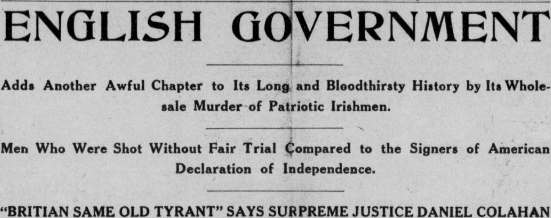
The Kentucky Irish American made its feelings on executions perfectly clear on 6 May 1916, 6 days before James Connolly would be shot tied to a chair in Dublin: “If the sequel to the fighting at Dublin is wholesome hanging and shooting of Irishmen by English officials, there is no doubt of the outcome. Under such circumstances a war of revolution is a foregone conclusion.”

Doing her bit for Ireland.

It’s not every day that the events of almost a century ago make the front page of The Irish Times, but today a participant in the Easter Rising had the honour. Margaret Skinnider, an Irish Citizen Army participant in the rebellion, featured in the paper today as she was denied a pension in the years following the rebellion, on the basis that as a woman she could not qualify as a ‘soldier’, as the term was “applicable to soldiers as generally understood in the masculine sense”. The pension applications of participants in the revolutionary period have only just been released online, and are truly a treasure trove of information you can expect to hear a lot more about here over the coming months!

Image of Margaret Skinnider taken from 'Doing My Bit For Ireland' (New York,1917)

Image of Margaret Skinnider taken from ‘Doing My Bit For Ireland’ (New York,1917)


Skinnider led a long and colourful life, living until the early 1970s. Born in Coatbridge in Scotland, she is today buried on Irish soil, within the republican plot of Glasnevin. In 1917 she published her memories of the Easter Rising in one of the earliest publications to deal with the uprising, entitled Doing My Bit For Ireland. This book is out of print for many years now, but has been digitised, and given that Skinnider is in the news today I thought the link worth posting here. You can read Skinnider’s account of the rebellion here.

'Doing My Bit For Ireland', published in New York, 1917.

‘Doing My Bit For Ireland’, published in New York, 1917.

In her introduction, written in the United States, she noted:

When the revolt of a people that feels itself oppressed is successful, it is written down in history as a “revolution” as in this country in 1776. When it fails, it is called an “insurrection” as in Ireland in 1916. Those who conquer usually write the history of the conquest. For that reason the story of the “Dublin Insurrection” may become legendary in Ireland, where it passes from mouth to mouth, and may remain quite unknown throughout the rest of the world, unless those of us who were in it and yet escaped execution, imprisonment, or deportation, write truthfully of our personal part in the rising of Easter week.

Perhaps Skinnider’s memoirs, as a historical source of merit, are due a modern reprint.

Willie Bermingham (Image: Dublin City Public Libraries)

Willie Bermingham (Image: Dublin City Public Libraries)

Dublin City Council yesterday made a decision to rename Tara St. Fire Station after the late Willie Bermingham, founder of the ALONE charity and a Dublin firefighter during his lifetime. I have huge admiration for Willie as a figure in Dublin history who championed the cause of the poor, elderly and marginalized. When we ran our first CHTM charity walking tours, we donated the money to ALONE. To mark the occasion of the renaming of the fire station in some way, we’re posting this brilliant archive footage of Willie at work, which was uploaded by ALONE to YouTube and deserves more attention:

Willie wrote his own obituary, something we have posted on the site before but which is worth re-posting again. I’ve always enjoyed the line about teaching bureaucrats a little manners.

Willie Bermingham landed at the Rotunda Hospital, Dublin 29th March, five years before the big snow of 1942.

One of a family of seven with a father -a farmer, merchant, dealer, turf cutter, scrap man or just a hard worker, and a mother- a great woman to milk cows, feed pigs, cut turf or feed the nation.

Educated at Goldenbridge, St Michael’s Inchicore, on the streets, in the bog and at the university of life itself. Married with 5 children from 17-5 years. Hobbies include hoarding junk and curios and foreign travel.

Joined the Dublin Fire Brigade in 1964 and spent a long time pushing for the pension. Favourite food, good old irish stew and lots of fish. For breakfast several mugs of tea at work. Also loves to eat lots of red tape to teach the bureaucrats a little manners.

The best way to remember Willie is to continue to look out for the old and the needy. You can donate to ALONE here.

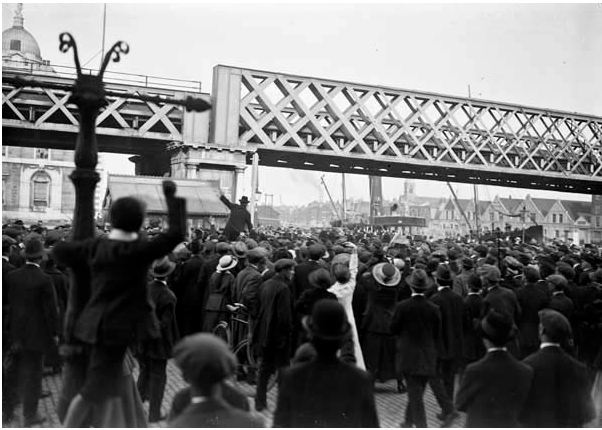
Inspector John Mills became the first crown forces fatality since the Easter Rising after he was struck with a hurley by a member of Na Fianna Éireann outside the burnt out shell of Liberty Hall on 10 June 1917.

A photograph of the protest meeting at Beresford Place, and the arrest of Count Plunkett. June 1917. Credit - Keogh Photographic Collection, NLI.

A photograph of the protest meeting at Beresford Place, and the arrest of Count Plunkett. June 1917. Credit – Keogh Photographic Collection, NLI.

Born in 1866, Millis from Dysart, Co. Westmeath, joined the Dublin Metropolitan Police at the age of 20. He was promoted to Sergeant in 1901 to Station Sergeant in 1908 and finally to Inspector in 1916. In 1911, the family were living at 47 Leinster Street just off the Phibsboro Road as you come to Cross Guns Bridge (formerly Westmoreland Bridge). John and his Kilkenny-born wife Margaret lived with their three children – Florence (13), Ralph (8) and Hilda (6) – who were all in school. Teresa Gangan (22), a Book Keeper from Meath, and Donnchadh O’Duighneáin (29), a Civil Servant from Cork, were boarders in the Mills home. (It is interesting to note that this Protestant DMP Inspector was happy to let a boarder stay in his house who was a fluent Irish speaker and who spelt his name in Gaelic) On 10 June 1917, Cathal Brugha and Count Plunkett led a group of around 2,000 Sinn Féin supporters into Beresford Place for a meeting called to protest against the detention and treatment of Easter Rising volunteers in Lewes Jail in East Essex, England. As Brugha began to address the crowd, Inspector John Mills and a detail of officers approached and declared the meeting illegal. Brugha and Plunkett ignored the order and scuffles broke out. The police attacked the crowd with batons and the two speakers were arrested.

A photograph of the protest meeting at Beresford Place, and the arrest of Count Plunkett. Credit - Keogh Photographic Collection, NLI.

A photograph of the protest meeting at Beresford Place, and the arrest of Count Plunkett. Credit – Keogh Photographic Collection, NLI.

As Mills was escorting Brugha and Plunket to nearby Store Street Police Station, sections of the crowd tried to break the men free. In the struggle, Mills was hit over the head with a hurley. This one blow proved fatal and he later died from his wounds in hospital. A number of Bureau of Military History (BMH) Witness Statements (WS) refer to the assailant as a member of Na Fianna Éireann and of the so-called Surrey House clique. This was the term given to a number of Fianna boys who used to meet regularly at Countess Markievicz’s house in Leinster Road, Rathmines. Seamus Pounch of Na Fianna Éireann who fought in Jacobs Biscuit Factory during the Easter Rising and was later Brigade Adjutant of the Dublin Brigade of the IRA was there on that day in Beresford Place. He wrote in his Witness Statement (no. 294) that:

The escape of the striker was covered by a companion who had an automatic to keep the police at a safe distance; one policeman who was gaining on them in Abbey Street would have met a serious accident only he fell at the sight of the gun and it had jammed.

The bloody conflict of the 1913 lockout that occurred only four years previously was still on the mind of Seamus Pounch when he wrote his account in the late 1940s:

This (action) avenged the death of our comrade killed by by a blow of a police baton in the 1913 strike riots. This lad was kept in hiding amongst the clique and defied all attempts of arrest, and even big police rewards posted around the country had no results.

A number of female Republicans were asked to help the hide the boy from the authorities. Maeve Cavanagh of the Irish Citizen Army recalls in her Witness Statement (no. 258) that she was

asked to take charge of a wanted man, and bring him to another house. We did all we could do to alter his appearance and I brought him safely to the house. He was never got. Of course murder was never intended at all. It was a blow struck in the heat of a fight.

Others recalled that the boy’s blow was not meant to kill. Rose McNamara of Cumann na mBan in Witness Statement (no. 482) said:

We knew the lad who dealt the blow. He had no intention of killing the Inspector and we prayed hard that he would not be caught and he was not.

Another woman who helped the boy get safely to America was Aine Ceant (widow of Eamon) of Sinn Fein and Cumann na mBan. She wrote in her Witness Statement (no. 264) that her:

… sister Lily arrived home and told me about the incident. She had scarcely taken her tea when a message came that she was wanted to take charge of the Fianna boy who did this deed, and that she was to bring him to a place of safety. Lily O’Brennan went, took charge of the Fianna boy, linked him along and discovered to her horror that she was well acquainted with him, which would have put her in an awkward position, had she been called to give evidence of the incident. The boy was subsequently got away to America.

Garry Holohan (WS no. 336) names the boy who struck Inspector Mills as ‘Eamon Murray’. I thought initially that this was the same person known as ‘Ernie Murray’, listed as Company Commander of No. 3 Company (Inchicore area) of Na Fianna in the August 1915 to April 1916 period, but I don’t think this is the case now. See below for more details. Seamus Reader (IRB and Na Fianna Glasgow) recalled in his Witness Statement (no. 627) that Eamon Murray came over to Scotland with a number of Dublin Na Fianna boys in late 1915 to help their counterparts over there organise some a raid. In January 1916, Murray and Seamus Reader (no. 1767) traveled to Glasgow on a gun-running trip. They returned to Dublin via Belfast with 10 revolvers, 100 rounds of ammuntion 100 detonators, 20 feet of fuse and 7 lbs. of explosives. During the Easter Rising, Murray was one of 30-40 people who took part in the Magazine Fort attack. After the killing of Mills in June 1917 and before he was sent to America, Murray was hid briefly in Countess Markievicz’s house in Leinster Road, Rathmines.

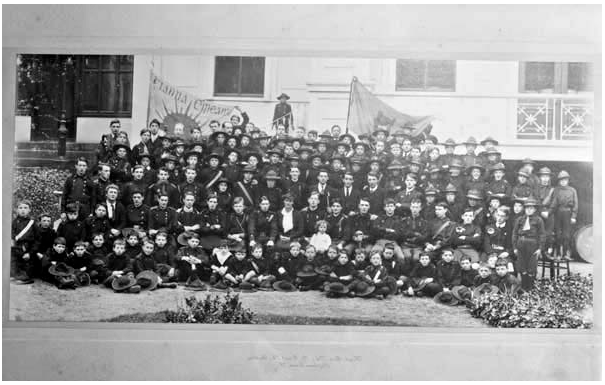
Undated photograph of Fianna Eireann scouts with Countess Markievicz and little girl. Credit - Keogh Photographic Collection, NLI

Undated photograph of Fianna Eireann scouts with Countess Markievicz and little girl. Credit – Keogh Photographic Collection, NLI

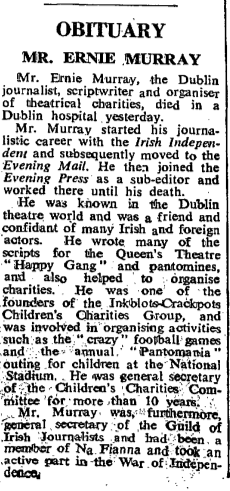
When she was arrested, he was taken into the care of Miss Dulcibella Barton (no. 936) at her house in Annamoe, County Wicklow. Here, he slept in “a summer house in the Garden as the house was full”. However he got appendicitis but recovered to full health and then was able to make his way to America. Murray was sheltered in America until the Truce in 1921 . He then returned to Ireland and fought with the anti-Treaty IRA during the Civil War. Garry Holohan states that he then joined the “Civic Guards” (Garda Síochána) which seems odd as only a few years had passed since he had killed a police officer. I assume a number of Inspector Mill’s colleague’s would been in the ranks of the Garda Síochána at this stage which would have certainly made things awkward. Murray then “lost his reason” according to Holohan and at the time of writing his statement in 1950, he noted that Murray was currently a patient of Grangegorman Hospital. This is where the trail ends. During my research, I did come across a journalist named Ernie Murray who was involved in the Na Fianna and died in 1973. See obituary below:

Ernie Murray (IT, 27 Jan 1973)

Ernie Murray (IT, 27 Jan 1973)

This doesn’t sound like a man who suffered some sort of mental brekadown sometime in the 1930s or 1940s and was an inmate of  St. Brendan’s psychiatric hospital in Grangegorman. by 1950. So it looks likely in fact that Eamon Murray and Ernie Murray were both separate volunteers with Na Fianna in Dublin in the same period. If you have anymore information on Eamon Murray or photographs of either himself or Inspector John Mills, please get in touch.