Feeds:
Posts
Comments

[A sequel to this article can be read here]

In the early half of the twentieth century, there were roughly 3,700 Jews living in Ireland. This represented about 0.12% of the total population. Though their numbers were minuscule, members of the the Jewish community were disproportionately active in the fight for Irish independence. Melisande Zlotover in his 1966 memoir ‘Zlotover story: A Dublin story with a difference’ assessed the overall situation by writing that Dublin’s Jews “were most sympathetic [to the fight for Independence] and many helped in the cause”.

These included:

Michael Noyk (1884–1966) was born in Lithuanian town of Telšiai and moved to Dublin with his parents at the age of one. An Irish Republican activist and lawyer, he most famously defended republican prisoners during the War of Independence and afterwards. In the 1917 Clare East by-election he was a prominent worker for Eamon de Valera and in the 1918 general election was election agent for Countess Markievicz and Seán T. O’Kelly. He was later involved in renting houses and offices for all the ministries established under the first Dáil. During the War of Independence he regularly met Michael Collins in Devlin’s pub on Parnell Square and helped to run the republican courts. In 1921 he was to the fore in defending many leading members of the IRA, including Gen. Seán Mac Eoin and Capt. Patrick Moran, the latter of which was executed for complicity in the shooting of British intelligence officers.

While Arthur Griffith’s early anti-Semitic comments (c.1904) are frequently recalled, it should be noted that he was an extremely close friend of Noyk’s from 1910 onwards and he remained Griffith’s solicitor until his death in 1922. So close did Griffith’s relationship with Noyk become that his own daughter would act as a flower girl at Noyk’s wedding as Manus O’Riordan reminded us in an excellent 2008 article.

In later years, Noyk became a founder-member of the Association of Old Dublin Brigade (IRA) and a member of the Kilmainham Jail Restoration Committee. Keenly interested in sport, he played soccer in his youth for a team based around Adelaide Road and was for many years the solicitor to Shamrock Rovers. He died on 23 October 1966 at Lewisham Hospital in London. A huge crowd, including the then taoiseach, Seán Lemass, attended his funeral and the surviving members of the Dublin Brigade rendered full IRA military honours at his graveside. He is buried in Dolphin’s Barn cemetery.
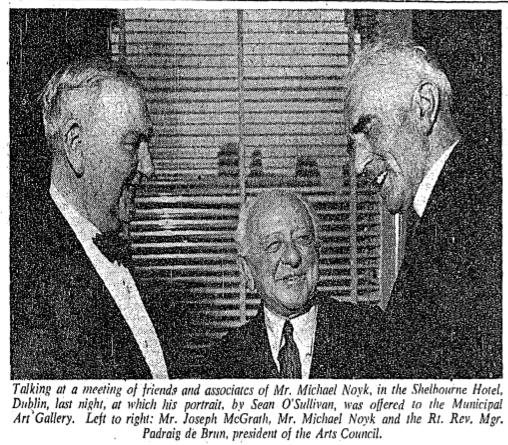
Noyk is honoured with portrait. The Irish Times, 06 Apr 1960.

Noyk is honoured with portrait. The Irish Times, 06 Apr 1960.

Robert Emmet Briscoe (1894–1969) was a Jewish Dublin-born republican and businessman who most famously ran guns for the IRA during the War of Independence. Named after revolutionary leader Robert Emmet, his father, a steadfast Parnellite called another son Wolfe Tone Briscoe.  Politicised after the Easter Rising, Robert attended meetings of Clan na Gael in the United States, meeting Liam Mellows, who influenced his return to Ireland (August 1917) to join the headquarters staff of Na Fianna Éireann. The clothing factory that Robert Briscoe opened at 9 Aston Quay, and a subsequent second workshop in Coppinger’s Row, both served as headquarters for clandestine Fianna and IRA activities before and during the War of Independence. Unknown to government authorities owing to his lack of prior political involvement, Briscoe engaged in arms-and-ammunition procurement and transport, and gathering of intelligence. Transferred to IRA headquarters staff (February 1920), he was dispatched by Michael Collins to Germany, where, with his knowledge of the language and country, he established and oversaw a network of arms purchase and transport. He maintained a steady flow of matériel after the July 1921 truce, and from 1922 to the anti-treaty IRA, with which he maintained links for some years after the civil war. Returning to Ireland after the 1924 general amnesty, he managed the Dublin operations of Briscoe Importing, a firm already established by two of his brothers.

During the summer of 1926 the IRA raided the offices and homes of moneylenders in both Dublin and Limerick. Manus O’Riordan wrote that:

Those who were raided were indeed predominantly Jewish, but the IRA explicitly stated that their attack was on moneylending itself, “not on Jewry”.

Historian Brian Hanley summed up the situation well when he said that the IRA:

…were supported in their claims by the prominent Jewish politician in Ireland, Robert Briscoe of de Valera’s Fianna Fáil Party. He argued that he did not see the raids as anti-Semitic, and wished it to be known that he and ‘many other members of the Jewish community’ abhorred moneylending and expressed his admiration for the IRA’s attempts to end ‘this rotten trade’.

A founding member of Fianna Fáil (1926), he served on its first executive committee, and worked on constructing the party’s national constituency organisation, transporting party workers countrywide in his recently purchased motor car. Defeated in the June 1927 general election and in an August 1927 by-election occasioned by the death of Constance Markievicz, in the September 1927 general election he was elected to Dáil Éireann, becoming the first Jewish TD, and commencing an unbroken tenure of thirty-eight years, representing Dublin South (1927–48) and Dublin South-West (1948–65). Twice lord mayor of Dublin (1956–7, 1961–2), he made a spectacularly successful whistle-stop tour of the USA (1957) – the first of several official visits, trade missions, and speaking tours – lauded by Irish- and Jewish-Americans as Dublin’s first Jewish lord mayor.
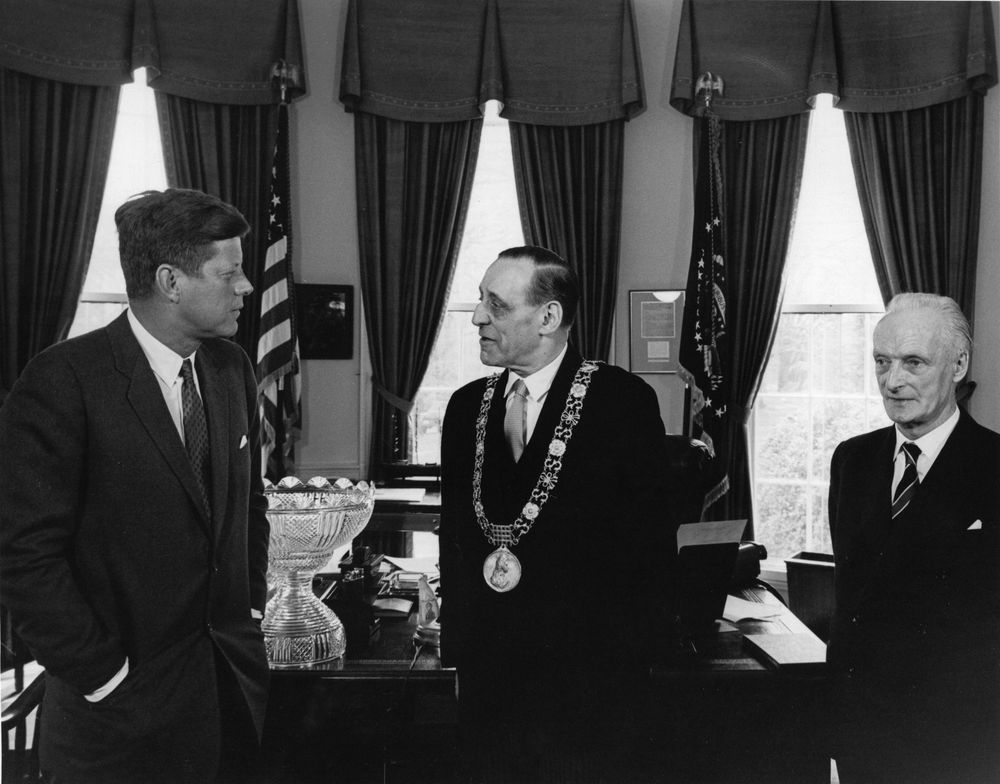
JFK meeting with IRA veteran Robert Briscoe, Lord Mayor of Dublin. 26 March 1962. Credit - jfklibrary.org.

JFK meeting with IRA veteran Robert Briscoe, Lord Mayor of Dublin. 26 March 1962. Credit – jfklibrary.org.

Estella Solomons (1882–1968), who “hailed from one of the longest established Jewish families in Dublin”, was a distinguished artist active with the Rathmines branch of Cumann na mBan (Wynn, 2012, p. 60). One of her first jobs was distributing arms and ammunition which she kept hidden under the vegetable patch at the family home on Waterloo Road.  (Wynn, 2012, p.60) When her sister visited from London with her British Army husband,, Estella stole his uniform and passed it onto the IRA. Solomons sheltered IRA fugitives in her studio during the War of Independence, and concealed weapons under the pretence of gardening. Estella’s IRA contact was a milk delivery man, who acted as a perfect cover for moving arms and gathering information. She persuaded him to teach her to shoot, in exchange she painted a portrait of his wife. Taking the anti-Treaty side and sheltering Republicans during the Civil War, her studio was often raided by Free State troops.

Solomons was elected an associate of the Royal Hibernian Academy (RHA) in July 1925, but it was not until 1966 that Solomons was elected an honorary member. Her work was included in the Academy’s annual members’ exhibition every year for sixty years. As her parents were opposed to her marrying outside her faith, it was not until August 1925, when she was 43 and her husband 46, that she married Seumas O’Sullivan, the editor and founder of the influential literary publication Dublin Magazine.
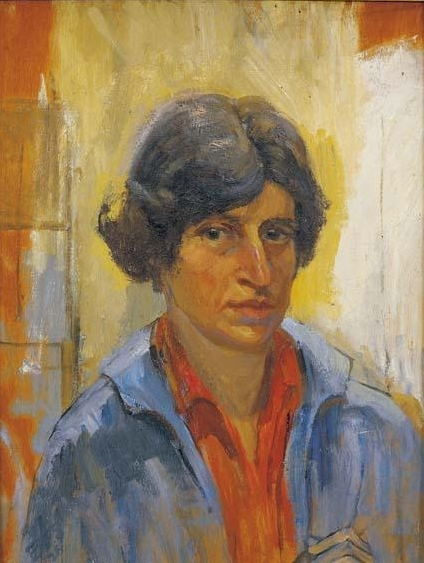
Estelle Sollomons, self-portrait, 1926. Credit - mutualart.com.

Estelle Sollomons, self-portrait, 1926. Credit – mutualart.com.

Continue Reading »

letterhead dctv

It is with great sadness we have learned of the imminent closure of Dublin Community Television (DCTV). Established in 2006, the station has produced quality independent content such as historical documentaries, music programming and more besides. This closure is directly related to a lack of support from the Broadcasting Authority of Ireland. In the past Come Here To Me have actively participated in several DCTV projects, believing that the project was always worthy of support. To mark the upcoming closure of the station, I wanted to post a few videos from the archives of DCTV here which will be of interest to readers.

This interview with Dubliner Bob Doyle is a priceless piece of material. Doyle, from Dublin’s north-inner city, fought against fascism in the Spanish Civil War and was the last surviving Irish ‘Brigadista’ to have seen combat:

The station produced dozens of brief videos to mark the centenary of the Lockout. Historians, actors and more besides contributed. Here, Bryyan Murray from Strumpet City reads a brief passage from the book:

Perhaps the most popular of the stations output however was Community of Independents, which focused on the music community in Dublin. From indie rock to hip hop, the show featured a mix of musical performances, interviews and features. At the time of the Come Here To Me booklaunch, we featured on the show discussing the musical content in the book. This video comes from the launch of Series 3 of the programme in the Button Factory, and shows Lethal Dialect, Costello and Willa Lee performing:


Below is the statement from DCTV:

It is with regret that the staff and committee of Dublin Community Television (DCTV) must inform you of the orderly wind down of the station, and the planned cessation of broadcast in February 2014.

On 21 October 2013 the Broadcasting Authority of Ireland (BAI) made it known that it would not be funding any of DCTV’s archiving project submissions. Alongside this decision, BAI support for DCTV projects through the Sound & Vision scheme had dropped. Funding for 2012 was seven times higher than the funds received in 2013.

DCTV had recognised its dependence on the BAI and tried to generate alternative funding. This year the station secured significant alternative funding. However, the drop in BAI support to less than a sixth of its previous annual average left the station unable to guarantee the ability to meet its obligations in wages, rent and other costs if it continued to operate.This has been a difficult decision, not least because of the belief that the station was approaching a sustainable funding model.

DCTV started broadcasting in 2006. In that time DCTV developed youth shows, history programmes, music, comedy, information services and documentaries. These programmes are archived and will be preserved. DCTV also set up a city centre studio. It is hoped that the studio will continue to support ongoing training for community organisations and youth centres in Dublin.

There will be a meeting for the DCTV membership shortly to decide on the winding up of the co-op and other matters. DCTV still has four active television shows in production. There is a plan to complete these projects over the next five months. The co-op will examine how best to preserve the community television production capacity built by DCTV while meeting its obligations to creditors.
DCTV will be meeting with all creditors, landlords, show participants and so on to form an orderly wind down which may involve the transfer of contracts and commitments to other bodies. We would like to thank people for their support in this process as we pursue an orderly resolution of the affairs of the co-op.

We hope that the skills, productions and networks that DCTV leaves behind after six years will be a fitting legacy. The staff and committee of DCTV thank all of the co-op’s members and collaborators for their support.

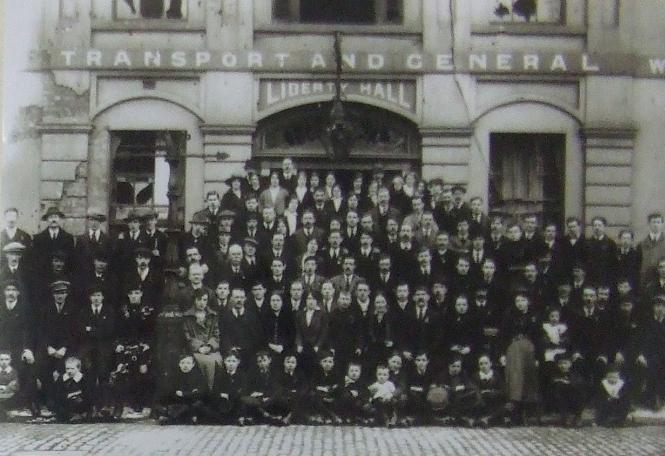
The Irish Citizen Army at Liberty Hall, 1917.

The Irish Citizen Army at Liberty Hall, 1917.

As the focus of the ‘decade of centenaries’ shifts towards the foundation of the Irish Volunteers, and next year sees the centenary of the First World War, it should be said we’re far from finished with the Lockout. While the dispute began in the summer, it dragged into 1914 and one its lasting legacies was the Irish Citizen Army, who were active in the rebellion of 1916. Tomorrow, there are two events in Dublin looking at interesting aspects of the Lockout. In Smithfield, Brian Hanley will deliver a talk on the foundation of the Irish Citizen Army, while in Temple Bar I’ll be giving a brief talk on the S.S Hare and international solidarity during the Lockout, which is the closing event of the Workers Cafe at the Temple Bar Art Gallery.

The Smithfield event takes place at 5pm in The Cobblestone, and is being hosted by the Smithfield and Stoneybatter People’s History Project:

To mark the 100th anniversary of the founding of the Irish Citizen Army we will host a public talk in the Cobblestone at 5.00pm.
The Irish Citizen Army was established initially as a workers’ defence force during the 1913 Lockout to prevent police attacks on trade union marches and demonstrations. In the first week of the Lockout two workers were killed by members of the Dublin Metropolitan Police.
Our guest speaker is Dr. Brian Hanley who has lectured and written extensively on modern Irish history. We hope you can join us.

SSHAre

In Temple Bar I’ll be giving a brief talk at 3pm, in the nice environment of a cafe, on the Lockout. A basic introduction coupled with a brief look at international aid, the talk takes place inside the Temple Bar Gallery and Studios. Giving that the cafe is celebrating the S.S Hare foodship in 1913, I’ll be talking about it among other things.

In 1936, the Irish Press newspaper launched a major exposé of the Dublin slum problem, with articles and photographs from the slums of Dublin designed to highlight the appalling conditions many Dubliners were living in. The articles and photos sparked real discussion on living conditions at the time, and the newspaper collected some priceless oral testimonies from people living in hellish conditions. At the time, the paper claimed that 30,000 families were living in squalor in the inner-city, and it called for ‘war on the slums’.

The paper refereed to the slums as a “tragic British legacy”, shifting the blame from homegrown landlords and domestic greed, claiming that British policy in Ireland “left to the Free State its inheritance of slumdom”. This article will republish some of the shocking images from that campaign, and show how others also campaigned at the time for radical improvements in inner-city living conditions, choosing to blame domestic forces for the state of the city.

Irish Press (1 October 1936)

Irish Press (1 October 1936)

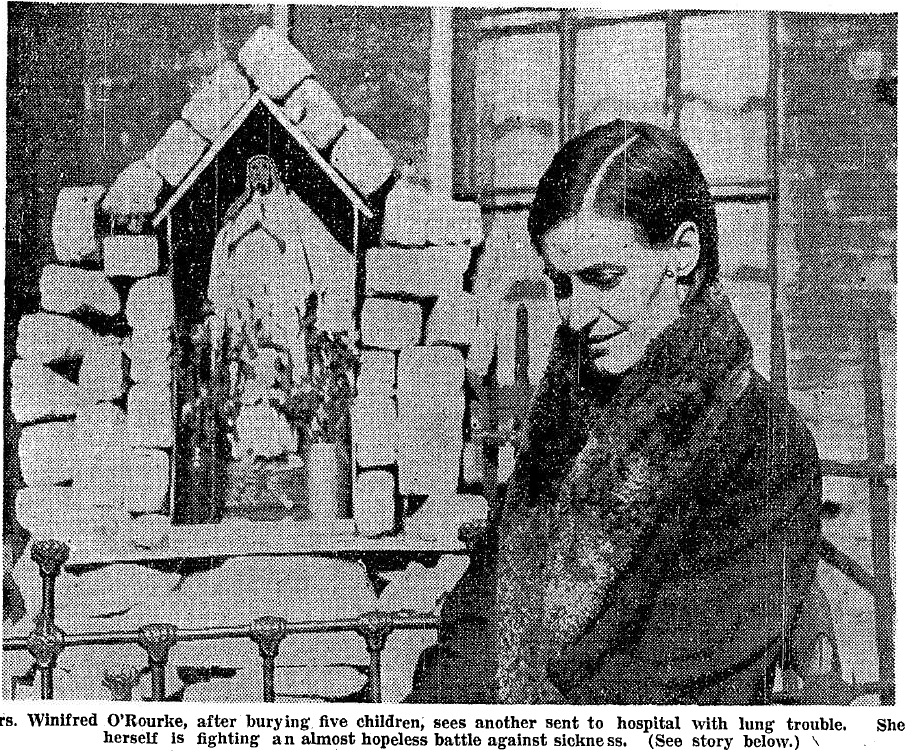
The series attempted to gather personal stories, such as that of Winifred O’Rourke, a young mother from the inner-city who lost five children to ill-health, and who was herself suffering greatly. The paper noted that the children they visited in one inner-city complex pointed out rat holes, and spoke of their terror of the “big roof rats who periodically invade the rooms”.

Irish Press (7 October 1936)

Irish Press (7 October 1936)

Coincidentally, October 1936 saw the single greatest tragedy in the history of the Dublin Fire Brigade, when three firefighters died in a fire on Pearse Street. This put considerable focus on fire safety in the city, and the Irish Press noted that in tenement Dublin the flats were like fire-traps, noting “It may be said that practically all slum dwellings are fire-traps. Worst of these, of course, is the type of building that has no exits at the rear, but merely the hall door at the front.”

The health of children featured prominently in the campaign, with the paper noting that the infant death rate for the entire city of Dublin was 79 per thousand births in 1934, but in parts of the north inner-city this rose to a staggering 119 per thousand. The paper insisted that “until the rookeries of the tenements are pulled down and their occupants transferred to airy and roomy homes, little improvement in the public health of the city can be looked for.”

Irish Press (2 October 1936)

Irish Press (2 October 1936)

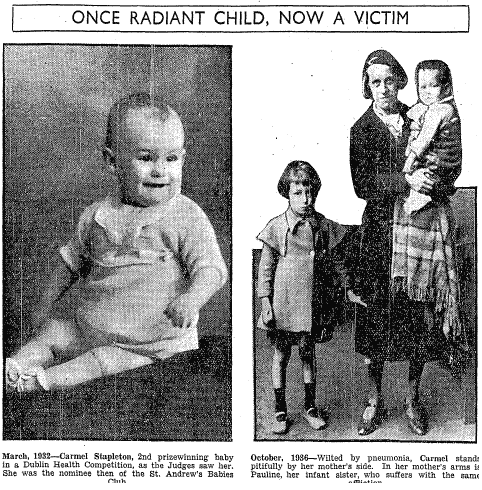
By talking of individual cases, the newspaper struck a strong emotional chord with many Dubliners. The story of Carmel Stapleton for example told readers of how a once healthy child, runner-up in a baby competition only years previously, was suffering to ill-health as a result of life in the slums. “I need a home for them, I’m getting desperate. Look at them, the poor little children”, Carmel’s mother pleaded to a visiting journalist.

Irish Press (19 October 1936)

Irish Press (19 October 1936)

Among those who pledged support to the campaign of the newspaper to highlight the slum problem was Maud Gonne MacBride, who hoped that, at the very least, the campaign would “end the ignorant cry of Communism raised against those of us who, from public platforms, protested against the unchristian conditions in which so many of our fellow countrymen are forced to live.”

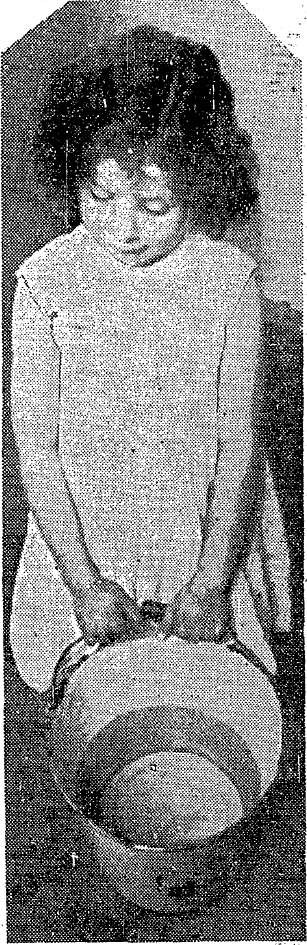
The lack of a clean water supply in many of the homes was highlighted on many occasions, and this image showed a young Dublin child who carried water up stairs from the communal tap of her tenement home.

Irish Press (7 October 1936)

Irish Press (7 October 1936)

The newspaper campaign encouraged readers to donate towards a fund on behalf of those living in the slums. One reader noted that he was donating as someone who “believes in practicing – not preaching – Christianity.” Some families who were featured in the paper were only saved from eviction thanks to the generous donations of newspaper readers. A reoccurring theme was the unchristian nature of the living conditions, and there existed a fear that tenement slums were fertile ground for communism to grow in from those on the right. The Christian Front noted that the slums were one of the single greatest threats to Irish society, while a conservative letter writer told the paper that “there is little good in parties or governments condemning Communism in other countries if they are prepared to tolerate the evil that gave birth to that Godless doctrine elsewhere.”

Continue Reading »

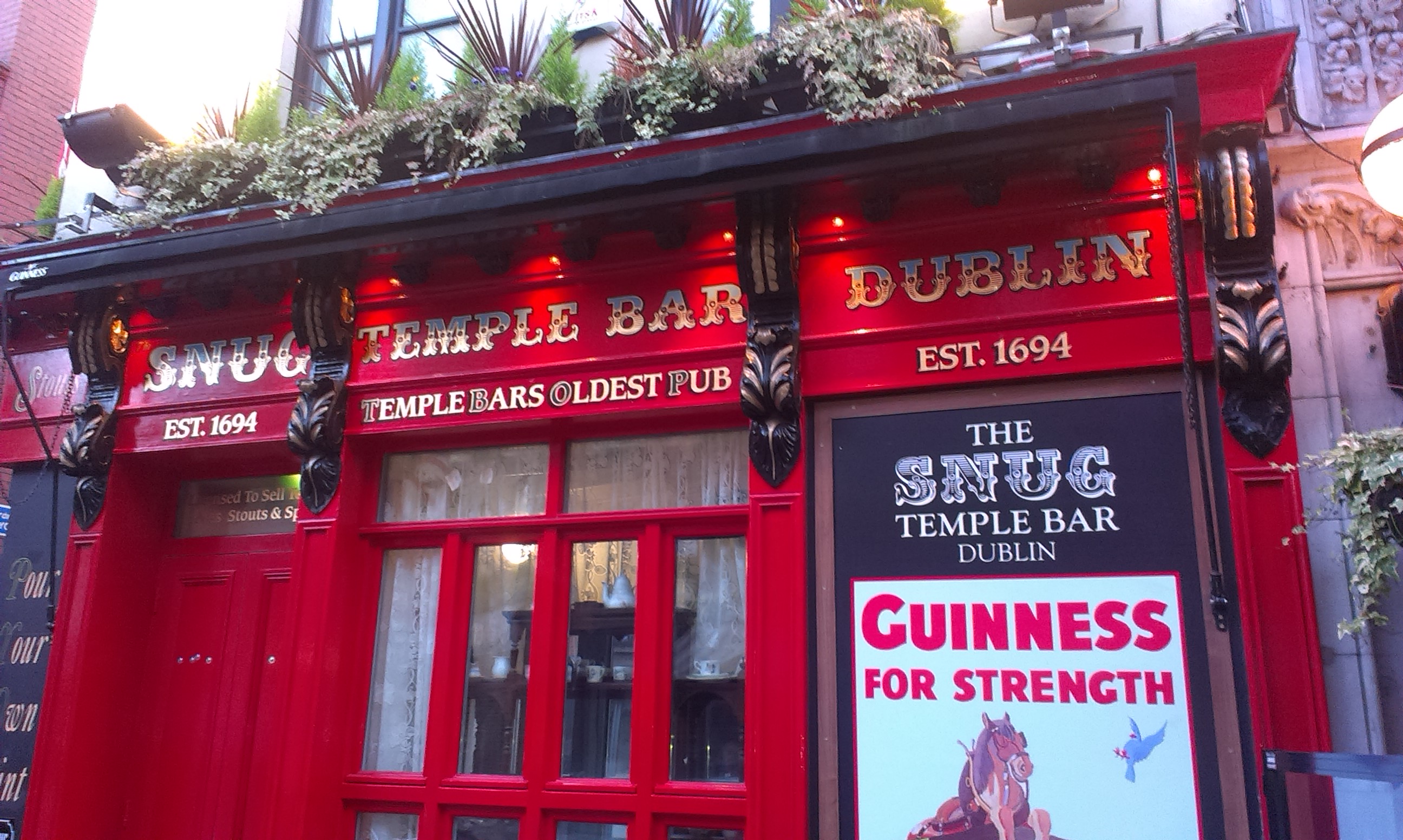
It may be just me but I think it’s cheeky beyond belief that the people behind Bad Bobs 2.0 in Temple Bar have recently proclaimed a part (!) of their pub as ‘Temple Bar’s Oldest Pub’. With a lick of paint and some Ye Olde knickknacks in the window, they hope to fool and no doubt pull in some of that Yankee dollar.

I took this picture during the week of the ‘The Snug Temple Bar’:

'Temple Bar Snug', October 2013. Credit - Carax

‘Temple Bar Snug’, October 2013. Credit – Carax

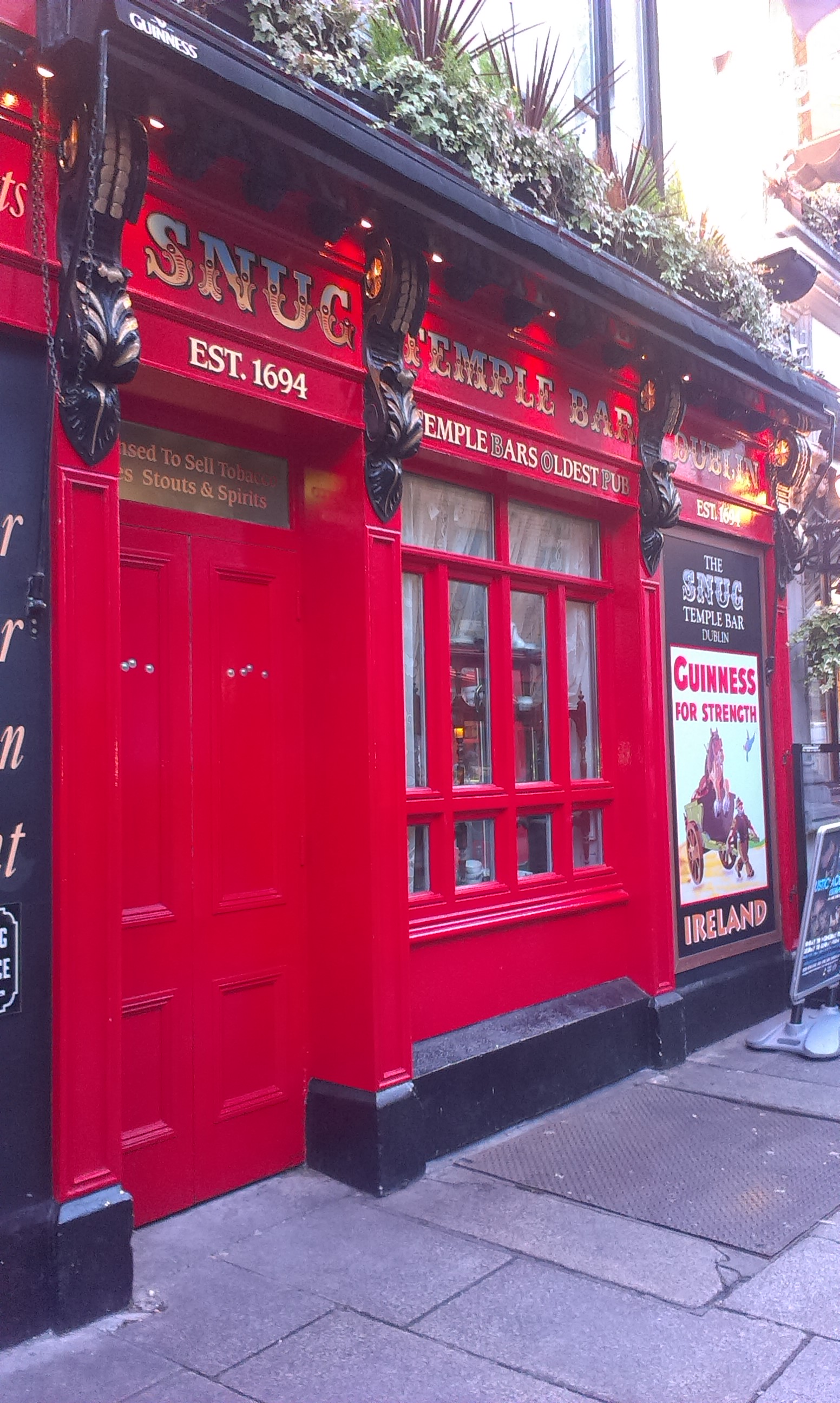
As you can see, they got a painter to recreate an old-style Dublin boozer sign above the door. For added measure, they even have the ‘Licensed To Sell Tobacco, Ales, Stouts & Spirits’ blurb. To make it even more of a joke, you can’t get into the ‘The Snug, Temple Bar’ without going through the main Bad Bobs entrance!

2013-10-23 17.55.12

‘Temple Bar Snug’, October 2013. Credit – Carax.

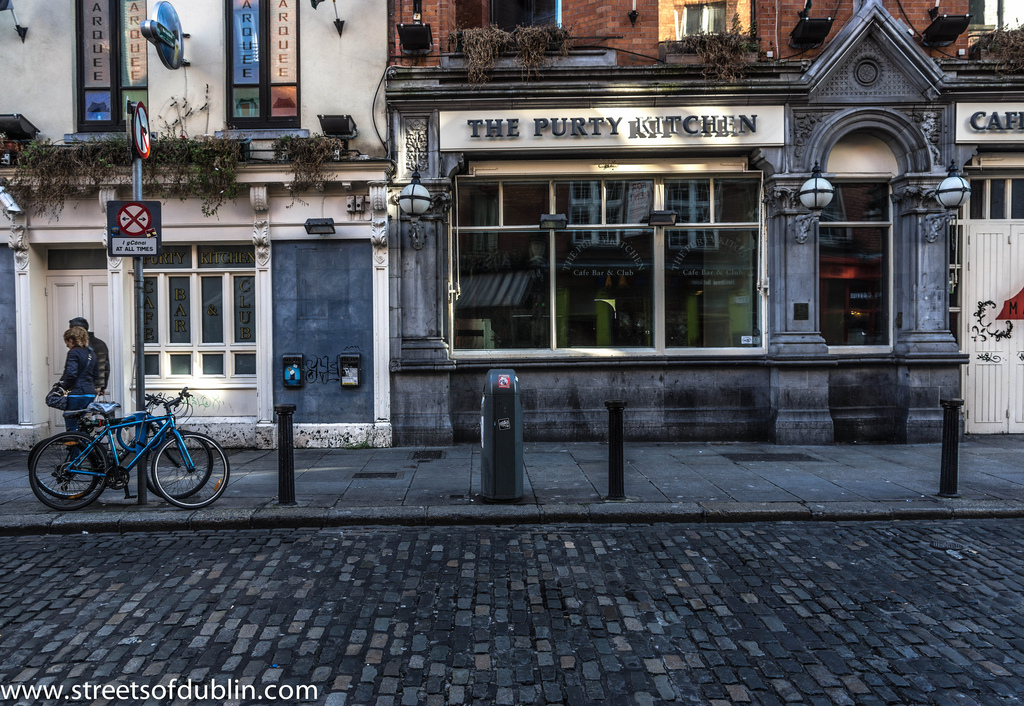
But as we know, before it reopened as Bad Bobs in March 2013, the Purty Kitchen was just another bland, crappy tourist trap. Nothing historic about it whatsoever. It’s been through countless name changes and been sold and bought by various business groups over the decades.

This is what it looked like exactly a year ago. The part of the pub on the on left hand side (beside the two people) is now the self-proclaimed oldest pub in Temple Bar. What difference a year makes.

The Purty Kitchen, October 2012. Credit - William Murphy (Infomatique)

The Purty Kitchen, October 2012. Credit – William Murphy (Infomatique)

The premises, situated between 34 and 37 East Essex Street, has been known as Nugents (1960s), The Granary (late 1970s) and Bad Bobs (1984-2006). It was bought in 2006 for a whopping €12 million by Conor Martin, a publican who owned The Purty Kitchen in Dun Laoghaire. At the time, it was the property of Liam and Des O’Dwyer of the Capital Bars group who are behind Cafe en Seine, the Dragon, the George, Break for the Border and a number of hotels. It was renamed Bad Bobs in March of this year.

There’s no denying that the address is historic. An Irish Times article from 8 November 2006 stated that there has been a pub on the premises since 1728. But during that time there has been numerous name changes, auctions and buy outs. There’s no doubt that interior as been gutted and renovated three or four times at least.

Finally, where on earth did they pull that 1694 number from?

In his classic work The Destruction of Dublin, published in 1985 and now like gold dust to stumble upon, the journalist Frank McDonald quoted a powerful piece penned by a writer in The Observer newspaper. Writing in 1979, the journalist said

Suddenly Dublin has become a shabby city – shabby because its centre is peppered with crude concrete structures, flashy mirror-glass facades and other inappropriate schemes which have no connection at all with the spirit of the place.

Certainly there is much in the city today from this period which some still regard as architectural crimes against Dublin. Some controversial plans from the time however never made it to fruition, and one example is the proposed Central Bus Station in the heart of Temple Bar. This huge development, which would have seen construction projects undertaken on both sides of the River Liffey, was one of the most divisive proposals in terms of city planning in Dublin in the 1970s and 80s.

A 1969 image of Merchant's Arch, Temple Bar (National Library of Ireland))

A 1969 image of Merchant’s Arch, Temple Bar (National Library of Ireland))


Temple Bar, by the nineteenth century, was fulfilling a role for Dublin as a manufacturing and industrial centre for the city. Indeed, in the living memory of the city today many can remember Temple Bar as a district of factories and warehouses, although urban decay became a factor in the district throughout the twentieth century. The idea of constructing a central bus station in this district had long been considered, owing primarily to the areas location, bordering some of Dublin’s prime retail districts. By the 1970s the state-run Coras Iompair Eireann was purchasing property in the area with one-eye to future redevelopment, while simultaneously renting out these properties at low-cost. This is perhaps the single most important transformative moment for Temple Bar, and as Paul Knox has noted:

Paradoxically, this triggered a process of revitalization. Activities which could afford only low rents on short leases moved into the district. These included artists’ studios, galleries, recording and rehearsal studies, pubs and cafes, second-hand clothes shops, small boutiques, bookshops and record stores, as well as a number of voluntary organisations. Together with the districts architectural character, the youth culture attracted by the districts new commercial tenants brought a neobohemian atmosphere to Temple Bar…

In 1977, the following proposal for a Central Bus Station was put forward. Designed by Skidmore Owings & Merrill LLP, this development would span the River Liffey, with development on Ormond Quay designed to complement that in Temple Bar. Looking at Dame Street and Wellington Quay on the map, the sheer scale of this proposal is apparent. It was planned that a tunnel under the Liffey would join both sites, and it was also planned to incorporate the DART into the site.

Proposed Central Bus Station (Credit: Archiseek)

Proposed Central Bus Station (Credit: Archiseek)

A feel of the changing nature of the district can be captured in a 1984 article written by Maurice Haugh for The Irish Times. This once dying part of Dublin had come alive he noted, stating that “It’s a happy uncongested area whose natural character has been preserved from the developers’ touch, and has only been exploited recently.”

The picture Haugh painted was of a vibrant, liberal area. He wrote of the Hirschfeld Centre, an openly gay community centre at the heart of Temple Bar, describing its disco as “one of the liveliest and musically up to date in town. Records are imported directly from London and, as a rule, are played months before they hit the radio and charts.” This centre had opened in 1979, and contained among other things a social centre, cinema and meeting place for Dublin’s LGBT community.

A sign of the times. Taken from the front of the Hirschfeld Centre, it is now on display in The Little Museum of Dublin.

A sign of the times. Taken from the front of the Hirschfeld Centre, it is now on display in The Little Museum of Dublin.

Some of the artistic endeavours of the time are still to be seen in the area today, for example the Temple Bar Gallery and Studios, which emerged in 1983 when a disused shirt factory was rented from CIE by Jenny Haughton and given to a collective of artists. As the history of the Temple Bar Gallery and Studios notes:

The early 20th-century industrial building, which extended through a block from Temple Bar to the Liffey quays, provided the framework of spaces for artists to work in, although the conditions were problematic and at times hazardous. The activities of the artists – studios, exhibition space, cafe, sculptor’s annex – influenced the atmosphere of Temple Bar in the 1980’s, establishing the area’s reputation as a cultural hub and contributing to its regeneration as Dublin’s Cultural Quarter.

No journalist campaigned as strongly for the area as Frank McDonald, a constant opponent of bad planning in Dublin. McDonald reported on Council meetings on the matter, and gave space to alternative voices, such as An Táisce, who believed the area had a future if properly preserved and encouraged. In 1986 he noted that a decade is a long time in city planning, as:

Ten years later, all of this looks like so much pie-in-the-sky. In the first instance, the commercial property market in Dublin is in a state of almost total collapse, with the demand for new office space, not to mention shopping and residential- down to not much more than zero. And secondly, the lynch-pin of CIE’s scheme – the underground central station for DART – is looking more and more like a pipe-dream.

It was not until July 1987 that CIE’s plans for the district were well and truly destroyed, with elected Councillors voting for the preservation and redevelopment of the area. By this stage the issue had become a mainstream debate, with Charlie Haughey vowing before the upcoming election that he would “not let CIE near” Temple Bar. By the early 1990s, the area enjoyed a sort of ‘official backing’, with Temple Bar Properties established with strong government funding, and the aim of organising the development of the area.Eric Zuelow notes in his history of tourism in Ireland since independence that £2 million was spent on the area in 1993 alone, with much of this money drawn from European Union development funds.

Many (including this writer) would argue that the area has drifted far from its cultural and offbeat qualities in the years of protest. Yet while the Hard Rock Cafe, McDonalds and others may have moved in, it should be remembered that some of those who championed the cause of Temple Bar over 20 years ago still call it home.

As part of this years Dublin Book Festival, and to promote our own book ‘Come Here To Me: Dublin’s Other History’, we are carrying out walking tours with the DBF team on November 16th and 17th. These tours will look at unusual aspects of Dublin’s history, as featured here on the blog over the years. Tickets for the tours can be booked here. There are a whole series of great events being organised to promote new and established Irish authors, and the entire festival programme can be read here.

CHTM

Image Credit: Luke Fallon.

Image Credit: Luke Fallon.

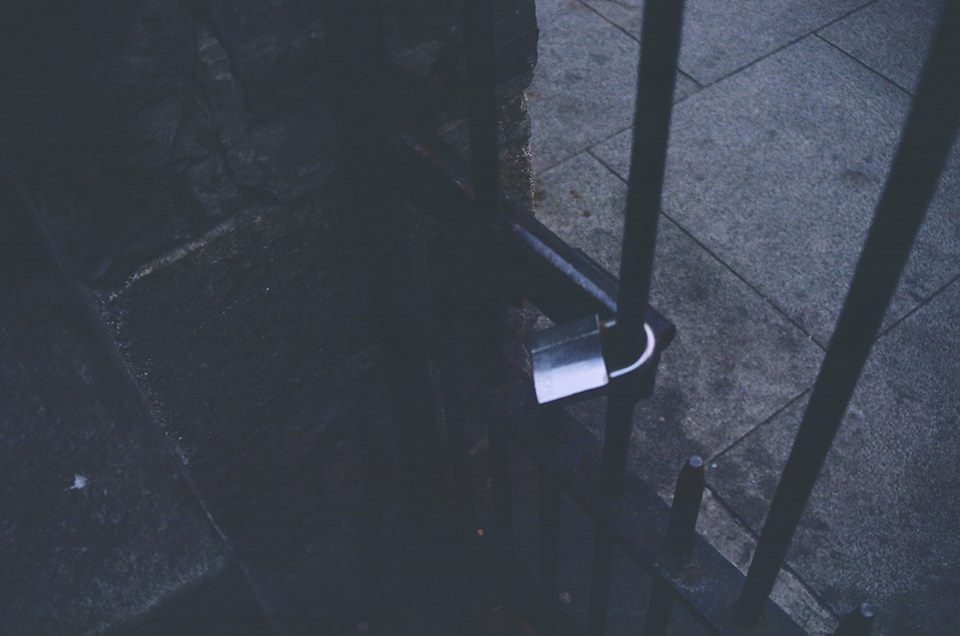
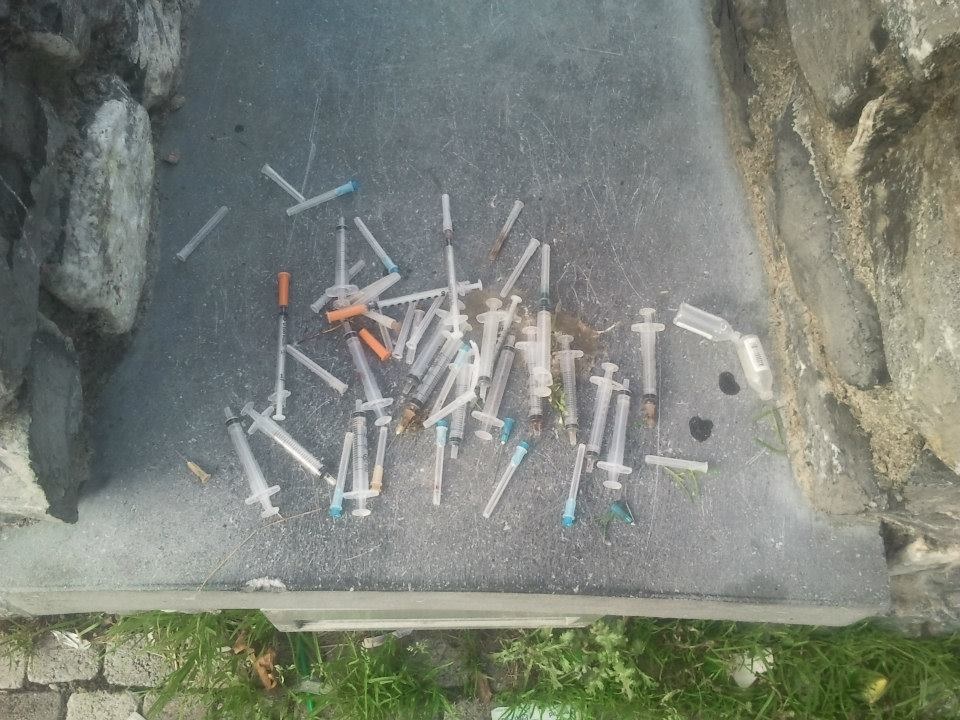
Last week we posted an image from Croppies Acre memorial park, which commemorates those who fought in the United Irish rebellion of 1798. The image, showing a pile of used needles, was a pretty good insight into the life of the park today, which has been locked to the public for well over a year owing to anti-social behaviour and drug use. In recent days Luke Fallon climbed the wall and took a series of photographs for us to post on the site here. He was actually knocking around town experimenting with a film camera for something entirely different, but decided to hop into the wall and see if it was as bad as the image posted here made it seem. In his own words, it’s worse. The memorial itself is beautiful however and this post will hopefully give many readers their first glance inside the railings.

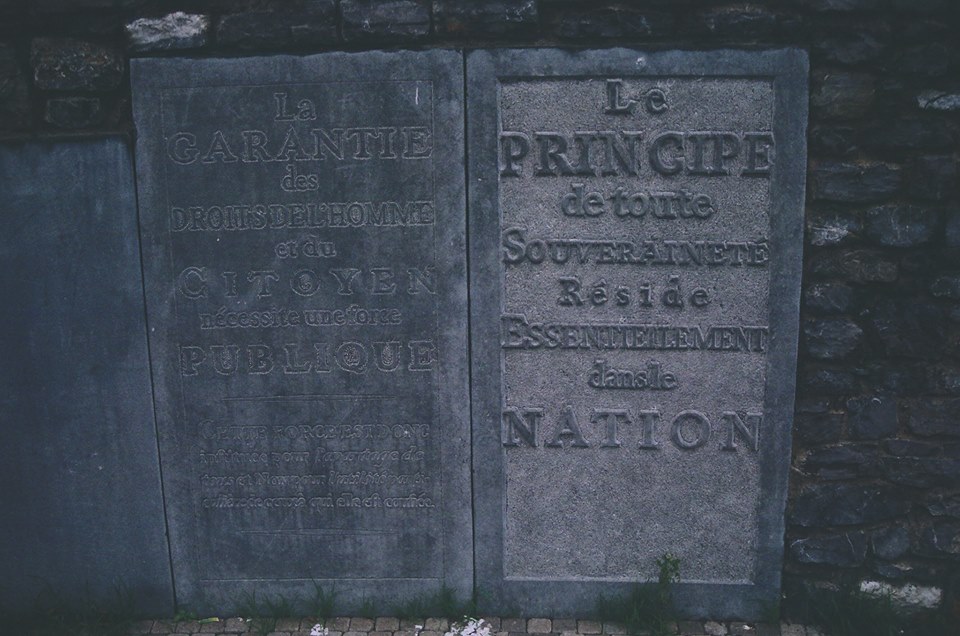
As is often the case with monuments to the republicans of the 1790s, the French language appears alongside Irish and English.

Image Credit: Luke Fallon

Image Credit: Luke Fallon

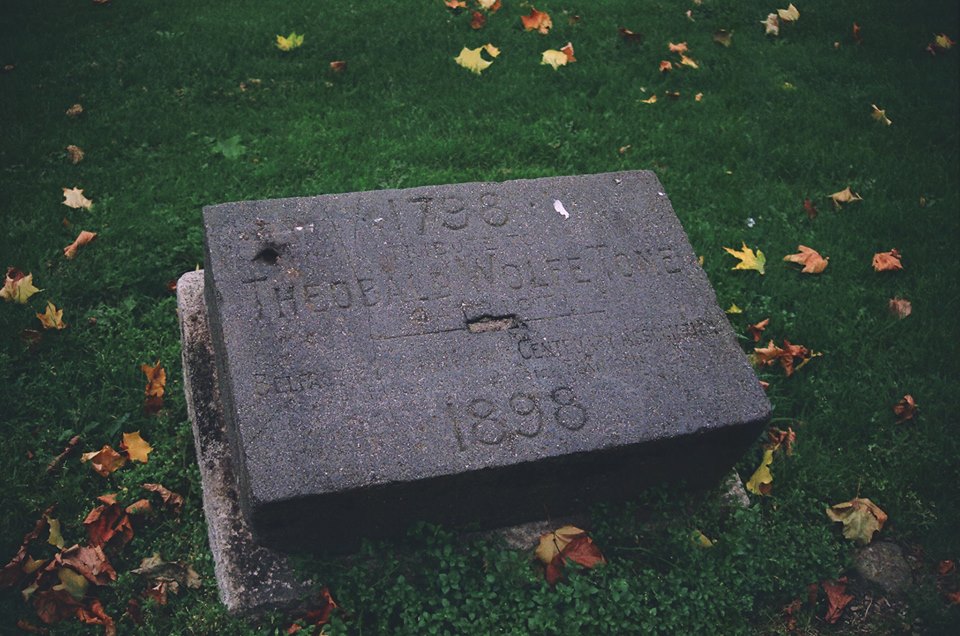
This interesting little Wolfe Tone memorial below grabbed my attention, as it’s dated to 1898. In the past we looked at Wolfe Tone on the site, and in that post noted that in 1898 a crowd of 100,000 marched to Stephens Green for the laying of a foundation stone for a Wolfe Tone monument. Is this it?

On 15 August 1898, ‘Wolfe Tone Day’, 100,000 people came onto the streets to see the laying of the foundation stone for a monument dedicated to Wolfe Tone. The foundation stone began its journey in Belfast, in many ways the ideological birthplace of Irish republicanism as it was there that the United Irishmen were formed.

Image Credit: Luke Fallon

Image Credit: Luke Fallon

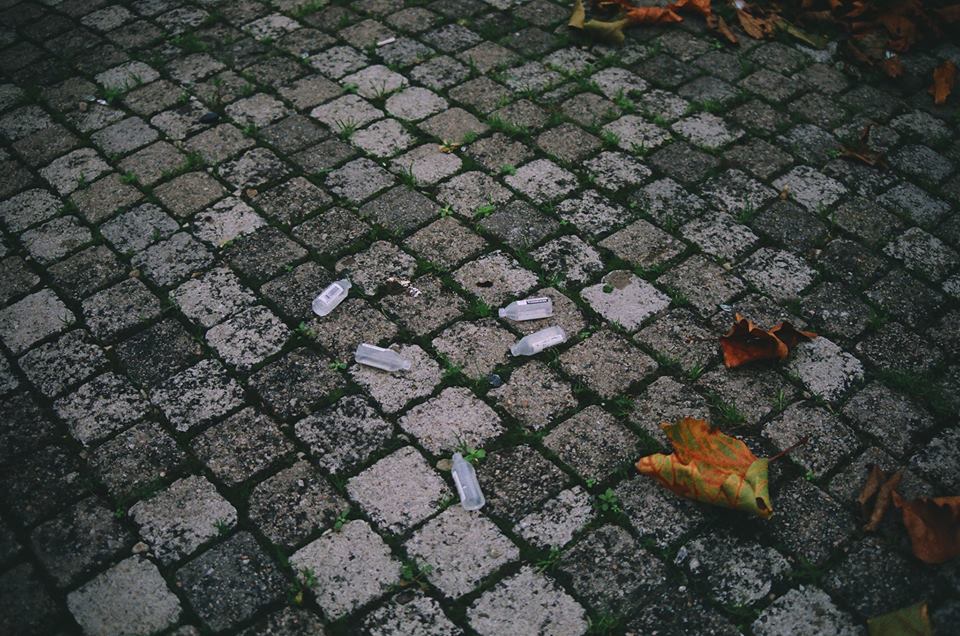
It’s obvious that the park is actually dangerous in its present state, with needles abandoned in both the walkways and the grass. Along with the presence of human bodily waste, the risks to children, pets and others in the park is huge.

Image Credit: Luke Fallon

Image Credit: Luke Fallon

Image Credit: Luke Fallon

Image Credit: Luke Fallon

With so much talk of history at the moment and the centenaries aplenty, it’s an ideal time for the OPW to take control of this park again and open it to the public.

Image Credit: Luke Fallon

Image Credit: Luke Fallon

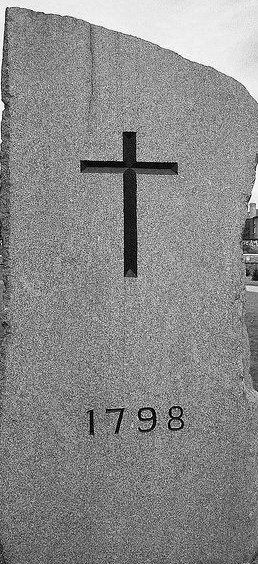
Memorial cross at Croppies Acre.

Memorial cross at Croppies Acre.

The Croppies Acre memorial in Dublin commemorates the United Irish rebellion of 1798. It has been closed to the public for quite some time now, owing to anti-social problems.

This park serves a memorial to many young revolutionaries who were at the backbone of the first Republican movement in Ireland. Many were said to be buried here following their executions, though the claim is sometimes disputed. In a 1998 article about the memorial site, Aengus O Snodaigh noted that:

The most famous names to be recorded in the sad saga of Croppies’ Acre are those of Bartholomew Teeling and Matthew Tone, both hanged at the Provost Prison on Arbour Hill after the Battle of Ballinamuck on 8 September 1798. Bartholomew Teeling was a brother of Defender and United Irish leader Charles Teeling. Having come under suspicion himself he fled Ireland in 1796. Bartholomew was commissioned into the French Army at the instigation of Theobald Wolfe Tone, who also arranged a commission for his own brother Matthew, and took part in the failed expedition of General Hoche in December of that year….

The term ‘Croppy Boy’ was said to emerge from a hairstyle popular with revolutionaries of the day, their closely cropped hair a fashion adopted from French revolutionaries, associated with the anti-wig tendency in France. For many years this incredible site was unmarked, but the contemporary memorial at the site was erected in 1985, and includes some words from Robert Emmet:

No rising column marks the spot
Where many a victim lies
No bell here tolls its solemn sound
No monument here stands.

The site has been in the news in recent times for all the wrong reasons. In September 2012 the OPW, who are tasked with maintaining the site, made the decision to close it to the public. A recent article in the Irish Independent addressed this, and noted:

The Croppies Acre in central Dublin – described as “sacred ground” – has turned into a no-go zone because authorities say they can’t cope with drugs users and dirty syringes that litter the historical site.

Today some photographs from the memorial have emerged that demand attention. Posted to Facebook by the Sean Heuston Dublin 1916 Society, they reveal the extent to which the park has been abandoned by authorities. This particular image is shocking, but deserves a wider audience. Dublin is a city which suffers greatly to the scourge of addiction and drugs, and there is of course a need to provide for those suffering as a result. Yet this memorial park should not be allowed remain as it is, and there is an onus on the OPW and the city to maintain it.

Image Credit: Sean Heuston Dublin 1916 Society.

Image Credit: Sean Heuston Dublin 1916 Society.

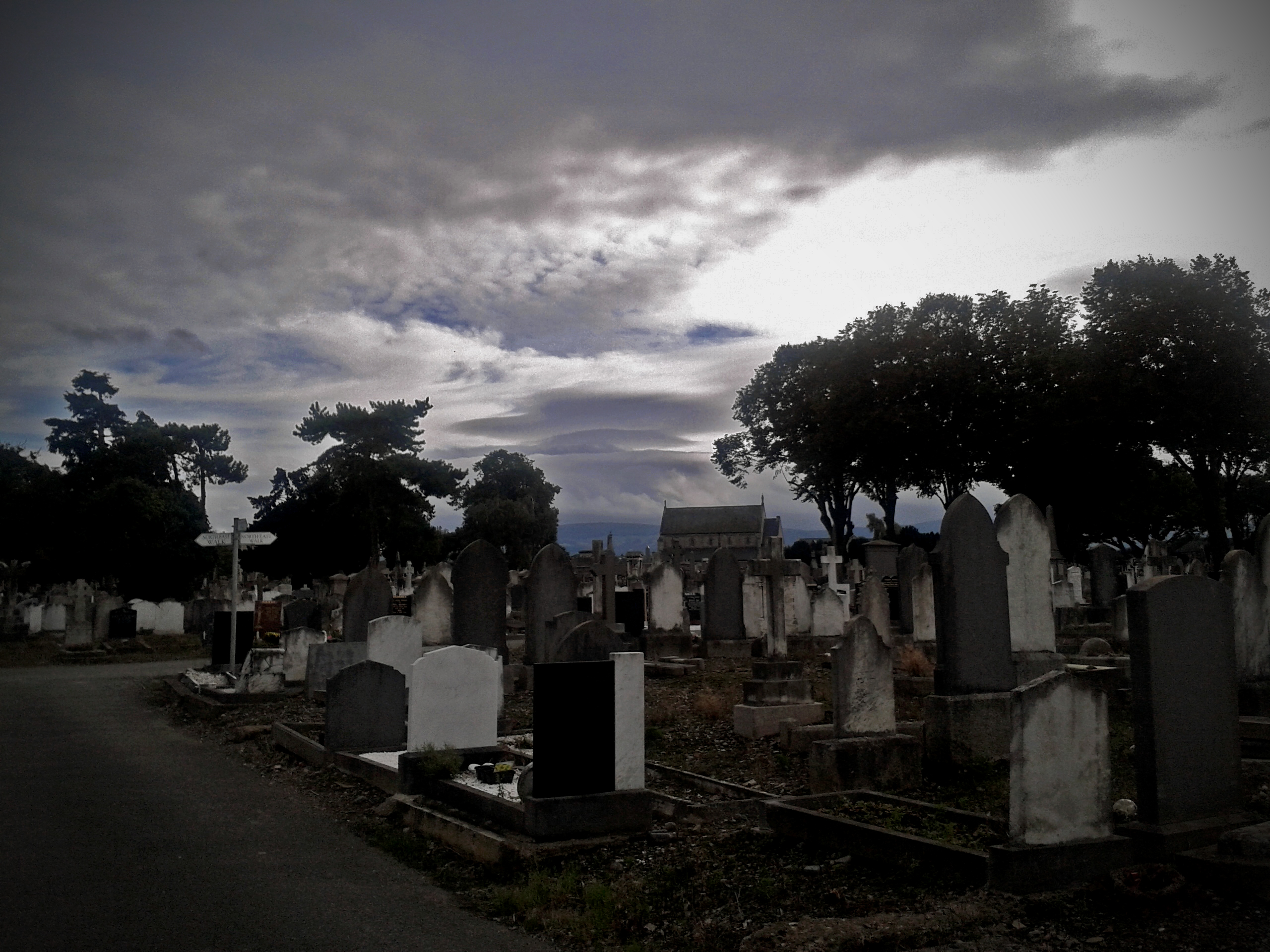
Pere-Lachaise in Paris may hold the remains of Oscar Wilde, and may be known for its beauty and grandeur, but in Dublin, we have several cemeteries to match it in splendor, and one that holds amongst many others, the remains of Wilde’s direct descendents. Mount Jerome Cemetery, like many of Dublin’s burial grounds, sits innocuously behind high stone walls in the middle of Harold’s Cross. But behind the walls lies a resting place of almost 50 acres that has seen over 300, 000 burials.

You don’t generally think of a cemetery as a place to go sightseeing, but Mount Jerome, bought by the then newly formed General Cemetery Company of Dublin in 1836 and receiving its first burial in September of that year is an example of Victorian affluence worth a look for the enormity of some of the tombs alone. Hidden Dublin by Frank Hopkins notes that while it was envisaged that the cemetery would host both protestant and catholic burials, the first catholic burial did not take place there until the 1920’s, when Glasnevin Cemetery was closed due to a strike. James Joyce mentions the exclusion in Ulysees, saying

Then Mount Jerome for the protestants. Funerals all over the world everywhere every minute. Shovelling them under by the cartload doublequick. Thousands every hour. Too many in the world.

Cemetary

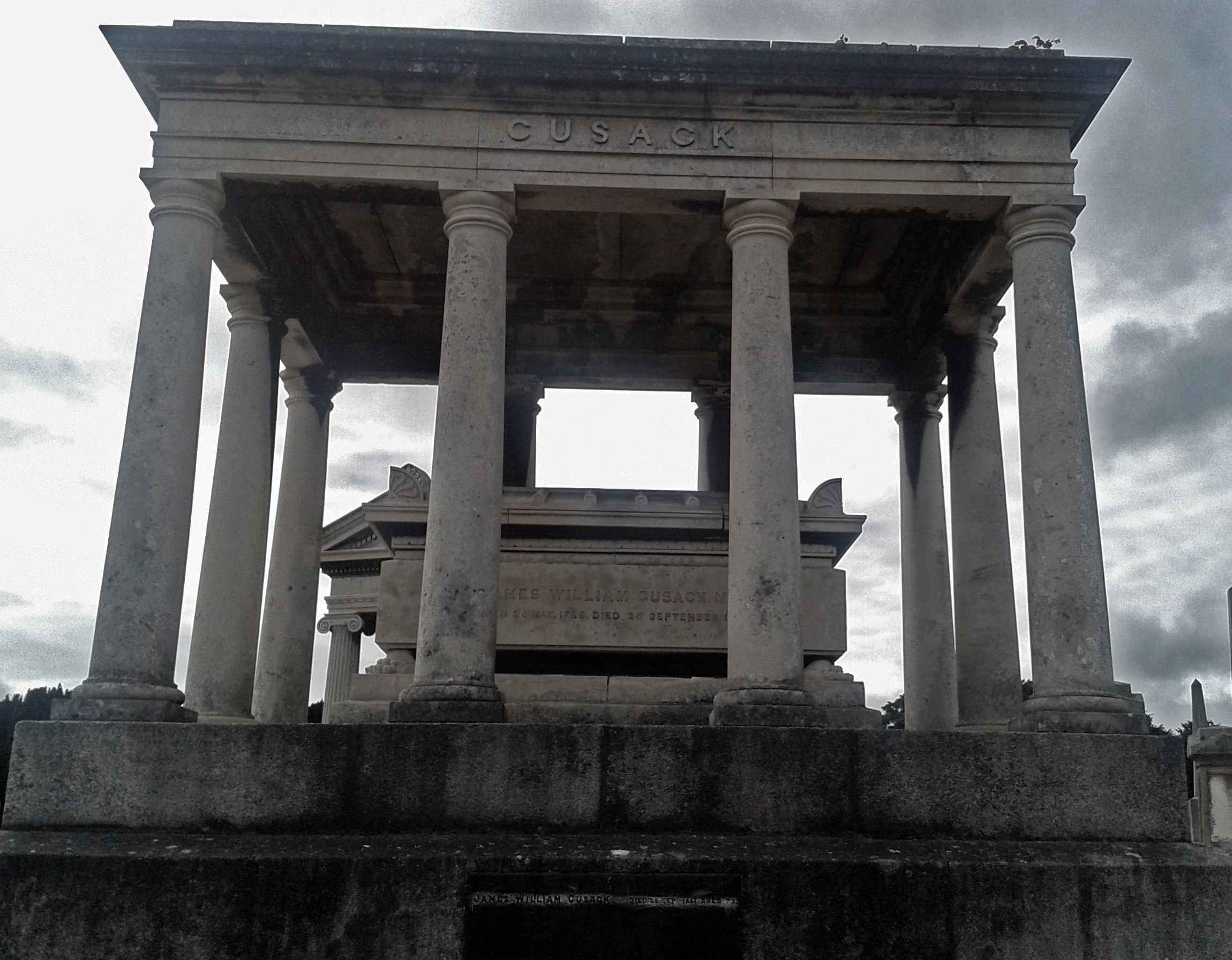
Imposing structures, like the Cusack family vault below can be found across the graveyard. One of the most imposing structures in the cemetery, it was built to house the remains of James William Cusack, doctor and prominent member of the Royal Dublin Society in 1861, and continues to receive the remains of his descendents, E.P.C. Cusack Jobson was the last to be buried there, as recently as 2004.

cusack

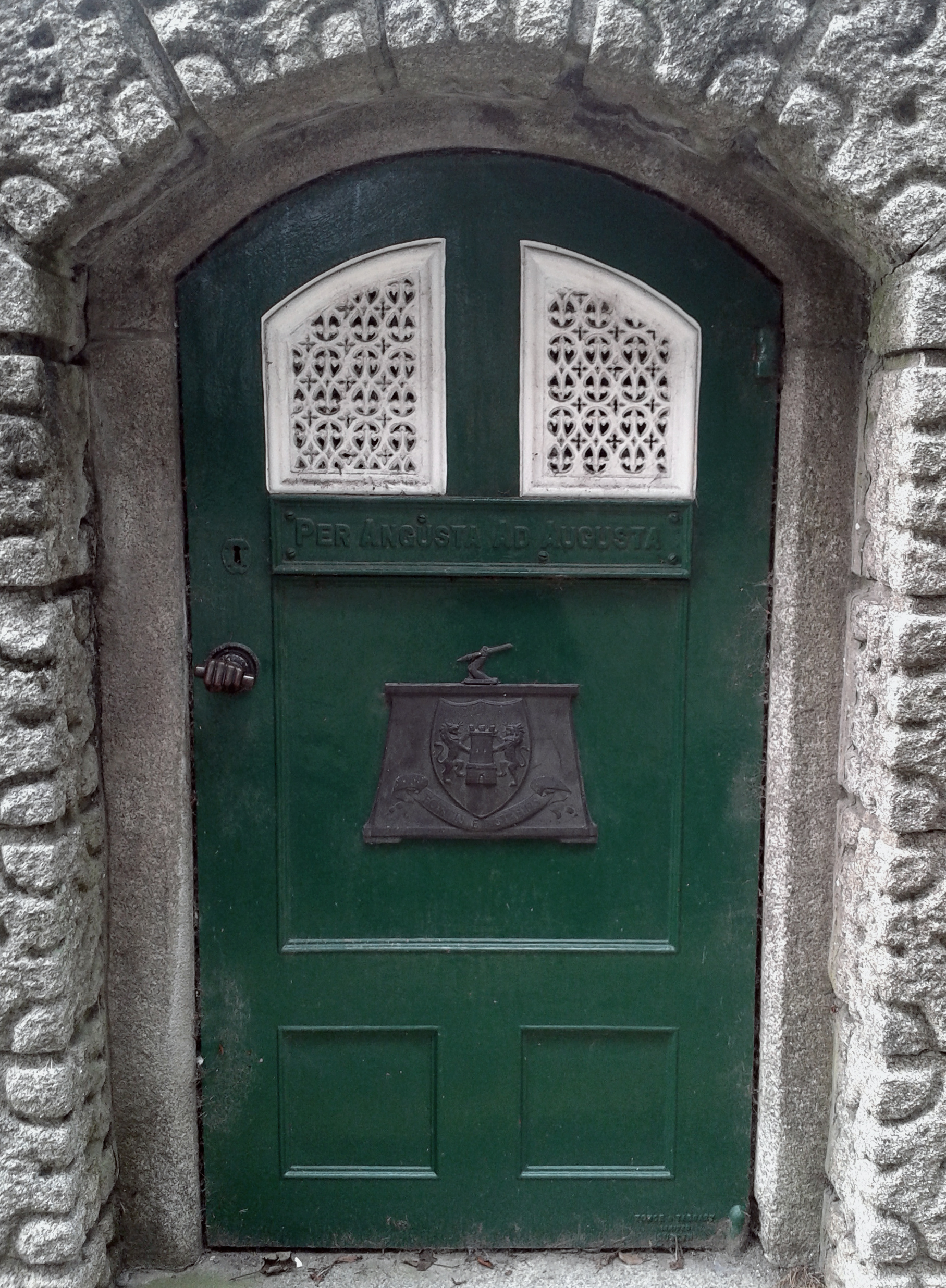
Judging by the family crest on the door, the below vault belongs to someone by the family name of O’Shaughnessy; it stood out because instead of a family name in the centre, “per angusta, ad augusta” appears. From Latin, translated it means “through difficulty, to greatness.”

PerAngusta

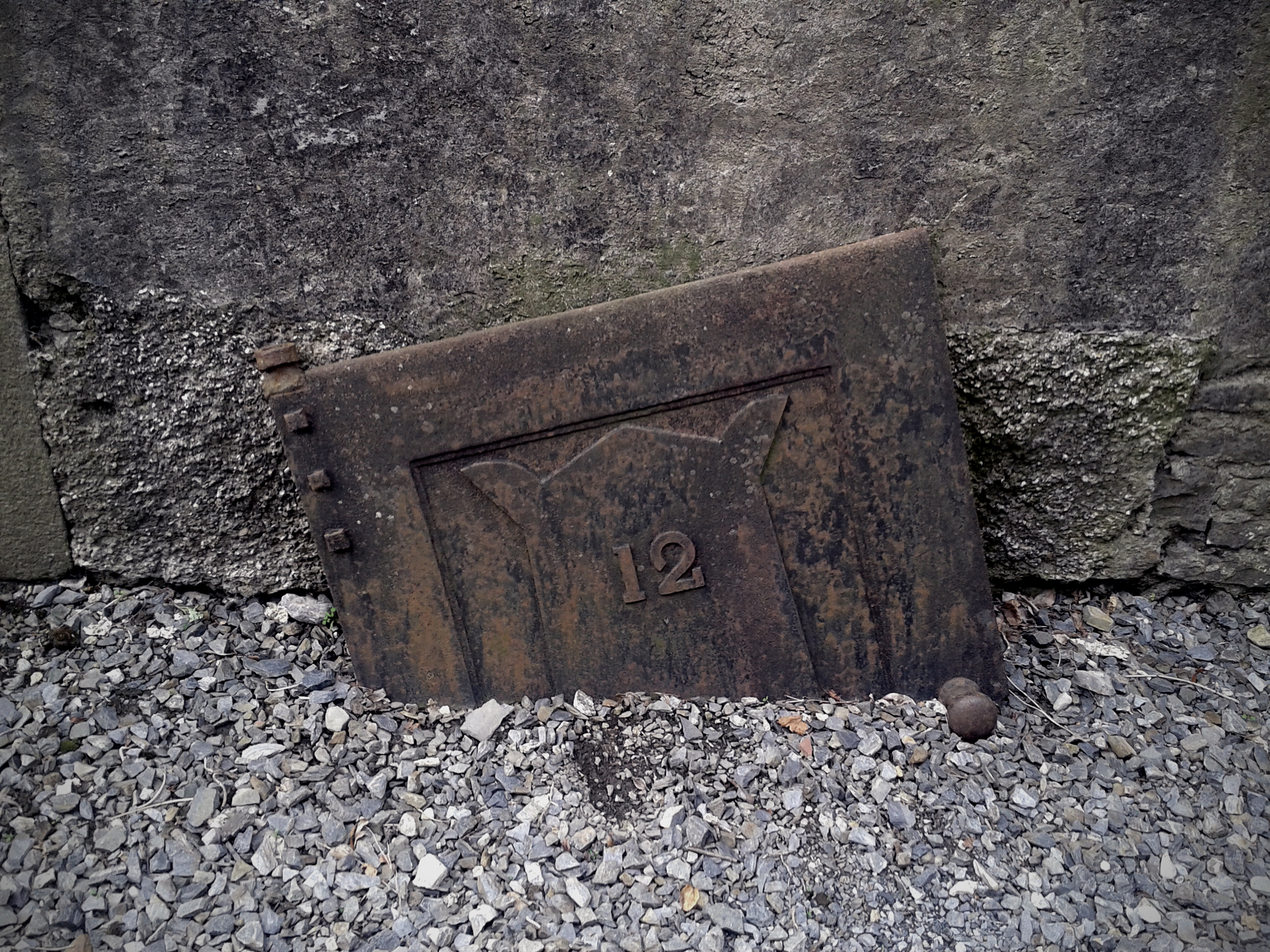
There are various parts to the cemetery, and you can see from plot to plot how burial customs changed over time. From statement making vaults like the Cusack one, to the less grandiose, door into the side of a hill one’s like the O’Shaughnessy one. There are several paths leading down below ground level to lines of doors like the ones above and below. The graveyard is still in use, so the variation between crumbling tombstones and collapsing ground and modern twelve by four graves makes it a walk through time.

Door12 Continue Reading »

While Temple Bar is today populated by dozens of bars and restaurants, some would say to its detriment, the area has a long history of taverns and boozing. This post will look at some eighteenth century taverns in the Temple Bar area. Many of these taverns were frequented by certain political movements and groupings, while for many others taverns fulfilled an important social role. In some cases, the names of these historic taverns have been adopted by modern pubs, though in others they are now totally forgotten. One of these taverns is commemorated today with a plaque. The entire axis of the city has shifted substantially since the eighteenth century, but as historian Pat Liddy has noted at the time Temple Bar could almost be described as Dublin’s dockland district, with the Custom House sitting where the Clarence Hall is today.

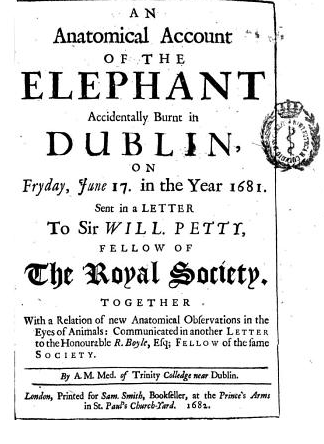
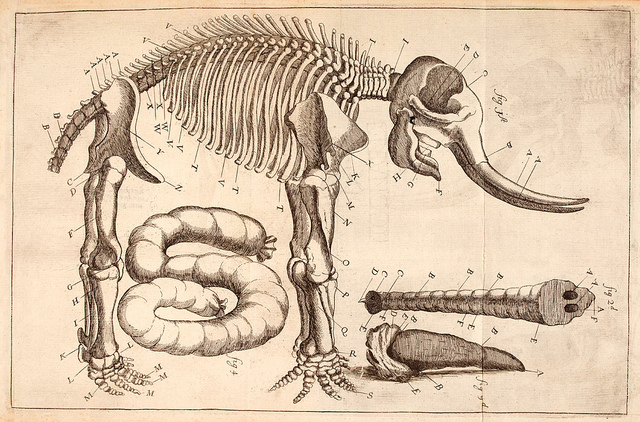
The Elephant on Essex Street took its name from a rather bizarre incident in the history of the city. On 17 June 1681, an elephant which had been taken to Dublin for display at an exhibition was to meet a tragic end, when the stable he was being kept in at Essex Street caught fire. This spectacle brought huge crowds onto the street, and as Frank Hopkins has noted “when the fire was extinguished they proceeded to take parts of the elephant away as souvenirs.” In the aftermath of this incident, An Anatomical Account of the Elephant Accidentally Burnt in Dublin was published. The elephant was dissected by Allan Mullen, from Trinity College Dublin, who published his findings, including several illustrations.

Published in 1682.

Published in 1682.

A high quality scan of this work was posted by the National Library of Ireland to Flickr some time ago:

From historic sources it also appears that The Elephant served as a meeting place for the first Catholic Committee in the 1760s, a forerunner of the influential Catholic Association of Daniel O’Connell in the nineteenth century.

Also located on Essex Street was The Globe, which has been described by the Dublin historian J.T Gilbert as one of the most important taverns of the period, noting that “this house was the chief resort of the Dublin politicians during the reign of George II”, and that it attracted “merchants, physicians, and lawyers” among others. Gilbert quoted from a poem about the tavern, in which it was said

Sometimes to the ‘ Globe’ I stray,
To hear the trifle of the day ;
There learned politicians spy,
With thread-bare cloaks, and wigs awry ;
Assembled round, in deep debate
On Prussia’s arms, and Britain’s fate ;
Whilst one, whose penetration goes,
At best, no farther than his nose,
In pompous military strain,
Fights every battle o’er again :
Important as a new-made Lord,
He spills his coffee on the board….

An interesting character by the name of ‘Blind Peter’ comes up in many accounts of this pub. A shoe black, he was described in one publication as “of hideous aspect, he had but one eye, was most inveterately pitted with the same pox, and his face completely tattoo’d with the scars he received in the various battles he had fought.”

We’ve briefly touched on The Bear Tavern before on the site, as it featured in Crane Lane. This pub was kept by a man named David Corbet until his death in 1787, and he was described by J.T Gilbert as a Freemason, as well as “an excellent musician, and leader of the band of the Dublin Independent Volunteers.” While taverns were hugely popular meeting spots for Volunteers and political activists, historian Padhraig Higgins has noted that publicans were no doubt active in these circles “no doubt for a mixture of patriotic and more self-interested motives.”
Continue Reading »

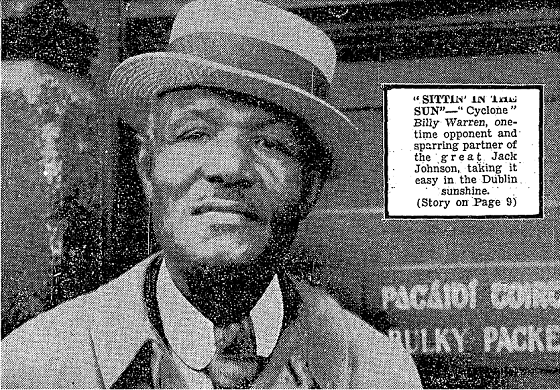
Irish Press 14 June 1946.

‘Cyclone’ Billy Warren. Irish Press 14 June 1946.

Many people leave a lasting impact on Dublin, becoming a part of its very fabric and remembered as characters of the city. Recently I stumbled upon one very interesting Dublin character of old, remembered for posterity with a brief mention in Me Jewel and Darlin’ Dublin by Éamonn MacThomáis, but otherwise largely forgotten. This character is the black boxer Joseph Warren, who was widely known as ‘Cyclone’ Billy Warren in the first half of the twentieth century. In the words of MacThomáis, Warren “came to Dublin, fell in love with the city and its people and never left.” He was a very familiar face at the General Post Office on O’Connell Street, where he tended to spend his time engaging people in conversation. Warren, who retired in this city, also appeared on screen as an actor and he may have even been painted by Sir William Orpen.

Who was this black boxer who landed in Dublin in the early twentieth century, and what was his background? Information on him is scarce and often seemingly inaccurate, but I’ve tried to piece together the various bits of information out there. There is even disagreement over his nation of origin, with some claiming that Warren was born in Australia, while others insist he was American.The Irish Digest in 1959 wrote of Warren as “Billy Warren, whose father had been born in slavery on a cotton plantation”, yet others would refer to him as Australian in the Irish media. Regardless of origins, it appears Warren would box in Australia, the United States and right across Europe over the course of his career. According to the Irish Independent at the time of his death in March 1951, the “negro boxer, who had been a familiar figure to O’Connell Street crowds for nearly half a century” was 74 years old. It was stated that before settling in Dublin he had married a “Wolverhampton girl” and that they lived in a small one-roomed home on Nelson Street, from which he would emerge and walk down to O’Connell Street daily. His seemingly exotic past and career in the boxing ring, coupled with the relatively unusual fact that Warren was a black man in the Dublin of his time, made him stand out from the crowd.

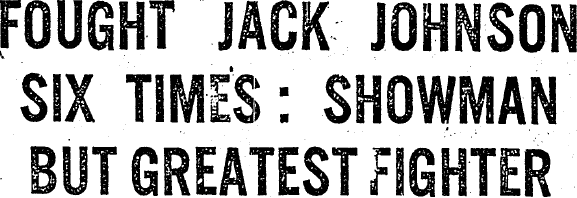
In a June 1946 interview with the Irish Independent, Warren gave some detail of his life and career, claiming that as a 27 year old in 1907 he had boxed with the famous Jack Johnson, the first African American world heavyweight boxing champion. “I was pretty green myself then”, he told the paper. “I didn’t know much about covering up and defence, but I could take a good beating without swallowing the anchor.” However Box Rec, dedicated to recording the histories of boxers who have stepped into the ring, casts some doubt on Warren’s tale of fighting Johnson, noting that:

Claims he made after his career of fighting both Jack Johnson and Peter Jackson have not been proven, and may just be exaggerations by the “Cyclone.” But Warren did square off with Sam McVey, a great black fighter of the era, losing by a second round knockout. “

Warren's claims reported in the above mentioned interview.

Warren’s claims reported in the above mentioned interview.

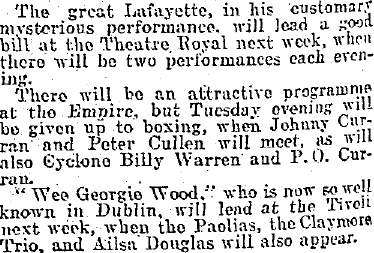
The Box Rec website has also attempted to correlate a list of Warren’s appearances in the ring, though like with all aspects of his story details are sketchy in places. References to Warren boxing in this city begin to appear towards the end of the first decade of the twentieth century and continue from there. In 1910 for example he was advertised as boxing in the Theatre Royal:

June 1910 advertisement for a boxing match featuring the Cyclone.

June 1910 advertisement for a boxing match featuring the Cyclone.

Even earlier, in August 1909, there is reference to Warren fighting Wexford man Jem Roche for the Championship of Ireland in Belfast and later in Dublin. Warren would succeed in beating Roche in Belfast. Interestingly, the Australian Auckland Star heralded this event, praising “the Australian boxer” for his talents. Not long after this success, Warren would lose the title in Dublin to Roche. Some argued that as a non-national he should never have been allowed compete for the Irish Championship at all. Continue Reading »