Feeds:
Posts
Comments

(In terms of food history, we’ve previously looked at the city’s oldest restaurants, the first Chinese restaurants, the first Italian restaurants, the first pizzerias and the first Indian restaurants)

This is part two of our series looking at the history of Vegetarianism in Dublin, primarily focusing on restaurants and cafes. Part One began in the 1860s and finished up in the early 1920s.

We pick up the story in the 1930s…

Frank Wyatt, editor of Vegetarian News and Secretary of the London Vegetarian Society, gave a talk in January 1933 on Vegetarianism in the Mansion House. The Irish Times (17 Jan) noted that the meeting was mostly made up of women. Wyatt, a vegetarian of twenty years standing, told the room that he was ‘satisfied that he was a healthier man than any flesh eater’.
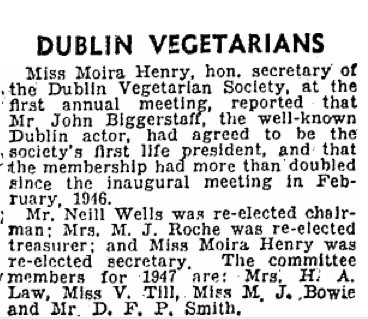
Here is a report in the Irish Press on the first annual meeting of the resurrected Dublin Vegetarian Society in 1947:
The Irish Press, 5 March 1947

The Irish Press, 5 March 1947

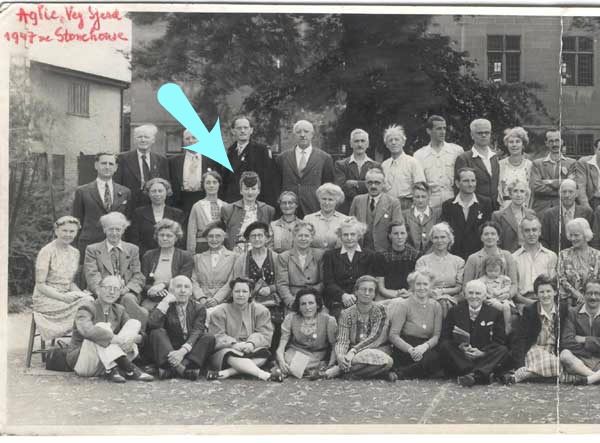
Moira Henry is pictured at the 1947 11th International Vegetarian Union Congress whcih took place at Wycliffe College in Stonehouse, England:
Moira Henry as one of the delegates at the 11th IVU World Vegetarian Congress 1947. Stonehouse, England. Credit - http://www.ivu.org

Moira Henry as one of the delegates at the 11th IVU World Vegetarian Congress 1947. Stonehouse, England. Credit – http://www.ivu.org
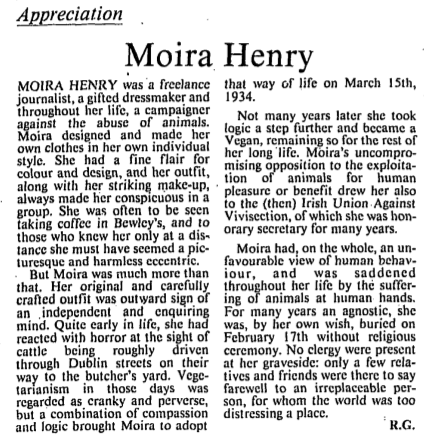
Remarkably on 26 February 1949, the Irish Press interviewed ‘the only vegan in Ireland’ – Moira Henry (mentioned in piece above). She told the reporter that she had been a vegetarian since 1930 and a vegan for the last four years .The journalist defined a vegan as a ‘vegetarian who not only eschews fish, flesh and fowl but also such by-products as eggs, milk, cheese and margarine’. Moira, Honorary Secretary of the Dublin Vegetarian Society, revealed that the membership of the organisation was currently 32.
Moira Henry passed away in 1997. The Irish Times, 10 March 1997.

Moira Henry passed away in 1997. The Irish Times, 10 March 1997.

Patrick Campbell (aka Quidnunc) interviewed Florence H. Gourlay, honorary treasurer of the Dublin Vegetarian Society for An Irishman’s Diary on 5 March 1951. Gourlay admitted that the organisation only had 33 members (an increase of 1 since 1949!) but she knew of 104 vegetarians altogether in the Republic. It was noted that while Belfast had a vegetarian restaurant, Dublin did not.

In March 1955 Geoffrey Rudd, secretary to the Vegetarian Society (Britain), addressed a public meeting on the principles and uses of the vegetarian ideals at the Central Hotel, Dublin. An article in The Irish Times (1 March) noted that the Dublin Vegetarian Society was founded in 1946 and presently had around 50 members. The original Dublin Vegetarian Society had been founded in the 1890s but ‘went out of existence during the first world war‘. A member of the society told the newspaper that:
while Dublin had no purely vegetarian restaurant, hotels and restaurants generally were becoming more sympathetic towards their needs and could usually provide vegetarian meals if notice was given beforehand. Most of the members agree that a specialist restaurant would be a step forward but this would take time as well as a ‘lot of hard work and some capital’.
Theodora Fitzgibbon in The Irish Times (7 Nov 1969) wrote that she felt sorry for vegetarians as there was no such thing as a ‘purely vegetarian restaurant’ in Dublin. Two years later (18 Oct 1971). Sean Doherty wrote to the Irish Press also complaining that the country’s capital city did not have a vegetarian restaurant and the ‘once thriving’ Vegetarian Society was no longer active.

All changed the following year with the arrival of Good Karma at 4 Great Strand Street. As far as I can work out, this was the first purely vegetarian restaurant in the city since the College Vegetarian Restaurant closed its doors in 1922. It was opened by Jas Adams, Peter Lawson and Robert and Aaron Bartlett.
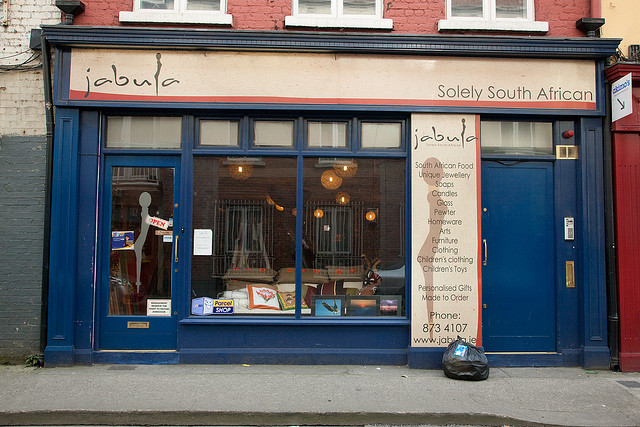
Site of Good Karma. 4 Great Strand Street as it looks today. Credit – infomatique

Elgy Gillespie in The Irish Times  (11 September 1972) described the restaurant as having a:
long room with wooden pillers and a cosily dim glow from candles and firelight. The table (made by the owners) are high if you like sitting up to your food: low if you prefer to loll across the tie-dyed cushions also made by the owners … Taj Mahal, Doctor Pepper and Crosby, Stills and Nash provided lush sounds in the background  … it makes a wholesome change from the stagnancy of Dublin eating.
I believe Good Karma only lasted a year as Gabrielle Williams in The Irish Times (7 December 1973) described it has having being ‘recently’ closed down by the Eastern Health Board. A reminiscing Sonia Kelly in the same paper on 11 February 1976 described their kitchen as ‘immaculate’ but was ‘closed for tripping over an obscure regulation’.

John S Doyle writing in the Irish Independent in 2005 remembered Good Karma as a:

A ‘head’ restaurant not everyone knew about, with bare brick walls and no seats, only bean bags, and mellow ‘sounds’. Nice food, none of your macrobiotic stuff. The ‘staff’ were laidback types who said “all right man”, and you were to take it as a privilege to be served by them. This was 1974 (sic) or so. There were numerous Garda raids, and the restaurant didn’t last long.
Restaurant reviewer Paolo Tullio on a recent trip down memory lane called Good Karma:

…Dublin’s first macrobiotic restaurant back in the early seventies and it was filled with, run by and staffed with hippies …What made it a nice place, perhaps more than the food, was the amateur attitude of everyone involved. You never felt that it was a commercial enterprise. Sure, money changed hands, but somehow you felt you were part of a social and gastronomic experiment.

It’s pretty amazing that there are so many positive memories of a place that was open for little more than twelve months.

While the restaurant closed, the health food shop, Green Acres, in the basement remained open. Patrick Comerford in The Irish Times (39 July 1975) interviewed the owner, Philip Guiney. He told Comeford that ‘not all the staff, and only a quarter of (his) customers’ were vegetarian. Open for three years, an increasing number of older people were visiting the ship realising that it was ‘not just a place for young freaks’. These older people came to ‘supplement their diets with natural foods, and probably a small number had become vegetarian out of economic necessary‘.

The journalist also mentioned the Ormond Health Centre (run by a Mr. Evans) on Parliament Street which sold dandelion coffee, Honeyrose cigarettes and herbal tea and the Irish Health and Herbal Centre on Trinity Street (run by Ann Flood and Michael McDonald) which was ‘not vegetarian orientated by any means’ but sold a lot of products popular with the vegetarian community.

In the late 1970s, there were a number of whole-food restaurants in Dublin including Munchies at 60 Bolton Street, The Golden Dawn on Crow Street and the Supernatural Tearooms at 53 Harcourt Street.

Here is a short piece on Munchies from 1977:
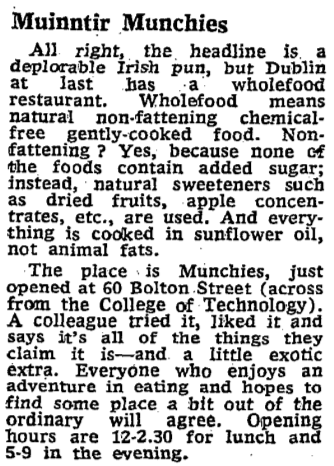
The Irish Times, 6 December 1977

The Irish Times, 6 December 1977

The Golden Dawn, established in 1976, was described by Christy Stapleton of the Vegetarian Society of Ireland in the late 1990s as ‘the closest thing to a vegetarian restaurant in Dublin’ at the time. Ran by showband singer Joe Fitzmaurice and his wife, it used to be a favourite of actors Gabriel Byrne, Vinny McCabe and Garrett Keogh while DJ Paul Webb worked there as an assistant cook and Golden Horde frontman Simon Carmody as dishwasher. Here is a link to a great 1978 RTE piece on the restaurant.

Continue Reading »

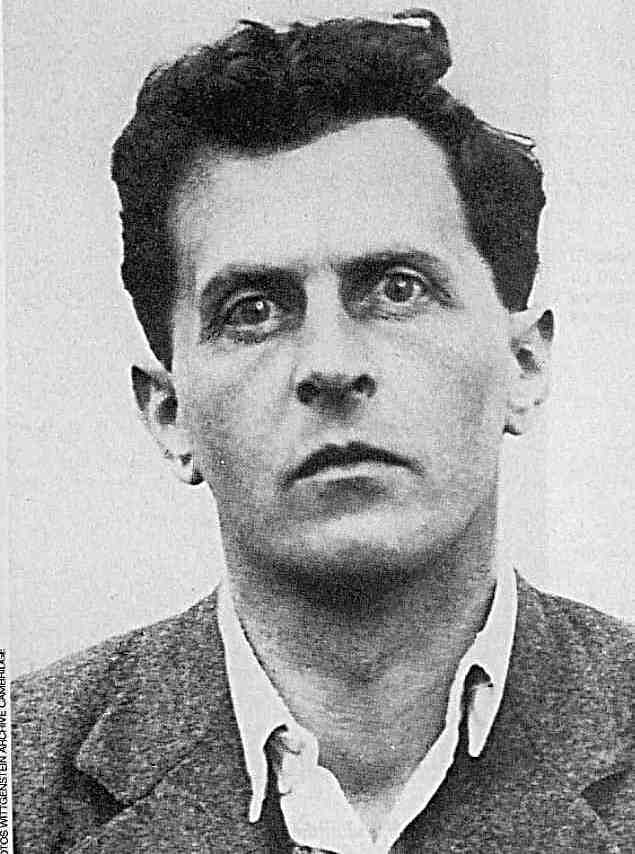
Not too long ago, we had a brief post on the website here looking at the brilliant statue of Socrates (the philosopher, not the footballer) which stands proudly in the grounds of the Botanic Gardens. This raised the issue of another philosopher who is remembered in the Botanic Gardens, albeit for very different reasons. While Socrates never walked through Dublin city, Ludwig Wittgenstein did. Indeed, the Vienna-born philosopher, considered one of the greatest minds of his time, actually lived and worked in the city.

witt
In a 1997 article for the Sunday Independent, Ulick O’Connor noted that this was a time when Wittgenstein had just resigned a Professorship in Cambridge, and that:

Wittgenstein had chosen Dublin because of his friendship with a consultant psychiatric at St. Patrick’s Hospital in James’ Street, Maurice O’Connor Drury. Before taking up medicine, Drury had been a philosophy student of Wittgenstein’s at Cambridge. But, in 1947, at the height of his fame, Wittgenstein had decided to resign his Cambridge Professorship and settle in Ireland.

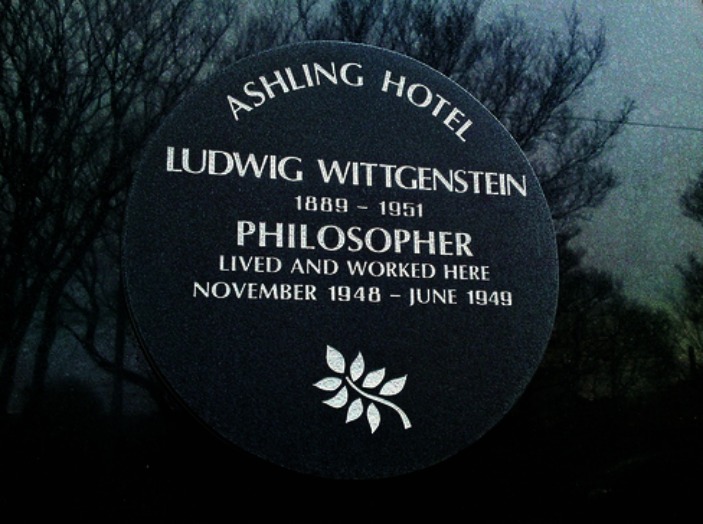
Wittgenstein spent two years of his life writing in Dublin, and indeed these were among the most productive years of his life, as it was during this time he wrote much of his most influential work, Philosophical Investigations. From November 1948 into the summer of 1949, he lived in a small modest room at Ross’s Hotel, today known to Dubliners as the Ashling Hotel. A small plaque on the front of this hotel marks the fact that Wittgenstein boarded here. This plaque was unveiled in 1988, by John Wilson, who was then Minister for Transport and Tourism.

_MG_7481b

Interestingly, he had visited Ireland and Dublin prior to this for short periods, with the first visit occurring in 1934. It was during his extended stay at the Ross’s Hotel in the late 1940s however that he truly familiarised himself with the city, and as Brian Fallon has noted he was frequently to be found “walking in the Phoenix Park, lunching in Bewley’s or in the Members Dining Rooms at the Zoo, and sometimes, during the winter, sitting on the parapet in the Palm House of the Botanic Gardens, writing.”

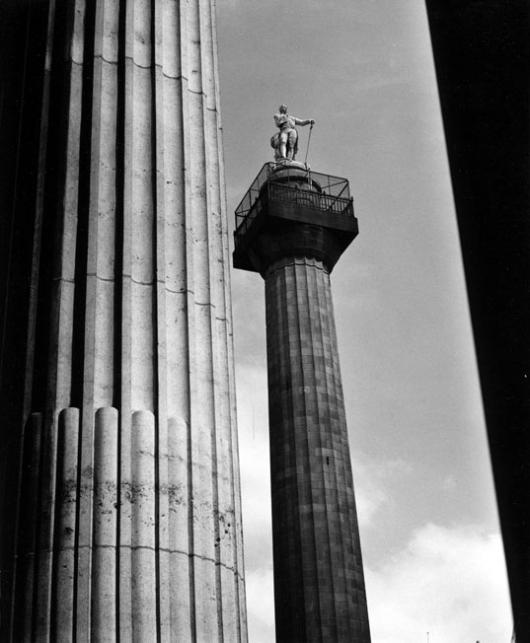
Richard Wall’s study Wittgenstein in Ireland provides good detail of his time here. His love for Bewley’s is evidently clear from his own correspondence. He would always enjoy the same lunch of an omelette and coffee, and was said to be delighted by the fact the staff there would always remember his order without even needing to place it. Wall notes that while we know for certain he frequently visited Bewley’s, the question of whether the great intellect ever stepped inside a Dublin pub remains unanswered. We know on one occasion that Wittgenstein and his friend Drury bought cheap cameras in Woolworth’s and then photographed the city from the top of Admiral Horatio Nelson’s Pillar!

Nelson's Pillar on O'Connell Street.

Nelson’s Pillar on O’Connell Street.


Continue Reading »

(In terms of food history, we’ve previously looked at the city’s oldest restaurants, the first Chinese restaurants, the first Italian restaurants, the first pizzerias and the first Indian restaurants)

Note: Part two of this article can be read here.

Vegetarian Restaurants in Dublin date back to the late 19th century while groups of Vegetarians have been organising events in the city since at least the 1860s.

In September 1866, a public meeting on Vegetarianism in the Exhibition Rooms, Rotunda Hospital was heckled by several members of the public. The meeting was held ‘for the purpose of affording an opportunity to several prominent vegetarians (to) explain … the principles and practices of the Vegetarian Society’.

The Freemans Journal of 28 September 1866 noted that:

There was a large attendance of respectably dressed persons, but there were many amongst the audience who evidently attended the meeting more for the purpose of disturbing the proceedings and amusing themselves in a very disorderly manner.

Amongst those speaking were Carlow-born social reformer and temperance activist James Haughton (who had become Vegetarian in 1846); Rev. James Clarke of Salford (who had helped establish the American Vegetarian Society in 1850); ‘acknowledged statistician of the British temperance movement’ William Hoyle from Bury and writer and campaigner James A Mowatt from Dublin.

The newspaper concluded:

The last question put was directed to the Rev. Mr. Clarke, who was asked, amid much laughter what he should do at the North Pole, where there were no vegetables. The reverend gentleman said he should not go there at all. The proceedings then terminated.

The first Vegetarian restaurant in Dublin, the ‘Sunshine Vegetarian Dining Rooms‘, was located at 48 Grafton Street (now Vodafone) and was opened in March 1891 by the Dublin Vegetarian Society.

The Irish Times, 28 August 1891

The Irish Times, 28 August 1891

Consisting of a ‘pair of the most elegantly-decorated and tastefully-fitted apartments’, the restaurant served ‘toothsome food, free from the slightest suspicion of animal matter … at a surprisingly moderate rate’.

The same article from The Irish Times noted that the ‘question of vegetarianism has not to any great extent excited public discussion in Dublin’ but the journalist wondered if this might change as the ‘restaurant has been extremely patrionised’ since opening. It is unclear how long the restaurant was in business. I would guess for for a few months or maybe a year at most.

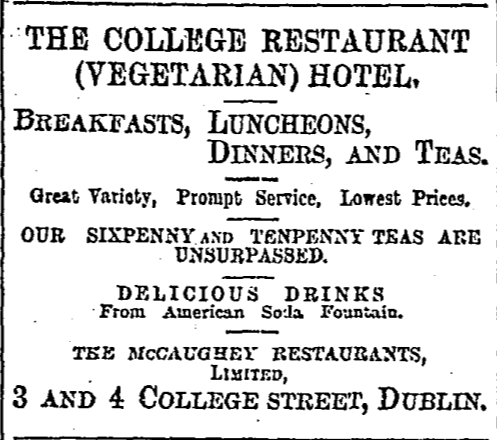
In July 1899, the ‘The College Vegetarian Restaurant‘ was established at 3-4 College Street by Antrim man Leonard McCaughey. This hotel and restaurant is the present location of The Westin (as far as I can work out).

The Irish Times, 11 September 1900

The Irish Times, 11 September 1900

DIT food historian Mairtin Mac Con Iomaire, in his excellent ‘Searching for Chefs, Waiters and Restaurateurs in Edwardian Dublin’, has written that McCaughey:

…had built a chain of successful vegetarian restaurants in Glasgow, Leeds, Belfast and in Dublin … (and that he) owned the Ivanhoe Hotel in Harcourt Street, Dublin, and the Princess Restaurant on Grafton Street.

The 1911 census lists Leonard Mccaughey as a 70-year-old hotel proprietor from Antrim living in 72.1 Harcourt Street with a wife, three children, a cook and two servants.

An advertisement in The Irish Times on 2 February 1900 proclaimed that ‘Vegetarian food is the coming diet’ and suggested that ‘every man and woman that has suffered from influenza should dine at the College Restaurant as the use of a pure diet is the simplest and surest cure for this woeful disease’ and another on 27 April of the same year noted that ‘The College Vegetarian Restaurant is the seat of learning in the science of food. In it all can learn how to get the best food in the easiest digestible form, at the lowest cost’.

In 1907, the Vegetarian Society hosted a once-off restaurant at the Irish International Exhibition at Herbert Park.

The Irish Times (11 May 1912) reported that a foreign chef at the restaurant on College Street, Leon Cromblin, was discovered in the cellar of the premises with his throat badly cut and a razor by his side. He was taken to Jervis Street hospital where he was said to have been in a critical condition. It is not known if he survived.

Continue Reading »

Recognition awarded to those who had served with the Royal Dublin Fusiliers, issued at the time of their disbanding.

Recognition awarded to those who had served with the Royal Dublin Fusiliers, issued at the time of their disbanding.

While much has been written about the attempts by the Irish Citizen Army to dig trenches in St. Stephen’s Green during the Easter Rising, another series of WWI era Dublin trenches have been largely forgotten. According to one website dedicated to the memory of the Royal Dublin Fusiliers:

The 6th and 7th Dublins were stationed at the Curragh and later at The Royal (Collins) Barracks in Dublin. They trained in trench warfare in the Phoenix Park. Today, there is an outline of one of the trenches in the Park, as a dip in the land running east/west in front of the Papal Cross.

Kevin Myers has written about the trenches in the park in the pages of The Irish Times, noting that:

In the broad green acres of Phoenix Park across the road from Aras an Uachtarain, one can see strange undulations and surface scars beneath the grass. Soon those undulations will vanish as the summer returns, and one might even believe that the scars do not exist and whatever happened to the earth is now gone, past, extinct.

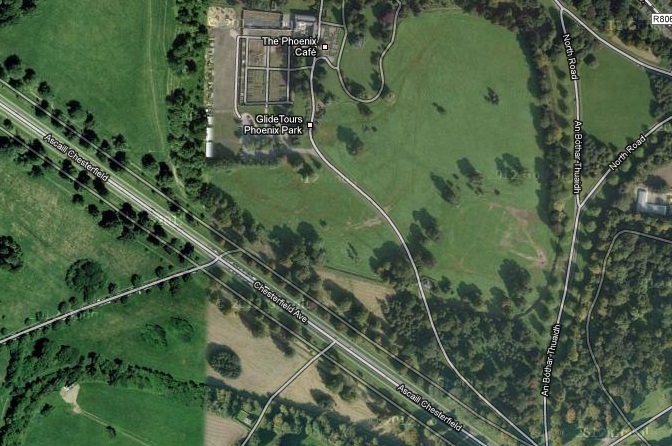
One user on the dublin.ie forum has pinpointed the area they believe to be the location of the trenches, which is inkeeping with the claim on the specialist website quoted above. Below I have shown the same area in Google Maps.

Google Earth View of area.

Google Earth View of area.

Are there visible remains to be seen in the two aerial images above of WWI training trenches? I’m not entirely sure. I’d rather doubt it, giving the form of the lines. One comment below notes “They’re on Chesterfield Avenue across from the main road running parallel to the visitors centre”.

Area around Visitor Centre

Area around Visitor Centre

Damian Sheils, who has done research in this field and is a conflict archaeologist has noted that it is unclear just where the Phoenix Park trenches were, but that:

Trenches were constructed in places like the Phoenix Park, Finner Camp (Donegal), Kilworth Camp (Cork) and the Curragh. The latter survive in incredible condition and look like a section of the Western Front. One account of a soldier from the Leinsters described in a letter home that these training trenches were ‘not the simple holes in the ground you might imagine.’ It is past time the Phoenix Park ones were firmly pinned down and explored- an ideal project for the decade of commemorations I think.

I’d welcome more information on these trenches as I’m very curious now.

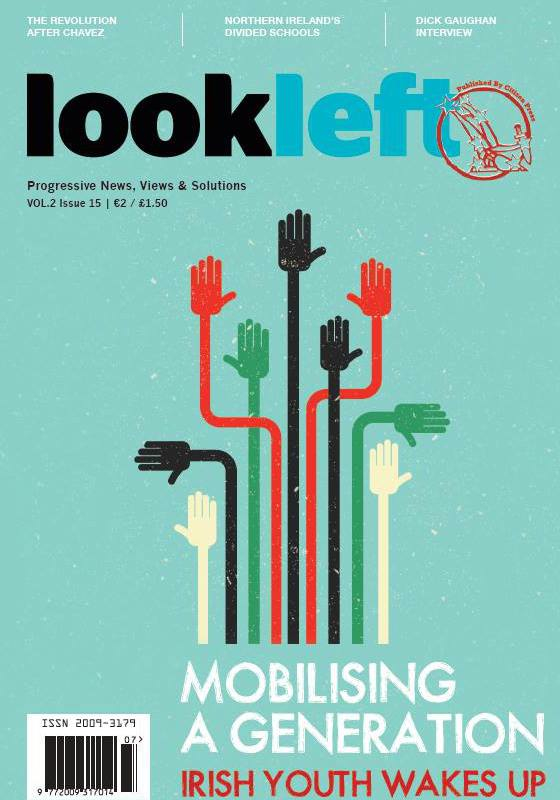
Our bi-monthly update letting our readers know about the publication of the latest issue of Look Left. Available for €2 in Easons and other newsagents, issue 15 includes articles on:

Precious few heroes: With his politically charged songs Dick Gaughan has inspired generations of Left activists, Kevin Brannigan caught up with the veteran Scottish folk singer during his spring tour of Ireland

– Calling the bigots bluff: Do anti-choicers want follow through the with the logic of their argument and imprison women, asks Katie Garrett.

Requiem for a Tory: Brian Hanley’s reflections on Margret Thatcher

Debate: Immigration – concern or opportunity? Stephen Nolan/Gavan Titley

Gonna shoot you down: Sam McGrath looks at the politics behind Madchester band The Stone Roses

What foot does he kick with?: Kevin Brannigan examines the role players from the Republic had in the modern history of one of Loyalism’s footballing bastions.

It’s well worth a look.

Look Left 15 cover. Design - Claire Davey.

Look Left 15 cover. Design – Claire Davey.

Recently I took part in a 1913 walking tour of the city which was recorded for DCTV, who will air the tour later in the year to coincide with the centenary of the Lockout. Essentially, I told the history of various locations briefly, and then a song relevant to that location was performed. One place we visited was the new bridge which is being constructed across the Liffey, as there is an attempt to name it after Rosie Hackett, a trade unionist from the time. Here, Alison O’Donnell sings ‘Rebel Girl’ in honour of Rosie.

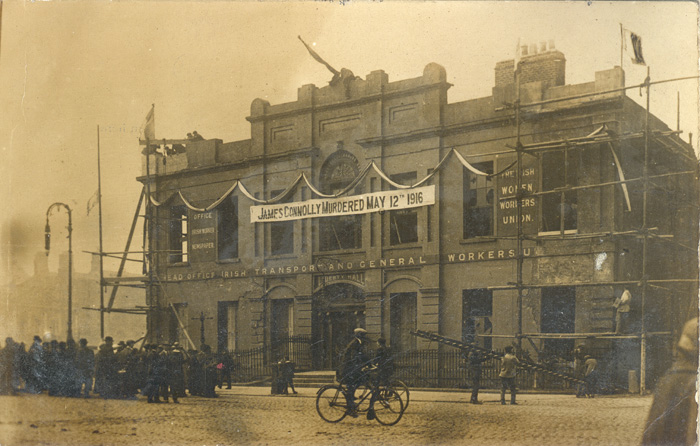
Below is an image of the banner I mentioned in the piece above. Rosie and other female trade unionists took it upon themselves to raise this banner on Liberty Hall on May 12th 1917, a year after the killing of James Connolly. While James Connolly is also in the running for the naming of the bridge, as a man who never feared to put women at the front of his movement, one wonders would he be happier to see the Rosie Hackett Bridge?

murdered

Rosie herself later remembered this event, and told the Bureau of Military History:

Of course, if it took four hundred policemen to take four women, what would the newspapers say? We enjoyed it at the time- all the trouble they were put to. They just took the script away and we never heard any more….

Historically, Liberty Hall is the most important building that we have in the city. Yet, it is not thought of at all by most people. More things happened there, in connection with the Rising, than in any other place. It really started from there.

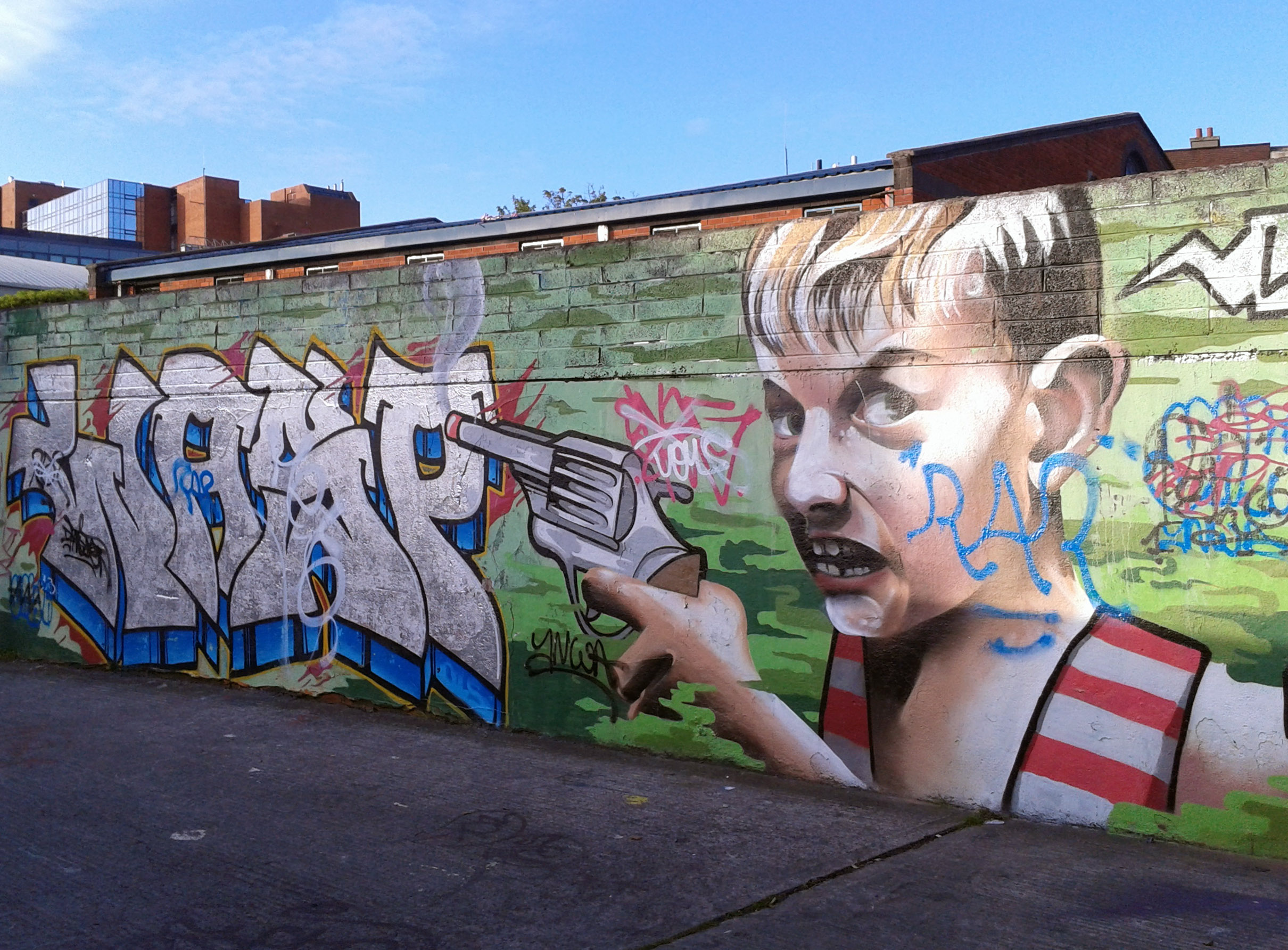
“The delights a stroll around Dublin can bring you. I’ve always carried my camera around with me, but have only recently started to take it out and not give a shite that I look like a tourist.” And so said I a long time ago, and several times since. With the ever- epic Tivoli Jam taking place this weekend, I had it in mind  to go check out a few graf spots I’ve covered before, so dropped down to the lane behind the Bernard Shaw and wasn’t disappointed. (Nothing got to do with this post, but if you’re in Dublin this Saturday (18th May), check out the Tivoli Theatre car park off Francis Street for a day of world-class graffiti artists, skateboarders, BMX bikers, DJs and MCs in the Liberties.) Anyways, as usual, snaps below.

WP_000034

WP_000032 (2)

WP_000028 (2) Continue Reading »

Note 1: Previously we’ve looked at the city’s oldest restaurants, the first Chinese restaurants, the first Italian restaurants and the first pizzerias.

Note 2: Michael Kennedy’s excellent article ‘Indian restaurants in Dublin since 1908’ published in History Ireland in January 2010 was an invaluable resource.

The Indian Restaurant and Tea Rooms (1908-09?)
The first Indian restaurant was opened in Dublin in August 1908 at 20 Upper Sackville Street (O’Connell Street) offered “real Indian curries” from chef Karim Khan served by “native waiters in costume”. The Indian Restaurant and Tea Rooms which seemed to have only lasted a few months, predated by three years the first 20th-century restaurant of its kind to open in London, the Salut e Hind.

Dublin's first Indian restaurant. The Irish Times, 17 August 1908.

Dublin’s first Indian restaurant. The Irish Times, 17 August 1908.

The Indian Restaurant (1939- 1944)
It would be another 31 years until Dubliners and the Indian community could sample food like this again in a restaurant. Michael Kennedy points to “Mahomets” Indian Restaurant opening by September 1939 at 50 Lower Baggot Street. It is safe to say that this must be the restaurant referred to below in An Irishman’s Diary in September 1939.
Reference to a Indian restaurant being opened in Dublin. The Irish Times, 02 September 1939.

Reference to an Indian restaurant being opened in Dublin. The Irish Times, 02 September 1939.

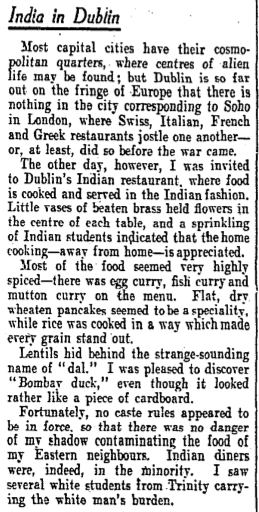
A year later, the same column, offered a fascinating (but brief) insight into the shape of ethnic restaurants (i.e. Indian) in Dublin at the time. The writer wrote that he had seen “several white students from Trinity” dining while he was there.

A short review of what we know is the Leeson St. Indian restaurant. The Irish Times, 17 August 1940.
The Irish Times, 17 August 1940.

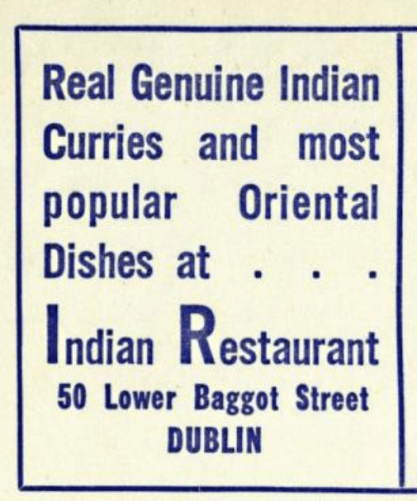
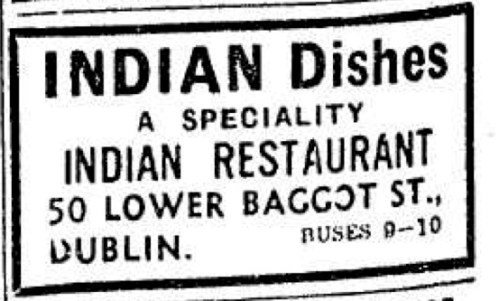
Here are two contemporary press advertisements for the restaurant:

india-restaurant-1942-rathmines-music

Ad from Rathmines & Rathgar Musical Society programme (1942)

Indian EHD_1943_11_13

Evening Herald, 13 November 1943

The Indian Restaurant on Lower Baggot Street closed its doors in 1943 according to Michael Kennedy.

The India Restaurant (1940)
The India Restaurant on Burgh Quay near the Theatre Royal advertised “Indian dishes” in August 1940. It’s unclear how long it was open and whether it had any connection with the venture on Lower Baggot St.

The Bombay Restaurant (early 1940s)
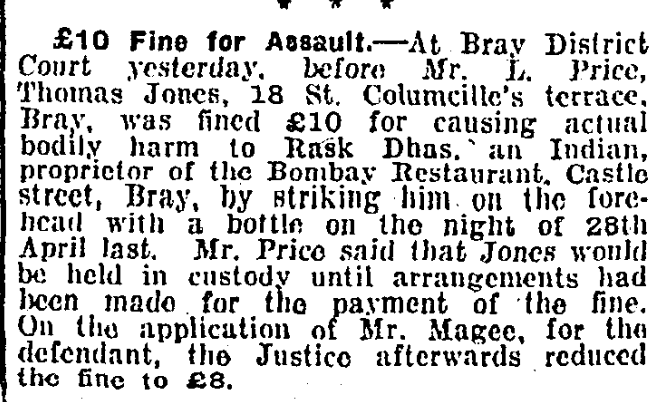
There was an Indian restaurant in the early 1940s called the Bombay on Castle Street, Bray, County Wicklow owned by Rask Dhas (or Ras K Das). A young man was fined £10 for hitting the proprietor in the head with a bottle in April 1941.

Bombay Restaurant, Bray. The Irish Times – 3 May 1941.

The Golden Orient (1956-1984)
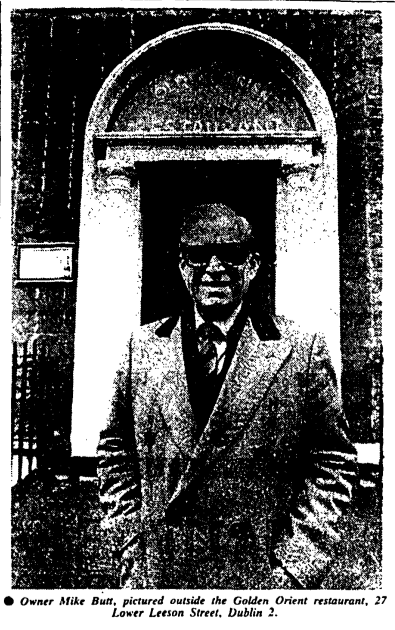
The next big milestone in the Indian restaurant timeline was opening of the Golden Orient at 27 Lower Leeson Street in February 1956 by Mohammed ‘Mike’ Butt, a Kenyan of Kashmiri descent and his Dublin-born wife Terry Foy, a Cathal Brugha Street College of Catering graduate. It served generations of journalists, students and Indians until about 1987.  (A biography of the pioneering Butt can be read here)

Mike Butt pictured outside the Golden Orient. The Irish Times, 21 March 1986.

Mike Butt pictured outside the Golden Orient. The Irish Times, 21 March 1986.

Dublin’s only Indian restaurant in 1961, The Golden Orient. The Belfast Telegraph, 25 Jan. 1961

The Taj Mahal (1957-1959)
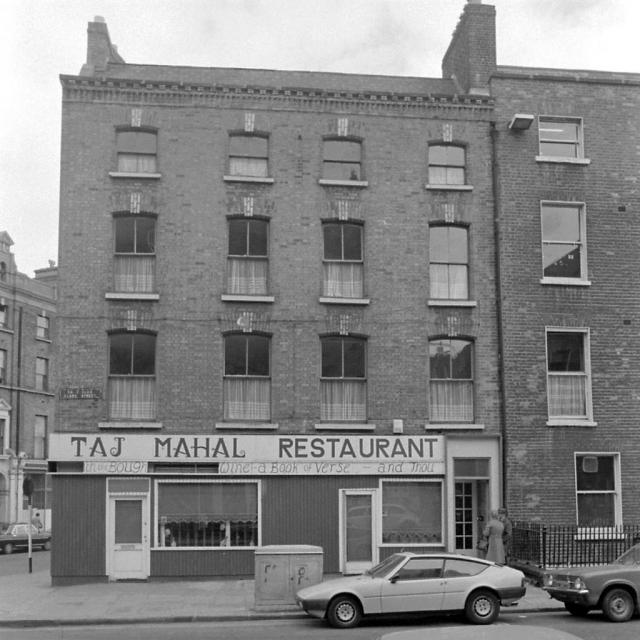
There was a short-lived Indian restaurant called the Taj Mahal, 31 Lower Leeson Street, which was open by January 1958 and closed after a fire in April 1959. Its owner Ram Saran Das (or Ram Salam Das) was charged with arson but found not guilty in the Central Criminal Court.

Robert Smith on Facebook remembers an Indian takeaway which lasted for a few months in 1959/60 on South Richmond Street. Does anyone have any more details?

The New Delhi (1961-?)
The New Delhi
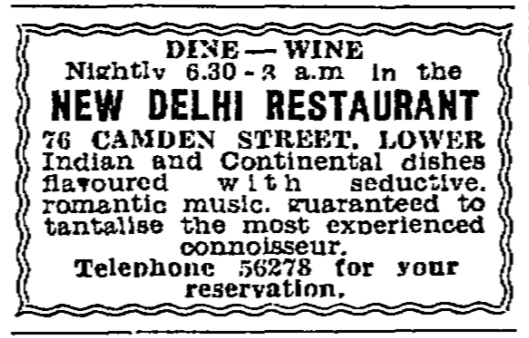
at 76 Lower Camden Street was opened in July 1961 by MM Miah, a 24-year-old medical student at a London university, and Jimmy James, a former chef at the Golden Orient. They were assisted by Jimmy’s wife Kathleen from Co. Meath.

The Gold Room (1964-64)
In February 1964, an “exclusive” Indian restaurant The Gold Room opened at 10 Chatham Street but only seems to have lasted a few months.

The Taj Mahal (1966- mid 1990s)
In 1966, the Taj Mahal restaurant was opened by Mohinder Singh Gill (aka Mark Gill) at the corner of 17 Lincoln Place and Clare Street. Originally from the Jalandhar district in the Punjab, Gill came to Ireland after spending a couple of years in Britain. In business until the mid-1990s, the Taj Mahal became one of Dublin’s longest-lived Indian restaurants.

The Taj Mahal (Lincoln Place side) in 1979. Credit - Dublin City Photographic Collection

The Taj Mahal (Lincoln Place side) in 1979. Credit – Dublin City Photographic Collection

While the Irish Sikh and Hindu community now numbers a few thousand, many of the first were brought over by Gill to work in the Taj Mahal in the early 1970s. A total of 10 families, some Hindu and some Sikh but all from the same Jalandhar region, moved to Ireland in 1972 to work as chefs in Gill’s Taj Mahal and another restaurant of his in Cork.

In the late 1980s, the restaurant gained fame through Larry Gogan’s ‘Just a minute’ quiz on RTE Radio 2. When asked “Where’s the Taj Mahal?”, a contestant replied, “opposite the Dental Hospital”.

The Taj Mahal (Clare Street side) in 1979. Credit - Dublin City Photographic Collection

The Taj Mahal (Clare Street side) in 1979. Credit – Dublin City Photographic Collection

The Taj Mahal was taken over by Sikander Khan, a retired major in the Pakistani army, in 1987. It closed its doors in the mid-1990s. Khan’s son Nasir opened the Royal Tandoori on South King Street in 1991 and in 1997 moved out to Donnybrook where he established Khan’s Balti House which is still popular today.

New Delhi IT (3 Nov 69)

Advertisement for New Delhi restaurant, 3 November 1969

Thom’s Directory for 1973 shows nine Indian restaurants in Dublin including:

  • The Bombay, 5 South Richmond Street. Open by 1969. The owner was Chad Ramoutar, described in the 1960s as Fianna Fáil’s only non-Irish member. Now Aussie BBQ.
  • The Calcutta, 43 Lower Camden Street. Open by 1966. Owned by Patrick Sherkle. Now Pickle Indian restaurant
  • New Delhi, 76 Lower Camden Street. Open by 1961. Empty.
  • Punjab One, 109 St Stephen’s Green.
  • Punjab Three, 6 Upper Clanbrassil Street. Now Clanbrassil House.
  • The Tandoori Rooms, attached to the Golden Orient, 27 Lower Leeson Street. Opened in 1970 and closed 1987. Now House bar/restaurant.
  • The Taj Mahal, 17 Lincoln Place. Opened in 1966. Demolished.
Punjab One Indian Take Away. St. Stephen's Green, 1972. Dublin City Photographic Collection

Punjab One Indian Take Away. St. Stephen’s Green, 1972. Dublin City Photographic Collection

Journalist Cliodhna O’Donoghue estimated in the Sunday Tribune (26 March 1987) that there were 14 Indian restaurants in Dublin City in 1987.

As Michael Kennedy has written:

By the late-1980s Irish tastes in food had become more adventurous. Foreign travel, emigration, the rising popularity of vegetarianism, increased disposable income, urbanisation and reasonably priced ethnic restaurants all explained the development.
The opening of Saagar (Harcourt Street, 1995-2016) and Jaipur (South Great George’s Street, 1998-2015) was seen as the new dawn of top-end, Indian restaurants in the city.

Dubliners love of Indian food and curries has continued to grow and we now have an abundant supply of top-class restaurants, takeaways and late-night eateries.

Here is a quick historical timeline:
1. The Indian Restaurant and Tea Rooms, 20 O’Connell St – 1908-08?
2. The Indian Restaurant,
50 Lower Baggot St, 1939 – c. 1943
3. The Bombay, Castle Street, Bray, County Wicklow – early 1940s
4. The Golden Orient, 27 Lower Leeson St – 1956-1984
5. The Taj Mahal, 31 Lower Lower St – 1958-1959
6. The New Delhi, 76 Lower Camden St – 1961-?
7. The Gold Room,
10 Chatham St – 1964-64
8. The Taj Mahal, 17 Lincoln Place – 1966- mid 1990s
9. The Calcutta, 43 Lower Camden St – 1966-?

Readers – What was your first experience of eating Indian food in Dublin? Where do you rate in the city today?

Dublin Newsboy illutration: Luke Fallon.

Dublin Newsboy illutration: Luke Fallon.

Last night I read a piece on The History Show on RTE Radio One looking at childhood in Dublin in 1913. Interestingly, the piece focused on life in the city for children before the lockout. It was great fun to put it together, I particularly enjoyed the story of the young chancer who talked his way into an expenses paid trip abroad!

You can listen to the piece by clicking on the link above. It’s interesting to contrast the plight of working class and upper class children at the time. My thanks to the people at The History Show for the invitation to contribute something.

In Mairtin O’Cathain’s book ‘With a bent elbow and a clenched fist: A Brief History of the Glasgow Anarchists’, there is a short but fascinating mention of James Connolly.

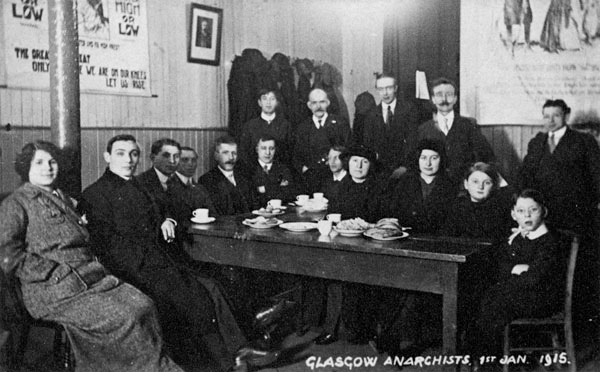
Connolly’s paper, The Workers Republic, was suppressed by the authorities in December 1914 and O’Cathain writes that it was the “Glasgow Anarchist Group that took over the printing of the paper … and smuggled it into Ireland”. Apparently, the police in Britain raided several anarchist printing presses, including London’s Freedom Press, but never caught the Glasgow group.

Picture of the Glasgow Anarchist Group in 1915. Credit - ibcom.org

Picture of the Glasgow Anarchist Group in 1915. Credit – ibcom.org

In Donal Nevin’s fantastic biography of Connolly, ‘A Full Life’, there is a mention of Glasgow comrades taking over the printing of The Workers Republic. However, Nevin points to Connolly’s old colleagues in the Socialist Labour Party.  More specifically, Arthur MacManus who was the one who did the setting, composing, printing and then smuggled the copies to Dublin using the pseudonym ‘Glass’. (Belfast-born MacManus, son of an Irish fenian, later became the first chairman of the Communist Party of Great Britain and was buried in Red Square, Moscow after his death in 1927.)

As Nevin backs up his claim with a reference to C.Desond Greave’s book ‘The Life and Times of James Connolly’, the evidence stacks in his favour.

Speaking of Connolly, I’ve always liked the story of Antrim-born Anarchist and Irish Citizen Army founder Jack White traveling to the Rhondda and Aberdare valleys in South Wales to try bring the miners out on strike to save his life.

Jack White in ICA uniform, 1914.

Jack White in ICA uniform, 1914.

On 25 May, thirteen days after Connolly’s execution, White was charged with trying to ‘sow the seeds of sedition in an area which had nothing to do with the grievances of Ireland either real or imaginary’ and at a time when ‘a peaceful settlement was being arrived at’. He was sentenced to two sentences of three months.

 Perhaps the most famous example of an individual falling victim to a tarring and feathering. Boston Commissioner of Customs John Malcolm in 1774.

Perhaps the most famous example of an individual falling victim to a tarring and feathering. Boston Commissioner of Customs John Malcolm in 1774.

The process of tarring and feathering can be traced right back through history, as an often unofficial means of punishment or revenge, designed to shame the victim. Wikipedia notes that the first mention of the punishment appears in the orders of King Richard I in 1189. Looking in the archives, I decided to search for some examples of the use of the punishment form in Dublin over time.

While I expected to find many examples of people getting tarred and feathered in the revolutionary period of the early twentieth century, the late-eighteenth century also produced much, a time when there was massive political agitation in the city. Indeed, in a letter to the Prime Minister in 1785, the Duke of Rutland (then Viceroy of Ireland) complained that:

This City of Dublin is in a great measure under the dominion and tyranny of the mob. Persons are daily marked for the operation of tarring and feathering, the magistrates neglect their duty, and none of the rioters – till to-day, when one man was seized in the fact, have been taken…

Much of the tarring and feathering being done in Dublin at this time was, as Neal Garnham has noted, the work of “gangs of tradesmen and artisans” who targeted “importers of foreign goods, workers prepared to undercut the wages of their fellows, and those who informed on the actions of vigilantes.”

There was evidently a degree of popular support for the practice in Dublin. Padhraig Higgins has noted in his study of Irish politics in the late-eighteenth century that when Alexandar Clarke, a master tailor from Chancery Lane, fell victim to a tarring and feathering mob in June 1784 “a crowd of about three hundred from the Liberties” attacked his house, before dragging him almost naked to the Tenters’ Fields for the humiliating ritual.

The practice appears to have become much less common place throughout nineteenth century life in Dublin, or at least much less reported. Tarring and feathering in Dublin was not always restricted to just living people, as the hugely controversial monument of King William of Orange on College Green also fell victim. One publication wrote in 1898 of that statue, noting that “It has been insulted, mutilated and blown up so many times, that the original figure, never particularly graceful, is now a battered wreck, pieced and patched together, like an old, worn out garment.”

King William of Orange sits on College Green.

King William of Orange sits on College Green.


Continue Reading »

Fatalities at political demonstrations in Dublin are extremely rare. Bloody Sunday during the 1913 lockout being an obvious exception where two striking workers James Nolan (33) and John Byrne (50) were beaten to death by police. There have also been some notable incidents of British soldiers shooting dead civilians such at Bachelors Walk, after the Howth Gun Running, in July 1914 or at Bloody Sunday in Croke Park in November 1920 after the IRA’s operation against the Cairo Gang.

One incident that bypassed me until recently was the death of 78-year-old Anna-Maria Fitzsimons in June 1897 at an anti-Jubilee event in Rutland (Parnell) Square.

On 19 June, James Connolly and his Irish Socialist Republican Party (ISRP) organised an anti-Jubilee meeting, under the slogan ‘Down with the Monarchy: long live the Republic’, in Foster Place which was addressed by Maud Gonne. She told the crowd that the queen’s reign “had brought more ruin, misery and death” than any other period. Students from Trinity attacked the meeting singing ‘God Save The Queen’ but were repelled by the crowd.

The following evening, the day of the Jubilee itself, Connolly and Gonne organised a funeral procession through the streets of the city as the United Labourers’ Union band played the Dead March. They carried a coffin marked ‘British Empire and a black flag inscriptions giving the numbers who had perished in the Famine and the numbers who had emigrated and been evicted during Victoria’s reign.

A convention of the ’98 Commemoration Committee was being held in City at the same time and the chairman, veteran Fenian John O’Leary, suspended the meeting so delegates could watch the procession. Some of them, including WB Yeates, joined in.

Maud Gonne and WB Yeates, nd (Credit - coreopsis.org)

George Hyde-Lees and WB Yeates, nd (Credit – coreopsis.org)

By this stage, several hundred people were following the procession and there was a small confrontation with police at College Green, where the statue of William III was wrapped with a green flag.

Mounted police reinforcements arrived from Dublin Castle and the DMP tried to disperse the crowd. Afraid that it would be taken by the police, Connolly ordered the coffin to be cast into the Liffey, shouting: “Here goes the coffin of the British Empire. To hell with the British Empire!”. At one stage, Trinity students tried to grab the crowd’s black flag but, as reported in the New York left-wing Daily People, ‘the proletariat drove the bourgeoisie home in disorder’. Connolly was arrested and taken to the Bridewell.

Afterwards, Gonne conducted an open air-slide show of scenes of evictions from a window in the National Club, Rutland Square onto a specially erected large screen opposite.

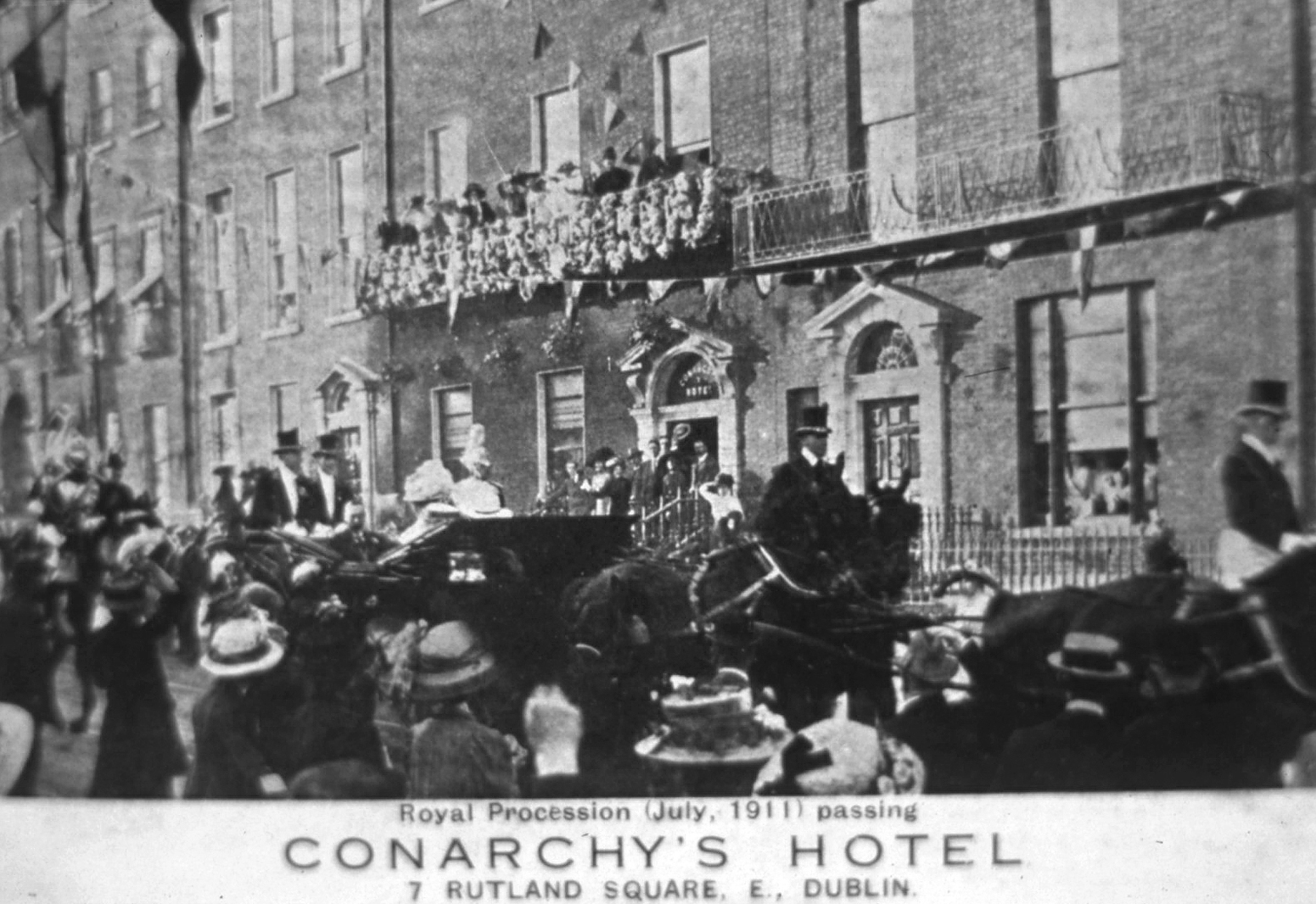
The Royal Procession passing through Rutland (Parnell Square), 14 years later.

The Royal Procession passing through Rutland (Parnell) Square, 14 years later. Credit – NAI

A large group of women and children watched the show. Maud Gonne wrote in her memoirs, A Servant of the Queen:

We were having tea [in the club] when suddenly we heard outside and cries of the ‘The police!’. I rushed to the window. Some twenty policemen with batons drawn a few people, mostly women and children, were running in all directions; a woman lay on the ground quite still; a girl was bending over her; someone called out ‘The police have killed her’.

The dead woman was Anna-Maria Fitzsimons from Cabra Road.

At the City Coroner in Jervis Street Hospital the following Saturday, her daughter told the inquest that herself and her mother came into town to see the ‘illuminations’ at Rutland Square. They walked up from Nelson’s Pillar, crossed at Cavendish Row and up to Rutland Square. They saw a number of people carrying flags and coming up from the direction of Sackville Street. The police baton charged the crowd and Anna-Maria was knocked down in the disorder that followed. She died later in hospital.

Does anyone know of any other deaths at political demonstrations in the 19th or 20th centuries in Dublin?

Refs:
The Irish Times (3 July 1897)
Donal Nevin, James Connolly A Full Life (Dublin, 2005)
James H Murphy, Abject loyalty: nationalism and monarchy in Ireland during the reign of Queen Victoria (Cork, 2001)