Feeds:
Posts
Comments

MollyMalone

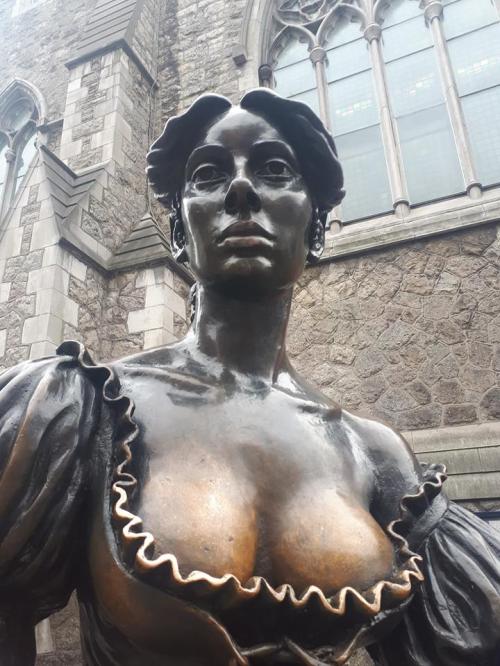
Earlier this week, the statue of Molly Malone was added to the Talking Statues series, an innovative and playful idea that allows Dubliners and visitors to engage with monuments in the city. Oscar Wilde, George Bernard Shaw and James Connolly (albeit without Edinburgh brogue) are just some of the monuments that are brought to life by the series. This summer is the thirtieth anniversary of the unveiling of the famous Dublin statue of Molly Malone,making her an ideal candidate for inclusion.

Molly Malone by Jeanne Rynhart took her place on the Dublin streetscape in 1988, the year of Dublin’s so-called Millennium. The historical merit of 1988 as a Millennium date for Dublin was widely disputed, but the year did lead to much civic pride and engagement. When quizzed on this, a Dublin Corporation official came out with something that was almost Flann O’Brienesque, insisting that when it came to historians, “you can never get these people to agree anyway. After all, there are some who say St Patrick never existed, but that doesn’t get rid of March 17th. And who picked December 25th as Christ’s birthday? Nobody was sure what the real day was, so they had to pick something.”

Rynhart’s proposal emerged victorious from dozens of entries, and was unveiled in December 1988 right at the end of the year of celebrations. When first revealed, the Irish Independent reported that “men reacted favorably to the buxom, six-foot Molly…wearing a low-cut, off the shoulder period dress, her hair immaculately braided.” In the eyes of one journalist, the monument had “more curves than a seventeenth century road through the Liberties.” In defending her work, Rynhart noted that Molly’s outfit was based on discussions  with costume experts from the National Museum of Ireland, and that “breasts would not have shocked seventeenth century Dubliners.”

MollyMalone.jpg

Rynhart defending Molly Malone, Irish Press.

Whatever about the criticisms of Molly’s appearance, the greatest criticism of the work came from the Independent Socialist politician Tony Gregory, who maintained that the monument was on the wrong side of the Liffey and should have been placed in a “place of historical relevance.” Still today, it seems peculiar Molly Malone – a fictional street trader – stands so far from the traders of Moore Street.

While Aosdana lamented the statue as being “entirely deficient in artistic point and merit” at the time of its unveiling, I am personally a great admirer of Rynhart’s Molly Malone. A strong mythology grew up around Molly Malone in 1988, when an attempt was made to sell the idea that she was based on a genuine seventeenth century fishmonger/prostitute (the 13 June was declared ‘Molly Malone Day’ in honour of a woman who had died on that date in 1699).  There was no need for it. To me, Molly Malone is not one woman from history, but a representation of women workers in a Dublin long gone. As for her location, I’m with the late Tony Gregory on that one.

Equally controversial was the Anna Livia fountain placed on O’Connell Street, which was quickly descended on by Fairy Liquid bandits who knocked great enjoyment out of watching suds spill over onto the street. Today, Anna Livia (the work of sculptor Éamonn O’Doherty) sits in the small public park at Wolfe Tone Quay, near to the National Museum of Ireland. Smaller acts, like the planting of hundreds of new trees in the city centre, also changed the appearance of the city centre in a meaningful way too during the doubtful Millennium.

 

Note: I’ve previously looked at a criminal street-gang from Dublin’s North Inner city named the ‘Sons of Dawn’ who were also tracked down and arrested by the IRA in the same period.

Introduction

In 1921, an eight-man gang were responsible for a number of armed robberies in Dublin. The core of the group was made up of British Army deserters from the Royal Air Force (RAF). After an intelligence operation, the group was tracked down by the Irish Republican Army (IRA) and handed over to the authorities.

The gang has been recalled in different accounts as “Claude Gunner’s gang”, named after their ringleader, and “McNally’s gang” named after their first robbery victim.

The four key members were RAF deserters and a mixture of English, Irish and Scottish. All were aged between 21 and 23 at the time of the robberies. They were:

  • Claude Gunner from Bishop’s Stortford, Hertfordshire, England. DOB 24 June 1900.
  • Thomas Speers from Greenock near Glasgow, Scotland. DOB 10 April 1899.
  • Denis Marry/Marrey from Balbriggan, North County Dublin. DOB 17 July 1898.
  • George Collins from Dewsbury, Yorkshire, England. DOB 10 Feb 1900.

They were aided by:

  • Charles Rennie, a former Scotland Yard detective
  • Jimmy Marry, brother of Denis, from Balbriggan
  • James Kenny, the owner of the ‘Silver King’ fleet of buses in Dublin
  • An individual with the surname Wibberley, allegedly a former IRA Volunteer in Dublin
  • An unnamed caretaker of the Soldiers’ Central Club, College Street, Dublin

Robberies

On 23 July 1921, the armed gang robbed Patrick Farrelly of £265, the property of Kennedy’s Bread, on the Ringsend Road, Dublin. The hoist was not reported in the newspapers at the time.

The IRA through its Irish Bulletin (November 1921) described the gang as a group of “gentlemen cracksmen … ex members of the British forces who had become moderately wealthy from the proceeds and their robberies”. It was stated that they “dressed well and were educated (and) only attempted big coups”.

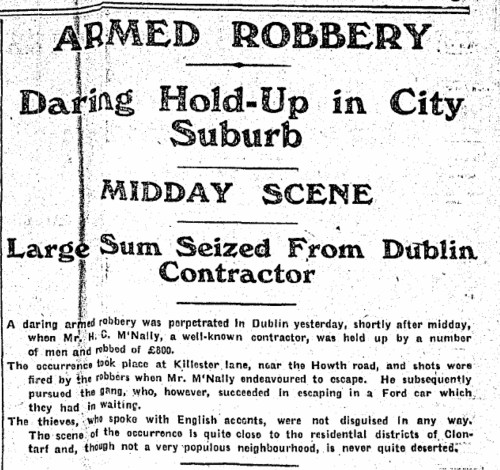
On 10 September 1921, the same group robbed Hugh Charles McNally of £768 on the Howth Road in Killester, Dublin. The Sunday Independent (11 Sep 1921) described the incident as “one of the most daring and most sensational highway robberies in Dublin of recent years”. As a result, the gang were called “Killester robbers” in the military pension application file of Peter Byrne (24SP8784).

SIN_1921_09_11_5

The Sunday Independent, 11 September 1921

Continue Reading »

skeleton1.jpg

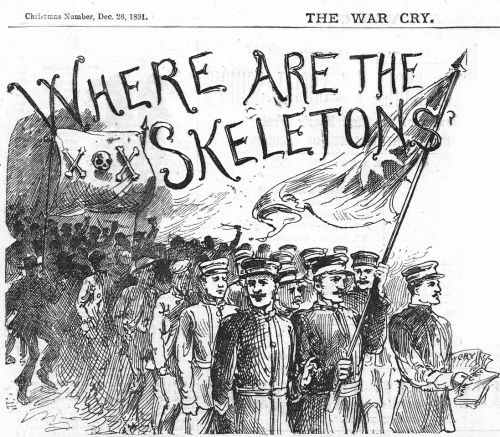
A contemporary illustration depicts a Skeleton Army on the march.

The Salvation Army has been in business since 1865, today boasting more than 1.7 million members internationally. The ‘Sally Ann’, as generations knew it, has long had a presence in Dublin, establishing themselves here in the 1880s, and still active in the city today. A rather curious part of the history of the Salvation Army concerns its opponents. People who were hostile towards its campaign to ‘clean up the streets’ so to speak – in particular organised mobs who confronted the Salvation Army as they went about their work – became known on the neighbouring island as The Skeleton Army. Carrying banners, beating drums and even wearing mock uniforms, the Skeleton Army  are a curious social history phenomenon, no doubt often encouraged in their work by publicans.  While the term Skeleton Army was not used here to describe opponents of the Salvation Army, the hostility was bad enough in Dublin that the Salvation Army newspaper warned their readers how “the sight of a woman wearing an Army bonnet in the streets” had the same effect in Dublin as “a red rag to an infuriated bull.” When Mrs. Booth, wife of the leader of the Salvation Army, attempted to speak in Dublin in 1882 at a meeting in the Christian Union Buildings, her meeting had to be postponed due to what newspapers termed “riotous proceedings.”

A Protestant charitable body, the Salvation Army was born in London’s East End. It modelled itself on the army in terms of structure, and had its own flags, symbols, uniforms and marching songs. The Salvation Army went right into the slums of Britain, and into what they termed ‘Hostile Areas’.  In Dublin they encountered opposition from the beginning as they were viewed very much as outsiders, in England the form of opposition was sometimes surprising.

The Salvation Army’s rallying cry centered around the Three S’s – soup, soap and salvation. Its opponents raised their own satirical rallying cry in the form of the Three B’s – beef, beer and bacca! The phenomenon of the  Skeleton Army was first noted in England in 1881, when banners with skulls and crossbones on them began appearing at rowdy anti-Salvation Army events. The way they are described in the contemporary press suggests there was real fear, take this from a Bethal Green newspaper:

A genuine rabble of ‘roughs’ pure and unadulterated has been infesting the district for several weeks past. These vagabonds  style themselves the ‘Skeleton Army’…. The ‘skeletons’ have their collectors and their collecting sheets and one of them was thrust into my hands… it contained a number shopkeepers’ names… I found that publicans, beer sellers and butchers are subscribing to this imposture… the collector told me that the object of the Skeleton Army was to put down the Salvationists by following them about everywhere, by beating a drum and burlesquing their songs, to render the conduct of their processions and services impossible.

 The Skeleton Army adopted some ingenious tactics – once, they placed red pepper under the wings of pigeons who were released into a Salvation Army hall during a meeting in northern England. Imagine the sight of terrified birds fluttering about, raining red pepper down on the gathered Salvationists, running from the hall only to be confronted outside by a waiting mob.

On one occasion in Worthing, about 4,000 so-called Skeleton Army showed up to pelt the local Salvation Army hall, and then attacked the towns police station was one of their ranks was imprisoned. In Chester, the violence was so bad that one day became known  as ‘Black Sunday’. Over the course of 1882, there were at least 650 assaults on Salvationists on the street, and more than 55 buildings were damaged. Where do the Irish fit into all of this? It’s probably fair to presume that some of those attacking the Salvationists in England may have had little love for Irish immigrants in Britain either. Yet on the other side of things, it does seem that Irish Catholic migrants got in on the act of attacking the Salvationists too,  perhaps fearful of attempts to convert Irish districts to Protestantism. In Boughton, one newspaper wrote following violence there that “the attacks of the Irish Papists of Boughton on the unoffending Salvationists will be handed down as another proof of the development which the human mind is capable of under the influence of Popish learning.”

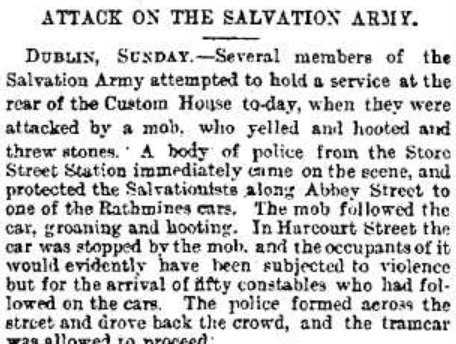
In Dublin, the Salvation Army attempted public rallies at the Custom House, a long established location for public speakers, but encountered real opposition. In 1887, it was reported that a mob followed the Salvation Army after one such rally as far as Harcourt Street, where “their car was stopped by the mob and the occupants of it would eventually have been subjected to violence but for the arrival of fifty constables who had followed on the cars.”

salvationarmy

Belfast Newsletter report on violence towards Salvation Army in Dublin, October 1887.

This all leaves the very important question – who was making all of this happen? Thousands of people don’t just descend on a scene with banners, drums and uniforms – somebody puts them there. Evidence points towards brewers, publicans and even brothel keepers, all of whom had plenty to lose. One publican in Surrey was revealed to have donated a thousand pounds to the cause of the Skeleton Army, which was a most considerable sum of money in the 1880s.

To some, this all began as a bit of a laugh, and perhaps many who involved themselves in early riots had no real motivation beyond liking the thrill of violence. Things took very sinister turns, and tactics were becoming more and more unsavory and downright vile. Salvationists, including women and children, drenched in the contents of chamber pots. At Guildford, a female Salvationist was fatally injured by a mob. Drunken seamen on the Thames fired ships rockets, essentially flare guns, in the direction of a Salvationist gathering. Rotten vegetables were one thing to have rain down on top of you, burning coals and dead rats were something else entirely.

Curiously, there is evidence of some people making the leap from one to the other. Charles Jeffries from Shadwell had been heavily involved in the Skeleton Army in London, physically attacking Salvationists on more than one occasion and a much feared ‘street fighting man’. He was moved to join the Salvationists after showing up to wreck one of their meetings, later remembering that his old pals in the Skeletons didn’t take well to this and enjoyed attacking him:  “In the Open-Airs my old mates gave me many a blow and kick – but I stuck fast. At times they would follow me home singing, ‘Jeffries will help to roll the old chariot along’ – and, thank God, I am doing it.” He went on to serve the cause in Australia and other places, with the passion of the convert.

In 1961, Tony Richardson’s magnificent big screen adaptation of Shelagh Delaney’s A Taste of Honey (see my recent Irish Times piece on the play here) made a star out of Rita Tushingham. It also demonstrated that there was a public hunger for films which dealt with real life issues, far removed from glitz and glamour escapism. It was a time for Angry Young Men, or Angry Young Women in Delaney’s case.

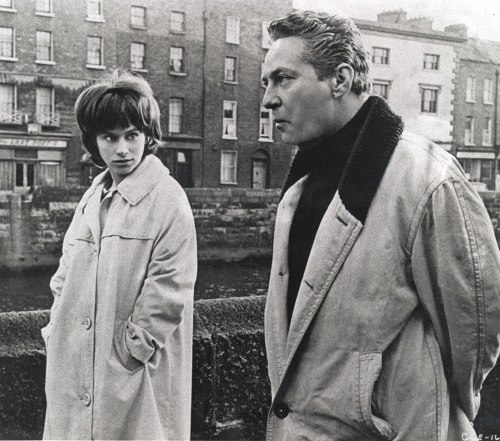
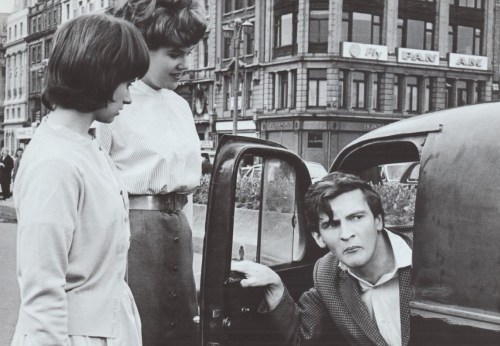
Tushingham scooped up a number of high profile awards in its aftermath, including the Cannes award for Best Actress and Most Promising Newcomer at the BAFTA’s. Three years after Honey, she played the leading role in Richardson’s Girl With Green Eyes, an adaptation of Edna O’Brien’s novel The Lonely Girl. Just as Salford’s industrial built landscape became a character in Honey, 1960s Dublin was crucially important to Girl with Green Eyes, the story of a young rural woman moving to Dublin and finding love with a sophisticated older man. Looking at it today, it is an important piece of Dublin archive footage and social history, capturing since departed institutions like the much loved Greene’s Bookshop on Clare Street.

Edna O’Brien had burst into Irish consciousness with The Country Girls in 1960, a book which dared to talk about sexuality and which instantly attracted the unwanted attention of the censor. In her memoir, O’Brien recalls the difficulty the response to the book created even in her own family, as “in her letters my mother spoke of the shock, the hurt and the disgust that neighbours felt. I had sent her a copy, which she did not mention as having received, and one day, after her death, I would it in a bolster case with offending words daubed out with black ink.” The publication of the book infuriated Archbishop John Charles McQuaid, who was moved to discuss its content with Minister for Justice Charles Haughey, writing that “like so many decent Catholic men with growing families, he was just beaten by the outlook and descriptions.”

Such opposition to her work only served to enhance O’Brien’s appeal to young readers, and having taken the familiar path of an Irish writer into exile, O’Brien achieved international renown as a writer in the 1960s. Given that Richardson had grappled with themes with homosexuality and single parenthood in Delaney’s Honey, Girl with Green Eyes likely appealed in part because of its taboo nature.

The-Girl-with-the-Green-Eye

Walking along the Liffey in Girl With Green Eyes.

Among other things, the film captures disappeared Dublin landmarks like the Four Provinces Ballroom and Greene’s, both shown in the below clip.  Tushingham was a mere 21 at the time of the release of the film, with Life magazine proclaiming that she was “a remarkable young actress, visible through nearly every inch of this film. She cannot be called pretty by a long stretch: her nose is long and thin, her mouth a wide slash,and her hair is a Beatles mop. It is her large, lustrous eyes that have it.”

https://www.youtube.com/watch?v=vA_sNe4WlX4

From a deeply Catholic background, Tushingham’s character, Kate Brady, finds it difficult to embrace any kind of sexual activity, eventually departing Dublin for London, a familiar path O’Brien had taken for different reasons.

The-Girl-with-the-Green-Eye

O’Connell Bridge

Girl with Green Eyes is not a perfect film, and I find it difficult to disagree with Mel Healy’s view that ” It has some awful central casting, forgettable music and truly terrible attempts at Irish accents by several of the English actors.”

Since 1912, when Herbert Heymour Pembrey established the business, the Greene’s bookshop on Clare Street was a much-loved institution, which The Irish Times rightly noted not long before its closure had “a past, an atmosphere and a story to tell”, while one Dublin travel guide beautifully described it as “a dusty wonderland for bibliophiles.” Frequented by George Russell, Jack B. Yeats, Paddy Kavanagh and others, it had the feeling of a Shakespeare & Company or other continental bookshop about it, with books for sale outside in all seasons and endless shelves inside. Just as Joseph Strick’s 1967 masterpiece Ulysses did us all a favour by capturing the interior of the then already doomed Irish House pub on Winetavern Street, Richardson’s film captures Greene’s forever.

To the annoyance of some, Edna O’Brien never lost her voice or influence in Irish life, and became a fearless opponent of censorship, speaking at a packed meeting in Dublin’s Gate Theatre in 1966 which proclaimed that “the system of censorship branded authors as pornographers, obscene and indecent.” Her work had a crucial impact in breaking taboos down and highlighting the normality of sex and sexual attraction, in a country that often scoffed at such things. Just as he had done with Shelagh Delaney’s work, Richardson managed to use the local environment beautifully, and while it is old classic Dublin that shines brightest on screen (in particular her Georgian squares and her river), it is the changing face of Irish society and sexuality that is most important here.

Dicemanherald.png

Evening Herald, 5 September 1991.

Anyone of a certain vintage will recall Thom McGinty, the King and Queen – depending on his mood – of Grafton Street, who brought colour to the very grey 1970s and 80s with his street theatrics and costumes. What is important about the story of Thom McGinty, who left us on 20 February 1995, was not only the manner in which he lived, but the manner in which he died. As a publicly recognised figure living with AIDS, he did much to challenge the stigma and preconceptions around those living with the disease, and his appearance on The Late Late Show remains one of the most groundbreaking interviews in Irish television history.

McGinty became as synonymous with the streets of Dublin as Bang Bang or Lord Mayor Alfie Byrne, but he was not a Dubliner. Born in Scotland in 1952, he arrived in Dublin from Glasgow in 1976, having been involved in theatre and street performance there. He himself later remembered that “I went to university to become a chartered accountant. I don’t know why. Anyway, I didn’t last very long there. I collected the grant for the two years and I got very involved in theatre.”  He took a job with the National College of Art and Design, as a nude model of all things, but quickly found a better calling, donning make up and costume and taking up a sort of residence at the Dandelion market, at the site of what is today the Stephen’s Green Shopping Centre. Thom became the ‘Dandelion Clown’, standing mute and motionless in the attire of a joker, and in his own words he was “a colourful pseudo-beggar.”

He retained a great grá for theatre in its more traditional form,  even launching a theatre company in the west of Ireland and taking to the stage in Dublin in a number of high profile productions, but street performances became his forte. The name Diceman stuck, and came from The Diceman games shop, which was located for some years on Grafton Street before moving to South Anne Street. They were just one of many Dublin businesses who hired him to promote their goods in whatever fancy dress took his fancy.

The legality of it all was up in the air, and sometimes he caused quite the scene, leading Gardaí to move him on. He developed a great routine of moving on at the pace of a snail, if not slower, which annoyed more than one on duty Garda but which crowds found hilarious. In his own words.  “I used to be totally still, but the guards said I was causing an obstruction and I thought I was totally fecked. So then the walk was developed to retain the statuesqueness and at the same time still be on the move. The walk is held up in Zen Buddist circles as the classic example of Zen walking.”

Often, Grafton Street was so captivated by him that things just stopped. While today the street is often occupied by buskers playing the same contemporary songs, this was wonderful because of its unpredictability. The great poet Brendan Kennelly nailed it:

Time and again, bang in the middle of Grafton Street, I have been happy to join other children gazing on this figure, either utterly immobile or moving with a slowness so perfectly measured as to be almost imperceptible. Thom McGinty’s magic has to do with his ability to mesmerise his audience, to lure them out of their busy city selves and to take them away into that land of perfect stillness where marvelous dreams are as normal as Bewley’s sticky buns.”

Costumes included the Mona Lisa, contemporary political leaders, Dracula, a lightbulb, Captain America, contraceptives…. one could go on and on. His manager, Aidan Murphy, often had the job of keeping the children of Dublin at arms length, who were eager to have their own fun. Nothing was too out there. Or was it? In September 1991, the Diceman was brought before the courts, charged with wearing an “indecent costume”. The offending piece was a Rocky Horror Picture Show costume. God help the Guard who had to stand up in court and proclaim that the Diceman’s “buttocks were clearly visible and the only thing covering his genitals was a G String.” The Diceman described himself in court as ‘Living Art’, showed up one day wearing a purple jump suit, and pledged not to wear the offending outfit again – the judge decided to use the Probation Act. The newspapers had their fun, with the Irish Press headline of the day saying “Diceman’s Fishnets an Offence to Decency.” The actor Tom Hickey came to the Diceman’s defence in court, saying you’d see more underwear in the Dublin City Marathon.

Dicemanherald.png

Irish Independent, 5 September 1991.

His final performance, if you will, was his own departure. His friends took turns to carry his coffin down Grafton Street in February 1995 when Thom lost his courageous battle. The Irish Independent reported:

The bustling street that served as his open air theatre for a decade came to a complete standstill as the coffin of Thom McGinty glided slowly down the crowded streets on the shoulder of his friends. When alive, he intrigued and amazed with his ability to stand utterly still, or to walk in a theatrical slow motion. Now it was his grieving public that stood so still as his cortege moved past in sad slow-motion. The silence was broken twice the street erupted with spontaneous applause. Five storey’s above the street, construction workers removed their yellow helmets as they watched the scene below.

 It sounds funny to say about someone who spent their life dressing up as so many different characters – but the Diceman was always himself.

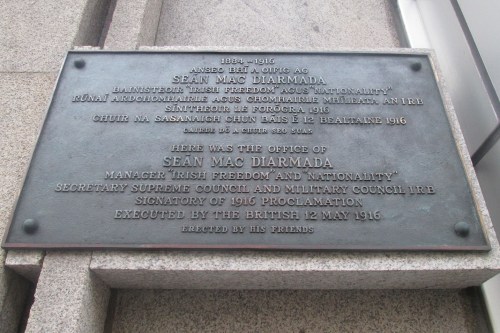
FenianPlaque

12 D’Olier Street.

Easy to miss, a plaque at number 12 on D’Olier Street marks the location of the offices of Irish Freedom, the newspaper of the Irish Republican Brotherhood. Founded in 1910, the newspaper was the public expression of a secret revolutionary underground movement. Bulmer Hobson,once described by British intelligence as the most dangerous man in Ireland, recalled that “the paper was the property of the IRB and was financed by a monthly subscription of one shilling collected from each member in each IRB Circle. It was printed by Patrick Mahon, Yarnhall Street.”

Founded in Dublin and New York City on Saint Patrick’s Day 1858, the oath-bound movement popularly known as the Fenians had considerable influence in Irish American life in particular. James Stephens, a founding Fenian and the self-described ‘Provisional Dictator’ of the body, built contacts with radical movements across the continent and beyond, even proclaiming that “were England a republic battling for human freedom on the one hand, and Ireland leagued with despots on the other, I should, unhesitatingly, take up arms against my native land.”

The abortive Fenian uprising in 1867 had an important influence on many of the 1916 leaders, who stood in the same tradition. The 1867 proclamation, sent to The Times in London, was, in many ways, a more radical document than that read out at the GPO in 1916, with a very definite separation of church and state and its rallying cry  that “Republicans of the entire world, our cause is your cause. Our enemy is your enemy. Let your hearts be with us. As for you, workmen of England, it is not only your hearts we wish, but your arms. Remember the starvation and degradation brought to your firesides by the oppression of labour.”

A disastrous bombing campaign of London followed in the 1880s, primarily brought about by the determination of Jeremiah O’Donovan Rossa, an exiled Fenian leader based in the United States. Thomas J. Clarke was imprisoned for his participation in the so-called dynamite campaign. By the early twentieth century, the IRB movement was in decline. By 1910, it was estimated to have as few as a thousand members in its ranks. Dan Breen dismissively recalled a generation who had become great fellows for talking and drinking and doing very little after that’. However, a younger generation of political radicals such as Bulmer Hobson, Dennis McCullough and Seán Mac Diarmada were crucial to the reorganisation of the secret society.

At D’Olier Street, the IRB newspaper Irish Freedom was managed by Mac Diarmada, literally a stones throw from the watchful eye of the DMP intelligence police headquarters. The paper was highly seditious, maintaining that “our country is run by a set of insolent officials, to whom we are nothing but a lot of people to be exploited and kept in subjection. The executive power rests on armed force that preys on the people with batons if they have the gall to say they do not like it.”

Much like James Connolly’s newspaper The Workers’ Republic, Irish Freedom believed the lessons of the past were to be applied in future, studying previous insurrections and their tactical failures and successes. The newspaper reflected Mac Diarmada’s deeply held belief that when world war came, it was the duty of Irish nationalists to seize upon it. The very first issue of the paper maintained that “the history of the world proves that there is but one road to freedom and that is the red road of war.”

With the passing of time,the newspaper became more and more radical in tone,and with the outbreak of the First World War and its campaigning against Irish recruitment into the British army, its days were numbered. Unsurprisingly, the newspaper was suppressed in the winter of  1914.


Revolutionary Dublin 1912-1923 : A Walking Guide by Donal Fallon and John Gibney is available now from Collins Press.


In eighteenth century Dublin, much like more recent times, ‘street characters’  of sorts emerged among the populace. Sometimes these people were well-known for their political escapades, and sometimes their talents.

One of the more curious eighteenth century characters was a man colourfully known as ‘Prince Hackball’, real name Patrick Corrigan. A beggar in a city with little tolerance for them, Hackball became known as ‘the king of the beggars’, arriving in spectacular style and often followed by crowds. As Karen Sonnelitter notes in her history of charity in eighteenth century Dublin, “despite being paralysed, he managed for decades to elude the authorities, who were seeking to place him in either the Workhouse of the House of Industry.” He was a recognisable enough figure in Dublin to warrant inclusion in the celebrated portrait-painter Hugh Douglas Hamilton’s work The Cries of Dublin, published in the 1760s and showing familiar Dublin scenes and faces.

Corrigan traveled through the city in a cart, which some sources suggest was occasionally drawn by dogs. With the opening of Dublin’s House of Industry, figures like Hackball were driven from the streets and into the institution, with one contemporary source noting that the House of Industry had its own patrol who sought out beggars on the streets:

The cart is sent into the city, and the guards which accompany it are armed with firelocks and bayonets; the poor people who are begging in the streets, flee, the guards pursuing ; the active get off, the blind and infirm are taken and put into the cart.

Hackball successfully evaded the authorities, and Sonnelitter notes that “in 1744 one beadle actually managed to capture Hackball and attempted to take him to the House of Industry, but was attacked by a riotous mob…” An account of the incident appeared in the contemporary press, and it was noted that “the sum of five pounds be paid to any person who shall discover and prosecute the conviction of any person concerned of the rescue of the said Hackball.”

hackball.png

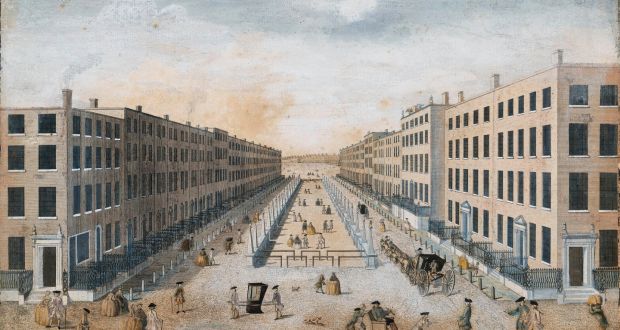
The wonderful Drawing Dublin exhibition in the National Gallery at the moment includes a work showing Sackville Street and Gardiner’s Mall, Dublin (c.1750), attributed to Joseph Tudor (1695-1759). Intrugienly, the display panel for the piece wonders if the figure shown in the bottom of the work being wheeled along is none other than Hackball himself:

Hackballperhaps

As Niall Ó Ciosáin has noted, “Hackball was also used for satirical purposes in contemporary political pamphlet literature, being imagined as welcoming new economic policies on the grounds that they would increase his following, that is the number of beggars.”

The idea of Hackball (pulled along by mules, dogs or boys depending on the source one chooses to believe) evading the authorities for decades in eighteenth century Dublin is a somewhat amusing one, but there is little humour in the attitude towards beggars like him. When the Mendicity Institute opened its doors in 1818, it was praised by one religious leader in the city on the basis that “it has purified the highways of our Metropolis from a noisome crowd of importunate and vicious supplicants, and we can now pursue our accustomed occupations without disturbing assaults on our feelings or our purses.”

126020_ORIG

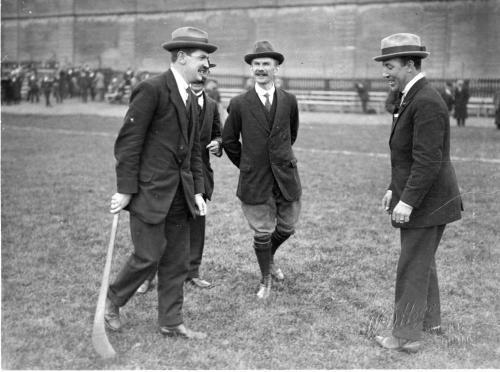
Michael Collins, Luke O’Toole and Harry Boland, 1921. O’Toole was central to the success of the Gaelic Sunday events of 1918. (Image Credit: GAA)

1918 was a defining year in the Irish revolution, witnessing the first real acts of mass opposition to the British presence in Ireland from the civilian population. The year is primarily remembered for the General Election, which saw Sinn Féin essentially dismantle the Irish Parliamentary Party. Yet events like the general strike against conscription in April (described by The Irish Times as “the day on which Irish Labour realised its strength), Lá na mBan in June (when women pledged to oppose conscription in their tens of thousands) and Gaelic Sunday in August also demonstrated the manner in which Dublin Castle was slowly losing its grip over the Irish population.

In the summer of 1918, a Dublin Castle directive made it clear that there were to be no football, hurling or camogie matches played across the island of Ireland without a permit being obtained from the local Royal Irish Constabulary. While organisations like Sinn Féin, the Irish Volunteers and even the Gaelic League had to content with challenges to their existence via means of outlawing them, it was believed that forcing GAA clubs to seek permits to play was the means by which that organisation was best confronted.

Faced with the ban, GAA authorities writing from Croke Park on 22 July made it very clear what the response was to be:

….under no circumstances must a permit by applied for either by Provisional councils, Co.Committees, Leagues, Tournament Committees, Clubs, or by a third party such as Secretaries of Grounds, etc. Any individual or Club infringing the foregoing order becomes automatically and indefinitely suspended.

It was made clear to all clubs that the collective response of the GAA was to “to arrange for Sunday, August 4th at 3pm a series of matches throughout your County, which are to be localised as much as possible.” The idea of Gaelic Sunday was born. Central to the planned opposition was Luke O’Toole, a firebrand nationalist within the organisation who was central to the development of the game in the revolutionary period, and who would later condemn “the Seonín spirit that tried to ape everything English.” Having been interviewed at Dublin Castle by the authorities at length, O’Toole was in no mood for politeness with British forces.

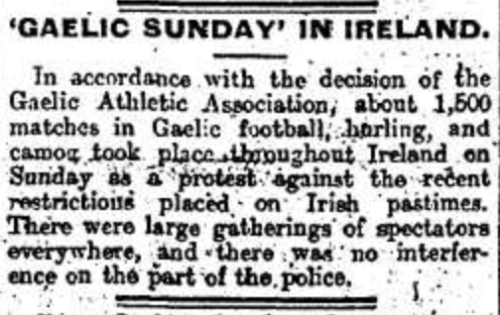
GSnumbers

The figure of 1,500 games appeared in the contemporary press.

In his statement to the Bureau of Military History, the republican and Easter Week veteran John Shouldice, who was then serving as Secretary of the GAA in Leinster,  remembered that the logic of the day was that “the Crown Forces could not be everywhere at the same moment….the result was that more hurling and football matches were brought off in the country on Gaelic Sunday than ever took place on the one day in the history of the GAA.”

With something in the region of 1,500 games beginning at the same time, the authorities were powerless to stop what was essentially now a political spectacle. Observing the events, the Freeman’s Journal was moved to proclaim that “there was no interference with the matches, which were carried out with perfect order in the presence of large numbers of spectators….the progress of the play was everywhere followed with enthusiasm, and the occasion provided a unique display of the popularity of the Gaelic games.”

All eyes were on the capital, the likely location of any showdown in front of the watching media. The Freeman’s Journal noted that games were played at “Ringsend, Clondalkin, Sandymount, Baldoyle, Fox and Geese, Crumlin, Balheary, St. Margaret’s, CLonsilla, Bloackrock, Cornelscourt, Terenure and Church Road”. There was a showdown in the city when “a fife and drum band which played through the streets of Dublin when returning from a football match was stopped by the police in Townsend Street. A crowd of about three or four hundred persons followed the band, which was proceeding to its rooms on Sir John Rogerson’s Quay. The bandsman having been halted for some time resumed their march.” It was another act of defiance on a day full of such small victories.

In what should have been one symbolic victory for the authorities, access to Croke Park was restricted for much of the day. This produced its own moment of defiance however, as a game of camogie was played on Jones’s Road. The Camogie Central Council called the ban “a petty piece of the absolute tyranny exercised over the whole country right now” and enthusiastically encouraged its members to partake in Gaelic Sunday.  The women played under the watchful eyes of Dublin Metropolitan Policemen, but more importantly, an enthusiastic crowd of supporters.

Gaelic Sunday deserves its place in the Decade of Centenaries, and the centenary of this act of mass defiance of British occupation will hopefully be commemorated in the weeks ahead. It was undoubtedly the day on which the GAA firmly nailed its colours to the mast.  In the words of historian William Murphy, “the occasion on which the Association acted with the greatest vigour and unity to oppose the British state occurred when that state threatened the very business of the Association – its games.”


In terms of the international stage, Ireland was still finding her feet politically either side of World War 2. Successive Fianna Fáil governments under the stewardship of War of Independence and Civil War veteran Éamon de Valera sought to define a New Ireland, marked by the independence he had fought for.

To assert this independence, he led the country through a period of economic isolationism, and to define her sovereignty denying steadfast at times to engage in acts of support for her neighbours- refusing to deal with the requests of the Allies right down to refusing to repatriate German spies and prisoners of war in her custody. This denial of co-operation should not be seen as a singularly pro-Axis act, rather the naivety of a new nation under a conservative and stubborn leader, but also as Michael Kennedy suggests in his document “A Deed Agreeable to God,” an Ireland sceptical of the British justice which she so well remembered.

The refusal to ‘play ball’ with Allied nations as well as spurious rumours in the press regarding warm welcomes being meted out to German U-Boats in Irish ports and an island swarming with German spies formenting anti- British sentiment did little to dispute the widely held notion that the nation was pro-Axis. The flagrant anti-Semitism and vocal support given to Hitler by Charles Bewley (the Irish minister in Berlin until 1939,) did nothing to help her image. Nor did the nail in the coffin, that being De Valera’s visit, accompanied by the Secretary of External Affairs, Joseph Walshe to Dr. Hempel, the German Minister to Ireland to express his condolences on the suicide of Hitler. Walshe had pleaded with De Valera not to make the visit, and the sensationalist coverage in the press all over the world in the days following proved him correct, along with more bogus allegations amongst others, that the Nazi flag had been flown at half-mast outside various Irish ministries.

In truth, Ireland’s ‘friendly neutrality’ towards the war effort meant freedom for thousands of Irishmen enlist for the war effort, large scale press censorship, shared intelligence between Ireland’s G2 and the British MI5, suppression of the IRA during the war years and although there’s a massive counter argument to be made, there is many a suggestion that Ireland neutral was far more beneficial than Ireland belligerent. And of course the War did come to Ireland, with Nazi bombs raining upon the North Strand resulting in the deaths of 34 Dubliners.

Similarly, the plentiful accusations that Ireland was a bespoke but well-worn ratline for Nazi war criminals whilst ringing true on occasion was, in truth light on merit. Even the Simon Wisenthal Institute argued that no ‘big fish’ had made it to Ireland. The allegations that those who did pass through and the handful that settled here had the backing of the Irish State is also arguable, given the recent Dept. of Justice and Dept. of External Affairs papers examined by Kennedy in his aforementioned work.

Despite all this, it is undeniable that there were some figures that made it to Ireland- from Breton and Flemish exiles, to a mad Scottish separatist with the amazing name of Ronald MacDonald Douglas. Two of the most high profile names to make it though were Hitler’s one time bodyguard, Otto Scorzeny and the inspiration for this piece, Andrija Artuković.

pavelicihitler1-635x300

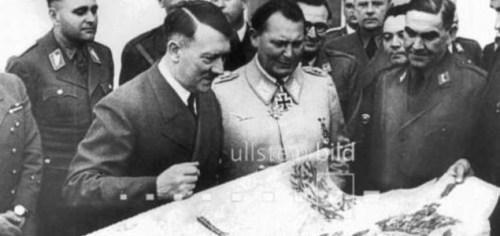
Adolf Hitler, Hermann Goering, Mladen Lorkovic and Andrija Artuković looking over Ante Pavelić’s shoulder

Artuković, in a nutshell was known as the ‘Yugoslav Himmler’ and ‘the Butcher of the Balkans’. As Minister for the Interior of the Nazi puppet ‘Independent State of Croatia’ he oversaw the construction of a string of Ustaše death camps and is claimed by sources to be responsible for the deaths of anywhere between a quarter and three quarters of a million Jews, Roma, Serbs and anti- Ustaše Croats.

Continue Reading »

The introduction of the Eighth Amendment into the Irish Constitution in 1983 “was a remarkable feat by a small group of Catholic right-wing conservatives.” After a bitter referendum battle, the anti-abortion legislation was passed 66.9% to 33.1% in September 1983.

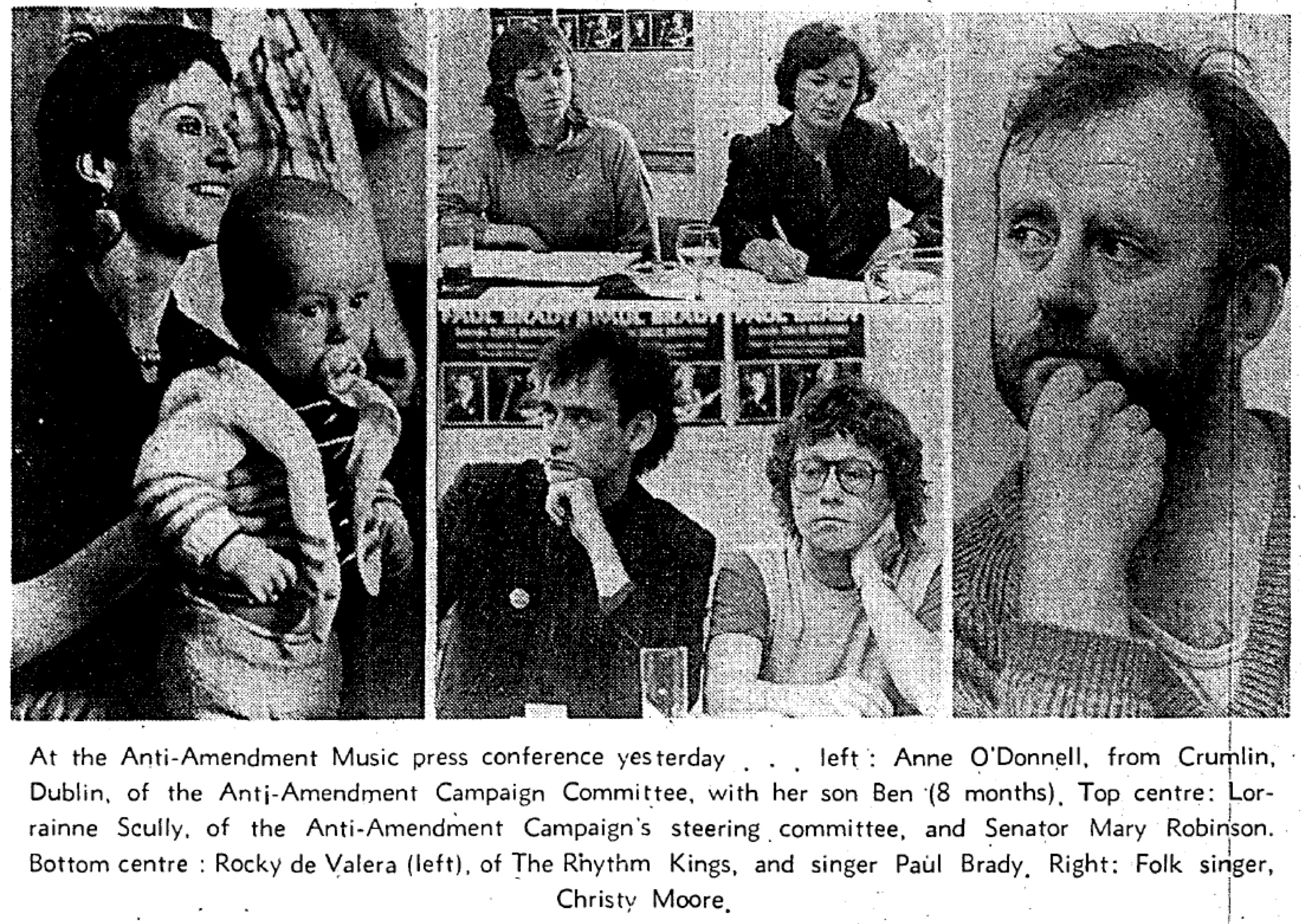
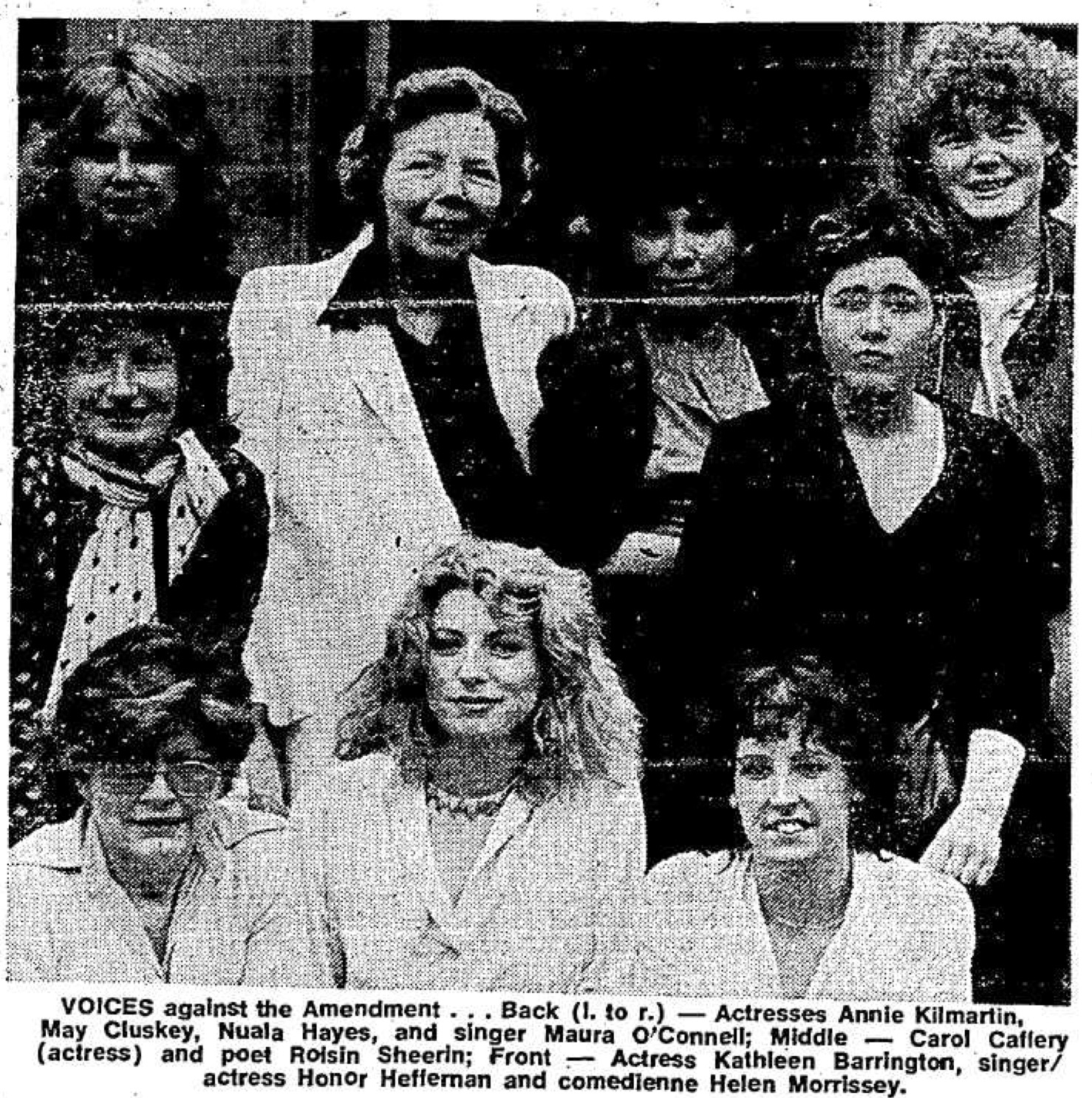
The leading ‘Anti-Amendment Campaign’ was supported by the ‘Anti-Amendment Music’ sub-group which included more than sixty of the country’s leading musicians, singers, actors, comedians, journalists, DJs and poets. It is worth remembering their names and the sacrifices that they took back in a society which is very different to ours in 2018.

The Irish Press, 8 Sep 1982.

Some of the big names who backed the cause were Paul Brady, Moya Brennan (Clannad), Adam Clayton (U2), Paul Cleary (The Blades), Bob Geldof and Christy Moore.

Others who nailed their flags to the mast included:

Bands: Auto Da Fe, Back to Back, Dr Strangely Strange, High Heeled Sneakers, The Lee Valley String Band, Les Enfants, Max, Nine Out Of Ten Cats, Scullion, The Shade, Stepaside, Stockton’s Wing, Tokyo Olympics

Singers/Musicians: Sonny Condell, Jimmy Crowley, Keith Donald (Moving Hearts), Mick Hanly, Honor Heffernan, Donal Lunny, Ferdia MacAnna (The Rhythm Kings), Barry Moore (aka Luka Bloom), Maura O’Connell (ex. De Danann), Red Peters (1946-2012), Noel Shine, John Spillane, Jil Turner (Eugene), Freddie White, Gay Woods

Actresses: Kathleen Barrington, Carol Caffrey, May Cluskey (1927-91), Ingrid CraigieNuala Hayes, Annie Kilmartin

DJs/Presenters: BP Fallon, Dave Fanning, Carolyn Fisher

Comedians: Billy Magra, Dermot Morgan (1952-98), Helen Morrissey, Roisin Sheeran

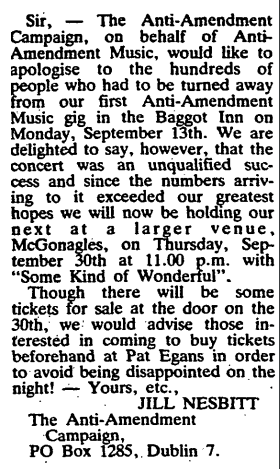
1982 saw a host of fundraising gigs in some of the capital city’s best venues.

13 September: The Blades, Paul Brady and DJ Dave Fanning at The Baggot Inn

The Irish Times, 22 Sep 1982

30 September: Some Kind of Wonderful, BP Fallon and Max at McGonagles

9 October: The Rhythm Kings and High Heeled Sneakers at The Baggot Inn

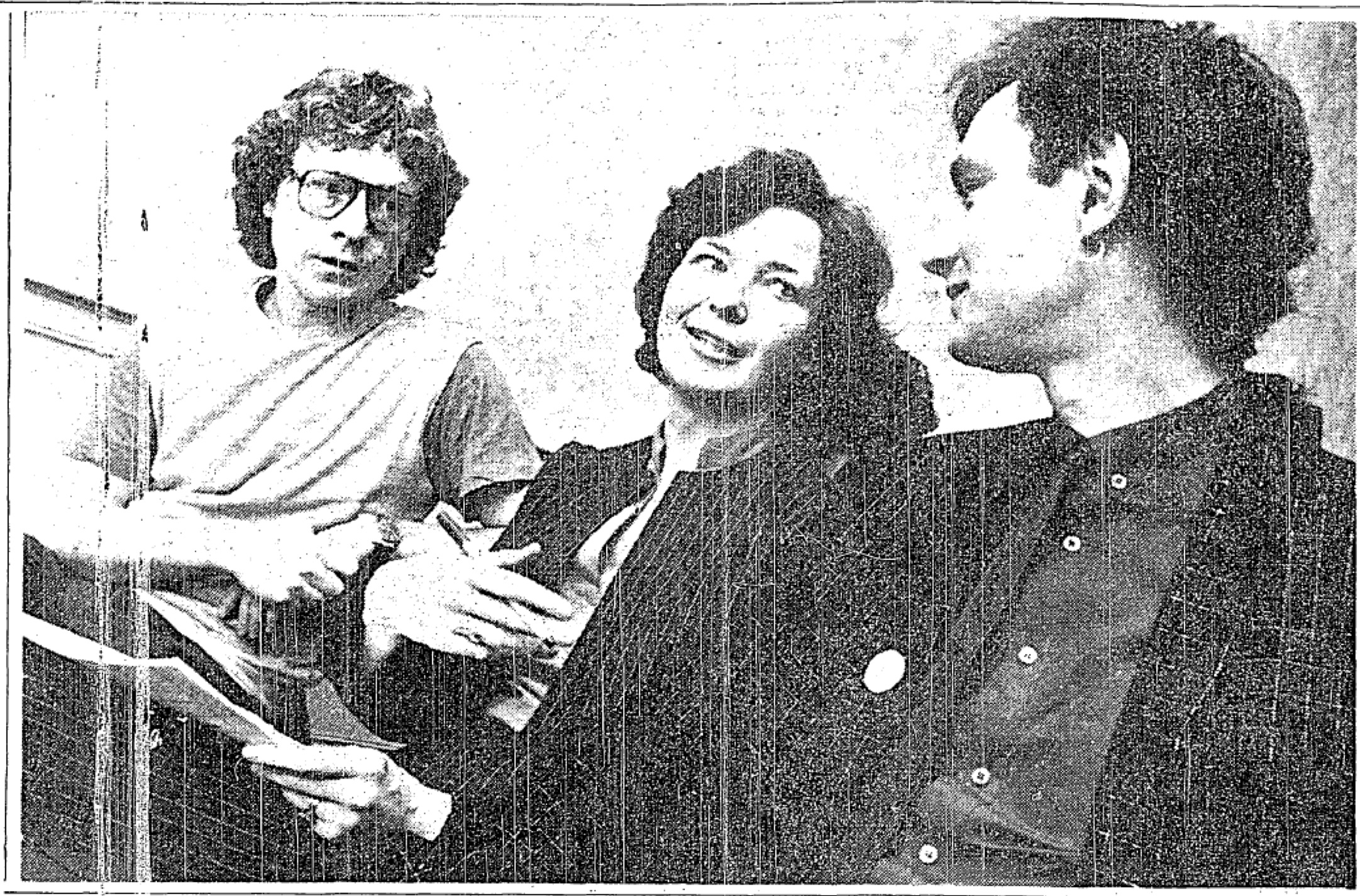
Paul Brady, Mary Robinson and Ferdia McAnna. The Irish Independent, 8 Se 1982.

14 October: Comedy gig with compere Billy Magra at The Sportman’s Inn, Mount Merrion

Anti-Amendment Music – Rock against the Referendum (1982). Uploaded by Student History Ireland Project.

Things picked up again in 1983:

21 April: Unknown acts at Owen O’Callaghan’s (Mark’s Bar), Crowe Street, Dundalk, County Louth

July: The small concert hall in RDS hosted singers Honor Heffernan, Moya Brennan (Clannad), Maura O’Connell (ex. De Danann), comedian Helen Morrissey, actress May Cluskey who performed from her show ‘Mothers’ and actresses Nuala Hayes and Ingrid Craigie staged the “total 30-hour Oireachtas debate on the amendment in 15 minutes flat”. The MC on the night was RTÉ presenter Carolyn Fisher.

Evening Herald, 05 June 1983.

July: Auto Da Fe with Gay Woods, Barry Moore (aka Luka Bloom) and Scullion at Stephen’s Green.

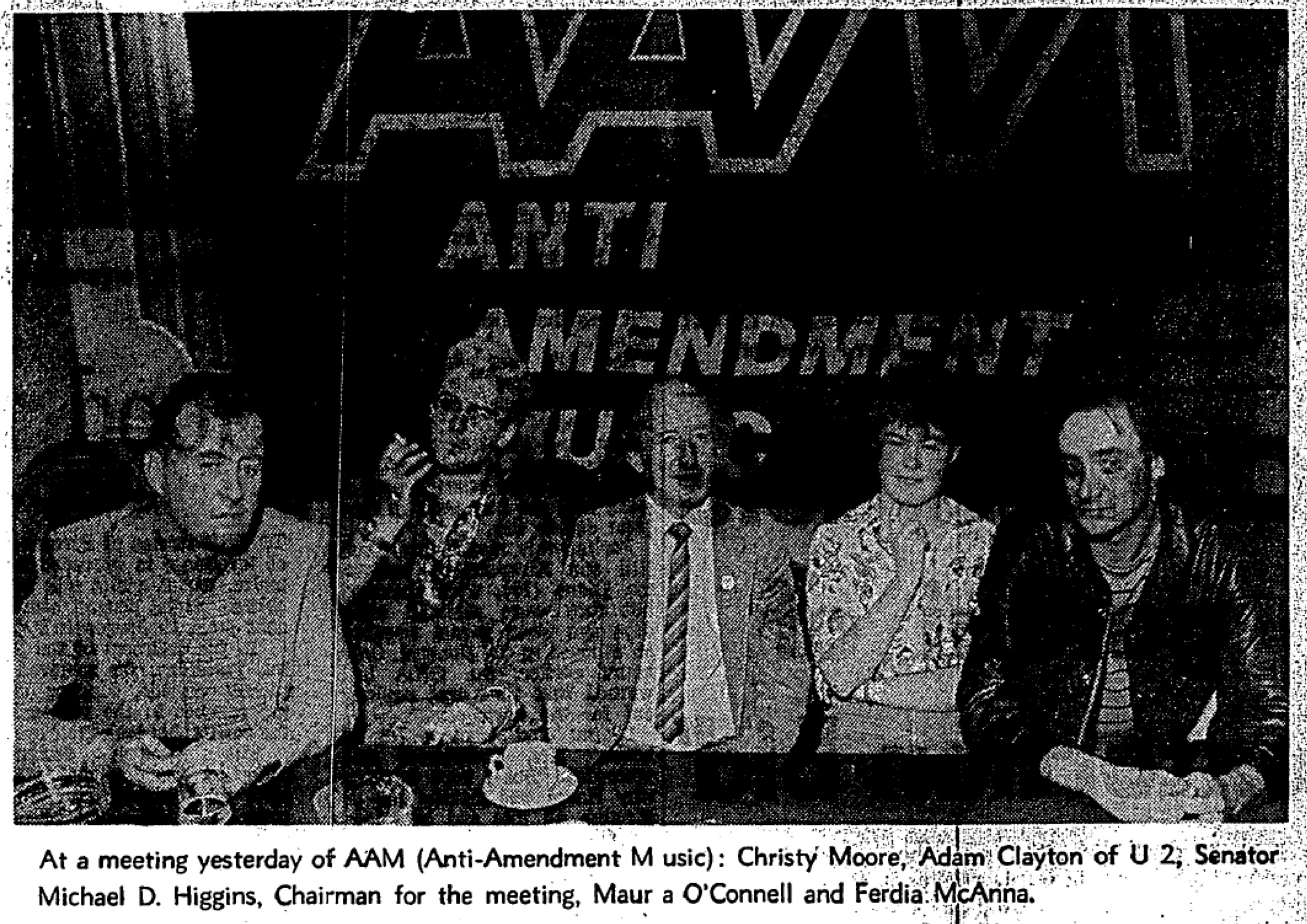
In August 1983, the campaign hosted a press conference with Christy Moore, Keith Donald (Moving Hearts), Paul Cleary (The Blades), Adam Clayton (U2), Ferdia MacAnna (The Rhythm Kings), Jill Turner (Eugene) and Maura O’Connell. It was chaired by Senator Michael D. Higgins. Adam Clayton said: “It is like a witch hunt with people going around saying who is a slut and who isn’t”. Paul Brady told the press that “he agreed with Senator Robinson that there were ‘subterranean rumblings’ to try to take Ireland back to an era which he for one was glad was gone”. Finally Ferdia MacAnna remarked that the amendment would be “as much use as outlawing sex in this country which has been tried before by repressive education”

The Irish Press, 27 Aug 1983.

The last two gigs took place in Dublin and Cork in August 1983.

On 28 August, on the same day that Black Sabbath played Dalymount Park, Paul Cleary, Les Enfants, Donal Lunny, Stepaside, Red Peters, Mick Hanly, Keith Donald (Moving Hearts), Nine Out Of Ten Cats were advertised to play outdoors at Blackrock Park. While in Cork, Jimmy Crowley, The Lee Valley String Band, Noel Shine, John Spillane were listed to play at the Coolquay venue.

If you have any more information or material from the Anti-Amendment Music campaign, please get in touch!

The Military Service (1916-23) Pensions Collection today released files relating to claims lodged by 1,442 individuals (or their dependants). The May 2018 release includes 600 female participants and 82 individuals who died in the period 1919-1921. As a Project Archivist employed on the collection, I was responsible for the processing of about 470 of these individuals.

A full list of the names and addresses and of those released today can be viewed here.

Using the name or reference number, users can then download the original files and read the individual’s service histories here.

For those interested in labour and socialist history, this release contains newly digitised and released files relating to seven members of the Irish Citizen Army. All seven applications were unsuccessful.

1. Annie Collins (?-?) 35 Upper Dorset Street, Dublin. Unsuccessful application. Ref: MSP34REF1139.

” Applicant claimed membership of the Irish Citizen Army from 1913 until 1923. On Easter Sunday 1916, Annie Collins states that she was based in Liberty Hall preparing food and bandages.

On Easter Monday, the applicant claims that she carried several dispatches from St. Stephen’s Green to the General Post Office (GPO). Annie Collins states that she returned home but went to the College of Surgeons on Thursday where she was told by Countess Markievicz to return home once again on account of her young age. Applicant states that she did not sign the 1916 Easter Rising Roll of Honor as she believed an individual had to be active for the full duration of the week.

Attached to the Dublin Brigade, ICA, it is stated that the applicant took part in ICA general activity before and during the War of Independence (January 1919 – July 1921) including; first aid work, drill instructions; attending the funeral of [Joseph] Norton (MD33223) in Swords (1917); a reception for Countess Markievicz at Kingstown (Dún Laoghaire) (1918); the 1918 General Election and attending the funeral of Tadhg Barry (1D373) [1921].

Taking the anti-Treaty side in the Civil War (June 1922 – May 1923), the applicant states that when the Four Courts was attacked, she was mobilised for Barry’s Hotel where she spent one night. Annie Collins claims that she was then sent to the Hammam Hotel which acted as Brigade HQ. On several occasions, the applicant states that she transported arms and ammunition from the Stanley Street workshop to the Hammam Hotel. Further states that she carried arms in advance of a raid of Griffith’s boot store on the corner of Upper Abbey Street and Capel Street. Also claims that she brought a dispatch to Harry Boland (MD909) in Blessington [village] from Cathal Brugha and returned to the Hammam Hotel with a Lewis gun, some rifles and ammunition.”

Hand-written testimony from Annie Collins about her Civil War service. Ref: MSP34REF1024

2. Edward Conroy (1901-1982) 4 Robert Street, Dublin. Unsuccessful application. Ref: MSP34REF1126.

“Applicant claimed membership of the Irish Citizen Army from June 1917 until August 1923.

Attached to the Dublin Brigade, ICA, it is stated that the applicant took part in ICA general activity before and during the War of Independence (January 1919 – July 1921) including; a reception for Countess [Markievicz] at Kingstown (Dún Laoghaire); attending the funeral of Mrs. McDonagh (1917); attending the funeral of [Joseph] Norton (MD33223) in Swords [1917]; the defence of Liberty Hall [Armistice Night 1918]; attending the funeral of [Richard] Coleman (1D15) [1918]; the 1918 General Election; Belfast Boycott work; a fight on Dawson Street [1919]; demonstration in connection with the hunger-strikes (1920) and attending the funeral of Tadg Barry (1D373) [1921].

Taking the anti-Treaty side in the Civil War (June 1922 – May 1923), the applicant states that he took part in engagements with the National Army in the area around the Hammam Hotel, O’Connell Street and Marrowbone Lane. Edward Conroy claims that he was arrested by the Free State (National Army) on 28 October 1922 and interned in Wellington Barracks, Dublin and Hare Park, the Curragh, County Kildare until 21 August 1923.”


3. John Craven (?-?) 193 Donnellan Avenue, Mount Brown, Kilmainham, Dublin 8. Unsuccessful application. Ref: MSP34REF863.

“Applicant claimed membership of the Irish Citizen Army from 1913 until 1923.

Attached to the Dublin Brigade, ICA, it is stated that the applicant took part in ICA general activity during the War of Independence (January 1919 – July 1921) including: drilling and “military operations against the enemy”.

Applicant states that he was arrested on 5 August 1922 by the Free State and imprisoned in Maryborough Gaol (Portlaoise Prison), County Louth and Tintown No 3 Camp, Curragh, County Kildare until release on 23 November 1923.”

4. Stephen Hastings (? – 1935). 11 George’s Quay, Dublin. Unsuccessful application. Ref: MSP34REF1024.

“Applicant claimed membership of the Irish Citizen Army from 1917 until 1923.

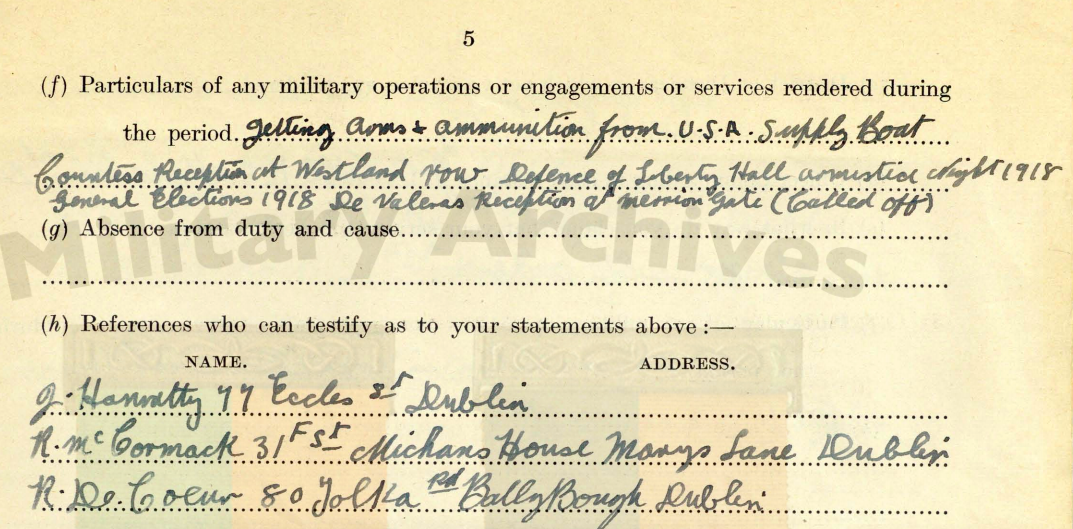
Attached to the Dublin Brigade, ICA, it is stated that the applicant took part in ICA general activity before and during the War of Independence (January 1919 – July 1921) including: removing transport arms and ammunition from an American boat; a reception for Countess [Markievicz]; the defence of Liberty Hall (Armistice Night 1918); the 1918 General Election; attending the funeral of [Joseph] Norton (MD33223) in Swords (1917) and demonstrations in connection with [Mountjoy Jail] hunger-strikes [1920].

Taking the anti-Treaty side in the Civil War (June 1922 – May 1923), Stephen Hastings states that he took part in the defence of Moran’s Hotel, Dublin and the destruction of a bridge in Blanchardstown, Dublin (5 August 1922). Applicant claims that he was arrested by National Forces on 6 August 1922 and imprisoned in Maryborough Gaol (Portlaoise Prison), County Louth and Tintown No 2 Camp, Curragh, County Kildare until October 1923.”

Hand-written account from Stephen Hastings of the 1918 period. Ref: MSP34REF1024

Continue Reading »


flipped.png

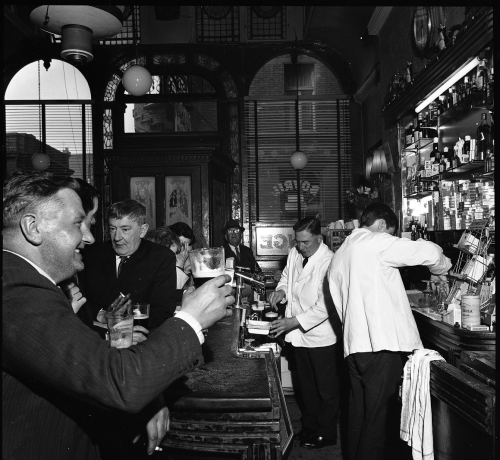
Paddy O’Brien at work in McDaid’s, from Bord Fáilte Archive, Dublin City Council collections.

John Ryan’s memoir Remembering How We Stood may be the most battered book on my bookshelf, which is a remarkable achievement in itself. It has the tea cup stains,  dog-eared pages and the scrawled notes of a truly loved and enjoyed book. It is, in essence, the tale of a man who went to an auction to buy an electric toaster and came back an accidental publican. Ryan was infinitely more than that, and as an artist, publisher, broadcaster and critic he left a fine legacy of work behind. His memoir is packed full of little gems like this:

 A man I knew was taking a stroll down Grafton Street one day when he happened to overhear part of a discussion which three citizens were having outside Mitchell’s Café. The gist of their dialogue was that they were deploring the absence from the Dublin scene of any real ‘characters’. They appeared to be genuinely aggrieved. They were, in fact, Myles na gCopaleen, Seán O’Sullivan and Brendan Behan.

Ryan’s pub, The Bailey, became a central part of the literary scene of Dublin in the second half of the 1950s and into the following decade. Still, there was one public house that was head and shoulders above them all for literary appeal, and that was McDaid’s of Harry Street. In the words of Brendan Behan’s finest biographer, Michael O’Sullivan, it was quite simply “Dublin’s literary Mecca.”

Central to the appeal of the pub was its head barman, Paddy O’Brien. Still fondly remembered in Dublin’s public houses today, O’Brien pulled pints in McDaid’s from 1937 until his departure for the nearby Grogan’s on South William Street, which played no small role in giving the later a literary reputation that continues to this very day. A Dubliner of Meath stock, O’Brien answered an advertisement for a pub job in his early 20s, beginning a career that would span decades.

In the important Kevin C. Kearns oral history Dublin Pub Life and Lore, O’Brien recalled the McDaid’s of the 1930s as a pub that “was nothing at all. It was a dreadful place. Just an ordinary pub with snugs and little partitions and sawdust and spittoons.” To his mind, Davy Byrne’s was then the only true literary public house in the capital. In trying to pinpoint the moment at which McDaid’s began attracting a literary clientele, O’Brien pointed towards the arrival of John Ryan as a regular. In Ryan’s own words, “in those days I published Envoy and people would come into McDaid’s who were seeking me out….There’d be Behan, who was a marvelous stage filler, and Kavanagh and O’Nolan and Donleavy and Tony Cronin. And Liam O’Flaherty was there quite a lot. Quite regularly you’d see five of them together there.”

A young Anthony Cronin, Enniscorthy-born and carving out a name as a poet in literary Dublin, quickly fell for McDaid’s, remembering that “McDaid’s was never merely a literary pub. Its strength was always in the variety of talent, class, caste and estate. The divisions between writer and non-writer, bohemian and artist, informer and revolutionary, male and female, were never rigorously enforced; and nearly everyone, gurriers included, was ready for elevation, to Parnassus, the scaffold or wherever.” Visitors fell for it too; the Irish American hippy Emmett Grogan, so central to the Summer of Love that took San Francisco by storm, recalled in his autobiography (written in third person):

He liked the saloon with its high ceiling, scattered tables and solid wooden bar. It was a big, funky room and the only decor was the people in it. They were very hearthy and whether they were laughing or arguing, discussing or pontificating, they were enjoying themselves and each other. They weren’t dressed up to impress anybody.

In folk memory, the characters of literary Dublin become two dimensional, remembered as heavy drinkers who reveled in each others company. In reality, there were often very real tensions between the men. Writing in the 1980s, Seán Dunne rightly decried the “attitude which finds writers easy to handle as anecdotes but not as artists”, and which overlooks much of the difficulties of the much romanticised 1950s in Dublin public houses. Sometimes, tensions were no doubt motivated by professional jealously and circumstance at any moment in time. In an interview with the Evening Herald in the 1980s, O’Brien recalled how:

Myles (Flann O’Brien) would arrive at the same time every day, half past one, dressed in the same coat and hat…When the ball of malt was set in front of him he’d turn to Kavanagh at the end of the counter and ask ‘Are you buying me that?’ Kavanagh would give him a dirty look and Myes would remark: ‘You mean Monaghan bastard.’

The ability of O’Brien to calm men and tempers was central to his popularity as a barman. Different public houses in the city, as today, had their own regular clientele, who debated the issues of the day, sometimes to a bizarrely localised extent. The poet Louis MacNeice recalled on the eve of World War Two how he “spent Saturday drinking in a bar with the Dublin literati; they hardly mentioned the war but debated the correct versions o fDublin street songs.” The Palace on Fleet Street, like McDaid’s, had its own impressive crew that included diverse faces like Irish Times editor R.M Smylie, the sculptor Jerome Connor, artist Harry Kernoff and the occasional radical like Cathal O’Sullivan and Leslie Daiken. On occasion, people drifted from one milieu into the next. The curious mix of IRA veterans, young poets and aging writers that took McDaid’s to their heart was beautifully described by Ryan as being comprised of “Grafton Street boulevardiers and the MacDaidian intelligentsia.” In O’Brien’s own words, he was not part of such scenes, but he was respected among them.

nli2

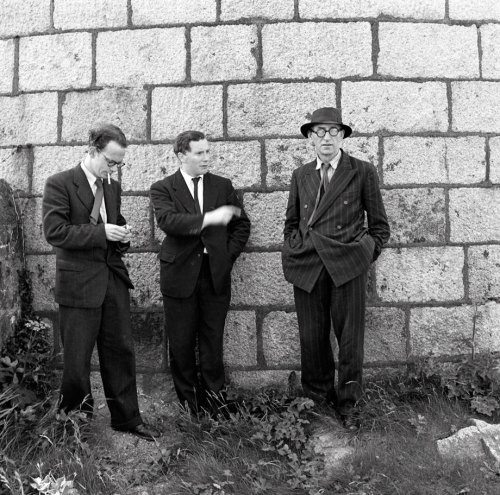
Anthony Cronin, John Ryan and Paddy Kavanagh, all centrally important to the story of McDaid’s in the days of Paddy O’Brien (National Library of Ireland)

Continue Reading »