Feeds:
Posts
Comments

Believe.

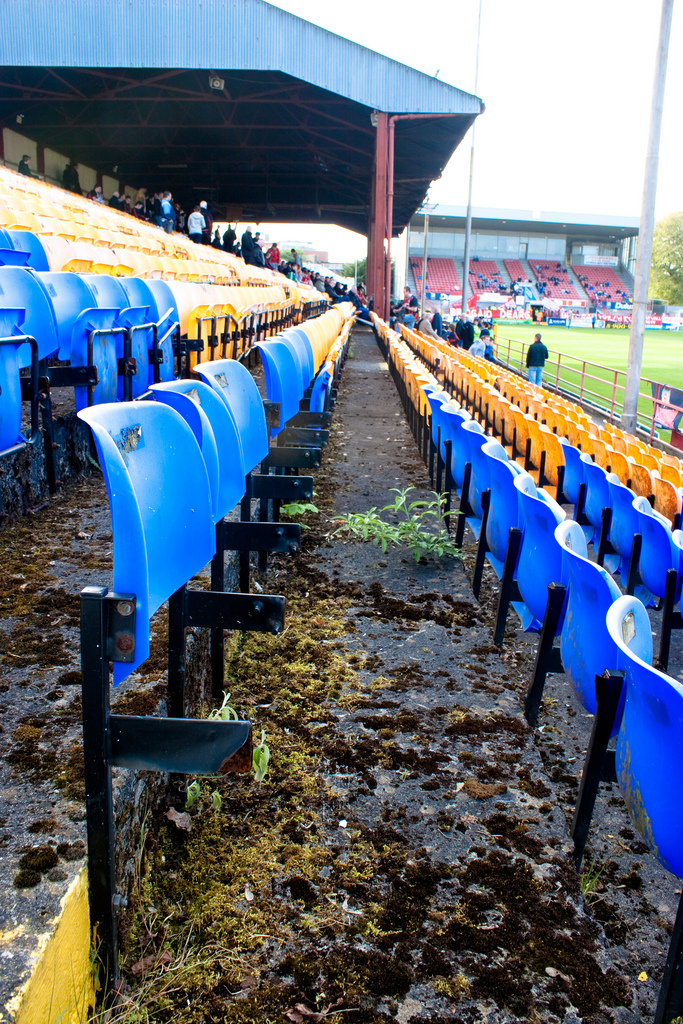
Thursday sees Hannover 96 come to Dublin to take on Saint Patrick’s Athletic in Tallaght Stadium. It’s almost surreal, with Hannover boasting a stadium with a capacity of almost 50,000, and Saint Patrick’s Athletic’s Richmond Park home, which is hidden behind a row of terraced houses in Inchicore, not being deemed up to scratch for this level of European football. Classic underdog stuff. If Pats have shown anything in Europe in recent years, it’s that they quite like that label, underdog.

Ticket information is in the poster above, and they go on sale tomorrow. I’d encourage League of Ireland fans to get along, as well as those with just a passing interest in the beautiful game. Magic European nights do happen on occasion, who knows?


(Currently putting the finishing touches on a thesis, so my posts are a bit sporadic and shorter than is the norm. Normality returns for me on Wednesday)

‘Red Reminiscences’

Tolka Park. (Image: Paul Reynolds)

In his classic Dublin Made Me, the War of Independence and Civil War veteran C.S Andrews remembered the day of his Holy Confirmation by writing:

Anyway, on the great day, my mind was more preoccupied with football than with religion because my father had promised to take me to a cup match that afternoon between Bohemians and Shelbourne at Dalymount Park and I was afraid that the ceremony would not finish on time!

While all Dublin clubs are working class institutions, some stretch back into the nineteenth century with Bohemians founded in 1890 and Shelbourne in 1895. All clubs in Dublin seem to have club historians who as a labour of love dig deep and share their findings in club programmes and the like, but what every club could do with is a oral history collection. Dublin city Library and Archives have recorded a fantastic series of interviews with Shels officials, fans and players which will appeal to all League of Ireland fans.

I enjoyed all of the interviews, which come with a blurb detailing some of what is recalled in the conversation. Below is an example.

Track 8 – Sands, Chris: Born in 1937, Chris Sands is a life-long supporter of Shels. He talks about the early history of Shels from its foundation in 1895 as a “Dockers team”, club rivalry with Shamrock Rovers in the 1940s, the failure to purchase Shelbourne Park, and attending the Olympic Dancehall after matches. He also talks about his involvement with Shelbourne Supporters Development Group in recent years and his views on Ollie Byrne.

It’s likely most Shels fans are familiar with these interviews being online, but that other LOI supporters haven’t stumbled across them. Hopefully, Dublin City Library and Archives will roll this project out to other clubs in their area.

By interviewing both fans and players, the oral history aims to extend the history of Shelbourne FC beyond the traditional perspective of events on the pitch and to show the inter-relationship between sport, culture and everyday life in Dublin. The oral history records the impressions and emotions attached to the activity of playing for and supporting Shelbourne FC, as well as details of the playing pitches, players, managers, and traditions of a by-gone era. These memories will be preserved at Dublin City Library and Archive, and made accessible to historians and future generations to come.

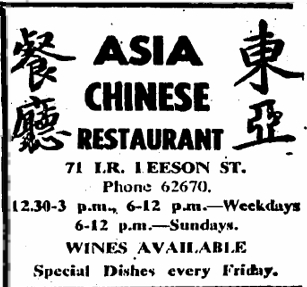
The Asia Chinese Restaurant, 71 Lower Leeson Street, was the first of its kind to open in the city in January 1957.

Margaret King photographed in The Irish Times (Jan 4, 1957)

Patrick Campbell, a journalist who used the pseudonym Quidnunc in The Irish Times, wrote on 05 January 1957:

“(of being) invited to the opening of Dublin’s first Chinese restaurant and found it in a house in Leeson Street. From the hall, it wasn’t too clear where the restaurant was situated in the house, so we opened the first door we saw, to find ourselves looking into the kitchen…”

It was noted in October 1957 that Dublin had “three oriental restaurants” – the Asia Chinese, the Cathay at 19 Kildare Street (opened the previous month) and the Golden Orient at 27 Lower Leeson Street which Mac Con Iomaire has described as actually providing “Indian food …with Kenyan influence”. The three restaurants pulled together that month to help feed the fifty-strong cast of the Chinese Classical Theatre which was in town.

Advertisement in The Irish Times (10 May 1957) [Thanks to Shane MacThomais]

The Asia China was subsequently described in December 1960 as “the first Chinese eatery opened in this town”. The article also mentioned that “Dubliners have of late shown quite an increasing preference for the delicately-cooked and served Chinese dishes, and the number of Chinese restaurants has now increased from one to three.” This advertisement for the Asia Chinese was included in the Garda Directory (1959):

Asia Chinese 1959

The Cathay was opened in Kildare Street in September 1957 by a 30-year-old Chinese businessman ‘Casey’ Chang from Malaya. After living in London for three years, he came to Dublin on a holiday and loved it so much that he decided to relocate here with his family. He brought over a chef and two assistants from Hong Kong and a Chinese stove, saucepans and food from London to start up the restaurant.

Two Malayan Catholic bishops in The Cathay pictured in The Irish Times (Sep 9, 1958.)

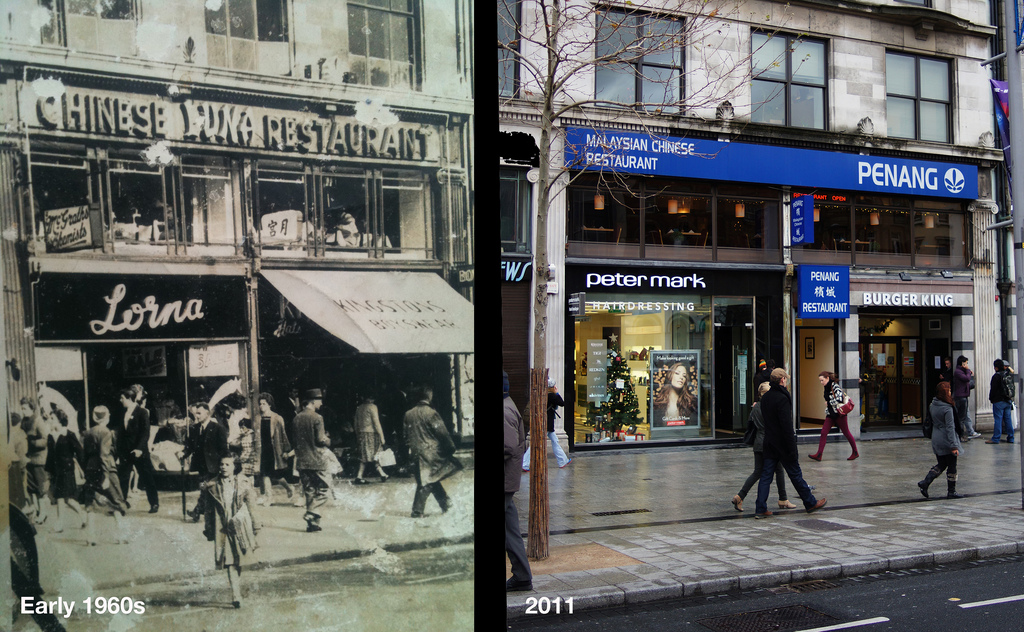
The Luna opened sometime between January 1958 and December 1960 by Mr Chan. Ed-meister, whose paternal grandfather helped open The Luna, has written online:

“It was established by my paternal grandfather with his business partners in the late 50s/early 60s on Dublin’s premier location, O’Connell Street. During that time, my grandfather was one of the handful of the first Chinese immigrants to Ireland. It was the first time Dubliners could savour Chinese food, and whereas nowadays it is normal fare, back then it was considered extremely exotic. Favourites included curry and ‘sweet & sour’ dishes. My grandfather told me how long queues would form outside as Irish people were tempted to try a new, exotic foreign cuisine.”

Contrasting The Luna (early 1960s) and the Penang (2011) on O’Connell St. Credit – Ed-meister (Flickr user)

Continue Reading »

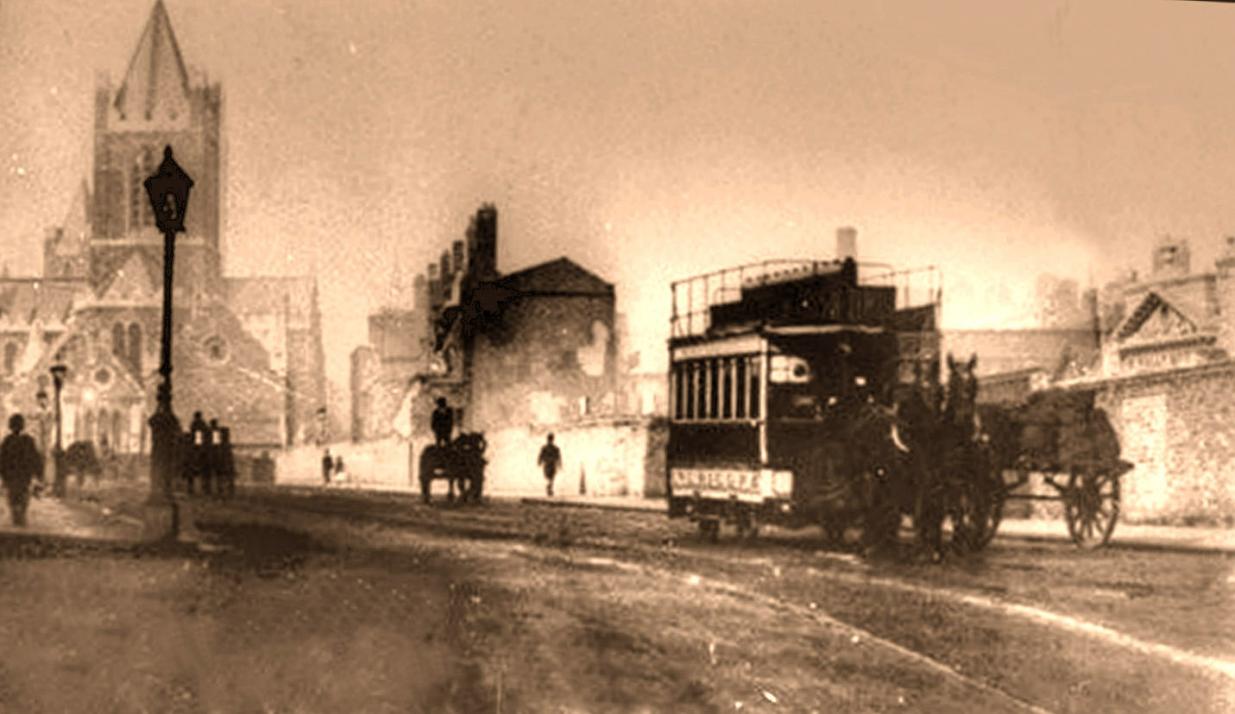
There was a time when transport by tram around Dublin wasn’t restricted to two bizarrely unconnected routes, when tramlines extended miles in every direction, spreading from O’Connell Street outwards like arteries from a heart to Dublin’s rapidly expanding suburbs.

Three companies operated the trams initially, the Dublin Tramways Company, the North Dublin Street Tramways Company,  and Dublin Central Tramways. These companies united in 1880, forming the Dublin United Tramways Company, with 137 trams running routes which totaled over 32 miles. The last horse tram ran in January 1901,  by which time Dublin had completely electrified it’s system, now with 66 miles of track, of which nearly 50 were owned by the DUTC.

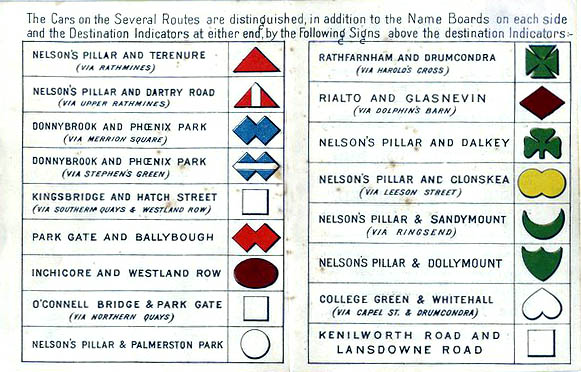
As well as numbers, the trams also had colourful route indicators. Uploaded by JadedIsle

The first tram came into service in February 1872, and ran from College Green to Rathgar. The trams generally operated within the City Centre or stretching to the more affluent South Dublin suburbs. Traveling on the trams, in the early days at least, was a luxury only Dublin’s white collar workers could afford. The majority of trams started at, or stopped nearby Nelson’s Pillar, and their terminus’  stretched to the likes of Sandymount, Blackrock, Dun Laoghaire, Dalkey and Terenure, as can be seen on the route identifier above. As well as featuring in a high percentage of photo’s of Dublin streets at the turn of the last century, they played parts in the Easter Rising, being toppled and bombed and their wreckage used for barricades, and feature in Joyce’s Ulysses.

Uploaded by Cracker on dublin.ie

What must have been the 21 tram to Inchicore

For over twenty years after the introduction of electric trams here, Dublin was a pioneer in tram building, the works in Inchicore churning out carriages whose design would be copied worldwide. But the introduction of the car to Irish roads, the growth in their use in the twenties,  and the newly designed four wheeled “bogey,” or basically a precursor to the bus saw the abandonment of many trams. The last tram in Dublin City ran on on 9th July 1949,  with the Howth Head line lasting another ten years before it too succumbed to progress. Some of their lines can still be found around the city, relics of a time past.

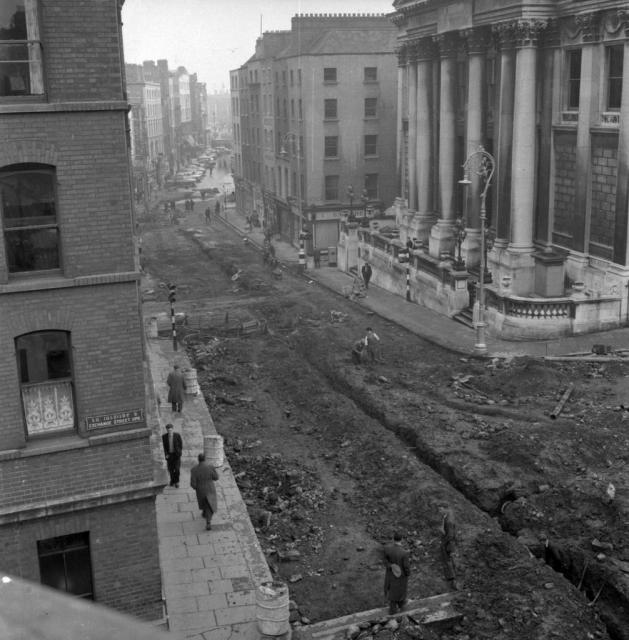
Removing the tracks at Lord Edward Street

A copy of the Dublin United Tramways Company from 2010 has been uploaded by the National Archives of Ireland and can be found here. The image of workers removing the tracks from Cork Street is from the Dublin City Council’s Photographic Collection.

Rabble Nua

The latest issue of Rabble magazine should be on the streets by the end of this week, and Rabble are seeking distributors for issue 4.It’s hard to believe this IS issue 4, so well done to all responsible for moving this from an idea to a reality. As ever, it’s the same mix of social commentary, cultural content, a little bit of history and some humour. The mag continues to provide a home to some of my favourite Dublin illustrators too, and the cover, depicting Youth Defence, is truly fantastic.

We’ve some little bits and pieces inside, with hxci reflecting on a visit to Poznan while myself and de brudder have produced a brief look at the cheeky gurriers of old, the Dublin newsboys. In particular, I’m looking forward to reading Tonie Walsh’s interview on Flikkers club on Fownes St in ’79.

It’s editoral gives real food for thought:

There are zero specific supports out there for voluntary publications like this. Locking ourselves away spewing out grant applications that shoehorn us into whatever limited arts funding exists is a rat race for pennies. Numerous things could be done to open up space for publications of our ilk. Among the underground press, we could have mutual aid agreements around distribution to encourage audience growth.

In January 2011, we featured a post here on the site about Joseph Edelstein, who was a one time leading businessman in the Jewish community in Dublin who fell on hard times. Edelstein had been an active Home Rule campaigner, active with the Judaeo-Irish Home Rule Association, and was the author of the hugely controversial text ‘The Moneylender’ in 1908. That text proved divisive among Dublin’s Jewish community, with some feeling it reinforced negative stereotypes.

Below is the books cover, as on display today in the Jewish Museum here in the capital.

Image I took in Dublin’s Jewish Museum in 2011.

Philip Blake was the artist responsible for the cover of this book, though precious little is known about him. The Irish Comic News blog are appealing for information on Blake, and have an interesting post on him on their site at present. It’s a fantastic read, and details some of Blake’s work for the Freeman’s Journal newspaper.

Anyway, Blake seems like an interesting character, but I haven’t been able to find out much about him. In the 1901 census he was 32 and living alone in a flat at Leeson Street Lower, Mansion House, Dublin, his occupation is given as “artist, cartoonist, newspaper illustrator, black and white” and his birthplace as Co. Meath. The Mormon genealogy site has a Philip John Blake, born in Castletown, Meath, on 19 January 1869, son of Philip Blake and Elizabeth Martha Cogan, as well as an older brother, Richard Thomas Blake; I’ve found the family in the 1901 and 1911 census, and Phil’s not at home either time, but Richard Thomas is there in 1901, so this looks like the correct identification.

However, There’s no sign of Phil in the 1911 census. I’ve tried the England and Wales census and the Scotland census, but no luck there either. He’s either died or gone somewhere else. And I’ve found, formerly advertised on AbeBooks, an edition of Percy Bysshe Shelley’s poem The Cloud, published in Katoomba, New South Wales, Australia, about 1915, illustrated with photographs and “illuminated by Phil Blake & Co. Artists”. The chin of the female figure on the cover, below, suggests that this is our man.

An example of Blake’s work for the Freeman’s Journal as featued on Irish Comic News.

One of my favourite books in recent times was the collection of cartoons from the late Ernest Kavanagh, whose work appeared in The Irish Worker during the revolutionary period before his death on the steps of Liberty Hall during the Rising. While certain cartoons from our political past have become well-known, the artists themselves haven’t. If you know anything about Philip Blake, pop over to Irish Comic News and let them know.

More innocent times.

Few days bring the same feelings of freedom and release to a youngster as the day you finish secondary school. Granted, you’ll be back in a few weeks afterwards to do your Leaving Cert, but when the bell goes you genuinely just want to chuck your uniform in the nearest bin and move on.

In 1975, a group of students made the national media for locking themselves in their class room, blasting pop records and just doing what they wanted on their last day of school. It’s a great innocent story, though at the time they evidently provoked the wrath of the nuns who ran the school!

Click to expand the newsreport and read it clearly.

The Irish Press, May 29 1975.

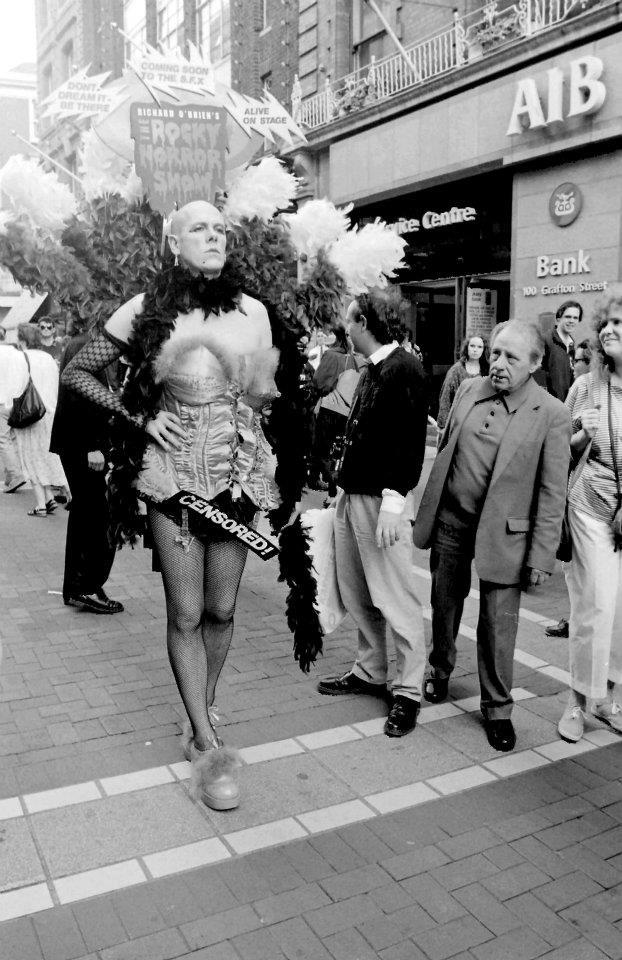
Last Friday we posted this fantastic image below to our Facebook page. Taken by Wally Cassidy, it captures the legendary Dublin street performer Thom McGinty, better known as the Diceman, strolling down Grafton Street. It led to dozens of fantastic comments from Dubliners who remembered seeing the Diceman perform on the streets of the capital. It is worth sharing here for anyone who hasn’t connected with the Facebook page to see.

(c) Wally Cassidy Photography.

In 1991 the Irish Press wrote that:

It is interesting how the name of The Diceman stuck with street mime artist Thom McGinty. Years ago his first job was publicising The Diceman, a shop in Grafton Street selling games and novelties. the shop is long gone but Thom McGinty is still known by its name and the 40 year old Scotsman is now integral part of Dublin street life.

From the discussion the image sparked, I was directed towards this brilliant YouTube compilation of shots of McGinty, put together by the folks at the Gallery of Photography.

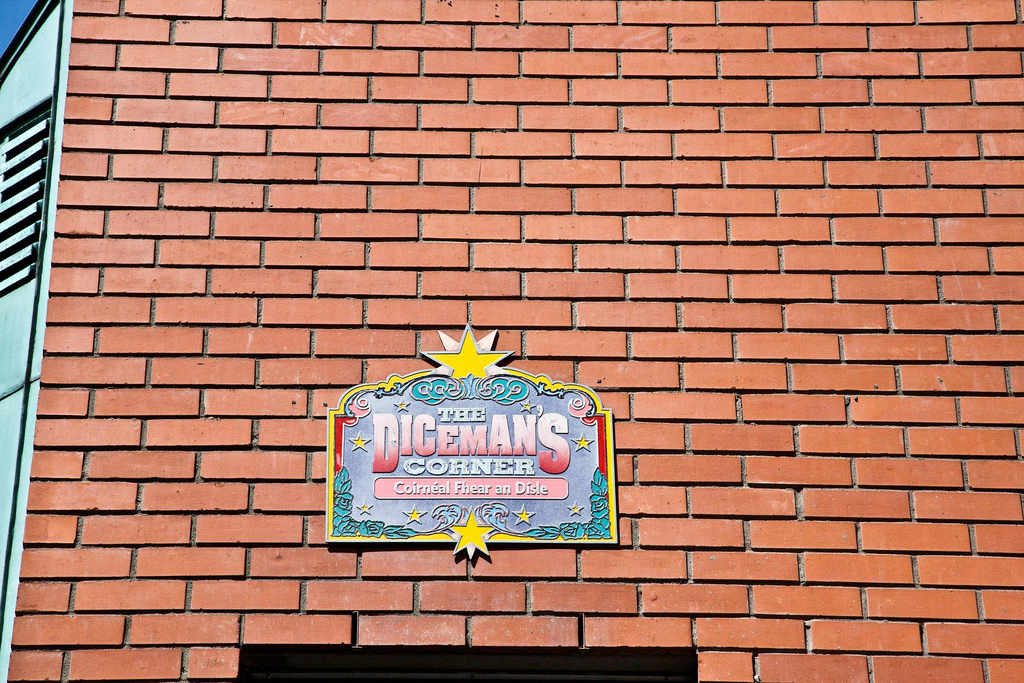
McGinty passed away in February 1995, and fittingly his coffin was carried down Grafton Street, where he had become a real fixture of Dublin life. He is remembered by Diceman’s Corner in Meeting House Square today.

Flickr user Informatique captured this image of the plaque which marks ‘Diceman’s Corner’ in Meeting House Square, Temple Bar.

Remembering Anne Devlin.

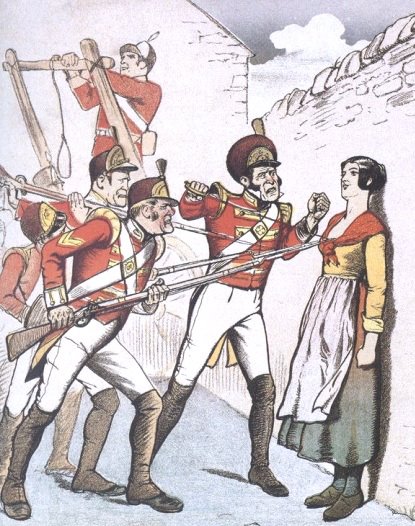
The arrest of Ann Devlin (Posted by ‘Glasnevin Museum’)

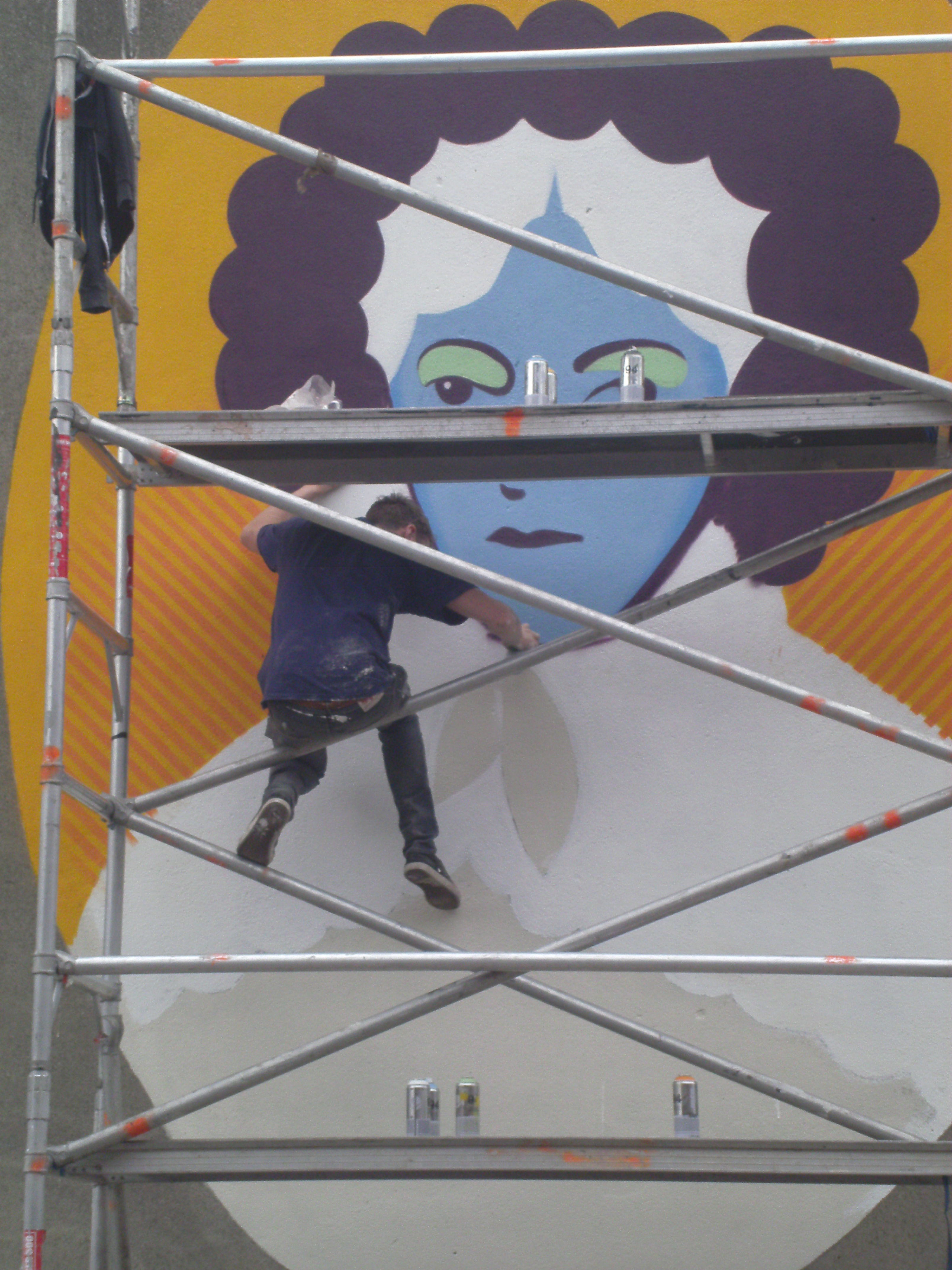
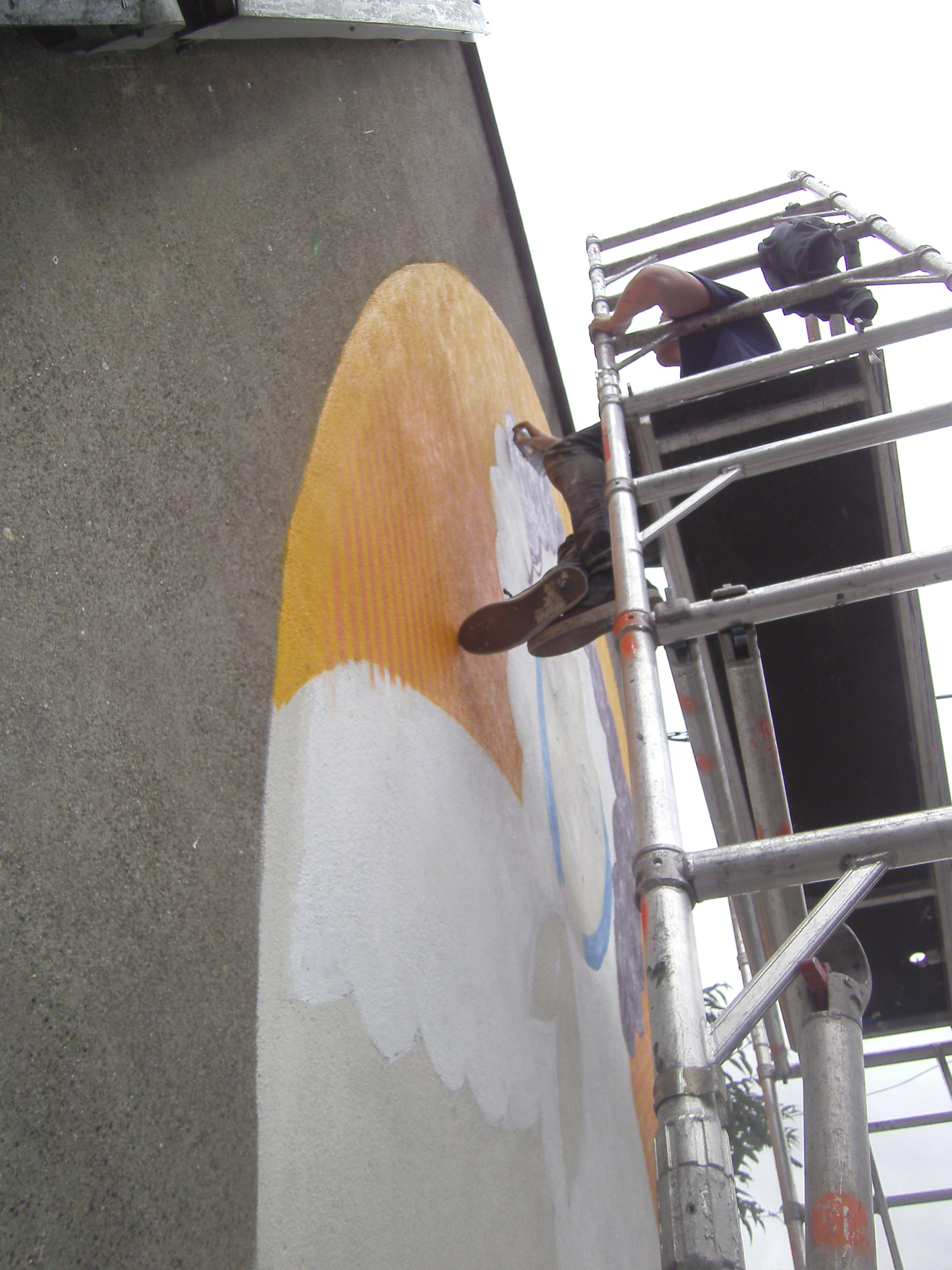
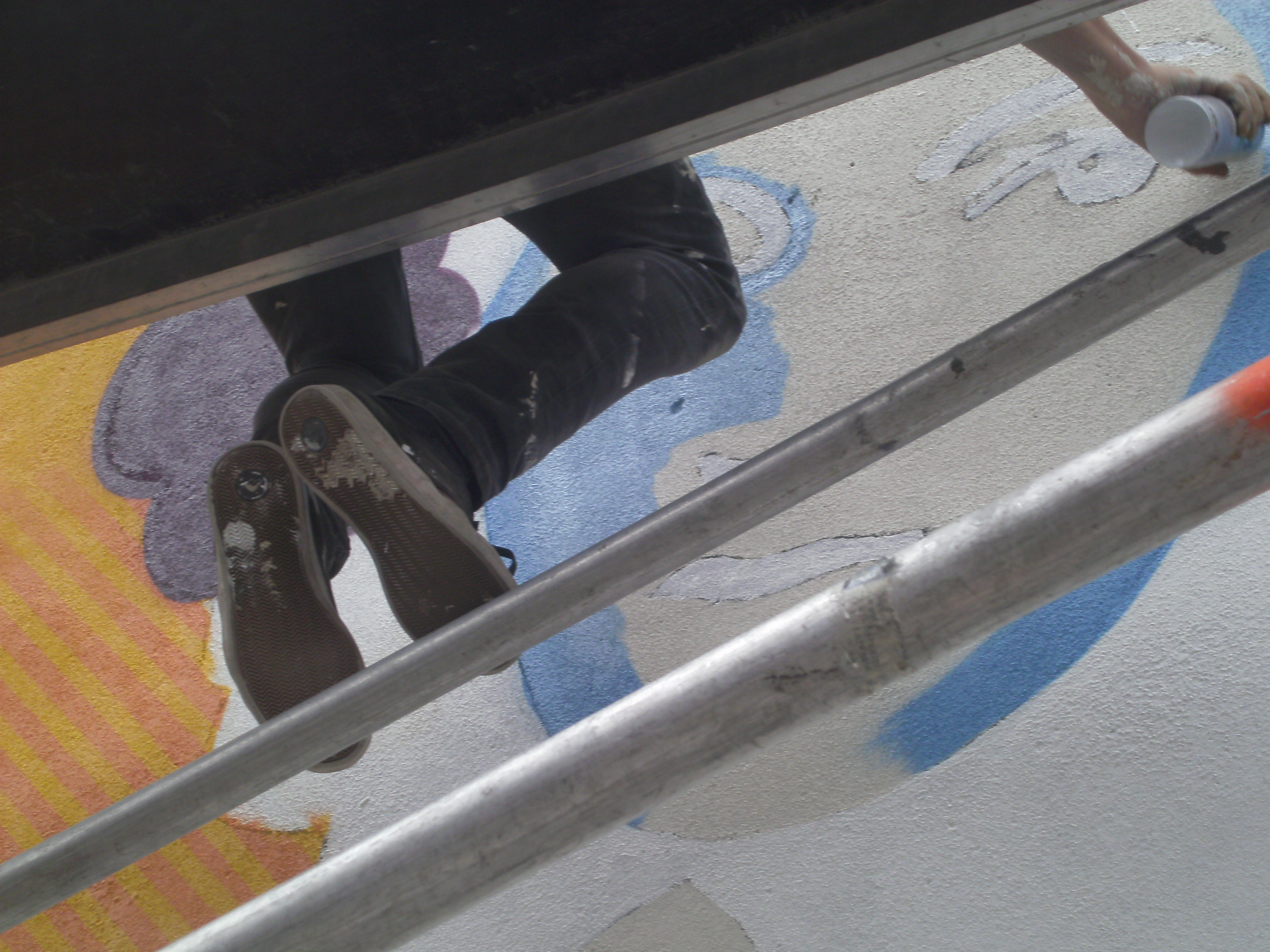
Anne Devlin, housekeeper and close friend of Robert Emmet, was commemorated yesterday with the painting of a mural in the Liberties area by Dublin street artist Maser. We interviewed Maser here on the site in January, and were lucky enough to get some great shots of him painting this fine tribute to an often forgotten republican, who refused to speak or inform on others despite torture and ill-treatment.

Cheers to Maser as ever for his support of the blog and allowing us to get these snaps of a work in progress, and cheers to Luke Fallon for taking the pictures.

The finished mural can be seen over on the Liberties Festival Facebook page.

Continue Reading »

Frederick Douglass mural in West Belfast.

While it is well known that the American abolitionist and anti-slavery campaigner Frederick Douglass visited Dublin in 1840s, something which Barack Obama focused on in his speech here last summer, what he made of Dublin is something many of us are perhaps unfamiliar with.

A letter Douglass wrote to William Lloyd Garrison in the United States, which was printed in The Liberator on 27 March 1846, is available in full to read online here. It is a truly grim account of Dublin in the 1840s. My thanks to James Moore for directing me to this great piece of social commentary.

I spent nearly six weeks in Dublin, and the scenes I there witnessed were such as to make me “blush, and hang my head to think myself a man.” I speak truly when I say, I dreaded to go out of the house. The streets were almost literally alive with beggars, displaying the greatest wretchedness—some of them mere stumps of men, without feet, without legs, without hands, without arms—and others still more horribly deformed

During my stay in Dublin, I took occasion to visit the huts of the poor in its vicinity—and of all places to witness human misery, ignorance, degradation, filth and wretchedness, an Irish hut is pre-eminent. It seems to be constructed to promote the very reverse of every thing like domestic comfort.

The immediate, and it may be the main cause of the extreme poverty and beggary in Ireland, is intemperance. This may be seen in the fact that most beggars drink whiskey. The third day after landing in Dublin, I met a man in one of the most public streets, with a white cloth on the upper part of his face. He was feeling his way with a cane in one hand, and the other hand was extended, soliciting aid. His feeble step and singular appearance led me to inquire into his history. I was informed that he had been a very intemperate man, and that on one occasion he was drunk, and lying in the street. While in this state of insensibility, a hog with its fangs tore off his nose, and a part of his face! I looked under the cloth, and saw the horrible spectacle of a living man with the face of a skeleton. Drunkenness is still rife in Ireland. The temperance cause has done much—is doing much—but there is much more to do, and, as yet, comparatively few to do it.

The Ghost Room in Maynooth

Path leading down to the College Graveyard at Saint Patrick’s College. (Carax)

Just on the outskirts of Dublin lies the historic university town of Maynooth. It is the home of Ireland’s main Roman Catholic seminary, St Patrick’s College, which has been churning out priests since 1795.

One particular room in the college has been associated with demonic apparitions, suicide and paranormal activity for over 150 years.

In the mid 19th century in Room Two of Rhetoric House, two young seminarists took their own lives, nineteen years apart, and the room has been the source of many tales ever since.

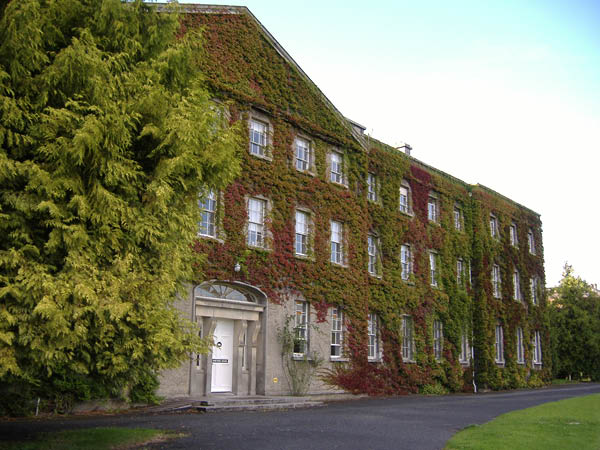
Rhetoric House in the South Campus, built in 1834, was formerly a residential house for trainee priests. It now hosts the Department of History.

Rhetoric House, Maynooth (http://bogwarrior.com)

On 1 March 1841, a young student from Limerick by the name of Sean O’Grady (b. 1820) jumped out of room and fell to his death. (1) It is not known as to what possessed O’Grady to do such a thing but the common legend suggests that a ‘diabolic presence‘ had something to do with it.

Nineteen years later student Thomas McGinn (b. 16 June 1833) from Kilmore, Co. Wexford came up to college in a week early to take his matriculation tests. (2) During this time he stayed in Room No. 2. When term began, he was moved to a different room and was subsequently told that he had spent a week in a room where a previous student had killed himself. It preyed on his mind night and day. On a Friday morning after mass, McGinn went into Room No. 2 cut himself with a razor and then threw himself out of the window.

Dr. McCarthy, the former Vice-President of the college, visited him in the infirmary before he succumbed to his injuries. Apparently he gave them an account of the demonic occurrences that happened in the room that led to his actions. His grave marking state states that he died on April 21 1860.

After this, the tale goes on, a priest spent the night in the room and was so terrified by whatever he saw – he refused to speak about it – that his hair turned bright white.

Obviously shaken by all the events that had just taken took place, Dr. McCarthy  urged the Trustees to take action, and the result was the resolution in the Trustees’ Journal which reads:

“October 23rd 1860. The President is authorised to convert room No. 2 on the top corridor of Rhetoric House into an Oratory of St. Joseph and to fit up an oratory of St. Aloysius in the prayer hall of the Junior Students”.

St. Joseph is the Patron of a Peaceful Death.

View of the room in 1978. (Irish Independent, June 25 1978)

The dead students are buried in unconsecrated ground on the fringe of the college cemetery, but the graves are marked.
Continue Reading »

There have been numerous excellent books produced on the Irish Republican and Socialist movements in the 1930s. The below is a brief post on two days of interesting Anti-Communist violence in April 1936, when the Left was attacked firstly on a broad republican march to Glasnevin Cemetery, and then the following day at a rally on College Green. It is intended as a brief insight into Anti-Communism in Dublin in the 1930s.

Willie Gallacher, a Scottish Communist MP present on the March to Glasnevin on April 12th 1936 and who was to speak at College Green the following day.

On 12th April 1936 Communists and left Republicans attending an Easter commemoration at Glasnevin Cemetery came under attack at various points along the route to Glasnevin from the city centre, during an event which was plagued by violence. It was not the last anti-Communist violence in April 1936, and just who was responsible for the violence was unclear, though the left-wing Republican Congress laid the blame at the feet of the far-right, the ‘Animal Gang’ and “other such defenders and faith and morals”.

The procession marched from the Carmelite Church on Whitefriars’ Street, following a mass for the requiem of the souls of fallen comrades, and made its way for Glasnevin. Within the sizeable procession was a contingent of a few dozen members of the Communist Party, who the Irish Press noted “wore red tabs attached to Easter Lillies.” Led by Sean Murray and Captain Jack White (a founding member of the Irish Citizen Army), this contingent included Willie Gallacher, the Scottish Communist M.P. In addition to the Communist Party, members of the Republican Congress marched in the procession. There were five bands in total in the march, and all shades of Republican opinion were represented.

The Communist contingent in the march, though small in the context of the demonstration, came under attack firstly on Westmoreland Street when about 20 people attempted to rush the crowd, and, newspapers reported by the time O’Connell Bridge had been reached a sizeable crowd were shouting “We want no Communists in Ireland!” at their targets. By the General Post Office, the attacking crowd was said to number 200 people, and police were forced to draw their batons. A hostile crowd tailed the Communists all the way to Glasnevin, and some leading left-wing activists of the day sustained injuries, with George Gilmore receiving nasty wounds as a result of the crowds stone throwing.

The Irish Independent reported that on reaching Glasnevin, the shout was raised that “this is a Catholic grave yard. Don’t let the Communists in!” The great irony of Glasnevin being non-denominational was lost on someone! Outside, sellers of the English Communist paper the Daily Worker found themselves attacked by the hostile crowd. In a letter to the Irish Press days after the violence, one member of the public noted that while such violence was unfortunate, it was the natural outcome of an attempt to stage an “anti-God display” at Glasnevin.

Patrick Byrne, a leading activist with the Republican Congress, recalled years later that:

The main target of the mob was Captain Jack White. He had been injured with a blow of an iron cross wrenched from a grave. It was necessary to get him away quickly. Fortunately, the Rosary had started and this caused a lull during which Tom O’Brien and myself got him away. Captain White wrote afterwards: “By the aid of two Republican Congress comrades, who knew the geography, we left by an inconspicuous back door. Slipping under a barbed wire fence, the Congress comrades and I dropped on to the railway and soon emerged into safety and a Glasnevin tram.”
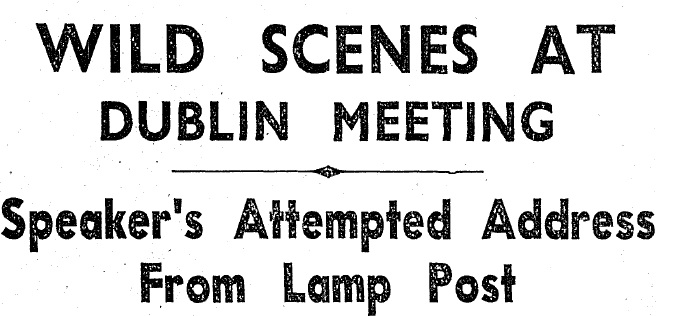
Newspaper report on the chaos described below at College Green.

The following day, on the 13th April, a left-wing meeting at College Green came under siege when thousands gathered for a rally featuring speakers from the left including Peadar O’Donnell and Willie Gallacher. Garda reports estimated that the crowd numbered between four and five thousand. They estimated that 98% of this crowd were hostile to the left-wing speakers at College Green. Prior to this meeting even beginning, newspaper reports noted that Gardaí lined College Green 100 strong. Peadar O’Donnell would be the only speaker on the night, addressing the crowd from a lamppost. In an obituary printed at the time of O’Donnell’s passing at the fine old age of 93, it was claimed that O’Donnell was met by “potatoes (with razor blades embedded in them), bottles and stones.”

Historian Fearghal McGarry has noted that following this event an anti-Communist mob laid siege to targets in the city centre, attacking the offices of the left wing Republican Congress and also attempting to attack other buildings associated with the left, although police prevented this. Interestingly, McGarry notes that targets included Trinity College Dublin and the Masonic Hall, and this indicates a spirit of militant Catholicism among the crowd.

Peadar O’Donnell would later comment that

After all it wasn’t the tycoons of Dublin who tried to lynch me in College Green during a Red Scare but poor folk who had been driven out of their minds by a month’s rabid Lenten Lectures.

Continue Reading »