Feeds:
Posts
Comments

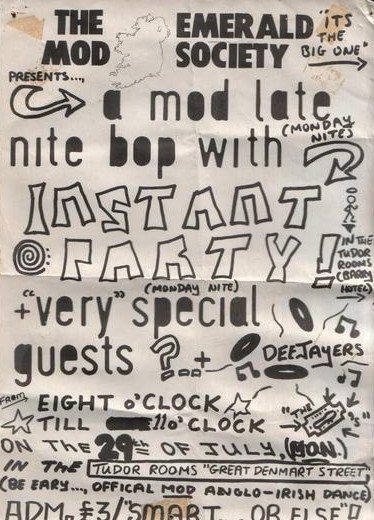
Tudor Rooms, 1985. (Upload – Karl Bates)

While Dublin had a thriving mod and scooter scene in the 1980s, it seemed to produce few bands. Even fewer who recorded anything. (The Blades, obviously, should be mentioned at this point along with The Zen Alligators, Side One, The Commotion and The Experiment).

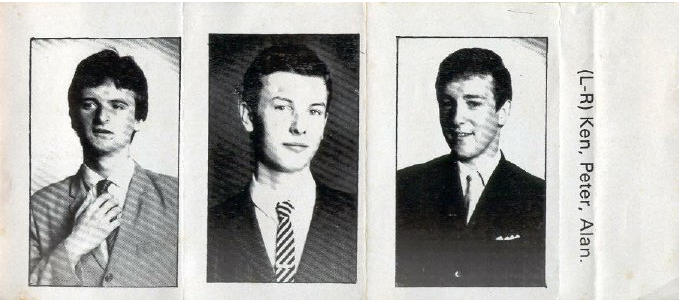
Instant Party were a three piece mod band, active from the early 1980s to 1986. They released a self-titled and self-produced three track demo tape in 1984.

Instant Party demo tape (1984). Thanks to Irishrock.org

Thanks to the users ‘lastdayofjune’ and ‘9jpt’ on Youtube, the three songs from the demo tape and a bonus fourth are available online:

1. Instant Party – The Times That Change Us

2. Instant Party – The Smalltown

3. Instant Party – Summertime

Bonus, The Real Life. An acoustic demo from Ken.

– Ken Sweeney later went on to record as Brian and is now Entertainment Editor of the Irish Independent.

– Peter Devlin went on to play with The Devlins who packed out The Button Factory last September.

– Alan Bates today plays drums with both Slam and The Modfathers.

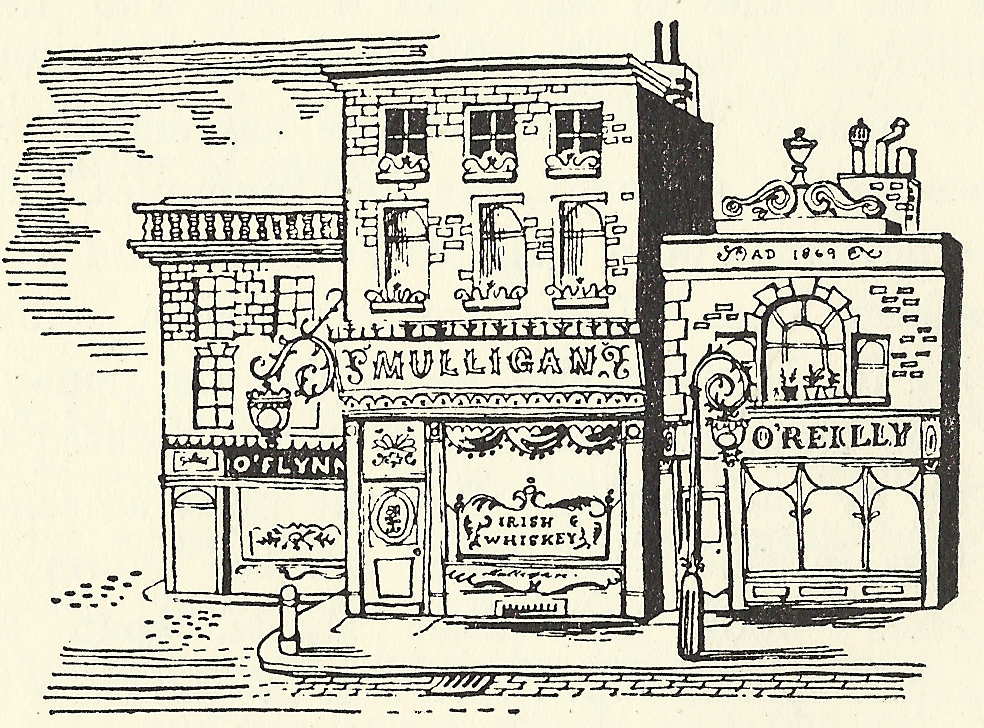
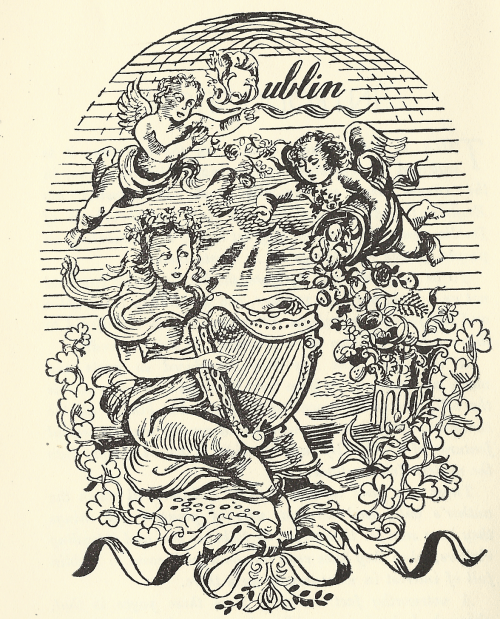
Illustration from G.Ivan Morris’ ‘In Dublin’s Fair City’ (London,1947)

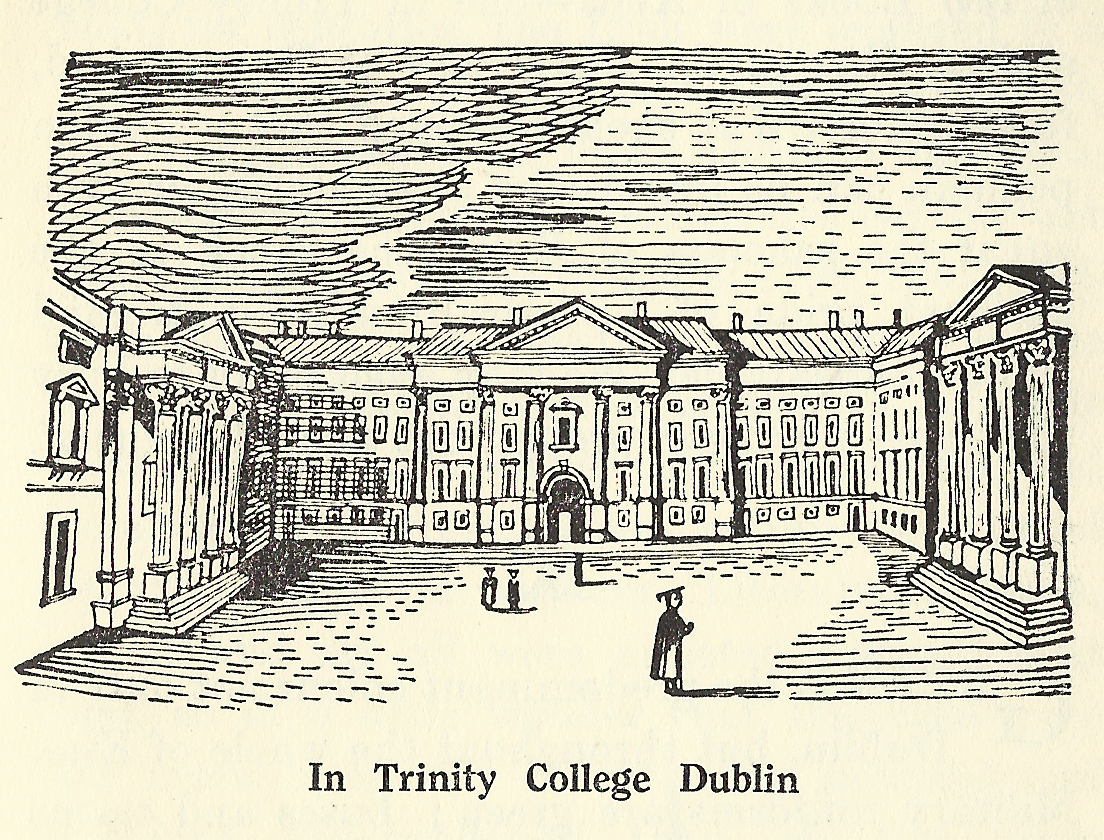
Recently, I did a brief post concerning John Harvey’s great 1940s book on the city of Dublin, which was halfway between a guide book and social commentary on the city. I thought G.Ivan Morris’ excellent ‘In Dublin’s Fair City’ (London, 1947) was equally deserving of a feature on the site.

The author was a Dublin publisher, who we’re told “in the midst of an unprecedented pressure of business, has taken the time to write this book for the guidance of visitors to Ireland.” We’re told at the outset that the book is “intended to represent an imaginary Dubliner who, in the casual way so typically Irish, is showing his English friends around the city and neighbourhood of Dublin, and who, without any set order, is commenting on people, places and things as he meets them.”

On arrival in Ireland many of one’s pre-conceived ideas will be shattered. The stage Irishman, who for years was Ireland’s only advertisement abroad, will appear as he really is – a complete figment of the imagination of ignorant theatrical people.

G.Ivan Morris’ book is clearly written by a man with a great love for the city, but also in places his frustrations with the Irish system and culture of the day are evident. He informs visitors that it is true “books by nearly every one of Ireland’s leading writers are banned” and that “if there is no free expression in a country, the cream of the writers usually leave it.” Religion and politics he notes “are curiously blended in Ireland” and “the English are masters of tact and diplomacy, and, when they come to Ireland, they studiously avoid arguments about religion and politics, realising the Irish have deep feelings about these two subjects.”

He notes that “another subject not too safe for discussion is Communism, which is most unpopular in Ireland, as the church is strongly opposed to it. Despite this, there is a bookshop in Dublin specialising almost exclusively in Russian and Communistic literature.”

Morris writes at length on the pubs of Dublin, and the pub culture and the changing role of the pub in Dublin life:

Since women have broken loose and invaded the bars and lounges, it is growing increasingly difficult to find a man’s pub in Dublin where one may stand up to one’s pint and tell stories without having to glance nervously around every few minutes to make sure that there are no ladies within earshot.

He singles out Davy Byrnes’, The Palace and the Metropole on O’Connell Street, and notes that “drink in Dublin is quite plentiful, and is only half the price it is in England.” The above quote dealing with women in pubs is interesting, but so is his remark that “only in the poorer-class districts have the women been kept in the background” with regards pub culture. The pub, he writes, is where “the gravest political questions are thrashed out and settled.”

Unsurprisingly, Nelson’s Pillar features in the study, and Morris writes that:

Many people wonder why he is allowed to remain there, now that Ireland is free, but the general feeling is that the cost of taking down the Pillar would be out of all proportion to the kick the Dubliners would get out of it, and so it remains.

Interestingly, with the Second World War just over, Morris talks about how the city was bombed by fascists, and notes that “Eire, despite her neutrality, did not get off scot-free in the life and death struggles between the great nations of the earth”, and he tells us that hundreds of German children from the Ruhr Valley were taken into Irish homes “in which there is no room for the doctrines of Nazism.”

Morris gives an impression of a city in which cycling was a much more common place practice than today, noting that “the cyclists of Dublin are a sight to behold, especially during lunch hour and between five and six o’clock in the evening, when they appear in thousands amidst the traffic of O’Connell Street, and the numbers of them rival Holland and Denmark.” Little has changed in ways though, and he notes that a wave of cycle thefts has swept Dublin in recent times.

Should Ireland become “money-minded”, Morris writes, “she will be ruined.” Were such a situation to occur, we’re told that “she will slip down to the bottom of the scale and take her place as just another money-grubbing holiday resort.” Dublin is a city which is old, but in which its inhabitants are “young in spirit and outlook, rather like children living in a stately house, filling its rooms with gaiety and the vigour of youth.”

Morris’ brief book on Dublin, at 118 pages, is interesting in many ways just as the John Harvey book we featured recently from the same period is. We’re told that to be fully enjoyed, the book must be regarded not as a book but rather a person, “one who knows his Dublin and his fellow countrymen intimately, and is not afraid to throw a brick at them when a bouquet is not deserved.”


G Ivan Morris
‘In Dublin’s Fair City’
(London, 1947)
An interesting short video from the Irish Jewish Museum in Portobello, showing their ambitious plans for expansion.

The Irish Jewish Museum has reached the stage where the existing building is woefully inadequate to enable fulfilment of its significantly important goals. Countless valuable artefacts and community records are in storage for want of adequate display space and the Museum also cannot accommodate the increasing demand of visitors, so an enlargement and upgrade project has been announced by the Museum’s management.

In 2010, we featured the museum in a brief feature. It is a fantastic museum, and worth taking the time to visit if you haven’t.

Giles-Marley t-shirt.

The story that spawned a t-shirt.

Casa Rebelde, Crow St.

Fair play to Kev Squires for designing and Dixie in Casa Rebelde for printing.

Design – K. Squires

Limited print run. €19.95 RRP. Buy online or in store (Crow St, Temple Bar).

But times, we are told, have changed. We must live in the present; not in the past. That of course, is right – unquestionably so, but my contention is that the changes that we see in the political situation since Connolly’s day are very superficial changes.

George Gilmore in ‘The Relevance of James Connolly in Ireland Today’

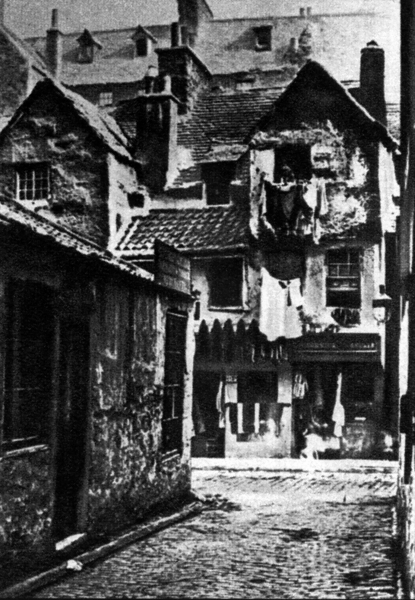
The Cowgate slums of Edinburgh, home to James Connolly in his youth.

Writing in 1898 in the pages of The Workers Republic newspaper, James Connolly outlined his belief that “apostles of freedom are ever idolised when dead, but crucified when living.” The centenary of the Easter Rising being upon us, the men and women of that April week remain idolised, but in many cases stripped of their complexities and character. James Connolly in particular, who left a great collection of work behind him, is a figure who has suffered greatly in the watering down of Ireland’s revolutionary past.

A member of the Industrial Workers of the World trade union during his time in the United States, Connolly’s socialism came from the shocking poverty he knew as a boy, in the slums of Cowgate in Edinburgh, refereed to as ‘Little Ireland’ by those unfortunate enough to call it home. Connolly’s militant beliefs, not least with regards to issues like gender equality and the roots of poverty, are often overlooked by those who ‘celebrate’ his legacy today. Standing at the grave of Connolly only weeks ago, Eamon Gilmore outlined his vision and ambition “to restore Ireland’s reputation as a good and stable place in which to invest and do business.”

The upcoming Dublin Writers Festival contains many interesting talks and discussions, but one that caught my eye is titled ‘James Connolly: Life & Legacy’. It contains an interesting panel, with Lorcan Collins, Catherine Morris and Richard Boyd Barrett attending.

Continue Reading »

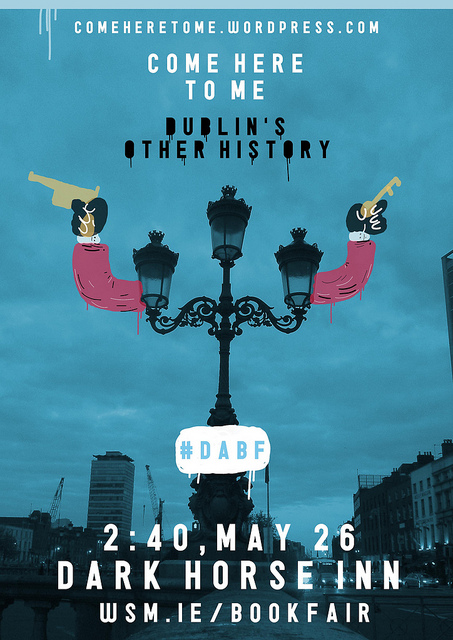
The three of us behind CHTM! will be speaking at the seventh annual Dublin Anarchist Bookfair this Saturday, May 26th. This will be the first time we have spoken as CHTM! in public, so its exciting stuff for us. JayCarax will be speaking on his research of Norwich-born Arthur Wickss, an interesting character, and member of the IWW who died fighting alongside the ICA in Easter week, 1916. DFallon  will talk on the difficulty of recounting “history from below” while I will speak briefly on Dan Donnelly, who was born around the corner from where our meeting takes place, in the Dark Horse Inn, Georges Quay.

Meeting poster, courtesy of LukeF comics!

So, spread the word, if you’d like to hear a little bit about Dublin’s other history, or to see the three of us in the flesh, and maybe pose us a question or two!

Facebook: http://www.facebook.com/events/262814147141663/

Official: http://www.wsm.ie/bookfair

Recently, we featured a simple enough post on the shopfronts of Dublin. It was the first in an upcoming series, which is intended to highlight the good, the bad and the ugly with regards to the shopfronts of the capital. I made the decision to allow the shopfronts to speak for themselves, and the post received good traffic, and afterwards sparked a few real life conversations with others about the shopfronts of the capital.

An interesting comment on that post came from ‘FXR’ who noted that:

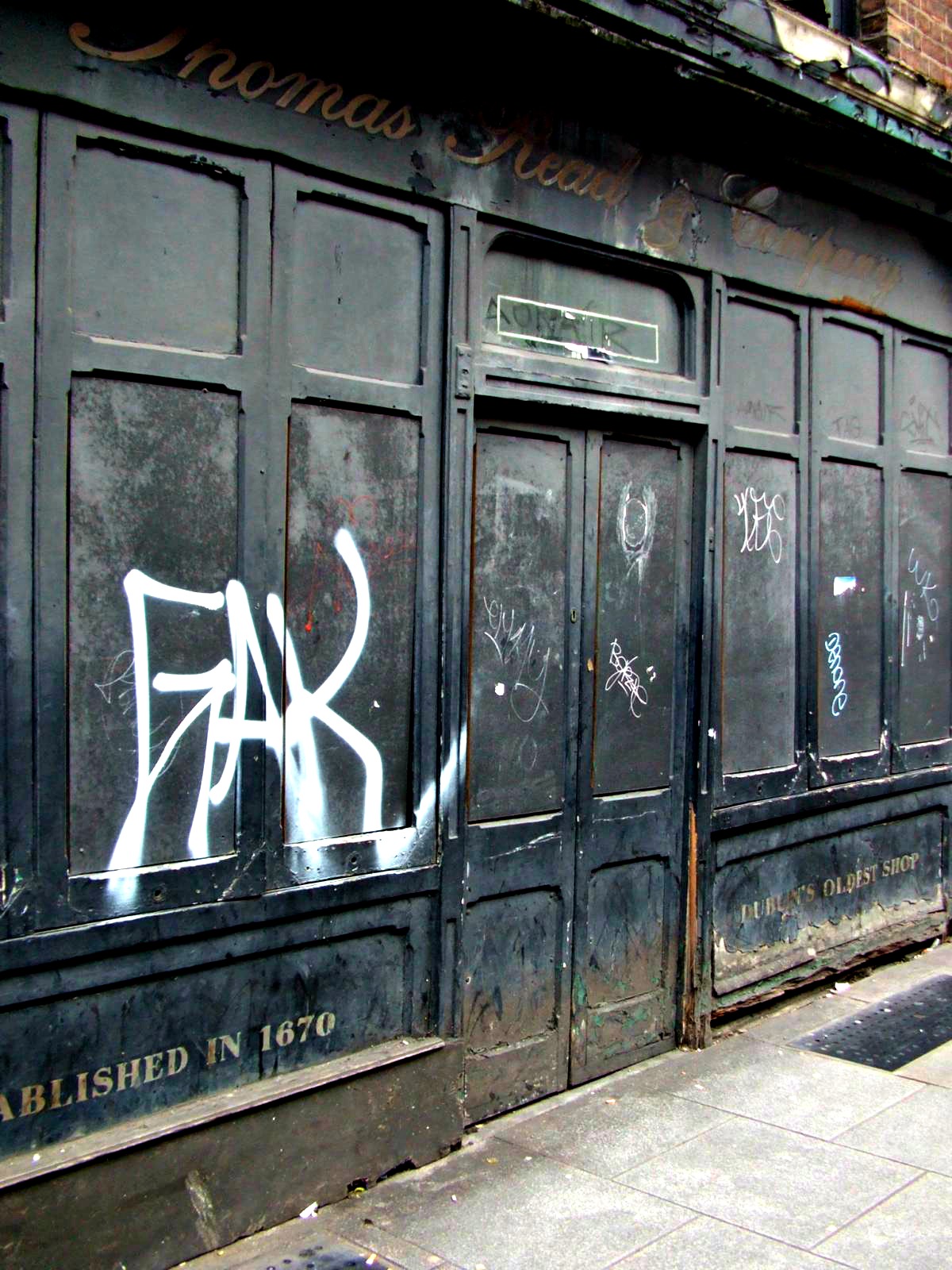
I passed Reads in Parliament street the other day. The boards on the front are starting to rot at the base.

I swung by for a look yesterday, and the shopfront on Parliament Street has fallen into a very tragic state. At the very bottom, where it reads ‘Established in 1670’ on one side and ‘Dublin’s Oldest Shop’ on the other, damage and decay is clear to be seen. Unsurprisingly, the shopfront has been vandalised too.

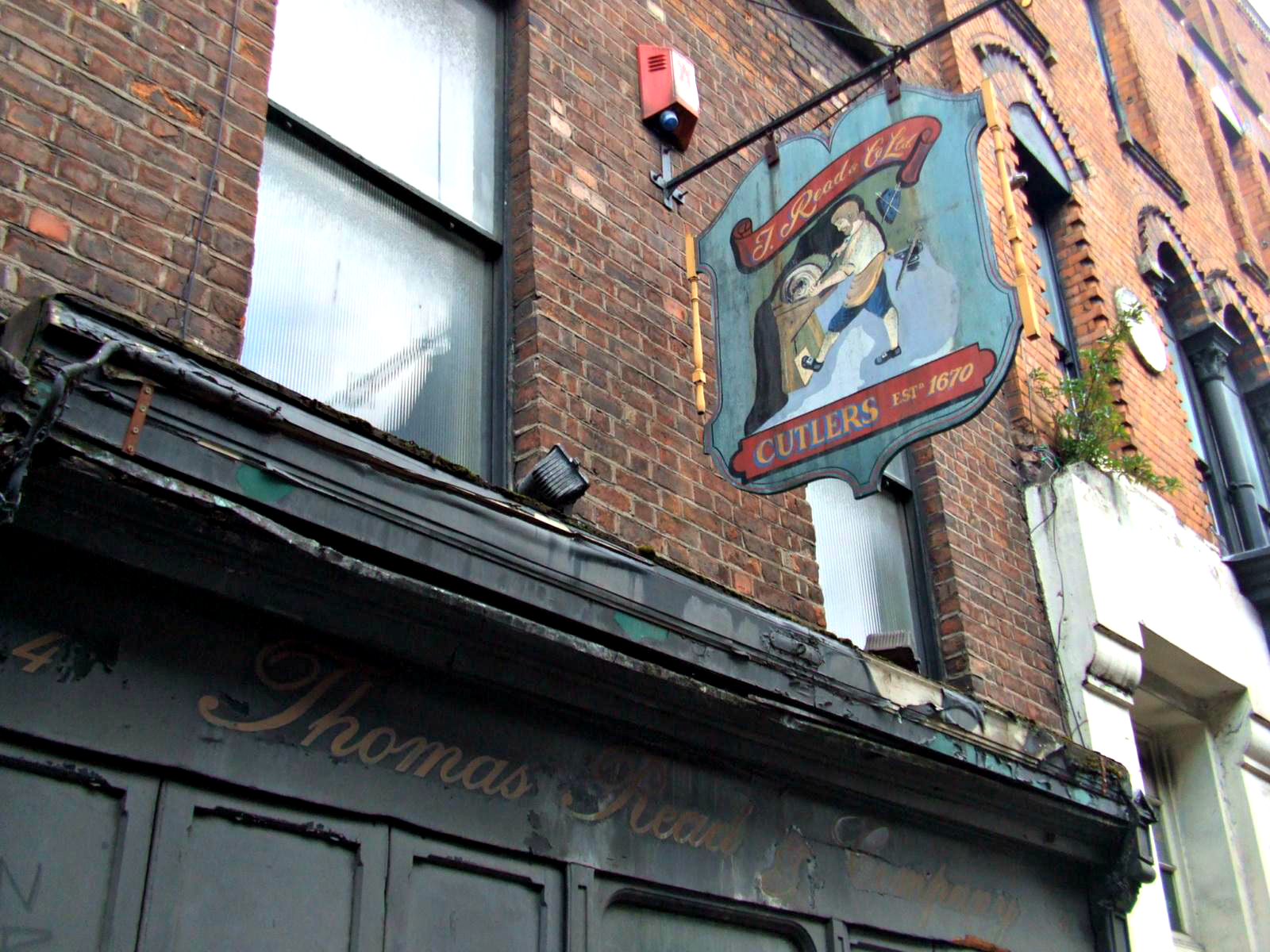
Above the shop, the sign still hangs proudly, giving some indication of the history of the premises.

The late and great Éamon Mac Thomáis noted in his work Me Jewel and Darlin’ Dublin that “Thomas Read of 4 Parliament Street was established in 1670, and are one of the oldest cutlers in the world”, and Read’s was the oldest shop in Dublin prior to its closure some years ago. It’s a real shame to see such an historically important building fall into this condition. Of course, restoration takes money, but wouldn’t it be fantastic to see this one restored to a former glory?

Éamon Mac Thomáis inside the shop:

“The Dublin Front”, to which Free State aeroplanes were reported to be going: The scene of the republicans last stand- Sackville Street (O’Connell Street) from O’Connell Bridge.”

Another great piece of foreign media coverage of the 1913-22 period in Dublin, this time the front page of the London Illustrated News of July 8 1922.

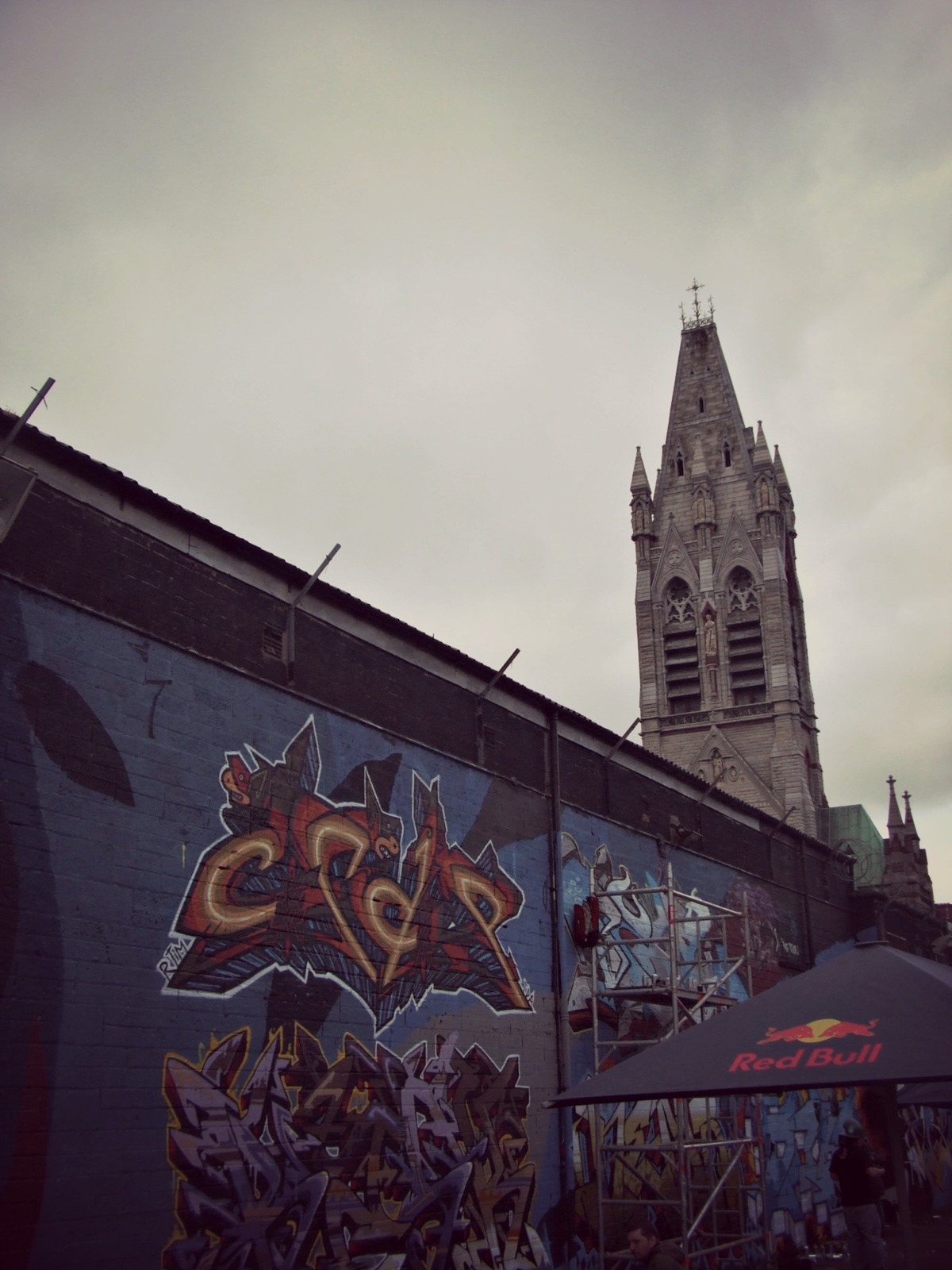
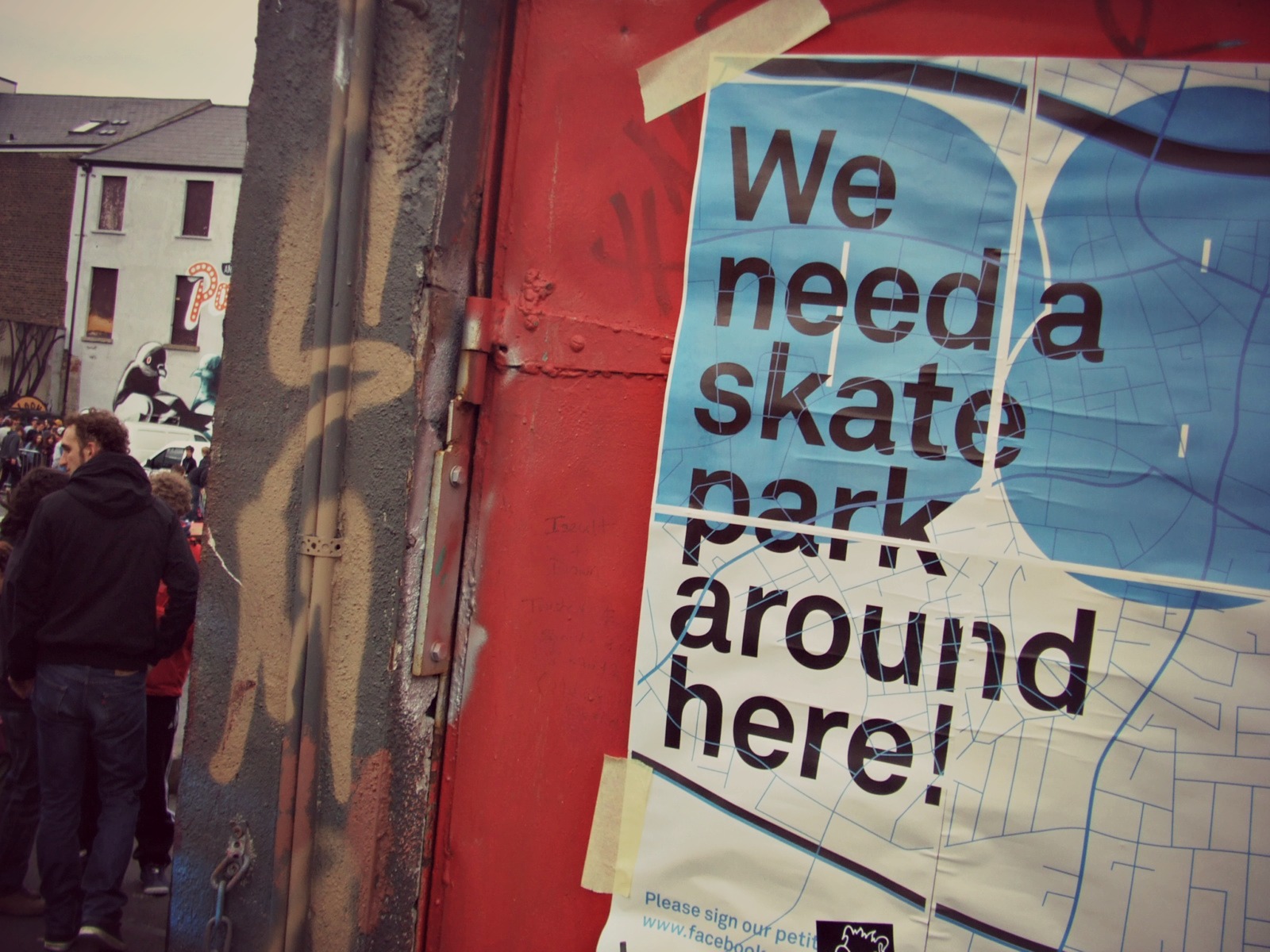
Well done to all at All City for putting on another fantastic day out in the car park of the Tivoli Theatre. The usual mix of street art, music and BMX demos made it a pretty memorable day, and the rappers Costello and G.I from Street Literature were a personal highlight. They’re always a treat to watch.

The old meets the new.

….for more than a day a year.

Continue Reading »

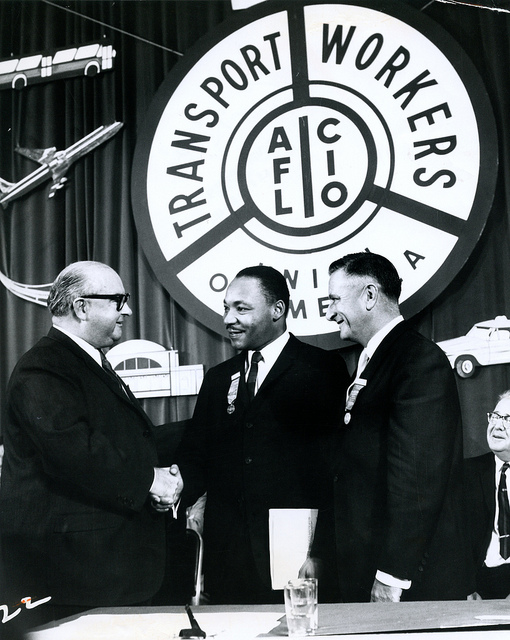
Mike Quill is one of the most celebrate trade unionists in American history, remembered for the actions of his militant New York union of underground workers. The title of L.L Whittemore’s biography is quite fitting, describing him as “the man who ran the Subways”. His offer to finance the removal of Admiral Nelson from the Pillar in O’Connell Street is a great story, which we detail below.

Mike Quill shaking the hand of Martin Luther King at a Transport Workers conference. (Transport Workers Archive)

Mike Quill is a truly fascinating figure in both republican and trade union history. Born in County Kerry in 1905, he was active with the Irish Republican Army during the War of Independence, and his name appears in Kerry’s Fighting Story, documenting the war there. Quill’s family were deeply republican, and his role in the war was that of a dispatch rider. He was active with the Kerry no.2 Brigade.

Mike Quill took an active role in the Civil War, opposing the Anglo-Irish Treaty and participating in the capture of Kenmare by republican forces. In a 2002 address at a Siptu conference in Kerry, labour historian Manus O’Riordain noted that ‘during those years Mike Quill also had his first experience of industrial struggle when he and his brother John were fired for staging a sit-in strike in a Kenmare saw-mill.’

Like many men who had fought in the Civil War, Quill was to settle in the United States, arriving in 1926. Quill found himself employed with the Interborough Rapid Transit Company (IRT), having first worked a variety of jobs. The IRT were the private operator of the New York underground of the day, and Quill was among the men to bring the Transport Workers Union of America into existence in April 1934. Quill would go on to become one of the most influential and capable union leaders of his time, organising men who worked on the New York underground.

Many of the workers around the new union were Irish migrants, and indeed many, like Quill, had been veterans of the revolutionary period. As historian Brian Hanley has noted:

It was a combination of former IRA veterans, among them Quill and Gerald O’Reilly, members of the Clan na Gael, activists in the Communist Irish Workers Clubs and the American Communist Party itself which proved crucial to the foundation of the TWU.

‘Red Mike Quill’ would become one of the leading trade unionists of his time, and it should be said that Quill was a passionate supporter of the Civil Rights movement in the 1960s. Dr. Martin Luther King was the keynote speaker at the 1961 convention of the TWU, and in a 1956 letter to King from the leaders of the TWU it was noted that:

Once again we want to take this opportunity to congratulate you for the mature and courageous leadership you have given not only to the people of Alabama but all Americans in the fight to wipe out the scourge of segregation from our national life.

Quill’s union, in 1964, extended a rather unusual offer to the people of Dublin when he offered to finance the removal of Admiral Nelson from O’Connell Street.

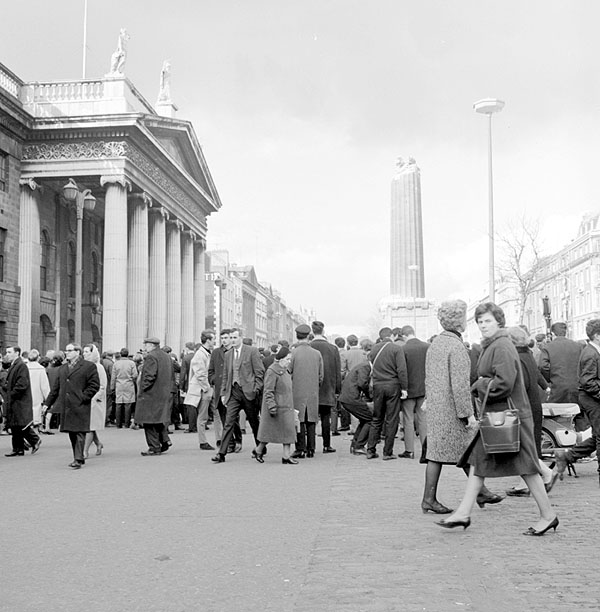
Dubliners pass the remains of Nelsons Pillar following the explosion in March 1966. (NLI)

In January 1964, Quill made the offer on behalf of the Transport Union “cheerfully to finance the removal of Lord Nelson”. He made the offer in a letter to the Taoiseach, and it was responded to publicly by Sean Moore, then Lord Mayor of Dublin. The Irish Times reported the Lord Mayor as stating that the Corporation had no power to remove Nelson, as the monument was under the guardianship of trustees.

The Irish Times noted that Quill said his union would pay for the removal of Nelson from his pedestal and his transportation to Buckingham Palace, where he said Nelson was “respected and loved for his many and victorious gallant battles on behalf of the British Crown.” Quill wrote that he believed the statue gave the impression to visitors, owing to its sheer scale, that to the Irish it meant what the Statue of Liberty meant to Americans. Quill suggested a statue of Patrick Pearse, James Connolly or Jim Larkin be placed on top of the pillar instead of Nelson. As a compromise, “since there are two governments in Ireland today”, Quill suggested President John F. Kennedy as a statue to place in the centre of O’Connell Street. Kennedy had been assassinated only months prior in November 1963, and discussions were under way regarding a potential monument for Kennedy in Ireland.

Quill noted that his union were willing to finance the removal of Admiral Nelson “in a dignified manner and without hatred or rancour on the part of anybody.”

The Lord Mayor of Dublin “thanked Quill for his offer” the newspaper noted. Surely the offer of the radical New York subway workers union to remove Nelson from his vantage point is one of the most unusual chapters in the story of Nelson’s Pillar? Just over two years on from the offer, the monument was of course targeted by militant republicans.

Two interesting pages here, showing British coverage of the rebellion in Dublin. Notice that James Connolly is listed as “leader of the Sinn Féiners”. The pages come from my own family collection, and are an interesting insight into the way the rebellion was reported. I’d welcome information on the publication.

Backed by a modicum of German gold (and German promises) several hundred Sinn Féiners attempted to seize the city by armed force, wreaking great damage to private property, and killing a number of citizens, including women and children. The rebellion was captained by James Connolly, and supported by one or two personalities of a revolutionary temperament.

The second pages notes that these amazing scenes of damage are “not somewhere in France or Flanders” but rather Dublin. The image of a looted florists on Grafton Street is one I haven’t seen before.

‘The First and Last of the Dublin Revolt’. Notice Connolly identified as ‘Leader of the Sinn Féiners’. (Fallon collection)

Damage to the city of Dublin following the rising. (Fallon collection)

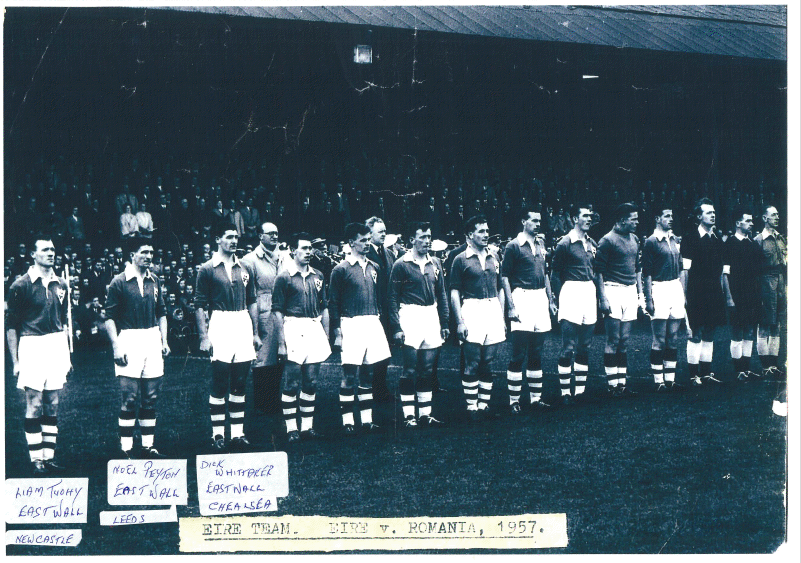
Thanks to Joe Mooney for image. Description: “Eire vs. Romania, 1957. Eire team features three East Wall players – Liam Tuohy (also Newcastle). Noel Peyton (also Leeds) and Dick Whittaker (also Chelsea). All three lived a stones throw away from each other in East Wall – Tuohy on Shelmelier rd, Whittaker on Marys Rd and Peyton on Russell Ave. “

Interesting event coming up for both football fans and local history enthuasists.

The proud history of East Wall football reaches back to the early 20th century.  The area is well known for its football legends and has produced an impressive roll call of international, national and local heroes. The community is now coming together to celebrate their glorious football tradition.

All are welcome to come along and hear of the triumphs, achievements and stars from the early days of the street leagues, (the start of it all for future International stars), through the glory days of East Wall United (who in the 1960s won the first of their 3 F.A.I. junior cups and 3 Leinster cups), right up to the Lawlor Dynasty (from Kit Lawlor in the 40’s to his sons in later days).

Amongst those invited to participate are Charlie O’Leary (the Republics legendary kitman), members of the Lawlor Family (Mick and Martin), Liam Tuohy (Shamrock Rovers, Newcastle United and Republic of Ireland as player and manager),Ben Hannigan (Shelbourne, in the 60s, 70’ and 80s) and many more.

Sean O’Casey Community Centre, St Mary’s Rd.
Thursday 31st May.
6.30 pm Kick-off – with photo and memorabilia display. Speakers will begin at 7pm.

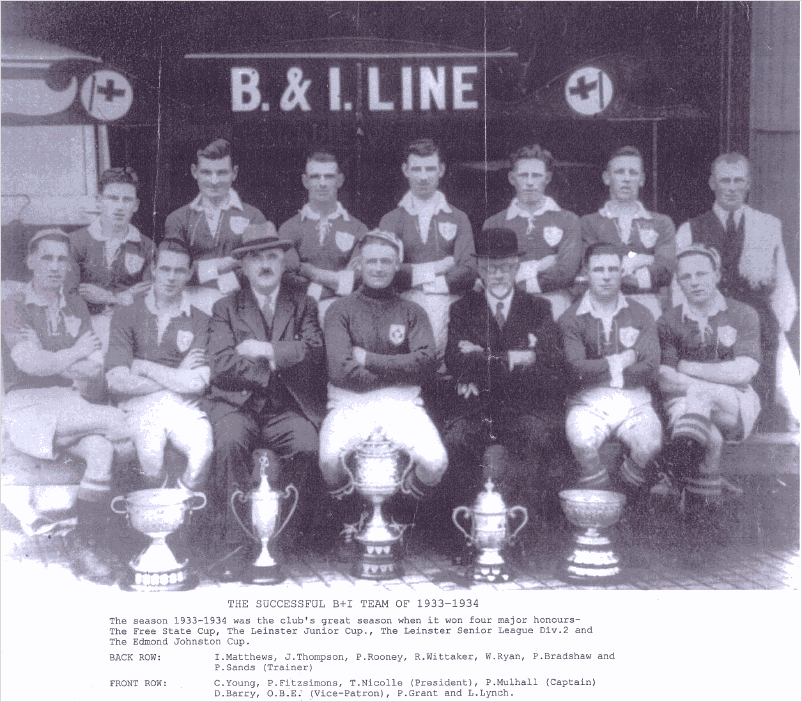
B+I team 1933-1934. Featured is Richard Whittaker ,father of Dick Whittaker (see above). Team Captain is Paddy Mulhall from Church Road in East Wall. Paddy played soccer for Ireland and GAA for Dublin”