
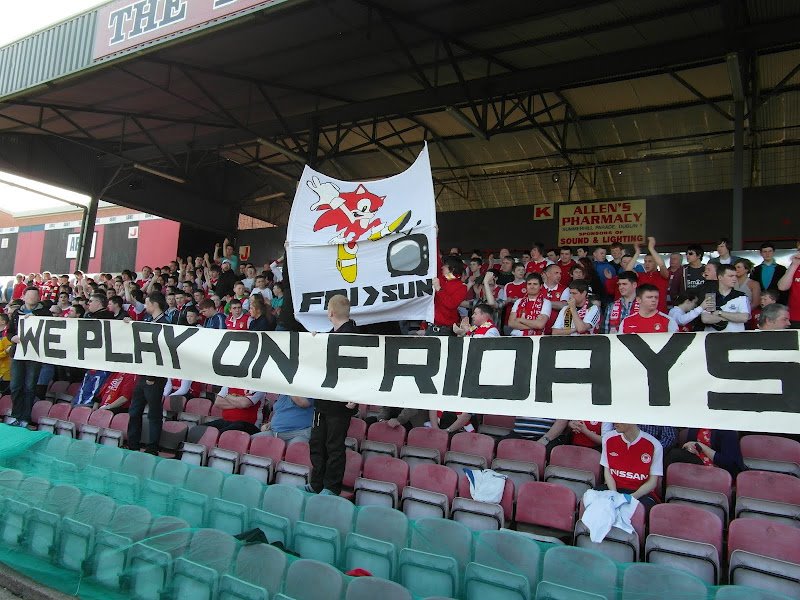
Dire, dire, dire stuff in Dalymount Park yesterday, with Saint Patrick’s Athletic and Bohemians playing out a snoozefest. If you fancy torturing yourself the game is on the RTE Player. The game was moved to a 4pm Sunday kickoff to facilitate television coverage. Putting us and Bohs on the telly has always been a recipe for boredom, with rare exception.
Anyway, the above was a simple protest from Saint Patrick’s Athletic fans against the moving of the game. Irony of ironies, it even ended up on RTE briefly.
Share this:

Posted in Uncategorized | 1 Comment »
I’m very grateful there are people in this world with more ‘get up and go’ than I have at times! My thanks to Will Peat, a friend, for organising a visit to the Iveagh Trust Museum Flat recently through booking. The flat is tiny, but it offers huge insight on a former Dublin.

All images my own.
The Iveagh Trust buildings, built by Edward Cecil Guinness, the first Earl of Iveagh, were in some ways a monument in themselves to the philanthroy of the Guinness family. Built to house the working poor of Dublin, they were remarkably ahead of their time when contrasted for example with the Foley Street Corporation Buildings and other such Dublin Corporation dwellings also constructed in the early 1900’s.
As Andrew Kincaid noted in his study Postcolonial Dublin: imperial legacies and the built environment: “In 1890, on the back of the Dublin Improvement Act of 1889, a group of Protestant and Unionist businessmen and politicians formed the Guinness, later the Iveagh, Trust.” Edward Cecil Guinness outlined his belief that the Iveagh Trust would strive for “the amelioration of the condition of the poorer of the working classes.”
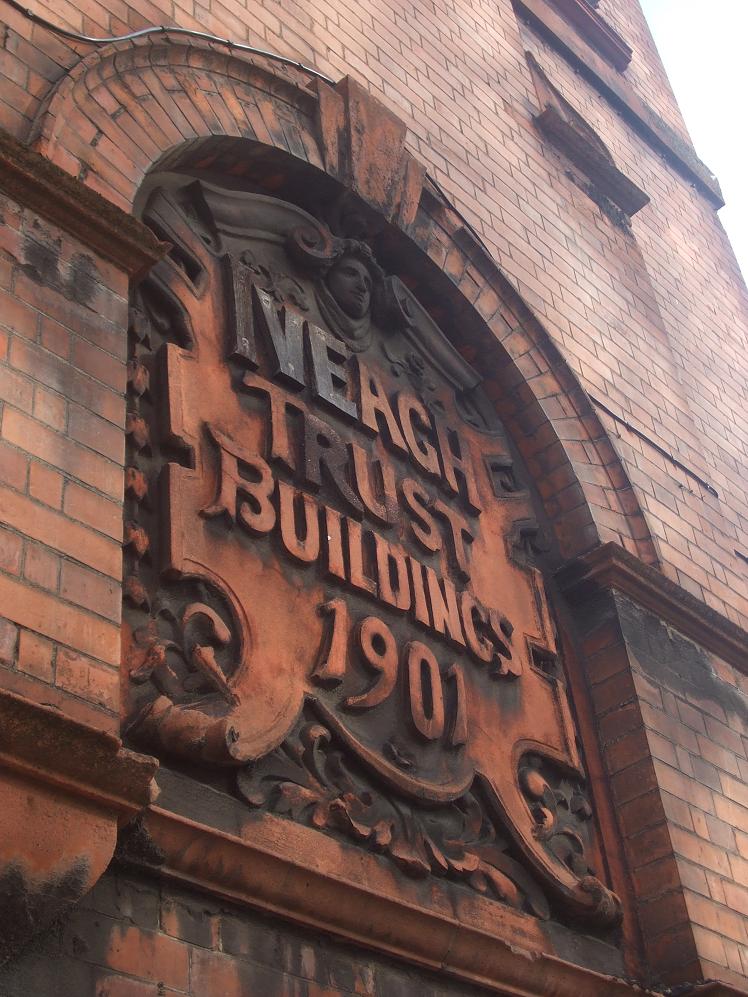
The area where the Iveagh Trust buildings stand now was once among the worst slums in the city. It’s a great irony in Dublin’s history that right next to the fortified home of political power in Ireland, Dublin Castle, one found many of the poorest Dubliners. The homes Guinness constructed, simple two or three bedroom tenements, were a million miles removed from what stood there before.
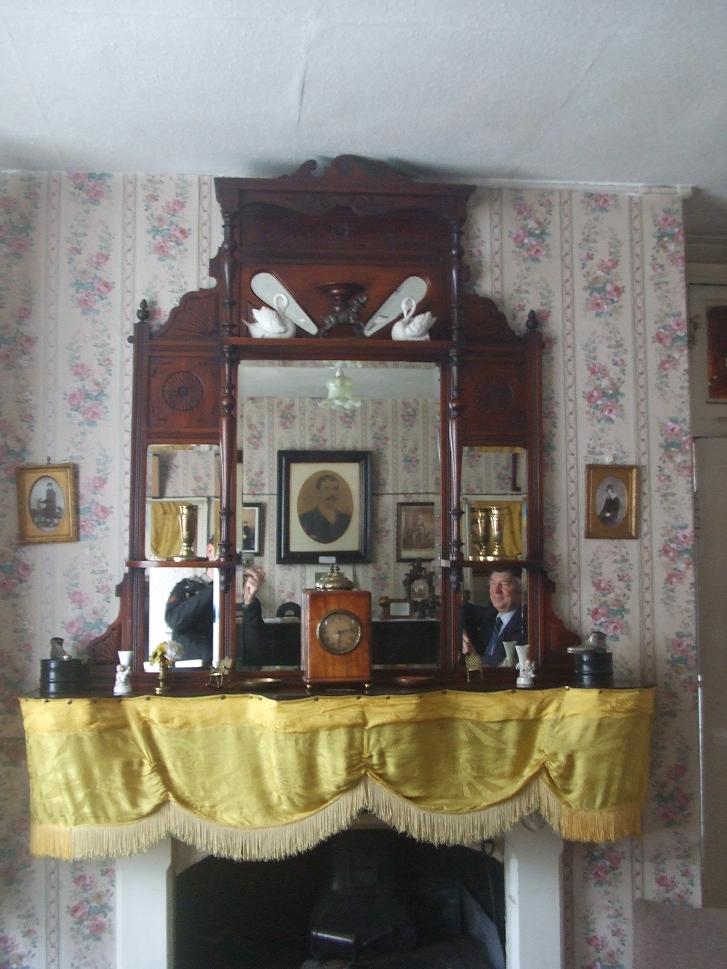
While the Iveagh Trust flats would be modernised in time, the Trust have maintained one small flat for museum purposes. Number 3B has changed little in the century since the opening of the buildings, and today it serves as a sort of Dublin time capsule. Stepping into it, you get a great social insight into a Dublin long gone.

This was home to Nellie Molloy, who passed in 2002 at the very impressive age of 95. She’d lived through major changes in Irish society, and the area around the building saw much change. In the short-time we spend in the apartment, our guide Liam tells us some great small details about Nellie, such as the fact she was a Trade Union shop steward in her time, and we learn something of the man who gazes over the small apartment, Sgt. Major Henry John Molloy, a veteran of the Boer War and the Great War. Below the picture of the Sgt. Major, a piano sits proudly, testament to the fact Nellie enjoyed hosting guests in her small flat. Liam tells us that he knew Nellie to talk to, and that she was a treasure trove of information on Dublin’s past.
Share this:

Posted in Dublin History | 14 Comments »
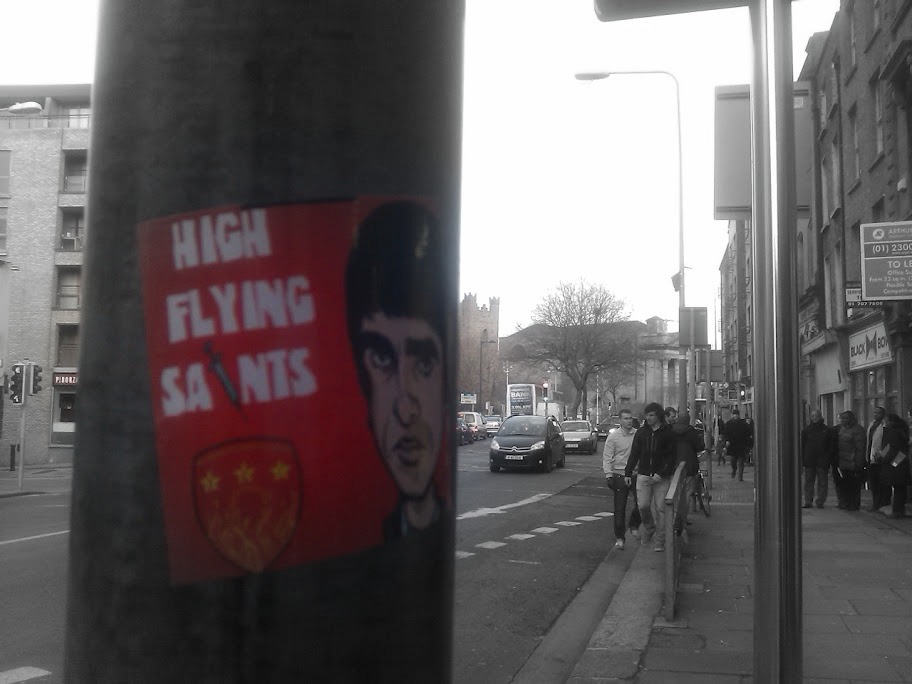
Speaking of Noel Gallagher, read on.....
Would I have enjoyed Keith Fahey’s absolute screamer in Dalymount Park back in 2008 if it had happened at half four on a Sunday instead of the usual Friday night? Of course. No doubt, there wouldn’t have been as many of us able to claim to have witnessed it in the flesh afterwards though.
League of Ireland fans and the telly, it’s a troubled relationship. Naturally and logically, fans want more exposure for the game as what’s really needed is more bums on seats. Still, a 4PM kick off on Sunday to facilitate the televising of the Bohs and Pats derby is fairly annoying for most who plan on attending.
Pats go into the game quite strongly. With seven points from three games, we’ve performed well to date and the team are playing a very different and refreshing kind of football. It’s a bit surreal seeing Liam Buckley back in the managers job, as Liam was Pats manager when we began going to watch the club as a family. All has changed, changed utterly since, and football is a different affair now. I probably know less about football now than I did as a child. I have friends who have genuinely had to check Teletext the following day to know if we won the night before. Sunday football isn’t ideal then.
For Bohs fans, there seems to be a certain jubilation in, well….. just existing. They’re still there. To rob a line from the blue half of Glasgow, “If they play on the streets, we’ll cheer from the sidewalks” seems fitting in this league where near financial ruin is something almost every club has experienced. TBWRA, or The Bohs Will Rise Again, has become the mantra of the last block of the Jodi.
With Shelbourne in the top flight again Dublin derbies are more frequent than before. It might not be a quarter to eight on a Friday, but a good northside/southside derby is a derby all the same and I’d hope for a good one. Following the game, Bohs continue to show their far superior taste in music to just about everyone with Rob Smith in the Phoenix Bar performing the music of The Stone Roses and Oasis. The event page is here.
Let’s pretend it’s a Friday.
Share this:

Posted in Events, Football Articles | 1 Comment »
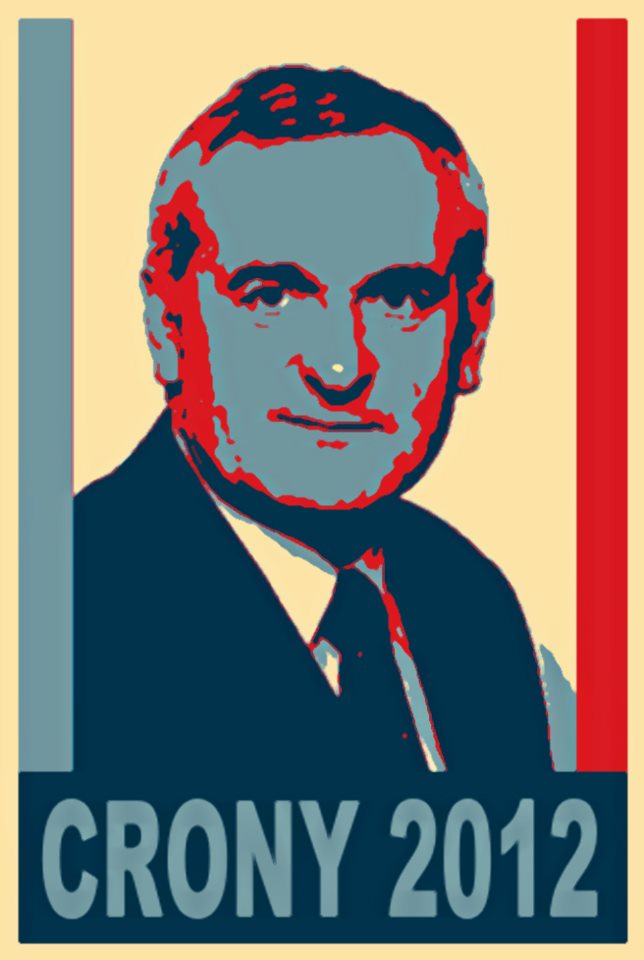
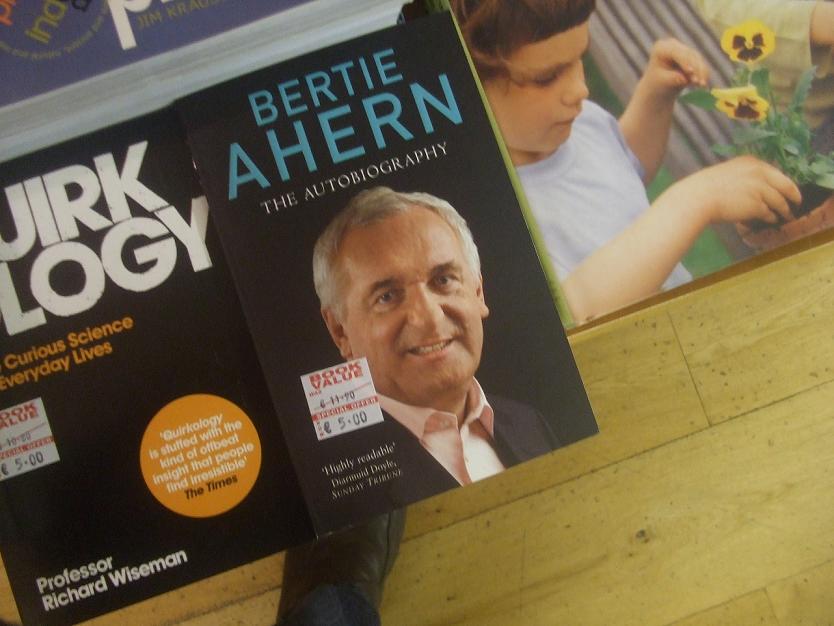
I mentioned yesterday spotting Bertie’s Colouring Book in a few discount bookshops in the city recently, I grabbed a photo yesterday with the day that was in it.
Share this:

Posted in Politics | 1 Comment »
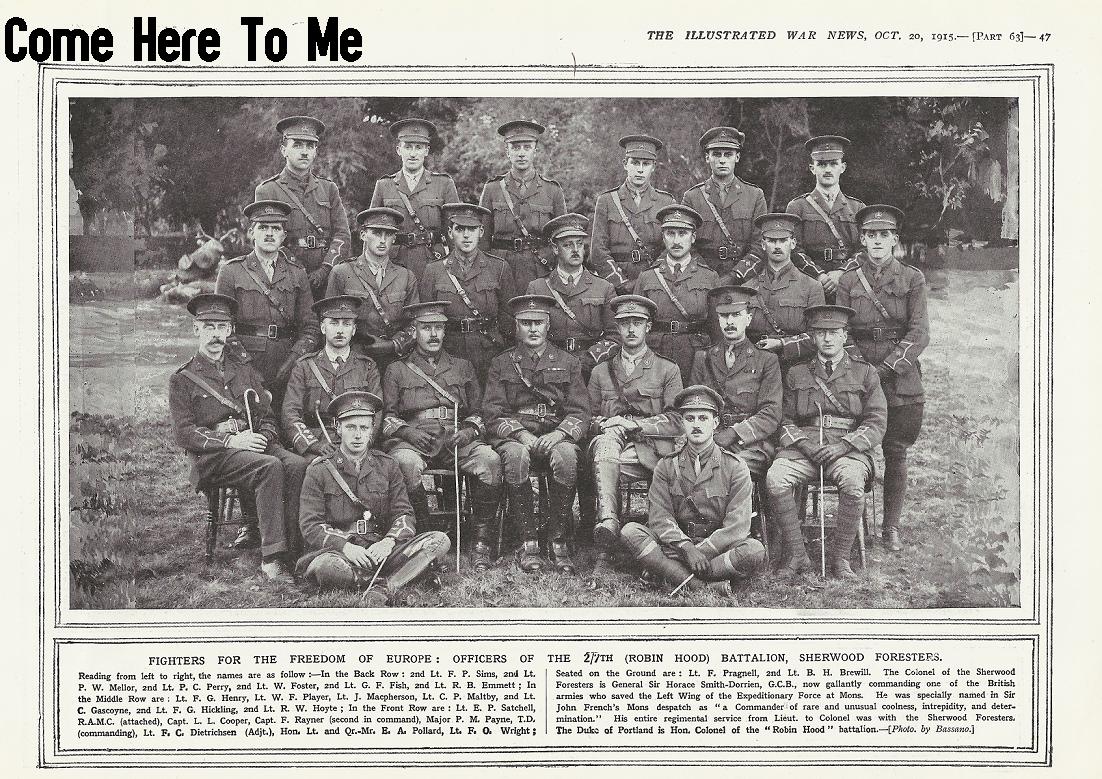
I acquired this great image recently, from the Illustrated War News Oct. 20 1915, it shows a group of “Officers of the 2/7th (Robin Hood) Battalion, Sherwood Foresters”.
Less than a year after this photo was taken, the Sherwood Foresters, described here as “fighters for the freedom of Europe”, would find themselves at the heart of the bloodiest battle of the Easter Rising in Dublin. 240 British soldiers were wounded or killed at Mount Street Bridge, where they came under sustained attack from a small band of Volunteers.
I always remember the first hand account of Captain A.A Dickson of the Sherwood Foresters, who wrote of the “baptism of fire” the men encountered at Mount Street Bridge. 25 Northumberland Road was the building from which Volunteer Michael Malone and Volunteer James Grace attacked, inflicting major casualties on the Sherwood Foresters. Dickson would recall:
It was a baptism of fire alright, with flintlocks, shot-guns, and elephant rifles, as well as more orthodox weapons. And 100 casualties in two days’ street fighting was a horrible loss to one battalion: the more so since my one friend from the ranks, commissioned same day, was shot through the head leading a rush on a fortified corner house, first day on active service, and it was my job to write and tell his mother, who thought him still safe in England.”
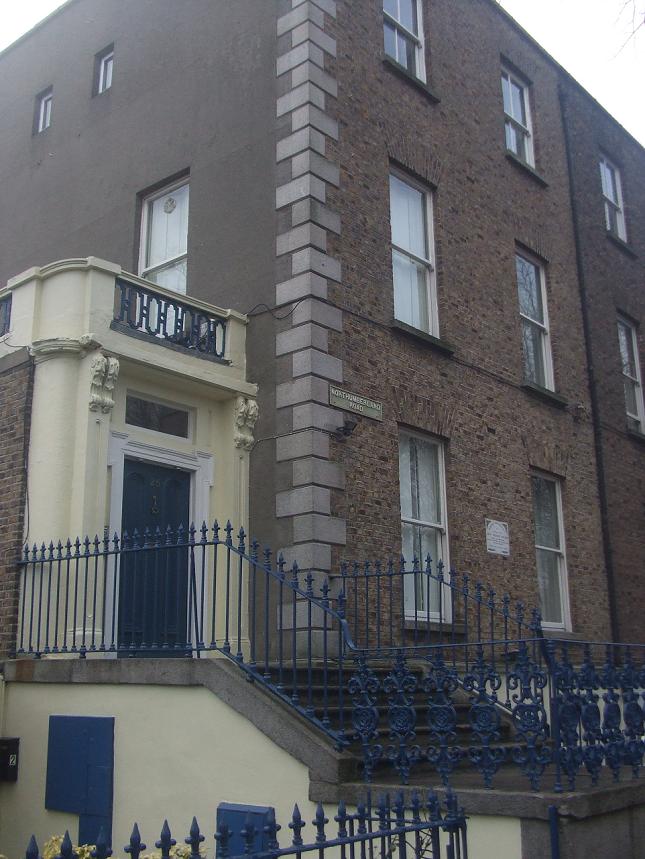
The house today (Donal Fallon)
If the Sherwood Foresters encountered such resistance, and suffered such heavy casualties in Dublin, surely some the men at the centre of the Battle for Mount Street Bridge feature in the image above?
I consulted Paul O’Brien’s excellent Blood On The Streets for more information. O’Brien has been writing detailed accounts of the battles of various 1916 garrisons, which look at the events in incredible detail which of course just isn’t possible in a broader study of the rebellion. Blood On The Streets (Mercier, 2008) tells the tale of Mount Street Bridge. I consulted it, and the classic Sinn Féin Rebellion Handbook, for an idea of how the men pictured above got on.
From the Sinn Féin rebellion handbook, I learned that two men shown were killed in action, while two were wounded.
L.T P.D Perry, third from the left in the back row, lost his life in the rebellion.
Likewise, Lt. Frederick Dietrichsen would perish.
Captain Hickling, second right in the middle row was wounded.
Also wounded was Lt. Pragnell, sitting on the ground on the left hand side.
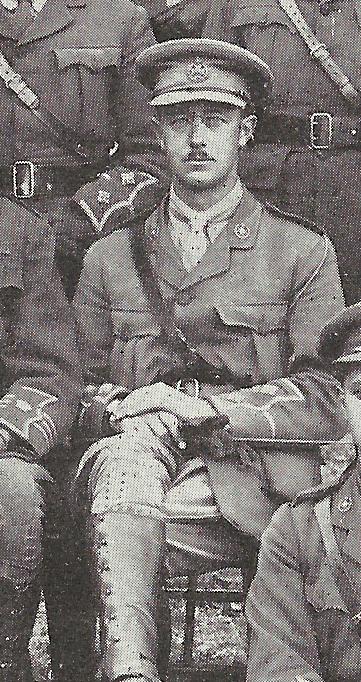
Captain Dietrichsen
The story of Captain Dietrichsen was particularly tragic. O’Brien gives some background information on Dietrichsen in his study, noting that he had previously been a barrister in Nottingham. He had sent his wife (who originally hailed from Blackrock) and two children to Dublin “to protect them from the ever-increasing German Zeppelin raids”, yet was taken aback to encounter his family as the Sherwood Foresters marched towards the city. O’Brien notes that: “Captain Dietrichsen dropped out of formation and hugged his family at the side of the road. He was to be one of the first killed in action during the battle of Mount Street.”
The other side of the newspaper page shows men of the Sherwood Foresters in very relaxed post,and notes that “….standing on a pile of fodder, is Nancy, the battalion mascot goat.”
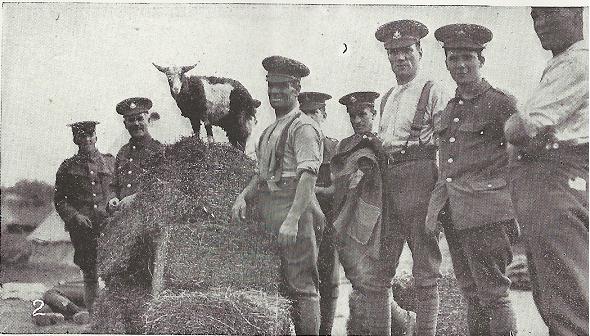
It’s certainly an unusual set of photographs, and I found it fascinating to see the faces of some of the men who were at the heart of the Battle for Mount Street Bridge for the first time. Today, the battle site resembles its ‘1916 form’ much more than many other sites of combat, and 25 Northumberland Road is marked with a small plaque to Volunteer Michael Malone.
Share this:

Posted in Dublin History | Tagged 1916 Rising, Sherwood Foresters | 10 Comments »
My brother sent me on a link to these snaps this morning; based in London, someone had shared them with him given the week that’s in it. The full collection can be found here , I’ve only posted the Dublin (and Wicklow) related ones. Courtesy of the Library of Congress, Washington .

The Shelbourne Hotel

St. Patrick's Cathedral

Phoenix Park

Bray Head
Cheers to Richie for the shout out!
Share this:

Posted in Dublin History, Photography, Social History | 1 Comment »
Today, a friend sent me on an article from Wednesday’s Morning Star about the decline of Europe’s left-wing press. It got me thinking about the newspapers and magazines that are published today in Ireland and what kind of future lies ahead for them.
While the latter question cannot be answered without some thought, I thought I’d first try to write up a detailed, updated list of what is currently being published.
Here’s what I came up with…
The anarchist group the Workers Solidarity Movement publish a paper Workers Solidarity (Free, bi-monthly) and a more theoretical magazine Irish Anarchist Review (Free, bi-annually, 24 pages).
An independent counter-culture crew bring out Rabble (Free, Quarterly, 24 pages).
The Workers Party produces a broad left magazine called Look Left (€2, Quarterly, 40 pages).
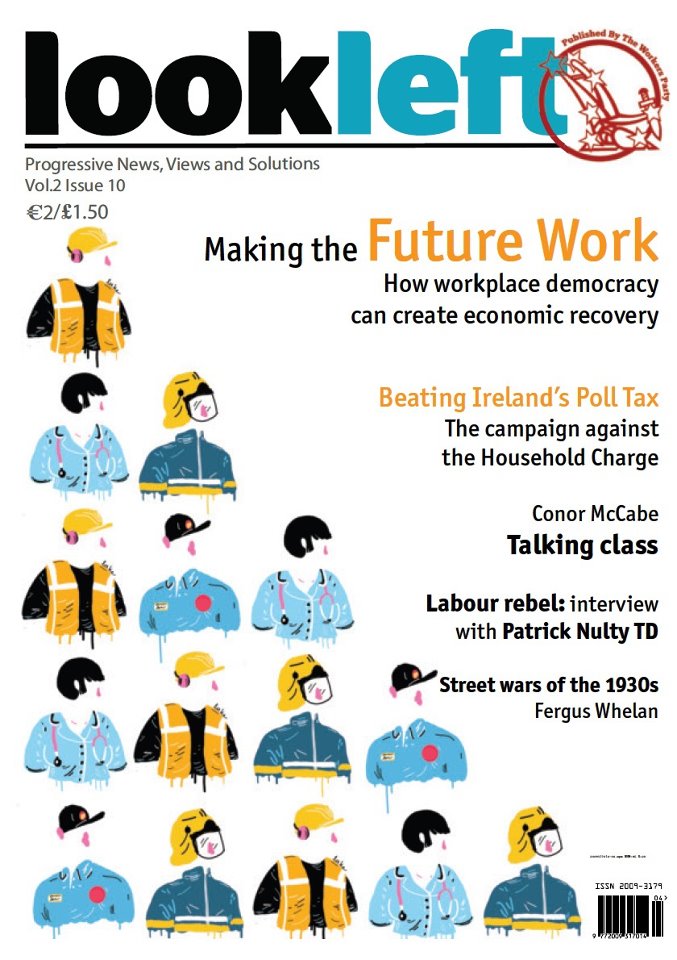
Current Issue of Look Left
Trotskyist groups The Socialist Workers Party publish The Socialist Worker (Donation, Monthly, 8 pages) and Irish Marxist Review (€3, Irregular, 55 pages) while The Socialist Party publish The Socialist (Donation, Monthly, 12 pages) and a political journal Socialist View.
Within Irish Republicanism, Sinn Fein produce a newspaper An Phoblact (€2, Monthly, 32 pages) and a magazine Iris (€4, Quarterly, 64 pages), the 32 County Sovereignty Movement (32CSM) bring out The Sovereign Nation (€2/donation, Irregular, 8 pages), Republican Sinn Fein (RSF) publish Saoirse (€2, Monthly, 16 pages) and the Irish Republican Socialist Party (IRSP) has a new magazine Starry Plough (€1.50, Quarterly, 28 pages).
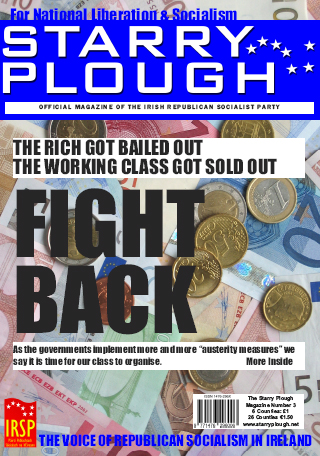
Current issue of The Starry Plough
The Communist Party of Ireland (CPI) publishes Socialist Voice (€1.50, Monthly, 12 pages)
As far as I’m aware, the Irish Socialist Network (ISN) still prints Resistance (Free, Quarterly, 4 pages)
A group of socialists independently produce Red Banner (€2, Quarterly, ?)
While Anti-Fascist Action (AFA) has a newsletter In The Area (Free, Quarterly, 4 pages) and a magazine No Quarter (€2, Irregular, 28 pages).
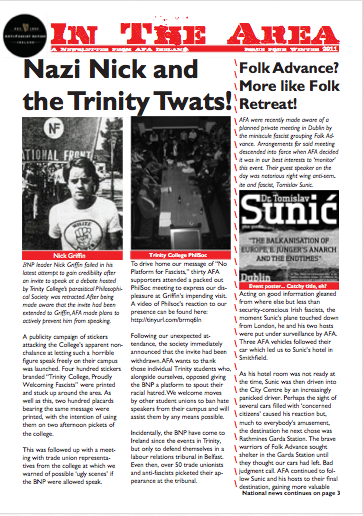
Current issue of In The Area
Share this:

Posted in Politics | 1 Comment »
Unceremoniously swiped from the excellent balls.ie this. Someone obviously took inspiration from RTÉ’s recent screening of “Knuckle,” an insight into bare knuckle boxing the Irish travelling community and decided to throw up a dedication to Big Joe Joyce on Leeson Street Bridge.

Update: Apparently it’s been there for months. Ah well, just goes to show you the gems this city is hiding!
Share this:

Posted in Miscellaneous, Photography, Street Art, Uncategorized | Tagged dublin, Dublin Graffiti, Dublin Photography, Photography | 1 Comment »
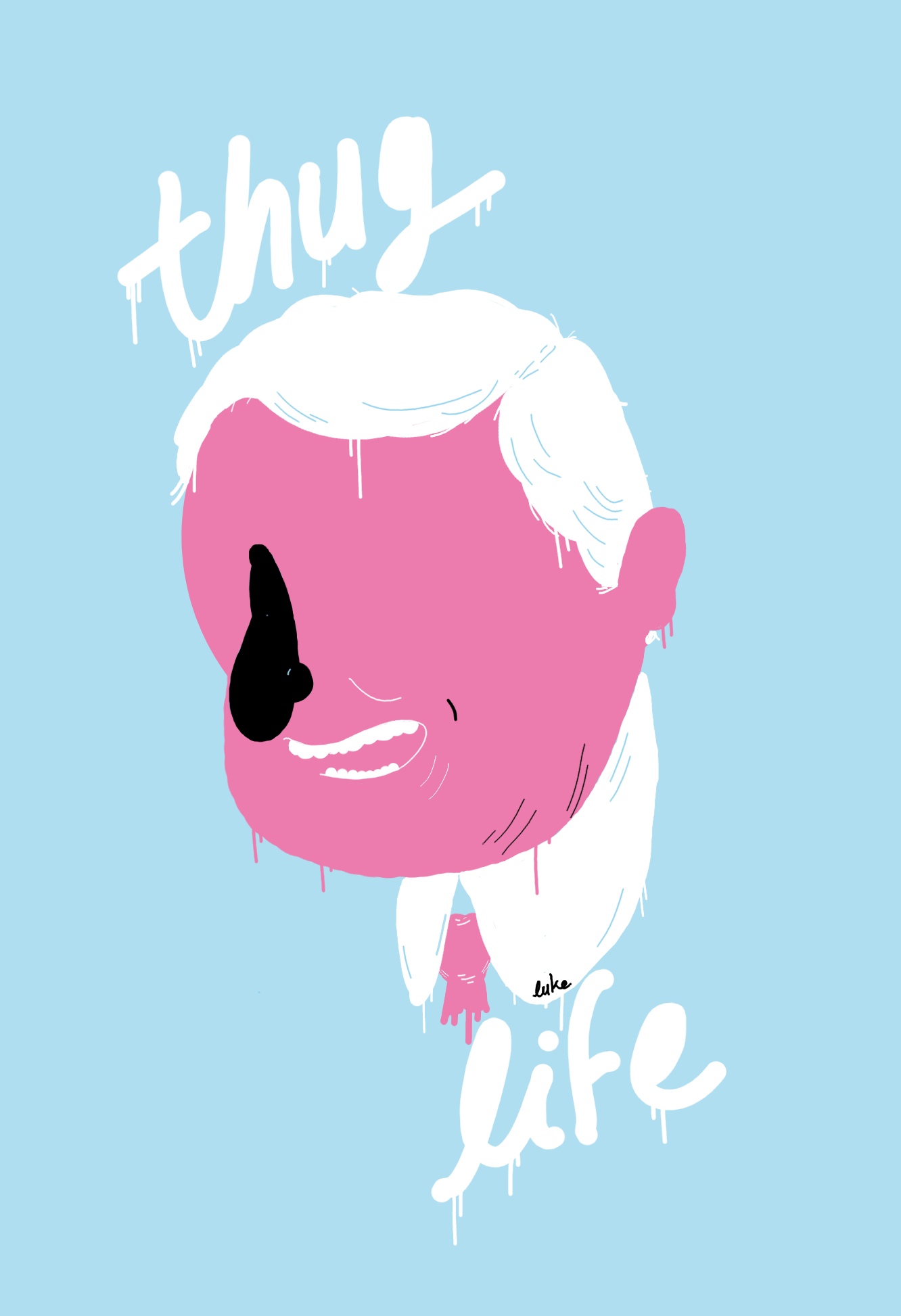
De Bruder did the above piece as a tribute to King Chancer, with the day that was in it yesterday. Thug Life is a play on the lavish lifestyles enjoyed (and boasted about) by a certain kind of hip hop artist of course. Bertie was never a hip hop artist, more a piss artist.
It reminded me to dig through the archive for this Come Here To Me classic…..

…..and that my friends is why they put cameras into mobile phones. Earlier today I spotted the same autobiography in a discount bookshop in town. How the mighty have fallen.
Share this:

Posted in Politics | 5 Comments »
The brief piece below was written for publication in a student newspaper at University College Dublin. Frank Flood was a UCD student who was active within society life on campus, as well as being a member of the Irish Republican Army. He was one of the ‘Forgotten Ten’ buried in Mountjoy Prison, and the below piece is not so much a brief biographical sketch of his life as a look at his legacy to his college. It features in the current edition of ‘The College Tribune’.

Gerry Collins, President of the Students’ Representative Council of UCD, dipping the national flag outside the GPO during a march of UCD students to remember Kevin Barry and Frank Flood, November 1960
The republican history of UCD runs deep. Today, the campus boasts a building named in honour of feminist and republican Hanna Sheehy-Skeffington as well as a plaque in the Newman Building to the young poet Charlie Donnelly, who gave his life in defence of the Spanish Republic with the International Brigades. Our list of celebrated republican graduates crosses the Treaty divide, with men like Kevin O’ Higgins and Richard Mulcahy on the side of the Treaty, and men like the great character Ernie O’Malley on the other. Michael Hayes, a founding member of the Irish Volunteers who was at Jacobs Factory during the 1916 rebellion, even went on to become a Professor with the Irish Department of UCD. Perhaps our most celebrated revolutionary however is Kevin Barry, immortalised by The Ballad of Kevin Barry, which has been recorded and performed by singers as diverse as Paul Robeson and Leonard Cohen. The song is even referenced by Dexy’s Midnight Runners in their My Life In England, capturing its importance to the second-generation Irish in the United Kingdom:
I can remember St Theresa’s social where “Kevin Barry” rang out,
My mum whispered to me “Kevin, In England that song is not allowed”
Frank Flood is a name which may not be instantly recognisable to some in the way the name of Kevin Barry is, yet he is another young UCD student who gave his life during the War of Independence, executed at only nineteen years old. One of the ‘Forgotten Ten’, Flood not alone studied at UCD but was active within its society life. Todd Andrews, another UCD student active in the republican movement, perhaps put it best when he wrote in his memoirs that “as Kevin Barry passed into the nation’s mythology, Frank Flood’s name is scarcely remembered.”

Frank Flood (With thanks to members of the 'IrishVolunteers.org' society)
Francis Xavier Flood was the son of a policeman, born in 1901. The siblings in his family were firmly republican however, and of the eight Flood boys most were active within the Volunteers. Sean Flood, the eldest of the boys, had served five years in a Scottish jail for his republican activities, and died soon after his release. Young Frank Flood was educated at O’Connell Schools, run by the Christian Brothers and located on the North Circular Road. It was here he first met Kevin Barry, with whom he formed a friendship . Flood ended up winning a university scholarship in 1918 which saw him enter the Engineering School of UCD, while Barry was a medical student. While at the college Frank became active within the Literary and Historical Society. There was a strong republican presence in UCD at the time, though as Todd Andrews noted “there were a number of students who were known to be IRA men, but unless they were in the same Company or Battalion, they never spoke or associated with one another on the basis of their common allegiance.”
Flood had been captured while attacking the Dublin Metropolitan Police at Drumcondra on January 21 1921, and the event is popularly known as the ‘Drumcondra Ambush’ today. Flood, at only nineteen years of age, held the role of First Lieutenant ASU (Active Service Unit) of the Dublin Brigade.He had led an assault which saw three Volunteers lose their lives (two on the scene), and five others sentenced to death for their role in that attack, with Flood himself found with a grenade in his pocket. He was charged with High Treason, found guilty, and executed by hanging on March 14th 1921 at Mountjoy Prison. Kevin Barry had gone to his death in much the same way in 1920, and it is said Flood requested to be buried as close as possible to his former friend and comrade.
On the 40th anniversary of the death of Kevin Barry, six members of the Students’ Representative Council of UCD laid wreaths upon the graves of Frank Flood and Kevin Barry, inside the grounds of Mountjoy Prison. Hundreds of students marched from the college at Earlsfort Terrace to the General Post Office on November 1st 1960 to pay their respects to the two, before heading onwards to the final resting place of the two UCD students. This tradition continued in the years afterwards, for example in 1963 when 500 students joined the procession. There had been questions around whether the students would be allowed continue with their march in the years following the 40th anniversary, however the matter was settled following meetings between the Students Council and the Minister for Justice. The Minister was a certain Mr.Haughey, a graduate of UCD who had been among those Earlsfort Terrace students who burned a Union Jack outside that other Dublin university on Victory in Europe Day, 1945. On that day, Trinity College Dublin students had raised the flags of some of the victorious nations over the front of the college, with an Irish tricolour at the bottom of the mast.

Frank Flood (With thanks to members of the IrishVolunteers.org society)
The Kevin Barry window stands on campus today as a memorial in honour of that young republican, but was first unveiled at Earlsfort Terrace. At the time of its unveiling, Frank Ryan, another UCD student of old, wrote in the pages of the left-wing Republican Congress that:
At last, a Kevin Barry memorial has been unveiled at University College Dublin. The present committee were people who had no connection with the War of Independence nor with the organisaitons which participated in it. It is understandable therefore- though inexcusable- that few of Kevin Barry’s comrades were invited by the committee and that, instead, a Blueshirt presided and the anti-Republican President of UCD was given an opportunity to shed tears for the Boy-Martyr of 1920.
Ryan commented that he was glad at least Frank Flood was mentioned by one speaker. Ryan himself had graduated from UCD in 1925 with a second class honours BA in Celtic Studies. Interestingly, while a student at UCD, it is sometimes said that Ryan fell for Elgin Barry, the sister of Kevin.
On March 3rd 1967 ,UCD Professor Michael Hogan, Dean of the Faculty of Engineering, made it into the Irish Independent for refusing to chair a student debate around the motion that “God is dead” The motion had been chosen by the Mechanical and Engineering Socieities for discussion at the final of the Frank Flood Shield debating competition. Hogan objected primarily on the grounds that Flood held strong religious convictions and would have disapproved. Hogan had been a friend of Flood during his time in college.
Today, Flood is buried in Glasnevin Cemetery, as is Kevin Barry. Their bodies were removed from Mountjoy Prison in October 2001, with full State Funerals awarded to the ‘Forgotten Ten’ buried in the prison. One of the Volunteers was then buried in Limerick, the rest are side by side in Glasnevin Cemetery today.
Share this:

Posted in Dublin History | 2 Comments »
Sinn Fein – March 22: 8,600. April 22: 9,386. May 22: 9,781.
Workers Solidarity Movement (Anarchists) – M22:6,972. A22:7,347. M22:7,557.
Labour Party – M22:6,930. A22:7,009. M22:7,093.
Fine Gael – M22:6,385. A22:6,444. M22:6,498.
Socialist Workers Party – M22:4,012. A22:4,217. M22:4,517.
Fianna Fail – M22:3,765. A22:3,873. M22:3,963.
United Left Alliance – M22:1,789. A22:1,1803. M22:1,841
Republican Sinn Fein – M22: 1,487. A22: 1,531. M22:1,563
Communist Party of Ireland – M22:874. A22:919. M22:975.
Irish Republican Socialist Party – M22:513. A22:552. M22:576.
Workers Party – M22:228. A22:246. M22:245.
There doesn’t seem to be a main FB page for the Socialist Party but Joe Higgins has 4,740 ‘likes’. The 32CSM nor the ISN seem to have FB pages either. Note: the RSF one is only the Wikipedia page but I thought it was worth including.
For the record, the Chicken Fillet Baguette has 7,999 likes!

“Opposition supporters talk near graffiti referring to social networking site “Facebook” in Tahrir Square in Cairo. Steve Crisp / REUTERS”
Share this:

Posted in Politics | 8 Comments »
Search CHTM
Out Now!
Now in paperback
-
Join 2,523 other subscribers
The Authors
Recent Comments
The Mallens on 4. Johnson’s Court Mindy on Plaques of Dublin: The Eagle… Aidan Convery on From McDaid’s to Grogan… Cormac Figgis on A divided Rathmines cian reardon on Dublin’s connection to t… Copyright

Come Here To Me! by Sam, Donal & Ci is licensed under a Creative Commons Attribution-NonCommercial-NoDerivs 3.0 Unported License.
 Click on the book for more.
 Click on the book for more.
 Donal
Donal Ciarán
 Sam
Sam


 Come Here To Me!