Feeds:
Posts
Comments

Stephens Green, nd.

Five stories, some you know and some you may not know, about our beautiful St. Stephens Green and the surrounding area.

1. Public executions

Up until the 1770s, most public hangings and executions took place in St. Stephens Green. Prisoners would be moved to the gallows, on a cart, from the old Newgate prison near Cornmarket.

On October 24 1773, a Mrs Herring was “burnt alive” in the Green after she was convicted of murdering her husband.

The method of execution of was as as follows:

She was placed on a stool something more than two feet high, and, a chain being placed under her arms, the rope round her neck was made fast to two spikes, which, being driven through a post against which she stood, when her devotions were ended, the stool was taken from under her, and she was soon strangled. When she had hung about fifteen minutes, the rope was burnt, and she sunk till the chain supported her, forcing her hands up to a level with her face, and the flame being furious, she was soon consumed. The crowd was so immensely great that it was a long time before the faggots could be placed for the execution [1] Sylvanus Urban, The gentleman’s magazine, and historical chronicle, Volume 43 (London, 1773), 461

Infamous brothel keeper and serial killer Darkey Kelly was said to have been publicly burnt in the green in 1761. (Others suggest her execution actually occurred on Baggot Street).

2. The Ghostly Cross

For years, every Holy Thursday, large crowds of Dubliners would gather at 80 Stephens Green, Iveagh House to see if a cross would appear on one pain of glass on an upstairs windows. Some thought it had to do with the legend that the house stood where the Archbishop of Cashel, Dr. Hurley was killed in 1583 while others thought it had to do with a dying servant girl whose  rosary beads were taken off her and thrown out the window (see below). A carpenter wrote to a Dublin newspaper suggesting it had something to do with reflections and the way the house was built!

The Irish Press. Oct 27, 1976.

3. Garden for the Blind

In the central area of the park, there’s a ‘Garden for the Blind’ which has scented plants labelled in Braille. Opened in 1972, the garden also contains a seat commemorating two Protestant feminist trade unionists, Louise Bennett (1870 – 1956) and Helen Chenevix (1890 – 1963).

4. Anti-Semitic murder

The steps of No. 95 Stephens Green was the scene of the murder of Manchester Jew and father of four, Bernard Golderg (42) on October 31, 1923. On November 14, Emmanuel Kahn (24), another Jew, was gunned down on Stamer Street in the heart of what was Little Jerusalem. In 2007, it was revealed that two Free State officers who were the main suspects fled to Mexico and the United States after the shootings.
The Irish Independent. Nov 01, 1923.

5. Hunting

Right up until the nineteenth century, it was able to shoot snipe (“a wading bird of marshes and wet meadows”) in the middle of the Green. Walter Harris noted in his History and Antiquities of the City of Dublin (published posthumously in 1766) that “an incredible number of snipe attracted by the swampiness of the Green in that season, and to avoid their enemies, the sportsmen – an agreeable and most uncommon circumstance, not to be met with in any city in the world”.

Reeling in the years.

A great images here from Paul Reynolds. We’ve featured some of Paul’s photography on the site before, in particular his photos of Dublin League of Ireland clashes. This is directly across the canal from The Barge, at Canal Road. Does anyone know the explanation, or is there any, for the random dates?

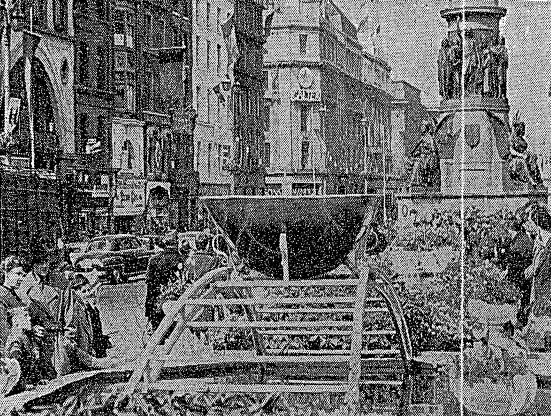
The statues and monuments of Dublin are a frequent feature here on the site. Many are familiar to Dubliners and still with us today, but some are no longer with us and were the subject of considerable controversy in their day. An example of a public ornament no longer with us is ‘The Bowl Of Light’, placed on O’Connell Bridge in 1953.

The Bowl Of Light, minus its flames.

The Bowl was the centrepiece of the An Tóstal scheme of decorations on the O’Connell Bridge in 1953. The An Tóstal event was an annual festival which ran 1953 to 1958, aimed at promoting Ireland as a tourist destination, and also luring Irish exiles home to reengage with the country. It was, quite simply, to be a celebration of Irish culture and traditions at home. In April 1952 a report in The Irish Times gave some idea of the ambition of the project, noting that:

The Board stressed that while An Tóstal whill be based in Dublin, it will be of national interest. “It will be intended that the whole country will, for the period of three weeks, be at home to Irish exiles and friends from everywhere.”

Major-Gen Hugo MacNeill was appointed organiser of An Tóstal. On the eve of the event, he wrote that:

In a few days the flag of An Tóstal will be hoisted ceremoniously all over Ireland, and the Easter fires blazing on the hills of Ireland will illuminate the skies with the message of IRELAND AT HOME!

The event would see the erection of ornaments and public art throughout the capital, but no piece captured the attention of the public quite like ‘The Bowl Of Light’, owing primarily to the fact it was to be a permanent feature.

The Bowl was described in The Irish Times, who noted that:

The copper bowl, with a diameter of about 4 feet, is fitted to a semi-circular bridge of tubular girders which spans an octagonal basin, measuring about 15 ft. by 18 ft. and containing about a foot depth of water. The many coloured plastic “flames”, which could revolve, were set in the bowl, and at night were illuminated from the inside.

The Bowl had been erected behind hoardings, meaning that the public were unable to see what it was that was to be placed on the bridge. In the region of 3,000 people gathered on Saturday April 3rd 1953 to see the unveiling of ‘The Bowl Of Light’, around which there was great curiosity among the public.

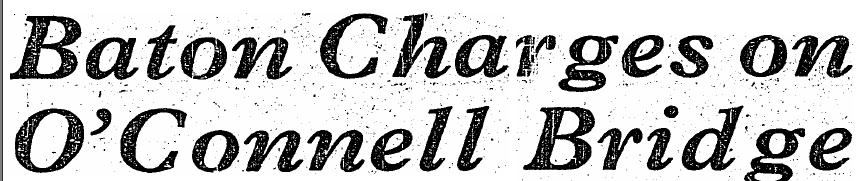
The Irish Independent reported that things turned ugly on the Saturday night, as Gardaí struggled to free traffic lanes and found themselves having to draw their batons against the large crowd. The paper noted that: ‘In scenes which followed floral decorations were thrown at Gardaí and windows were broken in a number of shops in O’Connell Street, including Clery’s. About 12 arrests were made.’

It was reported by the Sunday Independent that “at no time did the force of Gardaí on duty appear adequate to deal with the disturbance.”

The Sunday Independent reports.

While there was widespread bemusement at ‘The Bowl Of Light’, it would become one of Dublin’s most short lived public ornaments. On April 19th, only weeks after its unveiling, the ‘flames’ from the Bowl were chucked into the River Liffey, the actions of Anthony Wilson, a young student of Trinity College Dublin.

Wilson had been at a party, which was described in the courts of law as “a particularly good party.” Following it, he and friends went around the city enjoying themselves, and were spotted standing on the O’Connell Bridge complete with umbrellas, despite it being a fine day. The students made speeches there to the public, and it was evidently clear to those who heard them that a fair amount of alcohol had been consumed. “Wilson could not explain how he came to take the light and throw it into the river.”

Witnesses described witnessing a young man climb upon the parapet of the basin,pull the flames from the bowl and make his way towards the parapet of the bridge, hurling the plastic flames into the river. The young man made a run for it, but was caught on Aston’s Quay. Newspaper reports noted that some members of the crowd had shouted “Throw him in the river!” at Gardaí following his arrest. The student was ordered to pay £48 7/6 to cover the damages.

The ‘Bowl’ attracted its fair share of detractors in the letters pages of the national newspapers. However none were as loud in their criticisms as Myles na gCopaleen, who lambasted the Bowl and the Tóstal event itself. On April 9th 1953, Myles wrote tongue-in-cheek of those who had been responsible for the scenes at O’Connell Bridge on the Saturday prior.

Myles na gCopaleen, who attached The Bowl Of Light in his Cruiskeen Lawn column.

I did not have the pleasure to be in Dublin last Saturday night but absence did not deny me a glow of pride when I learnt what the citizens did when the pubs closed at ten. They decided to give the odd gawking visitor a real Irish welcome…..Here we had Cathleen Ni Hooligan in person.

He went on to attack the Bowl, writing that it was:

….an appalling piece of iron work bearing a basin out of which emerges a ‘plastic flame’. This metal thing has a spout on it, and the original intention was to have a “fountain” on the bridge. Nothing will ever in our time come out of that spout, but how much of the rate-payers cash has gone up it for this change of ‘plan’?

No need to guess. The figure is £1,768

With the flames long in the river, the Bowl continued to cause controversy through 1953 and into 1954. In November of 1953 Colm Gallagher T.D voiced his opinion, as the Sunday Independent reported, that:

O’Connell Bridge has been spoiled by the ‘slab of concrete’ and it was a disgrace to the city to see workmen using shovels during recent weeks to remove the water from the various openings.

While the Bowl itself was to be removed, the rest of the structure on O’Connell Bridge would remain until a decade on, in 1963. It is perhaps most commonly remembered among Dubliners today as ‘The Tomb Of The Unknown Gurrier’. The late Basil Payne would pen an excellent epitaph for the ‘Tomb Of The Unknown Gurrier, writing that:

The City Fathers’ grim myopia
confines me to this non-U-topia;
to reinforce their sentiment
They buried me in thick cement.

Today of course the traffic island between both sides of the O’Connell Bridge is popular with pedestrian traffic. Still, giving the state of the nation, perhaps a Begging Bowl Of Light wouldn’t go amiss!

Gig poster.

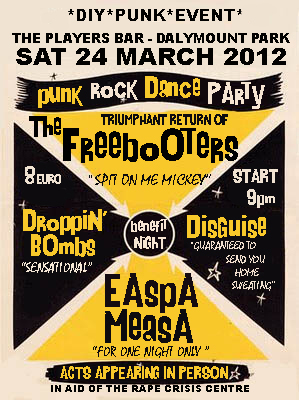
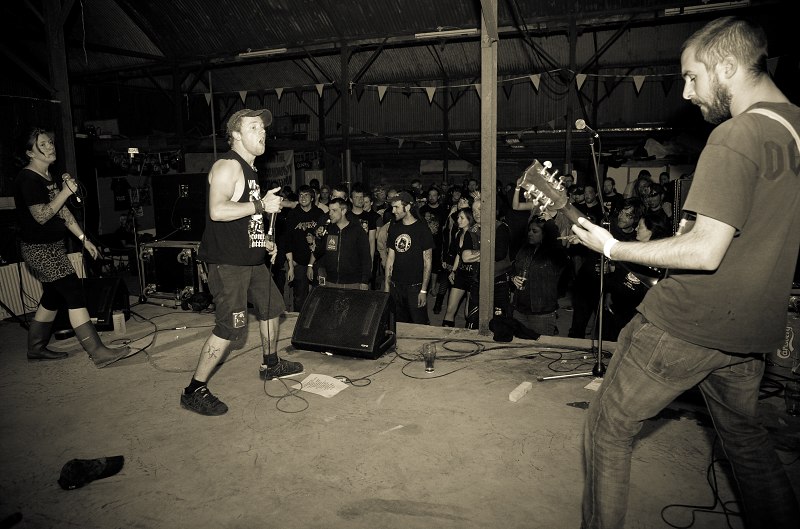
Four fantastic bands are coming together on Saturday, 24 March 2012 in The Players Bar, Dalymount Park in aid of the Dublin Rape Crisis Centre.

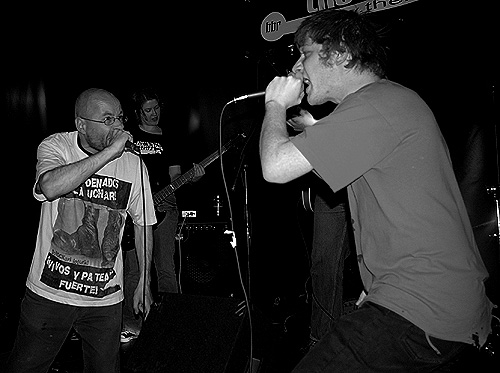
This will be the last ever show for political hardcore five-piece legends Easpa Measa who have been described at various times as “punishing crust”, “crusty melodic hardcore fury” and “dual vocaled crust with poignant lyrics”

Formed in 2001, the band have toured Europe widely and released a number of records; Renounce & Dethrone (2004), a 7″ split with Atomgevitter (2004), a 7″ split with Nemetona (2005), a 7″ split with Silence (2007) and split LP with Divisions Ruin (2010). Personally, not my cup of tea but they’re the best at what they do and a great bunch of lads!

Easpa Measa @ GGI, 2010. Photo - Janer.

Next up on the line up are acclaimed streetpunk stars, The Freebooters, who will be playing their first Dublin gig since October 2010. On the go since 2005, the ban released their debut album Ordinary Level Oi! last year to glowing reviews. Definitely one of my favourite Irish bands!

The Freebooters, 2008. (Photo - Shay)

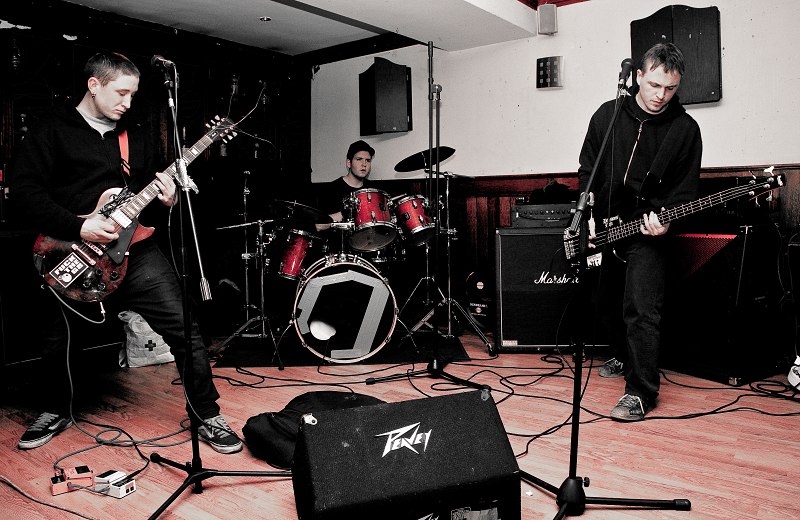
Local heroes Droppin’ Bombs who have been tearing the place up since 2004 are next on the bill. Moving on from their punky ska origins (a.k.a ‘thrashy ska-punk’ or ‘yipped out of it ska-core’) , the three-piece have been more recently labeled as ‘raging technical hardcore punk’. A part of me prefers the earlier more ska-themed stuff but I did really enjoy them at the Oi Polloi gig last weekend.

Droppin' Bombs, 2009. (Photo - Janer)

Finishing up this killer line-up are jap noise-core characters Disguise.

Doors 9pm. Admission €8. More information on the Facebook event.

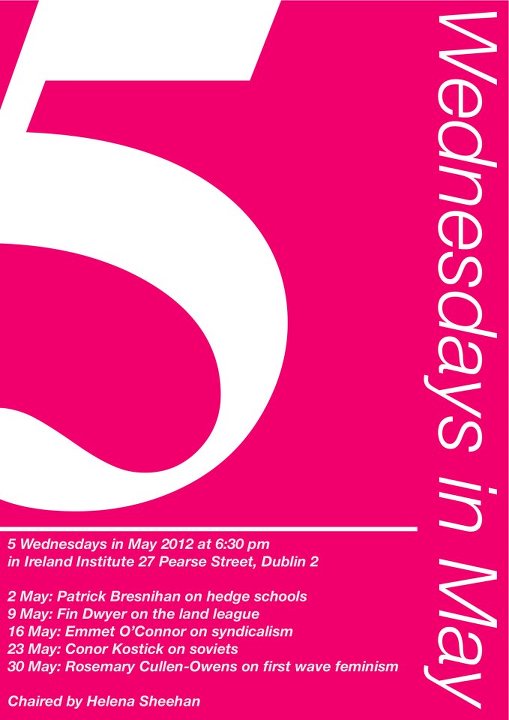
An interesting series of lectures are to be held in the Ireland Institute on Pearse Street in May, which will examine a number of movements and periods of importance in Irish history. Helena Sheehan will chair the talks, which will examine issues as diverse as the Soviets of the War of Independence period and the Hedge School tradition. While all five talks look appealing and stimulating,I’m especially looking forward to the talk on the Land League, by Fin Dwyer of the Irish History Podcast series, and Conor Kostick’s talk on the Soviets, as his Revolution in Ireland was such a groundbreaking contribution to the historiography of the period.

The talks have been organised by the ‘Occupy University’ group, and will be recorded for Dublin Community Television.

Wed 2 May: Patrick Bresnihan on hedge schools
Wed 9 May: Fin Dwyer on the land league
Wed 16 May: Emmet O’Connor on syndicalism
Wed 23 May: Conor Kostick on soviets
Wed 30 May: Rosemary Cullen-Owens on first wave feminism

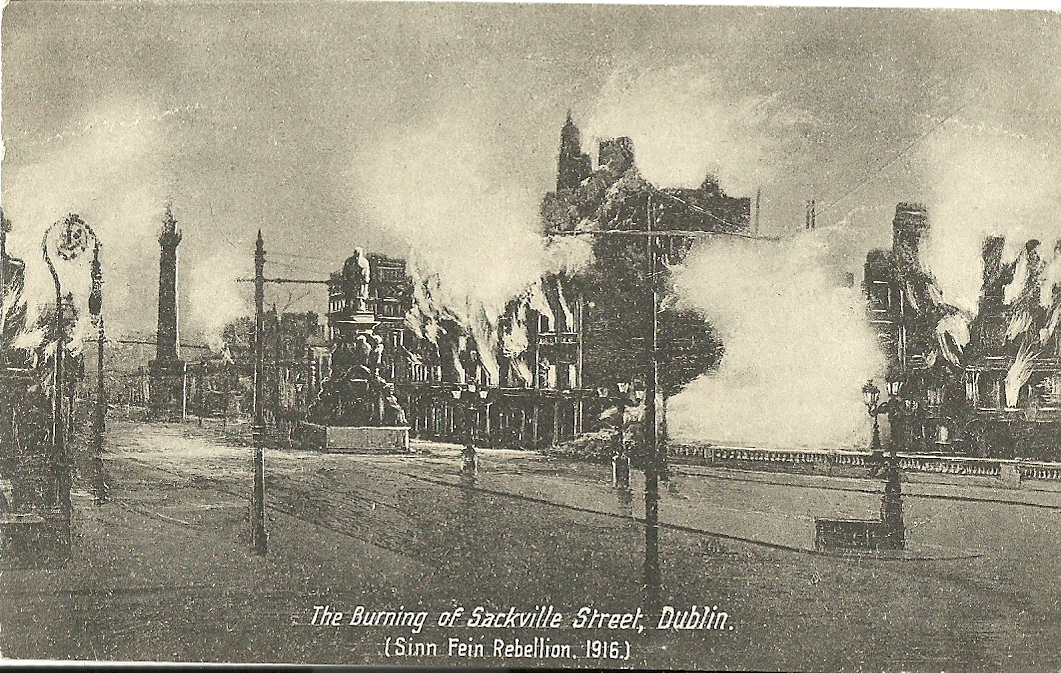
Sinn Féin Rebellion Postcard (Fallon collection)

In 1966, the then President of Maynooth College, the Right Rev. Monsignor Gerard Mitchell, invited the surviving members of an Irish Volunteers contingent who hard marched from Maynooth into Dublin to partake in the 1916 Rising to the College. There, a mass took place celebrated by an Fr. Tomhas O Fiaich, the Professor of Modern History at Maynooth.

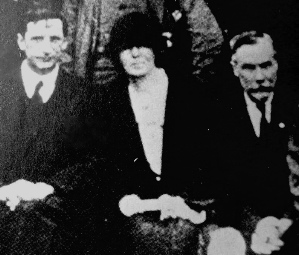
It was a far cry from the last time some of those Volunteers had set foot in Maynooth College. In 1916, led by Domhnall Ua Buachalla (later the Governor General of the Free State) , a group of local Volunteers found themselves in a very different situation. ‘The movement’ as far as the Irish Volunteers were concerned, was quite well organised in North Kildare, and Lieutenant Eamonn O’ Kelly of the Volunteers arrived in Maynooth on Holy Thursday. He was aware of the plan for an insurrection on Easter Sunday, after being appointed to his position as a County Organiser by none other than P.H Pearse.

O’ Kelly had plans for the North Kildare Volunteers. He told Domhnall Ua Buachalla, the local leader of the force, to assemble his men on Easter Sunday in Maynooth town, and from there proceed to Bodenstown Churchyard, to meet with other Kildare Volunteers. Writing of his memories of this in 1926 for An tÓglách magazine (‘The Maynooth Volunteers In 1916’) Commandant Patrick Colgan noted that “Each man was asked if he was prepared to take part in the insurrection and each man agreed”

Counter-orders caused confusion, and Colgan noted that no sooner had the men committed themselves to a rising than word came through via a dispatch from Dublin that the mobilisation was called off. It would be Monday evening before they knew for sure an insurrection was underway. The men were armed, though they didn’t carry rifles- but rather single shotguns and roughly 40 rounds of ammunition.

“Many of us had never handled a gun prior to this and much practising in the loading and unloading of our weapons now took place” Colgan noted.

It was 7.15pm on Easter Monday before the men left Maynooth. By this stage, the Rising was well underway in Dublin and key positions had been seized by the rebels.

Domhnall Ua Buachalla, seated on right.

Before leaving Maynooth, the men proceeded through the main street to the College.C olgan noted that “..there were rumors to the effect that some of the students were anxious to join us” and the Volunteers also wanted to interview one of their own who had answered the original mobilisation call. “Our quest for this employee brought us to the building occupied by the late Very Rev. J. Hogan , D.D, President of the College” The President called on Domhnall O’ Buachalla to return home and to see to it his fellow Volunteers did the same. Undaunted, the men marched out the south-east gate of the College, and were now on route to Dublin.

Continue Reading »

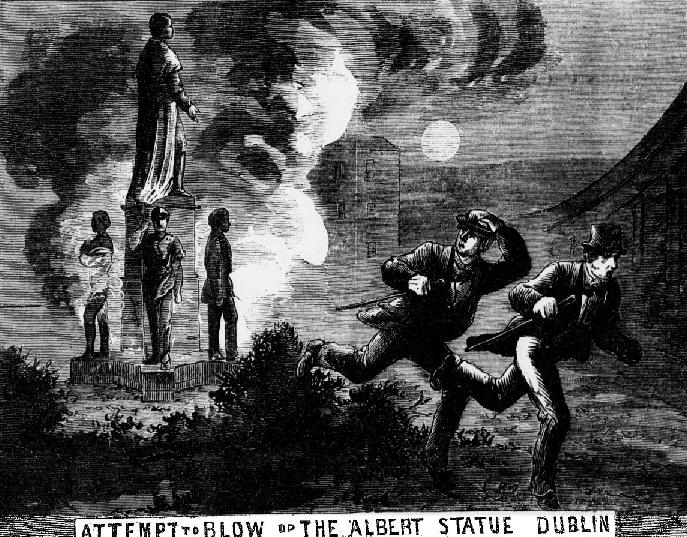
I thought this worth scanning, as it deals with a statue recent featured on the site. The Albert statue was originally to be located at College Green, but found itself ultimately in the grounds of the Royal Dublin Society. It may surprise some of you to hear the statue is still in Dublin, though now it is inside the grounds of Leinster House.

Henry Grattan of course occupies the space at College Green where Albert was originally to be located, and Irish nationalist newspaper ‘The Nation’ stated at the time: “The idea that Prince Albert’s statue would ever be raised in College Green was manifestly as hopeless and wild as a design to move the Hill of Howth”

The piece on the Albert/Grattan controversy can be read here.

(Article first published in Look Left, Vol.2 Issue 10)

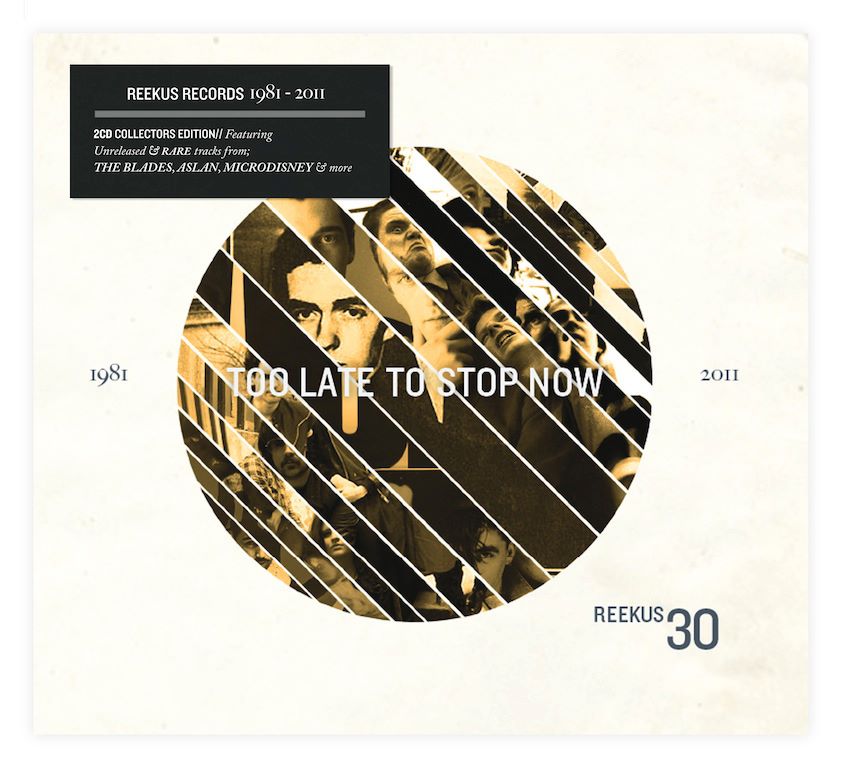
Featuring heavily on a recently issued Reekus Records anthology, ‘Too Late To Stop Now’, Sam McGrath explores the music and politics of The Blades.

reekus.com

Socially conscious, musically gifted and uncompromising in their attitude towards the manipulative music industry, The Blades remain one the most revered and important Irish bands of all time.

The genius of Paul Cleary, lead singer and songwriter of the band, lay in his ability to craft both memorable love songs and standout tracks about the critical issues of his generation – boredom, unemployment and a crippling recession. Class conscious and sympathetic to socialist politics, Cleary “tried to get that into (his) music without browbeating people”.

Lending support to various worthwhile causes, The Blades played numerous benefit gigs throughout the 1980s. These included gigs for Rock Against Sexism in UCD in February 1980, for the families of those who died in the Stardust fire in 1981, for the pro-choice Anti-Amendment campaign in September 1982 and for the Dunnes Stores anti-apartheid striking workers in January 1985. In 1986, they famously shunned the ‘back-slapping’ Self-Aid to play the left-wing Rock The System one-day music festival at Liberty Hall.

Brian Foley & Paul Cleary (Mill Butler)

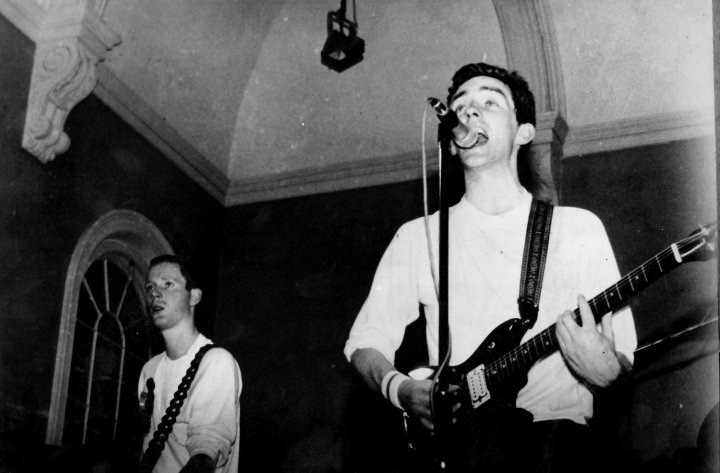
The Blades roots lay in their working-class, southeast Dublin 4 neighborhood of Ringsend. Spurred into action by the Punk explosion, they made their live debut as a five piece at their local Catholic Young Men’s Society (CYMS) Hall in the summer of 1977. Ironically, the plug was pulled on the gig early when the sound engineer took exception to the band playing God Save the Queen; not understanding it was The Sex Pistols version (!).

Subsequently with Cleary on bass, his brother Lar on guitar and childhood friend Pat Larkin on drums, the band were a formidable trio. The sharply dressed, melodic post-punk outfit played ‘short, punchy, guitar-driven songs’ that suited the live, intense atmosphere of their first home, The Magnet, a tough local bar on Pearse Street.  These early gigs, only enjoyed by a room full of forty or so Mods and Soul Boys, would go down as some of the best in Dublin’s live music history.

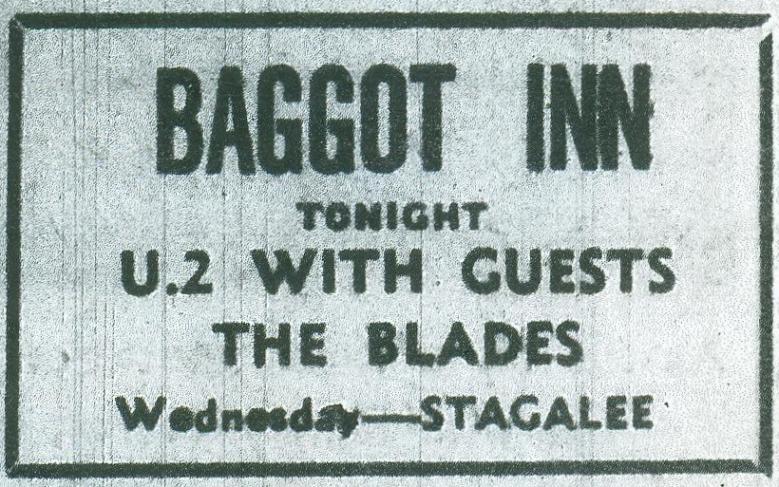
A year later, they were in The Baggot Inn playing a famous six-week residency with another fledging Dublin band – U2. Dave Fanning, who DJ’d at the gigs, recalls that parts of the crowd would leave straight after The Blades, ignoring U2. The two bands couldn’t have been more different. While Cleary and co. would unleash an assault of high-tempo, three-minute pop/soul numbers, Bono used to come on stage and tell the “crowd of a dream he had the night before’

u2theearlydayz.com

This first line up of The Blades, which lasted from 1977 to 1982, released two fantastic singles; the catchy summer pop classic Hot For You in 1980 followed a year later with the more mature, Ghost of a Chance which dealt with love across the class divide. Disenchanted with the failure of Energy Records to proceed with the planned LP, Lar and Pat left the band.

Replaced by bassist Brian Foley (ex. The Vipers) and drummer Jake Reilly, Cleary took over guitar duties. Coupled with the horns section of the Blues Brass, a ‘couple of renegade musicians from The Artane Boys Band’, this more developed and ambitious model recorded a LP with Elektra but in a nasty turn of events, the record company, who had recently lost a substantial amount trying to break Howard Jones into the American market, decided not to release it.

Left with a finished product (recorded in London with The Smiths’ producer John Porter) but with little else, The Blades found themselves in a frustrating scenario. Luckily the record was eventually released, to critical acclaim, by the pioneering Irish label Reekus. Cleary, a life long fan of George Orwell, titled the LP The Last Man In Europe, the original choice of name for 1984.

Before their one and only studio album was released, The Blades brought out three first-rate singles. The guitar-driven The Bride Wore White in March 1982 which was voted single of the year in the Hot Press National Poll with Cleary also winning Best Irish Songwriter beating Bono, Van Morrison and Phil Lynott. It was followed later that year by Revelations Of Heartbreak, the multi-layered brass-tastic dancefloor stomper.

Continue Reading »

Around the High Table

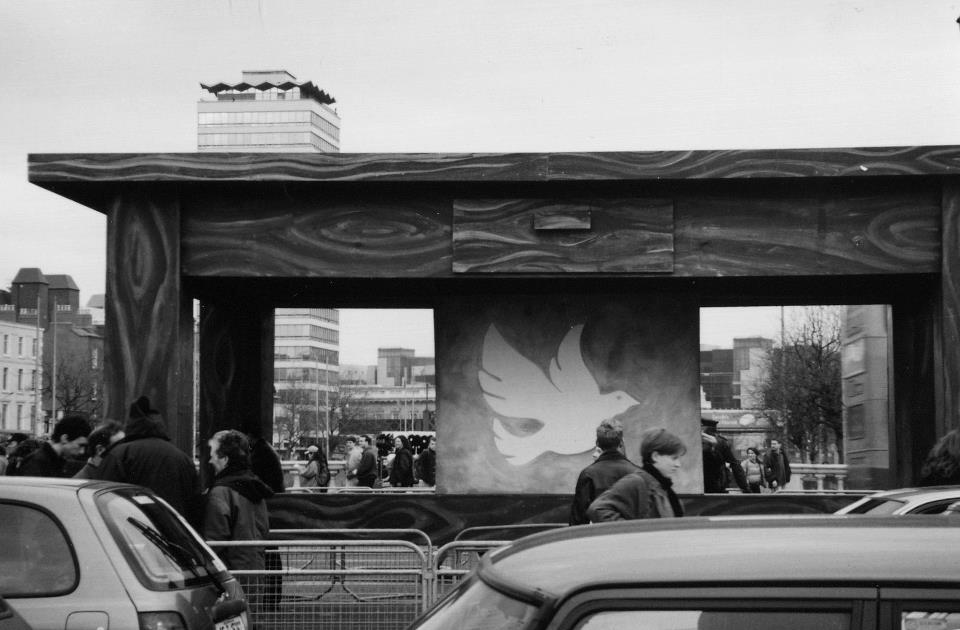
An interesting image and quote this. The Table Campaign was founded in 1996, around the time of the IRA’s shattering of the 17 month ceasefire, with the Canary Wharf bombing on 9th February that year.

The concept was to set up a load of tables on O’Connell bridge and invite people passing by to sit down and discuss what peace should look like at those tables. There was some Sinn Fein involvement and they argued for a giant table as a striking press image. On the day of the event however all that appeared was a giant table, maybe 3m high, far too high in the air for anyone to sit at, dominating the bridge. The lesser tables for the ordinary people to sit and discuss what a popular peace process might look like did not appear. Symbolic, if perhaps accidentally, of the process as a whole where the rest of the population were limited to the role of watching the drama around the big table at Stormont.”

Thanks to Andrew Flood for the image and accompanying quote.

Image

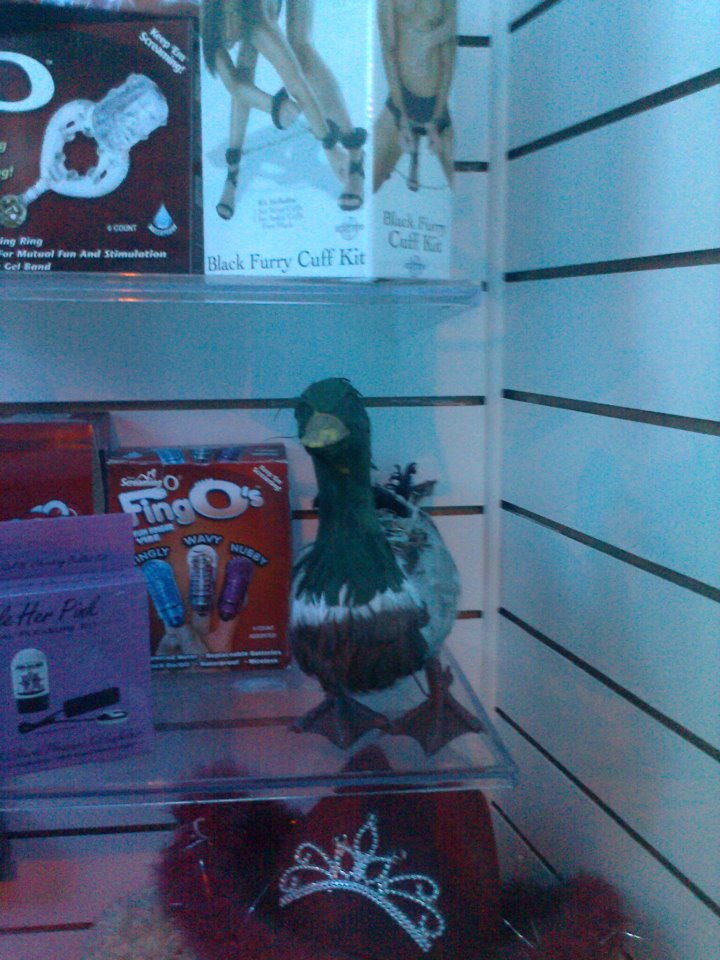
Your guess is as good as mine!

Thanks to Angela for this incredibly bizarre image from the window of a Capel Street adult shop.

A few weeks back we posted a history of Dublin’s sex shops, with many people surprised to hear it was 1993 before the first such shop in the capital was opened. 


This Irish Times photo shows Shamrock Rovers fans outside Milltown Road following the 1-1 draw in Dublin that saw Rovers knocked out of European football in 1984.

The visit of Belfast’s Linfield to Milltown Road to face Shamrock Rovers in a European Champions Cup clash in 1984 was one of the largest football related security operations in the history of the state. The two-leg draw between the Belfast and Dublin sides made headlines on both sides of the border before a ball had been kicked, with The Irish Times report on the drawing of the two clubs together noting that it was the “spectre of the collision of the Orange and Green” that marked the draw out.

Much of the fear around the class had come out of events in Dundalk in August 1979, when Linfield and Dundalk faced each other at Oriel Park. Almost 500 Gardaí were involved in policing that encounter, and journalist Peter Byrne wrote after the clash that “this was the night when the concept of All-Ireland club football was killed stone dead. Two hours of raw, naked tribalism on the terraces of Oriel Park convinced even the most reformist among us that the dark gospel of the paramilitaries has permeated Irish sport to the point where all attempts at reconciliation are futile.”

Prior to the first round clash at Windsor Park in Belfast, there had been violence at Dalymount Park during a clash between Bohs and the visiting Glasgow Rangers in the same week. Among the Rangers support was a healthy contingent of supporters from Northern Ireland. The clash in Windsor Park on September 20th 1984 was played out before a near silent crowd of 6000, with The Irish Times reporting that “In stark contrast to the turbulent scenes in Dalymount Park 24 hours earlier, there was never the hint of crowd violence. Only a few Union Jacks were in evidence to taunt the visitors and, almost inevitably, there was not one spectator sporting the emblem of Shamrock Rovers to be seen anywhere in the ground.” It ended a nil all draw.

Jim McLaughlin, Shamrock Rovers manager at the time of the fixtures with Linfield, had held the same position at the time of the ‘Linfield Riots’ in Dundalk. Prior to the Rovers games, he stated in the media that: “Some people will attempt to attach a dimension to this fixture that will have nothing to do with football. Relations between the two clubs are good and I can only hope that the fans will have learned from the experiences of Dundalk.”

On September 25th Linfield Supporters Clubs were told by the club that Shamrock Rovers were unwilling to sell them tickets. Newspaper reports suggested that a sizeable group intended to travel tickets or no tickets. This greatly worried the club, as Linfield had found themselves having to play games in Holland following the violence at the time of their trip to Dundalk. Initally, Rovers had offered 1,500 tickets to Linfield supporters, smaller than the away allocation in normal circumstances. The club withdrew this offered allocation, and club chairman Louis Kilcoyle issued a statement which read:

Shamrock Rovers Football Club have advised Linfield FC that there will be no allocation of tickets to Linfield for the second leg of the European Cup tie at Miltown on October 3rd.

This decision has been taken to ensure that the second leg game takes place without incident and in a atmosphere as prevailed as Belfast last Wednesday.

Newspaper build-up to the clash focused on off the pitch matters, and when the clash actually did occur Rovers went out to Linfield, owing to a one-all draw in Dublin. Inside the ground, one newspaper reporter counted sixteen tricolours, and three Union Jacks.

The Irish Times reported on the trip to Dublin undertaken by one Linfield Supporters Club. There were 200 Linfield supporters in Dublin, and as the paper noted it wasn’t until Linfield’s goal their presence was felt. Following the encounter, the sound of ‘The Sash’ could be heard from the travelling contingent, while it was noted Dermot Keely received some abuse from the visitors. “Keeley, you Fenian Bastard!” was shouted, to which he responded with two fingers.

Outside, there was little in the line of the ‘hooligan’ element expected (or hoped for!) by those in the media. Gardaí in riot gear were met by around 100 Shamrock Rovers fans who threw stones at Gardaí as they awaited the exit of Linfield’s travelling support from the stadium. A Garda sergeant was reported as saying “it was our own who were the gurriers today” following the match. Yet the few dozen youths throwing stones didn’t live up to the newspaper reporting in the lead-up to the clash. Certainly, the violence was not on par with some seen in Irish soccer grounds in the 1980s, for example the disgraceful scenes at Richmond Park in April of 1986 at an FAI Cup Semi-Final between Saint Patrick’s Athletic and Waterford United. The fixation with the Linfield clash no doubt centered around the broader context of north-south relations, and memories of events in Dundalk.

In 1989, Shamrock Rovers fanzine the ‘Glenmalure Gazette’ ran a tongue-in-cheek feature from ‘R.Anglelodge’ on why Linfield supporters were the best in Ireland. It joked that:

Louis Kilcoyne recognised that Linfield fans were the best in Ireland. He didn’t think twice about banning Rovers scumbags from going to the European Cup game in Belfast. He was absolutely correct to let us blues fans go to Milltown. Two weeks before the match we had helped the Huns to try and wreck Dublin. We deserved the chance to have another go at it!

From 'The Glenmalure Gazette' (March 1989)

Reggae in Dublin 2012

An up to date list of regular ska/reggae nights and promoters/DJs in the city. Missing anything? Leave a comment. All information correct as of March 2012.

Mondays:

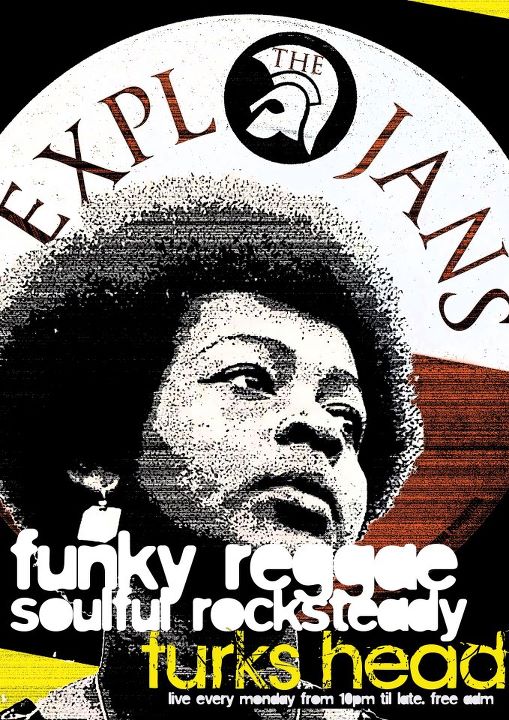
The Expojans @ The Turks Head, Monday nights.

Thursdays

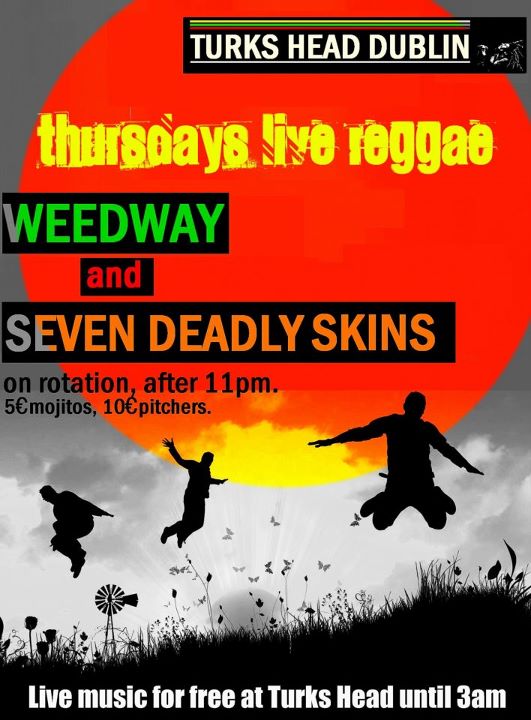
Weedway or Seven Deadly Skins @ Turks Head, Thursdays.

Fridays

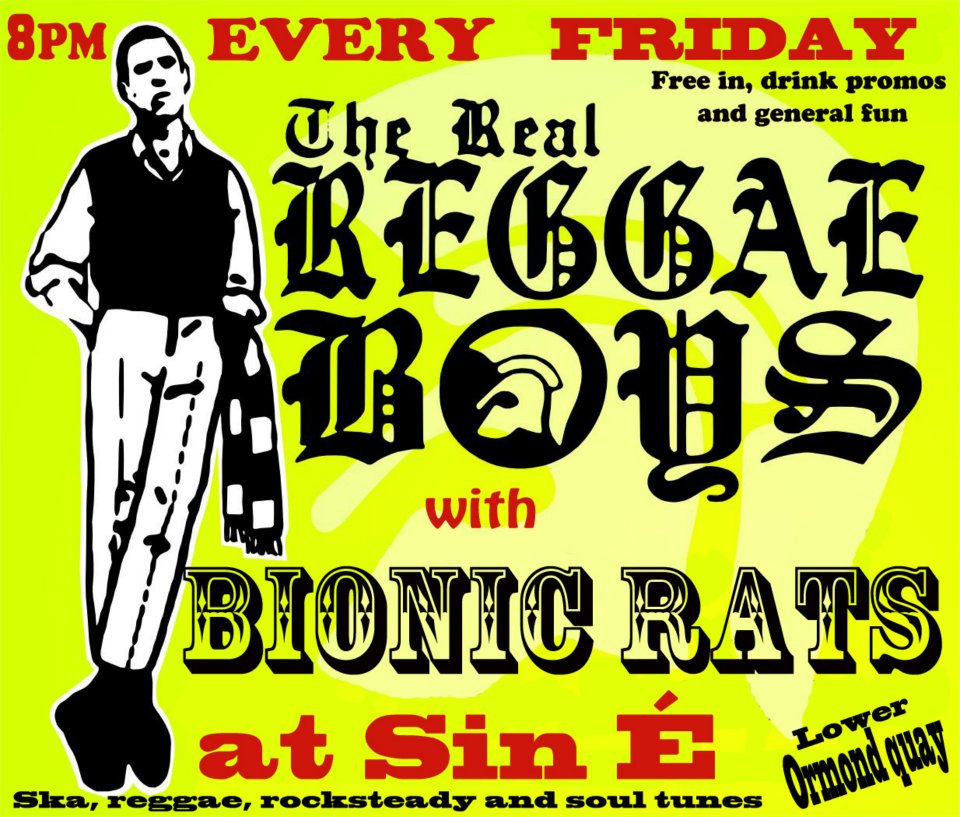
The Bionic Rats & The Real Reggae Boys DJs @ Sin E, Friday nights.

Saturdays

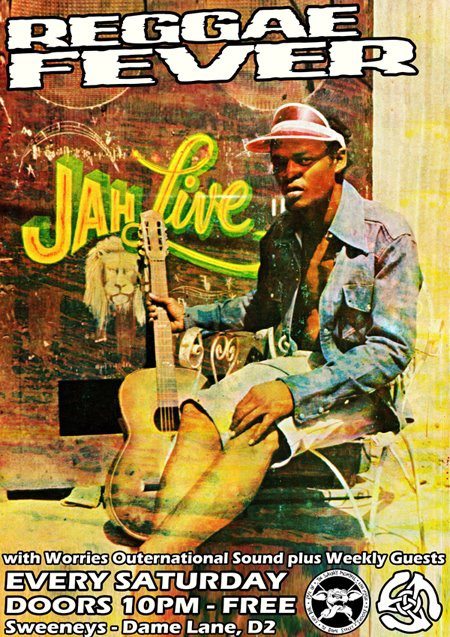
Worries Outernational DJs with guests @ Sweeney Mongrels, Saturday nights.

Sundays

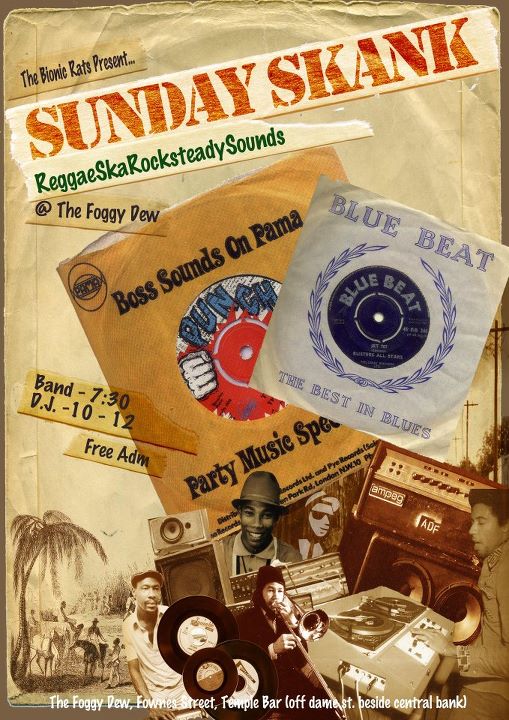
The Bionic Rats plus DJs @ The Foggy Dew, Sunday nights.

There’s also regular gigs from the following Reggae & Ska promoters; the Punky Reggae Party, Poster Fish, Roots Corner, Irish Moss Records/The Dirty Dubsters, Junior Spesh, Ital Vibration, Community Hi-Fi, Firehouse Skank, Irish Roots Army and Saoirse Sounds.

The following ska/reggae bands also gig regularly around the city; The Little Beauties, Pressure Drop, Skazz, The Gangsters, Present Arms , The Very Specials , The Bionic Rats, Weedway , The Reggulators , Trenchtown , Indica,  Dubtown Vibration, Promises and Lies (UB40 tribute), Intinn, The Rebel Souls, The Dubtones , The Barley Mob and the Seven Deadly Skins.