A who’s who of the Irish comedy and entertainment world played a major benefit gig, entitled The Entertainment Party Conference, in The Olmypia Theatre on July 15 1990. Money raised went to the Simon Community and a new ‘Comedy Fund’ to help subsidise improv and writing workshops for up and coming comics.
Here are two pictures of the event that have never been published before.
The first shows Philip Chevron (The Radiators of Space/The Pogues), Ronnie Drew (The Dubliners), Terry Woods (Sweeney’s Men/Steeleye Span/The Pogues) and Paul Brady.
(c) Billy Magra collection. Scanned up by Carax.
The second picture shows the closing ceremony and the crowd includes Terry Woods, Ronnie Drew, Ardal O’Hanlon, Dermot Carmody,Shay Healy, Michael Redmond, Barry Murphy, Gerry Ryan, Dave Fanning, Agnes Bernelle, Niall MacAnna, Billy Magra and a few others.
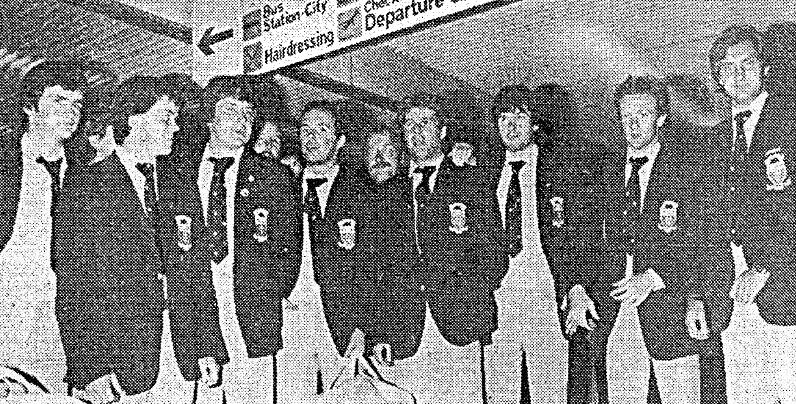
The returning squad at Dublin Airport (The Irish Press)
UCD AFC’s summer tour to Africa in 1980 was one which saw the college soccer club make the national headlines for all the wrong reasons at home. The tour would be remembered primarily for events in Khartoum, where a riot broke out in a stadium packed with 30,000 Sudanese fans. They had come to watch Merikh take on the Dubliners, and a goal from UCD was enough to send them into riot mode.
The UCD summer tour of 1980 was originally planned to just take on Kenyan opposition. The Sudan Football Association approached the side in the days leading up to their planned trip however, and as such the trip was extended to include fixtures there. Kenyan side Abaluhya were first up against the students on July 30th. UCD would play six games in Kenya. They came out on top once, drew twice and lost three times.
The match on August 14 1980 in Khartoum had been tense from very early on, as the captain of the local side had been sent off for a bad foul. From that point on the Irish squad were pelted with stones and bottles. Dr. Tony O’Neill, manager of the students, told The Irish Press however that it was not until the students scored soon afterwards that all hell broke loose. David Cassidy was the goal scorer.
The crowd seemed to go mad. They take their soccer very seriously here, and but for the timely intervention of the security forces to protect us the scene would have become very nasty indeed. When the police moved in, brandishing machine guns and throwing tear gas into the crowd to disperse them, our players were escorted to their dressing room and afterwards back to the Hilton Hotel.
The referee was hospitalised as a result of the crowd trouble. Following the clash referees in Sudan would strike demanding greater protection during games, where such clashes had occurred before. Unsurprisingly, UCD cancelled their final planned game in Sudan! UCD’s next clash was away to Drogheda United in the League Cup. They crashed out three nil, and there was no violent disorder.
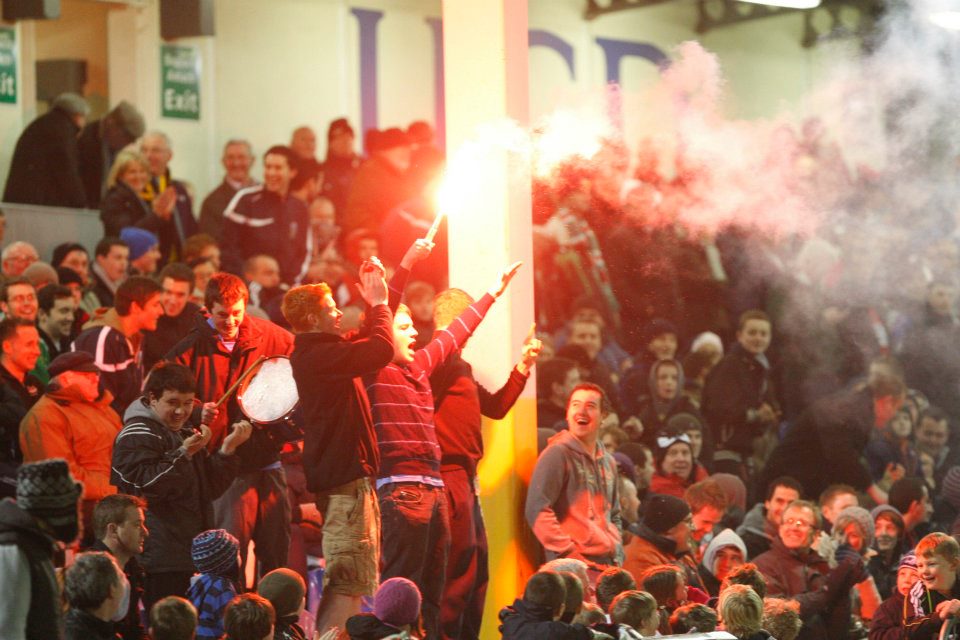
This photograph is priceless from last Friday night, showing a flare lit up by the normally very tame home support at UCD AFC. It was a good night across the league with plenty of colour and passion, and I’m sure everyone agrees it’s nice to be back where we all belong on Friday’s.
The looks on the faces around this lad make the photo, the novelty factor evident and a great moment captured. The image has been doing the rounds over the weekend and if anyone knows who to credit, let me know. It’s now one of my favourite League of Ireland shots without a doubt.
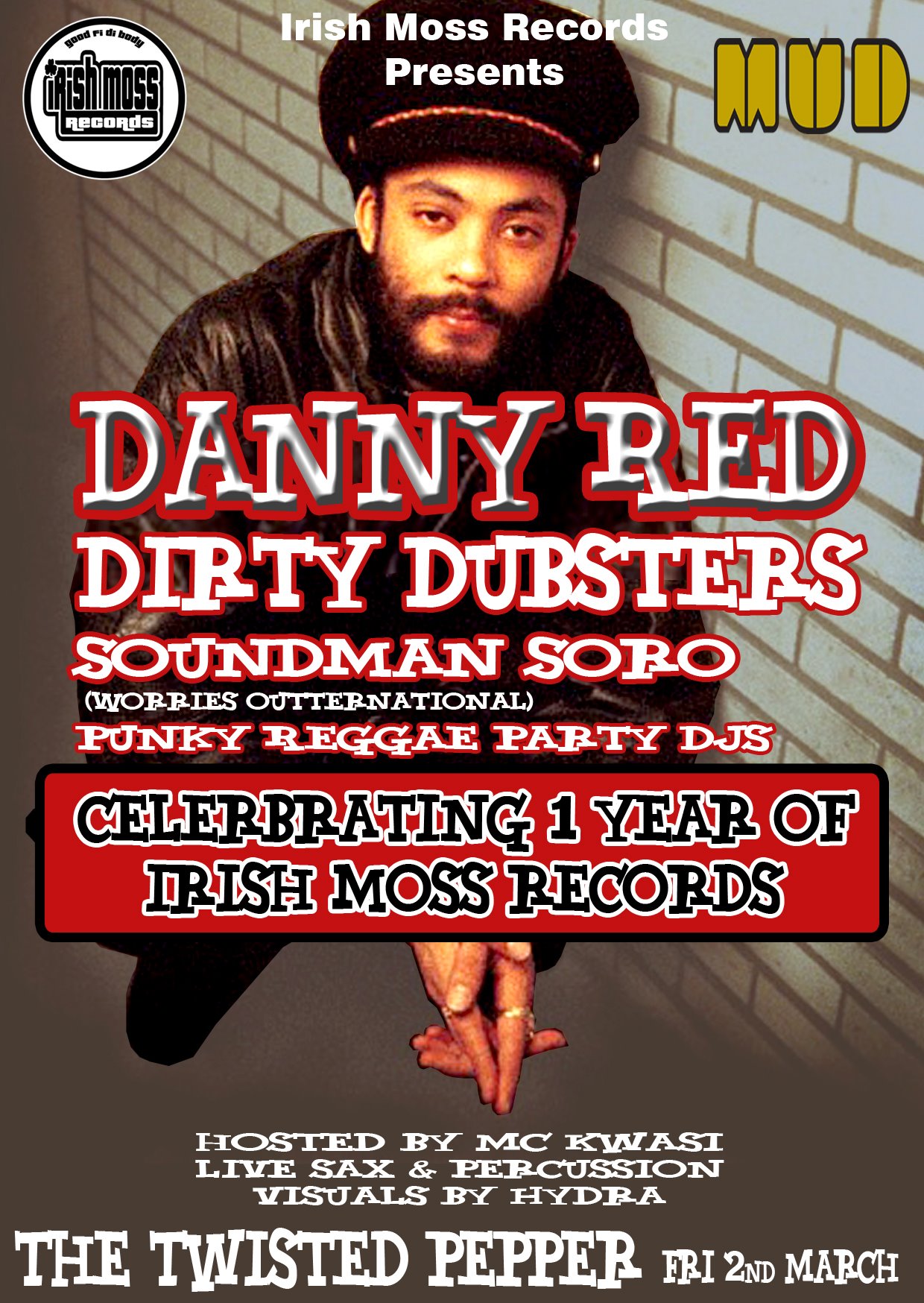
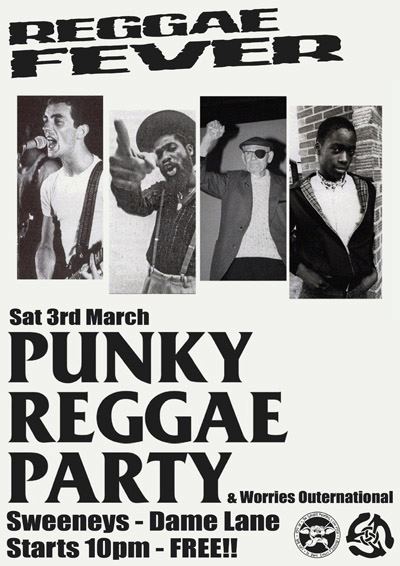
Two gigs that yours truly will be playing this weekend.
Friday with the legendary Danny Red, Soundman Soro (Worries Outernational) and Punky Reggae Party DJs.
You can get in for €5 by writing ‘Irish Moss Records’ on the Facebook event here. Recent interview with the The Dirty Dubsters with Bodytonic here.
Twisted Pepper
Saturday down with the Reggae Fever session in Sweeneys.
The following advertisements have been scanned from the Capuchin Annual, 1936. We’ve a decent collection of the annuals here and I’m a big fan of the insight they offer into a Dublin long gone through the advertising pages at the front and back.
Some of these companies are still with us, but trading in different stock. I doubt clerical tailoring is a major part of the Clery’s business plan in 2012!
This is a great idea from the folks at the University Times in Trinners.
Essentially, what they’re doing is finding bands and acts from among the student body and recording them in some unusual locations on campus. The cricket pitch, the arts block, next to Lecky the historian in his big chair, inside the war memorial, the options are endless really aren’t they?
Two videos have gone up so far, Falling Famous on the prior mentioned pitch….
….and Morgan MacIntyre & Gavin MacDermott at the Nassau Street entrance.
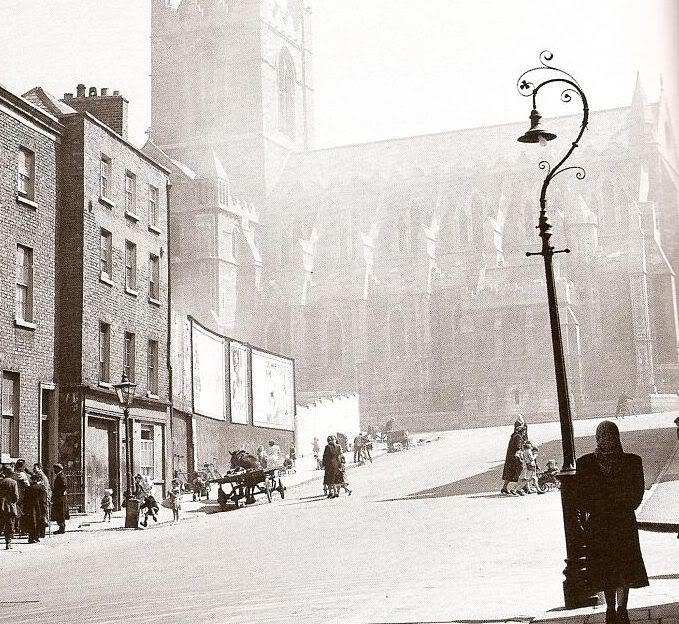
Stunning view of Christchurch Cathedral, from St. Michael’s Hill, before the development of Wood Quay.
Picture credit - unknown
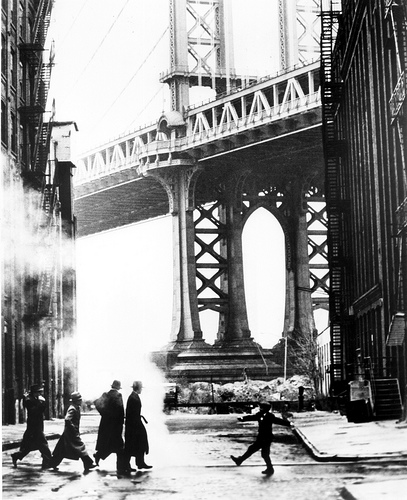
Reminds me somewhat of those classic, atmospheric depictions of 1920s New York with the steam and silhouettes of people. Captured so well in Once Upon A Time In America (1984):
Following the screening of ‘The Enigma of Frank Ryan’ at the IFI yesterday, there was a History Ireland Hedge School across the street in Filmbase. As editor Tommy Graham put it, this was sort of a ‘Pop Up Hedge School’, arranged days before the screening and taking advantage of the planned second screening. History Ireland managed to get a strong panel together, with Brian Hanley, Leeann Lane, David O’Donoghue and Fearghal McGarry. McGarry was the ‘historical consultant’ for the film. There were also excellent contributions from the floor, for example from Manus O’Riordan and Sam Nolan. As ever, I recorded the discussion.
Among the issues discussed are Ryan’s relationship (or, perhaps, lack thereof!) with Rosamund Jacob, the Republican Congress, the road to Spain and just what Ryan may have been doing in Nazi Germany during the second World War.
The 'Shankill Road' Republican Congress contingent at Bodenstown, 1934.
Turn your speakers up. Frustratingly the radio-mic was inactive and the three microphones used were rather low, but I find this file audible and clear. Enjoy.
“I was rapping with an American accent til I was about fifteen or sixteen and someone turned around and went ‘here you’re not from the Bronx. You’re from the Blanch – you should rap like it.’
I saw Costello with the other Street Literature lads at a fundraiser for Rabble magazine last Saturday (issue three of that magazine should be on the streets of Dublin by the day of Saint Patrick), and as ever they delivered. Of course the Street Literature lads were among those to feature in the recent ‘Ireland’s Rappers’ documentary on RTE, which I have to be honest and say like a lot of others I found a bit disappointing. It lacked the right historical context (where were Scary Éire!), and seemed to want to present some sort of American ‘feud’ where really there doesn’t seem to be one in reality. Still, the Street Literature lads at least came off as genuine and people who do what they do because, well, they like doing it.
Workin’ Class Records continue to keep their music easily available to all, with all releases available to stream via their site and respective bandcamp sites, for example LD50 Part II from Lethal Dialect, one of the most talked about Irish hip hop albums in a long time. This seems to be as much a matter of principle as anything else, and should be welcomed these days. The buzz they’ve generated through this approach should be noted.
Costello’s album is something we’ve been looking forward to since the video for Young Apprentice was released a few weeks ago. The album ‘Illosophical’ is now available to listen to, free, by clicking here. My personal favourite track on it is ‘The Devil’s A Liar’, taking aim at the government and church, it’s a sharp piece of Dublin hip hop.
Enjoy. Costello will formally launch the album March 15th with Junior Spesh at the Twisted Pepper.
Giuseppe Cervi opened up Dublin’s first Fish and Chip shop on Brunwick Street (now Pearse Street) in the 1880s.
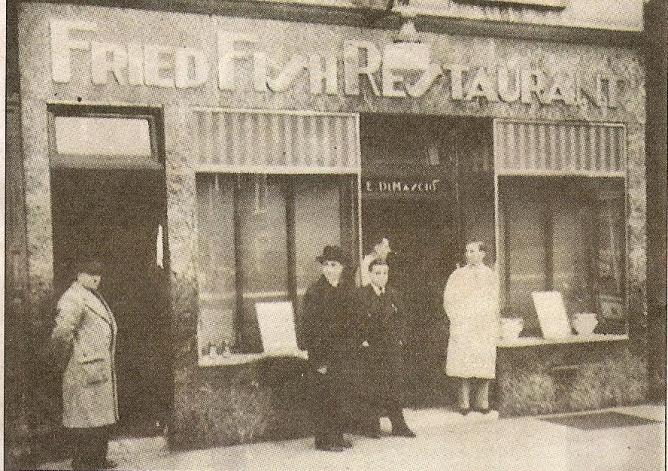
Here is a lovely snap of Eduardo Di Mascio’s shop on Marlborough Street from 1938.
Mairtin Mac Con Iomaire (author of The History of Seafood in Irish Cuisine and Culture) has identified that Eduardo Di Mascio was a carpenter from Valveri, Italy who arrived at the height of the Civil War in 1922.
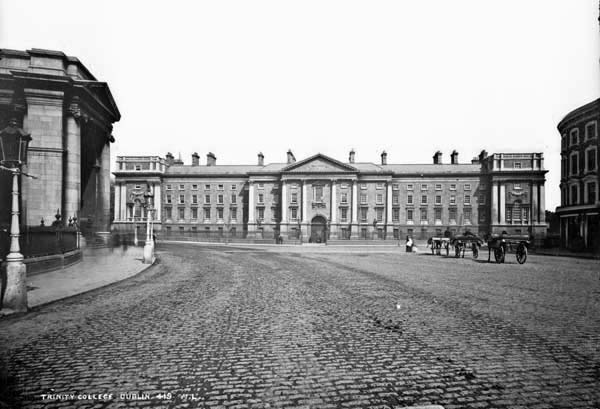
I had to jot this down recently when I stumbled across it, excellent. The railings of Trinity College Dublin are now fair-game for natives, tourists, large groups of Spanish secondary school backpackers or anyone else to sit on it seems.
Once upon a time, the students of Trinity College were in the habit of spending the fine summer afternoons seated on the railings between the front gates and the archway, sunning themselves and contemplating the world as it passed by. About five years ago the Board issued an edict which made it illegal for any student to sit on the railings ever again. The loungers in the sun withdrew to prepared positions behind the classical facade, the statues of Burke and Goldsmith, and the porters in black velvet jockey-caps.
This rather curious regulation was prompted, apparently, by the Boards constant concern for appearances. As far as one can judge, without inspection of the minutes of that secret conclave, it felt the sight of students lounging on the railings gave the outsider the impression that Trinity students never did any work. And the Board, with some justice, is tired of being misunderstood. As far as the average citizen of the new Ireland is concerned, Trinity College is still the retreat of the sons of the Big House, young men with more money than sense, every Trinity man has imperialism in his blood, and is only waiting his chance to re-establish the British Raj in Dublin Castle; they are the undying West Britons, and they are all snobbishly contemptuous of everything Irish.
In the past, we took a brief look at some unusual Dublin pirate radio stations here on the site, such as Radio Jacqueline, a 1967 schoolboy effort which made its way into the national media.
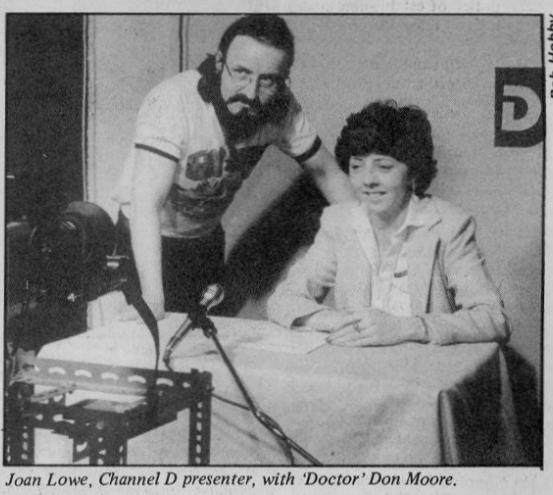
With RTE television turning 50 this year and much nostalgic feeling coming with that, perhaps some of you will remember Channel D, the first Irish pirate television station which popped up in April of 1981. Channel D, subtitled as ‘Independent Television Dublin’, lasted only a number of months due to pressure from state forces, and ultimately failed to establish any sort of loyal base like the pirate radio stations had succeeded in doing. Jim Reidy, one of the stations directors, and ‘Doctor’ Don Moore were among those involved with the station. Don Moore had played a leading role in the development of the pirate radio format in Ireland. Indeed, many involved in the earliest pirate television efforts in this city had come from that background.
Channel D snap from In Dublin (scanned by daxarchive.com)
Even prior to Channel 3 (as the station was first known) taking to the small screen, the buzz around the station led to The Irish Press of April 21 1981 reporting that:
“All the means at its disposal” are to be used by the Department of Posts and Telegraphs to prevent the operation of the country’s first pirate television station which intends to start transmissions from north Dublin in the next few days. Action, in the form of the seizure of equipment, will be taken against this unlicensed station in others in Cork and Limerick which also mean to begin operations soon.”
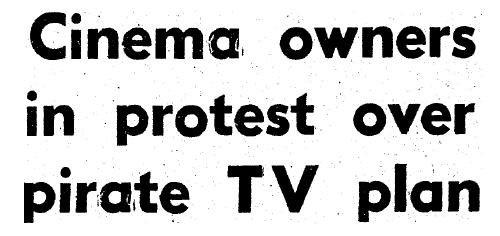
Some of the fears around the stations had come about as a result of cinema owners taking to the media and complaining of their fears of uncensored films being shown on such stations. Jack Bourke, an owner of two cinemas, told The Irish Press that if films were to be shown on pirate television uncensored or prior to their cinema release, “cinemas will close or we will not bother about submitting films to the censor.” This led to a situation where a Limerick based consortium planning to soon commence pirate transmissions found themselves telling the national media they were prepared to submit their films to the film censor, Frank Hall.
It was April 25th when Channel 3, the nations first pirate telly station, took to the air. This was an incredible new experiment for those involved of course, which brought all sorts of difficulties with the task. An In Dublin feature on the station that summer noted that with these earliest transmissions:
The signal was weak, the reception in black and white and the frequently-repeated material irritating. One observer described the operation as ‘amateur-land’. But somebody, somewhere, had succeeded in putting a picture on my screen.
In its infancy, the station was broadcast out of the Camelot Hotel on the Malahide Road, and was only obtainable within a five mile radius of that location. Still, despite its incredibly small potential audience, it grabbed the national attention through the newspapers of the day. The station went to great lengths to stress the fact it didn’t want to be seen as a threat to the national broadcaster, with a spokesperson telling The Irish Press that the station only went on air after RTE had ceased transmission and that “we are not posing a threat to anyone.”
The Irish Times was completely correct when it stated that Channel D was “strangled at birth”, with a High Court settlement see ing the station banned from showing any films less than thee years old. The station had planned to show ‘Kramer versus Kramer’, but alas this wasn’t to be.
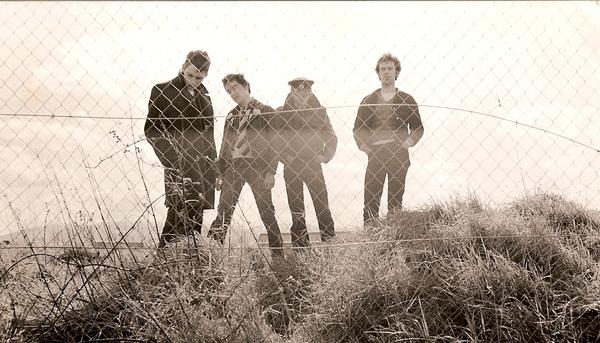
So, what did they show? Irish-TV.com notes that that it was said that Channel D’s stock of video cassettes was “burnt out in a ‘freak’ accident at a Dublin petrol station, so Channel D constantly repeated the same film, No.1 of the Secret Service in the evenings and a magazine programme filmed on a domestic camera in the day.” Also broadcast with great frequency was Don’t Swim on the East Coast by The Sussed. The song was about the Windscale Nuclear power station, Sellafield to me and you today.
'The Sussed', taken from the bands MySpace account.
The In Dublin feature noted that “broadcasts begin very suddenly, without any ceremony. The equipment consists solely of a video-cassette recorder linked to a transmitter and thence to an aerial in the roof.” By the time the In Dublin feature was written in August of 1981, the station was broadcasting from the State Cinema in Phibsborough. The feature noted that “Channel D is financed by a large consortium of business interests whose main concern was to provide Dublin with local independent television at no extra cost to the viewers, since funds would be generated by advertising.”
Ultimately, Channel D was not the success it could have been, with state interference and poor equipment to blame. The station had ambitious plans which even included breakfast television, unheard of in Ireland at the time. Other pirate television stations would follow, with Radio Nova attempting to make the leap to the format too, but like Channel D these efforts would be shortlived.
At the time when Radio Nova attempted the move to the small screen, chairman of the RTE Authority, Mr. Frank O’Donovan, described pirate telly as nothing but “a two finger excercise to the government, to RTE and to the law of the land.” These stations represent a fascinating and forgotten piece of Dublin’s social history.












 Click on the book for more.
 Click on the book for more.
 Donal
Donal Ciarán
 Sam
Sam


 Come Here To Me!