
Stuck to a few phoneboxes in the city centre, nice work. Photo is via the excellent Dublin Urban Art.
Stuck to a few phoneboxes in the city centre, nice work. Photo is via the excellent Dublin Urban Art.

Posted in Street Art | Leave a Comment »

Elizabeth McLaughlin’s statue to the Countess Markievicz was slammed in The Irish Times of October 21 2000 by Robert O’Byrne. In a piece looking at five ‘statues to forget’, it was noted that the statue “bears almost no resemblence to the rebel Countess, it is coarsely executed, a giftshop item enlarged”. Ouch. Still, the writer also thought that John Henry Foley’s masterpiece, the O’Connell memorial, was “vulgar, overblown and overbearing”, and even praised ‘Perpetual Motion’, that weird looking thing out by Naas.
The statue of Countess Markievicz is relatively new, dating back to 1998. It was commissioned by Treasury Holdings. The Countess has a number of statues and monuments in her honour, including at Leinster House and Stephens Green, along with a very impressive statue in her native Sligo, depicting her in the uniform of the Irish Citizen Army. What is unusual about the statue opposite Tara Street fire station and next to The Irish Times, is that it shows Marckievicz in a more informal manner, alongside her beloved dog Poppet.

Sean O’Faoláin wrote of the dog in his biography of the Countess, noting that:
Madame had a dog, Poppet, which some of them disliked intensely and regarded only as ‘an ould dog you’d love to root’, and behind her back Poppet did get an occasional ‘root’
The dog also appears in the memoirs of Margaret Skinnider, the only female wounded on the republican side during a Easter Rising, and a republican from Coatbridge,Scotland.
One day the countess took several of us, including her dog Poppet, out beyond Dundrum. Upon our return we could call this expedition “a little shooting party.” And it would be the truth, for Poppet, being an Irish cocker, more interested in hunting than in revolts, joined himself to two men who were intent on getting birds. He was of so great assistance that these men, in recognition of his services, gave us a few of the birds he brought in. We took them home as trophies.

Constance’s stepson Stanislas with Poppet.
While the statue dates to 1998, monuments to the Countess have stood in the city for decades. It was 1932 for example when the bust in Stephens’ Green was unveiled at a huge ceremony involving veterans of the Rising, President de Valera, and an ex-speaker of the Indian Parliament in the form of Mr.Patel, who received a rousing reception. Early in 1945, someone took a disliking to the bust and a hammer was used upon it, causing considerable damage.


Damage shown in The Irish Press
Constance Georgine Markievicz is today buried in Glasnevin Cemetery, having died at the age of 59, on 15 July 1927. She, and her sister Eva, a radical in her own right and a trade unionist and suffragist, are remembered in W.B Yeats’ beautiful poem In Memory Of Eva Gore-Booth And Con Markiewicz.
The light of evening, Lissadell,
Great windows open to the south,
Two girls in silk kimonos, both
Beautiful, one a gazelle.

Posted in Dublin History | 6 Comments »
Poster Fish Promotions presents “The Harder They Come” film screening at 8pm at King7 on Capel St. followed by a night of Ska, Oi!, Soul and Reggae with the very best of Dublin ska DJs. Admission €5 before 11pm, €8 after.
Full details on Facebook here.
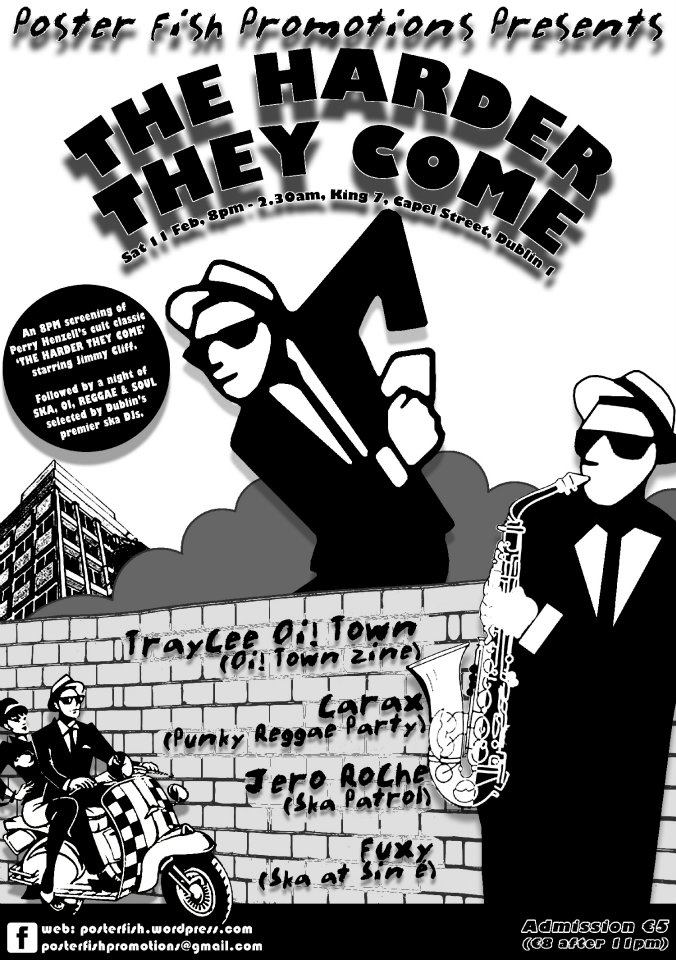
Poster - KS
In the Twisted Pepper, Surge are hosting their third take over which features Manchester’s Andy Stott, Slowburnm The Candidates and the Punky Reggae Party in the cafe. Tickets €10 or €12 on the door.
Full details on Facebook here.
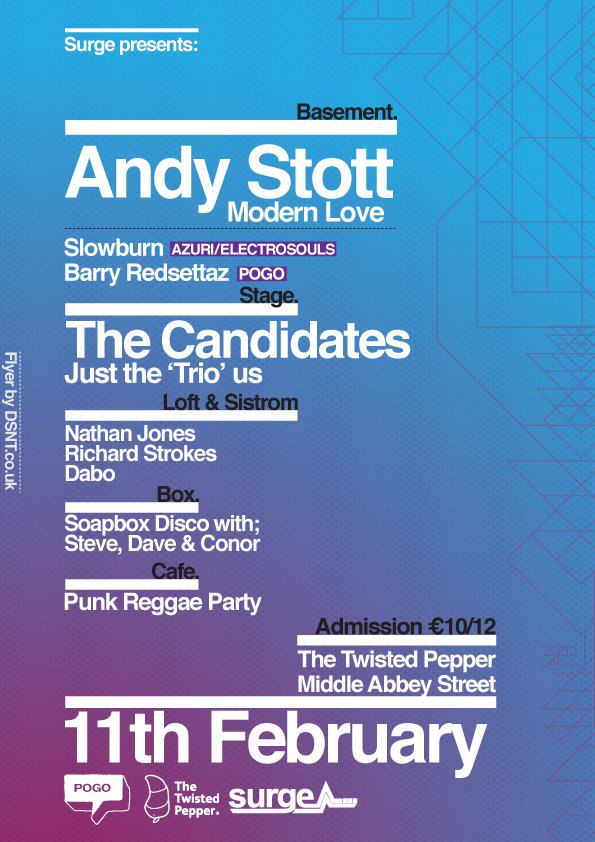
Poster - Surge

Posted in Events | Leave a Comment »

Leo Broe, himself a member of the Irish Volunteers, is best remembered today for his various monuments to Irish republicans throughout the country. His memorial sculpture opposite Phibsborough Library on the North Circular Road is one of my favourite statues in Dublin, dating back to 1939.
The statue serves as a monument to the men of the Old ‘C’ Co.1st Batt, Dublin Brigade. Made of Irish limestone, and standing an impressive sixteen foot, it was unveiled on February 19 1939. Interestingly, the statue takes the form of a drinking fountain. The statue shows a man in Volunteer uniform clutching a rifle. On the day it was unveiled, Capt. Sean Prendergast unveiled the monument while Seamus Byrne delivered the oration.
The memorial contains three plaques, showing historic moments in Irish history. The landing of the Milesians, Cu Chullan and the death of Brian Boru at Clontarf are shown. As The Irish Press report at the time of the unveiling noted “over the fountains are two brass plaques of celtic design, and the surrounding area is in the form of a celtic cross.”
The Irish Times estimated that three thousand people had attended the unveiling of Broe’s statue.
Vandalised in the 1970’s, and the Volunteer stood for many years with no rifle in his hand, until his restoration in the early 1990s. The image below comes from an issue of inDublin magazine dated August 6th 1981, and first uploaded to the excellent dxarchive.com site, a tribute to Irish pirate radio stations, as Dublin’s first pirate television station ‘Channel D’ operated out of the old ‘State Cinema’ building in Phibsborough, just next to this monument.

Leo Broe, of Harolds Cross, was responsible for some excellent monuments nationwide. This cutting from The Irish Independent shows him at work on a monument which would end up in Bruff, Limerick. His monuments are to be found across the four provinces.

Leo Broe’s profile on the Dublin City Galery page notes that “much of Broe’s time was taken up with ecclesiastical work for Dublin churches, along with IRA memorials in provincial districts.” He died in 1966, with his son Desmond Broe going on to become noted in the field himself.
Just around the corner, and featured on Come Here To Me in the past, is a small plaque to Sean Healy, the youngest republican casualty of the 1916 rising.

Posted in Dublin History | 10 Comments »
Hotel bars are by no means the best bars. Yet Jury’s Hotel on Dame Street contained a beautiful antique bar, and when it was due to come under the hammer with the closing of that hotel, it was to end up in the most unusual of places.
Jury’s stood in what is today the location of the Central Bank on Dame Street. A grand premises, as the Irish Independent of October 4 1972 would note, with 95,000 sq. ft. in the 156 bedroom property on the corner of Dame Street and Anglesea Street. Only two doors away, construction was already underway on the Central Bank.
There was due to be an auction on March 6th 1973 which would have seen the contents of the bar auctioned, but a group of businessmen from Zurich purchased the bar for a five figure sum in advance of this. The bar was to be removed to Zurich in its entirety, containing, among other features “a marble-top counter, brass footrails,decorative wall panels and lead light windows”.
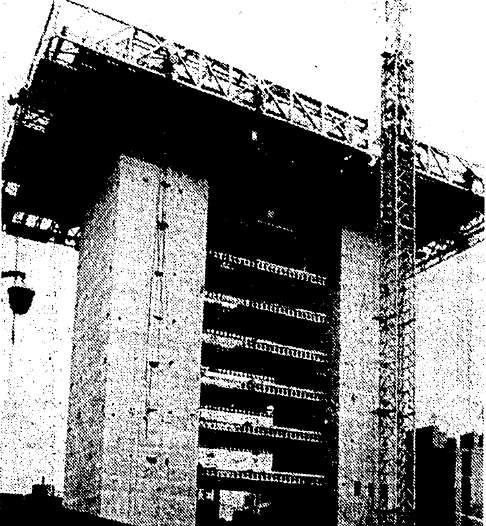
Construction underway at the Central Bank.
Today, the pub holds the name ‘The James Joyce Bar’
Of course, James Joyce had strong connections with Zurich, having lived there and indeed being buried in the Fluntern Cemetery near Zurich Zoo. Joyce had left Zurich for Paris in 1920, but returned in 1940 fleeing the fascist occupation of France. For over thirty years the bar of Jury’s Hotel from Dame Street has sat in Zurich, named ironically in honour of a Dubliner who felt the need to leave Dublin to make it as a writer.
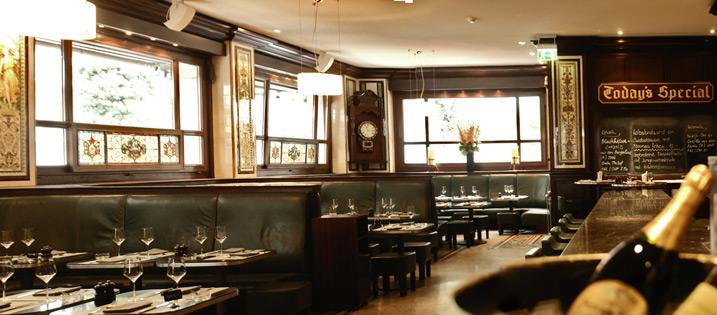
The pub today.
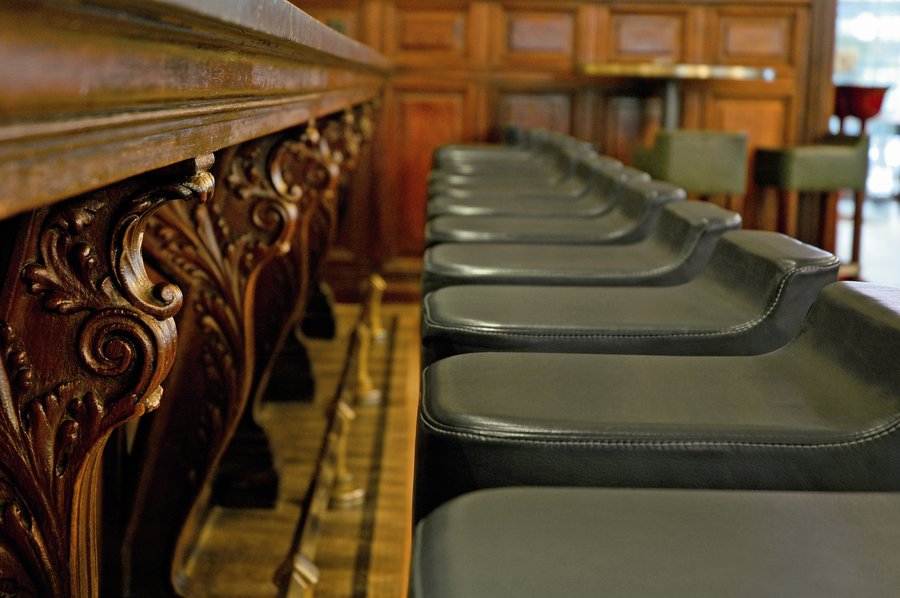
The pub today.

Posted in Pubs | 4 Comments »

On February 27 1864, The Nation newspaper reported on a ‘ingrate and dishonouring act’ carried out by Dublin Corporation, when the Corporation decided upon Prince Albert, and not Henry Grattan, for the prime statue location at College Green. The paper ran a selection of extracts from other papers across the island, which all slammed the decision, with the Wexford People noting that “thirty-two against fourteen decided that Henry Grattan might go seek a place elsewhere, and that Prince Albert should be the choice of Ireland.”
By December of 1865, The Nation was boasting that the planned “German invasion” of College Green,in the form of a statue to Prince Albert, was no more. There had been protests against the statue, for example a meeting at the Rotunda which saw Fenians take the stage. The Lord Mayor had read a letter from the Duke of Leinster in Council which proposed that the Prince Albert Statue Committee erect their monument to Albert in the grounds of the Royal Dublin Society House. “The idea that Prince Albert’s statue would ever be raised in College Green was manifestly as hopeless and wild as a design to move the Hill of Howth” the paper stated, and the planned “desecration” of College Green, an area historically associated with Henry Grattan and his Irish Volunteers, had been averted. “The husband of the famine Queen” was not to have pride of place on College Green.
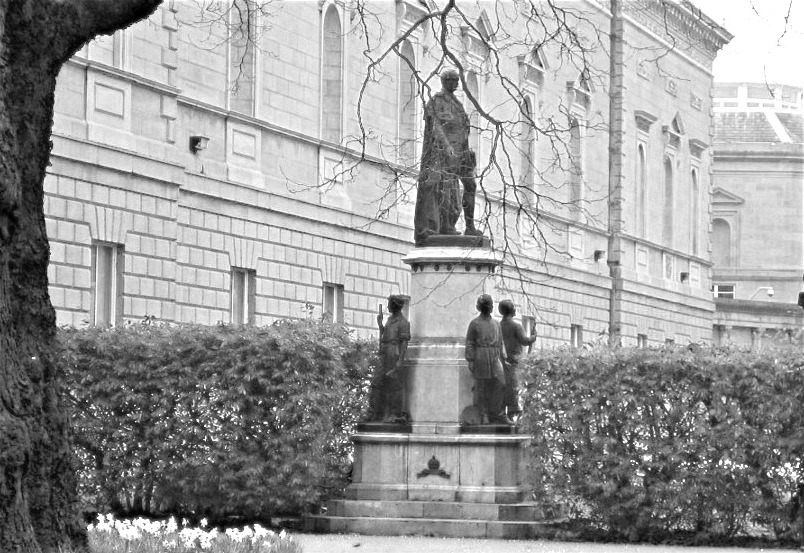
Albert's statue in Dublin today, on Leinster Lawn.
Today, Prince Albert’s statue is one of the last ‘imperial’ statues in the city to survive. In the city of exploding statues, Albert today sits hidden in the grounds of Leinster House, right by the Natural History Museum’s walls, with few Dubs aware of his presence. College Green would become home to John Henry Foley’s statue of Grattan, a statue unveiled on January 6 1875. At that unveiling A.M Sullivan spoke of how “this is an age where in other lands principles are abroad teaching class to war upon class. Come hither, Irish men…..behold the figure of a man who born in the highest sphere of society, had a heart that felt for the poorest cottager on an Irish hillside.”
The Irish Times report on the unveiling of the statue noted that the position was perfect for a monument to Grattan, alongside Parliament and facing his alma mater. “His statue has been placed on the only site in Ireland that was worthy of the man, fronting equally two buildings with which his name will be forever most gloriously associated.”
Leinster Lawn, home to Prince Albert today, was of course also once home to Queen Victoria. The figures from the base of her monument are today in Dublin Castle, and will be examined here soon, but Victoria herself would end up in Australia, removed from Leinster Lawn in 1947 and placed in storage for several decades.
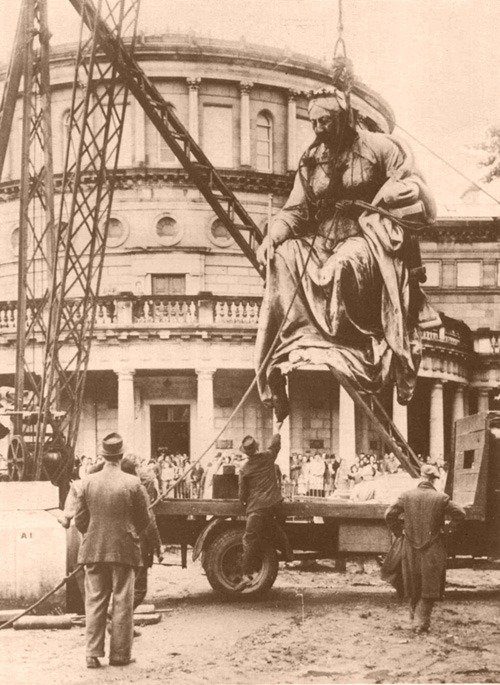
The removal of Queen Victoria.
In a 2005 letter to The Irish Times, MM Ireland wrote a letter in response to one stating the statue of Victoria should be returned to Dublin and placed alongside Prince Albert on Leinster Lawn once more.
“I do not know whether the Australians bought Queen Victoria’s statue from us, when it was found to be surplus to our requirements, but we should certainly let them have Prince Albert for nothing.”
It’s difficult to imagine a situation where Prince Albert’s statue would have survived following independence were it placed at College Green. King William of Orange, who sat at College Green for so many years upon his horse, was blown up in the 1940s. Today, that spot is occupied by Irish nationalist Thomas Davis.
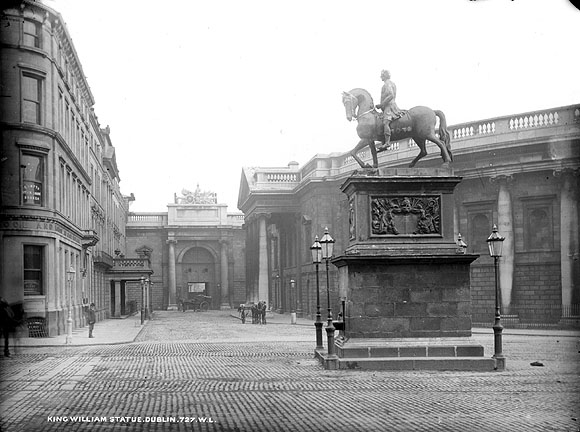

Posted in Dublin History, Politics | Tagged College Green, Henry Grattan, Prince Albert, Statues | Leave a Comment »


I asked over on our Facebook page about these posters, and was directed towards a Sunday World article you can read in full here:
Dublin is bracing itself for another loyalist invasion. Hundreds of Love Ulster demonstrators plan to hold a controversial parade on southern soil.
Fierce rioting followed their last attempt to march as more than 1,000 republican protestors took to the streets.
The city centre was brought to a standstill as republican youth fought running battles with gardai who were attacked with rocks, bottles and fireworks.
Businesses were smashed and cars set on fire in an orgy of violence which cost €10million.
The Love Ulster organisers’ latest plans will raise republican fury even further. They want to parade past the GPO at Easter, a hallowed date in the nationalist calendar.

Posted in Uncategorized | Leave a Comment »
Following on from the successful event two years back, the Cup of Nations Final will again be shown in Dalymount Park, Phibsboro, this Sunday. Entry is free, all going well there will be some food layed on, with drink deals before and during the game. Afterwards, there will be music from guest DJs, and our very own JayCarax. See yizzers there!

Directions to Dalymount Park can be found here: http://bohemians.ie/club/directionsmap.html

Posted in Football Articles, Miscellaneous | Leave a Comment »
Dublin has a great history of flyposting, indeed in the past we’ve had some great images here showing the tradition, like this one below from 1923 which jaycarax talked about here. The legality of flyposting in Dublin has been ambiguous historically of course, at present the act is prohibited but in post Celtic Tiger Dublin some sites in the city have become unofficial billboards almost.
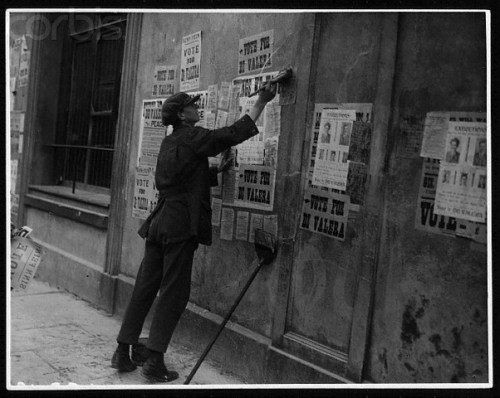
© Hulton-Deutsch Collection/CORBIS
Digging through the archives, two unusual incidents grabbed my attention from the 1980s, which saw Ulster loyalists fly-post on the streets of the capital. One incident even saw a certain Rev.Ian Paisley and others pasting posters which simply read ‘ULSTER IS BRITISH’ outside of the General Post Office on O’Connell Street!
In May of 1984, the Democratic Unionist Party flyposted 30,000 posters on the streets of the north, the posters were simple in design and message, simply showing a Union Jack and proclaiming that ‘ULSTER IS BRITISH’. The simple posters were the response of the party to the New Ireland Forum, a forum which Paisley and other unionists were fiercly opposed to. Ian Paisley and other leading figures from the DUP decided to embark on a trip to Dublin, during which they would paste the poster up in a number of key locations in the city, such as at the GPO and also outside the offices of The Irish Times.
Paisley told the newspapers that the photo of him postering at the GPO would take “pride of place” in his home, and that he was “glad to stand where the 1916 proclamation was read”. His only criticism of the south was that the “roads are very bad”. The daring act of postering O’Connell Street was done under cover of darkness at 3am, and among those accompanying Paisley was Peter Robinson.
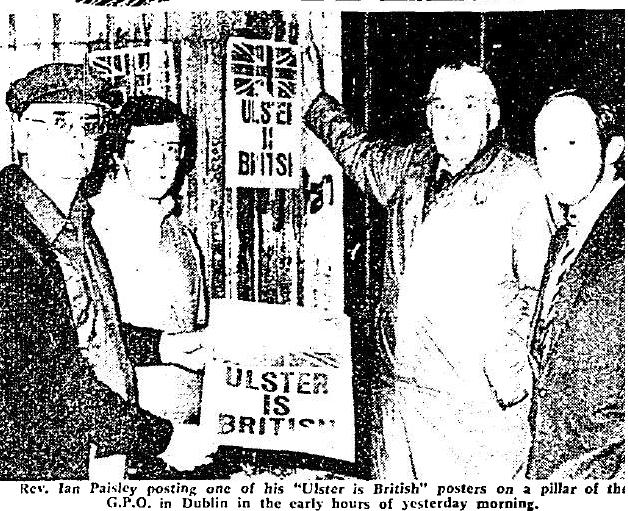
Independent, May 3 1984.
Two years later, in 1986, Ulster Loyalists would once more poster in Dublin, however unlike Ian Paisley’s daring 3am photoshoot, this was a much larger operation with about 20 members of the Ulster Loyalist Democratic Party involved in a large scale operation across the city. The ULDP were the political wing of the UDA, and the posters were in opposition to the Anglo-Irish Agreement. The posters targeted Garrett Fitzgerald and asked ‘What has Fitzgerald ever done for the ordinary people of Dublin?’ and another stated ‘We will never allow Fitzgerald any involvement in our affairs’.
There’s a lot more to write on the tradition of fly-posting in Dublin of course, but these two incidents certainly are unusual.

Posted in Dublin History, Politics | 3 Comments »
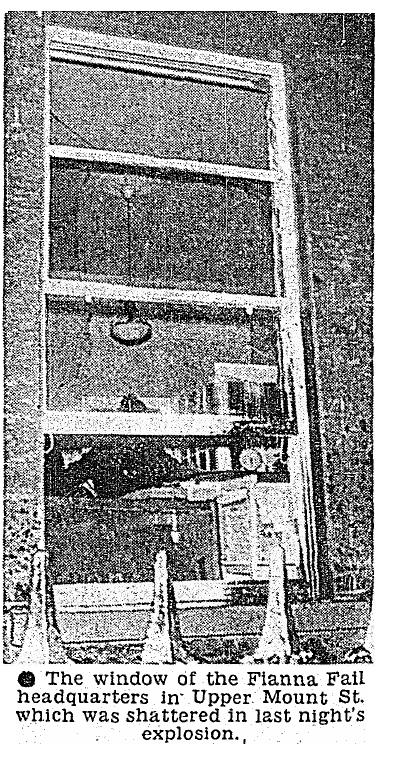
From front page of Sunday Independent, October 22 1967
On October 21 1967, a group calling themselves the ‘North Leinster Unit of the Republican Movement’ attempted a daring attack on the headquarters of Fianna Fáil in Dublin, with the aim of drawing attention to the plight of republicans imprisoned in Portlaoise and Limerick. Two petrol bombs were used in the attempt, but it was a night of high drama with a hijacked taxi thrown into the story for good measure, coupled with the firing of shots. Fianna Fáil HQ, or ‘Aras De Valera’ as it later became known, was located at 13 Upper Mount Street.
The Irish Press newspaper of October 23 noted that the petrol bombing of Fianna Fáil HQ at 9.30pm on the 21st coincided with the delivery of a letter to their editorial office claiming the attack for the ‘North Leinster Unit of the Republican Movement’. Of course, The Irish Press was likely chosen owing to its having a long history of connection to the Fianna Fáil party. The very first editor of the publication was Frank Gallagher, a very capable writer who had worked alongside Erskine Childers on the Republican publicity staff during the War of Independence.
Prior to the attack, there had been a hijacking near Pearse Street public library, when a Dublin taxidriver found himself answering a call to a number of men armed with revolvers. The taxi was driven to the Fury Glen in the Phoenix Park, and the driver tied up and told to lie on the floor in the back of the taxi. The taxi was then driven back to the city by one of the attackers. Two petrol bombs were thrown into the premises, described in a later newspaper report at the time of the court cases which followed as “two-gallon tins containing a mixture of oil and petrol” A man who witnessed the attack chased a car driving off from the scene, and for his efforts shots were fired at him near Government Buildings.
The statement delivered to The Irish Press read, in full:
Saturday nights attack on the Government Party headquarters was carried out by the North Leinster Unit of the Republican Movement. Our objective is to focus attention to the cause of three Republican soldiers at present serving jail sentences because of their ideal of a ‘Free Ireland’. This should also be taken as an indication that militant Republicans will meet Fianna Fáil and its secret police with force. Militant republicans demand the release of H. Greensmith, H.A Grensmith and Joe Dillon.
The case quickly came to court, with four men in custody within an hour of the attack. Typically enough, this being Dublin, they were picked up in a city centre public house. Within weeks, two men were sentenced to six months in prison for their role in the attack. The men delivered defiant statements, with one saying:
I take full responsibility for the action carried out, which was to draw attention to the fact that there are political prisoners in Ireland at the moment.
Remarkably, in March of 1969, there was another less serious attack on Fianna Fáil HQ when a petrol bomb was again thrown at the building, though this time there was little damage, no hijacking and thankfully no shots fired!

Posted in Dublin History, Politics | 3 Comments »
Vladimir Lenin, the Russian revolutionary, spoke with a Dublin accent. Well, according to Roddy Connolly, son of James, who said in a 1976 Irish Times feature that Lenin, more specifically, had a “Rathmines accent”. This was due to the fact apparently that Leinin was taught English in London (c. 1902) by an “Irish tutor, who had lived in Leinster Road”. [1]

Lenin, 1895.
After this was repeated in An Irishman’s Diary by Frank McNally early last year, a letter was sent into the paper by Dalton O’Ceallaigh. In it he discussed attending, in the late 1970s, a Dublin meeting organised by the Ireland-USSR Society at which Roddy Connolly spoke about his visit to the infant Soviet Union in the early 1920s. After the speech, there was a short silent film in which Roddy was shown walking across the square in front of the Winter Palace in what was then Petrograd and conversing with Lenin.
O’Ceallaigh made the point in his letter that “there was no interpreter, so they were obviously speaking in a mutually comprehensible language”. After the film, Roddy himself stated that
After Lenin’s death, the Russians, on researching his life, believed that when he was in London (he) had placed an advertisement in the London Times to the effect of “if you help teach me English, I’ll help teach you Russian”, the person who replied being a “Mac” somebody or other was thus a Scot. But Roddy said that, on the contrary, it must have been an Irishman. [2]
The memoirs of Lenin’s wife Nadezhda Krupskaya offer some indirect support for Connolly’s claim:
“When we arrived in London we found we could not understand a thing, nor could anybody understand us […] It amused Vladimir Ilyich, but at the same time put him on his mettle. He tackled English in earnest. We started going to all kinds of meetings, getting as close as we could to the speaker and carefully watching his mouth. We went fairly often to Hyde Park at the beginning. Speakers there harangue the strolling crowds on all kinds of subjects […] We particularly liked one such speaker – he had an Irish accent, which we were better able to understand.” [3]
On a side note, what exactly is a Rathmines accent?
Frank McNally suggests it was forerunner to the Dart accent which came to public attention first in the early 1990s. The earliest reference to such a thing that I could find is 1908. D.J. O’Donoghue, in a recollection piece about George Bernard Shaw, spoke about how Shaw had “possessed a ‘Rathmines accent’ which he never entirely lost”. [4]
A jokes corner from The Irish Press in 1936 had this to say:

The Irish Press. Sep 11, 1936.
The Radio Correspondent of The Irish Times in 1946 suggested that the “broad or moderately broad ‘a’ sound (is) a defect characterestic of that mincing, effeminate speech known in Dublin as the Rathmines accent and in Belfast as the Malone Road accent”. [5]
Two years later, another explanation on the accent was given:
Many of the Radio Eireann announcers are guilty of frequent lapses into the genteel, mincing manner of speaking known as the Rathmines accent. One announcer keeps referring to Pakistan as ‘Pawkistan’, several of them talk about ‘fawther’, [for ‘father’] ‘curless’ for ‘careless’, and worst of all ‘infearm’ for ‘infirm'”. [6]
It would seem people tried to use the ‘Rathmines accent’ to get into pubs. As illustrated by this 1942 news story:

The Irish Times. 18 Nov 1942.
Finally, John O’Doherty in a letter to The Irish Times early last year said that the “genteel Rathmines accent was still common when I lived there in the 1960s […] it was also known as an “ORE and ORE” accent, as it was widely spoken in both Rathmines and Rathgar”. [7]
–
[1] Michael McInerney, Roddy Connolly – 60 years of political activity, The Irish Times, 08 Sep 1976.
[2] Dalton O’Ceallaigh, Letter to Editor, The Irish Times, Feb 15, 2011
[3] Nadezhda Krupskaya, Memories of Lenin (London, 1930), 65
[4] D.J. O’Donoghue, George Bernard Shaw – Some Recollections, The Irish Independent, 17 Feb 1908
[5] Radio Correspondent, Irritating mispronunciation on Radio Eireann, The Irish Times, 24 Jan 1946
[6] Anon, An Irishman’s Diary, The Irish Times, 13 Apr 1949
[7] John O’Doherty, Letter to Editor, The Irish Times, Feb 14, 2011

Posted in Uncategorized | 27 Comments »
It’s hard to forget the man who averaged the mythical “one goal in two games” total during his time in the League of Ireland, in a career spanning Bray Wanderers, Drogheda United, Sporting Fingal, and Derry City. I don’t think he’s going to forget the moment in the clip below, completing a ten minute hat-trick for his new club Persepolis in the Tehran derby, helping his team come back from 2-0 down to a stunning 3-2 victory; in front of a crowd of 70, 000, with television viewers claimed to be close to 20 million. Trap lad, missed the boat…?
Cheers to Dunster for the heads up… Don’t forget mate, as you are now, so once were we, as we are now, so once were you…

Posted in Football Articles | Leave a Comment »
 | The Mallens on 4. Johnson’s Court |
 | Mindy on Plaques of Dublin: The Eagle… |
 | Aidan Convery on From McDaid’s to Grogan… |
 | Cormac Figgis on A divided Rathmines |
 | cian reardon on Dublin’s connection to t… |

 Click on the book for more.
 Click on the book for more.
 Donal
Donal Ciarán
 Sam
Sam Come Here To Me!