By now, I’m presuming most of you in the world of blogging have stumbled upon the amazing, cringe worthy, “this has to be fake” world of Cork family showband Crystal Swing. If not, have a listen:
Capel Street’s Panti Bar have already uploaded their (drag) cover version.
According to their official website, an appearance on The Late Late Show in the near future is planned. The Crystal Swing for Eurovision Facebook page has already attracted a couple of hundred fans.
(Rumours that dfallon has found Dervla Burke’s personal Facebook page have not been confirmed yet.)
A 1902 election leaflet for James Connolly, Wood Quay ward
Serious praise is due to Tomás O’Riordan and all involved with the University College Cork MultiText Project in Irish History , which has become an online home to many rare Irish historical photos and texts from the revolutionary years, ranging from characters like Jim Larkin and James Connolly to WB Yeats and Hanna Sheehy Skeffington.
The above find is undoubtedly one of my own personal favourites.
Some great insight into the election of 1902 can be found in Samuel Levenson’s fantastic biography of Connolly.
“As usual, Connolly’s campaign consisted for the most part of open air meetings, his favourite location being in New Street. The support of the Trades Council did not do much to make Connolly respectable, he recieved the usual amount of vilification. Sermons were preached in which he was termed an anti-Christ, and Catholics were forbidden to vote for him under pain of excommunication. It was charged that his children attended Catholic school only to camouflage his own beliefs”
Connolly was one of three Irish Socialist Republican Party candidates. None of the three managed to get elected on the day, with the other two candidates losing by decisive majorities. Connolly ultimately polled 431 votes, while the winning candidate achieved 1,424 votes.
An address made by Connolly “to the electors” and “fellow workers” of Wood Quay can be read online here
“…remember how the paid canvassers of the capitalist candidate – hired slanderers – gave a different account of Mr. Connolly to every section of the electors. How they said to the Catholics that he was an Orangeman, to the Protestants that he was a Fenian, to the Jews that he was an anti-Semite, to others that he was a Jew, to the labourers that he was a journalist on the make, and to the tradesmen and professional classes that he was an ignorant labourer; that he was born in Belfast, Derry, England, Scotland and Italy, according to the person the canvasser was talking to”
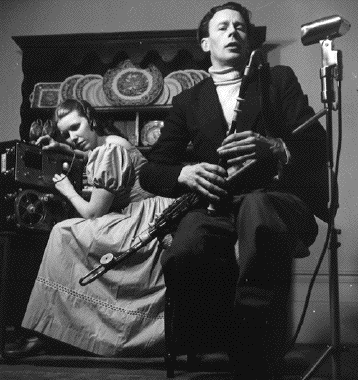
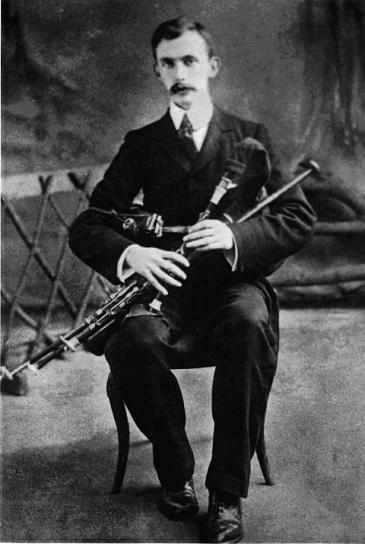
There was a great reaction to Mise An Fear Ceoil, a recent post I did on Seamus Ennis, the great piper of the Naul, North Dublin.
Recently, we stumbled across The World Jukebox website, which collects international folk and traditional music.
Here, from the World Library of Folk and Primitive Music vol.1:Ireland, we hear his voice. Proof Ennis could hold his own on the strength of his vocals, and not just his legendary musicial ability with regards the pipes.
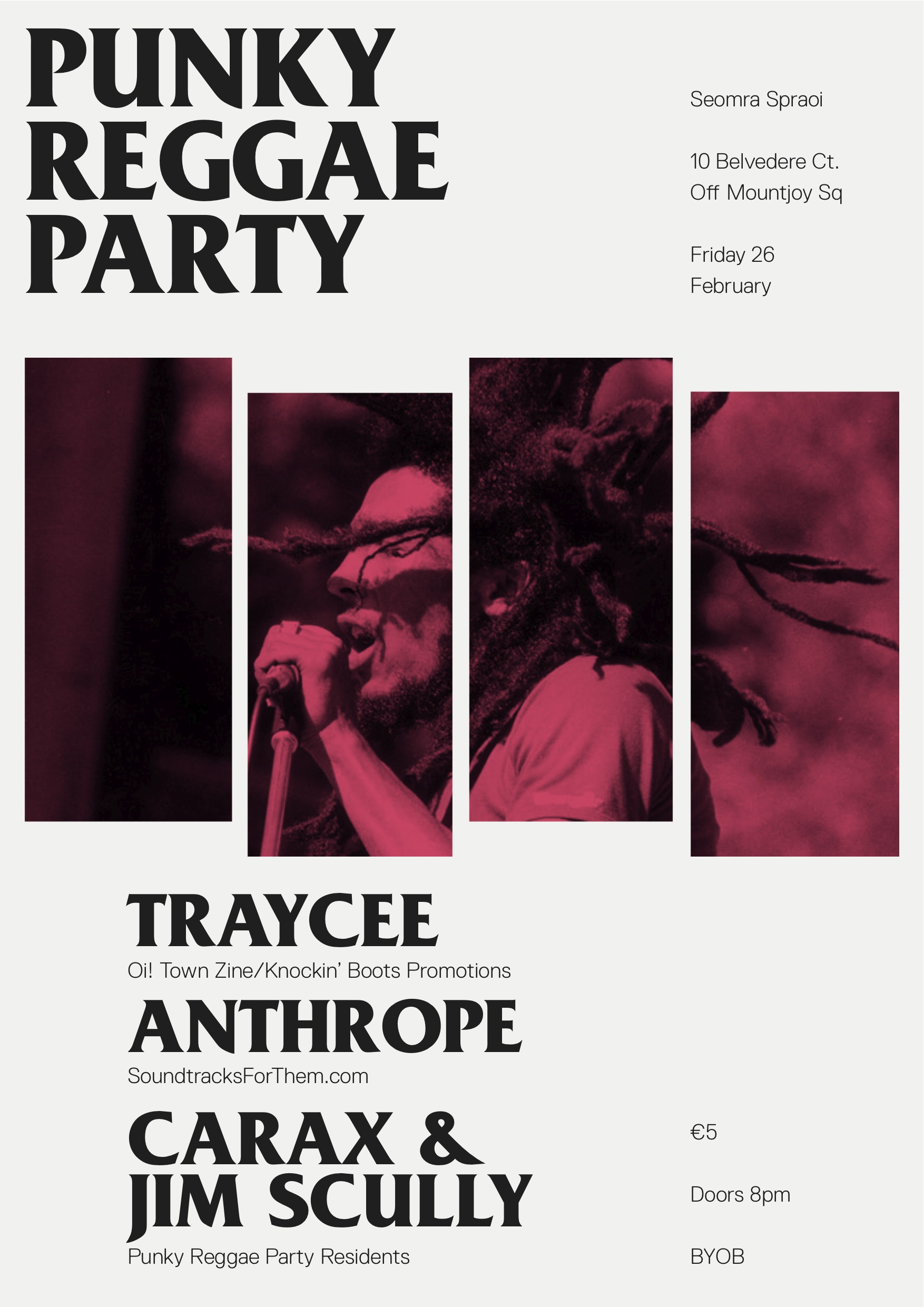
This Friday sees the fifth installment of the Punky Reggae Party. Starting its life in Belfield, the night moved to Seomra Spraoi in December for more room, later opening hours and an enticing BYOB policy. This month sees Traycee up on the decks spinning a classic mix of Jamaican ska and rocksteady and Antrophe selecting his own dancehall reggae favourites. Carax and Jim will be on hand to see that punk, Oi! and mod revival is well represented. Hope to see you there.
Punky Reggae Party Vol. 5.
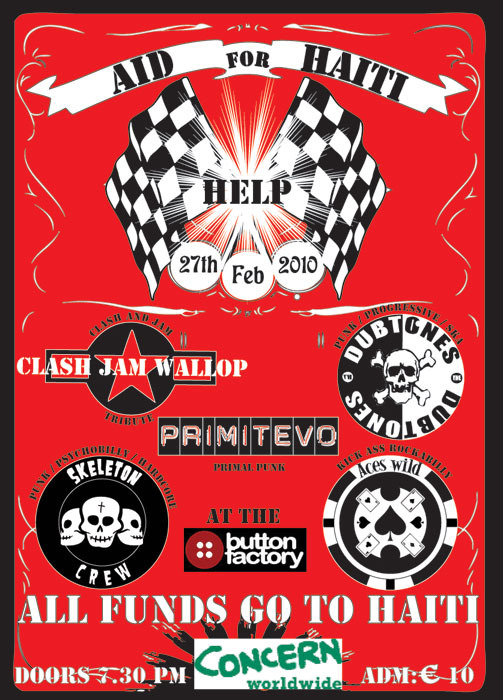
Saturday sees many of Dublin’s best punk, ska and rockabilly bands come together for a Haiti benefit gig in The Button Factory. I’m particularly looking forward to rockabilly legends Aces Wild and The Clash/Jam cover band Clash Jam Wallop.
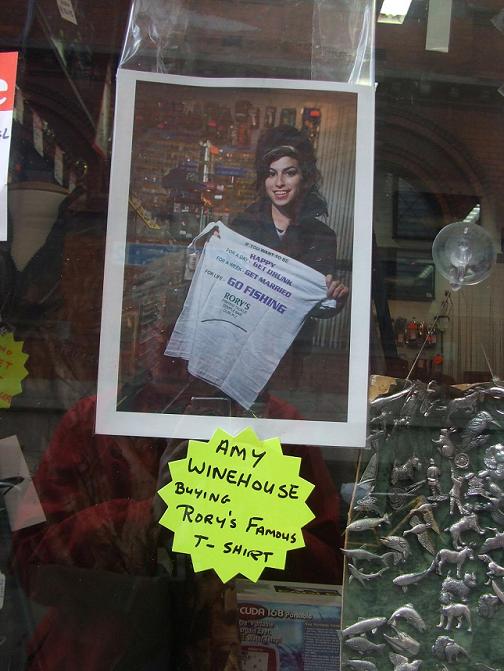
Spotted in the window of Rorys Fishing Shop, Temple Bar.
How long is that there? I must walk past the place twice a week at least on the way to the Westmoreland Street bus-stop.
Still, not as bemusing as the restaurant a tiny bit further up with a sign in the window boasting of ( I swear) a €4.50 pint of Guinness. Bargain lads, bargain.
“Come on; stall down here, we’ll get cans in, head to a pub, and then hit Dancehall Styles,” I say. “Grand, but meet me up in The Flowing Tide for one first” he says. Do we make it to Dancehall Styles? Not a chance. The Flowing Tide on Abbey Street has the ability to put the goo on you for a night on a bar stool. It’s a great spot, just off O’Connell Street but it somehow manages to avoid the majority of the ‘five-around-one-pint-of-stout” tourists that places like The Oval and Murrays seem to attract in abundance. Pints at a nice price too, at €4.15, unusual considering. The barman is a gent too, though I remind myself not to get on his bad side.
The Flowing Tide, by Sarahjoh, from Flickr
I was here one afternoon with my brother, ingesting a couple of quiet ones before we legged it down to Connolly to catch the train home. There was just the two of us and the barman, swapping small talk and watching the wrestling on telly, laughing and cracking jokes about it, when all of a sudden, two thirty-something blokes, straight from the office, and pretty hoi-polloi, strode hurriedly in. Without looking at the barman, one nasally whined “Hoi, stick on two Heino and the last race at Cheltenham, good man.” Christ. The barman, without taking his eyes off the telly said “Nah, lad, we’re watching the wrestling.” The two “Heinos” didn’t know where to look, eventually said “you can cancel the Heinos,” turned heal and left. I didn’t know where to look either, I nearly spilled my drink with laughter. So, moral of the story, don’t cross the barman with the moustache…
Anyways, great little spot; with the theatre across the road, you often get well known faces dropping in- Mick Lally (Miley from Glenroe) is a regular, though he’s a little worse for wear these days to be honest. But he wasn’t there tonight, just myself, jaycarax and a few locals. A couple of pints later and it was obvious that neither of us would have the energy to make it to see our friends in Worries Outernational. What we could do is get the grub in and head for another couple of quiet ones elsewhere.
Sin É, from properpint.com
So, after a quick stop off in the Peoples Kitchen on Capel Street (worth an article in itself- good asian food at half the price,) we headed as far as Sin É on Ormond Quay, pleasantly surprised to find that on Sundays, they do €3 pints of Guinness. I was hoping there wasn’t a reason for the pints being €3, but other than them being served in non-branded glasses (a bit of a pet hate,) you couldn’t complain.
Sin É: I really don’t know what to make of it. It tries to attract an “in” crowd, but bars like that are generally, well, a bit crap to be honest, but this place does well in that the staff are proper spot-on, the music is always good, and the punters are sound too. It’s frequented by Irish and non-Irish alike, a lot of backpacker types, alongside a couple of locals propping up the bar. Nice place it has to be said I guess. We stayed for a couple of their nice €3 pints before I realized the night was getting on and I had work bright and breezy in the morning. A right pain in the arse as we had just settled ourselves into some nice seats just inside the door. Ah well; not a bad evening, nice and cheap, not to be scoffed at in these times, the pints and the food came to less than €30. Well worth a try again sometime!
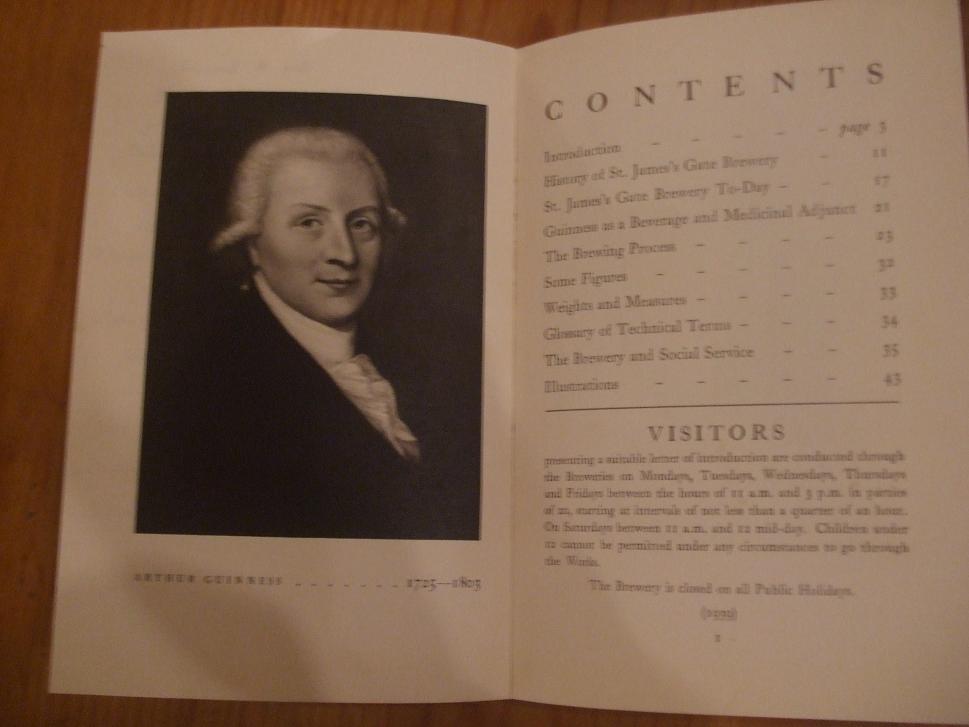
VISITORS
Presenting a suitable letter of introduction are conducted through the Breweries on Mondays, Tuesdays, Wednesdays, Thursdays and Fridays between the hours of 11 a.m and 3 p.m in parties of 20, starting at intervals of not less than a quarter of an hour. On Saturdays between 11.am and 12 mid-day. Children under 12 cannot be permitted under any circumstances to go through the works.
The Brewery is closed on all Public Holidays.
(1939)
Arthur Guinness himself, and the Contents page.
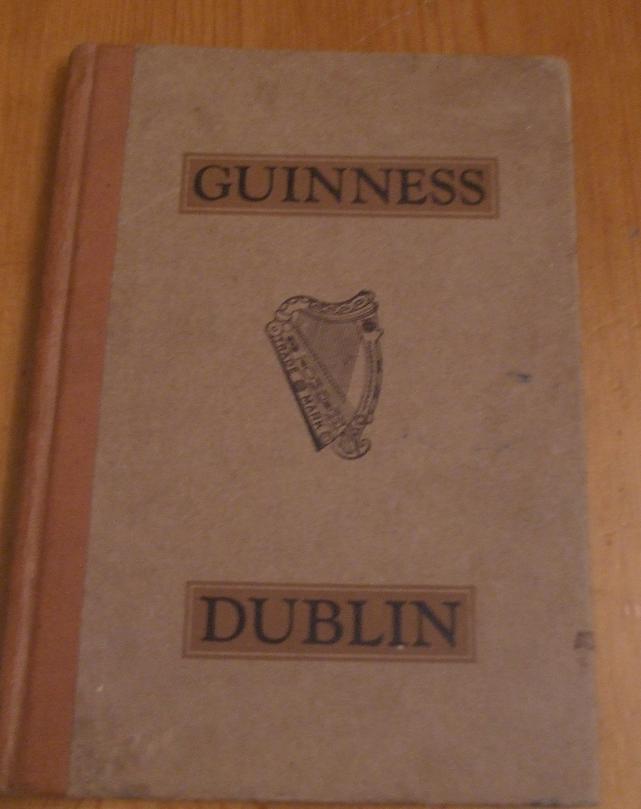
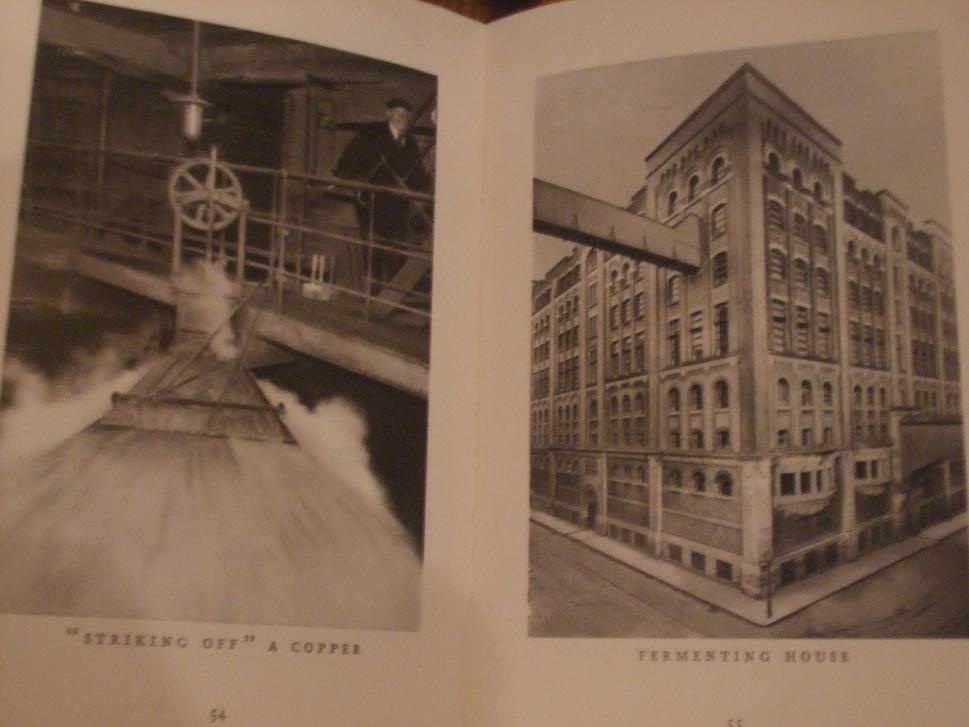
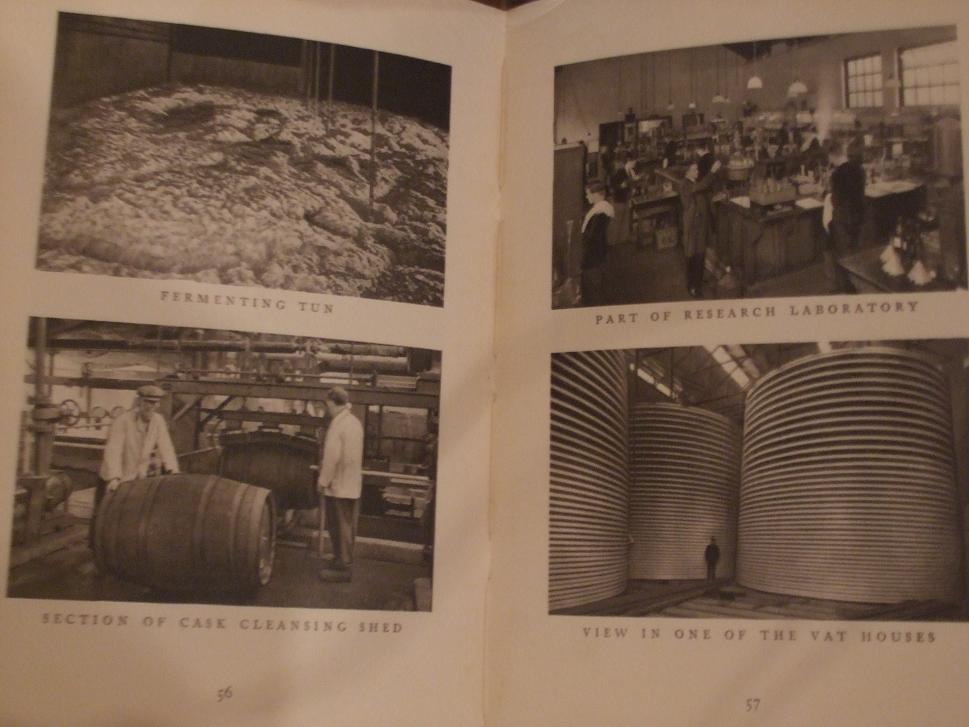
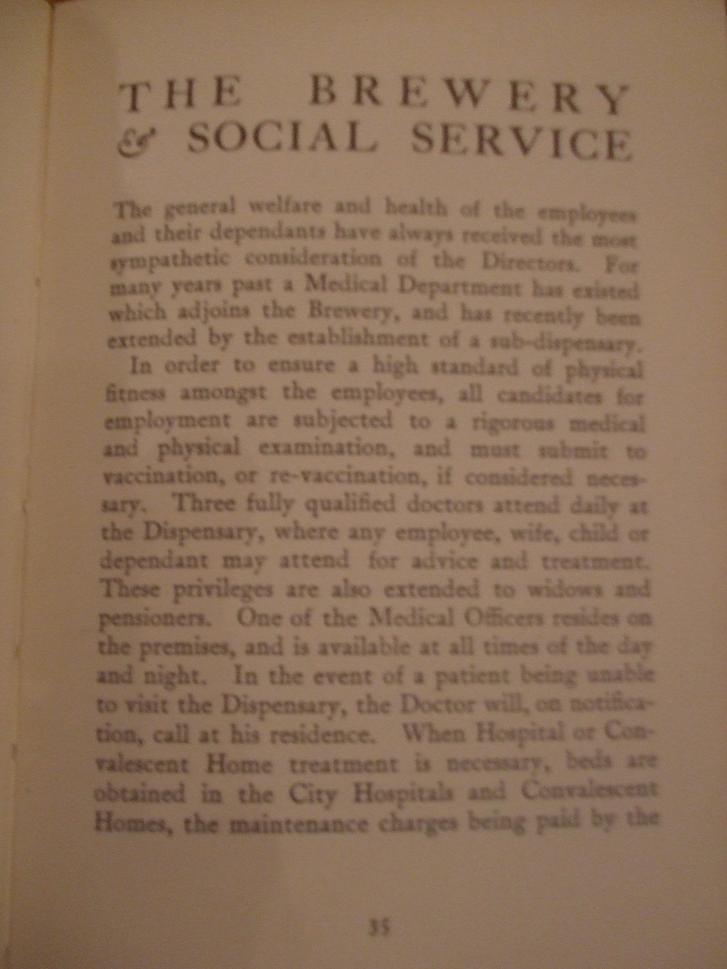
The trip down Guinness memory-lane continues with this nice piece. Long before the Guinness Storehouse, visits to the Guinness Brewery were literally just that- visits to the Guinness Brewery. This interesting little book boasts some fantastic illustrations of the process of Guinness brewing, along with information on life for employees of the company.
Workmen are supplied with meals free of charge when engaged on work of a special nature. Motor drivers on early duty (6-7 a.m) are provided with a substantial breakfast. All messenger boys and boy labourers are supplied free of charge with a substantial meat meal in the middle of the day. Free dinners are also supplied to the sons of widows and pensioners who are attending school in the neighbourhood.
Page 42
Illustrations from the Brewery
Illustrations from the Brewery
An example of the contents of the book, detailing social services at Guinness
GA369B
Book of British Authorship
Printed in Great Britain by John Waddington Ltd., Leeds
2/5/39
A fantastic insight into life at the Brewery at the time. A company that took great care of its workers and expected the utmost back in return (for example, during the Dublin Lockout the company dropped a Guinness shipworker with decades of service for refusing to engage with scab-labour on the Dublin docks) The welfare and working conditions at the Brewery were unrivalled in Dublin at the time, and t he fact a guidebook like this was produced long before the Brewery became a tourist attraction in any real form shows the level of professionalism at the Brewery.
My own mother, the daughter of a Guinness worker, still remembers the perks my Grandfather recieved until his death only a number of years ago. A true cornerstone of Dublin life for so long, I hope that with posts like this and earlier posts like that on the Guinness Fire Service, we here at Come Here To Me can shine a light on more than just the black stuff itself.
It’s just three days shy of the 75th anniversary of the birth of one of the best musicians and characters this country has ever seen; Ciarán Bourke of The Dubliners, and I’m reminded of this video, filmed not a year before he died, having suffered a number of strokes. If this clip of Bourke reciting “The Lament for Brendan Behan” doesn’t send a shiver up your spine, you’re made of stronger stuff than me…
Citizen Army men and women gathered at Liberty Hall on Easter Sunday for the final mobilisation before the Rising. Here Connolly gave each a last opportunity of drawing back. No one availed themselves of this chance. ‘I never doubted ye!’ Connolly told them, his face shining
R.M Fox- From ‘Dublins Fighting Story’
This may well be of interest to many of our readers.
I inherited the 1916 bug from my father, without a doubt. Even today, only hours before writing this, I was standing on Northumberland Road like a Japanese tourist only moments in Times Square. I’m still amazed that for such a short historical event, there seems to be an endless amount of research and new finds related to Easter Week 1916.
The week is one of personalities. Like Winifred Carney, the suffragette and secretary to James Connolly, who would find her place in Irish history as the ‘Typist with a Webley’. Returning to Northumberland Road, perhaps no man on the republican side was to leave such a deadly mark on the week as Michael Malone, hiding out with a small group of men (and a moveable store dummy too!) in 25 Northumberland Road. Ultimately he and one other man, James Grace, would hold the spot. Who could forget to mention Sean Connolly of the Irish Citizen Army? An Abbey actor of great reknown, who had taken the lead role only a week previously in ‘Under Which Flag?’,a play penned by none other than James Connolly. Siblings of Sean, both male and female, would join him in the insurrection.
Michael Malone, killed in action at 25 Northumberland Road
The week is also one of great tragedy. There is the heartbreaking story of one of the Sherwood Foresters being taken aback to see his own family in Dublin, having fled Britain for fear of Zeppelin raids. He would never make it past 25 Northumberland Road.
Members of the Irish Citizen Army drill.
One must really see the sites to appreciate them. Even today, I learned this to be most true. When you look from Clanwilliam House down the street towards number 25, you get a clear sense of the Volunteers line of fire. Likewise, I can remember as a young lad being taken to see the Royal College of Surgeons and being amazed by the bulletholes still littering the front of the building.
This tour is one I’ve been told often enough to get myself along to. Carried out by the authors of one of my favourite studies of the week, for €12 you’re promised about two hours worth of a wander around some of the keysites of the 1916 Rising.
Of coure, one can not take everything in in two hours, for instance some of the Sackville Street lancers who fell under fire are buried at Grangegorman cemetry. The Rising has left us with historical sites all over Dublin worthy of visiting.
As a city centre tour however, the reputation of this one is one that, to me, renders Saturday morning worthy of an alarm clock.
….if you know me at all, that’s a huge achievement.
Saturday 20th February 2010
Meeting at 10 am at the International Bar, 23 Wicklow Street.
€12
The Patriots Inn- photo taken from alfredandmarie.com/Dublin%20Trip/Dublin.html
The Patriots Inn 760 South Circular Road Kilmainham Dublin 8.
The wise ones, we park at Kilmainham Jail. Match day. I remember a time you’d want to be arriving almost an hour before kick off to park your car before heading to see Saint Pats, ‘Dolan-mania’ it was. Those days are well and truly over. I’ve grown up, but I suppose the younger brother has always made post match pints impossible, as tempting as this pub does look.
Post booklaunch is a great time for a pint. Sure, you’ve a free glass of wine or three in you, but wine? When you’re standing there gazing up at the cells in Kilmainham Jail, and those names jump back at you, it’s a pint you want. Instantly. It’s so much to take in. Remarkably beautiful, one has to remember that that prison was allowed to fall into complete disarray, with people raiding the place for metal and anything not nailed to the ground, as trees grew out of the ground in a place once home to everyone from Wolfe Tone to Peadar O’ Donnell.
How very Irish really. We built massive “‘mon the lads!'”monuments at Kilmichael, Crossbarry and anywhere else we gave them ‘a good go’, but the most important historical site of the revolutionary years (and we’re starting the revolutionary years with 1798 here, not 1916) was allowed rot away. Volunteers (of a different kind) brought this place back to life. It is a much more fitting monument to the men and women of Irish history than any roadside piece of concrete.
The reader:The pub, you’re reviewing a pub here?
I’m getting to the pub.
It’s really handy to name a pub something like this when history kindly leaves something on your doorstep. There are pubs in this country named after everyone and anything. Wolfe Tones Pub And Bistro (and I bet there’s one somewhere), for example, might look nice from outside, but inside- it could be any pub anywhere, with no further mention of the Oirish name that got you in the door.
The first thing you see however, when you set foot in the Lounge door here, are beautiful rare photos of the jail across the road. A group of men and women standing by the cross marking the spot where almost all of the 1916 executed men fell in the early 1930s, republicans being taken to the jail by British forces, amazing photos. They go around the corner too, with more on the far side. It’s a wonderful touch. They’re not milking or ignoring what’s on their doorstep here, they’re engaging with local history perfectly.
Two highstools are spotted, and quickly taken. The people? Friendly staff, I spot two females working between the lounge and the bar. The pints clock in at €8.20 (For two, relax) and are unfaultable. I’m playing with fire here, having 15 minutes to spare before I have to get on a bus to Maynooth (have to, as students we have to go out in the town at least once a week)
Another one? Time says no, but eh…go on sure.
Two more arrive at the bar. The older Fallon spots a poster in the corner of the bar, promoting events. Unusually, the pub hosts Film Nights. This is most welcome in my own opinion. I firmly believe pubs can be a hub for a lot more than high-stool chat, and this is a perfect example.
The bar seems very much a locals bar, but this pub has a genuine warm feeling to it. Older Fallon departs for The Oak, a pub he frequented as a young(er) man and feels deserves a return trip. This one, it is agreed, also warrants a future return trip. Word on the street is that the food here is topclass too, and a quick glance over the menu reveals a very fair price-list, and food more in the Panini category than ‘terrible pub ham and cheese offerings’
Younger Fallon takes off for Maynooth, content with two fine pints, and a good fifteen minutes behind schedule.
The 66 journey is long, and alas- toiletless. Let this Random Drop Inn be the one that inspires me to include a brief summary of the toilet facilities from here on. Alas, we learn from experience.
Hxci’s fantastic post on things to do in Dublin other than sitting on a highstool getting wrecked is one of our most popular pieces, and people tend to stumble across it through a variety of humorous google searches, things in the same category as “I’m not drinking for a week in Dublin and don’t know what to do with myself at all” basically.
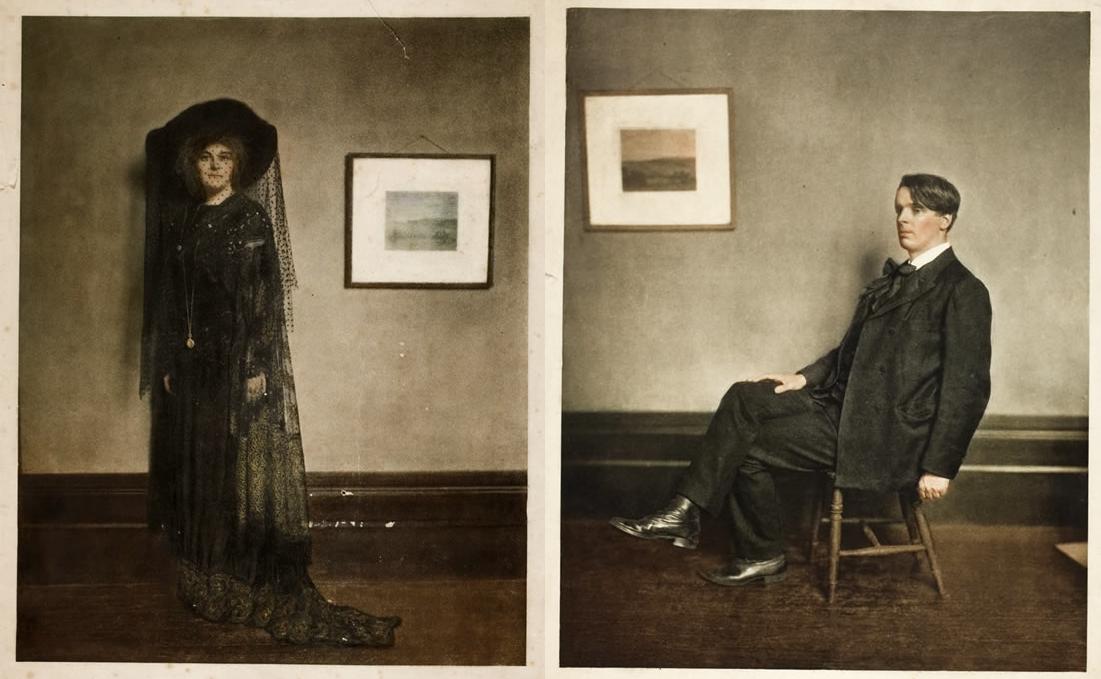
While he gave the National Library of Ireland a mention, it was only recently when knocking about it for college reasons I realised just how fantastic the exhibition on the life, times and work of W.B Yeats is. I remember visiting it a good two years back as it was initially intended to be a temporary exhibition. The decision to leave it in place was, for this city, an unusually wise one.
Granted, it’s free in real life, and beautiful to walk around, but after visiting it I knew there were odds and ends I wanted another look at. The audio-visual aspects of the exhibition are there to view too.
A fantastic effort from the National Library, and unusual in this country. So much of the historical material and archives in the possesion of the state would do well to find an online home like this.
From the National Library of Ireland online, portraits of W.B Yeats and Maud Gonne circa 1900
‘Stompin’ George’ Verschoyle (62) from Artane in North Dublin, has been a dominant figure in the Irish rockabilly scene for over four decades. For the first time ever, he has agreed to be interviewed about his life and the Dublin rock ‘n’ roll scene of the 1970s and 1980s in which he played such a pivotal role.
George was born into a musical family; his mother was a graduate of the National School of Music and George and his younger sister were sent to piano lessons when they were younger – but he soon got bored. “The teacher was into light classical, I wanted to be the next Jerry Lee Lewis”, he recalls.
At the age of nine, George began listening to Jimmy Saville’s The Teen and Twenty Disc Club and Jack Jacksons’ Jukebox Show on Radio Luxembourg. Though he usually was put to bed at around 8pm, he convinced his mother to wake him up at 10.55pm on Sundays so he could listen to Barry Aldis’ Top Twenty till midnight. In the early 1960s, the BBC presented a radio documentary on the history of rock ‘n roll which George taped on a reel to reel (he still has the tapes). George pinpoints this series and its opening track, Tongue Tied Jill by Charlie Feathers, as introducing him to what was to become an essential part of his life – rockabilly.
Every Saturday night, George and a mixed group of around twenty friends would go down to the local hop in Chanel College in Coolock. One night the DJs (Don and Gerry) failed to turn up and so George, at the age of 14, offered to step in. This was his first stint at DJing. The year was 1962. After that first night, George began standing in for Don and Gerry on a regular basis.
After gaining in experience and confidence, he was offered the role of resident DJ in The Flamingo Club on O’Connell Street which opened in September 1966. He stayed there for two years playing a mix of 1950s rock ‘n’ roll and ‘60s sounds.
George took a break from spinning records for a couple of years until he bumped into a fellow rockabilly fan called ‘Rockin’ Kevin’ in his local, The Bachelor Inn. The pair hit it off and they soon began organizing “record hops” in the upstairs function room.
The nights were a success and they soon outgrew The Bachelor and moved to The Regent Hotel on D’Olier Street. It was at this time that several of the local biker groups began attending the nights including the Road Rockers MC and the Vikings MC.
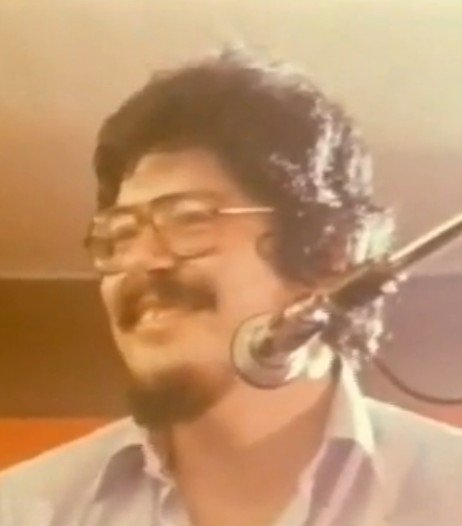
Stompin’ George
A fire that destroyed the hotel a couple of years later meant the venue had to change and The Mondello Club was suggested by biker, Tony Kelly. George used to organize a bus from The Bachelor pub to The Mondello and back every Sunday.
Around 1977, they moved again; this time to Goulding’s Social Club on Townsend Street. A year later, George joined Capitol Radio which was based a few doors down from The Bachelor where he presented a show playing the “best in rock ‘n’ roll and rockabilly”. He remembers that a lot of listeners “used to phone and write in asking why there weren’t any rockabilly hops in town.”
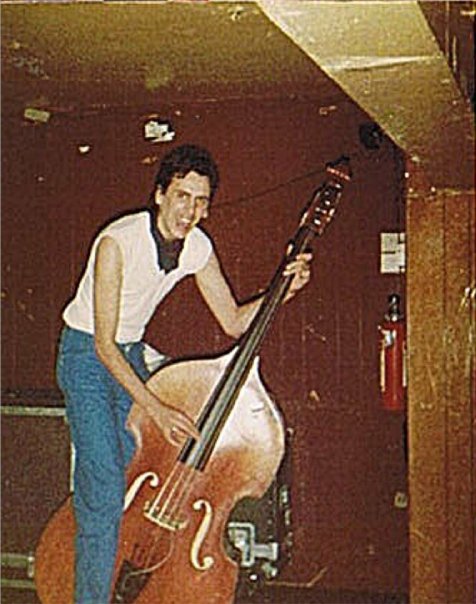
John Fisher on Double Bass at The Magnet
At the time, the only places you could find rockabilly was Sunday nights in Toners where Rocky De Valera & The Grave Diggers played Dr. Feelgood-inspired rock ‘n’ roll or Friday nights in The Magnet Bar on Pearse Street where Hurricane Johnny & The Jets played rock ‘n’ roll covers.
George went to see The Jets in The Magnet a couple of times and decided that the venue would be perfect for a record hop. He spoke to Liam Lynch, The Magnet’s owner, about taking over Monday nights and the rest, as they say, “is history“.
George at The Magnet. From Vox Zine, Issue 2 1980.
The Magnet on Monday nights which started in September 1978 and ended in March 1983 has since gone down in Dublin rock ‘n’ roll history – with many regarding it as the glory days of the Irish revival rockabilly scene.
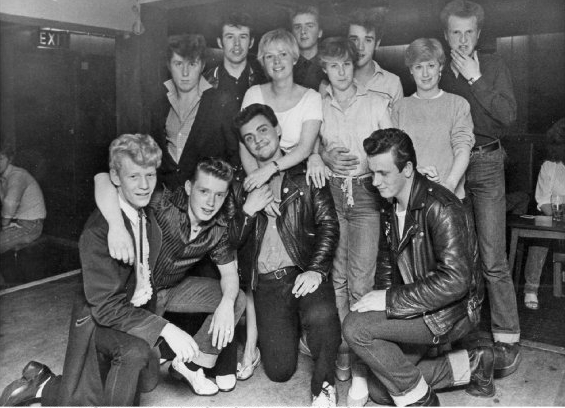
The Magnet, 1979. (Thanks to Paddy De Quiff for most of the pictures)
It “was an old type workingman’s pub” whose upstairs venue could hold 200 people. George explains that the night attracted a “mix of people including bikers, teds, mods, rockers and the odd punk”. In their four and a half years there, there was never any major trouble. He explains this was because people “policed themselves” because they didn’t want to risk losing the venue as there was “no where else to go for a good night’s music”.
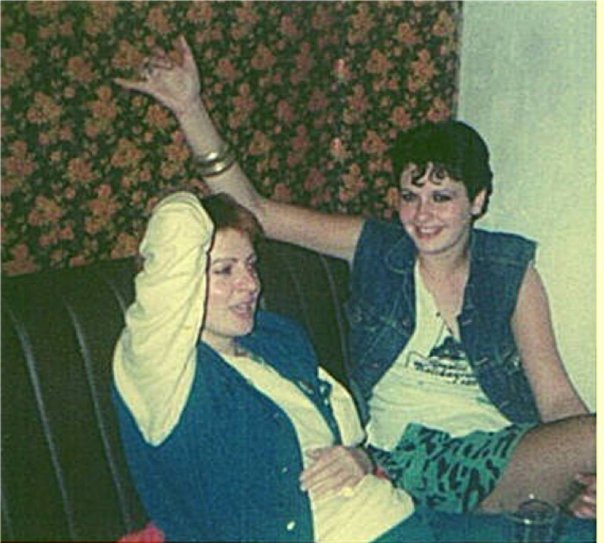
Carolyn Fisher and Billie Webster at The Magnet.
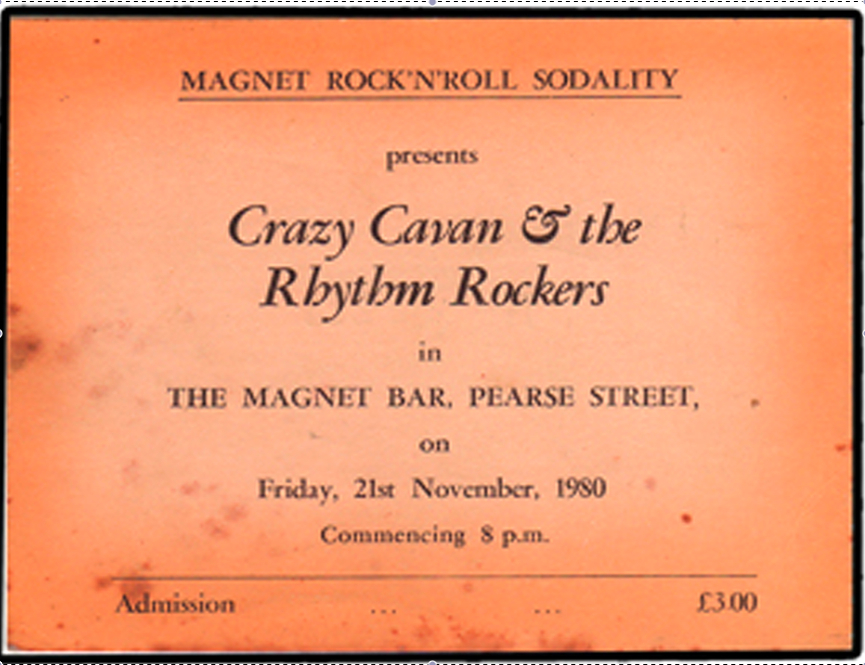
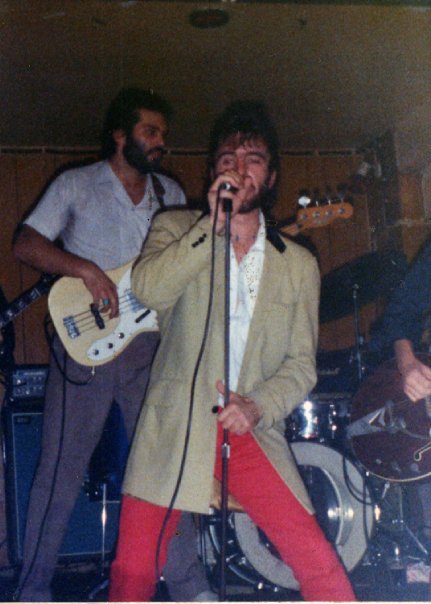
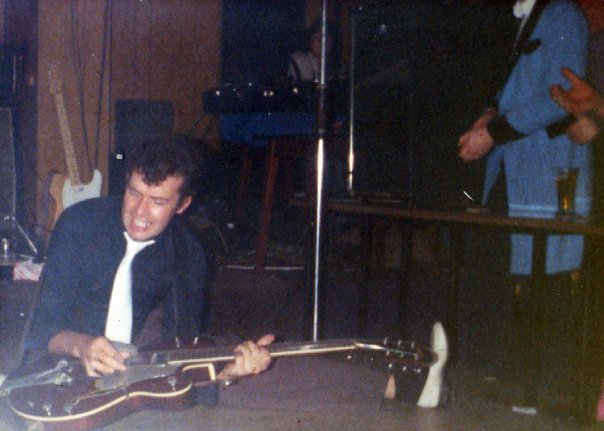
The 1980s saw a huge rockabilly revival in the U.K. with young bands like The Sunsets, Crazy Cavan and The Rhythm Rockers, The Polecats, The Shakin’ Pyramids and the American-born band The Stray Cats breaking the charts. Unlike some other original rockabilly fans who viewed this new generation of rockers as “too punchy” or “too commercial”, George thought for the most part “they were helping to bring the music to a much wider audience”. However, he makes it clear that he “didn’t like or agree with the likes of Showaddywaddy or Mud, who did nothing for rockabilly.”
Crazy Cavan. Ticket stub, November 1980.
Crazy Cavan, The Magnet.
Crazy Cavan’s guitarist.
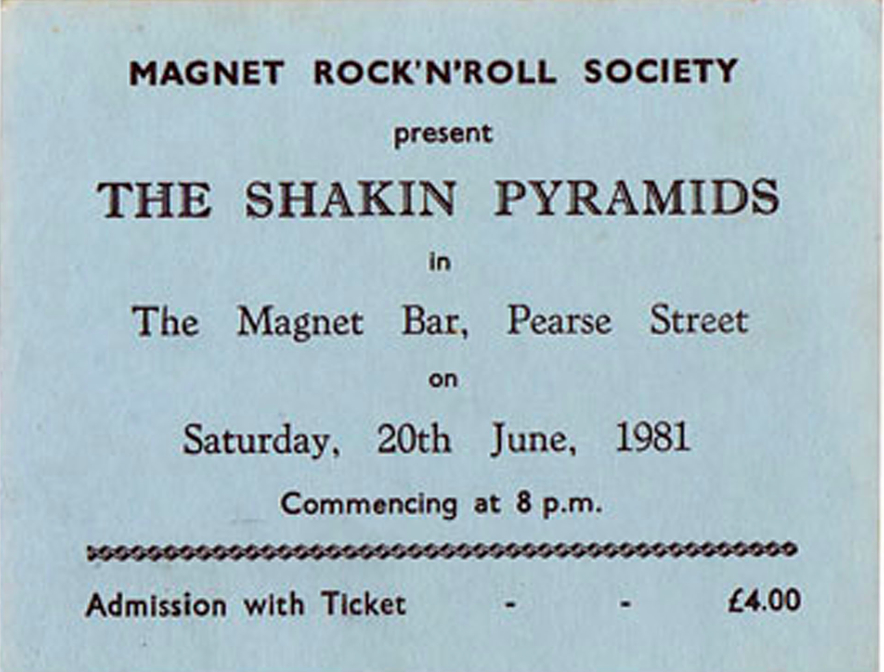
The two visits of the Scottish group The Shakin’ Pyramids were definitely the “high point of our years in the Magnet” George says. “I know of people who say they were there on the night and who still reckon it was one of the best gigs seen in Dublin. I have seen many bands and artists over the years including The Beatles, but I was never at a gig like the Pyramids, it was electric.”
The Shakin’ Pyramids. Ticket Stub, June 1981.
The Shakin’ Pyramids on Harcourt Street.
When The Magnet closed, George felt that their rock ‘n’ roll nights had “had more or less run its course already and it was the right time to leave”. Most felt it was time to take a break anyway. “A lot of the regulars had moved on with their lives, got married, went abroad to work” or had “taken up golf”. George got married to Fran in 1981 and his first daughter was born in September 1981. It was time to take a break from music.
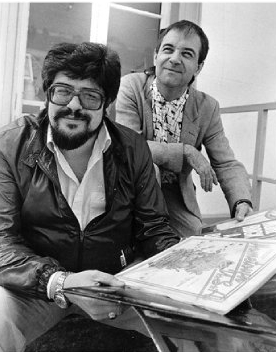
Johhny, Stompin’ George, John Fisher and Boppin’ Billy.
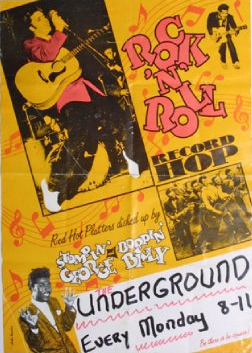
It didn’t last long however and in the mid 1980s, George teamed up with another friend “Boppin’ Billy” and started a residency in The Underground in Dame street which ran for 18 months. After that, they had a several month stint in The St. Laurence Hotel in Howth followed by a pub on Camden Street and finally a little wine bar/restaurant called Blazes on Essex Street.
Poster for the Rock ‘n’ Roll Record Hop at The Underground on Dame Street.
By this stage, George and his crew were making a name for themselves in the city. They were invited to play at a 30th birthday for the Guinness family in Leixlip and six wrap up gigs for various film shoots. At one of the ‘wraps’ held in a stately house outside Bray when the place was rockin’ at 5am and no one wanted to go home, George recalls that “a famous RTÉ DJ of the time came over to us and said he had never in all his years heard such amazing music – this sort of sums up what rockabilly music is!”
Stompin’ George & Boppin’ Billy
Their final gig together was in The Hard Rock Café but “it was doomed from the start as they would only give us Sunday nights starting at 11pm”. However, they did mange to get an invite to support The Pogues at the National Stadium. “That was really interesting as there were about 2,000 people at the gig and they would break out into spontaneous applause after a piece of rare rockabilly” George reckons it was “possibly the first time most of them had ever heard of Charlie Feathers or Herbie Duncan!”
Stompin’ George is still DJing and boppin’ after 48 years. An inspiration to us all, there’s plans in the woodwork for a Magnet reunion gig in the not so distant future and that’s something we can all look forward to, even if we weren’t there the first time around…











 Click on the book for more.
 Click on the book for more.
 Donal
Donal Ciarán
 Sam
Sam


