Feeds:
Posts
Comments

Archive for 2011

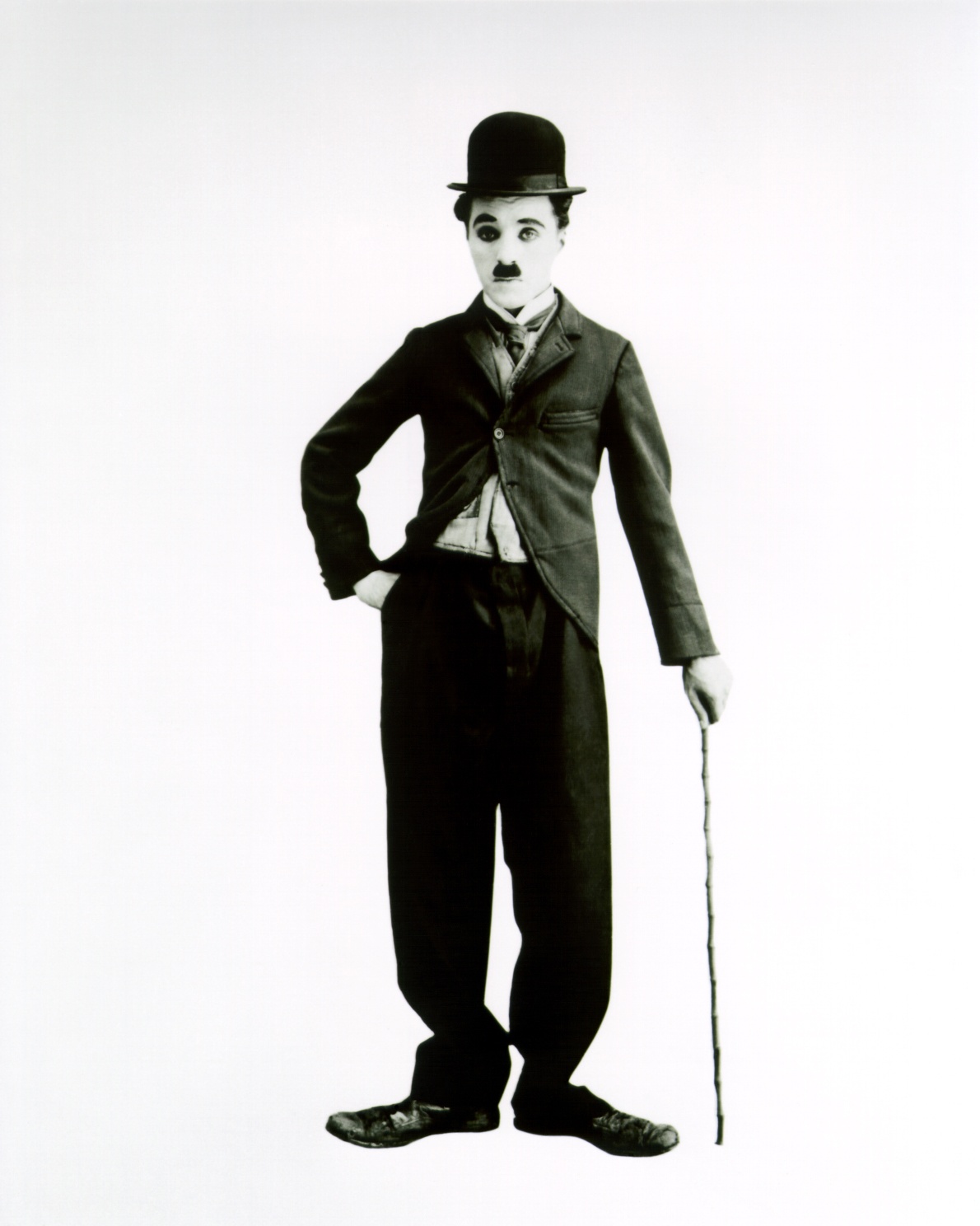
It’s often forgotten that the late and very great Charlie Chaplin has a statue in this country, located in Kerry, where he spent happy times as a visitor.

In recent times, whenever I’m on the job and providing tours of the city to tourists, I’ve stopped at the statue to another great man, Jim Larkin. When I stand there I think of Austin Clarke’s wonderful words of tribute, when he wrote:

What Larkin bawled to hungry crowds
Is murmured now in dining-hall
And study. Faith bestirs itself
Lest infidels in their impatience
Leave it behind. Who could have guessed
Batons were blessings in disguise,
When every ambulance was filled
With half-killed men and Sunday trampled
Upon unrest? Such fear can harden
Or soften heart, knowing too clearly
His name endures on our holiest page,
Scrawled in a rage by Dublin’s poor.

One of the giants of Irish history, Larkin stands proudly and defiantly on the very street where workers he organised were hospitalised and even killed on a Bloody Sunday.

“Who is missing a statue here?” I always ask. The answer is Charlie.

It was through Emmet O’Connor’s wonderful biography of Larkin I first stumbled across a most unusual episode in Larkin’s life, which occurred when he was imprisoned in the United States. Larkin had found himself imprisoned for “criminal anarchy”, essentially a sentence placed upon him as a result of his radical politics.

While sentenced to five to ten years, Larkin found himself in Sing-Sing Prison. Among his more unusual visitors was Charlie Chaplin.

Chaplin wrote of the visit:

The last day in New York, I visited Sing-Sing with Frank Harris. Jim Larkin, the Irish rebel and labour union organiser, was serving five years in Sing-Sing, and Frank wanted to see him. Larkin was a brilliant orator who had been sentenced by a prejudiced judge and jury on false charges of attempting to overthrow the Government, so Frank claimed, and this was proved later when Governor Al Smith quashed the sentence, though Larkin had already served years of it.
Frank inquired about Jim Larkin and the warder agreed that we could see him; although it was against the rules, he would make an exception. Larkin was in the shoe factory, and here he greeted us, a tall handsome man, about six foot four, with piercing blue eyes but a gentle smile.

It was noted in O’Connor’s biography that Chaplin felt compelled to send presents to Elizabeth (the wife of the union leader) and the Larkin children after this visit.

More detail on the visit to the prison can be found on charliechaplin.com, where it is noted:

Other highlights of this tour included meeting Irish radical Jim Larkin and sitting in the electric chair for a few moments. Charlie visited this prison again shortly before his 1931-2 tour, presenting his new film, City Lights, free for the prisoners’ entertainment.

Something to think about this May Day.
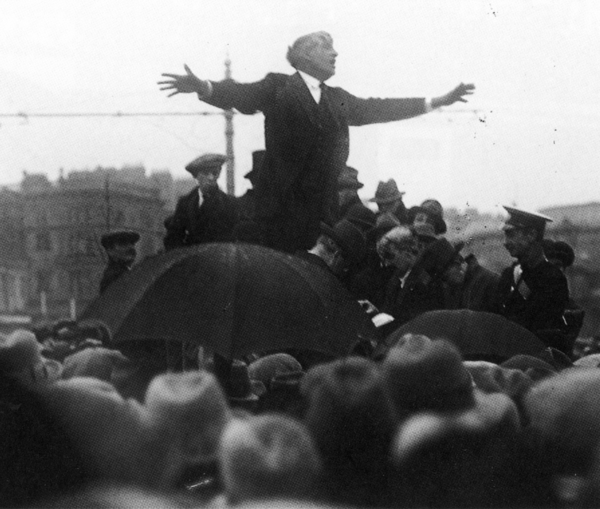
Larkin upon his return from America.

Read Full Post »

Six years later

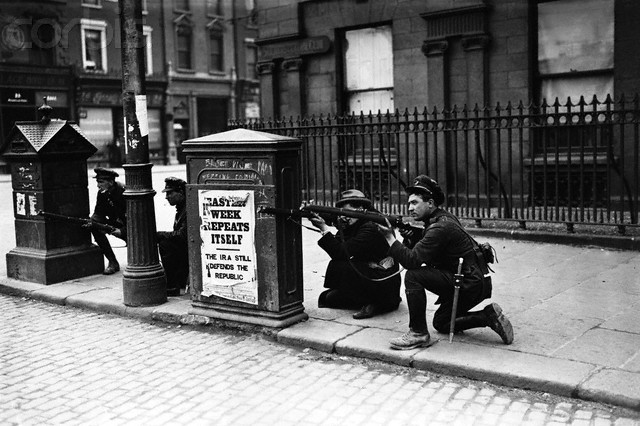
For the week that’s in it. A great snap of Free State soldiers in Dublin in 1922 during the Civil War.

The flyposter beside them reads:

EASTER WEEK REPEATS ITSELF

THE IRA STILL DEFENDING THE REPUBLIC.

Notice the soldier’s sword as well.

© Hulton-Deutsch Collection/CORBIS

Read Full Post »

This is a great watch. As Patrick Cooney from the campaign to save Moore Street asks, in 2016 will visiting world leaders find the laneways of 1916 or a shopping centre?

While I find it difficult to pay too much heed to politicians of green or blue stock, the relatives and campaigners, along with ordinary Dubliners going about their business, make this video an excellent insight into the issues. Lord Mayor Gerry Breen seems more concerned about a retail gap on O’Connell Street than Moore Street. “I come from a business background” he notes, before asking “how relevant is 1916 to the Facebook generation?”

This is the same Gerry Breen who recently welcomed anti begging laws in the city centre by noting:

I would have encountered eight beggars on a short walk through the city now I’m seeing just one. Begging is much more random now and it is not as pervasive or aggressive as it was before the new Act came into force.

Over 4,000 people have joined the ‘Save 16 Moore Street’ group on Facebook. Why don’t you become 4,013?

Read Full Post »

The annual ‘Anarchist Bookfair’ is always a great event, taking place this year once more at Liberty Hall. In the past, the event has seen visiting speakers as diverse as historian Martha Ackelsberg and former blackpanter Ashanti Alston.

This year another diverse range of stalls and talks will make up the bookfair. PM Press, AK Press the Irish Labour History Society and more besides will be there on the day selling books, but the talks are always the real highlight of the event.

Among them will be a talk from Gabriel Kuhn, author of Soccer vs. The State, a work which provides a very different look at The Beautiful Game.

More details on the event are available here.

Read Full Post »

I’d been meaning to take the camera with me some day and photograph some of the more interesting pieces of street art appearing in West Dublin suburbia….

(more…)

Read Full Post »

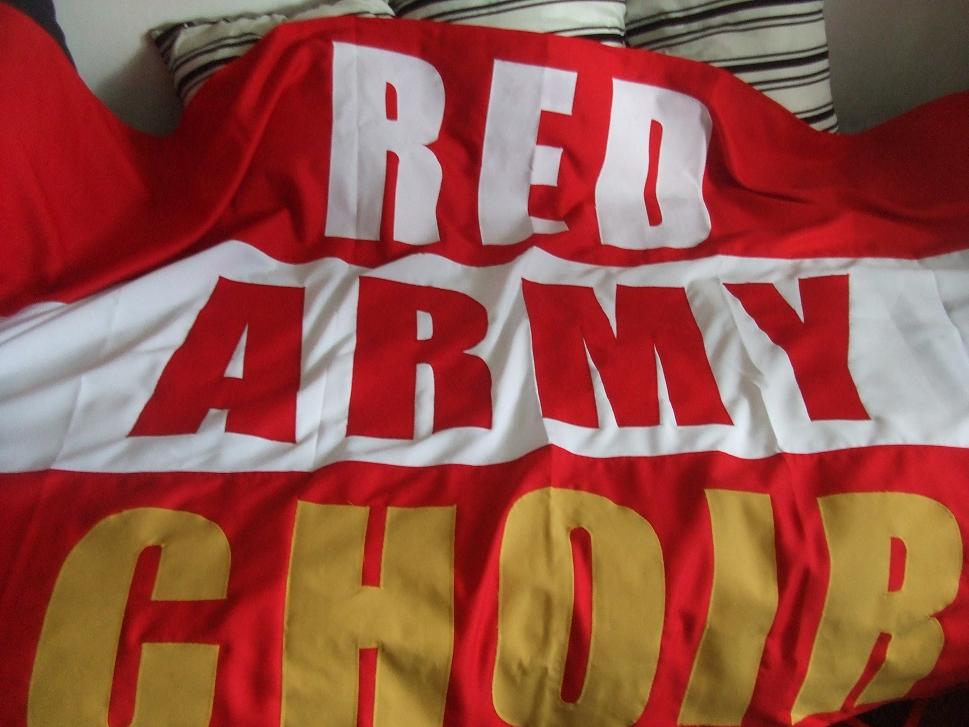
8ft by 5ft. Can also double up at musical performances, though the choir aren’t up to much these days.

Read Full Post »

Everybody’s Drinkin’

Andy Quirke, uber rich boy with loads of times on his hands, brings out a surprisingly catchy and well made spoof music video looking at the two extremes of Dublin social life.

11,000 views in just under a fortnight so far but with last night’s showing on the Republic of Telly, I’ll reckon it’s going to be a big one.

Read Full Post »

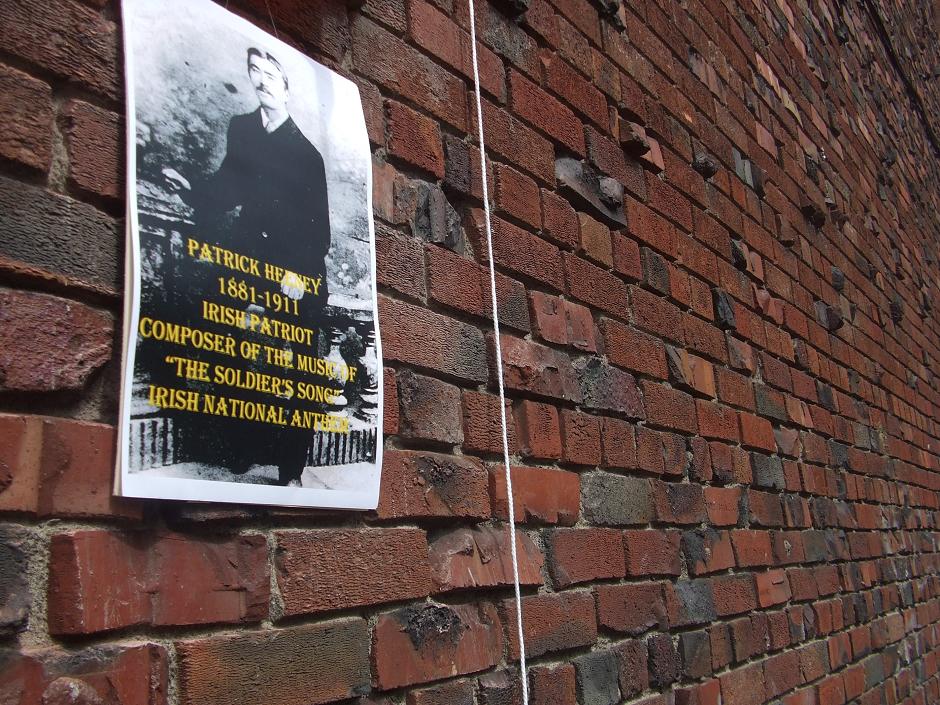
Great credit is due to the North Inner City Folklore Project for its efforts to preserve, protect and cherish the history of its local area. Terry Fagan of the Project has written on everything from local republican women to the madams of Monto, and last year the group put a well deserved plaque on the home of the Connolly siblings of the Irish Citizen Army.

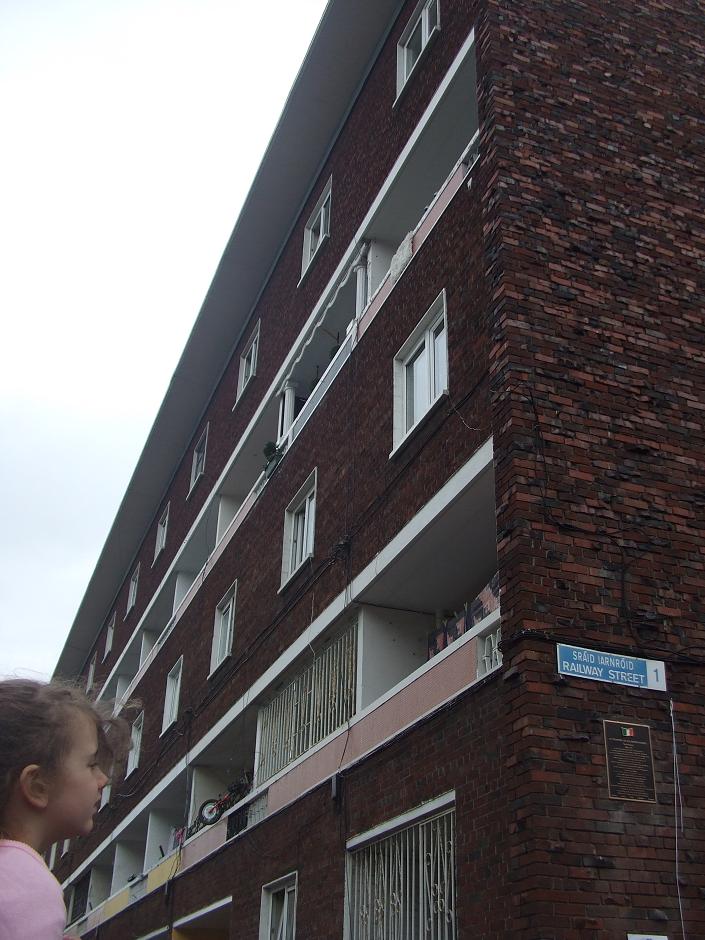
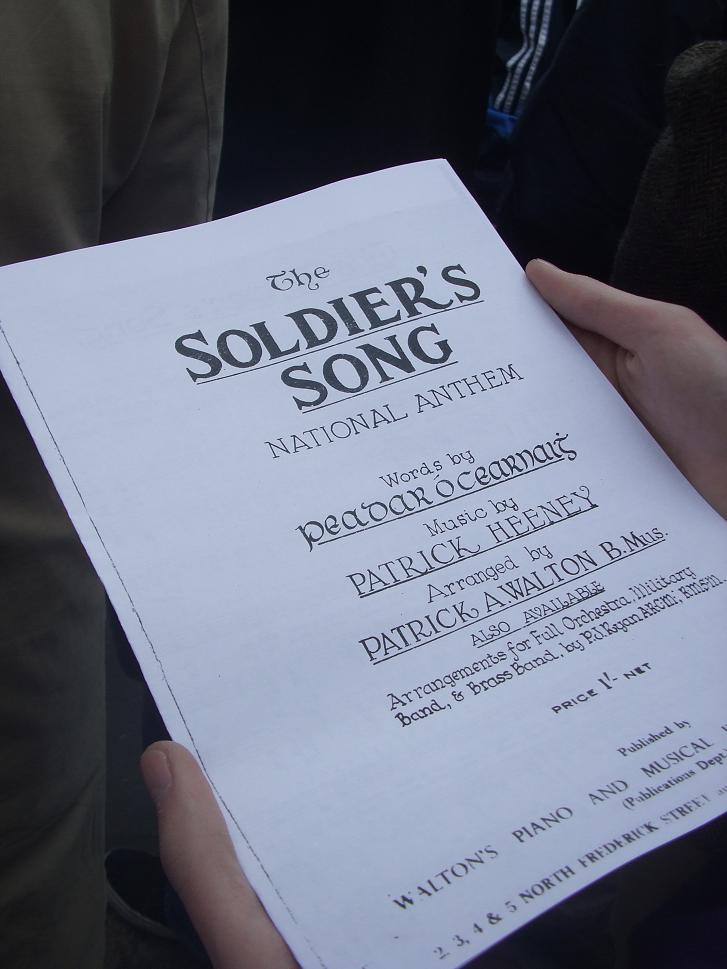
Yesterday, the group unveiled a new plaque, this time to Patrick Heeny who composed the music for The Soldiers Song. It can be seen on the side of the flat complex by Railway Street. Like the Connolly plaque, it’s great to see plaques outside of the city centre itself and in areas like this. The turnout of locals showed how appreciated the efforts of Terry Fagan and the North Inner City Folklore Project are in the area.

Prior to the plaque being unveiled, relatives of James Connolly and young Molly O’Reilly re-enacted the raising of the green flag at Liberty Hall. Writing on the decision to raise the flag over Liberty Hall in 1916, James Connolly wrote:

We are out for Ireland for the Irish. But who are the Irish? Not the rack-renting, slum-owning landlord; not the sweating, profit-grinding capitalist; not the sleek and oily lawyer; not the prostitute pressman – the hired liars of the enemy. Not these are the Irish upon whom the future depends. Not these, but the Irish working class, the only secure foundation upon which a free nation can be reared.

I couldn’t help but think of his words watching the government ‘parade’ on Sunday.

The likes of the Folklore Project empower ordinary people to read and research history. Long may it continue.

Our report from the unveiling of the Connolly siblings plaque in 2010 can be read here.

(more…)

Read Full Post »

…..and this is the League Cup!

Read Full Post »

May Day, May Day

While the CHTM! team will be in O’Byrnes this May 1st for the Sounds of Resistance gig, it’s interesting to see that other club promoters are tapping into labour/socialist imagery for their publicity, namely the Mongo all-dayer in Tripod.

Read Full Post »

I’m literally about to hop in a car to follow my beloved Pats up to Derry, will this lad be there? Who knows.

Taken on the northside of the Liffey, I’m calling this one an agent provocateur!

Read Full Post »

Previous ‘Plaques of Dublin’:
The Eagle Tavern, Lord Edward Carson.

With the weekend that is upon us, the latest in the ‘Plaques of Dublin’ series is a plaque related to the 1916 rebellion.

Sean Healy is one of the most remarkable characters in the story of the Easter rising, being the youngest casualty on the republican side. Born in Phibsboro in 1901, he was to lose his life in the same corner of the city he hailed from. He had been educated at Saint Peter’s National School in the area, and as early as thirteen was working as an apprentice to his father in the pluming trade.

Today, one finds the Volunteer hat of Sean Healy in the Soldiers and Chiefs exhibition in Collins Barracks. At fifteen, it is difficult to picture any youngster as a ‘soldier’ of course.

There is great detail of Sean’s experiences in the rebellion on the website of the National Graves Association where it is noted:

All day on Monday he waited expectantly for his mobilisation order. But he waited in vain, as the Fianna executive had decided that the younger boys were not to be called upon. On Tuesday morning he decided to go out and fight without orders. So he made his way across town and reported for duty to Commandant Thomas MacDonagh in Jacob’s Factory, near Aungier Street.

Some hours later he was given an urgent dispatch to carry to the officer commanding at Phibsboro Bridge. On his way he stopped at his home to let his mother know that he was safe and well. He left home within a few minutes and he had travelled only a short distance when he was shot at Byrne’s Corner, Phibsboro.

In Ben Novik’s excellent Conceiving Revolution, a study of Irish nationalist propaganda during the first World War, it is noted that early in 1917 a work entitled The Fianna heroes of 1916 was published by Cumann na mBan. This work featured an image of Sean on its back cover, and it was noted:

Young boys, little more than children, cheerfully offered their services and their lives in the sacred cause.

Image of Sean Healy from Ben Novik's Conceiving Revolution

Today, young Sean is buried in Glasnevin Cemetery, not far from his home.

Read Full Post »

« Newer Posts - Older Posts »