Feeds:
Posts
Comments

Archive for 2012

(A very special guest pub crawl report from our close friend, Lucan native and veteran pub crawler Hamada)

It was a grey and overcast day that heralded our April pub crawl. (Our 20th! – JayCarax)

Hopping on the 67 bus route we made our way out of the bustling city and into the sleepy village of Lucan.  It is a charming sort of ‘hamlet’ with pubs, shops, a bank or two and cottages circling a small park/ courtyard with the Griffeen River passing through it (Yes, it’s prone to flooding!).

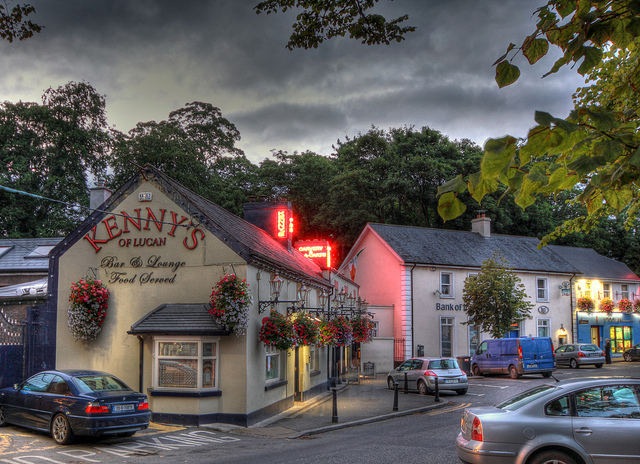
Our first stop was Kenny’s Pub, one of Lucan’s most popular drinking establishments.

Kenny’s of Lucan. Picture – George Pacini

Kenny’s seemed to have that ‘come in here for Sunday roast’ kind of feel and indeed the place was filled. The sounds of bustling children and the cacophony of pub talk filled the air. The smoking area was nice enough with plenty of seating; the day was too cold to be really comfortable though. The Guinness, although sloppily pulled, was never the less a decent pint. A Guinness here will set you back’€4.35.

(more…)

Read Full Post »

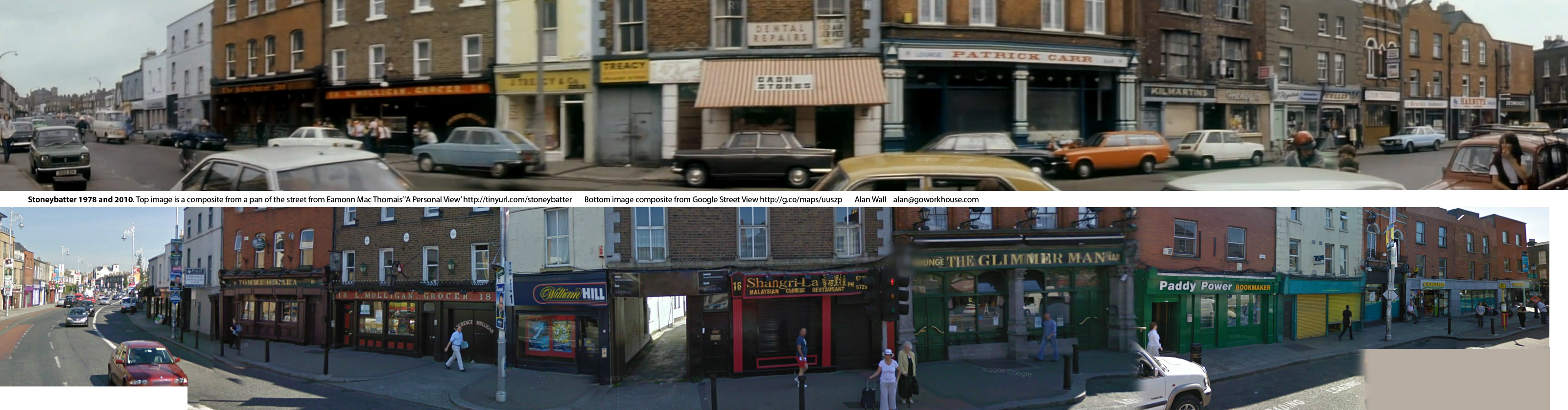
Stoneybatter 1978/Stoneybatter 2010. Click to enlarge

Alan Wall (of Workhouse) sent this on to us via Twitter. You’ll need to click on the image to enlarge it and explore. A fantastic idea, the top half shows a composite of Stoneybatter as it appears in Éamonn MacThomais’ Dublin:A Personal View. Below it, Alan has placed a composite of Stoneybatter today via Google Street View. The buildings themselves are the same, of course shopfronts and businesses have changed, but look at L.Mulligan’s pub! L.Mulligan’s is a favourite haunt of mine today, loyal to the cause of the microbrewery.

MacThomais’ Dublin:A Personal View is available to view in full on YouTube today, and is a truly fantastic effort, the mans love and enthusiasm for Dublin shone through in all he did. Here is the first part to enjoy.

Read Full Post »

The Harry Clarke House on Thomas Street is a part of the National College of Art and Design (NCAD). A firestation had stood on Thomas Street, opened in the year 1913, and below is a drawing showing the ‘Elevation of Thomas Street Fire Station’. Recently, we posted the original architects drawing for Tara Street Fire Station. The old drawings and plans for these stations are magnificent, and in time I hope to post more.

'Elevation of Thomas Street Fire Station' (Fallon Collection)

Earlier in the week we posted on the ambitious proposals for Thomas Street from the people at the Dublin Civic Trust. This street really is the heart of the city, and hopefully its rich cultural and architectural history will some day be properly appreciated.

Read Full Post »

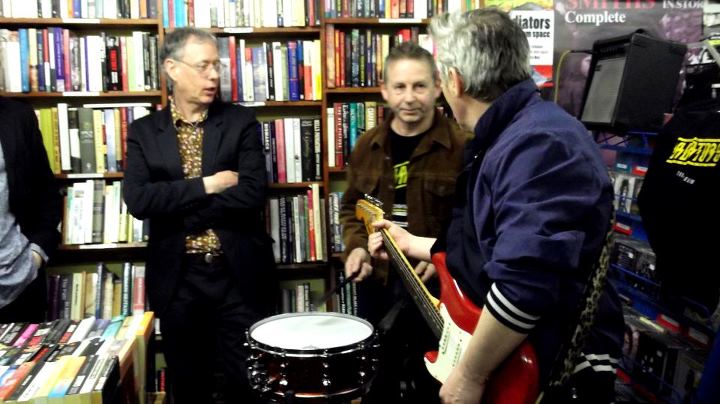
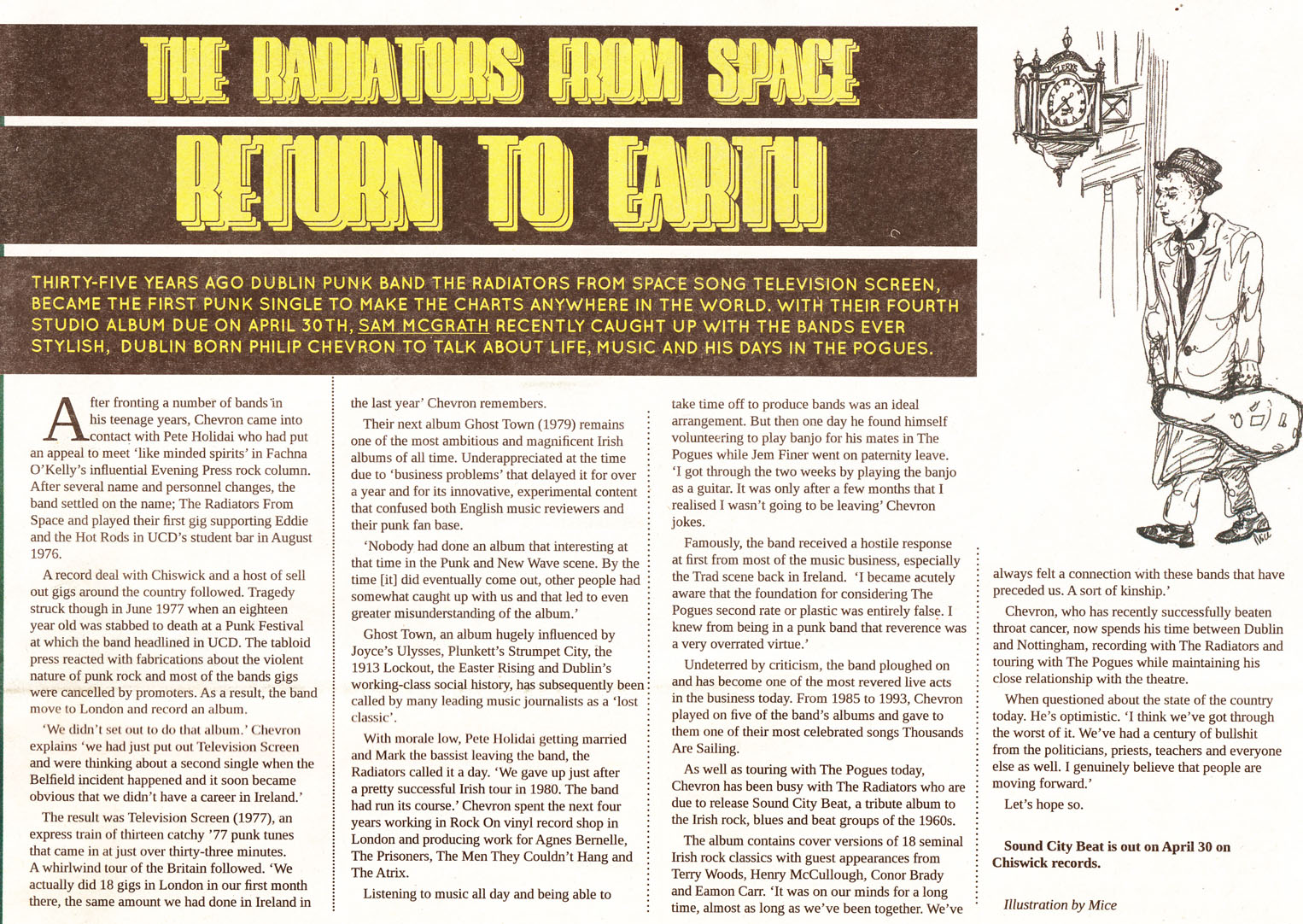
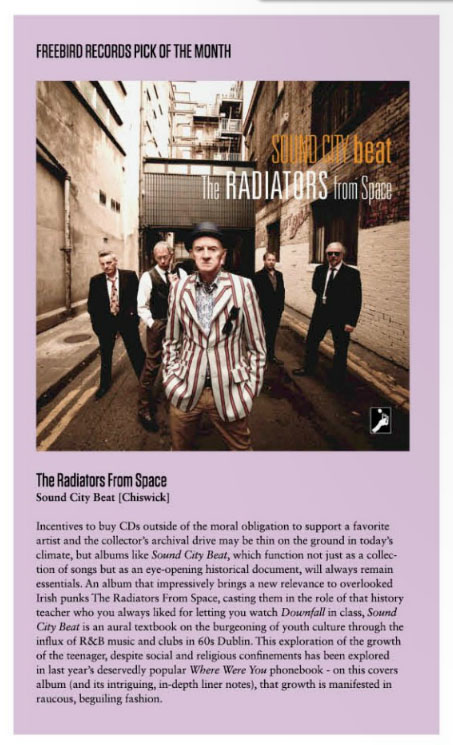
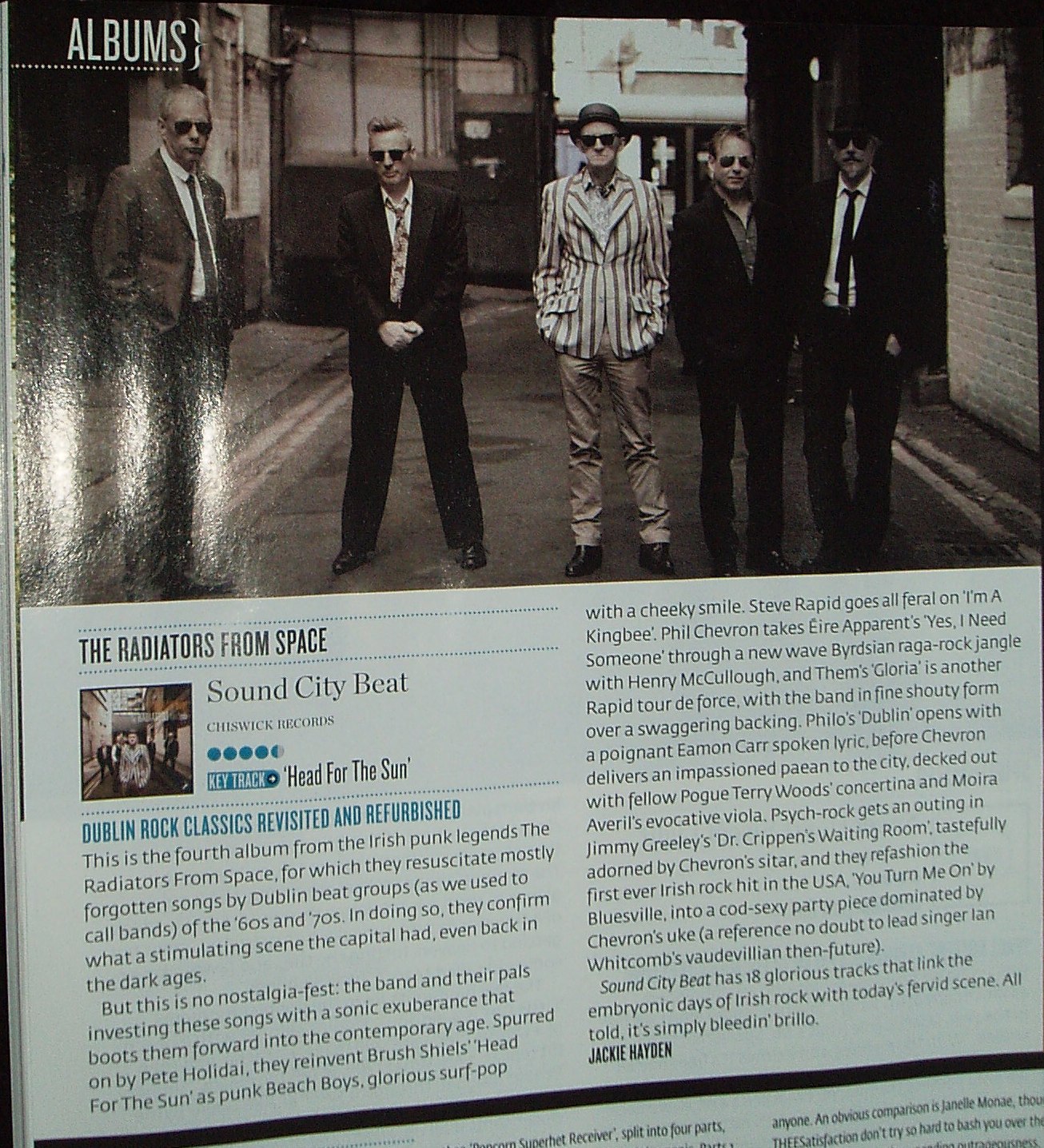
Gutted I missed it but major props to legendary Dublin punk band The Radiators from Space for dropping into Freebird Records last Saturday to celebrate Record Store Day. They were also there of course to publicise their new album Sound City Beat.Reviews so far: Rabble, Totally Dublin, Hotpress, and The Irish Times.

Picture credit - John Foyle

A recent interview of mine with lead singer Philip Chevron can be read here.


Read Full Post »

For anyone just stumbling across CHTM!, once a month the three writers behind this blog, joined by a small group of friends, visit five Dublin pubs and then write about our experiences. A different person each month picks the five pubs and make sure not to give away any details beforehand. The reviews are often as varied as the pubs with the three different writing styles giving three very different narratives.

Before I start talking about the pubs, I’ll mention two things. I can’t let the introduction pass without me contradicting it in some way. When I say we are joined by “a small group of friends,” I mean all previous ones we were joined by a “small group of friends.” This pub crawl somehow managed to draw the attention of over twenty extras. Great fun in that conversation was never lacking, but difficult with regards getting the group from one pub to the next. Still, we managed it, with no punches thrown. Secondly, I don’t know what it is with me, is it age or just the sheer quantity of Guinness consumed since the inception of this blog but these pub crawls are getting harder to write, and my apologies for the gap between the crawl and the review.

Disclaimer: Prices may become inaccurate towards the end. Feel free to correct!

The Dice bar, from Rate My Pub on Flickr

The February pub crawl kicked off, quite amazingly, on Sunday 4th March. As we are readily running out of pubs in the City Centre, I decided to head down towards Smithfield and Stoneybatter for a look. The infamous horse market had not long finished as we made our way into the Dice Bar, on the corner of Queen Street and Benburb Street. Not a spot I’d been in too many times before, rather drunkenly over Christmas and before that, who knows… a long time anyways. A really cool little spot this, a cross between Sin É and the Bernard Shaw or something along those lines. Good tunes, and a good selection of Irish and International beers, ales and stouts. It being the pubcrawl though, the majority of us were on the Guinness and at €4.30 a go, it wasn’t to be faulted. I found it odd to see a television on in the place, given that up until that point, I didn’t think they even had a telly. But, it was a 6 Nations weekend, and there were a few heads tuned in to the game. (France 17 – 17 Ireland if you must know, cheers Google.)

The numbers attending this pubcrawl meant that when some people were finishing pints, others weren’t long through theirs, meaning more than one pint was consumed in most pubs, and the Dice Bar was no exception. Before the end, our crowd had spilled out of the area we were occupying, and the sound barman directed us to another area recently cleared down the other end of the bar. Great music, odd & interesting décor, (was that a flying astronaut in the corner over the jacks door?) good pints and sound barstaff. A win all round.

Walsh's, from our friends at http://www.publin.ie

The next spot I had picked was the recently re-opened McGettigans, but a quick look inside the door told us we wouldn’t be venturing in today, the place was packed to the rafters. With that, we made our way up towards Dublin’s Left Bank, Stoneybatter, and into J. Walsh & Co. on Manor Street. Another spot I’ve been in a few times and one I really like. Luckily, there was plenty of space in here as the numbers were ever swelling and we were starting to draw glances. We managed to get ourselves an area down the back of the pub at the end of the bar, walls adorned with old images of GAA teams past and other sporting memorabilia. The last time I was here was with a friend who, at the time was living down the road from it. We went in for that fatal “one pint” and ended up falling out of the place a few hours later, deciding to treat ourselves to “a pint and a half one” each round: fun times. (A pint and a half one for the un-initiated is a pint of Guinness and a single measure of Jameson.) Definitely a spot for that carry on rather than a rambunctious gathering such as this, we decided to leave the good people of Walsh’s in peace after one here. €4.15 a pint, my favourite pub of the day, and definitely one I’ll be back to.

(more…)

Read Full Post »

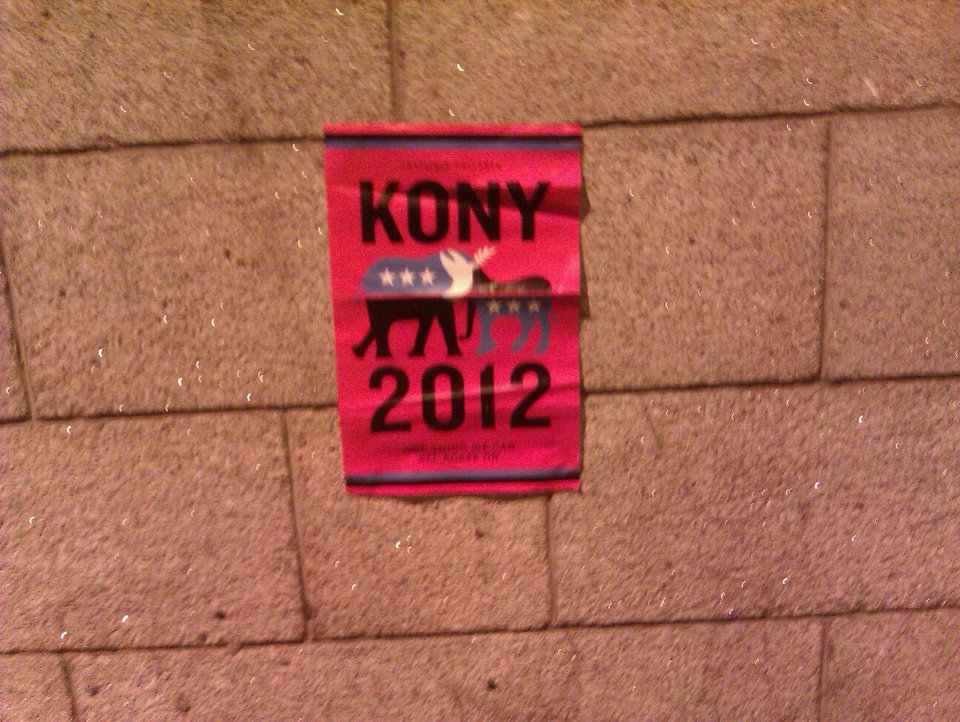
Occupy Kony.

So, last night was the night that the world was supposedly going to be plastered with posters and stickers in relation to Ugandan war criminal Joseph Kony. Thousands of people clicked attending on event pages for Dublin, stating that they would take part in the postering effort. One page, with in excess of 2,500 attendees, noted that:

Everyone is meeting outside Stephens Green shopping centre at 10pm and we will organise postering from there.

My friend Eoin posted the image above to Facebook, showing a single poster at College Green. Others have been in touch to say Dublin is pretty much poster-free today, and the ‘campaign’ has failed here at least, despite the thousands pledging to cover the city. The recent exposures on the group behind the campaign (‘Invisible Children’) which revealed their conservative religious ethos and funding, coupled with the very public breakdown of the campaigns public face (who eh…..was caught on video running around San Diego naked shouting about the devil) no doubt led to its demise. Dublin City Council must be delighted.

Read Full Post »

This fantastic image above was posted to archiseek earlier, one of a series of images from the Dublin Civic Trust from their proposals for a restored and rejuvenated Thomas Street. There are further images in the series which can be seen over on the archiseek website.

The Dublin Civic Trust report on Thomas Street, compiled for Dublin City Council, is available to read in full here.

An image of Thomas Street in the 1970s, contained in the Civic Trust report.

Read Full Post »

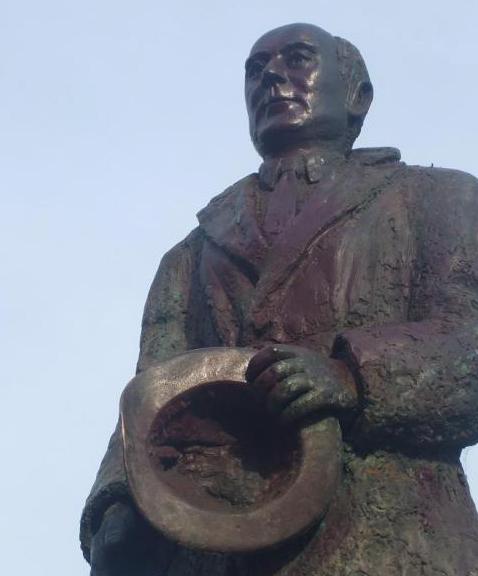
Statues have long been divisive in Dublin of course, and the statues of figures associated with the British Empire have long been targeted by Irish republicans. As we’ve featured on Come Here To Me before, statues of Irish nationalists in Dublin have on occasion been targeted by Loyalists too. Truly remarkable however is the statue of Seán Russell in Fairview Park, owing to the numerous attacks of a political nature upon it. Russell was a veteran republican who partook in the Easter Rising and the War of Independence, before going on to senior positions in the IRA in the 1920s and 30s. He died in 1940 upon a German U-Boat, on route to Ireland. Frank Ryan was also upon the U-Boat, and returned to Germany. Russell’s statue has been targeted by both the Right and the Left, and remains considerably controversial to this day.

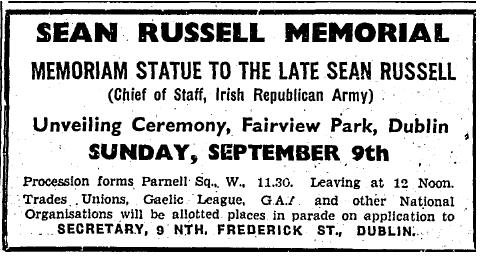
Advertisement in various newspapers prior to the unveiling.

The Seán Russell statue was unveiled on Sunday, September 9th 1951. A march of over 1,000 republicans made their way to the monument from Parnell Square, where they were joined by members of the public. A Garda Special Branch report into the march noted that among the organisations and individuals present were in excess of 130 Dublin IRA men led by Cathal Goulding, Cumann na mBán, the ‘Girls Piper Band’ from Dublin, the Transport Workers’ Union Band and republican contingents from both Cork and the north. Members of the Dublin Corporation and the GAA were also identified by the Special Branch. Republican representatives from Clan na nGael in America were among the crowd and would play a leading role in the ceremony at Fairview.

When the march reached Fairview, where members of the public awaited it, numbers grew considerably. The report noted that:

The procession marched to Fairview via O’Connell Street, Amiens Street, North Strand, arriving at Fairview Park at about 1pm where the general public had already assembled in large numbers, many no doubt attending from the point of view of curiosity.

Nevertheless, the crowd at this period was not far short of five thousand people, including those on the paths and roadway outside the Park proper.

(more…)

Read Full Post »

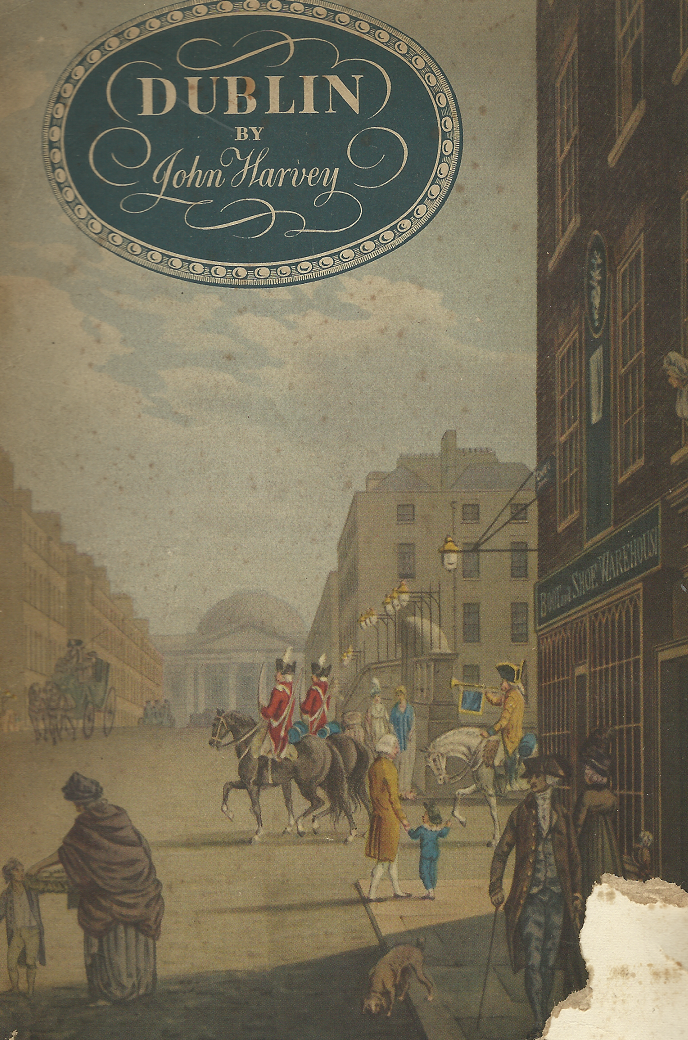
I’m a big fan of books on Dublin from decades gone by, in particular guide books or studies written by ‘outsiders’. John Harvey’s Dublin: A Study In Environment (1949) was begging me to buy it when I spotted it sitting in Chapters second hand section, and I couldn’t resist. The book comes with the endorsement of Bernard Shaw who writes “I wish it had been available when I was a youth in Dublin. To me it is intensely interesting.”

Harvey begins his work by noting that:

“Dublin is still a city almost unknown to English people, and the loss is ours. Between the mountains and the sea, it is one of the most fortunate of European capitals, and it has the enormous advantage of consisting mainly of buildings produced at the peak of its historic culture.”

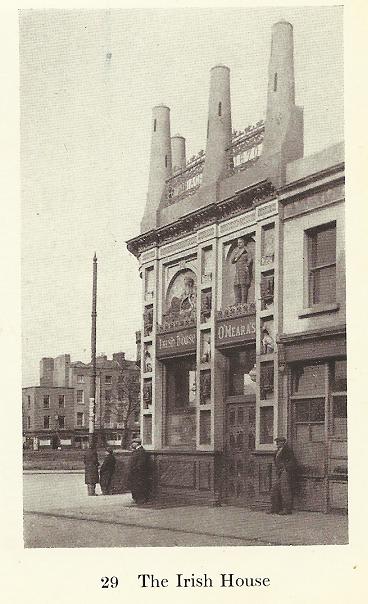
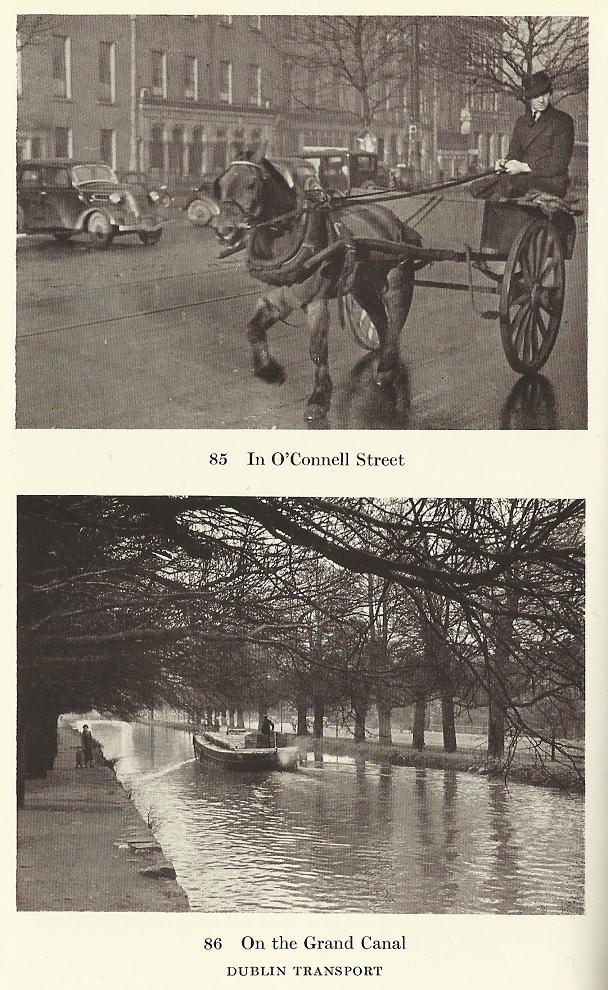
The book contains many fantastic images of the city, showing Dubliners at work as well as some fantastic buildings of the period, such as The Irish House pub at Wood Quay which is no longer with us.

Bank of Ireland, College Green.

The Irish House.

Harvey doesn’t shy away from sharing opinions among historical facts and information on sites of interest in Dublin. “Nationalism is nonsense; but it can have indirect results which do make sense” he writes, as “so far as Dublin is now both a flourishing and a promising city, it is the outcome of nationalism, building on the remains of an alien aristocratic regime.” Harvey doesn’t shy away from attacking Irish nationalists on occasion, for example taking aim at the “political hooligans” who destroyed John Van Nost’s statue of George II inside St. Stephen’s Green.

Ireland, Harvey noted, suffered from an “extremely thin-skinned moral censorship”, a censorship “so wide that the banning of books and cutting of films reaches a humorously fantastic point.”

Harvey is completely correct in his commentary on Dublin’s ancient cathedrals, noting that they were both “…subjected to the horrors of well-meant ‘restoration’, which as usual destroyed the greater part of their original character and beauty. Both buildings were in a very dilapidated state, and urgently needed repair, but the work actually done was so extensive as to be even more disastrous than contemporary work at English churches.”

Harvey writes of what he sees as the perception of the British people in Ireland, a rather damning indictment that “‘The British’ in many an Irish mouth has implications only equaled by those of les boches in France; it is one of the few sad instances where the Irish sense of humour is lost.”
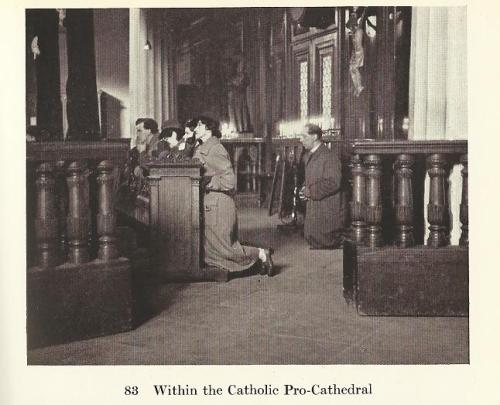
Mass goers.

Refreshingly for such a study, the tenement poverty of the inner-city features, which Harvey stressing that “except for O’Connell Street and Parnell Street, practically the whole of the northern half of the eighteenth-century city is one enormous slum.”
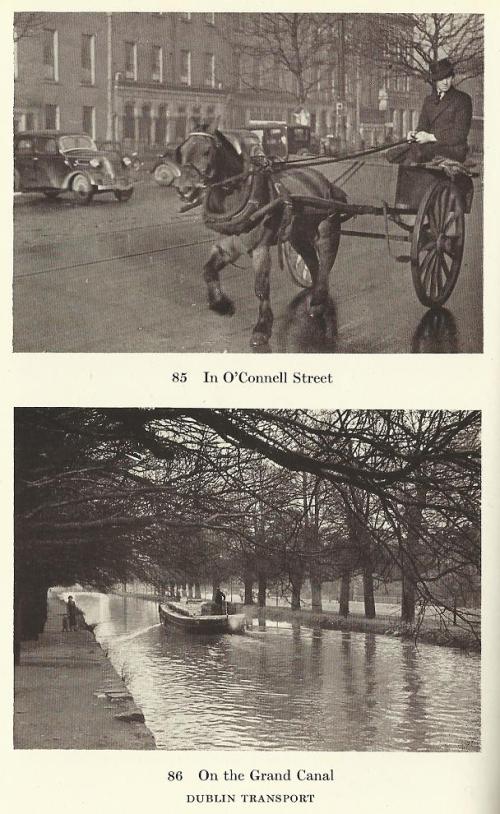
Harvey’s book is an enjoyable read, loaded with opinion on not only Dublin and Dubliners but also the political questions of the day, and the relationship between Ireland and Britain. Batsford, its publishers, produced a series on “British Cities” in the style of Harvey’s effort, and all contained the same style of maps and in excess of 100 images.

“To an Englishman Dublin has the virtues of a foreign capital without the drawbacks: artificial animosities have not annulled the kinship which has grown up through centuries of intermarriage between the people’s of the British Isles. Dublin seems to foreshadow the qualities of a new type of supra-national city; let us have a look at her.”

Read Full Post »
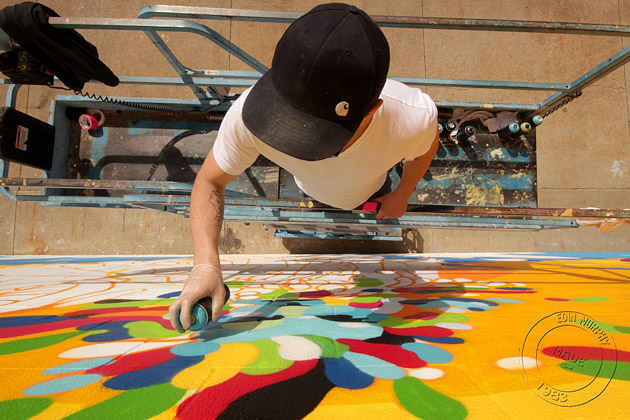
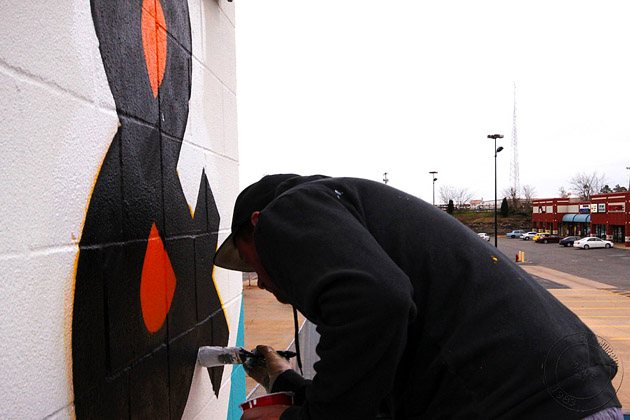
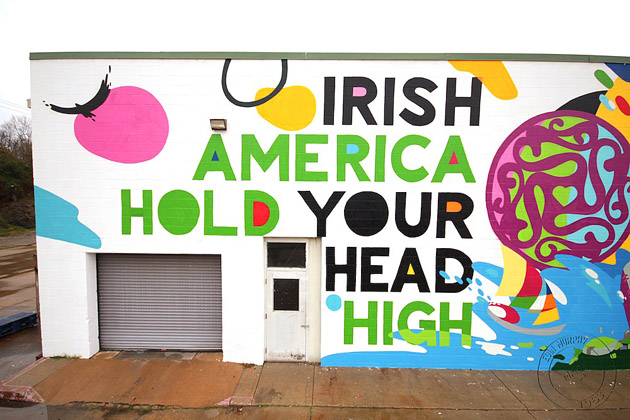
There’s a great photo-post on the Montana Cans blog about Maser heading to America recently, to paint a piece centered around Irish America. A collaboration of minds with Jim Fitzpatrick and Damien Dempsey, the piece featured in The Irish Times back in March.

We’ve previously interviewed Maser here ourselves, in which we talked primarily about the city of Dublin and its influence on his work.

The more I learn the more I realise how much more I want to know.

There is a wealth of history in this city and country that can supply an extensive body of visual work for any artist. There are still a lot of people, places and situations I need to paint and talk about.

The photo post on Maser in the U.S is more than worth a look. Eoin Murphy took the photographs, and they offer great insight into how a piece goes from stage 1 to completion. Enjoy.

Read Full Post »
I just stumbled across the Tumblr homepage of Fatti Burke, a Dublin based illustrator and designer. Some absolutely fantastic stuff, likely to appeal to some Come Here To Me readers. The cover for Niall McCullough’s Dublin:An Urban History is beauitiful in its style and simplicity, and the playful tribute to Dublin below made me smile. Excellent talent.

Read Full Post »

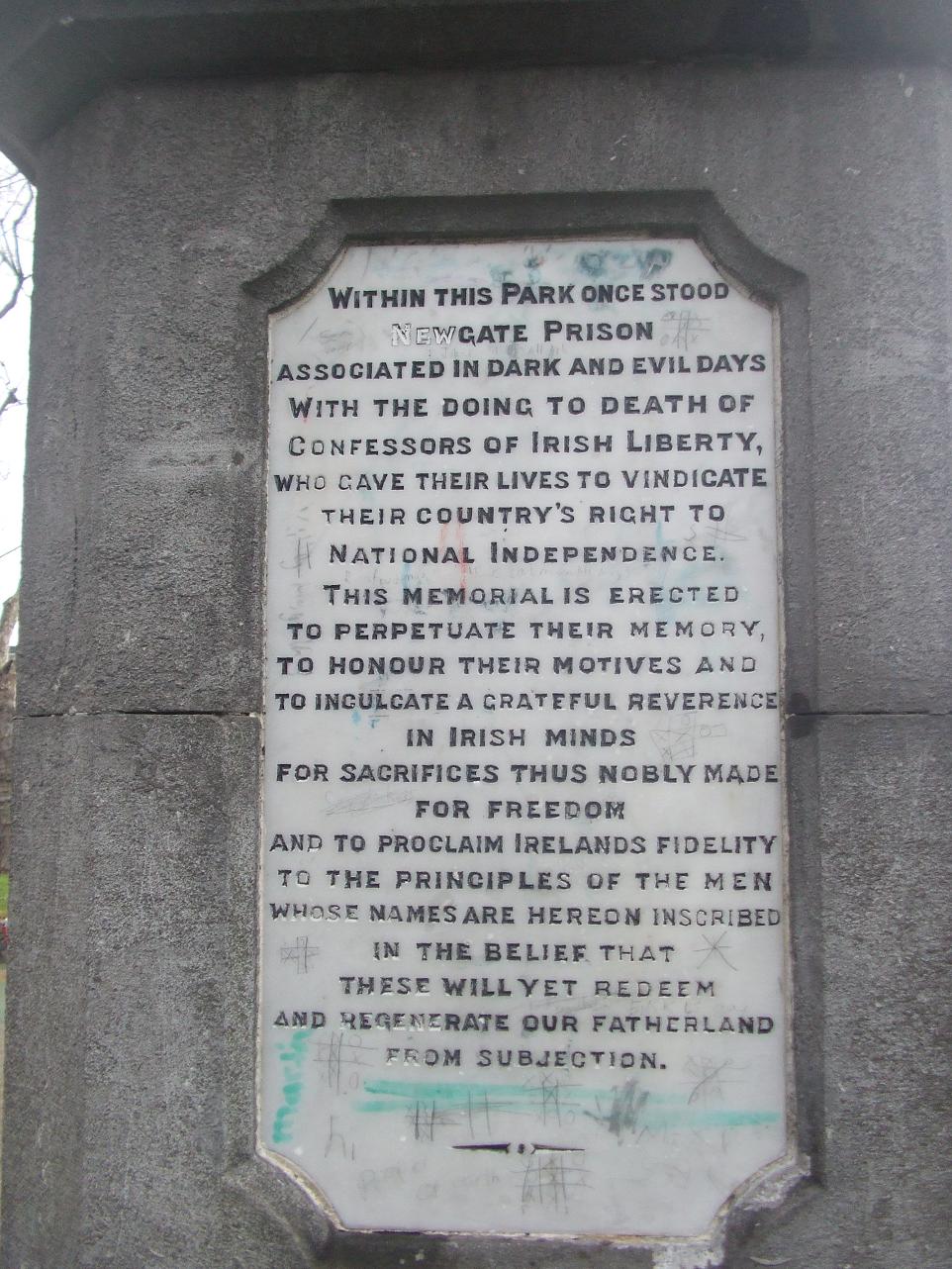
A magnificent statue at St Michan’s Park opposite the Little Green Street Gallery caught my eye recently. The statue stands within a park which was once the location of Newgate Prison, which the statue tells us was “associated in dark and evil days with the doing to death of confessors of Irish liberty, who gave their lives to vindicate their country’s right to national independence.”

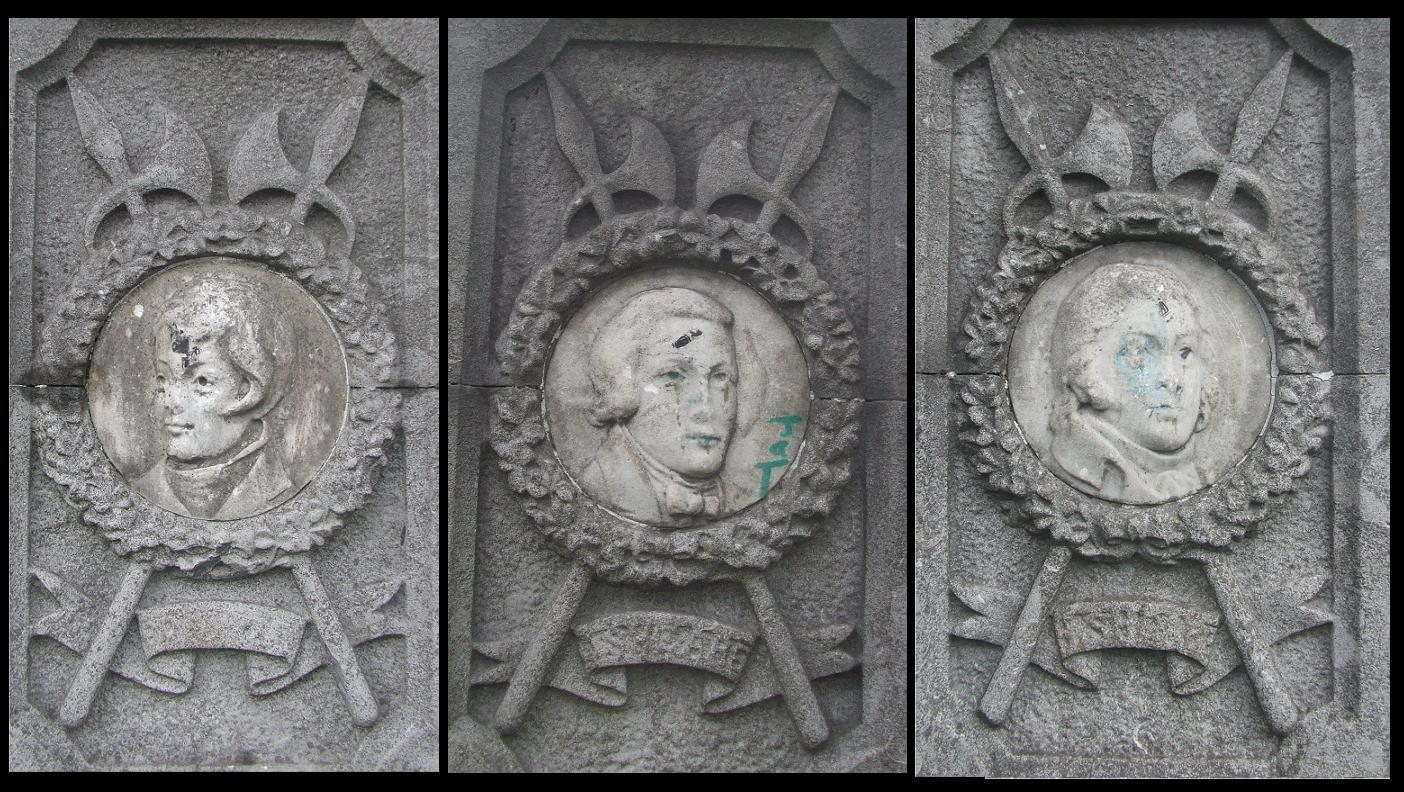
Around the monument, the faces of figures associated with the 1798 republican insurection are to be seen. Lord Edward Fitzgerald can be seen in the front of the monument, while the Brothers Sheares are found on each side. Lord Edward died of gunshout wounds at the Newgate Prison as the United Irishmen rebellion broke out, and today his body is to be found in Saint Werburgh’s Church. It’s a great irony that Major Henry C. Sirr, who led the arrest party to capture Fitzgerald, is buried in the grounds of that same historic church.

Henry and John Sheares are perhaps not as widely remembered today as Fitzgerald, though they are fascinating characters in their own right. The brothers, sons of a Parliamentarian, had witnessed the radical changes to society brought by the French revolution firsthand and were enthusiastic members of the United Irishmen. They were executed n July 14th 1798, as the rebellion raged, having been betrayed by spies inside the movement. The pikes featured have of course come to symbolise the 1798 uprising in Irish popular history.

(more…)

Read Full Post »
« Newer Posts - Older Posts »