Feeds:
Posts
Comments

Archive for 2012

I’m far from finished exploring the street level plaques of Dublin, but recently it was suggested to me to move my search indoors. Hospitals, schools, churches and more besides all boast great historic plaques in this city, and some are real hidden gems. Church of Ireland churches can throw up interesting stuff in particular, for example often containing significant overlooked WWI memorials. St. Ann’s Church on Dawson Street contains the above plaque, to a man who took part in the defence of Trinity College Dublin during the 1916 Rising.

On Saturday August 5th 1916 a presentation was made in the Provost’s gardens of Trinity College Dublin to members of the Officers Training Corps (OTC) who had defended the university during the uprising, and used its vantage points to fire on rebels. The Sinn Féin Rebellion Handbook noted that:

To the prompt measures, defensive and offensive, organised by the Corps was due the preservation of valuable life and property in Grafton Street, Nassau Street, College Green, College Street, Dame Street and Westmoreland Street, including not only the historic buildings of the College itself, but the Bank of Ireland and many other of our finest buldings.

Interestingly, members of the OTC were joined by Canadian and Australian soldiers in the defence of the college. W.J Brennan-Whitmore wrote at length in his memoir of the rebellion of exchanging fire with a sniper at Trinity College Dublin, later meeting an Australian Sergeant and asking “Are you the so-and-so that was sniping at us out of the corner of Trinity College?” Indeed, the man was!

Appreciation for the efforts of the OTC materialised in a fund, exceeding £700, gathered via contributions from ratepayers in the area and citizens. Each member of the Corps was presented with small beautiful silver cup which marked their participation in the week, with the engraved inscription: ‘DEFENSE OF T.C.D – SINN FÉIN REBELLION – EASTER 1916’. One of these cups, pictured below, sold for €3000 at Adam’s last year.
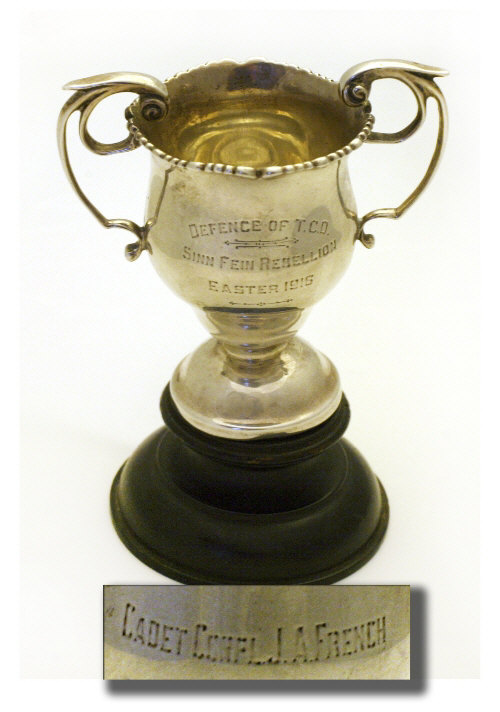
Image from Adams Auctioneers. This cup was sold in 2011 for €3000.

(more…)

Read Full Post »

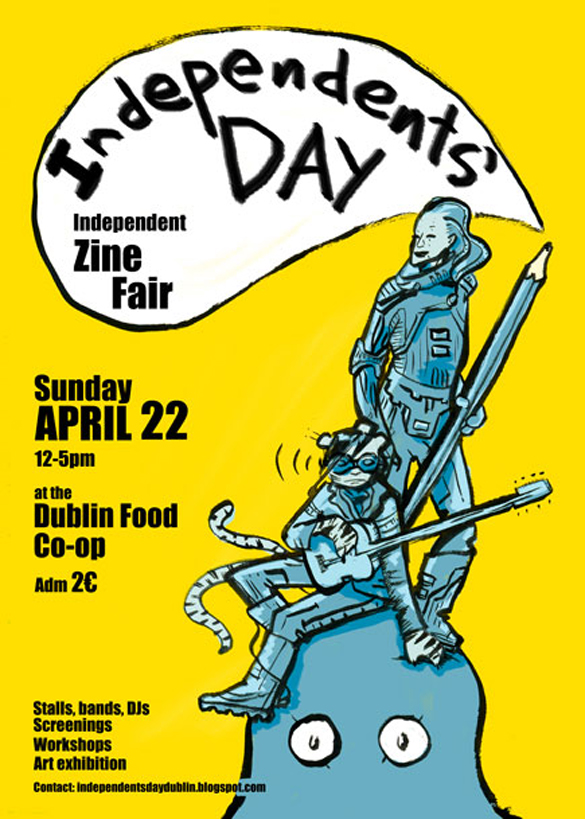
Independents Day 2012

Independents Day is a great idea worthy of supporting, as it grants a platform to small independently released publications and zines. While blogging is our passion, we've always had a love of the printed word and for that reason are always more than eager to contribute to or support publications like Rabble for example, which jaycarax promoted on the site yesterday. Independents Day is non-profit and offers a cheap space for independent magazines, record labels and the like to promote themselves. Rabble, the Irish Labour History Society and Loserdom are among the names on the list already.

Read Full Post »

Of all the legends and stories the Easter Rising produced, I’ve always taken an interest in that of The O’Rahilly. Born to a prosperous merchant family in Co. Kerry in 1875, he had a privileged upbringing and received his secondary education in Clongowes Wood College. He began studying medicine in 1893, but was forced to take a hiatus after a year after contracting tuberculosis and quit altogether after his fathers death in 1896, when he moved home to look after the family business. Not long afterwards, he sold the business and moved to the US, where he married in Philadelphia.

His next ten years were spent back and forward between the States and Ireland, and O’Rahilly and his bride, Nancy Brown, traveled Europe and Ireland extensively. They settled in Dublin in 1909 where he took up a job managing the journal An Claidheamh Soluis, later publishing the article by Eoin MacNeill that lead to the foundation of the Irish Volunteers. Despite being a founder member of the Irish Volunteers, he was not privy to the plans for the Rising, but took part in it regardless, arriving at the mobilisation at Liberty Hall and uttering the infamous line, “Well, I’ve helped to wind up the clock — I might as well hear it strike!”

The O'Rahilly around the time of his marriage to Nancy Browne

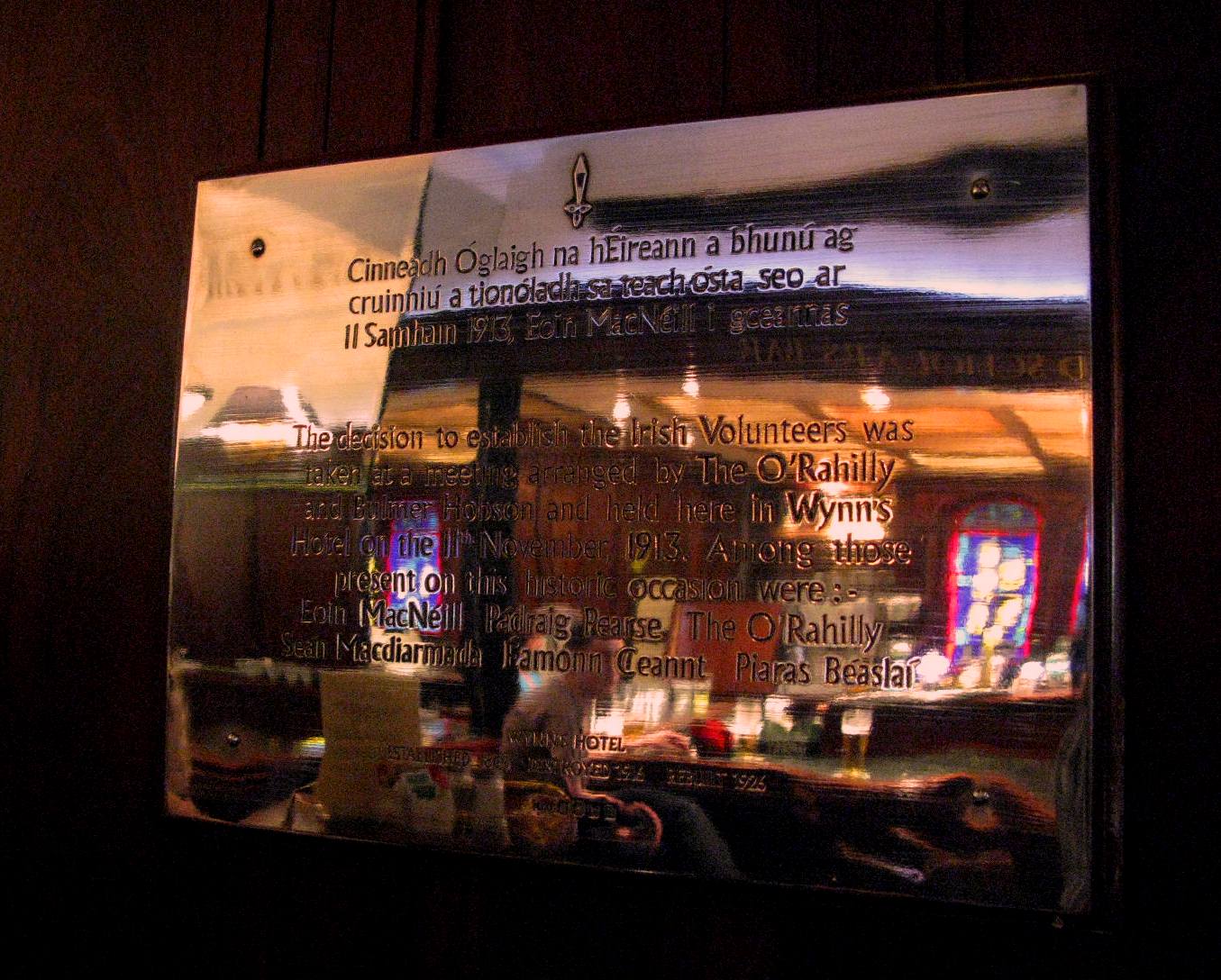
While most of the above is an ode to The O’Rahilly, and I hope to do another piece on him shortly, the subject of this piece is the plaque in the bar of Wynn’s Hotel on Abbey Street commemorating the founding of the Irish Volunteers there by The O’Rahilly and Bulmer Hobson in 1913. Hobson’s legend is that he never partook in The Rising, and was in fact kidnapped by the IRB before it in case he tried to pull the plug on it. Apologies for the quality of the picture below, Wynn’s obviously take great pride in it, and the sheen off it made it close to impossible to photograph. Inscription below.

The plaque reads:

Cinneadh Óglaigh na hÉireann a bhunú ag cruinnií a tionóladh sa teach ósta seo ar 11 Samhain 1913, Eoin MacNéill i gceannas.

The decision to establish the Irish Volunteers was taken at a meeting arranged by The O’Rahilly and Bulmer Hobson and held here in Wynn’s Hotel on the 11th November, 1913. Amongst those present on this historic occasion were: Eoin MacNéill, Padraig Pearse, The O’Rahilly, Seán MacDiarmada, Éamonn Ceannt (and) Piaras Béaslaí.

Wynn’s Hotel, Established 1845, Destroyed 1916, rebuilt 1926.

Given the weekend that’s in it, I’ll finish the piece by quoting another O’Rahilly line… When he realised the rising could not be stopped, he reportedly turned to Markievicz and said “It is madness, but it is glorious madness.” Hopeless romantics the lot of them.

Read Full Post »

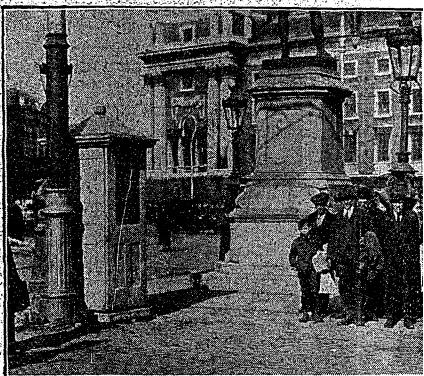
The Grattan statue at College Green, the location for Dublin's first public telephone kiosk.

Dublin’s first telephone kiosk was installed in May of 1925, next to the Henry Grattan statue on College Green. One contemporary newspaper report noted that Stockholm had in excess of 500 such public telephones at the time, so perhaps like our first escalator (which we featured here recently!) we were a bit behind once more.

The kiosks were concrete, similar to those in use in the UK at the time and were available to use at all times. The Irish Times reported that the inauguration of the scheme was due to the initiative of Mr. P Mulligan, Chief Engineer to the Post Office. “If the experiment succeeds many more kiosks will be erected in various parts of the city” the paper noted.

Prior to its opening, newspaper reports noted that the kiosk would be designed in such a way as not to become an eyesore but rather would be “built of reinforced concrete, with glazed panels, and is designed so as to present a pleasing appearance and be in harmony with the surrounding buildings.”

Dublin's first telephone kiosk, shown in The Irish Times.

By 1926, it was reported kiosks had been added to Dublin’s railway stations, and the city saw scores of public telephones dotted around it in 1932 for the Eucharistic Congress. In the October 10 1932 edition of An Irishman’s Diary it was noted that:

Among the few traces which now remain of this years Eucharistic Congress are some scores of telephone kiosks which were provided for that world event. Unfortunately, these welcome facilities seem to be concentrated in groups, while they are missing, and badly wanted, in other districts.

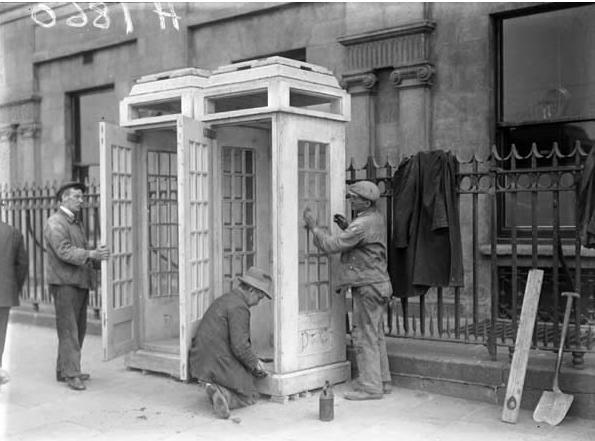
NLI Collection.

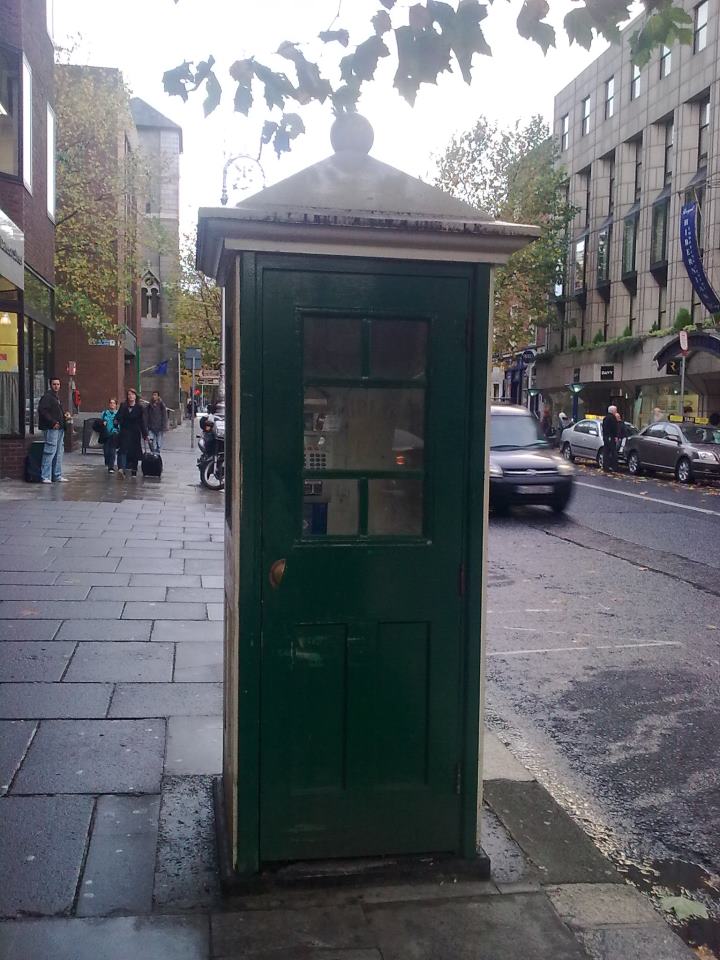
This NLI collection image shows phoneboxes being prepared for public use in Dublin prior to the 1932 Eucharistic Congress. The last such old fashioned phonebox to be seen in the city centre today is on Dawson Street.

Image thanks to jaycarax, of Come Here To Me fame.

Read Full Post »

Barney McKenna image comes from the pricess itsthedubliners.com

I’m saddened today to hear of the loss of Barney McKenna, the legendary banjo player of The Dubliners. Barney was the last surviving member of the original line-up of The Dubliners, known at first as the Ronnie Drew Ballad Group.

At a loss for what to post today as a fitting tribute, I thought this excellent short documentary was perfect, capturing the humour of the man and the deep love for him among those near him.

Read Full Post »

Rabble (Issue 3) is out now. 26 pages of news, features, music, politics and history. I’ve a short interview with Philip Chevron of The Radiators from Space and The Pogues while DFallon has a history piece on Dublin’s first pirate radio station. Check it out. You can ‘Like’ the magazine over on Facebook here.

Main pick up spots in the city:

The Exchange, Temple Bar
The Twisted Pepper, Abbey St.
Bernard Shaw, Richmond St South.
Seomra Spraoi, 10 Belvedere Court.
The Complex, Smithfield.
Casa Rebelde, Crow St Temple Bar.

Full list of distro spots here.


Read Full Post »

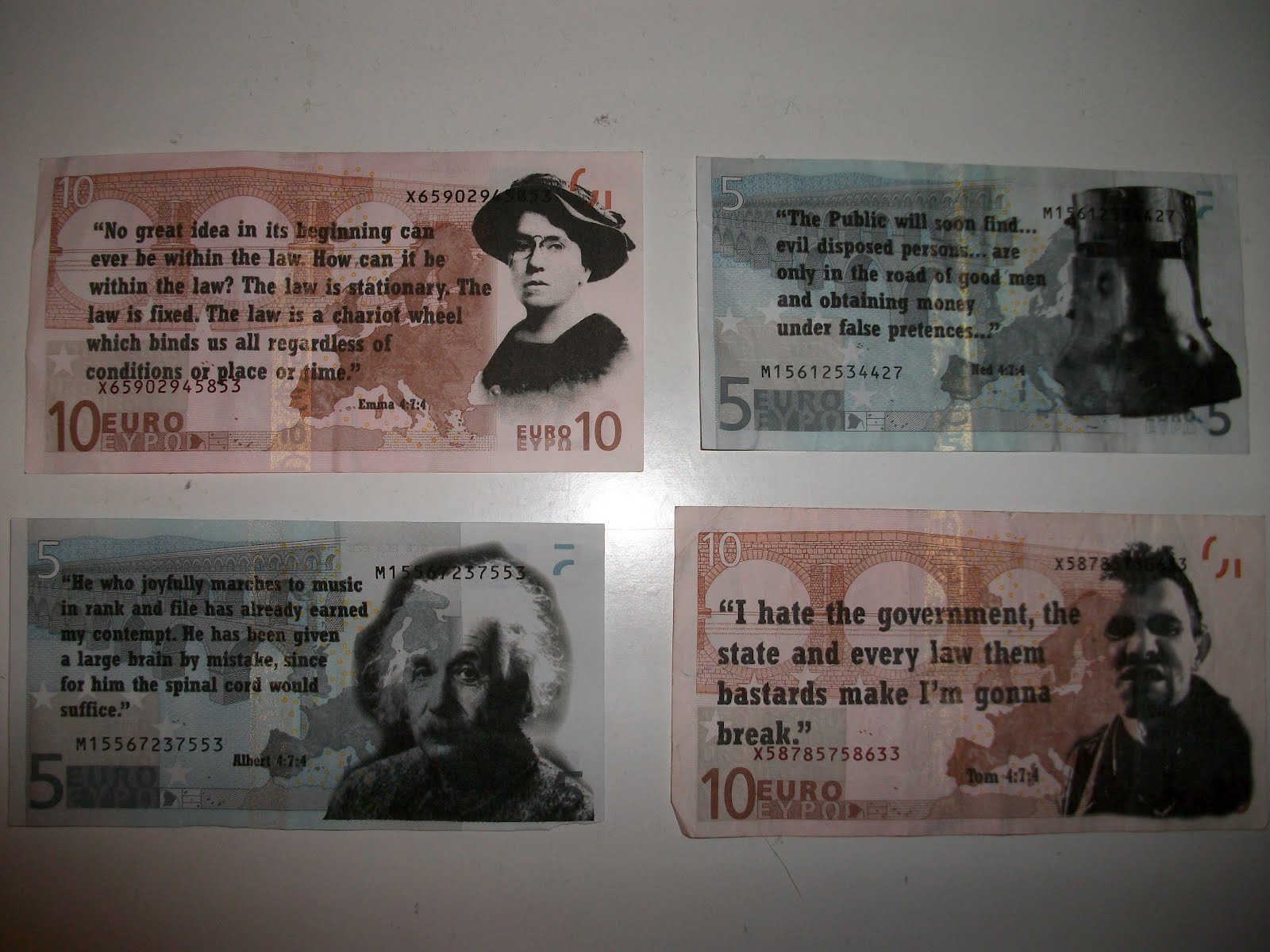
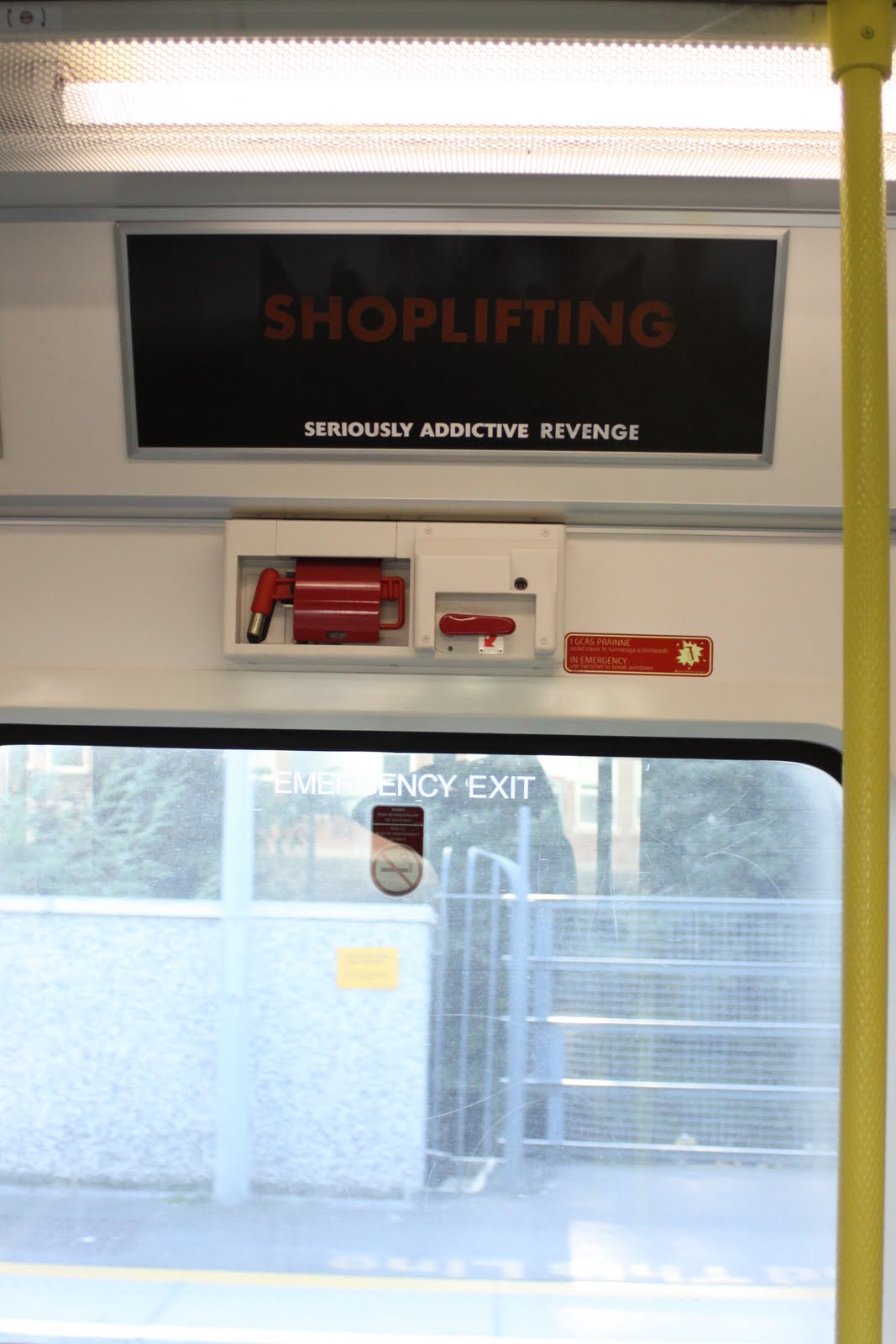
Cool, culture jamming art project called ElephantInTheRoom based out of D7.

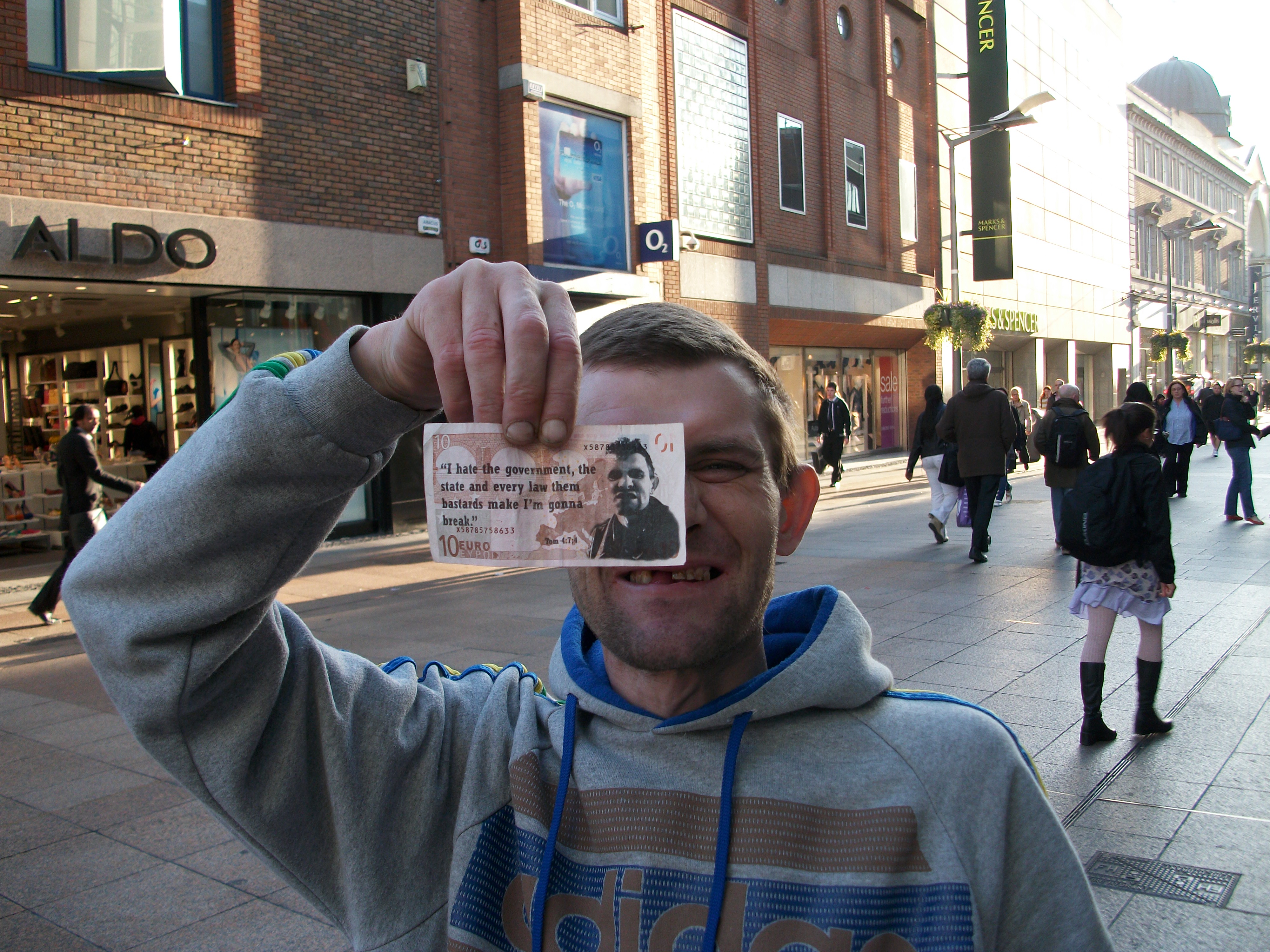
One aspect has been stenciling slogans from Emma Goldman, Ned Kelly, Albert Einstein and MC Tomo Kiernan ‘Dublin’s Rapping Busker’ onto currency and recirculating it.

Credit - elephantinroom101.blogspot.com

Tomo seems happy about it anyway!

Credit - elephantinroom101.blogspot.com

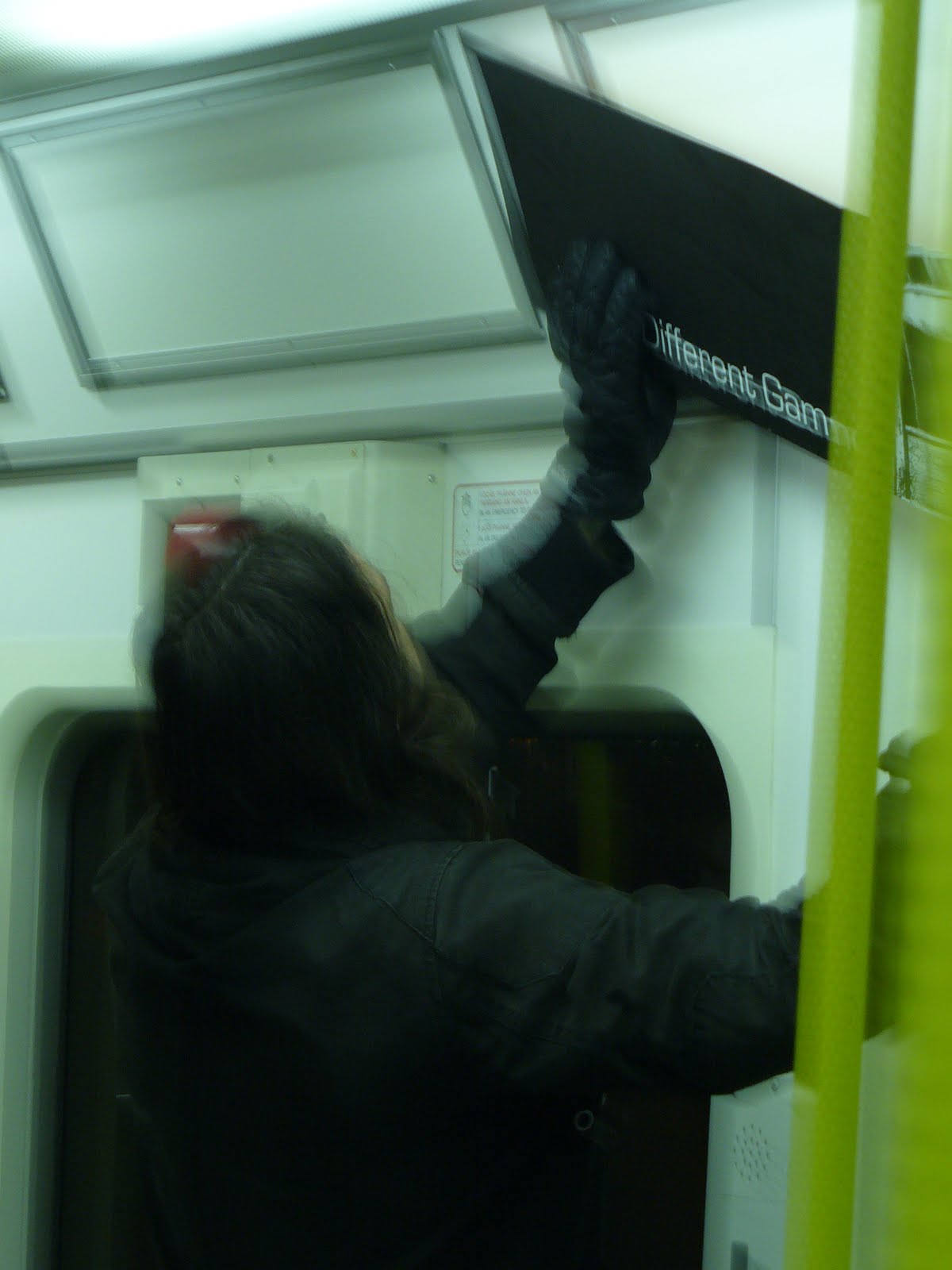
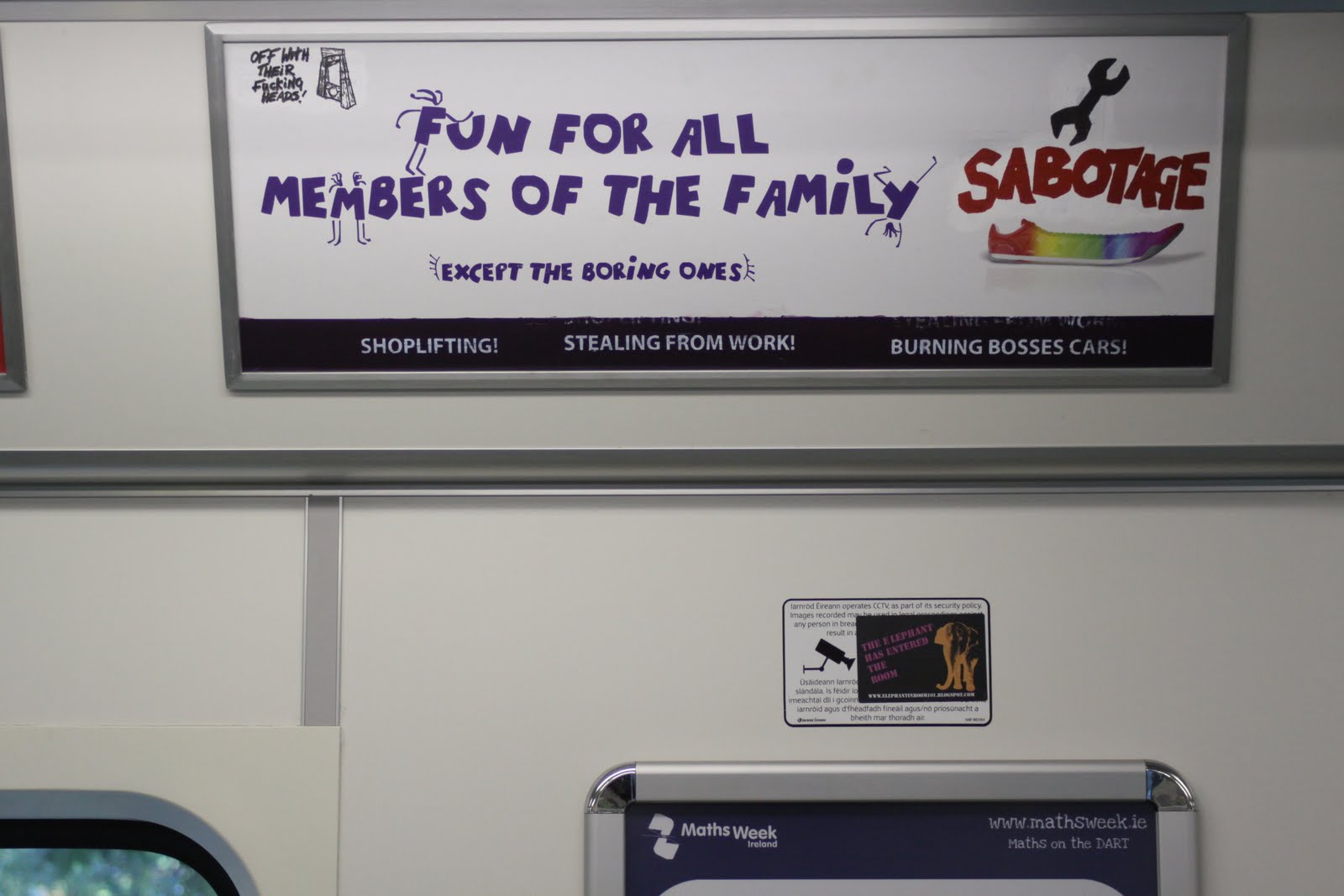
They’ve also been behind some ‘adbusting’ on the dart.

Credit - elephantinroom101.blogspot.com

Credit - elephantinroom101.blogspot.com

Credit - elephantinroom101.blogspot.com

Read Full Post »

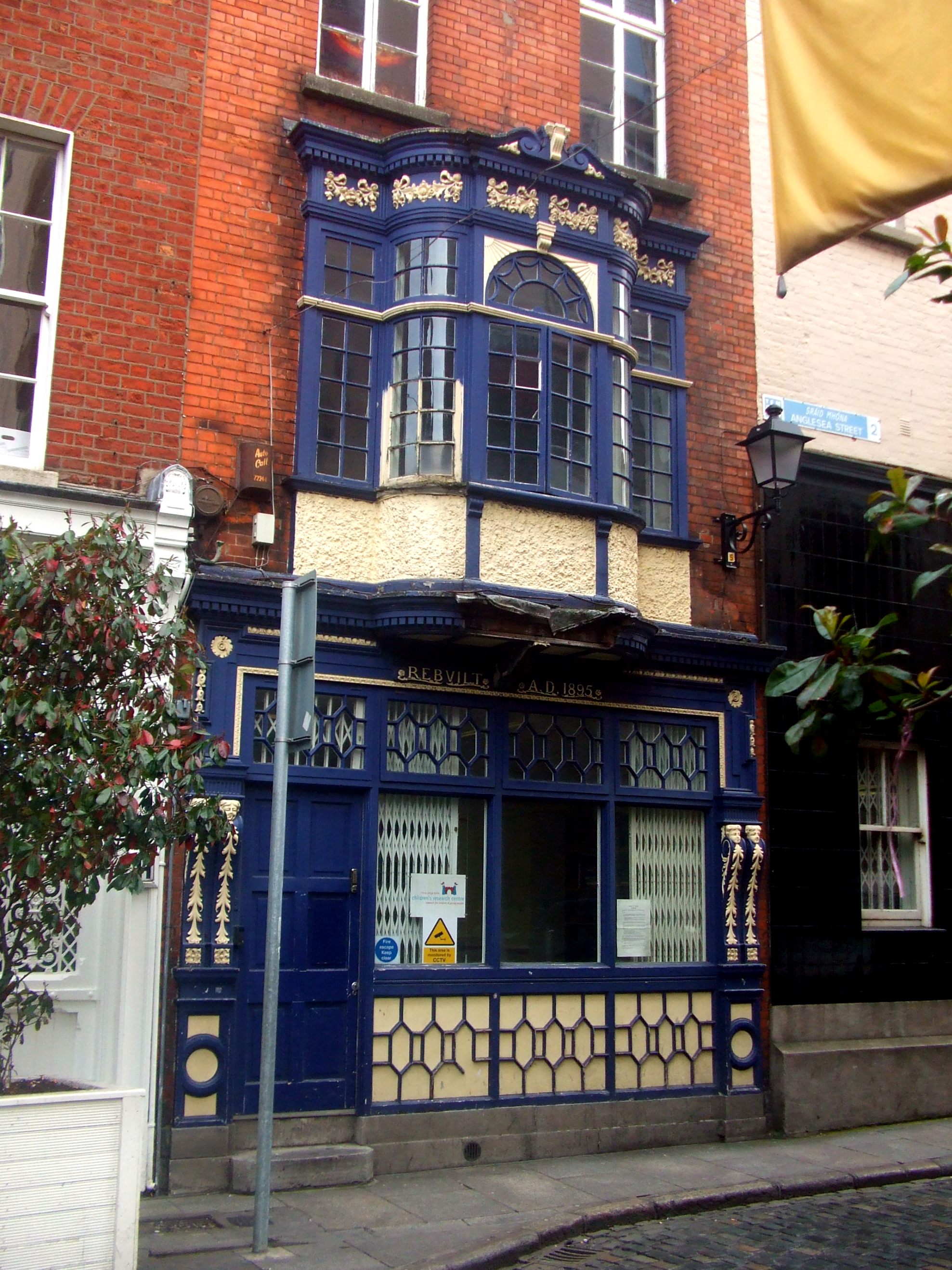
This is a stunning building I’ve passed maybe a hundred times in the last year, but have only now stopped to admire. 30 Anglesea Street is home to the Children’s Research Centre of Trinity College Dublin, and the building is very striking. The front of the building notes that it was rebuilt in the year 1895.

Sean Murphy has written of the origins of the name ‘Anglesea Street’ in his excellent history of the Temple Bar area, noting that:

Anglesea Street commemorates another prominent resident of the area, Arthur Annesley, created Earl of Anglesea in 1661. This Earl was great-grandfather of James Annesley, the principal figure in the famous Anglesea peerage case who died in 1760. Notable residents of Anglesea Street included the architect Thomas Cooley, who died at his house there in 1784, and Richard Edward Mercier, publisher of Anthologia Hibernica and other works. The Irish Stock Exchange has been located in Anglesea Street since 1878.

(more…)

Read Full Post »

The historiography of any period is never complete. For young historians, the period known commonly as the ‘Irish revolutionary period’ can appear one with little room for new writers, with so much written on the pivotal events and personas.

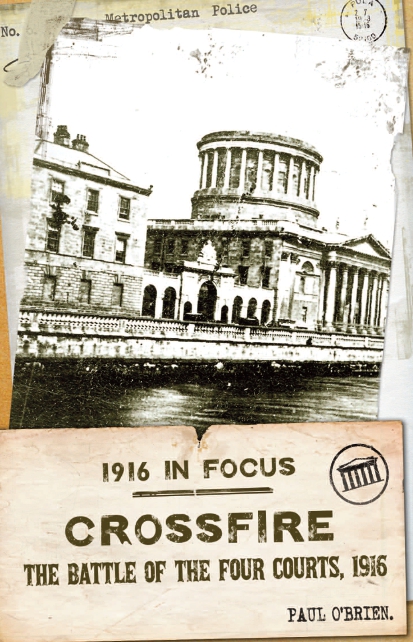
Thankfully, recent years have seen historians engage with the ‘Irish revolution’ in new and exciting ways, moving beyond the macro and looking at individual events and themes in greater detail. A particular effort of note would be Mercier’s top class ‘Military History of the Irish Civil War’ series, but in the field of biography O’Brien’s new ‘Sixteen Lives’ series will see first biographies of some of the executed leaders of 1916 published. New Island books have launched ‘1916 In Focus’, with Paul O’Brien’s study of the Four Courts garrison during Easter Week the first work in the series.

O’Brien’s last effort, ‘Uncommon Valour’, which looked at the South Dublin Union, was reviewed here on the blog in February 2010. Looking at key battles and events in Easter 1916, O’Brien has managed to turn events that take up a few paragraphs in broad-histories into full works, which gives you an in-depth look at some characters who somehow often manage to escape from the narrative of other works.

The Four Courts is more so associated with the Civil War in the popular memory of Dubliners, but some of the bloodiest events of the Rising occurred in the area around the courts. The area which saw heavy fighting during the Rising between the 1st Battalion of the Irish Volunteers and British Military Forces was an area home to some of the poorest Dubliners in tenement dwellings, not far for example from the buildings which had collapsed on Church Street in 1913, killing seven. Edward Daly commanded the forces which occupied the Four Courts and surrounding areas. He would later be executed for his role in the week.

(more…)

Read Full Post »

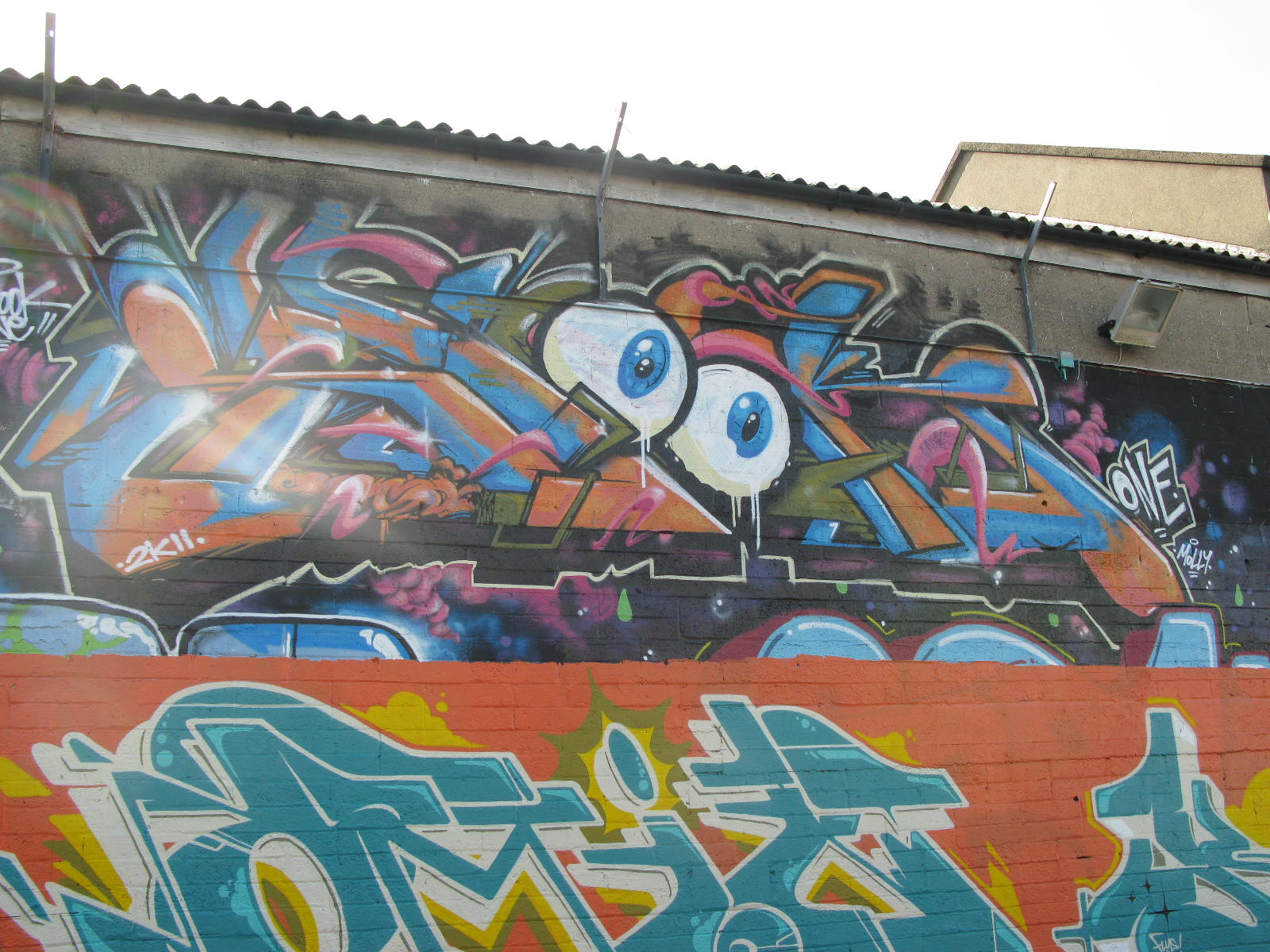
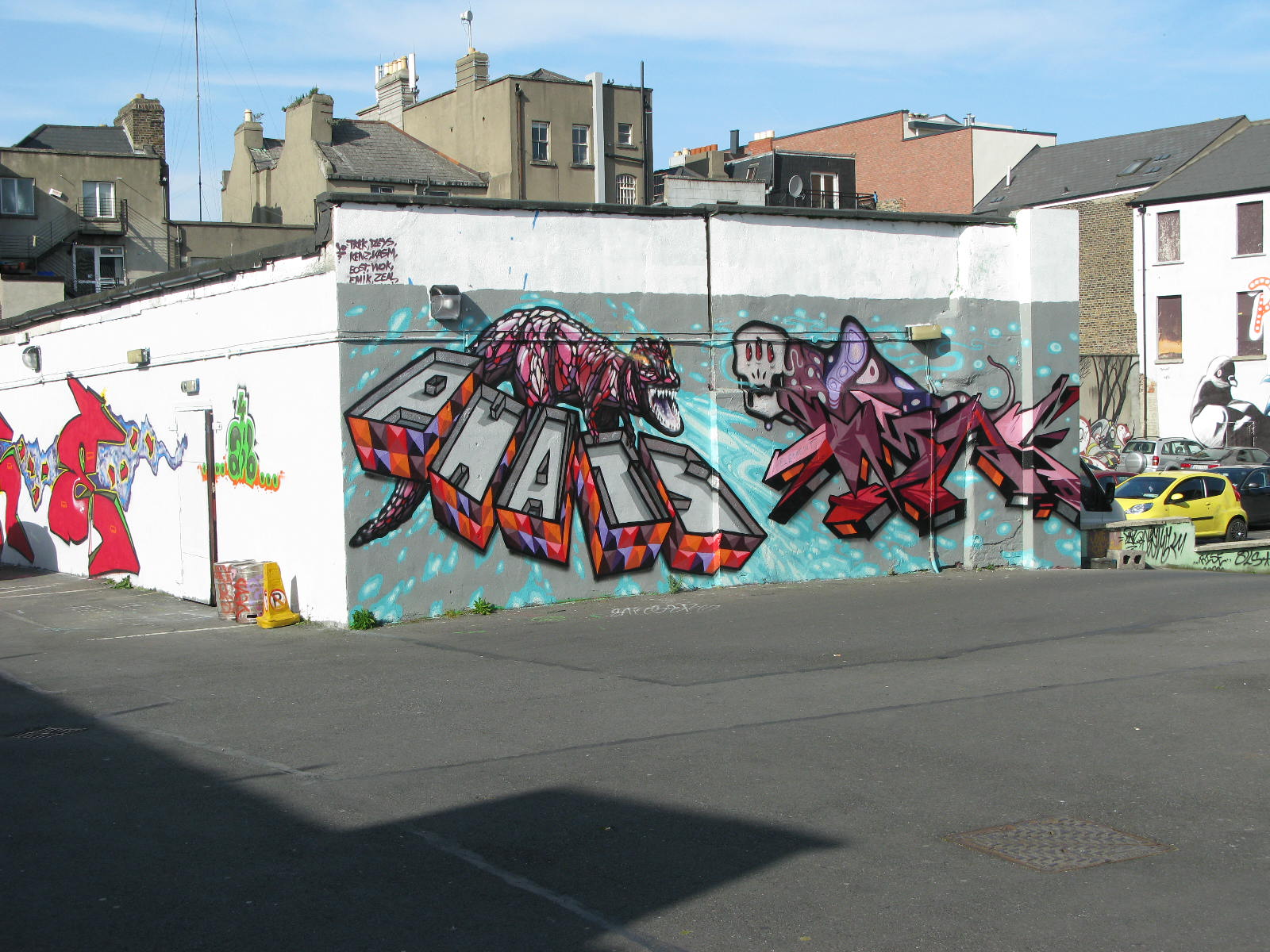
Its a scary thought,  but its almost two years since I went down to the Tivoli Theatre carpark to check out the art on display. I ventured down during the week to have another look and wasn’t disappointed. The results of the annual All City Easter Jam, and its coming up to that time of year again. Details of the event can be found here and the Facebook event is here.

(more…)

Read Full Post »

Only Fools and Horses

I couldn’t help but notice this photo from the Smithfield Horse Market at the weekend has picked well over 2,000 likes in 21 minutes on Facebook, posted by the popular football ultras page ‘Ultra Style’. Watch it travel around the internet from here folks.

Read Full Post »

Firemen Nugent, McArdle and Malone. All three perished in the Pearse Street Fire of 1936.

The Dublin Fire Brigade turns 150 years old this year. We’ve had some excellent material on the site in the past relating to the DFB, most of it courtesy of my father Las, a former curator at the Dublin Fire Brigade Museum and a serving member of the Brigade.

It’s an important aspect of the history of the city, and indeed of the working class of the city in particular. From the very origins of the modern force to the industrial disputes of its more recent past, we’ve shared a wide variety of content here on the site. My particular favourite posts from the below have been the architects drawing of Pearse Street station, the feature on the assistance provided by the Dublin Fire Brigade in Belfast during WWII and the leaflets relating to the 1988 industrial dispute.

'FBU' coverage of the Dublin 1988 strike.

Collection of posts:


The Pearse Street fire, 1936. Three fireman died in a blaze on Pearse Street.

Arthur Guinness and Sons Fire Brigade.

Saving the Pram (The Abbey Theatre fire, 1951)

‘Rats with Matches’ (Dublin Fire Brigade 1914 Annual Report)

‘Politics and the Parish Pump’

An Interesting Tug-of-War! The DFB versus the DMP

Original architects drawing for Tara Street Fire Station.

When Dublin Fire Brigade rushed north during WWII.

Dublin Fire Brigade 1988 industrial dispute leaflet (Sinn Féin)

The British FBU (Fire Brigade Union) and the 1988 Dublin Fire Brigade strike.


Irish Workers Group- Class Struggle (1988 strike)

Willie Bermingham 1942-1990

Going to answer ‘Joe Edelstein’s Alarm’

Members of the Arthur Guinness and Sons Fire Brigade in training at the Brewery.

Read Full Post »

« Newer Posts - Older Posts »