Feeds:
Posts
Comments

Archive for 2012

Last year I wrote a piece for ‘Sidelines’ in History Ireland magazine covering a temporary exhibition in Belfast’s City Hall to mark the 70th anniversary of Dublin firefighters coming to the assistance of Belfast during the bombing of that city in World War II. Much of that report is below, along with new images and information.
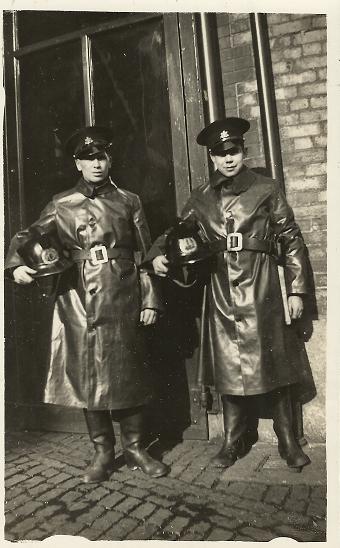
(Las Fallon collection) Two war time Dublin firefighters, Jack Conroy and Dan Dowd

The decision of Éamon de Valera’s government to send emergency assistance to Belfast following the bombing of that city in April and early May of 1941 is a landmark moment in cross-border diplomatic relations. The response of the Dublin government to the urgent message from the War Room at Stormont was a remarkable moment owing to the historically tense relations between the two states. While hundreds of firemen from both Glasgow and Liverpool were dispatched, they could not reach Belfast until much later in the day on April 16th following the bombings of April 15th. Dublin’s assistance was required urgently.

Immediately upon the Ministry of Public Security requesting the assistance of the Dublin Fire Brigade, men from the south would make the journey to the blitzed city of Belfast. From Dublin alone, 3 regular and 3 auxiliary engines would be sent. Dun Laoghaire, Drogheda and Dundalk each contributed an engine to the cross-border effort.

Writing in 1960, Dublin Fire Brigade District Officer Michael Rodgers recalled that while the war had been raging for two years, “it all seemed very remote to me. I looked on it as a deadly game being played in different fields and followed it with a fascinated curiosity.” No doubt such an attitude to the conflict was common. The Irish Sea, he noted, was his protecting moat. With the bombing of Belfast, all changed dramatically. “Life had been lost and property damaged. My moat had been crossed.” Tragedy, District Officer Rodgers noted, knows no border.

The Dublin Fire Brigade would make two cross-border journeys, the first on April 16th and again on May 5th. Following the first cross-border trip, the matter was debated at Dublin Corporation with Jim Larkin asking “by whose authority had the fire brigade left the jurisdiction of Éire and proceed to the Six-Counties.” Another councillor responded to Larkin by enquiring that “supposing Galway had been bombed, would any questions have arisen had the Fire Brigade gone down there?” Larkin insisted it would, and noted his enquires were in relation to payment of the men and also in relation to where liability would rest had one of the men been injured or died in the course of the cross-border assistance.

Fire Brigade historian Tom Geraghty noted in his study of the Dublin Fire Brigade that the response to the appeal for assistance within the job had been extremely positive. He noted that within a half hour of the message from the Ministry of Public Security being received, the Chief Officer of the Dublin brigade, Major Comerford, “was addressing the Dublin firemen gathered from all stations at a meeting in Tara Street station.”

The first engine on the road to Belfast came from Dorset Street station, which was under Station Officer Edward Blake and 3rd Officer Richard Gorman. The Dublin Fire Brigade had first been contacted at 5.10am by the Ministry of Public Security, and by 7.30am three pumps with crews had already left the city. District Officer Rodgers noted that “Balbriggan, Drogheda and Dundalk slept peacefully as we sped northwards” and the men were greeted by customs officers on the border who waved them onwards.
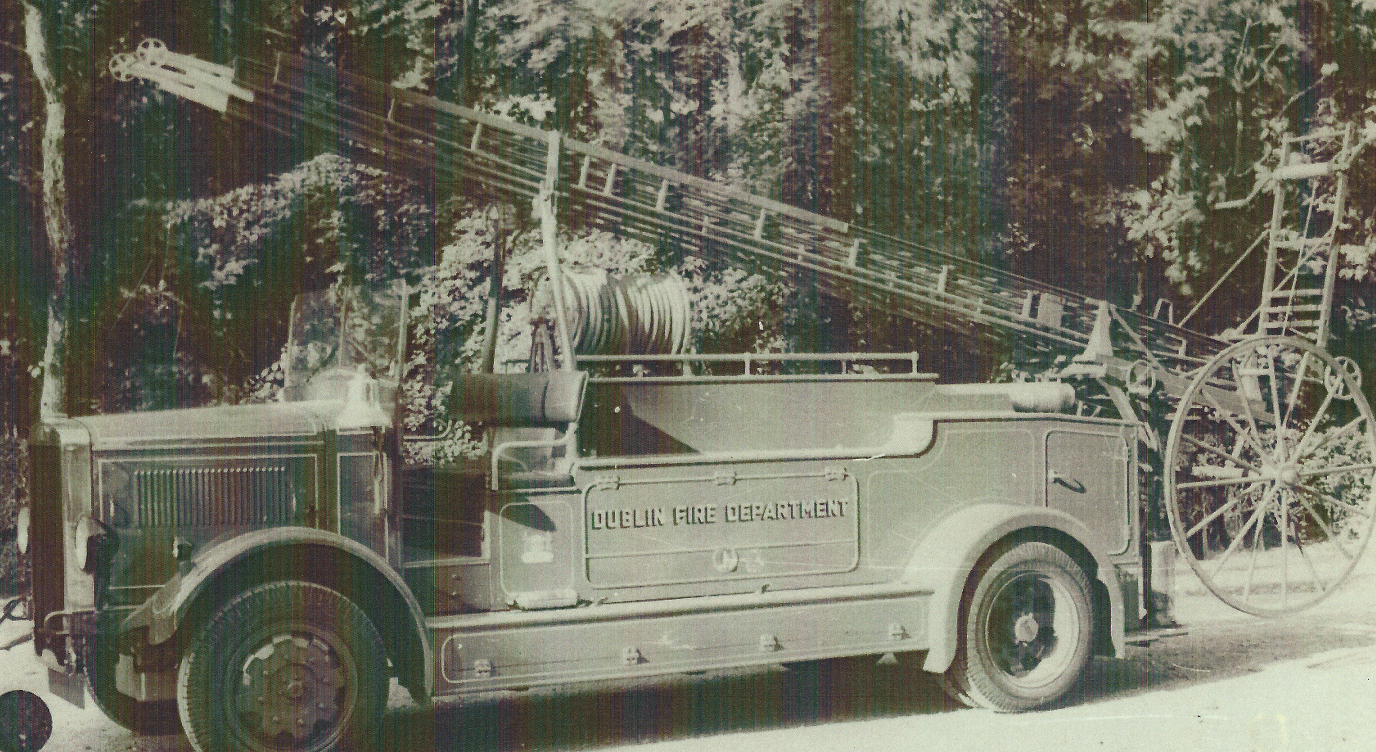
Las Fallon collection. A war time Dublin fire engine.

The men were warmly welcomed to the city, with the Irish Independent of April 18th noting that “the fire brigades which attended from Éire have been greatly praised for their work, and as they passed through the city’s streets homeward bound after their errand of mercy they were heartily cheered by a grateful people.”

The first men from the Dublin Fire Brigade had arrived in the city just before 10am, and the first engines departed the city before nightfall. While in Belfast, they had been exposed to a situation alien to Dubliners. District Officer Rodgers recalled hearing an air raid siren during the course of the day, and recalled that “I will never forget that wailing sound. From the roof top where I was standing the city looked so scarred and vulnerable.”

In the South, The Irish Times editorial of the following day noted that “Yesterday for once the people of Ireland were united under the shadow of a national blow. Has it taken bursting bombs to remind the people of this little country that they have a common tradition, a common genius and a common home?” The Sunday Independent recorded on April 20th that Belfast was still burying her dead, and that praise for the southern fire brigades was unstinted in all corners of Belfast.

Men from the Irish capital would return to Belfast on May 5th, with even more men making the journey across the border. That time, 6 pumps and an ambulance from the capital would be among the southern appliances to cross the border. This assistance was not forgotten by the Belfast Fire Brigade, and when bombs rained down on Dublin itself in late May, it was reported by the Irish Independent that Belfast Fire Brigade approached Dublin to offer assistance if required. The Dublin Fire Brigade responded and thanked the Northern Irish firefighters for their kind offer.

Interestingly, for many years following the events, southern and northern Irish firefighters would take each other on in a friendly challenge match. Below is the cover for the programme for the June 1945 encounter at Tolka Park.
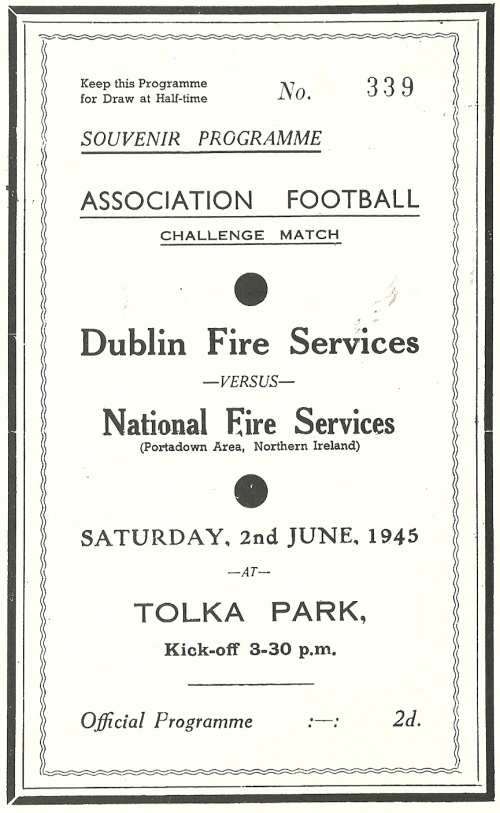
Las Fallon collection. Match programme.

Read Full Post »

Here’s two new stories recorded by the lads behind Storymap, uploaded since my 3 minutes and 25 seconds of fame recently talking about Vonolel the war horse. A labour of love, Storymap has been documenting great Dublin tales from all corners of Dublin and both sides of the river.

Firstly, Liz Gillis, author of the recent excellent study of the Civil War in Dublin entitled ‘The Fall of Dublin’ with Mercier Press. Liz talks about Conn Colbert and Watkin’s Brewery during the Easter insurrection in 1916.

This weeks story features actor Val O’Donnell, as tells a great tale about ‘Myles na gCopaleen’ and his campaign over Andy Clarkin’s clock in the 1950’s.

Read Full Post »

Recently, and completely by accident, I stumbled across newspaper reports of the ‘opening’ of Dublin’s first escalator. It all struck me as a little bit Father Ted, with the Lord Mayor of Dublin on hand for proceedings. He then had the honour of being the first person in Dublin, and indeed the nation, to use an escalator.

Fine Gael politician James Joseph O’Keefe was the Lord Mayor of Dublin from 1962-1963, and then again from 1974-1975. On Monday, March 25th 1963 he found himself in Roches Stores on Henry Street to “inaugurate” over the unveiling of the first escalator in Dublin, at an event which made the front page of The Irish Times the following day.

The escalator extended from the basement to the ground floor and from there to the first floor, and the opening coincided with the Roche’s Stores Fashion Show. The Irish Independent ran the image below, which shows the Lord Mayor cutting the ribbon to proclaim the escalators ‘open’. The design of the escalators was carried out by Clifford,Smith and Newman of Limerick.

The Irish Independent, March 26th 1963

Patrick Lagan wrote lightheartedly of the event in The Irish Press the week after the escalator was deemed open, writing that he had always enjoyed the “uplifting experience” of hopping on an escalator in a London tube station, and that he felt they were built not only to be useful but indeed enjoyed.

Lagan went on to note that:

On Monday last the Lord Mayor of Dublin , Alderman J.J O’ Keefe was,as was only right, the first man to make the ascent. But he won’t be the last. Let me thank the people who run that big store for making it possible for myself and others to enjoy this purest of human pleasures without the trouble of having to go as far as Euston Station.

Read Full Post »

Scanning classic advertisements is one of my favourite aspects of the blog without a doubt, and sometimes a gem like this falls my way. These advertisements are taken from ‘The Illustrated Book of the Military Tattoo and Exhibition, Dublin 1945’.

The huge event ran from August 28th to September 8th 1945 at the RDS Ballsbridge. It’s cover alone is striking and scanned below, but some of the advertisements inside are excellent. There’s more than this to come. Below are advertisements for Brown Thomas, the Eden Quay amusements, Aero and Rolo chocolates and the Irish Independent.

The cover was designed by Jack Mac Manus.

“In this design the artist expresses the spiritual link binding the Defence Forces of today- the Air Corps, Army, Marine Corps and Local Defence Forces, represented in the bold figures in the foreground- and the Irish armies of the past, symbolised by the ghostly figure of Eoin Ruadh O’Neill, dominating the entire background.”

Eden Quay Amusements.

What a wonderful ad, signed by ‘MB’. Anyone know more on the artist?

(more…)

Read Full Post »

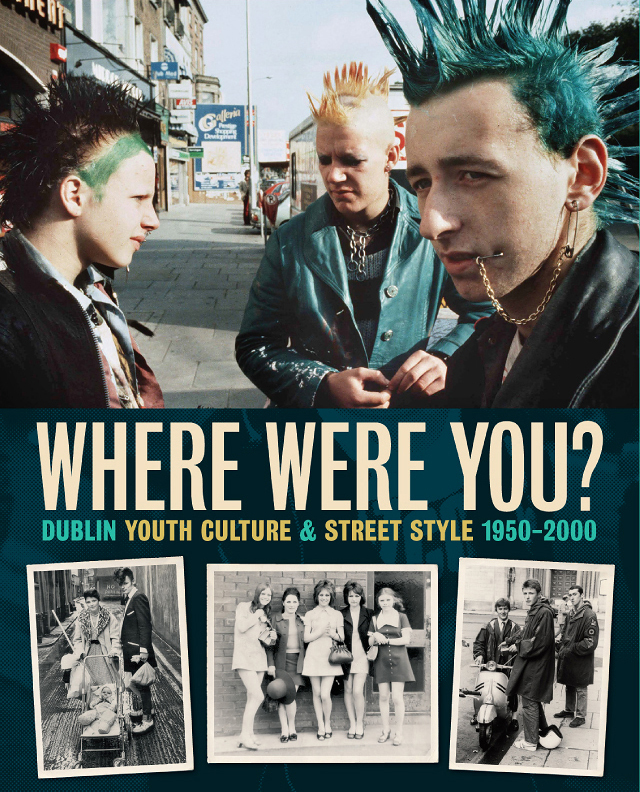
Where Were You?, the magnificent 304 full colour photo book on Dublin’s youth culture and street fashion published late last year, will be back in the shops on Thursday, April 12.

The first run sold out within weeks, so you’re advised to pre-order with Garry on the website here.

In the latest issue of History Ireland, Cllr. Cieran Perry wrote a fantastic review of the book which touched on issues of class and racism in Dublin’s 1970s punk and skinhead scenes.

Last October, I had the opportunity to interview the book’s editor Garry O’Neill which resulted in articles in Rabble (Issue 2) and Look Left (Vol. 2, No.8).

Read Full Post »

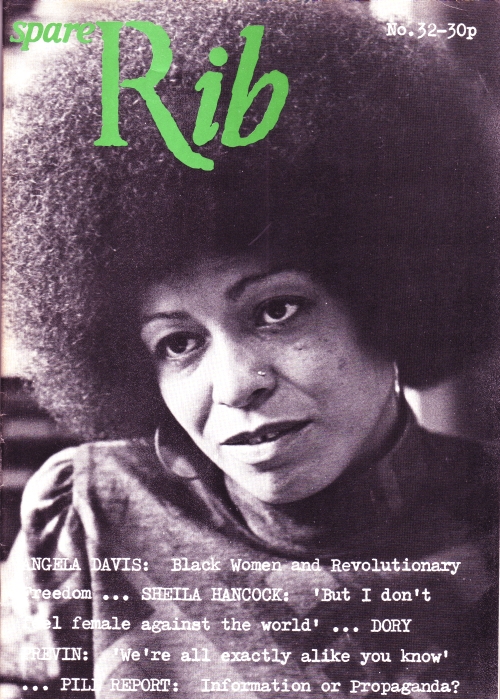
I wanted to mark the fact International Women’s Day falls this week with a feature looking at a publication which was banned by the state and a situation which led a group of 20 young women to board a train at Connolly Station one morning in 1977 to acquire copies. There’s a lot more to be written on this I’m sure, but this is a modest effort to tell the story of Spare Rib for the week that is in it.

Spare Rib was a second-wave British feminist publication set up in 1972, to provide a feminist alternative to commercial women’s magazines. It was very much a publication of the left, for example often writing critically of Britain’s role in Ireland, along with giving coverage to labour disputes. The excellent study Women and Journalism notes that W.H Smith refused to stock the first issue of the magazine, which contained such shocking content as a feature on skin care and an interview with George Best! It also included articles on sex, gender equality and women’s role in history.

Quite unsurprisingly, the publication was banned in Ireland. In February of 1977 following a complaint to the Censorship of Publications Board, it was decided that the magazine was unfit for the eyes of the Irish public. A statement from the Board noted that having examined recent issues of the British magazine, the magazine was found to have been “usually or infrequently indecent or obscene, and that for that reason the sale or distribution in the state of the said issues or future issues of the said periodical publication should be prohibited.”

Immediately following the banning of Spare Rib, there began a strong feminist campaign to overturn the ban. Ironically, while the magazine had enjoyed miniscule readership in Ireland prior to the banning, the debate over the decision of the Censorship of Publications Board saw Spare Rib make its way into the letters pages of the national print media.

The secretary of Irishwomen United, an outspoken feminist organisation, would write to the editors of the national daily papers on February 11 1977 stating that “we see the censorship of Spare Rib as a direct attack of feminism and the women’s movement.” Nell McCafferty would describe the organisation in a 1979 feature for the Irish Times as being “composed, significantly, of trade unionists, professional women and the unemployed, who had scarcely heard of motherhood.”

Like large sections of the British left at the time, the people behind Spare Rib weren’t entirely sure how to deal with matters relating to the island next door. Rose Ades, one of the women on the collective behind the publication, remarked that they did not wish to be seen to be imposing any sort of “British cultural imperialism” and that “we don’t want to be thought of as foisting something essentially alien on Irish people if they don’t want it.”

Yet Irish feminists did want it. Enough to fight for it. Three days after the letter from Irishwomen United appeared in the national daily papers, on Valentines Day, 20 members of the feminist organisation boarded the 8am shoppers special train for Belfast with the intention of returning with 150 copies of the publication. As Nell McCafferty wrote in the pages of the Irish Times:

The publishers of the magazine had donated the copies free and sent them over to Belfast as a contribution to the women’s’ struggle in the south. The women intended to return to Dublin on the 5.30pm train, depending of course on what happened to the banned magazine during Customs Inspection in Dundalk.

The women managed to bring the publication into the south with no opposition from Customs in Dundalk, and arrived at Connolly station as planned that night, where the assembled media awaited the inevitable showdown with the Guardians of the Peace. In the end three Gardaí approached the women, attempted to apprehend one, failed, and not a single copy of the publication was seized by the state.

Two weeks later, on February 28th, the organisation would challenge the law banning the publication by openly selling it on the streets of Dublin. A packed protest meeting at the Mansion House saw speakers denounce the ban, and three women told Gardaí formally that they intended to sell the publication there and then to all interested. They were Marie McMahon and Joanne O’Brien of Irishwomen United and Sue Burns of the Irish Family Planning Service. No attempt was made to stop them. Interestingly, Marie McMahon had been involved in the Hume Street occupation and the Irish Civil Rights Association.

(more…)

Read Full Post »

A who’s who of the Irish comedy and entertainment world played a major benefit gig, entitled The Entertainment Party Conference, in The Olmypia Theatre on July 15 1990. Money raised went to the Simon Community and a new ‘Comedy Fund’ to help subsidise improv and writing workshops for up and coming comics.

Here are two pictures of the event that have never been published before.

The first shows Philip Chevron (The Radiators of Space/The Pogues), Ronnie Drew (The Dubliners), Terry Woods (Sweeney’s Men/Steeleye Span/The Pogues) and Paul Brady.

(c) Billy Magra collection. Scanned up by Carax.

The second picture shows the closing ceremony and the crowd includes Terry Woods, Ronnie Drew, Ardal O’Hanlon, Dermot Carmody,Shay Healy, Michael Redmond, Barry Murphy, Gerry Ryan, Dave Fanning, Agnes Bernelle, Niall MacAnna, Billy Magra and a few others.

(c) Billy Magra collection. Scanned up Carax.

Read Full Post »

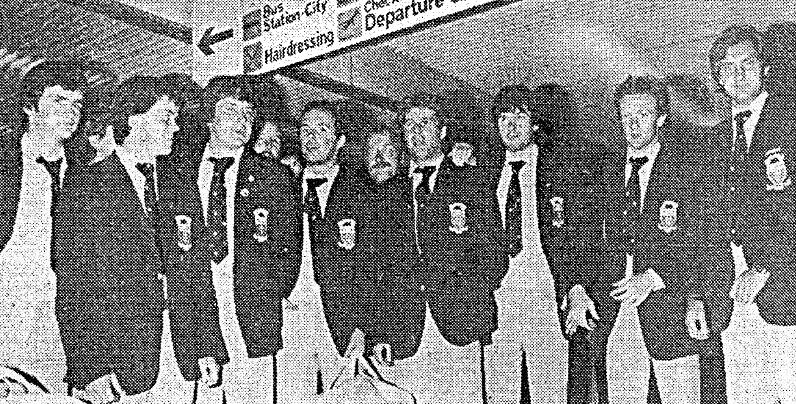
The returning squad at Dublin Airport (The Irish Press)

UCD AFC’s summer tour to Africa in 1980 was one which saw the college soccer club make the national headlines for all the wrong reasons at home. The tour would be remembered primarily for events in Khartoum, where a riot broke out in a stadium packed with 30,000 Sudanese fans. They had come to watch Merikh take on the Dubliners, and a goal from UCD was enough to send them into riot mode.

The UCD summer tour of 1980 was originally planned to just take on Kenyan opposition. The Sudan Football Association approached the side in the days leading up to their planned trip however, and as such the trip was extended to include fixtures there. Kenyan side Abaluhya were first up against the students on July 30th. UCD would play six games in Kenya. They came out on top once, drew twice and lost three times.

The match on August 14 1980 in Khartoum had been tense from very early on, as the captain of the local side had been sent off for a bad foul. From that point on the Irish squad were pelted with stones and bottles. Dr. Tony O’Neill, manager of the students, told The Irish Press however that it was not until the students scored soon afterwards that all hell broke loose. David Cassidy was the goal scorer.

The crowd seemed to go mad. They take their soccer very seriously here, and but for the timely intervention of the security forces to protect us the scene would have become very nasty indeed. When the police moved in, brandishing machine guns and throwing tear gas into the crowd to disperse them, our players were escorted to their dressing room and afterwards back to the Hilton Hotel.

The referee was hospitalised as a result of the crowd trouble. Following the clash referees in Sudan would strike demanding greater protection during games, where such clashes had occurred before. Unsurprisingly, UCD cancelled their final planned game in Sudan! UCD’s next clash was away to Drogheda United in the League Cup. They crashed out three nil, and there was no violent disorder.

Read Full Post »

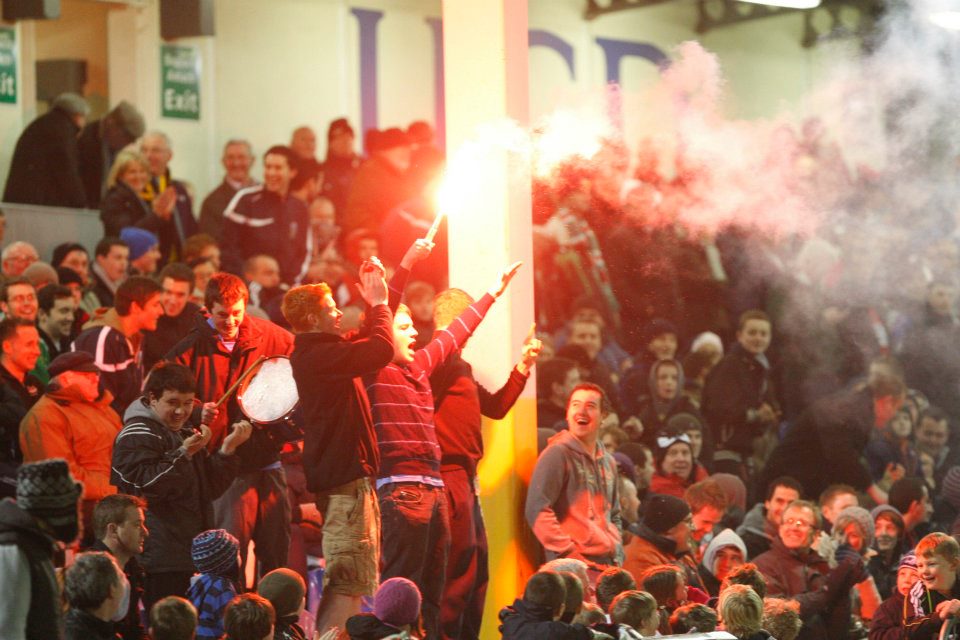
FORTRESS BELFIELD

This photograph is priceless from last Friday night, showing a flare lit up by the normally very tame home support at UCD AFC. It was a good night across the league with plenty of colour and passion, and I’m sure everyone agrees it’s nice to be back where we all belong on Friday’s.

The looks on the faces around this lad make the photo, the novelty factor evident and a great moment captured. The image has been doing the rounds over the weekend and if anyone knows who to credit, let me know. It’s now one of my favourite League of Ireland shots without a doubt.

This thing of ours.

Read Full Post »

Two gigs this weekend

Two gigs that yours truly will be playing this weekend.

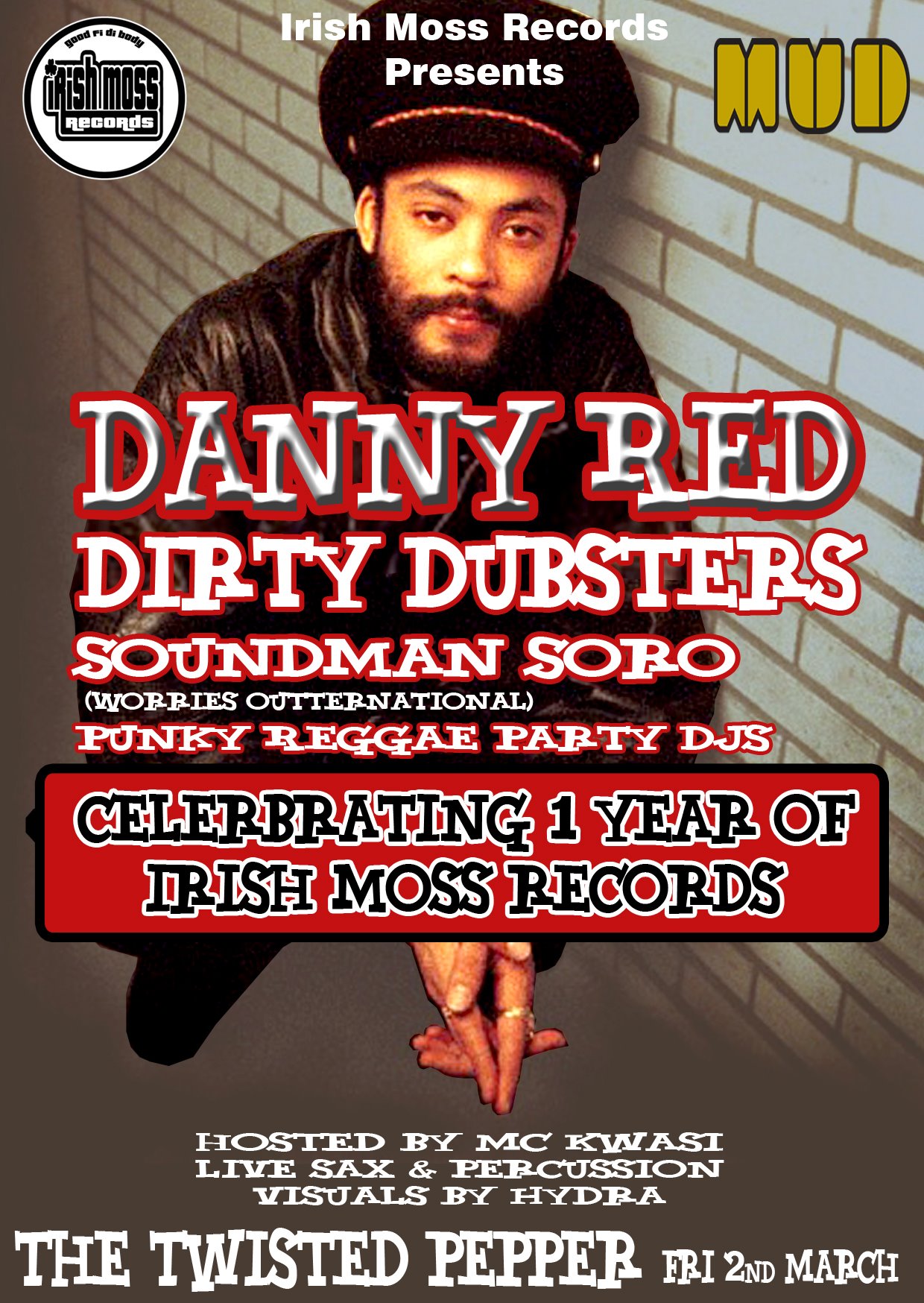
Friday with the legendary Danny Red, Soundman Soro (Worries Outernational) and Punky Reggae Party DJs.
You can get in for €5 by writing ‘Irish Moss Records’ on the Facebook event here. Recent interview with the The Dirty Dubsters with Bodytonic here.

Twisted Pepper

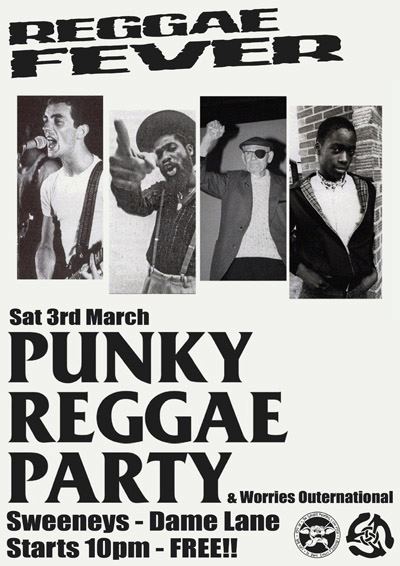
Saturday down with the Reggae Fever session in Sweeneys.

Reggae Fever

Read Full Post »

The following advertisements have been scanned from the Capuchin Annual, 1936. We’ve a decent collection of the annuals here and I’m a big fan of the insight they offer into a Dublin long gone through the advertising pages at the front and back.

Some of these companies are still with us, but trading in different stock. I doubt clerical tailoring is a major part of the Clery’s business plan in 2012!

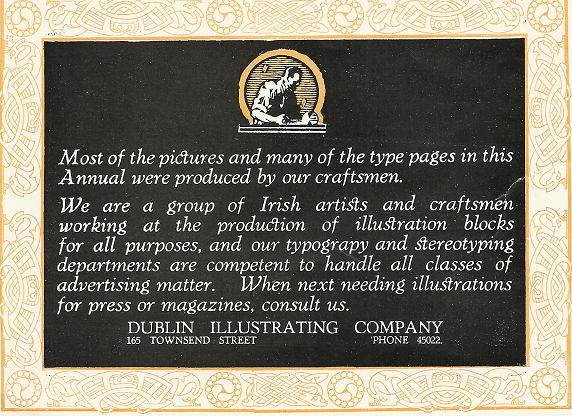
'Dublin Illustrating Company'

The Magdalen Asylum

Elverys.

Clerys Clerical Taoiloring

(more…)

Read Full Post »

‘Campus Unsigned’

This is a great idea from the folks at the University Times in Trinners.

Essentially, what they’re doing is finding bands and acts from among the student body and recording them in some unusual locations on campus. The cricket pitch, the arts block, next to Lecky the historian in his big chair, inside the war memorial, the options are endless really aren’t they?

Two videos have gone up so far, Falling Famous on the prior mentioned pitch….

….and Morgan MacIntyre & Gavin MacDermott at the Nassau Street entrance.

Read Full Post »

« Newer Posts - Older Posts »