Feeds:
Posts
Comments

Archive for the ‘Dublin History’ Category

In March 1969, one of the most unusual and important items in the Old Library of Trinity College Dublin vanished. Known as the Brian Boru Harp, the celebrated harp of Trinity College is believed to date back to the 15th century. The story of its taking grabbed huge media attention both in Ireland and abroad, and was caught up in the politics of the day. The harp was presented to Trinity College Dublin by William Conyngham in the late 18th century, and was restrung in the British Museum in 1962. This particular instrument is perhaps most famous for serving as the model for not only the insignia of the present Irish state, but also serving as the model for the Guinness trademark logo, which was registered in 1876.

The celebrated harp can be seen here, on display, during the visit of Queen Elizabeth II to Trinity College Dublin in 2011 (Credit: www.tcd.ie)

The celebrated harp can be seen here, on display, during the visit of Queen Elizabeth II to Trinity College Dublin in 2011 (Credit: http://www.tcd.ie)

The background to this amazing robbery is told in The Lost Revolution, Brian Hanley and Scott Millar’s study of the rise and demise of The Workers’ Party as a power in Irish political life. In that book, readers learn of Joseph Brady, a one-time member of the Irish Republican Army. Brady, an ex-British soldier, was recruited into the republican movement in 1967, joining the IRA and becoming a training officer to the Dublin Brigade. In the book it is noted that

During early 1969 Brady raised the idea of stealing the Book of Kells from Trinity College and holding it for ransom, but found no support. On 24 March he broke into the College himself and, unable to gain access to the Book of Kells, stole the Brian Boru Harp instead. A few weeks later he contacted the college and demanded £20,000.

Irish Independent (26 March 1967)

Irish Independent (26 March 1967)

On 26 March 1969, the Irish Press broke the story to their readership, outlying the concerns of T.C.D authorities with regards to the handling of the object:

The 600 to 700 year old Brian Boru harp, the oldest and most elaborately carved Irish harp in existence, has been stolen from the library of Trinity College. Dublin. It was discovered that the harp was missing yesterday morning. The thief broke in through a window by forcing the catch, and he forced open the case in which the harp was stored. Yesterday, College authorities appealed to the person who has the harp to handle it with extreme care as it is very fragile. They also asked that it be returned through whatever means would be safe in the handling of the 600-year-old harp. “It is not much use to anyone,” he said. “It is an antique, easily recognisable, and can barely be handled. Therefore,its sale is hardly likely. Maybe some person has it for a responsible cause, but we would ask them to please, please handle it carefully.”

International coverage was plentiful, and in some cases highly colourful versions of the truth were told. The Milwaukee Journal proclaimed the harp to be an astonishing 1,300 years old for example.

The harp photographed in 1962, following restoration at the British Museum (The Irish Times)

The harp photographed in 1962, following restoration at the British Museum (The Irish Times)

Henry Giltrap, the Secretary of Trinity College Dublin, began to receive calls in the aftermath of the robbery, requesting a sum of money in return for its safe exchange. The issue caused huge embarrassment for the authorities at Trinity College Dublin, with many questioning how a library which served as home to so many priceless works could be broken into with such relative ease.

When the harp was ultimately recovered, on 17 April, there was a suitably dramatic conclusion to the story. Indeed, as one journalist noted at the time, it was recovered “amid a series of episodes which could have come straight from the pages of a James Bond novel.” A threat was made via a ransom note that unless money was left in a dustbin at Bull Wall at 1 a.m, the instrument would be destroyed. Eleven Garda cars were stationed at a discreet distance from this bin, and when a man was seen to approach it, a decision was made to move in. The Irish Independent reported that:

As they did so a car which had been parked nearby accelerated from the scene and a chase followed. The driver was captured shortly afterwards. The other man, who is believed to be British, then drew a gun but threw it away as he made his escape. The harp which had been taken to Pearse Street Garda station was handed over by Inspector O’Brien to Mr. G. H. Giltrap, Secretary, T.C.D. “I am delighted that it has been recovered. This represents a great deal of hard work on the part of the detectives and Gardai,” said Mr. Giltrap.

The Long Room of the Trinity College Dublin old library, where the harp can be seen today (source: Wiki)

The Long Room of the Trinity College Dublin Old Library, where the harp can be seen today (source: Wiki)

In May 1970, R. Tynan, a young man from Drimnagh, pleaded guilty to receiving the harp knowing it was stolen. He was given a suspended sentence of two-years imprisonment for his role in the crime. During his court case, the story of the actual recovery of the harp was told. Gardaí noted that Tynan had co-operated with Gardaí and brought them to a “sand pit about two miles from Blessington. There, with Mr. Giltrap standing beside him, he unearthed a shovel and went to an overhanging ledge nearby and started digging until he uncovered something wrapped in black plastic material. It turned out to be the missing harp.”

What became of Joseph Brady? The Lost Revolution tells us that there was suspicion within the movement that he was a provocateur, indeed Brady was so distrusted that he was picked up at gunpoint by members of the IRA but managed to escape, dispute being shot twice. During his case, it was reported in the Irish Press that he had been in contact with Gardaí “for some years prior to the present case”, and it was noted that he had passed on information. Brady’s solicitor attempted to make the case in court that his life would be in danger in prison, and that he should be given a suspended sentence “which would allow him to go abroad as he would not be safe in this country and would always be branded as an informer.” He was sentenced to two years imprisonment.

—-
The Lost Revolution is available to purchase, with free delivery worldwide, from Kennys.ie

Read Full Post »

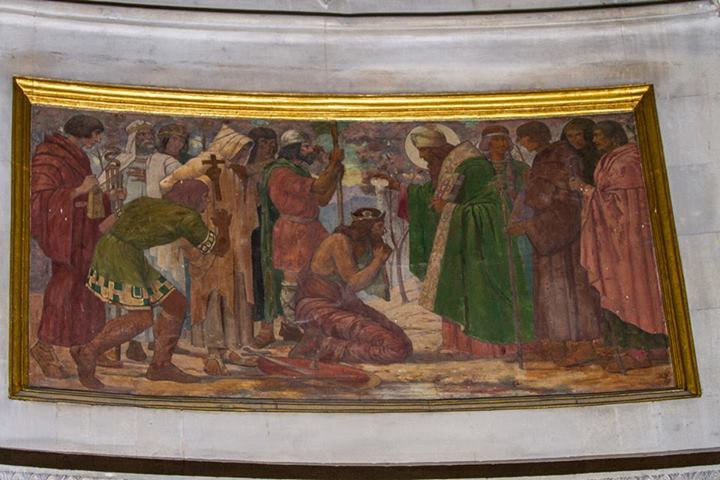
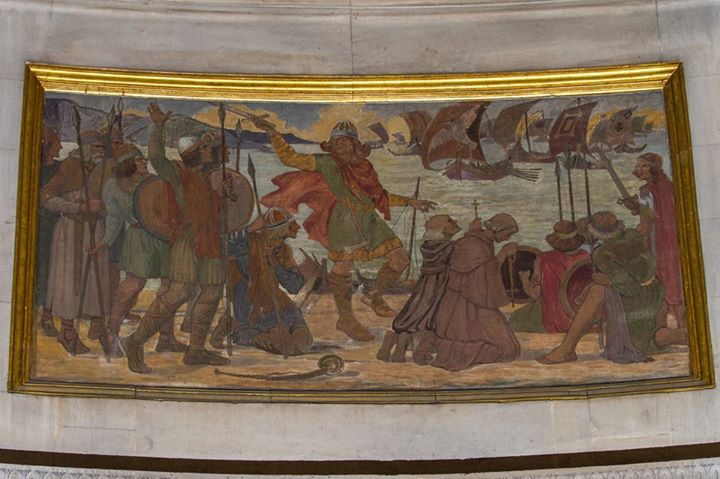
City Hall is an open door, but like most open doors in the city the locals don’t tend to wander in. If you do walk in though you’re rewarded by the sight of a beautiful rotunda, the centrepiece of the 1779 building designed by the architect Thomas Cooley. There are a whole series of excellent murals to view inside the building, telling the story of Dublin. Work on these murals began in 1914, and was undertaken by students of the Dublin Metropolitan School of Art, under their Headmaster James Ward. I sent Paul Reynolds of Rabble fame in to photograph them, lacking anything even resembling a camera myself!

Philip McEvansoneya has noted that “The subject matter was suggested by Alderman Thomas Kelly, the senior Sinn Féin councillor on Dublin Corporation.” The Corporation would have had a strong nationalist prescence even in the years prior to the Easter Rising, refusing to officially welcome several Royals to Dublin in the early twentieth century. McEvansoneya has noted in Irish Arts Review that there seems to be three themes running through the murals – “Dublin legends and history, Irish christianity and the historic struggle for Irish independence.”

'Saint Patrick Baptising the King of Dublin in 448 A.D' (Paul Reynolds)

‘Saint Patrick Baptising the King of Dublin in 448 A.D’ (Paul Reynolds)

The first reference to the murals I can find is a letter from James Ward to the Dublin Corporation in October 1913 offering to provide students and designs for paintings in the Rotunda of City Hall. The Irish Times reported that “On the motion of Alderman T.Kelly, it was resolved to accept the offer, provided the designs were of historical subjects connected to the city, and that the Corporation approved of them.”

Irishmen oppose the Landing of the Viking Fleet, 841 A.D (Image: Paul Reynolds)

Irishmen oppose the Landing of the Viking Fleet, 841 A.D (Paul Reynolds)

By January, 1915, the same newspaper were reporting that the first two of the murals were in place. The first depicted the arrival of Saint Patrick in Dublin, while the second showed the coming of the Norse.The murals were not completed until 1919, when the Corporation thanked Ward at a function below the paintings, over which the Lord Mayor presided.

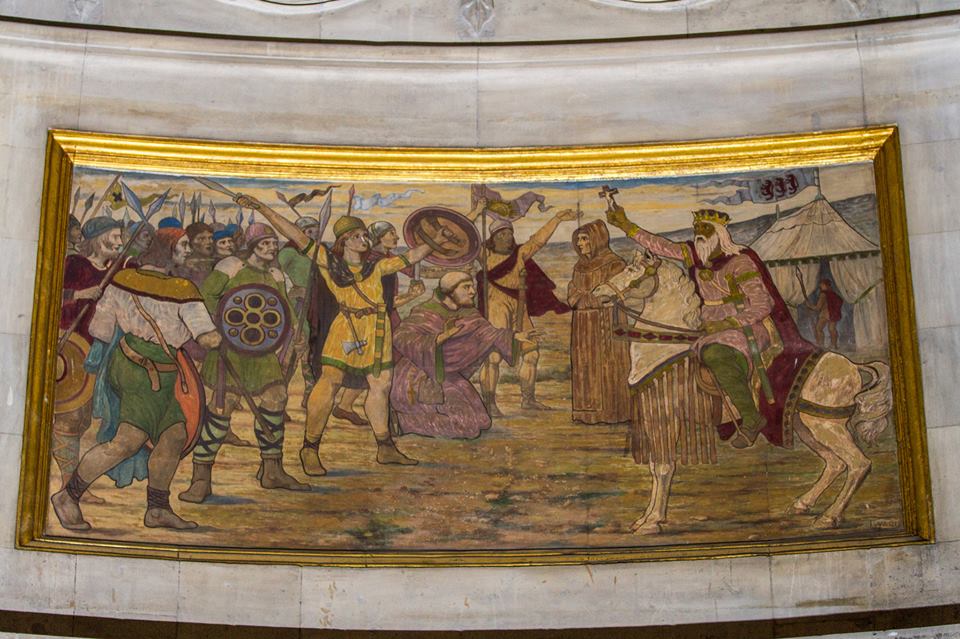
Brian Boru and the Battle of Clontarf 1014 A.D (Paul Reynolds)

Brian Boru and the Battle of Clontarf 1014 A.D (Paul Reynolds)

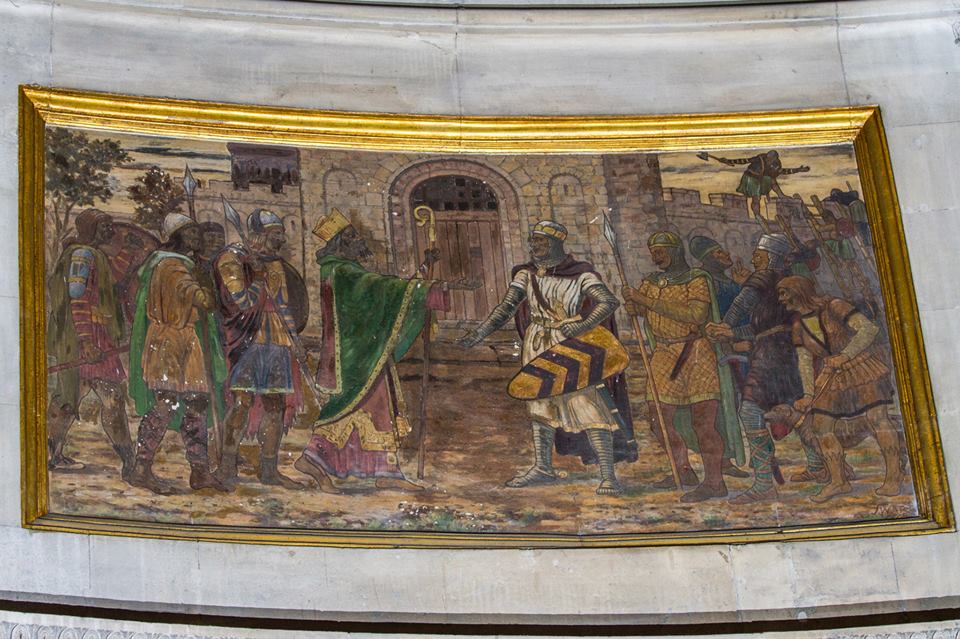
My favourite of the murals depicts the Battle of Clontarf in 1014, and shows an aged Brian Boru upon a horse. There will be much focus on this moment in Irish history next year, an event around which much mythology and folklore has grown. The arrival of the Anglo-Normans is also depicted, with Richard de Clare, or Strongbow, arriving at the gates of Dublin.

Parley between St Laurence O'Toole and Strongbow outside Dublin, 1170 A.D (Paul Reynolds)

Parley between St Laurence O’Toole and Strongbow outside Dublin, 1170 A.D (Paul Reynolds)

(more…)

Read Full Post »

Since the publication of our article ‘Jewish community during the Revolutionary period (1916-23)‘, a number of people have left comments, emailed me directly or posted on external sites with new information and leads on the subject.

They are as follows:

1) 1901: Two Jewish workers listed as being active in James Connolly’s Irish Socialist Republican Party (ISRP).

2) 1908: Establishment of the short-lived Judaeo-Irish Home Rule Association.

3) 1919-1921: Philip Sayers (1876 – 1964) Jacob Elyan (1878- 1937) and Dr. Edward  ‘Eddie’ Lipman (1887-1965) as Sinn Fein supporters.

4) 1920: Death of Russian-born Jew Sarah Medalie at the hands of the Black and Tans in Cork.

5) 1924: Arrest of Polish Jew Idel Weingarten who later admitted to being a gunrunner for the Republican movement.

6) 1926:  Release of the film Irish Destiny which was written and produced by Dr. Isaac ‘Jack’ Eppel, a Jewish pharmacist.

7) Late 1920s/early 1930s: Involvement of Herman Good with the James Connolly Workers’ Clubs and the Irish Labour Defence League.

8) 1939: Arrest and imprisonment of Jewish IRA member Harry Goldberg in Liverpool.

9) late 1960s: Anecdotal evidence that many older working-class Jews in Dublin read the Manchester Guardian and the Moscow Times.

1.

Discovered in the Irish Socialist Republican Party (ISRP) minute book of 23 July 1901 and first publicised by Manus O’Riordan in a 1988 Saothar article – two Jewish workers living in Pleasant Street, Dublin 8 were active with this organisation. They were Abraham Volkes and an individual by the name of Barnet. O’Riordan also informed us that the pair had previously been involved with the Social-Democratic Federation (SDF) in Salford. This was the organisation that James Connolly spoke for during his two public speaking trips (1901 and 1902) to the city.

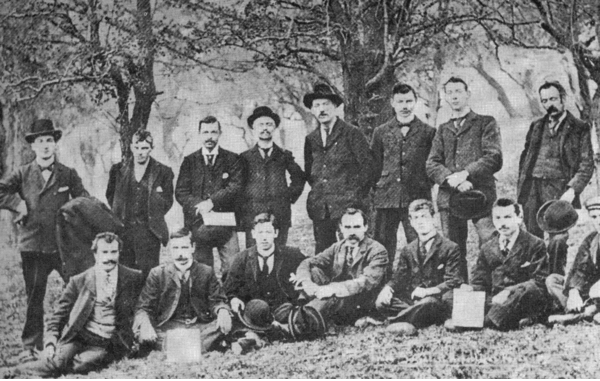
Members of the Irish Socialist Republican Party (ISRP) photographed in the Phoenix Park, May 1901. Credit - http://multitext.ucc.ie
Members of the Irish Socialist Republican Party (ISRP) photographed in the Phoenix Park, May 1901. Credit – http://multitext.ucc.ie
Unfortunately, I cannot find anyone by the name of Barnet or Volkes living in Pleasant Street in 1901. Though they are a number of Jewish families including Greenfield, Abrahams, Werner and Goldstone. Only one person with the surname Volkes seems to be living in the city at that time and he was an American Catholic. Also, there is only one Barnet but he was a Catholic Dubliner. Perhaps Barnet was his first name? There is one Jewish individual with the first name Barnet but he was only a baby at the time. Volkes is a German name and there is one German Jew with the first name Abraham in Dublin in 1901 but his surname is Cohen. At the time, he was a tailor living on Auburn Street off the Phibsboro Road.  The 1901 census was taken on 31st March 1901 so there’s a slight possibility that the two arrived into the city after this date and so were not present for the census.

If anyone can shed any light, please get in touch.

2.

The Irish Judaeo Home Rule Association was founded on 10th September 1908 at a meeting in the Mansion House that attracted around sixty Jews and three Irish Parliamentary Party MPs. The group was formed by Jacob Elyan and Joseph Edelstein and was believed to have contained about two dozen core supporters. MPs John Redmond and John Dillon sent their best wishes to the organisation and the names of Daniel O’Connell and Michael Davitt were recalled at the meeting as great friends of the Jewish people. Speakers at the meeting, besides Elyan and Edlestien, included Arthur Newman and the three Irish Parliamentary Party MPs – William Field, Timothy Charles Harrington and Stephen Gywnn.

An Irish Jew with Unionist sympathies was ejected from the meeting after trying to disrupt proceedings and a fight broke out amongst at least a dozen people towards the end. The Irish Times (11 September 1908) reported:

It appears that some of the Jews who were not in sympathy with the object of the meeting proclaimed their views rather loudly, with the result that they were rather roughly treated at the hands of their co-religionists, who were supported by a number of United League Leaguers.

The organisation seemingly only lasted a few months and didn’t receive any media coverage except for their inaugural meeting. Elyan is the only known original member who continued to be active in Home Rule politics, joining the United Irish League and becoming a member of its Dublin executive.

3.

I’ve been made aware of three more Jewish individuals who were supporters of Sinn Fein in the War of Independence period.

The first of these was Philip Sayers, described as a “Lithuanian-born early Sinn Feiner” by the Irish Independent (19 April 1943). When he passed away at the age of 88 in 1964, his short obituary included the line that he “took part in the Sinn Fein movement and was a life-long sympathiser with the national movement”. His Dublin-born son Michael was a well-known and celebrated poet and writer with strong political sympathies who married Mentana Galleani, daughter of the militant Italian anarchist Luigi Galleani. When he passed away three years ago, it was noted that Michael had “vivid childhood memories of [IRA] fugitives being hidden in the house and of police raids”.

Jacob Elyan (1878- 1937), who we mentioned earlier as having been a founding member of the Judaeo-Irish Home Rule Association in 1908, was also a close supporter of Sinn Fein. He had been invited by John Redmond to stand for election but declined due to ill-health. For the same reason, he was unable to take take a seat in the Free State Senate of 1923.

Dr. Edward ‘Eddie’ Lipman (1887-1965) was close friends with Count Markievicz, Arthur Griffith, James Stephens and other figures in the world of politics and the arts. He took up medical practice in London in the early 1920s where he and his Mayo wife Dr. Eva Kavanagh Lipman “ministered generously, both in matters of health and in personal affairs, to Cockney proletarians and working-class Irish migrants and their families” as the Irish Times of 7th January 1965 noted.

During the Anglo-Irish Treaty negotiation in London in 1921, Arthur Griffith used to frequently call on Eddie Lipman for a “talk and walk through the streets of the English capital”. He worked in the East End until retirement when he returned home to his native Dublin. He died there after a short illness  in June 1965.

4.

In December 1920, a Russian-born Jew Sarah Medalie died of a heart attack after the Black and Tans burst into her bedroom in her home in Cork.

In 1901, the Medali family (spelt without the ‘e’ in the census) were living at 8 Elizabeth Terrace on the southside of the city. Husband David (36), a pedlar, lived with his wife Sarah (32) and their three children Lena (7), Joseph (2) and Harrey (8 months). All were born in Russia except for the youngest two children. Here they are in the 1911 Census  – thanks Yvonne Cohen for the tip in 2023)

Manus O’Riordan who has done much research into the case wrote:

By 1915 David Medalie’s economic circumstances and occupation had improved from that of peddler to draper, and the family moved home into rooms above his own city centre shop in Tuckey Street.

During a massive search operation in Cork that left a trail of destruction, the Black and Tans forcibly broke into the Medalie’s home at 23 Tuckey Street. The Cork Examiner reported on 13 December 1920:

Mrs. Medalie, a Jewess, died suddenly in her house in Tuckey Street, Cork … on Friday night as military entered her bedroom. ‘We are Jews’, she said, when she saw the soldiers, ‘and have nothing to do with the political movement’. Then she exclaimed, ‘Oh my heart!’ and … collapsed.

She was 53.

The fact remains that the only three Jewish killed during the revolutionary period (1916-23) were at the hands of the Black and Tans (Sarah Medalie in 1920) and anti-Semitic former Free State officers (Bernard Golderg and Ernest Kahn in 1923).

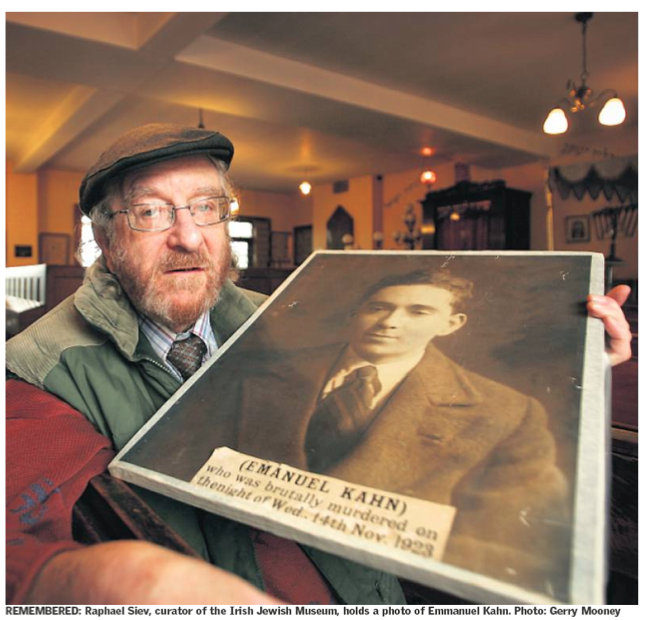
Raphael Siev (RIP), former curator of the Jewish Museum, with a picture of Ernest Kahn. Credit - The Sunday Independent (24 June 2007)

Raphael Siev (RIP), former curator of the Jewish Museum, with a picture of Ernest Kahn. Credit – The Sunday Independent (24 June 2007)

Some fiction writers, most noticeably Roddy Doyle’s A Star Called Henry, have portrayed the IRA as having anti-Semitic murderous elements. However it is according to Manus O’Riordan an:

uncontestable historical fact … that Ireland’s War of Independence, in which members of the Jewish community themselves participated, never saw a single Jew killed by the IRA, whether deliberately or even accidentally.

(more…)

Read Full Post »

A forgotten Dublin census.

It’s likely many of you have lost hours of your lives to the 1901 and 1911 census returns. Both digitised and freely available online, they are a great insight into life in Dublin over a century ago. We’ve looked at them in some detail on the site, for example exploring foreign nationals in the 1911 census, and unusual religions.

For those interested in the population of Dublin historically however, there were surveys carried out long prior to the two census’ online today. One such brilliant source is ‘Whitelaw’s Survey’ from 1798. The story of that undertaking is caught up in the political violence of the time. Some of this amazing survey is available to read online today, and it is linked to later in this piece.

Essay

1798 has entered Irish history and consciousness as being synonymous with revolutionary agitation and the cause of the Society of United Irishmen. Backed military by France, 1798 saw attempts at revolution in the Irish countryside, spearheaded by a revolutionary organisation which included Protestants, Presbyterians and Catholics in leadership positions. In the tradition of Irish rebellions is was both romantic and brief, though the 1798 rebellion did lead to an intense security crackdown from those in authority. As a security measure, the Lord Mayor of Dublin issued an order to the populace of the city, that they would affix a list of inhabitants for each home to the front of their dwellings.

The problem, naturally, was that huge chunks of the population were still illiterate. This led to the task of collecting the details of the inhabitants of Dublin being given to an individual, in the form of the Rev. James Whitelaw. What he carried out would come to be known as ‘Whitelaw’s Survey’. Good information on Whitelaw himself comes from A Compendium of Irish Biography, published in 1878:

Whitelaw, James, Rev., author and philanthropist, was born in the County of Leitrim, about 1749. He was educated at Trinity College, Dublin (where he took his degree of B.A. in 1771), and entered the Church. The living of St. James’s, in the Liberties of Dublin, and afterwards the vicarage of St. Catherine’s in the same locality, were conferred upon him. He laboured indefatigably among the poor, establishing schools, industrial institutions, and loan funds.

Owing to the lack of education among sections of the population, Whitelaw himself explained that:

…my assistants and I, undeterred by the dread of infectious diseases, undismayed by degrees of filth, stench and darkness inconceivable, by those who have not experienced them, explored, in the burning months of the summer of 1798, every room o these wretched habitations, from the cellar to the garret, and on the spot ascertained their population.

Dublin in 1798. Via the excellent resource http://dublin1798.com/

Dublin in 1798. Via the excellent resource http://dublin1798.com/

There has been some examination of Whitelaw’s work in recent times. Tommy Graham, editor of History Ireland magazine, examined some of Whitelaw’s findings in a 1994 edition of the popular magazine. Graham has noted the sheer level of detail in Whitelaw’s findings, in particular on the subject of population density. Whitelaw’s findings indicated that the real centres of poverty where in the west of the city, within its ancient heart. As Graham noted:

Whitelaw was particularly concerned with the density of population not only to highlight the extent of the poorer districts but also to derive mathematical rules of thumb which could be applied to calculate the populations of other comparable European cities. His calculation of population density applied to buildings only and he outlined precise geometric procedures for the exclusion of open spaces such as Stephen’s Green, for example. The parishes within the old walled city were much more densely populated than the newer up-market suburbs, ranging from a claustrophobic 439 persons per acre in St Michael’s (opposite Christchurch) to a more comfortable 87 per acre in St Thomas’ (Sackville Street/Gardiner Street area) (By way of comparison, the population density of Dublin in 1981 [according to the Central Statistics Office] was only 20 persons per acre [approximately], but calculated over the whole city, open spaces included.) Whitelaw contended that, provided accurate maps were available, the populations of other cities could be geometrically determined by extrapolating from the actual Dublin experience.

Whitelaw himself was shocked by the levels of poverty in the city, noting that:

I have frequently surprised from ten to 16 persons, of all ages and sexes, in a room, not 15 feet square, stretched on a wad of filthy straw, swarming with vermin, and without any covering, save the wretched rags that constituted their wearing apparel. Under such circumstances, it is not extraordinary, that I should have frequently found from 30 to 50 individuals in a house.

Some of his findings were published in 1805,as An essay on the population of Dublin being the result of an actual survey taken in 1798, with great care and precision, and arranged in a manner entirely new. Today, this work is freely available to be read online. Observe the level of detail present in the work. Here is an entry for York Street, notice that Whitelaw has noted the number of the house, the number upon the door, the state of repair, how many stories high the home was, the social class of the inhabitants, their names and their occupations.

An excerpt for the work.

An excerpt for the work.

Tragically, the 1805 published work was only the tip of the iceberg of Whitelaw’s research. His research on York Street and the Poddle is thankfully in the public domain today, and some other research of Whitelaw’s was summarised in the Georgian Society Records, but the vast bulk of it is now beyond the researcher. Like so much priceless Irish archival material, it was a victim of the Irish Civil War. The Public Records Office within the Four Courts complex was lost to the destruction of the conflict between republicans and Free State forces, with a debate still raging to this day over where the blame should rest! Whitelaw, who had attempted to highlight the obscene poverty in the city, ultimately lost his life by coming into contact with it. As the above biographical entry notes:

He was constant in his ministrations at Cork Street Fever Hospital, where on one day he administered the sacrament separately to six patients in the last stages of malignant fever. The result was that he caught the disease himself, and died, 4th February 1813, aged 64.

The Public Records Office within the Four Courts. (Image: National Archives of Ireland)

The Public Records Office within the Four Courts. (Image: National Archives of Ireland)

Read Full Post »

In 1955 and 1956, rival student societies from Queens University Belfast and Trinity College Dublin launched ‘raids’ on each others campuses, attempting to steal items of significance from each other.

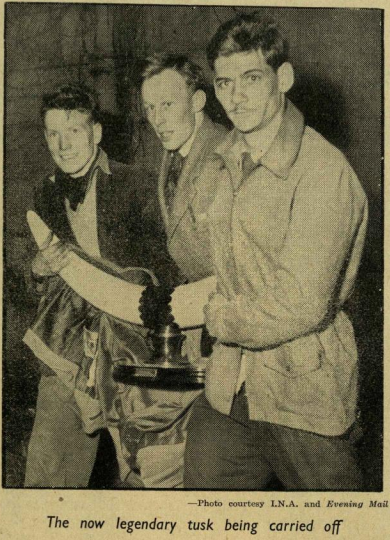
There was shock in Trinity College in May 1955 when prized possessions of the Phil (Philosophical) and Hist (Historical) societies were removed from the college grounds by Belfast students. The college newspaper, Trinity News, ran the below image of three northern students fleeing with an elephants tusk, which belonged to the Phil Society. In addition to the tusk, the students also stole a print of Theobald Wolfe Tone from the Hist Society, of which he had been an active member of during his time as a student there. Tone had even served as auditor of the society in 1785.

Trinity News (12 May 1955)

Trinity News (12 May 1955)

The newspaper noted that:

The whole raid was conducted efficiently and rapidly, and the insurgents were across the border before the customs could be warned. However, the Garda, unnecessarily summoned by the shaken college authorities, with the assistance of the R.U.C., quickly recovered the valuables, which have not yet arrived back in Dublin.

One of the raiding party was quoted as stating “our only regret is that Trinity refused to take up the challenge to recapture the prizes, and called in the police. Can it be that the southern university has lost the spirit of adventure?”

The answer to that question was no. A year on from the Dublin raid, the paper ran a front page article that noted “Vengeance Is Ours!” The paper reported that four Trinity students, representing the major societies, had raided the Union Society Building of Queens University without detection. “With cold and efficient ease”, they removed four trophy cups from a display cabinet, before returning to Dublin with their loot. “The booty was on display at the ball last night”, the paper bragged, ending the piece by stating the items would be returned to a visiting Queens team. The rivalry between Irish universities and colleges is nothing new then.

Trinity News (7 June 1956)

Trinity News (7 June 1956)

This story was only possible thanks to the excellent resource that is the Trinity News Archive.

Read Full Post »

The Whitefriar Street Carmelite Church is a popular spot with visitors to the city, especially in February.

The church has never had any difficulty in attracting tourists owing to the ‘Shrine of Saint Valentine’ within it. It is noted by the Church that Pope Gregory XVI gave the relics of Valentine to Fr John Spratt, an Irish Carmelite associated with the church, who visited Rome in the 1830s, making this one of several churches internationally to claim to hold relics relating to Saint Valentine.

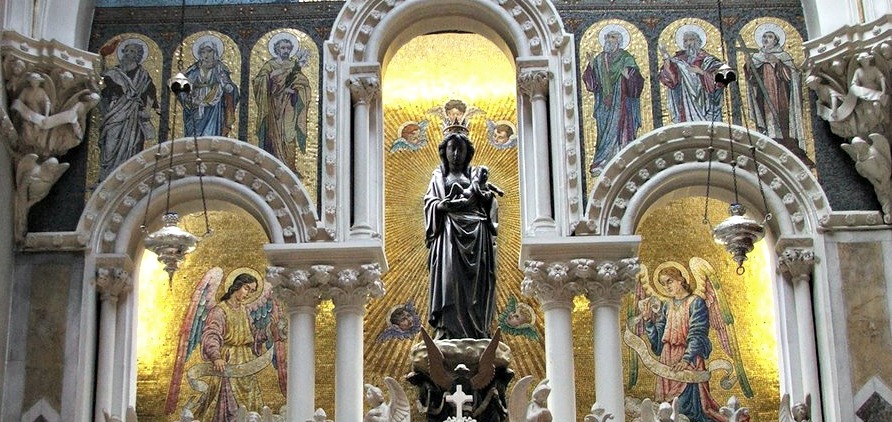
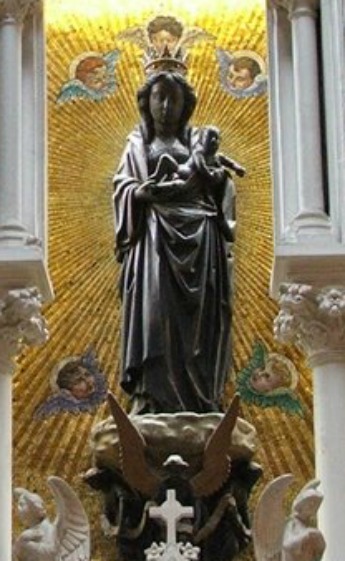
Recently though I learned of a statue in this church that tells a pretty interesting story itself, covering centuries in Dublin’s history. The story seems to be a mix of legend and historical fact like so many others in the city. The story relates to ‘Our Lady of Dublin’, a Marian statue carved of oak in the church believed to date to the fifteenth or early sixteenth century.

'Our Lady of Dublin' as the statue is known.

‘Our Lady of Dublin’

My interest in this statue was sparked by a newspaper article from the 1830s, published in the Dublin Literary Gazette. “There is now preserved in the Carmelite Church, in Whitefriar Street, Dublin, a very interesting ancient piece of sculpture”, the article noted. “It was originally a distinguished ornament in St. Mary’s Abbbey, at the northside of Dublin, where it was not less an object of religious reverence than of admiration for the beauty of its construction.” The article noted that “Its glory, however, was but of short duration. The storm of the reformation came – the noble religious structure to which it appertained was given to the Earl of Ormonde for stables for his train, and the statue was condemned, and, as it was supposed, consigned to the flames.”

The newspaper claimed that while one half was burnt, “the other half was carried by some devout or friendly hand to a neighbouring Inn yard, where with the face buried in the ground, and the hollow trunk appearing uppermost, it was appropriated, for concealment and safety, to the ignoble purpose of a hog-trough.”

Our-lady-of-dublin_110922-01 (1)

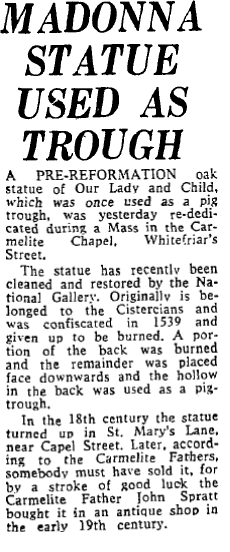
It appears the statue returned to a church in the early years of the eighteenth century, when it was placed inside the Mary’s Lane Chapel, yet according to the 1830s source, it was no longer seen as “an object of admiration to any, except the curious antiquary”, and it claimed that parts of the statue were sold, for example an “ancient silver crown” upon Mary’s head. An Irish Independent article on the statue in the 1960s claimed that when the Jesuits, who maintained the Mary’s Lane Chapel, moved to a new church in Anne Street the statue was simply left behind. The legend of the statue has it that in the 1820s the statue was purchased from an “ordinary sale shop” on Capel Street by Father John Spratt, a story that was repeated in The Irish Press in 1947 when the statue went on display in the National Museum of Ireland, exhibited as an example of a Catholic statue to survive the Penal days in Ireland.This legend was often repeated in Dublin, for example in 1974 when the statue was rededicated in the presence of the Lord Mayor of Dublin and others:

1974 Irish Independent article on the statue.

1974 Irish Independent article on the statue.

In 1931 a letter writer to The Irish Times highlighted the statue, and rather bizarrely made an argument that a replica of this figure should take pride of place on the O’Connell Street Pillar that had been erected to Admiral Nelson in the early nineteenth entury. There was discussion at the time regarding the removal of the Pillar, but the writer asked:

Would not a replica of this figure be a suitable crown to that noble piece of architecture which all agree the Pillar itself is? The citizens of Dublin, visitors from all parts of the world, the young and hopeful, the old, the weary and heavy-laden, could not fail to find comfort and hope in the contemplation of a figure representing her chosen by God for his purposes towards mankind.

While the exact facts surrounding the statue are more than a little unclear, and the pig trough story is lacking in hard evicence, the fact it is a survivor of the reformation and dates back centuries makes it a fascinating and unique part of Dublin’s history worth taking the time to view regardless.

Read Full Post »

Thursday, April 20th 1916, and with days to go until the Easter Rising, the Aud arrived in Tralee Bay, two days earlier than expected. The Rebellion was imminent, and with this in mind, Padraig Pearse along with his brother Willie made his way to Rathmines; with St. Enda’s not far away, they turned down Castlewood Avenue and into Doran’s Barbers. There they sat in silence as one after the other got their hair cut for the last time; it’s not so hard to believe that one of the brothers at least knew his fate.

 They did not speak much as they awaited their turn in the chair: but then, they never did, he remembers; and, whatever thoughts were in the minds of Patrick and Willie Pearse, the 20-year-old John had no foreboding that he was giving the brothers their last haircut.

John Doran, interviewed in the Irish Independent, March 28th, 1973.

The Pearse brothers are only a small part of the history of a business stretching back over a century. John’s brother James opened the shop on January 2nd 1912, then aged twenty four. The 1911 census lists him as a hairdresser, as it does John quoted above, fifteen when the census was taken. They were sons to Christina, (listed a widow on both the 1901 and 1911 census returns) and lived in a house on Chancery Lane, not far from Christchurch Cathedral. Their father was a hackney owner, and kept horses stabled nearby until his death sometime prior to 1901. John and James were just two of a family of thirteen.

Annual rent on the premises at Castlewood Avenue in 1912 was £52, and on opening, a haircut in the shop cost fourpence and a shave thruppence. Along with his wife, four girls and two boys, James lived above the barbers until the early 1930’s when the family moved around the corner to Oakley Road; born and reared above the shop, Jimmy and William  would go into the family business. Their father James didn’t retire until his late seventies and it wasn’t until then in 1966 and at fifty years of age that Jimmy took on the role of proprietor.

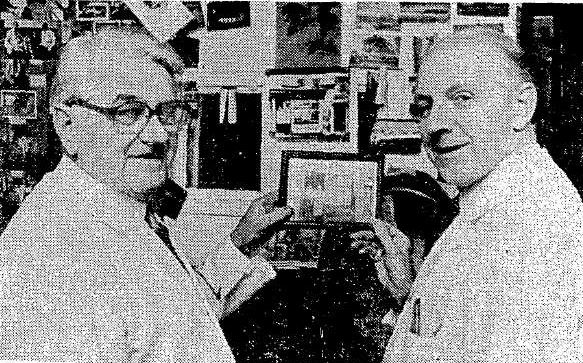
James and Willie Doran

James and Willie Doran

Jimmy, born in 1916, started cutting hair in 1930 at fourteen years old, with Willy starting at the same age five years later. Rathmines, and Castlewood Avenue was a different place then, the number 18 tram with it’s red triangle identifier passing the front door of the shop. The township of Rathmines existed as a seperate entity to Dublin City until 1930, when it was amalgamated into Dublin City Council.

I was born upstairs eighty six years ago, in 1916. I’m not a Dubliner though, I’m a Rathmines man. The oldest one around they say, though I’m not saying that. Dublin didn’t come here, to Rathmines, until the 1930’s. Rathmines Urban District Council made their own electricity until then.

Jimmy, in an interview with Rose Doyle, Irish Times, October 16th, 2002.

The tramlines were taken up in the forties, but Jimmy and the shop remained, unchanged. In the same manner as his father, Jimmy worked in the shop for sixty eight years, only retiring in 1998 and passing on the mantle to the shops current owner Robert Feighery who served his time in the Merchant Barbers, itself running for over half a century. Jimmy remained a regular visitor to the shop after retiring, dropping in a couple of times a week for a chat with the barber and his customers until his death on New Years Eve, 2010.

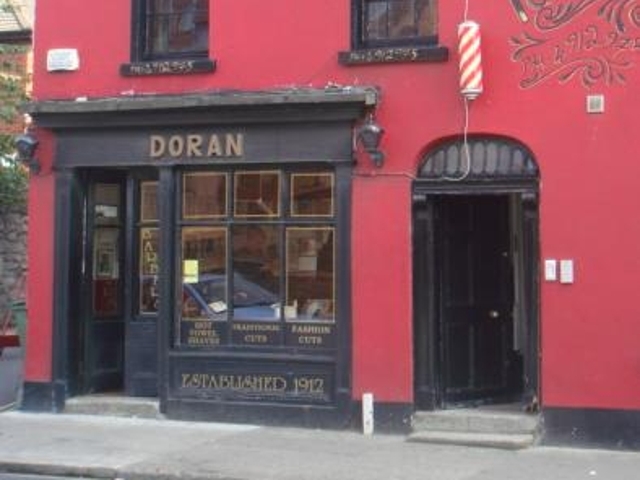
Doran Barbers.

Doran Barbers, estd. 1912.

The shop remains largely as Jimmy left it, with a polished wood floor, benches lining two walls, two wash basins and a large collection of historical memorabilia connected with the shop including framed electricity meter reading cards dating back to the shop’s opening, stamped with “G.F. Pilditch, M.I.E.E. at the Electricity Works, Town Hall, Rathmines,” a picture of Jimmy and Willie with Brendan Gleeson, and various clippings of the shop from books and newspapers it has appeared in.  Also on the wall is a large portrait of Padraig and Willie Pearse, and a selection of Bohs newspaper clippings, including one from the day after the League win in 2001; the Red and Black exterior evidence of Robbie’s footballing allegiance.

In the same interview with Rose Doyle quoted above, given in the shop in 2002, Jimmy said:

Sometimes a fella comes in and says ‘you cut my hair 30 years ago.’ Some are fifth generation customers, and there a number who are fourth generation. Famous people come and go, but everyone’s the same importance here. When a fella pays, and goes out the door, he’s all the same!

The Waldorf stakes a brave claim that it is Dublin’s oldest barbers, but I don’t think it can beat that.

Read Full Post »

[A sequel to this article can be read here]

In the early half of the twentieth century, there were roughly 3,700 Jews living in Ireland. This represented about 0.12% of the total population. Though their numbers were minuscule, members of the the Jewish community were disproportionately active in the fight for Irish independence. Melisande Zlotover in his 1966 memoir ‘Zlotover story: A Dublin story with a difference’ assessed the overall situation by writing that Dublin’s Jews “were most sympathetic [to the fight for Independence] and many helped in the cause”.

These included:

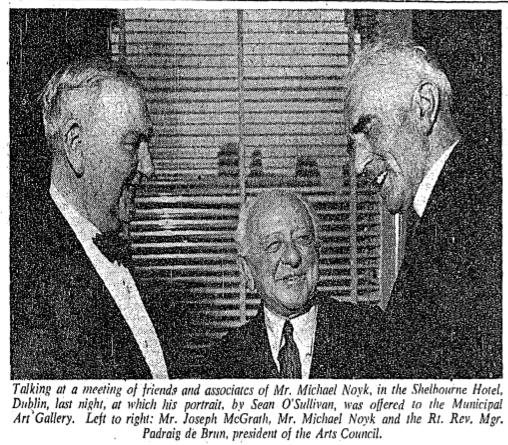
Michael Noyk (1884–1966) was born in Lithuanian town of Telšiai and moved to Dublin with his parents at the age of one. An Irish Republican activist and lawyer, he most famously defended republican prisoners during the War of Independence and afterwards. In the 1917 Clare East by-election he was a prominent worker for Eamon de Valera and in the 1918 general election was election agent for Countess Markievicz and Seán T. O’Kelly. He was later involved in renting houses and offices for all the ministries established under the first Dáil. During the War of Independence he regularly met Michael Collins in Devlin’s pub on Parnell Square and helped to run the republican courts. In 1921 he was to the fore in defending many leading members of the IRA, including Gen. Seán Mac Eoin and Capt. Patrick Moran, the latter of which was executed for complicity in the shooting of British intelligence officers.

While Arthur Griffith’s early anti-Semitic comments (c.1904) are frequently recalled, it should be noted that he was an extremely close friend of Noyk’s from 1910 onwards and he remained Griffith’s solicitor until his death in 1922. So close did Griffith’s relationship with Noyk become that his own daughter would act as a flower girl at Noyk’s wedding as Manus O’Riordan reminded us in an excellent 2008 article.

In later years, Noyk became a founder-member of the Association of Old Dublin Brigade (IRA) and a member of the Kilmainham Jail Restoration Committee. Keenly interested in sport, he played soccer in his youth for a team based around Adelaide Road and was for many years the solicitor to Shamrock Rovers. He died on 23 October 1966 at Lewisham Hospital in London. A huge crowd, including the then taoiseach, Seán Lemass, attended his funeral and the surviving members of the Dublin Brigade rendered full IRA military honours at his graveside. He is buried in Dolphin’s Barn cemetery.

Noyk is honoured with portrait. The Irish Times, 06 Apr 1960.

Noyk is honoured with portrait. The Irish Times, 06 Apr 1960.

Robert Emmet Briscoe (1894–1969) was a Jewish Dublin-born republican and businessman who most famously ran guns for the IRA during the War of Independence. Named after revolutionary leader Robert Emmet, his father, a steadfast Parnellite called another son Wolfe Tone Briscoe.  Politicised after the Easter Rising, Robert attended meetings of Clan na Gael in the United States, meeting Liam Mellows, who influenced his return to Ireland (August 1917) to join the headquarters staff of Na Fianna Éireann. The clothing factory that Robert Briscoe opened at 9 Aston Quay, and a subsequent second workshop in Coppinger’s Row, both served as headquarters for clandestine Fianna and IRA activities before and during the War of Independence. Unknown to government authorities owing to his lack of prior political involvement, Briscoe engaged in arms-and-ammunition procurement and transport, and gathering of intelligence. Transferred to IRA headquarters staff (February 1920), he was dispatched by Michael Collins to Germany, where, with his knowledge of the language and country, he established and oversaw a network of arms purchase and transport. He maintained a steady flow of matériel after the July 1921 truce, and from 1922 to the anti-treaty IRA, with which he maintained links for some years after the civil war. Returning to Ireland after the 1924 general amnesty, he managed the Dublin operations of Briscoe Importing, a firm already established by two of his brothers.

During the summer of 1926 the IRA raided the offices and homes of moneylenders in both Dublin and Limerick. Manus O’Riordan wrote that:

Those who were raided were indeed predominantly Jewish, but the IRA explicitly stated that their attack was on moneylending itself, “not on Jewry”.

Historian Brian Hanley summed up the situation well when he said that the IRA:

…were supported in their claims by the prominent Jewish politician in Ireland, Robert Briscoe of de Valera’s Fianna Fáil Party. He argued that he did not see the raids as anti-Semitic, and wished it to be known that he and ‘many other members of the Jewish community’ abhorred moneylending and expressed his admiration for the IRA’s attempts to end ‘this rotten trade’.

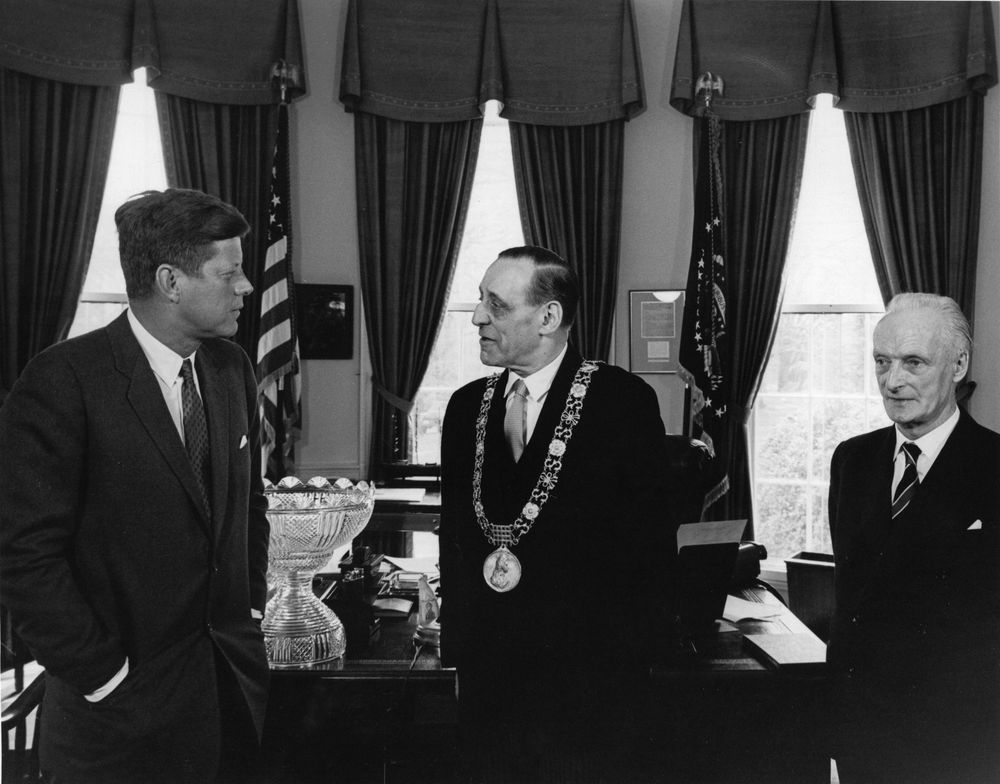
A founding member of Fianna Fáil (1926), he served on its first executive committee, and worked on constructing the party’s national constituency organisation, transporting party workers countrywide in his recently purchased motor car. Defeated in the June 1927 general election and in an August 1927 by-election occasioned by the death of Constance Markievicz, in the September 1927 general election he was elected to Dáil Éireann, becoming the first Jewish TD, and commencing an unbroken tenure of thirty-eight years, representing Dublin South (1927–48) and Dublin South-West (1948–65). Twice lord mayor of Dublin (1956–7, 1961–2), he made a spectacularly successful whistle-stop tour of the USA (1957) – the first of several official visits, trade missions, and speaking tours – lauded by Irish- and Jewish-Americans as Dublin’s first Jewish lord mayor.

JFK meeting with IRA veteran Robert Briscoe, Lord Mayor of Dublin. 26 March 1962. Credit - jfklibrary.org.

JFK meeting with IRA veteran Robert Briscoe, Lord Mayor of Dublin. 26 March 1962. Credit – jfklibrary.org.

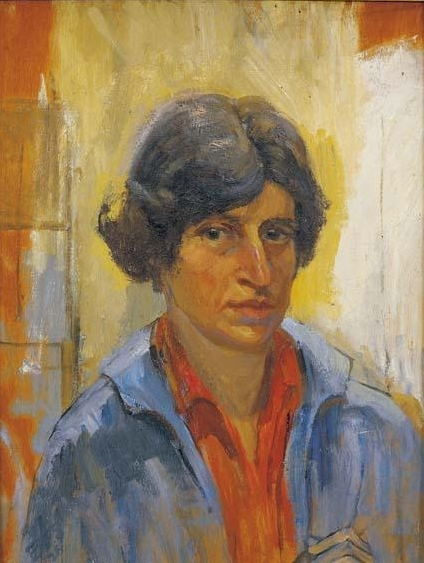
Estella Solomons (1882–1968), who “hailed from one of the longest established Jewish families in Dublin”, was a distinguished artist active with the Rathmines branch of Cumann na mBan (Wynn, 2012, p. 60). One of her first jobs was distributing arms and ammunition which she kept hidden under the vegetable patch at the family home on Waterloo Road.  (Wynn, 2012, p.60) When her sister visited from London with her British Army husband,, Estella stole his uniform and passed it onto the IRA. Solomons sheltered IRA fugitives in her studio during the War of Independence, and concealed weapons under the pretence of gardening. Estella’s IRA contact was a milk delivery man, who acted as a perfect cover for moving arms and gathering information. She persuaded him to teach her to shoot, in exchange she painted a portrait of his wife. Taking the anti-Treaty side and sheltering Republicans during the Civil War, her studio was often raided by Free State troops.

Solomons was elected an associate of the Royal Hibernian Academy (RHA) in July 1925, but it was not until 1966 that Solomons was elected an honorary member. Her work was included in the Academy’s annual members’ exhibition every year for sixty years. As her parents were opposed to her marrying outside her faith, it was not until August 1925, when she was 43 and her husband 46, that she married Seumas O’Sullivan, the editor and founder of the influential literary publication Dublin Magazine.

Estelle Sollomons, self-portrait, 1926. Credit - mutualart.com.

Estelle Sollomons, self-portrait, 1926. Credit – mutualart.com.

(more…)

Read Full Post »

letterhead dctv

It is with great sadness we have learned of the imminent closure of Dublin Community Television (DCTV). Established in 2006, the station has produced quality independent content such as historical documentaries, music programming and more besides. This closure is directly related to a lack of support from the Broadcasting Authority of Ireland. In the past Come Here To Me have actively participated in several DCTV projects, believing that the project was always worthy of support. To mark the upcoming closure of the station, I wanted to post a few videos from the archives of DCTV here which will be of interest to readers.

This interview with Dubliner Bob Doyle is a priceless piece of material. Doyle, from Dublin’s north-inner city, fought against fascism in the Spanish Civil War and was the last surviving Irish ‘Brigadista’ to have seen combat:

The station produced dozens of brief videos to mark the centenary of the Lockout. Historians, actors and more besides contributed. Here, Bryyan Murray from Strumpet City reads a brief passage from the book:

Perhaps the most popular of the stations output however was Community of Independents, which focused on the music community in Dublin. From indie rock to hip hop, the show featured a mix of musical performances, interviews and features. At the time of the Come Here To Me booklaunch, we featured on the show discussing the musical content in the book. This video comes from the launch of Series 3 of the programme in the Button Factory, and shows Lethal Dialect, Costello and Willa Lee performing:


Below is the statement from DCTV:

It is with regret that the staff and committee of Dublin Community Television (DCTV) must inform you of the orderly wind down of the station, and the planned cessation of broadcast in February 2014.

On 21 October 2013 the Broadcasting Authority of Ireland (BAI) made it known that it would not be funding any of DCTV’s archiving project submissions. Alongside this decision, BAI support for DCTV projects through the Sound & Vision scheme had dropped. Funding for 2012 was seven times higher than the funds received in 2013.

DCTV had recognised its dependence on the BAI and tried to generate alternative funding. This year the station secured significant alternative funding. However, the drop in BAI support to less than a sixth of its previous annual average left the station unable to guarantee the ability to meet its obligations in wages, rent and other costs if it continued to operate.This has been a difficult decision, not least because of the belief that the station was approaching a sustainable funding model.

DCTV started broadcasting in 2006. In that time DCTV developed youth shows, history programmes, music, comedy, information services and documentaries. These programmes are archived and will be preserved. DCTV also set up a city centre studio. It is hoped that the studio will continue to support ongoing training for community organisations and youth centres in Dublin.

There will be a meeting for the DCTV membership shortly to decide on the winding up of the co-op and other matters. DCTV still has four active television shows in production. There is a plan to complete these projects over the next five months. The co-op will examine how best to preserve the community television production capacity built by DCTV while meeting its obligations to creditors.
DCTV will be meeting with all creditors, landlords, show participants and so on to form an orderly wind down which may involve the transfer of contracts and commitments to other bodies. We would like to thank people for their support in this process as we pursue an orderly resolution of the affairs of the co-op.

We hope that the skills, productions and networks that DCTV leaves behind after six years will be a fitting legacy. The staff and committee of DCTV thank all of the co-op’s members and collaborators for their support.

Read Full Post »

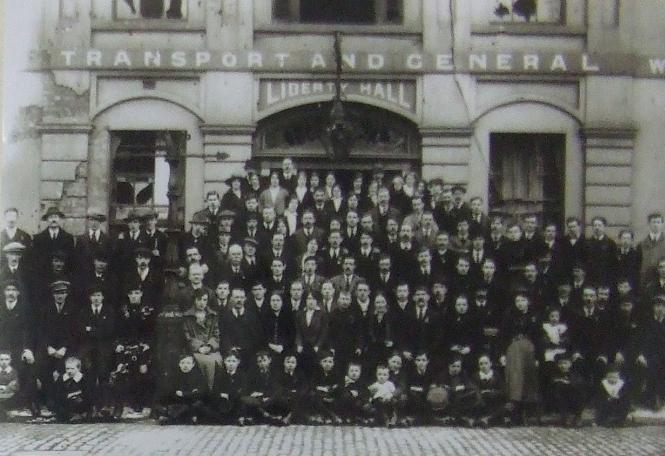
The Irish Citizen Army at Liberty Hall, 1917.

The Irish Citizen Army at Liberty Hall, 1917.

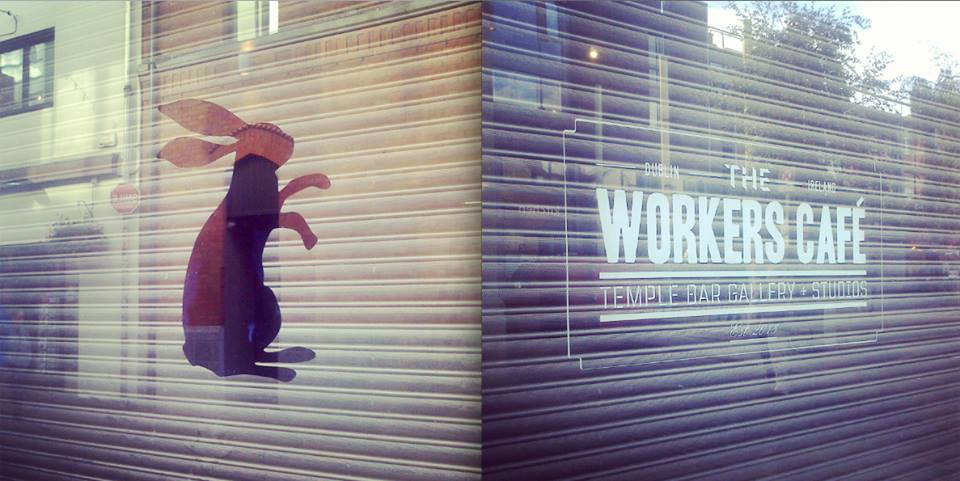
As the focus of the ‘decade of centenaries’ shifts towards the foundation of the Irish Volunteers, and next year sees the centenary of the First World War, it should be said we’re far from finished with the Lockout. While the dispute began in the summer, it dragged into 1914 and one its lasting legacies was the Irish Citizen Army, who were active in the rebellion of 1916. Tomorrow, there are two events in Dublin looking at interesting aspects of the Lockout. In Smithfield, Brian Hanley will deliver a talk on the foundation of the Irish Citizen Army, while in Temple Bar I’ll be giving a brief talk on the S.S Hare and international solidarity during the Lockout, which is the closing event of the Workers Cafe at the Temple Bar Art Gallery.

The Smithfield event takes place at 5pm in The Cobblestone, and is being hosted by the Smithfield and Stoneybatter People’s History Project:

To mark the 100th anniversary of the founding of the Irish Citizen Army we will host a public talk in the Cobblestone at 5.00pm.

The Irish Citizen Army was established initially as a workers’ defence force during the 1913 Lockout to prevent police attacks on trade union marches and demonstrations. In the first week of the Lockout two workers were killed by members of the Dublin Metropolitan Police.

Our guest speaker is Dr. Brian Hanley who has lectured and written extensively on modern Irish history. We hope you can join us.

SSHAre

In Temple Bar I’ll be giving a brief talk at 3pm, in the nice environment of a cafe, on the Lockout. A basic introduction coupled with a brief look at international aid, the talk takes place inside the Temple Bar Gallery and Studios. Giving that the cafe is celebrating the S.S Hare foodship in 1913, I’ll be talking about it among other things.

Read Full Post »

In 1936, the Irish Press newspaper launched a major exposé of the Dublin slum problem, with articles and photographs from the slums of Dublin designed to highlight the appalling conditions many Dubliners were living in. The articles and photos sparked real discussion on living conditions at the time, and the newspaper collected some priceless oral testimonies from people living in hellish conditions. At the time, the paper claimed that 30,000 families were living in squalor in the inner-city, and it called for ‘war on the slums’.

The paper refereed to the slums as a “tragic British legacy”, shifting the blame from homegrown landlords and domestic greed, claiming that British policy in Ireland “left to the Free State its inheritance of slumdom”. This article will republish some of the shocking images from that campaign, and show how others also campaigned at the time for radical improvements in inner-city living conditions, choosing to blame domestic forces for the state of the city.

Irish Press (1 October 1936)

Irish Press (1 October 1936)

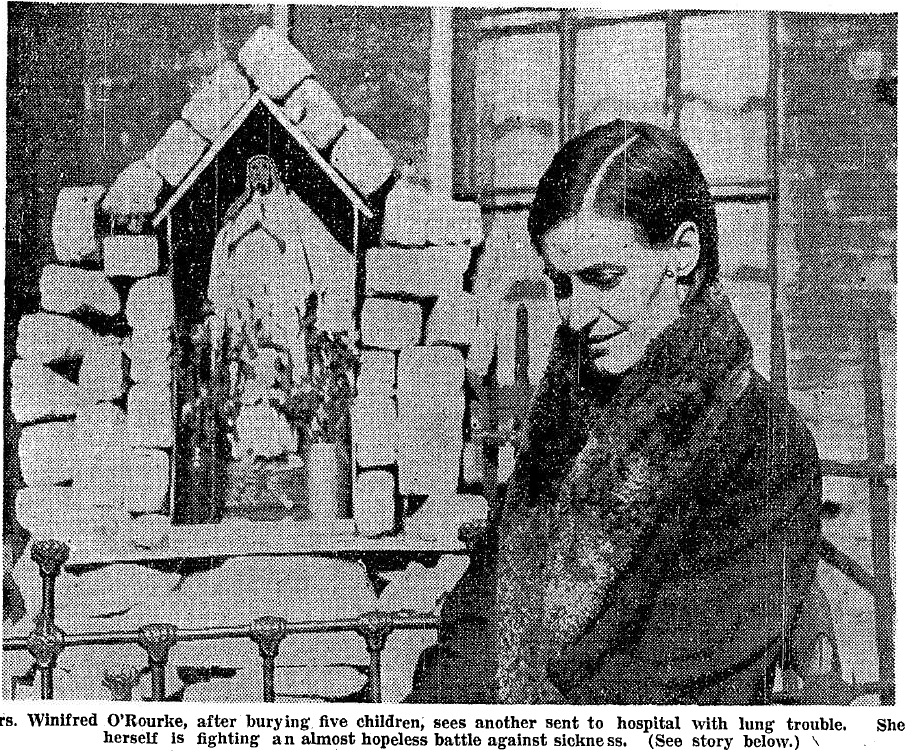
The series attempted to gather personal stories, such as that of Winifred O’Rourke, a young mother from the inner-city who lost five children to ill-health, and who was herself suffering greatly. The paper noted that the children they visited in one inner-city complex pointed out rat holes, and spoke of their terror of the “big roof rats who periodically invade the rooms”.

Irish Press (7 October 1936)

Irish Press (7 October 1936)

Coincidentally, October 1936 saw the single greatest tragedy in the history of the Dublin Fire Brigade, when three firefighters died in a fire on Pearse Street. This put considerable focus on fire safety in the city, and the Irish Press noted that in tenement Dublin the flats were like fire-traps, noting “It may be said that practically all slum dwellings are fire-traps. Worst of these, of course, is the type of building that has no exits at the rear, but merely the hall door at the front.”

The health of children featured prominently in the campaign, with the paper noting that the infant death rate for the entire city of Dublin was 79 per thousand births in 1934, but in parts of the north inner-city this rose to a staggering 119 per thousand. The paper insisted that “until the rookeries of the tenements are pulled down and their occupants transferred to airy and roomy homes, little improvement in the public health of the city can be looked for.”

Irish Press (2 October 1936)

Irish Press (2 October 1936)

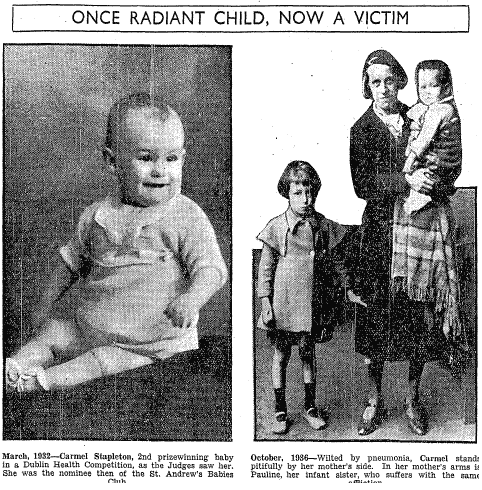
By talking of individual cases, the newspaper struck a strong emotional chord with many Dubliners. The story of Carmel Stapleton for example told readers of how a once healthy child, runner-up in a baby competition only years previously, was suffering to ill-health as a result of life in the slums. “I need a home for them, I’m getting desperate. Look at them, the poor little children”, Carmel’s mother pleaded to a visiting journalist.

Irish Press (19 October 1936)

Irish Press (19 October 1936)

Among those who pledged support to the campaign of the newspaper to highlight the slum problem was Maud Gonne MacBride, who hoped that, at the very least, the campaign would “end the ignorant cry of Communism raised against those of us who, from public platforms, protested against the unchristian conditions in which so many of our fellow countrymen are forced to live.”

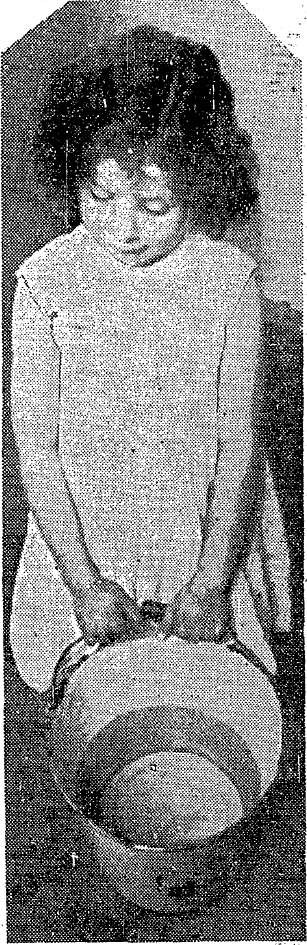
The lack of a clean water supply in many of the homes was highlighted on many occasions, and this image showed a young Dublin child who carried water up stairs from the communal tap of her tenement home.

Irish Press (7 October 1936)

Irish Press (7 October 1936)

The newspaper campaign encouraged readers to donate towards a fund on behalf of those living in the slums. One reader noted that he was donating as someone who “believes in practicing – not preaching – Christianity.” Some families who were featured in the paper were only saved from eviction thanks to the generous donations of newspaper readers. A reoccurring theme was the unchristian nature of the living conditions, and there existed a fear that tenement slums were fertile ground for communism to grow in from those on the right. The Christian Front noted that the slums were one of the single greatest threats to Irish society, while a conservative letter writer told the paper that “there is little good in parties or governments condemning Communism in other countries if they are prepared to tolerate the evil that gave birth to that Godless doctrine elsewhere.”

(more…)

Read Full Post »

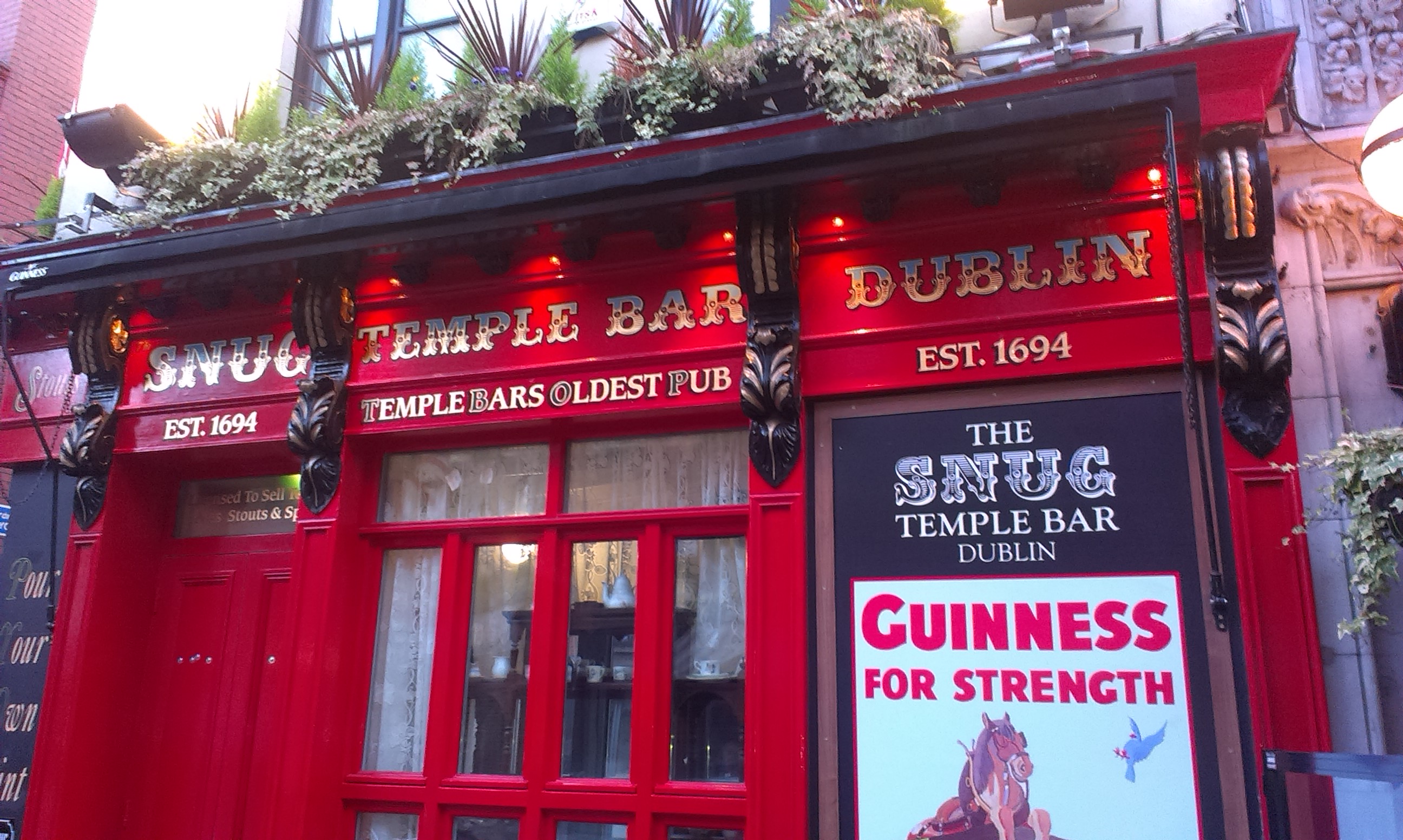
It may be just me but I think it’s cheeky beyond belief that the people behind Bad Bobs 2.0 in Temple Bar have recently proclaimed a part (!) of their pub as ‘Temple Bar’s Oldest Pub’. With a lick of paint and some Ye Olde knickknacks in the window, they hope to fool and no doubt pull in some of that Yankee dollar.

I took this picture during the week of the ‘The Snug Temple Bar’:

'Temple Bar Snug', October 2013. Credit - Carax

‘Temple Bar Snug’, October 2013. Credit – Carax

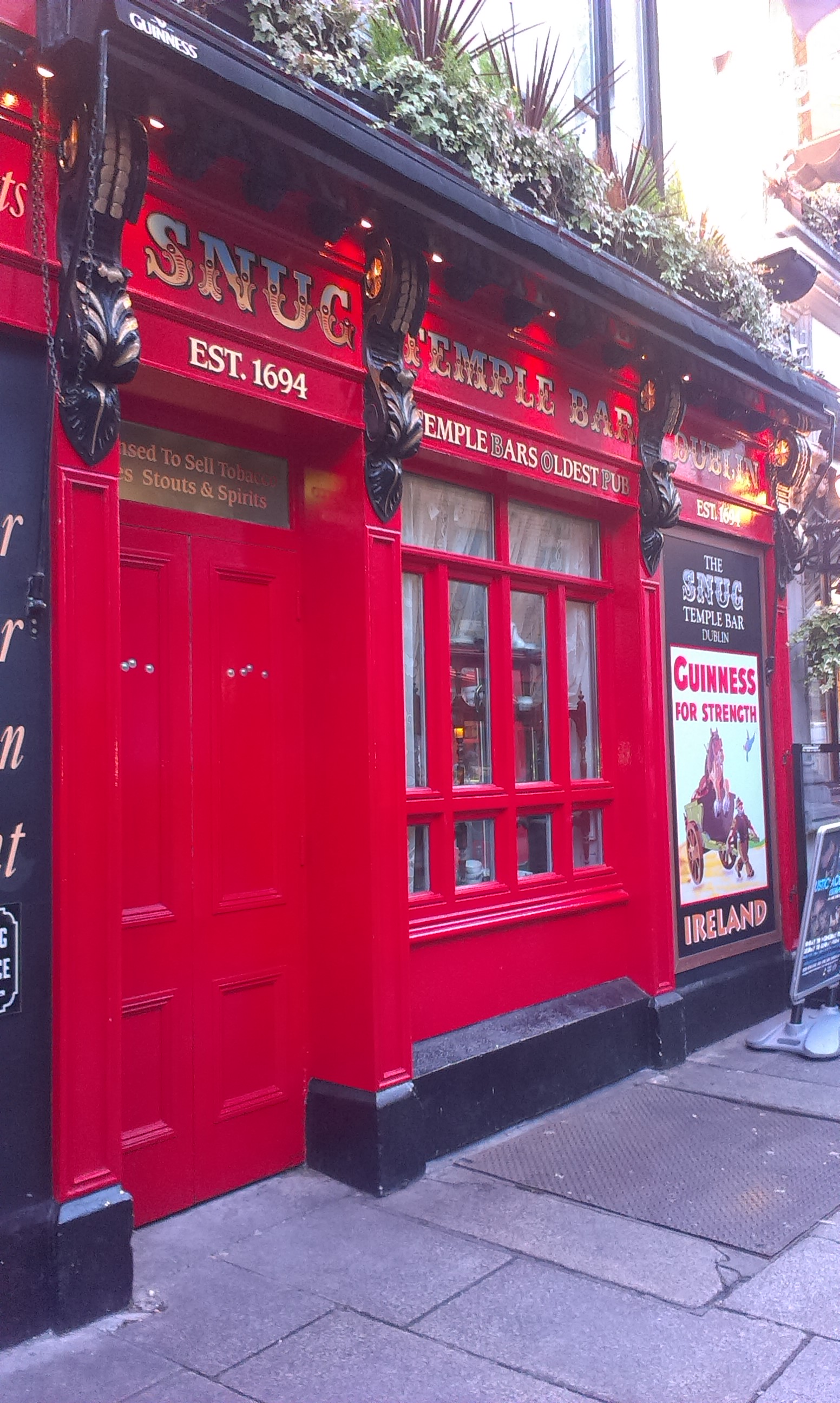
As you can see, they got a painter to recreate an old-style Dublin boozer sign above the door. For added measure, they even have the ‘Licensed To Sell Tobacco, Ales, Stouts & Spirits’ blurb. To make it even more of a joke, you can’t get into the ‘The Snug, Temple Bar’ without going through the main Bad Bobs entrance!

2013-10-23 17.55.12

‘Temple Bar Snug’, October 2013. Credit – Carax.

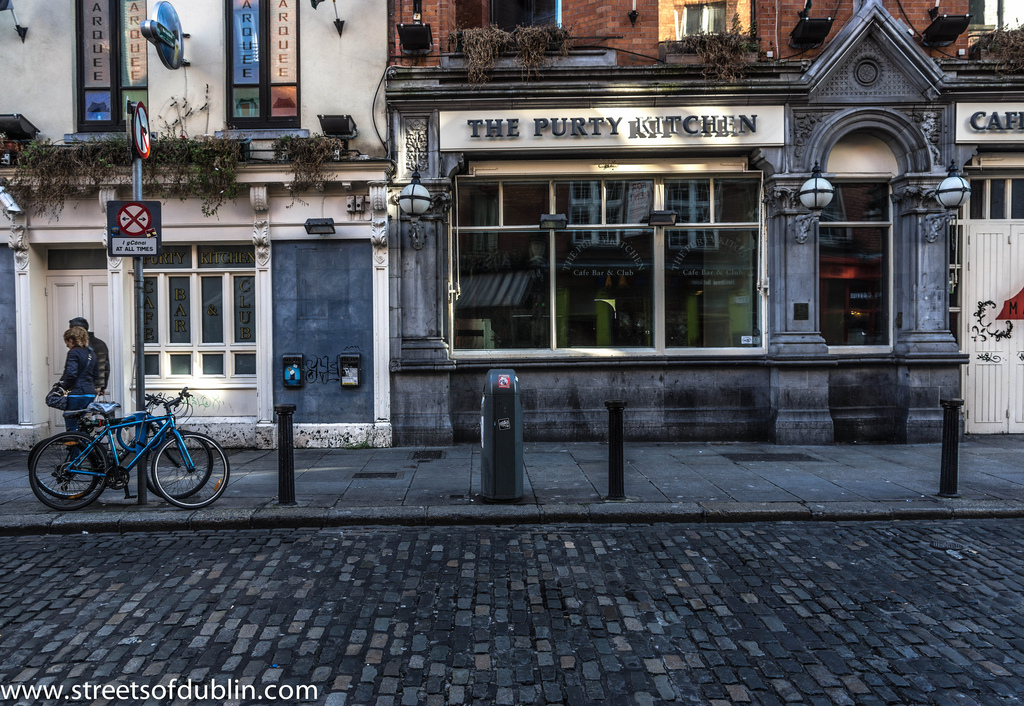
But as we know, before it reopened as Bad Bobs in March 2013, the Purty Kitchen was just another bland, crappy tourist trap. Nothing historic about it whatsoever. It’s been through countless name changes and been sold and bought by various business groups over the decades.

This is what it looked like exactly a year ago. The part of the pub on the on left hand side (beside the two people) is now the self-proclaimed oldest pub in Temple Bar. What difference a year makes.

The Purty Kitchen, October 2012. Credit - William Murphy (Infomatique)

The Purty Kitchen, October 2012. Credit – William Murphy (Infomatique)

The premises, situated between 34 and 37 East Essex Street, has been known as Nugents (1960s), The Granary (late 1970s) and Bad Bobs (1984-2006). It was bought in 2006 for a whopping €12 million by Conor Martin, a publican who owned The Purty Kitchen in Dun Laoghaire. At the time, it was the property of Liam and Des O’Dwyer of the Capital Bars group who are behind Cafe en Seine, the Dragon, the George, Break for the Border and a number of hotels. It was renamed Bad Bobs in March of this year.

There’s no denying that the address is historic. An Irish Times article from 8 November 2006 stated that there has been a pub on the premises since 1728. But during that time there has been numerous name changes, auctions and buy outs. There’s no doubt that interior as been gutted and renovated three or four times at least.

Finally, where on earth did they pull that 1694 number from?

Read Full Post »

« Newer Posts - Older Posts »