Feeds:
Posts
Comments

Archive for the ‘Dublin History’ Category

Sirs, I address this warning to you, the aristocracy of industry in this city, because, like all aristocracies, you tend to grow blind in long authority, and to be unaware that you and your class and its every action are being considered and judged day by day by those who have power to shake or overturn
the whole social order, and whose restlessness in poverty today is making our industrial civilisation stir like a quaking bog.
-Jim Larkin’s Speech to the Askwith Inquiry, 4 October 1913

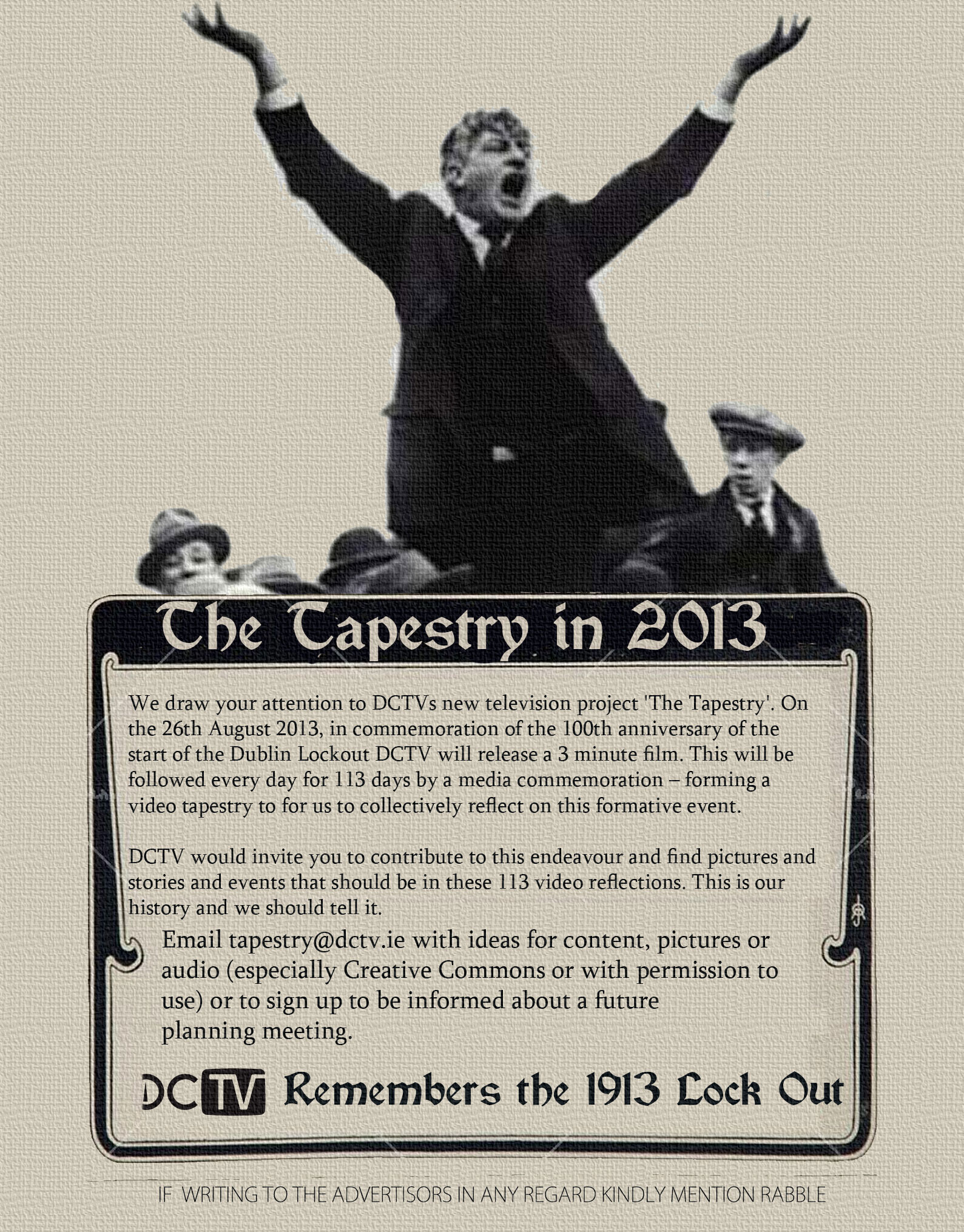
This is a great project from Dublin Community Television (DCTV) and something we’re more than proud to support. It’s undeniable that the ‘decade of centenaries’ we have entered will be a contentious one politically. Already we’ve seen the Labour Party using their annual Connolly commemoration to preach austerity this year for example, and the tug-of-war ahead for the legacy of 1916 will be fascinating to watch, if not tragic.

The lockout has always sat awkwardly for many in the story of revolutionary Ireland, yet it is an incredibly important part of the story. Out of the lockout emerged the Citizen Army of course, but the lockout itself emerged out of a growing sense of class stuggle in Dublin at the time. The likes of the Jacobs strike of 1912, which saw three thousand women workers at Jacob’s factory withdraw their labour.

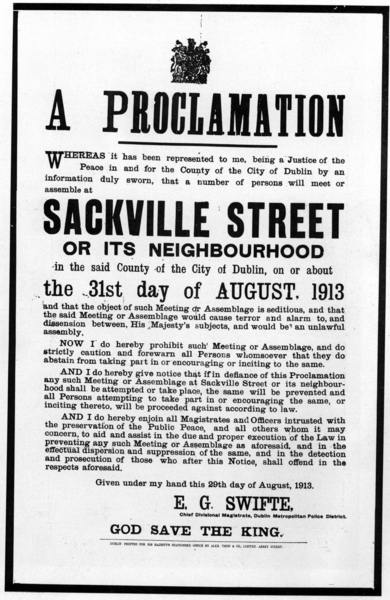
If 2016 will be about Enda Kenny, Bertie Ahern and their sort observing tanks roll down O’Connell Street, what will 2013 be about? If we want to have a say in how the event is commemorated, it’s time to get moving.
Read Full Post »

One of my favourite posts on the blog so far was about trying to identify the oldest restaurant in the city. The comments, arguments and people’s memories that followed were brilliant.

This morning  I had the idea to try to find out Dublin city’s oldest hotel. As you do.

Google brought up a whole range of contradictory answers. The Ormond Quay Hotel was described as “Dublin’s oldest hotel”, The Gresham as “Ireland’s oldest hotel”, The Shelbourne as the “oldest hotel in Dublin”, Wynns as “Dublin city centre’s oldest hotel ” and The Castle Hotel as “the oldest hotel in Dublin”

The Ormond (Quay) Hotel if  still open, it closed in 2005, could not be Dublin’s oldest hotel. It was opened in 1900.

The Gresham Hotel on O’Connell Street would have a good chance, it was established in 1817.

The Shelbourne on St. Stephen’s Green, which many people may think was Dublin’s oldest hotel, opened its doors in 1824.

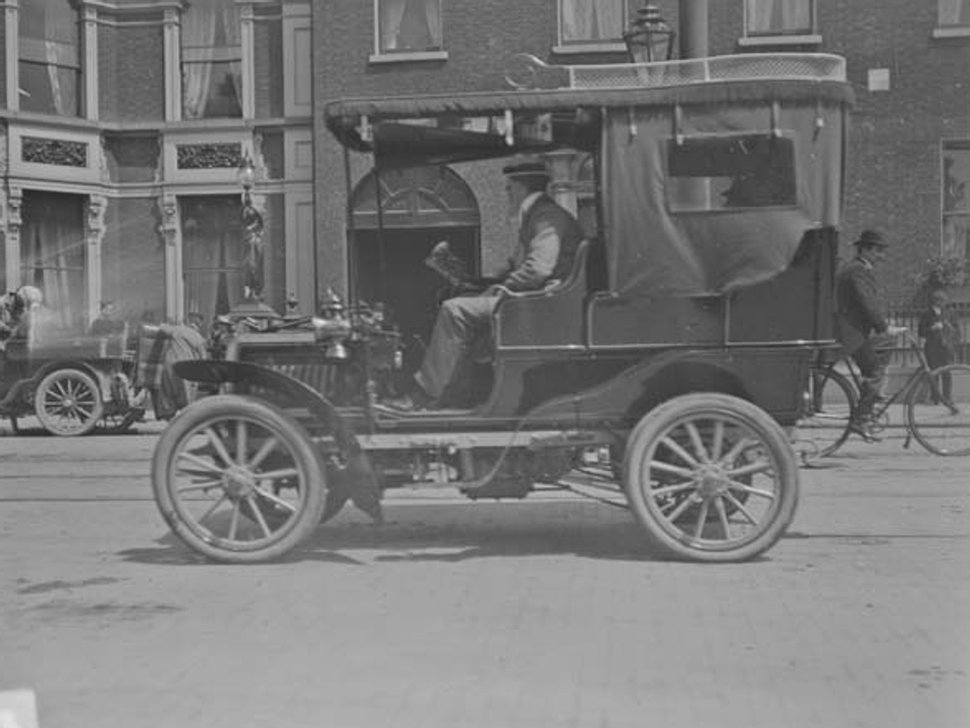
“Car outside the Shelbourne Hotel, St Stephen’s Green. Clarke Collection: 1890-1910 “

Wynn’s on Upper Abbey Street, which I personally did not think was particularly old, was in fact established in 1845.

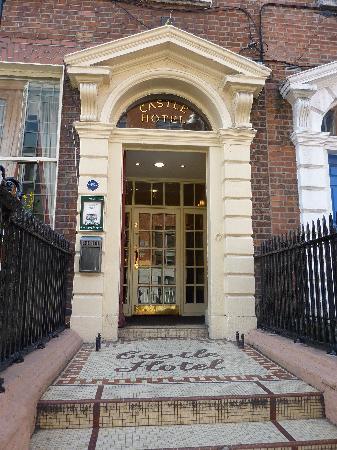
However, it’s the relatively unknown Castle Hotel on Great Denmark Street which wins the prize for the oldest hotel in Dublin in continuous existence.  It was opened by a Mrs. McCrory in 1809.

The nondescript Castle Hotel, the oldest in Dublin, on Great Denmark Street.

Buswells (estd. 1882) on Molesworth Street deserves an honourable mention. As does perhaps The Clarence on Wellington Quay which, though completely renovated in 1992, was originally opened in 1852.

Then there are others like The Westbury (estd. 1984), The Merrion (estd. 1995) and The Westin (estd. 2001) who I thought had been on the Dublin landscape for a lot longer.

Read Full Post »

The Blades (Live, 1984)

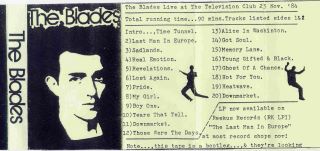
Audio of The Blades playing the TV Club, Harcourt Street on 23 November 1984 has made it online. The bootleg was uploaded by Bill Kealy who runs the For Dancers Only Northern Soul nights in Wexford. Though the audio isn’t crystal clear the tape, which runs at 90mins, really captures the atmosphere of the crowd and gig. Various people shouting things like ‘Get out of me way!’ can be heard throughout.
Side one / Side two.

The Blades live at the SFX on 9 November 1985 can be heard here on the brilliant Fanning Sessions blog while the second part of a 1985 live broadcast of the band can be heard here.

Released last week, The Blades feature on the Reekus Records compilation ‘Too Late To Stop Now’ which marks the 30th anniversary of the influential record label. The Blades feature four times while Paul Cleary features as many times himself with solo material.

[We’ve featured The Blades a number of times on this blog before;  Revelations (Of 45s), The Blades Are Sharp,  os Blades? and  The Blades singles.]

Read Full Post »

I’ll leave it to jaycarax to give you a better taste of what’s in issue 2 of Rabble, several thousand copies of which just hit the streets of the capital.

Above is a sketch of Garda Jim Branigan, or Lugs as he’s known in Dublin folklore. It’s the work of the younger Fallon (Luke, over here), and features in the current Rabble alongside a brief biographical piece on Lugs.

I thought it worth giving the piece a platform here, I love the detail in the piece like the Wild Westesque Sheriff’s badge and, well, the lugs of Lugs. I’ve wanted to post it here for some time but decided it best to wait til the mag hit the streets, trust me there’s much, much more to be seen and read inside it. Well done to all involved in the process.

Read Full Post »

1,200+ posts, 3,000+ comments and 360,000+ views later, Come Here To Me! has reached its second anniversary.

credit - Daniel Flower

Here’s a little round up of what I think were our best posts this last year;  the story of Kavanagh’s two Dublin seats, Orson Welles’ Dublin Visit, Squatting, letter-bombs and hunger-strikes: The Case of Robert C. , reviews of A Visual Feast and The Winding Stair, the story of Saint Werburgh’s Church and Dublin Mean Time, hXci’s Christmas pictureswreckage of a WW2 German bomber, the story of 160 Parnell Street and how Fade Street got its name, the history of the The Theatre Royal Hippodrome, Joe Edelstein’s Alarm and Hawkins House

…The seven part series looking at classic Dublin music videos, a look at Liberty Hall, MC Mannix Flynn, a 1934 Anti-Fascist leaflet, hXci’s snaps 1 & 2, the Eagle Tavern plaque, images of Grangegorman Military Cemetery, the story of when Bovril lit up College Green and The Murdering Lane, the Masonic Hall Fire Insurance Policy 1924,  a look at the old Cabman’s Coffee Booth on O’Connell Street, Dublin’s best pranks, the Ranelagh massacre which gave the world its first Black Monday, two Saint Patrick’s Athletic, pictorial history of The Bleeding Horse, Sean Healy’s plaque, Charlie Chaplin’s Larkin link,  Dublin’s burgeoning underground dance scene, Cathal Brugha’s plaque and a seven part graffiti series

credit - Steve-h

… Lynott’s Dublin, The Blades feature in a Nike ad, French views on the Easter Rising, adult shops of Dublin, The Blades singles, forgotten Dublin dance classic, Johnny Eagle; Dublin’s first tattooist, when loyalists bombed O’Connell Street, Dublin’s oldest graffiti, 1942 Tolka Park violence , Dublin Punk & New Wave singles timeline, ICA roll of honour, Richmond Park rock festival 1970, Bik & Damo and finally the ongoing series of Dublin’s best lanes and shortcuts.

Though we haven’t had as many pub crawls as we liked, the ones we had were memorable: (Pubs 72-78)(Pubs 79-83), (Pubs 84-89)

credit: fxgeek

There’s also been some sad stories, the deaths of Peggy Keogh, Peter Lennon, Patrick Galvin, Philip Greene, Alan Devlin and Cathal Shannon, the closing of City Discs, Comet Records, Kingsland restaurant, Sunday Tribune, Lighthouse CinemaBorderline Records and Shebeen Chic, the demolition of  Murphy’s pram shop and the last ever Dancehall Styles.

credit - pallotron

Thanks to all our readers for your comments, constructive criticism and input. Here’s to our third year!

Read Full Post »

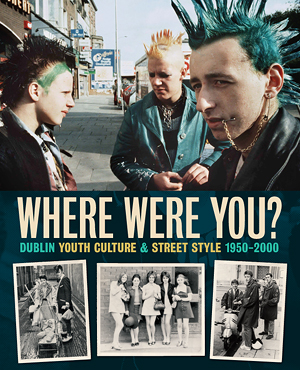
If you cannot wait for Thursday’s launch, you can pick up the book at the following places:

Sound Cellar – 47 Nassau Street.
Freebird Records – 15a Wicklow Street.
Spindizzy Records – Georges Street Arcade.
All City – 7 Crow Street, Temple Bar.
The Gallery Of Photography – Meeting House Square, Temple Bar.
The Winding Stair – 40 Ormond Quay.
Connelly Books – 43 Essex Street, Temple Bar.
Easons – O’Connell Street.

A sample of what to expect:

Page 158 Rockin' at The Magnet Bar, Pearse Street - 1979 Photo from Tony Murray's collection.

Page 163 Young punks outside Advance Records, South Kings Street - 1979 Photo from Brian Palm's collection.

Congrats again Garry. Previously on CHTM!: Where were you? (March 2011) and Jay Carax interviews Garry O’Neill (October 2011)

Read Full Post »

Student Revolt! by Carol Coulter. Click here for PDF

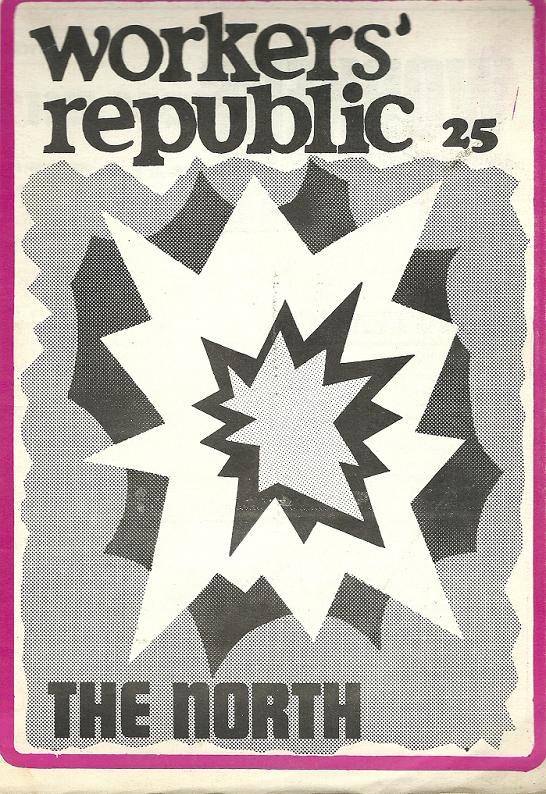
Blast from the past time, and with last weeks USI walkabout in the city centre I thought I’d scan up an article dealing with the Irish student movement from Workers Republic, published by The League for a Workers Republic.

The article was written by Carol Coulter and she writes of the various student groupings active in Irish colleges and univiersites at the time, for example The Internationalists who sprung up at Trinity College Dublin and the Students For Democratic Action which emerged out of University College Dublin.

There is great information on the League for a Workers Republic to be found on Cedar Lounge, while Conor McCabe of Dublin Opinion has written a wonderful piece on The Internationalists including some great scanned publications.

What was the Irish student movement like before Gary Redmond? Read it and see.

Read Full Post »

  • Click here for PDF File.

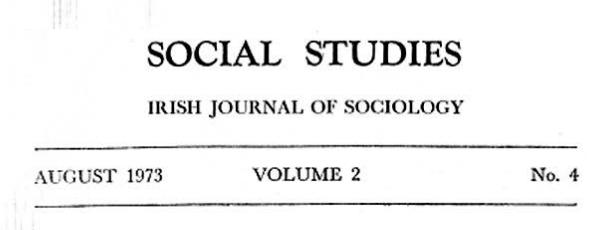
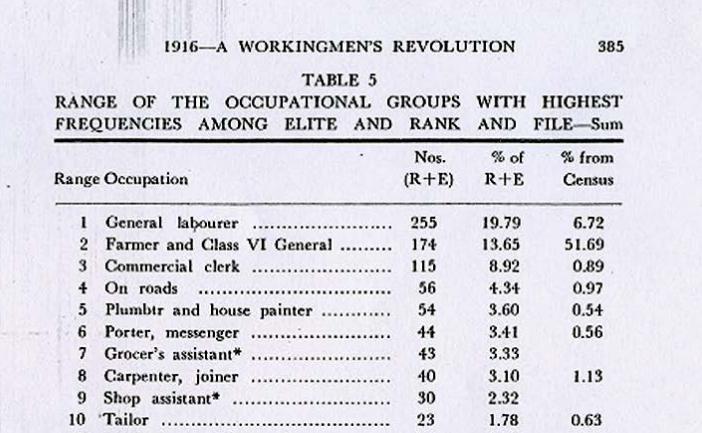
    Here’s a fascinating article from a 1973 edition of Social Studies, the Irish Journal of Sociology, which looks at the economic backgrounds of participants in the 1916 rebellion. “An analysis of those who made the 1916 revolution in Ireland”, it was compiled by Stein Ugelvik Larsen of Bergan University and Oliver Snoddy of the National Museum of Ireland.

    A link to the scanned article was first posted on The Irish Republic, website of Tom Stokes, himself the grandson of a participant in the insurrection. The site aims to spark debate around the idea of the ‘Republic’, and is timely considering the decade of centenaries we are now in!

    Below is a screenshot from the PDF to give you an idea whats inside. If you missed the link it’s at the top of this post.

    (more…)

  • Read Full Post »

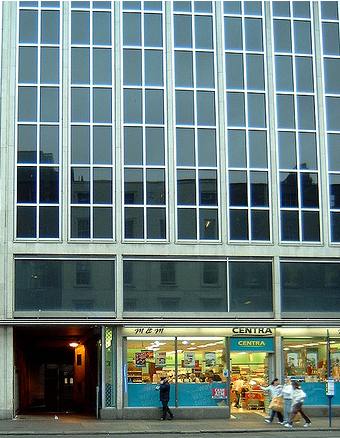
    I’ll be honest though I did know there was a lane beside Centra on D’Olier St, I didn’t know its name or quite how unique it was. Thanks to Pádraig Kelly and hXci for bringing my full attention to it.

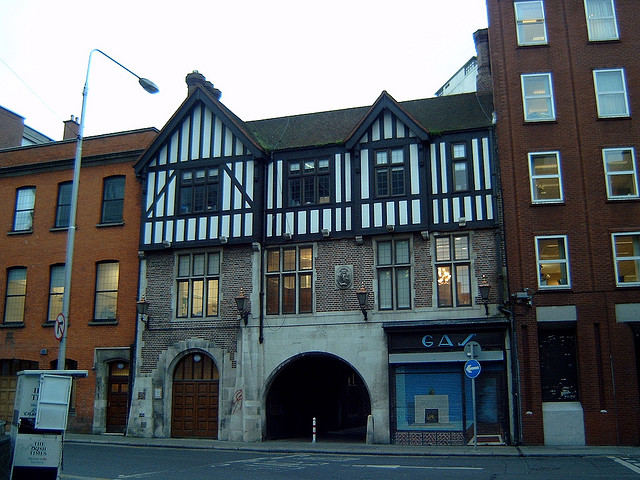
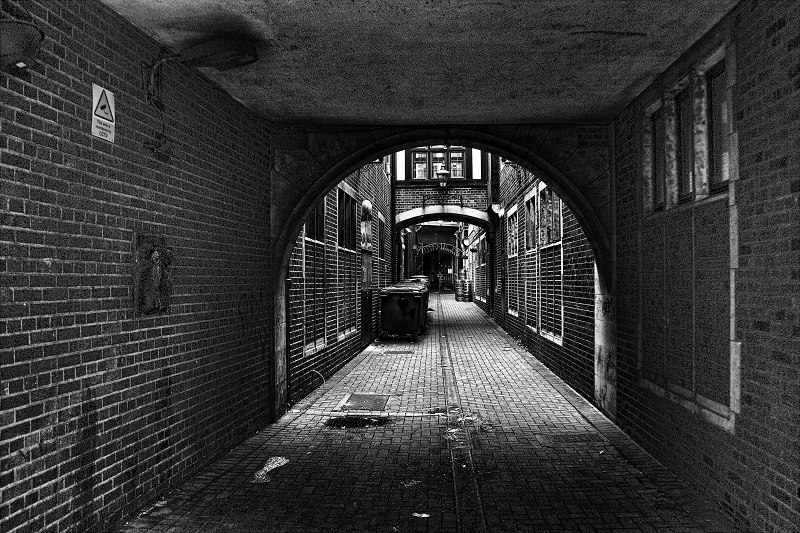
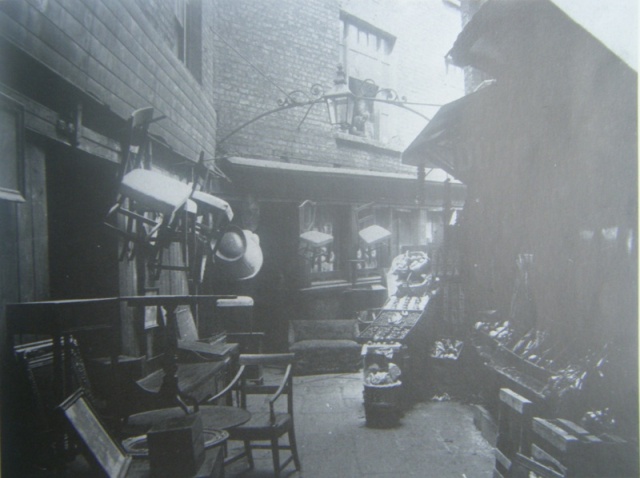
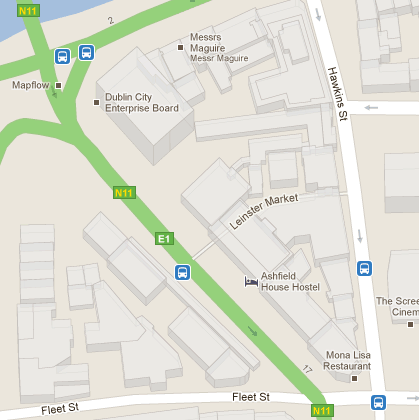
    Leinster Market is a small, covered lane that links D’Olier Street and Hawkins Street. It was described by in J.T. Gilbert in 1861 as a ‘quaint, narrow old passage, which has very little light even in its open parts, and at either end has to burrow under the first floors of houses that lie right across the way’.

    D'Olier St. entrance to Leinster Market. (Photo credit - Matthew S.)

    Hawkins St. entrance to Leinster Market. (Photo credit - Matthew S.)

    Interior:

    Inside view (Picture credit - Brian, Pix.ie)

    In the unforgetably named ‘History of the City of Dublin: from the earliest accounts to the present time : containing its annals … to which are added, biographical notices of eminent men … ; in two volumes, illustrated with numerous plates, plans, and maps, Volume 2′ published in 1812:

    Leinster Market has been erected within these few years in the vicinity of Carisle Bridge, and leads from Dolier Street to Hawkins Street, through the new buidlings. It is entered by a handsome iron gates, the passages are flagged, and the whole kept perfectly safe and clean. As yet but five of its stalls are occupied for the sale of meat.

    On June 09 1953 Miss Bridget Greene an assistant at Skeffington’s confectioner shop in Leinster Market was held up by three youths. One of the gang ‘asked for ice cream’ while another ‘grabbed a mineral water bottle’ and struck her over the head with it ‘in an attempt to reach the till’. Though ‘stunned’, Miss Greene managed to set off a ‘special burglar alarm’ and the youths made off in the direction of Hawkins St. It was reported that this was the third occasion in the last three years in which attempts had been made to rob the till during the day.

    On Nov 3 1969, cylinders of gas and drums of diesel oil exploded in a storage building in the alley off Leinster Market. The fire was put out in fifteen minutes.

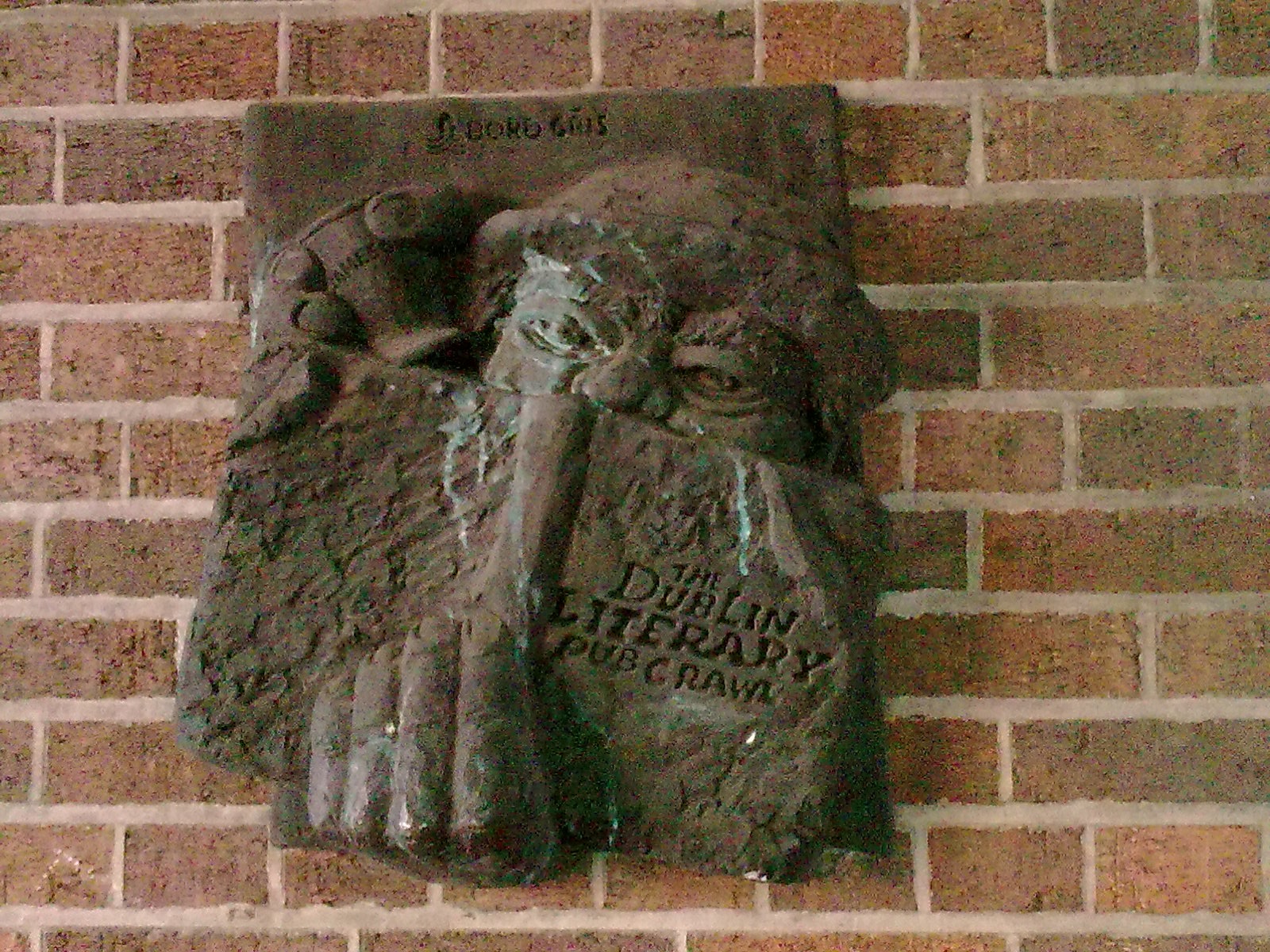
    In 1993, a bronze plaque, of an ‘old guy reading a rumpled up book’, was erected in the lane by the Dublin Literary Pub Crawl to celebrate the characters who use Leinster Market – ‘the gougers, the bus drivers going in for a smoke, and the people walking through’.

    Plaque, Leinster Market. (c) Jay Carax

    Leinster Market throughout history:

    Leinster Market. Late 19th century?

    Leinster Market. Early 20th century?

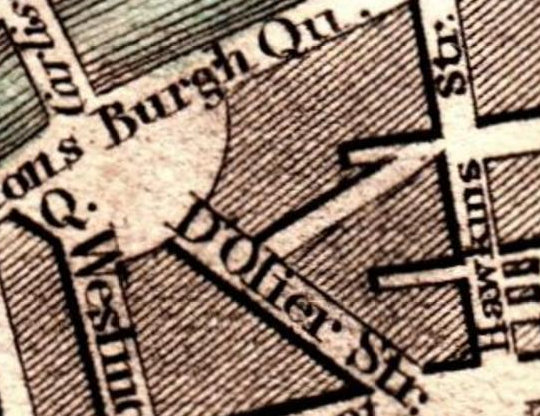
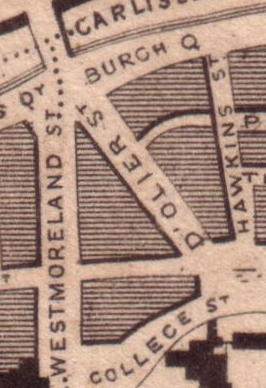
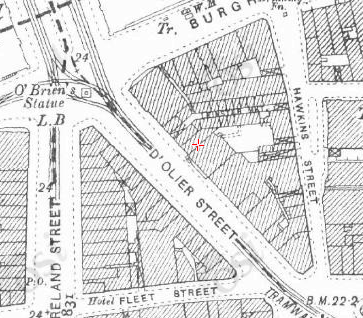
    Mapping the lane’s history:

    1836

    1848

    c1907

    2011

    Read Full Post »

    10. Skippers Alley

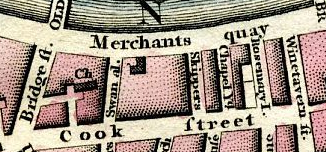
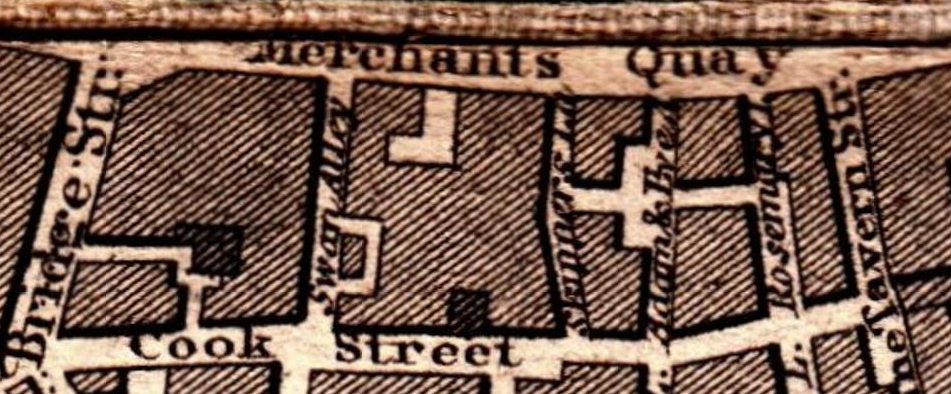
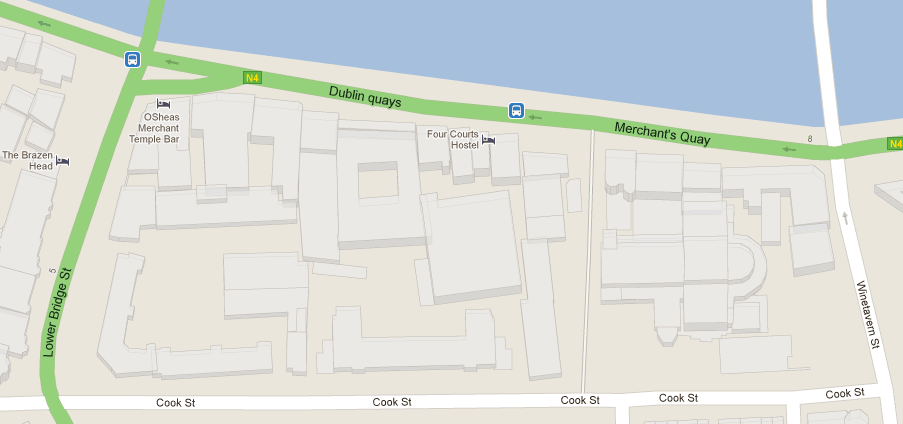
    Between Lower Bridge Street and Winetavern Street, four alleyways used to extend from Merchants Quay to Cook Street,  now only one, Skippers Alley, can be traced today in the modern landscape.

    From 1798:

    Lower Bridge St.

    |Swan Alley| |Skippers Alley| |Chapel Yard| |Rosemary Lane|                 

    Winetavern St.

    1798

    Things looked the same in the middle of the 19th century, though the Chapel Yard has been renamed Adam & Eve (after the tavern and then church situated there):

    1836

    Today, only one of those four remains – Skippers Alley and it can be seen on Google Maps (just before the ‘M’ in Merchants Quay) It’s quite unusual that Google Maps included such as nondescrript lane, they usually don’t.

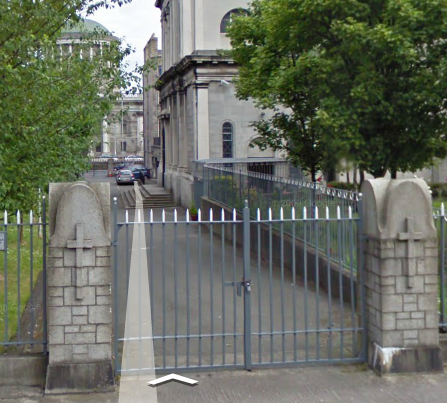
    The (locked?) entrance to Skippers Alley from Cook Street:

    The view from the Merchant Quay side. It doesn’t look like much of an alley anymore:

    Rosemary Lane used to be a continuation of St. Michael’s lane. What ever happened to it? I’m not sure. No doubt it was redeveloped at some point. A little bit on its history:

    A passage extending from the north-eastern side of Cook-street to the Merchants’ Quay, is styled in a lease of 1403 “Lovestokes-lane,” a name subsequently changed into “Longstick-lane,” and “Woodstock-lane;” but from the early part of the 17th century this locality has been generally known as “Rosemary-lane.” The “Golden Lion” is noticed in Rosemary-lane in the reigu of James I., and in the middle of the last century there was standing in this lane part of the wall of an old cagework house, over the door of which, cut in timber, were two escutcheons, and between them the date of 1600 (J.T. Gilbert, A History Of The City of Dublin, 1861)

    Read Full Post »

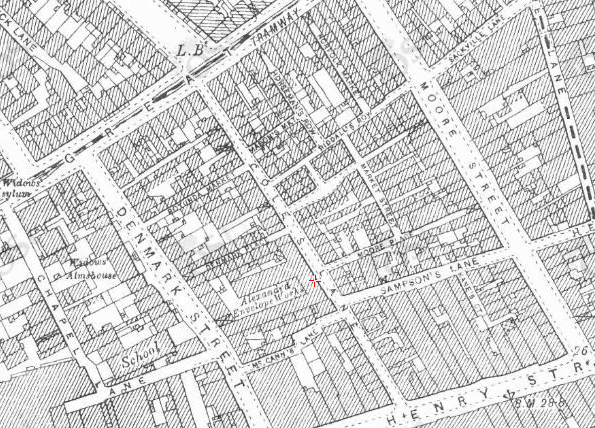
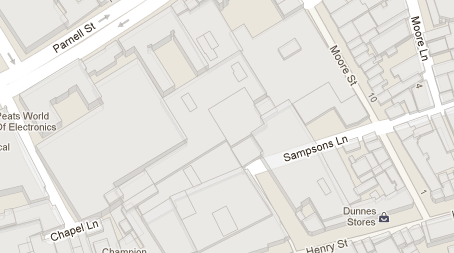
    Once connected Chapel Lane & Sampsons Lane’s relationship was ended forever, in the late 1970s, with the construction of the Ilac centre.

    This development also saw the destruction of a whole host of streets and lanes: Norfolk Market, Horseman’s Row, Mason’s Market, Riddall’s Row, Market Street, Moore Place, Coles Lane, Rotunda Market, Denmark Place, Kanes Court and most importantly Denmark Street which used to be a continuation of Liffey Street.

    What the area used to look like in the early 20th century:

    Today, only half of Chapel Lane & Sampsons Lane survive:

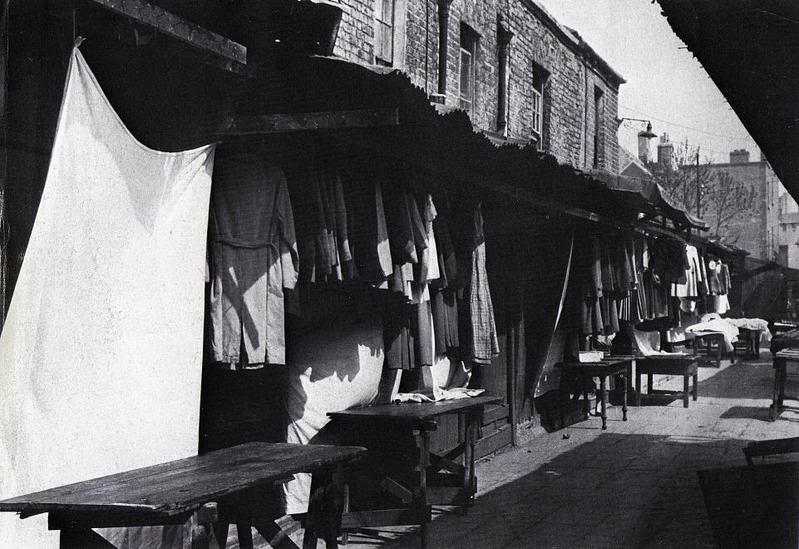
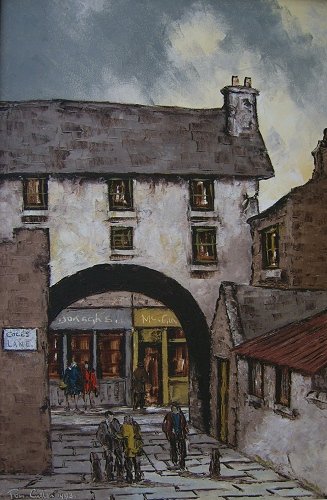
    Between Denmark St. and Moore St, there used to be Coles Lane:

    Coles Lane, 1950s. (Picture - Rashers)

    Coles Lane, nd. (Tom Cullen)

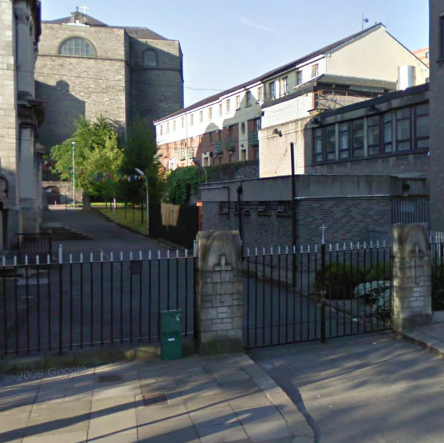
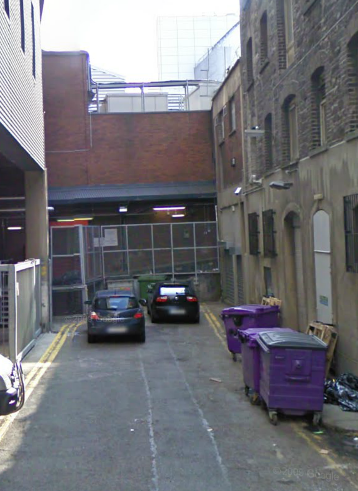
    Looking down what’s left of Sampsons Lane today:

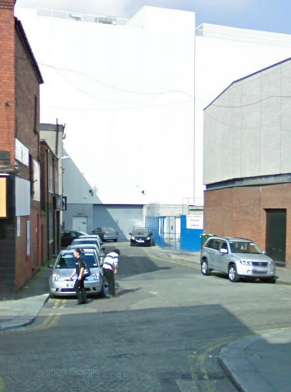
    From the other side, looking at where Chapel Lane has been cut off:

    I don’t think any other shopping development in the city centre (e.g. Stephens Green S.C. and Jervis St. S.C.) ‘redeveloped’ an area so traumatically as the Ilac Centre which led to the disappearance of at least eleven streets and lanes.

    Read Full Post »

    A lovely series of lanes just off O’Connell Street.

    Today it looks like this:

    As you can see O’Connell Street, Cathedral St., Thomas Lane and Cathal Brugha St. form a sort of rectangle. This was not always the case.

    This map from 1907 shows that Cathal Brugha St. is a relatively newly laid out street and that before that Findlater Place used to connect with O’Connell Street. On the other hand, Cathederal St. and Thomas Lane remain unchanged.

    Findlater Place was known as Greggs Lane (until 1881) as this map from 1848 shows:

    Looks the same going back to 1818:

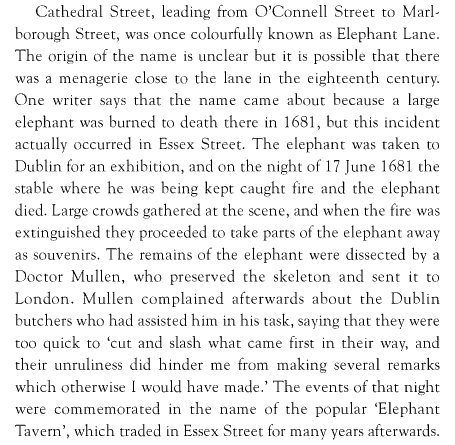
    How did Elephant Lane get its unusual name? Frank Hopkins, in the ever wonderful Rare old Dublin: heroes, hawkers & hoors (Dublin, 2002) speculates:

    p107

    Elephant Lane became Tyrone Place in 1870 before being renamed as Cathedral St. in 1900. The view from O’Connell Street today:

    One view of relatively ugly Thomas Lane:

    ”]

    Read Full Post »

    « Newer Posts - Older Posts »