Feeds:
Posts
Comments

Archive for the ‘Dublin History’ Category

I’m pleased to announce I’ll be one of the panelists for the upcoming History IrelandHedge School
on the Animal Gangs of the 1930s. The Hedge School will take place at the NLI on Thursday, October 13 with a 7pm start. According to the NLI site, no booking is required.

I’ve discussed the Animal Gangs in the past on the Moncrieff Programme for Newstalk and 1930s Dublin is something we’ve dealt with frequently here in the past. I will post the finalised panel soon and more information as I get it.

The so-called ‘Animal Gangs’ are a staple of Dublin folklore, remembered by some as Robin Hood figures who protected the poor, or as brutal thugs whose nickname reflected their savagery. The story of the Animal Gang sheds light on the social history of inner city Dublin in the 1930s, when some of its inhabitants came to the attention of both paramilitaries and the police, and ended up passing into urban legend.

Read Full Post »

The Daniel O’Connell statue on O’Connell Street is undoubtedly the grandest statue in our city centre, commemorating ‘The Liberator’ O’Connell and standing at the top of what was once Sackville Street in a Dublin gone. The statue of O’Connell himself dates to 1882, the work of John Henry Foley, and boasts some revolutionary bullet holes on close-inspection.
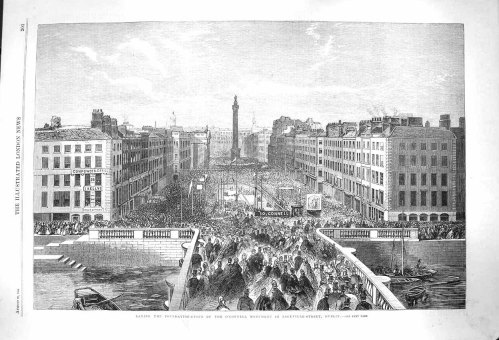
Granite foundation stone laid for monument in 1864

On the day of the laying of the foundation stone in 1864, the Lord Mayor of Dublin Peter Paul MacSwiney told the crowd of thousands that:

The people of Ireland meet today to honour the man whose matchless genius won Emancipation, and whose fearless hand struck off the fetters whereby six millions of his country men were held in bondage in their own land….

It is of course a great irony that O’Connell’s monument should contain the bullet-holes of Easter Week 1916 as it does, with O’Connell a constitutional nationalist opposed to the use of violence to bring about political ends. This statue quite literally saw Irish nationalism move from a constitutional movement to a insurrectionist one, when it found itself caught between the sniper fire of Sackville Street and the rooftops of Trinity College Dublin. One wonders what O’Connell would have thought of James Connolly, one of the leaders of that rebellion, giving the title A Chapter of Horrors: Daniel O’Connell and the Working Class to a chapter in his excellent Labour in Irish History!

Yet it is so often forgotten today that while Irish republicans put bullet holes into this great statue, Irish loyalists almost done away with it. On December 27 1969 an explosion at 4.30am damaged the statue representing the ‘Winged Victory of Courage’. This attack was later claimed by the Ulster Volunteer Force.

The figure of Courage in the statue ironically contains a bullet hole of Easter 1916 itself. She is shown strangling a serpent, with her left hand resting on a fasces. In the breast of this figure perhaps the bullet hole the most Dubliners are familiar with is found!

The explosion rocked the capital, with one taxi driver telling The Irish Press “the whole car and the bridge seemed to shake with the explosion. It was one tremendous wallop and then the crash of glass almost together.”

Incredibly, days following the bombing of the monument, an explosion would occur at Ship Street near Dublin Castle, neat to detectives HQ. It has stressed in media reports it was believed no connection existed between these explosions, yet reports into this explosion in the Irish Independent noted that:

A phone call received at Independent House on Saturday night named three of the five Belfast men who, the callers said, were responsible for the monument explosion. The anonymous caller said the men were all members of an illegal organisation and that two of them were explosives experts and ex-army sergeants who had been discharged three months ago from the Royal Rangers for suspected political activity.

The bombing of the O’Connell monument was not the first attack on an Irish nationalist monument in the south by Ulster loyalists, nor was it to be the last. Wolfe Tone’s grave at Bodenstown had been attacked too, the irony of northern protestants attacking the graveside of a leading United Irishman lost on many at the time. Later, in 1971, an explosion would destroy the Wolfe Tone statue at Stephens Green. Newspaper reports noted that “the statue was wrecked, leaving only the base. Huge slabs of the bronze sculpture were hurled 20 feet in the air.”

The attacks on O’Connell and Tone are interesting as much has been written on statues from the other political tradition which were attacked and destroyed in Dublin, but little is said of the attacks on Irish nationalist icons. It is undeniable attacks on monuments like the King William of Orange statue on College Green, Nelson’s Pillar, Lord Gough’s monument in the Phoenix Park and others represented a dangerous sort of cultural warfare, but it should be remembered loyalists too engaged in such attacks. Dublin is fortunate many lives were not lost while this dangerous game was being played over the iconography of the Irish capital.
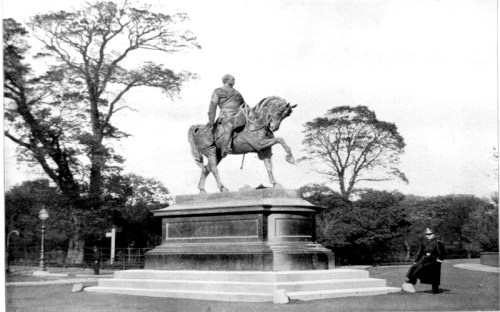
Lord Gough, one of those no longer with us.

Read Full Post »
Johnny Mallon (aka Johnny Eagle, born 1928) set up Dublin’s first modern tattoo parlour in the early 1960s.

Johnny Eagle Snr. pictured in The Irish Press (April 07 1961)

His father and his uncle were both tattooists. One of eleven children, two of his brothers moved to Britain where they also became involved in the tattoo business.

Johnny Eagle’s first shop was on Earl Street off Meath Street. He later moved to 82 Capel Street.

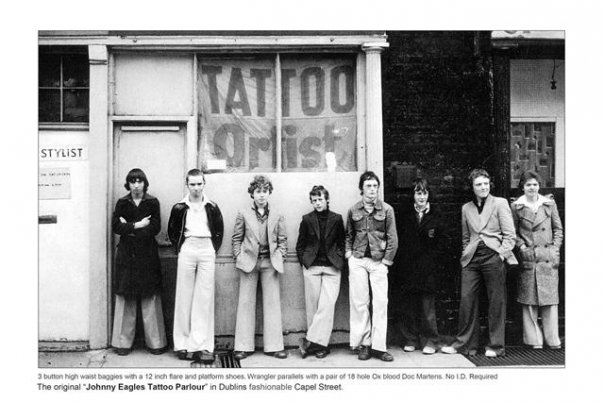
Skins and Bootboys waiting outside Johnny Eagles on Capel Street. Early 1970s?

In the early 1980s, Johnny Eagle’s son, Johnny Jr., started work with him in the parlour. He is now a well-known and respected tattooist on an international scale.

As it looks in 2011. (c) Monosnaps

Himself and his partner Mary opened up a second parlour at 1-2 Eden Quay in 2009.

Read Full Post »

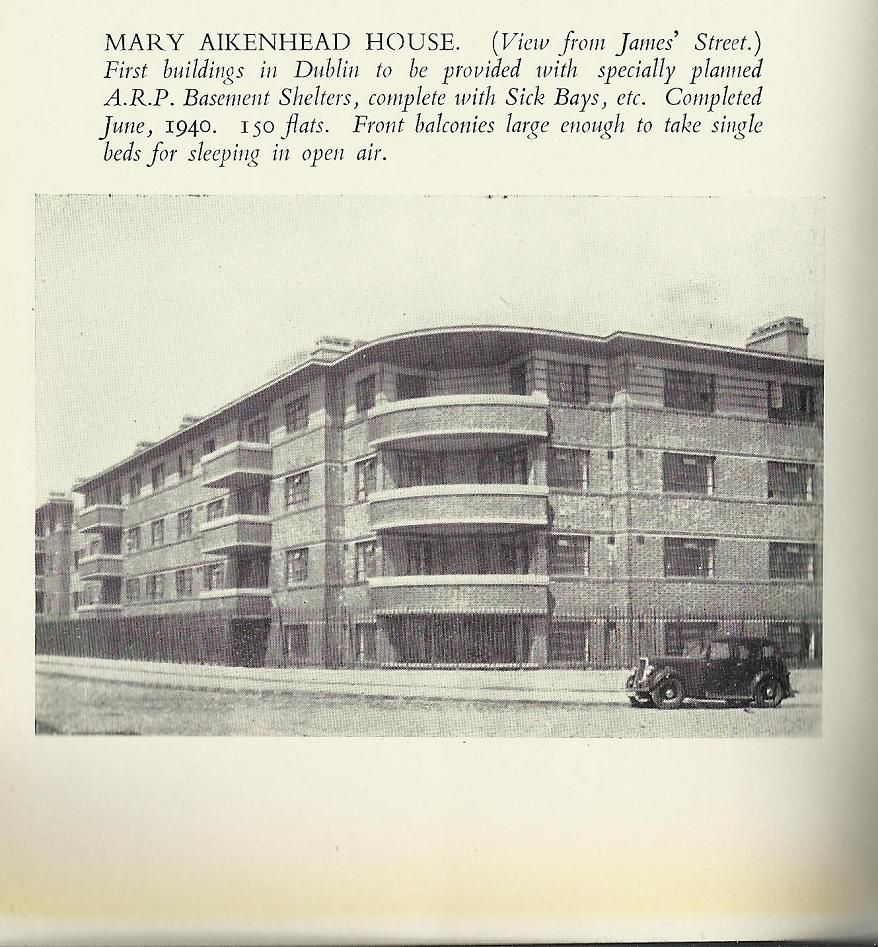
Mary Aikenhead House (1940)

Recently we picked up a copy of the Lord Mayors Guidebook for the year 1942. It’s a piece likely to appear here time and time again, a treasure trove of classic Dublin advertisements, history, war-time precaution and more besides.

One of the real gems comes from an article entitled The City’s Housing Records. The piece notes that ‘since the Housing Acts of 1931 and 1932 became law not less than 17,000 new dwellings have been built within the city boundaries by the Corporation,by Public Utility Societies and by private enterprise’.

The below piece on Mary Aikenhead House is fascinating. It notes that the buildings were the first in the city to be provided with specially planned Air Raid Precaution basement shelters. Did any other flat complexes follow? Are the A.R.P shelters there to this day? Notice too that the front balconies are said to be “large enough to take single beds for sleeping in open air”, a reference to the T.B problems of the day?

Read Full Post »

Making our way from a house party in Rialto to Ruta Live for daytime tunes on Sunday afternoon, the ever enlightening Paul V. and Davey brought me down to Ormond Square to see a plaque to Johnny Giles that I did not know existed.

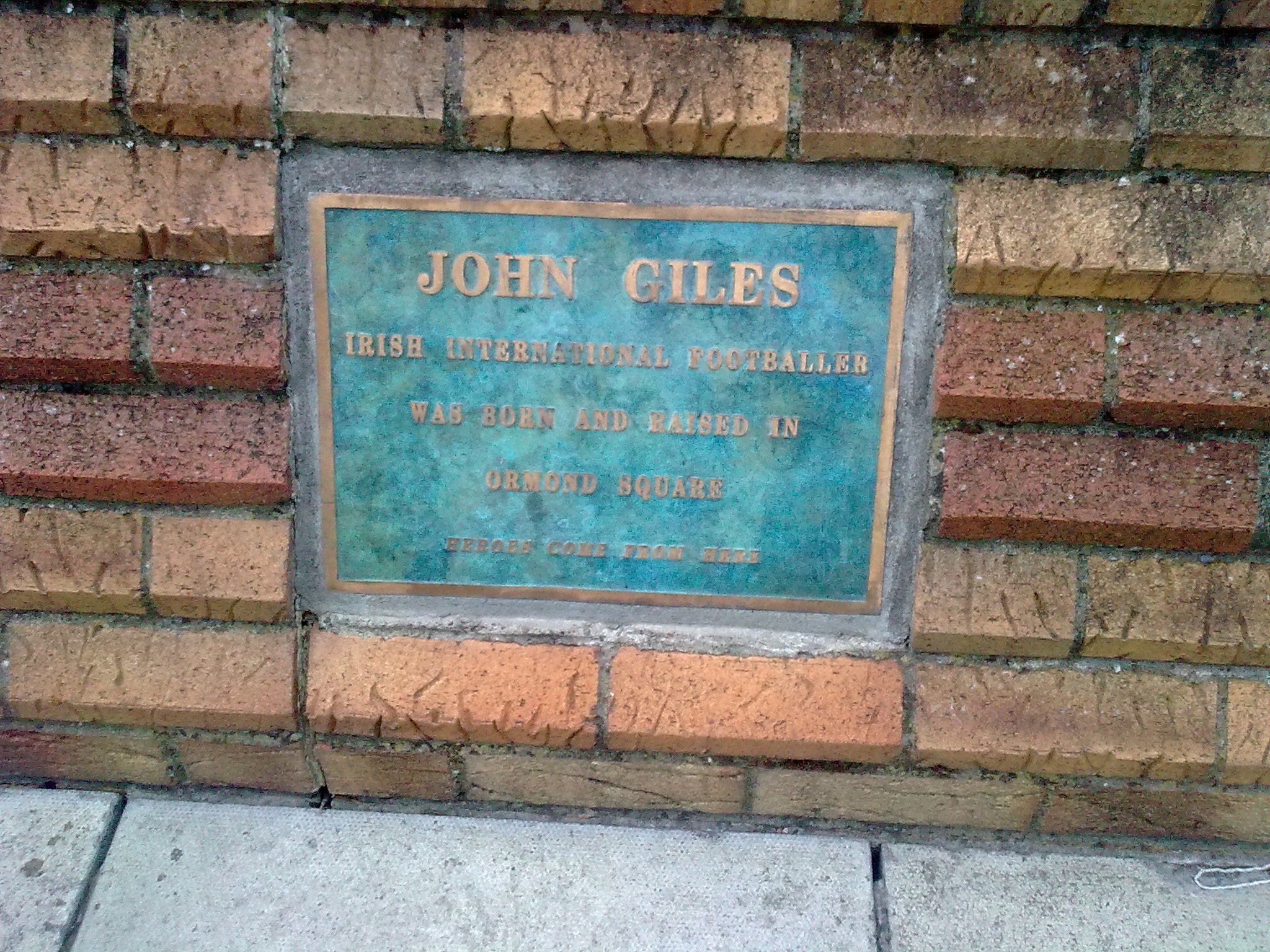
The plaque itself is concealed in a low wall, opposite the house he was born in, and you would certainly miss it if you were not looking. The web tells me it was unveiled in July 2006.

All the time we were in Ormond Square, a bunch of young kids were playing football on the same green which was great to see.

Giles plaque, Ormond Square. (c) Jay Carax

Read Full Post »

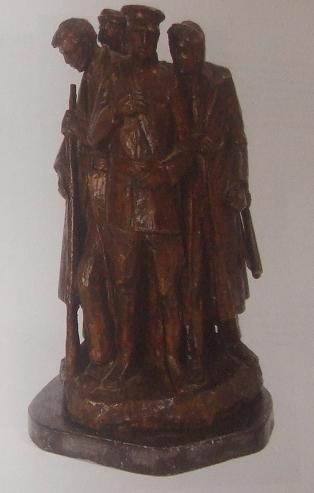
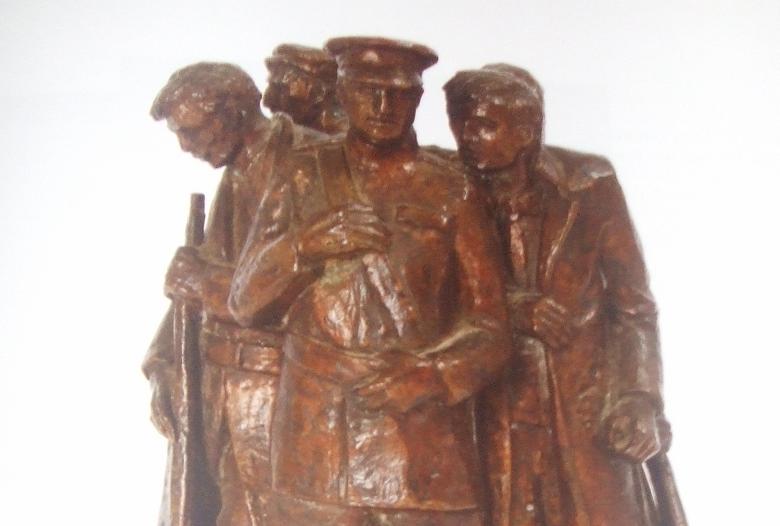
Flicking through the old Adams & Mealy’s annual Independence auction catalogues, I was taken aback to find this wonderful piece from 2008. Valued at €18,000 to €25,000, ‘The Flying Column’ was a original heavy bronze Maquette for a statue which was designed to be placed on O’Connell Street.

This was, to quote the items entry in the catalogue, a statue designed by the sculpture Brid Ni Rinn to commemorate the War of Independence, submitted into a competititon which was later sadly cancelled.

The entry notes that ‘The individual figures are types, not portraits…The leader or captain of the group was not envisaged as anyone in particular, but it is easy to see the inspiration of Michael Collins.’

Spot Michael?

It reminded me of the wonderful statue in Roscommon from 1963 to local Volunteers there, interesting to think this could be standing in the spot home to the spire today!

Read Full Post »

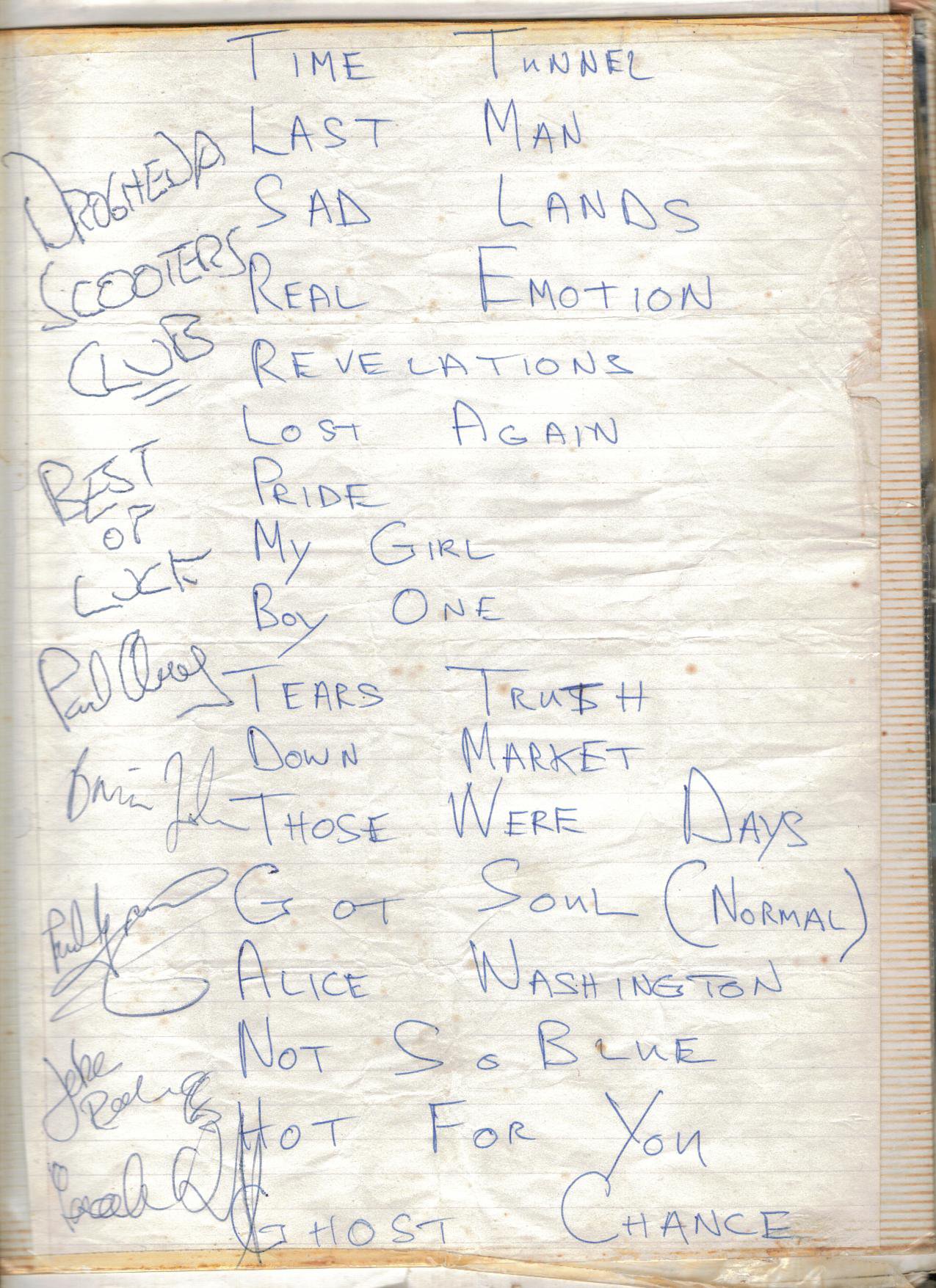
Uploaded during the week by Des Flanagan onto the ‘The Blades Fan Group’ on Facebook.

Thee Blades final gig in Drogheda was at the Boxing Club on 11th Jan 1986.

(c) Des Flanagan

If you missed it, Our friends at Fanning Sessions have uploaded a 9 song live broadcast of The Blades from April 1985. Listen to it here.

We’ve previously written about the band; Revelations (Of 45s) & The Blades Are Sharp.

Read Full Post »

I absolutely love this, a recent pick-up. It is a copy of J’ai Vu (I Saw) magazine from just after rebellion in Dublin, dated May sixth. Of course at that point in time executions were still taking place.

Great info on J’ai Vu is available here:

‘J’ai Vu’ (‘I Saw’ or ‘I Was an Eyewitness’) was somewhat similar to ‘Le Miroir’. It consisted mainly of war-related photos with a few articles. The first weekly issue appeared in November 1914, when it became obvious the war would not be over with for some time to come yet. Between August and October of 1914, publication of many French magazines was interrupted by the outbreak of war. Around the same time, new magazines, publishing almost exclusively war news started to appear.

The frontpage shows General Maxwell who supressed the rebellon in Ireland. Notice the ‘Sinn Féiner’ shown (!), and the reference to Sir. Roger Casement is interesting. Enjoy.

Read Full Post »

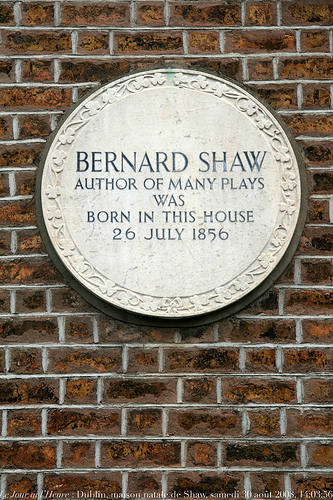
Today’s Irishman’s Diary tells the fascinating story about how the plaque on George Bernard Shaw’s birthplace on Synge Street was erected, not by the city council, but by a devoted fan and local bin man.

“The other dustman in Shaw’s life was Patrick O’Reilly, who emptied dustbins around the Synge Street area for 40 years before retiring in 1953. The following year I interviewed him for the Edinburgh magazine Chambers’s Journal.

O’Reilly’s connection with Shaw had started more than 40 years earlier when he saw Shaw’s Man and Superman in the old Rotunda Theatre. In his tiny and scrupulously clean municipal cottage around the corner from Synge Street, he showed me the tattered volume of Shaw’s plays he had taken down each day for 40 years, as well as the 26 letters and five postcards Shaw had written him.

In 1944, Dublin presented Shaw with the freedom of the city and sent representatives to Ayot St Lawrence with the roll of freemen for Shaw’s signature. Two years later Shaw celebrated his 90th birthday. The postman brought him a small present from Ireland, a little gold shamrock the Dublin dustman had bought in a pawnshop.

Back from Ayot St Lawrence came a card. “A golden shamrock!” Shaw wrote. “What a charming gift! It is on my watch-chain and it will remain there until I myself drop off it.”

In 1947, O’Reilly wrote to Shaw saying he had collected enough from his bin customers to erect a plaque to him on the Synge Street home where he was born.

Would Shaw approve the inscription, “He gave his services to his country, unlimited, unstinted and without price”? Shaw’s reply was typical. “Dear Pat: Your inscription is a blazing lie. I left Dublin before I was twenty and I have devoted the remainder of my life to Labour and International Socialism and for all you know I may be hanged yet.” Shaw then sent over a drawing showing the design he wanted for the plaque – a wreath of shamrocks in marble with the inscription mentioned above.”

The story continues here. For those interested, The Shaw Birthplace museum is open from June – August on Tuesdays, Thursdays & Saturday s from 11.00am-3.30pm.


Photo credit - Renaud Camus

Read Full Post »

Much more where these came from friends, but consider this the first in a series of posts on Punch cartoons from London in 1920, detailing Irish political affairs. I came into posession of a good sized collection of originals recently and intend to scan them up here to the site. They deal with a wide range of issues, ranging from Sinn Féin to munitions strikes, Home Rule to policing in Ireland.

(more…)

Read Full Post »

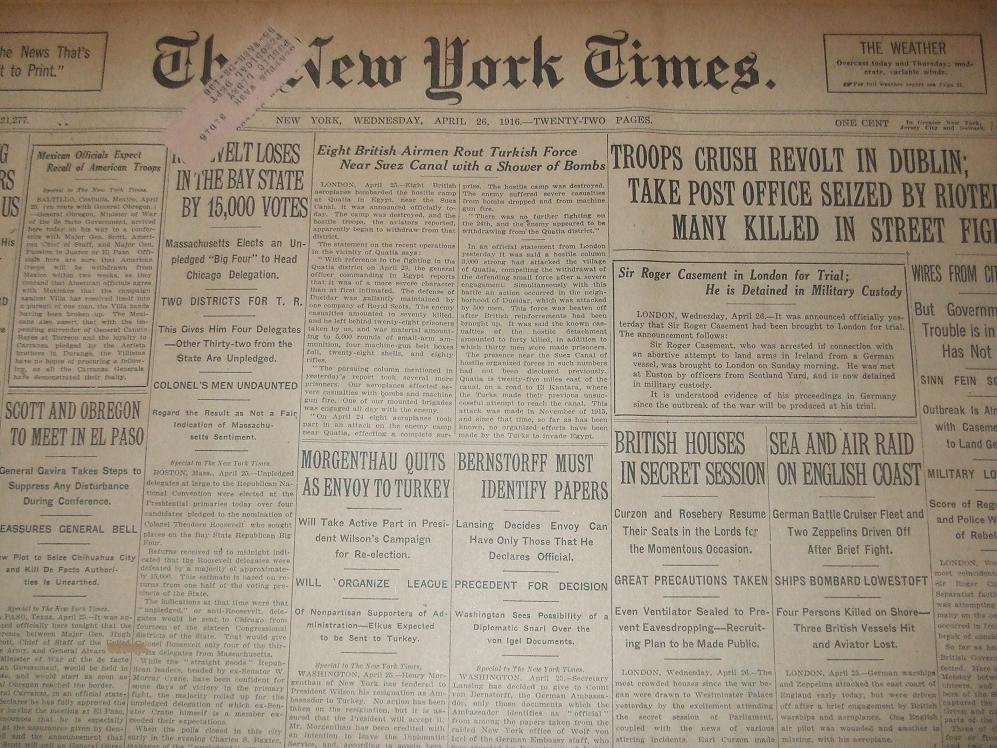
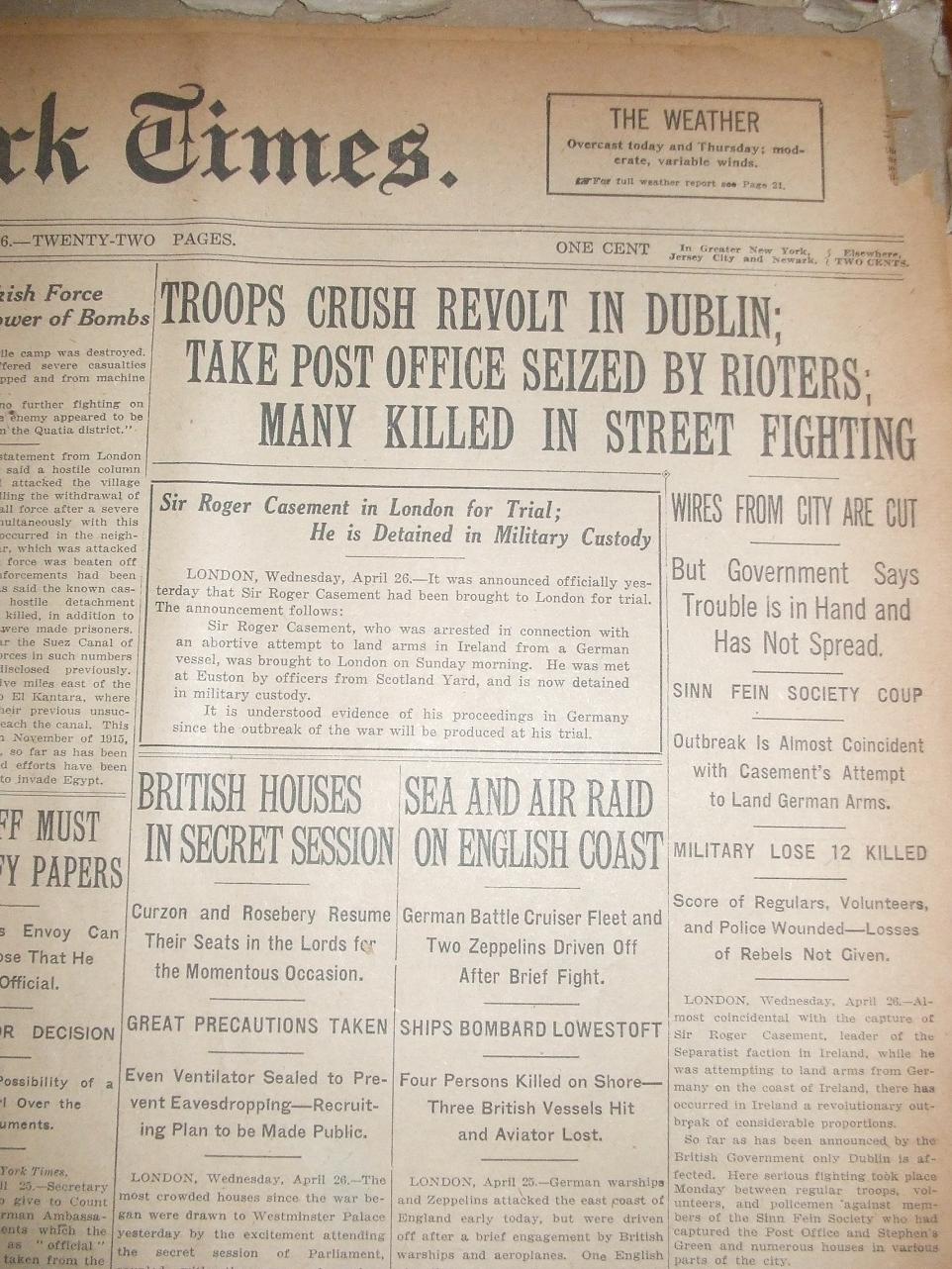
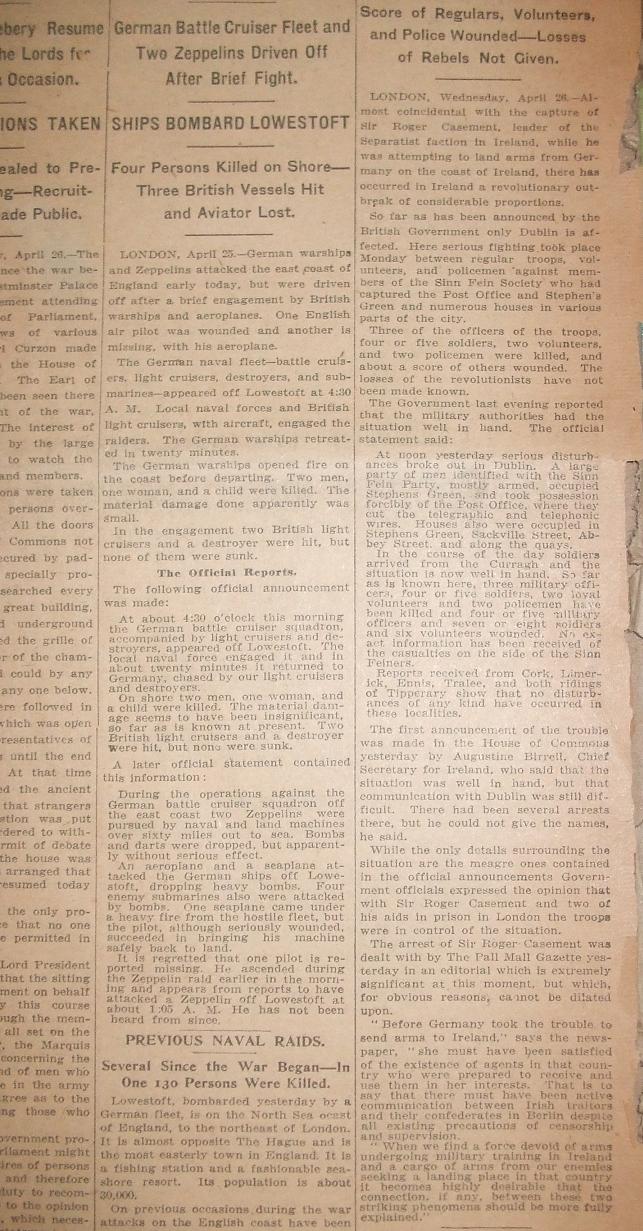
Click to expand and read. The paper is delicate as delicate comes, but I’m happy with these snaps.

Unsurprisingly, events in Dublin made the front page. The paper is framed and ready to go up on the wall, where it belongs. A great, unusual piece of history this.

Read Full Post »

os Blades?

Ken Sweeney in The Independent recently brought my attention to a mysterious (and hilarious) ‘easter egg‘ in a recent Nike football video.

The 60 seconds advertisement, which was produced to “commemorate the career of ‘O Fenomeno’, Ronaldo, in the wake of his final game for Brazil”, was uploaded onto Youtube on 07 June 2011.

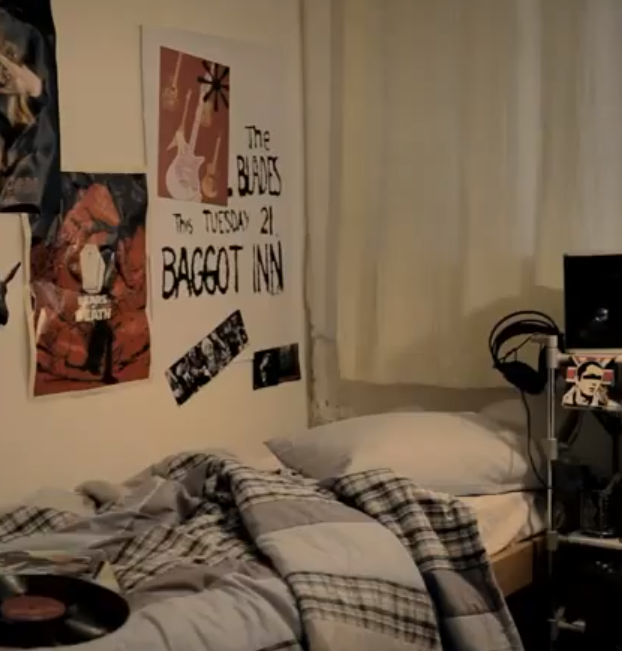
At approximately 0:35 seconds, the camera focuses on a bedroom. The decor, vinyl and retro cassette player is made up to suggest its from the early 1980s.

On the wall, beside a poster for Ironman, is a (homemade?) gig poster for The Blades playing in the Baggot Inn! If you blink, you’d have missed it.

Screengrab of the Nike ad

Now, if the advertisement was made in Ireland, perhaps, it would make a bit of sense. A nostalgic ad man wanted to slip in something Dublin/Irish for the ad that would be beamed around the world. I’d have bought that. But that can’t be the case, as it was made by an advertisement agency in Argentina!

So, perhaps it’s an ex-pat over in sunny South America slipping in it for a chuckle or perhaps it’s an Argentenian music anorak, who as Sweeney pondered, “… went to the trouble of creating a tribute to his favourite long lost Dublin band by sneaking them into…”, the promo.

I’d love to know. Answers on a postcard. (Paul Cleary himself has no idea but, as you would imagine, is “intrigued” by the whole thing!)

Either way, fair play to the gentleman or lady behind it.

Added bonus: Our friends at Fanning Sessions have uploaded a 9 song live broadcast of The Blades from April 1985. Listen to it here. This is the first live stuff I’ve heard of the band. Been a long time waiting.

We’ve previously written about the band; Revelations (Of 45s) & The Blades Are Sharp.

Read Full Post »

« Newer Posts - Older Posts »