Edit: RIP Phil. A true gent. x
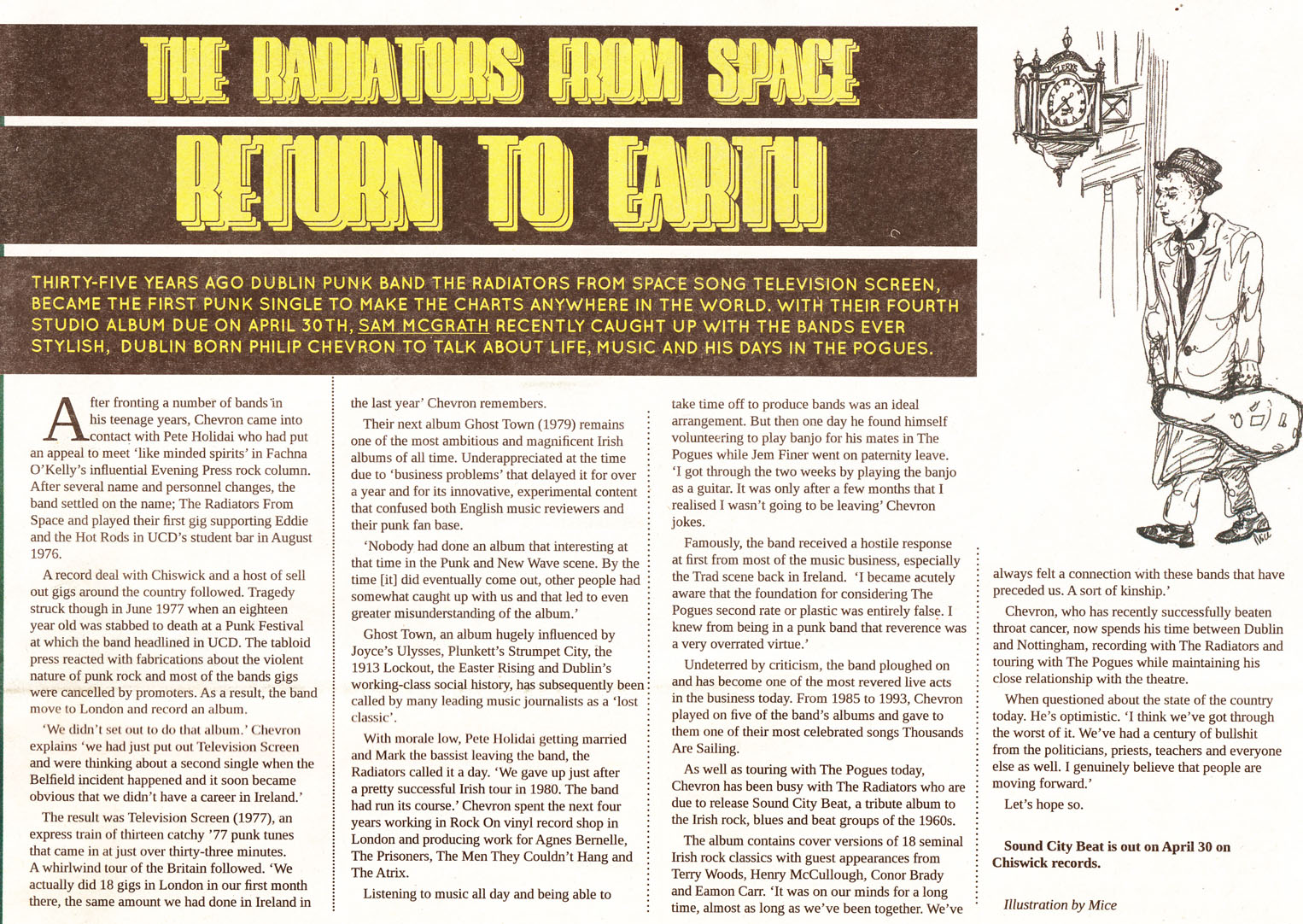
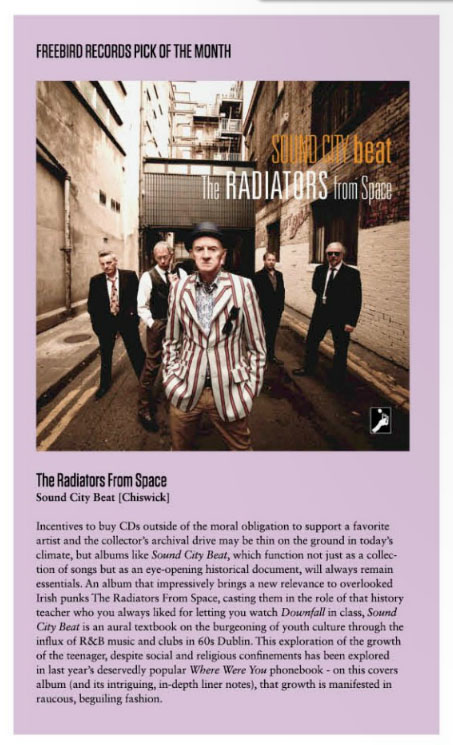
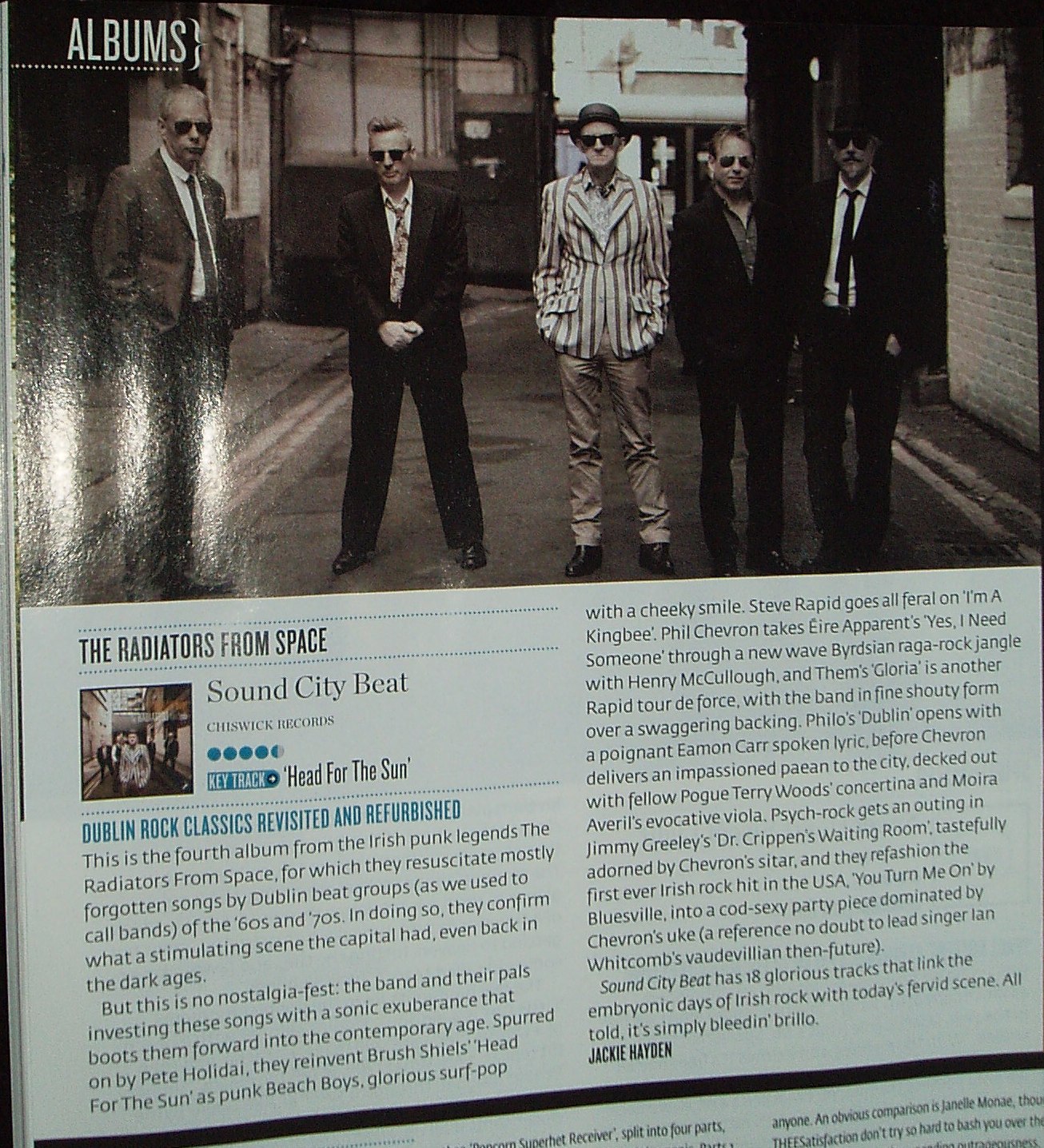
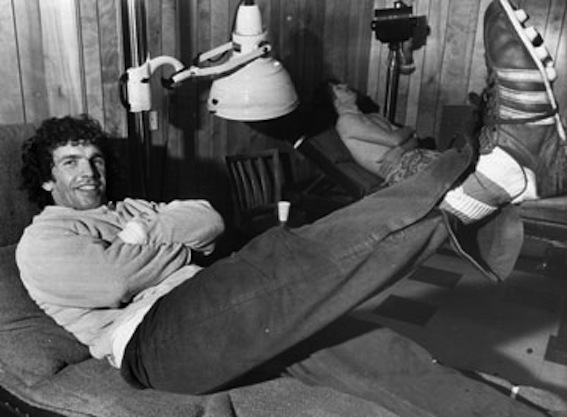
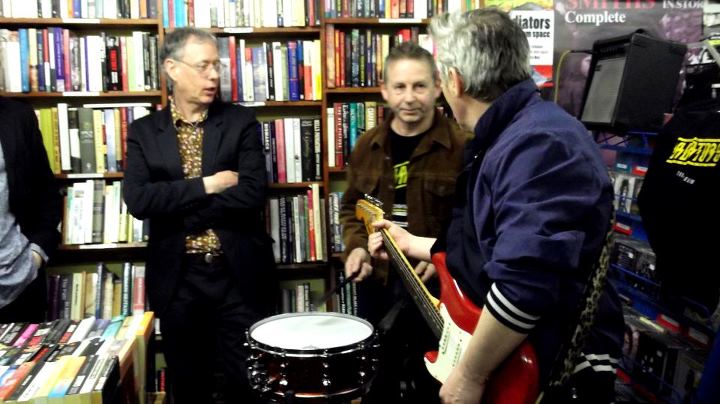
This year marks the 35th anniversary of The Radiators from Space’s first single Television Screen. It’ll also see the release of their fourth studio album, Sound City Beat. As such, I thought it would be no better time to sit down and have a chat with lead singer and songwriter Philip Chevron. In my opinion, one of the greatest songwriters ever to come out of our fair city. A shortened version of the following was printed in the latest issue of Rabble, here is the full thing…
Were your parents from Dublin?
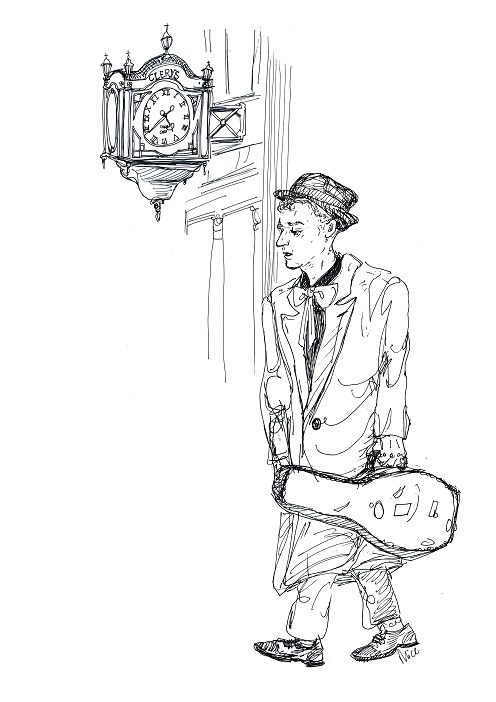
Yep, both inner city kids. My mother was from the Liberties, hence the Hugeunots. A lot of them ended up in the Liberties … as artisans and tradesman. My Dad was from Ballybough. So basically they were North and South inner city. Absolutely dyed in the wool Dublin, going back several generations. My father’s mother was from Drogheda. That’s the only Culchie blood at all.. and that only counts as North Dublin now anyways! In my Mother’s case, her Father was a trader in Dublin Corporation Fruit Market. He traded in potatoes .. and supplied Tayto crisps. It was one of the big contracts you could get at the time. That elevated my Grandfather into the frontline of the new middle classes in Dublin. As soon as they could, they got the hell out of the Liberties and moved to Terenure. My Mother was still a Liberties girl at heart though. She loved the fact that she moved up in the world. My Father stayed in Ballybough all along. There is that strange reverse snobbishness in Dublin as well, where my mother would say, “We live in Terenure but we’re from the Liberties”.
I heard your Father’s Mother was politically active?
Yes, She was in Cumann na mBan … but I found out after she died that her view of it was that it was great way to meet fellas. There was a bit of craic involved in it, hiding the guns in the prams. Innocence that only a seventeen-year-old girl could have really. That’s probably why they got away with it. Like everybody she hated the Black and Tans and wanted to see the back of them but more than anything it was “I wonder will your man be at the dance on Saturday night”. My grandfather on my Mother’s side, the potato merchant, was one of those Dubliners who covered all angels. He was in the Knights of Colobanus, in the old IRA I think but also the Masons. People then were pragmatic. They weren’t dogmatic or ideologists, idealists maybe though. They did what they had to do. If you’re a tradesman in Dublin, you had to keep everyone happy. Strangely, in his funeral in the early 1960s, he had fifteen-gun salute from the IRA. I was like ‘what the fuck’. Nobody knew. People thought ‘well then, I guess he must have been in the IRA’. I thought well ‘they don’t take the guns out for the fun of it’. The Civil War caused such a rift in this country. It’s as solid, in its own way, as the one that still separates America. In a sense, the Irish were incapable of talking about it. I suppose we all went through our lives not talking about it. Truth is, we will never know if there were 25,000 people in the GPO in 1916.
Or to see U2 in the Dando!
Yes, exactly. I mean Lotte Lenya says about the opening night of The Threepenny Opera in Berlin – “If everybody who said they were there, were there, we’d have to tear down the theatre and build it again”.
Do you think those Civil War wounds are finally healing now? Is this the first generation that we can see that?
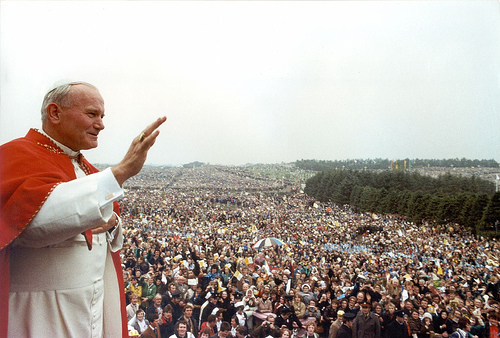
I wonder about that. Maybe the de Valera generation is dead. I don’t know. They might go away for a few years but they’ll be back. Hopefully, it is a generation thing. I know one of my uncles still praises Bertie after all this time. It’s because these family bonds die very hard. Saying that, I don’t know anyone personally under seventy who thinks like that. I think we’ve got through the worst of it. We’ve had a century of bullshit from the politicians, priests, teachers and everyone else as well. I genuinely believe that people are moving forward. It feels like people aren’t so easily prepared to take the bullshit, on face value anyway. The whole generation that came up during the time of The Radiators, not just musically but in literature, art, film and theatre, were the first to have had the courage, or the space maybe, to say, “Let’s change it! It’s crap!” It was kind of tentative because we all felt we were kind of transgressing in some deeply important way. In that we were almost being anti-Irish, anti-Catholic and anti-everything. The generation, who are now in their early 50s to early 60s, all felt individually that we were the only ones who felt this way. But when you got to meet people at The Project Arts Centre, you realised that other people were speaking the same language as you. In some ways, Geldof knocked down the last wall by saying “I’m going to talk about this – whether you like it or not”. Had we be been more aware that there was this greater movement towards change; it probably would have been a lot louder and angrier. But we also had a thing when just on the cusp of change it was ‘one step forward, two steps back’. Look at the reaction the pope’s visit in 1978. I remember thinking ‘hang on, thing’s aren’t going the right way’. Suddenly there was a while generation being named John Paul. It was strange.
I thought Killing Bono visually illustrated that quite well in that scene when the band are in the empty bar while it seems the whole of Ireland are at the Phoenix Park.
Oh yes, absolutely. I had left by then, The Radiators had moved to London in 1977 but when I came back I felt that something, albeit temporarily, had gone wrong. I was even meeting people like Agnes Bernelle who said ‘It was wonderful, you should have seen it’. I thought ‘Why the fuck are you talking about? This guy is an utter bastard. Fuck off!’ We’re hosting the Eucharistic Congress this year and things literally couldn’t be more different than the one in 1932. It will be interesting to see that in action. It will be firm evidence to show that the country has changed. To see a film of the 1932 Eucharistic Congress is terrifying, I’d rather watch the Nuremburg rallies. It feels less regenerated and more artistically valid!
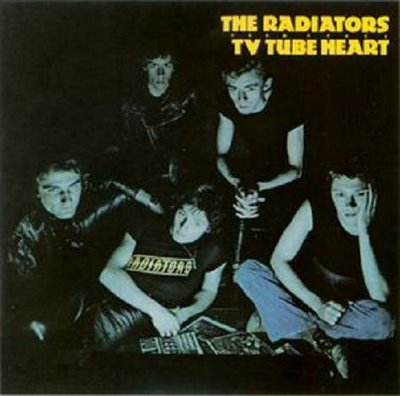
TV Tube Heart (1977)
Moving onto The Radiators first album TV Tube Heart, I thought the two trends running through it were the idea/impact of TV and the feelings of boredom/prison. Was this intentional?
First of all, regarding the aspect of television in the album. You have to understand that we were the first generation in the country to have TV introduced to us in our lifetime. We were not born with TV. Unlike say American kids. So, we had this strange phenomenon of being introduced to TV. Inevitably it had a hold on the imagination. At the time, The Late Late Show acted as a sort of ‘secular pulpit’. It genuinely opened up the doors for people to talk about things at the breakfast table that weren’t being talked abut. Suddenly, the words ‘lesbian’, ‘gay’ and even ‘atheist’ were becoming topical because of TV. But TV also reduced people. While it was freeing people, it was reducing people to commodities and units of commerce. Essentially we were saying ‘What is this fucking thing?’. It was still an object of awe. We recognised it that it helped changed Ireland in our lifetime while similarly acknowledging that most TV was crap and the whole thing with Gary Gilmore. In the sense in ‘Electric Shares’ that even execution was a commodity.

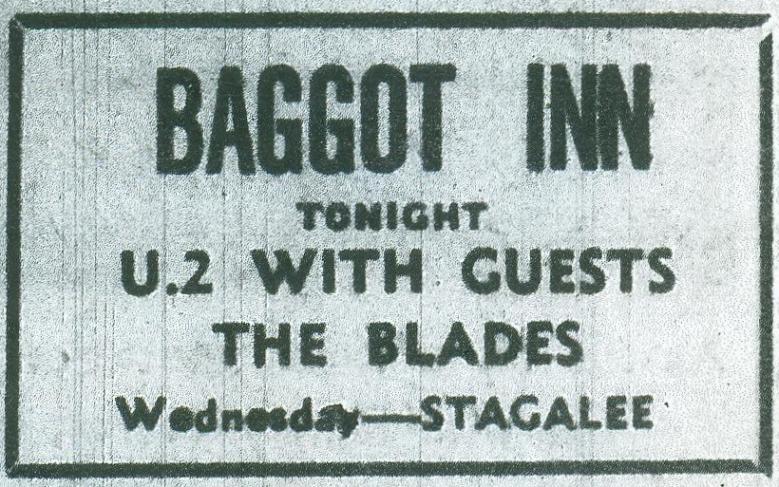
Irish Press. Oct 08, 1979
(more…)
Read Full Post »











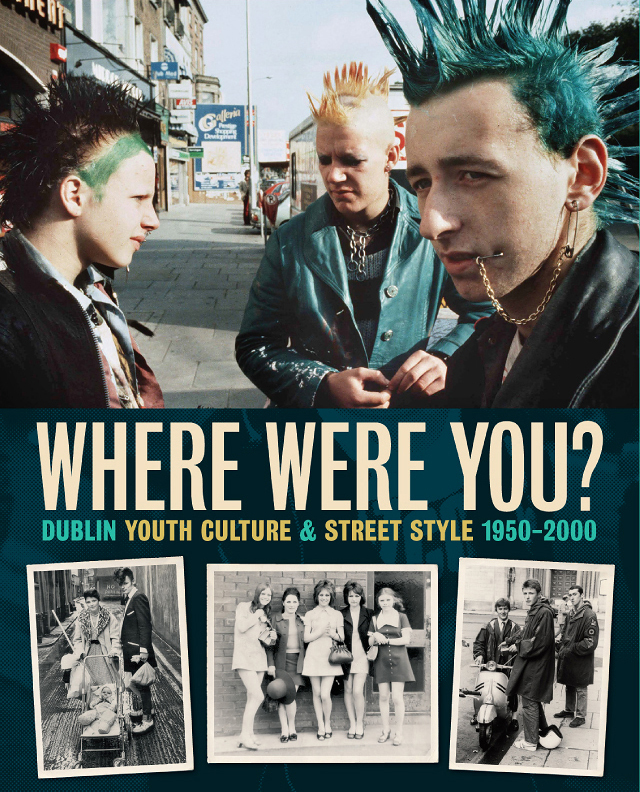

 Click on the book for more.
 Click on the book for more.


 Come Here To Me!