Feeds:
Posts
Comments

Archive for the ‘Social History’ Category

I collect old postcards of Dublin, in particular postcards of the monuments and statues of the city. It’s a cheap and cheerful hobby really, and I’ve accumulated a nice enough collection more for the love of it than anything. They go well with some posts on here, such as the ‘Statues of Dublin’ series, and they’re generally nice to look at. The city has changed in many ways of course and that is always evident. In some cases, they come with scrawled writing on the back and an indication of a former romance or the like.

Below are a few favourites from my own collection.

The O’Connell Statue.

The O’Connell Statue is surely one of the most iconic Dublin images. We featured it rather unusually on the site, by looking at the time it was bombed by Northern Irish loyalists.

Nelson’s Pillar

When Nelson’s Pillar was blown up in 1966,its head was stolen from storage by a group of students from the NCAD. It ended up in a London antique shop, under the ownership of Mr. Benny Gray. At one stage it had appeared on stage with The Dubliners at the Gate Theatre.

In September of 1966 Gray arrived in Dublin on O’Connell Street atop a lorry, with the much sought after head alongside him. He was also joined, for the hell of it, by The Dubliners folk band. The Dubliners launched into ‘Nelsons Return’, a rewritten version of their popular smash hit ‘Nelsons Farewell’, composed at the time of the explosion. He inquired to a bemused crowd through a megaphone if anyone among them was a trustee of the pillar who could accept the head, a Corporation official came forward. Mr.Gray said it was “lots of fun” having the head in his shop, but the Corporation failed to see the funny side. A spokesperson made it clear the head was not to do anymore travelling.

I recently heard Nelson jokingly referred to as Admiral Blownapart.

Gough Monument, Phoenix Park.

The unfortunate Gough monument has featured on Come Here To Me before. It was infamously bombed in 1957, leading to the emergence of a great poem, something we talk about in the post I’ve linked to:

There are strange things done from twelve to one
In the hollow at Phaynix Park,
There’s maidens mobbed and gentlemen robbed
In the bushes after dark;
But the strangest of all within human recall
Concerns the statue of Gough,
’Twas a terrible fact, and a most wicked act,
For his bollix they tried to blow off!

(more…)

Read Full Post »

Walking down Thomas Street, I couldn’t help but notice Foley’s Pharmacy’s have given over their windows to all sorts of interesting local history, including some great old newspaper reports on Bang Bang among other things. I don’t know if its only temporary or if they’ve always featured local history in their shop display window, but fair play and I certainly encourage it.

Read Full Post »

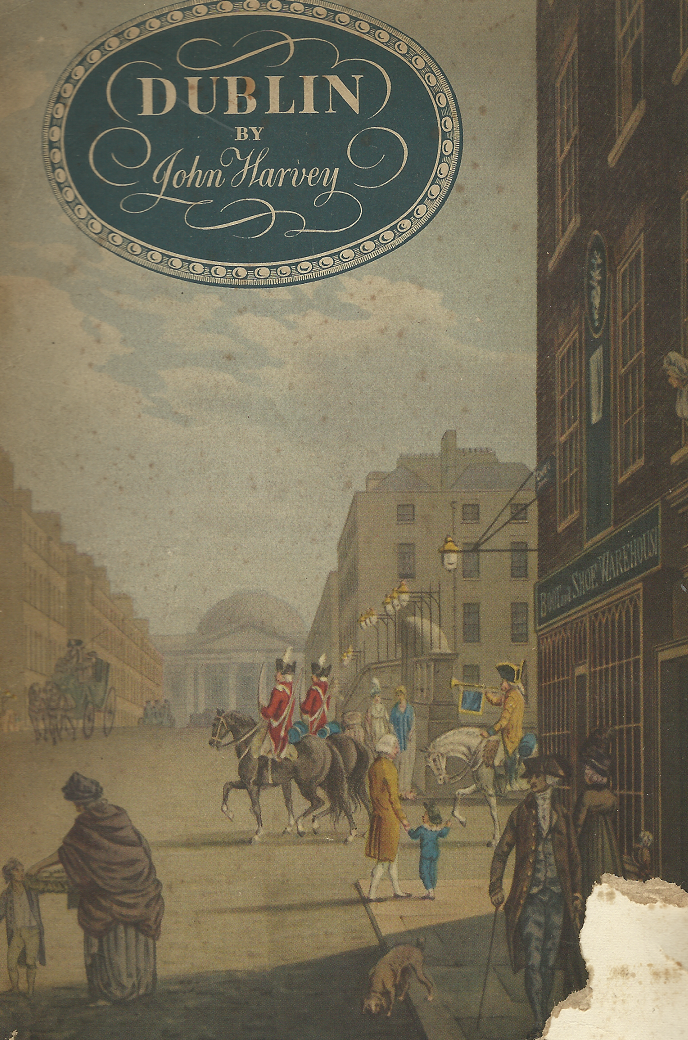
I’m a big fan of books on Dublin from decades gone by, in particular guide books or studies written by ‘outsiders’. John Harvey’s Dublin: A Study In Environment (1949) was begging me to buy it when I spotted it sitting in Chapters second hand section, and I couldn’t resist. The book comes with the endorsement of Bernard Shaw who writes “I wish it had been available when I was a youth in Dublin. To me it is intensely interesting.”

Harvey begins his work by noting that:

“Dublin is still a city almost unknown to English people, and the loss is ours. Between the mountains and the sea, it is one of the most fortunate of European capitals, and it has the enormous advantage of consisting mainly of buildings produced at the peak of its historic culture.”

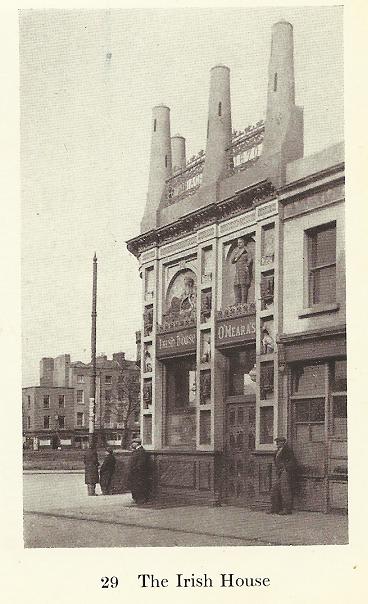
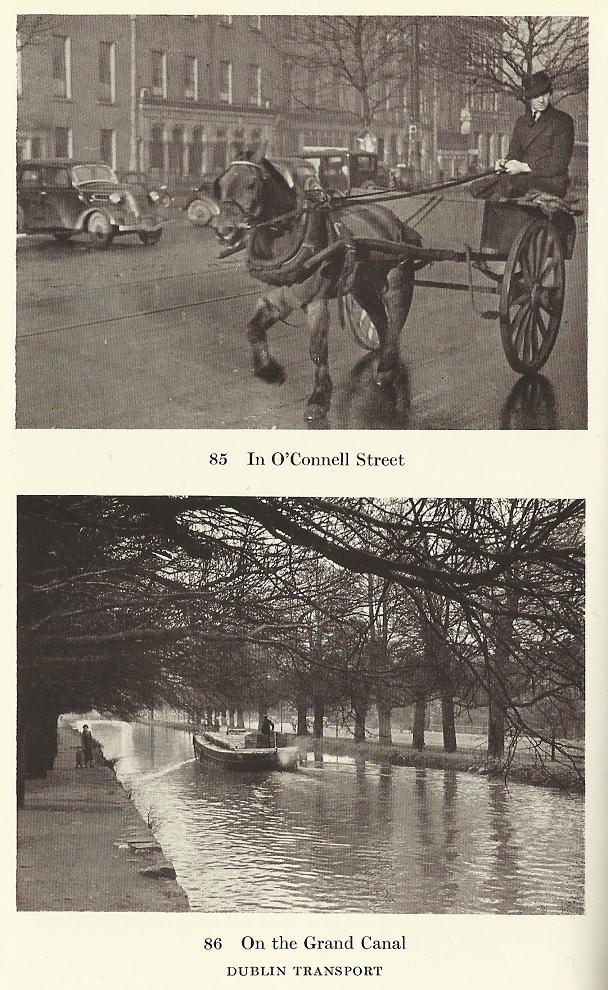
The book contains many fantastic images of the city, showing Dubliners at work as well as some fantastic buildings of the period, such as The Irish House pub at Wood Quay which is no longer with us.

Bank of Ireland, College Green.

The Irish House.

Harvey doesn’t shy away from sharing opinions among historical facts and information on sites of interest in Dublin. “Nationalism is nonsense; but it can have indirect results which do make sense” he writes, as “so far as Dublin is now both a flourishing and a promising city, it is the outcome of nationalism, building on the remains of an alien aristocratic regime.” Harvey doesn’t shy away from attacking Irish nationalists on occasion, for example taking aim at the “political hooligans” who destroyed John Van Nost’s statue of George II inside St. Stephen’s Green.

Ireland, Harvey noted, suffered from an “extremely thin-skinned moral censorship”, a censorship “so wide that the banning of books and cutting of films reaches a humorously fantastic point.”

Harvey is completely correct in his commentary on Dublin’s ancient cathedrals, noting that they were both “…subjected to the horrors of well-meant ‘restoration’, which as usual destroyed the greater part of their original character and beauty. Both buildings were in a very dilapidated state, and urgently needed repair, but the work actually done was so extensive as to be even more disastrous than contemporary work at English churches.”

Harvey writes of what he sees as the perception of the British people in Ireland, a rather damning indictment that “‘The British’ in many an Irish mouth has implications only equaled by those of les boches in France; it is one of the few sad instances where the Irish sense of humour is lost.”

Mass goers.

Refreshingly for such a study, the tenement poverty of the inner-city features, which Harvey stressing that “except for O’Connell Street and Parnell Street, practically the whole of the northern half of the eighteenth-century city is one enormous slum.”

Harvey’s book is an enjoyable read, loaded with opinion on not only Dublin and Dubliners but also the political questions of the day, and the relationship between Ireland and Britain. Batsford, its publishers, produced a series on “British Cities” in the style of Harvey’s effort, and all contained the same style of maps and in excess of 100 images.

“To an Englishman Dublin has the virtues of a foreign capital without the drawbacks: artificial animosities have not annulled the kinship which has grown up through centuries of intermarriage between the people’s of the British Isles. Dublin seems to foreshadow the qualities of a new type of supra-national city; let us have a look at her.”

Read Full Post »

Of all the legends and stories the Easter Rising produced, I’ve always taken an interest in that of The O’Rahilly. Born to a prosperous merchant family in Co. Kerry in 1875, he had a privileged upbringing and received his secondary education in Clongowes Wood College. He began studying medicine in 1893, but was forced to take a hiatus after a year after contracting tuberculosis and quit altogether after his fathers death in 1896, when he moved home to look after the family business. Not long afterwards, he sold the business and moved to the US, where he married in Philadelphia.

His next ten years were spent back and forward between the States and Ireland, and O’Rahilly and his bride, Nancy Brown, traveled Europe and Ireland extensively. They settled in Dublin in 1909 where he took up a job managing the journal An Claidheamh Soluis, later publishing the article by Eoin MacNeill that lead to the foundation of the Irish Volunteers. Despite being a founder member of the Irish Volunteers, he was not privy to the plans for the Rising, but took part in it regardless, arriving at the mobilisation at Liberty Hall and uttering the infamous line, “Well, I’ve helped to wind up the clock — I might as well hear it strike!”

The O'Rahilly around the time of his marriage to Nancy Browne

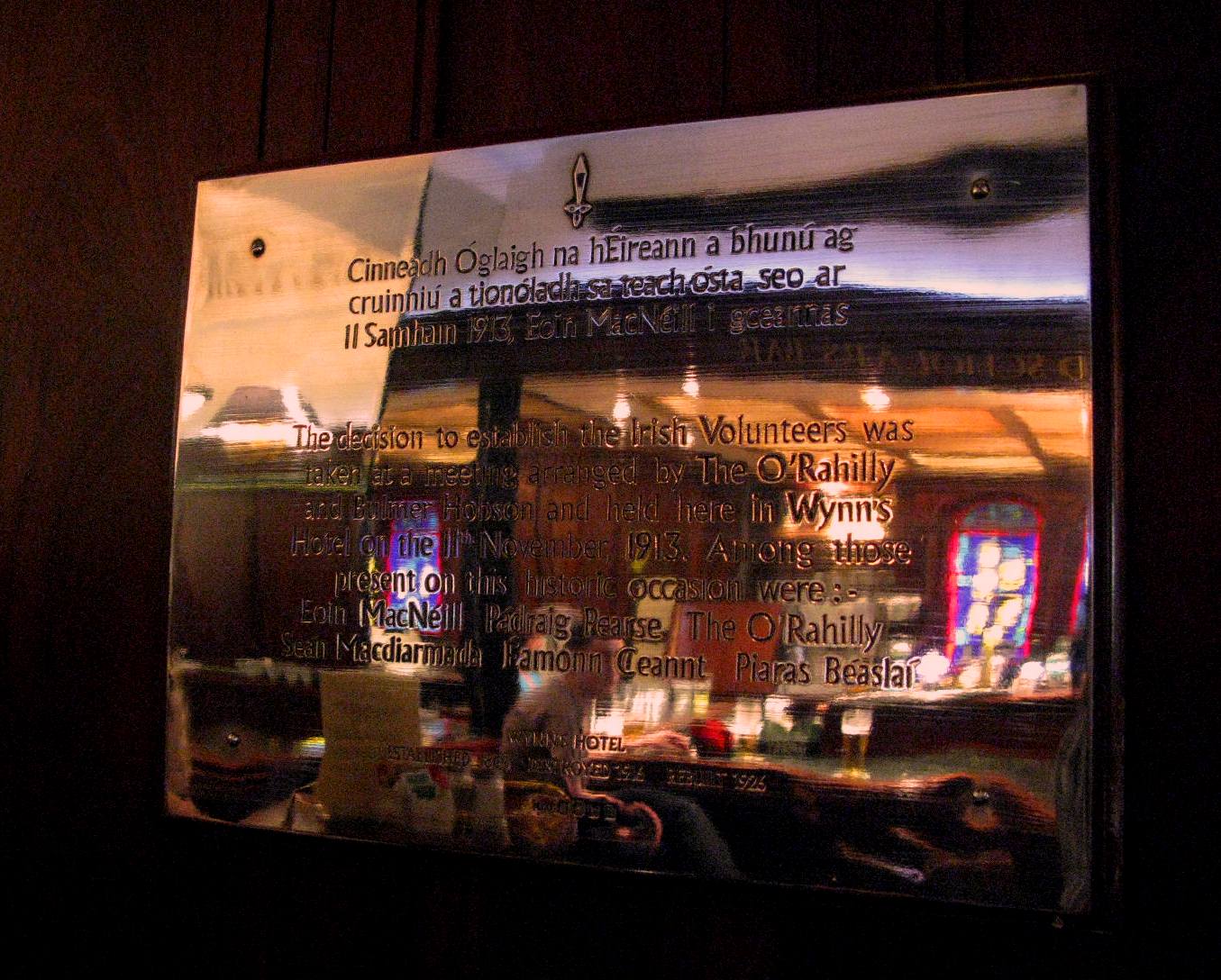
While most of the above is an ode to The O’Rahilly, and I hope to do another piece on him shortly, the subject of this piece is the plaque in the bar of Wynn’s Hotel on Abbey Street commemorating the founding of the Irish Volunteers there by The O’Rahilly and Bulmer Hobson in 1913. Hobson’s legend is that he never partook in The Rising, and was in fact kidnapped by the IRB before it in case he tried to pull the plug on it. Apologies for the quality of the picture below, Wynn’s obviously take great pride in it, and the sheen off it made it close to impossible to photograph. Inscription below.

The plaque reads:

Cinneadh Óglaigh na hÉireann a bhunú ag cruinnií a tionóladh sa teach ósta seo ar 11 Samhain 1913, Eoin MacNéill i gceannas.

The decision to establish the Irish Volunteers was taken at a meeting arranged by The O’Rahilly and Bulmer Hobson and held here in Wynn’s Hotel on the 11th November, 1913. Amongst those present on this historic occasion were: Eoin MacNéill, Padraig Pearse, The O’Rahilly, Seán MacDiarmada, Éamonn Ceannt (and) Piaras Béaslaí.

Wynn’s Hotel, Established 1845, Destroyed 1916, rebuilt 1926.

Given the weekend that’s in it, I’ll finish the piece by quoting another O’Rahilly line… When he realised the rising could not be stopped, he reportedly turned to Markievicz and said “It is madness, but it is glorious madness.” Hopeless romantics the lot of them.

Read Full Post »

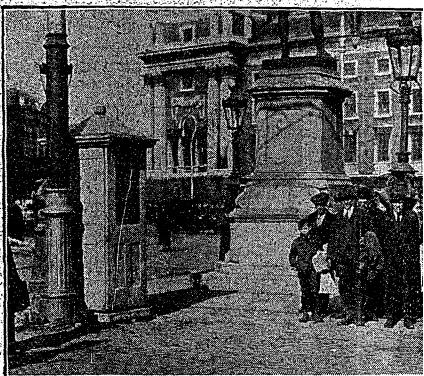
The Grattan statue at College Green, the location for Dublin's first public telephone kiosk.

Dublin’s first telephone kiosk was installed in May of 1925, next to the Henry Grattan statue on College Green. One contemporary newspaper report noted that Stockholm had in excess of 500 such public telephones at the time, so perhaps like our first escalator (which we featured here recently!) we were a bit behind once more.

The kiosks were concrete, similar to those in use in the UK at the time and were available to use at all times. The Irish Times reported that the inauguration of the scheme was due to the initiative of Mr. P Mulligan, Chief Engineer to the Post Office. “If the experiment succeeds many more kiosks will be erected in various parts of the city” the paper noted.

Prior to its opening, newspaper reports noted that the kiosk would be designed in such a way as not to become an eyesore but rather would be “built of reinforced concrete, with glazed panels, and is designed so as to present a pleasing appearance and be in harmony with the surrounding buildings.”

Dublin's first telephone kiosk, shown in The Irish Times.

By 1926, it was reported kiosks had been added to Dublin’s railway stations, and the city saw scores of public telephones dotted around it in 1932 for the Eucharistic Congress. In the October 10 1932 edition of An Irishman’s Diary it was noted that:

Among the few traces which now remain of this years Eucharistic Congress are some scores of telephone kiosks which were provided for that world event. Unfortunately, these welcome facilities seem to be concentrated in groups, while they are missing, and badly wanted, in other districts.

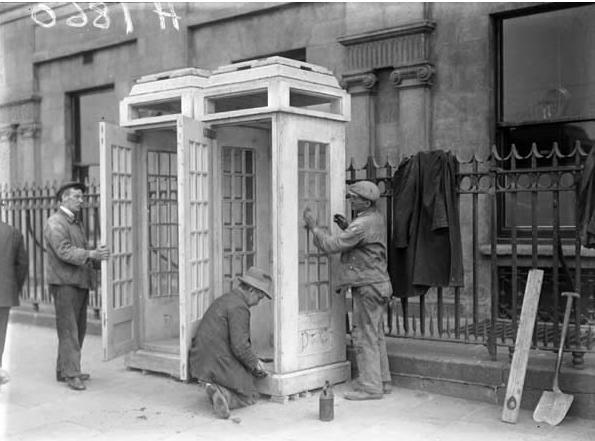
NLI Collection.

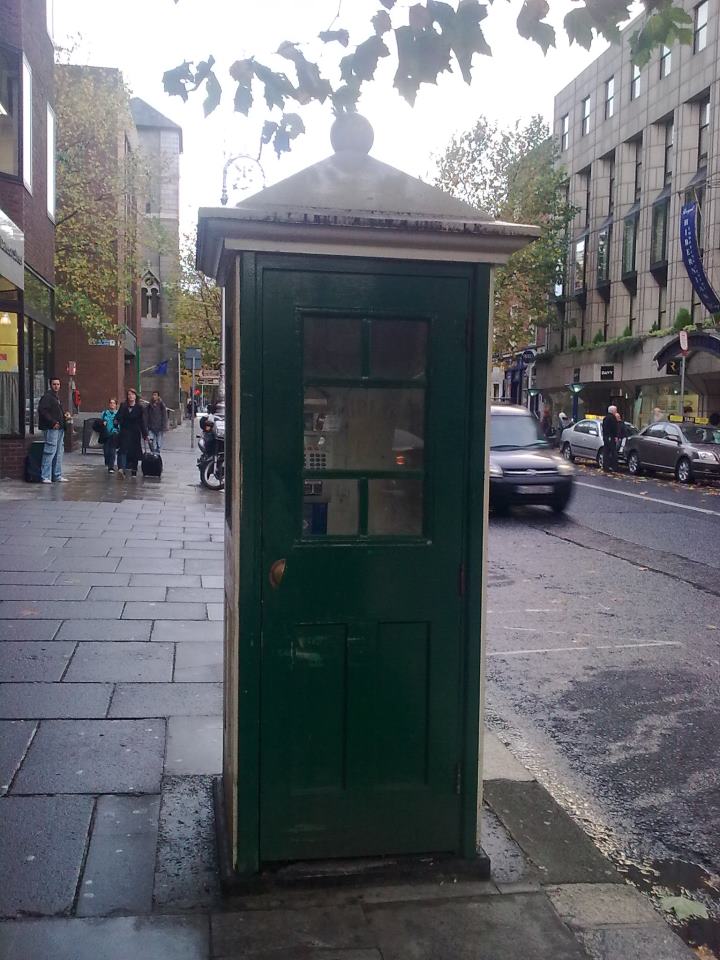
This NLI collection image shows phoneboxes being prepared for public use in Dublin prior to the 1932 Eucharistic Congress. The last such old fashioned phonebox to be seen in the city centre today is on Dawson Street.

Image thanks to jaycarax, of Come Here To Me fame.

Read Full Post »

Firemen Nugent, McArdle and Malone. All three perished in the Pearse Street Fire of 1936.

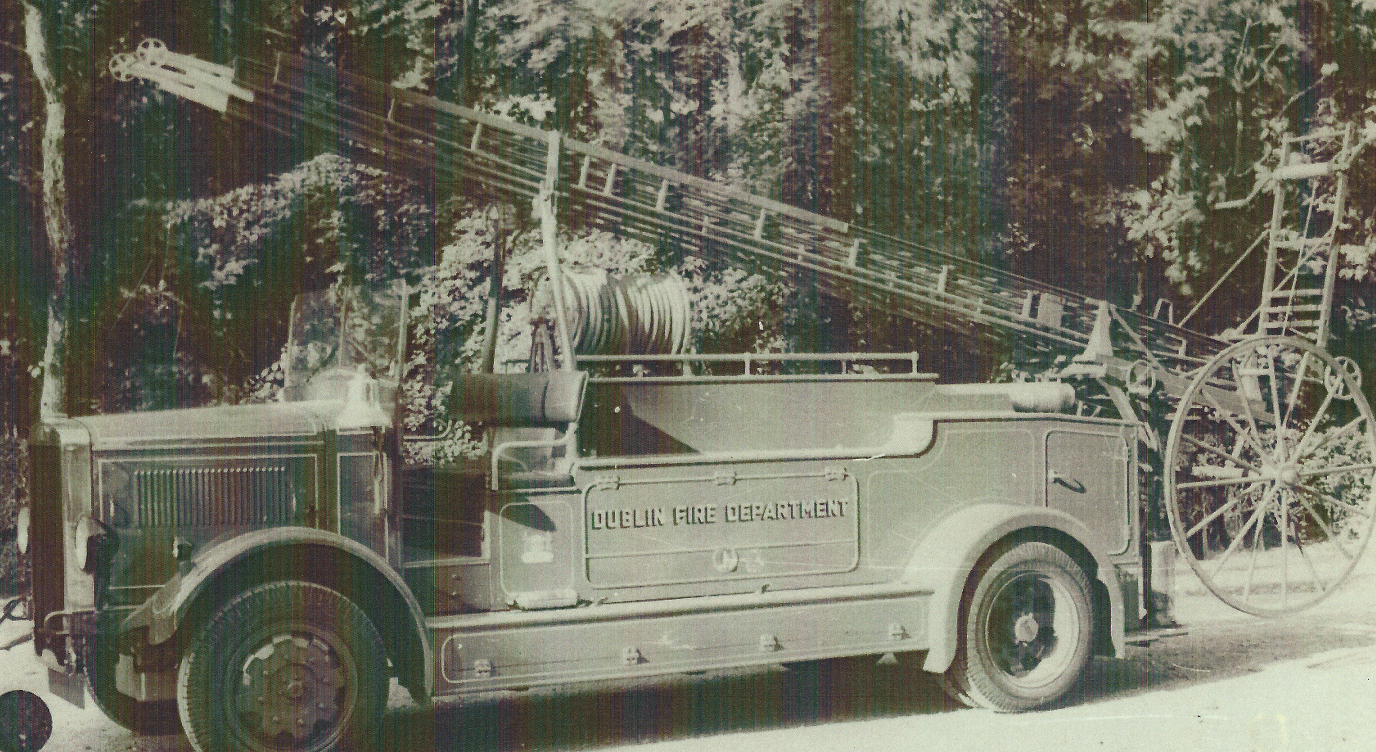
The Dublin Fire Brigade turns 150 years old this year. We’ve had some excellent material on the site in the past relating to the DFB, most of it courtesy of my father Las, a former curator at the Dublin Fire Brigade Museum and a serving member of the Brigade.

It’s an important aspect of the history of the city, and indeed of the working class of the city in particular. From the very origins of the modern force to the industrial disputes of its more recent past, we’ve shared a wide variety of content here on the site. My particular favourite posts from the below have been the architects drawing of Pearse Street station, the feature on the assistance provided by the Dublin Fire Brigade in Belfast during WWII and the leaflets relating to the 1988 industrial dispute.

'FBU' coverage of the Dublin 1988 strike.

Collection of posts:


The Pearse Street fire, 1936. Three fireman died in a blaze on Pearse Street.

Arthur Guinness and Sons Fire Brigade.

Saving the Pram (The Abbey Theatre fire, 1951)

‘Rats with Matches’ (Dublin Fire Brigade 1914 Annual Report)

‘Politics and the Parish Pump’

An Interesting Tug-of-War! The DFB versus the DMP

Original architects drawing for Tara Street Fire Station.

When Dublin Fire Brigade rushed north during WWII.

Dublin Fire Brigade 1988 industrial dispute leaflet (Sinn Féin)

The British FBU (Fire Brigade Union) and the 1988 Dublin Fire Brigade strike.


Irish Workers Group- Class Struggle (1988 strike)

Willie Bermingham 1942-1990

Going to answer ‘Joe Edelstein’s Alarm’

Members of the Arthur Guinness and Sons Fire Brigade in training at the Brewery.

Read Full Post »

My brother sent me on a link to these snaps this morning; based in London, someone had shared them with him given the week that’s in it. The full collection can be found here , I’ve only posted the Dublin (and Wicklow) related ones. Courtesy of the Library of Congress, Washington .

The Shelbourne Hotel

The Shelbourne Hotel

St. Patrick's Cathedral

Phoenix Park

Bray Head

Cheers to Richie for the shout out!


Read Full Post »

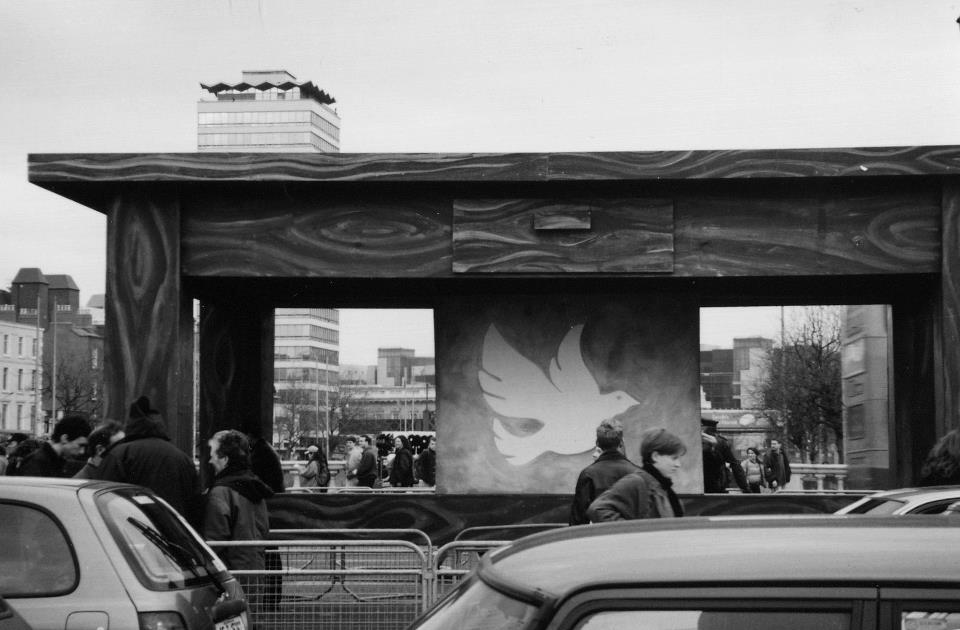
An interesting image and quote this. The Table Campaign was founded in 1996, around the time of the IRA’s shattering of the 17 month ceasefire, with the Canary Wharf bombing on 9th February that year.

The concept was to set up a load of tables on O’Connell bridge and invite people passing by to sit down and discuss what peace should look like at those tables. There was some Sinn Fein involvement and they argued for a giant table as a striking press image. On the day of the event however all that appeared was a giant table, maybe 3m high, far too high in the air for anyone to sit at, dominating the bridge. The lesser tables for the ordinary people to sit and discuss what a popular peace process might look like did not appear. Symbolic, if perhaps accidentally, of the process as a whole where the rest of the population were limited to the role of watching the drama around the big table at Stormont.”

Thanks to Andrew Flood for the image and accompanying quote.

Read Full Post »

Tomorrow sees Bohs first home League game of the season, and to coin a phrase, all has changed, changed utterly. We’re lucky to have a team on the pitch, never mind a team who, despite their youth, fight like lions for possession and give it their all as seen over the last couple of weeks in the Setanta Cup and our first League game against Derry. I don’t think anyone can be disappointed with the effort put in so far.

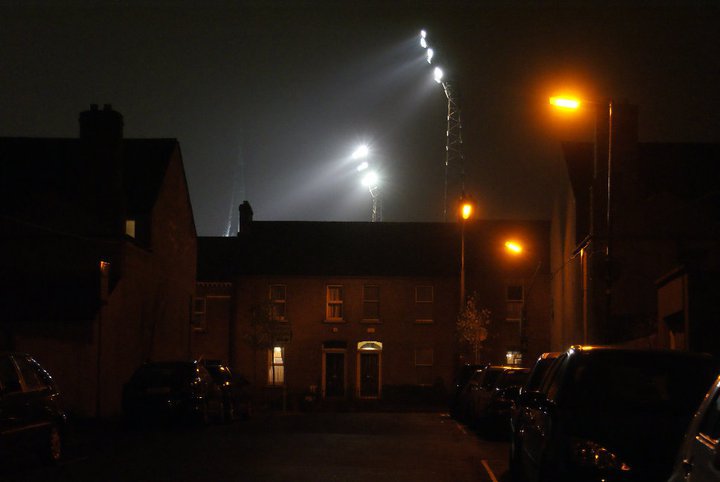
But, to the point. Tomorrow evening, at six o’clock or so, I’ll make the journey up North Circular Road. Coming to Mountjoy Prison or there-abouts, I’ll see the beacons in the distance that are the floodlights of Dalymount Park. And then I’ll start to get the jitters. They signify the start of something, generally a night of beer, shouting my head off, beer, football, camaraderie, beer, shouting my head off again and a sense of ‘home.’ They signify everything I love about this League, a feeling those who follow a foreign team might get if they were to make their yearly trip to Old Trafford or Anfield every week instead. But they don’t, and won’t ever feel it the same way. Its a feeling of pride/ despair/ love/ heartbreak/ joy/ pain. (Insert where appropriate.)

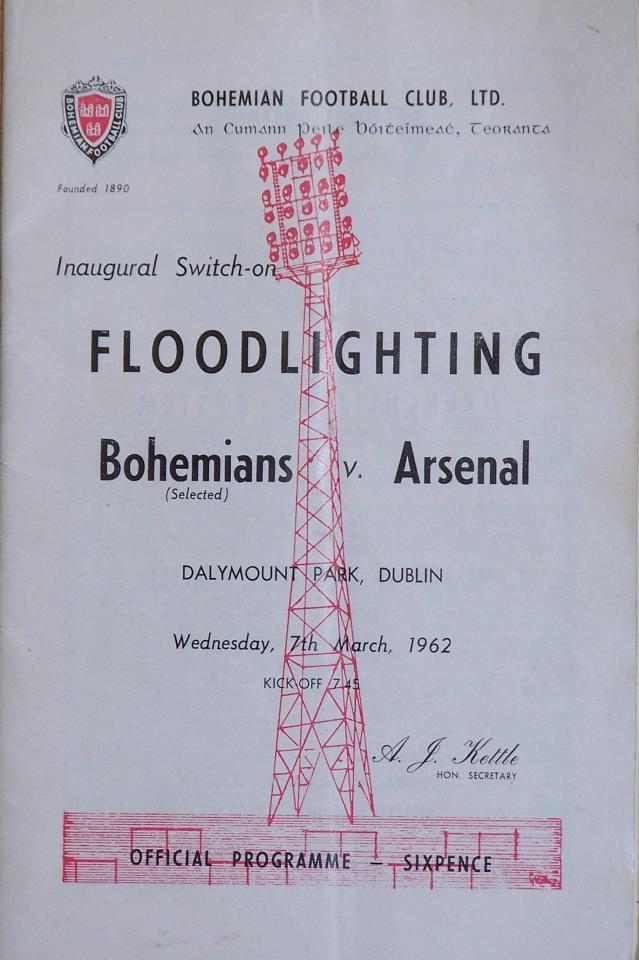
Anyways, the reason for this post. Yesterday, the seventh of March was the fiftieth anniversary of the installation of floodlights at Dalymount Park. One of the most striking features of the Phibsboro and indeed the North Dublin skyline has been around for a full half century. How old they are is anyone’s guess when you think the pylons themselves came from Arsenal second hand, and they were guest opposition on the event of their unveiling. Below is a scan of the programme cover from that night, shame I can’t find the match report.

So, for half a century, the phrase “just follow the floodlights” has been used when directing visitors to Dalymount. For half a century, people have been feeling that same feeling I do when I’m walking up the NCR on a Friday night. I can’t wait for it tomorrow, that feeling never grows old. This isn’t the end, and we told you so. Come on Bohs.

Cheers to Giofóg from thebohs.com messageboard’s Da  for uploading the scan, and Dotsy for the picture above.

Read Full Post »

Last year I wrote a piece for ‘Sidelines’ in History Ireland magazine covering a temporary exhibition in Belfast’s City Hall to mark the 70th anniversary of Dublin firefighters coming to the assistance of Belfast during the bombing of that city in World War II. Much of that report is below, along with new images and information.
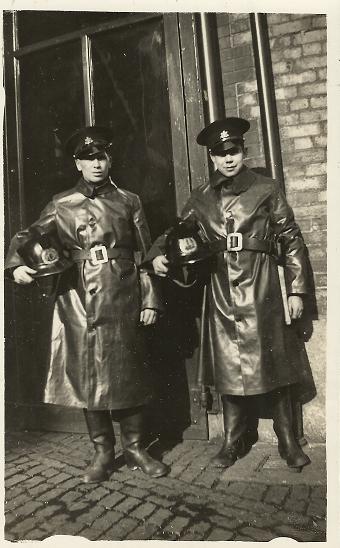
(Las Fallon collection) Two war time Dublin firefighters, Jack Conroy and Dan Dowd

The decision of Éamon de Valera’s government to send emergency assistance to Belfast following the bombing of that city in April and early May of 1941 is a landmark moment in cross-border diplomatic relations. The response of the Dublin government to the urgent message from the War Room at Stormont was a remarkable moment owing to the historically tense relations between the two states. While hundreds of firemen from both Glasgow and Liverpool were dispatched, they could not reach Belfast until much later in the day on April 16th following the bombings of April 15th. Dublin’s assistance was required urgently.

Immediately upon the Ministry of Public Security requesting the assistance of the Dublin Fire Brigade, men from the south would make the journey to the blitzed city of Belfast. From Dublin alone, 3 regular and 3 auxiliary engines would be sent. Dun Laoghaire, Drogheda and Dundalk each contributed an engine to the cross-border effort.

Writing in 1960, Dublin Fire Brigade District Officer Michael Rodgers recalled that while the war had been raging for two years, “it all seemed very remote to me. I looked on it as a deadly game being played in different fields and followed it with a fascinated curiosity.” No doubt such an attitude to the conflict was common. The Irish Sea, he noted, was his protecting moat. With the bombing of Belfast, all changed dramatically. “Life had been lost and property damaged. My moat had been crossed.” Tragedy, District Officer Rodgers noted, knows no border.

The Dublin Fire Brigade would make two cross-border journeys, the first on April 16th and again on May 5th. Following the first cross-border trip, the matter was debated at Dublin Corporation with Jim Larkin asking “by whose authority had the fire brigade left the jurisdiction of Éire and proceed to the Six-Counties.” Another councillor responded to Larkin by enquiring that “supposing Galway had been bombed, would any questions have arisen had the Fire Brigade gone down there?” Larkin insisted it would, and noted his enquires were in relation to payment of the men and also in relation to where liability would rest had one of the men been injured or died in the course of the cross-border assistance.

Fire Brigade historian Tom Geraghty noted in his study of the Dublin Fire Brigade that the response to the appeal for assistance within the job had been extremely positive. He noted that within a half hour of the message from the Ministry of Public Security being received, the Chief Officer of the Dublin brigade, Major Comerford, “was addressing the Dublin firemen gathered from all stations at a meeting in Tara Street station.”

The first engine on the road to Belfast came from Dorset Street station, which was under Station Officer Edward Blake and 3rd Officer Richard Gorman. The Dublin Fire Brigade had first been contacted at 5.10am by the Ministry of Public Security, and by 7.30am three pumps with crews had already left the city. District Officer Rodgers noted that “Balbriggan, Drogheda and Dundalk slept peacefully as we sped northwards” and the men were greeted by customs officers on the border who waved them onwards.
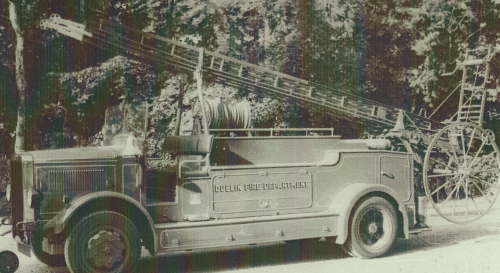
Las Fallon collection. A war time Dublin fire engine.

The men were warmly welcomed to the city, with the Irish Independent of April 18th noting that “the fire brigades which attended from Éire have been greatly praised for their work, and as they passed through the city’s streets homeward bound after their errand of mercy they were heartily cheered by a grateful people.”

The first men from the Dublin Fire Brigade had arrived in the city just before 10am, and the first engines departed the city before nightfall. While in Belfast, they had been exposed to a situation alien to Dubliners. District Officer Rodgers recalled hearing an air raid siren during the course of the day, and recalled that “I will never forget that wailing sound. From the roof top where I was standing the city looked so scarred and vulnerable.”

In the South, The Irish Times editorial of the following day noted that “Yesterday for once the people of Ireland were united under the shadow of a national blow. Has it taken bursting bombs to remind the people of this little country that they have a common tradition, a common genius and a common home?” The Sunday Independent recorded on April 20th that Belfast was still burying her dead, and that praise for the southern fire brigades was unstinted in all corners of Belfast.

Men from the Irish capital would return to Belfast on May 5th, with even more men making the journey across the border. That time, 6 pumps and an ambulance from the capital would be among the southern appliances to cross the border. This assistance was not forgotten by the Belfast Fire Brigade, and when bombs rained down on Dublin itself in late May, it was reported by the Irish Independent that Belfast Fire Brigade approached Dublin to offer assistance if required. The Dublin Fire Brigade responded and thanked the Northern Irish firefighters for their kind offer.

Interestingly, for many years following the events, southern and northern Irish firefighters would take each other on in a friendly challenge match. Below is the cover for the programme for the June 1945 encounter at Tolka Park.
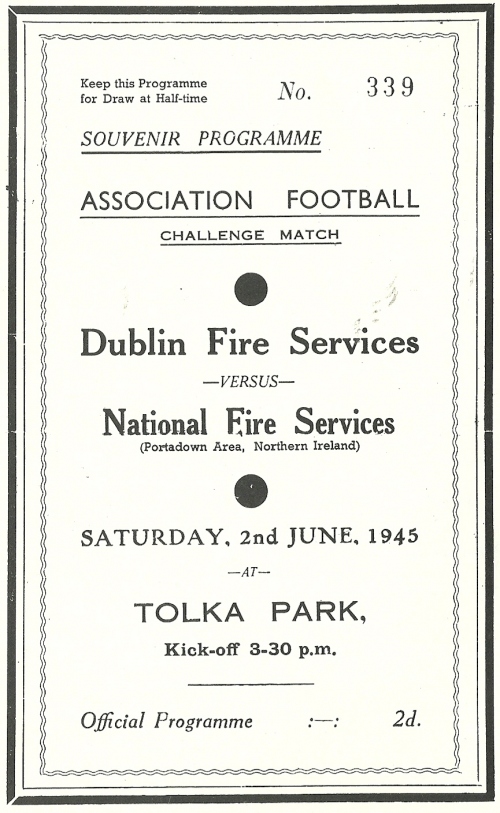
Las Fallon collection. Match programme.

Read Full Post »

Scanning classic advertisements is one of my favourite aspects of the blog without a doubt, and sometimes a gem like this falls my way. These advertisements are taken from ‘The Illustrated Book of the Military Tattoo and Exhibition, Dublin 1945’.

The huge event ran from August 28th to September 8th 1945 at the RDS Ballsbridge. It’s cover alone is striking and scanned below, but some of the advertisements inside are excellent. There’s more than this to come. Below are advertisements for Brown Thomas, the Eden Quay amusements, Aero and Rolo chocolates and the Irish Independent.

The cover was designed by Jack Mac Manus.

“In this design the artist expresses the spiritual link binding the Defence Forces of today- the Air Corps, Army, Marine Corps and Local Defence Forces, represented in the bold figures in the foreground- and the Irish armies of the past, symbolised by the ghostly figure of Eoin Ruadh O’Neill, dominating the entire background.”

Eden Quay Amusements.

What a wonderful ad, signed by ‘MB’. Anyone know more on the artist?

(more…)

Read Full Post »

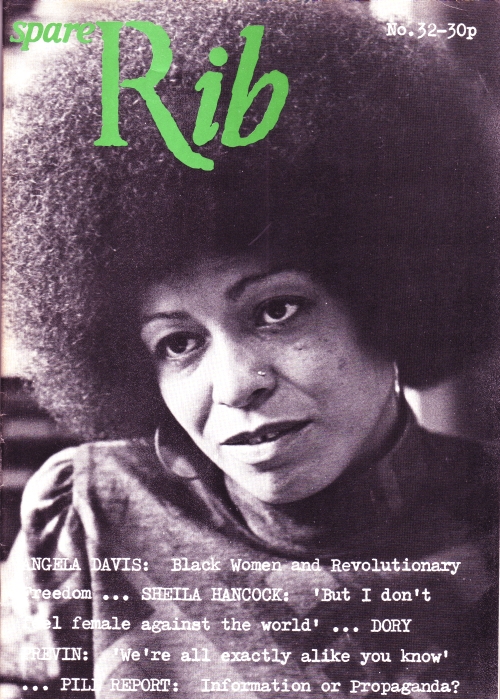
I wanted to mark the fact International Women’s Day falls this week with a feature looking at a publication which was banned by the state and a situation which led a group of 20 young women to board a train at Connolly Station one morning in 1977 to acquire copies. There’s a lot more to be written on this I’m sure, but this is a modest effort to tell the story of Spare Rib for the week that is in it.

Spare Rib was a second-wave British feminist publication set up in 1972, to provide a feminist alternative to commercial women’s magazines. It was very much a publication of the left, for example often writing critically of Britain’s role in Ireland, along with giving coverage to labour disputes. The excellent study Women and Journalism notes that W.H Smith refused to stock the first issue of the magazine, which contained such shocking content as a feature on skin care and an interview with George Best! It also included articles on sex, gender equality and women’s role in history.

Quite unsurprisingly, the publication was banned in Ireland. In February of 1977 following a complaint to the Censorship of Publications Board, it was decided that the magazine was unfit for the eyes of the Irish public. A statement from the Board noted that having examined recent issues of the British magazine, the magazine was found to have been “usually or infrequently indecent or obscene, and that for that reason the sale or distribution in the state of the said issues or future issues of the said periodical publication should be prohibited.”

Immediately following the banning of Spare Rib, there began a strong feminist campaign to overturn the ban. Ironically, while the magazine had enjoyed miniscule readership in Ireland prior to the banning, the debate over the decision of the Censorship of Publications Board saw Spare Rib make its way into the letters pages of the national print media.

The secretary of Irishwomen United, an outspoken feminist organisation, would write to the editors of the national daily papers on February 11 1977 stating that “we see the censorship of Spare Rib as a direct attack of feminism and the women’s movement.” Nell McCafferty would describe the organisation in a 1979 feature for the Irish Times as being “composed, significantly, of trade unionists, professional women and the unemployed, who had scarcely heard of motherhood.”

Like large sections of the British left at the time, the people behind Spare Rib weren’t entirely sure how to deal with matters relating to the island next door. Rose Ades, one of the women on the collective behind the publication, remarked that they did not wish to be seen to be imposing any sort of “British cultural imperialism” and that “we don’t want to be thought of as foisting something essentially alien on Irish people if they don’t want it.”

Yet Irish feminists did want it. Enough to fight for it. Three days after the letter from Irishwomen United appeared in the national daily papers, on Valentines Day, 20 members of the feminist organisation boarded the 8am shoppers special train for Belfast with the intention of returning with 150 copies of the publication. As Nell McCafferty wrote in the pages of the Irish Times:

The publishers of the magazine had donated the copies free and sent them over to Belfast as a contribution to the women’s’ struggle in the south. The women intended to return to Dublin on the 5.30pm train, depending of course on what happened to the banned magazine during Customs Inspection in Dundalk.

The women managed to bring the publication into the south with no opposition from Customs in Dundalk, and arrived at Connolly station as planned that night, where the assembled media awaited the inevitable showdown with the Guardians of the Peace. In the end three Gardaí approached the women, attempted to apprehend one, failed, and not a single copy of the publication was seized by the state.

Two weeks later, on February 28th, the organisation would challenge the law banning the publication by openly selling it on the streets of Dublin. A packed protest meeting at the Mansion House saw speakers denounce the ban, and three women told Gardaí formally that they intended to sell the publication there and then to all interested. They were Marie McMahon and Joanne O’Brien of Irishwomen United and Sue Burns of the Irish Family Planning Service. No attempt was made to stop them. Interestingly, Marie McMahon had been involved in the Hume Street occupation and the Irish Civil Rights Association.

(more…)

Read Full Post »

« Newer Posts - Older Posts »