Feeds:
Posts
Comments

Archive for the ‘Social History’ Category

Sirs, I address this warning to you, the aristocracy of industry in this city, because, like all aristocracies, you tend to grow blind in long authority, and to be unaware that you and your class and its every action are being considered and judged day by day by those who have power to shake or overturn
the whole social order, and whose restlessness in poverty today is making our industrial civilisation stir like a quaking bog.
-Jim Larkin’s Speech to the Askwith Inquiry, 4 October 1913

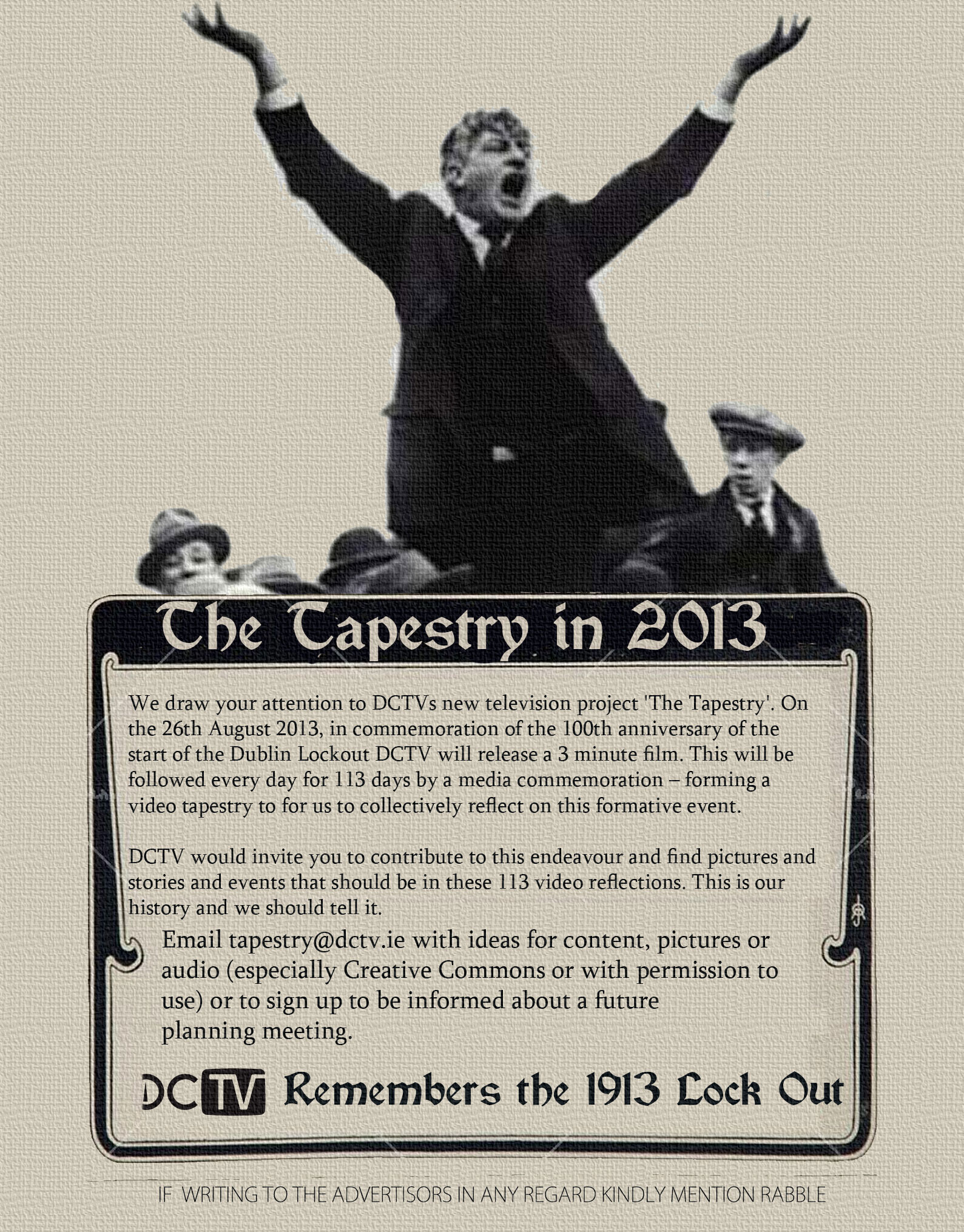
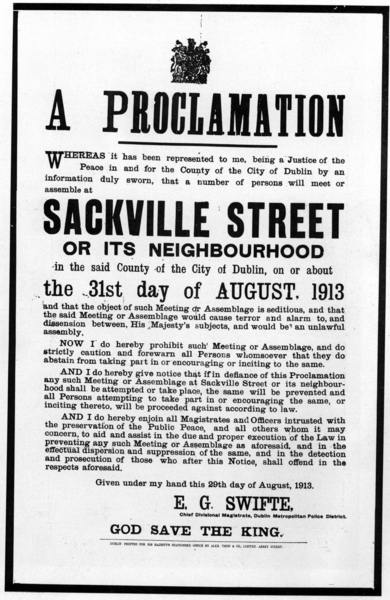
This is a great project from Dublin Community Television (DCTV) and something we’re more than proud to support. It’s undeniable that the ‘decade of centenaries’ we have entered will be a contentious one politically. Already we’ve seen the Labour Party using their annual Connolly commemoration to preach austerity this year for example, and the tug-of-war ahead for the legacy of 1916 will be fascinating to watch, if not tragic.

The lockout has always sat awkwardly for many in the story of revolutionary Ireland, yet it is an incredibly important part of the story. Out of the lockout emerged the Citizen Army of course, but the lockout itself emerged out of a growing sense of class stuggle in Dublin at the time. The likes of the Jacobs strike of 1912, which saw three thousand women workers at Jacob’s factory withdraw their labour.

If 2016 will be about Enda Kenny, Bertie Ahern and their sort observing tanks roll down O’Connell Street, what will 2013 be about? If we want to have a say in how the event is commemorated, it’s time to get moving.
Read Full Post »

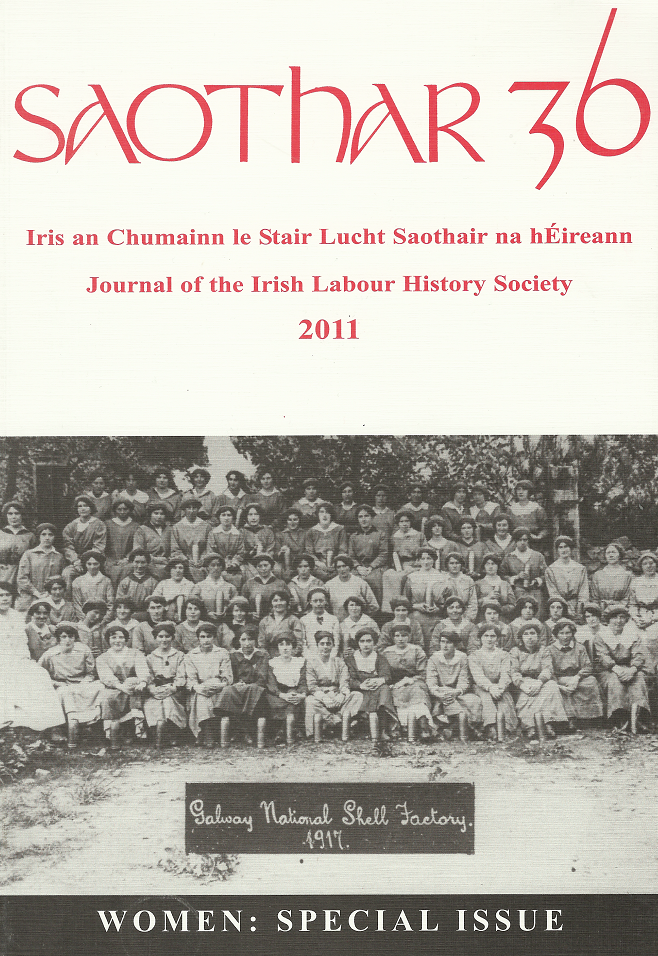
There are, in my own mind, few journals as important as Saothar, from the Irish Labour History Society. It is dedicated to the study of Irish working class history, looking not only to the role of the working class in revolutionary periods but also the evolving everyday lives of Irish workers. The society was founded in 1973, and the first Saothar published two years later.

The latest issue, 36, is hugely important. It focuses on the history of working class women.

Among its contents one finds articles such as:

‘The Irish women worker and the Conditions of Employment Act 1936: Responses from the women senators.

‘Second class citizens who are being subsidised by the men….’: Women in the Irish Transport and General Workers’ and Workers’ Union of Ireland 1945-1960

‘Sighle Humphyreys: A case study in Irish socialist feminism, 1920s-1930s’

Remarkably, along with the emphasis on female subjects, many of the historians contributing to this issue of Saothar are themselves female, something which is of course to be welcomed.

Recently, the Women’s History Association of Ireland invited four distinguished voices in Irish history to discuss four leading female historians. Remarkably, the four professors invited to contribute on the day were all men, greatly influenced by the female historians discussed. They were:

Professor Diarmaid Ferriter, UCD, on Margaret MacCurtain
Professor Thomas Bartlett, University of Aberdeen, on Helen Landreth
Professor Tom Dunne, UCC, on Maureen Wall
Professor Eunan O’Halpin, TCD, on Dorothy Macardle

The recent focus on women’s history and the role of women in not only making history but writing it is certainly something to be welcomed. Saothar can be obtained by joining the Irish Labour History Society, with membership priced at €30 annually or €20 concession rate. The society are online here.

Read Full Post »

I’ll leave it to jaycarax to give you a better taste of what’s in issue 2 of Rabble, several thousand copies of which just hit the streets of the capital.

Above is a sketch of Garda Jim Branigan, or Lugs as he’s known in Dublin folklore. It’s the work of the younger Fallon (Luke, over here), and features in the current Rabble alongside a brief biographical piece on Lugs.

I thought it worth giving the piece a platform here, I love the detail in the piece like the Wild Westesque Sheriff’s badge and, well, the lugs of Lugs. I’ve wanted to post it here for some time but decided it best to wait til the mag hit the streets, trust me there’s much, much more to be seen and read inside it. Well done to all involved in the process.

Read Full Post »

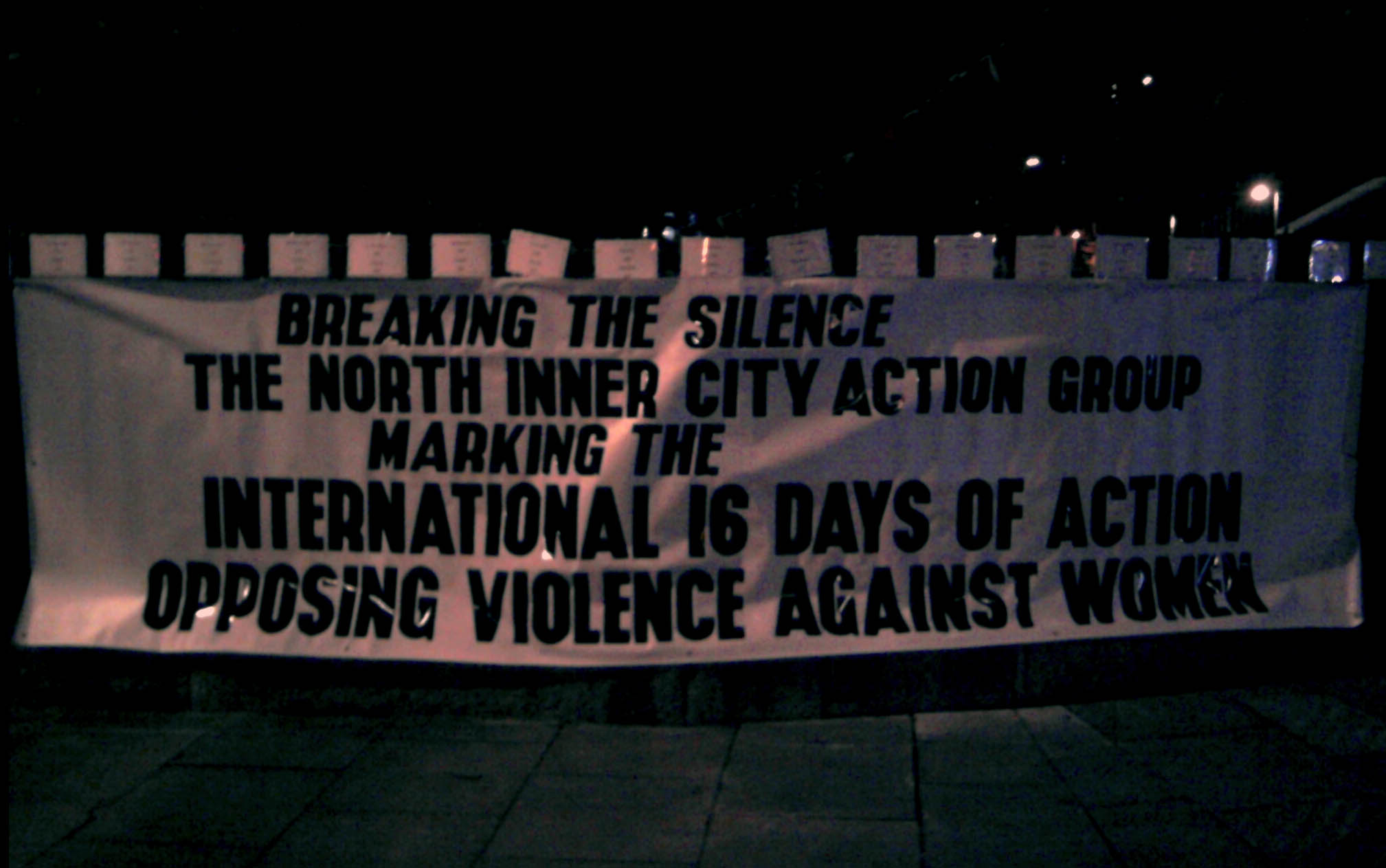
Kudos to the North Inner City Action Group for their involvement in the 16 Days of Activism Against Gender Violence Campaign which began on November 25, the International Day Against Violence Against Women, and ends on December 10, International Human Rights Day. These dates “symbolically link violence against women and human rights, and emphasize that such violence is a human rights violation.” (From the 16 Days Facebook.)

Breaking the Silence... Banner on Mountjoy Square railings.

More:  http://www.womensaid.ie/16daysblog/2011/11/10/north-inner-city-domestic-violence-action-group-pu-1/

Read Full Post »

1,200+ posts, 3,000+ comments and 360,000+ views later, Come Here To Me! has reached its second anniversary.

credit - Daniel Flower

Here’s a little round up of what I think were our best posts this last year;  the story of Kavanagh’s two Dublin seats, Orson Welles’ Dublin Visit, Squatting, letter-bombs and hunger-strikes: The Case of Robert C. , reviews of A Visual Feast and The Winding Stair, the story of Saint Werburgh’s Church and Dublin Mean Time, hXci’s Christmas pictureswreckage of a WW2 German bomber, the story of 160 Parnell Street and how Fade Street got its name, the history of the The Theatre Royal Hippodrome, Joe Edelstein’s Alarm and Hawkins House

…The seven part series looking at classic Dublin music videos, a look at Liberty Hall, MC Mannix Flynn, a 1934 Anti-Fascist leaflet, hXci’s snaps 1 & 2, the Eagle Tavern plaque, images of Grangegorman Military Cemetery, the story of when Bovril lit up College Green and The Murdering Lane, the Masonic Hall Fire Insurance Policy 1924,  a look at the old Cabman’s Coffee Booth on O’Connell Street, Dublin’s best pranks, the Ranelagh massacre which gave the world its first Black Monday, two Saint Patrick’s Athletic, pictorial history of The Bleeding Horse, Sean Healy’s plaque, Charlie Chaplin’s Larkin link,  Dublin’s burgeoning underground dance scene, Cathal Brugha’s plaque and a seven part graffiti series

credit - Steve-h

… Lynott’s Dublin, The Blades feature in a Nike ad, French views on the Easter Rising, adult shops of Dublin, The Blades singles, forgotten Dublin dance classic, Johnny Eagle; Dublin’s first tattooist, when loyalists bombed O’Connell Street, Dublin’s oldest graffiti, 1942 Tolka Park violence , Dublin Punk & New Wave singles timeline, ICA roll of honour, Richmond Park rock festival 1970, Bik & Damo and finally the ongoing series of Dublin’s best lanes and shortcuts.

Though we haven’t had as many pub crawls as we liked, the ones we had were memorable: (Pubs 72-78)(Pubs 79-83), (Pubs 84-89)

credit: fxgeek

There’s also been some sad stories, the deaths of Peggy Keogh, Peter Lennon, Patrick Galvin, Philip Greene, Alan Devlin and Cathal Shannon, the closing of City Discs, Comet Records, Kingsland restaurant, Sunday Tribune, Lighthouse CinemaBorderline Records and Shebeen Chic, the demolition of  Murphy’s pram shop and the last ever Dancehall Styles.

credit - pallotron

Thanks to all our readers for your comments, constructive criticism and input. Here’s to our third year!

Read Full Post »

Student Revolt! by Carol Coulter. Click here for PDF

Blast from the past time, and with last weeks USI walkabout in the city centre I thought I’d scan up an article dealing with the Irish student movement from Workers Republic, published by The League for a Workers Republic.

The article was written by Carol Coulter and she writes of the various student groupings active in Irish colleges and univiersites at the time, for example The Internationalists who sprung up at Trinity College Dublin and the Students For Democratic Action which emerged out of University College Dublin.

There is great information on the League for a Workers Republic to be found on Cedar Lounge, while Conor McCabe of Dublin Opinion has written a wonderful piece on The Internationalists including some great scanned publications.

What was the Irish student movement like before Gary Redmond? Read it and see.

Read Full Post »

  • Click here for PDF File.

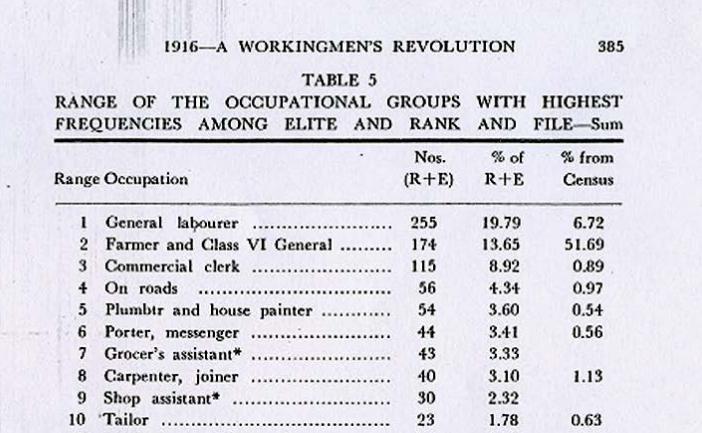
    Here’s a fascinating article from a 1973 edition of Social Studies, the Irish Journal of Sociology, which looks at the economic backgrounds of participants in the 1916 rebellion. “An analysis of those who made the 1916 revolution in Ireland”, it was compiled by Stein Ugelvik Larsen of Bergan University and Oliver Snoddy of the National Museum of Ireland.

    A link to the scanned article was first posted on The Irish Republic, website of Tom Stokes, himself the grandson of a participant in the insurrection. The site aims to spark debate around the idea of the ‘Republic’, and is timely considering the decade of centenaries we are now in!

    Below is a screenshot from the PDF to give you an idea whats inside. If you missed the link it’s at the top of this post.

    (more…)

  • Read Full Post »

    I was taken aback recently to read that Richmond Park, home of Saint Patrick’s Athletic, hosted what was supposedly Ireland’s first ever outdoor Rock Festival on September 4, 1970. The event was headlined by Mungo Jerry, but also included a performance from Dubliners Thin Lizzy. Researching it further, I found some interesting newspaper reports from the time which suggested that there was a real fear of what kind of element would be attracted to outdoor music festivals in the capital.

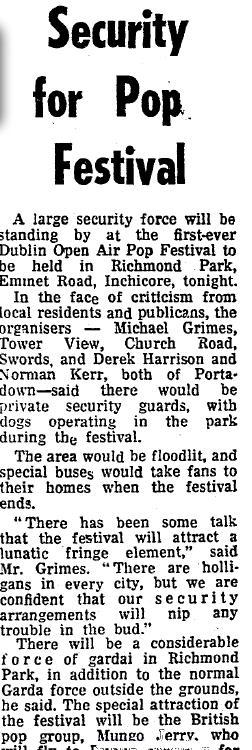
    Irish Press. September 4 1970

    Reports like the one above from The Irish Press appeared throughout the media in the days and weeks leading up to the festival. The Irish Independent reported that something in the region of 4,000 people had been expected to attend the festival, and that the ground could potentially hold double that. Repeating the sort of tone of The Irish Press piece, the paper wrote that “fears of rowdyism” were dispelled by officials at Saint Patrick’s Athletic.

    In the end, the festival proved to be an absolute disaster. “I’ve been to better wakes” was a quote from one discontented young punter in The Irish Times, which ran with the headline ‘Open Air Festival Hardly Pops’. The paper noted that only several hundred young people had attended the festival, perhaps unsurprising giving the scare-tactics in the media in the run up to the event.

    Mungo Jerry headlined the show, yet The Irish Times did not have much to say of their appearance, noting that “they appeared finally, like post-Christmas tinsil, on a shabby stand.”

    Of course while Thin Lizzy are a legendary Dublin band today, at the time they were a new prospect having only formed in late 1969 and released their first single The Farmer/I Need You only two months prior to the Richmond Park performance.

    Read Full Post »

    122 Emmet Road

    Tomorrow at 3pm a brand new and very important plaque will be placed on 122 Emmet Road, Inchicore.

    This is of course very near to number 125, the official home of Saint Patrick’s Athletic which sits in front of Richmond Park. Emmet Road is a street that means a lot to me and all saints, and is a street I’ve seen evolve and change in my years following Saint Patrick’s Athletic.

    122, Emmet Hall, was the home of 1913 strike leader and Irish Citizen Army officer Michael Mallin, who was executed for his role in the 1916 Rising. It was also the branch headquarters of the Irish Transport Workers Union.

    Inchicore has a great radical and hidden history, indeed Emmet Road alone has a fascinating story to tell. William Partridge, a leading trade unionist who fought in the 1916 rising for example, was an organiser with the Amalgamated Society of Engineers who would meet in the Workman’s Club on Emmet Road. Jim Larkin purchased the Emmet Hall in 1913, appointing William Patridge as manager of the premises.

    The Irish Citizen Army had an active section in the area (Inchicore-Crumlin, No. 3) of which Michael Mallin was Commandant. Dr. Ann Matthew’s has compiled an incredibly useful Irish Citizen Army membership list, and among the names one finds residents of St. James Park, St. Mary’s Terrace, Park Street and other parts of Inchicore.

    Michael Mallin was executed for his role in the rebellion of 1916. At his court-martial appearance, Police Constable John O’Connell of the DMP would state:

    I know the prisoner Michael Mallin. There is a paper called “The Workers Republic” in which it has been stated th the prisoner is Chief of the Staff of the Citizen Army. I have known the prisoner about 9 or 10 months. I have seen marching with the Citizen Army and he has marched with James Connolly and the Countess Markievicz…..

    Mallin was survived by his wife, three sons and two daughters. They continued to live at the premises on Emmet Road after his death.

    There will be a number of speakers tomorrow including Jack O’Connor of Siptu, labour-historians, member of the Mallin family and local TDs including United Left Alliance TD Joan Collins and Sinn Féin TD Aengus O’Snodaigh from the left.Great credit should go to the Kilmainham and Inchicore Heritage Group for their efforts.

    Read Full Post »

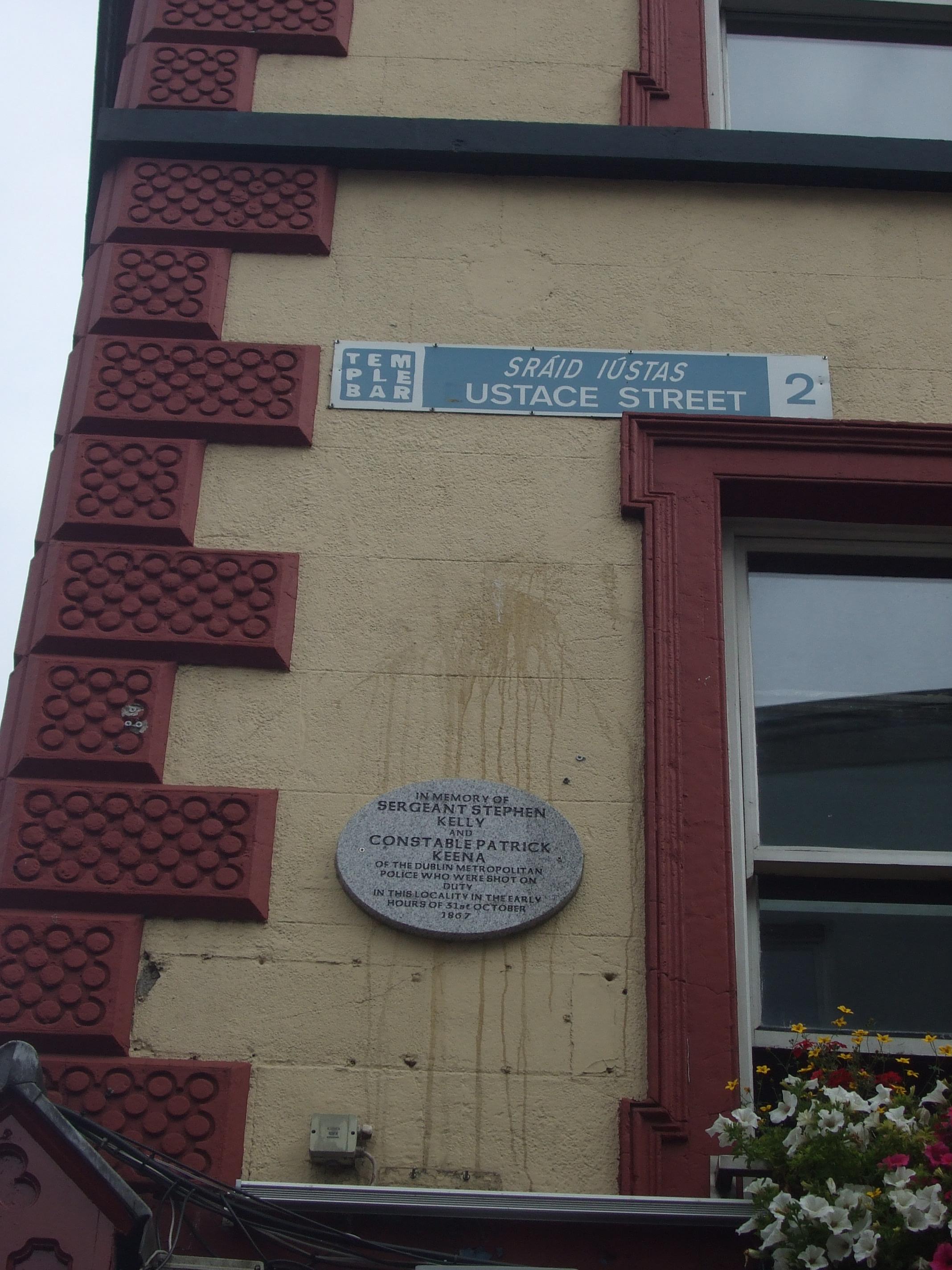
    There’s a rather unusual plaque found above Farrington’s pub in Temple Bar, unusual in that it commemorates an event many with an interest in the history of the capital will be familiar with, yet the plaque itself is easily missed and many are unaware of its presence.

    The plaque commemorates Constable Patrick Keena and Sergeant Stephen Kelly of the Dublin Metropolitan Police, shot on duty in the area on October 31st, 1867. While Kelly would survive, Kenna would lose his life. Of course that was the year of the Fenian Rising of 1867 which occurred months prior, a rising which had seen the Fenians issue a radical proclamation which proclaimed a provisional republican government,and a proclamation which read of its solidarity with republicans of the world, noting “our cause is your cause”

    We appeal to force as a last resort… unable to endure any longer the curse of a monarchical government, we aim at founding a Republic based on universal suffrage, which shall secure to all the intrinsic value of their labour. The soil of Ireland, at present in possession of an oligarchy, belongs to us, the Irish people and to us it must be restored. We declare also in favour of absolute liberty of conscience and the separation of Church and State. We intend no war against the people of England; our war is against the aristocratic locusts, whether English or Irish, who have eaten the verdure of our fields.

    Barry Kenerk has written a wonderful and engaging work on the shootings entitled ‘Shadow of the Brotherhood: The Temple Bar Shootings’, and John Dorney of The Irish Story has written a fine review of the work here, which provides great context to the events of that day.

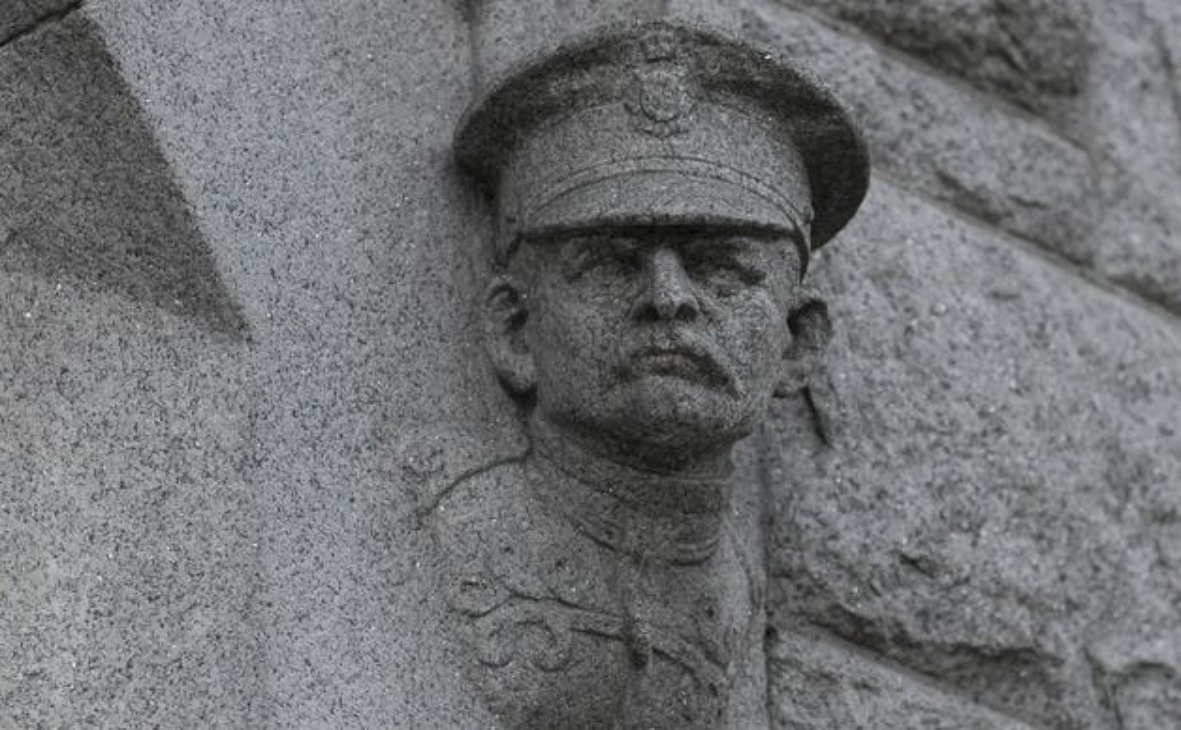
    Of course, the plaque is not the only feature in Dublin marking the history of the DMP. A constable and officer of the force are represented today in stonework above the doors of Pearse Street Garda Station, or Great Brunswick Street Police Station as it was once known. Both these figures, and the Temple Bar plaque, are easy to miss.

    Read Full Post »

    Here is the audio recording of the recent History Ireland Hedge School which I took part in. You can find a series of audio recordings from various Hedge Schools on the History Ireland site. Stick the kettle on…..

    Read Full Post »

    If any of you attended the History Ireland Hedge School on the Animal Gangs at the National Library recently, you’ll remember that as well as the 1930s the following decade was discussed at some length, and particularly youth violence and criminality in early 1940s Dublin. The so caled ‘battles’ of Baldoyle and Tolka Park would of course feature in such a discussion.

    In his biography of Garda James C. Branigan, or Lugs as he is known to generations of Dubliners, Bernard Neary would note that the 1940s saw the Gardaí and indeed the state adopt a much tougher approach to Dublin gangs. Two particular outbreaks of violence at Baldoyle and Tolka Park saw a very serious crackdown from the state against ‘gang culture’ in the city at the time, with the first showdown at Baldoyle in May of 1940 displacing the second World War from the top of the national media and whipping up hysteria in the capital that the ‘Animal Gangs’ were still alive and well.

    That battle is a story for another study and another day, and in this post I intend to look at a particular day of violence in early 1940s Dublin, when Dublin’s youth gang culture would raise its head at Drumcondra Soccer Grounds during a match, grabbing the attention of the national media and indeed state forces. It was an event which would see the national media reporting on March 26th of nine youths being charged with attempted murder.

    ‘Dublin Football Venue Onslaught!’ read the headlines of The Irish Times on March 24th, reporting on bizarre scenes of violence in the capital. Two days previous, during a clash between Mountain View and St.Stephen’s United in the Junior Combination Cup, blood had been spilled on the terraces of a Dublin football ground.

    (more…)

    Read Full Post »

    « Newer Posts - Older Posts »