Feeds:
Posts
Comments

Archive for the ‘Social History’ Category

This is a great one, and a nice bit of labour history. This leaflet comes from the 1988 Dublin Fire Brigade dispute, from the Sinn Féin Trade Union Department. Details of the dispute are found on the reverse side of the leaflet below. Who is the brave fella on the front of the leaflet? Scroll down to see!

(more…)

Read Full Post »

Thanks to Gregory Dunn for leaving a link to this video in a comment on the site, which has brought an awful lot of nostalgic feelings back. Murphy’s shop in Palmerstown Village is a local institution, it’s old-fashioned shopfront in stark contrast to the Londis next-door and indeed all other shops on the village street. Anyone who grew up or attended school in the area will know it for the pickamix options in shop, old-fashioned sweets you’d only heard of before and the kind of goods unavailable next door in Londis. Many one pound coins were loaned to friends and never spotted again. This is a great bit of local history, as is the shop itself.

There has been a real resurgence in this sort of oral history in recent times. This was a great throwback to the time of schoolbags, obair bhaile and white shirts with black collars. Cheers Gregory!

Read Full Post »

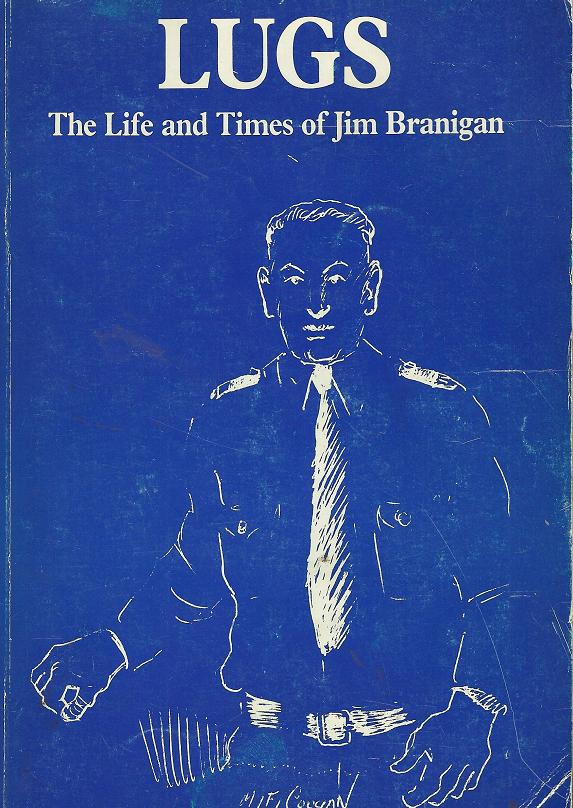
I was so taken with this book cover I thought it worth scanning up! It depicts a rather famous character in the history of this city, ears and all. It comes from Bernard Neary’s biography of Dublin’s most famous police-officer, Jim ‘Lugs’ Brannigan. James Brannigan was, as Neary states in his introduction, better known as Jim or Branno and The Bran to colleagues, but is known to generations of Dubliners by one name and one name only: Lugs.

The book’s forward is written by none other than Charles J. Haughey, who remarks that the book ‘chronicles the career of a great Dubliner and a great officer whom the members of the Garda Siochána will always remember with pride and affection.’

A great article from the time of the retirement of Lugs can be found digitalised here:

He is known as ” Lugs” throughout the city because of his ears. They are large and unwieldy. For years he was a heavyweight international boxer and after that an international referee. But hitting people in the ring was only a pastime; his joy for thirty years has been that of leader of what is popularly known as the Riot Squad. They are called” Red Cars” officially and can be called to any part of the city where there is trouble. The red cars actually consist of one car and one van. The van carries two members of the Riot Squad and a few British-trained Alsatians to pacify difficult members of the public. The car carries Lugs and two or three other members of the squad. Every night of the week they tour the city seeking to quell trouble

Lugs will undoubtedly be discussed this coming Thursday at the History Ireland Hedge School on the Animal Gangs, which takes place at the National Library of Ireland. I’m one of the panelists for what promises to be an interesting discussion.

Read Full Post »

The Daniel O’Connell statue on O’Connell Street is undoubtedly the grandest statue in our city centre, commemorating ‘The Liberator’ O’Connell and standing at the top of what was once Sackville Street in a Dublin gone. The statue of O’Connell himself dates to 1882, the work of John Henry Foley, and boasts some revolutionary bullet holes on close-inspection.
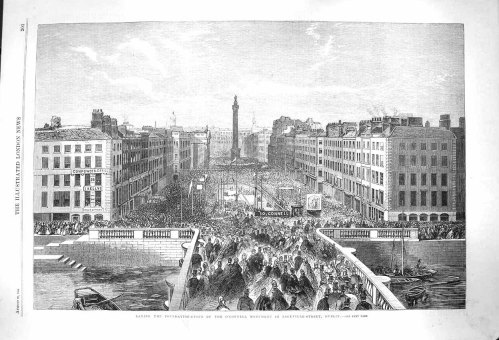
Granite foundation stone laid for monument in 1864

On the day of the laying of the foundation stone in 1864, the Lord Mayor of Dublin Peter Paul MacSwiney told the crowd of thousands that:

The people of Ireland meet today to honour the man whose matchless genius won Emancipation, and whose fearless hand struck off the fetters whereby six millions of his country men were held in bondage in their own land….

It is of course a great irony that O’Connell’s monument should contain the bullet-holes of Easter Week 1916 as it does, with O’Connell a constitutional nationalist opposed to the use of violence to bring about political ends. This statue quite literally saw Irish nationalism move from a constitutional movement to a insurrectionist one, when it found itself caught between the sniper fire of Sackville Street and the rooftops of Trinity College Dublin. One wonders what O’Connell would have thought of James Connolly, one of the leaders of that rebellion, giving the title A Chapter of Horrors: Daniel O’Connell and the Working Class to a chapter in his excellent Labour in Irish History!

Yet it is so often forgotten today that while Irish republicans put bullet holes into this great statue, Irish loyalists almost done away with it. On December 27 1969 an explosion at 4.30am damaged the statue representing the ‘Winged Victory of Courage’. This attack was later claimed by the Ulster Volunteer Force.

The figure of Courage in the statue ironically contains a bullet hole of Easter 1916 itself. She is shown strangling a serpent, with her left hand resting on a fasces. In the breast of this figure perhaps the bullet hole the most Dubliners are familiar with is found!

The explosion rocked the capital, with one taxi driver telling The Irish Press “the whole car and the bridge seemed to shake with the explosion. It was one tremendous wallop and then the crash of glass almost together.”

Incredibly, days following the bombing of the monument, an explosion would occur at Ship Street near Dublin Castle, neat to detectives HQ. It has stressed in media reports it was believed no connection existed between these explosions, yet reports into this explosion in the Irish Independent noted that:

A phone call received at Independent House on Saturday night named three of the five Belfast men who, the callers said, were responsible for the monument explosion. The anonymous caller said the men were all members of an illegal organisation and that two of them were explosives experts and ex-army sergeants who had been discharged three months ago from the Royal Rangers for suspected political activity.

The bombing of the O’Connell monument was not the first attack on an Irish nationalist monument in the south by Ulster loyalists, nor was it to be the last. Wolfe Tone’s grave at Bodenstown had been attacked too, the irony of northern protestants attacking the graveside of a leading United Irishman lost on many at the time. Later, in 1971, an explosion would destroy the Wolfe Tone statue at Stephens Green. Newspaper reports noted that “the statue was wrecked, leaving only the base. Huge slabs of the bronze sculpture were hurled 20 feet in the air.”

The attacks on O’Connell and Tone are interesting as much has been written on statues from the other political tradition which were attacked and destroyed in Dublin, but little is said of the attacks on Irish nationalist icons. It is undeniable attacks on monuments like the King William of Orange statue on College Green, Nelson’s Pillar, Lord Gough’s monument in the Phoenix Park and others represented a dangerous sort of cultural warfare, but it should be remembered loyalists too engaged in such attacks. Dublin is fortunate many lives were not lost while this dangerous game was being played over the iconography of the Irish capital.
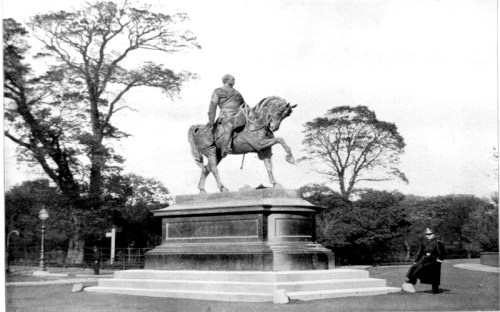
Lord Gough, one of those no longer with us.

Read Full Post »

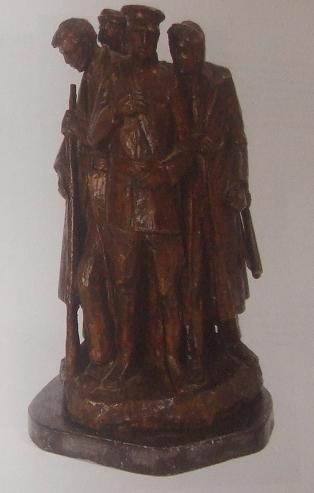
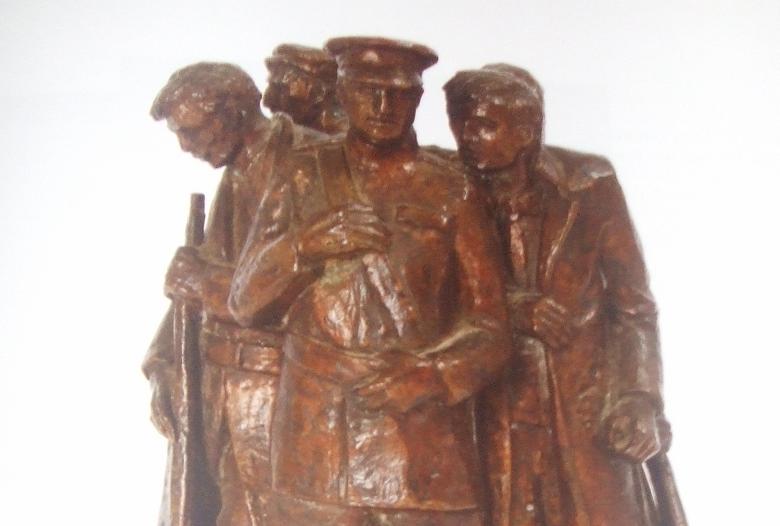
Flicking through the old Adams & Mealy’s annual Independence auction catalogues, I was taken aback to find this wonderful piece from 2008. Valued at €18,000 to €25,000, ‘The Flying Column’ was a original heavy bronze Maquette for a statue which was designed to be placed on O’Connell Street.

This was, to quote the items entry in the catalogue, a statue designed by the sculpture Brid Ni Rinn to commemorate the War of Independence, submitted into a competititon which was later sadly cancelled.

The entry notes that ‘The individual figures are types, not portraits…The leader or captain of the group was not envisaged as anyone in particular, but it is easy to see the inspiration of Michael Collins.’

Spot Michael?

It reminded me of the wonderful statue in Roscommon from 1963 to local Volunteers there, interesting to think this could be standing in the spot home to the spire today!

Read Full Post »

I absolutely love this, a recent pick-up. It is a copy of J’ai Vu (I Saw) magazine from just after rebellion in Dublin, dated May sixth. Of course at that point in time executions were still taking place.

Great info on J’ai Vu is available here:

‘J’ai Vu’ (‘I Saw’ or ‘I Was an Eyewitness’) was somewhat similar to ‘Le Miroir’. It consisted mainly of war-related photos with a few articles. The first weekly issue appeared in November 1914, when it became obvious the war would not be over with for some time to come yet. Between August and October of 1914, publication of many French magazines was interrupted by the outbreak of war. Around the same time, new magazines, publishing almost exclusively war news started to appear.

The frontpage shows General Maxwell who supressed the rebellon in Ireland. Notice the ‘Sinn Féiner’ shown (!), and the reference to Sir. Roger Casement is interesting. Enjoy.

Read Full Post »

Well done to YouTuber kdjac for this effort, putting Saintmania and other Saint Patrick’s Athletic songs of old on YouTube where they belong for younger fans who might not have encountered these gems before. I’d heard friends sing Saintmania before (and eh…..more commonly after) matches in the pubs of Inchicore but I’d never managed to unearth the file. Recently uploaded to Saintsforum, the online home of Saint Patrick’s Athletic supporters, it’s great to have the three MP3 files together.

Saintmania, a tune which is catchier than you’d like to admit, couldn’t be further removed from The Trip To Inchicore, sung to the tune of the Galway Races and touching on local institutions and landmarks, recalling a trip to Emmet Road that begins at the famous gates of the Guinness Brewery. It’s hard not to smile at Paddy’s Tribute, which opens proceedings.

Memory lane for some, and for younger fans something new and exciting. Those were the days my friend.

Read Full Post »

Much more where these came from friends, but consider this the first in a series of posts on Punch cartoons from London in 1920, detailing Irish political affairs. I came into posession of a good sized collection of originals recently and intend to scan them up here to the site. They deal with a wide range of issues, ranging from Sinn Féin to munitions strikes, Home Rule to policing in Ireland.

(more…)

Read Full Post »

Jay Carax will be back from Manchester next week.

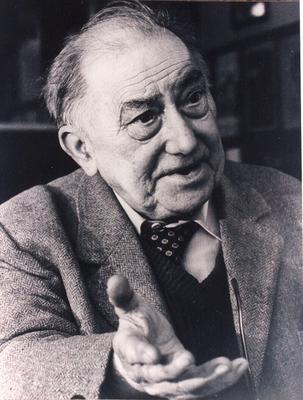
C. Desmond Greaves (1913-1988)

Earlier in the week, I came across this fascinating (private) letter from C.Desmond Greaves, editor of The Irish Democrat to Harry Pollitt, General Secretary of the Communist Party of Great Britian (CPGB). Pollitt was asking his ‘comrade’ for information on the Irish Catholic community, their relation to the Church and the influence it has on their politics. Greaves was seen as an expert on the issue.

The letter was a part of a larger collection of files on the relationship between the CPGB, their Catholic members and debates on how they could best approach the Catholic Community.

It was five pages long, I found this to be the most relevant and interesting section:

“The division between English and Irish Catholics is very important. Though divided on class lines English Catholics are in the main better off. The great county for them is Lancashire where Irish Catholics also exist. I estimate 800,000 Catholics who are Irish or of Irish descent. These again vary and cannot be approached in one way only. Broadly speaking however the existence of an unsolved national problem among the Irish gives the possibility of splitting off this section as a democratic reserve. They consist of about a quarter of the total Catholic population and I would say they are a much larger proportion of the Catholics in the Labour Party.

The Irish are subdivided into ‘New’ and ‘Old’. The ‘new’ are 400,000  immigrants since 1924 when the U.S.A. refusing to accept immigrant, diverted the stream of vigorous young Irish to Britain. Those who came since the war (200,000) are a generation which as forgotten 1916 and is less bitterly  nationalistic, and more open to progressive ideas than the older ones. The Irish Democrat circulates almost exclusively among these newer sections of the ‘new’ Irish. Irish affairs are very much alive and they have a direct influence on Irish politics by going backwards and forwards, between the two countries.

The old Irish have lost all political interest in Ireland but a vague and  often embittered nationalism apart from the number in the L.P. (they mostly  vote Labour I think) have now little Irish left about them but religion. Thus the strength of the anti-partition league is largely a consequence of  the backing it receives from the church. Hence also the attempts being made to ban Communists out of it. We of the Irish CTTE have not solved the  problem of these older Irish. But we think a broad movement could be build round the Irish Democrat on the basis of demanding Democracy in Ireland (esp. The North) though the forms of organisation would have to be flexible  in the extreme; it would be a movement rather than an organisation. The content of the paper would have to be modified though not radically changed.

One asset in working amongst the Irish Catholics is the repeated struggles which all the nationalist leaders of Ireland had against the Catholic  Church, and Connolly’s ‘Labour, Nationality and Religion’ is a great asset too. I understand that Roddy Connolly would put no obstacles in our way if  we wished to republish it. Thus I think there are two main kinds of Democratic forces amongst the  Catholics … the working class, and the Irish. These are the reserves we want to get…”

Letter from C. Desmond Greaves to ‘Comrade’ Pollitt. 28 April 1948.
CP/IND/POLL/09/15

Read Full Post »

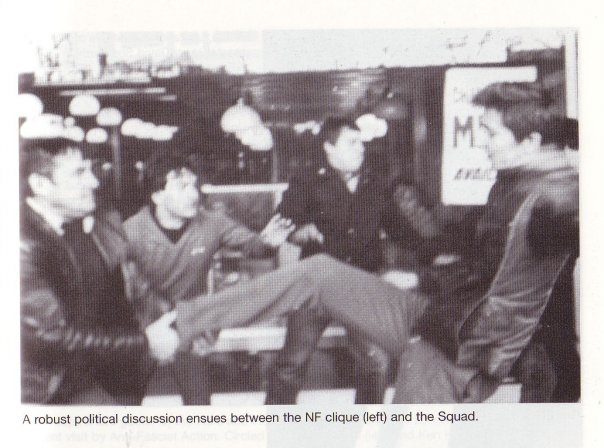
National Front (left) and members of the 'Squad' (who later went onto form AFA) clash at Picadilly Gardens, Manchester in the late 1970s. Picture: No Retreat (Milo Books, 2003)

National Front and members of the 'Squad' (who later went onto form AFA) clash at Piccadilly Gardens, Manchester in the late 1970s. Picture: No Retreat (Milo Books, 2003)

From 1985 – 1997, Anti-Fascist Action (AFA) fought the British far-right to a bloody standstill. Not least in Manchester.

AFA, was initially set up by members of Red Action, the Direct Action Movement (predecessor of the Solidarity Federation, anarcho-syndicalist group) and independent left-wing activists. Workers’ Power, a Trotskyist group, joined AFA in 1989 but left in 1992.

Many of those involved in AFA were of second and third generation Irish. In Red Action’s case, it was joked that being of Irish stock was obligatory for membership. AFA also had a strong relationship with many republican flute bands in Britain as well different Irish Republican groups. (It also has to be said that a number of AFA’s leading militants including Patrick H. and Liam H.became involved in Irish Republican military organisations, the PIRA and INLA respectively)

It is a well-known and documented fact that the British far-right has always had strong links with Loyalist groups both in the six counties and in Britain. What is sometimes overlooked, understandably so as it causes much embarrassment, was that there was a small but not altogether trivial list of Englishmen of Irish Catholic descent who got heavily involved in far right, neo nazi and British nationalist politics.

These include Patrick Harrington (leading member of National Front (NF) in the 1980s), Martin Webster (Young Conservatives, National Socialist Movement and then NF rising to National Activities Organiser), Michael McLaughlin ( British Movement leader 1975 – 1983 who was shockingly son of an Irish republican and socialist who was a veteran of the International Brigades), Eddy Morrison (BM, NF and then British People’s Party) and John O’Brien (NF leader, early 1970s).

Hopefully later in the year I’ll have time to do some more research and write something up on the fascinating story of how scores of British born, Irish working-class males got heavily involved in both fascist and anti-fascist struggles in the 1930s, 1970s/1980s and now.

To learn more about the history of AFA and the political climate of the time, try Beating the Fascists: The Untold Story of Anti-Fascist Action by Sean Birchaill (Freedom Press, 2010), No Retreat: The Secret War Between Britain’s Anti-Fascists and the Far-Right by Dave Hann and Steve Tilzey (Milo, 2003), Anti-Fascist Action: An Anarchist Perspective by an ex. Liverpool AFA member (Kate Sharpley Library, 2007),Bash the Fash : Anti-fascist recollections 1984-93 by K. Bullstreet (Kate Sharpley Library, 2001), Anti-Fascist by Martin Lux (Phoenix Press, 2006) and the Fighting Talk documentary (BBC, 1993).

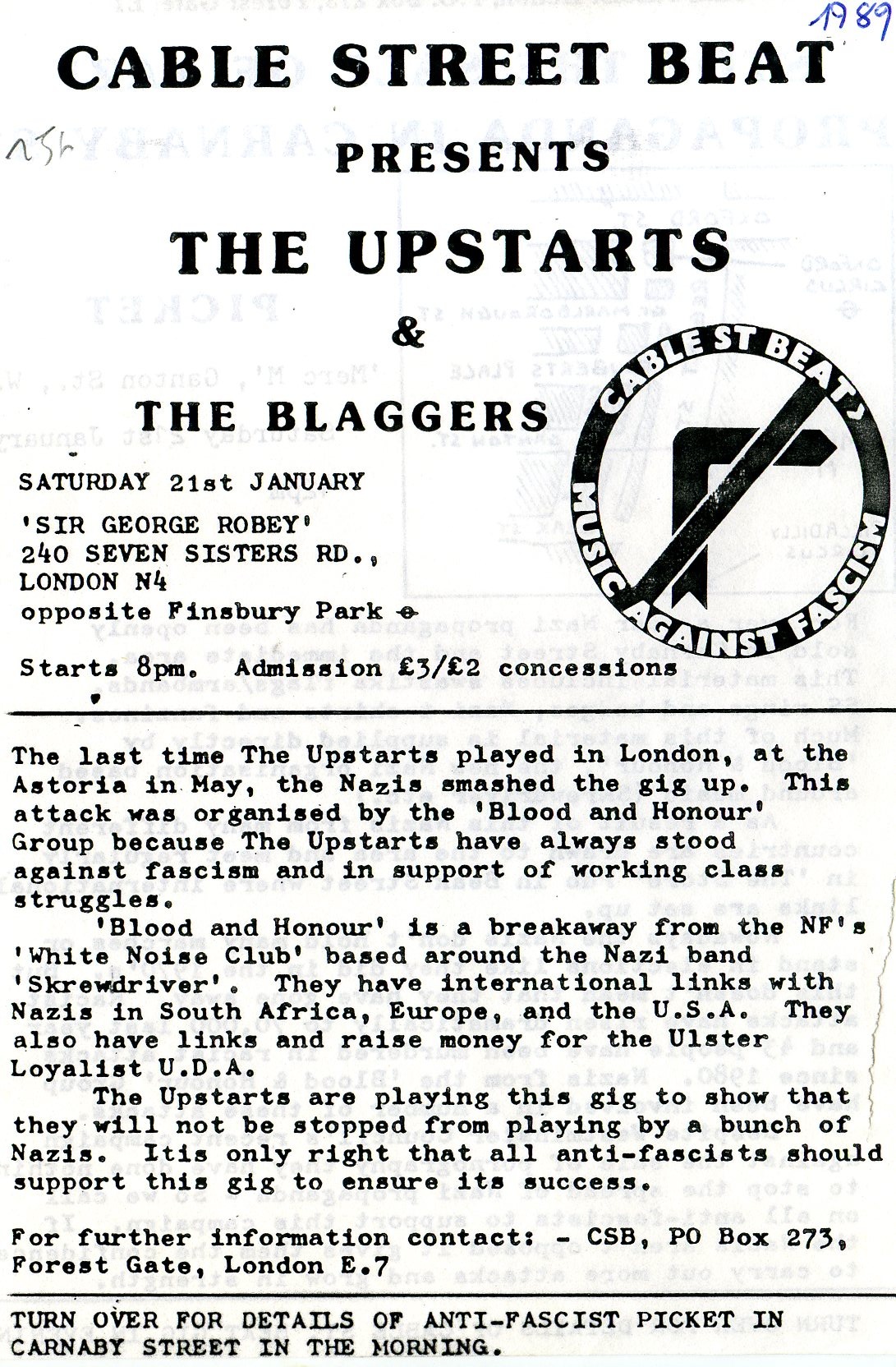
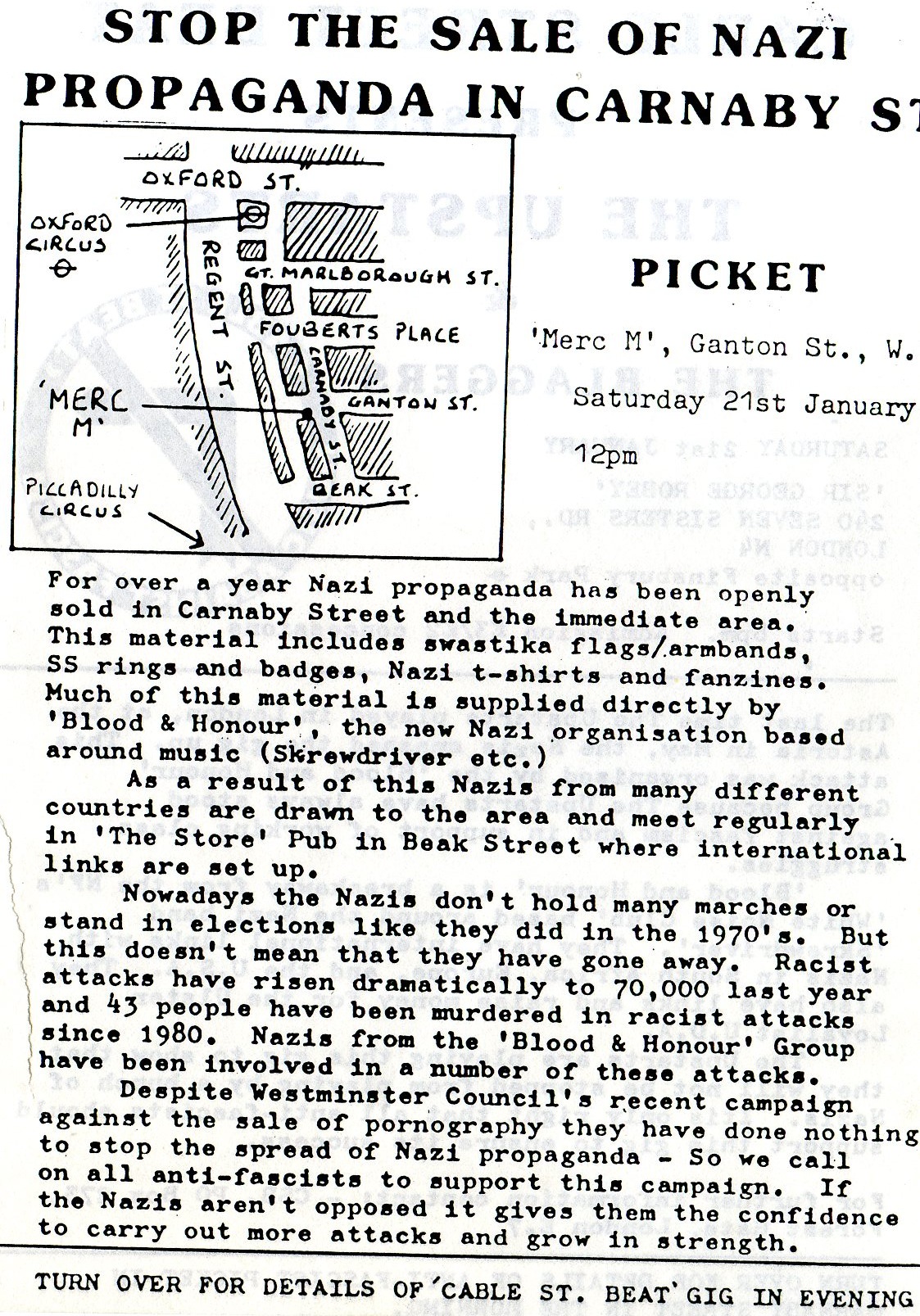
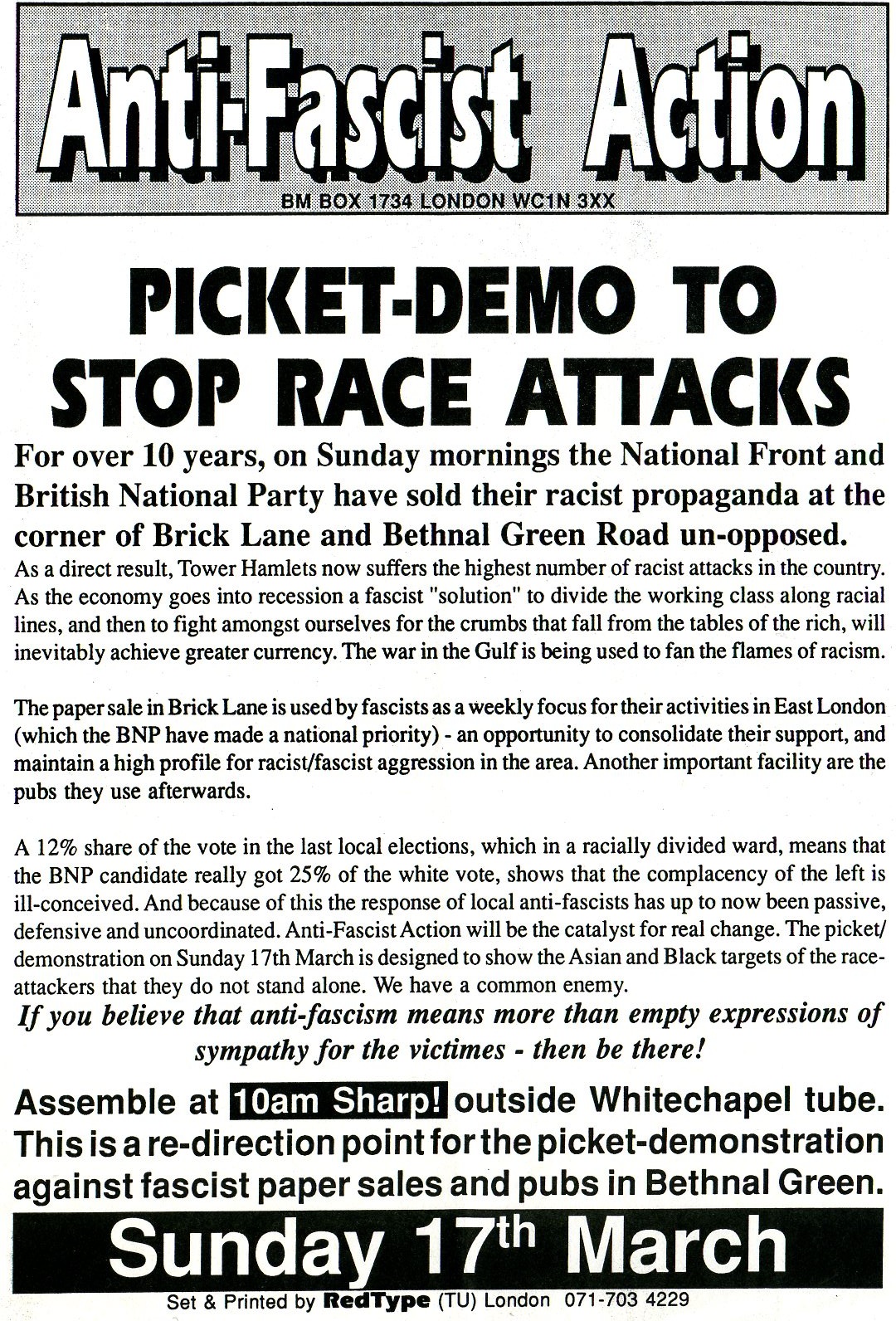
The following are a couple of AFA based leaflets I found today:

Front 'Cable Street Beat' AFA leaflet. 1989.

Back cover. 'Cable Street Beat' AFA leaflet. 1989

AFA 'Picket-Demo to Stop Race Attacks' leaflet. Early 1990s?

(more…)

Read Full Post »

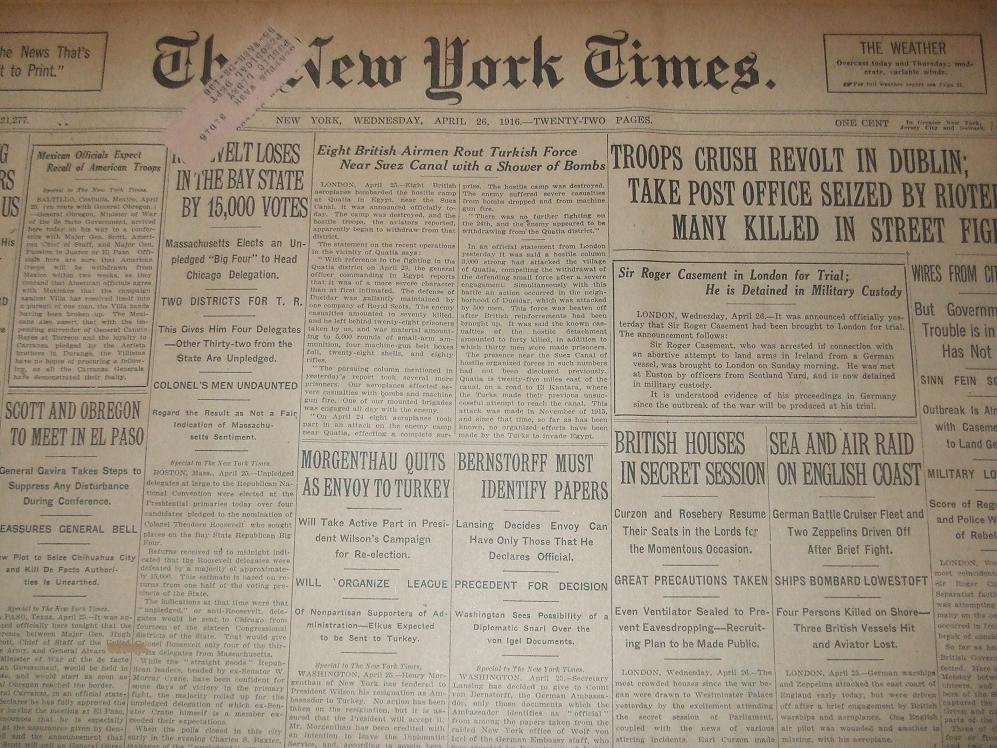
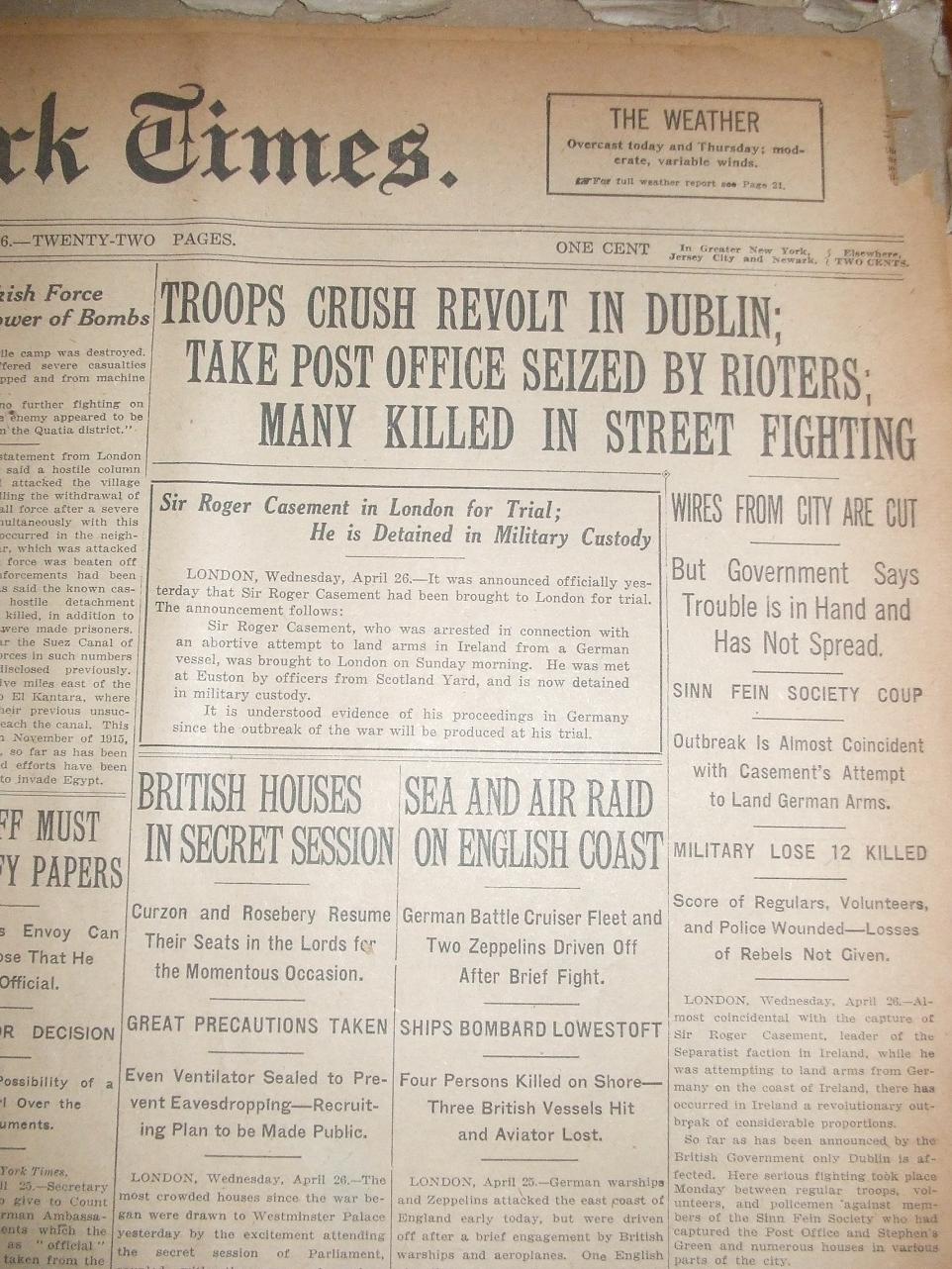
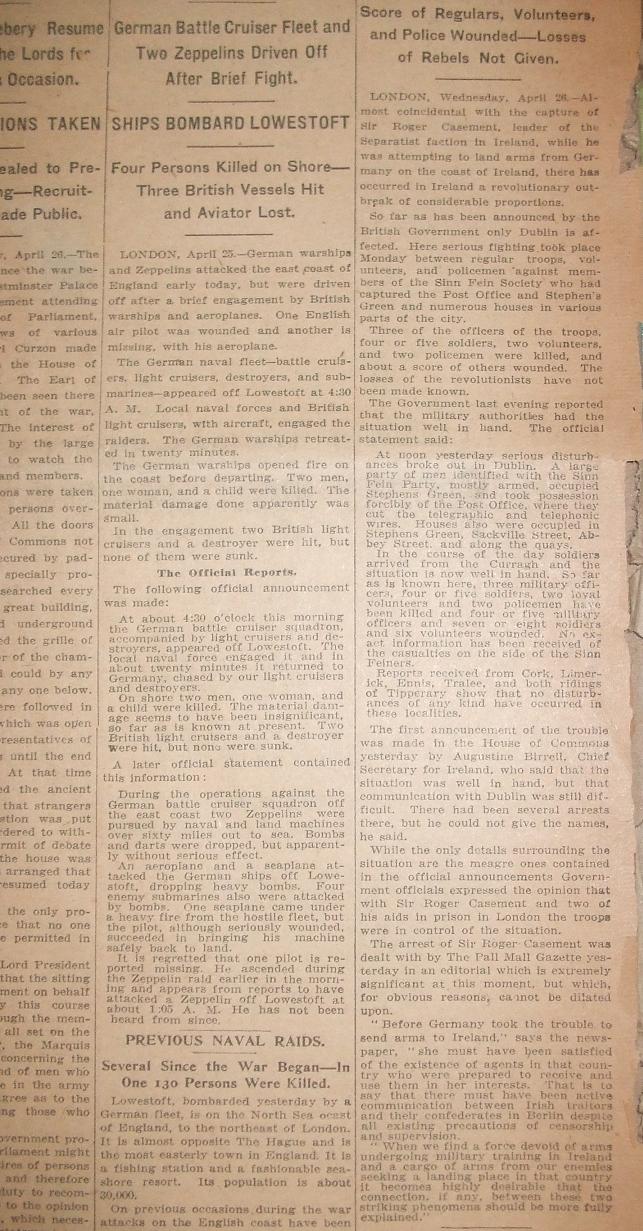
Click to expand and read. The paper is delicate as delicate comes, but I’m happy with these snaps.

Unsurprisingly, events in Dublin made the front page. The paper is framed and ready to go up on the wall, where it belongs. A great, unusual piece of history this.

Read Full Post »
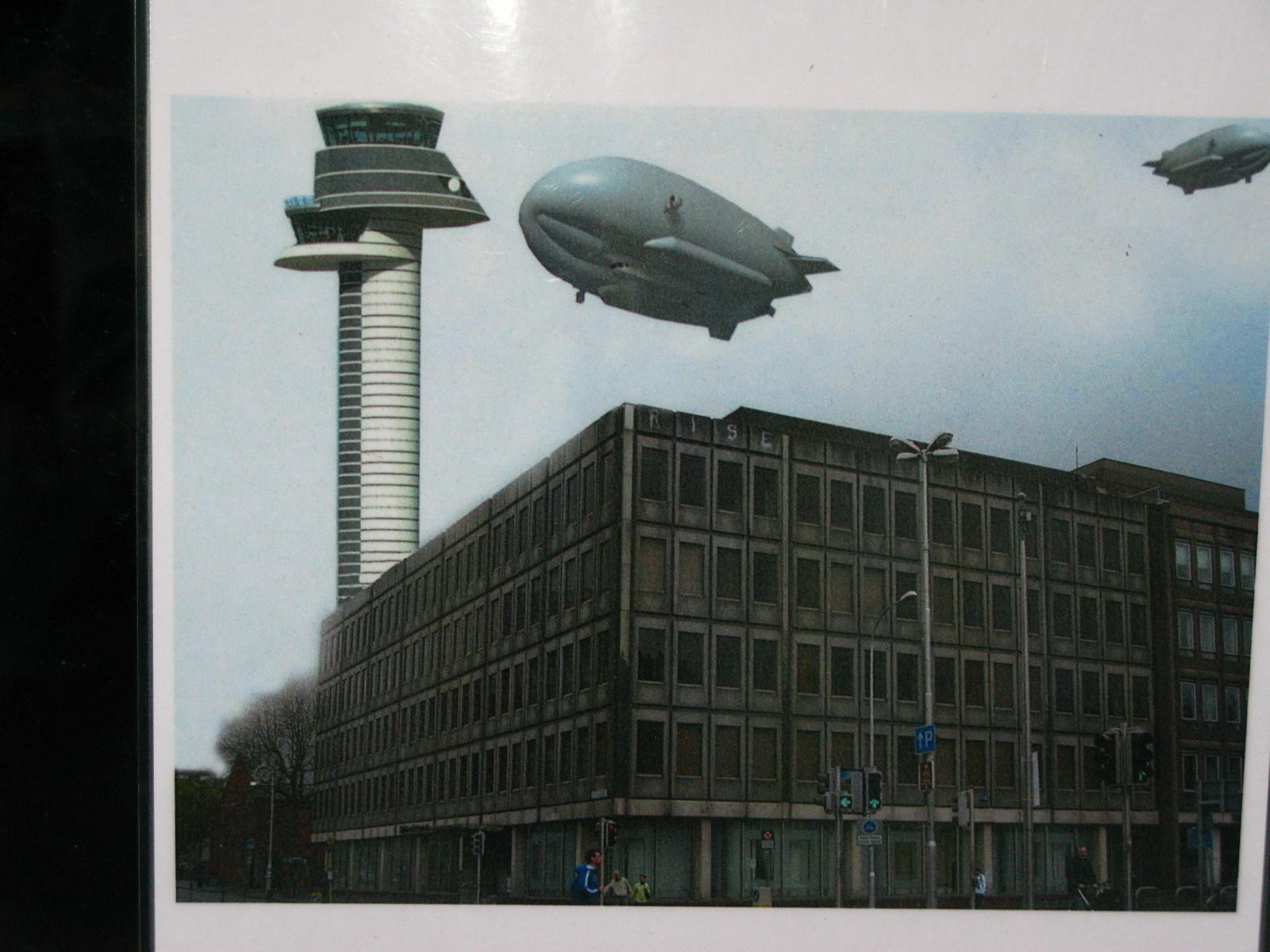
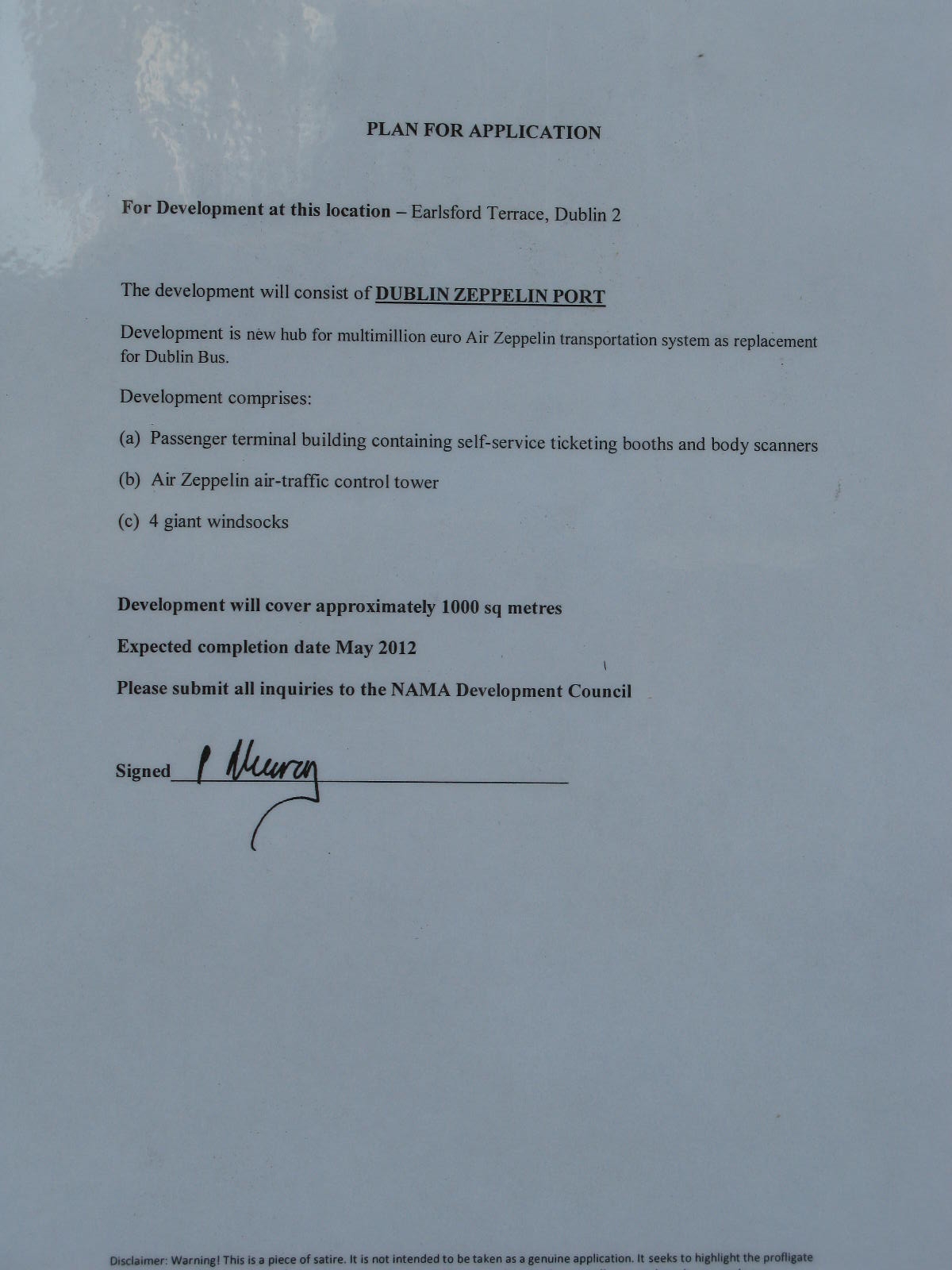
At home to UCD last Thursday night and I get a phone call half an hour before kick off from a good mate of mine, a through and through Rovers man (I only hold it against him on match days.) I thought there was something wrong, knowing he should be on his way to the Bray game but luckily, no, he just wanted to tell me about the below; spotted on the old Canada Life building on Stephen’s Green, a brilliant piece… Props to the Dunster lad!

e

This would actually look amazing... (Image copyleft hXci)

All I really know about Zeppelins is that they have a propensity to explode spectacularly and that there was one in an Indiana Jones film but have to admit, the thoughts of getting one out to a game in UCD would make a normally horrible evening a little more bearable. Plus, “Night Zeppelin” sounds way cooler than “Night Bus.” If only…

Better than it lying idle! (Image copyleft hXci)

Anyways, to whoever put the planning application up, I salute you. You brightened up my evening!

Read Full Post »
« Newer Posts - Older Posts »