Feeds:
Posts
Comments

Archive for the ‘Uncategorized’ Category

Right… Before we get anyone on mumbling about “waste of tax payers money… etc,” we really didn’t expect what happened to happen… The following is the work of DMcHugh, and is a quick anecdote about what happened last Friday. My additions are in italics!

Yes, a fire engine just like this

Feet are shit. They’re slow, they’re tender and if they pick up even a slight injury and then you’re stranded; marooned. Which is why I love my bike. Not in the ostentatious, fixed gear and no brakes way, but as an indispensable part of my life. So when I don’t have my bike, because of puncture or more serious damage, I’m pretty upset. But I wouldn’t call it an emergency. And I definitely wouldn’t expect anyone else to to call it that either. But that’s what happened on Friday night…

It was a crap lock. A 30 euro one I got because it looked tough and was cheaper than most. But like so many other locks, the real catch is the lock itself- does it jam, does it twist, does it break the key off? Which is exactly what happened. A few beers and a night in the cold left my patience thin and the metal sluggish. hXci’s patience was
thinner still and he took the keys off me, to loose the bloody thing. The keys came back but the lock stayed put, half the key stuck in there, and my bike was left to wait out the cold night on its own.

Before and after work, we plied it with pliers and pared away two hacksaw blades, transforming them into toothless breadknives, but it was stubborn, not moved by clumsy grabs or sharp words. A tip from Google Buzz (thanks Andrew!) had suggested the fire brigade, and I called them up. They didn’t just cut it for me, (we expected one man in a jeep to show up with a pair of boltcutters;) they sent a whole bloody fire-engine along, flashing siren and stocked with four big fellas and all manners of equipment. They cut the thing there and then, hopped back into the wagon and chased off into the sunset, off to do proper fireman work, or maybe just back to the station for a cup of tea.

So hot tip, buy a proper lock, with a solid mechanism and strong keys. And should the worst happen anyway, you can ring the fire department office to come and rescue you, if you can live with the embarassment and the joke (I-hope-it’s-a-joke-) 500 yos call out charge.

Read Full Post »

Edit: Here is the translation.

A 1902 election leaflet for James Connolly, Wood Quay ward

Serious praise is due to Tomás O’Riordan and all involved with the University College Cork MultiText Project in Irish History , which has become an online home to many rare Irish historical photos and texts from the revolutionary years, ranging from characters like Jim Larkin and James Connolly to WB Yeats and Hanna Sheehy Skeffington.

The above find is undoubtedly one of my own personal favourites.

Some great insight into the election of 1902 can be found in Samuel Levenson’s fantastic biography of Connolly.

“As usual, Connolly’s campaign consisted for the most part of open air meetings, his favourite location being in New Street. The support of the Trades Council did not do much to make Connolly respectable, he recieved the usual amount of vilification. Sermons were preached in which he was termed an anti-Christ, and Catholics were forbidden to vote for him under pain of excommunication. It was charged that his children attended Catholic school only to camouflage his own beliefs”

Connolly was one of three Irish Socialist Republican Party candidates. None of the three managed to get elected on the day, with the other two candidates losing by decisive majorities. Connolly ultimately polled 431 votes, while the winning candidate achieved 1,424 votes.

An address made by Connolly “to the electors” and “fellow workers” of Wood Quay can be read online here

“…remember how the paid canvassers of the capitalist candidate – hired slanderers – gave a different account of Mr. Connolly to every section of the electors. How they said to the Catholics that he was an Orangeman, to the Protestants that he was a Fenian, to the Jews that he was an anti-Semite, to others that he was a Jew, to the labourers that he was a journalist on the make, and to the tradesmen and professional classes that he was an ignorant labourer; that he was born in Belfast, Derry, England, Scotland and Italy, according to the person the canvasser was talking to”

Read Full Post »

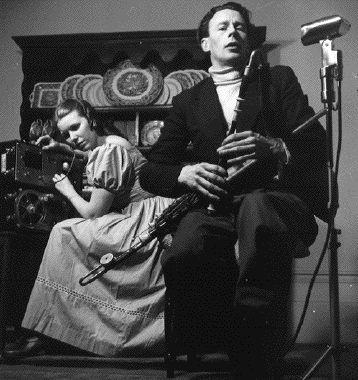
There was a great reaction to Mise An Fear Ceoil, a recent post I did on Seamus Ennis, the great piper of the Naul, North Dublin.

Recently, we stumbled across The World Jukebox website, which collects international folk and traditional music.

Here, from the World Library of Folk and Primitive Music vol.1:Ireland, we hear his voice. Proof Ennis could hold his own on the strength of his vocals, and not just his legendary musicial ability with regards the pipes.

Seamus Ennis, being recorded by Jean Ritchie

Read Full Post »

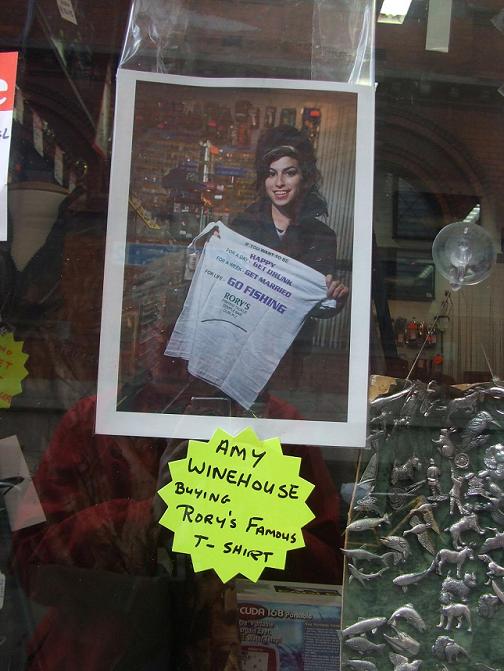
Spotted in the window of Rorys Fishing Shop, Temple Bar.

How long is that there? I must walk past the place twice a week at least on the way to the Westmoreland Street bus-stop.

Still, not as bemusing as the restaurant a tiny bit further up with a sign in the window boasting of ( I swear) a €4.50 pint of Guinness. Bargain lads, bargain.

Read Full Post »

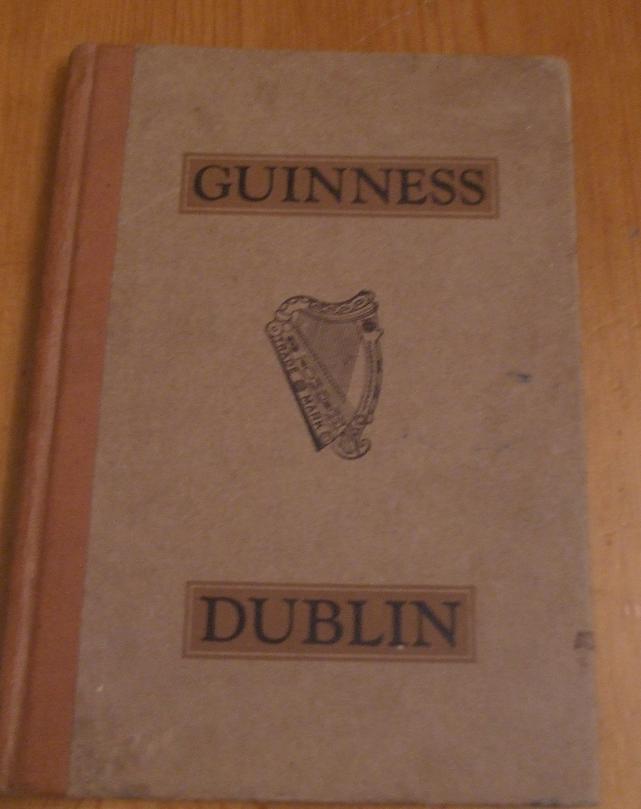
The Front Of The Guinness Guidebook, 1939.

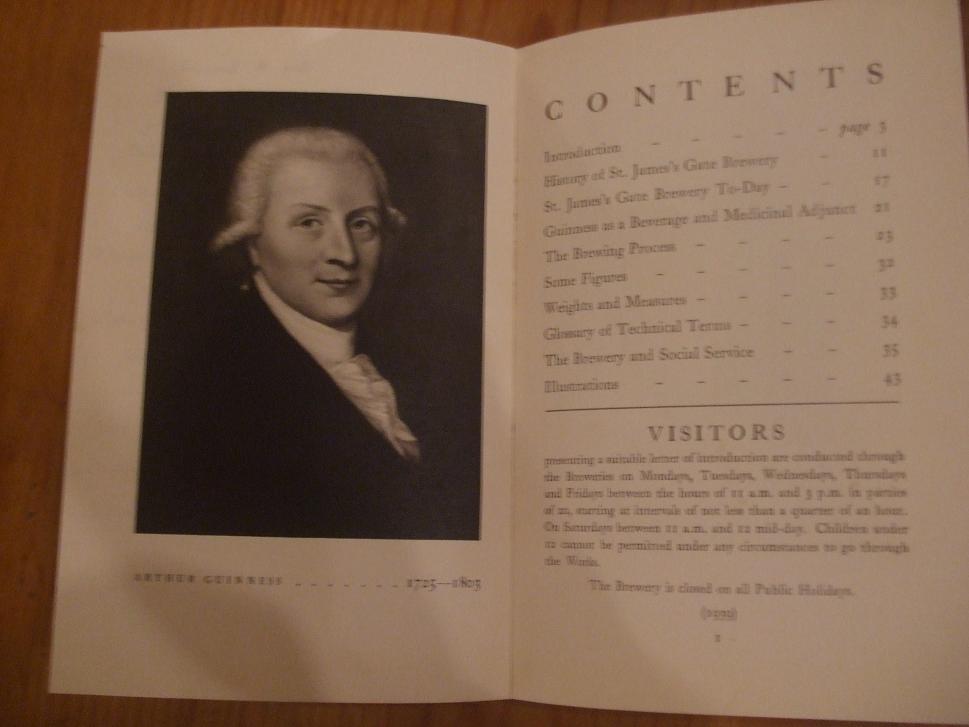
VISITORS
Presenting a suitable letter of introduction are conducted through the Breweries on Mondays, Tuesdays, Wednesdays, Thursdays and Fridays between the hours of 11 a.m and 3 p.m in parties of 20, starting at intervals of not less than a quarter of an hour. On Saturdays between 11.am and 12 mid-day. Children under 12 cannot be permitted under any circumstances to go through the works.

The Brewery is closed on all Public Holidays.

(1939)

Arthur Guinness himself, and the Contents page.

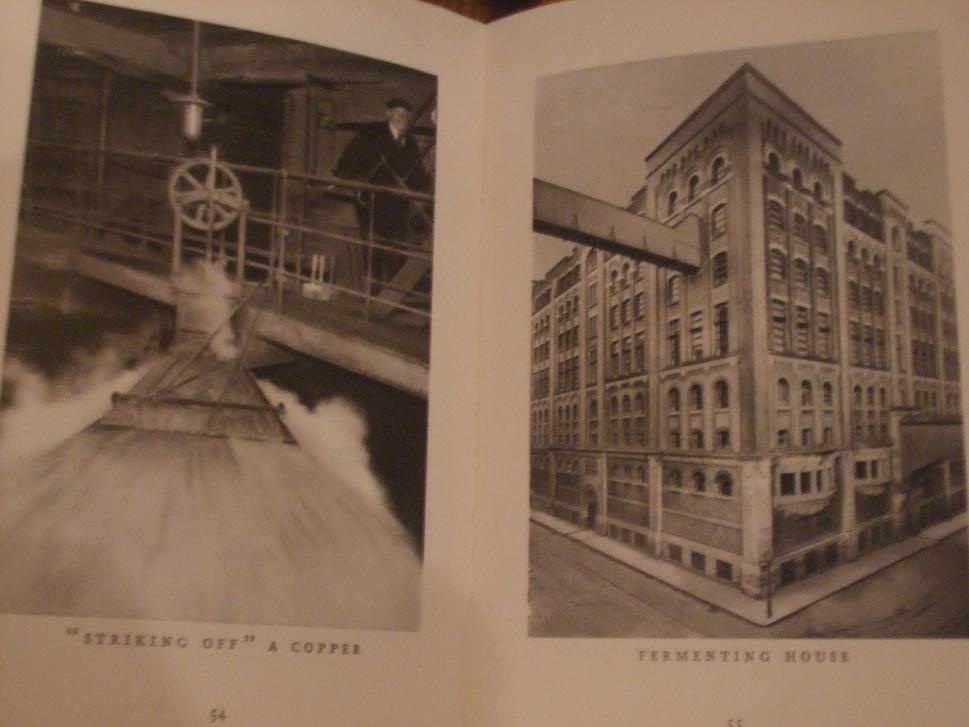
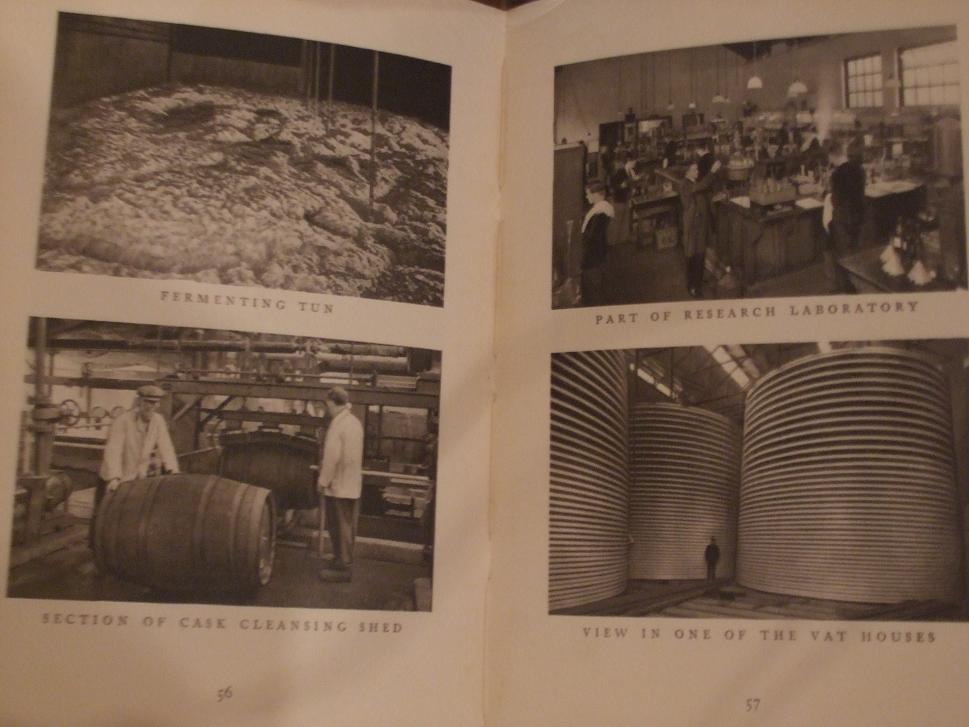
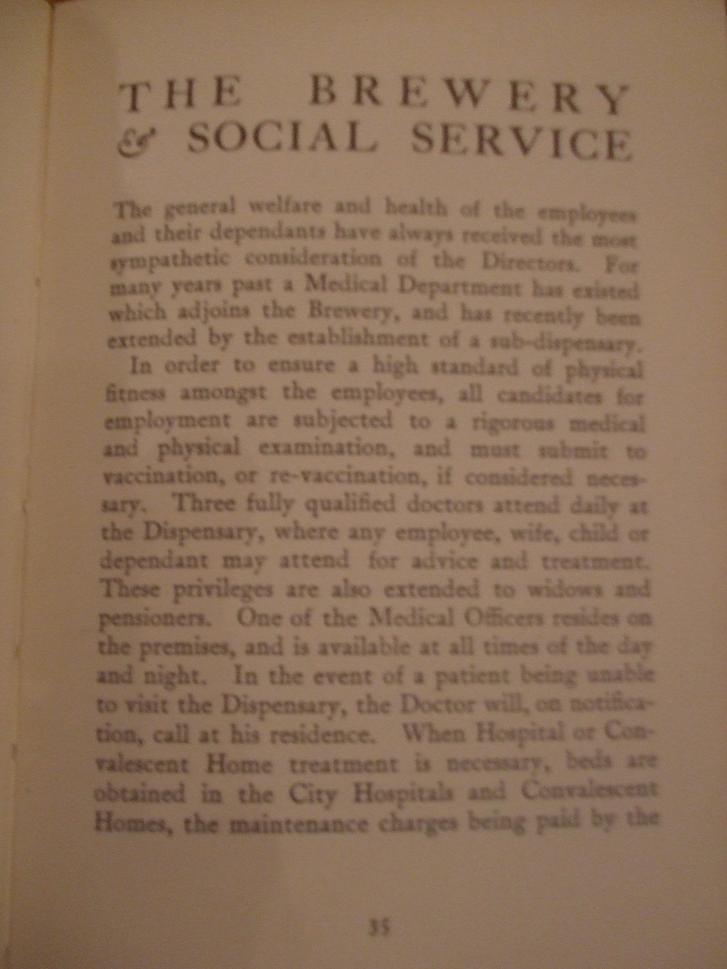
The trip down Guinness memory-lane continues with this nice piece. Long before the Guinness Storehouse, visits to the Guinness Brewery were literally just that- visits to the Guinness Brewery. This interesting little book boasts some fantastic illustrations of the process of Guinness brewing, along with information on life for employees of the company.

Workmen are supplied with meals free of charge when engaged on work of a special nature. Motor drivers on early duty (6-7 a.m) are provided with a substantial breakfast. All messenger boys and boy labourers are supplied free of charge with a substantial meat meal in the middle of the day. Free dinners are also supplied to the sons of widows and pensioners who are attending school in the neighbourhood.

Page 42

Illustrations from the Brewery

Illustrations from the Brewery

An example of the contents of the book, detailing social services at Guinness

GA369B

Book of British Authorship
Printed in Great Britain by John Waddington Ltd., Leeds
2/5/39

A fantastic insight into life at the Brewery at the time. A company that took great care of its workers and expected the utmost back in return (for example, during the Dublin Lockout the company dropped a Guinness shipworker with decades of service for refusing to engage with scab-labour on the Dublin docks) The welfare and working conditions at the Brewery were unrivalled in Dublin at the time, and t he fact a guidebook like this was produced long before the Brewery became a tourist attraction in any real form shows the level of professionalism at the Brewery.

My own mother, the daughter of a Guinness worker, still remembers the perks my Grandfather recieved until his death only a number of years ago. A true cornerstone of Dublin life for so long, I hope that with posts like this and earlier posts like that on the Guinness Fire Service, we here at Come Here To Me can shine a light on more than just the black stuff itself.

Read Full Post »

It’s just three days shy of the 75th anniversary of the birth of one of the best musicians and characters this country has ever seen; Ciarán Bourke of The Dubliners, and I’m reminded of this video, filmed not a year before he died, having suffered a number of strokes. If this clip of Bourke reciting “The Lament for Brendan Behan” doesn’t send a shiver up your spine, you’re made of stronger stuff than me…

Anyways, here’s to a man sorely missed by many.

Read Full Post »

Citizen Army men and women gathered at Liberty Hall on Easter Sunday for the final mobilisation before the Rising. Here Connolly gave each a last opportunity of drawing back. No one availed themselves of this chance. ‘I never doubted ye!’ Connolly told them, his face shining

R.M Fox- From ‘Dublins Fighting Story’

This may well be of interest to many of our readers.

I inherited the 1916 bug from my father, without a doubt. Even today, only hours before writing this, I was standing on Northumberland Road like a Japanese tourist only moments in Times Square. I’m still amazed that for such a short historical event, there seems to be an endless amount of research and new finds related to Easter Week 1916.

The week is one of personalities. Like Winifred Carney, the suffragette and secretary to James Connolly, who would find her place in Irish history as the ‘Typist with a Webley’. Returning to Northumberland Road, perhaps no man on the republican side was to leave such a deadly mark on the week as Michael Malone, hiding out with a small group of men (and a moveable store dummy too!) in 25 Northumberland Road. Ultimately he and one other man, James Grace, would hold the spot. Who could forget to mention Sean Connolly of the Irish Citizen Army? An Abbey actor of great reknown, who had taken the lead role only a week previously in ‘Under Which Flag?’,a play penned by none other than James Connolly. Siblings of Sean, both male and female, would join him in the insurrection.

Michael Malone, killed in action at 25 Northumberland Road

The week is also one of great tragedy. There is the heartbreaking story of one of the Sherwood Foresters being taken aback to see his own family in Dublin, having fled Britain for fear of Zeppelin raids. He would never make it past 25 Northumberland Road.

Members of the Irish Citizen Army drill.

One must really see the sites to appreciate them. Even today, I learned this to be most true. When you look from Clanwilliam House down the street towards number 25, you get a clear sense of the Volunteers line of fire. Likewise, I can remember as a young lad being taken to see the Royal College of Surgeons and being amazed by the bulletholes still littering the front of the building.

This tour is one I’ve been told often enough to get myself along to. Carried out by the authors of one of my favourite studies of the week, for €12 you’re promised about two hours worth of a wander around some of the keysites of the 1916 Rising.

Of coure, one can not take everything in in two hours, for instance some of the Sackville Street lancers who fell under fire are buried at Grangegorman cemetry. The Rising has left us with historical sites all over Dublin worthy of visiting.

As a city centre tour however, the reputation of this one is one that, to me, renders Saturday morning worthy of an alarm clock.

….if you know me at all, that’s a huge achievement.

Saturday 20th February 2010
Meeting at 10 am at the International Bar, 23 Wicklow Street.
€12

Facebook page for the 1916 Walking Tours

Eamon Ceannt, Commandant of the 4th Battalion of the Irish Volunteers at the South Dublin Union, 1916

Read Full Post »

The Patriots Inn- photo taken from alfredandmarie.com/Dublin%20Trip/Dublin.html

The Patriots Inn
760 South Circular Road Kilmainham Dublin 8.

The wise ones, we park at Kilmainham Jail. Match day. I remember a time you’d want to be arriving almost an hour before kick off to park your car before heading to see Saint Pats, ‘Dolan-mania’ it was. Those days are well and truly over. I’ve grown up, but I suppose the younger brother has always made post match pints impossible, as tempting as this pub does look.

Post booklaunch is a great time for a pint. Sure, you’ve a free glass of wine or three in you, but wine? When you’re standing there gazing up at the cells in Kilmainham Jail, and those names jump back at you, it’s a pint you want. Instantly. It’s so much to take in. Remarkably beautiful, one has to remember that that prison was allowed to fall into complete disarray, with people raiding the place for metal and anything not nailed to the ground, as trees grew out of the ground in a place once home to everyone from Wolfe Tone to Peadar O’ Donnell.

How very Irish really. We built massive “‘mon the lads!'”monuments at Kilmichael, Crossbarry and anywhere else we gave them ‘a good go’, but the most important historical site of the revolutionary years (and we’re starting the revolutionary years with 1798 here, not 1916) was allowed rot away. Volunteers (of a different kind) brought this place back to life. It is a much more fitting monument to the men and women of Irish history than any roadside piece of concrete.

The reader: The pub, you’re reviewing a pub here?

I’m getting to the pub.

It’s really handy to name a pub something like this when history kindly leaves something on your doorstep. There are pubs in this country named after everyone and anything. Wolfe Tones Pub And Bistro (and I bet there’s one somewhere), for example, might look nice from outside, but inside- it could be any pub anywhere, with no further mention of the Oirish name that got you in the door.

The first thing you see however, when you set foot in the Lounge door here, are beautiful rare photos of the jail across the road. A group of men and women standing by the cross marking the spot where almost all of the 1916 executed men fell in the early 1930s, republicans being taken to the jail by British forces, amazing photos. They go around the corner too, with more on the far side. It’s a wonderful touch. They’re not milking or ignoring what’s on their doorstep here, they’re engaging with local history perfectly.

Two highstools are spotted, and quickly taken. The people? Friendly staff, I spot two females working between the lounge and the bar. The pints clock in at €8.20 (For two, relax) and are unfaultable. I’m playing with fire here, having 15 minutes to spare before I have to get on a bus to Maynooth (have to, as students we have to go out in the town at least once a week)

Another one? Time says no, but eh…go on sure.

Two more arrive at the bar. The older Fallon spots a poster in the corner of the bar, promoting events. Unusually, the pub hosts Film Nights. This is most welcome in my own opinion. I firmly believe pubs can be a hub for a lot more than high-stool chat, and this is a perfect example.

The bar seems very much a locals bar, but this pub has a genuine warm feeling to it. Older Fallon departs for The Oak, a pub he frequented as a young(er) man and feels deserves a return trip. This one, it is agreed, also warrants a future return trip. Word on the street is that the food here is topclass too, and a quick glance over the menu reveals a very fair price-list, and food more in the Panini category than ‘terrible pub ham and cheese offerings’

Younger Fallon takes off for Maynooth, content with two fine pints, and a good fifteen minutes behind schedule.

The 66 journey is long, and alas- toiletless. Let this Random Drop Inn be the one that inspires me to include a brief summary of the toilet facilities from here on. Alas, we learn from experience.

Read Full Post »

Hxci’s fantastic post on things to do in Dublin other than sitting on a highstool getting wrecked is one of our most popular pieces, and people tend to stumble across it through a variety of humorous google searches, things in the same category as “I’m not drinking for a week in Dublin and don’t know what to do with myself at all” basically.

While he gave the National Library of Ireland a mention, it was only recently when knocking about it for college reasons I realised just how fantastic the exhibition on the life, times and work of W.B Yeats is. I remember visiting it a good two years back as it was initially intended to be a temporary exhibition. The decision to leave it in place was, for this city, an unusually wise one.

If you have broadband, and a half decent flash player (and we’re all Dubs here remember, no way any of you are living in one of those floodable, broadbandless North Kildare housing estates) you can check out the exhibiton from home.

Granted, it’s free in real life, and beautiful to walk around, but after visiting it I knew there were odds and ends I wanted another look at. The audio-visual aspects of the exhibition are there to view too.

A fantastic effort from the National Library, and unusual in this country. So much of the historical material and archives in the possesion of the state would do well to find an online home like this.

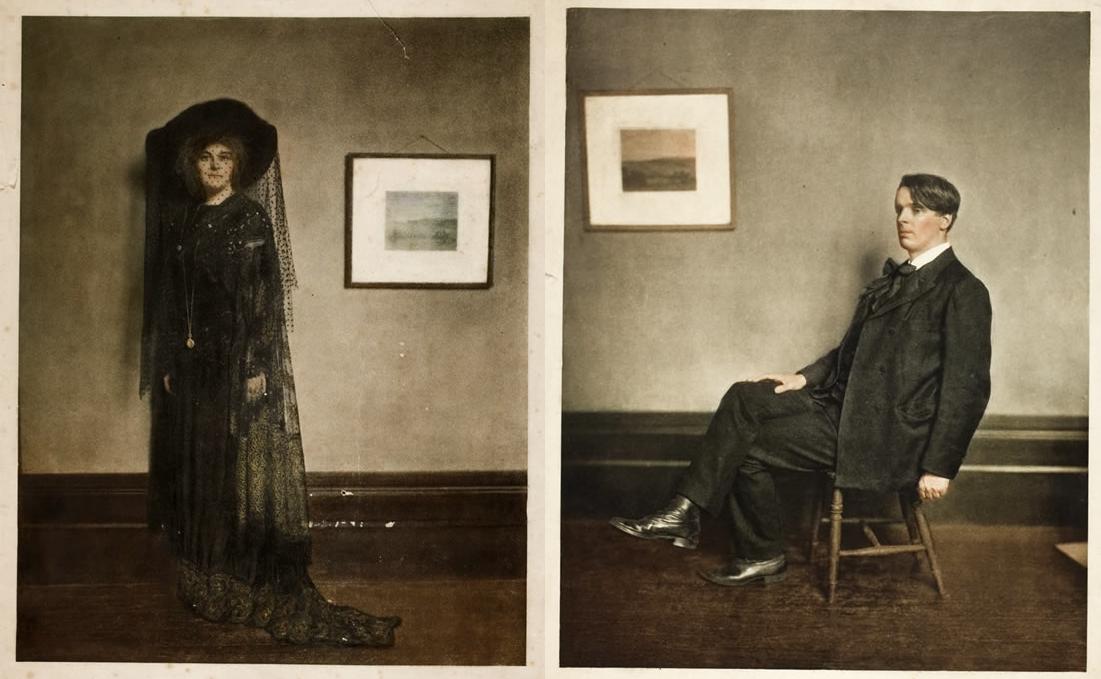
From the National Library of Ireland online, portraits of W.B Yeats and Maud Gonne circa 1900

Read Full Post »

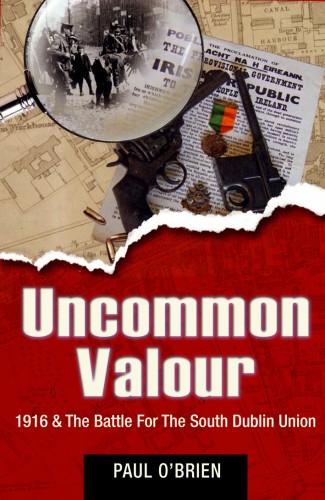
The Cover Of Paul O' Brien's latest work, Uncommon Valour

I’m currently looking forward to the launch of the latest 1916 work from Paul O’ Brien this Thursday at Kilmainham Jail, not least having flicked through the book today in the NUI Maynooth bookshop.

For a one week insurrection, I am constantly amazed at the amount of material published on the 1916 Rising. Hitting fever-pitch in 2006, things have continued at a steady pace since. Much more than ‘broad sweep’ accounts however, it is the particular and specific studies that are of interest to me.

Blood On The Streets became one of my favourite 1916 studies. The battle of Mount Street Bridge was, to say the least, bloody brutal. Wednesday the 26th of April was one of the most eventful days of the insurrection, with the shelling of Liberty Hall (completely empty bar one cleaner)commencing that morning. The rebels were holding up reasonably well across the city, despite a severe disadvantage with regards numbers. Sean Heuston’s efforts at the Mendicity Institute on Ushers Quay being a perfect example of a small band of rebels keeping large government forces at bay. That day however will be remembered as the day when four battalions of the Sherwood Foresters (Many of whom believed themselves to be on French soil at first) would encounter hell by Mount Street Bridge, not least from the (initial) 4 volunteers at home in 25 Northumberland Road. A far superior number of Sherwood Foresters, attempting to advance towards Trinity College, were ultimately stalled for days by a tiny band of rebels.

General Sir John Maxwell himself noted that:

“Four officers were killed and fourteen wounded and of the other ranks, 216 were killed and wounded”

Paul O’ Brien’s account of the battle is a comprehensive and long overdue one, where the reader feels they themselves are there in Clanwilliam House, or 25 Northumberland Road. Such is the effect of somebody focusing on such a key event in itself, rather than giving it a passing role in a broader study.

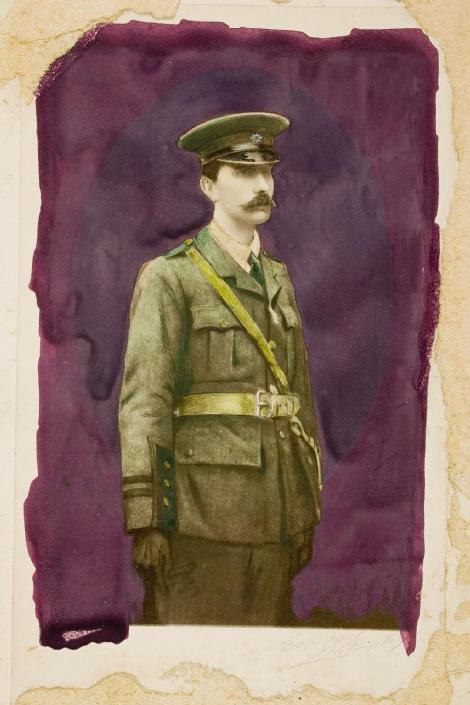
Eamonn Ceannt, from the National Library of Ireland online.

Hopefully, this account of the South Dublin Union garrison will be more of the same. One of the most interesting sites from during the week, not just in terms of the action that occured there- but the characters involved. Commandant Eamonn Ceannt was in charge of the 4th Batallion on the day, with Cathal Brugha and W.T Cosgrave next in line. It’s miraculous Cathal Brugha emerged from the battle here at all in truth, and it was here that Nurse Margaretta Keogh was to become the first female casualty of the week

The priceless 1916 Rebellion Handbook observed that

“The rebels took up suitable sniping positions at Dolphin’s Barn, Marrowbone lane, Watling street, Kingsbridge, Kilmainham, Rialto and Inchicore, while a party which seized Messrs Roe’s malting stores near Mount Brown also gave trouble”

The account of the assembly of the 4th Batallion, as noted in Dublins Fighting Story, provides fascinating insight into the chaos and disorganised nature of the rebellion at first. The Batallion had a roll call of about 1,000 Volunteers before the Rising. Where were they on the day?

There is an amazing tale of when Cathal Brugha -boasting twenty five wounds (Of which five were after cutting through arteries) and feared dead by many of his comrades- burst into song. Ceannt rushed to see the sight of Brugha slouched against a wall with his pistol to his shoulder still.

“The two heroes laid aside their weapons. The commandant came on bended knee the moment he saw the dreadful condition of his comrade- lying in a pool of his own blood four square feet in extent- embraced him, pressed him to his heart in a very passion of affection and tenderness. They exchanged greetings, very briefly, and the fond eyes of the commandant were flooded with tears”

In the end, the British would focus their attention on the General Post Office and the Four Courts, and the South Dublin Union garrison would ultimately not hear of the surrender until Sunday. Two miles west of the headquarters of the Provisional Government, Ceannt and his men – severely outnumbered by government forces from the nearby Richmond Barracks- would hold out for the length of the insurrection.

An individual study of such a key flashpoint of the 1916 Rising is most welcome. I look forward to obtaining my copy! If you’re there on Thursday say hello.

Read Full Post »

A recent post on the Guinness Fire Brigade was, as far as I am aware, the only study on the Brigade online. Bar a passing reference on the Irish Times 1916 special website, there seems to be a complete shortage of information when it comes to the ‘Arthur Guinness and Sons’ fire service.

So, what were the odds of this:

Picked up at the Blackrock Market, for an unbeatable €10.

A nice welcome addition in the search for information, pictures and more on the Guinness Brewery Fire Service.

Read Full Post »

The Leprechaun, February 1910 (Page 185)

During the recent snow in the city the streets were neglected for days. We venture to offer the above suggestion.

Discovered this one recently hiding in a collection of old cartoons, nice to spot the Lord Mayor and his £3,600 sweeping brush in the Dole line. Before John Gormley, they were still Gormless.

Read Full Post »

« Newer Posts - Older Posts »