Feeds:
Posts
Comments

I actually popped into R.A.G.E today for a look, and the vinyl section makes me wish the bank balance had a few extra 0’s on the end of it. The best present I was ever given was a vinyl player, and an international day to celebrate those who continue to operate shops where the format is paramount is most worthy of celebration.

R.A.G.E have lined up a great day of music, giveaways and fun for International Record Store Day. Drop in and say hello.

Squarehead- Fake Blood.

Sweet Jane-Bleed.

I’m somewhat new to the Tweet Machine. With about 300 tweets, most of them re-tweets of people funnier/cleverer/cooler than me, I’m hardly setting the thing alight either. One of the first things I did upon joining the ‘Bourgeois Facebook’ however was get right on to Crackbird to avail of their ‘tweetseats’, essentially FREE FOOD on offer to Twitter followers.

Any day I’m working, providing tours of Dublin to tourists, I tend to come up Crane Lane. It’s a good shortcut from Temple Bar to Dublin Castle, with some interesting history to it too. The smell from Crackbird has been tempting me for the last few weeks, and any glance inside the place has always revealed it to be packed.

I was lucky enough to grab two ‘tweetseats’ for Tuesday evening, no small feat when you see the crowds inside this place. The brother was unable to attend due to having a busier life than me, but Ci from this here parish was available to fill in thankfully. You’d be surprised how easy it is to find people to eat for free with you.

Crackbird is a ‘pop-up restaurant’, which means she ain’t gonna last forever, as the title of this piece suggests. Come the end of May in fact, Crackbird will be no more. This is most unfortunate when you remember the last few ventures in this premises seemed almost allergic to customers.

The menu here is simple. Chicken, chicken and more chicken. Man can do so much with chicken of course, and between the two of us we opt for the “Skillet fried buttermilk chicken” and the “Super crisp soy garlic chicken”. The chicken arrives quickly after, literally in buckets, and we tuck in.

We both opted for a bottle of David Llewellyn cider, which is about as cidery as cider comes. Being a very strict stout drinker, and not knowing anything about cider beyond the fact Bulmers is pretty nice in the summer, I’m taken aback by this very different taste. I’m unsurprised to notice online that the cider is a national award winner. Pilsner is the only beer on offer, but it’s a nice one at that and we opt for two bottles after the cider.

The “tweetseats” consist of one table of six, and being a party of two we find ourselves sitting next to four random punters. We’re tucking into this like barbarians in the wild, but we don’t care. Looking around the restaurant, I notice this sort of communal eating is very much a part of the venture. All you can hear is conservation and the Pilsner flows freely. The music is great, indeed the best playlist I’ve stumbled across in a Dublin restaurant to date, and the staff are incredibly friendly. Despite the fact we’re eating for free, beyond our drinks, there is no effort at all to hurry us a long. We’re given a nice sending off too at the end.

With our bellies full, we went for a walk around the city, feeling eight months pregnant. The journey would take us to the ‘snail bar’ (I’d never been and fancied walking as far away and possible) and on to the more familiar Brogans. If you like chicken at all, get into Crackbird before she vanishes, and this Crane Lane premises goes quiet once more.

If you’re over on the mainland (controversial) I’ve an article in the latest Red Pepper Magazine which looks at some more unusual sites around Dublin, and some of the radical history of the capital.

Here in Dublin, rumours of our demise have been greatly exaggerated.

That image, of Ajaj Chopra from the International Monetary Fund passing the shell of Anglo Irish Bank on Stephens’ Green, no doubt gave the impression that Dublin was closed for business.

The They Are Us project from Damien Dempsey and Maser, the Seomra Spraoi social centre, the bullet holes of the 1916 insurrection, a favourite watering hole (The Hop House, if you’re wondering) and more besides feature.

Red Pepper are online here.

Thanks to Mark for pointing out on our Facebook that you can normally pick this up in Books Upstairs opposite Trinity.

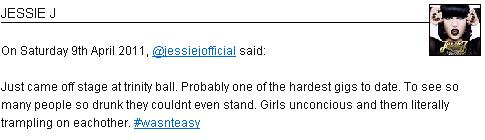
I had to laugh at this Tweet from Jessie J.

Maybe it’s an Irish thing…

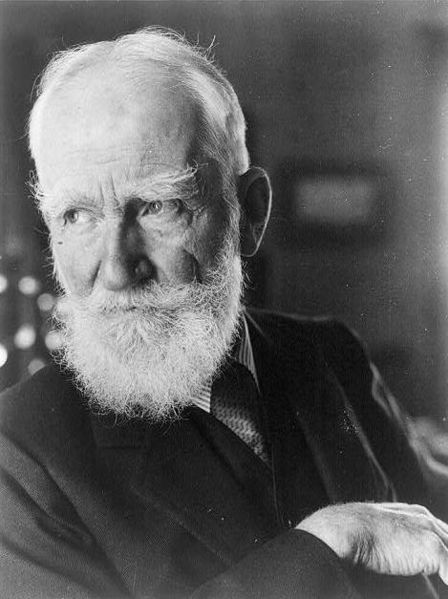
An honest and natural slum dialect is more tolerable than the attempt of a phonetically untaught person to imitate the vulgar dialect of the golf club; and I am sorry to say that in spite of the efforts of our Academy of Dramatic Art, there is still too much sham golfing English on our stage, and too little of the noble English of Forbes Robertson.

George Bernard Shaw writing in the preface to Pygmalion.

It is pretty remarkable that is has taken 100 years for Pygmalion to make its way to The Abbey. After such a long wait, it’s about time Eliza Doolittle made her way to the stage.

My introduction to Shaw was, unusually enough,John Bull’s Other Island. His satires and humour greatly appealed to me, and I’ve read a great deal of his works, letters and social commentary. Class, of course, is a reoccurring theme in Shaw’s work. Shaw laid down many of his thoughts on the structures of capitalist society in writings collected for The Intelligent Woman’s Guide to Socialism. Women’s independence, as much as class struggle, was something which greatly interested Shaw.

It is useless to pretend that religion and tradition and honor always win the day. It is now a century and a half since the poet Oliver Goldsmith warned us that ‘Honor sinks where commerce long prevails’; and the economic pressure by which Capitalism tempts women grew fiercer after his time. We have just seen how in the case of the parents sending their children out to work in their infancy to add a little to the family income, they found that their wages fell until what they and the children between them could earn was no more than they had been able to earn by themselves before, so that in order to live they now had to send their children to work whether they liked it or not.

Of course while Pygmalion triumphs as romantic comedy, Shaw’s play takes aim at the British class system and the role of women in the society of the time.

It is perhaps Shaw’s most celebrated work. After 100 years, it’s great to see it arrive at The Abbey, which has delivered such excellent works in recent times. I look forward to attending.

On the Abbey stage Wednesday 27 April – Saturday 11 June
Previews
Wednesday 27 April – Tuesday 3 May
No performance Monday 2 May

Monday – Saturday evening 7.30pm, Saturday matinee 2pm
Tickets: €13 – €40

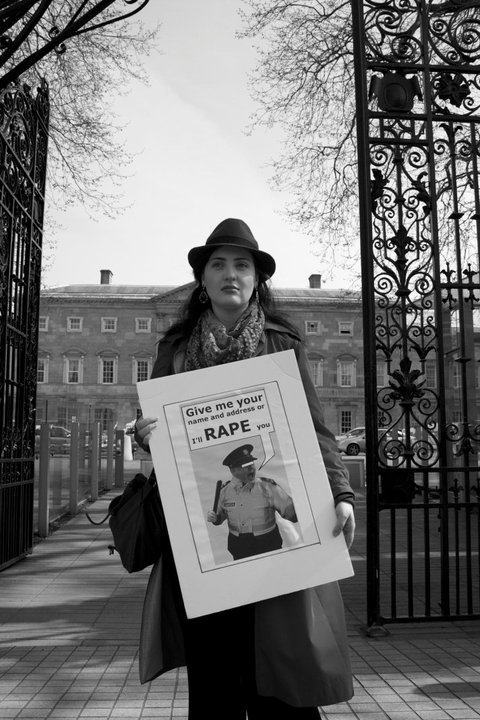
There is a good report of the protest on Kildare Street today following events in Mayo over here, on the website of the WSM.

The message of todays event, which was organised by an ad hoc group of organisations and individuals concerned with justice, equality, and women’s and human rights under the heading ‘Say no to the trivialisation of rape’, was that rape is not a joke.

Organiser Susan Ms McKay from the National Women’s Council said: “Jokes about rape are never funny. Rape is recognised in law as being second only to murder in terms of gravity. An Garda Síochána are responsible for upholding the law and for protecting the public. Their behaviour must be exemplary, and they must respect the people they serve. That includes women. We are half the population, and we are the majority of the population at risk when it comes to crimes of sexual violence.”

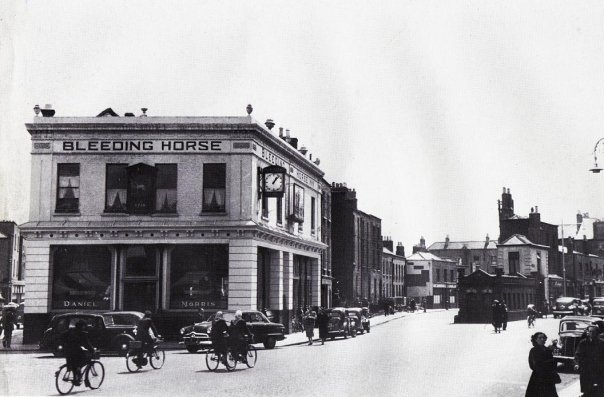
The Bleeding Horse

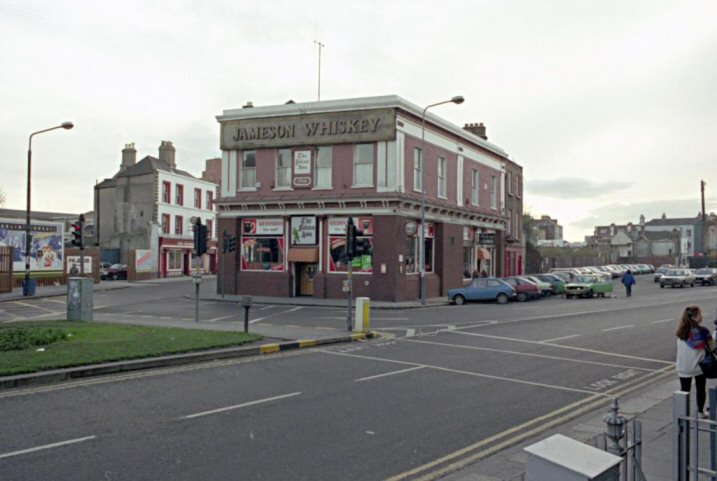
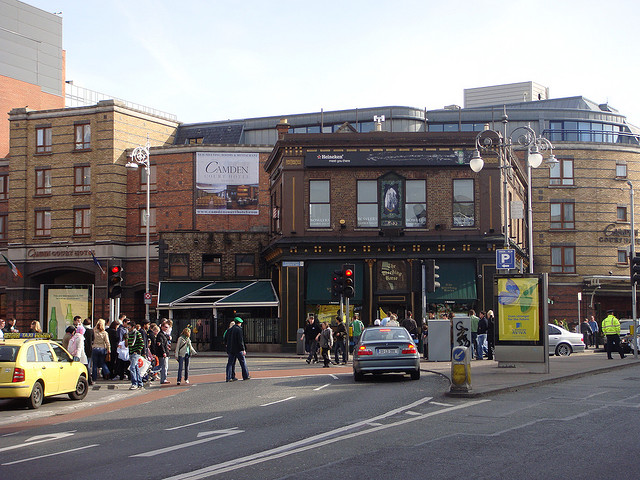
A couple of nice snaps of The Bleeding Horse public house on Camden Street.

The pub, which dates back to 1649, claims to be the second oldest pub in Dublin.

There are many stories on how the tavern got its name. The most frequent one told is that during The Battle of Rathmines (1649), Cromwellian forces brought their wounded horses to the thatched, timber inn that stood here.

From the early 1970s to the early 1990s, it was called The Falcon Inn.

Charlotte Street, to the left of The Bleeding Horse, was demolished in 1992. I plan to write an article on this disappeared  street in the near future.

The Bleeding Horse (1950s)

The Falcon Inn (1972) Credit - Hohenloh

The Falcoln Inn (1972) Credit - Dublin City Council

The Falcon Inn (1990) Credit - Dublin City Council

The Bleeding Horse (2010) Credit - nycbrent

While a certain Myles na Gopaleen joked of ‘no God and two Saint Patrick’s’, the brother once heard otherwise:

“The brother met an oul fella below in Wikela town and yer man said straight out of that there was no Saint Patrick and that the whole yarn was invented be Strongbow or somebody. The brother asked him, if that was true, how come there was no snakes in Ireland? Know what th’oul fella done? Laughed in the brother’s face.”

We take any chance to post Myles here of course.

Anyway, here is a video of the latest History Ireland Hedge School, at the National Library on Kildare Street. I didn’t make this one with work commitments, but I was at the prior Hedge School which dealt with ‘1916 and all that’ and what the decade of centenaries ahead of us means. The National Library is a great venue for discussions like the Hedge School’s.

The panel for this one were: Elva Johnston (UCD), Canon Adrian Empey (Church of Ireland Theological College), Mike Cronin (Boston College) and Eamon Delaney (Sunday Independent). Some of you would have caught Delaney at the Hedge School we were involved with in Phibsborough, which examined the punk and new wave scene of 1970’s and 80’s Dublin. Tommy Graham, editor of the magazine, oversaw the discussion.

From a discussion on neutrality in a Laois tent to the more comfortable National Library, the Hedge Schools are a great attempt to bring historical debate into more popular and common settings than is the norm.

A quick repost here, I saw this featured on the website of Liberty, the newspaper of the Siptu union.

Notice of Public Protest Say no to the trivialisation of rape!

Protect the rights of women and migrants to protest with dignity and respect!

PROTEST AGAINST RAPE COMMENTS BY GARDAI

Dáil Éireann – Friday, 8th April at 1pm

If like many people in Ireland you were shocked by the recordings of Gardaí in Mayo making disparaging and threatening comments about two women protesters – including the threat of rape and deportation – come join a silent protest this Friday 8th April at 1pm at Dáil Eireann.

The gathering will:

Stand in solidarity with the women concerned
Support the right of women everywhere to protest without fear of rape or violence
Demand an end to the trivialisation of rape
Support the right of migrants to protest without the threat of intimidation or deportation
Voice our solidarity with victims of sexual violence
Call for a promptly delivered, robust and transparent enquiry into the behaviour of the Gardaí concerned
This protest is being organised by an ad hoc group of organisations and individuals concerned with justice, equality, and women’s and human rights.

I mentioned on here before than I’m trying to get to grips with Ulysses at the minute. One of the things I’ve been doing too is reading into some of the people who greatly influenced the work, such as Oliver St. John Gogarty. A writer of great renown, Gogarty (or Buck Mulligan to Ulysses readers) was also a Senator in the Free State administration.

I’ve been getting to grips with Buck through Ulick O’Connor’s excellent biography Oliver St.John Gogarty. He strikes me as a remarkably complex character, but one with a great wit. I was struck by a great comment in the Senate around the Wild Birds Protection Bill, 1929.

Click to expand:

My journey through Ulysses, for anyone who is curious, is going well. I expect to be dressed like this by Bloomsday.

What is it with me and cameras? I just have no luck with them; this is my fourth camera to give up on me in around eight years. I still hold out hope, I will get my little G9 fixed, I’ve only started to get used to it and have only started taking pictures I’m proud of. This rant I hear you ask, what is it about? Well, its a precursor and an apology for the quality of the below pictures, but I couldn’t help but take them and share them.

Hungover cycles often provide great inspiration, and Sunday’s was no different, and rewarding also, having come across the below piece down the (Luas) tracks. Its probably been around a while, but this is the first time I’ve ventured down this far since before the Chrimbo.

Who listens? (1)

Who Listens? (2)

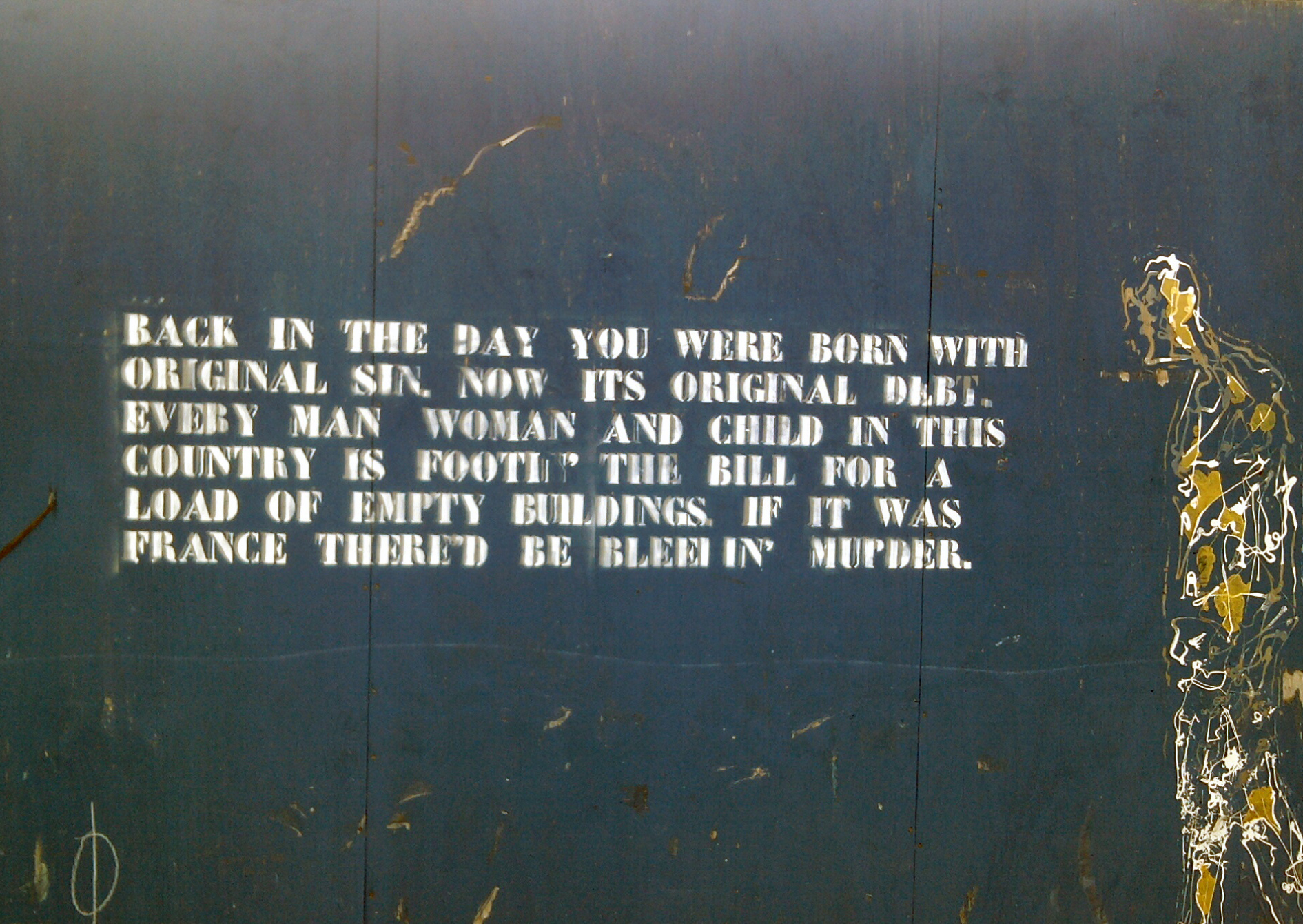
Back in the day, you were born with
original sin, now its original debt.
Every man, woman and child in this
country are footin’ the bill for a
load of empty buildings. If it was
France, there’d be bleedin’ murder.

Who Listens? (3)

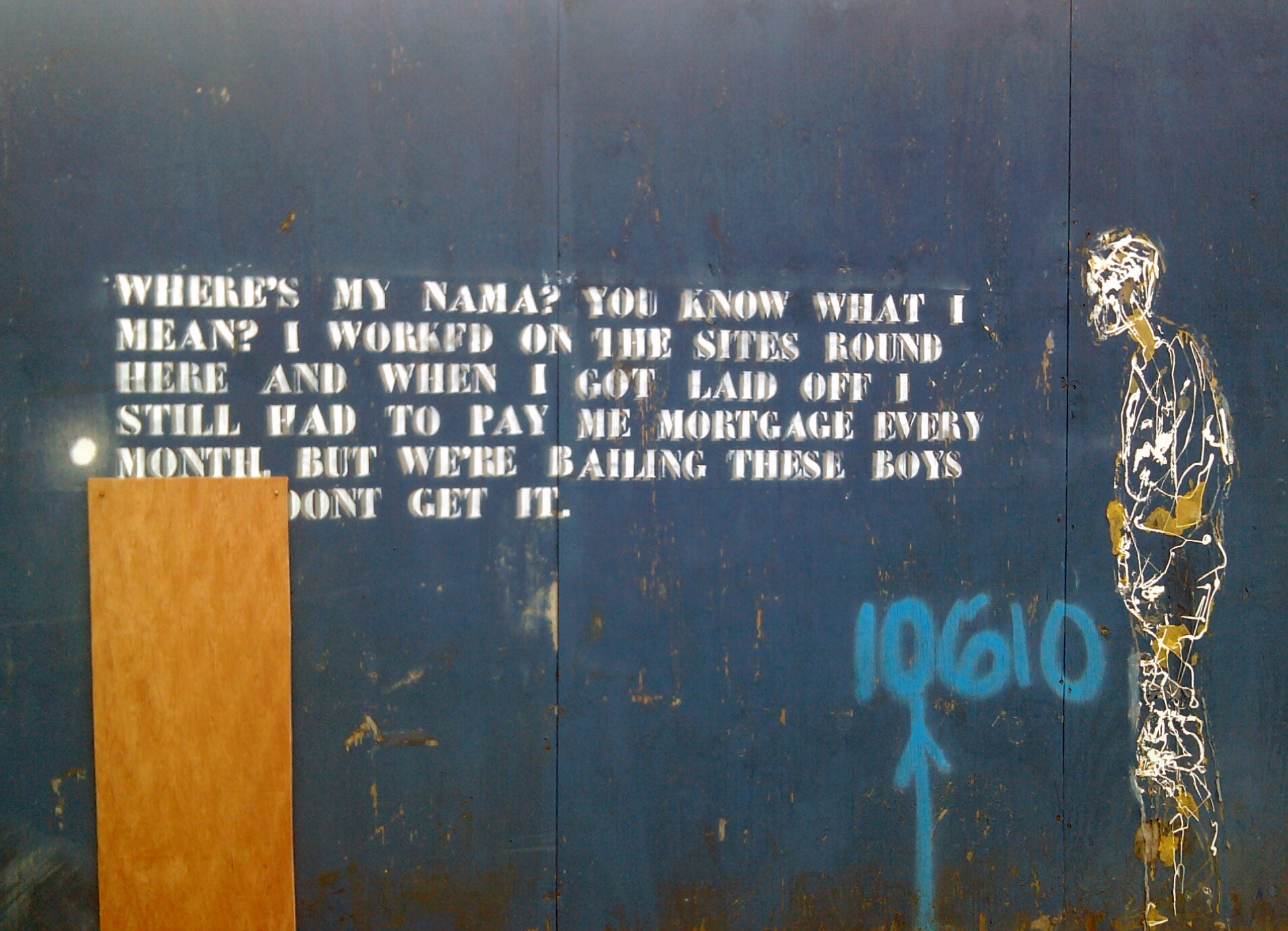
Where’s my Nama? You know what I
mean? I worked on the sites round
here and when I got laid off I
still had to pay me mortgage every
month. But we’re bailing these boys
(out I?) don’t get it.

Who Listens? (4)

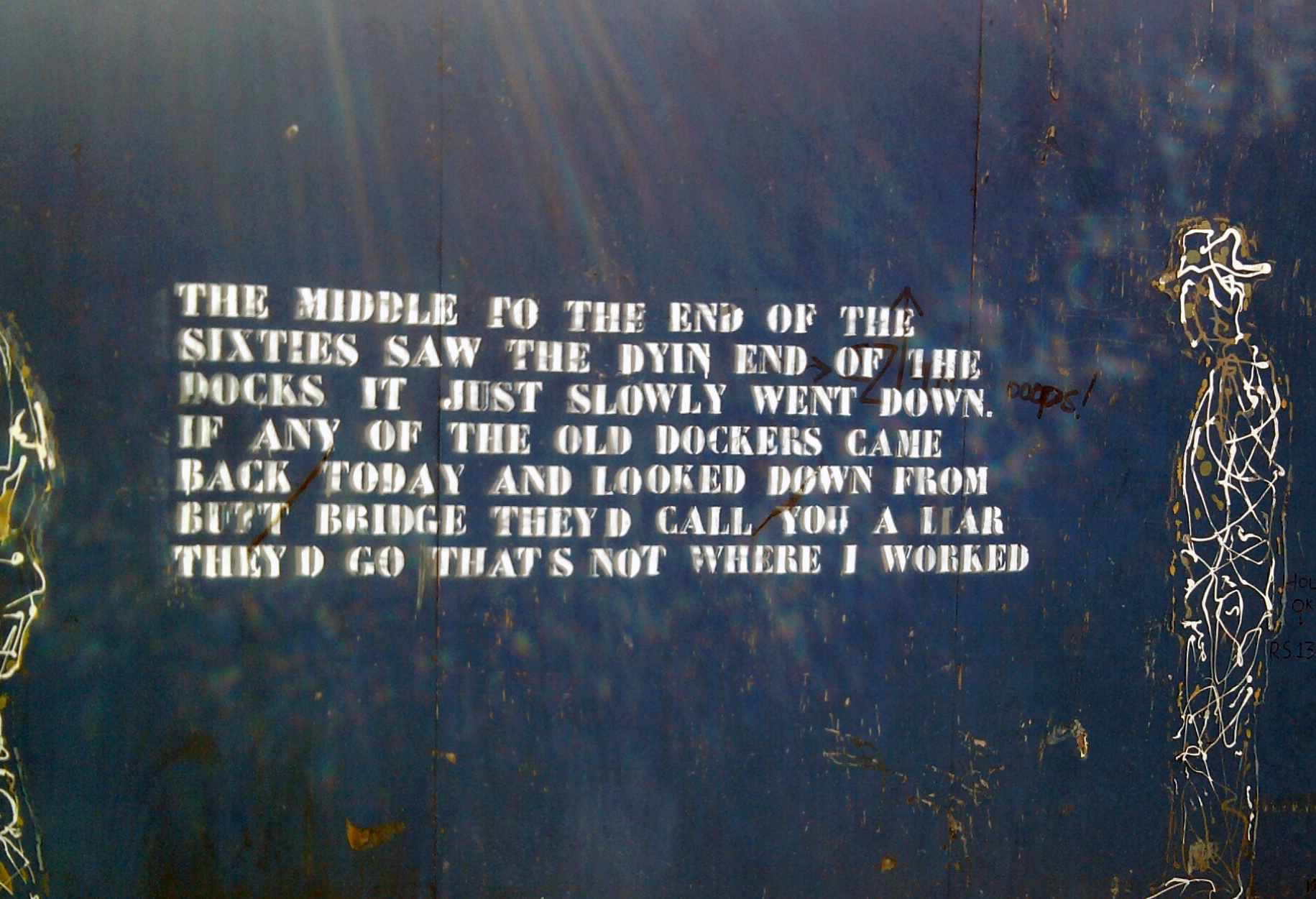
The middle to the end of the
sixties saw the dyin’ end of the
docks. It just went slowly down.
If any of the old Dockers came
back today and looked down from
Butt Bridge, they’d call you a liar,
they’d go “that’s not where I worked.”

Who Listens? (5)

There’s something Flann O’Brien-esque about the writing style, god knows what the man would have said if he saw the state of the country now. Either way, its a good summation of what has happened the old docklands; there is or, was a social history there that has been all but completely wiped out in order to pave way for the IFSC, the area that most said at the time  ” is a grand representation of the Celtic Tiger, sure isn’t it great the money we have now for all these shiny buildings.” Its a shocking pity that most of them are now empty.