Feeds:
Posts
Comments
DublinRuleOK.jpg

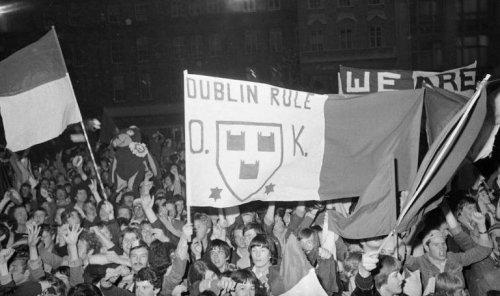
Dublin Rule O.K (Image Credit: Dublin City Public Libraries/DCC)

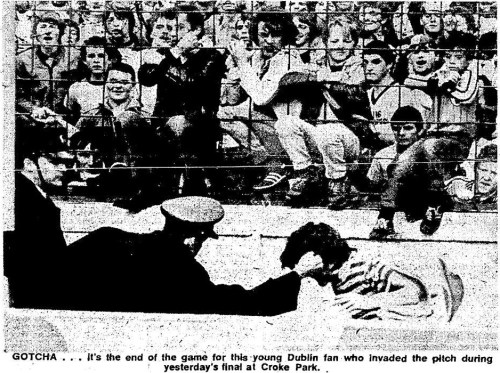
Our friends at The Little Museum of Dublin are gearing up for a new exhibition that will explore the glory days of Dublin GAA in the 1970s and 80s, and the loyal band of supporters known as ‘Heffo’s Army’. It’s an important bit of Dublin social history, and something we’ve looked at briefly on the site before.

‘Heffo’s Army’ made their presence felt everywhere they went. One journalist who watched Dublin away in Longford in 1977 wrote that:

It was like being in the Kop or at Old Trafford. “Give me a D, give me a U, give me a B,give me an L, give me an I, give me an N!” roared the conductor perched high up in the steel girders on the roof of the stand and the sound reverberated all around the ground. ‘Molly Malone’, ‘The Likes of Heffo’s Army’ and ‘You’ll Never Walk Alone’ were followed by ‘Go home ye bums, go home.’ And then there was provocative chants about the Dubs being the only football team in the land, and “The rest are no fucking good.”

As Museum Curator Simon O’Connor notes, this forthcoming exhibition isn’t just intended to be a look at the team and their successes, but the effect they had on the life of the city and the GAA in Dublin. While there are plenty of items which tell the story of the success of the team on the pitch, what is missing are

…fan mementos, home-made supporter material like flags, buttons, even small fanzines supporters may have made at the time. I wonder if any of your blog’s readers might have anything like that? The story of the time is as interesting in terms of fans as it is in terms of the games and teams themselves.

We’d be looking for items on loan, for a three month period, and would take them in the coming weeks – all items loaned would be insured and returned by mid June, with lenders acknowledged in the credits section of the exhibition.

Drop Simon an email at simon(at)littlemuseum(dot)ie if you think you can help.

15977259_1174164342632132_8239076241156323868_n.jpg

(Image Credit: Evening Herald)

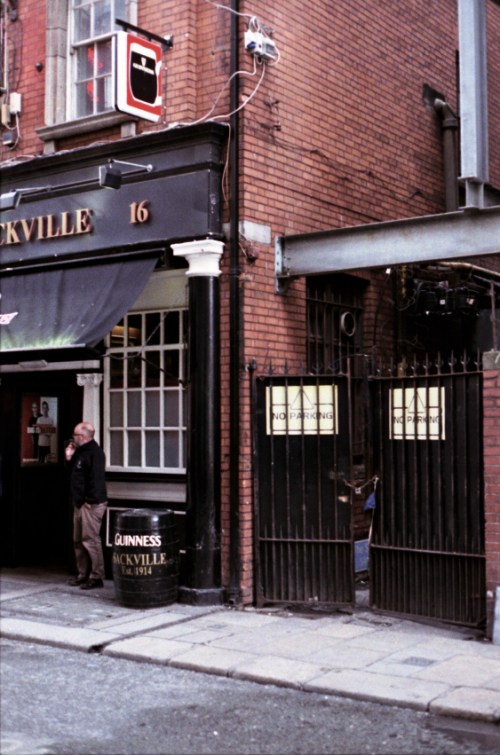
There were many happy hours spent in the Sackville Lounge. Late last month, we noted the imminent closure of the pub, and in the two weekends that followed we managed to sneak in a few (!) final pints before last orders meant last orders.

Last Saturday I visited with my friend Brian Teeling, a talented photographer among other things. I asked him to bring along his film camera and to try and snap a few photographs which would capture the place as it was. Despite the immense challenge of lighting, Brian duly set about the task at hand. You can see more of Brian’s work in the latest Totally Dublin.

There is little to add from Ciarán’s earlier post, but thanks to all at the Sackville for memorable days and nights. I remember the days more clearly.

011.jpg

017.jpg

002.jpg

007.jpg

Continue Reading »

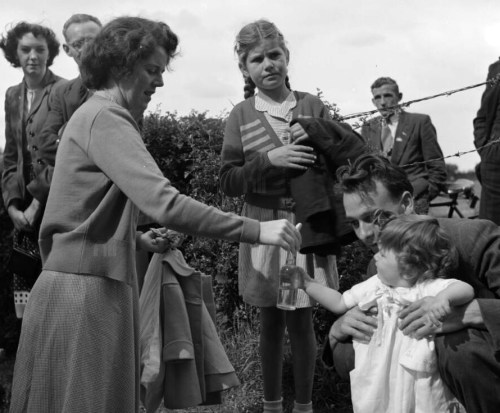
Like many people, I was sorry to hear recently of the death of Elinor O’ Brien Wiltshire through the National Library of Ireland. Born in Limerick in 1918, she and her husband Reginald Wiltshire (d.1968) took many remarkable photographs of Irish life throughout the 1950s and 60s, which are thankfully maintained today by the NLI. The collection is as vast as it is important, containing some  1,000 negatives and 300 prints.

The collection includes some famous faces,for example capturing Anthony Cronin and Patrick Kavanagh as they celebrated the first Bloomsday together. We have often drawn on the Wiltshire collection to illustrate articles on the blog, and the images are often particularly useful to social historians, as Wiltshire captured wonderful images of ordinary working class life in the city. Some of the finest images in the collection show street traders on Moore Street for example.

In the programme for an exhibition of her photos that was hosted in the National Photographic Archive, her style was described thus:

Over a period of about fifteen years, using a Rolleiflex camera which she acquired in 1955, Elinor Wiltshire captured images of a changing city and its people. The Rolleiflex camera was held at waist level and the scenes or images to be captured were viewed through a 6x6cm ground-glass screen. As a result, many of those featured in the portraits in the exhibition were completely unaware that a camera was trained on them – hence the natural and uninhibited manner in which they are depicted.

wiltshire1

Crowds at St. Columcille’s Well, Ballycullen (Wiltshire Collection, NLI)

wiltshire3.jpg

Inner-city Dublin, 1969 (Wiltshire Collection)

wiltshire1.jpg

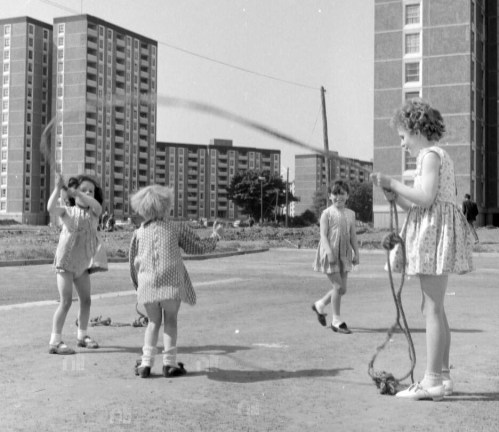
Ballymun, 1969 (Wiltshire Collection)

Farewell to the Sackville

In Dublin, the town Joyce claimed was impossible to traverse without passing a pub (only to be disproved with the aid of Google Maps a century later,) it can still be hard to find somewhere that suits your situation no matter the mood.

Somewhere that we’ve taken to recently is the Sackville Lounge, not spitting distance from O’Connell Street on Sackville Place. It’s that perfect mix of archaic and well, non archaic- a one room, no nonsense bar with a great pint, and with sound staff and customers alike. The horse racing on the telly, a bookies next door and the hum of ham and cheese toasties in the air; always made to feel welcome, and always a chat forthcoming whether in company or on your own.

In a city racing to be London-lite but with our dazzling city lights emanating from Spars, Starbucks, exuberant donut shops and expensive ‘brunch spots’ (I’ve grown to hate those words,) places like the Sackville are rapidly becoming a dying breed. People will claim Kehoe’s, Neary’s, Mulligans and their ilk to be the best ‘old man pubs’ in the city. To me, none is a patch on the Sackville.

roadtotherising

The Sackville during RTÉ’s ‘Road to the Rising.’ Image From the Sackville’s Twitter account

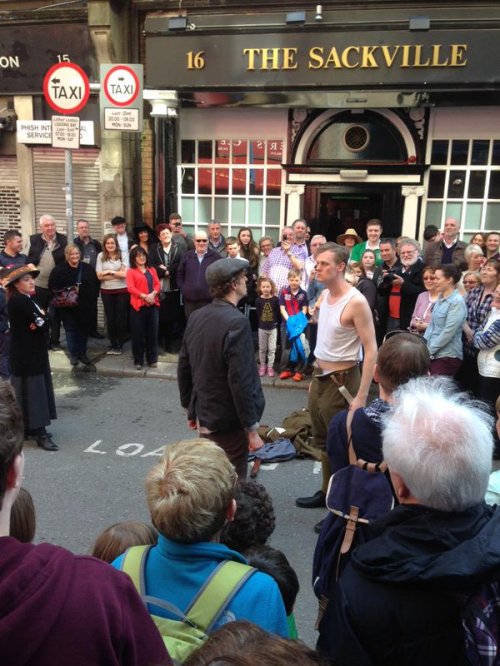
We spent a Saturday there last year in what I can only describe was a session of Canterbury Tales proportions. Dozens of people stuck their heads in throughout various parts of the day and I don’t think I’ve ever laughed as much in my life, or walked away from another pub in Dublin with the same “that was a good day” feeling than I did then. We spent another Saturday there watching Bulmer Hobson sip whiskey and mull over James Connolly’s pre-Rising disappearance as part of Anu Productions excellent  “Glorious Madness.” We saw a British army soldier duke it out with his sister’s ICA partner outside in another Anu piece during RTÉ’s ‘Road to the Rising.’ And I’d like to say I cheered home many a winner there but I think the place was a jinx on me but that matters not, we’ll be there this weekend to say farewell.

For here comes the hammer blow- from a cryptic message board post the other day we gleaned that the Sackville is due to close its doors. Confirmed by the staff and by a quick Google revealing a ‘mutual lease break’ date on the ‘Spire Portfolio’ (which contains the Sackville Lounge amongst other properties) of 8/2/17, it looks to be true. No doubt the recently granted planning permission for Clery’s across the lane and for the construction of a new hotel on Sackville Place will have an effect on the future use of the premises as Dublin looks set to lose yet another of the institutions that made it what its known worldwide for. Sadly, as they say, another one bites the dust.

It’s no breaking news that Bohs are set to take a (hopefully) brief hiatus away from the spiritual home of Irish football…

The club has called Dalymount Park its home for 116 years, during which legends, both home grown and international, musical and sporting have taken to the hallowed field. A crumbling stadium it may stand now, but to me as a Bohs fan it retains the glorious hue of a certain era of football stadia as I’ve spoken about here before. The terraces, the tea shop, the tin roofs and the towering floodlights all reminiscent of the glory days of football in this city.

That this coming season may be the last in Dalymount as she stands now is a bitter sweet feeling for many. That the club needed to finance a crippling dept is indisputable, as is the simple fact that as beautiful as it is to me and many others, to move forward requires a ground capable of accommodating same. With this in mind, some of the good people at Bohs have produced the video below, aimed at getting people involved in the club for the last year of the old Dalymount.

Words from Dan Lambert and Poet-in-Residence Lewis Kenny, reminding us that this is in fact the end of an era in an ever changing city.

16174464_10158004969425702_1127715203324619104_n.png

At 2pm, Saturday January 28th at Dalymount Park, Bohemian FC will host a talk on the life of Harold Sloan and the experiences of some of the dozens of former Bohemians during the First World War. Speakers at the event will include Pádraig Yeates,  Ciaran Priestley, and Gerard Farrell, who has researched the war experiences of a number of other prominent Bohemians from history.

Last Saturday, thousands of protestors marched through Dublin city centre in opposition to the election of Donald J. Trump.  U.S presidents have inspired large protests here before, not least the 2003 demonstration against the Iraq War, but what was particularly interesting about the demonstration last weekend was the emphasis on women, given that it was called in solidarity with the ‘Women’s March on Washington’ in America.

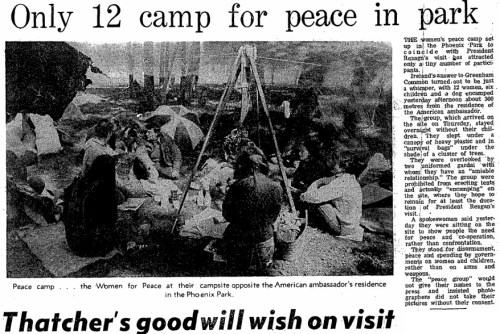
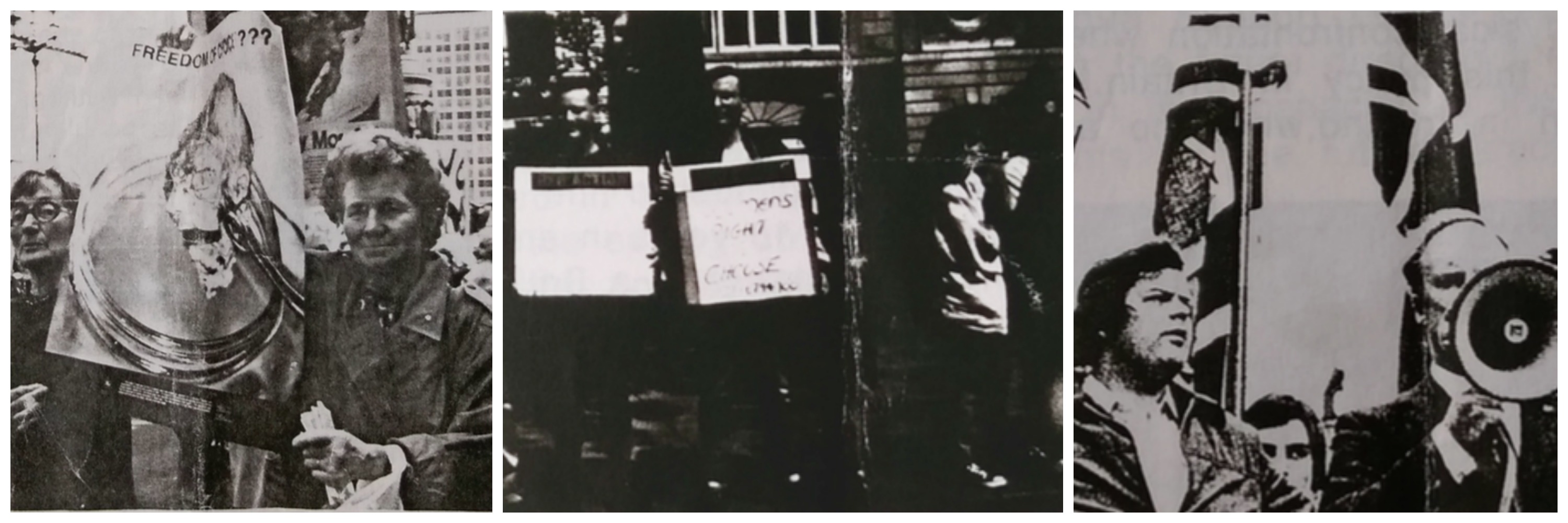
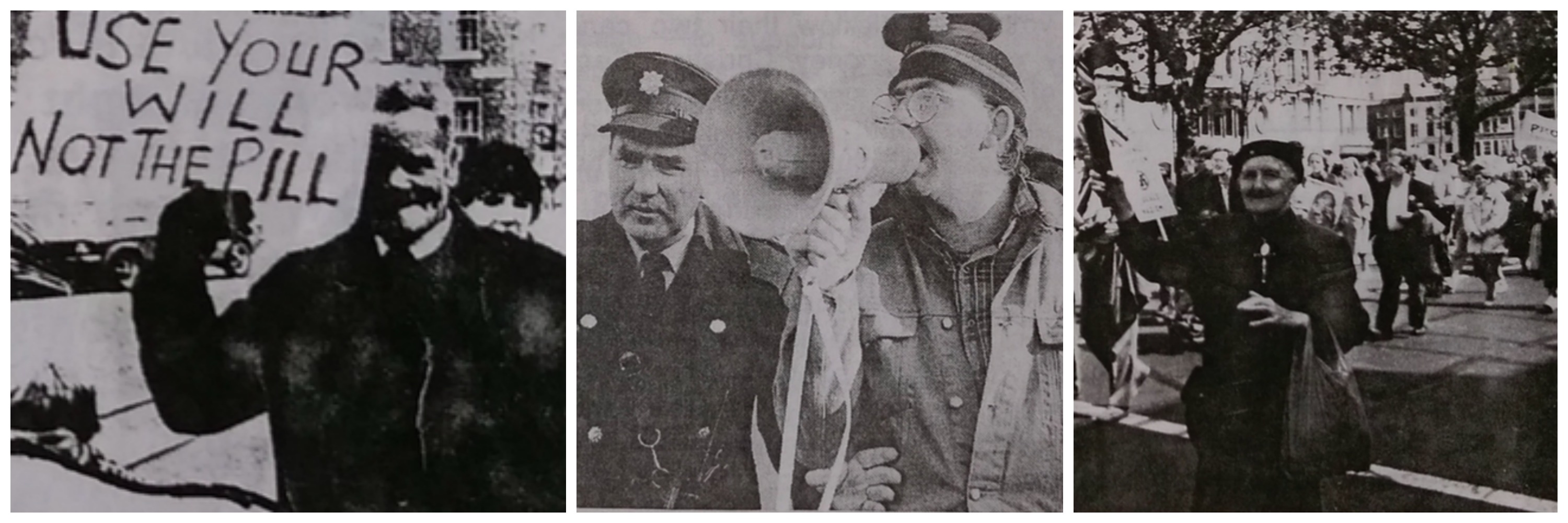
For the historian in me, the demonstration through Dublin brought to mind an earlier protest against a U.S president which was led by female activists, in the form of the Women’s Peace Camp established in the Phoenix Park in 1984, designed to coincide with the visit of Ronald Reagan to Ireland. More than thirty women were ultimately forcibly removed from the park, and spent 30 hours in the Bridewell and other Garda stations until the formalities were all over. Activists, nuns and young mothers in their midst, it was a mystery just why they had been arrested, with recently released state papers suggesting that Gardaí certainly exceeded their powers in the process.

StrikeWomen.jpg

Press coverage of the Women’s Peace Camp, 1984.

‘Hey Ronnie Reagan’: Thatcher, Latin America and the road to Ireland:

In the 1980 U.S presidential election, Reagan had fought off Jimmy Carter, who labeled  Reagan “a dangerous right wing radical” on the campaign trail. Looking at the things he won the election on, there are echoes of more recent times – lower taxes, a tough national defence policy at home and less government interference. He took 51% of the vote, Carter a mere 41%, and an independent republican polled respectably.  Reagan’s campaign slogan certainly resonated with voters: Let’s Make America Great Again. It appeared on posters, badges, but not red hats.

A few things wouldn’t have endeared Reagan to all in Ireland – his closest political ally was, of course, Margaret Thatcher. The Iron Lady described Reagan as “the second most important man in my life”, while Reagan jokingly referred to her as “the best man in England.” Thatcher would later maintain that Reagan “won the Cold War without firing a shot”.  Interestingly, during the 1981 hungerstrikes in Ulster the Reagan administration did warn Thatcher’s government that they were “in danger of losing the media campaign here in the United States”, but being so closely aligned to Thatcher affected how Irish nationalists would have viewed the American president.

Much further from home however, it was undoubtedly Latin America that was the catalyst for much of the opposition to his visit here. This was an on-going event, part of the global power play between the United States and its allies and the Soviet Union, and it had entangled the Catholic Church in some surprising ways. Michael D. Higgins would condemn Reagan for fighting “a holy war against communism”, while Reagan regarded it as the obligation of the U.S to support those who fought Soviet influence, maintaining:

We must not break faith with those who are risking their lives on every continent from Afghanistan to Nicaragua to defy Soviet-supported aggression and secure rights which have been ours from birth . . . Support for freedom fighters is self-defense.

 In Latin America, radicalism came in many different guises, including from priests and nuns. There, there existed a belief known as ‘Liberation Theology’, something John Paul II understood but tried to distance the Catholic Church from, and which was regarded as a sort of fusion of radical social politics and Catholicism. John Paul II maintained that such thinking “does not tally with the Church’s catechism.”

When Archbishop Oscar Romaro of San Salvador was gunned down in 1980, because of his opposition to the right-wing regime there, there was shock and revulsion internationally – he had just completed celebrating mass and stood upon the altar at the time of his murder. To compound the misery of the people, dozens were killed when Romaro’s funeral was fired upon by right-wing death squads. Bishop Eamon Casey was at that funeral, and it sparked something in sections of the Catholic Church internationally; one American priest recalled in his memoirs that “I had already been involved in some activism. But Romaro’s death was the beginning of my serious commitment to a life of prayerful activism.” There was a belief that the American government supported those death squads in Latin America, in the realpolitik of the anti-communist struggle.

StrikeWomen.jpg

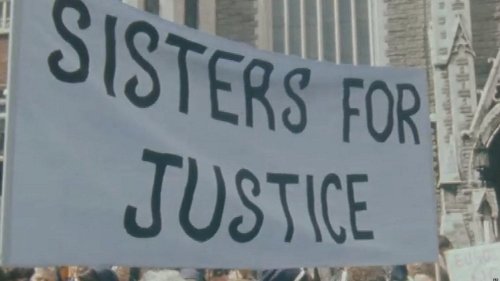
“Sister for Justice” banner on a demonstration against Reagan’s visit, photographed at the Garden of Remembrance (Image Credit: RTÉ Archives)

Continue Reading »

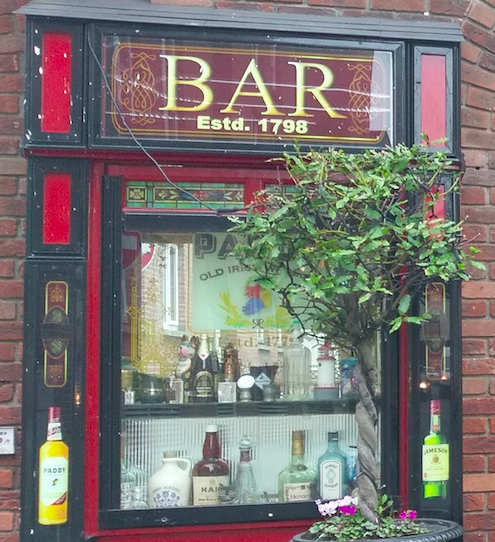
McGrattan’s established 1798?

I like McGrattan’s pub on Fitzwilliam Lane off Baggot Street. It’s a quirky place. A labyrinth of side rooms, with pool tables and a smoking area with a fireplace and blankets on offer. I’ve also been at a number of great birthday parties and memorable events upstairs.

But they’ve annoyed me by rebranding their exterior to claim that they first opened in 1798. Bad Bob’s in Temple Bar did something similar a few years back.

McGrattan's, January 2017. Credit - Sam (CHTM!)

McGrattan’s, January 2017. Credit – Sam (CHTM!)

McGrattan's sign, January 2017. Credit - Sam (CHTM!)

McGrattan’s sign, January 2017. Credit – Sam (CHTM!)

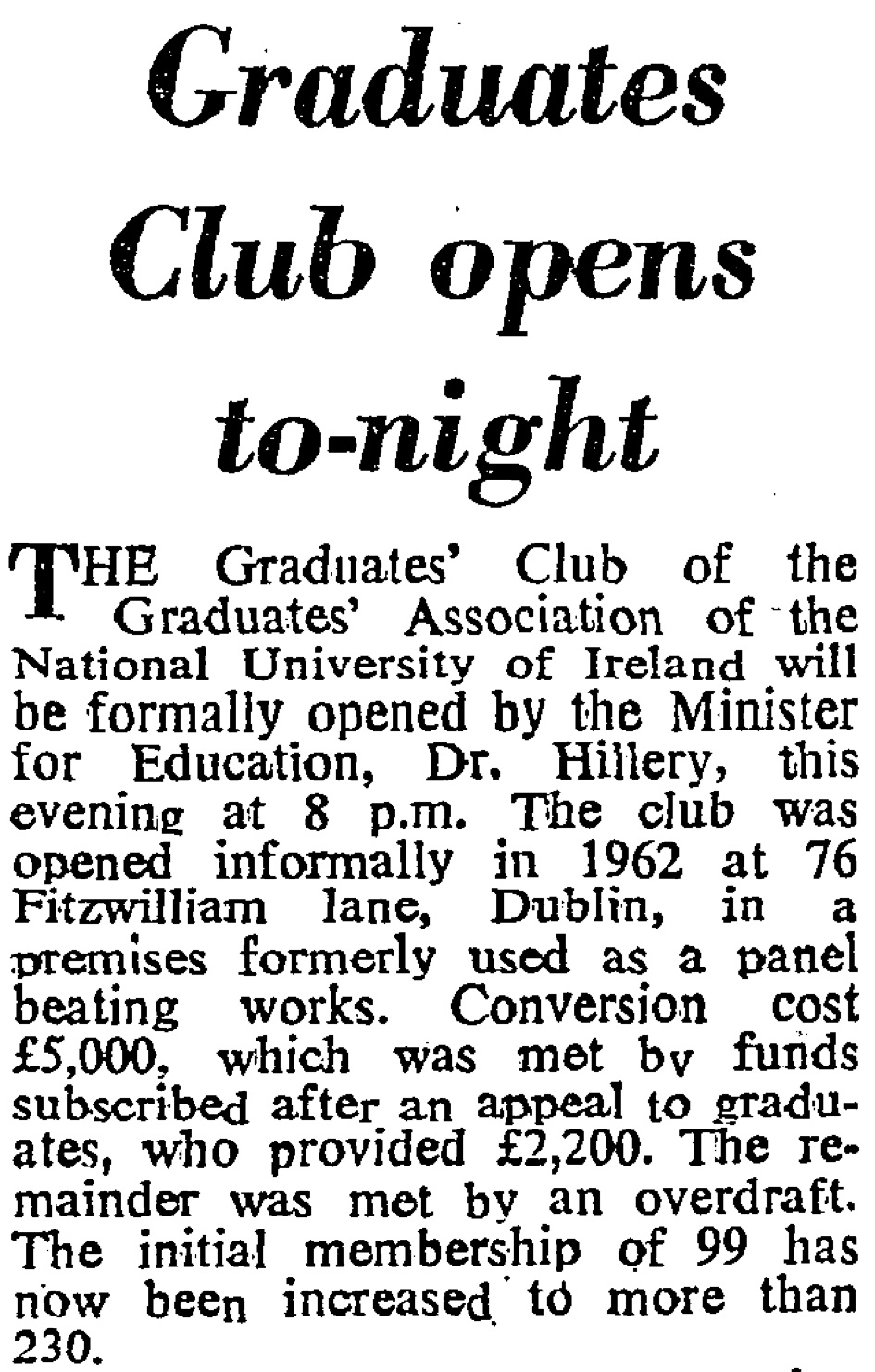
Their premises, 76 Fitzwilliam Lane,  was originally a motor sheet-metal workshop owned by R. Thomas & Sons in the first half of the 20th century.  It was taken over by the National University of Ireland (NUI) graduate club and opened up a social venue called The Graduate Club in 1964.

The Graduate Club at 76 Fitzwiilliam Lane. The Irish Times, 15 January 1964.

The Graduate Club at 76 Fitzwiilliam Lane. The Irish Times, 15 January 1964.

Conversion cost £5,000 and it turned the ‘panel beating workshop’ into a licensed premises with amenities for bridge, chess as well as a cafeteria and patio garden. Subscription was 3 guineas a year which included membership of the Graduates’ Association.

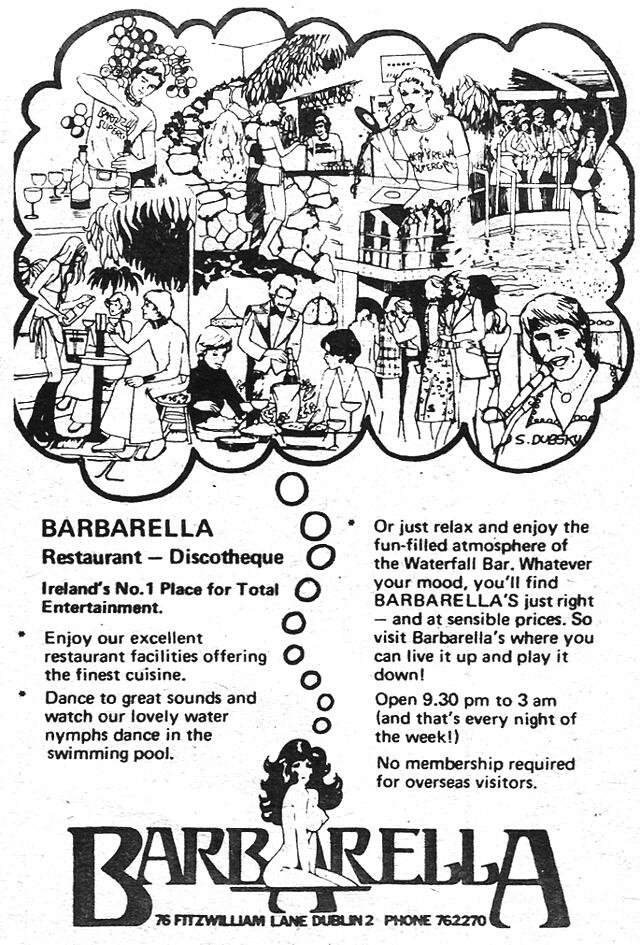
It functioned as The Graduate Club until 1975 when it was taken over and turned into a nightclub called Barbarella’s.

Barbella's advertisement, 1977. Credit - Brand New Retro.

Barbella’s advertisement, 1977. Credit – Brand New Retro.


Ulick O’Connor in Magill magazine reviewed Barbellas in 1978:

(Here) are the most naked girls you can see in Dublin. What holds up the tiny pieces of silk that cover them only an expert in structural engineering can explain. They float along with their tiny trays, indifferent to the gaze of hearty males who have been able to distract their girlfriends’ attention, to steal a look. Then, oh golly! At 12 p.m. a girl plunges into the blue fountain in the centre of the club and writhes around to frothy airs.

Upstairs the food is excellent and the service by two brothers attentive. The chef is also a brother so you have a direct line of communication if you have a complaint, which I have never had. This is a cleverly designed club, which suggests glamour. As you go in there are superb photographs by Louis Curzon of gorgeous girls, to hint at exotic times later on. If you glance overhead you are under a ship’s rigging so it is easy to imagine slipping a way to the Andes blue from the gloom and wet outside .

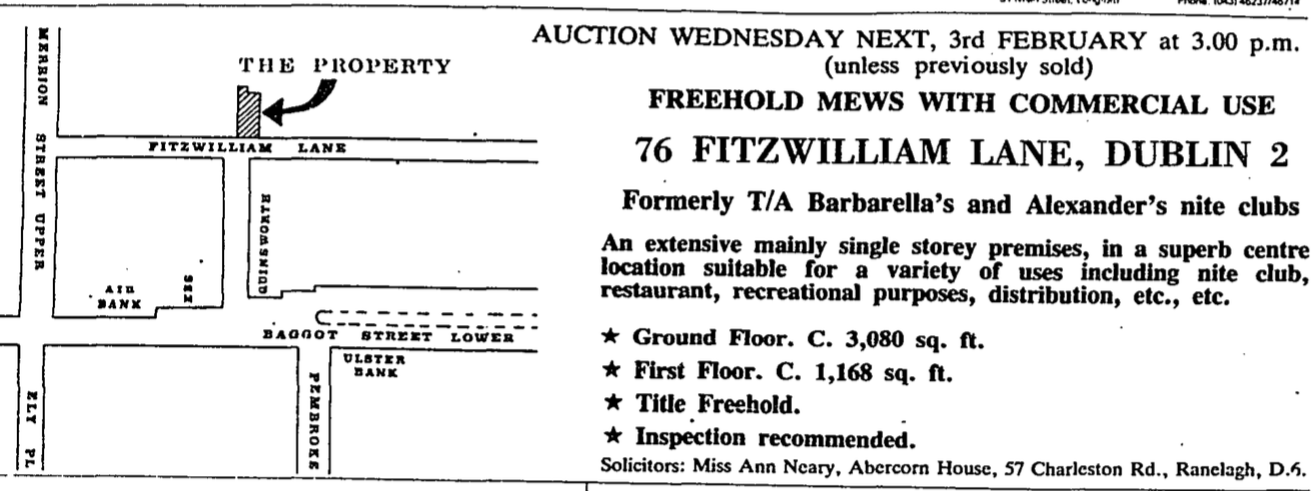
It was put up for sale in 1983 and rebranded as Alexander’s nightclub for a number of years. The property was sold again in 1988.

McGrattans. The Irish Times, 29 January 1988.

McGrattans. The Irish Times, 29 January 1988.

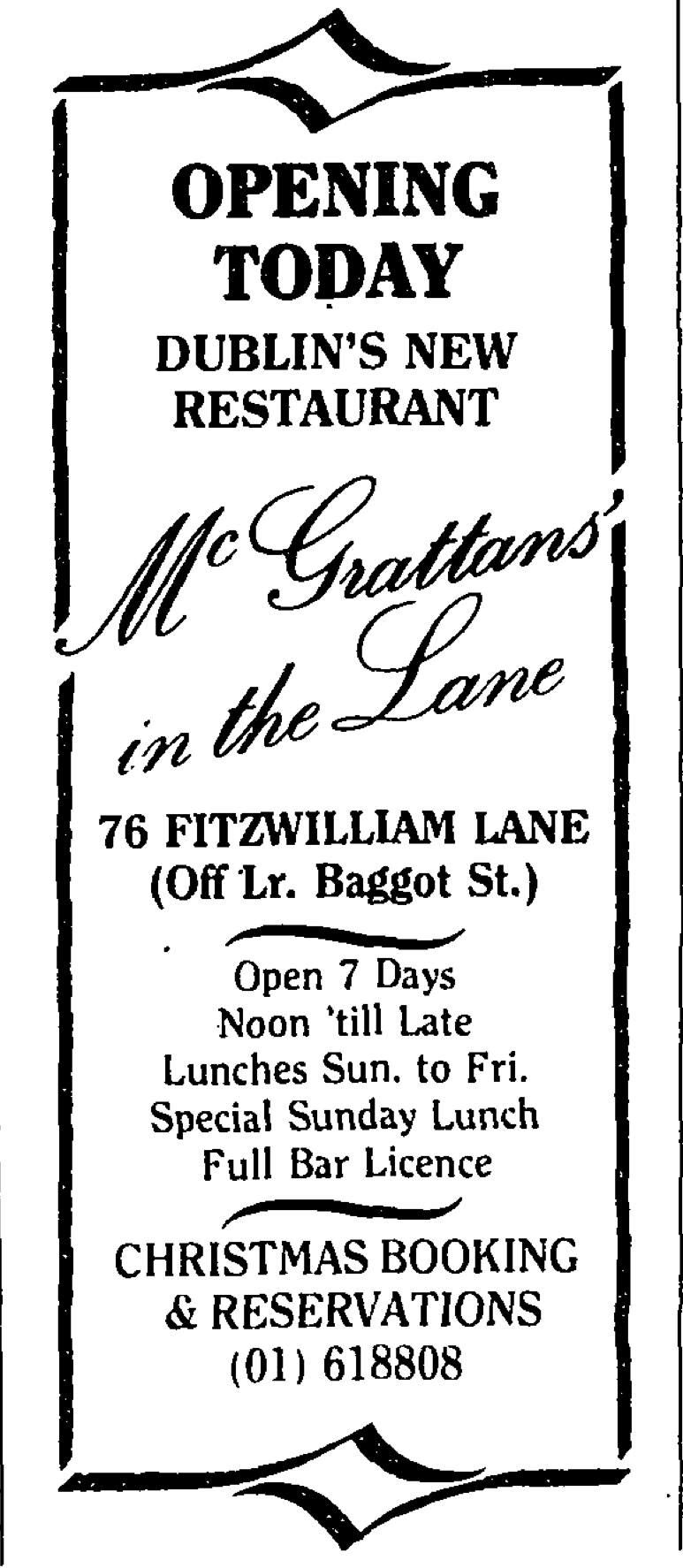
In November 1989, it was reopened as a bar and restaurant called McGrattan’s in the Lane.

McGrattan's. The Irish Times, 30 November 1989.

McGrattan’s. The Irish Times, 30 November 1989.

This is what the exterior of McGrattan’s looked like a couple of years back. All the available evidence suggests that the bar is 28 years old and not the 219 years they claim!

McGrattans, 2012. Credit - Mcgrattans.ie

McGrattans, 2012. Credit – Mcgrattans.ie

If anyone has any further information to support or debunk the 1798 year of establishment – please leave us a comment.

Roy Fox, the independent and family run greengrocer in Donnybrook, closed its doors just before Christmas for the last time after over eighty years in business. It was known for its extensive selection and colourful display of dried and fresh fruits, vegetables, herbs, spices and cheeses.
Exterior, Roy Fox. Irish Times.

The exterior of Roy Fox. Credit – Irish Times.

When it was first opened by Hugh Roy Fox at 49 Main Street, Donnybrook in 1933, a delivery man tipped off two young people in the grocery trade that there might be a chance of a job there. Frank Donnelly and Shelia Harbourne, who then did not know each other, were taken on as assistants.
After only five years in business, a 25-year-old and single Roy Fox died of TB on June 1st 1937. At the time, he was living at 2 Windsor Terrace off Lower Pembroke Street, Dublin 2.
Hugh R. Fox, 1937 Death Registry. Credit - irishgenealogy.ie

Hugh R. Fox, 1937 Death Registry. Credit – irishgenealogy.ie

His assistants Frank and Shelia took over the running of the shop as business partners and later married.
The Irish Times (26 July 2008) described the shop in the 1960s as a:

traditional grocery shop, weighing pounds of sugar into bags, slicing ham and delivering large orders to customers. The domestic fridge was beginning to make its appearance but many women shopped everyday, buying in small amounts in a process known as “getting the messages”.

When Frank died in 1968, their 19 year-old son Des took over the running of the business with his mum Shelia. Initially, he was not too keen on the idea. He told Roz Crowley in the Irish Examiner (15 January 2000) that he wanted to originally go into market gardening like his uncles.

I really didn’t like the grocery business. I wanted to be out of doors, planting fruit and vegetables, enjoying being in the sun … I shocked my mother with a compromise suggestion to turn the grocery shop into a fruit and vegetable shop.

They cancelled their order for bread and sugar and soon started to import what vegetables and fruits they could.

He told the RTE news website in 2007:

A customer today would be astonished to learn how little produce was available in those days.  We would have cabbage, carrots, sprouts, cauliflowers, kale, turnips and potatoes, but these were very seasonal.  Celery finished at Christmas, not to appear again until the following Autumn.  Imported produce was limited to bananas, apples, pears, grapes and melons, and a few other items.  This was before we joined the Common Market as it was then known.  Importing of fresh produce was very difficult, and in lots of cases prohibited.  Joining the Common Market made importation of courgettes, peppers and aubergines possible, along with other foods we see today.

By the 1980s, the shop was selling a large selection of exotic produce. Journalist Marion Foster marvelled in The Irish Times (27 March 1986) that she “saw mangoes from Peru at £1 each, nectarines from Chile for 35p, fresh dates from Israel at £1.50 per pound, Ugli fruit from Jamaica for 65p.” She was also taken by the range of ogen melons, kumquats, bean sprouts, fennel and other delicacies.

Interior, Roy Fox. Daft.ie (Dec 2016)

Interior, Roy Fox. Daft.ie (Dec 2016)

With a growing immigrant population and Irish test buds developing, the shop did well during the Celtic Tiger years of the 1990s and early 2000s. Sadly Des Donnelly passed away in 2008 at the age of only 59 from a heart attack. His daughter Joanne took over the business but decided to sell up in 2016. Their last day of business was 16th December 2016 and the property was put on the market for €400,000.

References:
Irish Times  –  27 Mar 1986; 26 July 2008
Irish Examiner –  15 Jan 2000
RTE Afternoon Show – 14 Nov 2007

AdelphiCinema.jpg

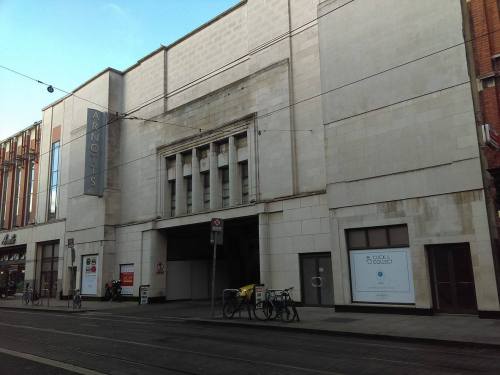
Arnott’s car park entrance, which incorporates the front of the Adelphi Cinema.

I have no memory of the Adelphi Cinema (we are younger than you probably think), but growing up in Dublin I always found the Arnott’s car park entrance a little peculiar, with its appearance giving a hint at some interesting former life. While it has found its place in the folklore of the city for the appearance of The Beatles there in 1963, there is much more to the story of the Adelphi, and a curious reminder of it now sits just across the street.

The birth of the Adelphi:

The doors of the Adelphi opened for the first time on 12 January 1939, with Dublin’s Lord Mayor Alfie Byrne given the honour of cutting the ribbon. The cinema was heralded as embodying “all that is the latest in cinema design and technique. It has a seating capacity for 2,325 people.” The Irish Press proclaimed it a “modern super cinema…designed and equipped in a manner which combines the latest scientific knowledge with the best engineering skill.” In keeping with the ethos of its time,there was great emphasis on the fact that “as far as possible, Irish labour and Irish materials went into its construction and equipment.”

By then, things had certainly come a long way since a certain James Joyce encountered much hostility to the opening of his Volta Cinema nearby in 1909.  While newspapers like the Irish Press still printed the occasional denunciation of the cinema industry (normally made from a pulpit), the enthusiasm of the newspaper and others like them for the cinema captured the public mood. As Jim Keenan’s beautiful pictorial history of Dublin cinemas shows, there was a boom in cinema openings in the 1930s, and sometimes well beyond the city centre. Not long after the Adelphi, the Tower Cinema opened in Clondalkin for example.

AdelphiCinema.jpg

Banner advertisement for the Adelphi, January 1939.

From Reagan to The Beatles:

Under the stewardship of Harry Lush, who managed the Adelphi from 1943 until the early 1980s, the Adelphi boomed. Lush remembered of the 1940s that “we did colossal business at the Adelphi…we had ninety-one people working in the cinema…Our queues used to go right down Middle Abbey Street and into O’Connell Street where they would get interwoven with the Metropole’s.” As Keenan notes,  the cinema was visited by some of the leading cinema talent of the day, including Cary Grant, John Wayne, Ingrid Bergman and even Ronald Reagan.

The Adelphi didn’t only screen the popular films of the day, it hosted a restaurant and a wide number of social events. “Crooning contests” were popular in the late 1930s, with prizes including paid trips to the Isle of Man, exotic at the time if not today! The venue also witnessed some remarkable concerts. As Colm Keane has noted, with the closure of the legendary Theatre Royal in 1962, the Adelphi “had taken over as the city’s premier live music venue…It had a ready-made stage and adequate backstage facilitates.” The visit of The Beatles is well-known and documented, others have been somewhat forgotten. The great Louis Armstrong performed there in 1967, supported by “Dubliner Jim Farley with a 16-piece band”. Armstrong’s two concerts in the Adelphi (on the same night) were heralded as “unforgettable” in the press.

Ernest Hemingway once proclaimed of Marlene Dietrich that “if she nothing more than her voice she could break your heart with it”, and in 1966 it seemed half of Dublin fell for her when she took to the Adelphi stage. “Every song was given the haunting Dietirch interpretation. It is this quality to interpret a song that has made Miss Dietrich a legend in her own lifetime”, the Irish Press said. To list every great act that performed there would be an endless post in itself, but it’s enough to say many memories were created within the walls of the Adelphi.
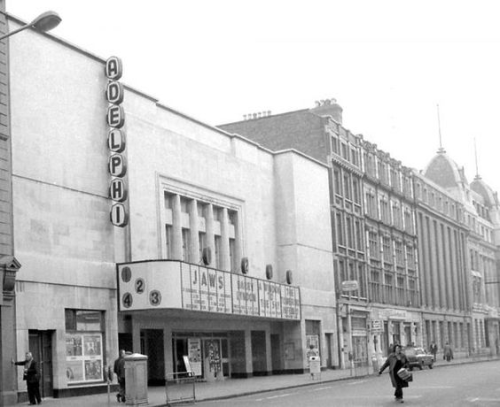
Adel1970.png

The Adelphi as it appeared in the 1970s. The exterior of the building, beyond the loss of its signage, has changed little.

The Adelphi made it well into the 1990s, only closing in November 1995. For the sake of nostalgia, its final screenings were High Society and Gigi, two classic musicals of decades past. The Art Deco Portland stone facade, at first glance anyway, is all that remains.

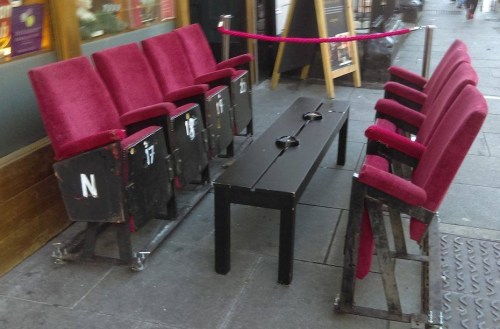
Yet an article from August 2016 over on Publin.ie points towards remnants of the Adelphi in some peculiar places. At the Church Bar, parts of the original stage have been incorporated into a walkway, while just across the street from the old cinema, a bar which carries the name ‘Adelphi’ includes seats from the cinema in their smoking area. Sometimes, if the weather is right, they even appear on Middle Abbey Street itself. It’s a nice nod to the car park across the street, which has quite the story to tell.
AdelphiCinema.jpg

Photographed earlier this week.
Red Action was a small, militant, socialist group founded in England in 1981 after several activists were expelled from the Socialist Workers Party (SWP) for continuing to be involved in direct action against neo-Fascists (‘squadism’). The group were known for their commitment to street-level anti-Fascist and Irish Republican politics throughout the 1980s and 1990s. Some key members went onto form the Independent Working Class Association (IWCA) in 1995.

The Dublin branch of Red Action was founded in 1990 and remained active until 1997. During this period, they were heavily involved in a range of community campaigns (anti-Water charges, anti-Bin Tax, anti-Drugs etc.) as well as pro-choice, Irish republican and international solidarity issues. They also formed the backbone of Anti-Fascist Action (AFA) which was established in 1991.

For the first time online, here are issues 3 and 4 of their newsletter both published around 1992.

Red Action (Ireland), newsletter no. 3.

Red Action (Dublin), newsletter no. 3.

Images of Red Action (Ireland), newsletter no. 3.

Images from Red Action (Dublin), newsletter no. 3.

Issue 3 of Red Action Dublin’s newsletter had articles on the following:

– pro-choice activity and the work of the Dublin Abortion Information Campaign (DAIC).

–  the anti-extradition campaign of Belfast republican Angelo Fusco. The Dublin Anti-Extradition Campaign (DAEC), with a postal address at 29 Mountjoy Square, met every Tuesday at 16 North Great George’s Street.

– the rise of the far-right in Europe, the work of AFA and the political failings of the SWP.

– the work of the Irish Nicaragua Support Group of which Red Action members were involved with.

– a short piece on the emergence of militant anti-abortion group Youth Defence (YD)

Link to download : red-action-no-3

Red Action (Ireland), newsletter no. 4.

Red Action (Dublin), newsletter no. 4.

Images of Red Action (Ireland), newsletter no. 4.

Images from Red Action (Dublin), newsletter no. 4.

Issue 4 of Red Action Dublin’s newsletter had articles on the following:

– the results of the 1992 X Case abortion referendum and the work of the Alliance for Choice group.

– how the Left fared in the 1992 General Election with a look at the results of the Workers Party and Sinn Fein.

–  the recent activity of Portobello Unemployed Action Group (PUAG) including pickets of RTE and their relationship with the more mainstream Irish National Organisation of the Unemployed (INOU).

– small bits on anti-fascist and Irish skinhead politics.

Link to download : red-action-no-4


One of my favourite things in the city in recent years has been the Dublin Canvas project, which is funded and supported by Dublin City Council. Since 2013, DCC have experimented with an art programme involving the traffic light control boxes of the city. To date, dozens of boxes have been painted right across the city, bringing a touch of colour to these rather boring features of the urban landscape.

Particular favourites include ‘Bo’ by Áine Macken (fittingly enough right beside Dublin’s historic Cowtown), Sarah Macken’s gorgeous tribute to Oscar Wilde, and Sheila Flaherty’s ‘Art Inspires The World’.

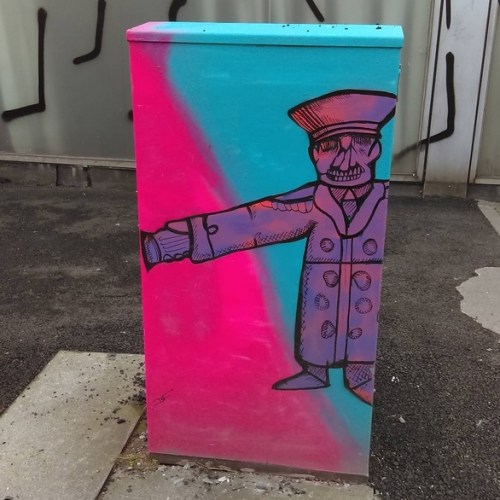
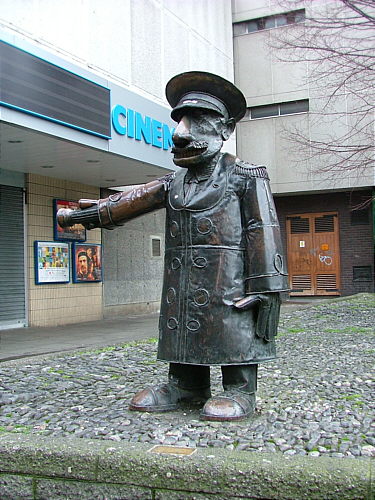
Many of the boxes have touched on local history and folklore, ranging from the United Irishmen of the 1790s to Dublin street characters. I was delighted to stumble on Mr. Screen earlier this week, while making my way along Tara Street:

Mrscreen2.jpg

Until recent times, Mr. Screen stood outside of the Screen Cinema (originally The New Metropole) on the corner of Hawkins Street and Townsend Street. With its focus on independent and foreign films, the Screen certainly built a cult following around itself. Among other films, I watched the Leonard Cohen documentary I’m Your Man there, almost having the entire place to myself (maybe such solitary film screenings were part of the problem!). Like many, I was sad but not surprised when its closure was announced in February of last year. Two years before this, its beautiful neon signage was taken down, and replaced by a considerably less inspiring ‘IMC’ branding. It was the beginning of the end.

Mrscreen.jpg

Mr. Screen, 2010.

The work of sculptor Vincent Browne, Mr. Screen found his place on the street in 1988, thanks to the Dublin Cinema Group. A uniformed cinema usher (and not a bus conductor as some believed), he pointed his torch towards the cinema. 1988 marked the so-called ‘Dublin Millennium’, and Mr. Screen was joined by Molly Malone in that same year, as well as the two female shoppers who sit on Liffey Street.

Earlier this year, Mr. Screen was relocated across to the Northside of Dublin, where he now directs punters in the foyer of the Savoy, a considerable step-up from the humble Screen Cinema. Thanks to the artist David Flynn, he is now closer to home.


Anthony Cronin (1928-2016)

The death of Anthony Cronin at 88 sees the passing of a wonderful poet, writer and memoirist. As the author of Dead as Doornails, his classic account of mingling among the celebrated names of Dublin’s post-Emergency literary scene, he gave a vivid account of Brendan Behan, Flann O’Brien and Paddy Kavanagh as people, stripped of much of the cliche and tired repetition that has often surrounded memoirs of the three. It remains my favourite Dublin book.
NLI

Anthony Cronin, John Ryan and Patrick Kavanagh at the Martello Tower, Sandycove , marking the first Bloomsday (National Library of Ireland)

While he became synonymous with Dublin life, Cronin was born in Enniscorthy in 1928,  something Brendan Behan took delight in reminding him of. Upon completing his studies in Law in Dublin as a young man, he took on a job in the offices of an association of retail traders, remembering that “the facts were that I earned seven pounds three shillings a week, paid three pounds for digs and drank the rest.” He remembered that because of “whatever amalgam of anarchism and utopian communism I luxuriated in at the time”, a career in Law didn’t feel quite right. As a young would-be poet, Cronin never quite fit in with his college contemporaries, finding little of appeal in the “middle-class dress and supper dances in the Gresham and the Metropole”, instead noting that “what I needed, I obscurely felt, was a Bohemia of some kind,but I did not know where to find one.”
It existed, and Cronin certainly found it. The temple he sought was McDaid’s public house on Harry Street, located just off Grafton Street:

Its strength was always in variety, of talent, class, caste and estate. The divisions between writer and non-writer, bohemian and artist, informer and revolutionary, male and female, were never rigorously enforced; and nearly everybody, gurriers included,was ready for elevation, to Parnassus, the scaffold or wherever.

One of the strengths of McDaid’s was the popularity of its head barman, Paddy O’Brien. Tommy Smith, current proprietor of the ever-popular Grogan’s of South William Street, remembered that “the frequenters of McDaid’s he regarded as his friends rather than as mere customers. McDaid’s was Paddy’s creation, and McDaid’s without him would have been just like any run-of-the-mill pub.”

Cronin became a key part of the McDaid’s set, that included (at different times) American ex-servicemen who had taken shelter in Ireland, IRA men like Eddie Connell and Peter Walsh, writers of all sorts and “the bohemian rentiers, many of them English or very Anglo-Irish, who rejoiced in the general atmosphere.” Sessions in McDaid’s could often spill into sessions in the Catacombs, a series of basements in Fitzwilliam Place, which were established by the rather eccentric but much-loved Dickie Wyman. Paddy O’Brien remembered that Dickie wasn’t a writer, “but he always knocked around with the arty set…He was a misfit in most things but Dickie had a great flair for organising the parties and he started the Catacombs.” In Dublin ‘lore, the Catacombs have been remembered as an unusually  free-spirit environment, popular with gay Dubliners who felt at ease there away from the judgemental eyes of 1950s Dublin society, though Cronin remembered that “most of what went on in the Catacombs was in fact ordinary social boozing. Where there is booze, it will usually prevail over other matters.”

Continue Reading »