Feeds:
Posts
Comments
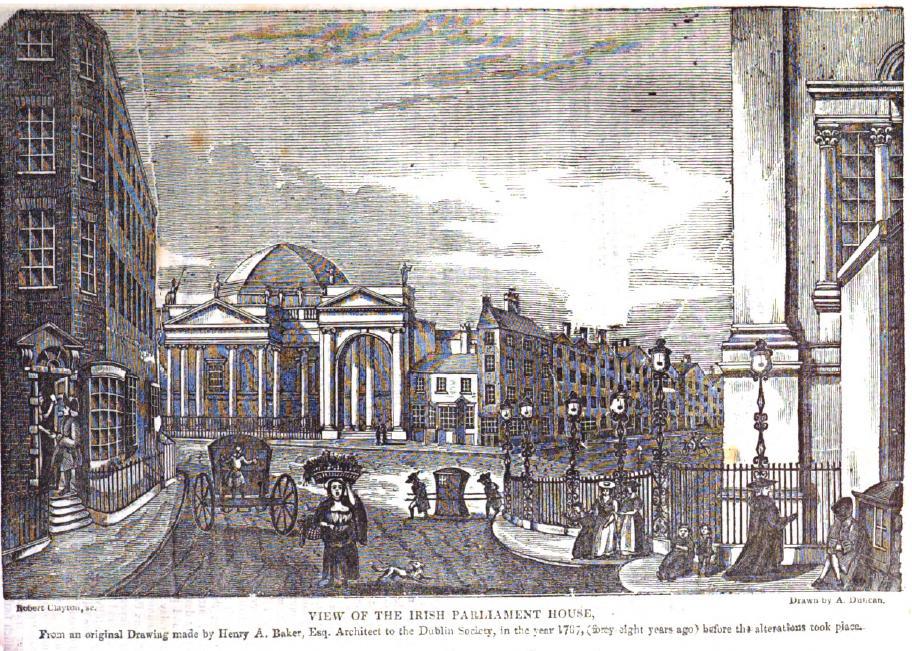
This Dublin Penny Journal scene shows a Sedan chair at College Green.

This Dublin Penny Journal scene shows a Sedan chair at College Green.

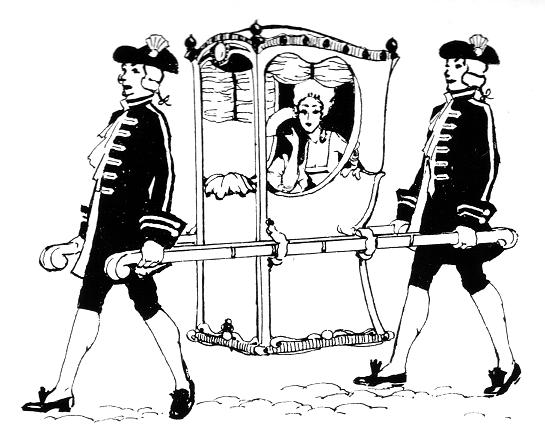
Thankfully, sedan chairs have long vanished from the streets. I saw one recently at a museum in Edinburgh, and it really is difficult to picture a time when they were a common sight on the streets of British cities. Essentially a sedan chair was a chair or windowed cabin, which would be carried by at least two porters through the streets. You could say that these were human taxis in their day.

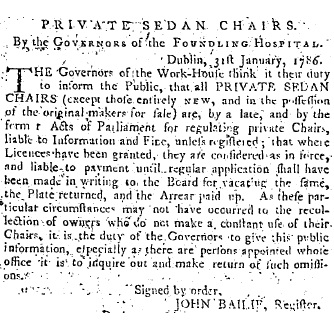
In his study of Irish tourism between 1750-1850, W.H.A Williams noted that in 1771 sedan chairs “outnumbered licensed carriages in Dublin, to the benefit of the Dublin Lying-In Hospital, which had been granted a duty on the chairs. The use of sedan chairs persisted in the largest Irish cities into the 1830s.” The process of licensing the chairs is made clear in this brief piece from the front page of the Freeman’s Journal in 1786:

Front page of Freeman's Journal, April 25th 1786

Front page of Freeman’s Journal, April 25th 1786

Thanks to the licensing process, we are able to see just where the owners of sedan chairs lived, and Peter A.Clarke researched this in the study Two Capitals: London and Dublin, 1500-1840. Based on the 1785 returns, it is evident that “over two-thirds of the holders of sedan chair licenses were members of the titled nobility”, going on to write that “the licensees lived for the most part in Henrietta Street, Rutland Square, Sackville Street, St.Stephen’s Green and Merrion Square”. These were among the wealthiest streets and squares of eighteenth century Dublin, popular with parliamentarians and other elites.

Colonel Henry Luttrell was assassinated while traveling in a sedan chair in Dublin on 22 October 1717, by a “band of ruffians” according to the Biographical Peerage of Ireland, which was printed in 1817. Frank Hopkins writes about this in his book Rare Old Dublin: Heroes, Hawkers and Hoors. Luttrell was a figure who had deserted from the army of the Catholic James II to fight alongside Williamite forces following the Siege of Limerick in 1690. None too popular then amongst Catholics, he was murdered when travelling between a Cofffee House on Cork Hill and his lofty residence on Stafford Street.

Illustration of a sedan chair in the eighteenth century (wiki)

Illustration of a sedan chair in the eighteenth century (wiki)

Continue Reading »

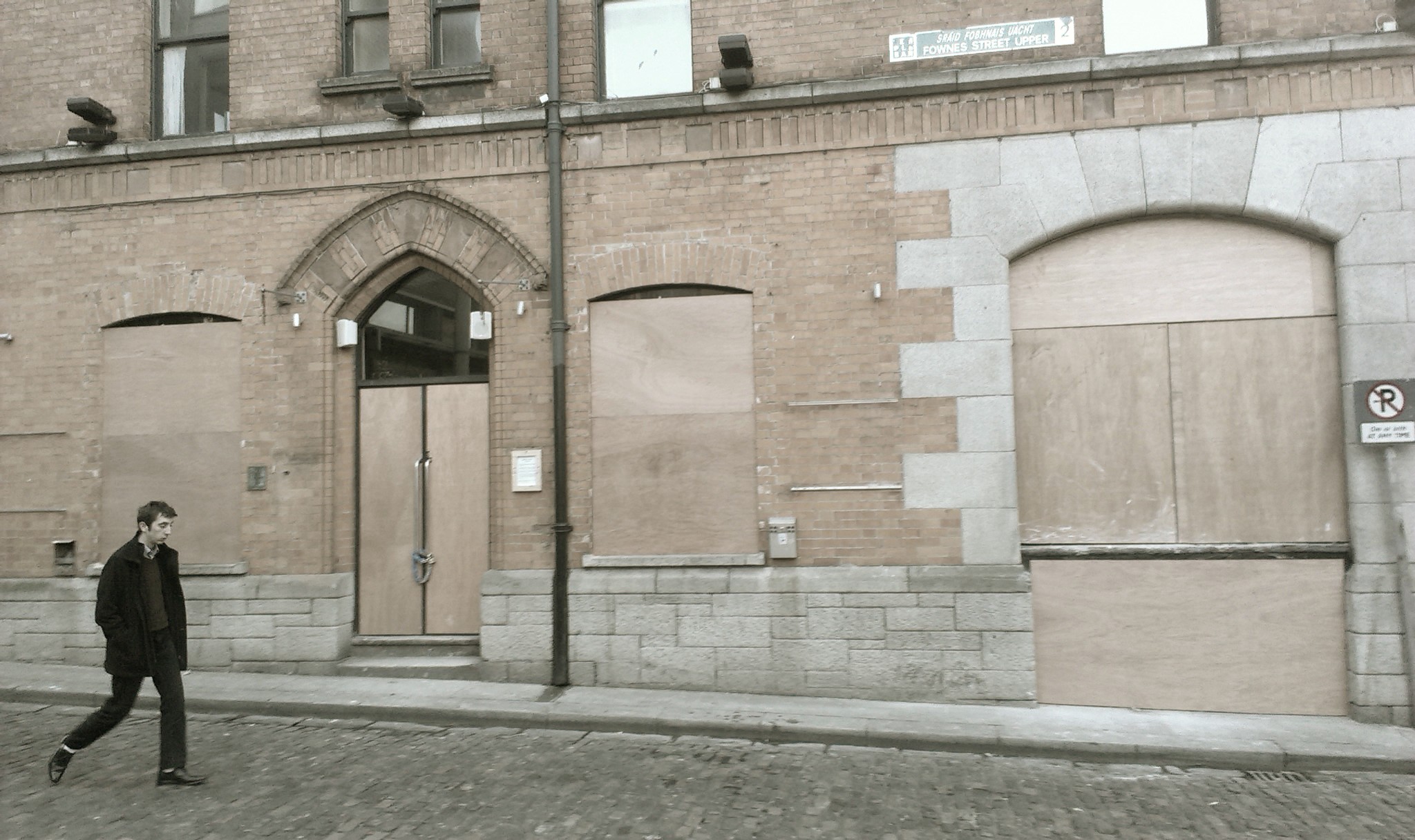
The location of our next McDonald's, Temple Bar.

The location of Dublin’s next McDonald’s, Temple Bar.

McDonald’s are set to move into the Temple Bar area soon, with the premises previously occupied by Frankie’s Steak House serving as the location for their newest Dublin branch. While many would argue the damage was done a long time ago with regards Temple Bar (The Hard Rock Cafe, TGI Fridays, tacky tourist traps), it is still a pretty significant piece of news for what was once referred to in the media as “Dublin’s Left Bank”. Dublin City Council had rejected a planning application from McDonald’s on the grounds that the premises would have a “detrimental impact on the mix of users within the Temple Bar area, which already has an ample supply of restaurants”, but the green light of An Bord Pleanála last year brought the proposal to a reality.

McDonald’s is a powerhouse of international business and the fast food trade, operating in 119 countries and serving tens of millions of customers on a daily basis. News of the multinational arriving in Dublin in 1976 was first reported in the Irish media in September of that year, when it was noted by The Irish Times that the company had purchased the old premises of the Hospital Sweepstakes on Grafton Street. The company was understand to be paying something in the region of £50,000 a year in rent for the premises.

The first branch of the restaurant in Ireland opened to minimal fanfare, and this is how the May 1977 opening was reported in The Irish Times:

McDonalds

A feature on the restaurant soon after its opening noted that it opened for about thirteen hours a day, seven days a week, far removed from the 24/7 branches in the city centre today. A 1978 report noted that the place was almost always busy, with a plain hamburger costing only 28p, a small chips 23p and a cup of coffee costing 17p. A journalist reviewing the restaurant for The Irish Times wrote that “the decor is far from appealing and my friend was convinced the seats are specifically designed so that if you relax you fall out of them.”

The expansion of the brand saw a second restaurant open in October 1978, this time on O’Connell Street. Like the first branch, this one remains open today.

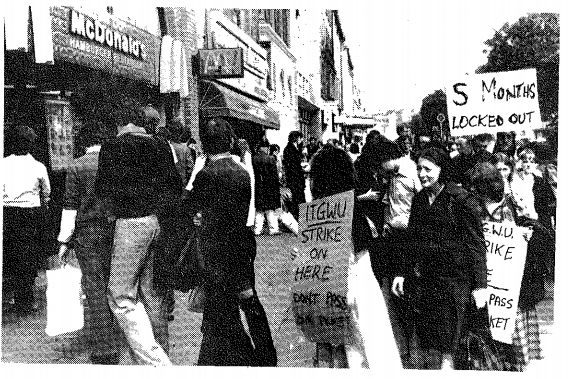
McDonald’s were involved in a massive labour dispute in 1979, which lasted for almost six-months and saw the company entangled in a media storm, dragging workers through the courts in an attempt to stop them picketing the premises. This dispute began when workers within the company began to join the ITGWU union. At the time, it was reported that pay in McDonald’s was 85p an hour. The Anarchist Worker newspaper reported that “management refused to recognise the union or even to talk over the phone to union officials.” Coming out on March 16th, the workers involved picketed the two restaurants demanding the right to union recognition.

A picket on the O'Connell Street branch (Anarchist Worker newspaper)

A picket on the O’Connell Street branch (Anarchist Worker newspaper)

Continue Reading »

In the last few weeks, a number of stories from Come Here To Me! have been aired on The History Show on RTE Radio One. These stories have tied-in with content on the programme, or have been aired to coincide with historic anniversaries.

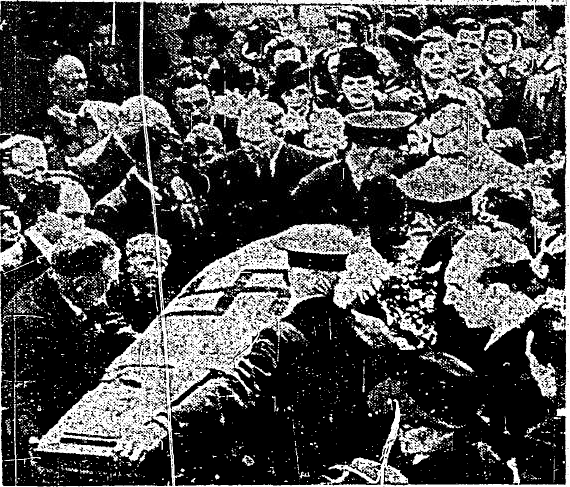
The first story aired was on 13 January, and involved an infamous incident at Deansgrange Cemetery when swastikas were on show at the funeral of ‘Nazi master spy’ Hermann Goertz. This story was read during a segment of the programme which focused on Ireland after WWII, and the podcast recording can be played here.

A scene from the funeral. Published first in The Irish Independent, Oct 22 1961.

A scene from the funeral. Published first in The Irish Independent, Oct 22 1961.

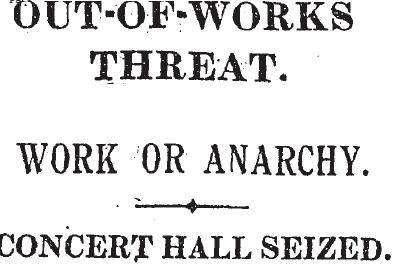
On 20 January, our account of the workers occupation of the Rotunda Concert Hall in 1922 was read on the programme. This event occurred five years after the Russian revolution, and saw a red flag flying over the city of Dublin. The occupation was led by the talented writer Liam O’Flaherty, and the story was read on RTE Radio by the actor David Herlihy. The podcast recording can be played here.

'Work Or Anarchy' - Media coverage of the 1922 occupation.

‘Work Or Anarchy’ – Media coverage of the 1922 occupation.

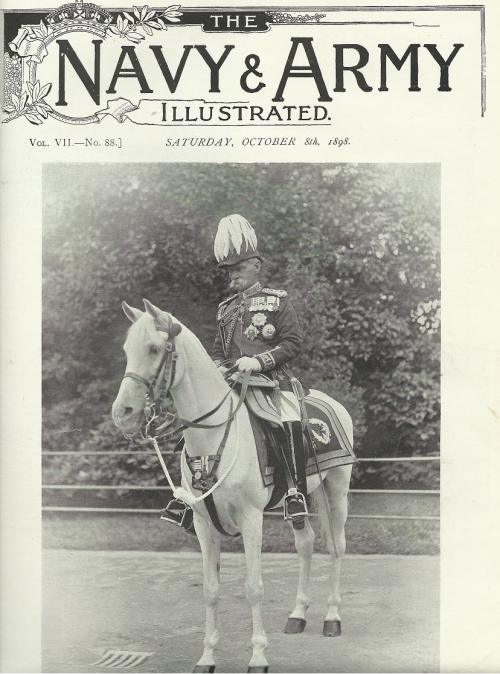
On the 17 February edition of the show, our story about Vonolel was read on air. Following on from a discussion around the Irish and horse meat, Dublin’s War Horse got an airing. The loyal companion of Field Marshall Earl Roberts, this remarkable and decorated horse is buried in the grounds of the Royal Hospital Kilmainham. His grave must be one of the most unusual in Dublin. Again, the story was read by David Herlihy. The podcast recording can be played here.

The famous and decorated Vonolel.

The famous and decorated Vonolel.

Our thanks to everyone at The History Show for bringing these stories to a wider audience, and we hope that readers of the blog have enjoyed hearing the stories brought to life as much as we have.

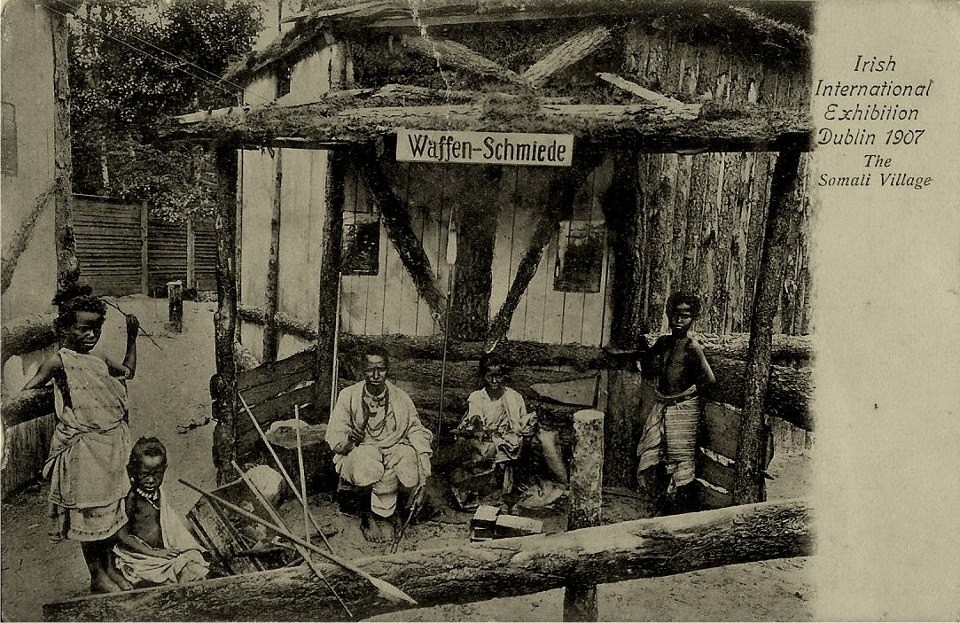
The Somali Village (Postcard thanks to Neil Moxham)

The Somali Village (Postcard thanks to Neil Moxham)

Thanks to Neil Moxham for sending us this fantastic image, which we had to share here.

In a recent article on legendary Dublin prankster The Bird Flanagan, his supposed escapades at the 1907 International Exhibition in Herbert Park were discussed. It was said that The Bird stole a child from an exhibition, with Flann O’Brien later recounting that “The Bird stole the baby of the wild man of Borneo from the latters straw house or tent and smuggled it into the snug of a pub in Ballsbridge”, while Ulick O’Connor claimed he “returned it to the French pavilion, as a gesture against the decline in the French birth-rate.”

In reality, it was a Somalian Village at the International Exhibition. The International Exhibition was an incredible spectacle, which ssentially brought the world to Dublin, with tents and exhibitions from all over the world. In his book The Biggest Show in Town: Record Of The International Exhibition, Dublin 1907, Ken Finlay dug deep on the exhibition using primary sources from the time. One of those sources tells us of the Somali village, described thus:

A party of Somalis has been imported from British Somaliland, which is situated in the north-east of Africa. This village has been erected to represent the huts in which the natives live in their country. A schoolroom has also been built in which Somali children will be thought their lessons. Somalis are a nomadic race, and live chiefly by the rearing of herds and goats and sheep. They are Mohammedians by religion.

John Cavendish has written about this peculiar spectacle, noting that:

This stand proved to be of huge interest to the 2,751,113 visitors in all during the six months that the exhibition lasted. So much so, that it became the most profitable stand, earning £9,601 in sales of its pottery and other native goods.

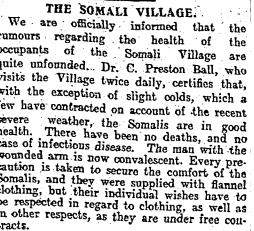
You can only imagine how distressing the situation must have been for younger members of the community who were essentially put on exhibition for Dubliners to gawk at. This newspaper report from 14 May 1907 shows that rumours of ill-health existed during the period of the International Exhibition for example:

The Irish Times, 14 May 1907.

The Irish Times, 14 May 1907.

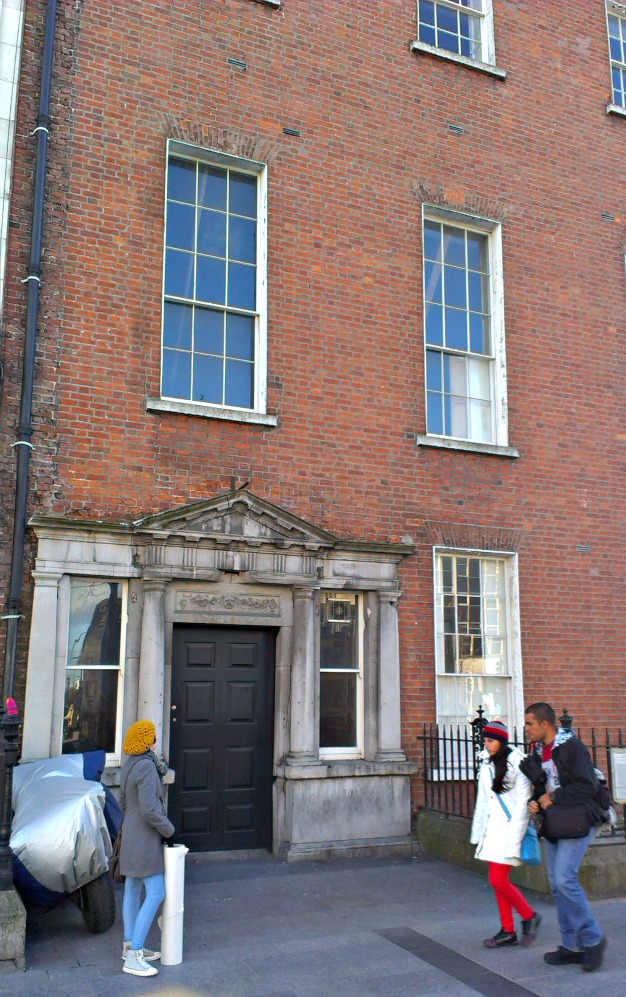
Thomas O’Leary was a 22-year-old Dubliner and member of the anti-Treaty IRA when he was shot dead by the Free State Army in March 1923. There is a worn out monument, erected in 1933, to mark the spot where his body was found. We have previously covered the following Republicans who were killed during the final year of the Civil War –  Noel Lemass, William Graham and James Spain.

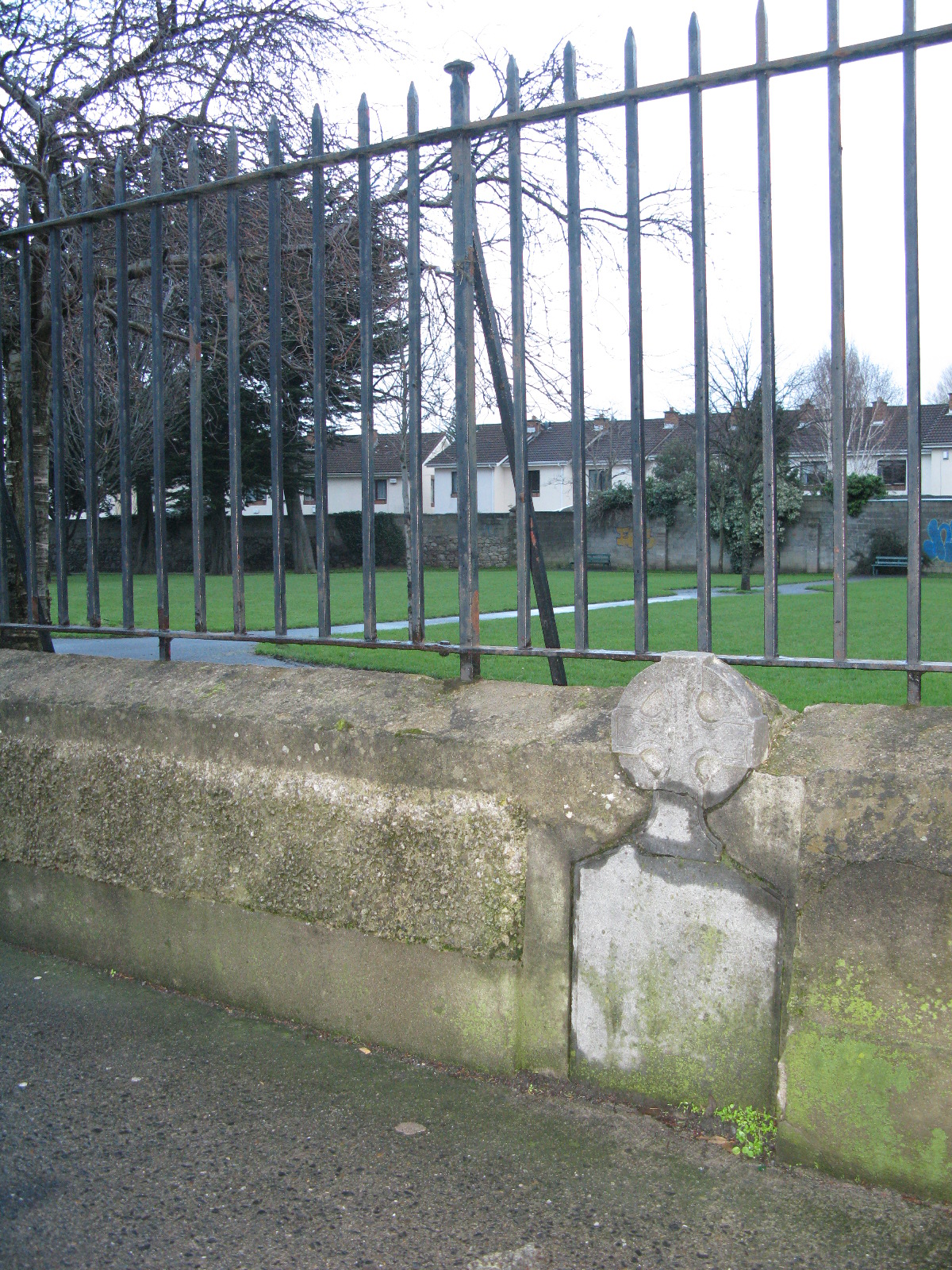
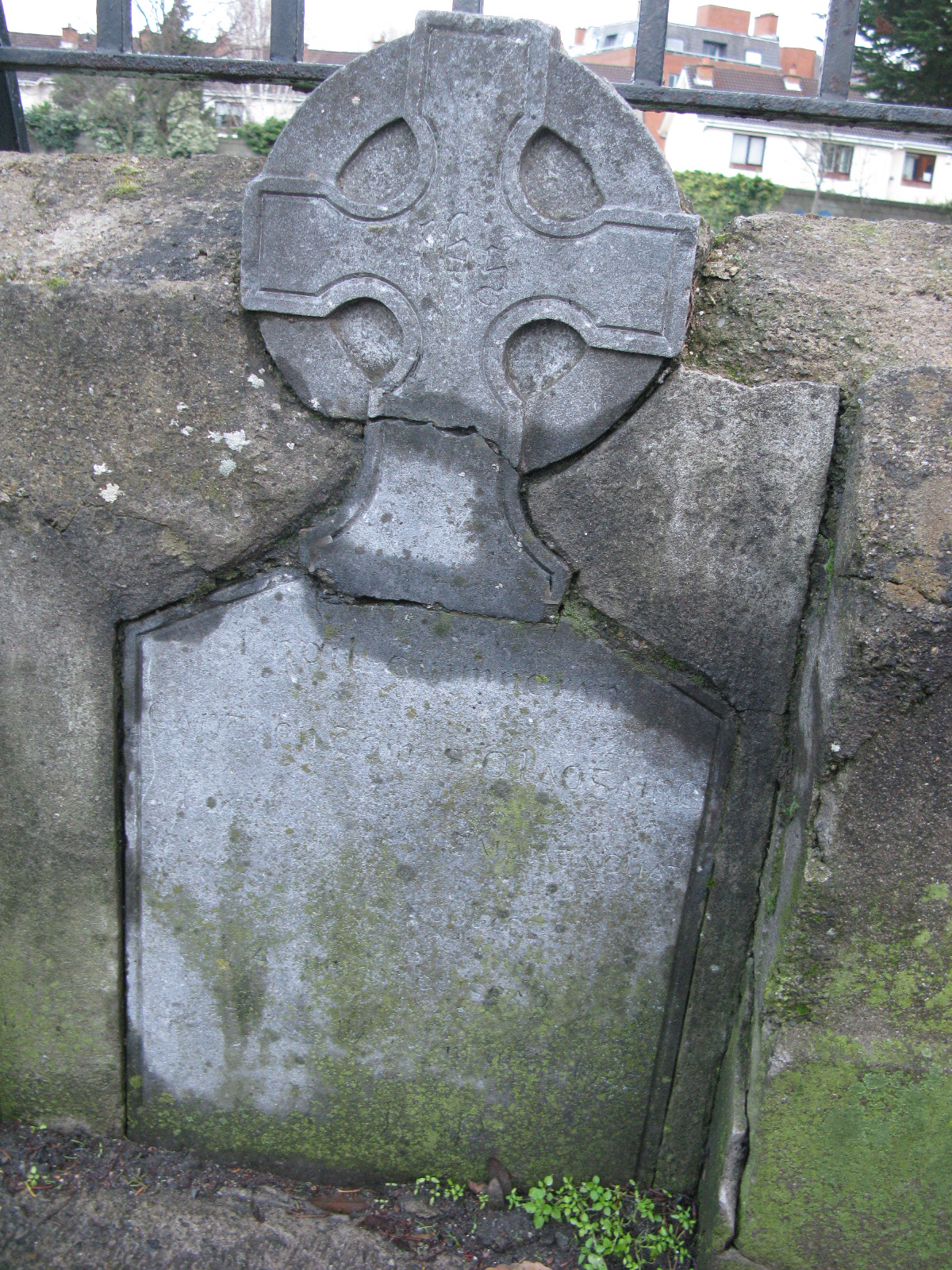
With the 90th anniversary of his death around the corner, we thought it would be fitting to look at the short life of Thomas O’Leary, an IRA man attached to the 4th Battalion in Dublin. Thomas, or Tommy as he was known to his comrades, was found riddled with 22 bullets – one for every year he lived. There is a small, extremely worn Celtic Cross to mark the spot where his body is found in Rathmines. Perhaps this would be a good time to restore it.

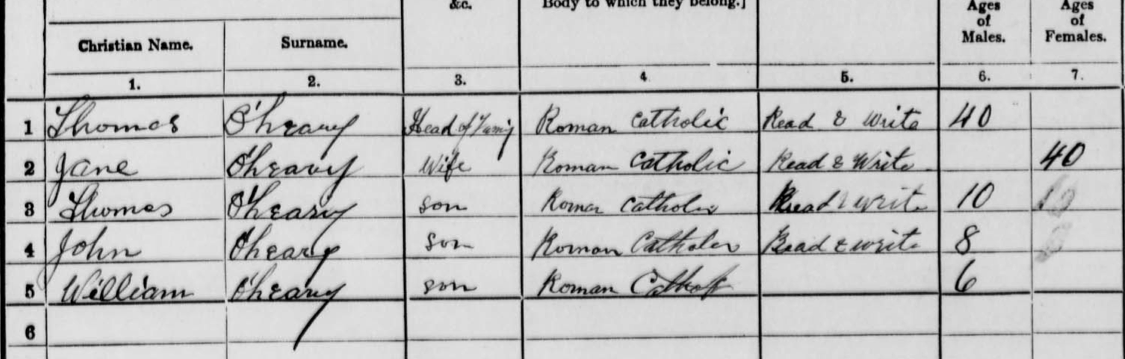
Thomas was born in December 1900 to Thomas O’Leary Sr. from Dublin and his wife Jane from  Kildare. The 1901 census shows that the family were living at 372 Darley Street in Harold’s Cross. Thomas (30) was a glass cutter while his wife Jane (30) looked after their infant son. All were Roman Catholic.

1901 census return for the O'Leary family

1901 census return for the O’Leary family

Ten years later the family had moved around the corner to 17 Armstrong Street. The 1911 census tells us that Thomas Sr. (40), still a glass cutter, and his wife Jane (40) were now living with their three sons. These being Thomas (10), John (8) and William (6). All three were at school.
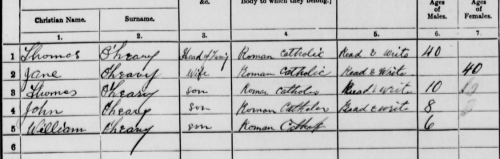
1911 census return for the O'Leary family

1911 census return for the O’Leary family

Stephen Keys, a member of the IRA in Dublin from 1918 – 1924 mentions O’Leary in his Witness Statement :

Any time Tommy O’Leary, 0/C 4th Battalion Column, had a job, he would ask me to give him a hand with. it. We went out to Thomas St. for an ambush. There was a Free State private car coming up at the Church, with two or three officers in it. I was with O’Leary. The others fired at the car. I did not fire  a shot. – BHM WS 1209

At the time of his death in 1922, Thomas O’Leary was listed as living at 17 Armstrong Street which corresponds with the census records. In the subsequent inquest, he was described as a “most respectable  young man, a fine specimen of manhood, who, in the days of the ‘Black and Tans’, was a member of the IRA and did his duty to his country”. His brother testified that he had remained a member of the Republican Army after the split and was on active service in the months leading up to his murder. His mother revealed that he hadn’t been living at home since July 1922 and that he left his job as tram conductor on the Clonskeagh line in early 1923.

Deirdre Kelly in her book ‘Four roads to Dublin: the history of Rathmines, Ranelagh and Leeson Street’ points to O’Leary as the man who killed Free State politician Seamus O’Dwyer in his Rathmines shop in January 1923. However, Ulick O’Connor stresses in his biography of Oliver St. Gogarty that “members of the anti-Treaty group deny that O’Leary was associated with the O’Dwyer shooting”.

In the weeks leading up to the incident, the O’Leary home in Harold’s Cross was raided at least three times. His mother testified that during a search on the Sunday before, the soldiers told her that Thomas had until “Wednesday to give himself up, and, if they did not, she would fund him in Clondalkin or Bluebell shot; the next time he would be brought to her in a wooden box”. This is exactly what happened.

On the day of his death, his IRA comrade Stephen Kelly remember that:

O’Leary was after dyeing his hair red. We left the house and went over to the gardener’s tool house in St. Patrick’s Park which was used to store clothes before being sent down to the I.R.A. in the country. The man in charge of the tool house was sympathetic to the cause. O’Leary went back to Harper’s that evening and the Free State came along to raid it. They knocked at the door. One of the women was sick in bed. One of the Harpers called O’Leary and said “Go and get into the bed”. He got into the bed beside her. She was so stout, and he was  so small and thin that he he was covered up in the bed beside her. He got away that time.

It was that night that the Free State finally caught up with him. On the 23rd March 1923, three lorry loads of Free State soldiers raided a house on Upper Rathmines and found O’Leary. This house was either number 82 or 86 as a woman at number 84 was reported as hearing knocking and a commotion “two doors away”.

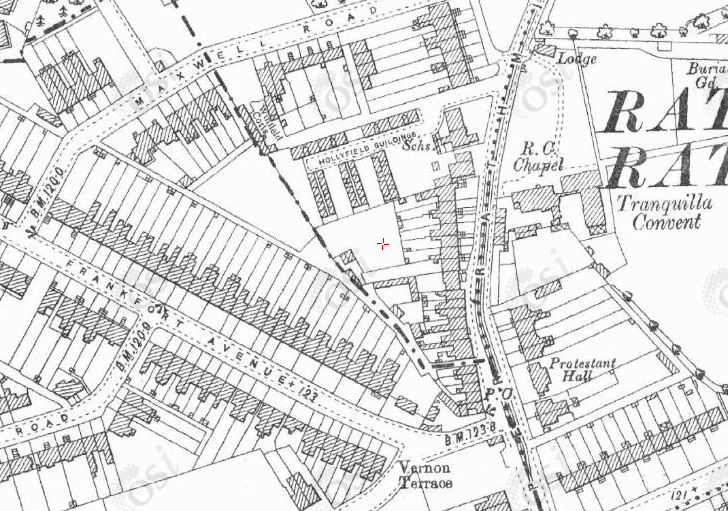
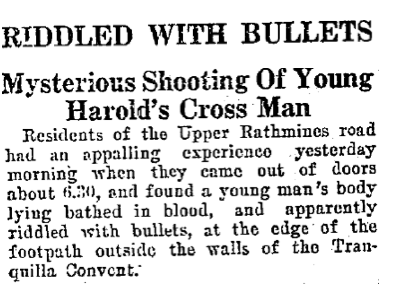
From reading all the contemporary newspaper reports, it can be accepted that O’Leary made a run for it and was caught by Free State soldiers. His body was found the following morning on the Upper Rathmines Road at the gates of the Tranquilla Convent.
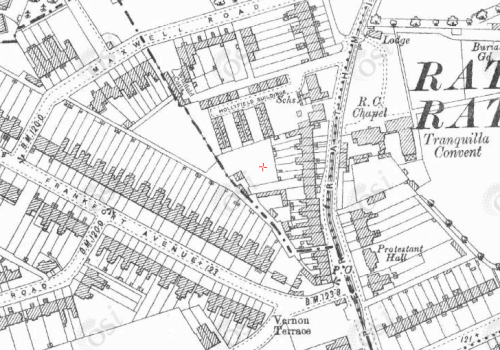
Map showing the location of Tranquila Convent where the body was found

Map showing the location of Tranquila Convent where the body was found

Dr. Murphy, House Surgeon of Meath Hospital said they found “22 circular wounds” in his body. These included:

Three … in the head … one in the region of the ear … four bullets under the skin … three wounds in the thigh … one on the right side of the chest

Near the body, they found eight spent automatic revolver cases, four large spent revolver cases and three small ones.

The Freeman's Journal. 24 March 1923.

The Freeman’s Journal. 24 March 1923.

The jury at the subsequent inquiry came to the conclusion that O’Leary was “murdered by persons unknown … by armed forces, and that the military did not give us sufficient assistance to investigate the case.”. They ended by offering their “sympathy to the relatives of the deceased”.

In quite an interesting turn of events, poet and politician Oliver St. John Gogarty named O’Leary as the leader of the IRA men who kidnapped him on 20th January 1923. While having a bath after a long day’s work Gogarty, then a Free State senator, was taken away by six armed men. His biographer Ulick O’Connor wrote:

As he got into the car, the revolver was pressed hard into his back. ‘Isn’t it a good thing to die in a flash, Senator’ one of the gunman, said, as they sped out along the Chapeliziod road.

Gogarty was held in an empty house on the banks of the Liffey, near the Salmon Weir. On the pretext of an urgent call of nature, he was asked to be taken outside where he then made the quite daring decision to jump into the River Liffey. Shots were fired at him as he swam away. He eventually made it to the police barracks in the Phoenix Park.

His exploits were celebrated in a popular ballad of the day, written by William Dawson, which ended as followed:

Cried Oliver St. John Gogarty, ‘A Senator am I’
The rebels I’ve treicked, the river I’ve swum, and sorra the word’s a lie’.
As they clad and fed the hero bold, said the sergeant with a wink:
‘Faith then, Oliver St. John Gogarty, ye’ve too much bounce to sink’

While he got the dates slightly mixed up (O’Leary was killed a couple of months, not a couple of days) after his kidnapping, Gogarty is obviously referring to him in his autobiography:

“My kidnaping would not have been believed had the government boys not found my coat. A few days later a man called with a bullet, evidently from a .38, its nose somewhat bent. It was dug out of the spine of the ringleader who had raided my house and carried me off. O’Leary was his name. He was a tram conductor on the Clonskea line. He had died to a flash shrieking inappropriately under the wall of the Tranquilla Convent in Upper Rathmines.”

In March 1933, approximately ten years later, IRA quartermaster general Sean Russell unveiled a small marker at the spot where his body was found in Rathmines.

Today, this marker is completely eroded.

The memorial, unveiled in 1933, to Thomas O'Leary at the gates of  Tranquila Convent, Upper Rathmines Road. (Picture - Ciaran Murray)

The memorial, unveiled in 1933, to Thomas O’Leary at the gates of Tranquila Convent, Upper Rathmines Road. (Picture – Ciaran Murray)

With the 90th anniversary of his death next month, the National Graves Association might think about restoring it.
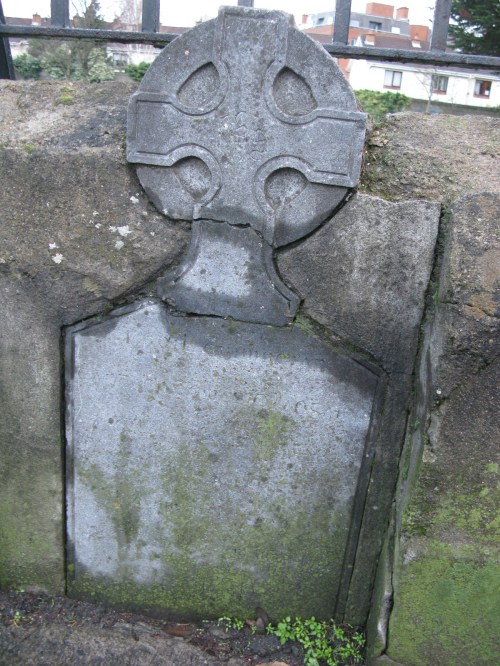
Close up of the memorial, unveiled in 1933, to Thomas O’Leary at the gates of Tranquila Convent, Upper Rathmines Road. (Picture – Ciaran Murray)
The Bird Flanagan

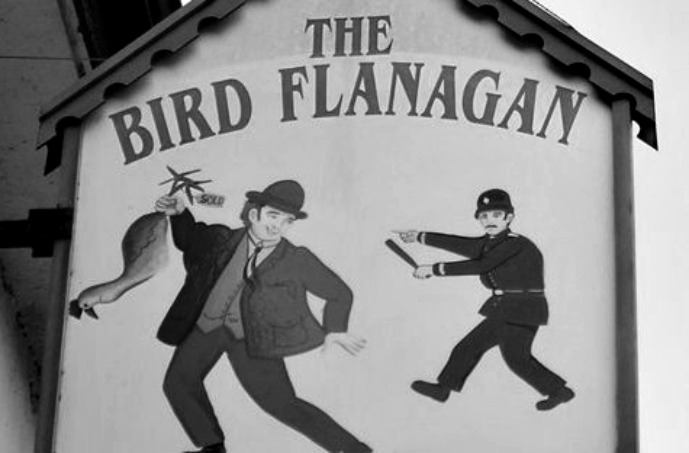
Sign from the Bird Flanagan pub, Rialto.

Sign from the Bird Flanagan pub, Rialto.

One of the most interestingly titled pubs in the capital is ‘The Bird Flanagan’ in Rialto, and its signage of a police officer in pursuit of a man certainly grabs your attention.

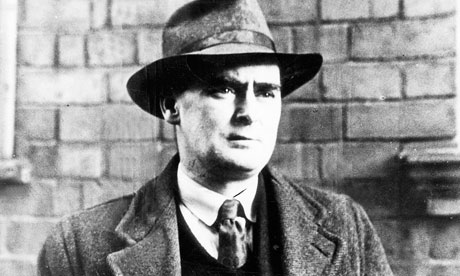
The pub is named in honour of Willie Flanagan, who could only be described as a bit of a character in the history of Dublin. Flanagan was a practical joker of great renown in Dublin, and was the brother-in-law of Taoiseach W.T Consgrave. The son of Alderman Michael Flanagan, ‘The Bird Flanagan’ was said to live off the wealth and name of his father, but created a name for himself through his fun and games in the city, in particular two stunts in 1907. Alderman Flanagan and his family lived at Walkinstown House, a beautiful home which stood on what is now the location of the Walkinstown Superquinn.

I first came across ‘The Bird’ in the pages of Walter Starkie’s autobiography, Scholars and Gypsies. In it, he recalls seeing ‘The Bird’ in Jammets restaurant, a favourite haunt of writers at the time. Starkie described him as “Dublin’s celebrated playboy”, and in it he discussed the rumored origins of the nickname ‘The Bird’. It was said that on one occasion Willie Flanagan “went to a fancy dress ball at the roller skating rink in Earlsfort Terrace wearing wings and a tail and laid a huge egg on the dancing floor, to the scandal of all present. Ever afterwards he’s been called The Bird.” In his entertaining biography of Oliver St. John Gogarty, Ulick O’Connor argues that this stunt may have been the work of a “rival jester” circa 1909, noting that “this was the picaresque flavour of Dublin” at the time.

In the newspaper archives, I found that Flann O’Brien wrote about the exploits of The Bird in the pages of The Irish Times in 1962, writing that while some of the stories around The Bird must have been exagerated, “it must be accepted that the Bird Flanagan’s genuine exploits provided the nucleus of other peoples affectionate or amusing invention.”

Flann O'Brien wrote of The Bird in his column for The Irish Times.

Flann O’Brien wrote of The Bird in his column for The Irish Times.

O’Brien wrote of one particularly legendary instance where The Bird was said to approach King Edward at the Curragh during an important racing event, who was strolling with “Castle worthies to drop the flag at starting point.” It was said that Flanagan succeeded in getting a loan of a fiver from the King of England, which was no small achievement.

A near legendary tale connects Flanagan to the Gresham Hotel, when he was said to ride a pony into the hotel, a story Ulick O’Connor tells in his history of the hotel, noting that “In 1907, a pony appeared in the Foyer of the Gresham. There was a man in the saddle. It was the famous ‘Bird’ Flanagan, a son of Alderman Flanagan, a prosperous County Dublin farmer” Flanagan requested a drink for the pony, and the exchange led to the naming of the Bird Flanagan Bar in the Hotel.

Also in 1907, there was fun to be had for The Bird at the International Exhibition at Herbert Park. One of the features of this exhibition was a “Zulu village transplanted to Dublin”, and this exhibition included living people. It was said that Flanagan removed a child from this exhibition and “returned it to the French pavilion, as a gesture against the decline in the French birth-rate.” Flann O’Brien told a different version of the story, writing that “The Bird stole the baby of the wild man of Borneo from the latters straw house or tent and smuggled it into the snug of a pub in Ballsbridge.”

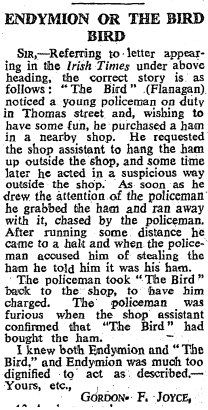
An interesting letter to The Irish Times in 1965 may go some way towards explaining the pub signage in Rialto:

Flanagan

Also in the archives of The Irish Times was this brief notice on the death of the practical joker in December 1925, which makes no reference to his exploits but focuses on other aspects of his life:

Flanagan1

He is buried in Glasnevin Cemetery today. When looking for information on The Bird, and seperating fact from fiction, I stumbled upon the fantastic family history website of Mark Humphrys. Much of what I managed to uncover in the newspaper archives and searching books digitally is there, but also other fantastic tales such as “Once during a performance at the Olympia Theatre, Dublin, during WWI, he stood up in the middle of the show and took off his overcoat, revealing himself to be dressed as the Kaiser.”

Quite the character.

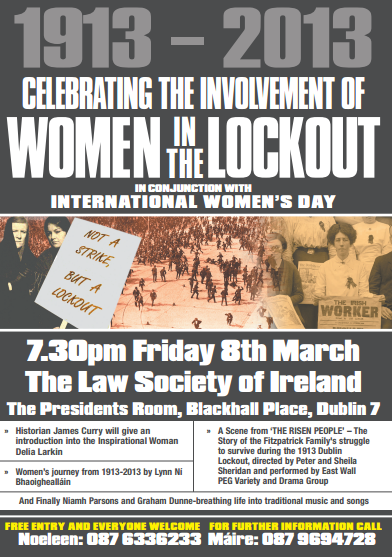
womenandthelockout
This poster was sent to us today, for an upcoming public meeting around the Lockout. A fantastic line-up, with James Curry speaking about Delia Larkin. Curry's recent book Artist of the Revolution exploring the work of political cartoonist Ernest Kavanagh was a real achievement in my view.

The meeting coincides with International Women’s Day.

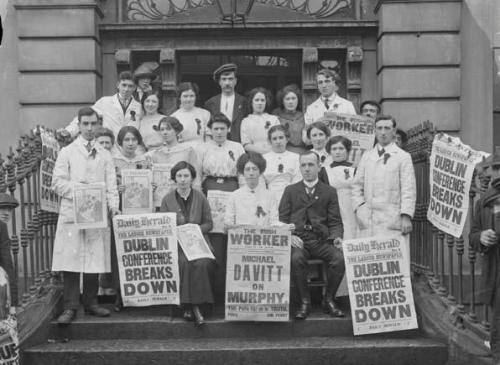
Irish Women's Workers Union activists on the steps of Liberty Hall.

Irish Women’s Workers Union activists on the steps of Liberty Hall.

The return of football.

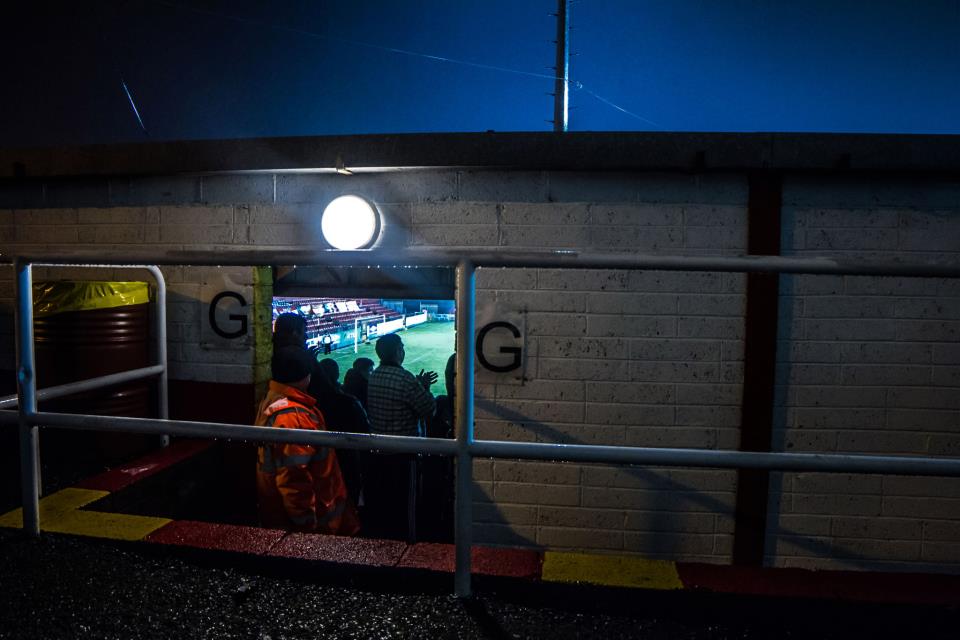
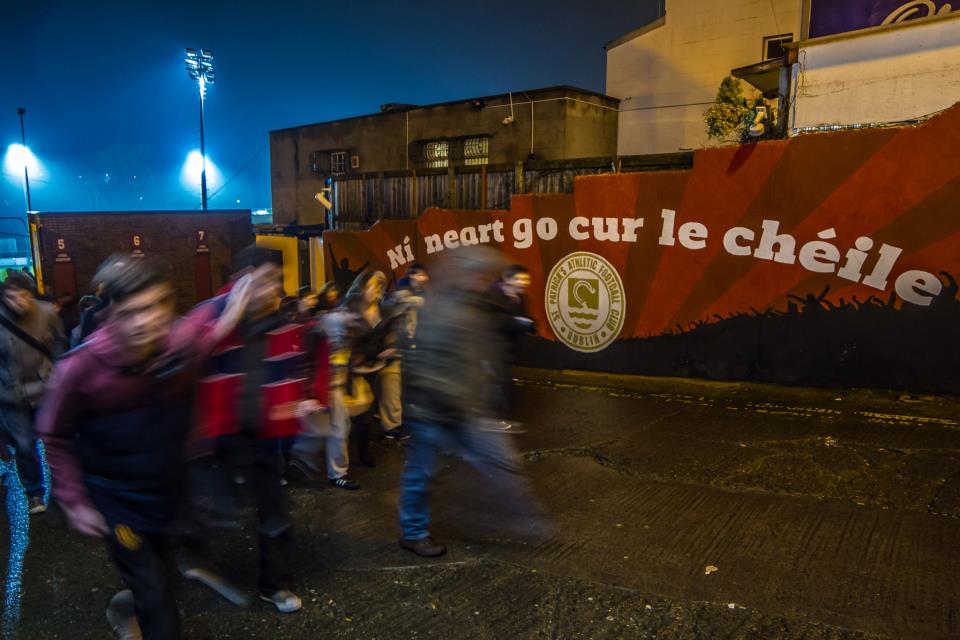
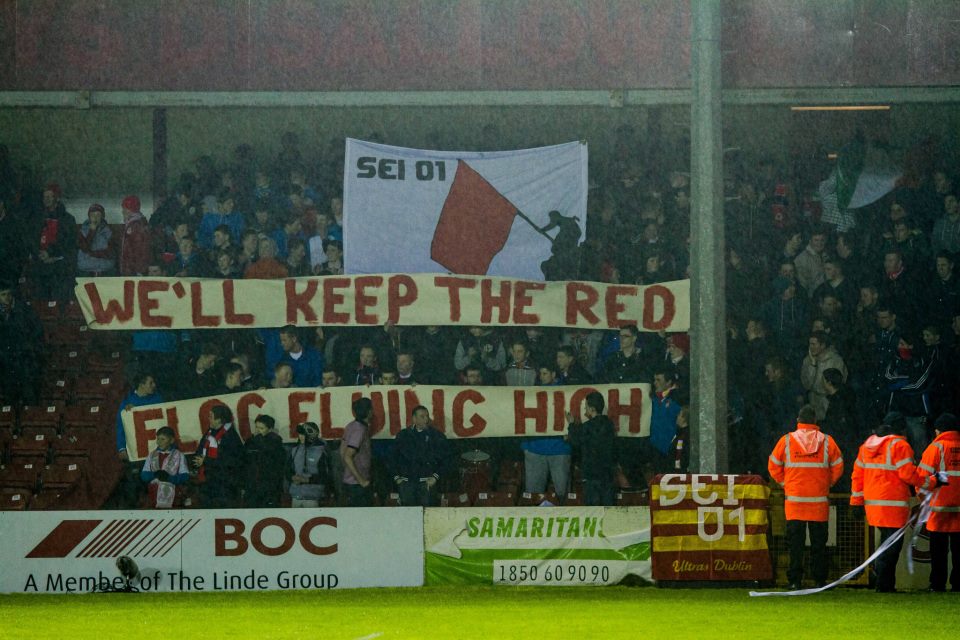
Some nice photographs here from Paul Reynolds, who attended last nights Setanta Cup clash between Glentoran and Saint Patrick’s Athletic in Inchicore.

A 0-0 draw, the game was much better than the scoreline suggests. Setanta Cup games are always marked out by a serious police presence, and the seizure of a four-season old Palmerstown Saints flag (presumably for having well-known Pats fanatic Ernesto Che Guevara on it) was a bit of a pity. Such is life.

Block G- Paul Reynolds.

Block G- Paul Reynolds.

No Strength Without Unity - Paul Reynolds.

No Strength Without Unity – Paul Reynolds.

SEI - Paul Reynolds

SEI – Paul Reynolds

Outside - Paul Reynolds

Outside – Paul Reynolds

'No unauthorised entry onto the playing area' - Paul Reynolds.

‘No unauthorised entry onto the playing area’ – Paul Reynolds.

October 1900 saw William Henry Pick, occupation listed as a “gentleman”, up before the Dublin Police Court. Pick, who resided at 21 Kenilworth Square in Rathgar, was charged with being a “dangerous lunatic” and committed to Richmond Asylum.

Nenagh Guardian, 17 October 1900

Nenagh Guardian, 17 October 1900

It transpired that the previous Saturday Pick had stabbed a policeman, a local man and made an attempt to attack another police officer with a sword.

Patrick Strahan, a car driver living in nearby 22 Charlemont Place, was at his car-stand when he saw Pick running up South Richmond Street. With a sword drawn, and with no apparent provocation, he made for a Constable Whitney and stabbed him in the left arm.

Strahan had made an attempt to stop Pick, apparently asking him “what he was going to do” with his weapon. Pick responded by stabbing Strahan in the hip with the sword, inflicting a wound of an inch and half deep. Pick then made a run for it, down South Richmond Street and towards the city centre.

Nearby Constable John Walsh chased Pick, jumping on a passing tram car to catch up with him. He managed to knock him down from behind but not before Pick “made a thrust of his sword” at Walsh. Luckily, the blade only grazed his tunic.

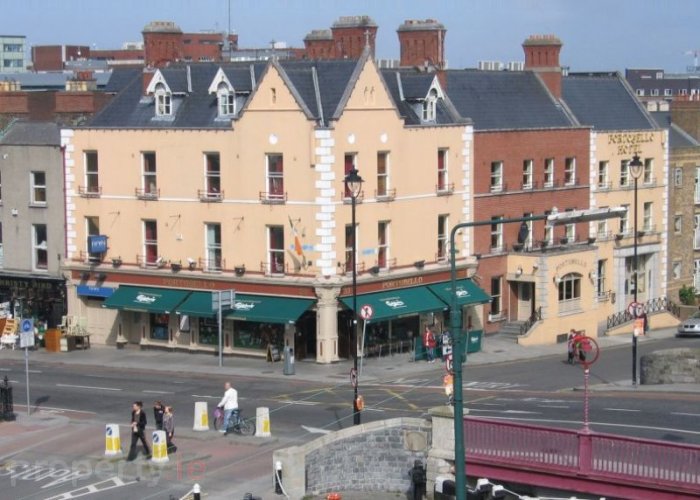
Portobello Bridge with South Richmond Street to the left. Credit - www.property.ie

Portobello Bridge with South Richmond Street to the left. Credit – http://www.property.ie

Strahan and Whitney, the two wounded men, were treated for their injuries in the Adelaide Hospital but both survived.

William Henry Pick was declared insane and committed to the Richmond Lunatic Asylum. It is not known whether he was ever released.

In 1901, there were only 11 people with the surname Pick living in Ireland – none in Dublin. However, that year in Kenilworth Square there was a family by the name of ‘Pic’ living in number 214. Here is their census form.

George Vesian Pic (De Nogart), aged 29 was living in the house with his younger sisters Marie Gertrude and Jessie Adelaide. All were Church of Ireland and had been born in Offaly. The family employed a domestic servant from Carlow by the name of Lizzie Curry. George listed his profession as a Lieutenant in the ‘4th Royal Irish’ Regiment.

It can be safely assumed that William Henry Pick (sic) was the sibling of George, Marie and Jessie of Kenilworth Square.

The Irish Times of 23 February 1901 announced that ‘Lieut Vesian de Nogart’, an invalid officer from the West African Regiment, arrived in Dublin on board the ship Biafra from Ashanti, a “pre-colonial West African state in what is now Ghana”. The same paper, the following March, reveals that he leaves the city from Kingstown (Dun Laoghaire). George was later attached to the The Prince of Wales’s North Staffordshire Regiment according to The National Archives and then the India Audit Office in the 1920s according to The London Gazzette.

Refs: The Irish Times 15 October 1900; Nenagh Guardian 17 October 1900

42 O’Connell Street

42a

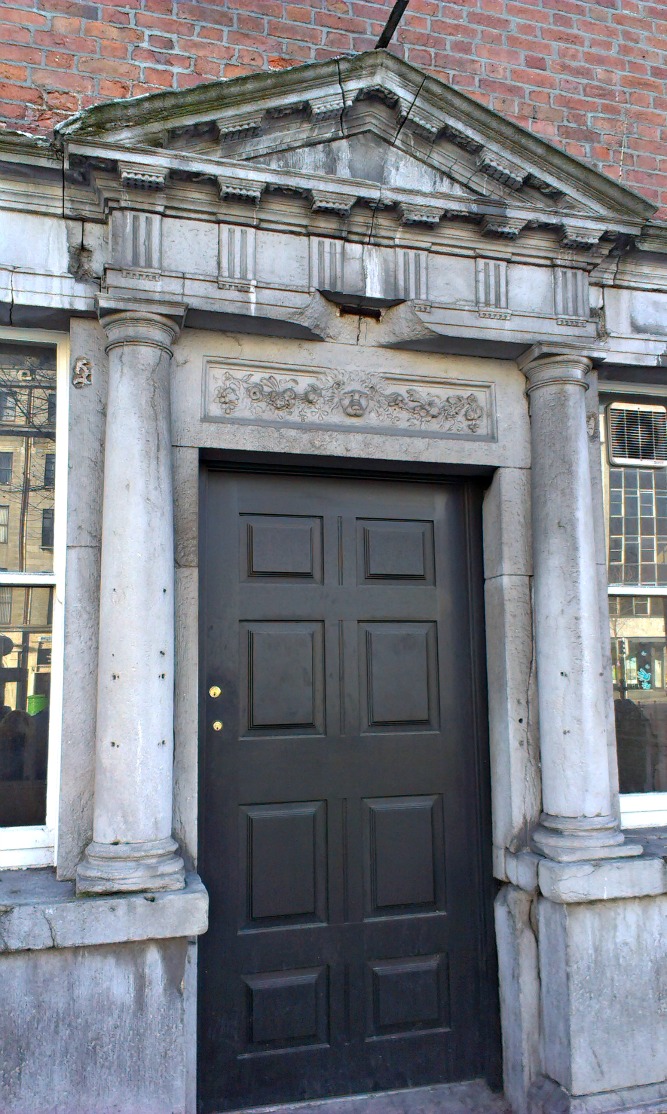
No.42 O’Connell Street has long fascinated me, sitting next to a sports bar and easy to miss, yet so different from everything else on the street. The building is the oldest surviving residential building on the street according to TJ O’Connor and Associates, a consulting engineer firm.

Their website provides some interesting information on the building, noting that:

The building comprises of 4 storeys over basement and is constructed in cellular form typical of the Georgian period. While the original construction was of high quality, the building has been subjected to numerous alterations during its lifetime, particularly those associated with the adjoining hotel on the 40-41 O’Connell Street site.

Under ‘Client’, the website lists Chartered Land Development, who are embroiled in the controversy around the future of Moore Street and the equally important historic laneways which surround it, connected to the story of the 1916 rebellion.

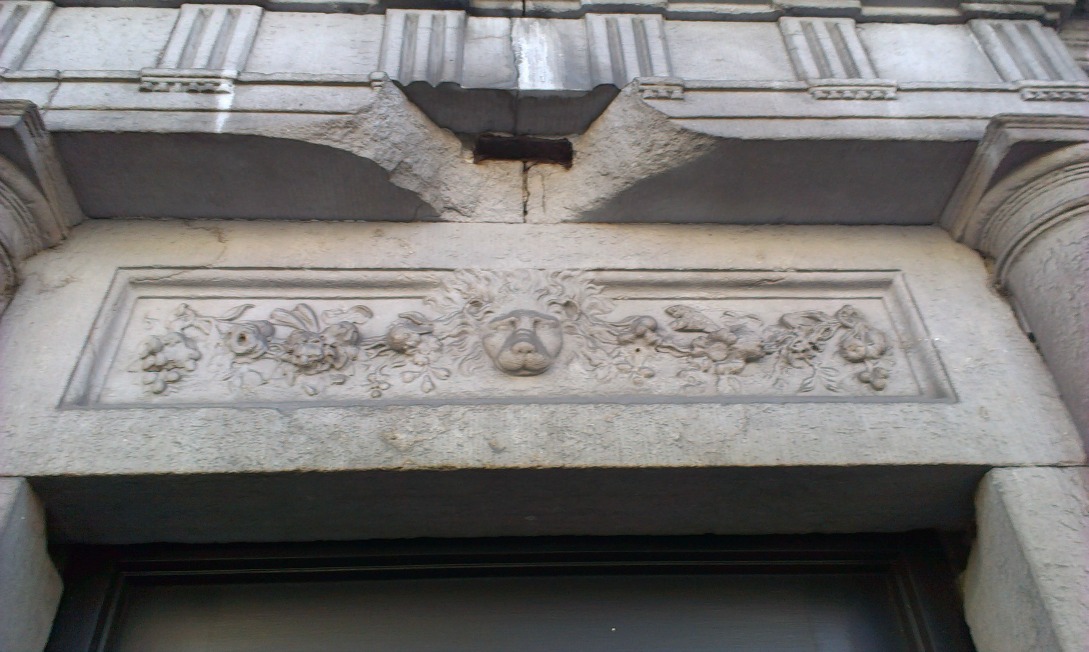
Detail above the door no.42

Detail above the door no.42

The house was the subject of some controversy in 1984, when plans to demolish it led to opposition. Writing in The Irish Times, Frank McDonald noted that:

The house dates from 1752. It was designed by Richard Castle, the architect of the Rotunda, and although the front facade is very plain, the interior contains many fine features, including ornate plaster work ceilings and an exceptionally good carved wooden staircase.

Pat Liddy has detailed the manner in which the building was purchased in 1882 by the Catholic Commercial Club, essentially a club for Catholic businessmen who “had been excluded from the existing social clubs in the city.” A library, a reading room, a restaurant, lecture rooms and other facilities were to be found inside of this club.

It is incredible to read now that once upon the time the very idea of knocking down one of the few buildings on the street to survive the revolutionary period intact was even considered. This is a great building which deserves your attention next time you’re passing.

42c

All roads lead to Dalymount Park in Phibsboro this Sunday for the Africa Cup of Nations Final which will be shown on TV screens in the Phoenix Bar. This will be the third time local residents and Bohs fans have organised an evening of “football, food and music at the Home of Irish Football” for the final of the cup.

ACN poster 2013

ACN poster 2013

Doors open at 5pm with kick off between Nigeria and Burkina Faso at 6:30pm.

Delicious food will be provided by the excellent Madina Desi Curry Co. who fed everyone last year. Food is free but donations are encouraged. Drink deals will also be available on the night.

After the game, DJs  Carax (Punky Reggae Party), Tommy Rash (ex. Freebooters/Ska Reggae at Sin E) and Sparky (White Collar Boy) will be playing an eclectic mix of reggae, ska, soul and electronic tunes to keep the party going till late.

Connect with the Facebook event here.

Once a staple of this here blog, our “monthly” pub crawls have become somewhat sporadic of late. We only managed to fit in five last year, the last taking place all the way back in June, making it 114 pubs that we’ve visited on the crawls alone. Add in another 30 pubs or so that we’ve done on “Random Drop Inns,” I make it that (including the five pubs here) we’ve visited and reviewed 149 pubs in the city.
The back story… for anyone that doesn’t know the story by this stage, once a month or so the three writers behind this blog, joined by a small group of friends, visit five Dublin pubs and then write about our experiences. A different person each month picks the five pubs and makes sure not to give away any details beforehand. This month was my turn, and for the first pub crawl of 2013, I decided to drag people out to Ringsend, from where we could make our way back into town, stopping in a couple of spots along the way.  I’ve always loved Ringsend; standing on Bridge Street, you’re a fifteen minute walk to Grafton Street and less than that to Sandymount Strand. Perfect.

The Oarsman, from their official Facebook.

The Oarsman, from their official Facebook

Meeting the other two and KBranno in town at five, a Leo Burdocks and a taxi in the lashing rain later, we headed over the canal and into The Oarsman. A very busy spot this and my first impression was that… Christ, this place is a relic; but in a good way! The pub doesn’t appear to have changed too much inside or out for donkey’s years. There has been a business on this spot since 1882, and a pub here since the sixties. The original grocers shop became the snug area inside the door (where we were lucky to nab seats, kudos to Paul R for that,) and the pub was extended out the back. A long narrow layout means ordering a pint from the beautiful old wooden bar is awkward enough. The stairs down to the jacks is halfway along it on the right, meaning if the seats at the bar are taken and you’re ordering, chances are you’re blocking someone’s way. Nonetheless, we weren’t left waiting and ended up staying for a couple of pints apiece, at €4.45 a pop. The most expensive pint of the crawl but still, relatively cheap compared to pints closer towards town.  A lovely pub this and a place I’ll be back to, if just to try out the food they’ve recently started to serve.

Continue Reading »