Feeds:
Posts
Comments

(Previously we’ve looked at Dublin’s oldest established restaurants and the city’s first Chinese restaurants)

Italian restaurants have flourished in Dublin since at least the late 1930s. Some of the first and and most influential of these were:

The Unicorn at 12B Merrion Court (1938 – Present)

Originally based at 11 Merrion Row, it moved around the corner to Merrion Court in the early 1960s. Ran by the Sidoli family from Bardi for 57 years, it was taken over by Giorgio Casari in 1995.
In ‘The Book of Dublin’ (1948) it was described as offering “central European cooking and very good of its kind. A quiet place for a slow meal and good conversation. The clientele is cosmopolitan, literary or artistic.”

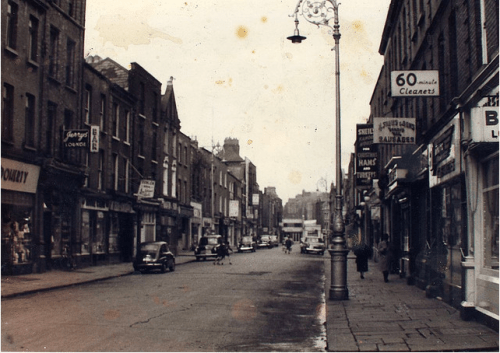
Ostinelli’s at 17 Hawkins Street (1945 – 1963)

Opened by Ernest and Mary Ostinelli, this restaurant was a popular spot for 18 years. A WW1 veteran, Ernest from Como in Italy came to Dublin in 1944 (after spells in Leeds and Belfast) and lived in Clontarf until his death at the age of 78 in 1970. Ostinellis was purchased by the Rank Organisation and demolished to make way for Hawkins House.
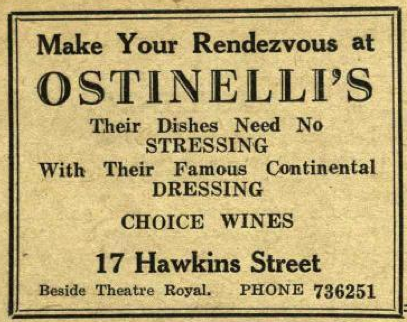
Advertisement for Ostinellis restaurant. Trinity News, 27 May 1954.

Advertisement for Ostinellis restaurant. Trinity News, 27 May 1954.

Alfredo’s at 14 Marys Abbey (c. 1953 – late 1960s?)

From Ospedaletti in Northern Italy, Alfredo Vido ran this popular late-night restaurant for nearly a decade. In Fodor’s Ireland guide (1968), it was described as “a place for an after-theater meal … in one of the oldest parts of the city and, as the location suggests, is on part of the site of a one-time abbey. Small, but has character and good food.” Ulick O’Connor, in February 1978 in Magill magazine, called it “Dublin’s first late-night restaurant … You banged on the door which looked like a knocking shop and a little spy hole opened like a Judas in a prison cell. If Alfredo liked you, he let you in and gave you a flower for your girl. When he didn’t like you – and a lot of people who used to flash the green backs he didn’t like – Alfredo just wouldn’t open the door.”

Restaurant Bernardo (aka Bernardo’s) at 19 Lincoln Place (1954 – c. 1991)

Moving to Ireland from 1952 from Rieti, Bernardino Gentile opened this restaurant with his brother Mario who later took it over. It was a popular spot for 37 years. It was described in 1998 by Patricia Lysaght as Dublin’s “first restaurant to offer an exclusively Italian menu using authentic Italian ingredients”
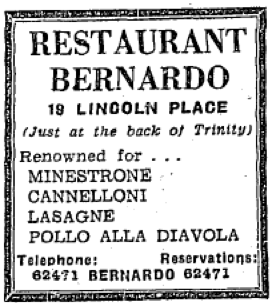
Advertisement for Restaurant Bernardo. The Irish Independent, 29 March 1960.

Advertisement for Restaurant Bernardo. The Irish Independent, 29 March 1960.

The Coffee Inn at 6 South Anne Street (1954 – 1995)

An Italian snack bar run by Bernardino’s other brother Antonio Gentile. Very popular with the art, student and music set of the 1970s and 1980s especially Phill Lynott.
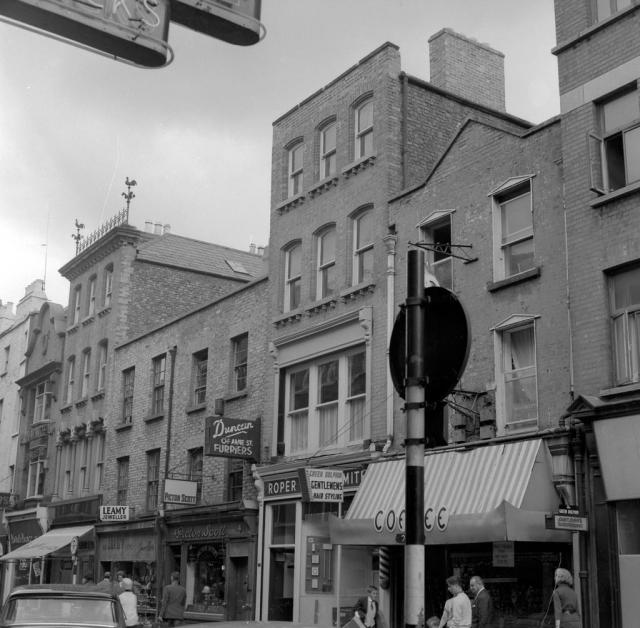
The Coffee Inn from 1967.  Dublin City Photographic Collection.

The Coffee Inn from 1967. Dublin City Photographic Collection.

Quo Vadis at 15 St. Andrew’s Street (1960 – 1991)

Also opened by the trendsetting Bernardino Gentile. He worked here until his retirement in 1991, he passed away in 2011 at the age of 91.

La Caverna at 18 Dame Street (1963 – early 1980s)

Ran by Bernardino’s other brother  (!) Angelo Gentile who later opened Le Caprice Restaurant with his wife Feula. 1960s guide books describes how in La Caverna “dancing is also an added attraction”

Nico’s at 53 Dame Street (1963 – Present)

Long-established Italian, celebrating 50 years of business this year.
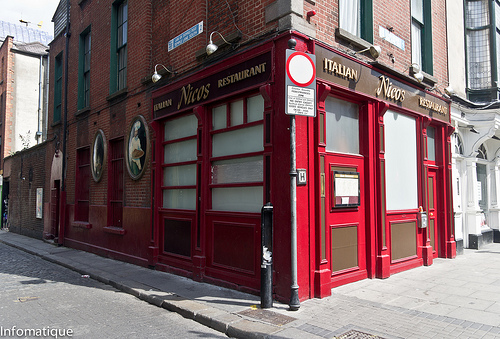
Nicos (c. 2011). Credit - Infomatique

Nicos (c. 2011). Credit – Infomatique

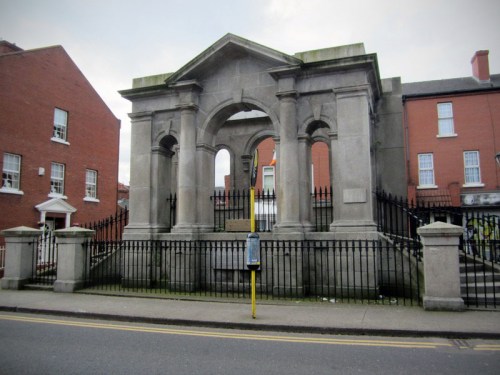
In the depths of the Coombe in Dublin’s Liberties lies the memorial below. Dedicated to the memory of the many women who gave birth in the Coombe Lying-In Hospital, it has to be amongst the most impressive monuments in the city. The plaque at it’s base reads as follows:

“Towards the end of the 1825, two women in a vain attempt to reach the Rotunda hospital perished, together with their new born in the snow. When this became known, a number of benevolent and well disposed people founded the Coombe Lying-in Hospital in the year 1826 for the relief of poor women. Leading the charitable Committee was a Mrs. Margaret Boyle of Upper Street, Dublin.

The portico surrounding this plaque formed the entrance until the year 1967, when the hospital moved to a new location in Dolphin’s Barn. The old portico having been retained and restored by Dublin Corporation as a memorial to the many of mothers who gave birth to future citizens of Ireland in the Coombe Lying-in Hospital and also to the generosity of the staff and friends of the hospital.”

The Portico of the first Coombe Lying-in (Maternity) Hospital

The Portico of the first Coombe Lying-in (Maternity) Hospital

There had been a hospital on this site for close to 200 years, with the foundation stone for the “Meath Hospital and County Dublin Infirmary” being laid in 1770. This hospital operated in this guise for over fifty years until it was closed in 1823.  In 1826 Mrs. Margaret Boyle founded the Coombe Lying-In Hospital on the site, with the Guinness family as one of the hospital’s benefactors. It was Dublin’s second maternity hospital, the first being the Rotunda.

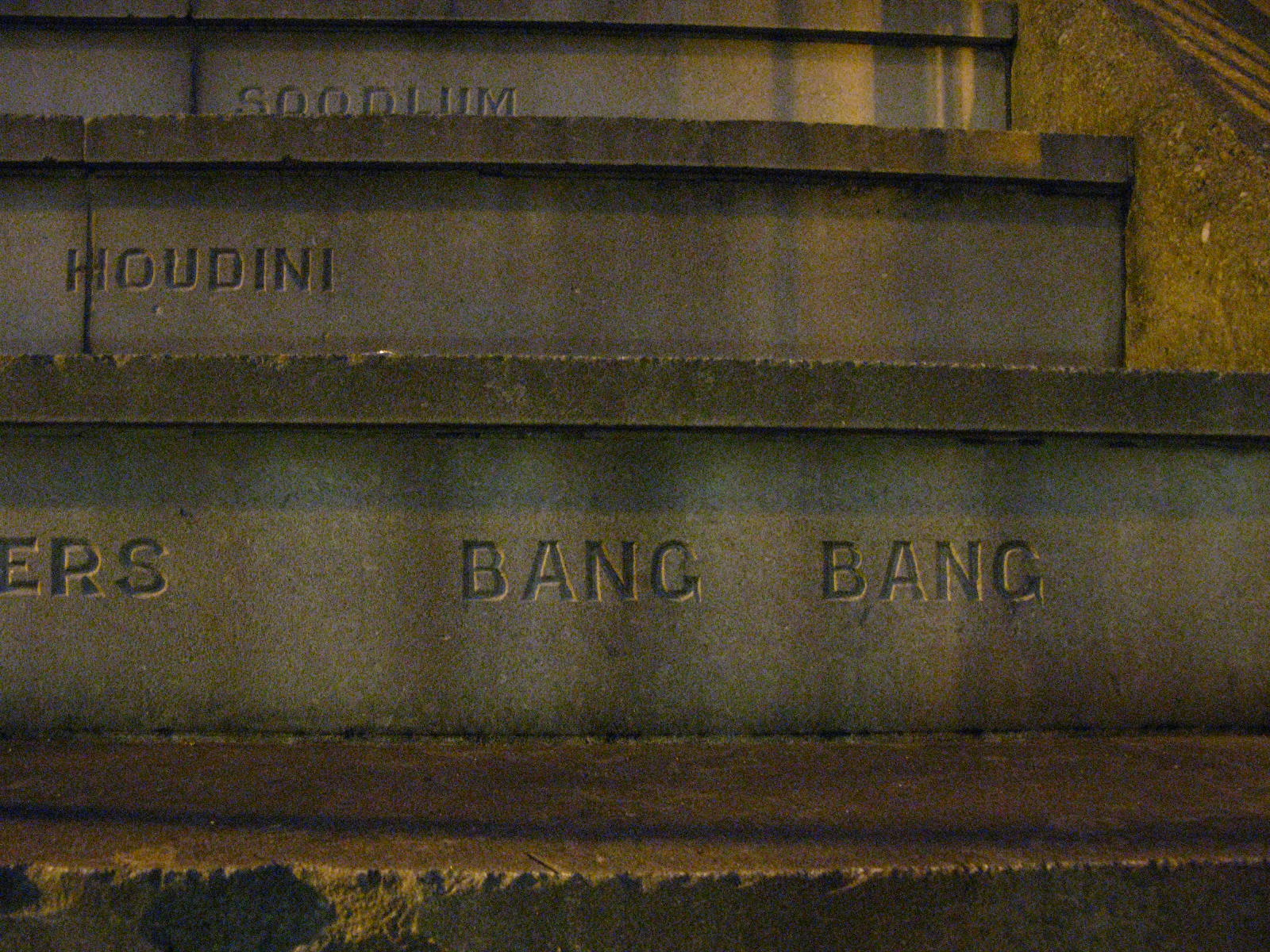
The old Coombe hospital closed and relocated to a newly built premises in 1967. The building was demolished in order to make way for Dublin Corporation housing. Interestingly, the steps at the back of the monument are a memorial to Dublin’s characters of old. Bang Bang and Johnny Forty Coats feature, along with a host of others.

006If you’re interested in taking a look for yourself, the monument can be found near the corner of the Coombe and Brabazon Street. 

Live & Love

Live1

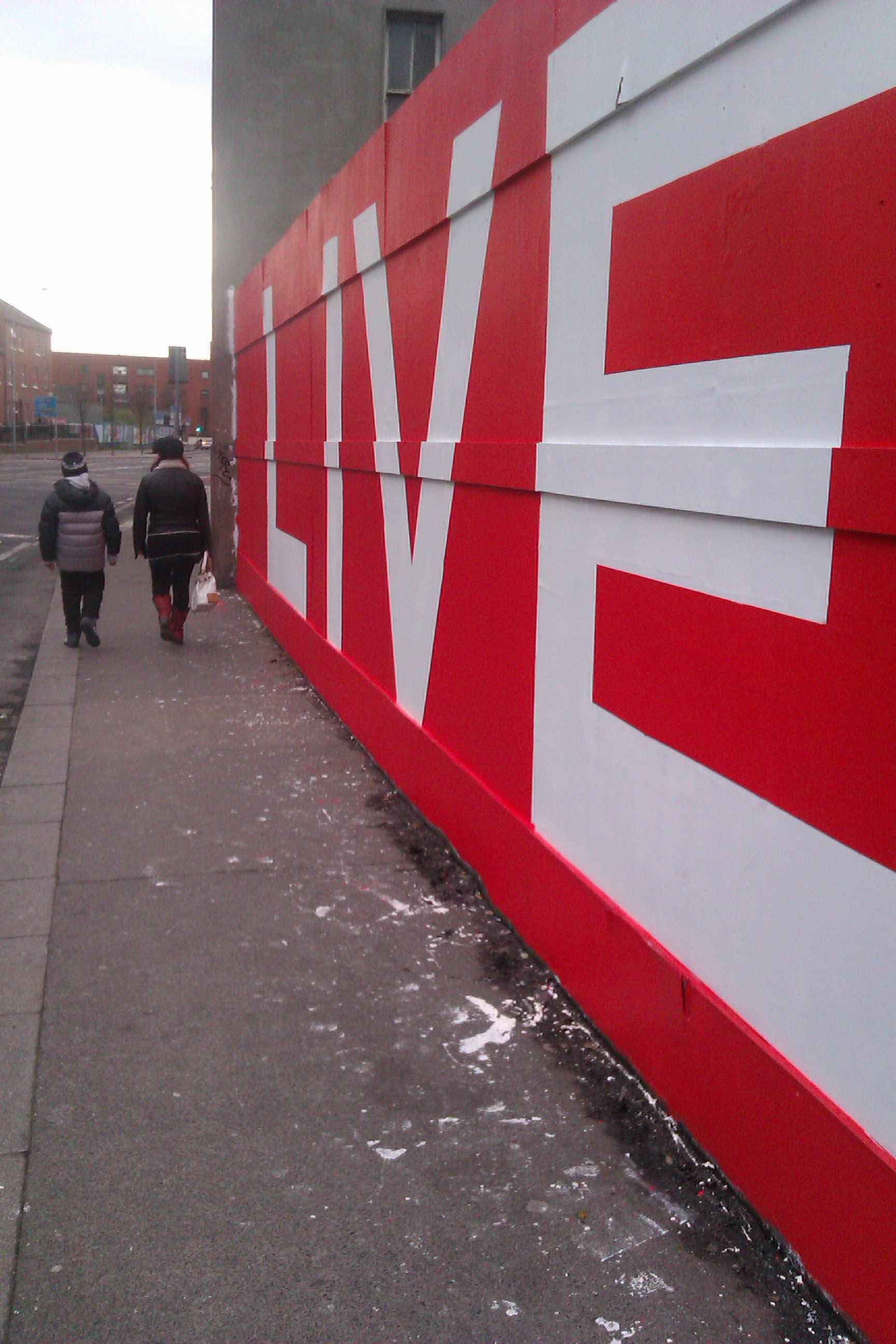
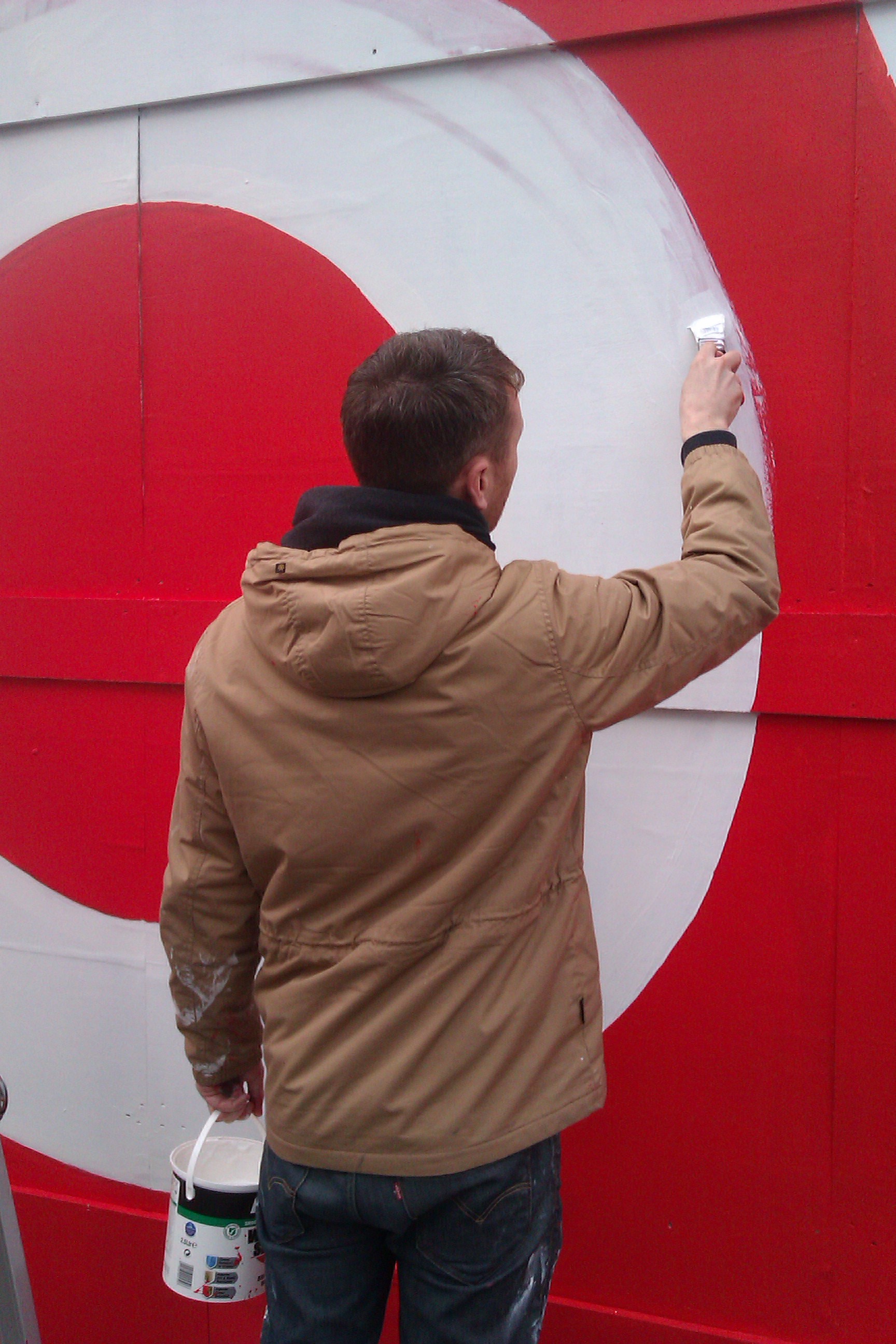
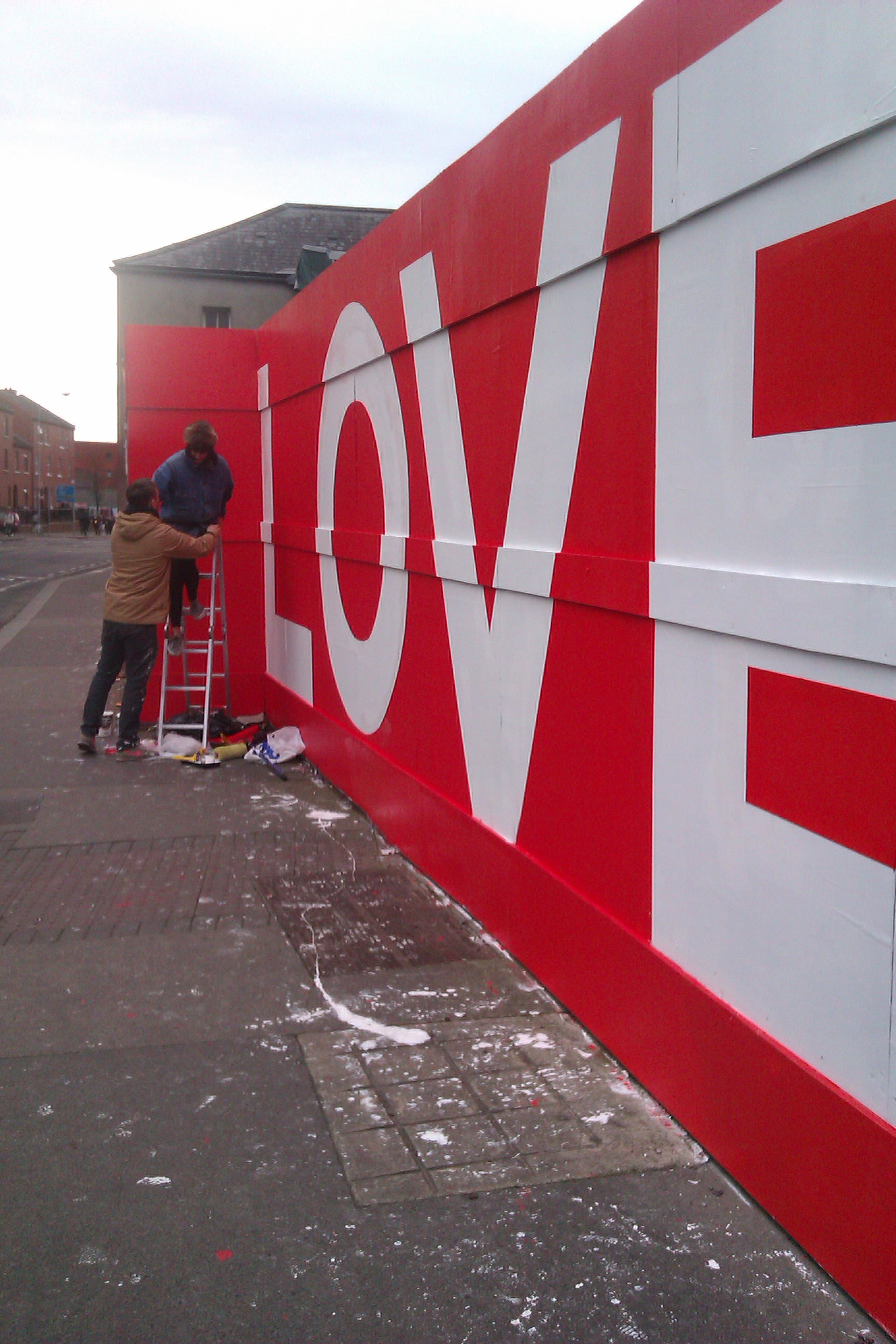
Luke Fallon (CHTM illustrator, responsible for our recent book cover) snapped these images of Maser at work today. I’ve huge time for Maser, and in January 2012 we chatted with him about his work, style and inspirations. I find Maser understands the history and complexities of the city, and he often incorporates Dublin characters and stories into his work.

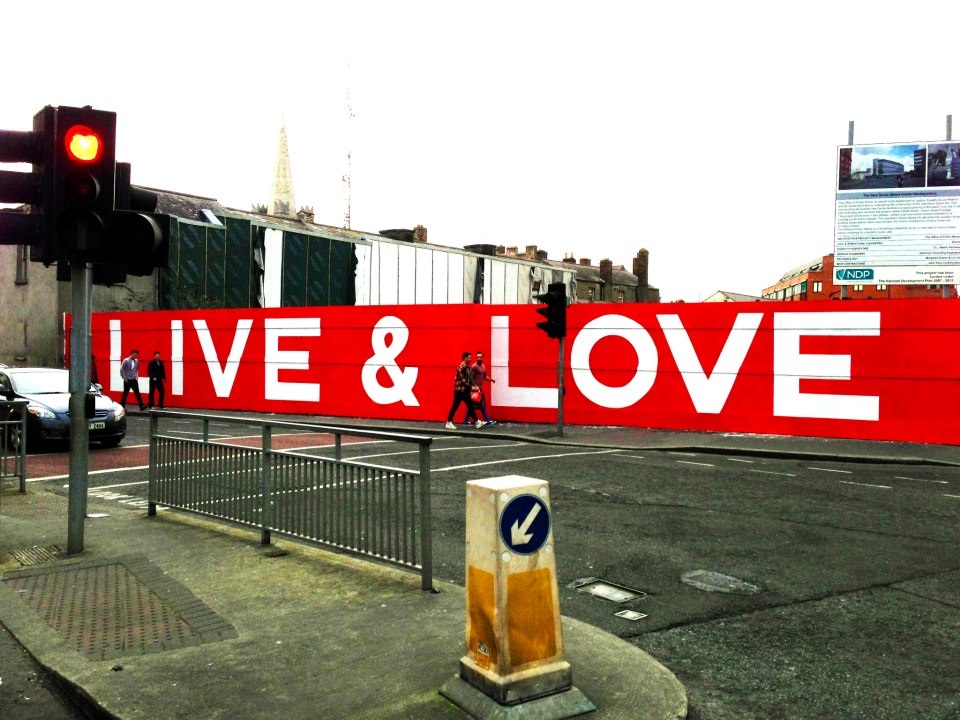
Maser has just painted a nice bit on Kevin Street encouraging Dubs to live and love, and it’s good advice we fully endorse. This work was part of the First Fortnight festival, which promotes mental health issues in the city.

Live2

Live3

Live4

The finished product:

Image via Maser

Image via Maser

Penney’s, Mary Street.

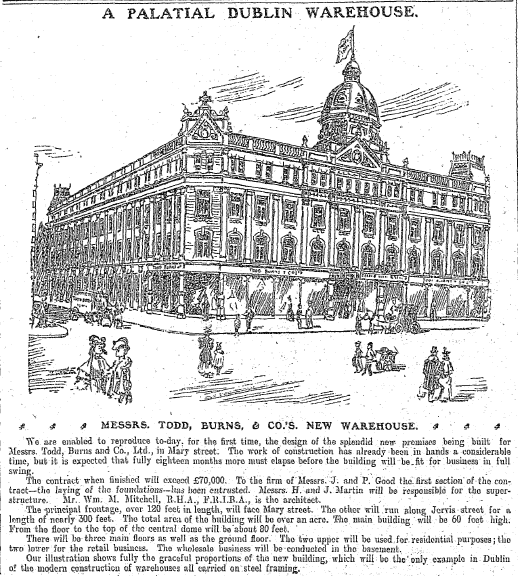
Penney’s have recently expanded their store on Mary Street significantly, with much more of the building now being used as retail space. Architecturally, the building is very interesting, having originally been constructed for the department shop Todd Burns, described in newspaper reports as a “palatial Dublin warehouse” at the time of its opening in 1905. The building boasted a principal frontage over 120 feet in length facing onto Mary Street, with the building running 300 feet along Jervis Street. The project cost in excess of £70,000 at the time, and the architect was William Mitchell who was also responsible for the Hotel Metropole on O’Connell Street, destroyed in the 1916 insurrection.

Todd Byrne's

1905 newspaper illustration of Todd Burns

This premises had been constructed following a fire which destroyed the original Todd Burns building in January 1902. Incredibly, within a month the business were trading on the site again! Out of a wooden ‘temporary structure’, described here in The Irish Times:

ToddBurns

The site now occupied by Penney’s is marked by two historic plaques, connected to two hugely important characters in Dublin’s history. On the Jervis Street side of the building, a small plaque marks the birthplace and home of Dublin historian J.T Gilbert.

J.T Gilbert plaque

J.T Gilbert plaque

Gilbert wrote the classic A History of the City of Dublin in 1861, a detailed history of the city from its viking origins to the contemporary world Gilbert knew. This was a groundbreaking study in its day, and it is fitting that today the Dublin City Library and Archive on Pearse Street is known as the Gilbert Library in his honour. Gilbert was knighted by Queen Victoria for his work in the field of history, and remains one of Dublin’s most important local historians. You can read the work in full here.

Continue Reading »

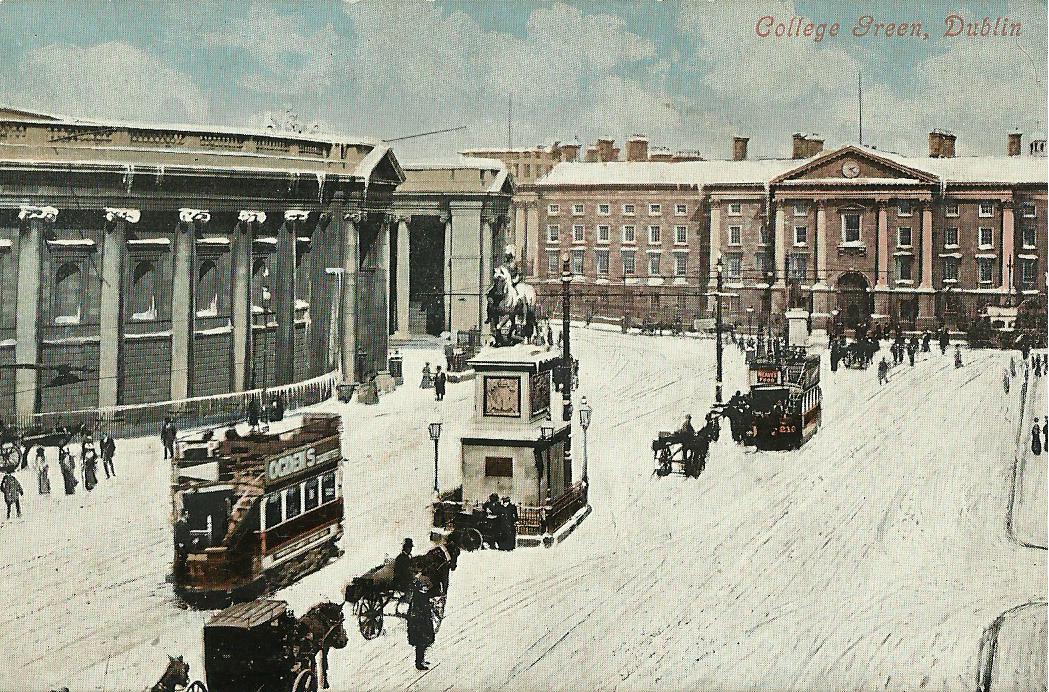
King Billy in the snow.

KingBilly

I picked up this great postcard recently, showing College Green in the snow with King Billy overlook proceedings.

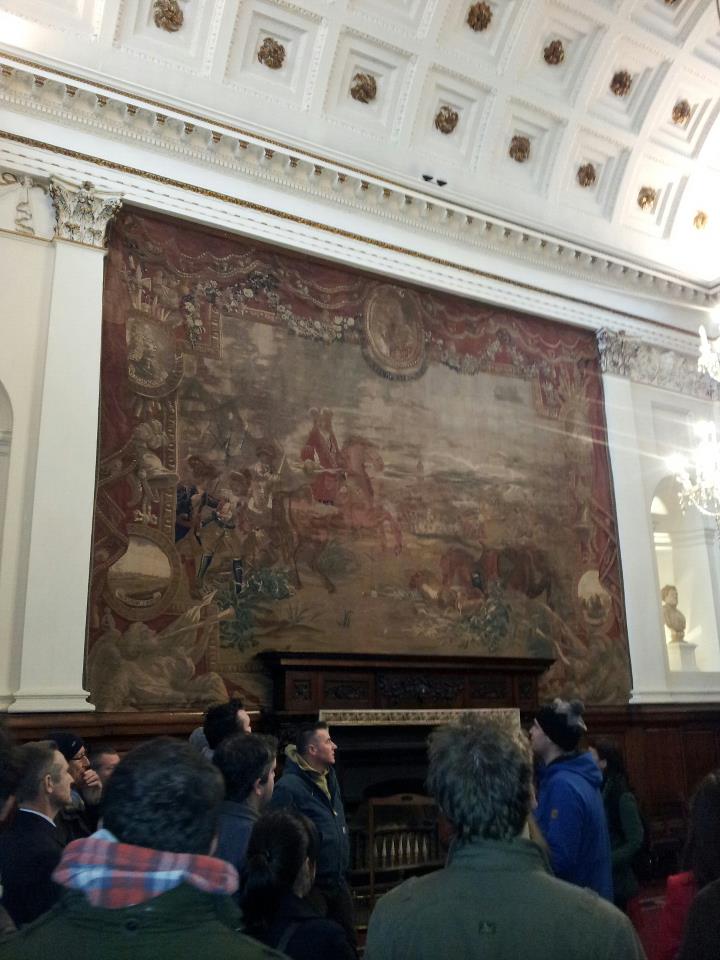
The King William of Orange statue on College Green was eventually removed in 1929, following an explosion in the early hours of Armistice Day that year, but was one of the most vandalised monuments in Dublin prior to that. It sits right opposite the old Irish Parliament building. Inside the building, a tapestry showing the victorious King Billy at the Battle of the Boyne has outlived the monument, and you can still go and see it to this day by just walking into the bank. It was one of the stops on our recent walking tours of the city.

Come Here To Me at the King William of Orange tapestry, College Green. (Image:Branno)

Come Here To Me at the King William of Orange tapestry, College Green.(Image:Branno)

Pólo is a longstanding Come Here To Me! supporter, and contributor of many fine comments. We’ve met on a few occasions now, such as at the recent CHTM! booklaunch. Carrying a camera around in 1960s Dublin, Pól captured some real gems and moments in Dublin’s history. He’s allowed me to reproduce these brilliant photos on the blog, of a time he saw the head of Horatio Nelson on Killiney Beach! The words are his, as are the snaps.

—–

Image: Póló

Image: Póló

One day in late March, 1966, I was walking along the station road in Killiney when my eye was caught by something unusual happening near the waterline in front of Homan’s.

One of Homan’s long rowing boats was partly drawn up on the beach and seemed to be flanked by balaclavad figures presenting oars. It was too far away to be sure of what was going on.

I had my camera across my shoulder and I set out for Homan’s. When I got there the action, whatever it had been, was clearly over and there were just a few ordinary looking people hanging around. I was convinced, however, that something had been going on so I started photographing what remained.

The boat was still there but there were no balaclavas and no oars. There was an odd looking sack which clearly contained something very heavy. I thought of a body but figured it wouldn’t fit. It was heavy enough, though, to leave a deep trail in the sand.

Image: Póló

Image: Póló

Continue Reading »

Jemmy Hope and the Liberties

Jemmy Hope.

Jemmy Hope.

Jemmy Hope is a name unfamiliar to many Irish people today, and yet he remains one of the most radical voices in Irish history. Described by veteran republican socialist George Gilmore in 1964 as being to 1798 what James Connolly was to 1916, Hope was a leading voice in the United Irishmen movement. He survived that first republican insurrection, and was active in Emmet’s Rebellion in 1803. Hope fought at the Battle of Antrim in June 1798 alongside Henry Joy McCracken, and in 1803 was influential in organising support for Emmet’s failed rebellion, primarily among the working class in Dublin.

Jemmy Hope was born in Templepatrick, Co.Antrim. Self-educated, he was of Presbyterian stock. As Sean Cronin wrote in his brief biography of Hope:

The Dissenters laboured under religious and political disabilities, though nothing on the scale of the penal laws against the Catholics. They had strong anti-authoritarian views. When their grandfathers slammed the gates of Derry on the troops of King James II they acted in the name of liberty and in defiance of the theory that kings ruled by “Divine Right.”

Hope, like many other northern Pyresbyterians, was drawn to the politics of republicanism, and as Cronin has noted a young Hope “saw the rise of the United Irishmen as a revolt against the tyranny of privilege and foreign rule.” The United Irishmen had been established in the winter of 1791, when a group of Protestant Irish nationalists which included Theobald Wolfe Tone, Samuel Neilson and Thomas Russell met in Belfast. Initially quite in line with the thinking of Henry Grattan and other moderates, this society in time drifted towards radical republicanism.

Hope’s political beliefs were much to the left of even many of the United Irishmen. He believed that:

By force the poor were subdued and dispossessed of their interest in the soul; by fiction the titles of the spoilers were established; and by fraud on the productive industry of future generations, the usurpation continued.

The emblem of the United Irishmen. Around the harps are the words 'Equality- It is new strung and shall be heard'.

The emblem of the United Irishmen. Around the harps are the words ‘Equality- It is new strung and shall be heard’.

Continue Reading »

Hidden in the middle of a 1970s housing development in Rathfarnham lies the ruins of a Georgian home, boasting a fascinating history.

Known as The Priory, this house which stood for at least 150 years, played an integral role in “the greatest love story in Irish history”; that of Sarah Curran and Robert Emmet.

Its journey from a beautifully well-kept homestead to a vandalised ruin sums up the unfortunate recurring story that sees the Irish State and other bodies not doing its job in preserving objects of great historical interest.

The house, which was linked to secret societies, wild parties, underground passages, fatal accidents, ghosts, secret rooms and a long-running quest for a forgotten grave, has all the hallmarks of a fantastic melodramatic thriller.

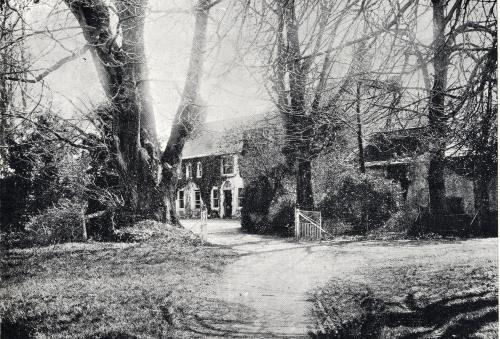
The mystique entrance into The Priory house.
The mystical entrance into The Priory house. Taken from Footprints of Emmet by J.J. Reynolds (1903).

In 1790, the famed barrister and politician John Philpot Curran took possession of a stately house off the Grange Road in the south Dublin village of Rathfarnham. He renamed it The Priory after his former residence in his hometown of Newmarket, Cork. A constitutional nationalist, Curran defended various members of the United Irishmen who came to trial after the failed 1798 rebellion.

[It has been erroneously reported that Curran took over a residence, originally called Holly Park, which he renamed The Priory. Holly Park was, in fact, the name of the home of Jeffrey Foot which stood to the south of Curran’s home. Foot was an Alderman of Dublin Corporation who followed his father’s footsteps into the tobacco and snuff industry. Holly Park later became St Columba’s College and is still in use.] [1]

One of Curran’s earliest biographer’s, William O’Regan, described the view from the second floor of The Priory:

of interminable expanse, and commanding one of the richest and best dressed landscapes in Ireland, including the Bay of Dublin; on the eastern side May-puss Craggs and obelisks, and a long range of hills.

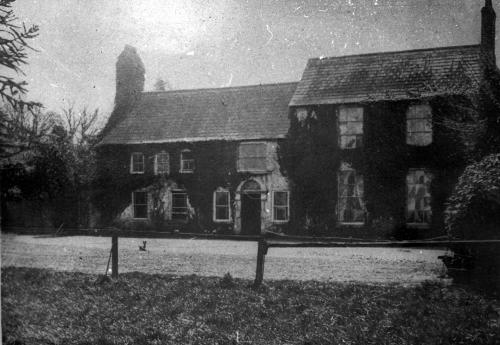
O’Regan described the house itself as “plain, but substantial, and the grounds peculiarly well laid out and neatly kept”. One source, The Irish Times on 14 August 1942, suggests that the higher proportion of the house was the part that Curran rebuilt with the rest of the dating back to the Queen Anne period (1702–1714).

A window under a large box tree beside the house was said to have been the venue for Sarah Curran’s final goodbye to Emmet in 1803. More on their relationship later.

The Priory as it would have looked from the 1790s to the 1920s. Pictured in 1903. Taken from Footprints of Emmet by J.J. Reynolds (1903).

The Priory as it would have looked from the 1790s to the 1920s. Pictured in 1903. From Footprints of Emmet by J.J. Reynolds (1903).

Curran was a founding member of an elite patriotic drinking club called The Monks of the Screw (a.k.a. the Order of St. Patrick) who were active in the late 1700s. The membership, numbering 56, included politicians (Henry Grattan) judges (Jonah Barrington) priests (Fr. Arthur O’Leary) and Lords (Townshend). Many were noted for their strong support of constitutional reform and self-government for Ireland. The club used to meet every Sunday, in a large house in Kevin’s Street owned by Lord Tracton.

Given the title of the ‘Prior’ of the Monks, Curran used to chair their meetings at which all members wore a cassock. It was he who wrote their celebrated song whose first verse goes:

When Saint Patrick this order established,
He called us the Monks of the Screw
Good rules he revealed to our Abbot
To guide us in what we should do;
But first he replenished our fountain
With liquor the best in the sky;
And he said on the word of a Saint
That the fountain should never run dry.

Curran also used to host the Monks at his home in Rathfarnham in a special room situated to the right of the hall-door. The two outside legs of the table, at which they would sit, were carved as satrys’ legs. Between them was the head of Bacchus (God of the grape harvest and winemaking) and the three were wound together by a beautifully- carved grapevine. It was also written that an elegant “mahogany cellarette in an arched recess in another part of the room was cap able of holding many dozens of wines” [2]

The parties, as can be imagined, were all-night affairs. Wilmot Harrison in his book Memorable Dublin Houses (1890) wrote that:

Ostentation was a stranger to his home, so was formality of any kind. His table was simple, his wines choice, his welcome warm, and his conversation a luxury indeed … There were beds prepared for the guests, a precaution by no means inconsiderate. When breakfast came it was sometimes problematical how the party were to return. If all were propitious, the carriage was in waiting; if a cloud was seen, however, the question came “Gentlemen, how do you propose getting to court?”

The house was allegedly haunted by a mischievous ghost who spent most of his time in a secret room of the house, which was eventually closed up by Mrs. Curran.

Tragedy struck on 6 October 1792 when Curran’s youngest daughter Gertrude accidentally fell from a window of the house and was killed. Devastated at the loss of his favourite child, Curran decided to bury his daughter, not in a graveyard, but in the garden adjacent to The Priory so that he could gaze upon her final resting place from his study in the house.

Little Gertrude was buried in a vault and a small, square brass plaque was put on the stone slab reading:

Here lies the body of Gertrude Curran

fourth daughter of John Philpot Curran

who departed this life October 6, 1792

Age twelve years.

Grave of Getrude Curran, killed aged only 12 in 1792. Taken from Footprints of Emmet by J.J. Reynolds (1903).

Grave of Getrude Curran, killed aged only 12 in 1792. From Footprints of Emmet by J.J. Reynolds (1903).

Sarah Curran’s last request on her death bed was to be buried “under the favourite tree at The Priory, beneath which her beloved sister was interred” [3]  but Curran did not agree to this. Lord Cloncurry told Richard Robert Madden, historian of the United Irishmen, that Curran did not accede to the request because he had been previously criticised for burying Gertrude in unconsecrated ground. [4] The fact that Curran also disowned and essentially banished his daughter Sarah obviously had something to do with it as well.

Continue Reading »
On Sunday, a gang of us travelled up to Montpelier Hill to see the infamous Hellfire Club lodge, which seemed about as far removed from a normal Christmas day out as anything we could think of. If the lodge was ever actually even used by the Hellfire Club is the subject of considerable debate, but it does have quite a spooky feel to it, and the legends and folklore that surround the ruin made it too tempting to resist a visit.

hellfire
In 1798, with the United Irishmen rebellion unraveling, Wicklow rebel Joseph Holt stopped off at Montpelier Hill. Even then, rumours of hauntings abounded the old lodge, and he would write in his memoirs:

I lay down in the arched room of that remarkable building, on Montpelier Hill. I felt so confident of the protection of the Almighty, that the name of enchantment, and the idle stories which were told of the place had but a slight hold of my mind; I thought there could be nothing worse there than myself, and having returned thanks, and praying for a continuance of God’s blessing and protection, I composed myself, and soon fell into as profound a sleep as if I had been, as formerly, reposing in my own comfortable bed, in quiet times, with my happy family about me.

Holt went on to write about the magnificent views of Dublin afforded by the hill. Certainly, if you haven’t been up it is more than worth the effort. Hellfire Club or not, I’m not quite as brave as Joseph Holt. I won’t be sleeping in the lodge.

Gazing down over it all (Photo: Branno)

Gazing down over it all (Photo: Branno)

Operation Sitric (June 1979)

In June 1979, the site of the hugely controversial Civic Offices at Wood Quay was occupied under cover of darkness by protesters. Under the Black Raven flag of the Vikings, newspapers reported that “poets and politicians, writers and artists, trade unionists and people from the Liberties” were among those who made the bold step, led by Father F.X Martin. Martin was a prolific historian, writing on subjects as diverse as the Irish Volunteers and Early Modern Ireland, and in his lifetime he could boast of roles as diverse as Chairman of the Friends of the Medieval Dublin, Professor of Medieval History at University College Dublin and friar. The occupation of the site grabbed national and international headlines.

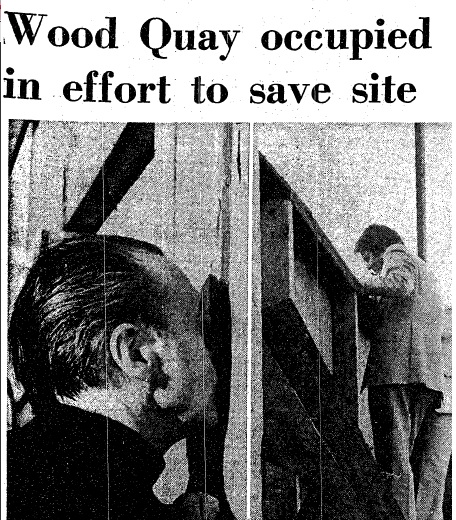
F.X Martin peeps through the fence at Wood Quay. (The Irish Times, 2 June 1979)

F.X Martin peeps through the fence at Wood Quay. (The Irish Times, 2 June 1979)

Martin had legally opposed the construction of the offices as far back as 1977, and had argued that the site should have been preserved as a tourist attraction due to its heritage. In 1978 he went before the High Court in an attempt to prevent the construction project continuing. As Frank McDonald noted in The Irish Times, Martin used his court appearance to argue that the real importance of Wood Quay was in “the fact it revealed the layout of Medieval Dublin, showing how the ordinary people lived at the time and how the city had evolved around them.”

Judge Liam Hamilton accepted the case of Martin and said he was satisfied the site was of national importance and should be preserved. Incredibly however, two months later Pearse Wyse (then Minister of State of the Office and Public Works) announced that excavations at Wood Quay would be coming to an end and the Corporation would be allowed continue with its construction work. This led to a major campaign of resistance, with a petition signed by over 200,000 people and a protest march of 20,000 through the city. ‘Operation Sitric’ in June 1979 was one of the most exciting moments of that campaign of opposition. The protest took its name from Sigtrygg Silkbeard, a one-time Hiberno-Norse King of Dublin.

At first, fifteen protestors occupied the site. These included Michael O’Leary T.D, Deputy Leader of the Labour Party. The writers James Plunkett and Mary Lavin, Denis Larkin and Donal Nevin from the trade union movement, the sculptor Oisin Kelly and architect Michael Scott, who was responsible for the modern Abbey Theatre.

The occupation of the site began at 7.15pm, with the occupiers rushing the site as workmen finished for the day. The writer James Plunkett told the media that by “destroying Wood Quay we were making a disgrace of ourselves and our city in front of the world.”

The media reported that on one occasion workers rained gallons of water on top of the protestors, destroying their sleeping bags. On another occasion, Gardaí were called to the site following an alleged assault on a female occupier.On June 7th a compromise was reached whereby workers would be freely allowed enter the site by the protesting group, on the condition work not continue.

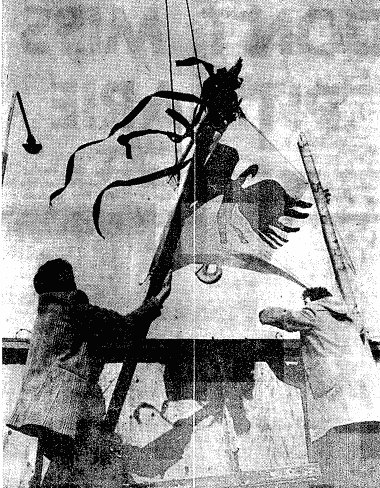
Here, the 'Black Raven' flag of the protesting group is clear. (Irish Press)

Here, the ‘Black Raven’ flag of the protesting group is clear. (Irish Press)

With a council election looming, the protesters aimed to await the election of a new City Council, in the hope it could save the Wood Quay site. The Irish Press wrote on June 18th that the occupation was going strong, and over two weeks in the paper noted:

Morale among the latest Wood Quay invaders has been high, with plenty of ‘hooting for preservation’ from the passing motorists, well wishers handing in chickens and sandwiches, The Stag’s Head pub supplying the stew and Peter O’Toole “just dropping in.”

The occupation had an improvised kitchen on site, and availed of the toilet facilities which ironically were originally placed there for the use of construction workers. The media noted that “the age of the professional sit-in has arrived”. The John Paul construction company claimed to be losing about £30,000 a week owing to the occupation.

Among those occupying the site were Mick and Teresa Wall, a young married couple from the Oliver Bond flats, both unemployed. Teresa had been protesting outside of the construction site before the occupation with a pot and pan, and Mick described their involvement in the sit-in as one of the most positive experiences of his life. Sitting among academics and professional writers, it showed the real mix of Dubliners involved.

The controversial office blocks today

The controversial office blocks today


On June 21st, most of the occupiers left the site following a Supreme Court order, and powerful machinery was once more used on the priceless site. The John Paul construction company later said it would seek £8 million in compensation for losses brought about as a result of the occupation.

Among those who spoke out in defense of the Wood Quay office blocks was Ben Briscoe of Fianna Fáil. Briscoe accused the media of giving the Wood Quay demonstrators a “bandwagon to perform on” and insisted that “most archaeologists in Ireland support the Corporation in what they want to do.” Ironically, in Dublin’s ‘millennium’ year of 1988, four stalwarts of the campaign to save Wood Quay were presented with honorary awards for their efforts to preserve Dublin’s heritage!

The dragon of Moore Street

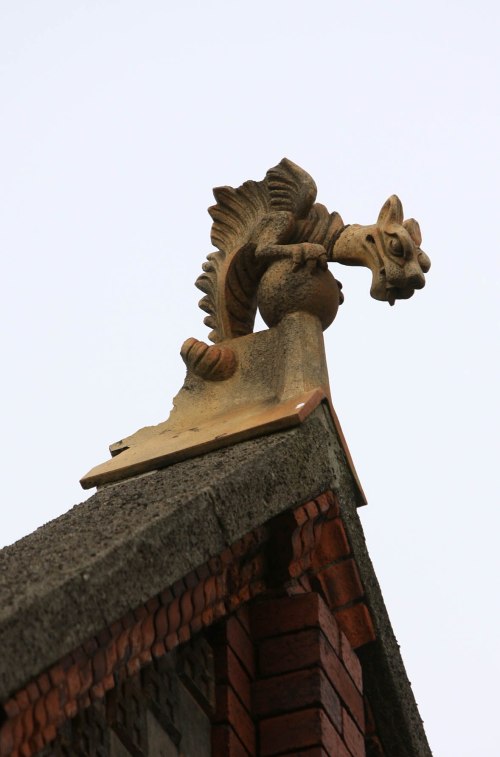
Did you know that there is a carved stone dragon perched on the top of a three-storey building on Dublin’s historic Moore Street?

Mischievous dragon overlookign Moore Street. Credit - Jonathanmbradshaw

Mischievous dragon overlooking Moore Street. Credit – Jonathanmbradshaw

As you can see a capstone (chimera or gargoyle) in the shape of a dragon is positioned at the top of no. 55 Moore Street. Local legend suggests that its wings were chipped away by sharp shooters of the 6th Sherwood Foresters at the Parnell-Moore St barricade during the Easter Rising.

Regarding the building itself, as far as I can work out, there was a butcher on this premises from at least the 1920s until the early 1990s.

The death of a James Canavan, listed as a butcher living at the address, in April 1924 was reported in most of the national newspapers.

In November 1905, the Irish Independent noted that a James Byrne of 55 Moore Street along with two other friends were fined £1 each after being found in William Quirke’s pub in Blackrock. Although one of them said they had gone out for “pleasure and fresh air”, they were not indeed bona- fide travellers. At the time, public house could supply liquor to a Bona-Fide Traveler during prohibited hours when the premises was otherwise required to be closed. As you can imagine, many people would travel out to the suburban pubs and try to claim this status for a late night tipple.

In July 1934, the Irish Press reported that Patrick Henry (19) had stolen £35 worth of property from his uncle Peter McKeogh of 55 Moore Street. Tut tut.

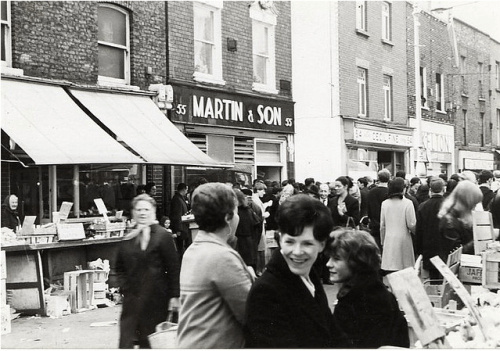
A view of Moore Street, in pre Ilac Centre days, from the 1950s with no. 55 visible in top left corner. Credit -

A view of Moore Street, in pre Ilac Centre days, from the 1950s with no. 55 ‘Martin & Son’ butcher clearly visible. Credit – Eamon Martin

The Martin family ran a butchers at this premises from 1937 to 1991. During the 1960s, there were up to 21 (!) different butchers on Moore Street but Martin’s was always considered one of the best.

Martin & Son butcher, 55 Moore Street. Picture taken at Christmas time, 1950. Credit - Eamon Martin

Martin & Son butcher, 55 Moore Street. Picture taken at Christmas time, 1950. Credit – Eamon Martin

A view of Moore Street from 1960 with dragon clearly visible. From this angle, it doesn’t look unlike a daredevil cat trying to get a better view of the street below.

Moore Street, 1960. Credit - Eamon Martin

Moore Street, 1960. Credit – Eamon Martin

A recent view of the dragon. Notice the overgrown weeds and grass growing out of the building.

Beautiful picture. Credit - conorcullen1

Beautiful picture. Credit – conorcullen1

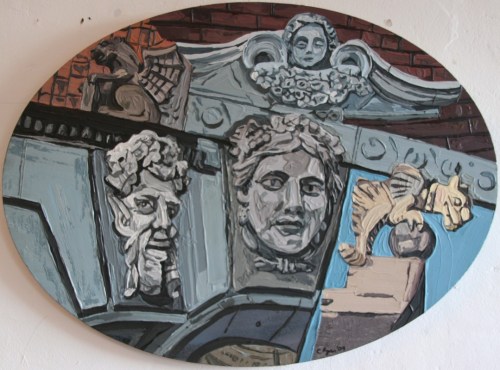
Artist Catherine Ryan has incorporated the dragon, along with some other more famous Dublin architectural imagery, into this wonderful painting:

Dublin Gargoyles. Credit - Catherine Ryan

Dublin Gargoyles. Credit – Catherine Ryan

All in all, it’s one of my favourite little pieces of unusual Dublin architecture – of which there are many.

(Thanks especially to Eamon Martin for the photos. He worked in the butchers at no. 55 from 1955 – 1991.)

For a few weeks now I’ve been living in Dublin 7, about a ten minute stroll from the centre of town. I’ve made the most of it, and try to carry a camera. I’m by no means a photographer, far from it, but I enjoy taking the occasional photo in Dublin.

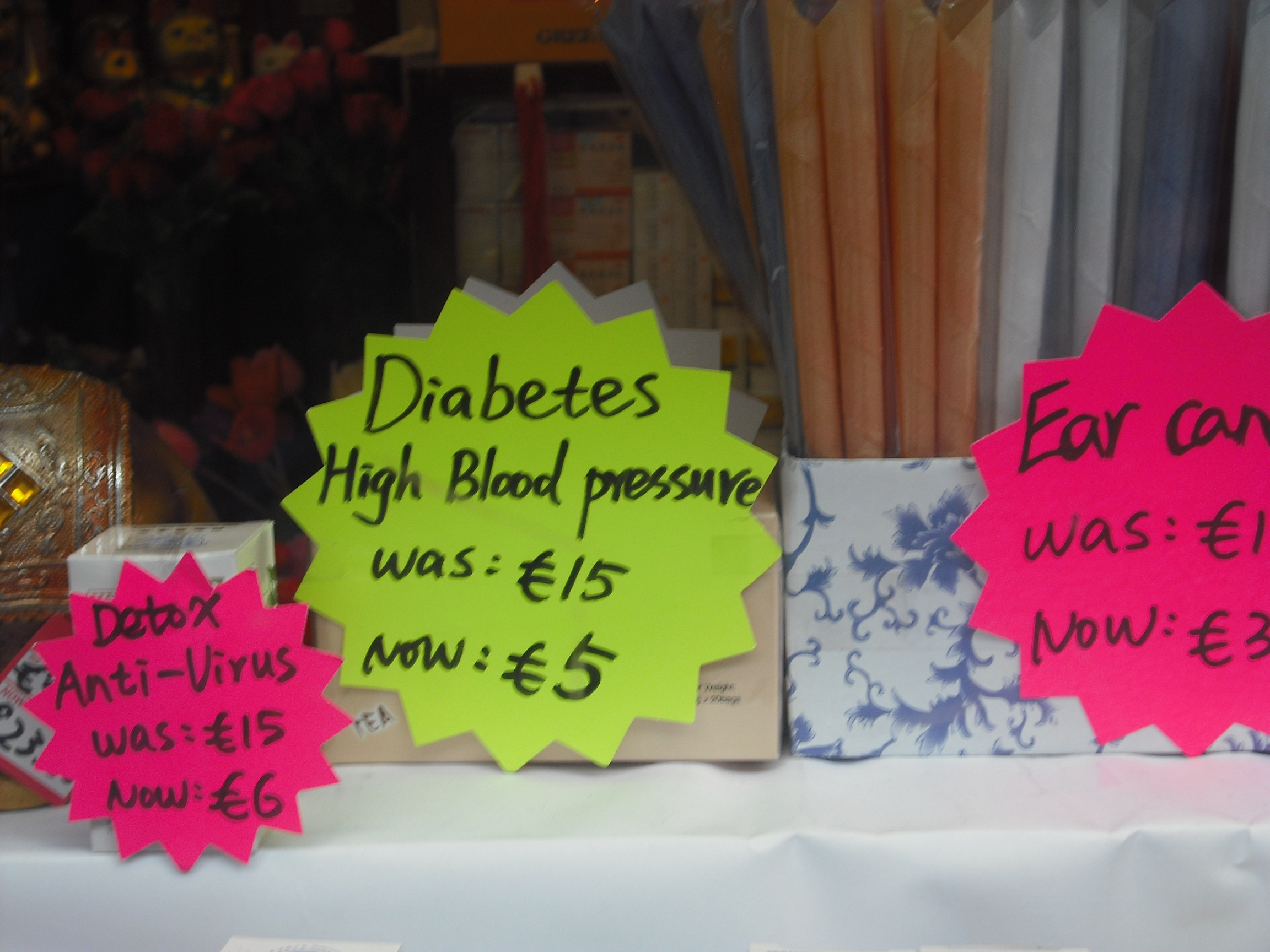
Last Monday, with crazy season well under way and people shopping until they drop, we went for a wander around town. We planned to have lunch in the Paris Bakery on Moore Street. On the way, we passed this gem in the window of a shop on the corner of Moore Street and Henry Street. I think I’ll pass on it.

A bargain. On the corner of Moore Street and Henry Street.

A bargain. On the corner of Moore Street and Henry Street.

The Paris Bakery continues to grow, and brings a real bit of life to Moore Street. It’s never empty, and the food is highly spoken of by most Dubs. Walking in the door, you can’t help but notice this bit of Moore Street history. On the menu, you can try the ‘James Connolly’. Unlike today’s Labour movement, there’s no smoked salmon involved.

The reds and the greens.

The reds and the greens.

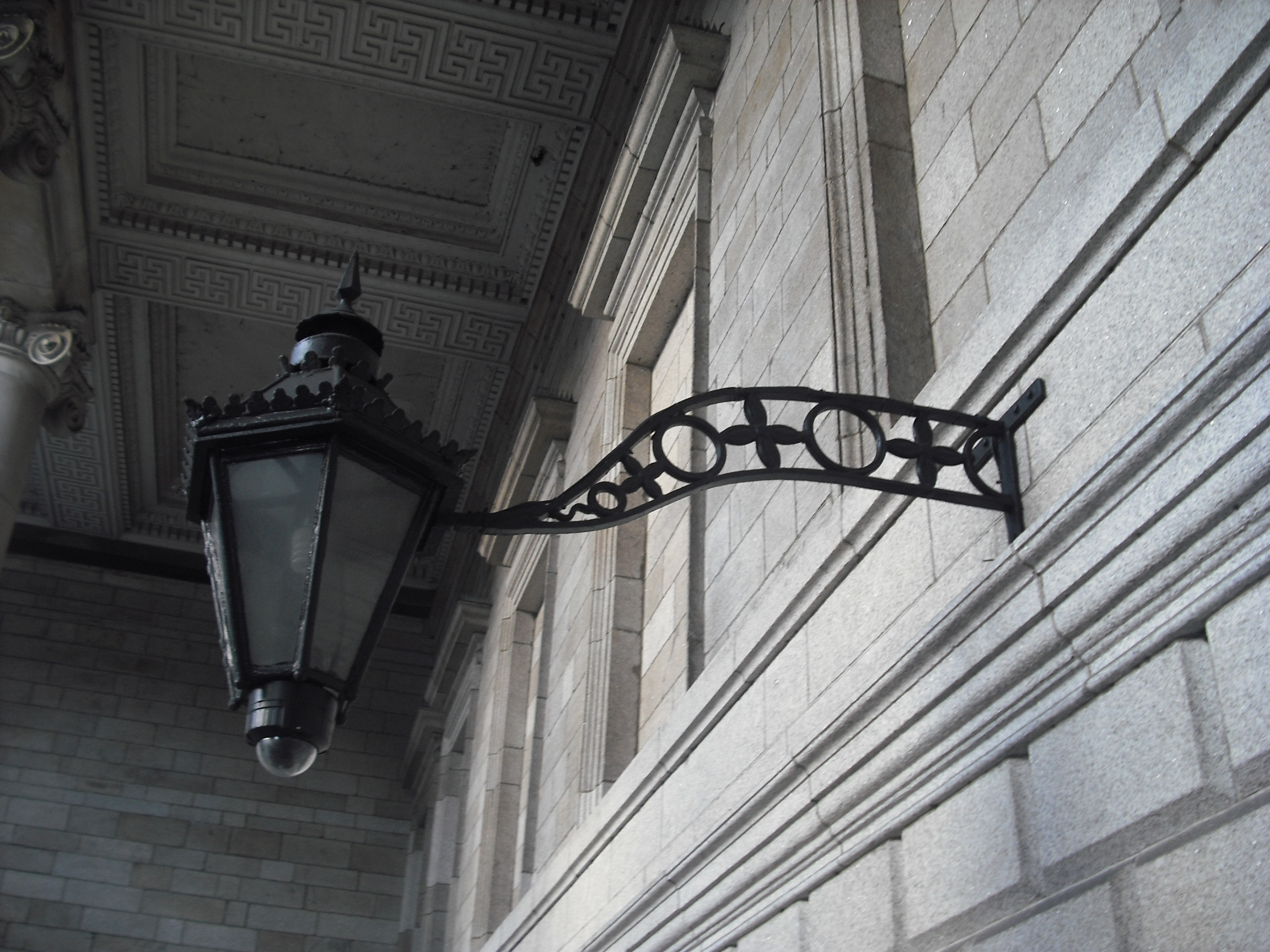
We went up to the old Irish House of Lords on College Green for a look inside, and there’ll be more on that in time on the site. Outside, I noticed something I’d not seen before. I stop and talk inside and outside this building weekly with my dayjob as a tour guide of Dublin, but the camera in the lights has always escaped me. Big Brother indeed.

Spot the camera

Spot the camera

Continue Reading »